Home Blog Page 2387

BSP amends rules on trust account reviews

THE BANGKO SENTRAL ng Pilipinas (BSP) has amended its rules on the periodic review of trust, investment management and other fiduciary accounts.

In a circular posted on its website, the BSP said the Monetary Board approved amendments to the Manuals of Regulations for Banks and Non-Bank Financial Institutions.

These amendments seek “to set the supervisory expectations on the conduct of periodic review of trust, investment management and other fiduciary accounts,” it said.

“A trust entity (TE) shall conduct periodic reviews of its trust, investment management, and other fiduciary accounts, hereinafter referred to as ‘accounts review,’ to ensure that the TE performs its fiduciary duties and responsibilities,” according to the circular.

The accounts review will include two types, namely the administrative and investment reviews.

The administrative review, which must be conducted once every three years, shall “ensure that accounts are being managed in accordance with their governing agreements; relevant laws, rules, and regulations; and applicable internal policies and procedures of the TE.”

Meanwhile, the investment review is conducted to ensure a client’s investment risks are properly managed and aligned with their risk profile, investment objectives, risk tolerance and liquidity needs, the BSP said. 

“Upon the conduct of an investment review, the TE should be able to determine whether certain portfolios/assets are no longer appropriate for an account and/or a change in the structure(s) or composition of the portfolio(s) is required, consistent with prudent investment practice.”

The investment review must also be set at least annually or more frequently depending on the nature of the account, it added.

The central bank said all accounts are required to undergo a review. However, there are alternative approaches in select cases.

“The review of trust and other fiduciary accounts where a TE exercises investment discretion and accounts that possess unique, unusual characteristics, are the subject of pending litigation, or contain a complex portfolio shall be conducted at the account level.”

“The account level review shall apply for both administrative and investment reviews,” it added.

Investment reviews of multiple accounts under a single client may be done at an aggregate level to account for the totality of the contractual relationships of the client with the TE, regardless of the mandate of the TE over accounts, the circular said, but noted that accounts vested with public interest may be subject to account level review.

“Homogeneous accounts or those that possess common characteristics based on the type of product or service, or the type of investment outlet… may be subject to collective administrative and/or investment review/s.”

Meanwhile, accounts of direct participants in unit investment trust funds may be excluded from the administrative and investment reviews.

“Regardless of the approach taken for an account, the TE shall ensure that its exercise of fiduciary duties is not undermined. The exclusion of an account from a review shall be done with proper bases,” the BSP said.

“In this regard, the TE shall implement effective operational procedures and controls to ensure that an account excluded from reviews is properly administered and invested in assets that are aligned with the client’s risk profile and investment objective.”

The circular also details the guidelines for the accounts review process, which requires a statement of purpose, approaches adopted for the conduct of the review and the scope of the administrative and investment reviews.

Under the administrative review, TEs will be assessed for the existence of an accurate, complete and current governing instrument as well as the extent and timeliness of their performance of the duties and responsibilities set out in the governing agreements and as required by regulatory bodies.

Meanwhile, the investment review will evaluate the suitability of the investment portfolio, propriety of asset allocation and promptness of deployment of funds, among other indicators. — Luisa Maria Jacinta C. Jocson

Locals move to protect Chile’s giant desert geoglyphs scarred by off-roaders

COMMONS.WIKIMEDIA.ORG

IQUIQUE, Chile — Over a thousand years ago, the hundreds of giant geoglyphs carved into the desert in northern Chile were a bustling scene. They marked sources of water in the vast arid landscape and were where locals came together to trade skins, animals, and fish.

Now the carvings are scarred with hundreds of tire tracks from motorcycles and off-road vehicles tearing through the art creations in the landscape and permanently disfiguring them.

“It’s practically destroyed by motorcycles, off-roaders,” said Jose Barraza, general director of the regional national patrimony office.

He said various groups were trying to preserve the site to prevent any more destruction — but also without restoring it to its former glory, to show the error of people’s ways in the future.

“(It) will be an example that shows future generations what not to do with our heritage, no matter how painful or how much anger, discomfort or resentment we feel towards it,” he said.

Local resident Angelo Araya says the community has been working with a local museum and authorities to try and “put an end to the destruction.”

The goal, Mr. Araya says, is to stop motorcycle and off-road vehicles from damaging the site further and “to make everyone aware that this is not just a heritage site, but that it belongs to all of us.”

The site has gone through many phases, going from a place to barter, to an abandoned site, to one where people were looking for gold. Eventually Chile’s national forests association CONAF turned the area into part of the Pampa del Tamarugal National Reserve.

Sand board instructor Franco Diaz said the government should physically close off access to the sites as the geoglyphs are difficult to spot.

“If a jeep driver goes behind the hill, he won’t notice if there’s a geoglyph,” Mr. Diaz said. “They should close the perimeter and protect these sites that are over 1,000 years old.” — Reuters

Lower forex gains, sales volume pull URC income

URC.COM.PH

GOKONGWEI-LED Universal Robina Corp. (URC) reported a 53.7% decline in its third-quarter attributable net income, falling to P1.42 billion from P3.07 billion in the same period last year, due to weaker sales volume and lower foreign exchange gains.

Third-quarter sales fell by 1.8% to P38.14 billion from P38.84 billion in 2023, URC said in a regulatory filing on Tuesday.

For the first nine months, URC saw a 17.6% drop in its attributable net income to P8.02 billion from P9.74 billion last year. Core net income fell by 5% due to higher tax provisions and finance costs.

Sales improved by 1% to P118.88 billion from P117.16 billion last year.

Operating income shrank by 3% to P12.3 billion amid lower profits from its sugar and renewables business, as sugar prices continued easing in 2024 against last year’s record highs.

Sales for the branded consumer foods (BCF) group rose by 2% to P81.8 billion.

BCF Philippines generated P55.9 billion in sales, flat versus last year, as the momentum of ready-to-drink beverages and bakery was able to offset declines in coffee and confectionery. The company sold more lower-value products, as consumers continued to prioritize value-for-money offerings.

BCF International rose by 9% to P25.9 billion on a constant currency basis. All international business units saw volume and value growth as well as market share gains, despite the weak consumer sentiment across the region.

The agro-industrial and commodities group saw a 2% increase in revenue to P36.2 billion as volume growth was offset by price adjustments across most businesses.

Revenue growth was tempered by lower hog feed volumes, as the country’s hog population continues to be affected by disease outbreaks.

“As we begin to see early signs of a resurgent Philippine shopper in 2025, we will continue to offer the best value to our consumers through our wide portfolio of quality brands, while delivering the best value to our stakeholders by sustaining the company’s strong performance,” URC President and Chief Executive Officer Irwin C. Lee said.

“We will continue providing accessible choices to everyone across price points and trade channels, as we believe that everyone deserves to be delighted with good food choices,” he added.

URC shares fell by 5.42% or P5.2 to P90.75 per share on Tuesday. — Revin Mikhael D. Ochave

Investments as a collaborative pursuit

FREEPIK

We at the Stratbase Group marked our 20th anniversary last week by doing what we do best: providing a platform for and facilitating meaningful conversations. During our two-day event called “The Pilipinas Conference,” and with the theme “Navigating a Complex Geostrategic Landscape: Building Resilience Through Cohesive Cross-Sectoral Collaboration in 2025,” we brought together top leaders from different sectors to discuss pressing issues and offer solutions to the challenges that we are facing.

On our second day, we listened to and conversed with leaders from the government and the private sector to explore and assess the country’s geo-economic landscape and investment climate. Driven by its initial gains, the Philippine government continues to navigate the complex environment to work toward achieving investment-led, job-generating economic growth.

Business was the central theme of the second day, and strategic collaboration was the phrase that resonated across the sectors that were represented.

Notable speakers from the government included Department of Finance Secretary Ralph Recto, National Economic and Development Authority Secretary Arsenio Balisacan who was represented by Undersecretary Joseph Capuno, Department of Budget and Management Secretary Amenah Pangandaman, Department of Energy Secretary Raphael Lotilla, and Department of Environment and Natural Resources (DENR) Secretary Maria Antonia Yulo Loyzaga.

Strong teamwork is what has been responsible for elevating the Philippines’ global standing, Mr. Recto believes. Thus, far, our economy has posted an average growth rate of 6.1% under the administration of President Ferdinand Marcos, Jr. This growth is seen to double by 2030 — something that has been recognized by major international organizations.

“Our collaboration is grounded on core principles of transparency, innovation, adherence to the rule of law, and good governance,” Mr. Recto said. “Together, we have designed reforms that will ensure investments work best for the economy. Because when businesses flourish and investors succeed, the benefits ripple out to uplift more Filipino lives.”

A big part of the endeavor involves the Philippines’ transition to clean energy and the development of green industries crucial to sustainable development.

Mr. Lotilla discussed the Philippine Energy Plan that provides strategic directions intended to achieve certain ends, particularly affordable, reliable, and resilient sources of energy, as well as clean and sustainable energy.

“The Philippine Energy Plan provides strategic directions intended to achieve certain ends, particularly affordable, reliable, and resilient sources of energy, as well as clean and sustainable energy… This underscores the need for a transformation of the energy sector, which must occur over time and not overnight,” he said.

Meanwhile, in harnessing the country’s critical minerals to create high-quality, sustainable and green jobs for a resilient economy, Ms. Loyzaga underscored the importance of aligning critical mineral resource development with national goals for mitigation, adaptation, and sustainable growth. She noted the country’s rich mineral deposits, worth trillions of pesos, as an opportunity for economic growth but also identified challenges, such as high energy costs, logistical issues, and lengthy permitting processes.

“To help unlock the potential of the mining sector, the DENR recognizes the need for a cohesive, multi-stakeholder approach to mineral resource development,” she elaborated.

During the final segment of the conference, the CEO dialogue, top executives of top corporations shared what was of primary importance to keep the private sector active, dynamic, and flourishing.

Noting the country’s great potential given its young and dynamic workforce, Ayala Corp. Chairman Jaime Augusto Zobel de Ayala underscored the importance of education and health to allow this advantage to contribute to the country’s growing economy.

“By investing in education and health, we can ensure that our growing population is well-prepared to meet the demands of modern industries. A focus on skill development and maintaining a strong talent pipeline can help us reach our potential both locally and globally,” he said.

ACCIONA Infrastructure CEO Jose Diaz-Caneja highlighted the need for cooperation and coordination among different stakeholders in executing infrastructure projects. He noted that this contributes to solving and improving the country’s efficiency when it comes to production, transportation, energy availability, and water supply.

“Infrastructure is our bread and butter. There is a need for proper planning where execution is the most crucial. Cooperation between different stakeholders in planning and executing these ideas is essential. And for infrastructure projects that significantly impact people’s lives, we need a long-term vision and cross-party agreements among administrations,” he said.

Progress will never be achieved if there were only one sector working. The public sector needs the technical and operational expertise of the private sector, as well as its financial agility and sources of capital. In turn, for businesses to come here, set up shop here, and stay here, the government must put in place a conducive policy and regulatory environment. It must demonstrate its commitment to transparency and accountability, not only through rhetoric, but through actual institutionalized processes.
Only with this can the private sector plan,invest, and operate with confidence that they will not be disrupted by arbitrary acts by the government.

With such a collaborative relationship, the Philippine economy can achieve its potential, work to secure its place in the global economy, and ensure economic security for all of the Filipino people.


Victor Andres “Dindo” C. Manhit is the president of the Stratbase ADR Institute.

PHL startup Joyce and Diana eyes overseas expansion

FACEBOOK.COM/JOYCE.DIANA.OFFICIAL

By Almira Louise S. Martinez

JOYCE AND DIANA, known for its premium linens used in five-star hotels, plans to expand overseas starting in South Asia and eventually to markets across the globe, according to its owner.

The Philippine startup also plans to open pop-ups and physical stores, even as it continues to boost its online presence, Andrew Fung, owner and founder of Joyce and Diana, said in an interview with BusinessWorld.

The company has managed to capitalize on the e-commerce boom during the coronavirus pandemic, having fulfilled more than a million orders on online platforms such as Shopee, Lazada and Zalora, he said.

Launched at the height of the pandemic in 2021, the Philippine home essential startup quickly became the best-selling brand on these e-commerce platforms.

“I made the scary but ultimately rewarding decision to start my own business, despite my family’s advice to pursue a stable and safe job in the consulting or banking industry,” he said. There is also a gap in the market for high-quality but affordable beddings, he added.

Joyce and Diana has consistently ranked first in terms of revenue and gross merchandise value among its competitors on Shopee and Lazada, Mr. Fung said. Despite its rapid success as a young brand, the Filipino entrepreneur has faced skepticism during the early days of his company.

But he trusted his instincts as he saw an opportunity in the thriving e-commerce market in the Philippines during the pandemic.

With the tagline “Essentials that make you feel at home,” Joyce and Diana sells pillows, bed sheets, blankets, comforters, towels and mattresses.

The crowd favorite among Joyce and Diana’s product line is their pillow, about 20,000 units of which are sold each month. Mr. Fung said the brand’s strong identity has played a significant role in their rise to the top.

“I wanted to create a brand that could be instantly recognized for that part of our branding,” he said. “So, this is how Joyce and Diana was born and how it has risen so rapidly in the past three years.”

Joyce and Diana is recognized by customers through its blue and white logo, which is featured prominently on its product branding and thumbnails.

Mr. Fung also leverages his background in photography to ensure that the brand’s product listings maintain a cohesive theme.

Apart from its strong branding, Mr. Fung said Joyce and Diana’s products combine high quality with competitive prices.

“We never try to cut-cost to maximize profit,” he said. “We always use the finest quality of raw materials and also, our in-house manufacture team is made up of experts who have many years of making these products.”

All Joyce and Diana products are made in Laguna province, ensuring that customers get high-quality items in a timely manner, Mr. Fung said. The company also offers customized pieces, including embroidered linens.

But it has not always been an upward trajectory for Joyce and Diana.

After coronavirus restrictions were eased, sales plummeted as many customers shifted to offline channels.

Joyce and Diana have been able to innovate and adapt through creative digital marketing strategies that included collaborating with key opinion leaders and launching their own website, Mr. Fung said.

“Even in the face of reduced online traffic after COVID-19, I think our proactive and creative marketing strategies have not only helped us survive but also thrive,” he added.

Italy’s Pompeii to cap daily visitor numbers to 20,000

POMPEIISITES.ORG

ROME — The ancient Roman archaeological park of Pompeii in southern Italy said on Friday it would cap daily visitor numbers at 20,000 as a response to its surging popularity.

The change, effective from Nov. 15, comes after a peak of more than 36,000 daily entrances on a free-admission Sunday, the park said in a statement.

The park’s director, Gabriel Zuchtriegel, said that reducing human pressure on the ancient site was important for conservation and safety reasons.

The new limit follows attempts by other tourist hot spots to control the number of visitors, including Venice in Italy, with its entry fee system.

Last year, Pompeii had more than 4 million visitors, up 33.6% year-on-year, translating into a daily average of around 11,200 people, culture ministry data showed.

A spokesperson for the park said the 20,000 daily figure had been surpassed only during free-admission Sundays and on three or four normal paying days.

Entrance to Italian museums is free on the first Sunday of the month. A regular ticket to Pompeii otherwise starts from €18 ($19.32).

The site is an archaeological wonder, showing the remarkably preserved ruins of a once-thriving city submerged under volcanic ash, rocks, and dust when Mount Vesuvius exploded in A.D. 79.

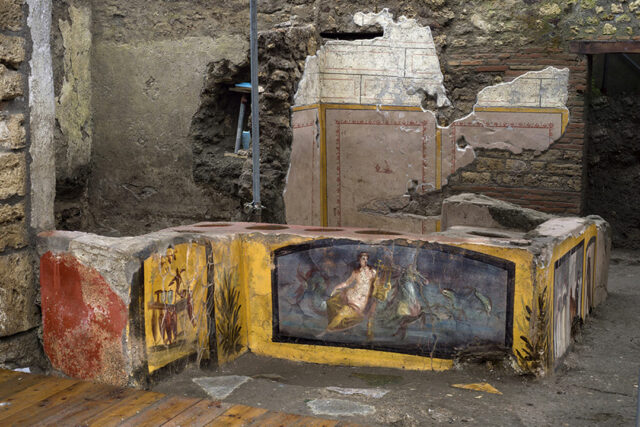
Archaeologists are still making discoveries there, including an uncommonly small house revealed last month with finely preserved frescoes of mythological scenes. — Reuters

Pag-IBIG Fund books P39.54-billion net profit

BW FILE PHOTO

HOME Development Mutual Fund or the Pag-IBIG Fund booked a net income of P39.54 billion in the first nine months of the year as it continued to grow its loan book and savings.

“We’re trending towards another P100-billion year in terms of housing loans matched by more than P100 billion in savings collections. The housing loans are doing well, our savings collections are doing also well, and what’s doing outstandingly well is our performing loans ratio, which is around 93%,” Pag-IBIG Fund Acting Vice-President Domingo C. Jacinto, Jr. told reporters on Tuesday.

“It shows sustainability in terms of cash inputs,” he added.

Pag-IBIG Fund’s total member savings stood at P98.72 billion at end-September.

Of this, P49.27 billion were collected from the mandatory Regular Savings program, while P48.86 billion were under the voluntary MP2 savings program.

Mr. Jacinto said the fund hopes to increase the MP2 savings rate this year. At end-2023, the MP2 savings rate was at 7.05%.

Under the Housing Loan program, Pag-IBIG Fund released P88.17 billion in loans to 61,597 members. The Pag-IBIG Housing Loan allows borrowers to access financing of up to P6 million with a 3% interest rate for socialized and low-cost housing.

Mr. Jacinto said the decreasing vacancy rates of condominiums after the ban on Internet Gaming Licensees, formerly known as Philippine Offshore Gaming Operators, could help drive growth in Pag-IBIG’s housing loans.

“Hopefully more members, more inventories, and more quality housing units come in that members can consider buying… I hope that gives a surge that pushes the needle when it comes to housing loan availments,” he said.

“We are looking at the landscape of the housing industry. We are looking at the inventories available for our accredited developers, from sellers who are willing to sell their properties or buy properties through the Pag-IBIG housing loan. These are things that we all consider,” he added.

The fund also released P20.17 billion in loans under its Pambansang Pabahay para sa Pamilyang Pilipino Housing Program, which is set to benefit 17,791 low-income borrowers, as well as P55.65 billion in short-term loans to P2.53 million borrowers.

Meanwhile, loans disbursed under the Multi-Purpose Loan program rose by 16% to P49.72 billion at end-September from the same period a year ago and went to more than two million borrowers.

Pag-IBIG Fund also released P5.92 billion under its Calamity Loan program to almost 461,000 victims affected by calamities.

As a result, its total assets reached P1.2 trillion at end-September. Total active members stood at 16.37 million. — Aaron Michael C. Sy

Co’s The Keepers to boost portfolio with acquisition of beer importer Booze Online

LUCIO L. Co-led liquor retailer The Keepers Holdings, Inc. (Keepers) said it is working to fully acquire beer importer Booze Online, Inc. to improve its brand portfolio.

The negotiation for the planned acquisition was approved during a board meeting on Nov. 11, Keepers said in a regulatory filing on Tuesday.

Keepers will acquire two million shares of Booze Online at a price yet to be announced. The beer importer is intended to be acquired at a price below 10% of Keepers’ total book value as of Sept. 30.

“The intended transaction offers Keepers the opportunity to add to its portfolio premium beer brands,” the company said.

“The corporation undertakes to submit the necessary notification to the Philippine Competition Commission, if applicable,” it added.

Booze Online is an importer and distributor of wines, spirits and premium beers. It claims to be the largest imported beer distributor in the Philippines.

Some of the brands distributed by Booze Online include Hoegaarden, Stella Artois, Becks, Leffe, Paulaner, Chimay, and Delirium Tremenes.

It also carries brands such as Johnny Walker, Hennesy, Bacardi, Chivas Regal, Jack Daniels, Baileys, Absolut, Ballentines, Remy Martin, Jose Cuervo, Captain Morgan, Martell, The Glenlivet, and Grey Goose.

Keepers will acquire Booze Online from Adarro Holdings Corp. and Rajesh Sadhwani. Its current corporate secretary, Baby Gerlie I. Sacro, is one of the directors of Adarro Holdings.

Keepers Investor Relations Officer John M. Hao said in a Viber message that the company recorded a 14.5% increase in its third quarter net income to P743 million as revenue surged by 7.4% to P3.99 billion. The company has yet to disclose its quarterly report.

For the first nine months, Keepers said in a separate disclosure that its net income grew by 20.1% to P2.17 billion from P1.81 billion last year driven by better sales volume from the imported brandy segment.

January to September revenue climbed by 14.6% to P11.71 billion led by the 18% increase in volume of cases sold during the period.

“This was driven principally by Alfonso, the leading imported brandy in the market, which has already surpassed its pre-pandemic levels, premiumizing market and on-premise channel rebound,” Keepers said.

Meanwhile, Mr. Hao said the Keepers’ parent company, Cosco Capital, Inc., generated P3.08 billion in third quarter net income, flat from last year’s levels. Revenue rose by 10.7% to P57.6 billion. The company has yet to release its quarterly report.

Cosco Capital grew its nine-month net income by 10% to P10.04 billion from P9.13 billion last year, the company said in a separate disclosure.

The grocery retailing business led by Puregold Price Club, Inc. and S&R Membership Shopping Club, contributed 69% of total net income, followed by Keepers with 22%, commercial real estate segment with 7%, energy and minerals with 1.5%, and specialty retail with 0.5%.

Nine month revenue rose by 9.2% to P164.06 billion from P150.27 billion a year ago.

“The group continued to benefit from the economic recovery amidst the prevailing macroeconomic challenges by way of sustained and stronger revenue growth across all its business segments which indicates the recovering consumer demand,” Cosco Capital said.

The grocery segment saw a 4.5% increase in net income to P6.9 billion. Net sales rose by 9.1% to P151.97 billion led by store expansion and higher same store sales.

Cosco’s commercial real estate business improved its net income by 13.3% to P761 million. Rental revenue climbed by 10% to P916 million due to improved business operations of tenants amid increased level of economic activities and full resumption of rental rates based on contracts.

The energy and mineral segment generated P165 million in net income as revenue reached P335 million.

The specialty retailing business segment comprised of Office Warehouse, Inc. saw a 3.3% increase in net income to P66 million as revenue declined by 3.5% to P1.6 billion.

On Tuesday, Keepers shares rose by 4.83% or 10 centavos to P2.17 per share; Cosco Capital stocks fell by 1.29% or seven centavos to P5.37 each, and Puregold shares declined by 0.32% or 10 centavos to P31.6 apiece. — Revin Mikhael D. Ochave

Trump’s ‘New Order’ will be global anarchy

FREEPIK

YOU KNOW it’s going to get interesting when Elon Musk quotes from Virgil and the Great Seal of the United States. Novus Ordo Seclorum, the tech-titan-turned-MAGA-megaphone tweeted, or rather Xed, as he basked in Donald Trump’s victory with the president-elect himself. In English: “a new order of the ages.”

On the other side of the world in Russia, Alexander Dugin shared the sentiment. He’s a far-right philosopher associated with “eurasianism,” a narrative that glorifies anti-Western Russian neo-imperialism. “So we have won,” Dugin gloated on X; the world will never be the same again because the “globalists have lost their final combat.”

It’s tempting to dismiss Musk and Dugin as bookends of the hyperbole that’s taken over the planet since Trump staged his stunning comeback. So many pundits are exaggerating so many things right now that we should remember Ecclesiastes: There is nothing new under the sun. Maybe there won’t be a “new order.” Maybe the world will change less than it seems.

And yet a striking pattern suggests that Trump 2.0 does represent a historic turning point on the scale that Musk and Dugin imagine. From Europe to Asia and the Americas, people who over the years praised what’s been called the liberal, or “rules-based,” international order are in various stages of the Kübler-Ross grief cycle (denial, anger, bargaining, depression, acceptance). All those in thrall to the opposite vision, of “illiberal” strongman rule, are jubilant, from Viktor Orban in Hungary to Benjamin Netanyahu in Israel and Narendra Modi in India.

Other terms for that old, and now possibly moribund, order are the Pax Americana or — as Henry Luce, the founder of Time and other magazines, called it — the American Century. He wanted America to reject the isolationism that had kept it out of international affairs between the world wars and instead to become the world’s Good Samaritan — the hegemon of an open, stable, and maximally free system of states.

If Musk is right that Trump will deliver a new order, and Dugin is right that the globalists have lost, then dusk now falls on that American Century. Here’s what that means.

The US will walk away from the regime of relatively open and regulated trade that it built after World War II. With the sweeping tariffs that Trump promises, he will instead launch an era of beggar-thy-neighbor trade wars and economic nationalism reminiscent of the 1930s.

He’ll also, albeit gradually, render the charter of the United Nations as meaningless as the League of Nations became in the 1930s. That draft of a world constitution already looks tattered these days, as Russia and China (and the US, when it feels like it) keep flouting its ideals. But Trump will go further, jettisoning principles such as the sovereignty and integrity of all countries, large and small; he’ll instead make deals with autocrats to carve up “spheres of influence” as the European empires did in the 19th century. For smaller countries this will spell disaster. And the first victim will probably be Ukraine.

Another casualty will be international law, as embodied in institutions from the UN (which many MAGA Republicans want to defund) to the International Court of Justice and the International Criminal Court in The Hague. Taking their place would be the law of the jungle, the notion that might makes right. Kant and Grotius are out, Thucydides and Hobbes are in.

As Trump corrodes multilateralism in general, he’ll also forsake other manifestations of international cooperation, notably America’s alliances. He may not pull out of NATO, but he will undermine its deterrent effect on adversaries by treating America’s commitment to mutual defense as a protection racket. He’ll take the same approach with treaty allies in Asia, where incumbent president Joe Biden has been so eager to build new “minilateral” webs of forward defense to contain China.

Nobody knows how the major powers and their Machiavellian leaders will react to this abdication of American hegemony. Will Russia’s Vladimir Putin be sated once he absorbs the four Ukrainian provinces he claims to have “annexed,” or will he go on to seize all of Ukraine, then march on to Moldova and other post-Soviet states? Will Xi Jinping offer Trump a deal to let China militarize the whole South China Sea, and later digest Taiwan at leisure? Trump is unlikely to lose sleep over these questions, because he’s thinking only one transaction at a time.

It’s just as uncertain how America’s friends, mainly middle powers and smaller nations, will fit between the new spheres of influence that Trump and the other strongmen draw up. Two of them, Germany and Japan, were America’s enemies in World War II, then became American proteges and paragons of the more irenic American Century, with Germany embedded into NATO and the European Union, and Japan more recently into US-led groupings with South Korea, the Philippines, and India.

Once Trump withdraws America’s aegis over these allies, what is to prevent old hostilities from resurfacing, from enmities between Germany and France or Germany and Poland to lingering resentments between the Japanese and Koreans? Why wouldn’t they all want to have their own nuclear arsenals?

The Pax Americana was ever imperfect and to many people in the world, from Vietnam to Iraq, smacked of hypocrisy. But it was as close as the world has come to order. Not all at once, but over time, that order will devolve to entropy as the international system reverts to its natural state, which is anarchy. Humanity’s common problems, such as climate change, will remain insoluble. The worst risks, such as nuclear war, become more likely.

Yet more hyperbole? I hope I’ll be proven wrong. But if the Musks and Dugins of the world are celebrating the return of Trump and the end of the American Century, the rest of us are right to worry.

BLOOMBERG OPINION

Enstack to take super app to Thailand in 2025

ENSTACK.COM

By Beatriz Marie D. Cruz, Reporter

ENSTACK, a Philippine super app for small and medium enterprises (SMEs), plans to take its platform to Thailand by the second quarter of 2025, according to its top official.

“Next year, Enstack is looking to broaden its reach and make our platform accessible to more sellers across new regions, with Thailand as our next country,” Macy Castillo, co-founder and chief executive officer at Enstack, told BusinessWorld in a Viber message.

Enstack is looking to expand in other regions where SMEs face challenges similar to the Philippines, amid the increasing need for digital tools for smaller firms.

“While we’re initially focused on Southeast Asia, we’re also evaluating markets where our platform can bring unique value to local entrepreneurs and support diverse business models effectively,” Ms. Castillo said.

“Specifically, we’re looking for regions that face challenges similar to those in the Philippines, especially where businesses need quick setup solutions, instant payments, integrated shipping options and other essential tools for seamless operations.”

Enstack has an all-in-one mobile app that helps SMEs manage their business on their smartphones. It allows SMEs to track their inventory, payments and shipping, among other things.

Since its launch in February last year, Enstack has on-boarded almost 200,000 merchants and as many as 40 partners.

To support a wider range of SMEs, Enstack has been working on partnerships to cater to other industries and business types on its platform, Ms. Castillo said.

It is also refining the app interface to ensure seamless order tracking, inventory updates and customer messaging.

Enstack recently partnered with Canva to provide users with free design tools to help SMEs without design experience or resources.

Under the new feature, business owners can download a curated selection of Canva templates and design assets through the Enstack app. The designs were specifically created by the Enstack team to fit businesses’ needs.

Business owners can personalize ready-made designs for their posts, stories or web store banners for different platforms such as Instagram, Facebook and TikTok.

“Each template is crafted to drive maximum impact, helping sellers create visuals that truly resonate with customers,” Ms. Castillo said. “They’re also ready to go for Enstack Web Stores, so sellers won’t need to worry about adjustments or resizing; all they have to do is edit their content and upload it on the Enstack app.”

Enstack expects to integrate additional Canva features in its app by the first quarter of next year.

Bridge offers unique view of Rome’s Trevi Fountain during conservation work

COMMONS.WIKIMEDIA.ORG

ROME — Tourists and locals will be able to see Rome’s Trevi Fountain from a new angle by walking across a footbridge erected while it undergoes maintenance work.

The metal bridge, which will give visitors a closer look at the fountain’s intricate facade, will be up for about two months while work is in progress.

“(We) wanted to give everybody the opportunity to admire the fountain and to do this from a unique perspective,” Rome Mayor Roberto Gualtieri told Reuters at the opening of the bridge on Saturday.

“Normally you would never be able to see what you can see from the walkway… so it’s actually a unique opportunity.”

Restoration of the fountain — a Baroque masterpiece completed in 1762 — is expected to be completed by the end of the year.

The work includes removing dirt, pollution, iron oxide, and lime scale, Anna Maria Cerioni, head of restoration works for Rome’s art and cultural heritage, told Reuters.

A similar walkway was used in 2014 during much longer restoration works.

Only 130 people will be allowed on the bridge at any one time, as authorities look for ways to limit access to one of the city’s busiest monuments.

Mr. Gualtieri said Rome was for now not considering charging for admission but was looking at ways to make visits to the fountain “an experience that will not be ruined by overcrowding.” — Reuters

Maya Bank issues over 50,000 credit cards in partnership with Landers

MAYA BANK has issued over 50,000 credit cards in partnership with membership shopping mart Landers Superstore as of Nov. 11, or just three months after the product’s launch.

“Our entry into credit cards with the Landers Cashback Everywhere is a major milestone for Maya. We continue to launch new products to become a deeper part of our customers’ daily lives — from routine purchases to helping them meet larger financial goals,” Maya Group President and Maya Bank Co-Founder Shailesh Baidwan said in a statement on Tuesday.

Maya Bank said 61% of the credit cardholders reside outside Metro Manila. It added that 42% of their card users do not have another credit card.

The high credit card issuance was driven by the rewards and technology the card offers, Maya Bank said.

“The early success of the Landers Cashback Everywhere card shows we’re breaking barriers for the unhappily banked. “By embracing a high-tech approach, we’re reshaping what credit means — making it fast, rewarding, and accessible to all,” Maya Bank President Angelo S. Madrid said.

The application and approval process for the card is done fully online via Maya app. Applicants only need a Landers membership and a Maya account.

Cardholders get 5% cashback at Landers Superstore, 2% on dining, and 1% on all other purchases.

The card also includes features like card verification value or CVV for security, real-time spending limits, and digital management of credit lines.

Maya Bank is one of the six licensed digital banks in the country. It previously said it expects to breakeven by this year and be profitable by 2025.

The digital bank is owned by Voyager Innovations, Inc. PLDT Inc. is Voyager’s main shareholder. Hastings Holdings, Inc., a unit of PLDT Beneficial Trust Fund subsidiary MediaQuest Holdings, Inc., has a majority stake in BusinessWorld through the Philippine Star Group, which it controls. — A.M.C. Sy