Home Blog Page 236

Hydro investment demand estimated at $3.9 trillion

A DIGITAL rendition of the planned hydropower plant in Davao Oriental’s Caraga town. — DAVAO ORIENTAL PROVINCIAL GOVT

THE PHILIPPINES will need around $3.9 trillion in investment to unlock the potential of its hydropower resources, according to the PhilHydro Association, Inc. 

Speaking to reporters last week, PhilHydro President Gertrude V. Roque said the country’s potential hydropower capacity has been estimated at 650 gigawatts.

Ms. Roque said, however, that not all sites are accessible, making hydropower development “very costly, difficult, risky.”

She said that developing a facility that could generate one megawatt (MW) of capacity costs between $5 million and $6 million.

Hydropower facilities generate electricity from the natural flow of moving water. The type varies depending on the capacity, water resources, and design of harnessing electricity. This includes impounding hydro, run-of-river hydro, and pumped storage hydro.

Ms. Roque cited the need for a balance of hydropower technologies to effectively support and stabilize the grid.

“We really need to look into the capacities that we need to build for each type of these hydro projects,” she said.

The Philippines is also banking on hydropower to increase the share of renewable energy in the national power mix to 35% by 2030 and 50% by 2040.

Since the signing of the Renewable Energy Act in 2009, the Philippines has installed 337.872 MW of capacity. For this year, an additional 22.864 MW was injected to the grid.

“Water… can be the backbone of our energy security and stability, working in synergy with biomass, geothermal, solar, ocean, wind, and other renewable energy technologies,” Energy Secretary Sharon S. Garin has said.

Ms. Garin said hydropower can also serve as critical infrastructure for disaster mitigation, as reservoirs and water management actively control river flows and mitigate flash floods. — Sheldeen Joy Talavera

House bill seeks to arrest ageing trend in farm workforce

ERIK OHSMHHK-UNSPLASH

A BILL seeking to inject more youth in the agricultural workforce was filed at the House of Representatives last month.

House Bill No. 5291 seeks to establish a national program to attract and train the young to take up farming, offering education and technical training, livelihood support and access to credit to develop their farm lots.

“The Philippine agriculture sector is on the edge of collapse,” Iligan City Rep. Celso G. Regencia said in the bill’s explanatory note, which was filed on Oct. 8. “The average age of a Filipino farmer is now 56 years old, and within a few years, many of them will no longer be able to plant the fields or fish the waters.”

“At the same time, there is no sufficient influx of young people to take their place, (and) unless decisive action is taken, the nation’s food production chain will break down,” he added.

The next decade could see crippling labor shortages in farming as young people increasingly migrate to city jobs.

“There remains a narrow window to avert this outcome,” according to Mr. Regencia, adding that authorities must develop a pipeline that will draw the young into agriculture and provide support to help them succeed.

The proposed “national pathway” for young farmers will be overseen by the Department of Agriculture (DA), with the departments of Agrarian Reform, Education and Trade and Industry among those also steering the program.

Under the bill, potential farmers aged 15 to 40 will be granted access to technical training, startup capital, and credit to help them get established.

“Not less than 10% of all credit facilities and financing windows administered by the government financial institutions and credit programs of the DA are to be reserved for young farmers and fisherfolk,” according to the bill.

Agribusinesses owned and led by young farmers will also be eligible for tax exemptions in the first five years of operations, alongside a 50% government subsidy on agricultural insurance. — Kenneth Christiane L. Basilio

SBMA makes bid for cruise lines to homeport vessels at Subic Bay

SUBIC BAY METROPOLITAN AUTHORITY

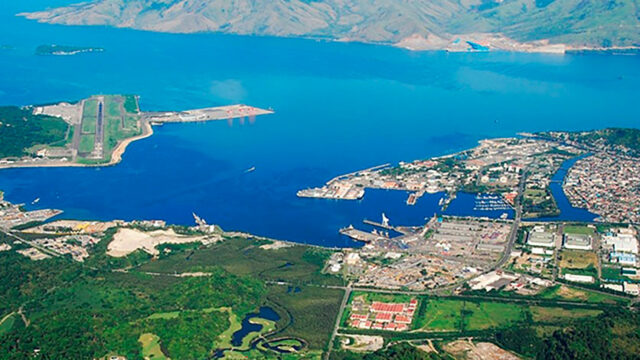
THE Subic Bay Metropolitan Authority (SBMA) is looking into the possibility of building a new cruise terminal capable of accommodating ships that designate Subic Bay as their home port.

The new facility will be done in two phases: construction of the jetty and reclamation of the land for the passenger terminal and leisure and commercial area.

Estimated to cost P1.2 billion, the first phase covers the construction of a double berth 380- and 350-meter jetty with a water depth of 12 meters.

The timeline for the initial phase is 2027 to 2028.

Meanwhile, the second phase, which is estimated to cost around P8.96 billion, covers the reclamation of a 20-hectare area.

It will also include the construction of a passenger terminal, an area for cruise-related businesses, a public park and esplanade, an amusement park, and shopping and dining centers.

“This is a conceptual plan. The Philippines has no dedicated cruise ship terminal, and Subic Bay would like to take the lead in developing this cruise terminal,” according to Ronnie R. Yambao, senior deputy administrator for operations at SBMA.

The port received the maiden visit of the Villa Vie Odyssey in September, with 650 passengers visiting destinations within the free port.

The SBMA has said that the Subic Bay Freeport, along with Hermosa, Bataan, is also being considered for connecting to the proposed Subic-Clark-Manila-Batangas Railway.

Estimated to cost P1.8 billion, the link will involve the creation of an eight-kilometer access road that will run from Hermosa to Subic Freeport’s Naval Supply Depot. — Justine Irish D. Tabile

Transforming tax with INFA-Net

IN BRIEF:

• Thirty-eight government agencies signed a Joint Memorandum Circular to establish INFA-Net, a unified network aimed at simplifying investment processes and creating a more agile and transparent investment climate under the Bagong Pilipinas vision.

The SGV’s 4th Tax Symposium highlighted INFA-Net as a strategic initiative to streamline investment processes, enhance transparency, and ensure integrity.

• INFA-Net is supported by ARTA, BoI, and BIR’s digital reforms aimed at streamlining bureaucracy, strengthening trust, and creating a competitive environment for investors.

When Department of Finance (DoF) Undersecretary Charlito R. Mendoza — now the newly appointed Bureau of Internal Revenue (BIR) Commissioner — took the stage at SGV’s 4th Tax Symposium, his keynote message expressed a clear call to action. Framed around the event theme “From Compliance to Confidence: Trust, Transformation, and Transparency,” his message captured the urgency of reform and the promise of a new era for Philippine tax administration.

At the forefront of these efforts is INFA-Net, an investment facilitation network launched in 2024 and chaired by the Board of Investments (BoI). This initiative brings together 38 government agencies to simplify investment processes, dismantle bureaucratic bottlenecks, and accelerate digital reforms under the Bagong Pilipinas vision. Backed by the Anti-Red Tape Authority’s (ARTA) reforms, the BoI’s programs, and the BIR’s digitalization efforts, it aims to make doing business in the Philippines faster, fairer, and more predictable.

These reforms are expected to boost investor confidence and position the Philippines as a more competitive destination for strategic investments.

ARTA AND DIGITAL REFORMS
According to ARTA Director General Ernesto V. Perez, for many years, doing business in the Philippines felt like navigating a maze. “The problem was not just inefficiency — it was the absence of visibility and interoperability. When people cannot see the rules, they cannot follow them. When government cannot see itself, it cannot improve.” Guided by this principle, ARTA aims to build a transparent and intelligent regulatory system to help citizens understand, assist businesses in compliance, and enhance government performance.

ARTA intends to take a proactive approach to addressing tax-related concerns that affect the ease of doing business. The agency works closely with the BoI, DoF, BIR, and other government agencies to resolve stakeholder issues and promote a tax environment defined by predictability and fairness.

ARTA showcased key digital initiatives, including the Philippine Business Regulation Information System for easy access to government-issued regulations, the Anti-Red Tape Electronic Management Information System for real-time database of government services and Citizen’s Charters detailing requirements, fees, and processing times, and the Electronic Business One-Stop Shop for business registration and licensing permits to cut processing time. Mr. Perez also cited major reforms such as Executive Order No. 32, which streamlined permit approvals for telecommunications and internet infrastructure, and mining process improvements that helped the Philippines rise from 72nd to 16th in the Fraser Institute’s 2024 Investment Attractiveness Index.

While some concerns remain, such as some local government units (LGUs) imposing challenging requirements, Mr. Perez assured strict enforcement and penalties for non-compliance. To strengthen accountability, ARTA launched Talk to TALA, an AI-powered complaint management system operating 24/7 to address public concerns in real time — underscoring ARTA’s push for transparency and responsiveness.

In the panel discussion, Better Regulations Office Director Marbida L. Marbida explained that ARTA’s success in turning “red tape into red carpet” stems from its 3-7-20 rule, which sets clear timelines for government transactions — three days for simple, seven days for complex, and twenty days for highly technical processes.

By embedding these standards into the Citizen’s Charter, ARTA ensures transparency and predictability, two factors that reduce operational uncertainty and improve investor confidence. These reforms reflect a broader push to digitalize government services, fostering a more efficient and competitive business environment aligned with global best practices.

BOI, DIGITAL INTEGRATION AND INFA-NET
BoI Executive Director Bobby G. Fondevilla, emphasized the BoI’s commitment to enhancing the investment environment in the Philippines through the BoI Business One-Stop Shop, an online investment assistance platform. OWN streamlines investor interactions and significantly improves transparency, making it easier for businesses to navigate the investment landscape. This digital transformation aligns with global best practices, making the Philippines a more competitive destination for foreign direct investment by reducing bureaucratic delays and improving ease of doing business.

Mr. Fondevilla also highlighted the crucial role of the Operations Support and Advisory Committee for Strategic Investments (OSACSI) in facilitating compliance and monitoring across LGUs, which is essential for creating a seamless investment experience. By collaborating closely with LGUs, the BoI ensures that projects are endorsed efficiently, allowing for a smoother path for investors.

The importance of engaging the private sector and incorporating investor feedback into BoI strategies was further emphasized. “We are committed to creating programs for direct engagement, enabling stakeholders to voice their concerns,” he said. By fostering a transparent and responsive investment ecosystem, the BoI aims to strengthen investor confidence and ultimately support sustainable economic growth in the Philippines.

BIR ACCELERATES DIGITAL REFORMS
BIR Deputy Commissioner Larry M. Barcelo noted that the BIR prioritizes streamlining processes to deliver excellent taxpayer services and attract more investments. As part of its commitment to the INFA-Net, the BIR, through then Commissioner Romeo D. Lumagui, Jr., has directed all its offices to fast-track business registration and permit issuance for strategic investments endorsed by the BoI’s OSACSI. This includes continuously simplifying procedures and documentary requirements for registration. These initiatives are expected to accelerate under new Commissioner Mendoza.

The BIR recently issued Revenue Memorandum Circular No. 74-2025 to update its Checklist of Documentary Requirements for applications and registrations, reinforcing its commitment to efficiency, transparency, and accountability under the Ease of Doing Business Act. The circular reduces documentary requirements and allows the submission of certified true copies and digital copies of original documents for online transactions via platforms such as the New Business Registration Portal, Taxpayer Registration-Related Application Portal, and the Online Registration and Update System.

These reforms aim to expedite processes and create a more investor-friendly environment, complemented by generous incentives for qualified projects under the Corporate Recovery and Tax Incentives for Enterprises to Maximize Opportunities for Reinvigorating the Economy Act, also known as CREATE More Act.

To ensure effective coordination under INFA-Net, the BIR is implementing mechanisms to monitor and address investor-related issues. Beyond regular communication with government agencies, the Bureau, according to Mr. Barcelo, engages the private sector through multi-sectoral consultations and memoranda of understanding that provide real-time feedback on business concerns. Issues raised are addressed promptly, and when necessary, new regulations are issued to resolve bottlenecks.

By combining digitalization, streamlined processes, and proactive stakeholder engagement, the BIR is reinforcing investor confidence and supporting the Philippines’ broader economic agenda under the Bagong Pilipinas vision. These measures not only reduce bureaucratic delays but also position the country as a competitive destination for strategic investments, driving sustainable growth and job creation.

THE SHIFT TOWARD A INVESTOR-FRIENDLY PHILIPPINES
INFA-Net and the digital initiatives led by ARTA, BoI, and BIR represent more than regulatory reform — they signal a real shift toward a modern, investor-friendly Philippines. This transformation resonates with the theme of SGV’s 4th Tax Symposium, which emphasized the importance of trust, transformation, and transparency in driving economic progress. Central to this discussion is SGV’s Tax Vision — a framework for building a tax ecosystem where compliance is encouraged, collaboration with regulators is prioritized, and integrity among tax practitioners is upheld.

Together, these efforts streamline bureaucracy, embrace technology, and engage stakeholders to create an environment that inspires confidence and accelerates growth — reinforcing the Philippines’ commitment to global competitiveness and sustainable development.

This article is for general information only and is not a substitute for professional advice where the facts and circumstances warrant. The views and opinions expressed above are those of the authors and do not necessarily represent the views of SGV & Co.


Jao Renzo L. Mercado, Teresa Rose D. Parcia, and Mikhaella Martina H. Puno are tax senior managers of SGV & Co.


Philippine ship shadows Chinese vessels near Scarborough Shoal

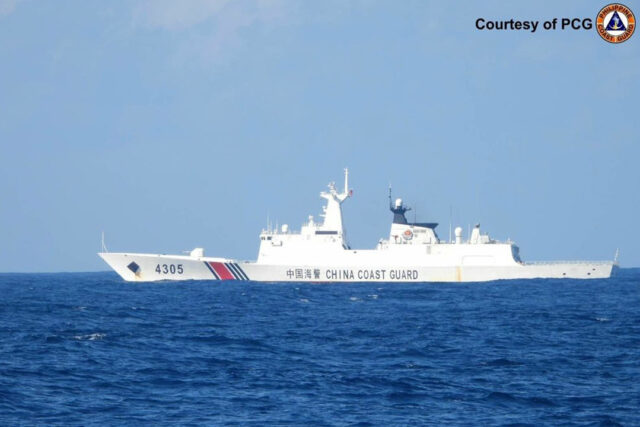
THIS PHOTO taken by the Philippine Coast Guard (PCG) shows one of the two Chinese coast guard vessels shadowed by the BRP Cabra about 26 nautical miles (48.15 kilometers) east of Scarborough Shoal, Nov. 23, 2025. — PCG

By Adrian H. Halili and Kenneth Christiane L. Basilio, Reporters

THE Philippine Coast Guard (PCG) patrolled near the contested Scarborough Shoal in the South China Sea on Sunday, where it spotted Chinese vessels and ordered them to leave amid what it described as China’s “excessive maritime claims” in the waterway.

In a statement, Manila’s coast guard said that its patrol ship BRP Cabra shadowed two Chinese coast guard vessels about 26 nautical miles (48.15 kilometers) east of Scarborough, a vast fishing lagoon that lies within the Philippines’ 200-nautical mile exclusive economic zone and was seized by China in 2012 following a standoff with Philippine forces.

The 44-meter Philippine ship followed and repeatedly issued radio challenges to 134-meter and 111-meter Chinese patrol vessels, citing violations against the Philippine Maritime Zones Act and the 2016 arbitral ruling by a United Nations-backed court that PCG said “invalidated China’s excessive maritime claims in the South China Sea.”

The Chinese Embassy in Manila did not immediately reply to a Viber message seeking comment.

The PCG “will continue routine and legitimate patrols to protect national sovereignty and prevent the normalization of unlawful Chinese presence,” it said, adding that its patrols are aimed at asserting Philippine sovereignty peacefully without raising tensions.

Scarborough, named Panatag by Manila and called Huangyan Dao by China, has been at the center of renewed tensions between the countries that lay competing claims over features in the South China Sea, where trillions of dollars’ worth of trade passes through annually.

In September, China approved the creation of a 3,500-hectare reserve at the northeast rim of Scarborough Shoal, which it said is intended to preserve the ecological diversity of one of the most contested areas in the strategic waterway.

This followed the Philippines’ fresh push for the South China Sea code of conduct (CoC), with the Department of Foreign Affairs saying the country will pursue the code once the country assumes chairship of the Association of Southeast Asian Nations (ASEAN) next year.

SEA CODE
The Philippines’ goal of completing the CoC could be achievable if it strengthens consensus among ASEAN member states, analysts said.

“The goal is achievable for as long as the parties involved will be satisfied enough with the provisions of the proposed agreement,” Josue Raphael J. Cortez, diplomacy lecturer at De La Salle-College of St. Benilde, said in a Messenger chat.

The lack of political will and consensus continues to hamper progress in finalizing the binding agreement between the regional bloc and Beijing, Mr. Cortez said.

“Both aforementioned challenges can be effectively dealt with through constructive dialogue and continuous negotiations,” he added.

He added that if the regional bloc is still keen on maintaining economic ties with China, then it should view the agreement not as a political maneuver, “but as key to lasting peace and order.”

Hansley A. Juliano, a political science lecturer at Ateneo de Manila University, said that the CoC should ensure that it would create the foundation for future stability in the Philippines and the region

“The current challenge of its achievement is ensuring all ASEAN stakeholders are interested in doing so,” he said in a Messenger chat.

“Whether we like it or not ASEAN remains intractable due to the hedging tendencies of our neighbors, not to mention mainland SEA’s vulnerability to Chinese economic influence,” he said.

The ASEAN and China agreed to craft a binding code of conduct in 2002, however, progress toward a binding framework has been repeatedly delayed by legal, political and strategic differences.

“Pushing for the CoC seems to be as much as a norm-building approach as much as it is a pragmatic stopgap to China’s unwillingness to abide regional and global governance structures it does not control,” Mr. Juliano said

Manila hopes to finalize the agreement amid increasing tensions in the South China Sea due to Beijing’s repeated confrontations with Philippine vessels in the area.

Benilde’s Mr. Cortez said that the code is an important safeguard to avoid future skirmishes that would impede bilateral ties and regional order.

“The very reason why the Philippines clamor for it is that its nature sets it apart from the preceding agreements which lacked the ‘teeth’ in terms of implementation,” he added.

He said that the agreement should also include provisions to ensure compliance and adherence of the signatories, “which are vital in ascertaining that the agreement will function the way it is envisioned,” Mr. Cortez said.

The Philippines is scheduled to host ASEAN’s annual summit in 2026, a year earlier than scheduled, after Myanmar gave up its turn due to political unrest. Manila is expected to put the South China Sea disputes high on the agenda.

Marcos’ legitimacy hinges on outcome of criminal charges lodged against allies–analysts

PRESIDENT Ferdinand R. Marcos, Jr. presented updates on the government’s fight against corruption in flood control projects three months since he launched the sumbongsapangulo.ph website. — PHILIPPINE STAR/NOEL B. PABALATE

By Chloe Mari A. Hufana, Reporter

PHILIPPINE President Ferdinand R. Marcos, Jr.’s move to file charges against his close political allies is a welcome step but analysts said this only matters if credible action is taken after months of investigations into a wide scale corruption within the bureaucracy.

“The public is no longer satisfied with symbolic gestures,” political science professor at the University of Makati Ederson DT. Tapia said via Facebook Messenger, noting that 67 days of evolving statements from various officials have fueled frustration. “People want clarity, evidence, and concrete steps forward.”

Mr. Tapia said the next steps should be straightforward: “Stop the noise, follow the evidence, and file the cases against those with documented involvement. If there is solid proof against others, present it and proceed. If there is none, avoid speculation.”

“What the public demands is simple,” he added. “Evidence-based action — not hearsay or confusion.”

For Mr. Marcos, the political stakes are rising with the president’s “legitimacy” increasingly depending on outcomes rather than announcements, particularly as public anger remains high in communities affected by flooding and unsafe infrastructure.

Last Friday, the President announced Ombudsman Jesus Crispin C. Remulla will probe his cousin, former House Speaker and Leyte Rep. Ferdinand Martin G. Romualdez and former House Appropriations Chairman and now resigned Party-list Rep. Elizaldy S. Co over their alleged hand in the multibillion-peso flood control scandal.

The two could face charges of plunder, graft and direct bribery, as recommended by the Department of Public Works and Highways (DPWH) and the Independent Commission for Infrastructure (ICI) before the Ombudsman.

Mr. Marcos’ remarks come amid heightened scrutiny over his administration’s handling of the massive corruption allegations.

Political scientist at the Ateneo de Manila University Hansley A. Juliano said Mr. Marcos is navigating a delicate political landscape now that the probe touches his cousin.

“Mr. Marcos, Jr. is always caught between a rock and a hard place with his cousin, which is why he must push through with this probe,” he said via Facebook Messenger, noting the need for the ICI to be “bureaucratic and impersonal” to eliminate any conflict of interest.

Mr. Juliano added that the moment presents an unusual political opportunity for the President.

“Mr. Marcos honestly has an open goal here: if Mr. Romualdez is found liable and Mr. Marcos actually puts him down, he can claim a moral high ground his family never had,” he added.

Still, such a move would test the administration’s internal balance of power.

“The loss of Mr. Romualdez, if he falls, would be an interesting experiment,” Mr. Juliano said. “Was Mr. Marcos ever reliant on his cousin’s maneuvering, or does he now command personal credibility for taking down his cousin even at the expense of family ties?”

“I’m not entirely confident he has the latter, and he is nothing if not risk averse in making controversial decisions,” noting his non-response to his sister Senator Imee R. Marcos’ recent “assault” to his authority.

Another Congress leadership shakeup could signal instability, analysts say

PHILIPPINE STAR/KJ ROSALES

By Kenneth Christiane L. Basilio and Aubrey Rose A. Inosante, Reporters

A FRESH congressional leadership shakeup just over two months after the Senate President and House Speaker were replaced could deepen perceptions of political instability in the Philippines, political analysts said over the weekend.

It could also threaten President Ferdinand R. Marcos, Jr.’s legislative agenda in the second half of his term, as he seeks to woo foreign investors amid a multibillion-peso corruption scandal that risks affecting business confidence in the country, they added.

“A new upheaval will signal volatility, not just in politics but in governance,” Ederson DT. Tapia, a political science professor at the University of Makati, said in a Facebook Messenger chat. “It may heighten perceptions of factionalism at the very moment the country is confronting a scandal sending mixed signals to investors who look for predictability and coherence in policy direction.”

A broad leadership shakeup in the Senate and House of Representatives in September led to changes among politicians holding key posts who have since been linked to the flood control scandal.

Mr. Marcos had flagged about P545 billion in flood control spending since taking office in 2022, saying in August that thousands of projects were substandard, poorly documented or nonexistent. About P100 billion worth of projects were cornered by only 15 contractors, he said.

Senate President Vicente “Tito” C. Sotto III, who replaced Senator Francis G. Escudero, said in early November there had been talks to oust him. Rumors have also swirled that Speaker Faustino “Bojie” Dy III is also facing a coup plot, which northern Luzon lawmakers were quick to douse as it issued its “unequivocal support” for Mr. Dy’s leadership.

“If a shakeup leads to changes directed furthering reforms that can ease business transactions and alleviate government failures, then a shakeup might boost investor confidence,” Anthony Lawrence A. Borja, an associate political science professor at the De La Salle University, said in a Facebook chat.

“If not, then it would aggravate an image of political instability, that in turn, can spook foreign capital,” he added.

The key drivers of possible congressional leadership changes are the regional blocs and the possibility of an emerging coalition of disgruntled lawmakers, Mr. Tapia said.

“Add to this the informal influence networks around the Senate-House interface, and you have a combustible mix,” he said.

He added that any shift in congressional leadership could either accelerate or stall reforms, while helping shape the narrative for Mr. Marcos as he confronts the unfolding flood control scandal that has gripped his government.

“In a scandal-ridden environment, perception management becomes political survival.”

“The most recent shifts in the Executive branch, especially Ralph G. Recto’s appointment as executive secretary points to Mr. Marcos being serious about ensuring coordination between the executive and legislative branches, probably in relation to economic policies given Mr. Recto’s tenure in the Finance department,” Mr. Borja said.

He said that recent developments in the Marcos Cabinet could suggest that the President is serious about addressing the corruption scandal, “even at the expense of sacking Cabinet members.”

NEW CABINET MEMBERS
Mr. Marcos’ Cabinet also welcomed the appointment of Budget Secretary Rolando U. Toledo, who now faces a steep test as he takes office under a high-profile corruption probe, tasked to restore budget processes and speed up disbursements without fraud to lift economic growth, analysts said.

Michael Henry Ll. Yusingco, a fellow at the Ateneo de Manila University Policy Center, said Mr. Toledo may struggle to regain the public’s trust in the budget process.

Mr. Toledo replaced Amenah F. Pangandaman last week after she was linked to a P100 billion alleged insertion in the 2025 budget, according to former Party-list Rep. Elizaldy Co.

“He will constantly be suspected of sponsoring or turning a blind eye to pork barrel. For too long, lawmakers have clung to the antiquated ‘bring home the bacon’ mentality — celebrating pork as if it were a gift to constituents,” he said in a Facebook Messenger chat over the weekend.

Ms. Pangandaman, along with Executive Office Undersecretary Adrian Carlos A. Bersamin, may face “conspiracy to commit plunder” charges, according to Ombudsman Jesus Crispin C. Remulla, which adds further pressure on the budget agency.

“To truly break the cycle of plunder, the entire budget process needs recalibration. It needs to reflect the Bottom-Up Budgeting principle, where the planning begins with communities and regions rather than with national-level political brokerage,” he said.

Mr. Yusingco said that the budget process has often been regarded as synonymous with corrupt politicians seeking to plunder the public coffers.

Meanwhile, Foundation for Economic Freedom President Calixto V. Chikiamco said one key challenge for the newly installed official is to release government funds swiftly, but in ways that prevent waste and fraud.

He noted that a flood control corruption scandal has dampened economic growth as it clamped public spending, particularly in the Department of Public Works and Highways.

As of end-September, overall government infrastructure and capital outlays disbursements stood at P877.1 billion, down 10.7% from P982.4 billion a year ago. This accounted for 87.4% of the full‑year program.

The Department of Budget and Management earlier said the government is betting that its P1.31-trillion programmed spending for the fourth quarter will lift full-year economic growth this year.

BI on high alert over Co’s warrant

SCREENSHOT of former Party-list Rep. Zaldy Co’s statement posted on his facebook account. — FACEBOOK.COM/REPZALDYCO

THE Bureau of Immigration (BI) has placed all immigration officers at the country’s international airports and seaports on heightened alert after the Sandiganbayan issued arrest warrants against former lawmaker Elizaldy S. Co and 15 others on Nov. 21.

In a statement on Sunday, BI commissioner Joel Anthony M. Viado said the names of those covered by the warrants have been entered into the bureau’s central derogatory database, allowing officers to immediately flag and verify any attempts by the individuals to enter or leave the Philippines.

“Once intercepted, our officers are instructed to coordinate immediately with the Philippine National Police for the lawful execution of the warrants,” Mr. Viado said as quoted in the statement.

Inter-agency coordination remains critical to prevent those facing charges from evading accountability through travel, he added.

According to BI, its records show that four of the 16 individuals are currently abroad.

Mr. Viado said that the BI is working closely with law enforcement agencies to ensure that the warrants are enforced when the individuals return or present themselves at Philippine ports. — Erika Mae P. Sinaking

PHL marks Maguindanao massacre anniv

A MAINTENANCE worker at the National Press Club in Intramuros cleans a marker containing the names of journalists who died in the Maguindanao massacre, in preparation for the commemoration of its 16th anniversary on Sunday. — PHILIPPINE STAR/EDD GUMBAN

THE Presidential Task Force on Media Security (PTFOMS) vowed to push for continued accountability in the Maguindanao massacre case, as the Philippines on Sunday marked the anniversary of one of the world’s deadliest attacks on journalists.

In a statement, the task force said it “stands in solidarity with the victims’ families and the entire media community,” honoring the 58 people killed in 2009, including 32 journalists and media workers.

The anniversary comes as families of the victims continue to press for the full resolution of the case, amid ongoing appeals more than a decade after a Philippine court convicted several members of the influential Ampatuan family in 2019.

PTFOMS said the massacre remains a stark reminder of the risks faced by journalists in the country, adding that the demand for justice “is not just a plea for retribution; it is a strong demand for accountability, for an end to impunity, and for assurance that such an act never happens again.”

The task force reiterated its commitment to protect media workers and safeguard press freedom, saying it will keep coordinating with law enforcement and judicial agencies to ensure that legal processes move forward.

The attack — considered the deadliest election-related violence in Philippine history — has long been emblematic of the country’s struggles with impunity, political clan violence, and threats to journalists. — Chloe Mari A. Hufana

Zero-balance billing gets more funds 

THE Senate Finance Committee on Sunday said that it has allocated an additional P9.3 billion to support the government’s “zero-balance billing” program.

In a statement, Senator Sherwin T. Gatchalian, who heads the committee, said that the additional funding to P65 billion stands to benefit about 18 million Filipinos.

“The increased funding for the zero-balance billing program is for healthier and safer communities. This is one of the changes that our countrymen will directly feel,” he added.

The program guarantees patients in public hospitals no out-of-pocket expenses for covered services.

Mr. Gatchalian said that the National Expenditure Program originally allocated P53.3 billion for the program, which would only cover about 16 million patients.

He added that the committee had also allotted P1 billion each to support zero-balance billing in the Lung Center of the Philippines, the Philippine Heart Center, the National Kidney and Transplant Institute, and the Philippine Children’s Medical Center.

The Philippine Health Insurance Corp. (PhilHealth) currently shoulders the full cost of covered services under the program.

The services include room and board, medicines, laboratory tests and professional fees, ensuring that patients do not pay anything on top of their coverage. It only applies to patients admitted to ward-type hospital accommodations. — Adrian H. Halili

PMA welcomes 333 new cadets

FORT DEL PILAR, Baguio City — The Philippine Military Academy (PMA) officially welcomed 333 fourth class cadets of “MADASILAK” Class of 2029 into the Cadet Corps Armed Forces of the Philippines (CCAFP) during recognition rites held on Saturday at Borromeo Field.

This rite marked the plebes’ transition from months of rigid training to becoming full-fledged members of the corps.

Armed Forces of the Philippines Chief of Staff General Romeo S. Brawner, Jr. applauded the cadets’ determination to complete the toughest phase of their PMA journey.

“Out of the thousands who aspired to enter these gates, you stood your ground,” he told the plebes, noting that their struggles were designed to build the resilience required of future military leaders.

Mr. Brawner also emphasized the importance of the milestones the cadets have already achieved. “Your first march, your first inspection, your first taste of failure, your first quiet victory — each one has already begun shaping the officer you will become,” he said.

He reminded the new cadets that Recognition is not a culmination but a starting point. “It is the moment the Academy says, ‘You are ready for more’.”

The Recognition Rites, one of PMA’s most meaningful traditions, formally ends the plebe stage — considered the most challenging period in a cadet’s life. It symbolizes the cadets’ acceptance into the long-standing brotherhood and sisterhood of the Corps, affirming their readiness to embrace military values and the demands of the profession. — Artemio A. Dumlao

PDEA seizes 5-kilo marijuana bricks

COTABATO CITY — Anti-narcotics agents seized P600,000 worth of compressed marijuana bricks found in a warehouse of a cargo forwarding firm in Barangay Salimbao in Sultan Kudarat, Maguindanao del Norte on Saturday.

The operation of the Philippine Drug Enforcement Agency-Bangsamoro Autonomous Region in Muslim Mindanao (PDEA-BARMM) that resulted in the confiscation of the parcel, containing five bricks of marijuana leaves, each weighing one kilo, was premised on reports by tipsters aware of its supposed delivery to a retailer in Cotabato City, from a supplier outside of Maguindanao del Norte.

Benjamin C. Recites III, director of PDEA-BARMM, told reporters on Sunday that their agents and counterparts in units under the Bangsamoro regional police are together trying to identify the real sender and consignee of the illegal parcel.

Mr. Recites said their agents had located the parcel in the pile of packages inside the warehouse of the cargo forwarding outfit using a narcotics-sniffing dog.

The management of the cargo-forwarding firm had assured to cooperate with the PDEA-BARMM in identifying the people behind the foiled attempt to ship, apparently from another region to a contact in Cotabato City.

Mr. Recites said PDEA-BARMM agents have also seized P102,000 worth of crystal meth (shabu) from a dealer entrapped in a separate operation also on Saturday in the upland Wao town in Lanao del Sur, planned with the help of municipal and provincial officials.

Mr. Recites said the 41-year-old suspect was immediately frisked and cuffed by their agents after selling P102,000 worth of shabu, weighing 15 grams, during a tradeoff in a secluded area in Wao, one of the 39 towns in Lanao del Sur.

The suspect is now locked in a detention facility, awaiting prosecution for violation of the Comprehensive Dangerous Drugs Act of 2002. — John Felix M. Unson