Home Blog Page 2355

Developing nations blast $300-B COP29 climate deal as insufficient

CLIMATE ACTIVISTS project a message onto the Embassy of Azerbaijan ahead of COP29 climate talks in London, Britain, Nov. 7, 2024. — REUTERS

BAKU — Countries at the Conference of the Parties (COP29) summit in Baku adopted a $300 billion a year global finance target on Sunday to help poorer nations cope with impacts of climate change, a deal its intended recipients criticized as woefully insufficient.

The agreement, clinched in overtime at the two-week conference in Azerbaijan’s capital, was meant to provide momentum for international efforts to curb global warming in a year destined to be the hottest on record.

Some delegates gave the deal a standing ovation in the COP29 plenary hall. Others lambasted wealthy nations for not doing more and criticized the Azerbaijan host for hurriedly gaveling through the contentious plan.

“I regret to say that this document is nothing more than an optical illusion,” Indian delegation representative Chandni Raina told the closing session of the summit, minutes after the deal was gaveled in. “This, in our opinion, will not address the enormity of the challenge we all face. Therefore, we oppose the adoption of this document.”

United Nations (UN) climate chief Simon Stiell acknowledged the difficult negotiations that led to the agreement but hailed the outcome as an insurance policy for humanity against global warming.

“It has been a difficult journey, but we’ve delivered a deal,” Mr. Stiell said. “This deal will keep the clean energy boom growing and protect billions of lives.

“But like any insurance policy, it only works if the premiums are paid in full, and on time.”

The agreement would provide $300 billion annually by 2035, boosting rich countries’ previous commitment to provide $100 billion per year in climate finance by 2020. That earlier goal was met two years late, in 2022, and expires in 2025.

The deal also lays the groundwork for next year’s climate summit, to be held in the Amazon rainforest of Brazil, where countries are meant to map out the next decade of climate action.

The summit cut to the heart of the debate over financial responsibility of industrialized countries — whose historic use of fossil fuels has caused the bulk of greenhouse gas emissions — to compensate others for worsening damage from climate change.

It also laid bare divisions between wealthy governments constrained by tight domestic budgets and developing nations reeling from costs of storms, floods and droughts.

Negotiations had been due to finish on Friday but ran into overtime as representatives from nearly 200 countries struggled to reach consensus. Talks were interrupted on Saturday as some developing countries and island nations walked away in frustration.

“We are leaving with a small portion of the funding climate-vulnerable countries urgently need. It isn’t nearly enough, but it’s a start,” said Tina Stege, Marshall Islands climate envoy.

Nations have been seeking financing to deliver on the Paris Agreement goal of limiting global temperature rise to 1.5 degrees Celsius (2.7 degrees Fahrenheit) above pre-industrial levels — beyond which catastrophic climate impacts could occur.

The world is currently on track for as much as 3.1 C (5.6 F) of warming by the end of this century, according to the 2024 UN Emissions Gap report, with global greenhouse gas emissions and fossil fuels use continuing to rise.

Sunday’s deal failed to set out detailed steps for how countries will act on last year’s UN climate summit pledge to transition away from fossil fuels and triple renewable energy capacity this decade. Some negotiators said Saudi Arabia had attempted to block such a plan during the talks.

“There’s definitely a challenge in getting greater ambition when you’re negotiating with the Saudis,” said US climate adviser John Podesta.

A Saudi official did not immediately provide comment. 

WHAT COUNTS AS DEVELOPED NATION?
The roster of countries required to contribute — about two dozen industrialized countries, including the US, European nations and Canada — dates back to a list decided during UN climate talks in 1992.

European governments have demanded others pay in, including China, the world’s second-biggest economy, and oil-rich Gulf states. The deal encourages developing countries to make contributions but does not require them.

The agreement includes a broader goal of raising $1.3 trillion in climate finance annually by 2035 — which would include funding from all public and private sources and which economists say matches the sum needed to address global warming.

Countries also agreed on rules for a global market to buy and sell carbon credits that proponents say could mobilise billions more dollars into new projects to fight global warming, from reforestation to deployment of clean energy technologies.

Securing the climate finance deal was a challenge from the start.

Donald Trump’s US presidential election victory this month has raised doubts among some negotiators that the world’s largest economy would pay into any climate finance goal agreed in Baku. Mr. Trump, a Republican who takes office in January, has called climate change a hoax and promised to again remove the US from international climate cooperation.

President Joseph R. Biden congratulated the COP29 participants for reaching what he called an historic agreement that would help mobilize needed funds, but said more work was needed.

“While there is still substantial work ahead of us to achieve our climate goals, today’s outcome puts us one significant step closer. On behalf of the American people and future generations, we must continue to accelerate our work to keep a cleaner, safer, healthier planet within our grasp,” Mr. Biden said in a statement.

Western governments have seen global warming slip down the list of national priorities amid surging geopolitical tensions, including Russia’s war in Ukraine and expanding conflict in the Middle East, and rising inflation.

The showdown over financing for developing countries comes in a year scientists predict will be the hottest on record. Climate woes are stacking up, with widespread flooding killing thousands across Africa, deadly landslides burying villages in Asia, and drought in South America shrinking rivers.

Developed countries have not been spared. Torrential rain triggered floods in Valencia, Spain, last month that left more than 200 dead, and the US so far this year has registered 24 billion-dollar disasters — just four fewer than last year. — Reuters


Russia says US using Taiwan to stir crisis in Asia

Honor guards raise a Taiwanese flag at the Presidential Palace in Taipei, Taiwan Oct. 10, 2023. — REUTERS

THE United States is using Taiwan to provoke a serious crisis in Asia, Russian Deputy Foreign Minister Andrei Rudenko told TASS news agency in remarks published on Sunday, reiterating Moscow’s backing of China’s stance on Taiwan.

“We see that Washington, in violation of the ‘one China’ principle that it recognizes, is strengthening military-political contacts with Taipei under the slogan of maintaining the ‘status quo’, and increasing arms supplies,” Mr. Rudenko told the state news agency.

“The goal of such obvious U.S. interference in the region’s affairs is to provoke the PRC (People’s Republic of China) and generate a crisis in Asia to suit its own selfish interests.”

The report did not cite any specific contacts that Rudenko was referring to.

China views democratically governed Taiwan as its own territory, a claim that Taiwan’s government rejects. The US is Taiwan’s most important international backer and arms supplier, despite the lack of formal diplomatic recognition.

The US State department did not immediately respond to a request for comment on Rudenko’s remarks outside office hours.

In September, President Joe Biden approved $567 million in military support for Taiwan. Russia responded that it was standing alongside China on Asian issues, including criticism of the U.S. drive to extend its influence and “deliberate attempts” to inflame the situation around Taiwan.

China and Russia declared a “no limits” partnership in February 2022 when President Vladimir Putin visited Beijing shortly before launching a full-scale invasion of Ukraine, triggering the deadliest land war in Europe since World War II.

In May this year, Mr. Putin and Chinese President Xi Jinping pledged a “new era” of partnership between the two most powerful rivals of the United States, which they cast as an aggressive Cold War hegemon sowing chaos across the world. — Reuters

Barcelona protesters demand affordable rents as Spain juggles tourism impact

GENERAL VIEW of Barcelona, Spain, Feb. 12, 2021. — REUTERS

BARCELONA — About 22,000 people protested in Barcelona on Saturday, in the latest demonstration to demand lower housing rental prices and better living conditions.

Housing has become a major issue in Spain as it struggles to balance promoting tourism, a key driver of its economy, and concerns over high rents due to gentrification and landlords shifting to more lucrative, short-term tourist rentals.

The price of rentals signed in the second quarter of 2024 in Barcelona was almost 70% higher than in the same period of 2014, data from the Catalan Housing Agency shows.

“We are spending half our wages in rent… This must stop!,” said Carme, 28, a spokeswoman for a tenants union.

Smaller protests were held across Catalonia, and in Burgos, Asturias in north Spain and Jerez de la Frontera in the south.

The government announced a crackdown on short-term and seasonal holiday lettings in July and plans to investigate listings on platforms such as Airbnb and Booking.com to verify if they have licences.

Demonstrations have been held this year in Madrid, the Canary Islands and Malaga, where seasonal hospitality workers struggle to find accommodation, with many sleeping in caravans or even their cars. — Reuters

Ukraine has lost over 40% of Russia’s Kursk region to counterattacks, Kyiv source says

Army soldier figurines are displayed in front of the Ukrainian and Russian flag colors background in this illustration taken, Feb. 13, 2022. — REUTERS/DADO RUVIC/ILLUSTRATION

KYIV — Ukraine has lost over 40% of the territory in Russia’s Kursk region that it seized in a surprise incursion in August as Russian forces have mounted waves of counter-assaults, a senior Ukrainian military source said.

The source, who is on Ukraine’s General Staff, said Russia had deployed 59,000 troops to the Kursk region since Kyiv’s forces swept in and advanced swiftly, catching Moscow unprepared 2-1/2 years into its full-scale invasion of Ukraine.

“At most, we controlled about 1,376 square kilometers (531 square miles), now of course this territory is smaller. The enemy is increasing its counterattacks,” the source said.

“Now we control approximately 800 square kilometers (309 square miles). We will hold this territory for as long as is militarily appropriate.”

With the thrust into Kursk, Kyiv aimed to stem Russian attacks in eastern and northeastern Ukraine, force Russia to pull back forces gradually advancing in the east and give Kyiv extra leverage in any future peace negotiations.

But Russian forces are still advancing in Ukraine’s eastern Donetsk region.

President Volodymyr Zelensky said he believed Russian President Vladimir Putin’s main objectives were to occupy the entire Donbas, which consists of Donetsk and Luhansk regions, and oust Ukrainian troops from the Kursk region.

“For Putin, the most important thing is to push us out of the Kursk region. I am sure that he wants to push us out by Jan. 20,” Mr. Zelensky told media, referring to when Donald J. Trump will be inaugurated as US president. “It is very important for him (Putin) to demonstrate that he is in control of the situation.”

The source at the Ukrainian General Staff source reiterated that about 11,000 North Korean troops had arrived in the Kursk region in support of Russia, but that the bulk of their forces was still finalizing their training.

The Russian Defense Ministry did not immediately respond to a Reuters request for comment. Reuters could not independently verify the figures or descriptions given.

Moscow, which occupies about a fifth of Ukraine, has not confirmed or denied the presence of North Korean forces in Kursk region.

RUSSIAN ADVANCE IN EASTERN UKRAINE
The General Staff source said the Kurakhove region was the most threatening for Kyiv now as Russian forces were advancing there at 200-300 meters (yards) a day and had managed to break through in some areas.

The town of Kurakhove is a stepping stone towards the logistical hub of Pokrovsk in the Donetsk region.

Russia has about 575,000 troops fighting in Ukraine now, the source said and aims to increase its forces to around 690,000.

Russia does not disclose numbers involved in its fighting. Reuters could not verify those figures.

Ukraine has sought to disrupt Russian logistics and supply chains by hitting Russian weapons and ammunition depots, airfields, and other military targets inside Russia.

After US President Joseph R. Biden allowed Kyiv to fire U.S.-supplied missiles at targets deep inside Russia, Ukraine last week fired US ATACMS and British Storm Shadow cruise missiles into Russia.

On Thursday, Russia launched a new medium-range ballistic missile into the Ukrainian city of Dnipro, in a likely warning to NATO.

Ukrainian officials are holding talks with the United States and Britain on new air defense systems capable of protecting Ukrainian cities and civilians from the new longer-range aerial threats.

The Ukrainian General Staff source said the military had implemented measures to bolster air defenses over Kyiv and planned similar steps for Sumy in the north and Kharkiv in the northeast. — Reuters

Plastic Odyssey Expedition arrives in Manila and launches ‘Youth for Dagat’ program with France Philippines United Action

On Nov. 19, the Alliance Française de Manille hosted an Opening Event to celebrate the arrival of the Plastic Odyssey Expedition in the Philippines, uniting the French-Filipino community in support of this impactful initiative. Having sailed across three continents and visited over 20 countries, Plastic Odyssey’s laboratory ship has now docked in Manila to continue its mission of addressing plastic pollution in the most affected areas and empowering communities with sustainable solutions.

This exclusive event brought together environmental advocates, educators, and key stakeholders to spotlight the global fight against plastic pollution. Guests were introduced to Plastic Odyssey, a pioneering initiative committed to reducing plastic waste through a global network of local recycling projects.

The program was led by Xavier Leroux, Executive Director of Alliance Française de Manille; and Kevin Charuel, Managing Director of CCI France Philippines. Warm opening remarks were delivered by Rémy Tirouttouvarayane, Deputy Head of Mission at the Embassy of France in the Philippines; and Marie-Maylis Charlat, President of the France Philippines United Action Foundation (FPUA), setting the tone for an evening dedicated to collaboration and sustainable innovation.

Plastic Odyssey: A Global Initiative Raising Awareness and Sharing Sustainable Solutions

During the event, Simon Bernard, President and Co-Founder of Plastic Odyssey, delivered an inspiring presentation on the global initiative’s mission to combat plastic pollution through innovative recycling technologies and educational campaigns. He showcased how the expedition has been transforming plastic waste into valuable resources, fostering a global network of local recycling initiatives, and inspiring communities to adopt sustainable practices.

Santosh Paramel, Asia Pacific Operations Director and Vice-President of the Delfingen Foundation, elaborated on their collaborative efforts with Plastic Odyssey. He highlighted their direct support in establishing two micro-factories in the Philippines, designed to empower local communities with practical recycling solutions for tackling plastic waste effectively.

Youth for Dagat: Empowering Filipino Youth to Combat Plastic Pollution

The event also saw the launch of the “Youth for Dagat” program, a school-based initiative aimed at empowering Filipino youth to take action against plastic pollution. Spearheaded by the France Philippines United Action Foundation (FPUA), the program emphasizes environmental education, equipping students with practical tools to understand and address the harmful impacts of plastic waste. Alexandra Acedillo, FPUA Project Coordinator, underscored the program’s mission to nurture a new generation of environmental advocates by fostering grassroots engagement and promoting actionable solutions.

Funded by the Embassy of France to the Philippines, the Youth for Dagat program forms part of the Embassy’s Blue Nations initiative, which seeks to strengthen collaboration between France and the Philippines on maritime and climate issues. It also serves as a preparatory step for the 2025 United Nations Ocean Conference (UNOC) in Nice, reaffirming the commitment of both nations to environmental sustainability and ocean preservation.

Building Connections and Showcasing Impact

The evening concluded with a networking cocktail, providing participants the chance to engage directly with the Plastic Odyssey crew. Attendees were also treated to a special screening of the Plastic Odyssey documentary, offering an in-depth exploration of the expedition’s transformative work worldwide.

This opening event marked a significant milestone in fostering cross-cultural partnerships to address one of the planet’s most pressing environmental challenges. By bringing together key stakeholders and innovative solutions, it set the stage for meaningful collaboration and action toward a sustainable future.


For more updates on the Plastic Odyssey Expedition and the Youth for Dagat program, stay tuned to their social media channels below:

Plastic Odyssey

IG: @plasticodyssey

FB: https://www.facebook.com/plasticodyssey/

LinkedIn: https://www.linkedin.com/company/plasticodyssey/

Philippines United Action Foundation (FPUA)

IG: @francephilippinesunitedaction

FB: https://www.facebook.com/francephilippinesunitedaction/

LinkedIn: https://www.linkedin.com/company/france-philippines-united-action/


Spotlight is BusinessWorld’s sponsored section that allows advertisers to amplify their brand and connect with BusinessWorld’s audience by publishing their stories on the BusinessWorld Web site. For more information, send an email to online@bworldonline.com.

Join us on Viber at https://bit.ly/3hv6bLA to get more updates and subscribe to BusinessWorld’s titles and get exclusive content through www.bworld-x.com.

French Film Festival takes center stage at SM Cinema

Experience the magic of French cinema at the 27th French Film Festival, showing from Nov. 22 to 29, at SM Aura and SM City North EDSA with free admission.

Admission is free from Nov. 22 to 29 at SM Aura and SM City North EDSA Cinemas

The Embassy of France to the Philippines, in partnership with SM Supermalls and SM Cinema, is staging the 27th edition of the French Film Festival at SM Aura Cinema from Nov. 22 to 26, and at SM City North EDSA Cinema from Nov. 22 to 29, 2024. Admission is free and on a first-come, first-served basis.

For the first time in its history, the French Film Festival will feature Feminist Cinema with a cross-cultural perspective between France and the Philippines through a selection of films by the new generation of French and Filipina women directors.

A special guest — French director Noémie Lefort — has been invited to the Philippines for the occasion. She will present her movie My Heroin, based on her own story about a young girl who dreams of directing a film in Hollywood. She will take part in a round-table discussion at SM City North EDSA Cinema on Nov. 26 about the place of women in cinema, both in front of and behind the camera, alongside prominent women involved in the Philippine film industry. She will also give a master class on film directing to film students at the University of the Philippines.

The 27th French Film Festival — Feminist is organized by SM Supermalls, SM Cinema, Embassy of France, Alliance Française de Manille, Institut Français, and the Film Development Council of the Philippines.

For further information about the French Film Festival, follow @smcinema and @smsupermalls on social media.


Spotlight is BusinessWorld’s sponsored section that allows advertisers to amplify their brand and connect with BusinessWorld’s audience by publishing their stories on the BusinessWorld Web site. For more information, send an email to online@bworldonline.com.

Join us on Viber at https://bit.ly/3hv6bLA to get more updates and subscribe to BusinessWorld’s titles and get exclusive content through www.bworld-x.com.

DAHUA Technology and VST ECS Philippines, Inc. forge strategic partnership for innovative dash cam launch

In a move set to revolutionize the road safety and surveillance industry, DAHUA Technology, a global leader in video-centric AIoT solutions and service provider, had officially launched its partnership with VST ECS Philippines, Inc., one of the country’s leading ICT distribution companies.

The Official partnership launch between DAHUA and VST ECS happened on Nov. 20, 2024 at the prestigious Marquis Events Place, BGC.

This partnership aims to make advanced Dash Cam technology more accessible to the Filipino market, reinforcing both companies’ commitment to safety and innovation.


Highlights of the Event

The event featured keynote speakers from senior executives of both companies, including Dennis Ong, Channel Sales Manager of DAHUA Technology; and Jimmy D. Go, President & CEO of VST ECS Phils., Inc. Among the discussion are the growing importance of dash cams in ensuring road safety and reducing accident disputes, as well as the synergistic potential of the partnership.

Dennis Ong, Channel Sales Manager of DAHUA Technology

Attendees got to see a hands-on demonstration of DAHUA’s new dash cam models, highlighting their cutting-edge features such as AI-driven incident detection, high-resolution night vision, and real-time connectivity.

About DAHUA Technology

DAHUA Technology is a world-leading video-centric AIoT solution and service provider. The company focuses on advanced technology development, including AI, cloud services, video analysis, and smart city solutions. With over two decades of experience, DAHUA is committed to delivering high-quality products and services to its customers around the world.

About VST ECS Philippines

VST ECS Philippines, Inc. is a premier ICT distributor in the Philippines, offering a comprehensive range of products and solutions for businesses and consumers. With a strong focus on innovation and customer service, VST ECS has established itself as a trusted partner for technology providers and end-users alike.

Looking Ahead

The DAHUA Dash Cam x VST ECS partnership is set to drive significant growth in the automotive and security markets, providing consumers with reliable, high-performance dash cam solutions. The collaboration promises to foster further innovation and expand the availability of smart road safety technologies in the Philippines.


For more information, please contact their media relations, and visit VST ECS Philippines, Inc.‘s and DAHUA Philippines‘ social media accounts. 


Spotlight is BusinessWorld’s sponsored section that allows advertisers to amplify their brand and connect with BusinessWorld’s audience by publishing their stories on the BusinessWorld Web site. For more information, send an email to online@bworldonline.com.

Join us on Viber at https://bit.ly/3hv6bLA to get more updates and subscribe to BusinessWorld’s titles and get exclusive content through www.bworld-x.com.

DigiPlus clinches multiple accolades in Transform Awards Asia, celebrating its visionary rebrand

DigiPlus and Landor showcase four wins at the Transform Awards Asia 2024, honoring the strategic rebranding that marked DigiPlus’ transformation into a tech-forward digital entertainment leader.

DigiPlus Interactive, together with world-leading branding specialist Landor, secured four awards at the Transform Awards Asia 2024, held in Singapore on Nov. 18.

DigiPlus took home Silver for ‘Best Brand Evolution (Corporate)’, Silver for ‘Best Use of Visual Property’, Bronze for ‘Best Use of Typography’, and Bronze for ‘Best Brand Development Project to Reflect a Change of Mission, Values, or Positioning.’

The awards underscore the impact of DigiPlus’ strategic rebranding and also provided the perfect stage to spotlight its incredible journey from traditional leisure and resort operations to its position today as a digital entertainment powerhouse. This transformation embodies the spirit of its tagline: “Multiply the Fun.” By embracing technology and innovation, DigiPlus has redefined its offerings, delivering exceptional entertainment experiences across its flagship platforms, including BingoPlus, ArenaPlus, GameZone, and its modernized lineup of traditional Filipino carnival games.

“The DigiPlus rebranding was more than just a visual overhaul — it was a strategic transformation of who we are and where we’re headed,” said Celeste Jovenir, Vice-President for Investor Relations, Corporate Communications, and Sustainability. “From redefining our mission and values to modernizing our visual identity, every aspect of our rebrand was designed to reflect our evolution as a tech-forward company. Winning at the Transform Awards Asia is a defining moment for us, as it recognizes the immense effort and investment we poured into this journey.”

Organized by Transform Magazine, the Transform Awards Asia is a prestigious annual event that celebrates excellence in rebranding and brand strategy across the Asia-Pacific region.

Winning the awards underscores DigiPlus’ unique achievement as one of the few Filipino companies to gain such recognition on a global stage.

This recognition comes at a pivotal moment for DigiPlus as it continues to scale its operations as a dynamic, future-focused digital entertainment company.

The new brand identity, crafted in collaboration with Landor, captures DigiPlus’ core values of fairness, transparency, integrity, innovation, teamwork, and responsibility. It also heralds the company’s ambition to lead in the digital entertainment space while staying true to its Filipino roots.

DigiPlus’ transformation involved reimagining its visual identity to resonate with a tech-savvy, modern audience.

The brand’s vibrant colors, compelling typography, and streamlined design reflect the dynamism and inclusivity of its offerings.

This thoughtful integration of visual elements contributed to the company’s recognition at the Transform Awards Asia.

With these wins, DigiPlus reaffirms its commitment to multiplying the fun and meeting the evolving demands of players in a fast-paced digital landscape.

About DigiPlus Interactive Corp.

DigiPlus Interactive Corp. pioneered digital entertainment in the Philippines. It introduced leading platforms BingoPlus and ArenaPlus, widely known for their engaging experiences in interactive gaming and sports entertainment. DigiPlus also operates PeryaGame, Tongits+, and GameZone, with more to come. For more information, visit www.digiplus.com.ph.


Spotlight is BusinessWorld’s sponsored section that allows advertisers to amplify their brand and connect with BusinessWorld’s audience by publishing their stories on the BusinessWorld Web site. For more information, send an email to online@bworldonline.com.

Join us on Viber at https://bit.ly/3hv6bLA to get more updates and subscribe to BusinessWorld’s titles and get exclusive content through www.bworld-x.com.

Peso falls to P59 vs dollar

PHILIPPINE STAR/ MIGUEL DE GUZMAN

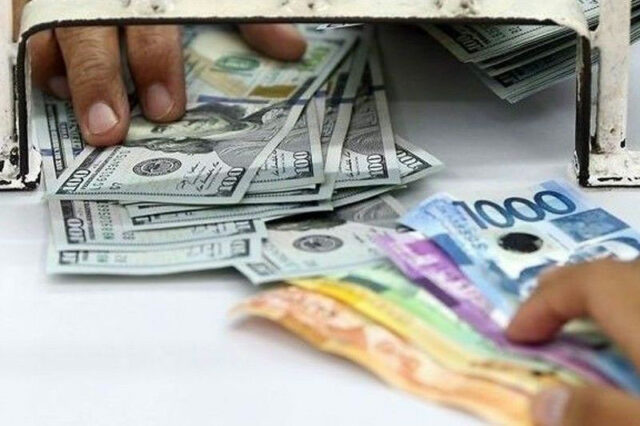
THE PHILIPPINE PESO on Thursday hit a record-low P59-a-dollar level for the first time in more than two years as the dollar continued its rally.

The peso closed at P59 against the greenback at the end of trading, weaker by nine centavos from its P58.91 finish on Wednesday.

This marked the first time the peso returned to the P59-a-dollar level since Oct. 17, 2022.

The peso opened Thursday’s trading session at P58.93 versus the dollar. Its intraday best was P58.92, while its weakest showing was its close of P59.

Dollars traded dropped to $842.68 million from $1.09 billion on Wednesday.

“The USD/PHP weakness reflects the recent rise in (10-year US Treasury yields), reflecting Trump 2.0 policies and causing the dollar to rise,” Jonathan L. Ravelas, senior adviser at professional service firm Reyes Tacandong & Co., said.

Economists have been warning that US President-elect Donald J. Trump’s proposed tariffs and tax cuts could stoke inflation and potentially hamper the US Federal Reserve’s easing cycle. 

Reuters reported that markets are pricing in a 52% chance of a 25-basis-point (bp) cut at the Fed’s December meeting, down from 82.5% a week ago, according to CME’s FedWatch Tool.

A Reuters poll showed most economists expect the Fed to cut rates at its December meeting, with shallower cuts in 2025 than expected a month ago due to the risk of higher inflation from Mr. Trump’s policies.

The first trader said the peso slump was also due to the “function of a stronger dollar and uncertainty of the Fed direction under Trump, plus mixed signals from the Bangko Sentral ng Pilipinas (BSP).”

“This also reflects expectations of rate cuts by BSP. This could persist in 2025. The near-term risk is P60,” Mr. Ravelas added.

BSP Governor Eli M. Remolona, Jr. this week gave mixed signals, saying the Monetary Board can either keep or cut rates at its Dec. 19 policy meeting.

He said inflationary pressures would warrant a pause, while weaker-than-expected growth would pave the way for another rate cut.

Since August, the BSP has delivered a total of 50 bps worth of rate cuts, bringing the benchmark to 6%.

“The peso continued to depreciate, closing at the 59 level, with the ongoing uncertainty on the composition of Trump’s economic team,” the second trader said.

Mr. Trump’s pool for a Treasury secretary pick widened to include Apollo Global Management Chief Executive Marc Rowan and former Federal Reserve Governor Kevin Warsh, Reuters reported.

Mr. Trump said he would nominate Howard Lutnick, chief executive of Wall Street brokerage firm Cantor Fitzgerald, as head of the Commerce Department.

The second trader also noted “escalating tensions between Russia and Ukraine exert increased safe-haven demand for the greenback.”

Russia launched an intercontinental ballistic missile from its southern Astrakhan region during a morning attack on Ukraine on Thursday, Reuters reported, citing Kyiv’s air force. It was the first time Russia has used such a powerful, long-range missile during the war.

The air force reported the launch after Ukraine fired US and British missiles at targets inside Russia this week, despite warnings by Moscow that it would see such action as a major escalation in the 33-month-old war. — Luisa Maria Jacinta C. Jocson with Reuters

BSP monitoring lenders behaving like digital banks

FREEPIK

SOME LENDERS behaving like online banks might be required to obtain digital banking licenses to curb arbitrage and improve oversight, the Bangko Sentral ng Pilipinas (BSP) said.

“We’re busy right now determining which among the digi-centric institutions that we have right now can already be considered as operating like a digital bank,” BSP Director for Technology Risk and Innovation Supervision Department Melchor T. Plabasan told reporters on the sidelines of an event in Mactan, Cebu on Wednesday.

He said lenders operating like online banks might be obliged to also undergo the process of securing digital bank licenses.

“If the BSP has a basis for us to convert their license, then we will require them. That means all the requirements for digital banks will have to be complied with by these institutions,” he said.

In August, the Monetary Board lifted the moratorium on new digital banking licenses starting Jan. 1, 2025.

The BSP will now allow four more digital banks to operate in the country, which would bring the total to 10. These can either be new applicants or banks that will convert their existing license to a digital one.

Mr. Plabasan said the BSP could also convert the license of a rural or thrift bank into one for a digital bank.

“Because if you’re already behaving like a digital bank, you should be regulated like a digital bank, not a rural bank. That’s why the intention really is to minimize the arbitrage,” he added.

Once applicants secure approval from the central bank, they can begin operations as soon as their technology and infrastructure are ready, Mr. Plabasan said.

“Normally, the chartering is completed within three to four months, assuming that they have already submitted all the requirements,” he added.

BSP Governor Eli M. Remolona, Jr. earlier said these applicants must “bring something new to the table.”

Applicants will also undergo a “rigorous” licensing process that will evaluate their value proposition, business models and resource capabilities.

They must also comply with the standard licensing criteria, which cover capital adequacy and corporate governance and risk management, among others.

The BSP also said applicants must have the potential to reach untapped or underserved markets and push credit inclusion.

“We will not complete the four (licenses), just to say we granted all four licensees. If no one meets the additional requirements, then we will stay with the existing number,” Mr. Plabasan added.

So far, he said there has been equal interest from both new entrants and existing players seeking to convert their licenses.

“There are also foreign players that have signified interest to enter the Philippine market. We have already received some queries about certain legal requirements, regulatory requirements… By Jan. 1, probably we also will have done some assessment of the existing players there,” he said.

In 2021, the BSP capped the number of digital banking licenses at six to boost regulatory capacity and supervision of the sector.

The six digital lenders in the country are Tonik Digital Bank, Inc.; GoTyme Bank of the Gokongwei group and Singapore-based Tyme; Maya Bank of Voyager Innovations, Inc.; Overseas Filipino Bank, a subsidiary of Land Bank of the Philippines; UNObank of DigibankASIA Pte. Ltd.; and UnionDigital Bank of Union Bank of the Philippines, Inc.

The BSP defines a digital bank as a lender that offers financial products and services that are processed end-to-end through a digital platform or electronic channels with no physical branch. — Luisa Maria Jacinta C. Jocson

PHL breaks ground on world’s largest solar and battery storage facility

PRESIDENT Ferdinand R. Marcos, Jr. (left) and Manila Electric Co. (Meralco) Chairman and Chief Executive Officer Manuel V. Pangilinan hold the time capsule during the groundbreaking ceremony of the MTerra Solar Project. Also in photo is Meralco Vice Chairman Lance Y. Gokongwei (right). — PHILIPPINE STAR/NOEL PABALATE

THE PHILIPPINES on Thursday signaled the start of construction of a P200-billion solar and battery storage project that is expected to supply power to over two million households by 2027.

President Ferdinand R. Marcos, Jr. led the groundbreaking of Meralco Terra (MTerra) Solar project, which consists of a 3,500-megawatt-peak (MWp) solar power plant and a 4,500-megawatt-hour (MWh) battery energy storage system in Nueva Ecija and Bulacan.

Once fully operational by 2027, the project would deliver 3,500 megawatts of solar power to the Luzon grid, Mr. Marcos said in a speech, adding that it would become the “largest integrated solar and battery storage facility in the world.”

“A 13-kilometer, 500-kilovolt transmission line will connect this project to the power grid, ensuring that clean energy reaches Filipino homes and businesses with efficiency,” he added.

Once completed, the MTerra Solar is expected to supply clean energy to about 2.4 million households through a 20-year, 850-MW mid-merit power supply deal with Manila Electric Co. (Meralco).

The project is being developed by Terra Solar Philippines, Inc., a unit of SP New Energy Corp. (SPNEC).

The initial block with 600 MW of capacity is scheduled for delivery by February 2026, while the remaining 250 MW will follow in 2027.

“Numbers alone fail to articulate the full significance of this project, we are making a statement today that the Philippines is not only keeping pace with the global energy transition but more so express our intention — the Philippines’ intention — to lead the migration from thermal to renewables,” Meralco Chairman and Chief Executive Officer Manuel V. Pangilinan said.

In his speech, Mr. Marcos said the project would also “reduce carbon emissions by more than 4.3 million metric tons annually.”

“To put that into perspective, it is equivalent to removing three million gasoline-powered cars from our roads — a decisive action towards helping address global warming and climate change,” he added.

Energy Secretary Raphael P.M. Lotilla said major investments in energy such as the MTerra project will help the Philippines reach its renewable energy goal faster.

“The major investment in solar and energy storage technology is a crucial step toward achieving our goal of increasing the share of renewables in the energy mix, reducing our carbon footprint and addressing electricity demand in Luzon,” he said.

The project aligns with the Philippines’ goal of increasing the share of renewable energy in its power generation mix to 35% by 2030 and 50% by 2040.

The MTerra Solar was certified by the Energy department as an “energy project of national significance” and secured “green lane certification” from the Board of Investments, enabling it to benefit from streamlined and expedited permit processing.

OPPORTUNITIES
“The country should be quick to capitalize on opportunities towards green transition, such as the Nueva Ecija MTerra Solar project, particularly as there is a real demand for cheaper electricity and the current prices proposed by these renewable energy (RE) facilities can actually compete with traditional base load plants,” said public investment analyst Terry L. Ridon, who started InfraWatchPH.

“We should however be allowed to transition at our own pace, based on the actual conditions of the economy,” he said in a Facebook Messenger chat.

Mr. Ridon said public support for the green transition would get stronger as the prices of electric vehicles are expected to be cheaper than internal combustion engines due to lower production costs and advanced manufacturing methods.

Mr. Marcos said the MTerra Solar project, which features five million solar panels, is expected to create as many as 10,000 jobs.

“It will stimulate local economies and open countless opportunities for growth and development in those communities,” he said.

“Over the next decade, it is poised to generate nearly P23 billion in financial benefits — resources that will pave the way for even greater progress.”

Meralco’s controlling stakeholder, Beacon Electric Asset Holdings, Inc., is partly  owned by PLDT Inc.

Hastings Holdings, Inc., a unit of PLDT Beneficial Trust Fund subsidiary MediaQuest Holdings, Inc., has an interest in BusinessWorld through the Philippine Star Group, which it controls. — Kyle Aristophere T. Atienza and Sheldeen Joy Talavera

Storm barrage threatens growth after crops flattened

RICE FIELDS are flooded after water rose in Laguna de Bay due to recent typhoons. — PHILIPPINE STAR/RYAN BALDEMOR

SIX POWERFUL STORMS late in the season that ravaged crops and drenched vast areas of the Philippines have put the nation on track for record rice imports and raised concerns over elevated food inflation.

From the end of October to mid-November, the storms repeatedly dumped heavy rain over northern regions grappling with widespread flooding and saturated soil that couldn’t absorb any more water. The onslaught caused at least $131 million of crop losses, with rice bearing the brunt of the damage.

The last time six tropical cyclones hit the Philippines over a three-week period was in 1946, according to President Ferdinand R. Marcos, Jr., who said rice imports might climb to a record 4.5 million tons this year to fill supply gaps. The peak of the nation’s typhoon season is typically July through October.

“We don’t have anything to harvest anymore because of the storms,” said Jespher Villegas, a rice farmer in the town of Gonzaga in Cagayan province. His entire crop was submerged in floodwaters and rain is continuing in the region, he added, with his corn and tilapia fish farm also affected.

The Philippines is on the frontline for typhoons in the Asia-Pacific region, with about 20 tropical cyclones forming each year near the archipelago. Some storms make landfall, and some can track toward other countries in the region, soaking coffee crops in Vietnam and shutting stock trading in Taiwan.

Warm seas helped to fuel the most active season in the Western Pacific in seven decades this month, stirring up four typhoons, all of which made landfall in the Philippines. Even before the latest string of tropical cyclones, storms had sapped third-quarter growth and reduced rice production.

RUINED RICE
Nearly 600,000 tons of rough rice crops have been ruined by storms this year, according to the Department of Agriculture’s disaster management center. Over half was destroyed by Severe Tropical Storm Trami, which hit the major rice-growing region of Cagayan Valley in October.

Cagayan Valley and Central Luzon, which account for a third of the nation’s rice output, are two regions that were heavily drenched by the six storms. Prolonged rainfall can lead to a favorable environment for “grain-sucking rice bugs” that can attack at any time, the weather bureau warned.

The main rice crop is harvested in the last quarter of the year, and Agriculture Undersecretary Christopher Morales estimates annual output in 2024 may dip by about 1 million tons from a year ago to about 19 million tons. Still, imports are expected to remain elevated next year.

Overseas purchases could be between 4.5 million and 5 million tons next year to cover crop losses and higher consumption from a growing population, said Oscar Tjakra, a senior analyst for Rabobank in Singapore. The Philippines imported 3.6 million tons in 2023, according to government data.

“There’s high potential for more rice imports given disruptions to local rice production, which poses upside risk to food inflation and downside risk to economic activity,” according to Angelo Taningco, chief economist at Security Bank Corp. in Manila. The storms have also affected tourism, construction, manufacturing, transport and retail trade, he said.

Gross domestic product growth this year would likely come in below the Marcos government’s target of at least 6%, Taningco added.

Other crops have been destroyed by weather this year, including more than 350,000 tons of corn and over 112,000 tons of vegetables, according to figures from the government. Warmer temperatures caused by El Niño earlier in 2024 contributed to the damage, which has been exacerbated by recent storms.

Supply shortfalls risk boosting inflation, which accelerated in October on price gains in rice and other food items. To combat further hikes, the government is considering importing fish and vegetables, Agriculture Assistant Secretary Arnel de Mesa said on Tuesday.

“There’s a lot of rice and other crops that have been destroyed and we just have to compensate for that,” Mr. Marcos said on Friday. — Bloomberg

ADVERTISEMENT
ADVERTISEMENT