Home Blog Page 21

Dining In/Out (01/15/26)



A whisky masterclass to start 2026

THE Whisky Library, home to Manila’s largest whisky collection, opens the year with a dedicated Macallan masterclass anchored on A Night on Earth: The First Light, a limited-edition single malt inspired by the first sunrise of the year. Taking place on Jan. 21, from 7-9 p.m., the masterclass is guided by The Macallan brand expert Hans Eckstein and is designed as an exploration of how time, place, and tradition shape whisky. The evening features a tasting of four expressions from The Macallan’s A Night on Earth collection: A Night on Earth in Scotland, The Journey, The First Light, and A Night on Earth in Jerez. The series examines how different cultures mark moments of celebration, translating these occasions into whisky through flavor, design, and narrative. At the center of the experience is The First Light, a release inspired by New Zealand, which is among the first places in the world to witness the sunrise that begins the year. The single malt is matured in a combination of sherry-seasoned European and American oak casks, with a portion of ex-bourbon casks, resulting in a profile shaped by balance and layered character. Designed as a structured tasting experience, the masterclass allows guests to engage with the collection through guided discussion and sensory exploration in an intimate setting. The masterclass costs P4,500 net. Limited slots available so reserve through https://tickets.newportworldresorts.com/products/the-macallan-a-night-on-earth-masterclass.


Carmen’s Best unveils new flavors, new milk bar

CARMEN’S BEST has expanded its ice cream product line with new limited-edition flavors and dairy treats. The two new ice cream flavors are: Ube Halaya, a homage to the Filipino classic reimagined as a smooth, sweet ice cream; and Tiramisu, a local twist on the Italian dessert with espresso-infused mascarpone ice cream. The launch of these new flavors also marks a new chapter in the brand’s partnership with HOPE Philippines. When customers buy Ube Halaya and Tiramisu ice cream in pints or scoops, part of the sale goes toward building public school classrooms in different areas of the country, an initiative spearheaded by HOPE Philippines. The two flavors are now available nationwide online at carmensbest.com and in leading supermarkets. They come in exclusive 440 ml pints at P520 each. They are also offered at Carmen’s Best scooping stations in Rockwell, SM North EDSA, Mall of Asia, SM Makati, and Shangri-La Mall for P195 per scoop. Carmen’s Best has also launched the all-new Carmen’s Best Milk Bar, a local gourmet ice cream treat crafted with 100% fresh milk and no artificial colors or sweeteners. It contains 183 calories and provides 12% of the recommended daily calcium intake. It is available online at carmensbest.com, in groceries, and at all Carmen’s Best ice cream stores for P88 per bar or P528 for a box of six. Meanwhile, Carmen’s Best Milk has two new variants: Barista Fresh Milk, crafted to complement coffee, and Salted Caramel Milk. Carmen’s Best has partnered with 7-Eleven to offer convenient on-the-go sizes in stores nationwide.


Pancake House introduces brioche toasts

BELOVED flavors find a new canvas in Pancake House’s Brioche Toasts. Diners can try PB&J (Peanut Butter and Jelly) Brioche Toast (P229); Blueberry & Cream Cheese Brioche Toast (P249), with cream cheese and blueberry swirls, served with banana slices; and the Crème Brûlée Brioche Toast (P299) which has custard layered between two slices of toasted brioche, finished with a caramelized sugar crust, and served with banana slices. They are available at all Pancake House stores for dine-in, takeout, curbside pick-up, and delivery until March 31.


Krispy Kreme presents Chocomania

START the new year on a sweet note with Krispy Kreme Philippines’ latest collection: Chocomania, co-branded with Mars chocolates. This limited-time collection features three chocolate doughnuts inspired by classic Mars favorites, paired with the new Choco Caramel Twix Chiller. The doughnuts are: White Choco Malt topped with Maltesers, a soft chocolate dough coated in white chocolate, finished with crunchy Maltesers and additional white chocolate; Choco Caramel topped with Twix has rich dark chocolate dough loaded with Twix, crushed Graham crackers, and gooey caramel fudge; and Dark Choco Candy, a chocolate donut coated in dark chocolate, drizzled with white chocolate, and topped with M&Ms. Pair the doughnuts with the Choco Caramel Twix Chiller, an iced-blended mix of kreme base, double chocolate syrup, caramel fudge, and graham cracker crunch, topped with whipped kreme, chopped Twix, and a swirl of salted caramel. The Chocomania Collection is currently available until Feb. 28, starting at P80 per donut, available in all Krispy Kreme stores nationwide.


McDonald’s offers P99 McSavers

MCDONALD’S Philippines welcomes 2026 with McSavers Sulit Busog Crispy Chicken Fillet meals that cost P99. Options include the original Crispy Chicken Fillet with the original gravy, the Crispy Chicken Fillet ala King with a creamy sauce, and the recently introduced Golden Curry Fillet with a creamy and slightly spicy and sweet curry sauce. All three are served with extra rice, plus a regular drink. McSavers Sulit-Busog Meals are available through dine-in, take-out, drive through, and delivery.


Jollibee brings back Mix & Match

JOLLIBEE has brought back its Mix & Match option. Starting at P78, diners can pair popular mains and sides. Main options priced at P78 include the Yumburger, Jolly Spaghetti, and one-piece Burger Steak, while P88 mains include the Cheesy Yumburger, Crunchy Chicken Sandwich, and Jolly Hotdog. Side choices include Soda Float, Peach Mango Pie, Choco Sundae, Jolly Crispy Fries, and the newly introduced Iced Mocha. This year, Jollibee Mix & Match is endorsed by the girl group BINI. Jollibee Mix & Match is available nationwide for dine-in, takeout, and drive-through.
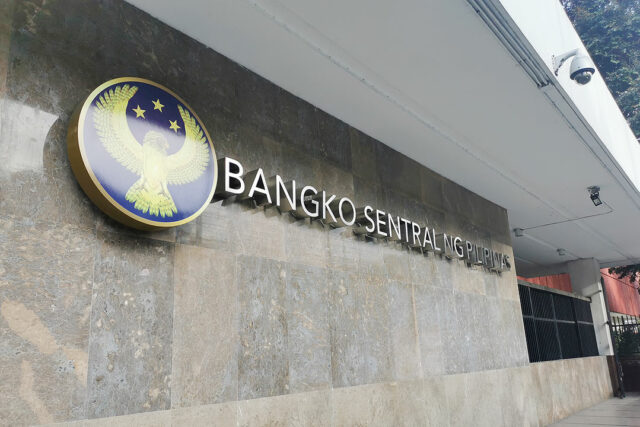
BSP 7-day term deposit yields dip

Bangko Sentral ng Pilipinas main office in Manila. — BW FILE PHOTO

YIELDS on the Bangko Sentral ng Pilipinas’ (BSP) seven-day term deposits fell slightly on Wednesday as investors priced in a possible policy easing at the central bank’s first Monetary Board meeting this year.

Total bids for the one-week term deposit facility (TDF) reached P150.07 billion, surpassing the BSP’s P110-billion offer and last week’s P127.6 billion in tenders. The central bank accepted the full P110 billion. The resulting bid-to-cover ratio rose to 1.36 times from 1.16.

Accepted yields narrowed to 4.44% to 4.5149%, with the weighted average rate easing by 0.89 basis point week on week to 4.501%, almost matching the BSP’s key overnight borrowing rate of 4.5%.

Michael L. Ricafort, chief economist at Rizal Commercial Banking Corp., said the modest decline reflects dovish signals from the central bank, which could cut rates in February.

The BSP is near the end of its easing cycle, but the strong demand may indicate investors locking in yields ahead of a potential reduction, he said.

The Monetary Board has lowered key borrowing costs by 200 basis points (bps) since August 2024, bringing the benchmark to a more than three-year low of 4.5%.

In 2025, the central bank delivered five straight 25-bp cuts. BSP Governor Eli M. Remolona, Jr. has signaled that a further 25-bp cut is possible but unlikely given current economic data.

Local inflation remained benign at 1.8% in December 2025, below the BSP’s 2%-4% target for the 10th consecutive month. Slower economic growth, partly due to weather-related disruptions and cautious infrastructure spending, also supports continued accommodative policy.

External factors could influence future moves. A possible US Federal Reserve rate cut would allow the BSP to ease further while maintaining interest rate differentials that stabilize the peso.

Recent policy reforms and governance measures, including initiatives on anti-corruption and fiscal accountability, have bolstered investor confidence, contributing to strong demand at the TDF auction.

The TDF and BSP bills serve as tools to absorb excess liquidity and guide market rates toward the policy benchmark.

Investors continue to monitor both domestic economic trends and global central bank actions, weighing their implications for borrowing costs, liquidity management and peso stability in the months ahead. — Katherine K. Chan

Filipino SMEs, is your brand positioning on point?

BRAND MARKETING expert Emmanuel “Bingo” Soriano during the podcast. — THE RJ LEDESMA PODCAST

Brand positioning has transformed the world since its beginnings in the 1960s and ’70s. And today, in a new era of online platforms and live selling, it remains as relevant — and powerful — as it has been since its inception. Local brands in particular should take note. Brand positioning has been a chronic blind spot for many Filipino SMEs, according to Emmanuel “Bingo” Soriano, a brand marketing expert with decades of experience in Unilever and as a consultant for brands such as HSBC, Purefoods, and Burger King.

It is because of this gap that Mr. Soriano has established his podcast, The Branding Nerd, and established Brand Con, where he is the founder and Chair. The event was held last November at Newport World Resorts, but I was able to catch up with him on my own podcast to talk about why brand positioning is such an important tool for Filipino SMEs and what they have to gain.

Like Bingo, I’ve had a parallel experience with brand-intense corporations when I was in Procter & Gamble. At the same time, I can appreciate his message as I am today — an entrepreneur with my own businesses. What follows are some of the highlights of my hour-long conversation with one of the country’s top brand marketing minds.

WHAT IS BRAND POSITIONING?
Before anything else, let’s first define what a brand is.

According to Mr. Soriano, “The definition I use actually comes from Al Ries, the father of Laura [Ries, the keynote speaker of Brand Con]. His definition is this: [A brand] is a singular idea or concept that you own in the mind of your prospect.”

Creating this brand — brand positioning — is easier said than done, and it affects every aspect of your business.

“To be able to own that concept in the mind is very difficult to do,” he continued. “That, to me, should be the aspiration of every single brand, to own a concept in the mind of their market and nobody else will own that.”

To achieve this goal he has created a framework, the Brand Building Framework, that he uses with the brands he works with.

“You follow the framework,” he summarized. “You position yourself. You create your identity. You execute consistently across the six P’s (product, price, place, promotions, people, process). If you do that over time, you will own the concept.”

In the full interview, he discussed many companies that have successfully positioned themselves in their respective markets to great effect, from worldwide juggernauts like Netflix and Starbucks, to local darlings such as Jollibee and Cebu Pacific.

“You don’t have to be everything to everybody,” he continued. “As long as you are attractive and clear in the mind of your prospect, you’re going to win. You’re going to be a market leader.”

‘IT’S ALL ABOUT EDUCATION’
Knowledge and expertise about branding is, unfortunately, in short supply in the Philippines.

“In the Philippines,” he said, “there tends to be a misconception of what branding is all about, or at least there’s a limited understanding. So, I wanted to present something more holistic and deeper.”

To this end, he established The Branding Nerd as well as Brand Con to educate Filipino companies about brand positioning — in particular SMEs.

He continued by saying “What I’m discovering is that there’s really a big need for our companies in the Philippines to understand the fundamentals, the foundational understanding of what really branding is all about.”

Through efforts like Brand Con, Mr. Soriano gathered many of the top experts in branding at one educational conference. Last year’s Brand Con had luminaries such as Laura Ries, a marketing expert from TBWA New York and marketing firm Ries & Ries. On the local side, there were marketing experts like the current chairman of the 4A’s, Melvin Mangada, and Norman Agatep, Co-Founder of Grupo Agatep. Bridging the gap between marketers and entrepreneurs, there were Grace Dimacali, founder of Mary Grace Café, and Paco Magsaysay, founder of Carmen’s Best. There’s simply so much to be learned from these branding experts and entrepreneurs.

UNDERSTAND YOUR CUSTOMER
At the core of what Mr. Soriano is teaching these SMEs is understanding your customer — a core tenet of brand positioning.

“One common thing I’ve noticed among Philippine companies is that they don’t understand their customer,” he lamented. “They haven’t really clearly defined who their customer and their segment is.

“One other common thing I’ve noticed is that companies don’t do market research in the Philippines,” he explained. “I have one client who’s been in the business for 37 years — never done research.”

These two observations, of course, are inextricably linked. But the good news is that the tools to understand your customers are within reach. And they don’t have to be expensive either.

From experience, I can understand how SMEs focused on the demands of the day-to-day may be reluctant to spend on marketing research. But Mr. Soriano encourages SMEs to simply engage with customers and talk to them. And this is so true; it’s so easy to engage customers in today’s online world.

He adds, “The purest definition of market research is simply finding out what the customer is looking for. And you’re always in front of customers. You can always ask them.”

THE DIFFERENCE BRAND POSITIONING MAKES
According to Mr. Soriano, “Brand positioning is really understanding what your customers are looking for, the most important factors, whatever segment you’re in, and who are the current competitors, who are the brands out there. When you put them together, you can literally draw a map.”

For Filipino SMEs, brand positioning doesn’t have to be difficult or expensive. It can be as easy as 1-2-3. Marketing experts like Mr. Soriano have even built a framework for SMEs to follow.

“I think the biggest benefit is really understanding the framework,” he says.

The framework he has built even has a workbook that SMEs can follow like a roadmap. And, what’s more, when you draw that map, opportunities arise. Your customers become real, and your business plan becomes clearer.

Your company could lead new segments, like Cebu Pacific did when they entered affordable travel. You could lead mindshare like Jollibee did by owning Langhap sarap. Or you could navigate your brand through change like Netflix did from on-demand video into the streaming age.

For entrepreneurs and SME owners, the difference brand positioning makes is clear. The question is, are you ready to raise your brand positioning game?

Note: In my previous column featuring Wee Community Developers, Inc., I stated that “Colliers recognized WeeComm as the ninth largest real estate developer in the country.” Upon review, I’d like to clarify that Colliers does not issue formal rankings or make such declarations. This note is shared to ensure accuracy and clarity moving forward.


RJ Ledesma (www.rjledesma.com) is a Hall of Fame Awardee for Best Male Host at the Aliw Awards, a multi-awarded serial entrepreneur, motivational speaker, and business mentor, podcaster, an Honorary Consul, and editor-in-chief of The Business Manual. Mr. Ledesma can be found on LinkedIn, Facebook and Instagram. The RJ Ledesma Podcast is available on Facebook, Spotify, Google and Apple Podcasts. Are there entrepreneurs you want Mr. Ledesma to interview? Let him know at ledesma.rj@gmail.com.

REIT rule changes may spur listings, asset diversification — analysts

PHILIPPINE STAR/MICHAEL VARCAS

By Alexandria Grace C. Magno

THE SECURITIES and Exchange Commission’s (SEC) 2026 amendments to the real estate investment trust (REIT) rules could encourage more listings by expanding eligible assets and easing capital recycling, according to analysts.

“For existing listed REITs, this provides a clearer regulatory basis to diversify future asset infusions beyond conventional office or retail properties, supporting portfolio resilience,” F. Yap Securities Investment Analyst Marky Carunungan said in a Viber message.

“For potential issuers, the amendments make REITs a more practical capital-recycling tool, allowing companies to unlock value from stabilized assets while retaining operational control. These changes should support a deeper and more active REIT capital market over time,” he added.

In a statement on Friday, the SEC said the amendments are aligned with the objectives of the REIT Act by expanding eligible income-generating assets and allowing unlisted special purpose vehicles (SPVs) and incorporated joint ventures (JVs), consistent with global practices.

Under SEC Memorandum Circular (MC) No. 1, Series of 2026, REITs may own income-generating real estate directly or indirectly. For indirect ownership, a REIT may hold shares in an unlisted SPV formed primarily to own real estate, provided it owns at least two-thirds of the SPV’s voting stock, including through incorporated JVs.

China Bank Capital Corp. Managing Director Juan Paolo E. Colet said the amendments address key regulatory constraints related to eligible assets, reinvestment of proceeds, and indirect property ownership.

“One important change is the expansion and diversification of real estate that can be packaged into a REIT, such as airports, toll roads, telco towers, broadband fiber networks, and data centers,” Mr. Colet said in a Viber message.

“With these amendments plus another interest rate cut, we expect renewed preparations for REIT IPOs and the launch of such offerings starting this year,” he added.

The revised rules further clarify that income-generating real estate includes assets with regular or predictable cash flows such as leases, rentals, tolls, user fees, ticket sales, parking, and storage fees. Covered assets include toll roads, railways, airports, ports, information and communications technology and energy infrastructure, data centers, parking facilities, malls, warehouses, fixtures, and real rights such as usufructs, easements, and leases.

The Philippines currently has eight listed REITs across office, hotel, mall, land, renewable energy, and infrastructure segments.

These include AREIT, Inc., DDMP REIT, Inc., Filinvest REIT Corp., RL Commercial REIT, Inc., MREIT, Inc., VistaREIT, Inc., Citicore Energy REIT Corp., and Premier Island Power REIT Corp.

In a Viber message, AP Securities, Inc. Equity Research Analyst Shawn Ray R. Atienza said the clarified asset scope could broaden the REIT market beyond traditional property developers.

“This could entice select conglomerates and telcos interested in recycling capital to fund more infrastructure projects,” he added.

Mr. Carunungan said infrastructure-related assets such as data centers and telecommunications facilities now have a clearer route to REIT structures, provided income requirements and ownership arrangements comply with the rules.

“In this context, assets such as PLDT Inc.’s VITRO data center portfolio could be structurally well-suited for a REIT platform as part of broader capital-recycling strategies,” he said.

The SEC also extended the reinvestment period for REIT sponsors or promoters to two years from one, starting from the receipt of proceeds from the sale of REIT shares or income-generating real estate to the REIT.

Reinvestment options include equity investments, loans, debt purchases, or repayments related to real estate or infrastructure projects in the Philippines.

REITs investing through unlisted SPVs or JVs must ensure that these entities distribute at least 90% of distributable income to the REIT and other shareholders before the REIT pays dividends. Failure to comply will be considered a breach of the REIT’s 90% dividend payout requirement.

Mr. Atienza said the longer reinvestment window could support more REIT listings by easing pressure on sponsors to immediately redeploy capital.

“Although, the drawback is a possible delay in dividend growth that could lessen the appeal of the asset class,” he noted.

The revised rules also redefine public shareholders to promote broader ownership and strengthen governance. Investors with vested interests or influence — including sponsors, promoters, affiliates, and key officers — are excluded from the public float count.

Public shareholders are defined as those without “substantial influence,” which the SEC considers as direct or indirect ownership of 10% or more of REIT shares. The exclusion also covers investors with less than 10% ownership who can influence management or operations, including immediate family members of directors, officers, or principal shareholders living in the same household.

Separately, the SEC issued another memorandum extending discounted filing fees for micro, small, and medium enterprises (MSMEs).

SEC MC No. 2, Series of 2026 extended the 20% discount on corporate registration fees for MSMEs until March 31, from Dec. 31, 2025.

The 50% discount on securities registration fees for MSMEs tapping the capital market, under SEC MC No. 8 of 2025, remains effective until June 30, 2026.

MSMEs are classified under Republic Act No. 9501, or the Magna Carta for MSMEs, based on asset size: up to P3 million for micro enterprises, up to P15 million for small enterprises, and up to P100 million for medium enterprises.

For capital stock increases and securities registration filings, applicant firms must submit a signed certification from the president or treasurer confirming MSME qualification, excluding the value of land on which offices, plants, and equipment are located.

“Except for agribusiness corporations filing for the registration of securities pursuant to SEC MC No. 8, s. 2023 (SEC FARMS), an applicant must have a paid-up capital of P25 million,” the memorandum said.

Actor-director Timothy Busfield jailed on child sex abuse charges

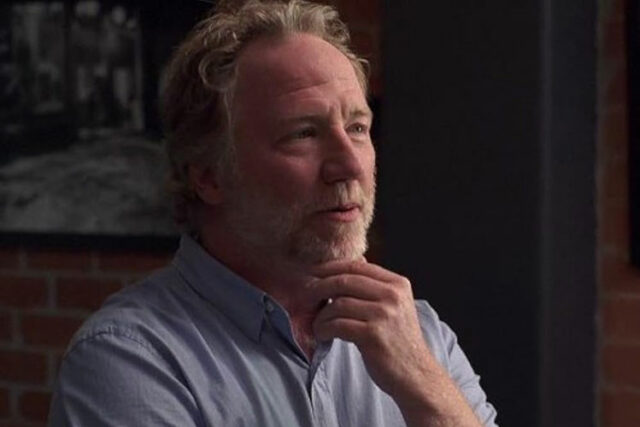
TIMOTHY BUSFIELD in a scene from Entourage.

ACTOR-DIRECTOR Timothy Busfield surrendered to authorities in New Mexico on Tuesday to face child sexual abuse charges, accused of inappropriately touching two young cast members on the set of a television show he was directing and producing.

According to a criminal complaint and arrest warrant affidavit, the case involves 11-year-old twin boys who reported the alleged contact occurred over a two-year period, when they were aged seven and eight, during production of the Fox crime drama The Cleaning Lady.

Mr. Busfield was an executive producer of the show, which was filmed in Albuquerque, New Mexico’s largest city, and began directing episodes around the end of the second season, in 2022.

The arrest warrant was issued on Monday. Mr. Busfield, 68, turned himself in to the Albuquerque Police Department on Tuesday and was booked into the Bernalillo County jail without bond, said Nancy Laflin, a spokesperson for the district attorney’s office.

In a video posted online shortly before his surrender, Mr. Busfield professed his innocence, called the allegations against him “lies” and said, “I’m going to be exonerated. I know I am.”

“I did not do anything to those little boys,” he said during the 45-second clip.

Mr. Busfield is best known for his prime-time television roles as a White House reporter on the NBC political drama The West Wing, which ran on NBC from 1999 to 2006, and as an ad agency executive on the 1980s ABC ensemble series Thirtysomething.

He is married to actress Melissa Gilbert, a former president of the Screen Actors Guild who gained fame in the 1970s as a child actress on the hit Western family drama Little House on the Prairie.

Mr. Busfield is charged in the complaint with child abuse and two counts of criminal sexual contact of a minor.

According to the affidavit, one of the boys reported multiple instances of Mr. Busfield touching his “private areas” over his clothes during pauses in production. His brother also reported being touched by Mr. Busfield but was less specific, the affidavit said.

In his own interview for the investigation in November, Mr. Busfield acknowledged he probably had physical contact with the boys on occasion, like tickling or picking them up, but in a playful manner with others present, the affidavit said.

Mr. Busfield also suggested a possible motive for false allegations against him, according to the affidavit. Citing information he said he gleaned from the show’s star, Elodie Yung, Mr. Busfield told police that the boys’ mother was upset with him to the point of wanting “revenge” after producers decided to replace her sons in the final season of the series.

Ms. Yung declined to be interviewed for the police investigation, the affidavit said, but had related a similar account of the mother vowing revenge against Mr. Busfield when the actress was questioned by a private investigator for the show’s producer, Warner Bros. Television. — Reuters

Fitch: Philippine banks stable amid flood mess

ORIGINAL BACKGROUND PHOTO FROM FREEPIK

THE PHILIPPINE banking sector faces potential challenges this year as a flood control corruption scandal weighs on economic growth, Fitch Ratings said.

“Obviously, the flooding scandal poses downside risks,” Tania Gold, senior director and head of Fitch’s South and Southeast Asia Banks Ratings, said in a webinar on Wednesday. “It is a risk we’re watching, but not making us move the needle on anything currently.”

Fitch maintains a “BBB-” rating for the Philippine banking system with a neutral sector outlook and a stable rating for the operating environment.

Late last year, widespread flooding exposed irregularities in flood-control projects, prompting investigations that implicated government officials and private contractors in corruption allegations.

The scandal has weakened consumer and business confidence, contributing to a slowdown in economic growth to 4% in the third quarter, the slowest in over four years. The economy grew 5% in the first nine months, below the government’s 5.5%-6.5% target.

Despite the scandal, Fitch expects the economy to expand above 5% this year, which could support high single-digit loan growth and bolster bank profitability.

“We are still forecasting GDP growth of over 5% in the Philippines this year, which supports our loan growth in the kind of high single-digit range, which is helping the earnings and profitability of the banking sector,” Ms. Gold said.

Outstanding loans at major banks rose 10.3% year on year to P13.988 trillion in November, matching the previous month’s pace, which was the slowest in more than a year.

Ms. Gold noted that risks to asset quality stem primarily from banks’ lending practices rather than the flood-control scandal.

The main concern is how much unsecured lending banks are doing and their appetite for risk, she said,.while citing the potential for unrest linked to the scandal.

The Bangko Sentral ng Pilipinas earlier highlighted the banking sector’s sustained growth in assets and deposits as a support for the domestic economy. — Katherine K. Chan

Future of money

STOCK PHOTO | Image from Freepik

When we traveled years ago, we carried dollars and traveler’s checks. Then we moved to plastic, mainly credit cards. Now we pay with phones, QR codes, and virtual cards whose numbers live in a phone app. Payments keep getting faster and smarter as more people rely on nonbanks for services that used to live only inside banks.

We are living through a second revolution in money. Cash and checks yielded to cards, and cards are yielding to software-defined payments. E-wallets, QR codes, instant transfers, and phone apps now carry a growing share of our daily transactions. The question is whether our rules can keep up with the technology that moves our money.

I am pro-innovation, and I am also pro-trust. People need confidence that rules protect them and their savings. That means the same risks should face the same rules. If a firm takes money, moves money, or lends at scale, it should follow basic safeguards whether it holds a bank license or not.

And as payments go real time and cross-border, safety and transparency must be built in from the start. Prices should be clear, refunds easy, and help quick when things go wrong. The least tech-savvy Filipino should be safe, by default.

Three recent developments show why we should review and future-proof our money rules. First, the Bangko Sentral ng Pilipinas reopened digital-bank licensing in early 2025 with a cap of 10 players, then closed new applications before yearend to focus on quality and supervision.

Second, mobile super-apps now ship numberless, app-controlled credit cards such as Maya Black. These products reduce skimming and card-not-present fraud with dynamic codes and in-app controls, but they rely on the phone and on clearer dispute rules that ordinary users can understand and use.

Third, Project Nexus aims to make cross-border payments in ASEAN feel local by 2026. By scanning a merchant’s QR abroad, a traveler could pay from a Philippine wallet and settle in a chosen currency almost instantly. Convenience is rising. So should the safeguards.

With these shifts, money no longer lives only in banks. E-wallets, installment plans, and investment platforms offered by digital banks and electronic or mobile nonbanks now perform many bank-like functions. That is progress. What should match it is a rulebook that looks at what these firms do, not just what they are. If they offer similar risks to the public, they should meet similar protections for the public.

If you lend at scale, you should hold a reasonable cash cushion, test your loan book for bad weather, and report results clearly to regulators and the public. If you move people’s money, you should meet basic standards on uptime, dispute handling, cybersecurity, and honest fees.

And if you sell investments to the public, you should have tools that manage heavy withdrawals and protect long-term savers when markets turn rough. A level playing field rewards good risk management and honest pricing. It keeps public confidence in the system high.

QR codes and instant transfers are now part of daily life. Soon, paying across ASEAN through Nexus may feel like paying at home. That is progress, but faster money can spread mistakes faster. We should make true pricing visible before people tap to pay. Amount, exchange rate, and any fee should appear clearly in pesos on a single screen. No surprises.

We also need to guard against fraud and outages. Mobile signals drop and online systems go down. Backups should exist and should work. If one data center or telco link fails, another route should take over. If a cross-border corridor pauses, the app should say so in plain language, with a time for the next update.

And if a payment was unauthorized, the customer should be made whole quickly. If a customer was tricked into approving a payment, then there should be a fair, fast path to help, not a maze of finger-pointing between institutions. Resolution should be quick and fair.

New technologies such as numberless cards and dynamic codes reduce stolen-number fraud, but they rely heavily on the phone. That is why product defaults matter. Start with sensible spending caps, send an alert for every transaction, and include a one-tap freeze button that is easy to find. Keep alternatives ready when a phone is offline or the app logs a user out. Where two-factor prompts are necessary, instructions should be simple, and the fallback should not punish the customer for being cautious.

Clarity builds trust. The total cost of a loan or a foreign purchase should appear in pesos with no small print. If a high school student cannot explain the cost after reading the screen once, the message is not clear enough. People should know what they are getting into before they commit. Consumer protection is how systems earn repeat use and steady growth.

We should also plan for bad days. Disruptions happen, and electronic systems must be ready. Outages can affect banks, e-wallets, telcos, merchants, and customers at the same time. With people’s money involved, resilience is not optional. Critical systems should have redundant backups for everything that matters.

More important, inclusion expands the market. New systems should benefit everyone, not just early adopters. Seniors, persons with disabilities, people with limited education, and communities with weak connectivity should not be left behind. There should be easy ways to invite more people into formal finance.

The future of Philippine money is not a fight between banks and nonbanks. It is a partnership under rules that fit what each one actually does. If you lend, keep a cushion and tell the truth about price. If you move money, be fast, fair, and open about fees. If you build apps, protect the least tech-savvy user by default.

Do this and we will have a system that is safe enough to trust and open enough to grow. People will keep money digital with confidence. Rules should make finance do what it should do: help the economy grow and help people improve their lives.


Marvin Tort is a former managing editor of BusinessWorld, and a former chairman of the Philippine Press Council

matort@yahoo.com

PHL firms told to brace for global tech failures

FREEPIK

By Beatriz Marie D. Cruz, Reporter

PHILIPPINE ORGANIZATIONS should strengthen their information technology (IT) systems and prepare contingency plans as failures in global digital services this year could disrupt daily operations and revenue, analysts said.

Failures affecting major tech providers pose economic and social risks to the Philippines because many businesses rely heavily on online platforms and mobile-based systems, Nicola Gerber, vice-president for Asia-Pacific and Japan at Fastly, told BusinessWorld.

Instead of assuming “zero failure,” organizations should expect the possibility of tech disruptions and design their IT systems for “recovery and containment,” she said in an e-mailed reply to questions.

Ms. Gerber said resilience should be treated as a business priority rather than a purely technical issue, warning that service interruptions abroad could quickly cascade into local problems for Philippine companies.

Several large technology providers, including Amazon Web Services, Microsoft Azure and Cloudflare experienced service failures in 2025 that affected airlines, banks, online retailers and digital platforms worldwide.

Such incidents could be costly for Philippine companies, Ms. Gerber said. Banks, telecommunication companies, logistics providers and online sellers can lose millions of pesos per hour when systems stop working, while payment delays can affect sales, payroll processing and customer transactions.

“All this reduces productivity and ultimately impacts branding and breaks customer trust,” Ms. Gerber said.

Ronald B. Gustilo, national campaigner for Digital Pinoys, said many local organizations are too dependent on single service providers, increasing their exposure when global systems fail.

“Organizations should not fully rely on the availability of cloud services,” he said in a Viber message. “They should consider investing in multi-cloud or hybrid services, build data redundancy and regularly test failover and recovery plans to ensure operations can continue even during widespread disruptions.”

The Philippines’ cloud and software-as-a-service market was valued at $3.2 billion (P190 billion) in 2024, driven by digital adoption, e-commerce growth and remote work, according to Ken Research.

Mr. Gustilo said companies should strengthen response procedures, clarify who makes decisions during system failures and run regular simulations to test readiness.

Reviewing contracts with tech providers and training staff to respond quickly are just as important, he added.

US-based technology service provider DXC Technology said it is helping Philippine clients prepare for system failures linked to global providers.

Some incidents are beyond a company’s control because they originate overseas, DXC Philippines site leader Malou Ocampo-Quiambao told BusinessWorld. What matters is being ready to respond quickly so the impact on operations and customers is limited, she added.

Arthaland disburses P2.78B from second ASEAN green bond tranche

ARTHALAND CENTURY PACIFIC TOWER — ARTHALAND.COM

ARTHALAND CORP. said on Wednesday that it disbursed a total of P2.78 billion from the second tranche of its ASEAN green bond issuance to three of its projects in 2025.

As of Dec. 31, 2025, the company allocated P1.59 billion for Project Rock, P930.3 million for Project Vanilla, P50 million for Project Teal, and P225 million for Arthaland Century Pacific Tower (ACPT) loans and others, leaving a balance of P150 million for future disbursement.

Net proceeds from the share offer, after deducting related expenses, amounted to P2.95 billion, which will fund eligible green projects and repay outstanding loans, the developer said.

Approved by its board in October 2022, the second bond batch consists of a P2.4-billion base offer with up to P600-million oversubscription.

This is part of Arthaland’s P6-billion ASEAN Green Bond program, the first green bond framework issued by a real estate company.

The first tranche, issued in January 2020, had a P2-billion base offer with a P1-billion oversubscription option that was fully exercised.

Arthaland’s projects include Arya Residences, Arthaland Century Pacific Tower, Cebu Exchange, Savya Financial Center, Sevina Park, and Lucima.

Arthaland shares last traded at P0.415 apiece on Jan. 12. — Alexandria Grace C. Magno

BDO says bond funded motorcycle loans

Around 200 motorcycle riders pass Roxas Boulevard in Manila, Sept. 17, 2023. — PHILIPPINE STAR/EDD GUMBAN

BDO UNIBANK, INC. said proceeds from its ASEAN sustainability bonds were used to finance motorcycles for more than 68,000 workers, supporting livelihoods across the Philippines.

The bank funded 68,409 riders through its partnership with Unistar Credit and Finance Corp. and its motorcycle retail arm Trancycle, which operates 280 branches nationwide.

The listed lender did not disclose the total loan amount.

The financing supports workers who rely on motorcycles for income-generating activities, particularly in the Visayas and Mindanao, the lender said.

“Access to financial services is essential for economic empowerment,” BDO Executive Vice-President and Institutional Banking Group head Charles M. Rodriguez said in a statement. “Through BDO’s ASEAN sustainability bond, we are helping Filipinos gain the financial tools they need to build sustainable livelihoods.”

Unistar Chief Executive Officer Matthew Siy Cha said motorcycle ownership gives riders  greater mobility and income opportunities, benefiting both workers and their families.

Since January 2022, BDO has issued a total of P286.7 billion in sustainability bonds, making it one of the most active issuers of peso-denominated sustainable debt in the country.

Last week, the bank began the public offer for its fifth ASEAN sustainability bond, targeting at least P5 billion from three-year notes. Its issuance in July raised P115 billion from 1.5-year bonds, far exceeding the initial P5-billion target and marking the biggest peso bond sale on record.

BDO said the motorcycle financing supports access to practical transport and livelihood opportunities for micro and small enterprises, while also improving delivery and mobility services in local communities.

The bank added that the program benefits small businesses through faster and more affordable transport, helping reduce costs and improve access to customers, particularly in underserved areas.

Separately, BDO said it continues to fund projects aligned with green infrastructure and its long-term goal of supporting a low-carbon economy.

BDO’s attributable net income rose 6.1% year on year to P22.47 billion in the third quarter of 2025, bringing nine-month earnings to P63.09 billion, up 4.1% from a year earlier.

Shares of BDO closed at P138.50 on the Philippine Stock Exchange, down 1.9%. — Aaron Michael C. Sy

K-pop sensation BTS announces return with new world tour

IBIGHIT.COM

LOS ANGELES — Chart-topping K-pop boy band BTS announced on Tuesday it will embark on a concert tour starting in April after the release of its first new album in more than three years.

The tour launches in Goyang, South Korea on April 9 and includes 79 shows in Asia, the US, and Europe through July, the group’s agency said.

The band has been on hiatus while its seven members have done South Korea’s mandatory military service. BTS’ agent said this month that the band will drop a new album on March 20, though the title has not been revealed.

The band’s last album, Proof in 2022, debuted at number one in 18 countries and has amassed about 16.7 billion streams, according to music industry data. Hybe Co. is the parent company of BTS’ label and management agency. — Reuters

The dubious art of explaining what Trump ‘really means’

STOCK PHOTO | Image from Rawpixel

By David M. Drucker

PROMINENT Republicans insist on treating President Donald Trump like a child or a clueless old man, telling Americans that he does not mean what he says — despite the commander in chief making quite clear he means exactly that.

Trump’s threat to use military force to seize Greenland from Denmark, a US ally via the North Atlantic Treaty Organization, is a recent example. “I don’t think it’s a threat,” Senator Tommy Tuberville of Alabama told The Bulwark. “I think it’s a promise that we’ll offer some money for it.” Senator John Kennedy offered his own, colorful reimagining of the president’s saber rattling. “Even a modestly intelligent ninth grader knows that to invade Greenland would be weapons-grade stupid. Now, President Trump is not weapons-grade stupid,” the Louisiana Republican told CNN. Trump, Kennedy added, does “not plan to invade Greenland. That does not mean they’re not going to seek a legal, formal partnership with Greenland.”

Trump’s subsequent comments on the matter? All options are on the table, including a military invasion. “We are going to do something on Greenland whether they like it or not,” the president told reporters during a White House news conference last week. “If we don’t do it the easy way we’re going to do it the hard way.”

The phenomenon of redefining Trump’s rhetoric was somewhat understandable during his first presidency. He was new to elected office and still learning how the federal government operated. Although still somewhat infantilizing of a man who had reached high office, Republicans uncomfortable with the president’s rhetoric could theoretically make the case that Trump didn’t understand the implications of what he was saying, or of his policy proposals.

But as we head toward Year 2 of his second presidency, those excuses have worn thin. Trump has plenty of on-the-job experience and has demonstrated an understanding of executive power, so much so that he rejects most limits on it.

What gives? In my experience, it’s about political expediency. Republicans’ clumsy verbal cartwheels are obvious attempts to avoid publicly disagreeing with Trump while simultaneously attempting to avoid publicly agreeing with him.

It’s been more of the same regarding what’s next for Venezuela following an American military operation that led to the capture of dictator Nicolas Maduro and his wife and their arrest by federal law enforcement. During a Jan. 3 news conference , Trump, 79, said the US is “going to run” the South American nation “until such time as we can do a safe, proper and judicious transition.”

The president elaborated under questioning by reporters, suggesting his declaration was hardly flippant. “It’s largely going to be, for a period of time, the people that are standing right behind me,” Trump said, when asked who inside the US government would be running Venezuela.

Flanking Trump on stage: Air Force General Dan Cain, chairman of the joint chiefs of staff; Defense Secretary Pete Hegseth, and Secretary of State Marco Rubio, among others.

Yet the very next day, Rubio revised his boss’ remarks. “What we are running is the direction that this is going to move, going forward. And that is, we have leverage. This leverage we are using and we intend to use,” the secretary said Jan. 4 in an interview on the ABC News public affairs program This Week. To be fair, Rubio’s argument wasn’t wholly inaccurate.

But: Want to guess what Trump said later that day when asked, during a gaggle with reporters on Air Force One , if Washington was running the show in Caracas? “Don’t ask me who’s in charge because I’ll give you an answer and it will be very controversial,” Trump said. When asked what he meant, the president was blunt: “It means we’re in charge. We’re in charge.”

Naturally, Trump’s unequivocal comments didn’t discourage Senator Jim Risch, chairman of the Senate Foreign Relations Committee, from claiming the president’s rhetoric was equivocal. “I think that’s a matter of interpretation,” the Idaho Republican told NOTUS,  when asked what the commander in chief meant by repeatedly saying the US is “running” Venezuela.

Shawn J. Parry-Giles, a University of Maryland professor who studies political communication and rhetoric, explained the ongoing dilemma posed by Trump and his penchant for provocative rhetoric and proposals.

“His messaging puts members of his party in difficult positions. They manage the rhetorical and political messiness by providing different interpretations that reshape the message into one they can support that appears more reasoned and grounded in legal [and] political principles,” said Parry-Giles, director of the Rosenker Center for Political Communication and Civic Leadership . “This is also happening with members of his cabinet. They are trying to reshape his messages into something that would be more acceptable politically.”

They’re hoping to “send” Trump “a subtle message of how the president would better express his views,” she added, while maintaining a sense of decorum that the commander in chief does not. “He routinely flouts such decorous practices,” Parry-Giles said.

All true and all understandable.

But after all this time, it should be crystal clear to Republicans — on Capitol Hill and everywhere else — that Trump knows what he’s saying and knows what he’s doing (or what he wants to do.) When he speaks and when he acts, it’s with deliberate intent. Congressional Republicans who oppose an American invasion of Greenland might want to ponder that rather than soothe themselves with fantasies that Trump’s tough talk is about “leverage.”

BLOOMBERG OPINION