Home Blog Page 2091

The role of public-private partnerships in transforming the Philippines’ transportation sector

Public-private partnerships (PPPs) have been at the core of Philippine infrastructure development and have helped shape the country as we know it today. These agreements between the government and private firms leverage each partner’s expertise to effectively address specific public needs by appropriately distributing resources, risks, and benefits.

The partnerships allow the government to build big-ticket projects that can help millions of Filipinos while minimizing the costs due to the participation of private firms. For companies, PPPs are structured in such a way that the private sector gets a reasonable rate of return on its investment and allows them to contribute to national development.

Notable examples of successful partnerships between the government and private sector include the construction of power plants, waste management systems, irrigations, commerce buildings, and even local city halls. Yet, the industry most aided by PPPs is the transportation sector due to the necessity of developing efficient and modern infrastructure to address the country’s growing population, urbanization, and mobilization needs. Currently, the Department of Transportation (DoTr) handles more than 160 projects, programs, and initiatives — including 74 flagship infrastructure projects of President Ferdinand R. Marcos, Jr.’s administration.

Among the most renowned PPP projects overseen by the DoTr presently operational is the Parañaque Integrated Terminal Exchange (PITX). Developed in partnership with MWM Terminals, a consortium of Megawide Construction Corp. and WM Property Management, Inc., the state-of-the-art terminal, built at a cost of P2.5 billion, has been serving Filipinos since 2019.

PITX boasts several features such as passenger terminal buildings, arrival and departure bays, public information systems, ticketing and baggage handling facilities, and park-ride facilities to give commuters from Southern Luzon to Metro Manila and vice-versa a better experience. Recently, the terminal reached a remarkable milestone of 146 million overall foot traffic since it began operations and is expected to breach the 150-million mark within the year.

Another noteworthy DoTr project constructed with the help of private partnerships is the Metro Rail Transit Line 3 (MRT-3). Completed in the year 2000, the rapid transit line was developed and is currently operated by Metro Rail Transit Corp. Limited with an estimated project cost during approval of P32.75 billion.

Connecting North Avenue and the Epifanio de los Santos Avenue in Quezon City to Taft Avenue in Pasay City, the 13-station and 17-kilometer (km) railway has significantly reduced travel time for commuters and eased traffic congestion for car owners. MRT-3 has a daily ridership of nearly 360,000 passengers and saw almost 130 million passengers in 2023.

Turnover of the operations and management of the Ninoy Aquino International Airport from the DoTr and Manila International Airport Authority to New NAIA Infrastructure Corp. — Photo from facebook.com/DOTrPH

More recently, the Ninoy Aquino International Airport finally gets its long-overdue rehabilitation program through a PPP between the DoTr, Manila International Airport Authority, and New NAIA Infra Corp. (NNIC), a consortium that includes San Miguel Corp. (SMC) and Incheon International Airport Corp. of South Korea.

The modernization program, with an estimated budget cost of P170 billion, hopes to increase the airport’s capacity from 35 million passengers to 62 million passengers and an uptick in air traffic movement from 40 movements per hour to 48, as well as improve service quality. Planned improvements for the airport in the next few years include functional escalators and toilets, stable power and water, improved air-conditioning, runway improvements, increased terminal capacity, improved commercial spaces, and better traffic flow.

Building on the success of these operational projects, the ongoing construction of the Metro Rail Transit Line 7 (MRT-7) further showcases the potential of PPPs to help develop the country. The DoTr’s ambitious project, in collaboration with SMC’s MRT 7, Inc., aims to divert northern provincial bus operations to San Jose Del Monte, thereby decongesting EDSA.

The 23-km elevated railway line will have 14 stations from San Jose Del Monte, Bulacan to MRT-3 North Avenue in Quezon City, while a 22-km asphalt road will also be built from Bocaue Interchange of the North Luzon Expressway (NLEX) to the intermodal terminal in Tala. The P77-billion project currently has an overall construction progress of 71.32% as of June 2024 and a 16.76% right-of-way progress as of May 2024.

The recently opened five stations of the Light Rail Transit Line 1 (LRT-1) is another example of a DoTr project completed with the help of private companies. Developed by the Light Rail Manila Corp. on a Build-Transfer-and-Operate contractual agreement, LRT-1 now runs from FPJ Station (formerly Roosevelt) in Quezon City to Dr. Santos Station in Parañaque thanks to the first phase of the project. With plans to further extend the railway to what would be the Niog Station in Bacoor, Cavite, the whole stretch of the integrated LRT-1 will have a total length of approximately 32.4 kilometers once construction of the nearly P65-billion project is completed. Latest figures show that the LRT-1 transports around 320,000 passengers daily.

In addition to these developments, the New Manila International Airport, also known as the Bulacan International Airport, highlights the continued expansion of the country’s transportation infrastructure through PPPs. The nearly P740-billion project, a collaboration between the DoTr and San Miguel Aerocity, Inc., involves the construction, operation, and maintenance of a new modern airport in Bulacan with a design capacity of up to 100 million passengers per year, consisting of four runways and all aviation-related facilities.

Data on the ongoing land development works for the airport show significant progress, with a total completion rate of 84.61%. Site clearance has been fully completed at 100%, while landfilling is at 77.49%. Ground improvement and right-of-way works are nearing completion, with a progress rate of 94.27% and 99.47% respectively. Finally, the right-of-way for the airport toll road stands at 29.35%.

Aside from these ongoing projects, several key transport developments are lined up to improve the country’s transportation system after Mr. Marcos witnessed the signing of agreements and commitments for the New Cebu International Container Port (NCICP), Cebu Bus Rapid Transit (Cebu BRT), modernization of Bohol-Panglao International Airport, as well as the Agreements for the New Dumaguete and New Siargao airports.

The NCICP aims to decongest the existing Cebu Base Port, improve cargo handling capacity, and reduce logistics costs. In addition, the Cebu BRT is expected to handle 116,000 passengers during partial operations start and over 160,000 passengers once fully operational. The anticipated improvements in the modernization of Bohol-Panglao International Airport include installing modern aviation equipment, expanding the passenger terminal building and other airport facilities. Regional gateways New Dumaguete and New Siargao airports are seen to boost tourism in the area.

Of the five transport projects, only two so far have been awarded to private firms. The International Finance Corp. (IFC) of the World Bank Group was tabbed by the DoTr as the Transaction Advisor in structuring and bidding out the bus supply and operations and maintenance of the Cebu BRT. Similarly, Aboitiz InfraCapital signed a concession deal with the transport department for the transfer of operations and management of the Bohol-Panglao International Airport.

Projects made by the government in partnership with the private sector have and will continue to benefit Filipinos, especially in the transport sector. By combining the strengths of both the government and corporations, these initiatives improve the country’s transportation systems and enhance the quality of life for millions of Filipinos.

With continued collaboration and innovation, the successful implementation of these PPPs promises to pave the way for a more connected, efficient, and sustainable future for the nation. — Jomarc Angelo M. Corpuz
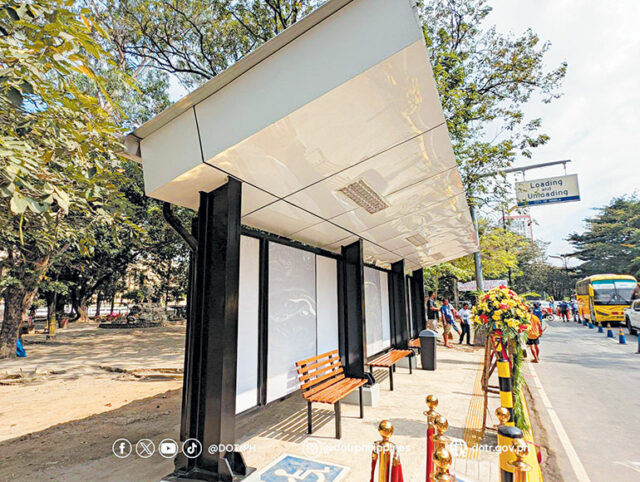

DoTr’s push for safe and sustainable mobility

One of the Public Utility Vehicle (PUV) stops opened in the City of Manila last Jan. 22, which is built with essential features for today’s commuters — Photo from facebook.com/DOTrPH

As the agency tasked to provide safe, efficient, and sustainable transportation to every Filipino, the Department of Transportation (DoTr) has implemented several active transport programs that aim to give individuals better mass transit experiences, ease traffic congestion, and promote sustainability through different initiatives.

Active transport is defined as the mobility of people or goods powered by human activity, such as walking or cycling, rather than a motor. Consultancy firm Palafox Associates describes the current active transport situation of the Philippines as “riddled with challenges.” The lack of dedicated bike lanes, safe pedestrian crossings, and supportive facilities such as bike parking and showers significantly discourages active commuting showcasing the need for adequate active transport infrastructure. Pedestrians and cyclists in the Philippines are also plagued with unsafe conditions like poorly maintained sidewalks, uneven pavements, road hazards, and inadequate lighting.

Transport corridors are also car-centric and predominantly designed with private vehicles in mind, often overlooking the needs of pedestrians and cyclists. Additionally, the absence of shade and weather protection makes active transport uncomfortable and potentially hazardous in the Philippine climate.

One of the most notable active transport programs by the DoTr is the construction of Public Utility Vehicle (PUV) stops all over Metro Manila. Recently, the transport agency inaugurated two such stops along Liwasang Bonifacio in Manila built with essential features for today’s commuters including a map of the bike routes in the city, charging stations powered by solar panels, CCTVs, and lockers.

Bike lanes all over the Philippines have also been created by the DoTr to promote healthier lifestyles, reduce carbon emissions, and enhance the overall quality of life in various areas. By integrating bike lanes into urban planning, local governments aim to ease traffic congestion, support sustainable mobility, and foster a culture of active living.

In Cebu, the transport agency opened last year a total of 67.19 kilometers (both ways) of Class 1, 2, and 3 bike lanes along selected roads in the cities of Cebu, Lapu-Lapu, and Mandaue, and the municipalities of Cordova and Talisay. End-of-trip cycling facilities such as bicycle racks, and repair stations are planned to be built along those lanes.

Millions of Davaoeños have also enjoyed a safer, more comfortable, and more convenient way to travel after the DoTr inaugurated a total of 47.7949 kilometers (both ways) of Class 1, 2, and 3 bike lanes along selected roads in the cities of Davao and Tagum, as well as the maintenance and upgrading of a total of 60.24173 kilometers (both ways) of bike lane in May last year. Additionally, 30 bike racks were installed in separate locations across the two cities.

The walled city of Intramuros also received an expansion, upgrade, and maintenance of its bike lanes after the DoTr, in partnership with the Tourism Infrastructure and Enterprise Zone Authority (TIEZA) and Intramuros Administration (IA), inaugurated its Expansion of Active and Public Transport Infrastructure.The project includes the development of Class 1, 2, and 3 bike lanes spanning 9.35 kilometers, enhancements to pedestrian walkways with PWD-accessible ramps, the creation of open spaces, and the construction of four public transport stops.

Quezon City is also a beneficiary of the DoTr’s active transport project. Recently, the agency opened 21 sets of short-term end-of-trip cycling facilities in UP Diliman and an additional 15 sets of short-term end-of-trip cycling facilities in QC City Hall. Each of these sets is composed of five bicycle racks, a bicycle shed, and a bicycle repair station.

Two stand-alone end-of-trip cycling facilities were also built in Marikina City as part of the transport agency’s project. The said facilities could accommodate 70 bicycles and have fully equipped comfort rooms and a bicycle repair and maintenance station. In addition, the DoTr and the local government of Marikina City also broke ground on an eight-kilometer bike lane that would connect to the city’s existing bike lanes.

Also a part of their active transport initiatives, the DoTr is crafting the Active Transport Strategic Master Plan (ATSMP) in partnership with Palafox Associates as a consultancy firm. The master plan not only aims to ease the heavy traffic on Philippine roads but also the long and winding queues of commuters at jeepney terminals, bus stations, and railway transit stations.

Other objectives of the ATSMP are promoting sustainable urban mobility, boosting economic opportunities, and supporting local government units in advancing active transport solutions and projects in their localities.

Pilot areas of the study have already been identified by Palafox making sure that the regions are in coherent geographic clusters when it comes to mobility. These areas include the National Capital Region, Puerta Princesa, Iloilo City, Zamboanga City, and Mati City in Davao Oriental.

The public is encouraged by the transport agency to participate in field surveys, focus group discussions, and interviews regarding active transport to help craft better standards and policies and aid in creating a comfortable, accessible, and safe active transport system in the country.

The DoTr’s initiative to adopt and advance active transport in the country is a step toward a more inclusive, sustainable, and efficient transport system in the Philippines. With continued collaboration among government agencies, local governments, private sectors, and the public, the vision of a well-connected and active transport system is within reach—making mobility not just a necessity but a catalyst for nationwide progress. — Jomarc Angelo M. Corpuz

Keeping pace with technological risks and cybersecurity

iuriimotov | Freepik

The rapid pace of technological changes happening in businesses, industries, and societies comes with new pressures and additional concerns. Given the massive and vast nature of the digital space, risks to businesses might be hiding in plain sight and so might be difficult to identify. When overlooked, these digital risks can cause significant damage and impact.

Recent reports from some think tanks have identified potential risks that might arise from the digital space. Within the complex technological landscape, understanding these potential headwinds can come handy for businesses who are navigating their place and relevance in a more digitally influenced world.

The AI mainstream

Artificial intelligence (AI) is becoming more of a reality last year as it generates new applications for enhancing security, improving banking and financing, business management, and much more. In the business setting, AI offers opportunities for organizations to take advantage of the technology’s ability to analyze data, make smart predictions, and mitigate potential risks.

“Enthusiasm around the technology’s potential to drive a new wave of growth has helped tech stocks to build again post-COVID, and analysts expect this upward trend to continue,” World Economic Forum (WEF) said in a report. “The proliferation of AI means there will be chances to take big swings; even if they don’t work out, the learning experiences for businesses will be incredible.”

While AI is on the side of mainstream with fewer drawbacks, that doesn’t mean no issues are lurking behind. According to WEF’s Global Risk Report, the adverse outcomes of AI technologies are projected to rise, with potential disruptions looming within the next decade. Key concerns include generative AI (GenAI) producing misleading or false content and its relationship to social polarization.

Likewise, the International Monetary Fund (IMF) shared that Asia-Pacific economies are among those affected by the continued AI evolution. In its Regional Economic Outlook, it revealed significant shifts will occur in the region, with AI influencing 50% of jobs in advanced economies and 25% in developing ones.

Because of this, AI is seen to increase inequality within countries in the Asia-Pacific region, particularly in the job market. The report notes of majority of the workers in services, sales, and clerical support are at risk of losing their jobs. In contrast, those in managerial, professional, and technical jobs are more likely to reap benefits brought by AI advancements.

Misinformation and disinformation

Another risk identified for this year is misinformation and disinformation, through which platforms for information might be geared to work against the truth.

The House of Commons Library defined misinformation as the “unintentional creation and spreading of such information,” while disinformation is the “deliberate creation and spreading of false and/or manipulated content.” Either way, both pose a risk for digital consumers, as misinformation and disinformation can accelerate given the fast spread of information through digital channels.

In the WEF’s Global Risk Report, misinformation and disinformation emerged as one of the biggest short-term risks for two consecutive years. Looking ahead to 2025, these challenges are more likely to significantly impact the academic sector, along with the private sector, government, civil society, and international organizations.

Partly fueling the rise of misinformation and disinformation is generative AI (GenAI) technology. While it simplifies content creation, it also produces significant inaccuracies, leading to false and misleading content. As a result, it resorts to a lot of AI-inaccuracies and human errors, making it increasingly difficult to access reliable information digitally.

“The advent of new technologies and the increase in user-generated content platforms is leading to a corresponding rise in the volume of content online. Flows of misinformation and disinformation from those creating it are becoming more challenging to detect and remove in an increasingly fragmented media landscape,” the report noted.

“The upshot is that it is becoming increasingly hard to know where to turn for true information. Both political and societal polarization skew narratives and distort facts, contributing to low and declining trust in media.”

Another contributing factor are algorithms and machine learning models, which can serve as a gateway for cyberattacks. These systems generate automated algorithms or exhibit algorithmic biases that negatively impact decision-making. It often lacks transparency, fairness, and accuracy, especially when critical decisions are made. In the worst-case scenario, algorithmic biases can deepen societal divisions divide and foster biases against political identities.

“Algorithmic bias can both be influenced by misinformation and disinformation and can be a cause of it. The risks of algorithmic bias are heightened when the data used for training an AI model is itself a biased sample.”

Factors responsible behind cybersecurity complexity, according to the World Economic Forum’s Global Cybersecurity Outlook for this year — www.weforum.org

Censorship and surveillance

Censorship is when access to online content is limited or blocked. This can be advantageous to protect national security, adhere to policies, shield users from harmful and illegal content, or maintain social order. On the flip side, it can also lead to a lack of access to information, transparency, and concerns on free speech.

WEF’s report stated that misinformation and disinformation are inextricably linked with censorship, with the danger lying in potential responses to misinformation.

“The proliferation of misinformation and disinformation may be leveraged to strengthen digital authoritarianism and the use of technology to control citizens. Governments themselves will be increasingly in a position to determine what is true, potentially allowing political parties to monopolize the public discourse and suppress dissenting voices, including journalists and opponents,” the report said.

Regarding surveillance, emerging technologies are becoming central to the public sector. The 2025 Global Risk Report highlights that data analytics, AI, and other digital platforms are increasingly integral to government services and operations. These technologies provide greater access to data and information, while enabling monitoring of citizens’ activities. They are utilized for various purposes, including tax management, environmental protection, and voter registration, among others.

“Governments now have unprecedented access to data on citizens — and technology companies often have even better access than the governments themselves do. As the computing power available to governments and technology companies continues to rise, it becomes easier for both entities to monitor citizens’ activities,” the report said.

The report also emphasized significant variation in how governments manage the data they can access. Implementing regulations is crucial because it promotes better personal data protection and enforces stricter guidelines on how businesses and governments can utilize such information.

Explosive cybersecurity demand

Another notable risk for this year is cyber-attacks. With the increasing complexities of the cyberspace come the challenges of possible rippling effects that might be damaging to the economy and that live in it.

The WEF’s Global Cybersecurity Outlook 2025 highlighted factors responsible behind cybersecurity complexity: geopolitical tensions, cybercrime sophistication, supply chain interdependencies, regulatory requirements, emerging technologies, and cyber skills gap. All of these challenges are making it extremely difficult for leaders to manage cybersecurity while also preparing for future potential risks to come.
The report revealed that 72% of organizations have experienced an increase in cyber risks; while 47% expressed major concerns about security threats posed by GenAI, and only 4% believe they have the necessary skills and personnel to safeguard their systems.

According to the WEF Annual Meeting 2025 report, 42% of organizations fell victim to cybercrime attacks in 2024, including phishing, vishing, deep fake, and other social engineering attacks.

Cybercrimes are constantly surging and evolving, and they have become increasingly profitable as cybercriminals have learned to maximize their gains while minimizing risks. This shift has given a rise to a new trend known as cybercrime-as-a-service, according to the report.

“This is the trend that we’re seeing — professionalization of crime. They require good technology; they require good software engineers. So, the talent that they are accessing are basically the same talents that all of us are searching for, except that they pay better; and that’s where we face a significant challenge. How do we ensure that the talents go to the good guys and not to the dark side?” Department of Information and Communications Technology (DICT) Secretary John Ivan Uy said.

To turn cyberspaces into a safer space, collaborative effort is necessary to stop cybercriminals in their tracks.

“Cybercriminals collaborate; and so must those who seek to stop them, including governments, the private sector, e-wallet providers, digital banking, and citizens,” Mr. Uy said.

It is also important to equip industry leaders with knowledge, helping them make informed and strategic decisions regarding cybersecurity risks their organization faces.

“Leaders must view cybersecurity as a strategic investment, ensuring resilience against new threats and recognizing it as a collective responsibility across all organizations. Strong leadership is essential, focusing not just on technical aspects but also on the economic implications of cyber risks. A unified approach between business and cyber leaders is critical to managing the growing complexity of cybersecurity,” the WEF Annual Meeting report read. — Angela Kiara S. Brillantes

Growth prospects high for energy firms, but IPO market unfavorable — analysts

A man inspects solar panels in this file photo. — PHILIPPINE STAR/EDD GUMBAN

By Sheldeen Joy Talavera, Reporter

ENERGY companies are poised for growth this year because of increasing power demand, but the environment may not be conducive enough for initial public offerings (IPOs) due to uncertainty amid developments in the United States, according to analysts.

“The outlook for sustained energy demand growth should help keep the appetite for capacity build-out among power generation companies healthy,” Rastine Mackie D. Mercado, research director at China Bank Securities Corp., told BusinessWorld via e-mail.

He added that power generation firms could continue to tap equity markets for potential fundraising opportunities.

“However, we think that continuing uncertainties around possible changes in US government policies, alongside potential upside US inflation risks and consequential changes to the Fed’s policy outlook could weigh on investor sentiment in the near term, and may present a challenge for companies looking to conduct an IPO,” he said.

An improvement in market conditions should help support appetite for potential listings this year, he also said.

Last year, there were only three IPOs, namely gold and copper mining company OceanaGold (Philippines), Inc., and energy companies Citicore Renewable Energy Corp. and NexGen Energy Corp.

This was below the six-IPO target of the Philippine Stock Exchange (PSE).

The PSE was supposed to have its fourth IPO in 2024 with the public listing of Cebu-based fuel retailer Topline Business Development Corp., but it decided to move its offer period to the second quarter of 2025 to accommodate institutional investors.

For 2025, the PSE is aiming to raise P120 billion in capital.

“Current market conditions are not conducive for IPOs in general,” Juan Paolo E. Colet, managing director at China Bank Capital Corp., said in a Viber message.

“While some exceptional companies can probably command good valuations notwithstanding the weak market, we think most potential IPO candidates will be extra patient until investor sentiment and fund flows improve significantly, there is more clarity on Trump 2.0, and the midterm elections are done,” he added.

On Monday, US President-elect Donald J. Trump was inaugurated, marking the start of his second term.

Energy firms considering going public will have more reason to wait, said Mr. Colet, amid generally low trading of the more established listed energy players.

“At this point, our best case is that only one or two energy companies can do an IPO this year,” he said.

Some analysts, however, expressed optimism about the potential listings from the energy sector.

“The Philippine energy sector remains poised for continued growth this year, underpinned by rising demand for reliable power, supportive government policies on renewables, and growing investor appetite for sustainable projects,” said Jayniel Carl S. Manuel, equity trader at Seedbox Securities, Inc.

Mr. Manuel said that the government’s support and the growing need for reliable energy have helped foster “a good climate for these listings.”

Following the “positive showings” of recent energy IPOs such as Citicore, NextGen, and Alternergy Holdings Corp., he said that this reflects a clear demand for power companies in the country, especially those focused on clean and renewable energy.

“We expect several energy firms to consider going public this year, but their success will depend on careful preparation and broader market conditions,” he said. “In the end, having a strong, transparent plan for growth and showing that the business can be both profitable and responsible will be key to maintaining the positive track record we’ve seen so far.”

Conducting IPOs is among the ways to raise capital for large-scale projects, Toby Allan C. Arce, head of sales trading at Globalinks Securities and Stocks, Inc., noted.

“The energy sector, especially renewables, offers high growth potential as it aligns with long-term global trends. IPOs are an effective way to capitalize on investor interest and raise funds for scaling operations,” Mr. Arce said.

Metro Pacific Agro Ventures eyes gov’t partnership for dairy cattle

REUTERS

METRO PACIFIC Agro Ventures, Inc. (MPAV) said it is looking to participate in the government’s plan to increase the country’s dairy herd by providing a potential quarantine site for imported cattle.

“The new facility that we are building in Laguna with the Israelis is so high-tech that we are pitching to the government that it becomes the natural quarantine facility for all cows imported from other countries entering the Philippines,” MPAV President and Chief Executive Officer Jovy I. Hernandez said during a briefing late Wednesday.

The government aims to increase dairy production to 80 million liters per year by 2028 to increase the share of domestic production to about 5% of dairy demand.

“Part of the agenda of the National Dairy Authority (NDA) is to increase the total herd size of the Philippines,” Mr. Hernandez added.

The NDA said that it is looking to import 5,000 heads of cattle by 2028 as part of its goal to increase dairy self-sufficiency by 5% from the current 1.5%.

Under the NDA’s program, the calves of the imported dairy herd would be distributed to about 150,000 farmers.

“I know that the NDA wants to establish stock farms within the country. The intention is for every region to have one, so of course, we in the private sector, if we can help in some of those areas, we will be willing because, again, it’s part and parcel of uplifting the industry,” he said.

The Philippines imports about 99% of its dairy requirements as domestic production cannot meet market demand.

MPAV, in partnership with Israel-based LR Group, is set to start the operations of its P2 billion integrated dairy facility by April.

“We’re expecting the new herd to come in April and already start the operations there. In fact, by the fourth quarter of this year, we’re expecting full-blast raw milk production already,” he said.

Mr. Hernandez said that the company expects to be fully sufficient in its dairy needs by 2026, meeting about 25% of the Philippines’ demand.

“By 2026, we will be self-sufficient in terms of milk supply, for the demand that we are seeing, roughly about 25% of the local dairy production,” he added.

The company currently has stakes in The Laguna Creamery, Inc., which owns the brands Carmen’s Best ice cream and Holly’s Milk.

Last year, it also acquired 100% ownership of Universal Harvester Dairy Farms, Inc. (UHDFI) for over P700 million to expand its dairy business and market.

MPAV is the agriculture unit of Metro Pacific Investments Corp. (MPIC). It has businesses in vegetable production, coconut processing and export, integrated dairy processing, and ice cream.

MPIC is one of three key Philippine units of First Pacific, the others being Philex Mining Corp. and PLDT Inc.

Hastings Holdings, Inc., a unit of PLDT Beneficial Trust Fund subsidiary MediaQuest Holdings, Inc., has a majority share in BusinessWorld through the Philippine Star Group, which it controls. — Adrian H. Halili

Watsons Philippines reaches 1,166 stores nationwide

PHILSTAR FILE PHOTO

THE SM Group’s health and beauty retail brand, Watsons Philippines, said it opened 80 new stores last year, growing its nationwide presence.

The new store openings brought the total store count of Watsons Philippines to 1,166 as of the end of 2024, SM said in an e-mailed statement on Thursday.

Watsons has three store formats: Watsons Pharmacy with more than 1,000 locations, SM Beauty in 76 SM Stores, and the multi-brand outlet LOOK at SM Aura and SM Mall of Asia.

SM said more than 50 out of the 80 store openings last year were located outside Metro Manila, including key cities and municipalities in Visayas and Mindanao.

Watsons Philippines Customer Director Jared Ernest De Guzman said one of the brand’s growth drivers is the establishment of community pharmacies in neighborhoods across the country.

“Watsons is not only expanding in malls but is also committed to establishing a strong presence in local neighborhoods. By the end of 2024, we had 400 community stores throughout the Philippines, ensuring accessibility and convenience for our customers,” he said.

“Our community stores bring essential healthcare products closer to home, catering to the convenience sought by our busy shoppers. They have become vital destinations for health, beauty, and wellness needs,” he added.

Watsons Philippines is a joint venture between the SM Group and Hong Kong-based AS Watson & Co. Ltd.

The Watsons brand opened its 8,000th store in Asia at the SM Mall of Asia last year as part of the brand’s global expansion.

Citing a recent study by Bain and Co., SM said that 85% of consumers in the region prioritize healthcare maintenance, with 51% willing to increase out-of-pocket spending for better health outcomes and experiences.

“The Philippines has been selected for this momentous occasion because it’s one of the fastest-rising economies in Asia and a strategic market for A.S. Watson. This vibrant and highly potential market has a young demographic that increasingly focuses on health and beauty, aligning perfectly with Watsons’ expertise,” A.S. Watson Group Chief Executive Officer Malina Ngai said.

Shares of the SM Group’s listed holding company, SM Investments Corp., rose by 1.78% or P15 to P860 apiece on Thursday. — Revin Mikhael D. Ochave

Cebu Pacific to transfer Siargao, Masbate flights to Clark by March

BUDGET carrier Cebu Pacific said it will relocate its turboprop aircraft operations from Ninoy Aquino International Airport (NAIA) to Clark International Airport (CRK) on March 30.

The budget carrier, operated by Cebu Air, Inc. (CEB), will start the gradual relocation of its turboprop aircraft operations on March 30, the company said in a statement on Thursday. It cited a resolution issued by the Manila Slot Coordination Committee of the Department of Transportation (DoTr) to remove turboprop aircraft operations at NAIA.

Affected flights include Manila-Masbate-Manila and Manila-Siargao-Manila, which are operated by its regional brand Cebgo. These flights will now be moved to Clark.

Direct services from Manila to Surigao will be canceled, Cebu Pacific said, adding that passengers are now given the option to connect via Cebu.

“CEB recognizes the importance of managing airport capacity effectively, which will lead to improved passenger experience and greater public convenience,” Cebu Pacific said.

To recall, the New NAIA Infra Corp. (NNIC) said that among its plans to modernize NAIA operations was to transfer turboprop aircraft operations outside the country’s main gateway to help decongest the airport.

Furthermore, Transportation Undersecretary for Planning and Project Development Timothy John R. Batan said that not all turboprop aircraft will be removed from NAIA to Clark International Airport.

The changes will not be abrupt and do not necessarily mean that all turboprop aircraft will be moved to other airports, he said, justifying the move by explaining that turboprop aircraft can only carry a few passengers but require a long time for runway preparations.

“Our current operator, NNIC, is doing this to increase flights and passenger volume at NAIA. This again does not cover all turboprops; the plan is to replace turboprops with jet operations,” Mr. Batan said on DoTr’s radio program on Radyo Pilipinas.

He said, however, that turboprop aircraft may also transfer to Sangley Point Airport.

Additionally, Cebu Pacific’s wholly owned subsidiary boutique airline AirSWIFT Transport, Inc., will continue to operate at Terminal 2 of NAIA until March 2026.

All affected passengers of the transfer will be provided with a free booking option, travel fund conversion, or full refund, Cebu Pacific said.

Meanwhile, Luzon International Premiere Airport Development (LIPAD) Corp., the operator of Clark International Airport, said it is prepared to accommodate more passengers at Clark airport.

“We have not yet determined the impact of the move on our passenger volume as we haven’t received the final number of flights to be transferred to Clark,” LIPAD Chief Executive Officer Noel F. Manankil told BusinessWorld in a Viber message.

For this year, LIPAD is expecting a total of 3.04 million passengers, up by 26.7% from last year’s total passenger tally of 2.4 million, Mr. Manankil said.

“CRK also has the capacity to connect international travelers to our famed ‘island destinations’ with our transfer facility, which is housed in the same terminal,” he said. — Ashley Erika O. Jose

ERC OKs EDC’s connection facility for Tanawon Geothermal in Bicol

JUDGEFLORO

THE Energy Regulatory Commission (ERC) has allowed a subsidiary of Energy Development Corp. (EDC) to build a connection facility to link its up to 22-megawatt (MW) Tanawon Geothermal Power Plant in Sorsogon to the Luzon grid.

The ERC authorized Bac-Man Geothermal Inc. (BGI) to develop and own dedicated point-to-point limited transmission facilities to connect the power plant to the grid, according to a document posted on its website.

The company will link the facility to the grid through the 230-kilovolt (kV) Daraga Substation of the National Grid Corp. of the Philippines, via the 230-kV Palayan Binary Geothermal Power Plant Switchyard and the Bac-Man I 230- kV transmission facilities.

The approval, however, is subject to the conditions and instructions from the commission.

BGI sought the approval of the ERC last year to develop, own, and operate the connection asset.

Based on its application, BGI intends to construct an approximately 7.5-kilometer, 230-kV transmission line, which includes a switchyard and other related facilities.

“The Tanawon Geothermal Power Plant Connection Asset is financially feasible, and BGI has the financial capability to develop, operate, and maintain the connection asset,” the company said.

The cost of constructing and developing the connection asset is estimated at P637.12 million. The power project, including the connection asset, will be funded through cash, it said.

The Tanawon Geothermal Power Plant is part of EDC’s expansion of the 140-MW Bacon-Manito (BacMan) Geothermal Power Plant in Albay.

In July last year, EDC successfully synchronized its 28.9-MW Palayan Binary Geothermal Power Plant to the Luzon grid.

These two projects are among the four geothermal projects in the company’s pipeline. Others include the 28-MW Mahanagdong Binary in Leyte and the 5.6-MW Bago Binary in Negros Occidental.

EDC, the renewable energy arm of Lopez-led First Gen Corp., has an installed capacity of 1,480.19 MW, accounting for about 20% of the country’s total installed renewable energy capacity. — Sheldeen Joy Talavera

Japanese film fest celebrates shared values

NOW ON its 28th year, the Japanese Film Festival (JFF) presents a selection of 12 full-length films from a variety of genres to “spark something new in the audience,” said its festival director Yojiro Tanaka.

The annual film festival is presented by the Japan Foundation Manila and will run from Jan. 30 to March 2 at the Shangri-La Plaza cinemas in Mandaluyong City, SM North EDSA in Quezon City, and in several cities across the country: Baguio, Cebu, Iloilo, and Davao.

The JFF will kick off at the Shangri-La Plaza from Jan. 30 to Feb. 9.

“In Zen Buddhism there is a word satori, which means a sudden awakening or enlightenment. Satori is the perfect word to describe this year’s lineup of films, whether it’s the profound awakening of the characters in the movie or the feeling that the audience will get after watching,” Mr. Tanaka said in a message to BusinessWorld.

He added that the Filipino audience will see qualities that are shared by both cultures: “the resilient spirit, the perseverance, and the compassion reflected and celebrated in both Japan and the Philippines.

“The audience may discover through the films that our values are more alike than we think,” he said.

Last year, the JFF exceeded its target of 30,000 cinemagoers, attracting over 40,000 people. With popular blockbusters like the Academy Award-winning monster epic Godzilla Minus One (2023) and the animated cult classic Akira (1988), they hope to continue fostering Filipinos’ love for Japanese culture this year.

“We also included the films Haikyuu! The Dumpster Battle (2024) and DitO (2024) in our lineup because we know that Filipinos are big sports fans,” Mr. Tanaka added. “Both films are fantastic films that show the excitement of volleyball and boxing, respectively.”

Another notable inclusion in this year’s lineup is Sand Land (2023), the pinnacle of beloved mangaka Akira Toriyama’s fictional universe. Creator of the Dragon Ball series, Mr. Toriyama passed away in 2024, leaving a monumental legacy in the world of animé and manga.

The fourth animated film in this year’s lineup is Studio Ponoc’s The Imaginary (2023), which delves into the limitless imaginations of children. It is based on the award-winning novel of the same name by A.F. Harrold.

Meanwhile, the audience can look forward to the drama Under the Open Sky (2021), starring Koji Yakusho as a middle-aged ex-Yakuza struggling to get back on his feet after over a decade in prison.

For cinephiles, another Koji Yakusho-starrer, Wim Wenders’ Perfect Days (2023), will grace the big screen following its nomination last year for Best International Feature, and a Best Actor win at Cannes for Mr. Yakusho. The acclaimed film Monster (2023) by Hirokazu Kore-eda will also be in the lineup.

Hopeless romantics can look forward to a bittersweet love story in Our Secret Diary (2023), starring Fumiya Takahashi and Hiyori Sakurada as high school students who strike up a romance based on a lie. Meanwhile, those seeking a laugh can go for the comedy Let’s Go Karaoke! (2024), where a high school choir club leader gives a Yakuza member singing lessons and finds an unlikely friendship.

Rounding off the lineup is suspense thriller Matched (2024), which starts off with a woman entering a promising dating app scenario until she discovers sinister things about her date.

While admission is free, Mr. Tanaka explained that JFF will be employing an online ticketing system “to make procuring tickets convenient and to avoid long waiting lines.”

A convenience fee will apply for tickets bought online, done through the Ticket2Me website. Walk-in guests are welcome if seats are still unoccupied, though availability is not guaranteed.

“We would like to remind our audience that the free screenings of these films are presented in the spirit of sharing and friendship,” Mr. Tanaka said.

The JFF will run at the Shangri-La Plaza mall cinemas from Jan. 30 to Feb. 9, at SM City Baguio from Feb. 7 to 16, at SM City Iloilo and SM Seaside City Cebu from Feb. 14 to 23, and at SM City Davao and SM North EDSA from Feb. 21 to March 2.

For the full screening schedule and ticketing guidelines, visit the Japan Foundation, Manila and JFF’s social media pages. — Brontë H. Lacsamana

Better services, better governance in Makati

State of the City Address of Mayor Abby Binay at the Rotary Club of Makati, Jan. 14, 2025

When I was first elected Mayor of Makati, our city was already a city of immense promise and possibilities. Makati has long been a symbol of economic power, a hub of innovation in governance, and a community with a vibrant culture. As a First Class City in terms of income, we knew our progress was only the beginning. We could achieve more.

“But I believed then, as I do now, that a city as great as ours could not settle for “pwede na,” or “good enough.” We needed to aim higher, and push further. We needed to do better.”

Good governance is more than a commitment in Makati — it is our bedrock. We have shown our commitment to transparency, efficiency, service, and innovation to meet the growing demands of our business community and our citizens. And for these, we have earned recognitions from local and international organizations.

These include the first LGU in the Philippines to receive the Data Privacy Seal of Compliance, a Seal of Good Local Governance from the DILG, and seven consecutive unmodified audit opinions from the Commission on Audit.

We have made government services accessible to over 5.2 million online users, redefining public service delivery in the process. Through business-friendly policies like our one-stop shop and the Makatizen Card, we empowered micro, small, and medium enterprises while strengthening our digital economy.

Transforming Education

Education is the greatest investment we can make for our youth. It is also Makati’s enduring legacy. During my term, we have instituted new programs to ensure that every child has the tools to learn and adapt, while looking after their health and nourishment. With smart classrooms, renewable energy in schools, and innovative initiatives like the Library Book Mobile, we were able to address learning gaps while preparing students for a fast-changing world.

I am proud to share that Makati’s Benigno Ninoy Aquino High School (BNAHS) was the only public school in Metro Manila to score above the minimum proficiency level in the 2022 Program for International Students Assessment or PISA.

This achievement underscores our commitment to providing quality education that meets global
standards.

The revitalized Makati City Scholarship Program has also empowered students from all walks of life, producing graduates who have earned Latin honors and pursued advanced studies abroad. As part of our commitment to higher education, the University of Makati School of Law (UMak SOL) continues to
make its mark as one of the country’s top-performing law schools.

In 2024, the UMAK SOL had a bar passing rate of 90.91% and ranked number #2 among Law schools with 11 to 50 bar examinees.

Advancing Healthcare

We regard access to quality Health care as a right, not a privilege. The city has invested over P8 billion to provide free maintenance medicines to thousands of Makatizens through the Makati Health Plus (Yellow Card) program. Since 2017, this program has served over 800,000 patients, ensuring that essential medications are accessible to those in need.

In addition, we have been providing free and unlimited dialysis treatments to our citizens. Since its launching in 2020, we have extended 166,677 sessions to 19,268 residents. We have also provided 9,000 free chemotherapy sessions to cancer patients since 2020, further demonstrating our dedication to
comprehensive healthcare services, especially to those who cannot afford the cost of these treatments.

Our investments in the city’s social infrastructure has led to significant improvements in the lives of our Makatizens.

Social and Economic Progress

In 2023, Makati’s poverty incidence stood at an impressive zero point six percent (0.6%), the lowest it has ever been, and one of the lowest, if not the lowest, among major cities. Our Human Development Index or HDI, which measures the quality of life of citizens based on the quality of health, education, and standard of living, also rose to zero point nine zero three (0.903). The HDI goalposts, set by the United Nations Development Program or UNDP, range from zero to one.

A greener Makati is a better Makati. We have built a city prioritizing sustainability through initiatives like the Urban Greening Program, which planted over 5,500 trees, and renewable energy projects like solar panel installations in schools.

With the GHG Reduction Ordinance and clean-up drives revitalizing waterways, Makati is leading the way in environmental stewardship, ensuring a sustainable future for future generations.

UNDRR: First Resilience Hub in the Philippines and Southeast Asia

For our efforts, the United Nations Office for Disaster Risk Reduction (UNDRR) named Makati the First Resilience Hub in the Philippines and Southeast Asia. Additionally, I have been appointed a member of the United Nations Secretary-General’s Advisory Group on Local and Regional Governments, contributing to the advancement of the 2030 Agenda for Sustainable Development and the New Urban Agenda.

Safer, Better, and More Secure Communities

Safety and security have also been our top priorities. We have strengthened disaster resilience and public safety through advanced monitoring systems, and a pro-active disaster response plan.

Our new police and fire headquarters and state-of-the-art equipment have further enhanced the capabilities of the Makati Police Department to protect the Central Business District and our barangays. I am pleased to report that the Makati PNP has made considerable progress in crime prevention and resolution. Over an eight year period, from 2016 to 2024, the total number of crime cases in Makati decreased significantly, from 867 cases in 2016 to 295 cases in 2024. Additionally, the Makati PNP’s Crime Solving Efficiency rate has improved from 69.78% in 2016 to 76.9% in 2024.

Financial Stability

All of these would not have been made possible without your participation and support. Since 2016, Makati’s financial stability has reached historic levels. From P16 billion in 2016, our city’s revenues have grown to over P24.15 billion in 2024. With over P22.2 billion of our income generated locally, our sound fiscal policies have supported these transformative programs, programs that have made Makati a better city and have made the quality of life of our citizens so much better.

Reflecting on Makati’s Legacy

Our achievements in Makati — in good governance, economic growth, education, sustainability, healthcare, and more — prove that progress is possible when people are at the center of every decision.

“And there is no reason why our groundbreaking social programs,
primarily in in health and education, cannot be implemented on a national level. With the right priorities, partnerships, and determination, these initiatives can uplift communities across the Philippines.”

Where ‘Pwede Na’ is Never Enough, We Strive for Excellence!

Makati has shown that “hindi pwede ang pwede na” is not just a slogan but a commitment to doing what is right and delivering what is needed. When we focus on transparency, innovation, and
compassion, we create solutions that work and improve lives.

Let us carry this vision forward — not just for the people of Makati, but for every Filipino.


Spotlight is BusinessWorld’s sponsored section that allows advertisers to amplify their brand and connect with BusinessWorld’s audience by publishing their stories on the BusinessWorld Web site. For more information, send an email to online@bworldonline.com.

Join us on Viber at https://bit.ly/3hv6bLA to get more updates and subscribe to BusinessWorld’s titles and get exclusive content through www.bworld-x.com.

Condo prices in Manila create market imbalance, say analysts

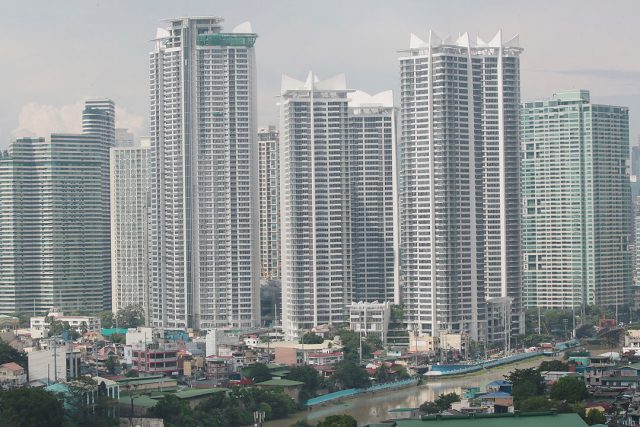
A VIEW of buildings in Makati City. — PHILIPPINE STAR/MICHAEL VARCAS

By Beatriz Marie D. Cruz, Reporter

PROPERTY developers in the Philippine capital need to enhance their market research and consider lowering condominium prices to address the current “mismatch” between available units and buyer demand, according to property analysts.

“These overpriced condos aren’t matching with the existing buyers,” Anthony Gerard O. Leuterio, founder and chief executive officer of Filipino Homes, said in a phone interview.

“There are so many buyers, as in we’re talking millions of buyers, but the issue is they cannot afford [a condo in Metro Manila] anymore,” he said in mixed English and Filipino.

Unsold inventory in Metro Manila has reached 75,300 units as of the third quarter of 2024, according to property consultancy firm Colliers Philippines.

It could take around 5.8 years to fully sell all these units, about five times longer than in the pre-pandemic period, it said.

“The Metro Manila condominium market faces challenges right now, and developers really need to lower prices in the ready-for-occupancy (RFO) market,” Colliers Philippines Associate Director Joey Roi Bondoc said in an e-mail.

Of the 75,300 remaining inventory, 27,200 are RFO units valued at P154.5 billion, Colliers said in its latest report.

Latest data from the Bangko Sentral ng Pilipinas showed that condominium prices dropped by 9.4% year-on-year, reversing the 8.3% increase from last year and the 10.6% rise in the previous quarter.

“Property firms also need to start turning off the supply tap to limit completion and further exacerbate the oversupply issue,” Mr. Bondoc said.

Lovelle Althea Trisha Taleon, director for consultancy services at real estate firm Santos Knight Frank, attributed the buyer hesitancy to market saturation and high population density.

“Many prospective buyers now favor investing in properties outside Metro Manila, such as house-and-lot developments, which offer more space, privacy, and long-term value versus the accessibility of condominiums in CBDs (central business districts). The investment is there – there is just a shift in consumer preference,” Ms. Taleon said via Viber.

The oversupply is primarily in the mid-market segment, with much of its inventory dating to the pre-pandemic period, she added.

To address the supply-demand mismatch, Mr. Leuterio said that property developers need to thoroughly study the local market.

“[Property developers must] know what the market wants and focus on local [buyers],” he said, citing the need to market condominium units to local consumers, such as overseas Filipino workers (OFWs), instead of selling to the “temporary market” like foreigners and investors.

For Mr. Bondoc, developers must implement extended downpayment terms for pre-selling units and easy/affordable move-in fees for RFO units. They should also consider lowering the lump sum amount required before a buyer can move into an RFO.

Developers can also form leasing teams to help investors lease their condo units and aggressively promote RFO units to the OFW market, he added.

K-pop survival show Be the Next: 9 Dreamers reveals cast

MENTORS AND HOST: (L-R) Bullseye, Park Woojin, Hye-bin, Sandara Park, Bang Yedam, HORI7ON Vinci, Bae Wan Hee.

REALITY show Be the Next: 9 Dreamers, presented by MLD Entertainment PH, will premiere on TV5 in February. As a K-pop “survival” show, the program will have 75 potential “idols” from around the world vying for a spot in a nine-piece boy group.

The contestants, also known as “dreamers,” will go through an intense journey, guided by a panel of mentors and judges, to achieve their dreams of becoming global idols.

2NE1’s Sandara Park, who grew up in the Philippines, will be the host of the program. At the media launch held on Jan. 20 in Quezon City, she expressed excitement for the next generation of K-pop idols.

“I’m not a mentor, but as a host I will look at the dreamers as a fan. I won’t give them advice, but I’ll be a good ate (older sister) to them!” she told the press.

K-pop icons and heavyweights in the industry — many of whom were themselves contestants on similar K-pop “survival” shows — make up the lineup of mentors: AB6IX’s Park Woojin, Bang Ye-dam (formerly of Treasure), HORI7ON’s Vinci, Hyebin (formerly of MOMOLAND), choreographer Bae Wan Hee, and producer Bullseye.

The youngest and only non-Korean among the mentors, Vinci is part of the South Korea-based Filipino group HORI7ON that debuted in 2023. This newness to the industry will help him be a supportive mentor, he said.

“I think those with confidence, whose passion shows through their performances, are the ones I will look out for in the contest,” Vinci explained. “As a young artist myself, I have the insight to how to navigate towards their dreams.”

Park Woojin, who participated in a talent survival show in 2017 before debuting with AB6IX in 2019, aims to be “a helpful mentor.”

“I can share my experiences with them on how I survived those difficult times so that it may also help them to push through,” he said.

For Hyebin, what was important in her journey as a talent survival show contestant in 2016 (after which her group MOMOLAND was formed), was having “people who saw her talents.”

“I want to be a mentor who would recognize their talents and what they have within them,” she explained. “I want them to work hard and be sincere.”

The 75 contestants have already been selected. Their names and faces will be revealed to the public when the show premieres. Be the Next: 9 Dreamers will air on TV 5 on Saturdays at 7:15 p.m. and Sundays at 8:15 p.m. starting Feb. 8. — Brontë H. Lacsamana

ADVERTISEMENT
ADVERTISEMENT