Home Blog Page 1954

NFA reforms that the Rice Tariffication Law failed to carry out

PHILIPPINE STAR/MIGUEL DE GUZMAN

(First of two parts)

Despite the adequate rice supply in the country since the issuance of the 2019 Rice Tariffication Law (RTL), some of us continue to disagree that the RTL was good legislation. The RTL converted rice farmers’ protection from import quantity restrictions (QRs) into ordinary import tariffs. The move ended the import monopoly of the National Food Authority (NFA) and enabled the private sector to import rice. The RTL made rice import decisions more transparent, reducing the country’s vulnerability to rice import shortages and high rice prices.

The RTL also reduced tariff protection in 2019 for the benefit of rice consumers. It reduced the rice import tariff rate from 50% to 35%, an important component of the RTL. The law was introduced to rein in food price inflation, primarily fueled by high rice prices.

Besides ending the NFA’s import monopoly on rice, the RTL clipped all of the NFA’s mandates and functions under its charter, PD 4 as amended, except one on managing the emergency buffer stocks. Once a model in the region in the 1970s of how to keep a country food secure with all its powers and functions under its charter, the NFA was transformed into a mere public warehouse firm for the country’s rice buffer stock.

The NFA before the RTL had several mandates in addition to its monopoly on rice imports and exports — although the country had not exported rice since the 1970s. It supported farmgate palay (unmilled rice) prices, subsidized rice prices for the poor, managed the country’s emergency rice stocks, and regulated the domestic rice and corn trade. It also helped increase the productivity of rice farms and reduced post-harvest waste.

The agency’s structure before the RTL dismantled it, was patterned from the idea in the 1970s of fusing into one agency the functions of developing and regulating the rice trade. In the 1970s, its mandate covered corn until in the 1980s — most of the corn got was used as animal feed, and not as food for the population. It was back then called the National Grains Authority (NGA). But in the 1980s, its mandate diversified into other food items regularly purchased by the poor, keeping rice of course as its main commercial business.

Other countries in the region, like Indonesia, copied the NFA’s set up. The trade monopoly on grains accorded profits to the agency, which it used to pay for the cost of the food grain subsidies for the population. The NFA in the 1970s, and perhaps early 1980s, was financially self-sufficient. It was not a fiscal problem of the National Government.

But since the 1990s, the monopoly profit of the NFA in rice evaporated as the world rice market pushed up rice prices. In the 1990s, it sought and acquired fiscal subsidies to pay for its rice import tariff obligations. Because it continued to fulfill its other mandates on subsidizing food consumption and farmgate prices of palay without the import monopoly profits, it borrowed commercially. It started to become a fiscal burden on the National Government. The financial situation continued to deteriorate until in the 2010s, its commercial debt ballooned to about half a trillion pesos and continued rising. It was second to the National Power Corp. (NPC) in the list of agencies monitored by the economic oversight committee led by the Department of Finance.

The NFA then needed to be reformed, but no one was bold enough to process the appropriate changes into a new charter of the agency. There were several bills for the reforms, but Congress then paid lip service to the cause of reforming the NFA as it was seen as an anti-rice farmer reform. The NPC charter was reformed with the EPIRA (Electric Power Industry Reform Act) law, but the NFA escaped its legislative dismantling until the RTL in 2019.

Senator Cynthia Villar, who introduced the RTL bill with then Senator Franklin Drilon and succeeded in getting it approved by Congress, focused on ending the import monopoly of the NFA.

It was to comply with the country’s legal obligation to impose tariffs on import quantitative restrictions or QRs in agriculture as a member of the World Trade Organization (WTO). That was done for other agricultural products in 1996, but the government kept deferring it for rice, saying that the rice farmers were not ready for it. But the tariffication could no longer be kicked forward by 2019, and the Finance department had to urge Congress to impose tariffs on the rice QR.

The RTL amended the NFA charter to impose tariffs on the import QR, which is the agency’s rice import monopoly. However, in the process it cut the other functions of the NFA, which in my view was done without a thorough rethinking about how to keep those in a manner that is more effective and financially sustainable. The RTL could have been more thorough, if, in addition to tariffication, it also reformed the NFA with respect to its other functions.

The legislature could have taken more time to look up as well the important services of the NFA to the population. But they must be done in my view, to maximize the net benefit of RTL to our country. Without the added reforms, the adverse effects of the RTL on specific stakeholders are unnecessarily high. I take up three of these, namely the countervailing role of the NFA in rice markets, implementing price supports for rice farmers, and delivering rice subsidies to lower income households.

The RTL did not allow the NFA to engage in rice trading, except for keeping the emergency buffer stocks. This provision, just to point out its lack of a more thorough rethinking of what to do with the NFA, lacks its function of replenishing the buffer stocks to prevent waste. Agriculture Secretary Francisco Tiu Laurel, Jr. had to come up with his own definition of a food security emergency so the NFA could sell and replenish its aging buffer stocks.

The larger problem of not permitting the NFA to conduct commercial operations is it deprives the National Government of a capacity to effectively countervail rice price manipulation by a few rice traders/importers. Those who oppose the RTL have been saying that it has only marginally reduced rice prices, when it was primarily issued to reduce rice price inflation, and that the small decline of rice prices it had delivered was inadequate to offset the more significant drop of farmgate palay prices.

With President Ferdinand “Bongbong” Marcos, Jr.’s EO 62, implemented in July 2024, which reduced the rice import tariff by over 50% to bring down rice prices and reduce their contribution to overall inflation, price data indicate the same pattern of marginal decline in rice prices, certainly below what the reduction of import tariff suggests. Following EO 62, rice prices fell by 0.96%, and by 0.31% for retail rice prices. In contrast, the average drop of farmgate palay prices in the same period was 4.63%.

It is time to accept that a de facto rice cartel — which could be a leader-follower arrangement — involving a few large traders and importers has set rice prices to maximize profits.

The government has resorted to using suggested retail prices (SRP) for rice, a measure that is costly to enforce and thus ineffective. It is also a big mistake to go back to introducing a rice import monopoly under the NFA. The RTL is correct in getting rid of the rice import monopoly.

The most effective measure that the National Government can use is to countervail the rice price manipulation. But the government does not have this capacity since the RTL had disallowed commercial operations of the NFA. Suppose the NFA had been permitted to conduct commercial operations, the government could instruct the NFA to use local and imported rice and sell the rice at competitive prices. The weakly enforced cartel arrangement breaks up with an effective countervailing by a significant player in the rice market — the National Government.

Another point is that with the countervailing role of the NFA, the lower rice import tariff last year could now effectively set rice prices at competitive levels and neutralize the contribution of rice prices to inflation. It is a good measure to maintain the low rice import tariff to make the countervailing measure more effective.

In my next column, I will take up the other functions of the NFA that were left out by the RTL. They are delivering rice price supports to farmers and rice subsidies for lower income households.

(To be continued)


Ramon L. Clarete is a professor at the University of the Philippines School of Economics.
The Geiko of Gion: Live in Manila

THE JAPAN FOUNDATION, MANILA OFFICIAL FACEBOOK PAGE

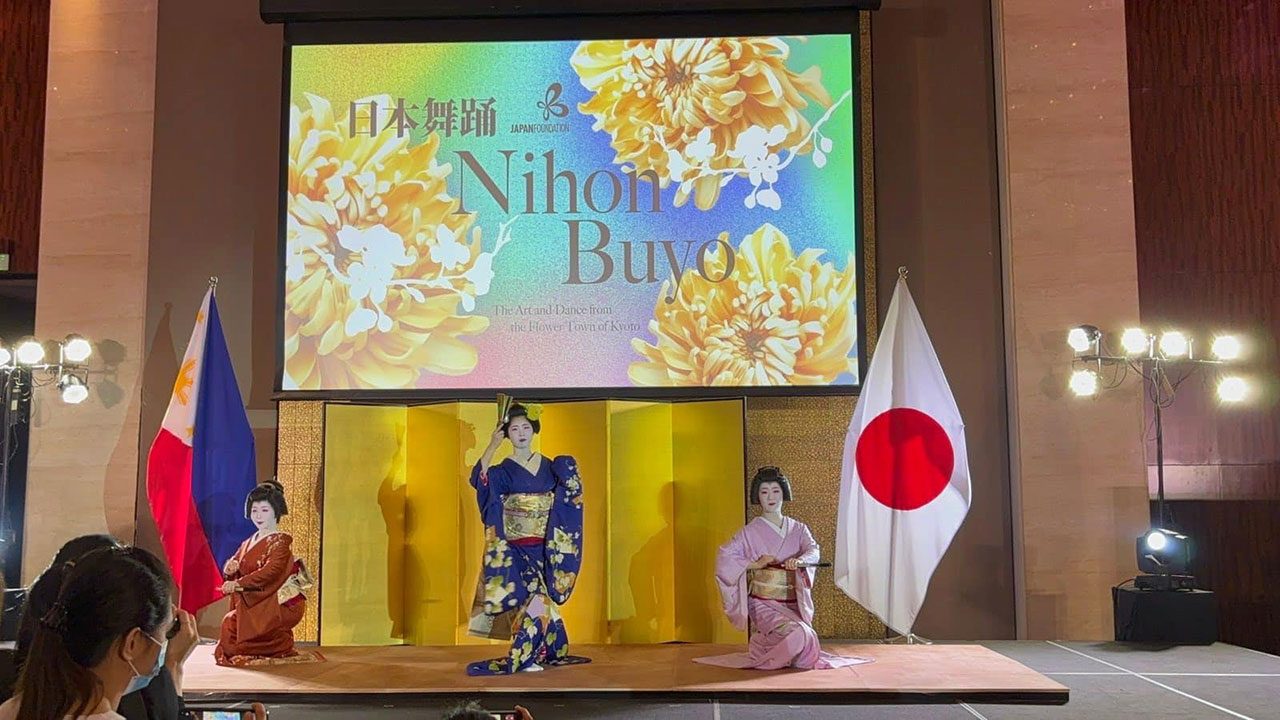
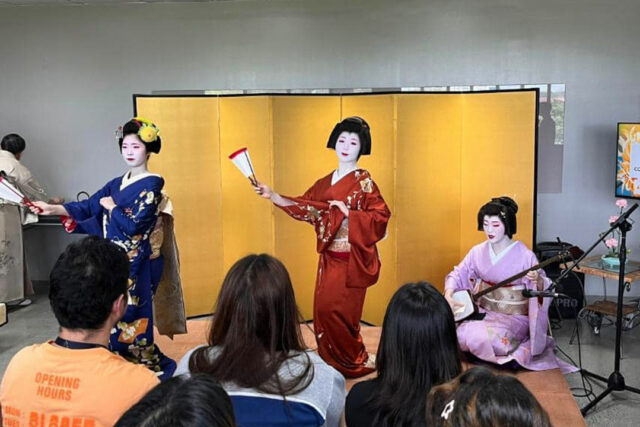
THE JAPAN FOUNDATION, Manila made dreams come true on Feb. 22 and let an audience at the Shangri-La Plaza experience a night with geiko and maiko (better known here as geisha, but Kyoto, Japan’s cultural capital, speaks a different dialect).

A symbol of old Japan, at its core, a geiko is a female entertainer versed in the traditional arts of dance and music. Branching out from the former occupation of courtesan centuries ago, the geiko left behind the sexual aspect of that career and concentrated on the arts. More importantly, it was one of the ways women were able to make a living at a time when career choices were limited. The lines between geiko and sex workers were blurred because of the previous association, mistranslations and misconceptions by foreigners, as well as previous legislation which had lumped them together. Either way, in the profession’s heyday, geiko dictated fashion, were treated as celebrities, and were connected to the highest levels of Japanese society. This life of centuries-old glamor has created a veil of mystery about the profession, which was why we appreciated meeting not one, but three in the flesh.

The Japan Foundation, Manila brought in geiko from the Tomikiku okiya (a geisha house) from the prestigious Gion Higashi hanamachi (or “flower town”) in Kyoto for the Nihongo Fiesta 2025, which ran from Feb. 22 to 23.

The head of the Tomikiku okiya, Reiko Tomimori, appeared in a cream kimono with a pattern of trees and gave a low bow. She explained through an interpreter that the geiko and the maiko (an apprentice geisha) under her care would be performing dances that evening, the first one called “Spring Rain,” about a plum tree and a cardinal bird in love, and expressing their wish to stay together forever. She said all of this in a low, clear, calming tone; perfect for telling plane passengers not to panic.

The geiko Tomichiyo (as a member of the Tomikiku geiko “family,” geiko usually adopt elements of the family name) came out in a rust-colored kimono with a pattern of silhouetted vines and the requisite white makeup and complicated bun hairstyle. Upon closer inspection, the white makeup softens to pink around the eyes, and, as Tomichiyo said, once a maiko graduates to become a working geiko (it is a five-year apprenticeship), she stops wearing her own hair in the style and is then allowed to use a wig.

The maiko, Tomieri (we were surprised to learn that the Tomikiku family has quite a following online; this apprentice included), was dressed in blue, with a pattern of vines also, but hers were in full bloom.

A second performance by the geiko Tomitae (she was dressed in lilac, with a pattern of ferns) was a piece about autumn, specifically, the “Bridge of Maple Leaves.” The three then performed a dance set to “Ballad of Gion,” a relatively modern song first recorded in the 1930s.

Later in the evening, the three bade guests to play a drinking game with them (we didn’t understand the rules and just went onstage to meet the geiko), with Tomichiyo supervising, Tomieri playing, and Tomitae on the shamisen.

Tomichiyo, her voice charming in another way (if her “mother” — okasan — spoke in calming tones, Tomichiyo spoke in a breathy, girlish, even flirtatious tone that suggested she had been waiting to meet all of you), answered some questions about her life as geiko. For example, she showed the audience the difference between her, a full-fledged geiko, and apprentice Tomieri. Tomichiyo was dressed more conservatively; the apprentice is more flamboyant. While Tomichiyo’s obi (sash) was tied in a neat box, Tomieri’s trailed below the waist, showing off the rich pattern in gold. The collar in the apprentice’s robe is also more showy, with hers speckled with gold. Tomichiyo’s and Tomitae’s were plain white. The younger one also had longer sleeves on her kimono. Tomieri also had a more complicated hairstyle and more hair ornaments: she wore a bar with silver strips in her hair, which trembled as she went through the doll-like movements of the dance.

Tomichiyo pointed out that the flower ornament worn by the apprentice changed every month according to the seasons. Normally, Tomieri would have been wearing a plum flower, but because it was her birthday, she was given a yellow chrysanthemum to wear. Tomieri keeps her complicated hairstyle — a structure of hair, wax, and other things — for a week, before it’s cleaned and redone. To maintain this, she sleeps on a high neck pillow, called a takamakura. Tomichiyo said that this hairstyle is why Tomieri’s life has so many rules — she won’t be able to be seen at “Starbucks and McDonald’s” (Tomichiyo’s words) while wearing this hair, a problem she faced too as an apprentice.

The apprenticeship begins between the ages of 15 and 20. When a geiko graduates, she can wear a wig, so theoretically, once they take off their wig and makeup, they can live a normal life. Tomichiyo says, however, that she begins a busy day at 5 p.m., and works until midnight — a life takes time, and that includes the time it takes to dress in the multiple layers of robes.

Finally, asked about her makeup, Tomichiyo said that when geiko first appeared centuries ago, there was no electric light. She could have said it any other way, but the artist in her said, “We used to dance under the moonlight. If a face was not white, people wouldn’t be able to see it.”

Follow the Tomikiku family on Instagram @tomikiku_gionhigashi. — Joseph L. Garcia

Revitalizing PHL auto parts manufacturing

An open letter to the government from PPMA

WE PRESENT this urgent appeal on behalf of the Philippine Parts Makers Association (PPMA), an organization that has long championed the resilience and growth of the auto parts manufacturing industry in the Philippines. Once a thriving sector, our industry experienced its heyday in the late 1990s with a robust membership of 140 companies. Today, however, we find ourselves in a precarious position, with only 40 members remaining as we grapple with serious challenges that threaten our survival.

The decline of our industry cannot be attributed to a lack of talent or dedication among local manufacturers. Rather, it stems from a series of policy decisions that have inadvertently stifled growth and competitiveness. We urge the government to learn from the past to ensure a sustainable future for our auto parts manufacturing sector.

In the early 2000s, the importation of second-hand vehicles was allowed, a decision that had dire consequences for local manufacturers. This policy not only undermined local production but also led to a significant decrease in demand for our products as consumers shifted their focus toward more affordable used vehicles. The imposition of excise tax on Asian Utility Vehicles (AUVs) with high local content exacerbated the sales decline, making local vehicles less appealing in the market.

Furthermore, our strict adherence to World Trade Organization (WTO) rules, particularly in comparison to our ASEAN neighbors who adopted more flexible approaches, has placed us at a distinct disadvantage. The discontinuation of safeguard measures by the Department of Trade and Industry (DTI) was another misstep, as these measures were critical for protecting our local industry against unfair foreign competition.

To reverse this troubling trend, we propose a multi-faceted approach aimed at revitalizing the auto parts manufacturing industry, inspired by successful practices in neighboring countries. Specifically, we advocate for the implementation of a 50% local content rule, similar to what Indonesia and Vietnam have adopted. This will encourage the use of locally produced parts while enhancing the overall competitiveness of our automotive sector.

In addition, we call for the introduction of subsidies for our exports, akin to the incentives provided by Thailand. Such assistance would provide much-needed support to local manufacturers, enabling us to compete more effectively in the global market.

In conclusion, we implore the Philippine government to recognize the vital role of the auto parts manufacturing industry in driving economic growth and job creation. By supporting our sector through sound policies and strategic partnerships, we can revitalize this once-thriving industry, create sustainable jobs, and boost the nation’s automotive manufacturing capabilities.

Together, let us build a brighter future for the Philippine auto parts manufacturing industry.


Ferdinand “Ferdi” Raquelsantos is president of the Philippine Parts Makers Association (PPMA).

PLDT boosts VITRO Sta. Rosa capabilities

EPLDT.COM

PLDT INC., through its data center arm VITRO Inc., has activated graphics processing unit (GPU) servers at VITRO Sta. Rosa to support advanced computing and artificial intelligence applications.

“We envision VITRO Sta. Rosa to be the Philippines’ AI (artificial intelligence) hub, forming the first AI ecosystem in the country. This new milestone showcases VITRO Sta. Rosa’s true capabilities to host the latest AI platforms that will reshape our digital landscape today,” ePLDT Inc. and VITRO Inc. President and Chief Executive Officer Victor S. Genuino said in a media release on Sunday.

VITRO Inc., the data center arm of the PLDT Group and a subsidiary of ePLDT Inc., has deployed NVIDIA-powered GPU servers at the VITRO Sta. Rosa facility.

The company said the activation of live NVIDIA-powered GPU servers highlights the data center’s advanced AI capabilities and enhances its service offerings.

“This milestone allows businesses to leverage cost-effective, high-performance computing and accelerate AI-driven digital transformation,” PLDT said.

VITRO Sta. Rosa, located in Laguna, is the company’s 11th and largest data center to date.

It is designed for energy efficiency while incorporating the latest innovations in cooling and power redundancy. It also features the highest network reliability, with at least three fiber routes from PLDT and other telecommunications providers.

VITRO Sta. Rosa will continue its innovation initiatives, with plans to support up to 100 kilowatts per rack.

“As AI technologies evolve, VITRO Sta. Rosa will integrate the latest power and cooling solutions to stay ahead of AI’s rapidly changing requirements,” VITRO Inc. said.

In July, the company completed the structure of its 50-megawatt (MW) hyperscale VITRO Sta. Rosa data center.

Hastings Holdings, Inc., a unit of PLDT Beneficial Trust Fund subsidiary MediaQuest Holdings, Inc., holds a majority stake in BusinessWorld through the Philippine Star Group. — Ashley Erika O. Jose

BSP looks to set guidelines for digital marketplace activities of banks, EMIs

BW FILE PHOTO

THE BANGKO SENTRAL ng Pilipinas (BSP) is looking to issue guidelines for banks’ and electronic money issuers’ (EMIs) digital marketplace activities, allowing them to offer their own products as well as those from third-party providers via a single platform to better meet customers’ needs.

The draft rules allow institutions to offer both financial and nonfinancial products and services via a digital marketplace or other online distribution platforms but prohibit them from presenting offerings associated with gambling activities, such as online casinos or online betting.

The proposed guidelines aim to ensure that financial firms that want to offer their products and services via digital marketplace platforms have the governance and risk management capabilities to do so, the central bank said in a draft circular posted on its website.

“The Bangko Sentral recognizes the emergence of new business models and arrangements that will further drive innovation and financial inclusion, as well as promote customer centricity. To remain competitive, it is important for BSP-supervised financial institutions (BSFIs) to forge strategic and meaningful ecosystem partnerships with product/service providers which leverage digital distribution platforms or channels. Through these ecosystem partnerships, customers are provided with a broad selection of financial and nonfinancial products and services through the banks/EMIs’ digital marketplace which will create a more tailored and holistic customer experience that cater to their needs and expectations,” it said.

“In this light, the Bangko Sentral supports the adoption of digital marketplace model by banks and electronic money issuers. Underpinning the adoption of a digital marketplace model is sound governance, risk management and consumer protection systems, including an effective, consent-driven information sharing arrangement to ensure that attendant risks are adequately managed, and consumer interests are protected.”

The BSP said a digital marketplace model will allow banks and EMIs to offer their own core products and services along with those of third-party providers via a single platform to meet “evolving” customer demands.

“By presenting third-party products/services in their digital platforms, banks and EMIs remain focused on their core business, while at the same time, provide broader suite of related products and services for a more tailored and holistic customer experience, and build greater consumer trust,” it said.

Under the draft rules, the activities in a digital marketplace operated by a bank or EMI shall be limited to the offering of its own products and services and the presentation or display of the products and services of product or service providers (PSP) that are not supervised by the BSP.

“The marketplace may facilitate the customer’s comparison and selection from a range of products and services from different PSPs that best meet customer needs, as well as the application for and/or approval of selected products or services.”

The marketplace operator may also perform additional functions like preliminary screening or underwriting and credit risk assessment. It may also act as an intermediary to facilitate payments and transactions, including integrating or connecting third-party systems to the marketplace to allow purchases, subscriptions, order taking, or request processing, through the marketplace.

The products and services that can be offered in a digital marketplace include retail deposit products, retail loan products, business loan products, plain vanilla debt and equity securities, e-money or payment cards, and retail insurance products, among others.

Operators may also offer non-financial products or services created or distributed by an accredited PSP that complement their business models or strategies.

“Products and services that are associated with gambling activities (e.g., online casinos, online betting, electronic gaming, or other forms of gambling/gaming), or any activities that could undermine the reputation of the marketplace participants and the financial system, are prohibited to be offered or presented in the marketplace,” the central bank said.

A bank or EMI must get BSP approval to become a digital marketplace operator. Processing fees range from P10,000 to P50,000 depending on the type of firm, while licensing fees are from P50,000 to P200,000.

Banks or EMIs looking to operate digital marketplaces must meet the BSP’s prudential criteria, have a net worth or combined capital of at least P1 billion and have “adequate” risk management systems related to information technology (IT), cybersecurity, anti-money laundering/countering terrorism and proliferation financing, data privacy, consumer protection and market conduct, among others.

They must also have an advanced electronic payments and financial services license.

“A bank or EMI granted with authority to engage as marketplace operator shall continuously comply with the qualification requirements even after the authority has been granted. Any deviation or noncompliance may be a basis for the imposition of appropriate enforcement actions, including revocation of authority to engage as marketplace operator,” the BSP added.

Meanwhile, the proposed rules also include guidelines on BSFIs that will act as product or service providers in a digital marketplace or other digital distribution platform operated or owned by another bank, EMI, or entities not supervised by the BSP.

The central bank said BSFIs with a Supervisory Assessment Framework (SAFr) rating of at least “3” are allowed to present or distribute products or services in a digital marketplace or other digital distribution platform without prior BSP approval and notification.

Those with SAFr ratings below “3” or those that will engage a marketplace operator not supervised by the Bangko Sentral must comply with the necessary notification requirements, it said.

BSFIs must conduct due diligence prior to entering into an arrangement with a digital marketplace or other distribution platform operated by third parties, the BSP said. These arrangements must be supported by a contract or service level agreement that covers the scope of work or services, fee structure, responsibilities of both parties, data governance, business continuity plans, and asset recovery, among others.

“The marketplace participants shall ensure that appropriate products or services are offered and/or recommended in the marketplace considering the needs, goals, and financial capabilities of consumers,” the BSP added.

It also mandates that marketplace participants must adhere to the applicable laws, rules and regulations on consumer protection.

“Marketplace participants shall establish an effective complaint handling and redress mechanism to ensure that any complaints that may arise from digital marketplace activities are resolved in a fair, timely and efficient manner,” the central bank said.

The draft also includes guidelines on product bundling, cooling-off policy, data governance and consent management, among others.

Marketplace participants of existing digital platforms must comply with the BSP’s requirements within a year from the effectivity of the circular once it is approved. — Luisa Maria Jacinta C. Jocson

The PhilHealth case and the Supreme Court

FREEPIK

How will the Supreme Court decide on the several petitions for it to declare unconstitutional the transfer of Philippine Health Insurance Corp. or PhilHealth funds (as well as the funds of other government-owned or -controlled corporations like the Philippine Deposit Insurance Corp.) to the National Government?

The first of the oral arguments held on Feb. 4 provides a glimpse of what constitutes undeniable premises, persuasive reasoning, and plausible determiners.

Among other legal reasons, the petitions assert that a special provision in the General Appropriations Act (GAA) of 2024 and the concomitant Department of Finance (DoF) Circular 003-2024 violate the Constitution for being a rider. That is, the Constitution prohibits a provision being attached to a piece of legislation like the GAA that is not germane to it and therefore must be dealt with through a separate statute. In the same vein, the special provision in the 2024 GAA and the DoF Circular violate Republic Acts, namely the Universal Health Care Act (R.A. No. 11223) and the sin tax laws (R.A. No. 10351 and R.A. No. 11346). The GAA and the DoF Circular cannot amend these laws.

The Universal Health Care Act states that “the excess of the PhilHealth reserve fund shall be used to increase the Program’s benefits and to decrease the amount of members’ contributions.” Moreover, it says: “No portion of the reserve fund or income thereof shall accrue to the General Fund of the National Government or to any of its agencies or instrumentalities, including government-owned or -controlled corporations.”

R.A. No. 11346 states that of the 50% of the total excise tax collection from sugar-sweetened beverages and from tobacco products, “shall be allocated and exclusively used” [emphasis mine] in the following manner:

“1.) Eighty percent to the Philippine Health Insurance Corp. (PhilHealth) for the implementation of Republic Act No. 11223, otherwise known as the ‘Universal Health Care Act’ of 2019;

“2.) Twenty percent shall be allocated nationwide, based on political and district-subdivisions, for medical assistance, the Health Facilities Enhancement Program (HFEP), the annual requirements of which shall be determined by the Department of Health (DoH).”

The meaning and interpretation of the provisions above should be obvious and clear-cut.

On the other hand, Solicitor-General Menardo Guevarra makes the general but faint argument that the respondents acted “within legal bounds.” His legal argumentation, however, is wanting. For example, instead of squarely facing the rider issue raised by the petitioners, the Solicitor-General shrugs this off with a curt remark: “Being germane to the purposes of the 2024 GAA, the subject Special Provision is not a rider.” Basta! His curtness evades the test of germaneness, and he fails to show that the GAA’s special provision is in accordance with being particular, unambiguous, and appropriate.

Bereft of substantial legal arguments, the Solicitor General tries to use profundity, but it ends up being shallow. So, he says that the respondents use a “common-sense approach.” Which leads to the platitude that “oftentimes creative and innovative solutions are born out of something as common as ‘common sense.’” (Incidentally, creativity and innovation also define the success of scoundrels and rule-breakers.)

But the issue at the Supreme Court is less about common sense, creativity, and innovation. It doesn’t matter whether the policy or the action is guided by common sense or creativity when it violates the law.

But even on the level of policy (and common sense), the Solicitor General and the respondents are wrong-headed.

Here, we listen to the commentaries of the amici curiae. Beverly Ho, a former official at the Department of Health who was most instrumental in crafting the bill on Universal Health Care that Congress passed in 2018, gives a critical insight into the centrality of predictable financing to enable the cost coverage for every Filipino to access the widest breadth of healthcare services and benefits.

To illustrate the enormous challenge to expand benefits, Dr. Ho points out that only 17 disease conditions of the 9,000 case-rate packages have been upgraded to Z benefits (appropriate costing of the entire clinical pathway from diagnosis to treatment to provide financial risk protection to catastrophic illnesses). Further, PhilHealth so far covers only 11% of the 189 critical drugs for outpatient primary care drugs.

Jose Enrique Africa, Executive Director of IBON Foundation, supplements Dr. Ho’s discussion as he highlights the increasing household spending for health even as household savings in recent years have decreased. Also, “reducing PhilHealth’s finances makes it more difficult to meet already unmet targets.”

The explanations given by Dr. Ho and Mr. Africa uphold and justify a fundamental principle of the Universal Health Care Act: That PhilHealth funds, including the “excess” from the reserve funds, “shall be used to increase the Program’s benefits.” And it follows: “No portion of the reserve fund or income thereof shall accrue to the General Fund of the National Government….”

Orville Solon, former dean of the University of the Philippines School of Economics, focuses on the relationship of budget and finance and incentives and performance. He gives a set of recommendations — covering financing, administrative, organizational, and structural reforms — to address the persistent problem of PhilHealth’s unused funds. His recommendations are worth pursuing.

But the taking away of PhilHealth funds cannot be part of the reform agenda. First, the legal constraint. As previously noted, current laws disallow such a practice. And the GAA provision amending the said law is a rider, which is unconstitutional. Second, taking away the PhilHealth funds, essentially the funds from both the direct and indirect contributors, destroys the principle of solidarity and pooling of risks and resources. Third, as Dr. Ho and Mr. Africa have articulated, we have yet to unlock the full potential of Universal Health Care benefits, in which predictable and ring-fenced financing is the key.

If Prof. Solon’s concern is about accountability and the structural mismatch between supply and demand for services, the current law has the mechanisms. For example, the law allows the decrease in members’ contributions in the event of PhilHealth having excess funds.

Former Finance Secretary Margarito Teves is the only one among the amici curiae who explicitly justifies the transfer of PhilHealth funds to the National Government. His main argument is that it is necessary to allocate a “reasonable amount” for unprogrammed appropriations (UA) “to cover expenses arising from unforeseen events.” In this regard, he says, it is acceptable “to collect unused idle funds” from government-owned or -controlled corporations. “Utilizing idle public resources towards productive programs is a prudent fiscal strategy.”

But Mr. Teves is wrong on several counts. To repeat, the current law disallows the transfer of PhilHealth funds to the National Government. Further, PhilHealth has no idle funds, given that the available funds it has are not even enough to cover insurance contract liabilities. But worse, it is deceptive to say that the transferred funds will be used towards “productive programs.”

Zy-Za Nadine Suzara, a public finance specialist, presents the broad political context. And she gives the sharpest criticism. I quote her, a powerful rebuke to the position taken by the respondents and supported by Mr. Teves:

“So, in conclusion, the controversial transfer of PhilHealth funds the Treasury operationalized through DoF Circular 003-2024 is a consequence of a larger and more serious problem. The new scheme of funding pork barrel, despite the Supreme Court declaring PDAF as unconstitutional. Circumventing this earlier ruling, legislators have been deliberately defunding strategic development programs and projects in the programmed appropriations and transferring them to the unprogrammed appropriations resulting in an excessive level of stand-by appropriations. This way of massively funding patronage driven projects distorts the integrity of the budget and the budget process itself. My analysis of the 2022 to 2024 national budget reveals that pork barrel now constitutes nearly 20% of the total national budget.”

Need we say more?


Filomeno S. Sta. Ana III coordinates the Action for Economic Reforms.

www.aer.ph

Axelum Resources on track for record production

CHEN MIZRACH-UNSPLASH

By Kyle Aristophere T. Atienza, Reporter

LEADING coconut products exporter Axelum Resources Corp. said it is on track to achieve record production this year with the recovery of consumption.

It added that it is diversifying its markets and pursuing operational efficiencies in the face of climate change.

Axelum Resources, a listed company, said it has built resiliency into its operations following the coronavirus pandemic, during which shipping was disrupted and inventory levels were “bloated.”

Axelum President and Chief Operating Officer Henry J. Raperoga said in an e-mail that since 2020, “We have leveraged the unique learnings brought about by these unprecedented challenges to emerge as a stronger company.”

He said the record production is a response to resurgent consumption and a more favorable macroeconomic environment.

He said at the moment, the company is exploring “advanced methods” that will complement current manufacturing capability and enable the development of new products.

“In addition, we are in the process of migrating into cleaner energy by tapping into renewable power sources to support manufacturing operations,” he added.

Axelum said climate change continues to pose threats to supply chains across various industries, with extreme weather occurrences particularly prolonged dry and wet spells constraining nut sourcing.

“As a result, we have extended our nut buying areas to ensure sufficient raw materials to meet our daily operational requirements,” he said.

“In the long term, our ongoing reforestation program aims to help boost the population of young coconut trees in our area, aligned with the government’s massive tree planting project, to improve overall productivity,” he added.

Climate change compels the company to devote additional resources to decarbonization and prepare for business contingencies especially on the front of resource availability, Mr. Raperoga said.

“On logistics, we work closely with our shipping partners to gain priority container space and negotiated freight rates,” Mr. Raperoga said.

“We are confident about the long-term growth prospects of the global coconut products industry due to increasing preferences for plant-based diets and expanding non-food commercial applications,” Mr. Raperoga said.

Axelum ended at P2.00 on Friday.

BYD Shark 6 DMO now on land

PHOTO FROM BYD CARS PHILIPPINES

Electrified pickup available for reservation

ACMOBILITY SUBSIDIARY BYD Cars Philippines, the official distributor of BYD vehicles and services in the country, announced the arrival of the BYD Shark 6 DMO in the Philippines. The electrified pickup truck is “designed for adventure-seekers,” and is expected to “make a big impact on the local market upon its official launch in March.” The electrified pickup model is available for reservation in all BYD dealerships nationwide.

The BYD Shark 6 DMO showcases the brand’s groundbreaking DMO (Dual Mode Off-road) technology designed to deliver class-leading power, performance, and cost-savings. It is said to boast advanced features that promise to “revolutionize” the pickup truck market.

The pickup model has a distinctive rugged design and muscular frame, offering an aggressive stance and a commanding presence on the road — highlighted by advanced technology and off-road capabilities.

In a statement, BYD Cars Philippines Managing Director Bob Palanca asserted, “The arrival of the BYD Shark 6 DMO signifies BYD’s continuing commitment to providing game-changing vehicles that are set to transform how we move. We’re excited to shake things up again in the industry with the all-new BYD Shark 6 DMO. This electrified lifestyle pickup combines power, technology, performance, and sustainability, while offering adventure-seekers a truly innovative and unparalleled driving experience.”

The BYD Shark 6 DMO will join the brand’s growing lineup of electric mobility solutions, including the recently launched BYD Seal 5 DM-i sedan and the BYD Sealion 6 DM-i SUV. BYD Cars Philippines’ growing electric vehicle lineup highlights ACMobility’s and BYD’s “shared vision to transform the Philippine automotive landscape by bringing cutting-edge electric mobility to more Filipinos.”

For more information, and to reserve a unit, customers may visit a BYD dealership, check out https://bydcarsph.com/powerup, or follow the official BYD Cars Philippines social media channels.

SM Prime rises after 2024 earnings report

SMPRIME.COM

INVESTORS SNAPPED UP shares of property developer SM Prime Holdings, Inc. last week after the company announced record-high earnings for 2024.

Data from the Philippine Stock Exchange showed that SM Prime was the eighth most actively traded stock by value last week, with 61.71 million shares worth P1.40 billion changing hands from Feb. 17 to 21.

The property giant’s shares closed at P23.70 apiece on Friday, up 3% from P23 a week earlier. However, this marked a 5.8% decline from its last closing price of P25.15 per share on the final trading day of 2024.

Juan Alfonso G. Teodoro, an equity research analyst at Timson Securities, Inc., said the upward trajectory indicated that investors welcomed the company’s financial results.

“Although there was a positive reaction to the earnings news, the overall performance of the stock still shows that investor sentiment may be influenced by other important market conditions,” Mr. Teodoro said in a Viber message.

“We also have profit-taking as another factor. After a positive earnings report, some investors might sell their shares to lock in gains, which could limit upward momentum,” he added.

Jeff Radley C. See, head trader at Mercantile Securities Corp., said that while investors were bullish on the stock, overall sentiment regarding the earnings report was overshadowed by the recent decision of the Bangko Sentral ng Pilipinas (BSP) to pause policy easing.

“Higher interest rates will make it more expensive for them to borrow,” Mr. See said in a separate Viber message.

The BSP initiated its easing cycle in August, cutting borrowing costs by a total of 75 basis points by the end of 2024.

However, in a surprise move at its first policy meeting this month, the central bank kept its policy settings steady as it braces for uncertainties stemming from the looming global trade war under US President Donald J. Trump.

The BSP signaled that the easing cycle remains underway.

In a disclosure to the local bourse last week, SM Prime reported a consolidated net income of P45.6 billion in 2024, up 14%, driven by growth across all business segments.

Revenues likewise rose 10% to a record P140.4 billion last year.

Earlier this month, SM Prime announced plans to invest P33 billion in its malls and commercial property portfolio. Of this, P21 billion is allocated for expanding the gross floor area of its malls, P6 billion for expanding its hospitality and meetings, incentives, conferences, and exhibitions (MICE) operations, and P6 billion for developing new office towers and workspaces.

Mr. Teodoro said investors see these expansion plans as a sign of the company’s “confidence” in market demand and growth opportunities.

“SMPH [referring to its ticker] is preparing itself to benefit from future economic expansion and growing consumer spending by making major investments in malls, hospitality, and office spaces,” he said.

Mr. See, however, noted that concerns over a potential condominium unit bubble contributed to the negative sentiment.

For Mr. Teodoro, SM Prime is expected to sustain its growth trajectory, supported by economic recovery, rising consumer confidence, and continued expansion.  

“Our estimated forecast for SMPH’s Q1 2025 earnings is approximately P9.95 billion. For the full year, our net income forecast is approximately P53.12 billion,” he said.

Mr. See set resistance levels at P24 and P26, while support levels were at P21.80 and P22.85.

Meanwhile, Mr. Teodoro saw P23 to P23.30 as resistance levels and P22 as support. — Kenneth H. Hernandez

Yields on gov’t debt mixed

YIELDS on government securities (GS) were mixed last week as the market consolidated after the Bangko Sentral ng Pilipinas’ (BSP) decision to pause its monetary easing cycle.

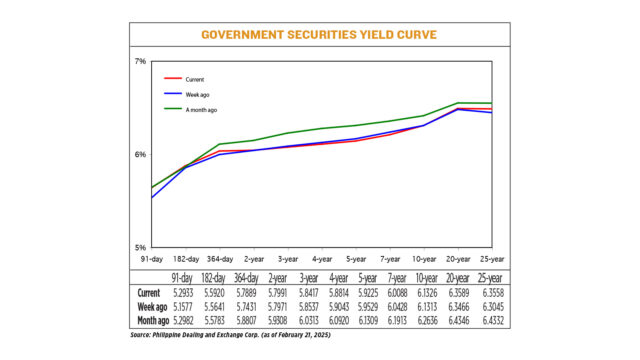
GS yields at the secondary market went up by 1.61 basis points (bps) on average week on week, based on the PHP Bloomberg Valuation Service Reference Rates as of Feb. 21 published on the Philippine Dealing System’s website.

The short end of the curve rose, with yields on the 91-, 182-, and 364-day Treasury bills (T-bills) increasing by 13.56 bps (to 5.2933%), 2.79 bps (5.592%), and 4.58 bps (5.7889%) respectively.

At the belly, the two-year tenor inched up by 0.2 bp to yield 5.7991%. Meanwhile, rates of the three-, four-, five-, and seven-year Treasury bonds (T-bonds) inched down by 1.2 bps (to 5.8417%), 2.29 bps (to 5.8814%), 3.04 bps (to 5.9225%), and 3.4 bps (to 6.0088%), respectively.

At the long end, yields on the 10-, 20-, and 25-year T-bonds went up by 0.13 bp, 1.23 bp, and 5.13 bp, respectively, to 6.1326%, 6.3589%, and 6.3558%.

Total GS volume traded reached P39.83 billion on Friday, lower than the P40.92 billion seen on Feb. 14.

GS yields were mixed last week as the market continued to digest BSP Governor Eli M. Remolona, Jr.’s remarks following the Monetary Board’s Feb. 13 policy meeting, analysts said.

“The BSP’s decision to keep rates unchanged initially drove some selling in the secondary market, but yields eventually settled. Part of this may have been brought about by the shift in the governor’s rhetoric towards a cut in the reserves, which may have alleviated the effects of the surprise of the BSP’s decision,” a bond trader said in a Viber message.

“Shorter-dated bonds were more affected since there had been demand there leading up to an expected rate cut, driving average yields at T-bills auctions gradually lower over the last couple of weeks. It was pretty much priced in, so there was an adverse reaction there when the BSP did not cut.”

Meanwhile, yields at the belly moved mostly lower as the market expects the BSP’s pause to be temporary, the trader noted. 

“The BSP’s rate-cutting cycle is very much intact. It is just on hold for now due to global trade policy uncertainties coming from the US. Thus, the short end of the curve to the belly is on anticipatory mode and is awaiting domestic and US economic data that affirms inflation will continue to ease here and in the US,” First Metro Investment Corp. Head of Research Cristina S. Ulang said in a Viber message.

The BSP’s policy-setting Monetary Board on Feb. 13 unexpectedly held benchmark interest rates steady in a “prudent” move as global uncertainties cloud the outlook for growth and inflation.

At its first meeting for 2025, the BSP left the target reverse repurchase rate unchanged at 5.75%. Rates on the overnight deposit and lending facilities were also kept at 5.25% and 6.25%, respectively.

This was the central bank’s first pause following three consecutive 25-bp cuts since it began its easing cycle in August 2024.

The decision took the market by surprise as 19 out of 20 analysts polled by BusinessWorld had anticipated a fourth straight 25-bp cut at the meeting, while one analyst expected the BSP to keep rates steady.

Mr. Remolona said uncertainty over the trade policy of US President Donald J. Trump and its potential impact on the Philippines led to the decision to keep rates unchanged for now. However, he said the BSP continues to be in an easing cycle, with the pause letting the central bank hedge itself against the risk of policy reversal.

He added that the central bank will likely continue reducing interest rates by 25 bps at a time, with 50 bps in cut for this year still likely.

The Monetary Board’s next policy meeting is on April 3.

On Friday, the BSP announced that it will reduce the reserve requirement ratios (RRR) of universal and commercial banks and nonbank financial institutions with quasi-banking functions by 200 bps to 5% from 7% effective March 28.

The RRR for digital banks will be cut by 150 bps to 2.5%, while the ratio for thrift banks will be brought down by 100 bps to 0%.

The central bank last cut banks’ reserve ratios in October 2024.

Moving forward, Ms. Ulang said the market will watch hints from both the BSP and the US Federal Reserve on their outlook for inflation amid the Trump administration’s policies.

“Any positive signal… will spur buying,” she said, adding that the long end of the curve could face downward pressures. — P.O.A. Montalvo

Remembering the 1986 People Power Revolution

PHILIPPINE STAR/MIGUEL DE GUZMAN

It was one of the most tense and terrifying times in our country. It was like the tremulous gloom of wartime, our elders said. February 1986 was turbulent and stressful.

Because he could no longer run for a third term as president in 1973, Ferdinand E. Marcos, Sr. issued Proclamation No. 1081 on Sept. 23, 1972, declaring Martial Law, using the civil unrest that arose after the 1969 Philippine balance of payments crisis as a justification for the proclamation. It was economics that started Marcos Sr.’s 14-year authoritarian regime. (Ferdinand Marcos and the Philippines: the political economy of authoritarianism, Greenwood Publishing Group).

“A major economic crisis in the early 1980s virtually drove the Philippine economy into a standstill, crippling businesses and sending millions of Filipinos out of their jobs and into the streets. That crisis, unique at a time when the rest of Southeast Asia was roaring ahead economically was the result of a crippling impact of the economy’s dependence on foreign debt which it could no longer afford to repay and the political instability caused by the popular outrage from the assassination of Benigno Aquino, Jr. in August 1983,” business and economics journalist Ping Galang recalled. “Private investors either moved out or froze operations. Marcos was left with no option but to call a ‘snap’ election to validate his mandate” (gmanetwork.com, Sept. 21, 2009).

The snap election was held on Feb. 7, 1986. The official election canvasser, the Commission on Elections (Comelec), declared that Marcos was the winner. The final tally of the Comelec had Marcos winning with 10,807,197 votes against rival candidate (assassinated hero Benigno S. Aquino, Jr.’s widow) Corazon Aquino’s 9,291,761 votes. On the other hand, based on returns of 70% of the precincts, the National Movement for Free Elections (Namfrel), an accredited poll watcher, had Aquino winning with 7,835,070 votes against Marcos’s 7,053,068 votes (iReport EDSA 20th Anniversary Special Issue | Dr. William Castro, Philippine Center for Investigative Journalism, February 2006).

Thirty Comelec computer technicians walked out while tallying the votes to protest the deliberate manipulation of the official election results to favor Ferdinand E. Marcos, Sr. The walkout was considered one of the early “sparks” of the People Power Revolution. The walkout also served as an affirmation to allegations of vote-buying, fraud, and tampering of election results by the KBL, Marcos’ political party (Ibid.).

On Feb. 13, Cebu Archbishop Ricardo Cardinal Vidal issued a declaration on behalf of the Philippine Church hierarchy stating that when “a government does not of itself freely correct the evil it has inflicted on the people then it is our serious moral obligation as a people to make it do so… Now is the time to speak up. Now is the time to repair the wrong. The wrong was systematically organized. So must its correction be. But as in the election itself, that depends fully on the people; on what they are willing and ready to do” (“Post-Election Statement” archived from the original by Wikipedia on Sept. 23, 2015).

On Feb. 16, 1986, Corazon Aquino held the “Tagumpay ng Bayan” (People’s Victory) rally at Luneta Park, announcing a civil disobedience campaign and calling for her supporters to boycott publications and companies which were associated with Marcos or any of his cronies. The event was attended by a crowd of about two million people (Schock, Kurt, 1999: “People Power and Political Opportunities: Social Movement Mobilization and Outcomes in the Philippines and Burma.” Social Problems). Other protest groups responded and unified to join Aquino’s call (“The road to EDSA” by Elfren S. Cruz, Philstar.com., retrieved by Wikipedia on May 18, 2021).

In the aftermath of the election and the revelations of irregularities, the Reform the Armed Forces Movement (RAM) — a group formed in 1982 consisting of officers of the Armed Forces of the Philippines (AFP) who were disgruntled by the patronage politics and corruption in the AFP — decided to mount a coup d’etat against Ferdinand Marcos (“The 3-Day Revolution: How Marcos Was Toppled” by Mark Fineman, Los Angeles Times, Feb. 27, 1986).

On Feb. 20, RAM approached Cory Aquino, informing her of the coup plans and that they would form a junta headed by a Council of Elders composed of Defense Secretary Juan Ponce Enrile, General Fidel Ramos, Jaime Cardinal Sin, businessman Jaime Ongpin, former executive secretary Alejandro Melchor, Jr., and former senator Salvador “Doy” Laurel. Mrs. Aquino rejected the offer, as there was a sense that the Council would just be a front for a military junta headed by Enrile (“The Final Report of the Fact-Finding Commission: IV: Military Intervention in the Philippines: 1986 – 1987 | GOVPH,” Official Gazette of the Republic of the Philippines, National Printing Office, Oct. 3, 1990).

Juan Ponce Enrile, then Minister of Defense, and Gen. Fidel Ramos, then Armed Forces Vice Chief of Staff, were defectors and late entrants to the growing public protest against the dictatorship of Ferdinand Marcos, Sr. A write-up in the Fidel V. Ramos Presidential Library (fvrlegacy.org) “Ramos Pivots Towards EDSA: Bolting the Marcos Regime” relates:

“In August 1983 (when oppositionist Sen. Benigno S. Aquino, Jr. was assassinated at the Manila International Airport) President Ferdinand E. Marcos, Sr. assumed the position of Commander-in-Chief of the Armed Forces, replacing the ally he originally installed in this post, General Fabian C. Ver. He simultaneously removed Defense Minister Juan Ponce Enrile from the military chain of command. Operational control of the INP (Integrated National Police) was transferred from the PC (Philippine Constabulary) to General Ver. This signal of no-confidence from a president who curtailed Ramos’ authority over the INP to simple administration was, for political watchers, prediction enough of impending power shifts.”

On the morning of Feb. 21, Gen. Ver informed Marcos that there was a brewing coup plot by Enrile and a reported assassination attempt on him (Enrile). Marcos ordered the plot leaders’ arrest, and presented to the international and local press some of the captured plotters (Militant Labor in the Philippines by Lois A. West, 1997, Temple University Press, pp. 19–20, ISBN 978-1-56639-491-8, retrieved Dec. 3, 2007).

Fidel Ramos went to Jaime Cardinal Sin, Bishop of Manila, for help. Cardinal Sin called on Catholics and the Filipino people on Radio Veritas, the Church radio station:

“My Dear People, I wish you to pray, because it’s only through prayer that we may solve this problem. This is Cardinal Sin speaking to the people, especially in Metro Manila. I am indeed concerned about the situation of Minister Enrile and General Ramos, I am calling our people to support our two good friends at the camp. If any of you could be around at Camp Aguinaldo to show your solidarity and your support in this very crucial period, when our two good friends have shown their idealism, I would be very happy if you support them now. I would only wish that violence and bloodshed be avoided. Let us pray to our Blessed Lady to help us in order that we can solve this problem peacefully.”

On a long stretch of Epifanio de los Santos Avenue (EDSA) in Metro Manila from Feb. 22 to 25, 1986, over two million Filipino civilians, as well as several political and military groups and religious groups stood in passionate but peaceful protest, led by Jaime Cardinal Sin, with Catholic Bishops’ Conference of the Philippines President Ricardo Cardinal Vidal, the Archbishop of Cebu. It is remembered as a “Rosary miracle” in the peaceful victory (“The Rosary Miracle of the Philippines,” Valerie Joy Escalona, Oct. 22, 2024, National Catholic Register, retrieved Oct. 24, 2024).

Despite having held his own inauguration on Feb. 25, Marcos and his family were already preparing to flee the country. The Marcos family and entourage (with close associates Fabian Ver et al.) were flown out of the country by the US Airforce on the evening of Feb. 25 and arrived at Hickam Air Force base in Hawaii on Feb. 26. When Radio Veritas reported the Marcos family’s departure, the people rejoiced and danced in the streets, and not only on EDSA. It was a day of national jubilation.

In other countries, people also rejoiced and congratulated the Filipinos they knew. CBS anchorman Bob Simon reported: “We Americans like to think we taught the Filipinos democracy. Well, tonight they are teaching the world (People Power: The Philippine Revolution of 1986: An Eyewitness History, Manila, Philippines, by Paul Sagmayao Mercado and Francisco S. Tatad, The James B. Reuter, S.J., Foundation (1986), OCLC 1687489).

How can any Filipino at least in their 40s today, ever forget the dizzying euphoria from the deep joy of release and salvation, experienced in the People Power Revolution of 1986? It was like Christmas!

How can the epic story of EDSA I ever be erased and history revised, perhaps for self-serving manipulations to ease the consciences and rebuild the reputations of those who were on the “wrong” side of that glorious fight of the Filipinos for democracy and justice? To reverse the “wrong” side to be the “right” side? And vice versa? Meaning, the Filipino people were never the “heroes” of the EDSA People Power Revolution of 1986?

This year, the 39th anniversary of EDSA I, President Ferdinand R. Marcos, Jr., declared that Feb. 25 would be a “special working day,” downgrading it from its classification a public (non-working) holiday from 1987-2020, and a special non-working holiday from 2021-2023.

It was not included in the list of holidays in 2024 as declared by Marcos Jr., who cited that it “falls on a Sunday,” which is considered as a rest day anyway for most laborers, while maintaining respect for its commemoration. It was restored as a holiday in 2025, this time as a “special working day,” meaning, laborers and workers would have to go to work on that day to get their pay. The Department of Labor and Employment (DoLE), in Labor Advisory No. 2, Series of 2025, issued strict rules on “No work, no pay” for Feb. 25.

Yet many top Catholic schools in the Philippines declared a non-working day on Feb. 25, even if the Marcos government had downgraded it. The Dominican-run University of Santo Tomas (UST) led the schools’ protest with a memo on Friday, Feb. 14, stating that “there will be no classes and work on Feb. 25 (Tuesday).”

“Let us stand united and never forget that true power lies in the collective will of the people, and it is our responsibility to uphold the values of integrity, justice, and freedom for generations to come,” said UST secretary-general Father Louie Coronel to the UST community (Rappler.com, Feb. 17, 2025).

The youth must know and remember the EDSA People Power Revolution of Feb. 25, 1986.


Amelia H. C. Ylagan is a Doctor of Business Administration from the University of the Philippines.

ahcylagan@yahoo.com

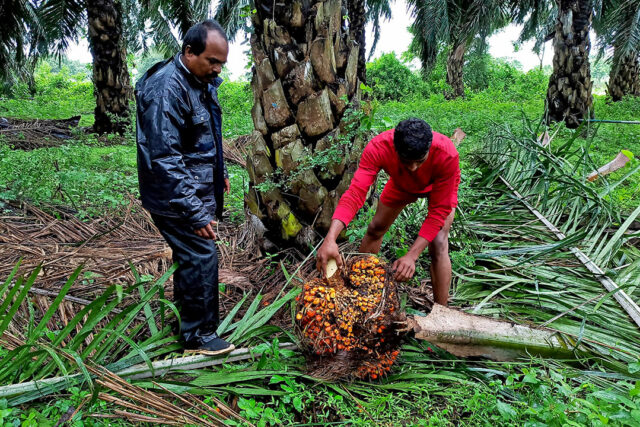
Indian refiners cancel orders for palm oil after price surge

REUTERS

MUMBAI — Indian refiners have canceled orders for 100,000 metric tons of crude palm oil (CPO) scheduled for delivery between March and June, because of a surge in benchmark Malaysian prices and negative refining margins in India, trade sources said.

Refiners in the world’s largest importer of palm oil canceled the quantity over the last four days, including 30,000 metric tons on Friday, after Malaysian palm oil futures rose more than 11% over four weeks.

The Indian cancellations could limit the rally in Malaysian palm oil prices, although they could also support soy oil prices as some refiners shift to soy oil.

The trade sources spoke on condition of anonymity because they were not authorized to speak to the media.

One Indian buyer, who operates a refinery on the east coast and canceled palm oil shipments for March delivery, said the combination of negative refining margins in India and high overseas prices meant it made sense to lock in profits by selling palm oil back to suppliers, rather than importing it.

Price-sensitive Asian buyers traditionally rely on palm oil due to its low cost and quick shipping times. However, the recent price rise has pushed palm oil to a premium over soy oil on the global market.

An influx of soy oil into India between February and March, priced slightly lower than palm oil, has prompted some refiners to cancel their palm oil purchases to switch to soy oil, Sandeep Bajoria, chief executive of Sunvin Group, a vegetable oil brokerage, said.

A Mumbai-based dealer with a global trade house said buyers and sellers were mutually agreeing to cancel contracts, with buyers accepting a slightly lower price than the current market rate for cancellations.

Crude palm oil is being offered at about $1,210 a ton, including cost, insurance and freight, in India for March delivery, compared to around $1,120 to $1,130 a month ago.

India’s palm oil imports, which are primarily from Indonesia and Malaysia, in January fell 45% from a month ago to 275,241 metric tons, the lowest in nearly 14 years, as refiners turned to cheaper soy oil. The soy oil is imported mostly from Argentina and Brazil.

Market speculation India will raise its import duty on palm oil to support local oilseed farmers has also prompted some refiners to cancel contracts and book profits, said a New Delhi-based dealer with a global trade house. — Reuters

ADVERTISEMENT
ADVERTISEMENT