Home Blog Page 1798

EU leaders vow to continue backing Ukraine, but make no concrete pledge

A EUROPEAN UNION’S flag flutters outside the European Commission headquarters in Brussels, Belgium, Oct. 15, 2020. — REUTERS

 – European Union leaders said on Thursday that they will continue to support Ukraine, but they did not immediately endorse a call by Ukrainian President Volodymyr Zelenskiy to provide at least 5 billion euros for artillery ammunition purchases.

“We need funds for artillery shells and would really appreciate Europe’s support with at least five billion euros ($5.42 billion) as soon as possible,” Mr. Zelenskiy told the EU leaders meeting in Brussels via video link.

The bloc’s foreign policy chief, Kaja Kallas, had also called on leaders to match words of support for Kyiv with deeds, as U.S. President Donald Trump pushes ahead with his efforts to end the war, including through a rapprochement with Russia.

“The stronger they are on the battlefield, the stronger they are behind the negotiation table,” Mr. Kallas said of the Ukrainians.

In a statement, all EU leaders except Hungary’s Viktor Orban pledged to “continue to provide Ukraine with regular and predictable financial support”. They also said EU members should “urgently step up efforts to address Ukraine’s pressing military and defense needs”.

There was no concrete answer on the 5 billion euros. But summit chair Antonio Costa said EU members had promised 15 billion euros in aid for Ukraine in recent weeks and he believed they would increase those pledges further.

Mr. Kallas had previously proposed a pledge up of to 40 billion euros in military aid to Ukraine in 2025, with each country contributing according to its economic size, but that hit resistance from some countries, particularly in southern Europe.

Bolstering the EU’s own defenses also featured on the summit agenda, reflecting deep fears that Moscow may attack an EU member in the coming years and doubts about the future of U.S. protection for Europe via the NATO defense alliance.

“We have to rearm ourselves because otherwise we will be the next victims of Russian aggression,” Lithuania’s President Gitanas Nauseda said.

But some southern European capitals have been more reticent, reflecting a division between those geographically closer to Russia that have given more aid to Ukraine and those farther away that have given less, as a share of their economies.

Spanish Prime Minister Pedro Sanchez said he did not like the term “rearm”, which the European Commission has used extensively in its push for more defense spending.

“It is important to take into account that the challenges that we face in the southern neighborhood are a bit different to the ones that eastern flank face,” he said.

Mr. Zelenskiy will be in Paris next Thursday to hold talks with a coalition of willing countries to discuss ways to help defend Ukraine, French President Emmanuel Macron said.


DEFENCE SPENDING

EU leaders also discussed the Commission’s defense proposals, which include a call for European countries to pool resources on joint military projects and buy more European arms.

“I think Europe has never moved faster than over the past few weeks,” Macron said.

“Europe was a community built to avoid war, then a single market. It had never built the tools to become a real power. It’s doing it now. We’re doing it in real-time and we’re doing it fast.”

Some, like Greek Prime Minister Kyriakos Mitsotakis, urged the EU to go further in financing defense spending and consider giving member states grants and not just loans.

Italian Prime Minister Giorgia Meloni expressed a preference for “truly common European instruments that do not directly burden the debt of states.”

Others, like Dutch Prime Minister Dick Schoof, said they were still very much opposed to joint euro bonds.

EU leaders spent the early evening debating economic challenges facing the bloc, notably its bid to stay competitive while decarbonizing its industries and catch up with rivals the United States and China in new fields such as AI.

They made clear the EU’s ability to invest in defense relied on its economic strength and called for progress this year in three fields – cutting red tape, securing affordable and clean energy and creating a more dynamic capital market to channel billions of euros of private money towards required investments. – Reuters

Elon Musk issued summons in SEC case over Twitter stake disclosure

ELON MUSK — REUTERS

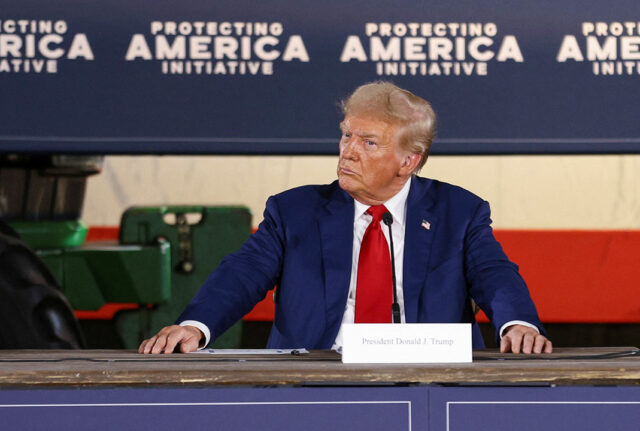
Elon Musk, the world’s richest man and a top adviser to U.S. President Donald Trump, was issued a summons in connection with the Securities and Exchange Commission’s lawsuit against him, a court filing on Thursday showed.

A process server gave the civil summons and other documents on March 14 to a security guard at the Brownsville, Texas, headquarters of SpaceX, the space technology company of which Mr. Musk is CEO, the filing said. An answer is due on April 4, according to the docket.

The SEC in January accused Musk of waiting too long to disclose in 2022 that he had amassed a large stake in Twitter, the social media company he later bought and renamed X.

The regulator said Mr. Musk violated federal securities law by waiting 11 days too long to disclose his initial purchase of 5% of Twitter’s common shares.

An SEC rule requires investors to disclose within 10 calendar days — or by March 24, 2022, in Mr. Musk’s case — when they cross a 5% ownership threshold.

Mr. Musk and his lawyer didn’t immediately respond to requests for comment. A spokesperson for the SEC declined to comment. – Reuters

Trump invokes emergency powers to boost US critical minerals production

REUTERS

 – U.S. President Donald Trump on Thursday invoked emergency powers to boost domestic production of critical minerals used widely across the economy as part of a broad effort to offset China’s near-total control of the sector.

The move is the latest by Mr. Trump to increase U.S. energy and minerals production and comes amid an escalating trade conflict with China, Canada and other large minerals producers that supply American manufacturers.

Lithium, nickel and other critical minerals are used in many electronics, and demand is expected to surge in coming years for production of electric-vehicle batteries. China is the world’s largest producer or processor of many critical minerals.

Mr. Trump signed an executive order that taps the Cold War-era Defense Production Act (DPA) as part of an effort to provide financing, loans and other investment support to domestically process a range of critical minerals.

The DPA gives the Pentagon wide berth to procure equipment necessary for national defense. Invoking it essentially declares that relying on rival nations for critical minerals constitutes a national security threat.

“The United States was once the world’s largest producer of lucrative minerals, but overbearing federal regulation has eroded our nation’s mineral production,” the president said in the order.

The order directs federal agencies to create a list of U.S. mines that can be quickly approved as well as which federal lands, including those controlled by the Pentagon, could be used for minerals processing.

The U.S. currently produces very little lithium and nickel; its only cobalt mine shuttered last year amid intense Chinese competition. The U.S. does have multiple copper mines, but only two smelters to process the red metal into pipes, wiring and other components. The U.S. has only one mine for rare earths, which are used to make magnets that turn power into motion.

Late last year, Beijing imposed an outright ban on exports of gallium, germanium and antimony to the United States, causing U.S. manufacturers to scramble for alternative supplies of those niche-but-vital materials.

The order also encourages faster permitting for mining and processing projects and a directive for the Interior Department to prioritize mineral production on federal land. The order directs agencies to help boost U.S. output of copper and gold, neither of which is considered a critical mineral by the U.S. Geological Survey.

An executive order from Mr. Trump had long been sought by U.S. miners, many of which had long complained that bureaucratic delays hampered output.

“Ramping up American mining is a national security imperative and President Trump’s strong action recognizes that,” said Rich Nolan, head of the National Mining Association trade group.

The Defense Production Act is a 1950 law that former President Harry Truman deployed to ramp up steel production for the Korean War.

Former President Joe Biden also invoked the law to encourage domestic production of critical minerals, adding battery materials such as lithium, nickel, graphite, cobalt and manganese to the list of items covered under the measure to help companies access $750 million in funds.

Former Newmont executive David Copley has been named to oversee the mining portfolio for the U.S. National Energy Dominance Council, two sources familiar with the appointment told Reuters. Copley will be the highest-ranking person in the federal government shaping mining policy, one of the sources said.

Mr. Trump also said on Thursday that the United States will sign a minerals and natural resources deal with Ukraine shortly. Last month he ordered a probe into potential new tariffs on copper imports. – Reuters

Franchise Negosyo Para Sa Region II opens today at SM City Tuguegarao

The Philippine Franchise Association (PFA) officially opens the Franchise Negosyo Para Sa Region II today, March 21, at SM City Tuguegarao. This exciting two-day event aims to connect aspiring entrepreneurs with top franchise brands through business matching sessions, providing networking opportunities and direct inquiries with franchisors.

The event features over 20 exhibitors representing more than 200 brands, offering visitors a chance to explore a diverse range of franchise opportunities. With the business matching sessions, visitors can meet one-on-one with franchise representatives, gain insights into investment options, and take the first step toward owning a successful franchise business.

Another key highlight is the free seminar, “How to Invest in the Right Franchise,” where seminar participants can learn practical tips on selecting and managing a franchise. This seminar aims to help attendees make wise franchise investments.

Finally, entrepreneurs can learn the beauty of expanding their brand exponentially through the “How to Franchise Your Business” Seminar on March 22, 2025, at the Callao Hall, G/F Go Hotels, Tuguegarao at 2:00 p.m. Participants can unlock how franchising can help them grow the number of their stores and locations effectively and efficiently.

The Franchise Negosyo Para Sa Region II is free to attend and is now open to the public. Doors open at 10:00 a.m. today, so don’t miss this opportunity to start your franchising journey and connect with the right business partners.

To register for the Expo and How to Invest in the Right Franchise Seminar, click this link: https://www.pfa.org.ph/regionalevents.

To register for the How to Franchise Your Business Seminar, click this link: https://www.pfa.org.ph/event-details/how-to-franchise-your-business-seminar-in-tuguegarao.

The Franchise Negosyo Para sa Region II is supported by DTI, OWWA, PCCI Region II, Local Chambers, SM Supermalls, PLDT Enterprise, Carrier The Air Authority, Grainsmart Café, and Miguelitos Ice Cream.


Spotlight is BusinessWorld’s sponsored section that allows advertisers to amplify their brand and connect with BusinessWorld’s audience by publishing their stories on the BusinessWorld Web site. For more information, send an email to online@bworldonline.com.

Join us on Viber at https://bit.ly/3hv6bLA to get more updates and subscribe to BusinessWorld’s titles and get exclusive content through www.bworld-x.com.

Responsible pet ownership, immediate medical attention can reduce rabies fatalities

In this B-Side episode, Boehringer Ingelheim Animal Health’s Dr. Vincent C. Casimero and Dr. Niko H. Ylagan talk about Rabies Prevention Month, the causes and transmission of rabies, plus the protocol for handling animal bites and scratches.

Interview by Patricia Mirasol
Audio editing by Jayson Mariñas

SM Book Nook Reading Festival brings Filipino stories to life at SM Aura

L-R: SM Cares Assistant Vice-President Richard A. Caluyo, SM Book Nook Reading Festival Co-Organizer and BookShelfPH Co-Founder Monette Quiogue, and SM Aura Regional Operations Head Stephanie Co

The SM Book Nook Reading Festival, held on Jan. 31, 2025, at the Book Nook in SM Aura, drew 500 book lovers of all ages for a dynamic celebration of Filipino literature and creativity. From engaging author meet-and-greets to lively performances and informative workshops, the festival offered a rich array of literary experiences.

Interactive storytelling and inspiration

One of the festival’s highlights was the launch of SM Book Nook’s innovative “Pass the Plot” board. This interactive activity encouraged participants to co-create a story, sentence by sentence, showcasing their collective creativity.

The “Pass the Plot” board at the SM Book Nook Reading Festival ignites collaborative storytelling, inviting participants to build a narrative sentence by sentence.

A major highlight of the event was the presence of renowned literary personalities such as National Artist for Literature Virgilio Almario (Rio Alma), Dean Tony Laviña, Hans Pieter Arao, and Jayson Fajardo. Attendees had the unique opportunity to connect with these esteemed authors, get their books signed, and engage in insightful conversations. The festival also showcased emerging talent, with popular independent authors like Therese Villarante-Langit connecting with readers and sharing their work.


National Artist for Literature Virgilio Almario (Rio Alma) inspires readers and shares his literary journey at the SM Book Nook Reading Festival at SM Aura.

A celebration of community and shared passion

A heartwarming moment unfolded when publishers and authors united for a meaningful cause — donating books to the SM Book Nook. This symbolic gesture underscored the collective mission of promoting a culture of reading and knowledge-sharing.

Authors and publishers, with SM Book Nook pioneer Shereen Sy (8th from right), unite to donate books at the SM Book Nook Reading Festival, promoting a love of reading.

Engaging activities for all ages

The festival buzzed with activity throughout the day. Attendees participated in fun quiz games, delved into historical fiction readings, and engaged in thought-provoking book club discussions. Spoken word poetry performances by teens and young adults added a contemporary flair, while a session on zines with BBZ offered a glimpse into the world of independent publishing. Publishers like Bookshelf PH, Grana Books, and Aklat Alamid showcased their latest titles, and a special session on copyright law provided valuable information for aspiring authors.

The audience is enthralled as author Bambi Rodriguez reads from her latest work.

The SM Book Nook Reading Festival proved to be more than just a book event. It was a lively community gathering, a celebration of Filipino storytelling, and a source of inspiration for both established and aspiring writers.

For more information about SM’s community programs and how you can get involved, visit https://www.smsupermalls.com/smcares/.


Spotlight is BusinessWorld’s sponsored section that allows advertisers to amplify their brand and connect with BusinessWorld’s audience by publishing their stories on the BusinessWorld Web site. For more information, send an email to online@bworldonline.com.

Join us on Viber at https://bit.ly/3hv6bLA to get more updates and subscribe to BusinessWorld’s titles and get exclusive content through www.bworld-x.com.

Big Dreams, Smart Moves: Horizon Land makes homeownership easier

Owning your dream home is now within reach. Horizon Land, the smart value brand of Federal Land, Inc., offers quality homes designed to meet the essential needs of practical homebuyers, young professionals, and growing families. With sensible and reliable developments, well-thought-out amenities, and highly networked city locations, Horizon Land makes everyday living comfortable, secure, and rewarding.

Now, with exclusive promos across its properties, Horizon Land makes it even easier to invest in the future. Whether seeking a first home or expanding your investment portfolio, this is the chance to make a smart move with flexible payment terms and affordable monthly amortizations.

Bayside Living at Palm Beach West

Palm Beach West at Met Park, Bay Area (Actual Photo)

Live close to Bay Area’s vibrant lifestyle hub with Palm Beach West. Tucked within Met Park, an integrated township under the Federal Land Communities, residents can expect a slate of lifestyle and leisure options that underscore the conveniences of a master-planned district. With resort-inspired amenities, comfortable living spaces, and a prime location within close proximity to the Entertainment City, Palm Beach West offers a distinct bayside living experience that is both exciting and relaxing. This pet-friendly development is move-in ready, making it a perfect home for families living with furry friends.

Enjoy an exclusive early move-in promo with just a 5% payment milestone plus discounts letting you choose a 2-bedroom unit starting at P35,000 monthly. Flexible payment terms let you spread your down payment over up to 22 months, making it easier to invest in this sought-after location.

Connected City Living at Quantum Residences

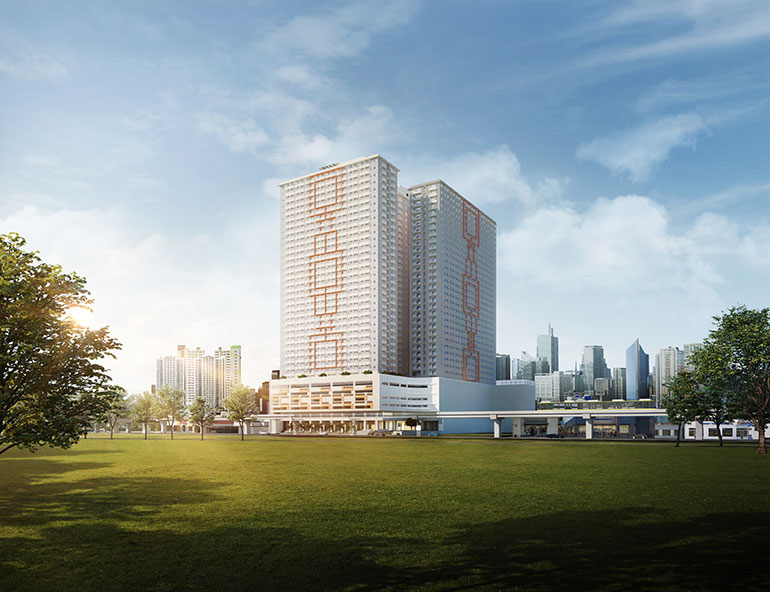
Quantum Residences along Taft Avenue (Artist’s Perspective)

Experience the convenience of city living at Quantum Residences along Taft Avenue in Pasay City. The three-tower, high-rise residential condominium is conveniently located near the intersection of Taft Avenue and Gil Puyat Avenue (Buendia), making it a practical address due to its proximity to transport hubs, the central business districts of Makati and Bay Area, as well as top schools and universities.

Quantum Residences’ first tower, Aqua, is ready for occupancy, and offers an early move-in promo with only 5% down payment, and monthly amortization as low as P15,700. You can also enjoy flexible payment terms of up to 22 months, making it an ideal choice for young professionals and savvy investors.

Suburban Sanctuary at Siena Towers

Siena Towers in Marikina (Actual Photo)

In Marikina, Horizon Land’s Siena Towers offers quality living through Big Dreams, Smart Moves: Horizon Land makes homeownership easier residential verticals complemented by points of interest located within Federal Land’s signature township community. Residents can enjoy convenient access to dynamic retail and dining spaces, such as Bluewave Mall & Arcade, S&R Marikina, Panda Express Sumulong, and Uniqlo Marquinton Roadside Store. Its proximity to major throughways such as C-5 and Katipunan Avenue also makes it accessible to the business hubs in Quezon City, Ortigas Center, and Makati City.

With monthly amortization starting at only P18,500, you can enjoy flexible down payment terms of up to 36 months. This is your chance to own a practical home in a peaceful, wellconnected neighborhood.

Make Your Smart Move Today

These limited-time promos make homeownership more accessible than ever. Whether you seek the energy of the Bay Area, the convenience of city living, or the calm of the suburbs, Horizon Land has a home for you.

Don’t miss this opportunity to invest smartly. Join Horizon Land’s exclusive preview at “Warmth and Wonder, A Horizon Land Grand Open House” on March 23, 2025, from 11:00 a.m. to 5:00 p.m. at the Le Pavillon Event Hall in Met Park, Pasay City. Take this opportunity to discover the perfect home for you and your family.

The event will highlight a selection of quality Horizon Land projects in key areas, including Palm Beach West in the Bay Area; Quantum Residences along Taft Avenue; Siena Towers in Marikina; Peninsula Garden Midtown Homes in Paco, Manila; and Florida Sun Estates in Cavite.

For more information on Horizon Land’s condos and exclusive promos, Quantum Residences along Taft Avenue (Artist’s Perspective) Siena Towers in Marikina (Actual Photo) Palm Beach West at Met Park, Bay Area (Actual Photo) visit www.horizonland.ph or call the hotline at 0917-857-4908 to book a private viewing at its showroom located on-site in Pasay City.


Spotlight is BusinessWorld’s sponsored section that allows advertisers to amplify their brand and connect with BusinessWorld’s audience by publishing their stories on the BusinessWorld Web site. For more information, send an email to online@bworldonline.com.

Join us on Viber at https://bit.ly/3hv6bLA to get more updates and subscribe to BusinessWorld’s titles and get exclusive content through www.bworld-x.com.

More cuts likely if growth weakens

BW FILE PHOTO

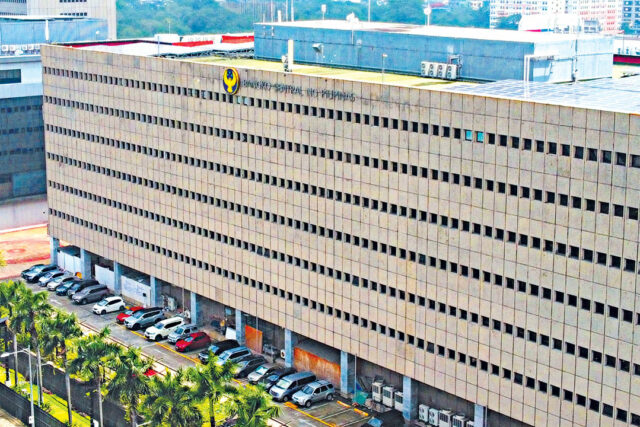
THE BANGKO SENTRAL ng Pilipinas (BSP) could cut rates next month, its top official said, noting the possibility of up to 75 basis points (bps) worth of easing for the entire year if economic output weakens further.

“We’ve been on an easing cycle for a while now. We just took a pause,” BSP Governor Eli M. Remolona, Jr. told Bloomberg in a televised interview with Haslinda Amin on Wednesday.

He said there was a higher likelihood that the Monetary Board will deliver a rate cut at its policy review on April 10, especially if inflation turns out better than expected.

Inflation sharply eased to 2.1% in February, bringing the two-month average to 2.5%. This is well within the central bank’s 2-4% target. 

March inflation data will be released on April 4.

Mr. Remolona also signaled the possibility of up to 50 bps worth of rate cuts this year. However, if economic output is weaker than anticipated, the central bank can deliver up to 75 bps worth of easing.

The Philippines’ gross domestic product (GDP) grew by 5.6% in 2024, falling short of the government’s revised 6-6.5% full-year target.

In its latest monetary policy report, the BSP said it sees economic growth settling at the lower end of the government’s 6-8% targets from this year until 2026, citing elevated global commodity prices and trade uncertainties.

First-quarter GDP data will be released on May 8.

US RECESSION
Meanwhile, the BSP chief said that while he does not see a recession in the United States, a slowdown is “very likely.”

US President Donald J. Trump has pledged to impose broad reciprocal tariffs and additional sector-specific tariffs starting on April 2. 

Markets have been bracing for the potential impacts from inflationary pressures arising from these tariffs, which could prompt the US Federal Reserve to delay its own easing cycle.

The US central bank decided to hold interest rates steady on Wednesday, as expected. Fed Chair Jerome H. Powell said they are in no hurry to make any moves amid economic uncertainties.

Mr. Remolona said the tariff war would “absolutely” have spillover effects on the Philippines.   

“The tariff war is likely to slow down growth for everybody and then raise inflation for everybody. By how much, we don’t really know. But the bigger factor is the uncertainty itself,” he said.

However, this would only have a “modest” hit on the Philippine economy.

“We’ll be hit somewhat because we’re part of a global economy,” Mr. Remolona added.

ROOM FOR EASING
Meanwhile, the BSP has space to deliver further policy easing amid low inflation, Nomura Global Markets Research said.

“Downside risks to growth, low inflation and high real rates mean there is still room to ease,” Nomura Global Markets Research analysts Sonal Varma and Si Ying Toh said in a report.

Nomura expects the central bank to cut rates by 75 bps this year.

“Disinflation is underway in Asia, with inflation falling within central bank targets across most countries,” it said.

Nomura said it also expects low inflation to be sustained.

“Underlying inflation has moderated by 1.2 percentage point compared to six months ago, and it has the second-highest real policy rate in the region, which suggests still-restrictive policy rates,” Nomura said.

“We expect another 75 bp in policy rate cuts, which would take the policy rate to 5% by end-2025.”

Meanwhile, ANZ Research said it expects the BSP to cut by 50 bps this year.

“For the remainder of 2025, we anticipate 50 bp of additional rate cuts in Indonesia, the Philippines, South Korea and Thailand,” it said in its latest research quarterly report.

“Monetary policy will be less efficacious, in our view. Monetary policy in the region has been a little more independent of the Fed than we had initially assumed,” it added.

Meanwhile, ANZ said it expects GDP to grow by 5.7% this year. This would miss the government’s 6-8% target for 2025.

It noted that household savings in the Asia region have been subpar.

“Savings shortfalls are high in Indonesia and the Philippines, where surveys revealed a drop in the share of income being allocated towards savings or a fall in the share of households with optimal savings.”

“Households are also becoming more circumspect on leverage.  The Philippines is the only exception where household borrowings are still growing at a solid pace. However, considering weak survey outlook on the financial condition of families, this lending cycle is unlikely to sustain in the long term.” — Luisa Maria Jacinta C. Jocson with Bloomberg

Creative economy’s value nears P2-T in 2024

An artist works on a mural in Marikina City. — PHILIPPINE STAR/WALTER BOLLOZOS

By Aubrey Rose A. Inosante, Reporter

THE VALUE of the Philippines’ creative economy neared P2 trillion in 2024, the statistics agency said on Thursday.

Data from the Philippine Statistics Authority (PSA) showed the gross value added (GVA) of the country’s creative industry-related activities expanded by 8.7% year on year to P1.94 trillion in 2024 from P1.78 trillion in 2023.

However, the creative sector’s growth slowed from the 9.9% seen in 2023, and 13.3% in 2022.

Creative economy’s share in GDP steadies at 7.3% in 2024With a GVA of P1.94 trillion, the creative economy accounted for 7.3% of the Philippines’ gross domestic product (GDP) at current prices in 2024, same as in 2023.

The creative economy is composed of industries such as film, digital services, research and development, media publishing, music, arts, entertainment, advertising, art galleries, museums and trade shows,” according to the PSA.

According to PSA data, symbols and images and other related activities had the largest share at 33% or P640.29 billion of the sector’s total gross value added in 2024. These include manufacturing and trading of symbols and images in textiles, fashion, toys, footwear, furniture and other accessories.

Advertising, research and development, and other artistic service activities accounted for a 21% share or P414.53 billion, while digital interactive goods and service activities contributed 20.6% or P398.95 billion.

Meanwhile, media publishing and printing made up 10.4% or P201.45 billion of the industry’s total gross value added.

In 2024, there were 7.51 million employed in the creative industries, rising by 3.9% from 7.23 million in the previous year.

“The share of employment in creative industries to the total employment in the country was at 15.4% in 2024,” the PSA said.

Of the total jobs in the creative sector, 36.6% are from traditional cultural expression activities, or equivalent to 2.75 million jobs.

Symbols and images and other related activities employed 2.21 million, representing 29.5% of the industry’s jobs.

This was followed by advertising, research and development, and other artistic service activities that accounted for 17.9% or 1.34 million of the total jobs in the creative economy.

“The creative economy has grown without any significant support from the government. It is crucial then that government intervention creates no blocks for this sector to grow,” Leonardo A. Lanzona, an economics professor at the Ateneo de Manila University said via Facebook Messenger on Thursday.

“Because of its comparative advantage, markets will be sufficient for this grow, but attempts must be made for greater learning by doing to increase the scale of production and reduce average costs.”

Mr. Lanzona noted that the creative industries should be exposed to international competition to “induce greater efficiency.”

“Given our natural creativity and inherent ability to adapt to changes, the creative economy is expected to grow. AI (artificial intelligence) should be seen as an opportunity not a barrier,” he said.

Meanwhile, Jose Jean Paolo A. Jalandoni, Marketing and Communications Manager of The Performing Arts and Recreation Center (PARC) Foundation said the impact of AI on the creative economy is “complex and multifaceted.”

“It presents both opportunities and challenges. AI’s ultimate impact on the creative economy will depend on how it’s implemented and regulated,” Mr. Jalandoni said.

However, he also flagged risks of job displacement, copyright issues, and ethical concerns arising from the use of AI.

William T. Guido, Chairman of The PARC Foundation Board of Trustees and Founder of the National Digital Arts Awards (NDAA), said the economy needs more than just talent to thrive.

“Talent is undeniably crucial, but equally important is the availability of work. PARC and the NDAA provide vital avenues for showcasing these artists to potential employers, creating a direct pipeline from training and recognition to sustainable careers,” Mr. Guido said.

He said the foundation helps Filipino creatives by investing in accessible arts education and creating platforms for exposure to build the “truly thriving creating economy.”

The PARC Foundation nonprofit organization founded in 2015, is committed to harnessing the power of performing arts to transform lives — especially the youth.

Philippines is 4th happiest country in Southeast Asia

FAMILIES are seen at a park in Quezon City. — PHILIPPINE STAR/MIGUEL DE GUZMAN

THE PHILIPPINES slipped to 57th place out of 147 countries in the latest World Happiness Report (WHR), despite showing an improvement in its overall happiness score.

In the latest WHR released on Thursday, the Philippines’ level of happiness rose to 6.107 out of 10 in 2025 from 6.048 previously.

The level of happiness is based on the self-assessed life evaluations averaged for the 2022-2024 period.

How did the ‘happiness’ of filipinos change between 2012 and 2025?

Last year’s report showed the Philippines ranked 53rd out of 143 countries, marking its highest placement in four years.

The Philippines is the fourth happiest in the Southeast Asian region, behind Singapore (ranked 34th with a score of 6.565), Vietnam (ranked 46th with a score of 6.352), and Thailand (ranked 49th with a score of 6.222).

The report is published by the Wellbeing Research Centre at the University of Oxford in partnership with Gallup and the United Nations Sustainable Development Solutions Network.

Nordic nations continued to be the happiest in the world, led by Finland for the eighth consecutive year, which scored 7.736 out of 10. Denmark ranked second, followed by Iceland, Sweden, the Netherlands, Costa Rica, Norway, Israel, Luxembourg and Mexico.

The US fell to its lowest-ever ranking of 24th.

At the bottom is Afghanistan, which was once again the unhappiest country in the world. Also at the bottom were Sierra Leone, Lebanon, Malawi, and Zimbabwe.

Experts analyzed data across six key factors: gross domestic product per capita, social support, healthy life expectancy, freedom, generosity, and corruption.

“We previously found a global surge in benevolent acts during 2020, led by the helping of strangers, which continued through subsequent years. Last year, we found these acts to be prevalent in all generations, especially among Millennials and Gen Z. We suggested that this upsurge of benevolent acts might have led people to feel better about themselves and their neighbors,” the report said.

The WHR noted that acts of kindness remain 10% more frequent across all generations and in nearly all global regions compared with 2017–2019, even as trends gradually return to pre-pandemic levels.

“Global evidence on the perceived and actual return of lost wallets shows that people are much too pessimistic about the kindness of their communities compared to reality. Actual rates of wallet return are around twice as high as people expect,” the report said.

“Believing that others are willing to return your lost wallet is also shown to be a strong predictor of population happiness,” it added.

Over the past 15 years, inequality in happiness within countries has been increasing, while inequality in happiness between countries has remained relatively stable.

Despite this, WHR noted prosocial behavior, or altruism, declined in the Philippines. The decrease was largely associated with a decrease in donating money.

“The average change is -0.23 percentage points per year… the decrease was prevalently associated with a decrease in donating money,” it added.

“However, this increase masks two contrasting trends: on the one hand, an increase in the share of people helping others (0.56); on the other hand, a decrease in volunteering (-0.15).”

In terms of regional patterns of social connection, the WHR noted data from the Government Finance Statistics showed that while most young adults report having at least one social connection, a significant number are socially isolated.

Across 22 countries and regions, 17% of young adults report having no close relationships, including family and friends.

Japan stands out with over 30% of its young adult population experiencing social isolation. In contrast, countries like Nigeria, Egypt, and the Philippines report significantly lower rates, with less than 10% of young adults lacking close connections.

Other key findings were that 19% of young adults in 2023 across the world reported having no one they could count on for social support.

In addition, the study showed significant differences in meal-sharing rates exist worldwide, with meal-sharing having a profound impact on subjective well-being, comparable to the effects of income and unemployment.

Moreover, social connections are essential for the well-being of young adults, offering a protective buffer against the harmful effects of stress.

Deaths of despair are less common in countries where acts of kindness are more frequent.

In the US and parts of Europe, declining happiness and social trust have contributed to increasing political polarization and a rise in anti-system votes.

Sought for comment, Federation of Free Workers (FFW) Vice-President Julius H. Cainglet said the dip in altruistic behavior among Filipinos may be attributed to low wages.

“Workers, even if they are willing to give simply cannot give since they have nothing owing to the meager increase in wages over the past two years given by regional wage boards that have not been enough to cover the lost value of wages,” he said in a Viber chat.

The inability to meet their families’ basic needs has caused significant stress and anxiety among workers, he added.

“Having extra money would have helped by enabling workers and their families to engage in more social and recreational activities. Thus, increasing wages to living wage levels would greatly contribute to regaining the Country’s spot atop the prosocial behavior ratings and the happiness index,” he added. — Chloe Mari A. Hufana

Inside PHL’s plans and strategies for a green economy

tohamina | Freepik

With natural disasters becoming more frequent, governments from around the world are actively taking measures to combat the effects of climate change. In the Philippines, one of many countries highly vulnerable to typhoons, rising sea levels, and extreme weather events, the push for a green economy has become more urgent than ever.

The United Nations Environment Program (UNEP) defines a green economy as “one that improves human well-being and builds social equity while reducing environmental risks and scarcities.” This vision addresses environmental concerns and advances sustainable development, where public and private investments in low-carbon initiatives, resource efficiency, and ecosystem preservation drive growth in employment and income.

Last year, the Department of Environment and Natural Resources (DENR) and the European Union (EU) launched a P3.67-billion program that aims to kick-start the country’s transition to a more eco-friendly economy. The Green Economy Programme in the Philippines (GEPP) looks to improve waste management and support the country’s transition to a circular economy — a sustainable model that minimizes waste and maximizes resource use. 

“At its core, the Green Economy heralds a new era where economic growth aligns harmoniously with environmental stewardship and social inclusivity. By prioritizing sustainable practices and being mindful of the utilization of natural resources throughout their life cycles, we can co-generate prosperity and resilience that benefits both present and future generations,” DENR Secretary Maria Antonia Y. Loyzaga said during the program launch in March 2024. 

Designed to be executed until 2028, the GEPP encompasses four distinct key areas of intervention: building partnerships, enhancing policy frameworks and establishing a multi-stakeholder dialogue platform; local government action and stakeholder engagement; private sector engagement and financial innovation; and renewable energy and energy-efficiency deployment. These initiatives aim to create a more sustainable economic system in the country through collaboration between the government, private sector, and local communities. 

“The successful launch of the Green Economy Programme for the Philippines is part of the EU’s new Global Gateway Strategy and shows our commitment worldwide to combating climate change while promoting inclusive economic development. By working hand in hand with DENR and other key stakeholders, we aim to foster a more resilient and prosperous future for the people of the Philippines,” EU Ambassador Luc Véron emphasized in a statement. 

The program will be piloted in several key locations, including Baguio City, Caloocan City, Quezon City, Pasig City, Puerto Princesa City in Palawan, Metro Manila, Ormoc City in Leyte, Davao City, the Island Garden City of Samal in Davao del Norte, and Siargao Islands. Its implementation is led by Deutsche Gesellschaft für Internationale Zusammenarbeit (GIZ) GmbH, in collaboration with the United Nations Development Programme (UNDP), Expertise France, the Global Green Growth Institute (GGGI), and the International Finance Corp. (IFC). 

By the end of the GEPP, the Philippines is expected to have an estimated 25,000 tons of plastic recycled and reintegrated into the productive chains; at least 30 local government units who have introduced sources of separate collection systems for plastic waste for recycling in their jurisdiction; at least 6,000 micro, small, and medium enterprises that have applied sustainable production practices through circular supply chain management; and created at least 2,500 new “green” jobs in businesses linked to the circular economy model. 

The program will also assist the Philippine government in fulfilling the objectives of various international climate commitments and national environmental policies such as the Philippines’ Nationally Determined Contributions (NDC). In 2017, the Senate approved the ratification of the Paris Agreement on Climate Change, pledging to cut greenhouse gas emissions by 70% from projected business-as-usual levels by 2030. Four years later, the Climate Change Commission raised the target, aiming for a 75% reduction within the same timeframe. 

“I believe that GEPP represents a comprehensive effort towards inclusive growth through climate and disaster risk management but also can unlock the full potential of the circular economy and its contribution to resilience and reducing risk,” Ms. Loyzaga concluded. 

Building on these efforts, the European Union-Philippines Partnership for Green Economy has gained momentum as collective action and partnerships at the local level take center stage. Last year, the United Nations Development Program (UNDP) together with the Department of the Interior and Local Government (DILG) co-organized an Inception Workshop with partners and stakeholders under the Green Local Government Units (LGUs) Project in Quezon City. 

The workshop began the GEPP’s 4.5-year initiative for partner LGUs to develop circular economy projects, supporting a sustainable transition. It also aligned with the DENR-led Earth Day 2024 theme, Planet VS Plastics, highlighting circular solutions to plastic waste in municipalities. The event also showcased the valuable yet underutilized expertise of non-LGU stakeholders — youth, women’s groups, CSOs, MSMEs, and more — fostering collaboration with LGUs and among themselves. 

Several laws dating back to before the ratification of the Paris Agreement in 2017 have also been passed to fast-track the country’s transition to a green economy. Chief among these is Republic Act No. 10771 or the Philippine Green Jobs Act of 2016 which incentivized businesses that use green technologies to produce environmental goods and render services. This, in turn, creates a competitive, low-carbon, and environmentally sustainable economy, through the promotion of green jobs. 

Other laws passed since 2016 that advance the green economy include: the Energy Efficiency and Conservation Act of 2019, which intends to secure the sufficiency and stability of the country’s energy resources through renewable energy; the Green Building Code of 2016, which promotes resource efficiency in buildings; and the Climate Change Act of 2009 that created a framework for climate change action and the establishment of the Climate Change Commission. 

As the Philippines continues to adapt to a greener economy, partnerships, policies, and initiatives can serve as a solid foundation for a more resilient and sustainable future. However, realizing this vision requires sustained collaboration, investments in green infrastructure, and strengthened climate policies. Ultimately, the success of these efforts will determine how well the Philippines adapts to climate challenges while ensuring inclusive and sustainable growth for generations to come. — Jomarc Angelo M. Corpuz

Championing green economy across the globe

Freepik

As defined by the United Nations Environment Programme (UNEP), a green economy is a “macroeconomic approach focused on investing in green economic activities, infrastructures, and skills that allow reduced carbon emission and pollution, enhanced energy and resource efficiency, and prevention of the loss of biodiversity and ecosystem services.” Simply put, a green economy is one that improves well-being and development while reducing climate impacts; and renewable energy, green financing, and waste management are some of the key factors in this approach.

Throughout the years, the transition to a green economy has become increasingly progressive and successful across the globe, with the business community playing significant roles to advance sustainable development.

According to the nonprofit environmental organization Earth.Org, there is significant progress in the race toward green economies over the years. As sustainability action stepped up, initiatives, policies, and strategies that effectively mitigates climate and environmental risks were identified.

A primary example is the greening of economic sectors. In a Green Economy Coalition (GEC) report, green sources and technologies are setting new records. Illustrating a progressive transition to a green economy is the global adoption of electric vehicles (EVs). The year 2024 recorded 17 million electric car sales, which marked the emergence of EVs as a mass-market product, as reported by the International Energy Agency (IEA). Moreover, countries that are dominating the market share include China, Europe, and the United States. The remarkable advancements in the EV scene serves as proof of the world’s significant commitment to environmental sustainability.

Also making waves are renewables in the energy sector, driving unprecedented advancements in both energy consumption and capacity. This momentum accelerated in 2024, with solar energy experiencing an impressive 88% increase in capacity growth, which added a total of 18.6 gigawatts (GW). Solar energy thus emerged as the leading source of generation, significantly surpassing wind, hydropower, and nuclear energy.

Renewable energy is expected to continue growing at a strong pace. Another IEA report highlighted the impact of renewables in driving decarbonization across various industries, transportation, and buildings. The report projects that renewable energy sources will double at 30% and will account for 46% of the global electricity generation by 2030. Notably, solar photovoltaic (PV) or solar panels, which convert sunlight directly into power and electricity, is emerging as the largest renewable source.

The green economic transition is also not without the development of new global green architectures, the GEC’s report said. This includes accelerated green financing, increasing access to climate finance, and revamping financial global institutions.

In addition, green financing, through green bonds and sustainable investments, play a pivotal role in the green economy. Green bonds are debt instruments designed for funding environmental projects, while sustainable investment funds focus on investments in companies and projects that prioritizes environment, social, and governance (ESG). These accelerates funding for green initiatives and the transition to a green economy.

Lastly, a circular economy is also redefining sustainable growth. The report emphasized how sustainable consumption and production is crucial to the development of green architecture. A circular economy supports green enterprises and circular business models that impact various industries, planning, and policies.

A circular economy presents sustainable solutions for industries like fashion and textile, which are among the largest contributors to carbon emissions globally. Data from the UNEP indicates that these sectors are driving overconsumption and waste pollution, with 92 million tons of textile waste generated, amounting to 2%-8% of global greenhouse gas emissions, 9% of microplastic pollution, and 15,000 chemicals used in the manufacturing process.

To address these environmental impacts, the industry is encouraged to adopt zero-waste management practices and promote sustainable consumption and production. Accordingly, the United Nations Fashion Industry Charter for Climate Action has noted that many fashion companies are shifting their approach to production and waste management to achieve net-zero emissions and combat the ongoing waste pollution crisis.

These successful transitions clearly demonstrated how the world is championing the green economy — a global effort that must be embraced for the sake of livable and healthier environments.

“A green economy is fundamentally about enhancing people’s well-being while simultaneously restoring nature. Such a dual approach — both green and fair — is key to overcoming the fear of change and potential transition trade-offs, such as the shuttering of high-carbon industries or complex distributional effects of economic change,” the GEC said. — Angela Kiara S. Brillantes