Home Blog Page 1749

Regional growth booming for startups in 2024 — QBO Innovation study
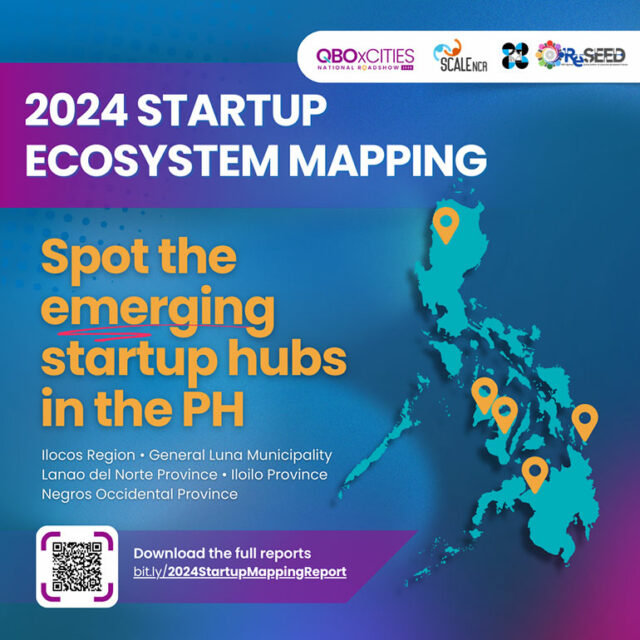
The Philippine startup ecosystem is experiencing significant growth, with regional hubs expanding across the country.

This is the finding of the 2024 Startup Ecosystem Mapping Reports by QBO Innovation, the Philippines’ first public-private initiative geared towards providing a platform for the startup community to collaborate, develop, and grow.

The initiative is in collaboration with the Department of Science and Technology through the Philippine Council for Industry, Energy and Emerging Technology Research and Development (DoST-PCIEERD) and the Strategic and Collaborative Alliance for Leveraging Ecosystem of Startups-National Capital Region (SCALE NCR).

Through discussion with key community drivers, gathering local insights, and validating data, the reports provide a comprehensive overview of each ecosystem’s current state, identifying movers and champions, available resources, success stories, and growth potential. Most importantly, they offer actionable insights on how ecosystem enablers can drive further development and foster long-term sustainability.

The reports focused on providing critical insights into five key locales: Region I (Ilocos Region), Lanao del Norte, Iloilo, Negros Occidental, and General Luna, Surigao del Norte.

According to the report, Iloilo stands out for its strong government support, with local policies and initiatives designed to foster startup growth, a model that other emerging startups could learn from. Negros Occidental benefits from strong collaboration between the academe and industry, creating a steady pipeline of talent and fostering innovation in Metro Bacolod’s growing startup scene.

The report has found Lanao del Norte has a thriving base of young tech talent, supported by academic institutions and active local enablers driving interest in entrepreneurship. Meanwhile, General Luna is home to a vibrant community of digital nomads and tech workers, presenting opportunities to integrate this talent into startup activities, while Region I is witnessing increasing startup activity, particularly in key urban centers like Laoag and Dagupan, where innovation is beginning to take root.

While there is budding growth in the areas surveyed, the report reveals that startups across all locations still face challenges in scaling, with limited access to funding, industry connections, and broader markets. While local ecosystems are growing, many startups struggle to expand beyond their immediate communities. Strengthening investment opportunities and industry linkages will be key to helping regional startups scale nationally and globally.

“Regional development is essential to strengthening the country’s overall innovation landscape. These reports serve as a roadmap for empowering local startup ecosystems, bridging gaps, and unlocking new opportunities for innovation-driven growth. For startup founders and aspiring tech entrepreneurs, this means greater access to support networks, funding opportunities, and industry collaborations that can help turn ideas into scalable ventures. By working together, ecosystem builders, policy makers, and investors can fuel the next wave of Philippine startups, ensuring that innovation thrives in every corner of the country,” Alwyn Rosel, executive director of QBO Innovation, said.

The 2024 Startup Ecosystem Mapping Reports were also made possible in partnership with local enablers, including UMWAD Western Visayas, the Mariano Marcos State University (MMSU) Bannuar Technology Business Incubator (TBI), the Surigao del Norte State University (SNSU) WAVES TBI, the Mindanao State University-Iligan Institute of Technology (MSU-IIT) iDEYA, the Iloilo Science and Technology University (ISAT-U) Kwadra TBI, and the Technological University of the Philippines Visayas (TUPV) HIVE TBI.

To know more about the 2024 Startup Ecosystem Mapping Reports, you may download the full reports at https://bit.ly/2024StartupMappingReport or visit www.qboinnovation.com and @QBOInnovation on social media. Additionally, for more information about SCALE NCR and its initiatives, you may visit their Facebook and LinkedIn pages.


SparkUp is BusinessWorld’s multimedia brand created to inform, inspire, and empower the Philippine startups; micro, small and medium enterprises (MSMEs); and future business leaders. This section will be published every other Monday. For pitches and releases about startups, e-mail to bmbeltran@bworldonline.com (cc: abconoza@bworldonline.com). Materials sent become BW property.


Despite driving jobs and GDP, MSMEs get a fraction of bank lending, study finds

A new report by Foxmont Capital Partners and Boston Consulting Group (BCG) highlights a stark mismatch between the economic importance of micro, small, and medium enterprises (MSMEs) in the Philippines and their access to formal financing, with the sector receiving just a fraction of the country’s total bank loans.

MSMEs comprise 99.6% of all businesses in the Philippines, generate 67% of total employment, and contribute up to 40% of national gross domestic product (GDP). Despite this, they account for only 4.1% of total bank lending as of 2023, a sharp decline from the recorded 8% in 2010, according to the study. This decline comes despite continued growth in overall bank lending during the same period.

Under Republic Act 9501 or the Philippine Magna Carta for MSMEs, banks are required to allocate at least 10% of their loan portfolios to MSMEs — 8% for micro and small enterprises, and 2% for medium enterprises. Yet recent figures show that the banking sector remains far short of this mandate.

The total amount of loans extended to MSMEs in 2023 was just over $9 billion, less than half of the mandated minimum and far below the estimated $221-billion funding gap for the sector.

The Foxmont-BCG study also drew attention to structural barriers that continue to hinder MSME access to credit. On the supply side, banks tend to favor corporate clients, viewing smaller enterprises as higher risk or less profitable. Meanwhile, demand-side constraints persist, with many MSME owners hesitant to borrow due to mistrust of formal financial systems or a lack of suitable loan products tailored to their cash flow realities.

The report cites 2017 data from the World Bank and International Finance Corp. identifying the Philippines as having the largest MSME funding gap relative to GDP among 128 countries surveyed. Compared to regional peers such as Thailand, Indonesia, and Malaysia, the country continues to underperform in providing financing to small businesses.

Additionally, over 90% of assets are held by just 20 large banks, while more than 1,800 smaller institutions, that serve in rural areas, collectively control only 9% of total assets. Although rural banks are often the first point of contact for MSMEs and enjoy a high level of trust and proximity, they typically lack the capital and infrastructure to meet growing credit demands.

The report suggests that digital transformation will be crucial in closing the gap. MSMEs value branch proximity, customer service, and trust, but the best-performing banks in this segment also offer seamless digital experiences. Bridging the divide will require more adaptable loan structures, tailored financial products, and a stronger push for inclusive digital banking solutions.


SparkUp is BusinessWorld’s multimedia brand created to inform, inspire, and empower the Philippine startups; micro, small and medium enterprises (MSMEs); and future business leaders. This section will be published every other Monday. For pitches and releases about startups, e-mail to bmbeltran@bworldonline.com (cc: abconoza@bworldonline.com). Materials sent become BW property.

Grow Asia launches Innovation Challenge for climate-resilient agri-tech solutions

Following the success of the 2024 Innovation Challenge that focused on rice, Grow Asia is launching its 2025 Challenge in the Philippines. The Grow Asia Innovation Challenge provides a catalytic launch pad for founders of climate-smart agri-tech solutions by matching them with mentors and partners who can accelerate their go-to-market journey and advance the transformation towards more climate-resilient agriculture in Southeast Asia.

The challenge is open to innovators with market-ready digital solutions that address at least one of the identified challenge statements, aimed at supporting smallholder producers of coconut, cacao, and coffee in Southeast Asia — particularly in the Philippines.

The Philippines faces a digital literacy gap, particularly in rural farming communities, where weak connectivity and inadequate infrastructure hinder technology adoption. According to the “2019 National ICT Household Survey,” digital literacy remains relatively low, with only two out of five Filipinos possessing at least one of the six basic ICT skills monitored for sustainable development goals.

To address this, government agencies such as the Department of Agriculture, Agricultural Training Institute, Department of Science and Technology, Department of Trade and Industry, and the Department of Information and Communications Technology are implementing digital literacy programs and technology initiatives nationwide.

In response, the Grow Asia Innovation Challenge aligns with these national efforts, serving as a platform to identify and scale farmer-friendly digital solutions that enhance agricultural productivity and sustainability.

The challenge will focus on three key areas: traceability and logistics tools to improve certification and sustainability compliance, digital advisory solutions to expand access to climate-smart farm insights, and technology adoption strategies that enhance digital literacy and usability for smallholder farmers.

“Innovation and digital solutions play a crucial role in transforming agriculture in Southeast Asia. Through the Grow Asia Innovation Challenge, we are not only identifying groundbreaking technologies but also building the necessary support systems to ensure their successful adoption among smallholder farmers,” Chrissa Marey Borja, head of Programs at Grow Asia, said. “We are grateful to our partners at Korea’s Ministry of Agriculture, Food and Rural Affairs and IFAD for their relentless commitment to furthering innovation across the region.”

Finalists will receive direct mentorship from industry leaders, strategic advisory sessions, and exposure through Grow Asia and Philippines Partnership for Sustainable Agriculture’s (PPSA) networks. This year, the Grow Asia Innovation Challenge 2025 will be supported by the Grow Asia’s country chapter in the Philippines, PPSA.

Angel Bautista, country director of PPSA, said, “The Grow Asia Innovation Challenge presents a unique opportunity to support local agribusinesses in harnessing digital solutions that can drive sustainable growth for smallholder farmers. Agriculture plays a vital role in the Philippine economy, contributing approximately an eighth of the national GDP. As a significant player in the global market, PPSA realizes the need to focus on coconut, cacao, and coffee, by addressing key sectors with high economic potential while ensuring that farmers benefit from cutting-edge technologies that improve livelihoods and resilience.”

Additionally, Villgro Philippines joins GAIC 2025 as a key program partner, bringing its expertise as an incubator that funds, mentors, and nurtures enterprises tackling critical social and climate issues.

Priya Thachadi, co-founder and CEO of Villgro Philippines, said, “Innovation is at the heart of solving agriculture’s most pressing challenges. Through our partnership with Grow Asia, we aim to empower startups that are developing sustainable solutions while creating tangible economic opportunities for smallholder farmers — especially women in agriculture. Fostering entrepreneurial solutions will be key to creating lasting change across broken food systems.”

Grow Asia and PPSA invite partners — including agribusinesses, technology providers, development organizations, and investors — to collaborate on this initiative in scaling innovative AgTech solutions for smallholder farmers. For more information on the Grow Asia Innovation Challenge 2025, visit https://www.growasia.org/innovation-challenge-2025.


SparkUp is BusinessWorld’s multimedia brand created to inform, inspire, and empower the Philippine startups; micro, small and medium enterprises (MSMEs); and future business leaders. This section will be published every other Monday. For pitches and releases about startups, e-mail to bmbeltran@bworldonline.com (cc: abconoza@bworldonline.com). Materials sent become BW property.

YGG Pilipinas launches MFW Caravan 2025, Marshal Program for students

By Jomarc Angelo M. Corpuz, Special Features and Content Writer

YGG Pilipinas launched the Metaverse Filipino Worker (MFW) Caravan during a press conference in Bonifacio Global City, unveiling a four-month nationwide tour designed to introduce more Filipinos to the digital economy and alternative career opportunities.

Formerly known as the YGG Roadtrip, the MFW Caravan 2025 will travel across key areas in the Philippines including Davao, Iloilo, and Cebu from April to August 2025, in an initiative with the Department of Information and Communications Technology (DICT) and the City Education and Development Office in CDO.

“The MFW Caravan reflects a crucial shift in how Filipinos approach work — one that prioritizes digital skills, borderless opportunities, and economic empowerment without the need to go overseas to get it,” MIMAROPA DICT Regional Director Emmy Lou Delfin said in a speech at the press conference.

At the event, YGG Pilipinas hosted a panel discussion titled “Learn and Earn Anywhere, Anytime,” which explored how Web3 technology is reshaping employment, bridging digital divides, and opening doors for Filipinos in the digital workforce.

Moderated by Mike Mislos, founder and editor-in-chief of BitPinas, the panel featured insights from PLDT First Vice-President and Head of Sports Jude Turcuato, Sovrun and G!G Co-Founder Renz Chong, and Metaversity Co-Lead Bianca Cruz on how digital work, gig economies, and Web3 platforms are reshaping traditional career paths.

“It’s not just about taking courses — it’s about ensuring people know where those courses can lead. At Metaversity, we’re creating clear learning pathways so that when someone completes a skill track, they’re prepared for real work opportunities,” Ms. Cruz shared during the discussion.

Building on the discussion, the MFW Caravan is also introducing the Marshal Program, an exclusive 8-week cohort-based initiative designed to equip participants with in-demand skills for emerging tech industries. The program features four specialized tracks — Community, Marketing, Gaming, and Content Creation — reflecting the most sought-after roles in the digital space.

“We try to bring as much of the fun and gamified learning journey to anyone involved. A way we’re doing that is by making every step of learning and finding opportunities fun and rewarding every step of the way,” Ms. Cruz said in an interview with BusinessWorld.

Currently, there are over 3,500 Filipino students enrolled in YGG’s educational platform, Metaversity, and more than 300 applications to the MFW Caravan’s Marshall Program.


SparkUp is BusinessWorld’s multimedia brand created to inform, inspire, and empower the Philippine startups; micro, small and medium enterprises (MSMEs); and future business leaders. This section will be published every other Monday. For pitches and releases about startups, e-mail to bmbeltran@bworldonline.com (cc: abconoza@bworldonline.com). Materials sent become BW property.

McDonald’s Philippines eyes 65 new stores with up to P5-billion investment this year

MCDONALD’S PHILIPPINES is allocating P3 billion to P5 billion in capital expenditure (capex) to open at least 65 new stores this year, its operator Golden Arches Development Corp. (GADC) said.

Kenneth S. Yang, president and chief executive officer of GADC, announced last week that the new McDonald’s stores will be strategically located across Luzon, Visayas, and Mindanao.

Last year, McDonald’s Philippines opened 65 stores, bringing its total store network to 792.

The company is poised to unveil its 800th store this year. 

“For this year, most likely, we should grow about the same as what we did last year, which is 65 stores. Hopefully, we will surpass it,” Mr. Yang told reporters on the sidelines of a media event last week. 

“We see our growth coming from areas outside of the National Capital Region that have rapidly been developing. We’re excited to open more stores and bring McDonald’s closer to more Filipinos,” he said.

Mr. Yang said GADC would likely maintain its current ratio of 55% company-owned stores and 45% franchise branches.

“We will continue to build new restaurants all over the Philippines. We grow through our company-owned stores as well as through our franchise restaurants,” he said. 

“As the country is growing and progressing in these areas, we will go there,” he added. 

The Yangs recently entered into a franchise agreement with US-based McDonald’s Corp. for a new 20-year franchise term in the Philippines, lasting until 2045. The agreement grants them the license to own, develop, and operate the McDonald’s brand in the Philippines. 

GADC Chairman and Founder George T. Yang has held the master franchise since the opening of the first McDonald’s Philippines store in Manila in 1981. 

In 2005, McDonald’s Philippines became a fully Filipino-owned company, with the Yang family as majority owners and tycoon Andrew L. Tan-led Alliance Global Group, Inc. as its investment partner. — Revin Mikhael D. Ochave

Gov’t securities offer via GCash seen ready within first half

PHILSTAR FILE PHOTO

THE Bureau of the Treasury (BTr) said the launch of government securities through the GBonds feature on the GCash mobile wallet platform is expected within the first half of this year.

“Hopefully, we can launch it (GBonds) in the first half of this year. GCash is still testing,” National Treasurer Sharon P. Almanza told reporters on the sidelines of the 20th Philippine Dealing System Holdings Corp. (PDS) Annual Awards Night in Makati City on Friday last week.

“GCash provides the wallet, and the bond trading platform is through Philippine Digital Asset Exchange, Inc. (PDAX). They are testing the connectivity,” she added.

The Finance department previously said that the GBonds feature was primed for launch in December last year to help boost financial inclusion among Filipinos.

GBonds will allow retail investors to buy and sell government securities through the GCash platform.

Retail Treasury bonds are usually sold at a minimum denomination of P5,000. These are available through over-the-counter placements at bank branches and digital platforms such as the Bonds.PH app and mobile banking apps of the Overseas Filipino Bank and Land Bank of the Philippines.

GCash has over 94 million registered users. G-Xchange, Inc., which operates GCash, is a wholly owned subsidiary of Globe Fintech Innovations, Inc. (Mynt).

In January, GCash partnered with Ria Money Transfer for international remittance services.

Customers using the Ria Money Transfer platform in the US, Australia, Europe, and Singapore can directly send funds to GCash digital wallets even without a GCash overseas account.

GCash services are currently available in 16 markets, including the US, the United Kingdom, the United Arab Emirates, Australia, Canada, Germany, Hong Kong, Italy, Japan, Saudi Arabia, Kuwait, Qatar, Singapore, South Korea, Spain, and Taiwan. — Revin Mikhael D. Ochave

Strong AI policies, investment to speed up Philippines’ AI adoption — expert

DAVID R. HARDOON

By Ashley Erika O. Jose, Reporter

THE PHILIPPINES can expedite its artificial intelligence (AI) adoption through firm policy commitment and sufficient capital allocation, according to data and technology expert David R. Hardoon.

“[The Philippines] need conviction and the second is money, you will be surprised at how fast the Philippines can turn around [and fully adopt AI],” Mr. Hardoon said in an interview with BusinessWorld.

“Many times, the reason we’re limited in our adoption is because of the technical dent that exists. Meaning, we want to use it, we’re ready to use it, we’ve accepted the risk, but we just simply can’t because the highway has not been built.”

Mr. Hardoon, who previously served as chief executive officer of Aboitiz Data Innovation Pte. Ltd. for more than three years, is assuming a new role as global head of AI at the international banking group Standard Chartered, beginning Monday.

“It is all about how to adopt the possibilities that come from data, the applications of AI, but naturally in a slightly different context of global international operations, with a focus on a similar but slightly different business line,” Mr. Hardoon said.

For countries like the Philippines, adopting and maintaining strong conviction in AI policy and utilization is critical — especially as the country has set its digitalization goals.

“I think there needs to be, not necessarily a contextualization, but a bit of an angle. One point is that the Philippine market is highly digital and highly adaptable. That is actually a very important point,” he said.

“You obviously are not disconnected from the advancements, technology, and the various applications. In fact, to me, these things are phenomenal opportunities because you already have a population who is willing to try.”

Investments and education are the way forward for businesses in the country to leverage AI, Mr. Hardoon said, adding that it is crucial for people to be skilled and competitive in harnessing this emerging technology.

Retail, healthcare, financial institutions, and utility companies are the sectors projected to benefit most from AI, he said, adding that these industries will leverage AI to enhance operational efficiency.

“The ones which would probably benefit the fastest, or perhaps would be more evident that they benefit, is retail,” he said, noting that consumer-driven sectors are transforming their operations by using data and technologies to streamline processes.

For instance, retail industries are using cloud-based or AI-powered applications for inventory and inventory management, as well as to identify challenges in the supply chain; while power companies are integrating AI into their operations to optimize energy production and grid management through AI-based technologies.

The Philippine digital economy is expected to maintain its growth trajectory, driven by e-commerce and the continued development of digital infrastructure, according to the e-Conomy SEA report by Google, Temasek Holdings, and Bain & Co.

The Philippine digital economy is projected to grow by 20% to $31 billion in gross merchandise value (GMV), making it the fastest-growing digital economy in Southeast Asia.

Further, the growing interest in AI adoption is also expected to drive growth for countries leveraging its benefits, Mr. Hardoon said, noting that countries experiencing revenue losses due to cyberattacks may deploy AI to help combat these emerging threats.

“So, just like tools can be used for, unfortunately, bad things, we can use the exact same tools to identify when David is not David,” Mr. Hardoon said.

In the Philippines, the government, through the Department of Information and Communications Technology (DICT), is currently drafting guidelines regulating deepfakes — artificially generated images, videos, or audio intended to deceive consumers of media.

ALI shares rise after merger approval

Park Central Towers, Makati City — AYALALAND.COM

INVESTORS snapped up Ayala Land, Inc. (ALI) shares last week after the real estate company received regulatory approval to consolidate and absorb 29 companies as part of its restructuring program.

ALI was the sixth most traded share on the stock exchange last week, with value turnover hitting P1.01 billion and 43.51 million shares traded from March 31 to April 4, data from the Philippine Stock Exchange (PSE) showed.

ALI shares rose 6.3% week-on-week to P23.70 on Friday, surpassing the 1.6% growth of the property index. It even outperformed the PSE index, which saw a week-on-week decline of 1%.

However, ALI shares were down by 9.5% year-to-date.

Analysts said the week-on-week jump in ALI stock was due to the consolidation of its subsidiaries under its name.

“It shows that Ayala Land is improving efficiency and simplifying its structure by combining the 29 companies, which makes it attractive for investors,” Juan Alfonso G. Teodoro, an equity analyst at Timson Securities, Inc., said in a Viber message.

“Additionally, it demonstrates that the business is on course with its long-term goals, which builds investor confidence,” he added.

“If the merger results in actual operational synergies and enhanced efficiency, ALI could see higher profitability in the upcoming months,” Alexandra Margaux Denise G. Yatco, an equity analyst at Regina Capital Development Corp., said in an e-mail interview.

ALI’s restructuring efforts have had positive sentiments on the stock, as this should improve valuation, Aniceto K. Pangan, a trader at Diversified Securities, Inc., said in a Viber message.

In a disclosure to the local bourse, the Securities and Exchange Commission approved ALI’s articles and plan of merger on March 31, which took effect on April 1. The plan to merge was approved during ALI’s 2024 annual stockholders’ meeting.

The entities are either directly owned by ALI or by its subsidiaries, AyalaLand Estates, Inc. and AyalaLand Hotels and Resorts Corp.

“The stock [Ayala Land] continues to perform well as their premium property segment remains resilient with regard to demand, as shown by their full-year performance with double-digit percentage growth in the mid-20s,” Mr. Pangan said.

Latest audited financial statements showed ALI’s consolidated revenue climbed by 21.4% to P180.74 billion in 2024, boosted by real estate sales, which rose by 21.3% to P176.53 billion. Attributable net income reached P28.23 billion last year, 15.2% higher than P24.51 billion in 2023.

For this week, Ms. Yatco placed ALI’s support levels at P21.60, while its resistance levels are at P24.30.

“The outlook remains positive for Ayala Land, with inflation trending downwards. This will likely prompt the [Bangko Sentral ng Pilipinas] to lower lending rates, which will further boost the property market, especially Ayala Land, as it continues to grow despite headwinds,” Mr. Pangan said.

He placed his immediate support and resistance levels for ALI at P22.80 and P23.90, respectively. His next support level is at P22, while the next resistance level is at P24.80 per share.

“With the stock being at a discounted price, it makes it more interesting for investors to buy,” Mr. Teodoro said.

“Overall, both the fundamentals and technicals are aligned to support the stock’s upward movement,” he added.

Mr. Teodoro placed support levels around P22.60-P21.80 and resistance levels at P24.80-P25 for the stock. — J.P.G. Villanueva

Yields on Treasury bills, bonds may end mixed

BW FILE PHOTO

RATES of the Treasury bills (T-bills) and Treasury bonds (T-bonds) on offer this week may end mixed to mirror secondary market movements following the slower-than-expected March Philippine inflation print and market caution due to the Trump administration’s tariff announcement.

The Bureau of the Treasury (BTr) will auction off P22 billion in T-bills on Monday, or P7 billion each in 90- and 181-day papers and P8 billion in 363-day papers. The T-bill tenors were adjusted as the issue date was pushed back by a day due to a holiday.

On Tuesday, the government will offer P35 billion in reissued 20-year T-bonds with a remaining life of six years and three months.

Rates for T-bills and bonds to be offered this week may track the mixed movements at the secondary market, Rizal Commercial Banking Corp. Chief Economist Michael L. Ricafort said in a Viber message.

A trader said the reissued T-bonds to be auctioned off on Tuesday could fetch rates ranging from 5.875% to 5.925%, with demand expected to be good.

At the secondary market on Friday, the 91- and 182-day T-bills rose by 4.76 basis points (bps) and 6.56 bps week on week to end at 5.3454%, and 5.6819%, respectively, based on PHP Bloomberg Valuation Service Reference Rates data as of March 28 published on the Philippine Dealing System’s website. Meanwhile, the 364-day paper’s yield went down by 2.8 bps to 5.7735%

On the other hand, the 20-year bond went down by 0.15 bp week on week to fetch 6.3165%, while the seven-year debt, the tenor closest to the remaining life of the bond issue to be offered on Tuesday, declined by 8.64 bps to 5.9489%.

Secondary market yields were affected by the latest domestic inflation data as well as concerns over the Trump administration’s latest tariff announcement.

Inflation eased to its lowest annual rate in nearly five years in March as food and transport costs rose at a slower pace, the government reported on Friday.

The consumer price index slowed to 1.8% in March from the 2.1% in February and 3.7% in the same month a year ago, preliminary data from the Philippine Statistics Authority showed.

This was within the Bangko Sentral ng Pilipinas’ (BSP) 1.7%-2.5% forecast for the month and below the 2% median estimate in a BusinessWorld poll of 18 analysts.

The March print was also the lowest in 58 months or since the 1.6% logged in May 2020 at the height of the coronavirus pandemic.

For the first quarter, inflation averaged 2.2%, within the central bank’s 2-4% annual target.

Analysts said the slower March inflation print could give the Monetary Board a reason to resume its easing cycle when it meets on Thursday.

Meanwhile, US President Donald J. Trump unveiled sweeping tariffs on Wednesday, causing investors to flee to the safety of government bonds, Reuters reported.

Mr. Trump slapped a 10% tariff on most US imports and much higher levies on dozens of countries, erecting the steepest trade barriers in more than 100 years.

US Federal Reserve Chair Jerome H. Powell said in remarks at a business journalists’ conference in Arlington, Virginia, that Trump’s new tariffs are “larger than expected” and the economic fallout, including higher inflation and slower growth, likely will be as well.

After years of huge flows into US stocks and a booming American economy, investors are grappling with where to put their cash.

That helped drive a powerful rush towards government bond markets. The yield on the benchmark US 10-year Treasury note fell 12.2 basis points to 3.933% after falling to a six-month low of 3.86%. Yields move inversely to prices.

Last week, the BTr raised P24.15 billion from its offering of T-bills, short of the P25-billion plan, even as total bids reached P45.667 billion, almost twice the amount on offer.

Broken down, the Treasury borrowed only P7.15 billion via the 91-day T-bills, lower than the P8-billion program, even as tenders for the tenor reached P12.335 billion. The three-month paper was quoted at an average rate of 5.307%, rising by 15 bps from the previous auction. Tenders accepted by the BTr carried yields of 5.148% to 5.379%.

Meanwhile, the government made a full P8-billion award of the 182-day securities as bids for the paper amounted to P17 billion. The average rate of the six-month T-bill was at 5.646%, 9.2 bps higher, with accepted rates ranging from 5.5% to 5.749%.

The Treasury also raised P9 billion as planned via the 364-day debt papers as demand for the tenor totaled P16.332 billion. The average rate of the one-year debt rose by 6.7 bps to 5.748%, with bids accepted having yields of 5.64% to 5.788%.

Meanwhile, the T-bonds to be auctioned off on Tuesday were last offered on Aug. 13, 2024, where the government raised P30 billion as planned at an average rate of 6.128%.

The Treasury is looking to raise P245 billion from the domestic market this month or P125 billion via T-bills and P120 billion through T-bonds.

The government borrows from local and foreign sources to help fund its budget deficit, which is capped at P1.54 trillion this year. — A.M.C. Sy with Reuters

Fed’s Powell says tariffs likely to boost inflation, slow growth

US Federal Reserve Chair Jerome H. Powell — REUTERS

WASHINGTON — President Donald J. Trump’s new tariffs are “larger than expected,” and the economic fallout including higher inflation and slower growth likely will be as well, Federal Reserve Chair Jerome H. Powell said on Friday, while cautioning it was still too soon to know what the right response from the central bank ought to be.

“We face a highly uncertain outlook with elevated risks of both higher unemployment and higher inflation,” undermining both of the Fed’s mandates of 2% inflation and maximum employment, Mr. Powell told a business journalists’ conference in Arlington, Virginia, in remarks that pointed to difficult decisions ahead for the US central bank and did nothing to staunch a global bloodletting in stock markets.

Mr. Powell spoke as equity markets from Tokyo to London to New York continued a swoon that has wiped some 10% off major US stock indexes since Trump announced a raft of new tariffs on trading partners around the world on Wednesday.

Investors had looked to Mr. Powell’s speech for reassurance that perhaps the Fed was poised to take supportive actions as it has in previous moments of extreme market duress, and Trump himself took to his social media platform to say now would be the “perfect time” for the Fed to cut interest rates.

But Mr. Powell did not address the sell-off directly, instead acknowledging that the Fed faced the same uncertainty engulfing investors and company executives.

The S&P 500 Index was down another nearly 6%, with the Dow Jones Industrial Average 5.5% lower and the Nasdaq off 5%, ending a two-day decline that is the worst since the onset of the coronavirus pandemic in March 2020.

“Powell’s comments support our view that the Fed is not poised to rush in and cut interest rates anytime soon, despite President Trump’s call right ahead of Chair Powell’s comments to do so,” Nationwide Chief Economist Kathy Bostjancic said. “As such, we maintain our view the Fed waits until (the fourth quarter) to cut interest rates as the acceleration in inflation in the coming months makes them hesitant to lower rates to support the slowing economy.”

Mr. Powell said the Fed has time to wait for more data to decide how monetary policy should respond, but the Fed’s focus will be on ensuring that inflation expectations remain anchored, particularly if Mr. Trump’s import taxes touch off a more persistent jump in price pressures.

“While tariffs are highly likely to generate at least a temporary rise in inflation, it is also possible that the effects could be more persistent,” Mr. Powell said.

“Our obligation is to keep longer-term inflation expectations well anchored and to make certain that a one-time increase in the price level does not become an ongoing inflation problem,” he said.

Mr. Powell said it was not the Fed’s role to comment on Mr. Trump’s policies but rather to react to how they might affect an economy that he and his colleagues regarded just a few weeks ago as being in a “sweet spot” of falling inflation and low unemployment.

“Uncertainty is high,” Mr. Powell said in response to a question from the event moderators. “What we’ve learned is that the tariffs are higher than anticipated, higher than almost all forecasters predicted.”

While it is unclear how it will play out, he said, “the same is likely to be true of the economic effects, which will include higher inflation and slower growth.”

Powell’s comments highlighted the tension the Fed is seeing emerge between “hard data” that remains solid — the economy added 228,000 jobs in March with a 4.2% unemployment rate — and “soft data” like surveys and interviews with business contacts that point to a coming slowdown.

“We are closely watching this tension between the hard and soft data. As the new policies and their likely economic effects become clearer, we will have a better sense of their implications for the economy and for monetary policy,” Mr. Powell said.

“We are well positioned to wait for greater clarity before considering any adjustments to our policy stance. It is too soon to say what will be the appropriate path for monetary policy.”

PUSH AND PULL
The confounding set of risks, with prices rising even as the economy appears set to weaken, has become increasingly central to Fed commentary as the scope of Mr. Trump’s tariff plans become clear and other countries respond. 

China has announced retaliatory tariffs of 34% on all US goods, restrictions on the export of minerals critical to the tech industry, and other measures including limits on imports of US-raised chickens — a nod to Mr. Trump’s support in rural, agricultural parts of the country.

Administration officials have so far downplayed the market sell-off, the worst since the onset of the COVID-19 pandemic, as necessary for US economic gains in the future.

Retaliation by other countries like China, one of the largest US trading partners and the wellspring of many trade grievances among US politicians of both political parties, is one of the channels Fed officials have said could cause Trump’s import taxes to lead to more persistent price pressures.

The push and pull expected between slower growth and rising prices could well keep the Fed on hold until it is clear which trend takes hold more forcefully.

Investors in contracts tied to the central bank’s policy rate appear to be expecting the risks to growth will dominate.

Markets now expect four quarter-percentage-point interest rate cuts from the Fed this year versus three before Mr. Trump’s announcement of tariffs that could tax imports an average of as much as 27% by some estimates, versus about 2.5% at the end of the Biden administration. — Reuters

The new Newfolk

MONO VESSEL is a series of textured vessels made of concrete by Krete Manila. — INSTAGRAM.COM/KRETEMANILA

In the time between its founding in 2015 and today, the design collective has changed both members and viewpoints

WHILE NEWFOLK held a preview on March 27 of their new exhibit of furniture and decor — the exhibit, No Boundaries, will run from April 5 to 12 at Comuna — it mostly served as a peek at the uniqueness of the next generation of Filipino industrial designers.

The exhibit was themed around a kitchen, then a café: Newfolk’s producer and creator Gabriel Lichauco said, “You don’t just cook there. It’s a place where we socialize… work. There’s always something new in the kitchen.”

Newfolk is a collective that first showed its work in Singapore Design Week in 2015. Back then, it was made up of Mr. Lichauco and his friends and colleagues: think Stanley Ruiz, Olivia d’Aboville, Rita Nazareno, and Wataru Sakuma (among others). Now, 10 years later, the collective consists of new designers, ranging in age from 25-30, some of whom Mr. Lichauco has nurtured while teaching at the De La Salle-College of St. Benilde.

At the preview, we saw a chair by Chini Lichangco, blossoming with magnolias. Selena Placino made a pegboard with batirol (chocolate whisks) pegs, as well as a lamp made of a rice funnel welded to a rice cooker. Razel Mari made a nest where one can store eggs, while we saw other goodies like mother-of-pearl salt and pepper dispensers and a knife block made of concrete and bamboo sticks (that hold the knives in place) by Krete Manila (Daniel Ubas and Viktoria Laguyo).

“I didn’t stop looking into how younger designers would progress,” said Mr. Lichauco.

He recalled that when he and his friends formed Newfolk, they were a little bit older than these new designers — they were then in their mid-30s and above, and had already made names in the industry. Project editor Anna Magsaysay-Rosete added that the OGs “all had some ties with places abroad,” pointing out, for example, that Mr. Lichauco had been working in Milan. These new ones, on the other hand, were mostly educated locally. “There are so many references that are local,” she said of the items in the exhibit.

Of the differences between the collective’s first designers and the new ones, Mr. Lichauco said, “We would be referencing what we saw abroad — what we were exposed to. These guys, they’re using very local references.”

The differences between old and new were also shaped by the COVID-19 pandemic’s influence on their early working years. “It’s really something that informed the generation,” Ms. Magsaysay-Rosete said. “During the pandemic, there was so much emphasis on the home, but also, they were all able to create.”

“The rigor is amplified, and then translated into different media,” she said. She pointed out the pedestals where pastries for the event were displayed: Bianca Carague made these from a digital world she created, then made forms out of them. In turn, the pastries were also designed digitally.

They also noted the differences between how their generation and the new Newfolk work. Mr. Lichauco said of the young ’uns, “They’re open to sharing ideas.” Ms. Magsaysay-Rosete said that before, design was a much more solitary experience. Now, after a pandemic that disconnected people, “They’re very much more aware and wanting to collaborate,” she said.

“Plus also the idea that something has to be sustainable.” She pointed out a collection of drawer pulls and knobs by Eldry John Infante and Martin Quiambao under Mese Studio in collaboration with Lamana: shaped like asterisks, they are made from wood off-cuts.

Furthermore, the Filipino identity in them is stronger, Ms. Magsaysay-Rosete says. “We were still really trying to define what is Filipino [back then]. But for them, they’re coming into it with a stronger identity than I would say, myself.”

No Boundaries can be seen at Comuna in 238 Pablo Ocampo Sr. Ext. in Makati from April 5 to 12. — Joseph L. Garcia

PSE eyes more deals for higher stake in PDS

PHILIPPINE STAR/EDD GUMBAN

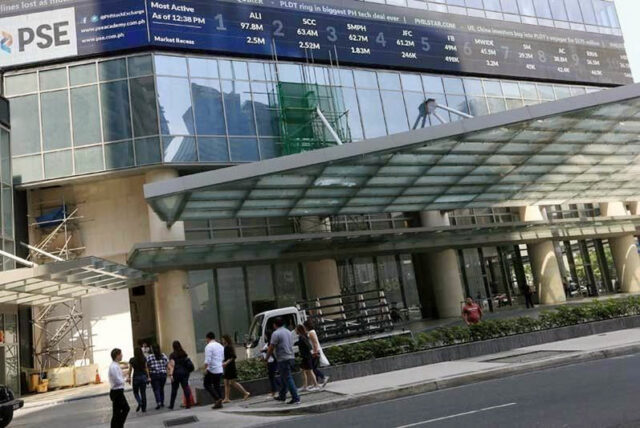
THE Philippine Stock Exchange, Inc. (PSE) is expected to finalize additional deals this week to increase its stake in the Philippine Dealing System Holdings Corp. (PDS) as part of its ongoing effort to consolidate the local capital market infrastructure.

“I think we’ll be closing Citicorp (Capital Philippines, Inc.) by next week, together with Tata (Consultancy Services Asia Pacific Pte. Ltd.) maybe,” PSE President and Chief Executive Officer Ramon S. Monzon told reporters last week.

A PSE regulatory filing dated April 3 showed that financial advisory company Citicorp holds a 3.1% stake in PDS, equivalent to 193,824 shares, while information technology and consulting company Tata Consultancy has an 8% ownership, corresponding to 500,000 shares.

Meanwhile, Mr. Monzon said the PSE is facing challenges in closing the deals for the stakes in PDS held by foreign banks.

“We’re having problems with the foreign banks. I don’t think we’ve closed JP Morgan and another one,” he said.

JP Morgan Chase Bank holds a 0.08% stake in PDS, corresponding to 5,000 shares.

On April 3, the PSE increased its stake in PDS to 79.94% after closing the acquisitions of stakes held by state-led pension fund Social Security System (SSS) and Insular Investment Corp.

SSS held a 1.54% stake in PDS, equivalent to 96,388 shares, while Insular Investment also finalized the sale of its 0.0645% ownership, or 4,030 shares.

The PDS operates the Philippine Dealing and Exchange Corp., Philippine Depository and Trust Corp., and Philippine Securities Settlement Corp.

In December last year, the PSE announced that it was purchasing a 61.92% stake in PDS for P2.32 billion. The market operator is acquiring 3.87 million PDS shares at P600 apiece.

Prior to the acquisition, the market operator had a 20.98% stake in PDS.

For 2024, the PSE recorded a 57.5% jump in its net income to P1.21 billion from P766.31 million in 2023 after its takeover of PDS. — Revin Mikhael D. Ochave

ADVERTISEMENT
ADVERTISEMENT