Home Blog Page 1684

SM Active Hub is your ultimate sports playground

SM Active Hub is the biggest sports community in the Philippines!

Run, play, and stay active — anytime, anywhere

Gone are the days when malls were just for shopping and dining. At SM Supermalls, they are changing the game — literally!

Introducing SM Active Hub, your go-to spot for sports, fitness, and all things active!

As the largest sports community in the Philippines, SM Active Hub brings together the biggest number of venues and partner sports clubs nationwide. Plus, members get year-round deals from partner brands through SM Malls Online, including exclusive discounts on sporting events. Whether you’re a weekend warrior or a seasoned athlete, there’s a place for you here!

So, lace up, grab your gear, and get moving — because the game is just getting started!

Join the largest running community in the country!

Lace up and join the run! SM Active Hub hosts the country’s biggest running events.

Running is more than just a workout — it’s a lifestyle. SM is home to the largest running community in the country and the top choice for official race events. With a nationwide network of run clubs and partner communities, SM is bringing together nearly 100,000 runners who are passionate about hitting the pavement.

SM Active Hub has partnered with top running clubs like RunRio, Run with Pat, Almost Speedy, Garmin Run Club, New Balance Run Club, and Trailista, along with elite ambassadors Rio and Nicole de la Cruz and coach Patrick Rubin — bringing expert guidance and a strong, motivating community to every run.

And with these upcoming running events, SM is adding extra fun as you run!

Upcoming running events:

SM Mall of Asia:

  • April 20 – Hera Run
  • April 27 – Galaxy Earth Day Run
  • May 4 – Rexona Miler
  • May 10 – UNIQLO SUW Community Run
  • May 18 – Sante Trilogy Run Asia MNL Leg 2
  • May 25 – CSB Run
  • June 1 – Lazada Run
  • June 15 – Sagisag Leg 2
  • June 29 – Pride Run – Manila Leg
  • July 13 – Sante Trilogy Run Asia MNL Leg 3
  • July 20 – Water Run
  • July 27 – Aphrodite Run
  • August 3 – Color Electric Run
  • August 10 – Manila Marathon
  • August 16 – Race for Life Run
  • August 31 – Sagisag Leg 3
  • September 7 – Hoka Midnight Run Manila
  • September 21 – Lufthansa Run
  • September 28 – Air Run
  • October 5 – Philippine Half Series: Manila Half Marathon
  • October 12 – Yakult Run
  • October 26 – Garmin Run
  • November 9 – Sante Trilogy Run Asia Finals
  • November 16 – Minion Run
  • November 30 – McDonald’s Run
  • December 7 – Gatorade Run

SM By the Bay:

  • May 11 – Movie Marathon Fun Run
  • October 18 – ASICS Meta Time Trial

SM City Tuguegarao:

  • May 18 – CUDMC Fun Run

SM Seaside City Cebu:

  • May 25 – IPI Run
  • June 22 – Pride Run – Cebu Leg

SM City Iloilo:

  • April 2 – Let’s Run at SM

SM City CDO Uptown:

  • May 1 – USTP Fun Run
  • May 4 – HOKA Trilogy Run Asia 2025
  • August 23 – Glowfest Color Run

SM City Butuan:

  • April 27 – Labak Anniversary Run 2025
  • May 18 – Balangay Festival Run Half Marathon
  • July 13 – Milo Marathon 2025 Butuan Leg
  • August 3 – Adlaw Hong Butuan – Butuan Marathon 2025

SM Lanang Premier:

  • June 8 – Pride Run – Davao Leg
  • June 15 – 27+6 Health Marathon

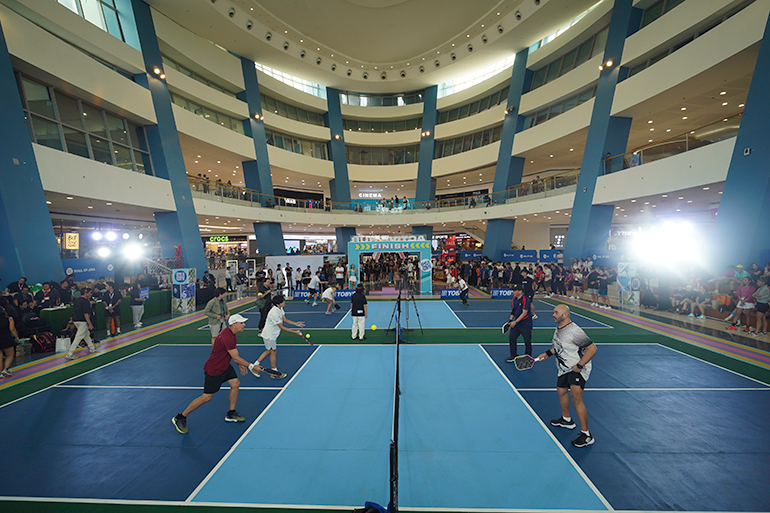
Smash, rally, and score at SM’s pickleball courts!

Serve, rally, win! Pickleball fever is on at SM’s 14 dedicated courts nationwide.

Pickleball is the fastest-growing sport in the country, and SM is leading the way with 14 dedicated courts across the Philippines. Whether you’re a beginner or a pro, grab a paddle and hit the court at these select SM malls:

  • SM Seaside City Cebu
  • SM Center Ormoc
  • SM City Consolacion
  • SM City Puerto Princesa
  • SM City North EDSA
  • SM City Baguio
  • SM City Rosales
  • SM City Cabanatuan
  • SM City Pulilan
  • SM City Telebastagan
  • SM City Valenzuela
  • SM City Grand Central
  • SM City Roxas
  • SM City Rosario

SM Active Hub is proud to partner with the Philippine Pickleball Federation, the country’s leading organization for the sport, uniting 211 member clubs and 13,156 players nationwide. Elevating the game even further, SM also teamed up with top pickleball athletes, including Leander Lazaro, one of the Philippines’ finest players, and Clarice Patrimonio, a decorated pickleball champion.

Level up your game at the SM Active Hub today!

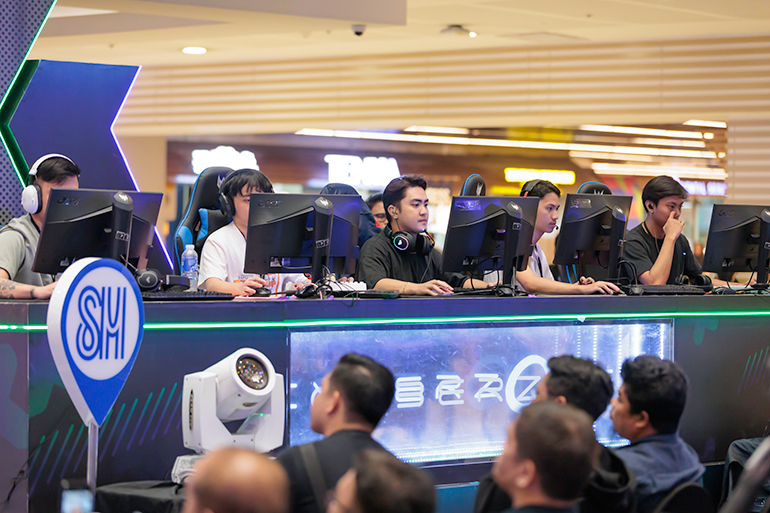
Beyond the rally and the run, explore basketball, biking, eSports, and more at SM Active Hub!

SM Active Hub isn’t stopping at running and pickleball! Get ready for an even broader sports experience with basketball, badminton, volleyball, football, table tennis, bowling, ice skating, biking, karate, taekwondo, and eSports all coming your way at SM Malls. And with these new sports offerings, designated spaces, official events, and thriving communities, you’ll never run out of reasons to get moving, anytime, anywhere.

Get in the game now and download the SM Malls Online App

Your all-access pass to play — join SM Active Hub via the SM Malls Online app.

Joining SM Active Hub is quick and easy. Just download the SM Malls Online app and follow these steps:

  • Click the “ACTIVEHUB” banner on the homepage.
  • Select your Active Hub community — whether it’s running, pickleball, or other upcoming sports.
  • Swipe to redeem your membership pass and unlock access to exclusive events, training sessions, and special deals!

So don’t just watch the action — be part of it! Whether you’re hitting the pavement, smashing on the court, or gearing up for new sports, SM Active Hub is where champions are made.

To know more about the SM Active Hub and its activities & schedules, visit https://www.smsupermalls.com/active-hub or follow @SMActiveHub on Instagram and TikTok.


Spotlight is BusinessWorld’s sponsored section that allows advertisers to amplify their brand and connect with BusinessWorld’s audience by publishing their stories on the BusinessWorld Web site. For more information, send an email to online@bworldonline.com.

Join us on Viber at https://bit.ly/3hv6bLA to get more updates and subscribe to BusinessWorld’s titles and get exclusive content through www.bworld-x.com.

‘A true father to us’ – Filipinos mourn Pope Francis

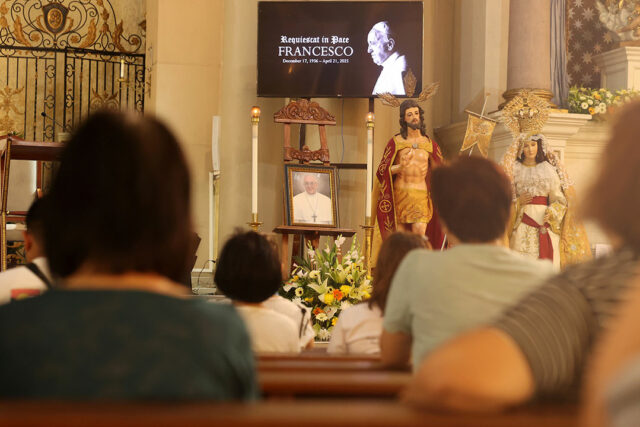
Catholic faithful pray the rosary for Pope Francis inside the Immaculate Conception Cathedral of Cubao in Quezon City on Monday. Pope Francis died at the age of 88 on Monday. — PHILIPPINE STAR/MIGUEL DE GUZMAN

MANILA — Hundreds of Filipinos gathered at a solemn Mass held for Pope Francis on Tuesday, following his passing that has stirred deep sorrow among Catholics around the world, many of whom saw him as a humble and compassionate leader.

In one of the world’s largest Catholic strongholds, the grief was palpable as worshippers filled churches to honour the pontiff, known affectionately in the Philippines as “Lolo Kiko”, or Grandpa Kiko.

One of the chapels inside the Manila Cathedral displayed a framed photo of the Argentine pope surrounded by flowers and candles, as prayers for his eternal repose and solemn hymns sung by the choir echoed through the church.

“Lolo Kiko was a true father to us,” said Cardinal Jose Advincula, the archbishop of Manila, during the morning Mass he led at the cathedral.

Francis, the first Latin American leader of the Roman Catholic Church, died on Monday after suffering a stroke and cardiac arrest, the Vatican said, ending an often turbulent reign in which he sought to overhaul an ancient and divided institution.

The Philippines, home to more than 80 million Catholics, has long had a special connection with Francis, who visited the country in 2015, drawing a record crowd of up to seven million people at a historic Mass in the capital.

In his homily, the pope urged Filipinos to shun “social structures which perpetuate poverty, ignorance and corruption”.

Francis’ journey included a visit to Tacloban, where he met with survivors of Typhoon Haiyan, the deadliest storm in Philippine history.

POWERFUL FORCE
Cardinal Advincula described the 2015 visit of Francis as “a moment of grace forever etched in our memory”.

Philippine President Ferdinand Marcos Jr, a Catholic, described Francis as the “best pope in my lifetime” as he expressed deep sorrow over his passing.

The Catholic Church in the Philippines has been a powerful force in society, helping to oust two leaders, most notably the father and namesake of the current president, and speaking out against injustices and human rights abuses, including a spree of killings in former President Rodrigo Duterte’s controversial “war on drugs”.

As the Church prepares for a new conclave, attention has turned to what could be a historic shift – one the possible candidates to succeed Pope Francis is Filipino Cardinal Luis Antonio Tagle.

Tagle, 67 is often called the “Asian Francis” because of his similar commitment to social justice and if elected he would be the first pontiff from Asia, where only the Philippines and East Timor have majority Catholic populations.

On paper, Tagle, who generally prefers to be called by his nickname “Chito”, seems to have all the boxes ticked to qualify him to be a pope.

He has had decades of pastoral experience since his ordination to the priesthood in 1982. He then gained administrative experience, first as bishop of Imus and then as archbishop of Manila. — Reuters

Italian passion, Filipino soul: Caffè Allor Ristorante blends Filipino-Italian dining experience

Filipinos and Italians share a deep appreciation for delicious cuisine. What better way to enjoy both culinary traditions than by crafting fusion dishes that blend classic Filipino and Italian flavors while dining in an indoor piazza?

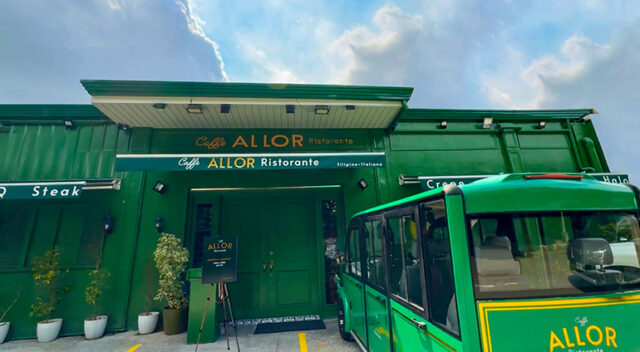
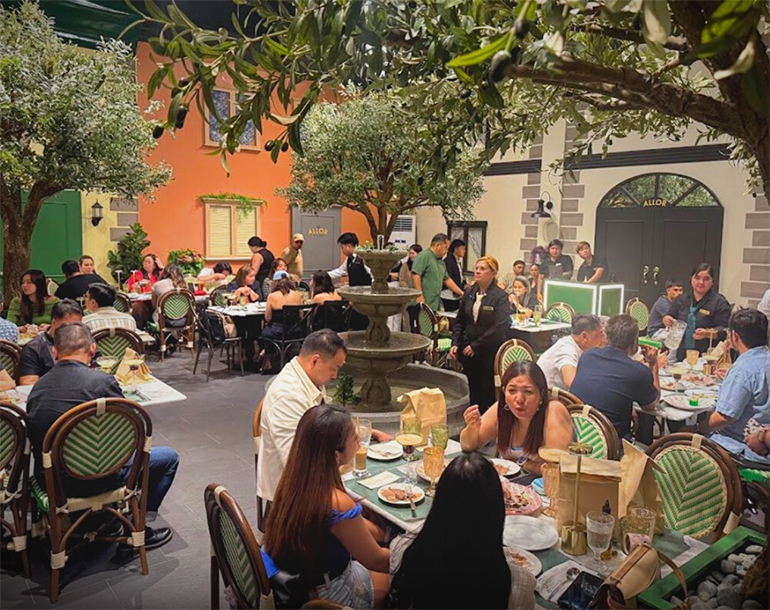
Located in the relatively “quiet” part of Quezon City, stands Caffè Allor Ristorante. The name has a fascinating history behind it. “The name is a combination of my parents’ names. My father’s name is Albino, and my mother’s name is Lorita, so Al and Lor. At the same time, I wanted to do something to honor my parents. In my other business, my parents inspired me to ensure that it develops, and I would like to honor them as I grow this restaurant,” says entrepreneur and now restaurant owner Mark Wang. Captivated by the picturesque and timeless streets and architecture of Siena, Tuscany during his honeymoon, he told his wife that he’d love to have a restaurant inspired by the character of the city in Italy.

He became motivated to create his own interpretation of the dishes he and his wife enjoyed during their trip. Mark is no stranger when it comes to taste and flavors, as one of his ventures involves supplying premium ingredients to food-service businesses. With a thrust in promoting Filipino ingredients across various local establishments, and with plans for global reach in the near future, he recognized the significance of showcasing Filipino cuisine and flavors, even within an Italian setting and ambiance.

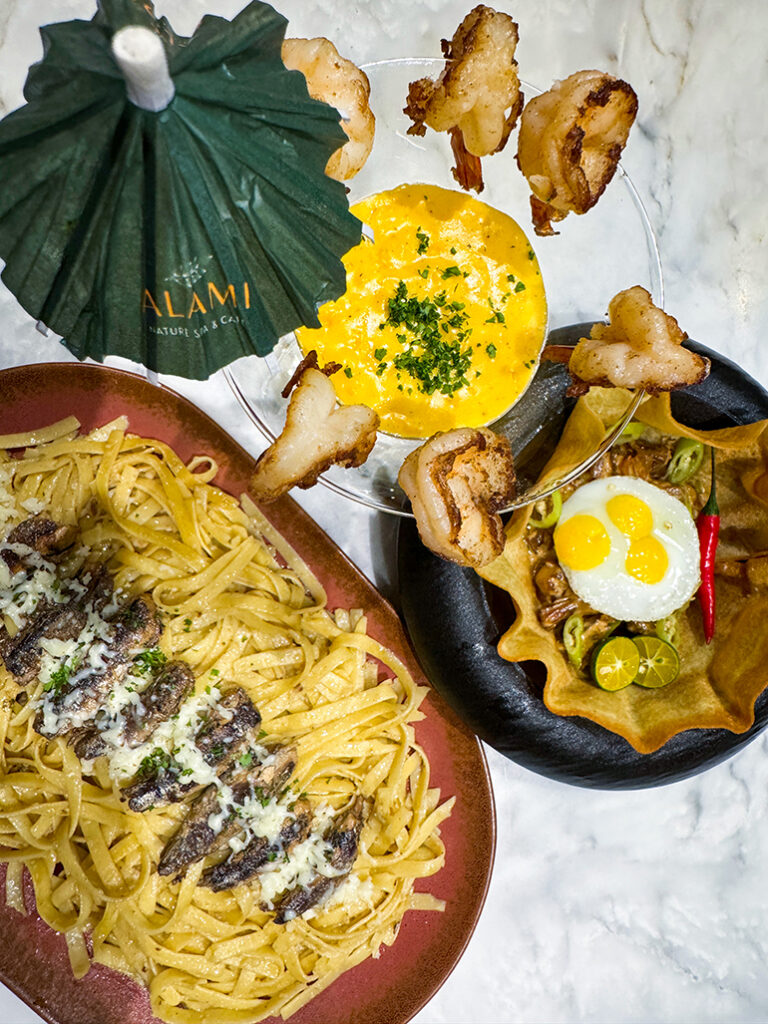
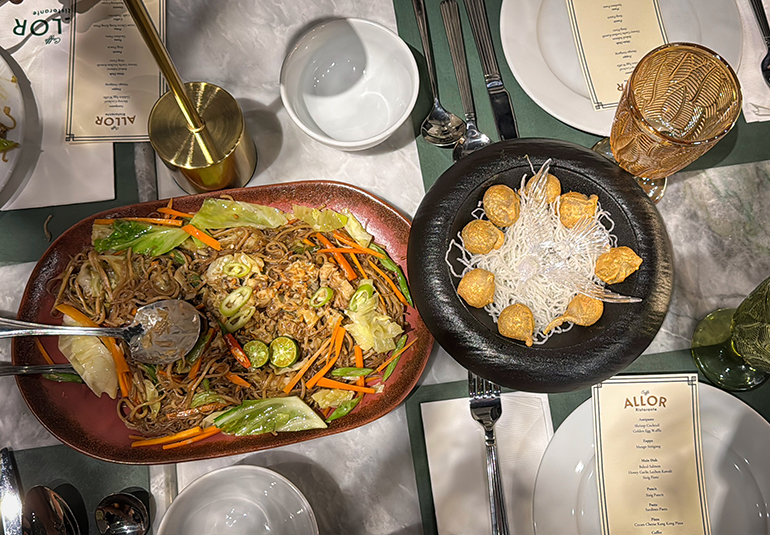
Do not be deceived by the restaurant’s modest façade; once entering, guests will be pleasantly surprised by the restaurant’s replica of an al fresco arrangement. The piazza-inspired setup, featuring a central fountain, will evoke Italy while savoring a blend of Filipino and Italian cuisine with loved ones, friends, and family. Filipino cuisine enthusiasts should sample the Mango Sinigang, a version of the traditional sour soup enhanced with crispy pork and ripe mango; the Golden Egg Waffle, Caffè Allor Ristorante’s take of “kwek-kwek” adorned with edible gold; and the Sisig Fiore, pork sisig garnished with quail eggs and presented in an edible bowl, among others.

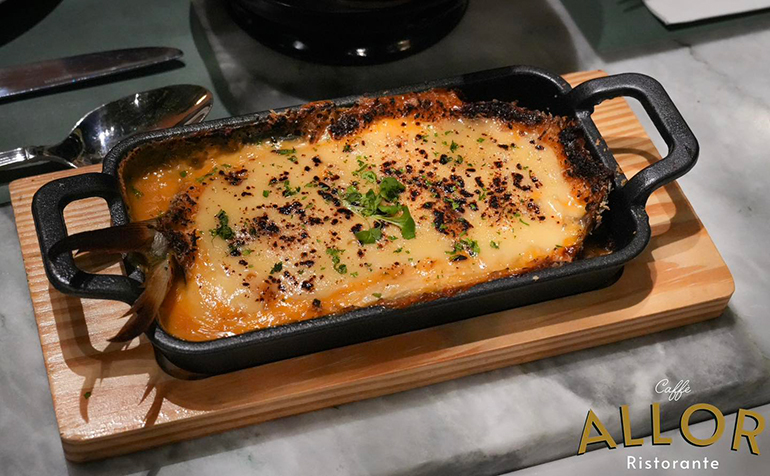
Mark emphasizes that the ingredients used for their Italian dishes are of the highest quality, featuring imported Italian products such as their tomato sauce, olive oil, truffle, flour, and cheese. Caffé Allor Ristorante offers a delightful selection of solo and shareable pasta, as well as both dessert and savory crepes [the Puto Bumbong Crepe is a must try!].

The restaurant features a good selection of Neapolitan pizzas, renowned for their thin, crispy crust and premium ingredients, originating from Naples, Italy. They offer tea and coffee made from local beans, prepared in Italian style, distinguished by its strength, frothiness, and richness.

“The goal for the restaurant is to create a family-friendly space where families can relax, enjoy a proper meal, and share delicious food together,” shares Mark.

There’s no need for concern regarding parking, as Caffè Allor Ristorante offers ample designated parking slots. The restaurant includes a private area accommodating  around 15 to 18 guests, equipped with a projector and basic sound system, making it perfect for intimate product launches or special celebrations without any hassle. More than just a restaurant, Caffè Allor Ristorante offers a destination where families and friends can create lasting memories over exceptional food, inviting ambiance, and innovative menu.

Caffè Allor Ristorante is located at 83 Scout Reyes corner Scout Delgado, Brgy. Paligsahan, Quezon City. Operating hours are from 9:00 a.m. to 11:00 p.m. daily.

For reservations, special events, and inquiries, guests can call 0917-137-8463 or email information@allorprimegroup.com. Follow Caffè Allor Ristorante on Facebook, Instagram, and TikTok @caffeallor for updates, promotions, and a glimpse into its unique Filipino-Italian culinary journey.


Spotlight is BusinessWorld’s sponsored section that allows advertisers to amplify their brand and connect with BusinessWorld’s audience by publishing their stories on the BusinessWorld Web site. For more information, send an email to online@bworldonline.com.

Join us on Viber at https://bit.ly/3hv6bLA to get more updates and subscribe to BusinessWorld’s titles and get exclusive content through www.bworld-x.com.

Delivering on promises: Sun Life paid out over P6 billion in benefits in 2024

Demonstrating its unwavering commitment to being the Filipinos’ Partner for Life, Sun Life Philippines announced that it paid more than P6 billion in claims, maturities, and other benefits in 2024.

With this amount, the total amount of benefits that Sun Life Philippines has paid in the past five years now exceed P32 billion.

“At Sun Life, we understand that our core purpose extends beyond offering policies; it’s about being there for our Clients during the most critical times,” said Benedict Sison, CEO and Country Head of Sun Life Philippines. “Our commitment to being our Clients’ partner for life is the cornerstone of our business, guiding us in every decision we make.”

Looking ahead, Sun Life aims to reach more Filipinos across the country to help achieve lifetime financial security and live healthier lives. At present, the company has over 20,000 advisors, 96 New Business Offices, and 80 Client Service Centers nationwide. All these are complemented by continuous efforts to foster financial literacy to increase knowledge about the features and benefits of insurance products.

“As we celebrate our 130th anniversary, we look forward to launching more initiatives and engaging more Filipinos,” Sison said. “We still have a long way to go in terms of making sure every Filipino is insured, but we are ready to do our share to make it happen.”

To learn more about Sun Life’s products and services, visit www.sunlife.com.ph.


Spotlight is BusinessWorld’s sponsored section that allows advertisers to amplify their brand and connect with BusinessWorld’s audience by publishing their stories on the BusinessWorld Web site. For more information, send an email to online@bworldonline.com.

Join us on Viber at https://bit.ly/3hv6bLA to get more updates and subscribe to BusinessWorld’s titles and get exclusive content through www.bworld-x.com.

Solara Park Storeys Nuvali’s first tower top-off signals Avida Land’s commitment to sustainable mid-rise communities

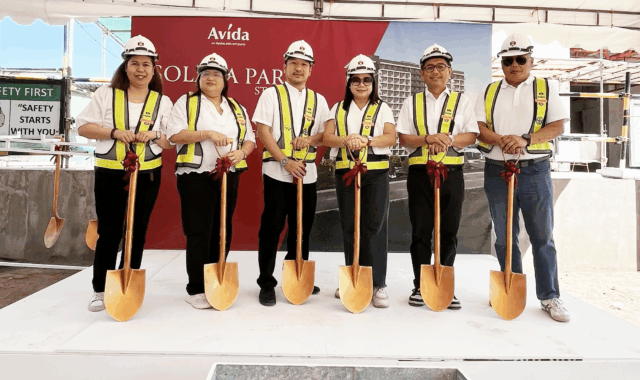
From left to right: Leading the ceremony were Riza Bangalando, Project Development Area Head for South Luzon; Jeanette Saturnino, Project Marketing Head; Aris Gonzales, Project Development & Strategic Management Group Head; Bing Gumboc, Sales Head; Jefrey Abergas, Technical Services Group Head; and Petes Gamboa, Interior Design Group Head.

Avida Land, the mid-income residential brand of Ayala Land, has officially topped off the first tower of Solara Park Storeys Nuvali, marking a pivotal step in its mission to deliver sustainable communities tailored to the evolving needs of homebuyers.

Strategically situated within Ayala Land’s 2,500-hectare Nuvali estate — the country’s first and largest eco-city built on sustainable design principles — the project bridges suburban tranquility with urban accessibility, positioning itself as a compelling choice for homebuyers and investors alike.

The project remains on track for its October 2027 completion, with construction progress currently six months ahead of schedule following the successful topping-off of the first tower on April 10, 2025.

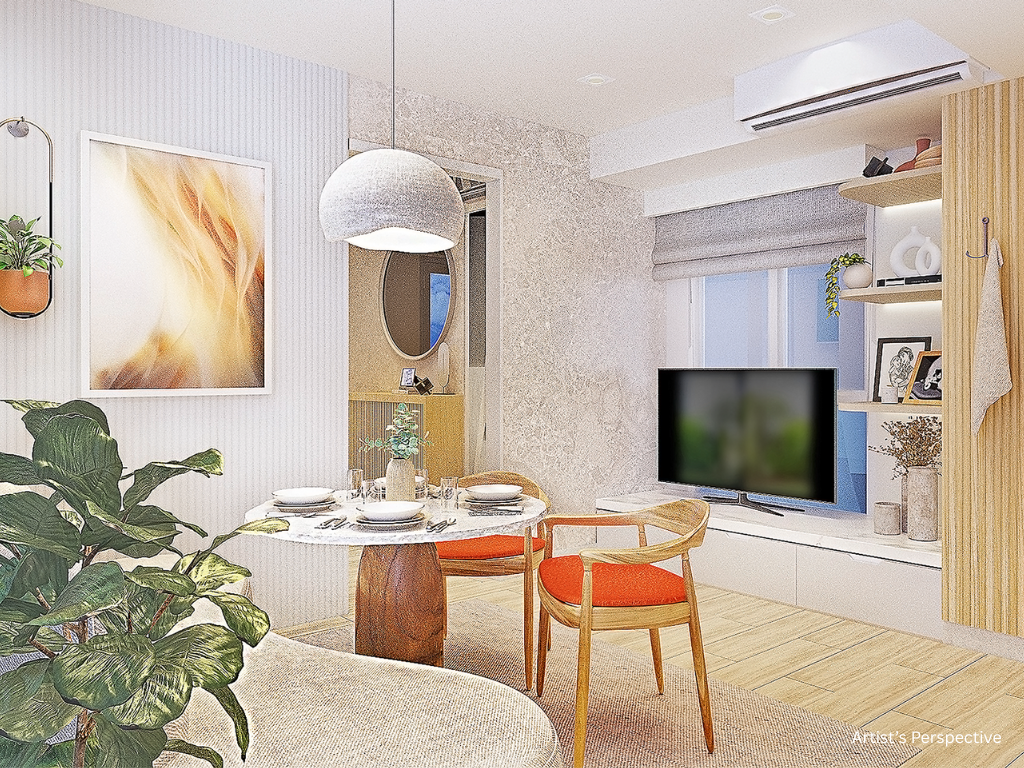
Living Room of a 1-Bedroom Unit with Balcony

Inspired Living with Ease

The project’s proximity to key business hubs, Ayala Malls Solenad, Xavier School, Miriam College, and QualiMed Hospital further enhances its appeal, offering residents immediate access to lifestyle, education, and healthcare amenities critical for long-term value appreciation. As the 11th development of Avida within Nuvali, Solara Park Storeys solidifies the company’s role in shaping the eco-city’s growth trajectory while capitalizing on the rising demand for residential developments in a suburban setting. With its seamless integration into Nuvali’s green spaces, the development provides future residents with access to jogging paths, biking trails, and nature-inspired leisure activities.

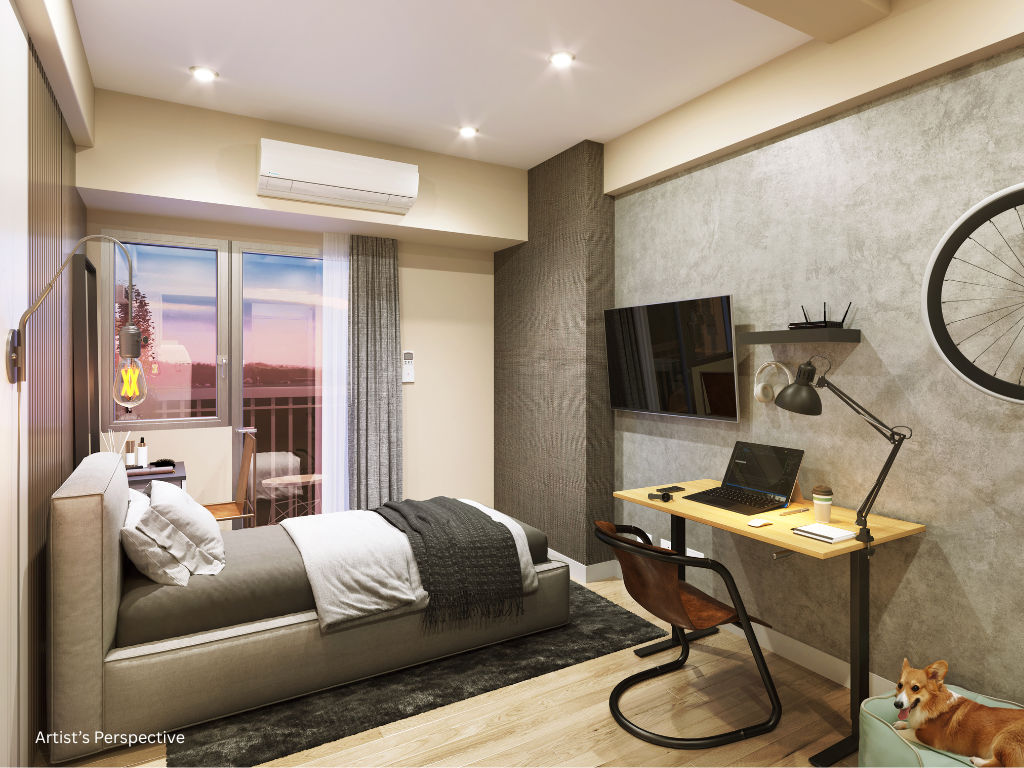
Studio Unit with Balcony

Sustainability lies at the core of Solara Park Storeys, with features such as LED lighting, rainwater harvesting systems, and sensor-controlled common-area lighting reducing environmental impact and operational costs. The development offers Studio (26.5 sq.m.) and 1-bedroom (35.8 sq.m.) units, priced from approximately P4.9 million to P6.5 million, each designed with balconies featuring sun-shading partitions to optimize natural ventilation and comfort. Spanning 6,700 sq.m., the central amenity area includes an adult and kiddie pool, indoor gym, basketball court, and landscaped pet-friendly spaces, fostering a holistic environment for families and professionals seeking a balanced lifestyle.

With the topping-off of Tower 1, Solara Park Storeys Nuvali stands as a testament to Avida Land’s unwavering commitment to creating sustainable, inclusive, and future-ready communities.


Spotlight is BusinessWorld’s sponsored section that allows advertisers to amplify their brand and connect with BusinessWorld’s audience by publishing their stories on the BusinessWorld Web site. For more information, send an email to online@bworldonline.com.

Join us on Viber at https://bit.ly/3hv6bLA to get more updates and subscribe to BusinessWorld’s titles and get exclusive content through www.bworld-x.com.

New Pioneer Cold Storage facility breaks ground

From left to right: LCA Core Sdn Bhd COO Lars Amstrup, PCS Project Director Jeremy Coyukiat, DMCI President Jorge Consunji, Pioneer Shared Financials Head Tina de Guzman, Pioneer Senior Advisor Molly Uyecio, Navotas City Mayor John Rey Tiangco, Pioneer Group Head Lorenzo Chan, Jr., Design Coordinates, Inc. (DCI) President Senen Salvacion, Ryan Yapkianwee of Quadstruct, Inc., and Pioneer Shared Services Head Earl Ferrer

The construction of the new Pioneer Cold Storage (PCS) was commemorated with a groundbreaking lunch held on March 26 at the Pioneer House Makati Boardroom.

The original PCS was built in 1967, at a time when modern cold storage options were scarce in the country. It was an enterprise that the founders of Pioneer Insurance deemed worth pursuing.

Recognizing the need for an upgrade, today’s successors began the demolition of the original structure in November 2024 to make way for a more advanced facility to meet present-day requirements and demands.

“This event marked a significant milestone in modernizing cold storage infrastructure in the country, ensuring improved capacity and efficiency for the industry,” Pioneer Group Head Lorenzo Chan, Jr. said.

Aside from Mr. Chan, the lunch gathered key figures from Pioneer, including Jeremy Coyukiat, Pioneer Real Estate Development and Management Head, who is also the PCS Project Director; Tina de Guzman, Pioneer Shared Financials Head; and Earl Ferrer, Pioneer Shared Services Head.

The event was also attended by special guests and project partners, including Jorge Consunji, President of D.M. Consunji, Inc.; Navotas Mayor John Rey Tiangco; Roberto Niebres, President of Quadstruct, Inc.; Sonny Salvacion, President of Design Coordinates, Inc.; Alfredo Rodriguez, Vice-President of Meinhardt Philippines, Inc.; and Lars Amstrup, COO of LCA Core Sdn Bhd.

Located near the Port of Manila, the half-hectare Pioneer Cold Storage facility will feature elevated flooring to avoid flooding, an increase in storage capacity to over 5,000 pallets, full backup power for freezing and chilled storage, and solar panels to optimize power and ensure sustainable, 24/7 operations. The facility is expected to start operations in the latter half of 2026.

“While we work on the pursuit of realizing our ambitious plans for the new Pioneer Cold Storage, we are armed with the same integrity, excellence, and ‘malasakit’ that shareholders have imbued in their other business ventures such as insurance. As the current stewards of the business, we also renew our commitment to be true to our name — to pioneer innovations and better practices and services for Filipinos in whatever we pursue,” Mr. Chan concluded.


Spotlight is BusinessWorld’s sponsored section that allows advertisers to amplify their brand and connect with BusinessWorld’s audience by publishing their stories on the BusinessWorld Web site. For more information, send an email to online@bworldonline.com.

Join us on Viber at https://bit.ly/3hv6bLA to get more updates and subscribe to BusinessWorld’s titles and get exclusive content through www.bworld-x.com.

‘For our country’: China’s patriots are buying the dip

RAWPIXEL.COM

 – Cao Mingjie had never traded stocks before Donald Trump’s “Liberation Day”.

The home designer from China’s southern Guangdong province changed his mind after April 2, when the U.S. president announced “reciprocal tariffs“, intensifying a trade war with his country.

Keen to show solidarity with Beijing, Mr. Cao decided he would invest 2,000 yuan ($274) in the local stock market every month.

“The goal isn’t to make money. It’s about contributing to my country,” said Mr. Cao. He said he opened trading accounts after the higher tariffs hit Chinese stocks. In this trade war, “every individual should stand by the country until the end”.

Like Mr. Cao, many retail investors are joining the state-backed “national team” to defend the stock market – another battlefield in the broadening Sino-U.S. conflict, traders and brokers say. Buying has been focused on sectors set to benefit from China’s national agenda, such as defense, consumer and semiconductors.

The patriotic fervor is unusual in small investors, notorious for their casino mentality, and a welcome change for authorities seeking to counter the panic caused by the trade war and stabilize capital markets.

Since the rout on April 4, China’s share markets have received 45 billion yuan in net retail inflows, data from financial information provider Datayes shows. That compares with six straight sessions of outflows totaling 91.8 billion yuan ahead of Trump’s “Liberation Day”.

Previously, private and state investors clashed during the 2015 market crash and in the aftermath of Beijing’s crackdown of technology companies, undermining market rescue efforts.

But now, their interests appear aligned as Trump threatens eye-popping import tariffs that China has described as “bullying“, even if some retail investors are merely opportunistic and riding on Beijing’s swift and resolute intervention.

As China stocks plunged 7% on April 7, state-backed institutional investors publicly vowed to buy more shares, top Chinese brokerages pledged to steady prices, and a slew of listed companies unveiled share buyback plans.

Last week, Chinese Premier Li Qiang urged government officials to strengthen efforts to steady the stock market.

China’s stock market has bounced 8% from seven-month lows hit early April, and is down just 1.3% so far this month. That compares with a slump of more than 8% for U.S. stocks.

“We think China’s A-share market is of greater strategic importance,” said Meng Lei, China equity strategist at UBS Securities. Patriotic bets have “meaningfully improved investor sentiment”, Meng said.


‘BEING PATRIOTIC MEANS HOLDING ON’

Zhou Lifeng, from China’s northwestern Ningxia region, has vowed to pour more cash into stocks even if he incurs losses.

“Being patriotic means holding on to your stocks,” said Zhou, a mountain climber. Zhou said he owns mostly consumer and defense stocks worth 3 million yuan and has 7 million yuan cash in his war chest.

Restaurant operator Shu Hao said he had also invested several hundred million yuan in Chinese shares and that he was inspired by efforts made by domestic retail giants to help exporters bruised by the trade war.

JD.com, Alibaba-owned Freshippo, and supermarket operators CR Vanguard and Yonghui Superstores 601933.SS have announced measures to help exporters pivot to the local market.

“People are expressing patriotism in various ways,” said Shu. He said he had bought technology and consumer shares.

The stocks and sectors people are buying into reflects nationalistic pride. They are mostly areas in which Beijing has self-sufficiency targets or have local champions that are being shut out of global markets due to the tariffs.

Reflecting this, consumer and chipmaking shares have risen since Mr. Trump’s “Liberation Day” despite weaker broader markets, while tourism and agriculture-related shares have recovered quickly.

Exchange-traded funds, an increasingly popular investment conduit in China, have received piles of money.

Since the April 7 slump, Chinese ETFs have received more than 230 billion yuan of flows, pushing the total size of the segment past 4 trillion yuan for the first time, state media has reported. The data does not show how much of those inflows were from retail investors, versus the “national team”.


‘WAR … WITHOUT GUN SMOKE’

Patriotism is also reshaping the portfolio of some professional investors.

Hedge fund manager Yang Tingwu said he ploughed all the cash left in his portfolio into stocks.

“This is war, only without gun smoke,” Yang, portfolio manager at Tongheng Investment said, referring to the spiraling trade conflict between China and the U.S. that has seen tit-for-tat levies surging past 100%.

“You’re placing bets not just on your portfolio, but also on the fate of your country,” said Yang, who has wagered on farming, energy, finance and defense stocks.

Founder of Shanghai-based Minority Asset Management, Liam Zhou, said he had invested his $1 billion portfolio entirely in China stocks.

The trade war has even turned some Chinese investors nationalistic.

“My portfolio is bleeding, but I don’t care. I’ll stand firm with the government in the fight against U.S. bullying,” said Nancy Lu, a teacher in eastern Jiangsu province. She vowed to never go to Starbucks or wear Nike again, in a boycott of American brands.

“I won’t sell a single stock. I’ll help defend the market for our country. I have never felt so proud as a retail investor,” she added. – Reuters

Google could use AI to extend search monopoly, DOJ says as trial begins

REUTERS

 – Alphabet’s Google needs strong measures imposed on it to prevent it from using its artificial intelligence products to extend its dominance in online search, a U.S. Department of Justice attorney said as trial in the historic antitrust case began on Monday.

The outcome of the case could fundamentally reshape the internet by unseating Google as the go-to portal for information online.

The Justice Department is seeking an order that would require Google to sell its Chrome browser and take other measures to end what a judge found was its monopoly in online search. Prosecutors have compared the lawsuit to past cases that resulted in the break up of AT&T and Standard Oil.

Now is the “time to tell Google and all other monopolists who are out there listening, and they are listening, that there are consequences when you break the antitrust laws,” DOJ attorney David Dahlquist said during his opening statement.

The DOJ and a broad coalition of state attorneys general are pressing for remedies they believe will restore competition even as search evolves to overlap with generative AI products such as ChatGPT.

“This court’s remedy should be forward-looking and not ignore what is on the horizon,” Mr. Dahlquist said.

Google’s search monopoly helps improve its AI products, which are also a way to lead users to its search engine, he said.

Google has agreed to pay Samsung monthly to install Google’s Gemini AI app on devices such as smartphones, a deal that can be extended into 2028, according to documents shown at trial. The financial terms were not disclosed, but Mr. Dahlquist characterized the monthly amount as an “enormous sum.”

U.S. District Judge Amit Mehta previously ruled that Google’s exclusive agreements with device makers to be the default search engine helped maintain its monopoly.

Nick Turley, OpenAI’s product head for rival AI app ChatGPT, was expected to take the stand on Tuesday.

Google’s lawyer, John Schmidtlein, said in his opening statement that the DOJ’s proposals amount to “a wishlist for competitors looking to get the benefits of Google’s extraordinary innovations.”

AI competitors “would like handouts as well even though they are competing just fine,” he said.

Google argues that its AI products are outside the scope of the case, which focused on search engines. Adopting the proposed remedies “would hold back American innovation at a critical juncture,” Google executive Lee-Anne Mulholland said in a blog post on Sunday.

The company has said it will appeal once a final judgment is entered.


EXCLUSIVE AGREEMENTS

Antitrust enforcers have proposed far-reaching measures designed to quickly open the search market and give new competitors a leg up.

Their proposals include ending Google’s exclusive agreements with tablet and smartphone makers like Apple to make Google the default search engine on their devices.

Google would also have to license search results to competitors, among other requirements. The DOJ has proposed that, if other remedies fail to restore competition, Google would be forced to sell its Android mobile operating system.

Google said the court should stick to making its default agreements non-exclusive.

Ending Google’s payments to device makers and browser developers would raise the cost of smartphones and jeopardize the existence of companies like Mozilla, which rely on the revenue to operate, Google claims.

Google plans to call witnesses from Mozilla, Verizon and Apple, which launched a failed bid to intervene in the case.


‘NONPARTISAN’

The case is part of an antitrust crackdown on Big Tech started during the first Trump administration that shows no signs of slowing, despite overtures tech companies and their executives have made to the White House.

Assistant Attorney General Gail Slater and other DOJ antitrust officials were in the courtroom to show that the case, started under Trump and carried forward under former President Joe Biden, proposes “nonpartisan” remedies and has “the full support of the DOJ both past and present,” Mr. Dahlquist said.

Slater celebrated a win in another antitrust case against Google on Thursday over advertising technology. The case was filed during Biden’s term.

Meta Platforms is facing its own antitrust trial over the acquisitions of Instagram and WhatsApp. – Reuters

Trump approval rating dips; many wary of his wielding of power, Reuters/Ipsos poll finds

REUTERS

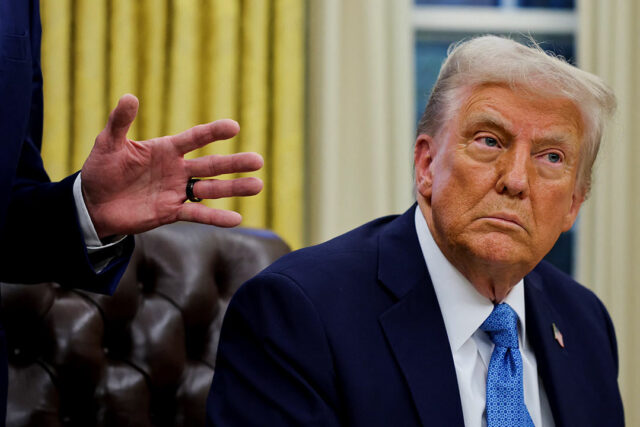
 – President Donald Trump‘s public approval rating edged down to its lowest level since his return to the White House, as Americans showed signs of wariness over his efforts to broaden his power, a Reuters/Ipsos poll that closed on Monday found.

Some 42% of respondents to the six-day poll approved of Mr. Trump’s performance as president, down from 43% in a Reuters/Ipsos poll conducted three weeks earlier, and from 47% in the hours after his January 20 inauguration.

The start of Mr. Trump’s term has left his political opponents stunned as he has signed dozens of executive orders expanding his influence over both government departments and over private institutions such as universities and law firms.

While Mr. Trump’s approval rating remains higher than the ratings seen during most of his Democratic predecessor’s presidency, the results of the Reuters/Ipsos poll suggest many Americans are uncomfortable with his moves to punish universities he sees as too liberal and to install himself as the board chair of the Kennedy Center, a major theater and cultural institution in Washington.

Some 83% of the 4,306 respondents said that the U.S. president must obey federal court rulings even if he doesn’t want to. Trump administration officials could face criminal contempt charges for violating a federal judge’s order halting deportations of alleged members of a Venezuelan gang who had no chance to challenge their removals.

Fifty-seven percent – including one-third of Republicans – disagreed with the statement that “it’s okay for a U.S. president to withhold funding from universities if the president doesn’t agree with how the university is run.”

Mr. Trump, who has argued universities are failing to fight antisemitism on campus, has frozen vast sums of federal money budgeted for U.S. universities, including more than $2 billion for Harvard University alone.

A similar share of respondents – 66% – said they did not think the president should be in control of premier cultural institutions such as national museums and theaters. Mr. Trump last month ordered the Smithsonian Institution, the vast museum and research complex that is a premier exhibition space for U.S. history and culture, to remove “improper” ideology.

On a range of issues, from inflation and immigration to taxation and rule of law, the Reuters/Ipsos poll showed that Americans who disapproved of Mr. Trump’s performance outnumbered those who approved on every issue in the poll. On immigration, his strongest area of support, 45% of respondents approved of Mr. Trump’s performance but 46% disapproved.

The poll had a margin of error of about 2 percentage points.

Some 59% of respondents – including a third of Republicans – said America was losing credibility on the global stage.

Three-quarters of respondents said Mr. Trump should not run for a third term in office — a path Mr. Trump has said he would like to pursue, though the U.S. Constitution bars him from doing so. A majority of Republican respondents — 53% — said Mr. Trump should not seek a third term. – Reuters

Britain and New Zealand to step up military ties as leaders meet

BRITAIN’S PRIME MINISTER KEIR STARMER — POOL VIA REUTERS

 – Britain’s Prime Minister Keir Starmer and his New Zealand counterpart Christopher Luxon are expected to agree to deepen defense and security ties, including stepping up support for Ukraine, when they meet on Tuesday, Mr. Starmer’s office said.

The leaders will see first-hand the work the armies of both countries are doing to train Ukrainian forces in the southwest of England, Mr. Starmer’s office said, and Luxon was expected to confirm support for the initiative until the end of the year.

During the visit, the leaders are expected to discuss plans to step up defense and security cooperation, with ministers being instructed to work on a new joint defense partnership between the two countries, the statement said.

Mr. Starmer said Britain and New Zealand had stood “shoulder to shoulder for generations in pursuit of peace and stability”.

“As the world becomes an increasingly dangerous place, I am proud how much we are doing together to support our national and economic security – stepping up our defense spending, deploying our navies together in the Indo-Pacific, and continuing our work to put Ukraine in the strongest possible position to deter an increasingly aggressive Russia,” Mr. Starmer said in the statement. – Reuters

How will a new pope be chosen? An expert explains the conclave

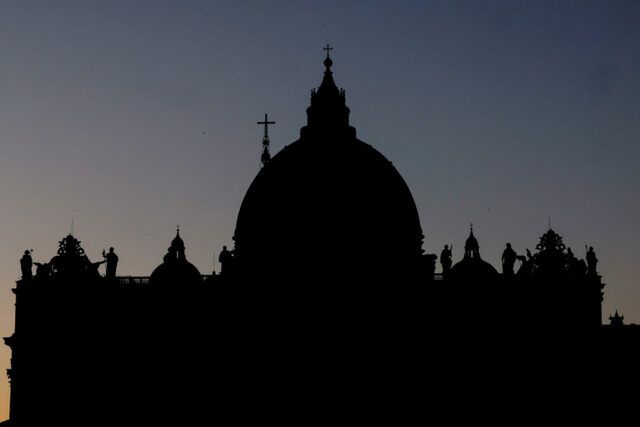
SAINT PETER’S BASILICA is silhouetted in this photo taken at the Vatican, Dec. 16, 2023. — REUTERS

by THE CONVERSATION

Following the death of Pope Francis, we’ll soon be seeing a new leader in the Vatican. The conclave – a strictly confidential gathering of Roman Catholic cardinals – is due to meet in a matter of weeks to elect a new earthly head.

The word conclave is derived from the Latin con (together) and clāvis (key). It means “a locked room” or “chamber”, reflecting its historical use to describe the locked gathering of cardinals to elect a pope.

Held in the Sistine Chapel, the meeting follows a centuries-old process designed to ensure secrecy and prayerful deliberation. A two-thirds majority vote will be required to successfully elect the 267th pope.


FILE PHOTO | By The original uploader was Snowdog at Italian Wikipedia. – http://artchive.com/ftp_site.htm Transferred from it.wikipedia to Commons by Pierpao using CommonsHelper., CC BY-SA 3.0, https://commons.wikimedia.org/w/index.php?curid=18462479

History of the conclave

The formalized papal conclave dates back centuries. And various popes shaped the process in response to the church’s need.

In the 13th century, for example, Pope Gregory X introduced strict regulations to prevent unduly long elections.

Pope Gregory X brought in the rules to prevent a repeat of his own experience. The conclave that elected him in September 1271 (following the death of Pope Clement IV in 1268) lasted almost three years.

Further adjustments have been made to streamline the process and emphasize secrecy, culminating in Pope John Paul II’s 1996 constitution, Universi Dominici gregis (The Lord’s whole flock). This document set the modern framework for the conclave.

In 2007 and 2013, Benedict XVI reiterated that a two-thirds majority of written votes would be required to elect a new pope. He also reaffirmed penalties for breaches of secrecy.

The secrecy surrounding the conclave ensures the casting of ballots remains confidential, and without any external interference.

The last known attempt at external interference in a papal conclave occurred in 1903 when Emperor Franz Joseph of Austria sought to prevent the election of Cardinal Mariano Rampolla. However, the assembled cardinals rejected this intervention, asserting the independence of the electoral process.


How does voting work?

The conclave formally begins between 15 and 20 days after the papal vacancy, but can start earlier if all cardinals eligible to vote have arrived. Logistical details, such as the funeral rites for the deceased pope, can also influence the overall timeline.

Historically, the exact number of votes required to elect a new pope has fluctuated. Under current rules, a minimum two-thirds majority is needed. If multiple rounds of balloting fail to yield a result, the process can continue for days, or even weeks.

After every few inconclusive rounds, cardinals pause for prayer and reflection. This process continues until one candidate receives the two-thirds majority required to win. The final candidates do not vote for themselves in the decisive round.


How is voting kept secret?

The papal conclave is entirely closed to the public. Voting is conducted by secret ballot within the Sistine Chapel in the Apostolic Palace, the pope’s official residence.

During the conclave, the Sistine Chapel is sealed off from outside communication. No cameras are allowed, and no live broadcast exists.

The cardinals involved swear an oath of absolute secrecy – under threat of excommunication if violated – ensuring all discussions and voting remain strictly confidential.

The iconic white smoke, produced by burning ballots once a pope has been chosen, is the only public signal the election has concluded successfully.


Who can be elected?

Only cardinals under 80 years of age at the time of conclave’s commencement can vote. Older cardinals are free to attend preparatory meetings, but can not cast ballots.

While the total number of electors is intended not to exceed 120, the fluctuating nature of cardinal appointments, as well as the age restrictions, make it difficult to predict the exact number of eligible voters at any given conclave.

Technically, any baptized Catholic man can be elected pope. In practice, however, the College of Cardinals traditionally chooses one of its own members. Electing an “outsider” is extremely rare, and has not occurred in modern times.


What makes a good candidate?

When faced with criticism from a member of the public about his weight, John XXIII (who was pope from 1958-1963) retorted the papal conclave was “not a exactly beauty contest”.

Merit, theological understanding, administrative skill and global perspective matter greatly. But there is also a collegial element – something of a “popularity contest”. It is an election, after all.

Cardinals discuss the church’s current priorities – be they evangelization strategies, administrative reforms or pastoral concerns – before settling on the individual they believe is best suited to lead.

The cardinal electors seek someone who can unify the faithful, navigate modern challenges and maintain doctrinal continuity.


Controversies and criticisms

The conclave process has faced criticism for its strict secrecy, which can foster speculation about potential “politicking”.

Critics argue a tightly controlled environment might not reflect the broader concerns of the global church.

Some have also questioned whether age limits on voting cardinals fully capture the wisdom and experience found among older members.

Nonetheless, defenders maintain that secrecy encourages free and sincere deliberation, minimizing external pressure and allowing cardinals to choose the best leader without fear of reprisal, or of public opinion swaying the vote.


Challenges facing the new pope

The next pope will inherit a mixed situation: a church that has grown stronger in certain areas under Francis, yet which grapples with internal divisions and external challenges.

Like other religions, the church faces secularization, issues with financial transparency and a waning following in some parts of the globe.

For the newly elected pope, one of the earliest trials will be unifying the global Catholic community around a shared vision – an obstacle almost every pope has faced.

Striking the right balance between doctrine and pastoral sensitivity remains crucial. Also, addressing sexual abuse scandals and their aftermath will require decisive action, transparency and continued pastoral care for survivors.

Practical concerns also loom large. The new pope will have to manage the Vatican bureaucracy and interfaith relations, while maintaining the church’s voice on global crises such as migration and poverty – two issues on which Francis insisted mercy could not be optional.

The cardinal electors have a tough decision ahead of them. The Catholic community can only pray that, through their deliberations, they identify a shepherd who can guide the church through the complexities of the modern world. – Reuters

Who could be the next pope? Some possible candidates

 – Predict who the next pope will be at your peril.

An old Italian saying warns against putting faith, or money, in any presumed front-runner ahead of the conclave, the closed-door gathering of cardinals that picks the pontiff. It cautions: “He who enters a conclave as a pope, leaves it as a cardinal”.

But here are some cardinals who are being talked about as “papabili” to succeed Pope Francis, whose death at the age of 88 was announced by the Vatican on Monday. They are listed in alphabetical order.


Jean-Marc Aveline, archbishop of Marseille, French, aged 66.

According to the French press, he is known in some domestic Catholic circles as John XXIV, in a nod to his resemblance to Pope John XXIII, the round-faced reforming pope of the early 1960s.

Pope Francis once quipped that his successor might take the name of John XXIV.

Mr. Aveline is known for his folksy, easy-going nature, his readiness to crack jokes, and his ideological proximity to Francis, especially on immigration and relations with the Muslim world. He is also a serious intellectual, with a doctorate in theology and a degree in philosophy.

He was born in Algeria to a family of Spanish immigrants who moved to France after Algerian independence, and has lived most of his life in Marseille, a port that has been a crossroads of cultures and religions for centuries.

Under Francis, Mr. Aveline has made great career strides, becoming bishop in 2013, archbishop in 2019 and a cardinal three years later. His standing was boosted in September 2023 when he organized an international Church conference on Mediterranean issues at which Pope Francis was the star guest.

If he got the top job, Mr. Aveline would become the first French pope since the 14th century, a turbulent period in which the papacy moved to Avignon.

He would also be the youngest pope since John Paul II. He understands but does not speak Italian – potentially a major drawback for a job that also carries the title Bishop of Rome and requires a lot of familiarity with Roman power games and intrigues.


Cardinal Peter Erdo, Hungarian, aged 72

If Mr. Erdo is elected, he would inevitably be seen as a compromise candidate — someone from the conservative camp who has nonetheless built bridges with Francis‘ progressive world.

Mr. Erdo was already considered a papal contender in the last conclave in 2013 thanks to his extensive Church contacts in Europe and Africa as well as the fact that he was seen as a pioneer of the New Evangelization drive to rekindle the Catholic faith in secularized advanced nations — a top priority for many cardinals.

He ranks as a conservative in theology and in speeches throughout Europe he stresses the Christian roots of the continent. However, he is also seen to be pragmatic and never clashed openly with Francis, unlike other tradition-minded clerics.

That said, he raised eyebrows in the Vatican during the 2015 migrant crisis when he went against Pope Francis‘ call for churches to take in refugees, saying this would amount to human trafficking — seemingly aligning himself with Hungary’s nationalist Prime Minister Viktor Orban.

An expert in Church law, Mr. Erdo has been on a fast track his entire career, becoming a bishop in his 40s and a cardinal in 2003 when he was just 51, making him the youngest member of the College of Cardinals until 2010.

He has excellent Italian, and also speaks German, French, Spanish and Russian — which could help him thaw relations between the Catholic and Russian Orthodox Churches after the deep chill of the war in Ukraine.

Mr. Erdo is not a charismatic speaker, but while this was once undoubtedly viewed as a serious drawback, it could potentially be seen as an advantage this time around if cardinals want a calm papacy following the fireworks of Francis‘ rule.


Cardinal Mario Grech, secretary general of the Synod of Bishops, Maltese, aged 68.

Mr. Grech comes from Gozo, a tiny island that is part of Malta, the smallest country in the European Union. But from small beginnings he has gone on to big things, appointed by Pope Francis to be secretary general of the Synod of Bishops — a heavyweight position within the Vatican.

Initially viewed as a conservative, Mr. Grech has become a torchbearer of Francis‘ reforms within the Church for years, moving sharply with the times.

In 2008, several gay Maltese citizens declared they were leaving the Church in protest at what they saw as the anti-LGBT stance of the then pontiff — Pope Benedict.

Mr. Grech offered them little sympathy at the time, but speaking in the Vatican in 2014, he called for the Church to be more accepting of its LGBT members and creative in finding new ways to address contemporary family situations.

The following day, Pope Francis tapped him on the shoulder at breakfast and complimented him for the speech, marking him out for future promotion.

In 2018, Mr. Grech spoke about how he relished the challenges faced by the Church. “We are going through a period of change. And to me, this is a very positive thing,” he told the Malta Today newspaper. He warned that it would not remain relevant to modern society if it did not move beyond nostalgia for the past.

His views have won him some high-profile enemies, and conservative Cardinal Gerhard Muller memorably turned on him in 2022, belittling his academic profile and accusing him of going against Catholic doctrine.

Mr. Grech’s allies insist he has friends in both the conservative and moderate camps and that, because of his high-profile role, he is known by many cardinals, a clear advantage in a conclave where so many cardinals are relative unknowns to each other.

Coming from a tiny country, his election as pope wouldn’t create any diplomatic or geopolitical headaches.

He has stressed that he always seeks consensus over confrontation. But he has sometimes courted controversy. In 2016 he led a pilgrimage to pray for rain after meeting farmers worried about drought. A local newspaper said it was “a throwback to prehistoric attempts at inducing rain” but a few days after the event, it did indeed start to rain.


Cardinal Juan Jose Omella, archbishop of Barcelona, Spanish, aged 79.

Mr. Omella is a man after Pope Francis‘ own heart. Unassuming and good-natured, he lives a humble life despite his lofty title, dedicating his Church career to pastoral care, promoting social justice and embodying a compassionate and inclusive vision of Catholicism.

“We must not see reality only through the eyes of those who have the most, but also through the eyes of the poor,” he told the Crux news site in April 2022, in words reflecting Francis‘ world vision.

He was born in 1946 in the village of Cretas in northeastern Spain. After being ordained in 1970 he served as a priest in a number of Spanish parishes and also spent a year as a missionary in Zaire, now called Democratic Republic of Congo.

Underscoring his dedication to social causes, from 1999 to 2015 he worked closely with Spain’s Manos Unidas charity, which tackles famine, disease and poverty in the developing world.

He became a bishop in 1996 and was promoted to archbishop of Barcelona in 2015. Just one year later, Francis gave him a red cardinal’s hat — a move seen as a clear endorsement of Mr. Omella’s progressive tendencies, which stand in contrast to more conservative elements that once dominated the Spanish Church.

Mr. Omella is a former president of Spain’s bishops’ conference. He had to deal with the fallout from an independent commission that estimated in 2023 that more than 200,000 minors may have been sexually abused by Spanish clergy over a period of decades.

Mr. Omella has repeatedly asked for forgiveness for the mismanagement of sexual abuse, but has denied that so many children were abused, with an internal Church investigation identifying just 927 victims since the 1940s.

“At the end of the day, numbers do not get us anywhere. The important thing is the people and to make amends as far as possible,” he said. “Blaming is not the way. The problem does not belong to the Church, it belongs to society as a whole.”

In 2023, Pope Francis invited Mr. Omella to join his nine-member kitchen cabinet of cardinals to advise him on questions of governance.

If the conclave decides the Church needs a new approach, then this proximity will count against Mr. Omella.


Cardinal Pietro Parolin, Italian, Vatican diplomat, aged 70.

Mr. Parolin is seen as a compromise candidate between progressives and conservatives. He has been a Church diplomat for most of his life and served as Pope Francis‘ secretary of state since 2013, the year Francis was elected.

The position is similar to that of a prime minister and secretaries of state are often called the “deputy pope” because they rank second to the pontiff in the Vatican hierarchy.

Mr. Parolin previously served as deputy foreign minister under Pope Benedict, who in 2009 appointed him the Vatican’s ambassador in Venezuela, where he defended the Church against moves to weaken it by then-President Hugo Chavez.

He was also the main architect of the Vatican’s rapprochement with China and Vietnam. Conservatives have attacked him for an agreement on the appointment of bishops in communist China. He has defended the agreement saying that while it was not perfect, it avoided a schism and provided some form of communication with the Beijing government.

Mr. Parolin was never a front-line or noisy activist in the Church’s so-called Culture Wars, which centered on issues such as abortion and gay rights, although he did once condemn the legalization of same-sex marriage in many countries as “a defeat for humanity”.

He has defended the Vatican’s power over local Church leaders, criticizing attempts in Germany to allow priests to symbolically bless same-sex couples. He said local Churches cannot make decisions that would end up affecting all Catholics.

A softly spoken and genteel person, Mr. Parolin would return the papacy to the Italians after three successive non-Italian popes – John Paul II of Poland, Benedict of Germany and Francis of Argentina.

He entered the Vatican’s diplomatic service just three years after his priestly ordination in 1980 so his pastoral experience is limited. But a factor in his favour is that he speaks a number of languages.


Cardinal Luis Antonio Gokim Tagle, Filipino, aged 67.

Mr. Tagle is often called the “Asian Francis” because of his similar commitment to social justice and if elected he would be the first pontiff from Asia.

On paper, Mr. Tagle, who generally prefers to be called by his nickname “Chito”, seems to have all the boxes ticked to qualify him to be a pope.

He has had decades of pastoral experience since his ordination to the priesthood in 1982. He then gained administrative experience, first as bishop of Imus and then as archbishop of Manila.

Pope Benedict made him a cardinal in 2012.

In a move seen by some as a strategy by Pope Francis to give Mr. Tagle some Vatican experience, the pope in 2019 transferred him from Manila and appointed him head of the Church’s missionary arm, formally known as the Dicastery for Evangelization.

He comes from what some called “Asia’s Catholic lung,” because the Philippines has the region’s largest Catholic population. His mother was an ethnic Chinese Filipino. He speaks fluent Italian and English.

Between 2015 and 2022, he was the top leader of Caritas Internationalis, a confederation of more than 160 Catholic relief, social service, and development organisations around the world.

In 2022, Pope Francis fired its entire leadership following accusations of bullying and humiliation of employees, and appointed a commissioner to run it. Tagle, who was also removed from his role, had been nominally president but was not involved in the day-to-day operations, which were overseen by a lay director-general.

Announcing the pope‘s dramatic decision, Mr. Tagle told a meeting of the confederation that the changes were a moment for “facing our failures”. It remains to be seen how the saga will impact Mr. Tagle’s chances at the papacy.


Cardinal Joseph Tobin, archbishop of Newark, N.J., American, aged 72.

It’s unlikely the world’s cardinals would pick the first ever U.S. pope, but if they were up for that, Mr. Tobin would seem the likeliest possibility.

A former global leader of a major Catholic religious order known as the Redemptorists, the Detroit native has spent time in countries around the world and speaks Italian, Spanish, French and Portuguese fluently. He also has experience in Vatican service and in top positions across the U.S. church.

Mr. Tobin served a stint as second-in-command of a Vatican office from 2009-12, and was then named by Pope Benedict as archbishop of Indianapolis, Indiana. Pope Francis promoted him to a cardinal in 2016, and later made him the archbishop of Newark.

In this latest role, Mr. Tobin, a big man known for his weight-lifting workout regime, has dealt with one of the highest-profile Catholic scandals in recent years. In 2018, then-Cardinal Theodore McCarrick, one of Tobin’s predecessors in Newark, was removed from ministry over accusations of sexual misconduct with seminarians.

Mr. McCarrick denied any wrongdoing, resigned as a cardinal and was later found guilty by a Vatican tribunal and removed from the priesthood. He died earlier this month.

Mr. Tobin won praise for his handling of the scandal, including a decision to make public previously confidential settlements made between the archdiocese and McCarrick’s alleged victims.

Mr. Tobin is the oldest of 13 children and has said he is a recovering alcoholic. He is known for an attitude of openness toward LGBT people, writing in 2017 that “in too many parts of our church LGBT people have been made to feel unwelcome, excluded, and even shamed”.


Cardinal Peter Kodwo Appiah Turkson, Ghanaian, Vatican official, aged 76.

From humble beginnings in a small African town, Cardinal Peter Turkson has gone on to great things in the Church, making him a contender to become the first pope from sub-Saharan Africa.

He combines a long pastoral background of tending to congregations in Ghana with hands-on experience of leading several Vatican offices, as well as strong communication skills.

The fact he comes from one of the most dynamic regions for the Church, which is struggling against the forces of secularism in its European heartlands, should also bolster his standing.

The fourth son in a family of 10 children, Mr. Turkson was born in Wassaw Nsuta, in what was then called the Gold Coast in the British Empire. His father worked in a nearby mine and doubled as a carpenter while his mother sold vegetables in the market.

He studied at seminaries in Ghana and New York, was ordained in 1975, and then taught in his former Ghanaian seminary and did advanced Biblical studies in Rome.

Pope John Paul II appointed him archbishop of Cape Coast in 1992 and 11 years later made him the first cardinal in the history of the West African state.

Promotions continued under John Paul’s successor, Benedict, who brought him to the Vatican in 2009 and made him the head of the Pontifical Council for Justice and Peace — the body that promotes social justice, human rights and world peace.

In that role, he was one of the pope‘s closest advisors on issues such as climate change and drew much attention by attending conferences such as the Davos economic forum.

Pope Francis merged Mr. Turkson’s department in 2016 with three other offices, leading to what some saw as a power struggle between him and another cardinal.

Mr. Turkson resigned from that role in 2021 and was appointed to head two pontifical academies on sciences and social sciences.

In 2023 he told the BBC he prayed “against” the possibility that he would be elected pope but some of his detractors said that given his media appearances it appeared he was campaigning for the job.


Matteo Maria Zuppi, Italian, archbishop of Bologna, aged 69.

When Mr. Zuppi got a promotion in 2015 and became archbishop of Bologna, national media referred to him as the “Italian Bergoglio”, due to his affinity with Francis, the Argentine pope who was born Jorge Mario Bergoglio.

Mr. Zuppi would be the first Italian pope since 1978.

Much like Pope Francis when he lived in Buenos Aires, Mr. Zuppi is known as a “street priest” who focuses on migrants and the poor, and cares little about pomp and protocol. He goes by the name of “Father Matteo”, and in Bologna he sometimes uses a bicycle rather than an official car.

In a city that loves its meat products, he once made waves when pork-free tortellini were served, as an option, for the feast day of Bologna’s patron saint. Zuppi called the Muslim-friendly move a normal gesture of respect and courtesy.

If he were made pope, conservatives would likely view him with suspicion. Victims of Church sex abuse might also object to him, since the Italian Catholic Church, which he has led since 2022, has been slow to investigate and confront the issue.

The Italian cardinal is closely associated with the Community of Sant’Egidio, a global peace and justice Catholic group based in the historic Rome district of Trastevere, where he spent most of his life as a priest.

Sant’Egidio, sometimes called “the United Nations of Trastevere,” brokered a 1992 peace agreement that ended a 17-year-old civil war in Mozambique, with the help of Zuppi as one of the mediators.

He has engaged in more diplomacy recently as papal envoy for the Russia-Ukraine conflict, concentrating on efforts to repatriate children who Ukraine says have been deported to Russia or Russian-held territories.

Mr. Zuppi is a born-and-bred Roman with a fairly thick regional accent, and solid Catholic family roots.

His father Enrico was the editor of the Sunday supplement of the Vatican newspaper L’Osservatore Romano, while his mother’s uncle, Carlo Confalonieri, was also a cardinal. – Reuters


ADVERTISEMENT
ADVERTISEMENT