Home Blog Page 1529

Cost-cutting, tech upgrades deemed proper response to trade uncertainty

THE Philippine Chamber of Commerce and Industry (PCCI) said businesses need to focus on things within their control, like costs and technology adoption, in the face of global trade uncertainty arising from the new US tariffs.

“Attend to your respective businesses. (Focus on) what can be controlled, like costs (and) using technology. I think this is going to be the mindset of the private sector,” PCCI Secretary General Ruben J. Pascual said on the sidelines of a BusinessWorld Economic Forum on May 22.

Philippine companies remain upbeat, he said, as there will be “so many opportunities” in the coming months.

“But whether (US President Donald J.) Trump changes his mind about us, we should not even talk about it,” he said, adding that the upcoming impeachment trial of Vice-President Sara Duterte-Carpio is not worth worrying about.

Mr. Pascual said the removal of value-added tax (VAT) on electricity, as some have proposed, would be a relief.

“Less VAT is better for business, right? Because that’s a cost. That is a policy question. Government has to decide whether it views energy as (a source of competitive advantage) or a source of income,” he said.

He said businesses could manage their power costs by locating in export processing zones, “But the government has to make up its mind about energy.” — Aubrey Rose A. Inosante

Marcos seeks closer ties between ASEAN, Gulf states in digital trade

PHILIPPINE President Ferdinand R. Marcos, Jr. (far right) on the second day of the 46th ASEAN Summit in Kuala Lumpur — MARK BALMORES/PPA POOL

By Chloe Mari A. Hufana, Reporter

PHILIPPINE President Ferdinand R. Marcos, Jr., on Tuesday urged closer cooperation between the Association of Southeast Asian Nations (ASEAN) and Gulf Cooperation Council (GCC) in digital trade, halal market integration, and climate finance, as the two regions seek to deepen ties amid mounting global instability and economic uncertainty.

Speaking as ASEAN-GCC country coordinator on the second day of the 46th ASEAN Summit in Kuala Lumpur, Mr. Marcos underscored the need to move beyond traditional trade, proposing new linkages in areas such as the digital economy, e-commerce and sustainable development.

He cited the ASEAN Digital Economy Framework Agreement as a platform for deepening collaboration with Gulf states on interoperable standards, financial and emerging technologies.

Mr. Marcos said there is a pressing need to diversify trade ties, which he said remained overly concentrated in certain sectors.

“Our current trade patterns remain limited in scope,” he said. “To unlock the full promise of our partnership, we must go beyond traditional trade and leverage our complementary strengths.”

He said the two regions should use ASEAN’s booming digital economy and young, tech-savvy population while capitalizing on the GCC’s investment capital, energy assets and logistics infrastructure.

He also sought the creation of a mutually recognized halal certification regime to build a trusted halal value chain between ASEAN and the GCC.

“This will reduce regulatory friction and create a powerful export platform for our MSMEs and agri-food producers,” he said.

Mr. Marcos used the forum to push greater contributions to the Fund for Responding to Loss and Damage (FRLD), which the Philippines now hosts, describing it as a crucial financing mechanism for vulnerable nations facing rising sea levels, desertification and biodiversity loss.

“The Philippines’ hosting of the FRLD will accelerate the unhindered access of developing nations to climate finance,” he said.

Labor mobility remains a major pillar of ASEAN-GCC ties, Mr. Marcos said, citing more than 2.7 million ASEAN citizens, over 2 million of whom are Filipino, working across Gulf countries. He cited the need for continued upskilling and labor protection measures, noting their contributions to both host and home economies.

As the Philippines prepares to head ASEAN in 2026, Mr. Marcos pledged to strengthen global partnerships, including with the GCC.

He reaffirmed the country’s bid for a nonpermanent seat at the United Nations Security Council for the 2027-2028 term, citing peace-building successes in the Bangsamoro Autonomous Region in Muslim Mindanao as a model that could help international peace efforts.

BIMP-EAGA TIES
Meanwhile, in a separate speech to the 16th Brunei Darussalam-Indonesia-Malaysia-Philippines East ASEAN Summit Growth Area (BIMP-EAGA), Mr. Marcos called for deeper economic integration and innovation-driven collaboration among Southeast Asian subregional partners, highlighting progress made under the bloc’s Vision 2025 roadmap.

He emphasized business gains since 2017, crediting the regional pact’s strategic initiatives in trade facilitation, cross-border infrastructure and green development to improve economic outcomes in less developed areas of the region.

“Since 2017, our cooperation has deepened, and our partnerships have delivered tangible benefits for our peoples,” he said. “We have laid down stronger foundations for inclusive, sustainable and innovation-driven growth.”

The BIMP-EAGA, established in 1994, is a subregional cooperation initiative targeting underdeveloped yet resource-rich areas across the four participating nations. The bloc seeks to close economic gaps through infrastructure investments, cross-border trade and ecotourism promotion.

He noted the successful joint initiatives that have advanced the region’s development goals, particularly in logistics, energy interconnectivity and green infrastructure.

Investments in connectivity, including port and airport upgrades, digital infrastructure and power interconnections have helped facilitate greater movement of goods and people.

Mr. Marcos cited significant strides in food and energy security, ecotourism and green investments, areas seen as key to positioning BIMP-EAGA as a resilient growth corridor amid global uncertainties.

ASEAN’s collective gross domestic product (GDP) stood at $3.8 trillion in 2023, according to the ASEAN annual report. The region ranks as the third-largest trading bloc globally, with total trade reaching $3.5 trillion.

On the sidelines of the 46th ASEAN Summit, the Philippines and Thailand reaffirmed their commitment to deepen economic ties, focusing on strategic sectors such as agriculture, electronics, artificial intelligence and precious metals.

Mr. Marcos also met with Cambodian Prime Minister Hun Manet on the sidelines of the summit, where they reaffirmed their commitment to bolstering bilateral relations.

Mr. Marcos cited an uptick in trade between the two nations since 2023, citing increased Philippine automobile exports to Cambodia as a key growth driver. “I hope that we can move forward with those discussions in terms of trade, defense and potential defense cooperation.”

Hun Manet, who made an official visit to Manila in February, urged ASEAN economies to capitalize on complementarities in supply chains and diversify in the face of global trade disruptions. “There are thousands of products where we can find complementarities,” he added.

Mr. Marcos met with Thai Prime Minister Paetongtarn Shinawatra on the first day of the summit on Monday, with both leaders committing to harnessing innovation and economic complementarity to drive inclusive and sustainable regional growth.

The President welcomed the interest of a leading Thai agricultural company to invest in the Philippines, citing the vital role of public-private partnerships in accelerating national development.

He noted the “great potential” for collaboration in electronics, artificial intelligence, copper, vehicle wiring and precious metals, noting that a stronger trade relationship would help balance the trade ledger with Thailand, which was the Philippines’ sixth-largest trading partner last year.

“I really see that there is great potential in all of these areas,” Mr. Marcos said as the Philippines targets to increase its exports to Thailand for a more balanced trade.

Ms. Shinawatra, for her part, welcomed the opportunity to expand agricultural cooperation, highlighting Thailand’s strong investments in research and development.


Philippine military ready to help civilian mission to Thitu Island in SCS

THE Atin Ito (This is Ours) coalition on Monday started its sail to Philippine-occupied Thitu Island (Pag-asa Island), where it plans to hold a concert. — PHILIPPINE STAR/MICHAEL VARCAS

THE Armed Forces of the Philippines (AFP) on Tuesday said it is prepared to respond and help a civilian-led sail in the South China Sea (SCS) after Chinese Coast Guard vessels shadowed and challenged the mission 100 kilometers off the coast of El Nido, Palawan.

“There are appropriate contingencies in place in the event that the AFP’s response is needed,” Philippine Navy spokesman Rear Admiral Roy Vincent T. Trinidad told a news briefing in mixed English and Filipino.

The Atin Ito (This is Ours) coalition on Monday started its sail to Philippine-occupied Thitu Island (Pag-asa Island), where it plans to hold a concert.

While aboard the 115-meter M/V Kapitan Felix Oca, the coalition said two Chinese Coast Guard vessels started shadowing and challenging the ship via radio on Tuesday morning.

The Chinese ships were spotted tailing the Philippine vessel as close as 7.4km, the Philippine Coast Guard (PCG) said in a separate statement.

“In response to the unauthorized patrol by the China Coast Guard (CCG), the PCG vessels have initiated radio communications to challenge CCG 3306’s claim of operating under the jurisdiction of the People’s Republic of China,” it added., referring to one of the Chinese ships that followed the Philippine vessel.

The Chinese Embassy in Manila did not immediately reply to a Viber message seeking comment.

Mr. Trinidad said the military had not received any request for support from the civilian ship, but maintained that they are in “close coordination” should the need arise.

China would likely deploy numerous vessels near Thitu in the Spratly Islands during the civilian sail, he added, noting its closeness to heavily militarized and Chinese-occupied Subi Reef.

The reef has a runway, hangars, radar domes and served as a port for Chinese ships deployed in the region.

The Philippines keeps a military outpost on Thitu island — the second-largest island in the disputed Spratly Islands, a region that lies at the center of long-standing maritime tensions in the South China Sea involving China, Vietnam, Brunei, Malaysia and Taiwan.

Competing claims in the South China Sea have led to frequent confrontations between Philippine and Chinese forces, and both nations have tried to assert their sovereignty through their naval presence and infrastructure build-up.

Tensions between Manila and Beijing flared again last week after a Chinese coast guard ship used a water cannon on a Philippine civilian ship and bumped against it at Sandy Cay, which is near Thitu Island.

Mr. Trinidad urged other civil society groups to organize similar activities in the South China Sea to help shore up support for the Philippine government’s claim over the waterway.

“We would also like to encourage other civic society groups to show their support to the government’s stand in the West Philippine Sea by conducting similar activities that would send such message,” he said.

China claims nearly all of the potentially mineral- and oil-rich South China Sea based on a 1940s nine-dash line map that overlaps with the exclusive waters of the Philippines and neighbors like Vietnam and Malaysia.

A United Nations-backed tribunal in 2016 voided China’s sweeping claims for being illegal, a ruling that Beijing does not recognize. — Kenneth Christiane L. Basilio

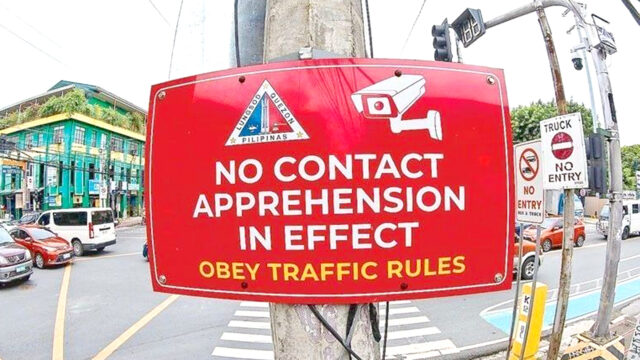
More CCTVs eyed for no-contact apprehension policy

PHILIPPINE STAR/JESSE BUSTOS

By Adrian H. Halili and Kenneth Christiane L. Basilio, Reporters

THE Metropolitan Manila Development Authority (MMDA) on Tuesday said it would install more surveillance cameras to properly enforce its no-contact apprehension program (NCAP).

We are in the process of putting up more CCTVs (closed-circuit television systems) with artificial intelligence capabilities to expand the range, because there are still some areas without CCTVs,” MMDA Traffic Enforcement Director Victor Maria D. Nuñez told a Senate committee hearing. “That’s where we will augment our traffic enforcers.”

The NCAP is among the government’s traffic enforcement solutions as it plans to rehabilitate the Epifanio de los Santos Avenue (EDSA), the capital’s major highway, by mid-June.

“We believe that the NCAP will help greatly in reducing (traffic) on the road during the EDSA rehab,” he said.

The agency started enforcing the policy again on Monday after the Supreme Court partially lifted its 2022 order that stopped its implementation.

Mr. Nuñez said they logged more than 1,000 violations on Monday. This was lower than the more than 3,000 violations last week.

“Even though we have a temporary restraining order, we still monitor the violators on our CCTVs,” he said.

At the hearing, Senator Rafael “Raffy” T. Tulfo urged the MMDA to improve stoplights and road signs along Manila’s major roads.

“Also, fix the potholes because they are still one of the causes of traffic, and some of the road signs are confusing so they should also be fixed,” he said.

Mr. Nuñez said the MMDA would coordinate with the Department of Public Works and Highways on these issues.

The NCAP covers EDSA, C5, Buendia, Roxas Boulevard, Marcos Highway, Katipunan, Commonwealth Avenue, Quezon Avenue and West Avenue.

It monitors and penalizes traffic violations with surveillance cameras and other digital monitoring systems to encourage driver discipline, reduce traffic congestion and minimize corruption.

Meanwhile, Senator Francis N. Tolentino is pushing a phased rehabilitation of EDSA and a night-only construction from 10 p.m. to 5 a.m.

“I strongly recommend phased implementation and night-only construction to avoid severe disruption to motorists, businesses and the economy,” Mr. Tolentino, a former MMDA head, said in a statement.

He added that road works for the EDSA rehabilitation should be divided into five sections — EDSA Pasay, EDSA Makati-Guadalupe, EDSA Ortigas, EDSA Cubao and EDSA Caloocan.

The government is set to conduct its P8.1-billion rehabilitation project of the highway, where 437,000 vehicles pass by daily, starting June 13. It is expected to run for two years and will be the road’s first major revamp since the 1980s.

“EDSA is an important part of our daily lives,” Mr. Tolentino said. “It needs to be fixed. However, it must be done with careful planning and sensitive consideration of the flow of traffic and its effect on people.”

Among other traffic enforcement measures the MMDA will implement is the odd-even scheme for private cars.

The MMDA said it would conduct a dry run of its enforcement for a month starting on June 16, during which violators will only be given warnings and sent notices.

“This is part of an information drive to give motorists time to learn and get used to the new policy for the EDSA Rebuild project,” the agency said in a Facebook post.

Cars with license plates ending in odd numbers are barred from the highway on Mondays, Wednesdays and Fridays, while those with even-numbered plate numbers cannot use EDSA on Tuesdays, Thursdays and Saturdays.

Electric and hybrid cars, emergency vehicles, motorcycles and nonmotorized vehicles, public utility vehicles, ride-hailing vehicles and authorized, marked government vehicles will be exempted from the ban.

Also on Tuesday, Party-list Rep. Ramon Rodrigo L. Gutierrez filed a resolution urging the House of Representatives to investigate the implementation of the no-contact apprehension policy, citing complaints from motorists over what they described as unclear guidelines.

The House transportation panel should launch an inquiry over the “reimplementation of NCAP without addressing unresolved issues that could result in public confusion,” according to House Resolution No. 2293.

“Our concerns are more on the unclear lane markings, conflicting road signs and the delays in the transmission of violation notices,” he told reporters in Filipino after filing the resolution.

The government should delay the implementation by at least six months to give authorities the leeway to address long-standing concerns, Mr. Gutierrez said.

DepEd, HOPE tap big brands to address Philippines’ 165,000 classroom backlog

THE Department of Education partnered with Hope to launch Generation Hope on Monday to address classroom shortages in the country. — EDG ADRIAN A. EVA

THE Department of Education (DepEd), in partnership with HOPE and leading local brands, launched Generation Hope on Monday to help address classroom shortages of more than 165,000 in the country. The public-private partnership aims to build more public-school classrooms throughout the country by channeling a portion of profits and donations from consumers of the country’s leading brands. This includes companies like BDO, Carmen’s Best, Grab, Penshoppe, The Aivee Clinic, SM Supermalls, and Sunnies.

DepEd Secretary Juan Edgardo “Sonny” M. Angara welcomed the partnership, especially as the agency works with a budget insufficient to address an increasing classroom backlog.

“The budget really is insufficient every year. The deficit has been growing. Twelve years ago, maybe the deficit was 55,000 classrooms — now it’s 165,000,” Mr. Angara said during the launch.   

“There’s a million of us, but sometimes it feels lonely — especially when our budget was cut by 12 million.”   

HOPE founder Nanette Gwen Medved said the initiative marks an expansion of the organization’s efforts, which began in 2012. While they have already built 144 classrooms since then, she said that this is still a “drop in the bucket” compared to the overall classroom shortage. 

“If we want to inspire the nation to nation-build through education, we have to do it with the big brands. It’s not going to happen with small brands,” Ms. Medved said.

HOPE classrooms cost only between P1.2 million and P1.4 million to build, compared to their DepEd counterparts, which average P2.5 million. 

Funding for these classrooms will come from a portion of the profits or rewards generated by consumers of partnered brands.

BDO has pledged to donate P5 for every P1,000 spent using the “HOPE in Every Spend” credit card. Cardholders also have the option to convert their reward points into donations. A portion of the annual membership fee will also be allocated to the initiative.

Meanwhile, ride-hailing app Grab will allow its users to convert their rewards points into donations to support the construction of HOPE classrooms.

SM Supermalls will also contribute a portion of proceeds from SM-branded water bottles sold through partner food merchants. 

Other brands, such as Penshoppe, Carmen’s Best, Aivee Clinic, and Sunnies, will be launching exclusive product lines dedicated to supporting HOPE classrooms.

The exact number of classrooms planned for construction under the Generation HOPE program has yet to be announced. More classrooms are expected to be built due to expanded support from the private sector and consumers. — Edg Adrian A. Eva

4.6-magnitude quake hits Quezon

EARTHQUAKE.PHIVOLCS.DOST.GOV.PH

A MAGNITUDE 4.6 earthquake had hit Quezon province on Tuesday, rocking Metro Manila and parts of Luzon, the Philippine Institute of Volcanology and Seismology (Phivolcs) said.

In an earthquake bulletin, the local seismology agency said that a tectonic tremor had struck 24 kilometers (km) northwest of General Nakar, Quezon at 12:17 p.m.

The quake was at a depth of 10km.

Phivolcs reported that intensity IV, or the strength perceived by people, was logged in the cities of Makati, Manila, Marikina, San Pedro in Laguna, and Tanay in Rizal.

Intensity III, on the other hand, was reported in Navotas, Quezon City, Pasay, San Juan, Taguig, Guiguinto and Malolos in Bulacan, Palayan in Nieva Ecija, Mabalacan and Angeles City in Pampanga, and Biñan in Laguna.

The cities of Caloocan, Mandaluyong, Parañaque, Valenzuela, Obando in Bulacan, and Cabiao in Nueza Ecija felt Intensity II.

The agency warned of potential damage and aftershocks following the earthquake.

The Light Rail Transit lines 1 and 2 and the Metro Rail Transit line 3 had temporarily ceased operations to inspect possible damages following the quake. It resumed service moments later, according to the Department of Transportation.

“All train lines have successfully conducted safety checks to ensure safety of passengers,” the agency added.

The Philippines lies in the so-called Pacific Ring of Fire, a belt of volcanoes around the Pacific Ocean where most of the world’s earthquakes strike. — Adrian H. Halili

New House spox to fight fake news

PHILSTAR FILE PHOTO

THE House of Representatives on Tuesday named a spokesperson to counter disinformation targeting the chamber, which has faced accusations of politicking amid a deepening political feud between two of the country’s most influential political families.

The House leadership tapped Priscilla Marie “Princess” T. Abante as spokesperson to help counter fake news and strengthen transparency efforts between lawmakers and the public, the chamber said in a statement.

“There is a need to strengthen the communication from the House to ensure that accurate and truthful information reaches the people,” she told reporters.

“We are firmly against fake news, so it’s important to improve the way we explain the policies that Congress is currently formulating.” — Kenneth Christiane L. Basilio

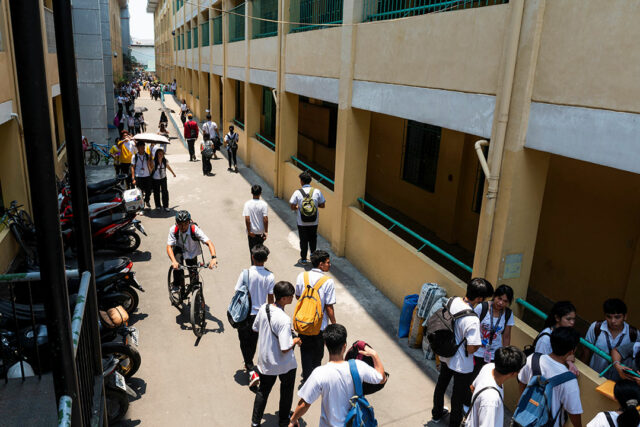
High literacy seen among HS grads

Students walk inside the campus of a high school in Quezon City, April 18, 2024. — REUTERS

FILIPINOS who are at least high school (HS) level showed a high literacy rate of 95%, above the national rate of 90%, the Philippine Statistics Authority (PSA) reported, citing data from its latest survey.

In its third report on the 2024 results of the Functional Literacy, Education and Mass Media Survey (FLEMMS), the PSA found that about 93.1 million Filipinos out of 103.5 million of the total population are literate on a basic level.

It noted that the literacy rate of Filipinos increases as the highest grade completed becomes higher.

Filipinos who had reached or completed college and post baccalaureate studies recorded basic literacy rates of 97.3% and 98%, respectively.

Those who reached elementary level had a literacy rate of 82.8%, while Filipinos who have no grade completed recorded the lowest basic literacy rate of 25.6%.

The PSA defines “basic literacy” as the ability of a person to read and write a simple message in any language or dialect with understanding, and to compute or perform basic mathematical operations; while functional literacy is classified as the ability of a person to read, write, compute and comprehend.

Functional literacy rate was at 70.8%, or about 60.2 million Filipinos out of 85 million aged 10 to 64, the PSA said.

Filipinos who reached or completed post baccalaureate studies recorded the highest functional literacy of 93.2%, while Filipinos who have no grade completed recorded the lowest functional literacy rate of 10.8%.

Seven out of 18 regions posted higher basic literacy rates than the national average.

Central Luzon led with a basic literacy rate of 92.8%. It was followed by Cordillera Administrative Region (CAR, 92.7%), Calabarzon (92.6%), Central Visayas (92.2%), National Capital Region (NCR, 92%), Northern Mindanao (90.8%), and Davao Region (90.3%).

Meanwhile, four regions surpassed the average functional literacy rate at the national level. These were CAR (81.2%), NCR (79.9%), Calabarzon (77.3%), and Central Luzon (73%).

The 2024 edition of the report is the seventh in the FLEMMS series, the country’s literacy survey conducted every five years starting in 1989. The 2024 survey was conducted between September to October 2024. — John Phoebus G. Villanueva

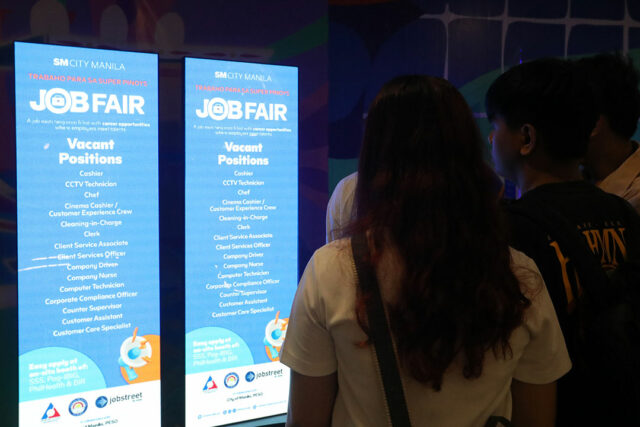
Simplified hiring requirements eyed

PHILIPPINE STAR/EDD GUMBAN

A WINNING congressional candidate on Tuesday said he wants to simplify the hiring process by prohibting employers from requesting multiple criminal clearances, aiming to spare Filipinos of additional expenses in their job hunt. 

“Once hired, an employer may require only one such clearance — not multiple documents like police, NBI, barangay, and court certificates, which are commonly required today,” Raymond Adrian E. Salceda, Albay congressman-elect, said in a statement.

“Requiring NBI or police clearance before any offer is even made forces the poor to pay suspicion,” he added.

The proposed measure would seek to bar employers from requesting multiple criminal background clearances from the police and National Bureau of Investigation (NBI), among others, to unburden Filipinos searching for jobs.

He said the proposal could encourage around 185,000 to 220,000 Filipinos to join the workforce annually, including rural job applicants and first-time job seekers, often discouraged by clearance fees that range from P100 to P500. — Kenneth Christiane L. Basilio

NEA files case vs 2 power co-ops

PHILSTAR FILE PHOTO

THE National Electrification Administration (NEA) and Electric Cooperatives (ECs) on Tuesday led a series of criminal filings before the Department of Justice (DoJ) targeting officials accused of mismanagement and other anomalies.

The DoJ confirmed receipt of criminal complaints filed against former and current officials of two electric cooperatives — Ilocos Norte Electric Cooperative, Inc. (INEC) and First Bukidnon Electric Cooperative, Inc. (FIBECO).

The filing was led by NEA Administrator Antonio Mariano C. Almeda, accompanied by agency lawyers and Deputy Administrators Omar M. Mayo and Vic P. Alvaro.

In a press statement, the DoJ said INEC, through Acting General Cipriano Martinez, filed a complaint for syndicated estafa over the alleged misuse of P118 million of its Employees Retirement Fund.

NEA, which helped prepare the complaint, said in a separate statement former and current cooperative executives conspired to siphon funds for personal gain.

A former general manager of FIBECO is also facing complaints for qualified theft for alleged conspiracy to purchase a parcel of land worth P11.55 million, which never materialized. He is also accused of diverting P6 million to his personal account.

Meanwhile, the NEA will also file a case against current and former officials of the Nueva Ecija II Electric Cooperative, Inc. — Area 2 (NEECO 2-Area 2), similarly accused of conspiring to divert funds.

Preliminary findings of the DoJ and NEA indicated a breakdown in internal protocols that enabled some officials to divert about P250 million in retirement and internal cooperative funds.

The companies did not immediately respond to separate emails seeking comment.

“Other cases will be filed by the ECs to be led by NEA, in coordination with the DoJ and National Bureau of Investigation, as part of NEA’s mandate to improve their services.”  Chloe Mari A. Hufana

DoE: Fuel supply to Samar to continue

PHILSTAR FILE PHOTO

THE Department of Energy (DoE) on Tuesday has assured the Island of Samar of continuous supply of petroleum products amid the rehabilitation of the 51-year-old San Juanico bridge.

In a statement on Tuesday, the DoE said it has coordinated with government agencies and industry stakeholders to address logistical concerns in deliveries of petroleum products to the province.

The 2.16-kilometer bridge connecting the islands of Samar and Leyte is currently off-limits to heavy vehicles, following a May 8 directive from the Department of Public Works and Highways. Under the new guidelines, only vehicles with a gross weight of up to 3 tons are allowed to pass.

However, the new weight restriction effectively prohibits the passage of standard fuel tankers, which typically weigh between 19 to 20 metric tons for a 10,000-liter load. All petroleum deliveries to Samar have traditionally relied on land transport.

According to the DoE, the National Disaster Risk Reduction and Management Council approved prioritizing oil tankers in the roll-on/roll-off (RORO) vessel loading queues.

Transportation Secretary Vivencio B. Dizon assured the DoE that the RORO port in Basey, Samar will be made ready to accommodate fuel shipments

Meanwhile, Insular Oil Corp., a local petroleum player which operates a fuel storage depot in northern Samar, agreed to accommodate petroleum deliveries from both major oil companies and independent players.

“The DoE remains committed to safeguarding the energy security of Samar and its people. By working hand-in-hand with government agencies and oil industry partners, we are confident in our shared ability to rise above these challenges with unity, urgency, and purpose,” Energy Secretary Raphael P.M. Lotilla said. — Sheldeen Joy Talavera

Over P1-B drugs seized in Pampanga raid

PHILSTAR FILE PHOTO

BAGUIO CITY — Authorities seized ₱1-billion worth of crystal meth (shabu) during a raid at a house in Barangay Pampang in Angeles City, Pampanga on Sunday.

According to Philippine Drug Enforcement Agency (PDEA) agents Director General Undersecretary Isagani R. Nerez said the illegal drugs were placed inside 155 transparent plastic bags, weighing approximately one kilogram each.

It turned out to that a Chinese national, subject of the search warrant, has abandoned the house. Mr. Nerez said the Chinese national will still be facing charges for violation of Section 11 (Possession of Dangerous Drugs), Article II of Republic Act 9165, the Comprehensive Dangerous Drugs Act of 2002.

Less than two weeks ago, PDEA agents again seized more than 35 kilos of crystal meth in a sting operation also in Angeles City where a Chinese national and his Filipina cohort were caught.

“The two drug operations are linked to each other. What you see is the outcome of persistent tracking of previous operations targeting individuals connected to syndicated drug trafficking to include their sources,” Mr. Nerez noted.

The raid was conducted with military counter-intelligence agents, National Intelligence Coordinating Agency operatives and policemen. — Artemio A. Dumlao

ADVERTISEMENT
ADVERTISEMENT