Home Blog Page 151

Venezuela overtakes Italy, sets up World Baseball Classic final against team USA

MAIKEL GARCIA hit a tiebreaking single in the seventh inning for Team Venezuela, which advanced to the World Baseball Classic (WBC) championship game by beating Team Italy, 4-2, on Monday in Miami.

Venezuela, which pieced together four straight two-out hits in a three-run seventh, will play the United States for the title on Tuesday night in Miami. The United States beat the Dominican Republic, 2-1, on Sunday in the first semifinal.

Venezuela is seeking its first championship while the United States is aiming for its second crown. Both teams went 3-1 in pool play before winning their first two games in the knockout rounds.

The loss was the first of the WBC for Italy, which made a Cinderella run to the semifinals by going 4-0 in Pool B play before beating Puerto Rico, 8-6, in a quarterfinal at Houston on Saturday.

Italy, which took a 2-0 lead in the second when JJ D’Orazio drew a bases-loaded walk and Dante Nori hit into a run-scoring groundout, was eight outs away from another upset when Venezuela rallied against losing pitcher Michael Lorenzen.

Gleyber Torres worked a leadoff walk in the seventh before Lorenzen whiffed Wilyer Abreu and William Contreras. Venezuela pulled off a hit-and-run in which Jackson Chourio singled pinch runner Andres Gimenez to third.

Ronald Acuna, Jr. followed with a grounder to the third base side of short, where Sam Antonacci picked the ball cleanly but bounced the throw to first as Acuna arrived safely and Gimenez scored.

Garcia delivered the go-ahead single to left, scoring Chourio, before Luis Arraez provided insurance by singling home Acuna.

Venezuela starting pitcher Keider Montero gave up the two runs in 1 1/3 innings. — Reuters

F1 new rule

A dash of nostalgia lent itself to the Chinese Grand Prix over the weekend, what with the race exhibiting features Formula One (F1) used to sell itself on before aerodynamics, regulations, and strategy spreadsheets threatened to overwhelm the spectacle. For a number of laps in Shanghai, the old elements returned: two Ferrari drivers refusing to yield, a young prodigy seizing the moment, and the crowd hoping that the sport might still possess a capacity for drama. That the motorsport was likewise celebrated on Hollywood’s biggest stage only added to the intrigue.

At the center of the trackside theater was the duel between Lewis Hamilton and Charles Leclerc. Ferrari team principal Frederic Vasseur made clear afterward that his drivers were free to race each other, a refreshing stance in an era when orders from the paddock often smother competition before it has a chance to manifest on the track. The result was a sequence of overtakes and near-contact that had the Prancing Horse honcho admitting he was “a bit scared,” even as it produced the type of racing fans crave. The seven-time champion eventually prevailed in his scrap for third against his teammate, claiming his first podium finish since joining the Scuderia-HP partnership.

To be sure, youth prevailed in the Jiading District. Nineteen-year-old Kimi Antonelli delivered a breakthrough victory for Mercedes-AMG Petronas, confirming why the sport’s power brokers have spoken of him with no small measure of optimism. The result was framed in some quarters as a feel-good development: the future arriving, the veteran rediscovering form, and the grand old scarlet pioneer rediscovering a surprising willingness to let drivers settle matters on track. That said, the sense of renewal came with a caveat; critics remain uneasy about the sport’s evolving regulations, particularly the heavy emphasis on energy deployment that drivers say dilutes the purity of racing.

If the track provided visceral proof that Formula One can still thrill, the weekend offered yet another reminder that the sport now exists in a wider cultural orbit. The big-budget film F1, produced in part by Hamilton, captured the Oscar Award for Best Sound. If nothing else, it was an ironic flourish for a sport whose audio feedback is among its defining traits. The driver’s absence at the ceremony notwithstanding, the implication remains: The world’s most technologically advanced racing series has inhabited another influential medium.

Whether the dual presence strengthens the sport or merely embellishes it remains an open question. Formula One has always thrived in the spaces between engineering and spectacle, and between laboratory and theater. The turn of events in Shanghai indicated that the balance may still be attainable. Perhaps the sport can stage genuine racing even as it courts a broader audience. The danger, as always, is that the show may begin to matter more than the substance.

For one Sunday, though, the illusion held. Ferrari’s drivers raced each other honestly, a teenager claimed the future, and the grandstand buzzed with the rare sensation produced by the often overproduced Formula One going off script. And in a season already shaped by new rules and new narratives, it may prove to be the most valuable offshoot of all.


Anthony L. Cuaycong has been writing Courtside since BusinessWorld introduced a Sports section in 1994. He is a consultant on strategic planning, operations and human resources management, corporate communications, and business development.

Iran renews attacks on US Gulf allies, Trump says that was not expected 

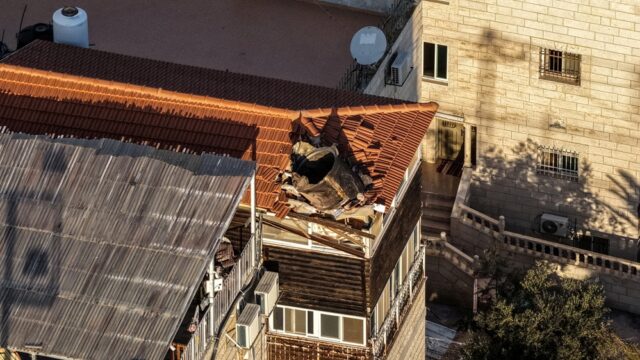
A drone view shows part of an Iranian missile that landed on a building's roof, amid the US-Israel conflict with Iran, in East Jerusalem March 16, 2026. — REUTERS

IRAN launched fresh attacks on the United Arab Emirates on Tuesday, the kind of retaliatory strikes on US Gulf allies that President Donald Trump said had not been expected, but which sources said he had been warned about before the conflict.

The US-Israeli war on Iran is in its third week with at least 2,000 people dead and no end in sight. The critical Strait of Hormuz remains largely closed off, with US allies rebuffing Mr. Trump’s request for help to reopen the critical waterway, raising energy prices and fears of inflation.

There was no let-up in attacks by both sides early on Tuesday, with Iran launching missiles on Israel overnight, underscoring that Tehran still retains the capacity to carry out long-range strikes despite more than two weeks of pounding by US and Israeli weapons.

The Israeli military said it was targeting “Iranian regime infrastructure” with a new wave of strikes across Tehran, as well as Hezbollah sites in Beirut, a day after saying it had drawn up detailed plans for at least three more weeks of war with Iran.

Rockets and at least five drones targeted the US embassy in Baghdad early on Tuesday, Iraqi security sources said, describing it as the most intense assault since the war began. Two US officials said no injuries were reported so far.

‘NOBODY EXPECTED THAT. WE WERE SHOCKED’
Iran also targeted the United Arab Emirates, where attacks forced the temporary closure of airspace and a drone hit an oil facility in Fujairah, a key port for Emirati oil exports, for a second consecutive day.

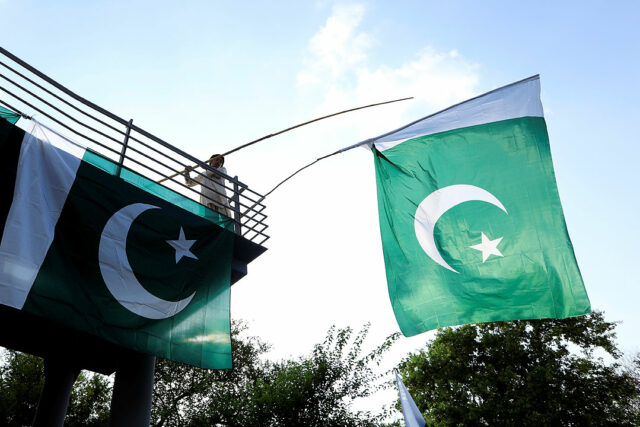
UAE authorities said debris from an intercepted ballistic missile fell in Abu Dhabi’s Bani Yas area, killing one Pakistani national.

Mr. Trump said earlier on Monday that Iran’s retaliatory strikes against its neighbors including Qatar, Saudi Arabia, the United Arab Emirates, Bahrain, and Kuwait were a surprise.

“They (Iran) weren’t supposed to go after all these other countries in the Middle East,” he said. “Nobody expected that. We were shocked.”

However, Mr. Trump was warned that attacking Iran could trigger retaliation against US Gulf allies, according to a US official and two sources familiar with US intelligence reports.

The US official, who like the other two requested anonymity to discuss the issue, said Mr. Trump was briefed before the war that striking Iran could trigger a broader regional conflict that would include Iranian retaliation against Gulf capitals, especially if Tehran saw those countries condoning or actively supporting the US attacks.

Mr. Trump was also briefed ahead of the operation that Tehran would likely seek to close the economically vital Strait of Hormuz, according to two other sources familiar with the matter.

NO COALITION TO HELP OPEN HORMUZ YET
Mr. Trump earlier accused some Western allies of ingratitude after several countries rebuffed his demand to send warships to escort oil tankers in the strait, through which 20% of the world’s oil and liquefied natural gas flow.

Mr. Trump, speaking at a White House event in Washington, said many countries had told him they were prepared to help, but voiced frustration with some long‑standing allies.

“Some are very enthusiastic about it, and some aren’t,” he said, without offering specifics. “Some are countries that we’ve helped for many, many years. We’ve protected them from horrible outside sources, and they weren’t that enthusiastic. And the level of enthusiasm matters to me.”

A number of US partners, including Germany, Spain, Italy, Japan and Australia said they had no immediate plans to send ships to help reopen the strategic waterway, which Iran has effectively shut with drones and naval mines.

“We lack the mandate from the United Nations, the European Union or NATO required under the Basic Law,” German Chancellor Friedrich Merz said in Berlin, adding that Washington and Israel had not consulted Germany before launching the war.

Naval escorts will not “100 percent guarantee” the safety of ships attempting to transit the waterway, the Financial Times quoted the head of the International Maritime Organization as saying on Tuesday.

Mr. Trump had earlier suggested China, which relies on Iranian crude, should help open the strait and might delay a much anticipated trip to Beijing at the end of the month if it did not get support. On Monday, Mr. Trump said he was seeking to delay the visit by “a month or so”.

While US and Israeli firepower has decimated Iran’s military, its fleet of cheap drones is continuing to cause havoc in the region.

On Monday, Dubai International Airport, typically one of the world’s busiest, was closed for several hours; oil loading operations in Fujairah were halted, and operations at the Shah gas field in Abu Dhabi were suspended following drone strikes.

Iran has also said that it would target US industrial facilities in the Middle East and urged people living near US-owned plants to leave.

OIL PRICES RISE, PUTTING PRESSURE ON INFLATION
Oil prices rose more than 2% on Tuesday, reversing some of the previous session’s losses, on worries about supplies, while Asian shares also rallied after Monday’s sell-off.

Investors and policymakers are grappling with the risk that higher oil prices fuel inflation while crimping global growth, a dire scenario known as “stagflation”.

The Reserve Bank of Australia’s board raised its cash rate for a second straight month on Tuesday, saying higher borrowing costs were needed to contain prices.

“The Board is clearly worried that recent geopolitical developments could take a bad situation and make it much worse,” said Abhijit Surya, senior economist at Capital Economics. — Reuters

European airlines take aim at synthetic green jet fuel rules

STOCK PHOTO | Image from Pixabay

LONDON/BRUSSELS — European airlines are taking aim at planned rules over synthetic sustainable aviation fuel, two sources told Reuters, underscoring pushback from the sector amid worries about high costs and lack of availability of the green jet fuel.

The sector is planning to formally call for at least a delay in new EU rules set to come into force in 2030 that mandate airlines use a certain amount of synthetic green jet fuel, or eSAF, in their planes, with an announcement set for Thursday.

The planned challenge, previously unreported, is still under discussion and could be changed amid resistance from regulators behind the scenes to the intended move. The European Commission did not immediately respond to a request for comment.

The airline sector, sideswiped by the Iran war that has grounded flights and pushed up fuel costs, argues Europe’s green jet fuel mandates are too strict, there isn’t enough sustainable aviation fuel on the market to meet EU rules and that its prices are too high.

Aviation is among the hardest sectors to decarbonize, with zero-emission aircraft not expected this decade. Green fuels, with net-zero emissions or lower emissions than normal jet fuel, can in the near-term help reduce air travel’s carbon footprint.

Europe’s airline executives are following in the footsteps of the car industry, which managed to water down a rule last year that would stop any CO2-emitting cars being sold after 2035.

AIRLINES SEEK TO POSTPONE OR EVEN OVERTURN RULES
The announcement is pencilled in to be made at an industry conference organized by trade group Airlines for Europe (A4E), with details still being finalized, the sources said.

The A4E group includes major European airlines Air France-KLM, Lufthansa, Ryanair, easyJet, and British Airways-owner IAG.

“They want to postpone the eSAF requirements until there is enough production online,” said Camille Mutrelle, a policy officer at advocacy group Transport and Environment (T&E) who has knowledge of the plans. T&E supports keeping the rules in place.

“If we postpone, eSAF startups will die and Europe will lose the early mover advantage.”

A second person with knowledge of the talks said airlines were discussing calling for the scrapping of the eSAF mandate altogether.

A spokesperson for A4E confirmed its members were set to meet on Thursday, though declined to comment on the position the group is set to take. “Airline CEOs decide on A4E positions,” the spokesperson said.

The EU required 2% of fuel made available at regional airports to be SAF (sustainable aviation fuel) in 2025, which rises to 6% in 2030. A level of 1.2% of the total will have to be synthetic SAF (eSAF) from 2030, rising to 5% in 2035, according to current planned EU rules.

Airlines argue that there’s almost no available supply of synthetic jet fuel and that plans to build facilities are unlikely to materialize in time to meet the mandate.

Most SAF on the market is made from recycled or used cooking oil or animal waste. It costs three to five times more than traditional jet fuel and makes up just 0.3% of global jet fuel supply.

Synthetic sustainable jet fuel is made from renewable energy such as captured carbon dioxide or green hydrogen. It emits less carbon than bio-based SAF, but is much more expensive to make. — Reuters

Taiwan says sale of second package of arms from US is proceeding on schedule

A soldier salutes Taiwan president Lai Ching-te in front of US-made M1A2T Abrams tanks after taking part in live-fire exercises in Hsinchu, Taiwan on July 10, 2025. — REUTERS/ANN WANG

TAIPEI — Taiwan Defense Minister Wellington Koo on Tuesday said he believed the US’ internal review process for the sale of a second package of arms to the island is proceeding on schedule.

A major US arms package for Taiwan worth about $14 billion that includes advanced interceptor missiles is ready for President Donald J. Trump’s approval and could be signed after his upcoming trip to China, Reuters reported last week, citing sources briefed on the discussion.

But on Monday, Mr. Trump said he was seeking to delay his visit to China in early April by about a month because of the Iran war.

Asked if the trip’s postponement could impact the new arms sales to Taiwan, Mr. Koo said the government had been coordinating closely with the US.

“As we understand it, their internal review procedures are proceeding on schedule,” he said. “I don’t think we have received any related information indicating delays.”

China, which views democratically governed Taiwan as its own territory, has repeatedly demanded an end to such sales.

Chinese President Xi Jinping told Mr. Trump in February that arms sales to Taiwan must be handled with “prudence.”

The US, which in December unveiled an $11-billion sale of weapons to Taiwan, has not formally unveiled a second package.

Mr. Trump’s moves to secure a favorable trade deal with China have raised concerns among some China watchers that he could curb US military support for Taiwan.

The US has no formal diplomatic ties with Taipei but is bound by law to provide the island with the means to defend itself.

Taiwan, like other allies and partners in the region, has been watching with concern how the shifting of US forces to the Middle East from Asia could impact US readiness to deal with incidents involving China or North Korea, especially with weapons stockpiles being rapidly used in the Iran war.

Mr. Koo said he could not comment on US operations and military deployments. But he said Taiwan’s military would continue watching developments around the Taiwan Strait as well as across China as a whole.

“Our main focus remains on observing the relevant indicators and signs, and we will continue to pay close attention,” he said.

Speaking on Monday, Huang Wen-chi, head of the ministry’s strategic planning department, told lawmakers that the delivery of 102 Lockheed Martin-made PAC-3 air defense missiles from the US was on track for this year. — Reuters

Transport communities welcome LTFRB fare adjustment, cite relief for drivers amid fuel price surges

Transport community groups welcomed the decision of the Land Transportation Franchising and Regulatory Board (LTFRB) to adjust the base fares for transport network vehicle service (TNVS), calling the move a much-needed relief for transport professionals grappling with rising fuel and operating costs.

The TNVS fare structure has remained unchanged since 2019 despite the unabated hikes in oil pump prices even before the Middle East conflict erupted, and the decision by government regulators to adjust the fares upward was a recognition of the challenges confronting drivers and operators, according the TNVS sector.

“We extend our heartfelt gratitude to the LTFRB and the DoTr (Department of Transportation) for heeding our long-standing call for a fair and just adjustment of the base fare,” said Walter Lugay, spokesperson of TNVS Community Philippines. “This decision is a vital recognition of the challenges faced by ordinary drivers and operators in today’s volatile economic climate.”

Lugay also acknowledged Grab’s role in helping ensure that the concerns of drivers were heard through dialogues with regulators in recent weeks. “We also recognize the leadership of Grab for their steadfast support in ensuring that our grievances reached the regulators through constructive dialogues over the past weeks.”

“This fare adjustment is more than just a price increase; it is a lifeline to ensure driver retention — preventing our members from leaving the service due to unsustainable operating costs,” he added.

Under the fare adjustments set by the LTFRB, the TNVS base fare will increase by P20, while the pick-up fare per kilometer will increase by P15. This brings the new base fares to P65 from P45 for sedans; P75 from P55 for AUVs; P55 from P35 for hatchbacks; and P165 from P145 for premium TNVS. The LTFRB said there will be no increase in the per-kilometer and per-minute travel time charges for TNVS.

At the same time, the group emphasized that easing these financial burdens will also help ensure that vehicles remain roadworthy and safe for passengers, while supporting the continued delivery of reliable service to the riding public.

“By addressing these financial burdens, we can help ensure that our vehicles remain in top condition for the safety of our passengers,” Lugay added. “We remain committed to providing safe, reliable, and high-quality service, serving as partners with the government and the public in keeping our transport system stable and dependable.”

According to the United Transportation Coalition Philippines, Inc. (UTCP), the LTFRB’s decision reflects government recognition of the challenges all transport workers across sectors deal with every day.

“We thank the LTFRB for listening to the appeals raised by our coalition through a series of dialogues,” said Lisza Buscaino-Redulla, president of UTCP.

“It means a great deal to our sector that the government saw and heard our concerns — from our call for immediate assistance to our appeal for a fair increase in the base fare — especially amid the mega oil price hikes that continue to weigh heavily on the livelihoods of drivers,” she added.

The coalition also said it will continue to monitor market developments and their impact on transport professionals nationwide, while sustaining its engagement with relevant government agencies.

“We will continue to monitor market movements and their effects on transport professionals across the country,” Buscaino-Redulla said. “At the same time, we remain open and proactive in engaging the relevant government agencies to help ensure that every measure responds to the real conditions on the road and helps sustain a fair and humane livelihood for every driver.”

The LTFRB earlier announced fare adjustments across multiple land public transport modes, citing the need to balance commuter welfare with the viability of the transport sector amid extraordinary increases in fuel, maintenance, and operational costs.


Spotlight is BusinessWorld’s sponsored section that allows advertisers to amplify their brand and connect with BusinessWorld’s audience by publishing their stories on the BusinessWorld Web site. For more information, send an email to online@bworldonline.com.

Join us on Viber at https://bit.ly/3hv6bLA to get more updates and subscribe to BusinessWorld’s titles and get exclusive content through www.bworld-x.com.

Pakistan rejects Afghan claim its air strikes killed over 400 in Kabul hospital

REUTERS

KABUL — At least 400 people were killed and 250 injured in an air strike by Pakistan on a drug rehabilitation hospital in Kabul, a spokesman of the Afghan Taliban government said on Tuesday, a sharp escalation in the conflict between the neighbors.

Pakistan rejected the claim as false and misleading and said it “precisely targeted military installations and terrorist support infrastructure” on Monday night.

“The visible secondary detonations after the strikes clearly indicate the presence of large ammunition depots,” Pakistani Information Minister Attaullah Tarar said in a post on X.

The air strike came hours after China said it remained ready to continue efforts to ease tensions between the South Asian Islamic nations and urged both to avoid expanding the war and return to the negotiating table.

The conflict that began last month is the worst ever between the neighbors who share a 2,600-kilometer (1,600-mile) border. It had ebbed amid attempts by friendly countries, including China, to mediate and end the fighting before flaring up again, this time just days before the Eid al-Fitr festival that marks the end of the holy month of Ramadan.

The escalation comes amid wider instability in the neighbourhood where the US-Israeli strikes on Iran and Tehran’s retaliation have plunged the Middle East into a crisis.

IT WAS LIKE DOOMSDAY, SAYS A SURVIVOR
At the site, a blackened single-storey structure bore the marks of flames. In other places, buildings were reduced to heaps of wood and metal, with only a few bunk beds still intact in some, while blankets, personal belongings and bedding were strewn about.

Interior ministry spokesman Abdul Mateen Qanie said 408 people were killed and 265 injured. Afghan authorities said the dead and the wounded were taken to hospitals around Kabul but did not give details of how many bodies had been recovered and how the casualties had been counted.

Residents said the hospital was at a site where a military base was previously located.

Witnesses said they heard three bombs exploding just as people in the hospital were completing evening prayers and two of them struck rooms and patient areas.

“The whole place caught fire. It was like doomsday,” said Ahmad, 50, who said he was under treatment at the facility and gave only his first name. “My friends were burning in the fire, and we could not save them all.”

Visuals from local media taken overnight showed flames engulfing a single-storey building, while thick smoke billowed from another section of the same complex and workers took away bodies on stretchers.

Ambulances and police vehicles were parked near the gate of the damaged facility, which a sign identified as a “drug addiction treatment hospital” with 1,000 beds, while security personnel maintained guard.

“When I arrived (last night), I saw that everything was burning, people were burning,” ambulance driver Haji Fahim told Reuters. “Early in the morning they called me again and told me to come back because there are still bodies under the rubble.”

‘CONSTANT LIES,’ SAYS PAKISTAN
Hamdullah Fitrat, the deputy spokesman for the Taliban, said the air strike took place at 9 p.m. (1630 GMT) on Monday and targeted the state-run Omid hospital, which he said was a 2,000-bed drug rehabilitation center.

“Large parts of the hospital have been destroyed, and there are fears of heavy casualties,” he said in a post on X. “Sadly, the number of those killed has so far reached 400, with up to 250 others injured.”

Rescue teams were at the scene working to control the fire and recover the victims, he added, without sharing details of how many bodies had been recovered and how the casualties had been counted.

Those killed were mostly innocent civilians and addicts, added Taliban spokesman Zabihullah Mujahid.

Reuters could not verify the casualty numbers. Through the conflict, both sides have claimed to have inflicted heavy damage on the other but independent verification has not been possible.

The spokesman for Pakistan’s prime minister called the Afghan reference to drug users being targeted as “constant lies” and said Pakistan’s “counter-terrorism operations” would continue for as long as it took to eliminate “terrorists and their infrastructure”.

Overnight, the Pakistani Information and Broadcasting Ministry said the Afghan Taliban claim was “misreporting of facts”.

“Pakistan’s targeting is precise and carefully undertaken to ensure no collateral damage is inflicted,” it said in a post on X. “This misreporting of facts as drug rehabilitation facility seeks to stir sentiments, covering illegitimate support to cross-border terrorism.”

The Omid hospital was established in 2016 and has treated hundreds of people, also providing them with vocational training such as tailoring and carpentry to make them more employable, according to local media reports.

China once again appealed for calm and restraint and also to ensure the safety of Chinese personnel, projects, and institutions in the region.

“China … will continue to play a constructive role through its own channels to de-escalate tensions and improve relations between the two countries,” said Lin Jian, a foreign ministry spokesman.

Giant neighbor India, a nuclear-armed rival of Pakistan that has recently forged close ties with the Afghan Taliban, said it unequivocally condemns the strike on the hospital.

“That this attack was carried out during the holy month of Ramzan, a time of peace, reflection, and mercy among Muslim communities across the world, makes it all the more reprehensible,” the Indian foreign ministry spokesperson said in a statement.

Fierce fighting between the South Asian neighbors, who were close allies earlier, erupted last month with Pakistani air strikes in Afghanistan that Islamabad said targeted militant strongholds.

Afghanistan called the strikes a violation of its sovereignty that targeted civilians and launched its own attacks.

Islamabad says Kabul provides a safe haven to militants launching attacks on Pakistan. The Taliban deny the allegation, saying tackling militancy is Pakistan’s internal problem.

Richard Bennett, the UN Special Rapporteur for human rights in Afghanistan, said he was “dismayed” by fresh reports of Pakistani air strikes and resulting civilian deaths.

“My condolences. I urge parties to de-escalate, exercise maximum restraint and respect international law, including the protection of civilians and civilian objects such as hospitals,” he said in a post on X. — Reuters


Gulf Oil and Autohub Group elevate Filipino motorists’ automotive care experience

STRONGER TOGETHER. Willy Tee Ten (2nd from left), president and CEO of Autohub Group; and Michael Francisco (2nd from right), general manager of Gulf Oil Philippines officially sign partnership. Looking on are Manny Yator (far left), Nexthub general manager; and Allan Cinco, B2C national sales manager, Gulf Oil Philippines.

On Feb. 23, 2026 in Bonifacio Global City Taguig, two trusted names in motoring came together with one shared goal: to give Filipino motorists better, more reliable care for the vehicles they depend on every day.

Gulf Oil Philippines — a trusted provider of a global brand of automotive and industrial lubricants — officially launched its partnership with the Autohub Group, one of the country’s leading car and motorcycle “super dealers.” More than a ceremonial signing, the event marked the beginning of easier access to world-class lubricant technology for everyday car owners, riders, and families on the road.

125 Years of Legacy That Drivers Can Trust

For many, Gulf Oil brings to mind iconic moments in motorsport — from Le Mans to Formula 1 and MotoGP. But beyond the famous orange disc is a company built on more than a century of real-world innovation since 1901. Gulf is proud to provide oils and lubricants for all generations of automotive vehicles, constantly adapting to meet market and customer needs wherever they arise.

“Gulf has always been about moving forward and finding better ways to keep the vehicle engines running at their best,” shared Michael Alfred Francisco, general manager of Gulf Oil Philippines. “Through Autohub, that global expertise now reaches Filipino motorists right where they service their vehicles.”

SEALING A STRATEGIC PARTNERSHIP: Autohub Philippines President Willy Tee Ten and Gulf Oil Philippines General Manager Michael Franciso led the signing ceremony bringing premium lubricants and preventive vehicle care closer to Filipino motorists. Joining them are Autohub and Gulf Oil Philippines Business Sales Heads with Owee Cruz (standing fifth from left), chief marketing officer, Autohub Group; Rose Garin (standing far right), Gulf Oil Philippines marketing manager; and Sean Robles (far right), marketing officer, Gulf Philippines.

Bringing Global Quality Closer to Home

While Gulf is a respected name worldwide, this partnership focuses on something personal — the everyday Filipino driver. By working with Autohub, a company that has served the local automotive community for over 27 years, Gulf’s premium products become available to commuters navigating city traffic, parents driving their kids to school, and riders making a living on two wheels.

A True Synergy of Excellence

For Autohub, the collaboration strengthens a long-standing promise to customers. “Our goal has always been simple — to take care of every vehicle as if it were our own,” said Willy Tee Ten, president & CEO of Autohub Group. “With Gulf, we can give Filipino motorists preventive maintenance they can truly rely on.”

What motorists will feel on the road:

  • Gulf ensures superior engine protection across segments with Gulf Formula Elite, engineered for high-performance engines to provide sustained peak performance and Gulf Ultrasynth GDI, formulated for modern cars and premium sedans to deliver a smooth driving experience around the city.
  • As the two-wheel market continues to grow, Gulf delivers the same premium protection with Gulf Syntrac for high-performance 4-stroke motorcycles and PowerTrac Scooter for modern scooters.
  • Confidence at every service visit through Next Hub Auto Care of Autohub Group, backed by Gulf’s century of research and development.

Moving Forward Together

As traffic gets tougher and vehicles become more advanced, Filipino motorists need partners they can depend on. The Gulf Oil–Autohub partnership is built on that understanding — bringing global technology, local expertise, and genuine care together so every drive feels safer and smoother.


Spotlight is BusinessWorld’s sponsored section that allows advertisers to amplify their brand and connect with BusinessWorld’s audience by publishing their stories on the BusinessWorld Web site. For more information, send an email to online@bworldonline.com.

Join us on Viber at https://bit.ly/3hv6bLA to get more updates and subscribe to BusinessWorld’s titles and get exclusive content through www.bworld-x.com.

Philippine Finance chief Go says oil shock may spur April rate hike

Philippines Finance Secretary Frederick Go — IYA FORBES/BLOOMBERG

The Philippine central bank may tighten its monetary policy next month if oil prices continue to rise, according to Finance Secretary Frederick Go.

“If the price of oil continues to persist at elevated levels, it is most likely that the Monetary Board will consider tightening in the next meeting,” Mr. Go said in an interview with Bloomberg Television’s Haslinda Amin on Tuesday.

Mr. Go is a member of the Bangko Sentral ng Pilipinas’ policymaking board which will hold its next policy meeting on April 23.

A rate hike would mark an abrupt pivot for the central bank, which had just reduced borrowing costs by 25 basis points in its February meeting, in a bid to support the economy’s recovery.

The impact of the Middle East conflict on gross domestic product growth “would be less than 10 basis points” if it was a short-term event, said Go, who assumed his post in November. “But if it will persist for more than six months, it will have a more pronounced effect on our GDP growth.”

Once one of the region’s fastest growing economies, the Philippines has been looking to rebound from a widespread corruption scandal that dragged GDP growth to its slowest pace in 14 years outside the pandemic.

The peso regained some lost ground against the dollar on Tuesday after touching a record low just under the 60 level on Monday. Bangko Sentral ng Pilipinas Governor Eli Remolona said Monday the monetary authority was intervening in the foreign exchange market in a bid to push down the currency below that psychological level.

The peso’s recent weakness highlights its vulnerability to rising fuel costs, with the country heavily reliant on imported oil. Oil rose on Tuesday above $100 a barrel as Iran stepped up attacks on energy infrastructure around the Persian Gulf.

The finance chief said he isn’t worried about the weakness in the Philippine peso “as long as the movements are smooth and not abrupt,” adding that a depreciating currency would support exports.

Before the Iran war broke out, Philippine officials and market participants have viewed the P60-per-dollar level as a key threshold. President Ferdinand Marcos Jr. does not want the peso to weaken to P60 against the dollar, according to his press officer in January.

Mr. Remolona earlier this month said that oil at $100 a barrel could force tightening of monetary policy as inflation may breach the central bank’s 2%-4% target range.

Inflation in the Philippines accelerated to 2.4% in February, the fastest pace in over a year and puts the economy in a delicate position ahead of the expected surge in prices of goods amid the war in Iran.

The Philippines saw another round of substantial increase in fuel prices this week, with power costs expected to rise by 16% in April. — Bloomberg

Slightly positive business sentiment signals ‘cautious optimism’ in the Philippines

HIGH-RISE buildings dominate the skyline of Makati City’s central business district. — PHILIPPINE STAR/ RYAN BALDEMOR

By Katherine K. Chan, Reporter

LOCAL BUSINESSES’ slightly positive outlook in January hints at “cautious optimism,” indicating that economic recovery may be on track but still weak, analysts said.

SM Investments Corp. Group Economist Robert Dan J. Roces said Philippine firms’ near-zero confidence index (CI) in January signals that “recovery is intact but fragile.”

“Firms are not pulling back decisively, but neither are they strongly accelerating hiring, capex (capital expenditure), or inventory buildup,” he told BusinessWorld in a Viber message. “Typically, a CI close to zero reflects caution — often tied to cost pressures, demand uncertainty, or external and internal risks.”

Based on the Bangko Sentral ng Pilipinas’ (BSP) maiden monthly business expectations survey (BES), businesses were a tad more optimistic in January as their CI stood at 0.9%.

A positive CI shows that more respondents are optimistic than pessimistic.

“A confidence index of 0.9% tells us the recovery is still intact, but very fragile,” Jonathan L. Ravelas, a senior adviser at Reyes Tacandong & Co., also told this paper via Viber. “Businesses are slightly optimistic, not exuberant. It suggests firms are seeing stabilization, but they’re still cautious on spending, hiring, and expansion.”

Last year, extensive flooding uncovered multiple substandard or nonexistent flood control projects across the country, sparking investigations into corruption allegations involving lawmakers, Public Works officials, and private contractors.

The controversies tainted consumer and business confidence, dragging the economy to its worst performance since the pandemic.

The Philippine gross domestic product (GDP) grew by only 3.9% in the third quarter of 2025 and weakened further to 3% in the fourth quarter as investments and spending remained sluggish, bringing full-year expansion to 4.4%.

Earlier this year, BSP Governor Eli M. Remolona, Jr. said recent figures show “tentative signs” of improving business confidence, fueling their projection that the economy will bounce back by the second half.

Among the data he cited were the S&P Global Manufacturing Purchasing Managers’ Index (PMI), the Philippine Stock Exchange index (PSEi) and government bond yields.

In January, the Philippines’ manufacturing PMI rose to a nine-month high of 52.9 in January from 50.2 in December. It further improved to 54.6 in February, the fastest pace in over eight years.

However, John Paolo R. Rivera, a senior research fellow at the Philippine Institute for Development Studies, said business sentiment in January points to “modest rather than strong” growth in the near term.

“For recovery prospects, this means growth is likely to remain modest rather than strong in the coming quarters,” he told BusinessWorld in a Viber message. “Businesses may delay expansion, hiring, and capital expenditure decisions until there is clearer evidence of sustained demand, policy stability, and global economic improvement.

“Momentum appears fragile and confidence driven recovery remains incomplete,” he added.

For Mr. Ravelas, businesses need more clarity on the government’s policies for the economy to recover stronger.

“For the recovery to gain traction, businesses need clearer signals on inflation easing, interest rate direction, and global demand,” he said. “Without those, confidence will likely stay near neutral rather than accelerate.”

For this year, the central bank expects GDP growth to average 4.6%, before expanding further to 5.9% in 2027.

Trump upset as US partners reject call for Hormuz warship escorts

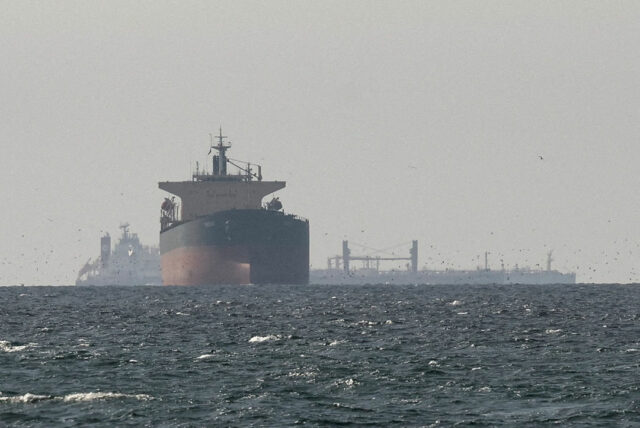
Tankers sail in the Gulf, near the Strait of Hormuz, as seen from northern Ras al-Khaimah, near the border with Oman’s Musandam governance, amid the US-Israeli conflict with Iran, in United Arab Emirates, March 11, 2026. — REUTERS

WASHINGTON/TEL AVIV/DUBAI — Several US allies rebuffed Donald Trump’s call on Monday to send warships to escort tankers through the Strait of Hormuz, drawing criticism from the US president, who accused Western partners of ingratitude after decades of support.

The US-Israeli war on Iran is in its third week with no end in sight. The critical Strait of Hormuz, through which 20% of the world’s oil and liquefied natural gas flow, remains largely closed off, raising energy prices and fears of inflation.

The conflict has already imposed economic costs on US allies, who were not consulted before the airstrikes on Iran and who have endured months of harsh criticism and bellicose threats from Mr. Trump since he returned to office.

A number of US partners, including Germany, Spain and Italy, said they had no immediate plans to send ships to help reopen the strategic waterway, which Iran has effectively shut with drones and naval mines.

“We lack the mandate from the United Nations, the European Union or NATO required under the Basic Law,” German Chancellor Friedrich Merz said in Berlin, adding that Washington and Israel had not consulted Germany before launching the war.

Mr. Trump, speaking at a White House event in Washington, said many countries had told him they were prepared to help, but voiced frustration with some long‑standing allies.

“Some are very enthusiastic about it, and some aren’t,” he said, without offering specifics. “Some are countries that we’ve helped for many, many years. We’ve protected them from horrible outside sources, and they weren’t that enthusiastic. And the level of enthusiasm matters to me.”

ISRAEL STILL HAS ‘THOUSANDS’ OF TARGETS IN IRAN

Israel said on Monday it had drawn up detailed plans for at least three more weeks of war as it pounded sites across Iran overnight, while Iranian drone attacks temporarily shut Dubai airport and hit a key oil facility in the United Arab Emirates.

Israel troops pushed into new parts of southern Lebanon, part of an expanding operation after Hezbollah fired rockets at Israel in retaliation for the killing of Iran’s supreme leader.

In a joint statement, Canada, France, Germany, Italy and Britain warned that any “significant Israeli ground offensive would have devastating humanitarian consequences and could lead to a protracted conflict,” and that such an operation “must be averted.”

Israel has said it wants to weaken Iran’s capacity to threaten it, striking ballistic missile infrastructure, nuclear facilities and the security apparatus, and that it still has thousands of targets to hit.

“We want to make sure that they are as weak as possible, this regime, and that we degrade all their capabilities, all parts and all wings of their security establishment,” Israeli military spokesperson Lieutenant Colonel Nadav Shoshani said.

Iran’s Islamic Revolutionary Guard Corps (IRGC) said it would target US industrial facilities in the Middle East and urged people living near US-owned plants to leave.

Iran also responded to Mr. Trump’s threat that he might attack oil facilities on Kharg Island, the country’s main oil hub, if Tehran does not reopen the Strait of Hormuz. US forces destroyed military targets on Kharg on Friday.

A spokesperson for the armed forces, Abolfazl Shekarchi, said Iran would target oil and gas facilities in any country from which US attacks were launched on Kharg Island.

Foreign Minister Abbas Araqchi said Tehran had not asked for a ceasefire or exchanged messages with the US, according to Iran’s semi-official Student News Network.

In a post on X, Mr. Araqchi also said some “neighboring states” that host US forces and permit attacks on Iran were actively encouraging the killing of Iranians.

He said 200 children were among the hundreds of Iranian civilians killed in US or Israeli bombings.

Rescue workers in Tehran worked to pull people from the wreckage of a building in what an Iranian Red Crescent aid worker said was an entirely residential alleyway.

ISRAEL CLAIMS STRIKES ON IRAN’S SPACE PROGRAM

Israel said its air force had struck sites linked to Iran’s space program, including destroying a research facility in Tehran involved in developing a satellite launched in 2024.

One Tehran resident told Reuters that there had been no internet overnight and Iranians felt isolated from the world.

“People are being killed,” Shahnaz, 62, said via WhatsApp. “Just days before Nowruz (Iranian New Year, on March 20), but people are not in the mood to celebrate. When will this end?”

Asked if she supported the Islamic Republic, Shahnaz said: “No, I don’t. How can I? They killed my granddaughter in (January’s) protests. We want this regime to go. We want this misery to end.”

In Tel Aviv, air raid sirens sounded late into the night, warning of incoming Iranian missiles and underscoring that, after more than two weeks of war, Tehran still retained the capacity to carry out long-range attacks. The IRGC said earlier that Iran had launched strikes on areas in Tel Aviv, the US Al Dhafra Air Base in Abu Dhabi, the US naval base in Bahrain and Bahrain’s Sheikh Isa Air Base.

On the UAE’s coast along the Gulf of Oman, oil loading operations at the port of Fujairah partially resumed after an Iranian drone strike. Fujairah is a key exit point for the UAE’s Murban crude – a volume equivalent to roughly 1% of global demand.

Flights at Dubai International Airport, one of the world’s busiest, were suspended for several hours after a drone strike on a nearby fuel storage facility sent plumes of black smoke into the sky. Saudi Arabia intercepted 34 drones in its eastern region in one hour, state media said. No injuries were reported in either incident.

Despite the turbulence, oil prices of Brent crude and West Texas Intermediate, which had been above $100 a barrel, fell and stocks rallied after US Treasury Secretary Scott Bessent told CNBC the US was “fine” to let some Iranian fuel vessels through the strait, and believed Indian and Chinese tankers had also passed through. — Reuters

LTFRB approves fare increase for jeepneys, buses, TNVS

STAR / Miguel De Guzman

The Land Transportation Franchising and Regulatory Board (LTFRB) has approved a P1 increase in the minimum fare for traditional public utility jeepneys (PUJs), raising it to P14 starting Thursday.

For modern jeepneys, the minimum fare will increase by P2 to P17 from P15, LTFRB Chairman Vigor D. Mendoza II said during a media briefing on Tuesday.

He said the LTFRB has also approved a P0.20 increase in fares for each succeeding kilometer for both traditional and modern PUJs.

For city buses, the minimum fare will be set at P15 for ordinary buses and P18 for air-conditioned buses, up from P13 and P15, respectively.

The regulator has also increased the base fare for transportation network vehicle services (TNVS) to P65 from P45 for sedan units, and to P165 from P145 for premium TNVS. — Ashley Erika O. Jose

ADVERTISEMENT
ADVERTISEMENT