Home Blog Page 152

Eala will fall 20 spots in WTA ranking upon expiration of earned Miami Open points

ALEX EALA — PHILIPPINE STAR/RUSSELL PALMA

UNLESS Alexandra “Alex” Eala replicates her final four finish last year in the Miami Open, she’s tipped to drastically fall in the Women’s Tennis Association (WTA) rankings with at least a 20-spot drop following the expiration of ranking points on Thursday.

The main draw of the WTA-1000 level tour kicked off on Wednesday, scrapping all the points harvested by all players in last year’s edition, including 390 from Ms. Eala after a stellar run all the way from a wildcard in the qualifiers to being the first WTA semifinalist.

And as per the WTA live rankings, the effect is in full force right away as it dragged Ms. Eala to No. 50 from a new career-best of No. 29 this week following a Last 16 finish in the Indian Wells Open with 1525 points.

She’s back to 1145 now and should she fail to go deep while the players ahead of her advance farther, Ms. Eala could slip to the border of Top 60.

In total, Ms. Eala only lost 380 points so far, getting 10 points back due to a first-round bye as the No. 31 seed in the stacked 128-player field headlined by Top 32 players as well as former and current Grand Slam champions.

The official WTA ranking update will reflect on Monday on a weekly basis and it’s on Ms. Eala to turn the tide starting with a Round 2 duel against No. 53 Laura Siegemund of Germany, who beat No. 76 Petra Marcinko of Croatia, 6-4, 6-4, in Round 1.

Mses. Eala and Siegemund were scheduled to battle before lunch on Wednesday but it has been pushed back to 12 a.m. (Manila time) at the earliest after heavy rains disrupted other matches in Miami.

Her first duel, albeit in Round 2 already, will set the tone on whether she could get those points back or lose it altogether. She needs four wins to do it and return to the semifinals, where either her good friend and world No. 4 Coco Gauff or No. 6 Amanda Anisimova could be waiting.

Inch by inch, she could trim the deduction with 35, 65, 120 and 215 points up for grabs in Rounds 2, 3, 4 and quarterfinals, respectively.

And giants in the lower bracket are waiting in line to foil that.

After Ms. Siegemund, no less than world No. 3 Iga Swiatek of Poland with some heavy ax to grind possibly awaits Ms. Eala by the third round. Ms. Swiatek was part of Ms. Eala’s titan-slaying spree in Miami that shattered the gates wide open for her rise, alongside Latvia’s Jelena Ostapenko and USA’s Madison Keys, before she fell against world No. 5 Jessica Pegula also from the USA.

Ms. Swiatek, also with a first-round bye as the No. 2 seed in Miami, will face her compatriot Magda Linette in Round 2. Ms. Linette, WTA No. 50, stormed back against France’s Varvara Gracheva, 2-6, 6-2, 6-0.

World No. 14 Karolina Muchova of Czechia or No. 16 Clara Tauson of Denmark by Round 4 and then either world No. 9 Victoria Mboko of Canada or No. 10 Mirra Andreeva of Russia are projected to stand in the way in the next two rounds for Ms. Eala to get in the semis.

“Run it back,” she beamed, declaring an all-out battle to protect what’s hers and to prove that she belongs among the world’s best of the best.

Meanwhile, reigning champion and world No. 1 Aryna Sabalenka of Belarus or world No. 2 Elena Rybakina of Kazakhstan headline the upper bracket and should be in a collision course for the other finale slot. — John Bryan Ulanday


Filipinas ensure their return to FIFA Women’s World Cup in beating Uzbekistan, 2-0

JACLYN SAWICKI (L) and Angie Beard — ORIGINAL PHOTOS FROM FACEBOOK.COM/PHIFOOTBALLFEDERATION

ALL SET for football’s grandest stage. Again.

Three years after their historic FIFA Women’s World Cup (WC) debut in New Zealand, the amazing Filipinas ensured their return to the global showpiece by beating Uzbekistan, 2-0, in the AFC Women’s Asian Cup’s (WAC) Play-In match in Gold Coast, Australia on Thursday.

Angie Beard and Jaclyn Sawicki, two veterans of the group that created a milestone in the 2023 WC highlighted by a 1-0 upset of the host Kiwis, produced the crucial goals in the second half that cleared the Pinay booters’ path back to the marquee tourney set to be hosted by Brazil next year.

Ms. Beard (47th) and Ms. Sawicki (52nd) took turns converting crafty assists from 18-year-old young gun Jael-Marie Guy to break a nerve-wracking scoreless tie and spell the difference in the KO for the fifth WC slot on the line in the Continental meet.

“This is something I dreamed about since I was a little. Going to the World Cup seems unreachable until it actually happens,” said Ms. Guy, who previously helped the squad win a first-ever gold medal in the Southeast Asian Games in Thailand last December.

“It really does take a village. If Angie and Jackie weren’t on the end of those (assists), if our defense didn’t come through and everyone on the bench wasn’t supporting each other, this wouldn’t happen. None of this would be possible if we weren’t together. So I’m just super grateful and super excited to go to Brazil next summer.”

The Filipinas joined host Australia, Japan, China and South Korea in the march to the WC. The four qualified by reaching the quarterfinals of the WAC. Chinese-Taipei and North Korea, meanwhile, were set to dispute the sixth and last ticket in their Play-In duel on Thursday.

“I’m proud of every single player, the way they stuck together as a big group led by captain Hali Long. The girls have been outstanding for the last six weeks and all the work that we’ve put in over that time has come to this and I’m extremely proud,” said coach Mark Torcaso. — Olmin Leyba

Blu Girls will go on international camps, tourneys in preparation for World Cup and Asian Games

THE Philippine Blu Girls will go on training camps in South Korea, Japan and the United States in preparation for the WBSC Women’s World Cup Group Stage and the Asian Games this year.

The Cebuana Lhuillier-backed Nationals will fly to South Korea from May 16 to 22 for a camp and some exhibition matches there and then will proceed to Japan the next month for another training session.

These two foreign sorties will be just in time for the WBSC World Cup Group Stage slated July 14 to 18 in Lima, Peru where the country hopes to snare a spot to Finals scheduled next year.

From there, the Filipinas will immediately fly to the United States for more camps in sprucing up for another bigger tournament ahead — the Asian Games in Japan set Sept. 24 to Oct. 3.

“Our goal is to give the Blu Girls every opportunity to compete and train at the highest level,” said Amateur Softball Association of the Philippines chief Jean Henri Lhuillier.

“These international camps and tournaments are vital in preparing them for the challenges of the World Cup and the Asian Games, and we are confident they will represent Philippine softball proudly on the global stage,” he added. — Joey Villar

Born2Win Forex Bulls lead Pickle Yard Conference League

THE Cebuana Lhuillier Gems strung together three straight wins to jumpstart its bid in the Pickle Yard Conference League at the Pickle Yard of the SM City Bicutan in Parañaque recently.

The team of Johnny Arcilla, Diana Hughes, Jessy Lira, Jen Cayetano, Arianne Gajasan, Hakim Boloto, Cyril Robeniol and Sofia Nipa took turns in contributing to the three wins in a row that more than made up for its opening match setback.

Their triumphs came at the expense of the Philex Vanguards, 4-1, Pertura Stallions, 3-2, and Fortrust Masters, 3-2.

“We are proud of how the Cebuana Lhuillier Gems responded after their early setback,” said team owner Jean Henri Lhuillier.

“Their ability to regroup and deliver three straight wins shows the team’s resilience, discipline, and strong teamwork. It’s inspiring to see them represent Cebuana Lhuillier with such passion as they continue to compete in the Pickle Yard Conference League.”

Born2Win Forex Bulls zoomed the early lead while the Philex Vanguards and Dentacare Pearly Whites, just like the Gems, have also remained in title contention. — Joey Villar

Bol battles tough defender ROS in first PBA import duty

Games on Friday
(Smart Araneta Coliseum)
5:15 p.m. – TNT vs Rain or Shine
7:30 p.m. – Macau vs Ginebra

HE’S been the talk of the town ever since he arrived to assume import duties for defending champion TNT in the PBA Commissioner’s Cup.

And the time has come for Bol Bol, the highest-profile and tallest import among the lot, to finally strut his stuff in front of Filipino fans.

On Friday, the 7-foot-3 former NBA player gets his first taste of action in Asia’s first play-for-pay league against Rain or Shine (ROS) (1-0), a team packed with hard-nosed defenders and tough guys who are always ready to rumble.

Mr. Bol and the Tropang 5G aim for a winning start at 5:15 p.m. at the Smart Araneta Coliseum, the first game of a double header that also features Barangay Ginebra in its conference debut against guest team Macau (0-2).

Despite Mr. Bol’s immense skills, TNT is tempering its expectations.

ROS coach Yeng Guiao, whose crew opened its campaign with a 116-109 victory over the Black Bears, expects Mr. Bol to be a handful for Jaylen Johnson and Co.

“I think Bol has really been stirring up a lot of interest. So it’s going to be a fun game to play,” Mr. Guiao said.

“And it’s also a challenge for us, how we’re going to play a seven-footer with the skills of Mr. Bol. How do you play somebody like him?”

Meanwhile, Justin Brownlee, the Gin Kings’ indefatigable resident import and shortest among the imports at 6-foot-6, expressed readiness for the task of competing against giants.

“Just a lot of tough competition out there. There’s a lot of big guys. So, you know, I know it’s going to be tough. But I’m ready for the challenge,” said Mr. Brownlee, who won’t have to deal with massive height disadvantage yet as he’s matched up against 6-foot-7 Tony Mitchell of Macau in the 7:30 p.m. main game. — Olmin Leyba

Woods and the Masters

There was a time when any mention of Tiger Woods and Augusta National came with a presumption, not a question. He would be at the premier venue in golf, contend, and, more often than not, bend the Masters to his will. These days, however, the conversation has shifted significantly. It’s no longer about the probability of winning; it’s about the mere possibility of teeing up. And the difference is not physical, but existential.

The run-up to the sport’s premier tournament has been marked by an all-too-familiar ambiguity. Woods has not ruled himself out, of course; he rarely does. Then again, neither has he offered anything resembling certainty. By his own admission, the state of his health remains uncertain, with “good days” and “bad days” defined by a body that has endured one surgery too many.

And yet the conversation persists, fueled in part by the smallest of signals. A private jet sighting in Augusta. A brief public appearance. A noncommittal answer that is, in its own way, revealing. Woods has always understood the theater of anticipation; he need not promise anything to command attention. That he continues to say “no” when asked if the Masters is off the table is in and of itself a declaration of intent.

Complicating matters further is the widening gap between presence and participation. Woods is expected to be at Augusta regardless: There are ceremonial duties, a Champions Dinner, even a course design project tied to his name. In other words, he remains central to the Masters without necessarily competing in it. His is a subtle but significant evolution: from slayer to steward, from champion to custodian of the game’s traditions.

Meanwhile, the competitive reality becomes harder to ignore. Woods has not played a full event since 2024, what with his body held together by medical interventions providing more of relief and less of recovery. Even his recent role in the TMRW Golf League, largely symbolic, underscores the shift. He remains involved, continues to be influential, but is increasingly at a remove from the prowess that once elevated him.

There is, to be sure, a reckoning. The Masters has long been the stage for Woods’ most enduring performances, bookended by his arrival in 1997 and his improbable return to the top in 2019. But history, no matter how luminous, does not negotiate with time. What remains is the tension between desire and capacity, between the will to compete and the body’s reluctant reply. And so the question lingers, unresolvable until the moment arrives: not whether he will play, but whether he still can.


Anthony L. Cuaycong has been writing Courtside since BusinessWorld introduced a Sports section in 1994. He is a consultant on strategic planning, operations and human resources management, corporate communications, and business development.

Trump vows no more attacks by Israel on Iran gas field after it ‘violently lashed out’

AN IRANIAN MISSILE flies toward Israel, amid the US-Israel conflict with Iran, as seen from Jerusalem, March 11, 2026. — REUTERS/JAMAL AWAD TPX IMAGES OF THE DAY

DOHA/RIYADH — US President Donald J. Trump said an angry Israel “violently lashed out” and attacked Iran’s major gas field, a significant escalation in the US-Israeli war, but ruled out further such attacks by Israel unless Iran retaliated.

Wednesday’s attack on the huge South Pars gas field drove oil prices higher and prompted a threat by Iran to attack oil and gas targets across the Gulf, while it fired missiles at Qatar and Saudi Arabia.

The escalation heightens the unprecedented disruption of global energy supplies that has raised the political stakes for Mr. Trump, who joined Israel in attacking Iran nearly four weeks ago.

Qatar’s state oil giant QatarEnergy reported “extensive damage” after Iranian missiles hit the Ras Laffan Industrial City that processes about a fifth of global gas supply.

Saudi Arabia said it intercepted and destroyed four ballistic missiles launched toward Riyadh on Wednesday and an attempted drone attack on a gas facility in its east.

On Thursday, Iran again targeted Qatar’s gas facilities and its missiles also targeted the Saudi capital.

QatarEnergy “sizeable fires” and extensive damage at several of its liquefied natural gas (LNG) facilities targeted in missile attacks early on Thursday.

Mr. Trump said the United States did not have advance knowledge of Israel’s attack, adding that Qatar had not been involved.

“Israel, out of anger for what has taken place in the Middle East, has violently lashed out at a major facility known as South Pars Gas Field in Iran,” Mr. Trump posted on X on Wednesday.

“Unfortunately, Iran did not know this, or any of the pertinent facts pertaining to the South Pars attack, and unjustifiably and unfairly attacked a portion of Qatar’s LNG Gas facility.

“NO MORE ATTACKS WILL BE MADE BY ISRAEL pertaining to this extremely important and valuable South Pars Field unless Iran unwisely decides to attack a very innocent, in this case, Qatar.

“In which instance the United States of America, with or without the help or consent of Israel, will massively blow up the entirety of the South Pars Gas Field at an amount of strength and power that Iran has never seen or witnessed before.”

Earlier, the Wall Street Journal said Mr. Trump had approved of Israel’s plan to attack Iran’s natural gas field.

South Pars is the Iranian sector of the world’s largest natural gas deposit, which Iran shares with Qatar, a close US ally and host of the United States’ biggest military base in the Gulf.

Since the start of the conflict, Tehran has targeted not just Israel, but US diplomatic and military facilities across the Gulf and warned its neighbors not to host attacks on Iran.

With de-escalation nowhere in sight, Mr. Trump is considering sending thousands more US troops to the Middle East, according to a US official and three people familiar with the planning.

Those troops could be used to restore the safe passage of oil tankers through the Strait of Hormuz, a chokepoint for a fifth of the world’s oil trade.

ISLAMIC FOREIGN MINISTERS CONDEMN IRAN ATTACKS
The foreign ministers of 12 Muslim-majority countries meeting in Riyadh denounced Iran’s strikes on Gulf neighbors and called for an immediate halt.

Iran’s targeting of residential areas and civilian infrastructure, such as oil facilities, airports and desalination plants, could not be justified under any circumstances, the ministers said in a statement.

“This pressure from Iran will backfire politically and morally and certainly we reserve the right to take military actions, if deemed necessary,” Saudi Foreign Minister Prince Faisal bin Farhan told a press conference after the diplomats met in Riyadh.

Interceptors were seen fired from near the Riyadh hotel where the conference was held around the time the ministers gathered for the consultative meeting on the Iran war.

The United Arab Emirates shut down its Habshan gas facility after it intercepted missiles fired in what its foreign ministry called a “terrorist attack” by Iran.

More than 3,000 people have been killed in Iran since the US -Israeli attacks began on Feb. 28, the US-based Iran human rights group HRANA estimates.

Authorities in Lebanon say 900 have been killed there and 800,000 forced to flee their homes.

Iranian attacks have killed people in Iraq and across the Gulf states, and at least 13 US military service members have been killed in the war. — Reuters

US assesses China not planning to invade Taiwan in 2027

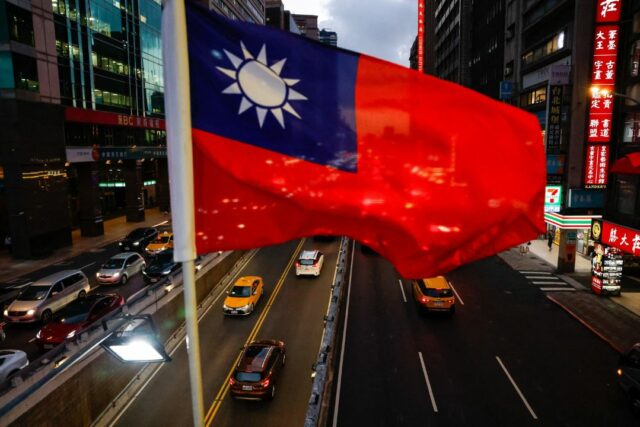
A Taiwan flag can be seen on an overpass ahead of National Day celebrations in Taipei, Taiwan, Oct. 8, 2025. — REUTERS/ANN WANG

WASHINGTON — China does not currently plan to invade Taiwan in 2027 and seeks to control the island without the use of force, the US intelligence community said on Wednesday, striking a measured tone on one of the world’s biggest potential flashpoints.

The assessment in the intelligence agencies’ annual report on global threats comes as Beijing has stepped up pressure on Taiwan with frequent military drills, even as US President Donald J. Trump has played down the risk of Chinese military action while he is in office.

The Pentagon late last year said the US military believed China was preparing to be able to win a fight for Taiwan by 2027, the centenary of the founding of its People’s Liberation Army (PLA) and was refining options to take Taiwan by “brute force” if needed.

“China, despite its threat to use force to compel unification if necessary and to counter what it sees as a US attempt to use Taiwan to undermine China’s rise, prefers to achieve unification without the use of force, if possible,” the US intelligence agencies said in the report.

The US “assesses that Chinese leaders do not currently plan to execute an invasion of Taiwan in 2027, nor do they have a fixed timeline for achieving unification,” the report said.

It reiterated previous views that the PLA was making “steady but uneven” progress on capabilities it could use to capture the democratically governed island.

Taiwan’s de facto embassy in Washington said Taiwan will continue to monitor China’s activities and “remain vigilant at all times.”

“China has never abandoned the use of force against Taiwan, and its continued military intimidation and gray-zone operations pose serious threats not only to Taiwan but also to regional peace and stability,” it said in a statement.

China’s embassy in Washington did not respond immediately to a request for comment.

Mr. Trump, who has repeatedly touted his “great relationship” with Chinese leader Xi Jinping, has downplayed the threat of the Chinese drills around Taiwan and said Mr. Xi told him he will not attack Taiwan while the US president is in office — something Beijing has never confirmed.

China views Taiwan as its own territory and has never renounced the use of force to take the island under its control. Taiwan rejects Beijing’s sovereignty claims, saying only the island’s people can decide their future.

PRESSURE ON JAPAN TO INTENSIFY
Despite concerns in the US and abroad about Mr. Trump’s inclination to back Taiwan, his administration in December unveiled a record $11-billion sale of weapons for the island, angering Beijing, which says such arms deals must end.

Nonetheless, some Japanese officials have worried Mr. Trump may be prepared to soften support for Taiwan in pursuit of a trade accord with China, a move they fear will embolden Beijing and spark conflict in an increasingly militarized East Asia.

Tokyo had been unnerved by muted US rhetorical support for Japanese Prime Minister Sanae Takaichi after her remarks last year that a hypothetical Chinese attack on Taiwan could bring about a Japanese military response. Mr. Trump reportedly told her privately not to escalate the ensuing diplomatic row with Beijing.

In Wednesday’s report, the US intelligence agencies called Ms. Takaichi’s remarks on Taiwan a “significant shift” for a Japanese leader, a framing that is likely to irk Tokyo just a day ahead of a delicate visit by her to the White House. Ms. Takaichi has maintained her stance was consistent with Japan’s longstanding policy. “China is employing multidomain coercive pressure that probably will intensify through 2026, aimed both at punishing Japan and deterring other countries from making similar statements about their potential involvement in a Taiwan crisis,” the report said. Reuters

EU leaders hunt for quick fixes to energy price spike amid Iran war

REUTERS

BRUSSELS — European Union (EU) leaders will attempt to find quick fixes to curb the jump in energy prices triggered by the Iran war when they meet for a summit on Thursday, but they have few easy options.

Europe’s heavy reliance on energy imports means the continent is heavily exposed to surging prices caused by the closure of the Strait of Hormuz, through which some 20% of global oil and liquefied natural gas supplies normally pass.

European gas prices have increased by more than 60% since the US-Israeli war on Iran began on Feb. 28.

“This, once again, confirms the key strategy for the EU is to ensure the decarbonization of industries,” Lithuanian Energy Minister Zygimantas Vaiciunas told Reuters, referring to Europe’s plans to replace fossil fuels with locally produced low-carbon energy sources over the coming years.

In the short term, however, “there is no single instrument or silver bullet that would easily cope with this challenge,” he added.

Some governments are doubtful that the EU — whose 27 member states have vastly different energy mixes and national taxes on energy — can realistically offset a price spike resulting from the unprecedented disruption in global markets.

“We will not find the magic solution, unfortunately,” one EU diplomat said.

‘TARGETED TEMPORARY MEASURES’
Draft conclusions for the summit, seen by Reuters, said leaders would instruct the European Commission to “present without delay a toolbox of targeted temporary measures to address the recent spikes in the prices of imported fossil fuels.”

European Commission President Ursula von der Leyen on Monday laid out options the EU executive is exploring. They omitted major EU interventions, instead promising tweaks to the bloc’s emissions trading system and suggesting that governments cut national taxes or increase state aid for struggling industries.

None of the options is expected to dramatically cut prices while the Strait of Hormuz effectively remains shut.

Each has potential downsides. Allowing more state aid at the member state level could deepen divides between wealthy and poor countries, while cutting energy taxes is challenging for governments racing to increase public spending on defence.

Leaders are particularly split over how to approach the emissions trading system (ETS), the EU’s most ​important climate change policy. Launched in 2005, the ETS forces power plants and industries to buy permits to cover CO2 emissions.

Ms. Von der Leyen said the Commission would adjust a reserve regulating the ETS’ supply of emission permits to curb prices in the short term.

Ten EU leaders including Italy’s Giorgia Meloni and Poland’s Donald Tusk, demanded deeper changes on Wednesday, including more free CO2 permits for industry.

A second camp of countries, including Spain and the Netherlands, oppose weakening the system.

Leaders will wrangle over what instructions to hand to the commission.

Their draft conclusions ask Brussels to bring forward a planned review of the ETS to July, “while preserving the essential role of the ETS in the climate and energy transition” — wording diplomats said not all countries supported.

The draft conclusions also set out multiple deadlines, many this year, for measures to boost the EU’s competitiveness and help it close the gap with rivals — the US and China — including an “EU Inc” plan presented on Wednesday to simplify rules on creating innovative startups. — Reuters

Thailand’s Anutin re-elected PM after crushing rival in parliamentary vote

PIXABAY

BANGKOK — Anutin Charnvirakul was re-elected Thailand’s prime minister (PM) on Thursday after sailing through a parliamentary vote, winning a fresh mandate that could usher in a rare period of stability for a country long plagued by political drama and turmoil.

The Bhumjaithai Party’s Mr. Anutin led from the start in what turned out to be a rout of his biggest rival, Natthaphong Ruengpanyawut, leader of the progressive People’s Party, the surprise runner-up last month in an election it had been widely expected to win.

Mr. Anutin becomes the first Thai premier to be voted back to office in two decades, underlining the upheaval that has dogged Southeast Asia’s second-largest economy.

In a stunning turnaround in fortunes for a party that had struggled to make its mark in Thai politics, Bhumjaithai scored a decisive election victory over its reformist rival after capitalizing on a wave of nationalism arising out of military conflicts with Cambodia last year.

OPPORTUNITY SEIZED
Much of Mr. Anutin’s success comes from his opportunism last year in seizing on the decline of the once dominant Pheu Thai party, first by abandoning its coalition government then maneuvering swiftly to form his own after a court sacked a second prime minister in the space of just over a year.

Bhumjaithai’s coalition pact with the politically bruised Pheu Thai and a motley crew of small parties stood firm in Thursday’s vote, with Mr. Anutin comfortably reaching the 251 votes needed to win re-election.

His alliance is expected to control 292 of the current 499 seats in parliament.

In the leadup to the vote, Mr. Anutin, 59, pledged to get to work immediately on forming a cabinet and solving Thailand’s problems.

“Your voices are equally heard,” he told rival lawmakers. “I’m ready to accept suggestions so I can carry out my duty as head of government. We all have the same goals — the well-being of the people.”

Mr. Anutin, a staunch royalist, has been a mainstay in Thai politics, weathering two decades of upheaval by positioning Bhumjaithai strategically between warring elites entangled in an intractable power struggle, which guaranteed its place in a succession of coalition governments.

PROSPECT OF STABILITY
Mr. Anutin’s election victory and approval by parliament gives him his first clear mandate to lead in a country with a long-stuttering economy shackled by massive household debt and facing headwinds from trade uncertainty and the fallout of the US-Israeli war on Iran.

Mr. Anutin’s survival instincts and ability to straddle political divides could prove his biggest asset, some analysts say, with Bhumjaithai having been spared the wrath of Thailand’s powerful military and judiciary, the engineers of the downfall of multiple governments and parties.

Napon Jatusripitak, a political scientist at Singapore’s ISEAS-Yusof Ishak Institute, said that with Bhumjaithai set to hold sway over the upper and lower houses and Thailand’s axes of institutional power appearing to be behind Mr. Anutin, the prospects for medium-term stability were good.

“People have strong reasons to believe that this government can last, particularly because it’s the first time in a long while that the referee and the players are on the same side,” Mr. Napon said.

“There’s control,” he said. “And we have a highly fragmented opposition.” — Reuters

Iran considers levying transit fees on ships in Hormuz Strait, lawmaker says

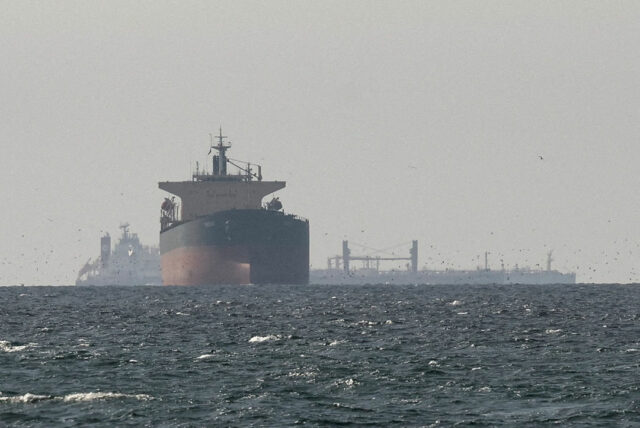
Tankers sail in the Gulf, near the Strait of Hormuz, as seen from northern Ras al-Khaimah, near the border with Oman’s Musandam governance, amid the US-Israeli conflict with Iran, in United Arab Emirates, March 11, 2026. — REUTERS

DUBAI — Iran is considering a proposal to levy transit fees on vessels passing through the Strait of Hormuz, a lawmaker said on Thursday, a potential bid to monetize Tehran’s newfound grip over the critical waterway through which a fifth of global oil and liquefied gas passes.

Since the start of the US-Israeli war on Iran, Tehran has disrupted maritime transit through the strait for vessels it says are linked to its war adversaries and their allies.

According to the Iranian Students’ News Agency, the lawmaker said parliament was considering a bill under which countries using the strait for shipping, energy transit, and food supplies would be required to pay tolls and taxes to Iran.

An adviser to Iran’s supreme leader said “a new regime for the Strait of Hormuz” will follow the war’s eventual end, allowing Tehran to apply maritime restrictions on states that have sanctioned it.

“By using the strategic position of the Strait of Hormuz, we can sanction (the West) and prevent their ships from passing through this waterway,” Mohammad Mokhber said on Thursday, according to Mehr news agency. — Reuters

Philippine jeepney drivers protest as rising fuel prices cut their pay

Some jeepneys picking up passengers in Quezon City to earn extra income before joining the transport strike on Thursday, March 19, 2026. — PHILIPPINE STAR/MIGUEL DE GUZMAN

MANILA — The ripple effects of the war in the Middle East are hitting home hard for Philippine jeepney driver Toni Prado, whose daily earnings have been gutted by soaring fuel prices.

He was one of thousands of jeepney drivers who took to the streets across the country on Thursday to protest a more than doubling of local diesel prices after global oil prices surged because of the US-Israel war on Iran.

“We are losing our income. What we earn just goes to paying for diesel,” said Mr. Prado.

“Before I could earn at least 1,000 pesos ($16.65) for three trips, now I only take home 200 pesos,” said the father of four. “How can I support my children? How can I send my daughter to school? How do I pay for electricity, water, and food?”

The Philippines relies heavily on Middle Eastern oil, and the surge in fuel prices is threatening to stoke inflation in the consumption-driven economy.

Like many of its Southeast Asian neighbors, Manila has taken steps such as shortening the work week and providing fuel subsidies to counter the impact of rising costs. This week, Congress granted the president emergency powers to suspend or reduce fuel taxes.

Mody Floranda, who heads the transport group leading the national strike, said those measures were not enough, and called for the repeal of a law that stripped the government of its authority to control fuel prices.

Drivers said the pain of surging diesel prices was compounded by the suspension of a fare hike that could have provided some relief.

Jeepneys, which were originally created from abandoned US military jeeps after World War Two, are a vital mode of public transport across the Philippines.

Reggie Manlapit, who has been a jeepney driver for two decades, said he needs to work longer hours but still gets less pay.

“Because of what’s happening, we work longer hours and we’re lucky if we can take home 200 pesos,” he said. ($1 = 60.0750 Philippine pesos) — Reuters

ADVERTISEMENT
ADVERTISEMENT