Home Blog Page 145

Lawmakers urged to pass bill vs. unhealthy food marketing — NNC

FREEPIK

Philippine lawmakers are being urged to pass a measure that will protect children against the marketing of unhealthy foods to curb the rising cases of obesity among the age group, according to the National Nutrition Council (NNC) on Wednesday.
In a statement, the NNC said the proposed Healthy Food Environment bill will help protect children from “aggressive marketing” of foods high in sugar, salt, and unhealthy fats, and require front-of-pack labels.

“Obesity is not a failure of individuals—it is often a failure of systems. We must transform our food environments, strengthen our policies, and work together to ensure that healthy choices become the easiest choices for every Filipino,” Rosalina U. Bascao, officer-in-charge Executive Director IV of the NNC, said in a statement.

According to the United Nations Children’s Fund (UNICEF), 99% of social media marketing posts from the country’s top 20 most popular food products and brands were deemed unhealthy based on World Health Organization (WHO) standards.

The study analyzed 1,035 social media posts and videos from these brands across major social media platforms. It also found that unhealthy foods are heavily marketed as fun, tasty, family-oriented, and even healthy or nutritious.

As these unhealthy foods are heavily marketed, the NNC said that diets have shifted toward ultra-processed foods and sugary drinks, making it harder for families to choose healthier options and contributing to rising obesity.

The NNC said that the number of overweight and obese children continues to rise. Around 12.9% of school-age children are classified as overweight or obese, while the rate among adolescents is at 12.5%.

With the proposed Healthy Food Environment bill, the NNC said that food marketing safeguards for children will be established to help families make healthier choices.
At least 20 versions of the bill have been filed in the House of Representatives.

One of these is House Bill No. 7777, filed on Feb. 11 by Quezon City 1st District Representative Juan Carlos “Arjo” C. Atayde, which proposes that the Department of Health (DOH) develop a nutrient profile model to categorize food based on its nutrient composition and level of processing.

The measure also mandates the DOH to regulate both the exposure of children to and the persuasive power of marketing for unhealthy food, ensuring that products identified as unhealthy are prohibited from being marketed to minors.

Under the bill, these products must also carry a mandatory front-of-pack nutritional label, while child-directed marketing techniques, such as the use of cartoons, is strictly prohibited.

Meanwhile, Iloilo 1st District Representative and Deputy Speaker Janette L. Garin earlier recommended integrating lessons on misleading food marketing into the curriculum, citing its role in contributing to obesity.

She told BusinessWorld that this may be done through legislation or through the oversight powers of the House of Representatives.

“We have to start orienting parents and teachers because that is where it begins. We have to let them know what they are feeding their children or what they themselves are eating,” Ms. Garin said. — Edg Adrian A. Eva

Israel military says its tank fire hit UN Lebanon base, regrets incident

Smokes rise, amid ongoing cross-border hostilities between Hezbollah and Israeli forces, in Tyre, southern Lebanon Sept. 23, 2024. — REUTERS

PARIS — Israel’s military on Wednesday acknowledged that its tank fire hit a UN position in southern Lebanon on March 6, wounding Ghanaian peacekeepers, an incident that underscores the growing risks as Israeli operations expand.

Initial findings by an internal UN inquiry had suggested Israel was behind the attack, a Western military source had told Reuters on Tuesday.

The UN peacekeeping mission known as UNIFIL is stationed in southern Lebanon to monitor hostilities along the demarcation line with Israel – an area that is at the heart of clashes between Israeli troops and Iran-backed Hezbollah fighters.

The mission, which will be halted at the end of 2026, has been sporadically caught in the crosshairs of both Israel and Hezbollah over the last couple of years, but with Israel considering a broader ground operation, the risks could be greater in the coming weeks.

In a statement to Reuters, Israel’s military acknowledged its troops were behind the incident, but said they had responded to anti-tank missile fire from Hezbollah, which had moderately wounded two of its soldiers.

“A comprehensive investigation concluded in recent days determined that the fire that hit the UNIFIL personnel was mistakenly carried out by the IDF troops that misidentified the UNIFIL troops as the source of the anti-tank fire moments earlier,” it said.

“The IDF regrets the incident and has conveyed its apologies through the appropriate channels to Ghana and the United Nations. The findings of the investigations have been disseminated within the IDF to prevent recurrence of similar incidents.”

Lebanon was pulled ⁠into the war in the Middle East when Hezbollah fired rockets at Israel that ignited a new Israeli offensive against the group.

THREE SHELLS FIRED FROM ISRAELI TANK
According to the Western source, the preliminary conclusions led by UNIFIL’s Force Commander Reserve with support from explosive ordnance disposal specialists indicated that three strikes at the al-Qawzah base were direct hits from the main gun of an Israeli battle tank.

They were fired using 120-mm M339 HE-MP-T shells, the source said.

“Israeli involvement in the attack against UNIFIL is undeniable, given that these munitions are manufactured by Israel Military Industries (IMI),” the source said.

The findings of UNIFIL’s probe have not been previously reported. UNIFIL had said on March 6 that Ghanaian peacekeepers were wounded amid heavy firing and called the incident “unacceptable,” but did not say at the time who was responsible.

“That investigation is not yet complete. Once it is finalized, it will be shared with the parties, per usual practice,” said UNIFIL spokesperson Kandice Ardiel.

“Nonetheless, we reiterate the obligation of all actors to ensure the safety and security of peacekeepers and avoid harm to civilians. Any deliberate attack on peacekeepers is a grave violation of international humanitarian law and a violation of resolution 1701.”

The Lebanese prime minister’s office did not immediately respond to a request for comment.

Highlighting the concerns surrounding UN peacekeepers, UNIFIL said on Sunday that another group of peacekeepers were likely fired upon earlier that day on three separate occasions in southern Lebanon, “likely by non-state armed groups.” It said no peacekeepers were injured.

UNIFIL ABILITY TO CARRY OUT MISSION TESTED
The M339 HE-MP-T round can be used in anti-personnel, anti-helicopter, anti-materiel, anti-armor, and anti-structure roles.

The shots were fired within a five-minute window, indicating repeated fire rather than a single stray round, the source said, adding that the base’s location and coordinates were well known to all parties operating in the area, raising serious concerns over the safety of UN personnel.

Three Ghanaian soldiers were wounded, according to the Ghanaian army.

“This escalation, far from being isolated, is part of a worrying dynamic, severely testing UNIFIL’s ability to carry out its peacekeeping mission,” the source said.

The Israeli military occupies five posts within Lebanon and despite a ceasefire last year had frequently carried out airstrikes in the country’s south that it says are targeting Iran-backed militant group Hezbollah.

UN Security Council Resolution 1701, among other provisions, states that no armed forces should be operating in southern Lebanon except the UN peacekeepers and the Lebanese military.

Israel has repeatedly accused Hezbollah of trying to rearm and the Lebanese armed forces of failing to disarm the group. — Reuters

South Korea says it secures priority UAE crude, curbs naphtha exports amid Middle East turmoil

MODELS of oil barrels and a pump jack are displayed in this illustration photo taken on Feb. 24, 2022. — REUTERS

SEOUL — South Korea has secured a pledge from the United Arab Emirates to supply 24 million barrels of crude oil, its presidential office said on Wednesday, as authorities roll out measures to cushion the economy from fallout from the Middle East conflict.

Kang Hoon-sik, President Lee Jae Myung’s chief of staff, told a briefing at the Blue House that the UAE had said it would give South Korea – the world’s fourth-biggest oil importer – top priority for crude supplies.

“They clearly promised that there would be no country that receives oil ahead of South Korea, and that Korea would be number one priority in crude oil supply,” Mr. Kang said, after returning from the UAE.

However, while he confirmed plans to urgently import 18 million barrels, Mr. Kang gave no time frame for their delivery and no details on potential shipping routes that would avoid the Strait of Hormuz.

Iran’s effective closure of the strait has forced the UAE to shut in production, cutting its oil output by more than half, while loadings at its Fujairah terminal have been disrupted by drone attacks.

Two supertankers carrying a total of 4 million barrels of Abu Dhabi’s Murban crude that loaded at Fujairah are due to arrive in South Korea on March 29 and April 1, Kpler data shows.

The last cargo of naphtha loaded on February 20 and offloaded in South Korea on March 14, according to Kpler data.

Total emergency imports from the UAE would reach 24 million barrels, Mr. Kang said. Deliveries would be made on three UAE-flagged vessels and six South Korean-flagged ships.

South Korea imports almost all of its energy, with about 70% of its crude oil shipments and 20% of liquefied natural gas typically sourced from the Middle East, according to Korea International Trade Association data.

It is also a big importer of naphtha, which is broken down into petrochemicals used in plastics for automobiles, electronics, clothing, and construction.

PLAN TO RESTRICT VEHICLE USE
The emergency supply agreement comes as South Korea moves to shield companies and consumers from surging energy costs triggered by the Middle East crisis.

Finance Minister Koo Yun-cheol said earlier on Wednesday the country will limit naphtha exports and temporarily designate the feedstock as a supply-chain economic security item.

The government will boost financial support for affected petrochemical companies by 1.5 trillion won ($1.01 billion), including for the cost of alternative imports and preferential interest rates for firms handling high-risk economic security items, Mr. Koo said.

President Lee said on Tuesday the government should draw up contingency plans to restrict vehicle use on designated days if the Middle East crisis drags on.

The government has also imposed the country’s first fuel price cap in nearly 30 years.

To ease reliance on oil and LNG, Asia’s fourth-largest economy on Monday lifted caps on coal-fired power generation and moved to raise nuclear reactor utilization to around 80%. ($1 = 1,485.9000 won) — Reuters

SM MOA Arena hosts record-setting Filipino concert series; over 60,000 fans watch iconic reunion

SM Mall of Asia (MOA) Arena posted its first-ever four-day sold-out concert run as the SexBomb Girls mounted their much-awaited reunion, drawing more than 60,000 fans and reaffirming the venue’s role as the country’s leading stage for large-scale live entertainment.

The series began as a single show on Dec. 6, 2025, which attracted over 12,000 attendees under a standard stage configuration. Strong ticket demand prompted the addition of three more performances from Feb. 6 to 8, completing a four-night sell-out streak.

The current record for the most consecutive sold-out shows by any artist — local or foreign — at the SM MOA Arena is held by American pop rock band LANY, whose five-night sold-out run for the “A November to Remember Tour” in 2022 set the venue benchmark.

Prior to the SexBomb Girls reunion concert series, Gary Valenciano’s “Pure Energy” concert in 2024 held the record among Filipino artists with 3 consecutive sold-out shows. 

“These milestones reflect the strong connection between artists and Filipino audiences,” said Arnel Gonzales, Vice-President and General Manager of SM MOA Arena. “Our country’s passion for music, performances, sports and shared experiences is what continues to fill MOA Arena.”

For the February leg of the Get, Get, Aw! series, the SM MOA Arena deployed a full 360-degree stage configuration, an immersive setup seldom used due to its technical complexity.

“The stage configuration had to be recalibrated to improve sightlines across all seating levels while ensuring strict safety and operational standards. Enhanced LED visuals, staging, lighting, and sound design delivered a seamless, secure, and elevated concert experience for all attendees,” explained Gonzales. 

With approximately 17,000 attendees per night, the layout maximized seating capacity and enabled audiences to experience the show from all sides. At peak moments, the MOA Arena shifted from performance to participation, as fans across ages and backgrounds sang in unison.

The production featured collaborations with established OPM figures such as Apo Hiking Society, Gary Valenciano, Gloc-9 and Regine Velasquez, alongside contemporary acts including P-pop group BINI. The lineup underscored the cross-generational appeal of the event and positioned the Arena as a platform for culturally significant milestone performances.

Generation X and Millennial audiences — many of whom grew up with the group’s early 2000s hits — comprised a substantial share of attendees. The turnout highlights the commercial viability of nostalgia-driven productions when executed at scale.

The four-day sold-out reunion adds to its record of high-attendance events and reinforces its standing as the country’s premier destination for major live entertainment.


Spotlight is BusinessWorld’s sponsored section that allows advertisers to amplify their brand and connect with BusinessWorld’s audience by publishing their stories on the BusinessWorld Web site. For more information, send an email to online@bworldonline.com.

Join us on Viber at https://bit.ly/3hv6bLA to get more updates and subscribe to BusinessWorld’s titles and get exclusive content through www.bworld-x.com.

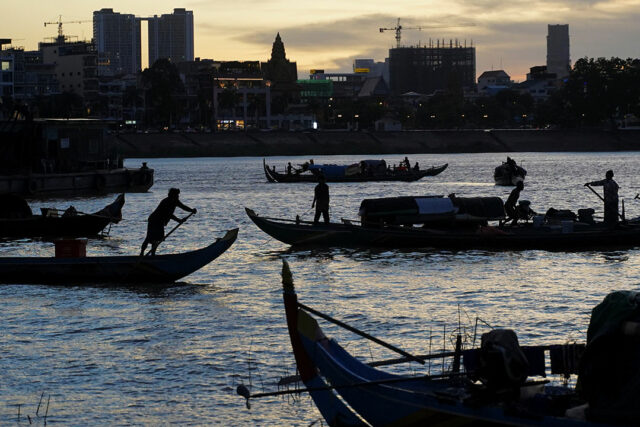
Cambodia turns to Singapore, Malaysia for fuel as Vietnam, China restrict supplies

REUTERS

SINGAPORE — Cambodia is importing more fuel from suppliers in Singapore and Malaysia to make up for supply shortfalls from Vietnam and China, its energy minister told Reuters on Wednesday, as the US-Israeli war on Iran squeezes fuel availability globally.

About a third of the 6,300 gas stations in the country of nearly 18 million people have shut since last Wednesday, with authorities investigating whether businesses are hoarding stocks ahead of further price rises.

Vietnam and China have restricted fuel exports until at least end-March to arrest potential domestic shortages. Neighboring Thailand banned exports in July 2025 after the onset of armed conflict with Cambodia and has not resumed supplies since.

Thailand and Vietnam together accounted for over 60% of Cambodia’s annual petroleum product imports in 2024, while Singapore and Malaysia made up nearly a third and China accounted for around 7%, according to data from International Trade Centre, a Geneva-based UN-WTO trade agency.

Energy Minister Keo Rottanak said Cambodia was boosting imports from Singapore and Malaysia due to export restrictions elsewhere.

“We’re still able to import a little bit from China. But because we have strong partnerships with global suppliers Total and Chevron, they are able to mitigate some of the risk,” Mr. Rottanak said.

Mr. Rottanak did not provide specifics on when the supplies from Singapore and Malaysia would arrive, but said current fuel stockpiles were comparable to historical levels.

Gasoline and diesel exports from the two countries to Cambodia in the first 18 days of this month were 25% higher than the same period last year, but 40% lower than in the final 18 days of February, Kpler data showed.

Cambodia has no oil refinery, and has less than a month’s supply of diesel, jet fuel, liquefied petroleum gas and petrol under normal conditions, Mr. Rottanak said.

“We are not yet 100% insulated at this stage, but the inflow seems to be okay for the time being,” he said.

Cambodia has been partly shielded from the shock by a rapid buildout of renewable energy, Mr. Rottanak said, adding that fuel imports have largely remained stable from 2022 levels due to renewables-led electrification.

“Because of renewable energy, we are in a way less susceptible to 100% shock from the oil in the Middle East,” he said, adding that the conflict highlights the need to expedite interconnection grids of countries in the Association of Southeast Asian Nations (ASEAN).

“Situations like this should remind all of us that an ASEAN power grid is the way to go. We would be much, much more resilient than we are today.” — Reuters

Conglomerates brace for higher operating costs amid Middle East war

SM Investments Corp. Vice-Chairperson Teresita T. Sy-Coson — PHILSTAR FILE PHOTO

Top Philippine conglomerates are signaling a strategic shift, bracing for higher operating costs amid the war in the Middle East and ongoing supply chain instability, even as they remain optimistic about long-term growth.

“At this time, with all of this conflict in the Middle East, I guess maybe there’s still a lot of fear in all of us. But having said that, I guess the lights go on, business goes on, capex (capital expenditure) goes on. Of course, there are more risks, and maybe the thing that will be higher is the opex (operating expenses). So, we just have to make our business more efficient, lower our margins, to survive these temporary hiccups,” SM Investments Corp. Vice-Chairperson Teresita T. Sy-Coson said during a panel discussion at the Philippine Stock Exchange’s InvestPH conference on Mar. 17.

She also expressed hope that the current volatility would be short-lived, noting that the broader business community remains hopeful.

“I’d like to think that it’s temporary, and as I can see from the survey, I think most of us are optimistic that it’s not going to take very long. And I think that we need prayers for that,” she added.

Jaime Augusto Zobel de Ayala, chairman of Ayala Corp., said that the current environment serves as a reminder of how “intertwined” global economies have become, regardless of isolationist trends. 

“It’s a reminder to all of us that as a community of businessmen, a community of countries, I think we all have to take the extra step to continue building good relations with each other from both an economic and political point of view… I think it’s a credit to our President this time that he’s actually a person who enjoys building linkages with the world, and we’re lucky to have that,” he said.

He added that these linkages are just as vital within the domestic market. “A day doesn’t go by—even in our local environment—where we in our group don’t understand that all of our businesses are really linked up to each other. We all have to make that effort.”

Addressing the specific nature of the current crisis, he said that his primary concern is the physical availability of resources rather than just fluctuating costs.

“My concern is less price volatility of what’s happening to the energy sector. I think that’s just the reality of the world we’re facing. My concern is a drying up of supply… If we go back to something that happened in the 70s, which was really a drying up of supply to a larger system, that would really have a big effect on all of us.”

To navigate these risks, he called for a dual-track management style that addresses immediate supply threats while protecting future commitments. “When you have a crisis of this magnitude, you have two frames of mind. One is the crisis frame of mind which is the now and the other one is the longer term… we can’t escape from the fact that we need a short-term plan to handle it. And I think all of us are faced with a situation where we have to have our brains work on those two fronts,” he said.

Francisco C. Sebastian, chairman of GT Capital Holdings, Inc., noted that the financial system remains robust, characterized by solid income, healthy cash flows, and significant bank capital buffers. He specifically credited the role of national regulators in maintaining this stability.

“I think the banks are very healthy thanks to our BSP (Bangkok Sentral ng Pilipinas) and financial regulators to start with. Our financial system is strong and over the years we have built up income and cash flows that allow us to be strong… Our banks, I think no complaints here, we’re doing quite well. Good capital buffers and good income, good returns and good dividends too,” he said.

Mr. Sebastian added that the group’s core businesses have been well-positioned to ride the wave of the country’s improving economic fundamentals.

“We have been one beneficiary of these demographics. Toyota has been a beneficiary of the rising income and demographics… I think I will [not] forget that EV cars will also benefit from the current drivers,” he said. — A.G.C.Magno

Go: April rate hike likely amid oil shock

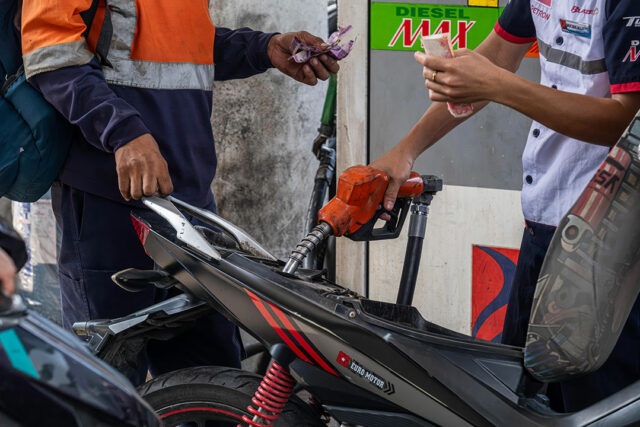
A motorist pays a gas attendant at a gas station on March 1, 2026. — PHILIPPINE STAR/RYAN BALDEMOR

By Katherine K. Chan, Reporter

ELEVATED OIL PRICES and prolonged disruptions amid the widening Middle East war may prompt the Bangko Sentral ng Pilipinas (BSP) to raise the key policy rate as early as its April meeting, Finance Secretary Frederick D. Go said.

“If the price of oil continues to persist at elevated levels, it is most likely that the Monetary Board will consider tightening in the next meeting,” Mr. Go, who is also a Monetary Board member, said in an interview with Bloomberg TV on Tuesday.

The Monetary Board will hold its next rate-setting meeting on April 23.

If realized, it would be the BSP’s first rate hike in over two years or since October 2023.

The Monetary Board has been on an easing path since August 2024, slashing the benchmark policy rate by a total of 225 basis points (bps) to an over three-year low of 4.25%.

It last cut key borrowing costs by 25 bps in February, marking its sixth straight reduction as it sought to recover lost confidence from the flood control corruption scandal.

Mr. Go said a Middle East conflict lasting over six months will take a huge toll on the economy, but anything less will likely trim at most 10 bps from Philippine gross domestic product (GDP) growth.

Economic managers are targeting 5-6% GDP growth this year, and 5.5%-6.5% for 2027.

Meanwhile, BSP Deputy Governor Zeno Ronald R. Abenoja said external headwinds from the widening Middle East war may have derailed the central bank’s projections of an economic recovery due to the potential spillover risks from recent oil price surges.

“This year, we thought we were having a good momentum in terms of stabilizing the overall macroeconomic environment and some push or some momentum in economic activity. And then we have this external shock coming from the Middle East,” he said during the Philippine Stock Exchange’s InvestPH conference in Taguig City on Tuesday.

Mr. Abenoja noted that the BSP is open to supporting the economy through monetary policy amid looming economic risks from the ongoing war.

“We continue to be very much aware of the impact of the sharp and sustained increase in oil prices over the past three weeks. And in particular for us, we are watchful for the spillover effects of this increase in oil prices,” the deputy governor said.

“If needed, we should be able to respond in terms of monetary policy in terms of supporting financial markets in our economy,” he added.

INFLATION TO HEAT UP
In a separate report, ING Think said prolonged oil shocks could push Philippine inflation towards 4% or the upper end of the central bank’s target range.

“The Philippines remains one of the most oil‑exposed economies in the region and is likely to feel higher oil prices sooner than most Asian counterparts such as Thailand or Indonesia, given its modest fuel buffers, rapid domestic price pass‑through and a structurally wider current account deficit,” ING Regional Head of Research for Asia-Pacific Deepali Bhargava, Senior Economist for South Korea and Japan Min Joo Kang, and Chief Economist for Greater China Lynn Song said late Monday.

“In our scenario of sustained oil disruptions for a month, CPI inflation for the Philippines is expected to inch closer to (the) upper end of 4% of Bangko Sentral ng Pilipinas’ target range,” they added.

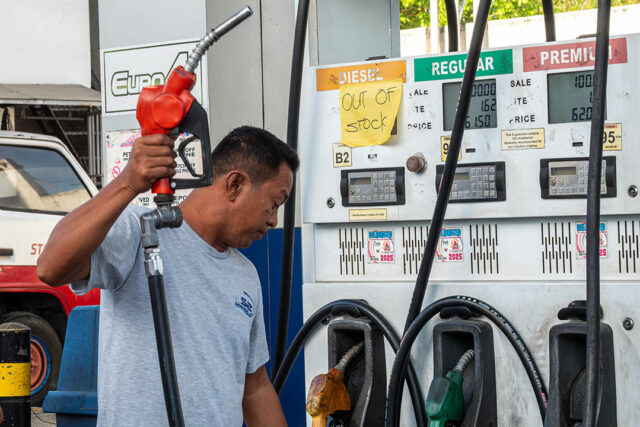
Local fuel retailers hiked pump prices anew on Tuesday, with gasoline up by P12.90 to P16.60 per liter, diesel by P20.40 to P23.90 per liter and kerosene by P6.90 to P8.90 per liter.

This could bring gasoline prices to as much as P91.60 per liter, diesel up to P114.90 per liter and kerosene to P143.79 per liter, according to the Department of Energy.

The country sources about 98% of its crude oil from the Middle East, making it vulnerable to sharp price swings caused by disruptions from the war in the region.

Now in its third week, the Middle East war continues to jolt global oil markets, especially amid ongoing attacks and Iran’s move to block the Strait of Hormuz, a vital oil transit point for almost a fifth of global oil shipments, from the US, Israel and their allies.

Emerging price pressures, the bank’s think tank added, may force the BSP to stand pat despite a still sluggish economy.

WEAK PESO
Meanwhile, ING said the Philippine peso will likely stay in the P59-a-dollar level over the next year as energy shocks from the Middle East war continue to weigh on the local currency.

ING economists noted that the peso may trade at P59.80 against the greenback in the month ahead before strengthening to settle at P59 by yearend.

“Risk of further oil disruptions should keep peso weaker versus the USD (US dollar),” they said.

Oil price hikes amid the escalating Iran-Israel-US war dragged the peso 13.50 centavos lower to close at a new all-time low of P59.87 versus the greenback on Monday, Bankers Association of the Philippines data showed. It also hit its worst intraday low after peaking P59.95 during the late session.

BSP Governor Eli M. Remolona, Jr. told Bloomberg News that the central bank intervened in the foreign exchange market, preventing the local unit from plunging to the P60-a-dollar level.

The central bank chief earlier said that they only step in the foreign exchange market when the peso’s depreciation triggers inflation concerns.

ING also noted that it now sees the Philippines’ current account deficit settling at -4% of its GDP.

Latest BSP data showed that the country’s current account gap narrowed to $16.291 billion in 2025, or -3.3% of GDP, from the $18.565-billion deficit recorded in 2024.

If ING’s estimate holds true, the Philippines’ current account deficit will be wider than the central bank’s projected $15.3-billion gap or -3% of GDP for the year.

Manila says China has said it will not restrict fertilizer exports to the Philippines

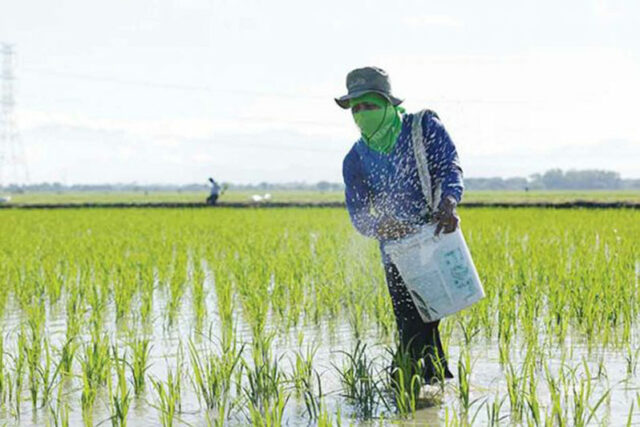
DA.GOV.PH

MANILA — China has assured the Philippines it will not restrict fertilizer exports to the country, although the war in the Middle East is a risk to global supplies, Agriculture Secretary Francisco Tiu Laurel said on Wednesday.

He told reporters the Philippines is also in talks with India and Russia, and is planning discussions with Belarus regarding fertilizer supply.

Mr. Tiu Laurel said the Philippines, which imports most of its fertilizer requirements, had already secured 84% of its needs for this year, but the war in Iran has created uncertainty about whether contracted volumes will be delivered amid hits to supply and rising global prices.

The war has shut down fertilizer plants in the Middle East and severely disrupted shipping routes, including the Strait of Hormuz, which could affect global supplies. The strait is a conduit for about one-third of global trade in fertilizer as well as 20% of oil shipments.

Bureau of Customs data shows the Philippines imported 7.1 million metric tons of fertilizers from 2021 to 2023, mainly from China, Indonesia, Malaysia, Canada, and South Korea. Nitrogenous fertilizers made up 63% of imports.

Mr. Tiu Laurel said Beijing’s assurance came during his meeting with the Chinese ambassador on Tuesday. Energy Secretary Sharon Garin met with the envoy on the same day to discuss bilateral energy cooperation, according to a Facebook post by the Chinese Embassy in Manila.

China, the world’s top oil importer, last week banned fuel exports until at least the end of March, in an attempt to pre-empt domestic shortages.

Ms. Garin this week said the Philippines would not be affected by that ban because it covered new contracts and the country’s deals with Chinese suppliers would remain in force. — Reuters

Iran strikes Tel Aviv with cluster warheads in retaliation for killing of security chief

AN IRANIAN MISSILE flies toward Israel, amid the US-Israel conflict with Iran, as seen from Jerusalem, March 11, 2026. — REUTERS/JAMAL AWAD TPX IMAGES OF THE DAY

DUBAI/TEL AVIV — Iran targeted Tel Aviv with missiles carrying cluster warheads in what it said was retaliation for Israel’s assassination of Iran’s security chief Ali Larijani, Iranian state television reported on Wednesday.

Israel has said that Iran has repeatedly used cluster warheads, which disperse into multiple smaller explosives mid-air and spread over a wide area, making them difficult to intercept. The attack on densely populated Tel Aviv overnight on Tuesday killed two people, bringing the death toll in Israel from the war to at least 14.

In Iran, a projectile hit an area near the Bushehr nuclear power plant on Tuesday evening, however it caused no damage or injuries, Iran told the International Atomic Energy Agency. IAEA chief Rafael Grossi reiterated his call for maximum restraint during the conflict to avoid the risk of a nuclear accident.

Israel and the US have said preventing Iran from developing a nuclear weapons program was one of the goals of the attacks they launched more than two weeks ago, which killed the country’s supreme leader and many other top officials.

The Iranian government on Tuesday confirmed the killing of Mr. Larijani, the most senior figure targeted since the US-Israeli war’s first day, when an Israeli strike killed Iran’s Supreme Leader Ayatollah Ali Khamenei.

Iran’s Supreme National Security Council, which Mr. Larijani led as secretary, sai Mr. Larijani’s son and his deputy, Alireza Bayat, were also killed in an Israeli attack on Monday night.

The targeted killings took place as the US-Israeli war on Iran shows no signs of de-escalation.

Iran’s new supreme leader, Mojtaba Khamenei, has rejected proposals conveyed to Iran’s Foreign Ministry for “reducing tensions or ceasefire with the United States,” according to a senior Iranian official who asked not to be identified.

Mr. Khamenei, attending his first foreign-policy meeting since his appointment, said it was not “the right time for peace until the United States and Israel are brought to their knees, accept defeat, and pay compensation,” according to the official.

The official did not clarify whether the younger Khamenei, who has not yet appeared in photos or on TV since being named last week to replace his slain father, had attended the meeting in person or remotely.

TRUMP SAYS HELP FROM ALLIES TO SECURE STRAIT NOT NEEDED
US-based Iran human rights group HRANA said on Monday that an estimated 3,000-plus people have been killed in Iran since the US-Israeli attacks began at the end of February. Iranian attacks have killed people in Iraq and across the Gulf states, as well as Israel. More than 900 people have died since Israel began attacks on Lebanon on March 2, the Lebanese Health Ministry said on Tuesday.

The Strait of Hormuz, a transit point for a fifth of the global oil trade, remains largely closed as Iran threatens to attack tankers linked to the US and Israel. Oil prices have soared.

US President Donald Trump has repeatedly castigated allied countries in recent days for their cool response to his requests for military help to restore the passage of oil tankers through the strait.

Most US allies in the North Atlantic Treaty Organization (NATO) have told Mr. Trump they don’t want to get involved in the conflict, he said on Tuesday, describing their position as “a very foolish mistake.”

“Because of the fact that we have had such Military Success, we no longer ‘need,’ or desire, the NATO Countries’ assistance — WE NEVER DID!” Mr. Trump wrote on social media, also singling out Japan, Australia and South Korea.

European Union foreign policy chief Kaja Kallas said in an interview that nobody was ready to risk the lives of their people in protecting the strait.

“We have to find diplomatic ways to keep this open so that we don’t have a food crisis, fertilizers crisis, energy crisis as well,” Ms. Kallas said.

The US has given shifting rationales for joining Israel to attack Iran and struggled to explain the legal basis for starting a new war, underscored by the Tuesday resignation of the head of the U.S. National Counterterrorism Center, Joseph Kent. Mr. Kent wrote in his resignation letter to Mr. Trump that Iran “posed no imminent threat to our nation.”

US TARGETS IRAN COASTLINE
Iran has responded to the Israeli-US attacks with wide-ranging strikes on its Gulf neighbors, some of which host US bases.

Gulf Arab states have faced more than 2,000 missile and drone attacks on US diplomatic missions and military bases as well as oil infrastructure, ports, airports, ships and residential and commercial buildings, and most of them aimed at the United Arab Emirates.

Saudi Arabia will host a consultative meeting of foreign ministers from a number of Arab and Islamic countries in Riyadh on Wednesday evening to discuss ways to support regional security and stability, the kingdom’s foreign ministry said.

The United States military said on Tuesday it had targeted sites along Iran’s coastline near the Strait of Hormuz because Iranian anti-ship missiles posed a risk to international shipping there.

Oil prices rose about 3% on Tuesday as Iran renewed its strikes on oil facilities in the United Arab Emirates, and are up around 45% since the start of the war on February 28, raising concerns of a renewed spike in global inflation. The World Food Programme said tens of millions of people will face acute hunger if the war continues through June.

Global airlines sounded the alarm on Tuesday over soaring jet fuel prices, warning of hundreds of millions of extra costs, higher fares and cuts to some routes. Global aviation has been thrown into turmoil, with flights canceled, rescheduled or rerouted as most Middle East airspace remains closed amid fears of missile and drone attacks. — Reuters

House pushed for quick approval of President’s fuel tax powers

MOTORISTS queue at a gasoline station along Norzagaray Road in San Jose del Monte on March 8, 2026. — PHILIPPINE STAR/RYAN BALDEMOR

The chairman of the House of Representatives’ ways and means committee wants the chamber to adopt the Senate version of a bill allowing President Ferdinand R. Marcos, Jr. to suspend the fuel excise tax amid surging oil prices linked to the Iran war.

Marikina Rep. Romero “Miro” S. Quimbo, who heads the committee, said he had asked Majority Leader Ferdinand Alexander “Sandro” A. Marcos III to accept Senate Bill No. 1982, which lets the President reduce or freeze the levy on petroleum products.

“This alignment between the two chambers reflects a shared recognition of the urgency of providing the Executive with a mechanism to address volatility in fuel prices,” Mr. Quimbo said in a statement.

The appeal could fast-track the bill’s enactment by bypassing a bicameral conference committee tasked with reconciling differences between House and Senate versions. President Marcos certified the measure as urgent last week.

The Senate and House proposals differ mainly in duration and automatic triggers. The Senate bill limits the President’s power to three months, while House Bill No. 8418 allows a six-month suspension.

The Senate bill also includes a safeguard: excise tax reductions would automatically revert if the average Dubai crude price falls below $80 per barrel, a condition absent from the House version.

Under the 2017 Tax Reform for Acceleration and Inclusion (TRAIN) law, the Philippines charges P10 per liter on gasoline, P6 on diesel and P5 on kerosene. The law had allowed excise tax suspension when global oil prices exceeded $80 per barrel for three straight months, but that provision expired six years ago.

Lawmakers are racing to give the government temporary powers to ease fuel costs, which risk stoking inflation and weighing on economic growth, as global crude prices remain elevated due to war in the Middle East. — Kenneth Christiane L. Basilio

Samsung brings ecosystem partners together with Smart Wash Business Solutions

Samsung Electronics Philippines is making it more accessible for Filipino entrepreneurs to set up their own business with the launch of its Commercial Laundry Washer and Dryer. The launch will bring together a broad ecosystem of industry partners to support the development of structured commercial laundry operations in the Philippines.

The initiative will be formally introduced during the “Smart Wash Business Solutions” event on March 25, 2026 at the SMX Convention Center at the Mall of Asia, where Samsung and its partners will demonstrate how coordinated support systems can help enable modern commercial laundry facilities.

Authorized dealers, connectivity providers, utilities partners, consultation services, and other industry participants involved in deploying Samsung’s commercial laundry system will be present. Leading the deployment is CYA Industries, a veteran in premium appliance distribution since 2001. CYA oversees the critical phases of installation, system configuration, and operational onboarding, ensuring every facility is optimized for peak performance from day one.

From installation and system configuration to connectivity and operational onboarding, Samsung’s service partners provide a turnkey solution where experts handle the infrastructure, allowing owners to simply “turn the key”. This collaborative environment ensures that business owners can focus on growth while Samsung’s partners support the operational needs of commercial laundry facilities.

Samsung’s commercial laundry system, powered by the SmartThings app, integrates connected machines with operational monitoring capabilities, allowing operators to track machine activity, manage cycles, and monitor system performance.

By combining this intelligent technology with a partner-supported framework, Samsung also hopes to encourage entrepreneurs, property developers, and facility managers to consider opportunities in the commercial laundry sector. By bringing together equipment, connectivity, infrastructure support, and operational guidance within a coordinated framework, the initiative helps simplify what has traditionally been a complex process of setting up and managing commercial laundry operations.

This initiative reflects the vision of Samsung Philippines President Roman Han, Our goal is to empower every sector with innovations that make work smarter, businesses more efficient, and environments more connected.”

To know more about Samsung’s Commercial Laundry Washer and Dryer, please visit https://www.samsung.com/ph/washers-and-dryers/commercial-laundry/.

About Samsung Electronics Co., Ltd.

Samsung inspires the world and shapes the future with transformative ideas and technologies. The company is redefining the worlds of TVs, digital signage, smartphones, wearables, tablets, home appliances and network systems, as well as memory, system LSI and foundry. Samsung is also advancing medical imaging technologies, HVAC solutions and robotics, while creating innovative automotive and audio products through Harman. With its SmartThings ecosystem, open collaboration with partners, and integration of AI across its portfolio, Samsung delivers a seamless and intelligent connected experience. For the latest news, please visit the Samsung Newsroom at news.samsung.com.

Website: https://www.samsung.com/ph/

Facebook: https://www.facebook.com/SamsungPH


Spotlight is BusinessWorld’s sponsored section that allows advertisers to amplify their brand and connect with BusinessWorld’s audience by publishing their stories on the BusinessWorld Web site. For more information, send an email to online@bworldonline.com.

Join us on Viber at https://bit.ly/3hv6bLA to get more updates and subscribe to BusinessWorld’s titles and get exclusive content through www.bworld-x.com.

Google rolls out AI training course for professionals, Gemini update

COURSERA.ORG

Global tech company Google LLC on Tuesday launched an artificial intelligence (AI) training course in the Philippines aimed at helping workers develop practical AI skills for the workplace.

The new Google AI Professional Certificate is already available on Coursera and is composed of six comprehensive courses and a final capstone, delivered by Google experts and AI practitioners.

The courses cover the fundamentals of AI, introducing key concepts and effective prompting in the first course, up to the use of “vibe coding” to build custom and functional applications without coding in the capstone.

Learners will also be taught how to use AI for brainstorming and planning in Course 2, research and insights in Course 3, writing and communication in Course 4, content creation in Course 5, and data analysis in Course 6.

Google said the entire program can be completed in under 10 hours and at the learner’s own pace. Upon completion of each module, a shareable digital certificate is generated, which can be displayed on LinkedIn.

The program also features more than 20 hands-on activities, as well as three months of free access to Google AI Pro, allowing learners to practice with Google’s most advanced models within tools they already use, such as Gmail, Google Docs, and Gemini in Google Sheets.

The tech giant said the program aims to bridge the divide between the growing demand for AI-literate talent, which already has reached a “critical tipping point,” and the limited access to training among workers.

Only 14% of workers have been offered AI training, despite 70% of managers agreeing that an AI-trained workforce is vital for a company’s success, according to recent research by Google and Ipsos, a global market research firm.

NEW GEMINI UPDATE: PERSONAL INTELLIGENCE
Google also earlier launched the new Personal Intelligence feature in its Gemini app, which allows AI to securely access and organize information across Gmail, Photos, and Maps.
The feature is set to roll out soon in the Philippines and across the Asia-Pacific market, Google said.

It turns Search into a more personalized assistant, letting users retrieve information, plan itineraries, or pull details from their emails and photos without switching between apps.

Google said the feature is optional, and users retain full control over which apps are linked to the AI.

On the business side, the Gemini 3 update allows advertisers to target users more accurately by understanding the context of searches, which Google said can reduce irrelevant ads by 40%.

The update also introduces the Universal Commerce Protocol (UCP) and Agentic Checkout, enabling AI to act as a personal shopper and automatically complete purchases when a user’s budget and price criteria are met.

Ads in AI Overviews are currently available in English on both mobile and desktop devices in key APAC regions, Google said. — Edg Adrian A. Eva

ADVERTISEMENT
ADVERTISEMENT