Home Blog Page 1438

Atome secures $75 mln financing from Lending Ark to expand in the Philippines

ATOME.PH

SINGAPORE – Southeast Asian “buy now pay later” provider or fintech firm, Atome, said on Monday that it has secured a $75 million asset-backed financing facility from Lending Ark Asia Secured Private Debt Fund to expand in the Philippines.

Atome is part of Singapore-headquartered Advance Intelligence Group, which is backed by investors including SoftBank Vision Fund 2 and Warburg Pincus.

Lending Ark, advised by CITIC Securities CLSA Capital Partners (HK) Ltd, focuses on secured private credit opportunities in Asia Pacific.

“The Philippines is a key growth market for Atome,” Andy Tan, Atome’s Chief Commercial Officer, said in the statement. “This financing reflects the continued confidence in Atome’s ability to deliver inclusive, risk-managed credit at scale.” – Reuters

India’s $80 bln coal-power boom is running short of water

STOCK PHOTO | Image by jorono from Pixabay

 – April marks the start of the cruelest months for residents of Solapur, a hot and dry district in western India. As temperatures soar, water availability dwindles. In peak summer, the wait for taps to flow can stretch to a week or more.

Just a decade ago, water flowed every other day, according to the local government and residents of Solapur, some 400 km inland from Mumbai.

Then in 2017, a 1,320-megawatt coal-fired power plant run by state-controlled NTPC began operations. It provided the district with energy – and competed with residents and businesses for water from a reservoir that serves the area.

Solapur illustrates the Catch-22 facing India, which has 17% of the planet’s population but access to only 4% of its water resources. The world’s most populous country plans to spend nearly $80 billion on water-hungry coal plants by 2031 to power growing industries like data center operations.

The vast majority of these new projects are planned for India’s driest areas, according to a power ministry document reviewed by Reuters, which is not public and was created for officials to track progress.

Many of the 20 people interviewed by Reuters for this story, which included power company executives, energy officials and industry analysts, said the thermal expansion likely portended future conflict between industry and residents over limited water resources.

Thirty-seven of the 44 new projects named in the undated power ministry shortlist of future operations are located in areas that the government classifies as either suffering from water scarcity or stress. NTPC, which says it draws 98.5% of its water from water-stressed areas, is involved in nine of them.

NTPC said in response to Reuters’ questions that it is “continuously striving towards conservation of water with best of our efforts in Solapur,” including using methods like treating and reusing water. It did not answer queries about potential expansion plans.

India’s power ministry has told lawmakers in parliament, most recently in 2017, that the locations of coal-fired power plants are determined by factors including access to land and water and that state governments are responsible for allocating water to them.

Access to land is the dominant consideration, two federal groundwater board officials and two water researchers told Reuters.

India’s complex and arcane land laws have delayed many commercial and infrastructure projects for years, so power operators under pressure to meet burgeoning demand pick areas where they are likely to face little resistance, said Rudrodip Majumdar, an energy and environment professor at the National Institute of Advanced Studies in Bengaluru.

“They look for areas with easy land availability – minimum resistance for maximum land – even if water is available only far away,” he said.

The federal power ministry, as well as energy and water authorities in Maharashtra state, where Solapur is located, did not respond to queries.

Delhi attempted to reduce its reliance on coal before reversing track after the COVID pandemic. It has invested heavily in renewable energy sources like solar and hydro, but thirsty thermal power will still be dominant for the coming decades.

India’s former top energy bureaucrat Ram Vinay Shahi said ready access to power was strategically important for the country, whose per-capita power consumption is far lower than its regional rival China.

“The only energy resource we have in the country is coal,” he said. “Between water and coal, preference is given to coal.”


‘NOTHING’ IN SOLAPUR?

Solapur resident Rajani Thoke plans her life around water in high summer. On days with supply, “I do not focus on anything other than storing water, washing clothes and such work,” said the mother of two, who strictly polices her family’s water use.

Sushilkumar Shinde, the federal power minister who approved the Solapur plant in 2008, when the area had already been classified “water scarce,” told Reuters he helped NTPC procure the land by negotiating payments to locals.

The member of the opposition Congress party, who won election to retain Solapur’s parliamentary seat a year after the plant’s approval, defended the operation on grounds of NTPC’s sizable investment. The $1.34 billion plant generated thousands of jobs during its construction and now provides part-time employment to about 2,500 locals.

“I made sure farmers got good money for the land NTPC acquired,” he said, adding that mismanagement by local authorities was to blame for water shortages.

Solapur municipal official Sachin Ombase acknowledged that water distribution infrastructure had not kept up with population growth, but said that authorities were trying to address the problem.

Shinde said “there was nothing” in Solapur in 2008 and that residents who received land payments had no reason to oppose the plant.

Researcher Shripad Dharmadhikary, who founded environment advocacy group Manthan Adhyayan Kendra, said local politicians often supported splashy infrastructure projects to boost their popularity.

Any “problems come up much later,” he said.

Even before the Solapur plant started operating, there were signs of the trouble to come. The first of its two units was supposed to start generating power by the middle of 2016, but it was delayed by more than 12 months because of years of severe water shortages, according to a 2020 regulatory filing.

The absence of nearby water resources meant the station ended up drawing on water from a reservoir about 120 km away. Such distances can sharply increase costs and the risk of water theft, said Dharmadhikary and two plant sources.

As of May 2023, the station is among India’s least water-efficient, according to the latest available federal records. It also has among the lowest capacity utilization rates of coal-fired plants, according to data from government think-tank NITI Aayog.

NTPC said its data indicates the Solapur plant has an efficiency ratio in line with the country’s norms.

Indian stations typically consume twice as much water as their global counterparts, according to the Delhi-based Centre for Science and Environment think-tank.

Solapur plant officials told reporters in March that capacity utilization will improve with increasing demand, indicating that water consumption could surge in the future.

A forthcoming survey on water use in Solapur led by state groundwater authorities and reviewed by Reuters showed that irrigation demand in the district outstrips supply by a third.

Dharmes Waghmore owns farmland a few miles from the plant and said that developing it would provide more financial security than his current casual work.

But he said borrowing money to develop the land by drilling a bore well is too risky: “What if there’s no water?”

Kuladeep Jangam, a top local official, said authorities were struggling to draw businesses to Solapur.

The lack of “water neutralizes all other pull factors,” he said.


THIRST FOR WATER

Since 2014, India has lost 60.33 billion units of coal-power generation across the country – equivalent to 19 days of coal-power supply at June 2025 levels – because water shortages force plants to suspend generation, according to federal data.

Among the facilities that have struggled with shortages is the 2,920 MW Chandrapur Super Thermal Power Station, one of India’s largest.

Located about 500 km northeast of Solapur but also in a water-stressed area, the plant shuts several of its units for months at a time when the monsoon delivers less rain than usual, according to NITI Aayog data.

Despite the challenges, the plant is considering adding 800 MW of new capacity, according to the power ministry list seen by Reuters and half a dozen sources at Mahagenco, which operates the station.

The document indicates the plant hasn’t identified a water source for the expansion, though it has already sourced its coal.

State-owned Mahagenco did not respond to Reuters’ questions.

The plant’s thirst for water has previously led to tensions with residents of nearby Chandrapur city. Locals protested the station during a 2017 drought, prompting officials such as local lawmaker Sudhir Mungantiwar to order it to divert water to homes.

Mungantiwar, however, says he supports the expansion of the plant, which he hopes will lead to it retiring water-inefficient older units.

But the station has already delayed a plan to decommission two polluting and water-guzzling power units with a capacity of 420 MW by about seven years, citing instructions from the federal government, the company sources said.

The Indian government asked power companies not to retire old thermal plants until the end of the decade due to a surge in demand following the pandemic, Reuters has reported.

Chandrapur resident Anjali, who goes by one name, said she is resigned to visiting a tap installed by the station near one of its gates for drinking water.

“We’re poor, we make do with whatever we can get,” she said. – Reuters

China’s May exports slow, deflation deepens as tariffs bite

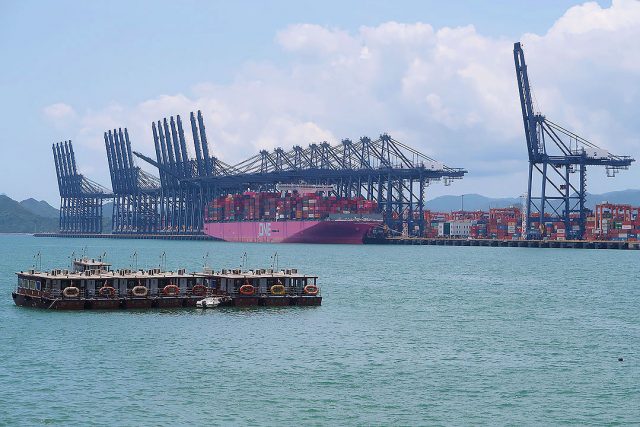
CRANES AND CONTAINERS are seen at the Yantian port in Shenzhen, China. — REUTERS

 – China’s May exports growth slowed to a three-month low as U.S. tariffs slammed shipments, while factory-gate deflation deepened to its worst level in two years, heaping pressure on the world’s second-largest economy on both the domestic and external fronts.

Exports expanded 4.8% year-on-year in value terms in May, slowing from the 8.1% jump in April and missing the 5.0% growth expected in a Reuters poll, customs data showed on Monday, despite a lowering of U.S. tariffs on Chinese goods which had taken effect in early April.

Imports dropped 3.4% year-on-year, deepening sharply from the 0.2% decline in April and worse than the 0.9% downturn expected in the Reuters poll.

Exports had surged 12.4% year-on-year and 8.1% in March and April, respectively, as factories rushed shipments to the U.S. and other overseas manufacturers to avoid U.S. President Trump’s hefty levies on China and the rest of the world.

While exporters in China found some respite in May as Beijing and Washington agreed to suspend most of their levies for 90 days, tensions between the world’s two largest economies remain high and negotiations are underway over issues ranging from China’s rare earths controls to Taiwan.

Trade representatives from China and the U.S. are meeting in London on Monday to resume talks after a phone call between their top leaders on Thursday.

China’s May trade surplus came in at $103.2 billion, up from the $96.18 billion the previous month.

Beijing in May rolled out a series of monetary stimulus measures, including cuts to benchmark lending rates and a 500 billion yuan low-cost loan program for supporting elderly care and services consumption.

The measures are aimed at cushioning the trade war’s blow to an economy that relied on exports in its recovery from the pandemic shocks and a protracted property market slump.


DEFLATIONARY PRESSURES

Producer and consumer price data, released by the National Bureau of Statistics on the same day, showed that deflationary pressures worsened last month.

The producer price index fell 3.3% in May from a year earlier, after a 2.7% decline in April and marked the deepest contraction in 22 months, while consumer prices extended declines, having dipped 0.1% last month from a year earlier.

Cooling factory activity also highlights the impact of U.S. tariffs on the world’s largest manufacturing hub, dampening faster services growth as suspense lingers over the outcome of U.S.-China trade talks. – Reuters

South Korea president calls for measures to respond to rising prices

Image by manu zoli from Pixabay

 – South Korean President Lee Jae-myung on Monday called for measures to stabilize prices, saying the increasing cost of living is causing “too much pain”.

The newly elected leader, who has prioritized economic recovery, made the comments at an economy taskforce meeting with officials.

“Prices are causing too much pain for the people, so please check the current situation and see if there are any possible measures and report them even before the next meeting,” Lee said, referring to higher prices of instant noodles.

Prices of chicken and eggs have risen since an outbreak of avian flu in Brazil, a vice finance minister told Lee during the meeting.

The government has restricted chicken imports from avian flu-affected areas in Brazil.

The left-leaning president has been widely tipped to usher in an era of fiscal expansion to boost cash subsidies and welfare, aiding economic growth albeit by increasing debt supply.

Asia’s fourth-largest economy contracted in the first three months of the year as exports and consumption stalled amid fear over the impact of U.S. tariffs, fanning expectations interest rate cuts.

Lee said he would also discuss an extra budget at the Monday meeting. – Reuters

Key US-China trade talks set for Monday in London

REUTERS

 – Top U.S. and Chinese officials will sit down in London on Monday for talks aimed at defusing the high-stakes trade dispute between the two superpowers that has widened in recent weeks beyond tit-for-tat tariffs to export controls over goods and components critical to global supply chains.

At a still-undisclosed venue in London, the two sides will try to get back on track with a preliminary agreement struck last month in Geneva that had briefly lowered the temperature between Washington and Beijing and fostered relief among investors battered for months by U.S. President Donald Trump’s cascade of tariff orders since his return to the White House in January.

“The next round of trade talks between the U.S. and China will be held in the UK on Monday,” a UK government spokesperson said on Sunday. “We are a nation that champions free trade and have always been clear that a trade war is in nobody’s interests, so we welcome these talks.”

Gathering there will be a U.S. delegation led by Treasury Secretary Scott Bessent, Commerce Secretary Howard Lutnick and U.S. Trade Representative Jamieson Greer, and a Chinese contingent helmed by Vice Premier He Lifeng.

The second-round of meetings comes four days after Mr. Trump and Chinese leader Xi Jinping spoke by phone, their first direct interaction since Mr. Trump’s January 20 inauguration.

During the more than one-hour-long call, Mr. Xi told Mr. Trump to back down from trade measures that roiled the global economy and warned him against threatening steps on Taiwan, according to a Chinese government summary.

But Mr. Trump said on social media the talks focused primarily on trade led to “a very positive conclusion,” setting the stage for Monday’s meeting in London.

The next day, Mr. Trump said Mr. Xi had agreed to resume shipments to the U.S. of rare earths minerals and magnets. China’s decision in April to suspend exports of a wide range of critical minerals and magnets upended the supply chains central to automakers, aerospace manufacturers, semiconductor companies and military contractors around the world.

That had become a particular pain point for the U.S. in the weeks after the two sides had struck a preliminary rapprochement in talks held in Switzerland.

There, both had agreed to reduce steep import taxes on each other’s goods that had had the effect of erecting a trade embargo between the world’s No. 1 and 2 economies, but U.S. officials in recent weeks accused China of slow-walking on its commitments, particularly around rare earths shipments.

“We want China and the United States to continue moving forward with the agreement that was struck in Geneva,” White House spokeswoman Karoline Leavitt told the Fox News program “Sunday Morning Futures” on Sunday. “The administration has been monitoring China’s compliance with the deal, and we hope that this will move forward to have more comprehensive trade talks.”

The inclusion at the London talks of Mr. Lutnick, whose agency oversees export controls for the U.S., is one indication of how central the issue has become for both sides. Mr. Lutnick did not attend the Geneva talks, at which the countries struck a 90-day deal to roll back some of the triple-digit tariffs they had placed on each other since Trump’s inauguration.

That preliminary deal sparked a global relief rally in stock markets, and U.S. indexes that had been in or near bear market levels have recouped the lion’s share of their losses.

The S&P 500 Index .SPX, which at its lowest point in early April was down nearly 18% after Mr. Trump unveiled his sweeping “Liberation Day” tariffs on goods from across the globe, is now only about 2% below its record high from mid-February. The final third of that rally followed the U.S.-China truce struck in Geneva.

Still, that temporary deal did not address broader concerns that strain the bilateral relationship, from the illicit fentanyl trade to the status of democratically governed Taiwan and U.S. complaints about China’s state-dominated, export-driven economic model.

While the UK government will provide a venue for Monday’s discussions, it will not be party to them but will have separate talks later in the week with the Chinese delegation. – Reuters

Does U.S. law allow Trump to send troops to quell protests?

REUTERS

President Donald Trump has deployed National Guard troops to California after two days of protests by hundreds of demonstrators against immigration raids, saying that the protests interfered with federal law enforcement and framing them as a possible “form of rebellion” against the authority of the U.S. government.

California Governor Gavin Newsom on Sunday said he had formally requested that the Trump Administration rescind “its unlawful deployment of troops in Los Angeles County” and return them to his command.


WHAT LAWS DID TRUMP CITE TO JUSTIFY THE MOVE?

Mr. Trump cited Title 10 of the U.S. Code, a federal law that outlines the role of the U.S. Armed Forces, in his June 7 order to call members of the California National Guard into federal service.

A provision of Title 10 – Section 12406 – allows the president to deploy National Guard units into federal service if the U.S. is invaded, there is a “rebellion or danger of rebellion” or the president is “unable with the regular forces to execute the laws of the United States.”


WHAT ARE NATIONAL GUARD TROOPS ALLOWED TO DO UNDER THE LAW CITED IN TRUMP’S ORDER?

An 1878 law, the Posse Comitatus Act, generally forbids the U.S. military, including the National Guard, from taking part in civilian law enforcement.

Section 12406 does not override that prohibition, but it allows the troops to protect federal agents who are carrying out law enforcement activity and to protect federal property.

For example, National Guard troops cannot arrest protesters, but they could protect U.S. Immigration and Customs Enforcement who are carrying out arrests.


WHAT ARE THE IMPLICATIONS FOR FREEDOM OF SPEECH?

The First Amendment of the U.S. Constitution guarantees the right to assembly, freedom of speech and the press.

Experts have said that Trump’s decision to have U.S. troops respond to protests is an ominous sign for how far the president is willing to go to repress political speech and activity that he disagrees with or that criticizes his administration’s policies.


IS TRUMP’S MOVE SUSCEPTIBLE TO LEGAL CHALLENGES?

Four legal experts from both left- and right-leaning advocacy organizations have cast doubt on Mr. Trump’s use of Title 10 in response to immigration protests calling it inflammatory and reckless, especially without the support of California’s Democratic Governor Gavin Newsom, who has said Mr. Trump’s actions would only escalate tensions.

The protests in California do not rise to the level of “rebellion” and do not prevent the federal government from executing the laws of the United States, experts said.

Title 10 also says “orders for these purposes shall be issued through the governors of the States,” but legal experts said that language might not be an obstacle. Legislative history suggests that those words were likely meant to reflect the norms of how National Guard troops are typically deployed, rather than giving a governor the option to not comply with a president’s decision to deploy troops.


COULD CALIFORNIA SUE TO CHALLENGE TRUMP’S MOVE?

California could file a lawsuit, arguing that deployment of National Guard troops was not justified by Title 10 because there was no “rebellion” or threat to law enforcement. A lawsuit might take months to resolve, and the outcome would be uncertain. Because the protests may be over before a lawsuit is resolved, the decision to sue might be more of a political question than a legal one, experts said.


WHAT OTHER LAWS COULD TRUMP INVOKE TO DIRECT THE NATIONAL GUARD OR OTHER U.S MILITARY TROOPS?

Mr. Trump could take a more far-reaching step by invoking the Insurrection Act of 1792, which would allow troops to directly participate in civilian law enforcement, for which there is little recent precedent.

Casting protests as an “insurrection” that requires the deployment of troops against U.S. citizens would be riskier legal territory, one legal expert said, in part because mostly peaceful protests and minor incidents aren’t the sort of thing that the Insurrection Act were designed to address.

The Insurrection Act has been used by past presidents to deploy troops within the U.S. in response to crises like the 1794 Whiskey Rebellion and the rise of the Ku Klux Klan in the immediate aftermath of the American Civil War. The law was last invoked by President George H.W. Bush in 1992, when the governor of California requested military aid to suppress unrest in Los Angeles following the Rodney King trial.

But, the last time a president deployed the National Guard in a state without a request from that state’s governor was 1965, when President Lyndon Johnson sent troops to protect civil rights demonstrators in Montgomery, Alabama. – Reuters

NG debt service bill soars in April

REUTERS

THE NATIONAL Government’s (NG) debt service bill sharply increased year on year in April as amortization payments more than doubled, the Bureau of the Treasury (BTr) reported.

Data from BTr showed that the debt service bill went up by 73.72% to P280.9 billion in April from P161.7 billion in the same month last year.

Month on month, the debt service bill also rose by 53.2% from P183.36 billion in March.

Debt service refers to the payments made by the government on domestic and foreign borrowings.

In April, amortization payments stood at P234.45 billion, up 148.89% from P94.2 billion in the same month in 2024.

The bulk of debt payments in April were made up of amortization payments, BTr data showed.

Principal payments on domestic debt surged by 208.23% to P169.83 billion in April from P55.1 billion a year ago.

Amortization paid on foreign debt increased by 65.27% to P64.63 billion in April from P39.1 billion in April 2024.

Meanwhile, interest payments slid by 31.19% to P46.45 billion from P67.5 billion a year earlier.

Domestic interest payments went down by 34.37% to P30.47 billion in April from P46.43 billion in the same month last year.

This was composed of P21.3 billion in fixed-rate Treasury bonds, P3.84 billion in Treasury bills (T-bills), and P3.58 billion in retail Treasury bonds and others (P1.76 billion).

Interest payments for foreign borrowings dropped by 24.17% to P15.98 billion in April from P21.07 billion a year prior.

Rizal Commercial Banking Corp. Chief Economist Michael L. Ricafort said the increase in debt servicing was primarily due to the P140-billion Treasury bond payments in early April.

“However, there would be relatively large NG debt/Treasury bond maturities from August-September 2025 that could be principal payments that need to be paid by then,” Mr. Ricafort said in a Viber Message.

Mr. Ricafort also said the rate cuts from the Bangko Sentral ng Pilipinas and the US Federal Reserve from the latter part of 2024 may have also partly helped in reducing NG interest payments.

YEAR TO DATE
Meanwhile, for the first four months of the year, the NG debt service bill stood at P622.92 billion, a 45.73% decline from P1.15 trillion in the same period last year.

Amortization payments slumped by 62.19% to P335.47 billion in the January-to-April period from P887.24 billion. This accounted for 53.85% of the four-month tally.

Amortization payments on domestic debt fell by 77.42% to P170.4 billion, while external payments increased by 24.61% to P165.07 billion.

Meanwhile, interest payments rose by 10.35% to P287.45 billion in the January-to-April period from P260.49 billion in the same period a year ago.

Interest payments on domestic debt stood at P209.03 billion, 12.8% higher annually from P185.31 billion in 2024.

This was composed of P146.13 billion in fixed-rate Treasury bonds, P43.21 billion in retail Treasury bonds, P16.08 billion in Treasury bills (T-bills), and others (P3.63 billion).

On the other hand, external debt inched up by 4.3% to P78.42 billion in the first four months from P75.18 billion a year ago.

“The maturity of government securities caused the uptick in debt payments for the government, specifically government bonds,” Reinielle Matt M. Erece, an economist at Oikonomia Advisory and Research, Inc., said in a Viber message.

Mr. Erece said he expects debt payments to rise in the coming months.

“The government debt service bill may continue to increase in the next few months as government securities saw high demand mature. In addition, the long-term fiscal consolidation plan of the government can also explain elevated debt payments to try and reduce the country’s debt burden,” he said.

In 2025, the debt service program is set at P2.051 trillion, consisting of P1.203 trillion in principal payments and P848.031 billion in interest payments.

The NG debt stock registered a fresh high of P16.75 trillion as of the end-April. It is projected to hit P17.35 trillion by yearend.

The debt-to-gross domestic product (GDP) ratio rose to 62% as of end-March — the highest in 20 years.

“The country remains firmly on track to reduce the NG debt-to-GDP ratio to below 60% by the end of the President’s term,” the Department of Finance said last week. — A.R.A. Inosante

Below-target inflation supports case for another rate cut, analysts say

PEOPLE buy face masks at a stall in Carriedo, Manila. — PHILIPPINE STAR/RYAN BALDEMOR

THE BANGKO SENTRAL ng Pilipinas (BSP) will be able to further reduce interest rates amid below-target inflation and weak economic growth, analysts said.

“With inflation holding near multi-year lows and the peso showing relative strength, a rate cut from the BSP in June has become more certain,” Bank of the Philippine Islands Lead Economist Emilio S. Neri, Jr. said.

This after inflation cooled to an over five-year low of 1.3% in May, bringing the five-month average to 1.9%. This is below the BSP’s 2-4% target band.

Inflation is also seen to remain well contained for the remainder of the year, analysts said.

Nomura Global Markets Research analysts Euben Paracuelles and Nabila Amani said headline inflation could average 1.8% this 2025.

“Our forecast pencils in CPI (consumer price index) inflation becoming more benign at 1.3% in the third quarter, down from 2% year-to-date, before edging back up to 2% by yearend,” they said in a report. 

The central bank expects inflation to average 2.3% this year.

“This benign inflation outlook is underpinned by various factors, such as a negative output gap, low crude oil prices and the government maintaining supply-side measures (to keep rice prices low, in particular),” Nomura added.

Weaker-than-expected first-quarter gross domestic product (GDP) growth would also justify further easing, Mr. Neri said.

Consumption growth has not yet returned to pre-pandemic levels, which has kept overall GDP below 6%.

“However, with inflation stabilizing at lower levels, there is room for further recovery in the coming months,” he added.

The Philippine economy grew by a weaker-than-anticipated 5.4% in the January-to-March period, sharply slowing from the 5.9% expansion a year ago.

“Coupled with the weaker-than-expected GDP print in the first quarter, we think the latest inflation report supports the case for another 25-bp (basis point) cut at the BSP’s June 19 meeting,” Chinabank Research said.

The Monetary Board’s next policy meeting is scheduled for June 19.

In April, the BSP resumed its rate-cutting cycle with a 25-bp rate cut, bringing the benchmark rate to 5.5%.

Nomura expects the BSP to deliver another 75 bps worth of cuts for the remainder of the year.

“We continue to believe BSP has scope to steadily shift towards a more accommodative stance, as inflation expectations remain well-anchored and domestic demand is still subdued,” it said.

“We reiterate our call for BSP to deliver an additional 75 bps of rate cuts this year, taking the policy rate to a below neutral 4.75%.”

BSP Governor Eli M. Remolona, Jr. has signaled the possibility of two more rate cuts this year, in increments of 25 bps. He also said another 25-bp cut this month is still “on the table.”

The central bank has reduced borrowing costs by a total of 100 bps so far since it began easing rates in August last year.

RISKS AHEAD
Despite macroeconomic indicators pointing to a cut, Mr. Neri said the BSP must still remain cautious. 

“However, while the environment favors a cut, caution is still warranted. A shift in US monetary policy remains a key risk, particularly if inflation there rises further due to tariffs.”

“An overly aggressive easing cycle could leave the Philippine economy exposed to a sharp reversal in the Federal Reserve’s stance, potentially forcing the BSP into abrupt and sizable rate hikes in response,” he added.

US Federal Reserve policymakers have already signaled they are in no rush to cut interest rates, and a government report on Friday showing the labor market is far from crumbling amid big trade policy changes only cements that stance, Reuters reported.

Financial markets have been betting the Fed will wait until September to cut rates and will deliver a second reduction in borrowing costs by December.

Meanwhile, Chinabank Research said the central bank will also consider the recent wage hike proposal and its impact on prices.

“The BSP will likely remain cognizant of persisting upside risks to the inflation outlook, including upticks in food prices and the proposed legislated wage hike.”

The House of Representatives last week approved on third and final reading a bill seeking to raise the minimum daily wage by P200 across the board. If passed into law, this would mark the first legislated national wage hike since the late 1980s.

“Looking ahead, we expect inflation to remain low in the next months, though a hefty increase in the minimum wage could add to inflationary pressures,” Chinabank added.

Business groups have warned that the proposed wage hike could lead to closure of small businesses, joblessness and higher cost of goods and services. Luisa Maria Jacinta C. Jocson

Assets of Philippines’ largest banks expand by 9.5% in 1st quarter

STOCK PHOTO | Image by Dragana_Gordic from Freepik

By Pierce Oel A. Montalvo, Researcher

THE COMBINED ASSETS of the Philippines’ largest banks grew by nearly 10% in the first quarter compared with a year earlier, driven by lower interest rates.

In the latest edition of BusinessWorld’s quarterly banking report, the aggregate assets of 44 universal and commercial banks rose by 9.51% year on year to P26.84 trillion in the first three months of 2025, higher than P24.51 trillion in the same quarter in 2024.

However, this pace was slower than the 10.02% logged in the fourth quarter.

Top 10 Biggest Banks by Total Assets

Latest data from the Bangko Sentral ng Pilipinas (BSP) showed banks’ combined assets rose by 5.5% to P26.89 trillion as of end-April from P25.48 trillion in the same period a year ago. (Related story: Banks’ assets rise to P26.89 trillion at end-April).

Meanwhile, total loans of these big banks expanded by 13.46% to P14.03 trillion in the January-to-March period, a tad faster than the 12.32% posted in the same period a year earlier.

Quarter on quarter, loan growth slowed from 13.59% in the fourth quarter of 2024.

The growth in both assets and loans may be attributed to slowing inflation, which prompted the BSP to continue its easing cycle. Lower interest rates make borrowing cheaper, meaning more individuals and businesses will take out loans, leading to increased lending activity.

Inflation averaged 2.2% in the first quarter, within BSP’s target of 2-4%.

The BSP reduced interest rates by a total of 100 bps since it began its easing cycle in August last year. It kept the benchmark rate at 5.75% during its February meeting but further slashed it by 25 bps to 5.5% in April.

Nonperforming loans (NPL) ratio, or the share of bad loans to the total loan portfolio stood at 3.16% in the first quarter.

While this was higher than the 3.11% in the fourth quarter of 2024, the NPL ratio was slightly lower than the 3.6% posted in the same period last year.

Loans are considered nonperforming if the principal and/or interest are unpaid for more than 90 days from the contractual due date. These may pose risks to the lenders’ asset quality as borrowers are likely to default on these debts.

On the other hand, the net NPL ratio eased to 1.42% from 1.5% posted a year earlier.

Meanwhile, the bank’s median return on equity (RoE), an indicator of profitability, fell to 7.3%, from the 8.01% posted in the same period a year ago.

The RoE or the ratio of net profit to average capital, measures the amount that shareholders make on every peso they invest in a company.

Additionally, these big banks’ median capital adequacy ratio, which reflects the lender’s ability to absorb losses from risk-weighted assets, reached 19.71% during the period.

This was slightly higher than 19.64% in the first quarter of 2024, but lower than 20.73% in the fourth quarter.

The ratio remained well above the 10% regulatory minimum set by the central bank as well as the 8% international minimum standard under the Basel III framework.

The leverage ratio, which gauges the institution’s ability to absorb shocks by measuring the bank’s capital relative to total exposure, stood at a median of 11.27% during the period.

The current figure exceeded the central bank’s 5% guideline as well as the international standard of 3%.

During the period, the big banks’ net interest margin hit 3.76% from 3.32% a year earlier. This is an indicator of banks’ investing efficiency by dividing annualized net interest income by average earning assets.

Meanwhile, return on assets, which measures the profit generated per peso of an asset, climbed to 1.71% in the first quarter from 1.6% a year earlier and 1.55% from the last three months of 2024.

LARGEST BANKS
In the first quarter, BDO Unibank, Inc. (BDO) remained the largest bank by total assets with P4.83 trillion, followed by Metropolitan Bank & Trust Co. (Metrobank) with P3.51 trillion and Land Bank of the Philippines (LANDBANK) with P3.45 trillion.

The Sy-led bank also kept its lead in total loans, issuing P3.25 trillion in the first quarter. This was followed by Bank of the Philippine Islands (BPI) with P2.29 trillion and Metrobank with P1.83 trillion.

In terms of deposits, BDO also led the industry with P3.84 trillion, followed by LANDBANK with P3.03 trillion and BPI with P2.58 trillion.

Among banks with assets of at least P100 billion, Security Bank Corp. posted the fastest year-on-year asset growth of 32.7%, followed by Citibank NA (24.71%), and Rizal Commercial Banking Corp. (17.3%).

In terms of loan growth, Asia United Bank Corp. was the most aggressive lender during the period, with loan growth at 33.51%, followed by China Banking Corp. (18.47%) and Security Bank Corp. (18.42%).

BusinessWorld Research has been tracking the financial performance of the country’s large banks quarterly since the late 1980s using banks’ published statements.

EDC eyes to spend up to P30B to drill 40 geothermal wells through 2026

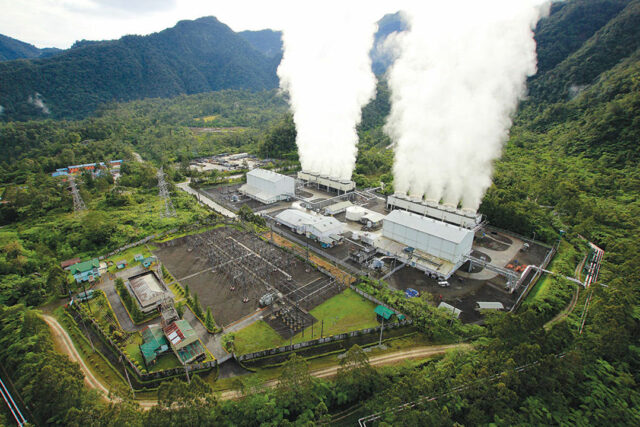
EDC

GEOTHERMAL POWER PRODUCER Energy Development Corp. (EDC) plans to invest up to P30 billion to drill 40 new wells through 2026, its president said.

“Our total estimate for the 40 wells is around P30 billion,” EDC President and Chief Operating Officer Jerome H. Cainglet told reporters on May 29.

Last year, EDC drilled 24 new wells, with six more scheduled for this year and five in 2026, he said.

“First Gen geothermal, through our subsidiary EDC, undertook the most aggressive drilling campaign in its history — with 24 new wells drilled in 2024, while increasing our rig count to seven from only one operational rig at the start of the year,” said EDC Vice-Chairman and Chief Executive Officer Francis Giles B. Puno.

Following the drilling campaign, EDC is currently commissioning 83 megawatts (MW) of new geothermal capacity and 40 megawatt-hours (MWh) of battery energy storage, which can provide backup power.

The capacities are sourced from the 29-MW Palayan Binary, 28-MW Mahanagdong Binary, 20-MW Tanawon, and 5.6-MW Bago Binary geothermal power projects.

EDC’s battery energy storage system (BESS) portfolio includes the 20-MWh BacMan (Bacon-Manito) BESS, 10-MWh Negros BESS, and 10-MWh Tongonan BESS.

“Numerous other plant improvements will deliver more GWh (gigawatt-hours) generation for a prolonged period,” Mr. Puno said.

For greenfield geothermal development, Mr. Puno said the company is pursuing its first exploration drilling campaign for the Amacan growth project in Mindanao.

EDC, the renewable energy arm of Lopez-led First Gen Corp., has an installed capacity of 1,480.19 MW, representing around 20% of the country’s total installed renewable energy capacity.

First Gen has allocated a capital expenditure budget of $601 million (P33.5 billion), with the majority of funds earmarked for EDC’s geothermal operations.

The Lopez-led company aims to expand its renewable energy portfolio to 13 gigawatts by 2030. — Sheldeen Joy Talavera

Allied Care Experts (ACE) Malolos Doctors, Inc. to 2025 hold Annual Stockholders’ Meeting on June 24

NOTICE OF ANNUAL STOCKHOLDERS’ MEETING

Dear Stockholders,

Please be informed that the Annual Stockholders’ Meeting of Allied Care Experts (ACE) Malolos Doctors, Inc. (“ACE Malolos Doctors”) will be held on June 24, 2025 (Tuesday) at 8:00 o’clock in the morning, hybrid, via face to face at the 10th Floor, ACE Malolos Doctors Multi-Purpose Hall, Capitol View Park, Barangay Bulihan, Malolos, Bulacan and via Zoom.

For those who will be attending via Zoom, please register on or before June 23, 2025 5:00 p.m., through the following link: https://us02web.zoom.us/meeting/register/IatK7bEkT6iTiiYx-sNyDA

The link will provide you the process for the registration. You will receive a confirmation email once you have successfully registered in the online platform, including the details and procedures for the conduct of the meeting. Voting will be done via the online tool which you can access once you have logged in to the meeting; voting in the election of directors may also be done in absentia through the above link.

The Agenda:

  1. Call to Order
  2. Invocation
  3. Determination of Quorum
  4. Welcome Message from the Chairman of the Board
  5. Reading and Approval of the Minutes of the Y2024 Annual Stockholders’ Meeting
  6. Audited Financial Report for Y2024
  7. President’s Report
  8. Ratification of the Acts and Proceedings of the Board of Directors, Officers, and Management of the Corporation
  9. Election of the Board of Directors Y2025-2026
  10. Appointment of External Auditor Y2025
  11. Other Matters
  12. Adjournment

Only stockholders of record at the close of business on May 24, 2025, Saturday, shall be entitled to notice of and to vote at the meeting. If you cannot personally attend the meeting, you may opt to send your proxy to attend in your behalf. Kindly submit your proxy form with the undersigned, via email, at ace.malolos.doctors@gmail.com not later than 5:00 p.m. on June 23, 2025 to enable your proxy to register in the Zoom Webinar. Attached is a sample proxy form for your reference. [NOTE: Management is not soliciting proxies.]

The meeting shall be recorded (visual and audio) for future reference.

The Information Statement and Management Report and SEC Form 17-A are available at the Corporation’s website www.acemalolosdoctors.com

You may contact the undersigned via email at ace.malolos.doctors@gmail.com or call 044-8167698 if you have inquiries/concerns regarding the meeting.

Very truly yours,

(Original signed)
LUZCIELO M. ROXAS, MD
Corporate Secretary


Spotlight is BusinessWorld’s sponsored section that allows advertisers to amplify their brand and connect with BusinessWorld’s audience by publishing their stories on the BusinessWorld Web site. For more information, send an email to online@bworldonline.com.

Join us on Viber at https://bit.ly/3hv6bLA to get more updates and subscribe to BusinessWorld’s titles and get exclusive content through www.bworld-x.com.

Top Frontier Investment Holdings, Inc. announces Annual Stockholders’ Meeting on July 9 via remote communication

NOTICE OF 2025 ANNUAL STOCKHOLDERS’ MEETING
July 09, 2025

The 2025 Annual Stockholders’ Meeting of TOP FRONTIER INVESTMENT HOLDINGS, INC. will be held on July 09, 2025 (Wednesday) at 2:00 p.m. The Company will conduct the Meeting through remote communication.

The proceedings will be livestreamed at the Company’s website www.topfrontier.com.ph. The Chairman will preside the Meeting at 40 San Miguel Avenue, Mandaluyong City, Metro Manila, Philippines.

The Agenda of the 2025 Annual Stockholders’ Meeting is as follows:

  1. Certification of Notice and Quorum
  2. Approval of the Minutes of the Annual Stockholders’ Meeting held on July 09, 2024
  3. Presentation of the Annual Report
  4. Ratification of Acts and Proceedings of the Board of Directors and Corporate Officers
  5. Appointment of External Auditors
  6. Election of the Board of Directors
  7. Approval of the Per Diem Allowance for Directors
  8. Other Matters
  9. Adjournment

The electronic copies of the Minutes of the Annual Stockholders’ Meeting held on July 09, 2024, the Notice of the 2025 Annual Stockholders’ Meeting, the Definitive Information Statement (together with the Management Report), the sample ballot and proxy form, the 2024 Annual Report (SEC Form 17-A), the 1st Quarter 2025 Report (SEC Form 17-Q), the summary of the resolutions of the Board of Directors since July 09, 2024, and other pertinent documents for the 2025 Annual Stockholders’ Meeting, are available at the Company’s website and can be easily accessed through this link: www.topfrontier.com.ph/index.php/investor/TFASM2025. The aforementioned Company reports and other disclosures are likewise available in the Philippine Stock Exchange Electronic Disclosure Generation Technology (PSE Edge).

Stockholders can only attend the 2025 Annual Stockholders’ Meeting by remote communication by following the procedure summarized below.

a. Stockholders may view the livestream of the meeting by accessing the link provided in the Company website www.topfrontier.com.ph. There will be an audiovisual recording of the proceedings, for future reference.

b. Attendance of the stockholders of record as of May 30, 2025 shall be counted, and their votes will be cast, through ballots submitted by the stockholders or their proxies. The deadline for the submission of ballots and proxies is on June 25, 2025.  Ballots and proxies may be sent through email at stockholders@topfrontier.com.ph or by mail to the SMC Stock Transfer Service Corporation office located at the 2nd Floor, SMC Head Office Complex, No. 40 San Miguel Avenue, Mandaluyong City 1550, Metro Manila, Philippines.  Validation of ballots and proxies will be on July 02, 2025 at 2:00 p.m. at the SMC Stock Transfer Service Corporation office located at the above-mentioned address.

For an individual, his/her ballot or proxy must be accompanied by a scanned copy of his/her valid government-issued identification card with photo for verification of identity. For a corporation, its ballot or proxy must be accompanied by its Corporate Secretary’s certification setting the representative’s authority to vote and/or represent the corporation in the meeting, where applicable.  Ballots and proxies need not be notarized. For your convenience, a sample ballot/proxy is attached to the Definitive Information Statement. Hard copies of the ballots and proxies and notarized Secretary’s Certificates are requested to be sent to the SMC Stock Transfer Service Corporation office located at the above-mentioned address within a reasonable time thereafter.

c. The Company shall entertain questions and comments after the Presentation of the Annual Report.  Questions and comments to the Board of Directors and/or Management may be sent in advance (or may be written in the ballot/proxy) by email to stockholders@topfrontier.com.ph.  Questions which were not answered during the meeting shall be forwarded to the Office of the Corporate Secretary for appropriate response.

d. The requirements and procedure for the nomination for election to the Board, the pre-screening and evaluation of the qualifications of the nominees, and the voting procedure for all items in the Agenda (including the election of the members of the Board), are set out in the Definitive Information Statement.

e. Stockholders whose shares are lodged with brokers are requested to directly contact their respective brokers for guidance on their participation in the 2025 Annual Stockholders’ Meeting.

Should you have questions or requests for clarification on the procedure for the 2025 Annual Stockholders’ Meeting, please email them to stockholders@topfrontier.com.ph.

(Original Signed)
Virgilio S. Jacinto
Corporate Secretary and
Compliance Officer


Spotlight is BusinessWorld’s sponsored section that allows advertisers to amplify their brand and connect with BusinessWorld’s audience by publishing their stories on the BusinessWorld Web site. For more information, send an email to online@bworldonline.com.

Join us on Viber at https://bit.ly/3hv6bLA to get more updates and subscribe to BusinessWorld’s titles and get exclusive content through www.bworld-x.com.