Home Blog Page 1414

SGV & Co. signs MoA with DLSU for SGV Academy Program

SGV Academy Memorandum of Agreement (MoA) signing with DLSU on Jan. 28, 2025 at DLSU’s Henry Sy Hall

SGV signed a Memorandum of Agreement (MoA) with De La Salle University (DLSU) on Jan. 28 to participate in the SGV Academy Program.

Aligned with SGV’s purpose of nurturing leaders and enabling businesses for a better Philippines, the SGV Academy Program’s primary objective is to collaborate with educational institutions and other organizations to facilitate the delivery of courses tailored to meet the rapidly evolving needs within various industrial sectors.

The program aims to align the education that students receive more closely with relevant industry demands, thereby enhancing the students’ career prospects. The Program’s focus currently revolves around four main areas — Accounting and business-related courses, Law, Engineering and Senior High School. SGV will serve as an industry consultant to help evaluate and validate the content, relevance and effectiveness of the accounting programs and provide lecturers supplementary lessons, training for teachers, and mentorship for students in the program, among other responsibilities.

Specific to the agreement between SGV Academy and DLSU, the SGV Academy Program’s accountancy component seeks to enhance accounting education and bolster the accounting profession through partnerships with universities across the country.

This initiative encompasses the enhancement of courses and syllabi, development of educators, part-time teaching roles for SGV professionals, guest lectures, hands-on workshops, and student internship opportunities.

Additionally, it will allow selected students to immerse themselves in the SGV Experience through the Cooperative Education program within DLSU’s Bachelor of Science in Accountancy (BSA) curriculum, aligning with SGV’s mission to nurture leaders and enable businesses for a better Philippines.


SparkUp is BusinessWorld’s multimedia brand created to inform, inspire, and empower the Philippine startups; micro, small and medium enterprises (MSMEs); and future business leaders. This section will be published every other Monday. For pitches and releases about startups, e-mail to bmbeltran@bworldonline.com (cc: abconoza@bworldonline.com). Materials sent become BW property.

Bitget earns recognition as one of Forbes’ most trusted crypto exchanges

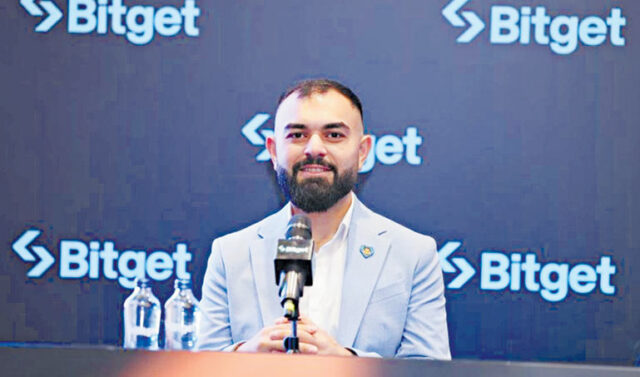
Vugar Usi Zade, chief operating officer at Bitget

Bitget, a cryptocurrency exchange platform and Web3 company, has secured a spot among the world’s most trusted crypto exchanges in the latest edition of Forbes’ digital asset platforms ranking. This marks Bitget’s first time on the prestigious list, debuting at eighth place among the top 25 most trusted crypto exchanges.

Forbes ranks the global cryptocurrency platforms based on factors such as regulation, transparency, and audit strength, among others. According to Forbes, Bitget stood as one of the most secure crypto exchanges in the world with transparent proof of reserves ensuring 100% of its assets and a $600-million Protection Fund safeguarding users.

Bitget’s rise to the top-tier ranking is backed by unprecedented growth in its user base and trading activity. A recent transparency report revealed that Bitget’s users surged by 400% in 2024, surpassing 100 million users by December. Spot trading volume also experienced exponential growth, jumping from $160 billion in Q1 to $600 billion in Q4.

In the Philippines, Bitget has emerged as a trusted exchange for crypto investors looking for a secure and transparent trading platform. With the country’s growing interest in digital assets, Bitget provides Filipino users with seamless access to crypto trading through localized services tailored to their needs. Its support for Philippine Peso transactions eliminates the hassle of currency conversions, making crypto investments more accessible than ever. With round-the-clock Tagalog customer support and extensive educational initiatives, Bitget is fast becoming the go-to platform for the country’s thriving crypto community.

In addition to its organic growth, strategic collaborations and platform upgrades helped Bitget solidify its position in the market. It joined the ranks of industry leaders such as Coinbase, Binance, and Robinhood.

“Our collaboration with Turkish national athletes and legendary football league LALIGA, as well as getting multiple licenses and onboarding new chiefs in the company all contributed to Bitget’s success of positioning itself as the second largest crypto exchange ecosystem,” Vugar Usi Zade, COO at Bitget, said.

Bitget’s momentum is also reflected in its growing global market share. A report from CCData showed that its market share rose to 4.25%, surpassing its previous all-time high recorded in April 2024. Comparing the change in market share of the combined spot and derivatives market, Bitget was among the biggest beneficiaries of 2024 after its market share went up by 4.05% to 10.5%.

Previously, Bitget Token (BGB) was ranked as one of the top 10 best-performing cryptocurrencies by Forbes for H1 2024. Since then, BGB has surpassed all expectations with a surge of over 1,000% last year. By reducing BGB’s supply, enhancing utility, and expanding real-world applications, Bitget plans to strengthen more functionalities and products in the Bitget ecosystem driving sustainable growth and long-term value for holders.

As the platform continues to scale, Bitget is focusing in its expansion markets via localized marketing, partnerships, and educational initiatives. The exchange offers simplified onboarding, fiat gateways, and localized customer support to ease access. Bitget also invests in blockchain education, strategic sponsorships, and incentive programs to retain users in high-growth regions.

With the joining of Hon NG, chief legal officer at Bitget, the team is heavily invested in compliance. Recently, Bitget achieved UK approval, a BSP license in El Salvador, and even opened a new exchange in Vietnam to run it as per local requirements.


SparkUp is BusinessWorld’s multimedia brand created to inform, inspire, and empower the Philippine startups; micro, small and medium enterprises (MSMEs); and future business leaders. This section will be published every other Monday. For pitches and releases about startups, e-mail to bmbeltran@bworldonline.com (cc: abconoza@bworldonline.com). Materials sent become BW property.

Metrobank Art & Design Excellence winner to mentor the next generation of awardees

Alfredo Esquillo, Jr., founder of Eskinita Art Farm, 2022 MADE Chairman of the Board of Judges and 1993 MADE First Prize for Oil on Canvas Category

Committed to the artistic development of Filipino artists, the Metrobank Foundation, Inc. (MBFI) announces that its ongoing 2025 Metrobank Art & Design Excellence (MADE) competition will provide each of its grand awardees a total of P500,000 in prizes, which includes P150,000 scholarship at the Eskinita Art Residency Program. They will be mentored by Alfredo Esquillo, Jr., MADE’s 1993 First Prize winner for Oil on Canvas Category.

“It’s a great honor for me to be a partner of the Metrobank Foundation because I started my artistic journey here. We’re excited to be an extension of the MADE program. We hope that this link will be very successful in terms of helping the new MADE winners develop as an artist. It’s important for us at Eskinita that they continue creating art after joining MADE competition,” Mr. Esquillo said.

“MBFI is deeply honored to partner with a distinguished MADE awardee. This collaboration highlights the impact of our enduring commitment to supporting Filipino artists for over four decades now. It’s a testament to the vision we articulated in 1984 with our competition tagline, ‘Artists of Today. Masters of Tomorrow’,” said MBFI President Aniceto Sobrepeña.

The Eskinita Art Residency Program aims to give guidance to the art residents as they prepare for their first solo show. They provide artists with the opportunity to learn from guest mentors, who share their creative process and offer feedback during open studio sessions. Open studio sessions help the art residents practice articulating their ideas and connecting with an audience. They also go out of the community to find inspiration and gain wider perspectives for their work.

MADE is currently accepting entries for the following categories: (1) painting (oil/acrylic on canvas) for 18 to 35 years old; (2) sculpture for 18 to 50 years old; and (3) mixed media for 18 to 40 years old. Entrants may conveniently register for an account and upload photos of their artwork through the MADE Competition Portal. Complete mechanics and competition guidelines are also available via this platform.

Participation in the 2025 MADE competition is free. Entries will be accepted until March 31, 2025, 11:59 p.m. Late submissions will not be accommodated.

Through its annual competition, workshops, artistic development programs, partnerships, and community outreach programs, MADE has consistently provided a platform for Filipino artists to express creativity, nurture artistic development, connect with peers, and contribute to the nation’s rich cultural heritage for more than four decades now. To date, more than 200 artists have been recognized and empowered by the program.


SparkUp is BusinessWorld’s multimedia brand created to inform, inspire, and empower the Philippine startups; micro, small and medium enterprises (MSMEs); and future business leaders. This section will be published every other Monday. For pitches and releases about startups, e-mail to bmbeltran@bworldonline.com (cc: abconoza@bworldonline.com). Materials sent become BW property.

SMGP sets P87.1-B capex for three power projects

The Masinloc Power Plant in Zambales — SMCGLOBALPOWER.COM.PH

SAN MIGUEL Global Power Holdings Corp. (SMGP), the energy subsidiary of San Miguel Corp., has set a capital expenditure (capex) budget of about P87.1 billion to develop three baseload power projects.

SMGP, through its subsidiary Mariveles Power Generation Corp., has earmarked P34.4 billion in capex for its 600-MW coal-fired power plant in Mariveles, Bataan, the company said in a document posted on the Philippine Dealing & Exchange Corp.

The company is also expanding its Masinloc coal-fired thermal power plant in Zambales by constructing two additional units, each with a capacity of 350 MW. Both units are slated for completion between 2025 and 2026.

“As of September 2024, overall project completion of Unit 4 and Unit 5 are 81% and 69%, respectively, with equity-backed capital expenditures of P15.8 billion,” SMGP said.

Units 1 and 2, which have capacities of 315 MW and 344 MW, respectively, began operations in 1998. Both units were originally developed and owned by state-run National Power Corp.

After acquiring the facility in 2018, SMGP further expanded its capacity with Unit 3, a 335-MW unit that commenced commercial operations in 2020.

To further diversify its power portfolio, SMGP, through its subsidiary Excellent Energy Resources, Inc., is developing a 1,320-MW combined-cycle power plant in Batangas, targeted for completion in the first quarter of 2025.

SMGP has allocated P36.9 billion for the project, which will utilize regasified liquefied natural gas (LNG) to generate electricity. Units 1 and 2 of the LNG facility have been completed and are awaiting the issuance of a provisional authority to operate from the Energy Regulatory Commission.

In December last year, SMGP, along with Meralco PowerGen Corp. (MGen) of Manila Electric Co. (Meralco) and Therma NatGas Power, Inc. (TNGP) of Aboitiz Power Corp. (AboitizPower), received approval from the Philippine Competition Commission for their $3.3-billion LNG deal.

Under the agreement, MGen and TNGP will jointly invest in two of SMGP’s gas-fired power plants: the 1,278-MW Ilijan power plant and the new 1,320-MW combined-cycle power facility.

The three companies will also invest in the LNG import and regasification terminal owned by Linseed Field Corp. in Batangas.

SMGP, Meralco, and AboitizPower announced the completion of the transaction last month. — Sheldeen Joy Talavera

Dolce Dodici Cilindri

Serious car for the seriously moneyed. The Ferrari 12Cilindri starts at P43.9 million. — PHOTO BY KAP MACEDA AGUILA

Ferrari’s rarefied ride ‘for the few’ is here

IN AN ERA of increased pressure to electrify mobility solutions, the traditional internal combustion engine is obviously under threat. But supercar maker Ferrari is going against the grain anyway — to impressive effect.

And truly, the 12Cilindri (or Dodici Cilindri) is carrying the torch of Ferrari’s V12 lore and legend — “a single leitmotif that has been thrilling Prancing Horse enthusiasts since 1947,” as local distributor Velocità Motors, Inc. posited through a release on the day the grand tourer was unveiled here recently. All those many years ago, the Maranello marque trotted out its first mid-front-mounted V12.

Described as a natural evolution of its predecessors, the 12Cilindri draws inspiration from standout GTs of the ’50s and ’60s — uncompromising, elegant, versatile, and high-performing. It is also the direct descendant of the 812 Superfast coupe and 812GTS convertible.

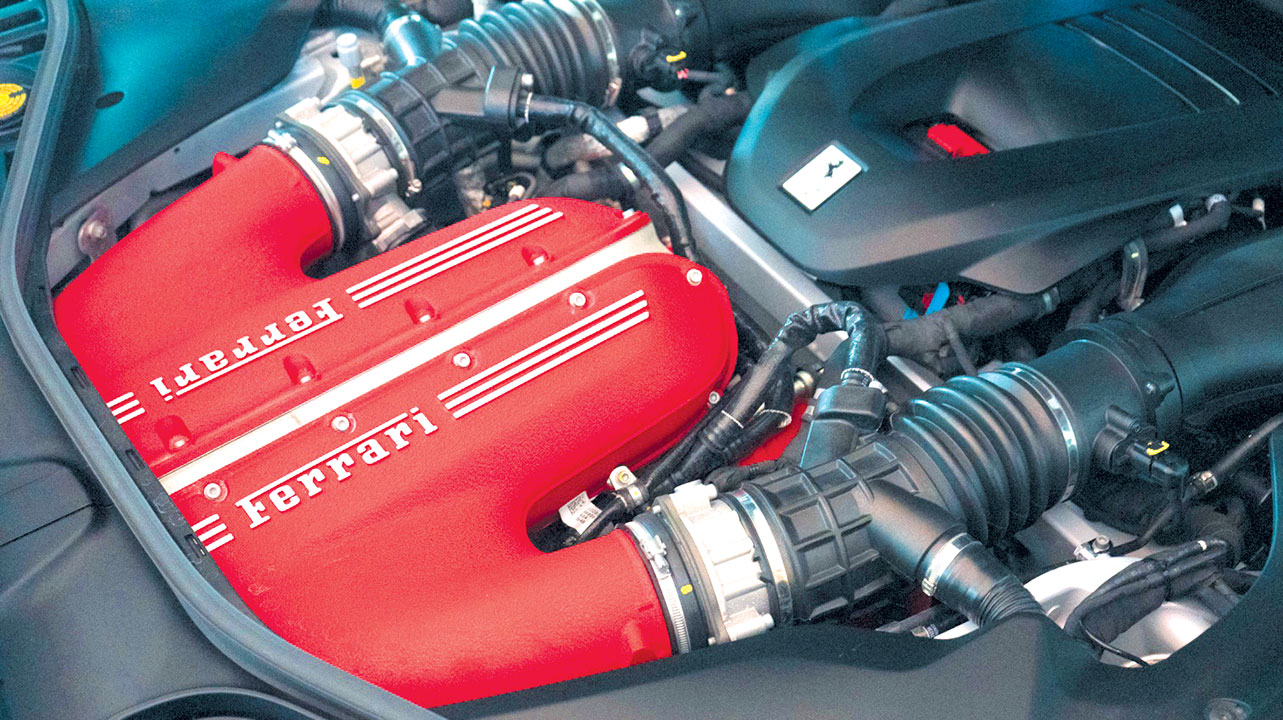
The story appropriately begins under the front-hinged hood, of course, where a present-day, F140HD V12 growls with a maximum of 818hp and 678Nm — screaming its way to a 9,500-rpm redline. It is mated with an eight-speed DCT with shorter gear ratios to realize sprightly acceleration. Ferrari reports that torque delivery has been improved “across the rev range for sustained power.” At the back are two twin tailpipes — typical mainstays of Ferrari’s 12-bangers.

Back to the front, LED headlights are integrated with daytime running lamps.

A highly aerodynamic and flat shape serves to underscore a proper supercar status, as does an active rear wing fitted onto its sculpted hindquarters. Much thought also went into the 12Cilindri’s underbody design and construction — said to ensure “superior handling” via efficient downforce generation. The vehicle stretches 4.733 meters, is 2.176-m wide, and only stands 1.292m — while achieving a near-perfect weight distribution (48.4% front, 51.6% rear). The 12Cilindri’s all-aluminum chassis is given a 20% shorter wheelbase for “increased agility,” along with a 15% increase in torsional rigidity compared to the 812 Superfast.

Translated to quickness and speed, this Ferrari can sprint from a standstill to 100kph in 2.9 seconds, and zero to 200kph in less than 7.9 ticks — onto a top speed said to surpass 340kph — on mixed tires of 275/35 R21 J10.0s in front and 315/35 R21 J11.5s in the rear. A brake-by-wire system with ABS Evo and 6D sensor helps to corral the heightened performance with “confident stopping power and precise control,” as does a four-wheel independent steering (4WS) that gives the driver access to exceptional maneuverability through sharper turns and better handling.

The 12Cilindri’s cabin boasts a “dual-cockpit” design and three digital screens (one directly in front of the front passenger). Designers appropriately went with high-quality materials, with particular emphasis on Alcantara, for “luxurious comfort.” A new glass roof helps to accentuate an “airy and open” feel within.

The flat-bottomed steering wheel receives capacitive buttons for intuitive control, while the infotainment system boasts Apple CarPlay and Android Auto integration for convenient connectivity.

If you have the wherewithal for this dream car, the 12Cilindri starts at a base price of P43.9 million and includes a “comprehensive seven-year maintenance program” that covers “all regular maintenance for the first seven years of the car’s life.”

In an interview, Velocità Motors General Manager Japheth Castillo described the Ferrari brand in the Philippines as being in “a good position” under the new distributor. “We’ve been able to take a good number of orders, given that ours is a small market.” He added that around 13,700 Ferrari units were produced in 2025. “In the Philippines, there’s a brand that can sell 13,700 units a month,” he pointed out.

That means that Ferrari owners can indeed look forward to an unmatched exclusivity — even if at times they cannot get the car that they want right away. There are clients who will receive their vehicles in 2026; some in 2027, according to Mr. Castillo. But that’s truly an intrinsic part of the brand’s appeal and principle. If I remember correctly, a Ferrari official who visited our country once said that they aspire to deliver one car less versus demand.

That’s one way to run a business.

Korean hair rejuvenation salon now in PHL

ECO JARDIN Philippines officially opens the flagship global branch in BGC.

KOREAN SALON chain Eco Jardin, best known for its hair rejuvenation treatments, is now in the Philippines, with the first branch opening on Feb. 18 at the High Street South Corporate Plaza in Bonifacio Global City (BGC).

The salon is introducing to the country a 15- or 18-step scalp treatment. Grace Lam, one of the six all-female partners who brought the salon here, said during the opening, “Here we use exosomes, derived from the stem cells. That really helps the scalp rejuvenate, and later on, promote healthy scalps, and therefore, healthy hair.”

Grace Uy, president of Converge ICT Solutions, Inc. and the wife of Converge Chief Executive Officer Dennis Uy, heads the six-woman team. She loves telling the story (which shows the executive’s lighter side) of how they came to bring the salon here, its first branch outside Korea: “It all started with a game of mahjong. We’re just talking about the experience we all had while we did Eco Jardin in Korea. How can we bring something like this without flying to Korea?” She said during a press conference at the sidelines of the opening.

“Every time we do the service, you really feel rejuvenated after. We’re very relaxed, and then we see the difference it does on our hair,” she said. “A lot of us, once you start getting in your fifties, would start getting hair problems: hair fall, dandruff, and all of those. It was addressed by Eco Jardin.”

The salon was founded in 2016 in Korea by Park Jun, founder and chairman of the P&J Corp. In a statement, he said, “Beauty is about more than looking good — it’s about feeling good. Beauty is such a vast and expansive field, but at its core, it’s about making people feel more beautiful and connecting with nature. Eco Jardin embodies this philosophy, creating an urban retreat where people can relax, enhance their style, and embrace a more beautiful and enjoyable life.”

Eco Jardin Philippines will offer the same premium treatments as the salons in Korean, which include personalized consultations and expert techniques that minimize heat damage and enhance scalp health.

Mary Jane Yu, Eco Jardin Philippines managing director, discussed the difference between the 15-step and the 18-step treatment: “People who have more problematic scalps will most likely take the 18 steps. The 15 steps would be a regular treatment that would keep your scalp healthy.” The 15-step treatment focuses on cleansing and nourishing the scalp, ideal for those looking for regular maintenance and relaxation. Meanwhile, the 18-step treatment is tailored for individuals experiencing scalp issues such as dryness, dandruff, or thinning hair, providing intensive care through targeted serums and massage techniques.

The salon’s services menu ranges from P500 to P3,500 for a haircut, with other treatments going up to P20,000 (for a hair coloring treatment). The hair and scalp treatments they are known for range in price from P10,500 to P14,000.

Asked about her experience in the tech business and how this will shape this hair venture, Ms. Uy said, “Making this happen is because of the six power ladies here.” These ladies include the aforementioned Misses Lam and Uy, Ingrid Tan, Rotina Lim, and Angeline Tan. “It’s not just me. It’s all of us together. Collectively, we all have strength.”

Eco Jardin Philippines is located at the 2nd Floor of High Street South Corporate Plaza, 26th Street, BGC, Taguig City. For more information, visit ecojardin.com.ph. — Joseph L. Garcia

Geely rejig

At the pre-launch preview of new Geely releases are (from left) Geely Motor Philippines (GMP) Technical Officer Arnold Del Valle, Jr., GMP Marketing Department Assistant Manager Erika Anne de Leon-Quejado, GMP Senior Manager for Vehicle Sales Department and Supply Chain John Paulo del Rosario, Geely Automotive International Corp. (GAIC) Senior Training Manager Philan Sun, GMP President Wil Wan, GMP Director for Area Operations and Dealer Development Jin Peng, GMP Director for Marketing Shawn Wu, and GAIC Public Relations and Communications Manager Ryan Isana. — PHOTO BY DYLAN AFUANG

With relaunch, automaker launches EVs, vows better customer support

By Dylan Afuang

AN UPDATED product lineup headlined by a battery electric vehicle (BEV), upcoming electrified vehicles, strengthened after-sales support, and sales promos comprise the initiatives with which China-headquartered automaker Geely is reestablishing itself in the country. In place of the previous distributor business model, the brand now operates through Geely Motor Philippines (GMP), a subsidiary under parent company Geely Automotive International Corp. (GAIC).

“Since our 2019 Philippine launch (under the previous distributor), we (gained the trust of) 30,000 users. Thank you for your support,” GMP President Wil Wan began his message during the automaker’s relaunch event attended by customers, media, dealer and bank partners in Muntinlupa City weeks ago.

“Today, we showcase our innovations and (reaffirm) our commitment to the Philippines. As a subsidiary, we (aim to provide) customers with faster service and exclusive offers,” Mr. Wan added.

The event marked the local launch of the EX5, and it was introduced alongside the revised versions of the Coolray crossover and Emgrand subcompact sedan from the brand’s current offerings. “The EX5 is Geely’s next-generation SUV built from global resources, and it is (the brand’s) first pure-electric vehicle,” GAIC Senior Product Manager Patrick Qiu explained.

The EX5 retails for P1.79 million, according to a promotion made by Geely Philippines’ official Facebook page. Customers can make a reservation for P10,000 to receive P110,000 off the vehicle’s price until March 31, 2025, and deliveries will commence from this April to May, the promotion added.

Predicated on the automaker’s global new energy architecture, the GEA platform, the five-seater EX5 is powered by the brand’s in-house-designed Geely Short Blade Battery, which promises a high battery density from its 60.22-kW size, and a range of 430km.

The GEEA 3.0, Geely’s latest electronics architecture, debuts in the EX5. The platform enables the EV to receive the brand’s first advanced driver-assistance system and Level 2 autonomous driving. The GEEA 3.0 also powers the FlyMe Auto infotainment system that integrates various vehicle functions within a fast-responding 15.4-inch center touchscreen with clear visuals.

The EX5 appears to be just the first electrified Geely to arrive here. Claimed the GMP leadership, “We aim to launch one new model every quarter (from 2025 onwards), providing drivers with a model that suits their lifestyles.” Aside from ICE, these models can come with plug-in hybrid and battery electric power.

Assuring existing and new Geely customers of spare parts availability is GMP’s 4,700-square-meter parts facility in Cabuyao, Laguna, which opened late last year. It promises the efficient and timely delivery of spare parts to 30 Geely dealerships locally. Mr. Wan also claimed that two other parts warehouses in Cebu and in Mindanao will operate by the second quarter of 2025.

Additionally, GMP unveiled a new customer effort dubbed “Geely Go,” which integrates resources from brand, sales, and after-sales segments to improve ownership at every stage. “We aim to create a more inclusive, proactive, and approachable brand that will give more value to our business partners and end consumers,” GMP Senior Manager for Vehicle Sales Department and Supply Chain John Paulo del Rosario explained.

As mentioned, the Coolray crossover and Emgrand sedan now boasts of styling and equipment revisions. The crossover stickers from P1.139 million to P1.329 million across its four variants (with discounts of up to P90,000 until Feb. 28), while the sedan retails for P949,000 in its sole Luxury variant (with a discount of up to P40,000 until Feb. 28 as well). The GX3 Pro, the brand’s entry-level product, now has reduced retail prices of P729,000 and P799,000 for its two variants.

For more information about GMP’s offerings and promos, visit the company’s official Facebook page (facebook.com/GeelyPhilippines).

DoE clears 11 power projects for grid impact study

PHILSTAR FILE PHOTO

THE DEPARTMENT of Energy (DoE) endorsed 11 power projects totaling 4,551 megawatts to the National Grid Corp. of the Philippines (NGCP) in January for a system impact study (SIS).

“In January 2025, the DoE issued 11 SIS endorsements, which are composed of two amendments and nine new applications,” the department said in a document posted on its website.

The SIS assesses the adequacy and capability of the grid to accommodate new connections.

Data from the DoE showed that it issued SIS endorsements for nine renewable energy projects, one conventional power project, and one battery energy storage system.

The largest project on the list is Pan Pacific Renewable Power Phils. Corp.’s 2,000-MW Maton Pumped Storage Hydroelectric Power Project (HEPP) in Apayao. This project is among those identified by the DoE as qualified to participate in the third Green Energy Auction Program.

The DoE also endorsed San Roque Hydropower, Inc.’s Lower East and West Pumped Storage HEPPs in Benguet, with a combined capacity of 1,600 MW, and Philnew Hydro Power Corp.’s 5.82-MW Mat-i 1 HEPP in Misamis Oriental.

Airstream Renewables Corp. received SIS endorsements for its 200-MW Real Offshore Wind Farm, 100-MW Silang Maragondon Wind Farm, and 40-MW Pandan Labayat Wind Farm, all located in Quezon province.

The DoE also approved Gemini Wind Energy Corp.’s 304-MW Gemini Wind Power Project in Samar and Northmin Renewables Corp.’s 200-MW Misor Wind Power Project in Misamis Oriental.

For other technologies, the DoE endorsed Toledo Power Co.’s 82-MW circulating fluidized bed coal-fired power plant in Cebu and EcoSolar Energy Corp.’s 20-MW Panitan Energy Storage Project in Capiz. — Sheldeen Joy Talavera

Rates of T-bills, bonds may drop with BSP set to cut banks’ RRRs

BW FILE PHOTO

RATES of the Treasury bills (T-bills) and Treasury bonds (T-bonds) to be auctioned off this week may go down after the Bangko Sentral ng Pilipinas (BSP) announced that it will lower banks’ reserve requirement ratios (RRRs) again next month.

The Bureau of the Treasury (BTr) will auction off P22 billion in T-bills on Monday, or P7 billion each in 91- and 182-day papers and P8 billion in 364-day papers.

On Tuesday, the government will offer P30 billion in reissued 20-year T-bonds with a remaining life of 19 years and three months.

T-bill and T-bond yields could move lower this week to track the broad decline in secondary market rates on Friday after the BSP announced the RRR cuts, Rizal Commercial Banking Corp. Chief Economist Michael L. Ricafort said in a Viber message.

“About P330 billion will be infused into the banking system. These banks have the option to increase their loans, investments in bonds, equities, foreign exchange, and other assets,” Mr. Ricafort said.

This could result in increased demand for government debt, which would bring yields down, he added.

A trader said that GS yields at the secondary market were mostly moving sideways early on Friday, but the RRR cut announcement prompted last-minute buying at the short end and belly of the yield curve, causing rates to end lower last week.

“We expect same market sentiment [this] week,” the trader said in an e-mail.

The trader added that the 20-year T-bonds to fetch rates ranging from 6.25% to 6.35% and be met with “decent” demand.

At the secondary market on Friday, yields on the 91-, 182-, and 364-day T-bills rose by 13.56 basis points (bps), 2.79 bps, and 4.58 bps to end at 5.2933%, 5.5920% and 5.7889%, respectively, based on PHP Bloomberg Valuation Service Reference Rates data as of Feb. 21 published on the Philippine Dealing System’s website.

Meanwhile, the rate of the 20-year bond inched up by 1.23 bps to end at 6.3589%.

On Friday, the central bank said it will reduce the reserve requirements for universal and commercial banks and nonbank financial institutions with quasi-banking functions by 200 bps to 5% from 7% effective March 28.

The RRR for digital banks will likewise be cut by 150 bps to 2.5%, while that for thrift banks will be brought down by 100 bps to 0%.

The central bank last cut banks’ reserve ratios in October 2024.

Last week, the BTr raised P22 billion as planned from the T-bills it auctioned off even as average rates climbed for a second straight week. Total bids reached P56.275 billion, almost thrice as much as the amount on offer.

Broken down, the Treasury borrowed P7 billion as planned via the 91-day T-bills as tenders for the tenor reached P16.05 billion. The three-month paper was quoted at an average rate of 5.318%, rising by 19 bps week on week, with accepted rates ranging from 5.18% to 5.398%.

The government also made a full P7-billion award of the 182-day securities as bids stood at P17.52 billion. The average rate of the six-month T-bill stood at 5.662%, up by 10 bps. Tenders accepted carried yields of 5.58% to 5.695%.

Lastly, the Treasury raised the programmed P8 billion via the 364-day debt papers as demand for the tenor totaled P22.705 billion. The average rate of the one-year debt increased by 5.4 bps to 5.78%, with bids accepted having rates of 5.74% to 5.78%.

Meanwhile, the reissued 20-year bonds to be auctioned off on Tuesday were last offered on Nov. 12, where the BTr raised P15 billion as planned at an average rate of 6.095%, lower than the 6.875% coupon rate.

The Treasury is looking to raise P203 billion from the domestic market this month, or P88 billion from T-bills and P115 billion from T-bonds. The government borrows from local and foreign sources to help fund its budget deficit, which is capped at P1.54 trillion or 5.3% of gross domestic product this year. — A.M.C. Sy

NFA reforms that the Rice Tariffication Law failed to carry out

PHILIPPINE STAR/MIGUEL DE GUZMAN

(First of two parts)

Despite the adequate rice supply in the country since the issuance of the 2019 Rice Tariffication Law (RTL), some of us continue to disagree that the RTL was good legislation. The RTL converted rice farmers’ protection from import quantity restrictions (QRs) into ordinary import tariffs. The move ended the import monopoly of the National Food Authority (NFA) and enabled the private sector to import rice. The RTL made rice import decisions more transparent, reducing the country’s vulnerability to rice import shortages and high rice prices.

The RTL also reduced tariff protection in 2019 for the benefit of rice consumers. It reduced the rice import tariff rate from 50% to 35%, an important component of the RTL. The law was introduced to rein in food price inflation, primarily fueled by high rice prices.

Besides ending the NFA’s import monopoly on rice, the RTL clipped all of the NFA’s mandates and functions under its charter, PD 4 as amended, except one on managing the emergency buffer stocks. Once a model in the region in the 1970s of how to keep a country food secure with all its powers and functions under its charter, the NFA was transformed into a mere public warehouse firm for the country’s rice buffer stock.

The NFA before the RTL had several mandates in addition to its monopoly on rice imports and exports — although the country had not exported rice since the 1970s. It supported farmgate palay (unmilled rice) prices, subsidized rice prices for the poor, managed the country’s emergency rice stocks, and regulated the domestic rice and corn trade. It also helped increase the productivity of rice farms and reduced post-harvest waste.

The agency’s structure before the RTL dismantled it, was patterned from the idea in the 1970s of fusing into one agency the functions of developing and regulating the rice trade. In the 1970s, its mandate covered corn until in the 1980s — most of the corn got was used as animal feed, and not as food for the population. It was back then called the National Grains Authority (NGA). But in the 1980s, its mandate diversified into other food items regularly purchased by the poor, keeping rice of course as its main commercial business.

Other countries in the region, like Indonesia, copied the NFA’s set up. The trade monopoly on grains accorded profits to the agency, which it used to pay for the cost of the food grain subsidies for the population. The NFA in the 1970s, and perhaps early 1980s, was financially self-sufficient. It was not a fiscal problem of the National Government.

But since the 1990s, the monopoly profit of the NFA in rice evaporated as the world rice market pushed up rice prices. In the 1990s, it sought and acquired fiscal subsidies to pay for its rice import tariff obligations. Because it continued to fulfill its other mandates on subsidizing food consumption and farmgate prices of palay without the import monopoly profits, it borrowed commercially. It started to become a fiscal burden on the National Government. The financial situation continued to deteriorate until in the 2010s, its commercial debt ballooned to about half a trillion pesos and continued rising. It was second to the National Power Corp. (NPC) in the list of agencies monitored by the economic oversight committee led by the Department of Finance.

The NFA then needed to be reformed, but no one was bold enough to process the appropriate changes into a new charter of the agency. There were several bills for the reforms, but Congress then paid lip service to the cause of reforming the NFA as it was seen as an anti-rice farmer reform. The NPC charter was reformed with the EPIRA (Electric Power Industry Reform Act) law, but the NFA escaped its legislative dismantling until the RTL in 2019.

Senator Cynthia Villar, who introduced the RTL bill with then Senator Franklin Drilon and succeeded in getting it approved by Congress, focused on ending the import monopoly of the NFA.

It was to comply with the country’s legal obligation to impose tariffs on import quantitative restrictions or QRs in agriculture as a member of the World Trade Organization (WTO). That was done for other agricultural products in 1996, but the government kept deferring it for rice, saying that the rice farmers were not ready for it. But the tariffication could no longer be kicked forward by 2019, and the Finance department had to urge Congress to impose tariffs on the rice QR.

The RTL amended the NFA charter to impose tariffs on the import QR, which is the agency’s rice import monopoly. However, in the process it cut the other functions of the NFA, which in my view was done without a thorough rethinking about how to keep those in a manner that is more effective and financially sustainable. The RTL could have been more thorough, if, in addition to tariffication, it also reformed the NFA with respect to its other functions.

The legislature could have taken more time to look up as well the important services of the NFA to the population. But they must be done in my view, to maximize the net benefit of RTL to our country. Without the added reforms, the adverse effects of the RTL on specific stakeholders are unnecessarily high. I take up three of these, namely the countervailing role of the NFA in rice markets, implementing price supports for rice farmers, and delivering rice subsidies to lower income households.

The RTL did not allow the NFA to engage in rice trading, except for keeping the emergency buffer stocks. This provision, just to point out its lack of a more thorough rethinking of what to do with the NFA, lacks its function of replenishing the buffer stocks to prevent waste. Agriculture Secretary Francisco Tiu Laurel, Jr. had to come up with his own definition of a food security emergency so the NFA could sell and replenish its aging buffer stocks.

The larger problem of not permitting the NFA to conduct commercial operations is it deprives the National Government of a capacity to effectively countervail rice price manipulation by a few rice traders/importers. Those who oppose the RTL have been saying that it has only marginally reduced rice prices, when it was primarily issued to reduce rice price inflation, and that the small decline of rice prices it had delivered was inadequate to offset the more significant drop of farmgate palay prices.

With President Ferdinand “Bongbong” Marcos, Jr.’s EO 62, implemented in July 2024, which reduced the rice import tariff by over 50% to bring down rice prices and reduce their contribution to overall inflation, price data indicate the same pattern of marginal decline in rice prices, certainly below what the reduction of import tariff suggests. Following EO 62, rice prices fell by 0.96%, and by 0.31% for retail rice prices. In contrast, the average drop of farmgate palay prices in the same period was 4.63%.

It is time to accept that a de facto rice cartel — which could be a leader-follower arrangement — involving a few large traders and importers has set rice prices to maximize profits.

The government has resorted to using suggested retail prices (SRP) for rice, a measure that is costly to enforce and thus ineffective. It is also a big mistake to go back to introducing a rice import monopoly under the NFA. The RTL is correct in getting rid of the rice import monopoly.

The most effective measure that the National Government can use is to countervail the rice price manipulation. But the government does not have this capacity since the RTL had disallowed commercial operations of the NFA. Suppose the NFA had been permitted to conduct commercial operations, the government could instruct the NFA to use local and imported rice and sell the rice at competitive prices. The weakly enforced cartel arrangement breaks up with an effective countervailing by a significant player in the rice market — the National Government.

Another point is that with the countervailing role of the NFA, the lower rice import tariff last year could now effectively set rice prices at competitive levels and neutralize the contribution of rice prices to inflation. It is a good measure to maintain the low rice import tariff to make the countervailing measure more effective.

In my next column, I will take up the other functions of the NFA that were left out by the RTL. They are delivering rice price supports to farmers and rice subsidies for lower income households.

(To be continued)


Ramon L. Clarete is a professor at the University of the Philippines School of Economics.

The Geiko of Gion: Live in Manila

THE JAPAN FOUNDATION, MANILA OFFICIAL FACEBOOK PAGE

THE JAPAN FOUNDATION, Manila made dreams come true on Feb. 22 and let an audience at the Shangri-La Plaza experience a night with geiko and maiko (better known here as geisha, but Kyoto, Japan’s cultural capital, speaks a different dialect).

A symbol of old Japan, at its core, a geiko is a female entertainer versed in the traditional arts of dance and music. Branching out from the former occupation of courtesan centuries ago, the geiko left behind the sexual aspect of that career and concentrated on the arts. More importantly, it was one of the ways women were able to make a living at a time when career choices were limited. The lines between geiko and sex workers were blurred because of the previous association, mistranslations and misconceptions by foreigners, as well as previous legislation which had lumped them together. Either way, in the profession’s heyday, geiko dictated fashion, were treated as celebrities, and were connected to the highest levels of Japanese society. This life of centuries-old glamor has created a veil of mystery about the profession, which was why we appreciated meeting not one, but three in the flesh.

The Japan Foundation, Manila brought in geiko from the Tomikiku okiya (a geisha house) from the prestigious Gion Higashi hanamachi (or “flower town”) in Kyoto for the Nihongo Fiesta 2025, which ran from Feb. 22 to 23.

The head of the Tomikiku okiya, Reiko Tomimori, appeared in a cream kimono with a pattern of trees and gave a low bow. She explained through an interpreter that the geiko and the maiko (an apprentice geisha) under her care would be performing dances that evening, the first one called “Spring Rain,” about a plum tree and a cardinal bird in love, and expressing their wish to stay together forever. She said all of this in a low, clear, calming tone; perfect for telling plane passengers not to panic.

The geiko Tomichiyo (as a member of the Tomikiku geiko “family,” geiko usually adopt elements of the family name) came out in a rust-colored kimono with a pattern of silhouetted vines and the requisite white makeup and complicated bun hairstyle. Upon closer inspection, the white makeup softens to pink around the eyes, and, as Tomichiyo said, once a maiko graduates to become a working geiko (it is a five-year apprenticeship), she stops wearing her own hair in the style and is then allowed to use a wig.

The maiko, Tomieri (we were surprised to learn that the Tomikiku family has quite a following online; this apprentice included), was dressed in blue, with a pattern of vines also, but hers were in full bloom.

A second performance by the geiko Tomitae (she was dressed in lilac, with a pattern of ferns) was a piece about autumn, specifically, the “Bridge of Maple Leaves.” The three then performed a dance set to “Ballad of Gion,” a relatively modern song first recorded in the 1930s.

Later in the evening, the three bade guests to play a drinking game with them (we didn’t understand the rules and just went onstage to meet the geiko), with Tomichiyo supervising, Tomieri playing, and Tomitae on the shamisen.

Tomichiyo, her voice charming in another way (if her “mother” — okasan — spoke in calming tones, Tomichiyo spoke in a breathy, girlish, even flirtatious tone that suggested she had been waiting to meet all of you), answered some questions about her life as geiko. For example, she showed the audience the difference between her, a full-fledged geiko, and apprentice Tomieri. Tomichiyo was dressed more conservatively; the apprentice is more flamboyant. While Tomichiyo’s obi (sash) was tied in a neat box, Tomieri’s trailed below the waist, showing off the rich pattern in gold. The collar in the apprentice’s robe is also more showy, with hers speckled with gold. Tomichiyo’s and Tomitae’s were plain white. The younger one also had longer sleeves on her kimono. Tomieri also had a more complicated hairstyle and more hair ornaments: she wore a bar with silver strips in her hair, which trembled as she went through the doll-like movements of the dance.

Tomichiyo pointed out that the flower ornament worn by the apprentice changed every month according to the seasons. Normally, Tomieri would have been wearing a plum flower, but because it was her birthday, she was given a yellow chrysanthemum to wear. Tomieri keeps her complicated hairstyle — a structure of hair, wax, and other things — for a week, before it’s cleaned and redone. To maintain this, she sleeps on a high neck pillow, called a takamakura. Tomichiyo said that this hairstyle is why Tomieri’s life has so many rules — she won’t be able to be seen at “Starbucks and McDonald’s” (Tomichiyo’s words) while wearing this hair, a problem she faced too as an apprentice.

The apprenticeship begins between the ages of 15 and 20. When a geiko graduates, she can wear a wig, so theoretically, once they take off their wig and makeup, they can live a normal life. Tomichiyo says, however, that she begins a busy day at 5 p.m., and works until midnight — a life takes time, and that includes the time it takes to dress in the multiple layers of robes.

Finally, asked about her makeup, Tomichiyo said that when geiko first appeared centuries ago, there was no electric light. She could have said it any other way, but the artist in her said, “We used to dance under the moonlight. If a face was not white, people wouldn’t be able to see it.”

Follow the Tomikiku family on Instagram @tomikiku_gionhigashi. — Joseph L. Garcia

Revitalizing PHL auto parts manufacturing

An open letter to the government from PPMA

WE PRESENT this urgent appeal on behalf of the Philippine Parts Makers Association (PPMA), an organization that has long championed the resilience and growth of the auto parts manufacturing industry in the Philippines. Once a thriving sector, our industry experienced its heyday in the late 1990s with a robust membership of 140 companies. Today, however, we find ourselves in a precarious position, with only 40 members remaining as we grapple with serious challenges that threaten our survival.

The decline of our industry cannot be attributed to a lack of talent or dedication among local manufacturers. Rather, it stems from a series of policy decisions that have inadvertently stifled growth and competitiveness. We urge the government to learn from the past to ensure a sustainable future for our auto parts manufacturing sector.

In the early 2000s, the importation of second-hand vehicles was allowed, a decision that had dire consequences for local manufacturers. This policy not only undermined local production but also led to a significant decrease in demand for our products as consumers shifted their focus toward more affordable used vehicles. The imposition of excise tax on Asian Utility Vehicles (AUVs) with high local content exacerbated the sales decline, making local vehicles less appealing in the market.

Furthermore, our strict adherence to World Trade Organization (WTO) rules, particularly in comparison to our ASEAN neighbors who adopted more flexible approaches, has placed us at a distinct disadvantage. The discontinuation of safeguard measures by the Department of Trade and Industry (DTI) was another misstep, as these measures were critical for protecting our local industry against unfair foreign competition.

To reverse this troubling trend, we propose a multi-faceted approach aimed at revitalizing the auto parts manufacturing industry, inspired by successful practices in neighboring countries. Specifically, we advocate for the implementation of a 50% local content rule, similar to what Indonesia and Vietnam have adopted. This will encourage the use of locally produced parts while enhancing the overall competitiveness of our automotive sector.

In addition, we call for the introduction of subsidies for our exports, akin to the incentives provided by Thailand. Such assistance would provide much-needed support to local manufacturers, enabling us to compete more effectively in the global market.

In conclusion, we implore the Philippine government to recognize the vital role of the auto parts manufacturing industry in driving economic growth and job creation. By supporting our sector through sound policies and strategic partnerships, we can revitalize this once-thriving industry, create sustainable jobs, and boost the nation’s automotive manufacturing capabilities.

Together, let us build a brighter future for the Philippine auto parts manufacturing industry.


Ferdinand “Ferdi” Raquelsantos is president of the Philippine Parts Makers Association (PPMA).