Home Blog Page 1360

MoCAF increases participating galleries, artisans for its 4th year

Under Construction Carnival of Power by Aeron Dizon

THE Modern and Contemporary Art Festival (MoCAF) is evolving into a bigger platform in its fourth year, with 50 exhibitors representing over 200 artists and nearly 40 independent artisans.

From July 11 to 13, MoCAF will present galleries, experiences, and dialogues at the Marquis Events Place in Bonifacio Global City (BGC), Taguig.

The festival will have more international galleries this year, as well as a section dedicated to artisans, MoCAF’s organizers said at the media launch on June 24.

FILIPINO TALENT
“The international galleries are featuring Filipino artists as well. That’s something we want to showcase, these galleries out there celebrating Filipino talent,” Coleen Wong, MoCAF’s festival director, told BusinessWorld at the launch.

Of the 50 exhibitors, nine are foreign, including Vin Gallery (Vietnam), Core Contemporary Art (Malaysia), and Parallel+ (Hong Kong). Galleries making their debut at MoCAF include White Walls Gallery, Space Encounters Gallery, and Arcadia Art Gallery.

Seasoned collectors can also expect returning galleries like Village Art Gallery featuring Qwark, Ysobel Art Gallery, and Art For Space, showcasing artists like Demi Padua and Ezekiel Fajardo, among others.

Beyond the galleries showing fine art, attendees will discover fashion, crafts, jewelry, food, and performances, all highlighting the skill of Filipino makers and innovators. The lineup of artisan brands includes Manila Middle Ground’s curated art and design goods; RUNIT DECKS’ collectible cards and puzzles; Tropik Beatnik’s handmade accessories; Wabi Sabi’s handcrafted ceramics; Miel Maker of Things’ playful fashion pieces; Clockwork Vintage’s rare timepieces; and ANTHILL’s sustainable, community-rooted woven wearables.

“Each brand brings a distinct voice and character to the festival’s diverse lineup, highlighting the depth and creativity of local makers,” Ms. Wong said.

MoCAF XP, the festival’s community arm, will continue to broaden engagement and accessibility by bringing art into everyday life through interactive events. As part of this, on July 5, a Fabric Accessories and DIY Button Pin Workshop will be held at the Mess Studio by Common Room, at the Atrium of Makati in Makati City.

MORE INITIATIVES
To present a blend of both veteran and newer artists, MoCAF will continue its Special Exhibitions as well as its MoCAF Discoveries.

“We’ve been trying to promote diversity and inclusivity. Each year we’re growing so much in a way that we’re opening more doors,” said Ms. Wong. “Recently the art market hasn’t been strong, but I’ve noticed that there are a lot of younger collectors. We cater to seasoned collectors buying master artists, but there’s a new generation who have to start somewhere.”

Special exhibitions include a multigenerational showcase from the Orlina Family — Ramon Orlina and his children Anna and Michael — alongside solo shows by SAIS, Dennis Bato and Pinky Ibarra Urmaza, AR Manalo, Bryan Teves, Katrina Cuenca, Jaspher Penuliar, Juanito Torres, and a tribute to the late Juvenal Sansó. A large-scale sculpture by Toym Imao that was recently exhibited at the 14th Gwangju Biennale will also grace the festival.

Meanwhile, MoCAF Discoveries, the festival’s signature program since 2022, will feature 10 artists from the 2024 roster and introduce 22 emerging talents to watch. These include Aeron Dizon, Binsoy, and CHRIIXX.

On the lifestyle front, MoCAF will continue its collaborations with local brands. Limited edition prints by Bad Student, exclusive merchandise with DBTK (Don’t Blame the Kids), and a co-created line with Lumi Candles will provide textural and sensory experiences at the festival.

Two initiatives will be supported by MoCAF this year: Fundacion Sansó’s ScholarSIP, which helps fund the education of art students through scholarships; and the Mbrace Project, a nonprofit dedicated to supporting Filipino children with disabilities and chronic illnesses.

“This year’s MoCAF has a lot more. It’s not just a feast for the eyes, but also an experiential moment. We want people to be relaxed, but you will never get bored with all these workshops, pre-pocket events, a lot more exhibitors, and surprises in store,” said Ms. Wong.

MoCAF 2024 will run from July 11 to 13 at the Marquis Events Place in BGC, Taguig. Attendees can secure their tickets, priced at P380, at www.mocaf.net. Students, persons with disabilities, and senior citizens are entitled to discounts on the ticket price. — Brontë H. Lacsamana
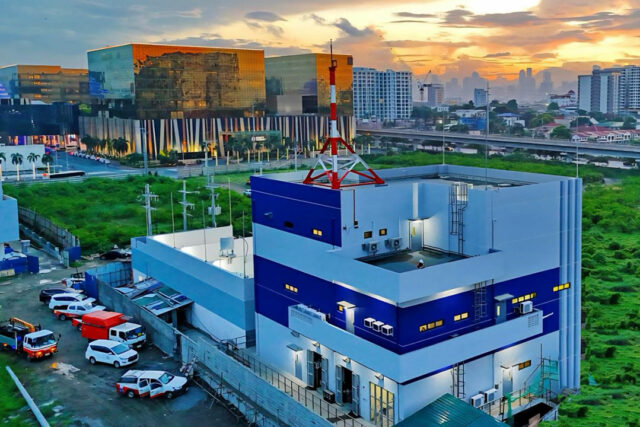

Meralco activates smart substation in Parañaque

MANILA ELECTRIC CO.

MANILA ELECTRIC Co. (Meralco) has activated its “smart” substation in Parañaque City to support growing energy demand in key economic hubs in the southern part of Metro Manila, the power distributor said on Tuesday.

“With the energization of ASEANA Substation, we continue to deliver on our commitment to invest heavily in infrastructure and projects that ensure power availability, especially in expanding economic hubs,” Meralco First Vice-President and Head of Networks Mr. Froilan J. Savet said in a media release.

“This project plays a key role in improving system reliability and serving the dynamic power requirements of our customers.”

The new ASEANA 115-kilovolt (kV)/34.5-kV Gas-Insulated Switchgear (GIS) substation expands Meralco’s capability to serve ASEANA City and nearby developments in Parañaque City.

The project involved the installation of an 83-megavolt-ampere power transformer, indoor 115-kV and 34.5-kV GIS switchgears, a capacitor bank, and a neutral reactor.

Meralco said the project enhances operational efficiency, reducing system loss by 373,392 kilowatt-hours, which translates into customer savings.

“To ensure the continuity of power supply in the area, the ASEANA GIS Substation also alleviates the heavy loading of existing PAGCOR-1 transformer banks and provides enhanced switching flexibility during contingencies,” the company said.

Meralco said the smart substation is equipped with advanced network automation technology.

The facility is intended to serve the power requirements of business and commercial establishments, including ASEANA 3, Ayala Malls Manila Bay, Bayprime Hotel, Capeton Baysuites, Hop Inn Hotel Aseana City Manila, K1 Center by Prestige Bay and Uni-Asia International Prime Holdings, Inc., Manila Bay Development Corp., Platinum Tower, Sequoia Hotel Manila Bay, Seda Manila Bay, and Sinocan Corporate Center.

“The development of ASEANA GIS Substation is part of Meralco’s commitment to build a smarter, more resilient, and future-ready grid to ensure the delivery of safe, stable, and reliable electricity service to its customers,” the power distributor said.

Meralco’s controlling stakeholder, Beacon Electric Asset Holdings, Inc., is partly owned by PLDT Inc.

Hastings Holdings, Inc., a unit of PLDT Beneficial Trust Fund subsidiary MediaQuest Holdings, Inc., has an interest in BusinessWorld through the Philippine Star Group, which it controls. — Sheldeen Joy Talavera

Hong Kong developer sought loans backed by Picasso, Warhol art

A HONG KONG property dynasty that became one of the city’s most prolific collectors is discovering the limits of the burgeoning world of art-backed lending.

The family behind Parkview Group, which narrowly avoided a default in March, sought a loan earlier this year from international auction house Sotheby’s, people familiar with the matter said. It was to be backed by more than 200 artworks, from the likes of Andy Warhol, Pablo Picasso, Salvador Dali, and Chinese artists such as Yue Minjun, Qi Baishi, and Zao Wou-ki, according to them.

But the talks hit a standstill amid concerns including the logistics of getting the art into the auction house’s warehouses, one of the people said. Parkview didn’t respond to requests for comment after earlier saying that there had been initial discussions with Sotheby’s some time ago but no loan was ever agreed on and there is no intention to complete any such borrowing. Sotheby’s declined to comment.

The attempt itself, though, is a window onto the burgeoning world of art lending — where pieces are used to secure loans, often allowing affluent owners to tap their collections for cash without having to part with prized possessions. It also underscores the challenges at Parkview, whose finances have been strained by the prolonged slump in Hong Kong’s property market and reluctance among banks to lend.

Alexander Wong, director of Hong Kong Parkview Group, through his representatives, held talks with Sotheby’s earlier in the year, the people said.

The collection includes Picasso’s Femme Tenant Un Chat Dans Ses Bras, several of Warhol’s Marilyn Monroe series, Dali’s Dragon Swan Elephant sculpture, and Vincent Van Gogh’s Girl in the Woods, among other pieces, according to documents seen by Bloomberg News.

Some of the proposed artwork in the list have been displayed in a clubhouse at Parkview’s residential development in Hong Kong and its Parkview Green mall in Beijing.

Parkview has been looking for new sources of funding. The company got a HK$300-million ($38 million) loan from investment firm PAG, Bloomberg News reported last month. It has also been in talks with private credit lenders since late last year for financing of at least HK$2.8 billion, using two residential towers as collateral.

While Parkview is based in Hong Kong, it also has properties in mainland China, Japan, and Singapore and other places, according to its website.

It’s currently in talks with banks to refinance a $940-million loan maturing in August backed by its Beijing mall complex, Bloomberg has reported. That’s after it avoided a technical default on the facility in March.

Sotheby’s extended its art financing services to Hong Kong late last year, joining HSBC Holdings Plc and Citigroup Inc.’s private banking arm as lenders that provide loans backed by alternative assets. Such facilities are generally secured by art and collectibles and are usually in the form of term loans or short-term advances backed by consignments with the firm.

Globally, Sotheby’s financial services arm has doubled its loan volume to more than $1.6 billion since 2021, the auction house said in December. It also raised $700 million through its first art-backed debt security last year, repackaging personal loans given to art collectors. — Bloomberg

Cariaso takes helm as RCBC president, CEO

REGINALDO ANTHONY B. CARIASO

RIZAL COMMERCIAL Banking Corp. (RCBC) has appointed Reginaldo Anthony B. Cariaso as its president and chief executive officer (CEO) effective July 1, it said on Tuesday.

Mr. Cariaso, who was tapped to be the bank’s deputy CEO starting January, succeeds Eugene S. Acevedo following the latter’s retirement. RCBC said Mr. Acevedo, who held the post since July 2019, steered the bank “through a period of transformative growth, digital innovation, and inclusive banking.”

Mr. Acevedo will remain part of the RCBC’s board of directors.

Prior to his stint as deputy CEO starting this year, Mr. Cariaso was RCBC’s executive vice-president and operations group head.

He has nearly 30 years of leadership experience in local and foreign financial institutions and has “extensive expertise in institutional banking, capital markets, and strategic execution,” RCBC said.

Before he joined RCBC, Mr. Cariaso held senior leadership roles at Bank of the Philippine Islands and JPMorgan Hong Kong. He began his career as a lieutenant in the US Navy Submarine Force.

The listed lender said Mr. Cariaso aims to boost RCBC’s position as a digitally driven and customer-first bank via their financial innovations, including the use of data intelligence and enterprise integration, to enhance service delivery and improve their clients’ banking experience.

“Our focus is clear. We will build more seamless connections to deliver relevant, timely, and intuitive financial solutions,” Mr. Cariaso said. “We want to serve our customers in ways that are not only accessible and secure, but meaningful and future-ready.”

“Our job is to integrate channels, data, and teams more effectively in order to deliver not just better products, but better outcomes. From payments to platforms to partnerships, everything must work together to create lasting value,” he added.

Mr. Cariaso said RCBC needs to go beyond traditional product offerings like loans, deposits, and basic transactions to remain competitive, adding that they should put in place a “scalable strategy” focused on boosting customer engagement with the help of digital tools, data, and smarter systems.

“Cariaso’s appointment reflects a carefully planned leadership transition that ensures both continuity and forward momentum for RCBC. It reaffirms the bank’s commitment to innovation, customer-focused service, and long-term growth in a rapidly evolving market. Backed by a strong foundation and a renewed strategic direction, RCBC is poised to continue delivering value to its stakeholders and communities for generations to come,” the bank said.

MOODY’S AFFIRMS RATINGS
Meanwhile, Moody’s Ratings on Tuesday said it has affirmed RCBC’s deposit ratings with a stable outlook.

In particular, the debt watcher kept RCBC’s Baa3/P-3 long-term (LT) and short-term (ST) foreign-currency (FC) deposit ratings, Baa3 FC senior unsecured rating, Baa3/P-3 LT and ST local currency (LC) and FC counterparty risk ratings, Baa3(cr)/P-3(cr) LT and ST counterparty risk assessments, and its ba1 baseline credit assessment (BCA) and adjusted BCA.

It also affirmed the bank’s (P)Baa3 FC senior unsecured medium-term note (MTN) program rating, its FC non-cumulative preference stock rating at B1(hyb) and its (P)P-3 FC other ST rating.

Moody’s said the rating action reflects RCBC’s “modest solvency” compared to its peers. “At the same time, it considers the bank’s modest deposit franchise, offset by its strong liquidity buffers.”

“We expect the bank’s profitability to remain broadly stable at the current level, as increased exposure to higher-yielding retail products and cuts in reserve requirements will help to mitigate pressure from lower interest rates and higher credit costs. We also expect RCBC’s profitability to remain lower than its rated peers due to its high cost of funds,” it said.

It added that the bank’s asset quality will remain under pressure due to the rapid growth of its consumer portfolio and as small and medium enterprises remain vulnerable to defaults due to still-elevated interest rates.

Moody’s noted that the bank has “modest” buffers against credit losses as its loan loss reserves as a percentage of stage 3 loans declined to 57.7% as of December 2024 from 64.1% a year earlier, lower than the 97% average seen for its other rated Philippine banks.

Meanwhile, the bank’s capitalization is expected to moderate over the next 12 to 18 months as the growth in its loans — which Moody’s expects to be at about 10% this year — is expected to outpace capital generation.

“RCBC has a low reliance on market funds: as a percentage of tangible banking assets, they were low at 8.6% as of December 2024. However, the bank’s deposit franchise remains modest, as reflected by its high cost of funds relative to rated peers. Meanwhile, RCBC maintains a high level of liquidity, with liquid banking assets accounting for 42.9% of its tangible banking assets as of December 2024,” the credit rater said.

Moody’s could upgrade RCBC’s ratings and BCA if it exhibits strong profitability and improved capital generation and asset quality. The opposite could lead to a downgrade, along with a “significant weakening in RCBC’s funding and liquidity.” — BVR

Responsible leadership in the age of AI: Reacting to a user’s suicide

STOCK PHOTO | Image from Freepik

(Part 3)

The case of the US youth who committed suicide abetted by a chatbot that was so human-like that the adolescent literally romantically fell in love with it illustrates how important it is to regulate the AI industry to prevent abuses of this otherwise very beneficial technology. But we cannot afford to throw the baby with the bath water. Before we start demanding stronger and stronger state control, considering the principle of subsidiarity, we have to find ways that the private sector — both business and civil society — can regulate the profit-making activities of AI enterprises.

In fairness to Character.AI that developed the bot used by the hapless youth, in response to the tragic event, this technology enterprise immediately adopted safety measures to prevent a similar situation happening in the future. As one example of responsible leadership in the age of AI, let us describe in detail the response of Character.AI.

First, it declared what its business mission is, then how it was responding to the case: Our goal is to offer the fun and engaging experience our users have come to expect while enabling the safe exploration of the topics our users want to discuss with Characters. Our policies do not allow non-consensual sexual content, graphic or specific descriptions of sexual acts, or the promotion or depiction of self-harm or suicide. We are continually training the large language model (LLM) that powers the Characters on the platform to adhere to these policies. As a specific response to the tragic case of suicide, Character.AI management started investing heavily in its trust and safety processes and internal team. Being a relatively new company, it hired a Head of Trust and Safety and a Head of Content Policy. In addition, engineering safety support team members were employed. The firm plans to continue growing and evolving in this area of safety. Management recently put in place a pop-up resource that is triggered when a user inputs certain phrases related to self-harm or suicide, directing the user to the National Suicide Prevention Lifeline.

Worthy of emulation by similar AI enterprises are new features that Character.AI intends to roll out. These are new safety and product features that will strengthen the security of its platform without compromising the entertaining and engaging experience users have come to expect from the company. Among these features are:

• Changes to its models for minors (under the age of 18) that are designed to reduce the likelihood of encountering sensitive or suggestive content.

• Improved detection, response, and intervention related to user inputs that violate the firm’s Terms of Community Guidelines.

• A revised disclaimer on every Chat to remind users that AI is not a real person.

• Notification when a user has spent an hour on the platform, with additional user flexibility in progress.

Character.AI is also now engaging in proactive detection and the moderation of user-created Characters, including using industry standard and custom blocklists that are regularly updated. Proactively and in response to user reports, the enterprise removes Characters that violate the Terms of Service. It also adheres to Digital Millennium Copyright Act (DMCA) requirements and takes swift action to remove reported Characters that violate copyright law or its own policies. Users may notice that the company recently removed a group of Characters that have been flagged as violative, and these will be added to the customer blocklists in the future. This means users also won’t have access to their chat history with the Characters in question.

In general, Character.AI is committed to implementing enhanced safety systems to better protect all users, particularly young ones, including the following:

• Enhanced Guardrails: Limiting access to content for people under 14.

• Session alerts: Notifying users who spend more than an hour interacting with the chatbots.

Suicide Prevention Features: Pop-ups directing individuals to suicide prevention hotlines when certain red flag phrases are detected.

These measures, implemented by a leading participant in the AI industry, are a good beginning to address the ethical challenges of the ongoing industrial revolution. Obviously, they are not sufficient to truly protect the millions of users of Character.AI, who include not only minors but also people with mental diseases and other individuals facing psychological stress. This question concerns not only Character.AI’s policies but also those of the hundreds of companies that introduce chatbots and other AI beings into the virtual world day in and day out.

Again, following the principle of subsidiarity, the consuming public must be ever vigilant to give feedback to the producers of AI and, if necessary, file a lawsuit against the irresponsible use of the technology, as the mother of the teenager who committed suicide did against Character.AI.


Bernardo M. Villegas has a Ph.D. in Economics from Harvard, is professor emeritus at the University of Asia and the Pacific, and a visiting professor at the IESE Business School in Barcelona, Spain. He was a member of the 1986 Constitutional Commission.

bernardo.villegas@uap.asia

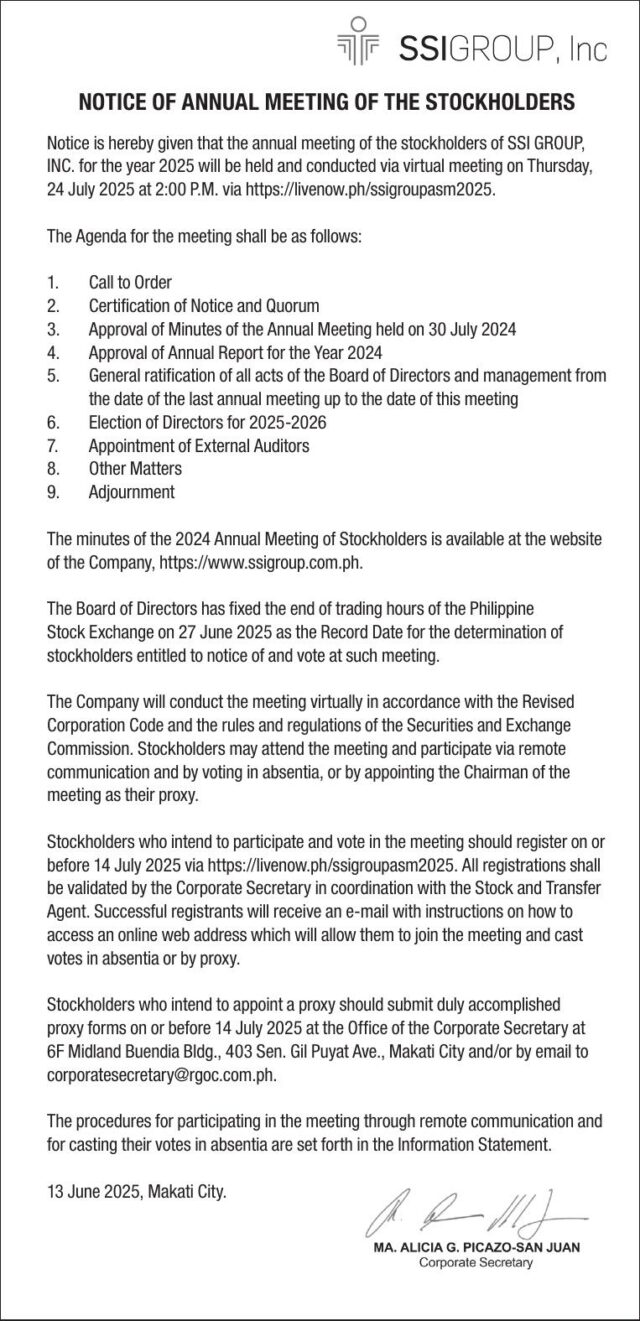
SSI Group, Inc. to hold virtual Annual Meeting of Stockholders on July 24


Spotlight is BusinessWorld’s sponsored section that allows advertisers to amplify their brand and connect with BusinessWorld’s audience by publishing their stories on the BusinessWorld Web site. For more information, send an email to online@bworldonline.com.

Join us on Viber at https://bit.ly/3hv6bLA to get more updates and subscribe to BusinessWorld’s titles and get exclusive content through www.bworld-x.com.

Bangko Sentral likely to deliver one more cut this year — BofA

BW FILE PHOTO

THE BANGKO SENTRAL ng Pilipinas’ (BSP) current monetary easing cycle is expected to be “deeper” compared to some of its Southeast Asian peers amid a benign inflation outlook, with one more rate cut likely this year, Bank of America (BofA) Global Research said.

“The BSP has sufficient room to cut its policy rate twice more (in June and October 2025) to bring its policy rate to 5.0% — even if the US Federal Reserve stays on hold for some time,” it said in a note on Tuesday.

“US Fed policy has a cursory impact on BSP’s policy outlook, although there is high correlation between their rate cycles,” it added.

The Monetary Board on June 19 cut the target reverse repurchase rate by 25 basis points (bps) to 5.25% amid a moderating inflation outlook and weak economic growth.

BSP Governor Eli M. Remolona, Jr. last month said they could deliver one more 25-bp cut this year depending on data and how geopolitical and global trade risks develop.

The Monetary Board’s remaining policy meetings this year are scheduled for Aug. 28, Oct. 9, and Dec. 11.

BofA Global Research said Philippine economic growth remains rangebound, even with consumption and investment recovering, adding that the country is “better shielded” from the impact of higher US tariffs.

“The BSP being an inflation-targeting central bank has great emphasis on inflation outlook for its monetary stance,” it added.

However, the central bank’s dovishness and its wide trade and current account deficits could translate to a weaker peso, even as the greenback remains under pressure.

BofA Global Research said that the bias in the Association of Southeast Asian Nations (ASEAN) is towards monetary easing.

Like the BSP, Bank Indonesia and Bank of Thailand are expected to deliver deeper cutting cycles compared to Bank Negara Malaysia and the Monetary Authority of Singapore, while the State Bank of Vietnam is expected to maintain status quo, it said.

“With monetary policy cutting cycles advancing across the region, there is a greater degree of heterogeneity starting to set in, but the broad bias for central banks remains clearly tilted towards easing, amid external uncertainties and inflation pressures contained. However, pace of easing should differ, given varying central banks’ objectives and domestic conditions,” it added.

The outlook for growth and inflation in ASEAN has broadly improved, BofA Global Research said.

“Generally speaking, we expect inflation across the region to remain well below central banks’ target ranges or comfort thresholds over the forecast horizon. Across the board, the absence of strong domestic demand pressures amid ongoing uncertainties should keep a lid on underlying inflation. Food price pressures should also remain contained in the absence of extreme weather patterns,” it said.

“Prevalence of energy price controls in Indonesia and Malaysia would limit the inflation impact, in the event oil prices spike. Overall, inflation will likely stay between the target band in Indonesia, Malaysia and the Philippines, while may undershoot in Singapore and Thailand.”— BVR

FedEx expands import permit services in Philippines

FEDEX.COM

FEDERAL EXPRESS CORP. (FedEx), an American multinational logistics provider, has expanded its export permit services in the Philippines to help local businesses streamline the documentation required for international shipments.

“This latest initiative is part of FedEx’s broader efforts to foster the growth of the Philippine export sector,” FedEx said in a statement on Tuesday.

“By streamlining access to international trade, FedEx maintains its role as a trusted logistics provider for businesses of all sizes,” it added.

FedEx said its export permit services are now available at about 240 locations in the Philippines, including 199 2GO outlets, 23 newly added Airspeed sites, and 18 IPX centers.

The logistics provider said each authorized retail store will be fully equipped to assist business owners with the necessary documentation in compliance with existing regulations for international export shipments.

“This expanded network significantly enhances the availability and convenience of FedEx export permit services for SMEs (small and medium-sized enterprises) and e-commerce retailers across the country,” FedEx said.

FedEx earlier identified the Philippines as one of its growing markets in the Asia-Pacific region, alongside Vietnam and Indonesia.

The company’s hub in Clark is among its three gateway facilities, with the others located in Singapore and Japan. Its main hub is in China. Its 17,000-square-meter facility at Clark International Airport can sort 9,000 parcels per hour. — Ashley Erika O. Jose

Arts & Culture (07/02/25)


Solidaridad Bookshop up for sale after 59 years

THE iconic Solidaridad Bookshop in Ermita, Manila, founded by the late National Artist for Literature F. Sionil José, has announced that it is now for sale. In an interview with the student publication The Varsitarian, the bookshop’s administrative head Antonio “Tonet” José confirmed that none of the siblings will be able to manage the shop that was started by their father. “We are all getting old,” he said, adding that he is the only one of the siblings still living in the Philippines. Located on Padre Faura St. in Ermita, Manila, the bookshop showcases the works of F. Sionil as well as other renowned Filipino authors. It remains open for now.


Big Bad Wolf Books heads to Robinsons Manila

BIG BAD WOLF Books is unleashing The Madness Sale once again at Robinsons Manila from July 1 to 6, with books priced at P99. The sale will be held from 10 a.m. to 10 p.m. at the mall’s Midtown Atrium. Admission is free.


More days added to Dear Evan Hansen run

GMG PRODUCTIONS has announced the final extension of the Manila run of the UK touring production of Tony Award-winning musical Dear Evan Hansen. The production will now run from Sept. 4 to Oct. 5 at The Theatre at Solaire in Tambo, Parañaque. Dear Evan Hansen tells the story of Evan, an anxious high school student longing for a sense of belonging. Featuring music by the duo Benj Pasek and Justin Paul and a book by Steven Levenson, Dear Evan Hansen has won four Tony Awards, including Best Musical, the Olivier Award for Best New Musical, and the Grammy Award for Best Musical Theatre Album. Tickets to the new show dates have been released and are now available exclusively through TicketWorld. For updates and announcements, visit www.gmg-productions.com or follow @gmg.productions.


Karina Herrera Orozco mounts first solo exhibit

MANDALA ARTIST Karina Herrera Orozco is showcasing the magic of mandala through her first solo exhibition, Colors of Life, which is ongoing at the Gateway Gallery until July 12. The show is an immersive experience featuring balance and creativity through the fusion of color and symmetry.


Proscenium Theater to open with The Bodyguard

THE first production of the new Proscenium Theater at Rockwell, Makati City, has been revealed. The Bodyguard, produced by 9 Works Theatrical, is based on the 2012 stage musical with a book by Alexander Dinelaris, which in turn was based on the 1992 film The Bodyguard with songs by Whitney Houston. It will be directed by Robbie Guevara, with musical direction by Daniel Bartolome. More details will be revealed soon.


CCP expands its Kaisa sa Sining network

THE Cultural Center of the Philippines (CCP) recently expanded its Kaisa sa Sining (KSS) network of regional arts centers with the confirmation of four new member organizations for the first half of 2025: the Province of South Cotabato, Capiz State University, Colegio San Agustin Bacolod, and Don Bosco Tarlac. Launched in 2014, the KSS is a network of regional partners composed of educational institutions, local government units, and non-government organizations. To date, the CCP KSS network is comprised of 77 organizations across the country: 28 in Luzon, 21 in the Visayas, and 28 in Mindanao.

Refusal to champion PHL interests is a dereliction of sworn duty

PHILIPPINE COAST GUARD, PHILIPPINE BUREAU OF FISHERIES AND AQUATIC RESOURCES

That Chinese aggression towards Philippine vessels right within our own Exclusive Economic Zone is taking place with alarming frequency does not make it any less reprehensible, legal, or morally right.

Just a few days ago, on June 20, Chinese Coast Guard (CCG) vessels once again harassed Philippine Bureau of Fisheries and Aquatic Resources (BFAR) vessels near Bajo de Masinloc. CCG ship 4106 shadowed and issued radio threats to the BRP Datu Daya and BRP Datu Bangkaya, falsely claiming the area as Chinese territory.

On the same day, other Philippine vessels — BRP Datu Taradapit and BRP Datu Tamblot — were also attacked with water cannons. The United States, South Korea, and New Zealand have publicly denounced these water cannon attacks.

These incidents are only the latest in the established dangerous pattern where China harasses Filipino fisherfolk, destroys our marine ecosystems, and blatantly ignores international law including the 2016 decision by the Permanent Court of Arbitration. It is imperative that as Filipinos, we protest these actions every step of the way, assert our sovereignty, and emphasize the supremacy of international law.

Unfortunately, we have leaders in our midst who, instead of championing Philippine interests, conduct themselves in a manner that betrays our trust.

Unfortunately, we have leaders in our midst who, rather than defending Philippine sovereignty with clarity and conviction, choose instead to cast doubt on our strategic direction. Instead of confronting the real dangers posed by Chinese aggression, they question the wisdom of our alliances and paint our foreign policy as overly reliant on partners who have consistently stood by us.

These remarks, while couched in calls for independence and neutrality, echo narratives long pushed by Beijing to weaken our resolve in the West Philippine Sea. By blurring the lines between neutrality and indifference, such statements risk undermining public understanding of the stakes and suggest a false equivalence between aggressor and ally.

When public officials hesitate to clearly stand on the side of our national interest, it raises serious concerns. Filipinos expect their leaders to be resolute in the face of external threats — not to muddy the waters or diminish the gravity of what is happening in our own waters.

Filipinos are well aware of the issue of China’s bullying at sea. Surveys have consistently shown that the people overwhelmingly support a firm position on the West Philippine Sea. In a February 2025 poll, eight of 10 respondents said the government should strengthen alliances through joint patrols, joint sails, and military exercises to defend our maritime rights.

In a May 2025 survey, the majority of Filipinos — 72% — expressed a preference for candidates who take a strong position against China. This distrust of pro-China political figures shows that the public is aware, informed, and unwilling to tolerate weak leadership. Leaders who pander to Beijing are losing public support — and rightfully so.

Externally, the drive to defend ourselves against incursions into our sovereignty is supported by the international community. This international support is not accidental — it is the result of the Marcos Jr. administration’s consistent diplomatic engagement, strengthened defense cooperation, and assertive transparency strategy to expose China’s aggression. The Philippines is fortunate to have like-minded countries that share our respect for, and commitment to, the established rules-based order. We are, thankfully, in good company.

The protection of our territory is spelled out in our Constitution. It is the embodiment of patriotism — loving what is ours and ensuring that no other entity lays claim to it, harms and threatens our people. China’s undeniable acts of aggression call for a response that is assertive and firm as much as it is diplomatic. We are a peace-loving nation, sure. But peace must not be mistaken for complacency and capitulation, even to a bigger power with a stronger military. This very principle is what is protected by international law.

We chose the officials who lead us because we believed them when they promised to champion our interests — above their own, above others’. This is exactly why we are rejecting those who are parroting the lines of a foreign aggressor, twisting the facts, and downplaying the implications of the aggression on the life of our nation.

The attitude of our officials must at least match the dedication of our military and the civilians bravely taking part in missions to assert our sovereign rights in the West Philippine Sea. The lack of courage to stand up to China’s bully tactics reveals their fundamental flaws as a leader and public servant. What we need now is moral clarity and political courage.

The stakes are not abstract — they affect the livelihoods of our fisherfolk, the safety of our waters, and the dignity of our nation.

Leaders who remain vague, evasive, or sympathetic to aggression must be reminded: silence and equivocation, in the face of threats to sovereignty, is complicity. The Filipino people deserve — and demand — leaders who do not flinch in the defense of what is rightfully ours.


Victor Andres “Dindo” C. Manhit is the president of the Stratbase ADR Institute.

Visa to launch AI-enabled payment solutions in the Philippines

Jeffrey V. Navarro, country manager, Visa Philippines

PAYMENTS TECHNOLOGY company Visa is looking to launch within the year new artificial intelligence (AI)-enabled capabilities and features to help improve digital payments in the Philippines.

Visa Country Manager Jeffrey V. Navarro said at a media briefing on Tuesday that they plan to launch three of these AI-enabled solutions in the country within the next 12-18 months, namely, Visa Pay, Visa Accept, and Flex Credential.

“The continuously growing digital payment sector in the Philippines makes it a prime environment for technological innovation — one that harnesses AI for the benefit of the digital Filipino business owner and consumer,” Mr. Navarro said.

“The way Visa operates is it’s a partnership model. We can only do it as fast as we can based also on the capabilities of partners. Partners will have varying priorities that they also want to do, so some of the objectives may be aligned with Visa, but it could be that there are more pressing things that they need to do now. So, that discussion happens on a weekly basis in terms of program management. But the intent is, the soonest we can launch it, then that’s what we want,” he said. “We’re really hoping that some of the three that we did mention, within the year, there will be some that we can announce to you guys and say, it’s finally live now.”

Visa Pay connects any participating digital wallet to Visa-accepting merchants in the region. It will be launched through partnerships with leading e-wallets per country in Asia-Pacific, Visa said. For the Philippines, it will be launched through a partnership with Maya.

Meanwhile, Visa Accept will allow micro-sellers to receive payments directly to their eligible Visa debit card using any near-field communication (NFC)-enabled smartphone.

The company first launched Visa Accept in Vietnam, which aims to support microentrepreneurs and informal sellers such as street vendors, freelancers, and small service providers.

Lastly, Flex Credential is a card that allows users to toggle between debit, credit, and reward points.

Visa Flex was first launched in partnership with Sumitomo Mitsui Banking Corp. (SMBC) and Sumitomo Mitsui Card Company (SMCC), known as Olive, two years ago in Japan. Visa said it is also collaborating with local banks in Vietnam to launch Flex Credential “in the next few months.”

The company also plans to debut a particular solution in the Philippines that may take longer to roll out, Mr. Navarro said.

“[This is] not live today but it’s been in the wheelhouse, and the Philippines has been identified as one of the markets. We want to bring it to life in the near future. Fingers crossed. It’s also one of the capabilities that I hope we can land in the market pretty soon. So, we want to pressure test the engines before we bring it here. That will probably mean a little longer runway,” he said.

Part of Visa’s latest suite of products are solutions related to improving digital identity, the company said. These include Passkeys, Tap to Confirm, and enhanced data to identify and authenticate digital users.

“These solutions will reduce friction for consumers by being digitally native while improving payment security and authorization rates with enhanced transaction data and state-of-the-art fraud prevention techniques.”

It will also launch stablecoin-backed cards, settlement, and programmable money in the Philippines to allow consumers to use their Visa credentials to buy stablecoins with fiat currency and pay with stablecoin across Visa-accepting merchants.

The company is also looking to expand the availability of the Visa Tokenized Asset Platform in Asia-Pacific, which will allow their partners to issue and manage fiat-backed tokens, “offering interconnectivity to public and private blockchains, enabling programmable financing, trading of tokenized assets and facilitating cross-border money movement.”

Visa is also launching Intelligent Commerce, a series of integrated application programming interfaces (APIs) that will allow developers to deploy its AI commerce capabilities. The company said it is exploring partnerships with Ant International, Grab and Tencent for this.

“We are excited to work with local banks, acquirers, merchants, and the government in bringing these innovations to the Philippine market. Working with the right partners will help us translate these global innovations into real, tangible impact for local stakeholders — helping us all advance into the future of payments,” Mr. Navarro said. — A.M.C. Sy

PSE OKs Keppel Philippines’ voluntary delisting on July 8

PHILIPPINE STAR/KRIZ JOHN ROSALES

THE PHILIPPINE Stock Exchange, Inc. (PSE) has approved the voluntary delisting of investment holding company Keppel Philippines Holdings, Inc. (KPHI), effective July 8.

The bourse also ordered the removal of KPHI’s shares from the official registry on the same date, the PSE said in a public advisory on June 30.

KPHI announced its intention to voluntarily delist in February, with majority shareholder Kepwealth, Inc. launching a tender offer for all of KPHI’s outstanding common shares.

The tender offer period ran from April 28 to June 11.

Following the tender offer, Kepwealth now owns 56.85 million common shares, equivalent to 99.34% of KPHI, exceeding the 95% threshold required to complete the voluntary delisting.

The tendered shares were crossed via block sale on June 18.

Incorporated in July 1975, KPHI was initially established to engage in shipbuilding and ship repair in the Philippines. It was listed on the Makati and Manila stock exchanges in 1987.

KPHI transitioned into an investment holding company in 1993. — Revin Mikhael D. Ochave

ADVERTISEMENT
ADVERTISEMENT