Home Blog Page 1268

Top 5 kilig moments from Puregold Channel’s hit digital series, Si Sol at si Luna

In Puregold’s Si Sol at si Luna, the kilig is never-ending.

Whenever two people are bound by a strong chemistry, the way towards love is often made more thrilling by a sense of anticipation, fleeting moments that intensify rather than detract from romantic fulfillment. Seven episodes into Puregold’s Si Sol at si Luna, avid viewers of the hit digital series are caught in the spell, not just through Sol and Luna’s furtive glances or almost-kisses, but also because of the deep and strong attraction brewing between them.

Love is love in any language but for Filipinos who perpetually need a dopamine fix, kilig — the butterflies in the stomach or the shiver down the spine — is what best describes the sensation they feel as they watch sweet romance unfold. Here, we present Si Sol at si Luna’s top five kilig moments that had its followers squealing into their pillows.

  1. That First Glimpse (Episode 1, “Babae sa Bus”)

Sometimes, kilig comes quietly. In the very first episode, Sol (Zaijian Jaranilla) captures Luna (Jane Oineza) crying on the bus as he gathers clips for his documentary, marking the series’ turning point. As if drawn by a strong irresistible force, Sol resolves to know Luna’s story.

Moments of tenderness and vulnerability, gleaned from Luna and Sol’s compelling attraction for each other, are what get fans hooked on the unfolding story.

Sol and Luna share a quiet moment in the midst of unfolding emotions.
  1. Ben and Luna during the Office Karaoke Party (Episode 3, “Chasing the Girl”)

As viewers’ comments attest, not all the kilig moments are between Sol and Luna. During team leader Ben’s (Joao Constancia) birthday karaoke celebration, viewers couldn’t help swooning over how he showed affection for Luna–from listening to her emotional performance (while everyone seemed to ignore her song) to making sure she got home safe.

Ben may not be the series’ main lead, but his feelings for and careful attention to Luna were not lost on viewers.

Sol gets to know Luna on a deeper level in the next episode.
  1. When Sol Met the Family (Episode 6, “Meet the Family”)

Ara (Karina Bautista) and Sol’s team-up for a pretend “date” melted hearts. Ara’s fear of being seen as someone “unlovable” by her family was met with Sol’s steady kindness as he stepped in, no questions asked.

When they held hands during her family gathering, the comfort between them felt natural, and fans couldn’t help wondering, is there a possibility that they would end up together?

Luna’s smile appears brighter with Sol.
  1. Luna Waits for Sol (Episode 6, “Meet the Family”)

In the same episode, Luna and Sol finally scheduled an interview for the project, but Sol was stuck at Ara’s family event. As the day wore on, tension built. Sol was running late but in the final shot, he comes upon Luna, still there, waiting.

That scene convinced fans that Luna wanted to see Sol, no matter how long it took. Sometimes, kilig is in the waiting.

  1. The Almost “Kiss” (Episode 7, “The Interview”)

Of course, the top kilig moment was the intimate, emotionally charged interview in Luna’s apartment. As she opened up, Sol became visibly more drawn to her — not just emotionally, but physically. He was seemingly engrossed in filming her, but it was clear that he was barely listening, as he was lost in the moment. When they both reached for something that dropped on the floor, their faces drew close, and for a second, viewers thought they would kiss. Chemistry, timing, and an intimate setting made for the most recent episode’s most exciting kilig moment.

Sol gazes at Luna, a moment that speaks volumes about his growing affection.

It’s a weekly treat, a break from life’s sameness and routine, the way Puregold Channel continues to deliver not just kilig, but a story that feels real and relatable.

In Episode 8 ‘Field Trip sa Real World?’, we will know if Sol will fall even deeper, and whether Luna will meet him halfway. And if she does, how will the world react? Will there be more kilig? We’ll just have to wait and see.

Catch Si Sol at si Luna’s 8th episode on Saturday, July 19, at 7 p.m., only on Puregold Channel.

In the next episode of Si Sol at si Luna, the two will finally share a kiss.

Subscribe to Puregold Channel on YouTube, like @puregold.shopping on Facebook, and follow @puregold_ph on Instagram and X, and @puregoldph on TikTok for more updates and behind-the-scenes content.

Episode 7:


Spotlight is BusinessWorld’s sponsored section that allows advertisers to amplify their brand and connect with BusinessWorld’s audience by publishing their stories on the BusinessWorld Web site. For more information, send an email to online@bworldonline.com.

Join us on Viber at https://bit.ly/3hv6bLA to get more updates and subscribe to BusinessWorld’s titles and get exclusive content through www.bworld-x.com.
Clothes and crafts fair to fund museum grants

“The MaArte at The Pen bazaar, which offers locally made fashion and handicrafts finds, will be funding nine grants supporting various museum programs and projects nationwide.

Gemma Cruz-Araneta, vice-president of the Museum Foundation of the Philippines, tells BusinessWorld what to expect at the fair, and shares where the proceeds will go.

Interview by Brontë Lacsamana
Video editing by Arjale Queral

PHL eyes zero tariffs on some US goods

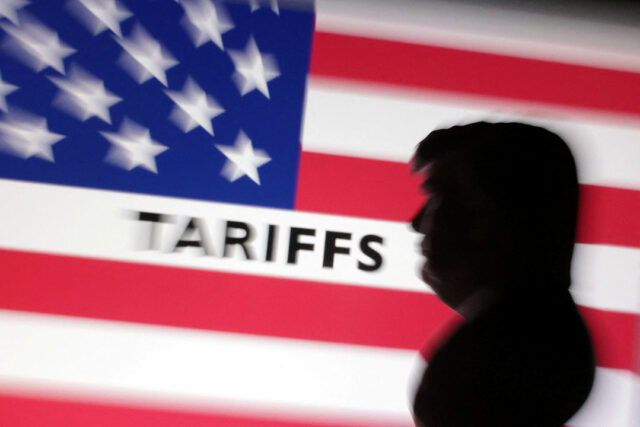
A 3D-printed miniature model of US President Donald J. Trump and the US flag pattern with the word “tariffs” are seen in this illustration. — REUTERS/DADO RUVIC/ILLUSTRATION

By Aubrey Rose A. Inosante and  Chloe Mari A. Hufana, Reporters

THE PHILIPPINES is open to lowering duties on selected imports from the US to zero as part of tariff negotiations with Washington, Finance Secretary Ralph G. Recto said.

When asked whether the government might offer zero tariffs on US goods — similar to Vietnam’s approach, Mr. Recto replied: “Definitely.”

“Not for all products, but we have identified a set of products,” he told reporters last week, without giving details.

This as Philippine President Ferdinand R. Marcos, Jr. on Sunday departed for an official visit to the US, where he is scheduled to meet with US President Donald J. Trump.

Mr. Marcos is expected to bring up the proposed 20% US tariff on Philippine exports during his meeting with Mr. Trump on July 22.

In his departure speech at Villamor Airbase in Pasay City, Mr. Marcos said the Philippines is ready to negotiate a trade deal with the US to drive “strong, mutually beneficial, and future-oriented collaborations” that will support the country’s economic growth.

“My top priority for this visit is to push for greater economic engagement, particularly through trade and investment between the Philippines and the United States,” he said, according to a transcript from his office.

“I intend to convey to President Trump and his Cabinet officials that the Philippines is ready to negotiate a bilateral trade deal that will ensure strong, mutually beneficial, and future-oriented collaborations that only the United States and the Philippines will be able to take advantage of,” he added.

Mr. Marcos’ visit to the US is the first by a head of state from the Association of Southeast Asian Nations (ASEAN) since Mr. Trump assumed the presidency in January.

Mr. Marcos emphasized that while defense and security discussions will be tackled during the meeting with Mr. Trump, business and economic opportunities will dominate the agenda.

“I expect to meet with business leaders to explore business opportunities that will help to grow our economy even more,” he said.

Members of his economic team are already in Washington ahead of his arrival to prepare for investment talks and trade negotiations.

Mr. Recto said the economic team has a “great plan” for the negotiations with the US. He expressed optimism that the talks could lead to a lower tariff rate.

“I think our relationship with the US is not only trade, but also security. I’m sure they’ll be giving that some importance as well,” he said.

Mr. Trump had earlier slapped a 17% tariff on Philippine goods, the second lowest rate among ASEAN members. This was raised to 20%, despite earlier efforts by Philippine negotiators to lower the tariff rate. If no deal is forged, the 20% tariff will take effect on Aug. 1.

The Philippines is now under pressure to secure a tariff rate lower than Indonesia and Vietnam, which have both completed negotiations with the US.

The US lowered the tariff rate on goods from Indonesia to 19% from 32% previously.

“If it’s 19% for them, it should be 10% for us. The minimum is 10%, right? 11% is fine,” Mr. Recto said hours after the news of Indonesia-US deal was released.

Vietnam currently faces a 20% tariff on its exports to the US, along with a 40% levy on goods transshipped through the country. This is significantly lower than the previously announced US tariff of 46%.

Thailand earlier said it is offering to scrap tariffs on 90% of US goods in a bid to negotiate a tariff lower than the 36% previously announced.

Cambodia is also facing the same 36% rate and still without a finalized deal.

FREE TRADE DEAL
Meanwhile, Mr. Recto said a free trade agreement (FTA) with the US is also part of the negotiations.

“We prefer that. We want to have one FTA. Not only with the US, but with Europe, and with many other countries. More trade should be better,” Mr. Recto said. 

“We have to expand their markets. Get more investments in manufacturing in the Philippines so that we can export more. Then let’s take a look at the final tariffs later on.”

The Philippines is also pushing to maintain the zero tariffs on semiconductor exports, a key component of its top export commodity, the electronics sector.

“We want to reduce whatever duties they impose on our products. If possible, we want it to be zero [on semiconductors],” Mr. Recto said.

Analysts said the Philippines’ offer to apply zero tariffs on goods from the US is unlikely to sway the Trump administration.

“It may not be enough on its own to bring down the 20% US tariff,” John Paolo R. Rivera, a senior research fellow at the Philippine Institute for Development Studies said in a Viber message.

He said the offer will be seen as a “strong goodwill gesture” and show the country is willing to engage constructively.

“The Philippines must complement this offer with a clear value proposition such as enhancing supply-chain partnerships, especially in critical sectors like semiconductors and agri-processing,” he said.

Jonathan L. Ravelas, a senior adviser at Reyes Tacandong & Co., said a key element to achieve a lower export levy is “reciprocity.”

“We need to take advantage of US agriculture. Particularly, wheat and soyabeans. Which are used primarily on feeds. If we are able to import cheaper this will help food security,” he said in a Viber message.

Josue Raphael J. Cortez, who lectures on diplomacy at De La Salle-College of St. Benilde’s School of Diplomacy and Governance, said the Philippines can maintain a healthy balance between fulfilling its security commitments to the US and pursuing economic independence by continuing to promote an independent foreign policy.

However, he warned that such a path carries risks amid today’s geopolitical volatility, citing the US reciprocal tariffs and rising tensions in the South China Sea.

“The political-security and economic dimensions may be interrelated, but our approach presently is showing that we highly value our security partnership with the US, but we cannot overly depend on one partner alone,” he said in a Messenger chat.

Mr. Cortez said the Philippines can strengthen economic security by expanding partnerships in sectors where it has strategic advantages, such as semiconductors, and by sustainably using mineral resources like nickel, which is essential for electric vehicle batteries.

IBON Foundation Executive Director Jose Enrique A. Africa said the government has weak negotiating leverage as manufacturing is now at the smallest share of the economy in 75 years.

“The delegation offering to open up the economy even more to get lower US tariffs will be self-defeating and dangerous,” he said in a Viber message.

“The Philippines will be at fault for eroding what little leverage it has if it succumbs to playing by the rules being imposed by the US. It’s never too late to adopt a posture of domestic industrialization policy, such as exactly what the US is doing, and building strategic alliances within the region to shift the balance,” he added.

US tax to cut PHL remittance growth

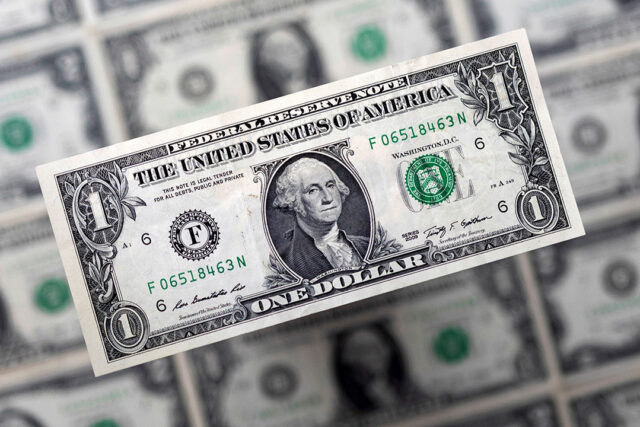
A US dollar note is seen in this June 22, 2017 illustration photo. — REUTERS

By Luisa Maria Jacinta C. Jocson, Senior Reporter

THE UNITED STATES’ remittance tax could trim the Philippines’ remittance growth by 0.5 percentage point (ppt), the Bangko Sentral ng Pilipinas (BSP) said.

“The impact under the worst-case scenario could be about 0.5 (ppt) or even lower,” BSP Deputy Governor Zeno R. Abenoja told BusinessWorld on the sidelines of an event on Friday.

“But again, behavior could change. For example, it’s possible that the sender will absorb the rate, the additional tax on it, such that in the end, what is received is still the same as what is sent,” he added.

The central bank expects cash remittances from overseas Filipino workers to grow by 2.8% this year and by 3% in 2026.

The 0.5 ppt estimated impact is still “very preliminary,” Mr. Abenoja said, as they are still studying the effects of the remittance tax.

“We still have some time to assess since it’s going to be January next year that it will be implemented. We are trying to confirm and clarify how it will be implemented, so we look at some worst-case scenarios,” he said.

US President Donald J. Trump’s recently passed “One Big Beautiful Bill” imposes a 1% excise tax on cash remittance transfers from the United States to other countries, starting Jan. 1, 2026. This was lower than earlier proposals of a 3.5% levy.

The tax was also initially aimed at non-US citizens but now applies to any remittance sender.

“As you know, the remittances from the US compose the bulk of our overseas Filipino remittances. If you look at the behavior of remittances, they’re used to finance education, health expenditures, and housing. These are necessary expenditures,” Mr. Abenoja said.

In the first five months of the year, cash remittances grew by 3% to $13.77 billion from $13.37 billion a year prior.

Around two-fifths of the Philippines’ remittance flows come from the United States. Latest BSP data showed that the US was the top source of remittances in the five-month period, accounting for 40.2% of the total.

“We’re looking at these characteristics of flows before we can finalize the impact. Because the behavior may also change such that in the end, the impact could be minimal,” Mr. Abenoja said.

“So, we’re looking at both how it will be implemented and how the senders will adjust to these new rules.”

The Department of Finance  earlier said the tax could impact 12.8% of the Philippines’ annual remittances. This would impact around $1.9 billion of the expected $36.5-billion remittances from the US in 2026.

In a separate e-mail to BusinessWorld, the BSP said that remittances often remain resilient despite shocks.

“During periods of crisis and uncertainties, overseas Filipino (OF) remittances have generally continued to increase, reflecting the strong altruistic motives of OF migrants and workers to support their dependents regardless of prevailing economic conditions,” it said.

The number of documented temporary Filipino migrants in the US are at an estimated 500,000, the BSP said, though noted that these figures vary.

“These are non-US citizens from the Philippines who hold either green cards (immigrant) or long-term nonresident visas. As a share of total documented migrants reported by the Department of Foreign Affairs, documented temporary migrants comprise 12%,” it added.

External debt service burden rises to nearly $5B at end-April

US dollar banknotes are displayed in this illustration taken on Feb. 14, 2022. — REUTERS/DADO RUVIC/ILLUSTRATION

THE PHILIPPINES’ external debt service burden rose to nearly $5 billion at end-April due to higher amortization payments, preliminary data from the Bangko Sentral ng Pilipinas (BSP) showed.

Preliminary data from the central bank showed debt servicing on external borrowings went up by 1.3% to $4.91 billion in the January-April period from $4.85 billion a year ago.

Broken down, amortization payments increased by 6.2% to $2.42 billion in the first four months from $2.28 billion in the same period in 2024.

On the other hand, interest payments declined by 3% year on year to $2.49 billion from $2.57 billion.

The debt service burden represents principal and interest payments after rescheduling, according to the BSP.

This includes principal and interest payments on fixed medium- and long-term credits, including International Monetary Fund credits, loans covered by the Paris Club and commercial banks’ rescheduling, and New Money Facilities.

It also covers interest payments on fixed and revolving short-term liabilities of banks and nonbanks.

However, the debt service burden data exclude prepayments on future years’ maturities of foreign loans and principal payments on fixed and revolving short-term liabilities of banks and nonbanks.

“The slight year-on-year increase in external debt service may partly reflect the wider budget deficits that needed more NG (National Government) borrowings,” Rizal Commercial Banking Corp. Chief Economist Michael L. Ricafort said in a Viber message.

The NG’s budget deficit widened by 29.41% to P523.9 billion in the January-May period from the P404.8-billion gap last year.

Mr. Ricafort also cited “still relatively higher Fed interest rates since 2022 that contributed to higher debt servicing costs.”

The Fed is expected to keep its benchmark rate steady in the 4.25%-4.5% range at its July 29-30 meeting, a level policymakers regard as at least moderately restrictive, Reuters reported.

The Fed last cut rates in December, when policymakers started assessing the possible impact on prices from the import tariffs that Mr. Trump quickly began imposing after returning to the White House in January.

“For the coming months, the share of foreign borrowings in the total borrowing mix has been reduced in view of forex (foreign exchange) risks entailed, with a greater share of domestic borrowings. Nevertheless, future borrowings would be a function of the trend on budget deficits,” Mr. Ricafort said.

From this year until 2027, the National Government plans to source at least 80% of its borrowing program from domestic sources, and 20% from foreign lenders. The government previously adopted a 75:25 borrowing mix.

Earlier BSP data showed outstanding external debt jumped by 14% to $146.74 billion at the end of March. This brought the external debt as a percentage of gross domestic product (GDP) to 31.5% from 29.8% in the fourth quarter.

The BSP’s external debt data cover borrowings of Philippine residents from nonresident creditors, regardless of sector, maturity, creditor type, debt instruments or currency denomination.

Meanwhile, the debt burden as a share of GDP stood at 2.8% in the first quarter, lower than the 3.1% in the year-ago period. — Luisa Maria Jacinta C. Jocson with Reuters

Topline sets sights on fuel market share gains in Visayas

TOP LINE BUSINESS DEVELOPMENT CORP.

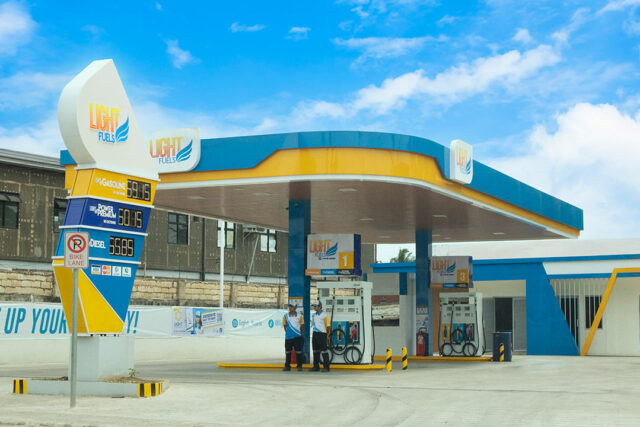
CEBU CITY — Top Line Business Development Corp. (Topline) sees room for continued growth as it scales up its retail fuel presence in the Visayas through acquisitions and expanded capacity, supporting its goal of capturing a larger share of the regional fuel market.

Topline Chairman, President, and Chief Executive Officer Eugene Erik C. Lim said the expansion of the company’s retail fuel subsidiary, Light Fuels Corp., is expected to support its financial performance this year.

He said the company is targeting to have 50 Light Fuels-operated stations in place by yearend.

“We’re hoping it can be a banner year because of the 50 (fuel) stations. From three stations last year, then it is now hopefully 50 stations this year. It’s really a banner year,” Mr. Lim said in an interview on the sidelines of the company’s 12th anniversary event held last Friday.

Topline announced last Thursday its plan to acquire a gasoline station in Consolacion, Cebu from Phoenix Petroleum Philippines, Inc., a company led by Dennis A. Uy, for P8.5 million.

This came after Topline recently bought P180 million worth of assets under a P925-million investment to support its expansion in the Visayas.

The company entered into a purchase agreement with Total Oil & Gas Resources, Inc. and Ballston Metro Corp.

The acquired assets consist of 38 retail fuel stations located across Cebu, Leyte, Siquijor, and Negros Oriental; a two-million-liter depot facility; 15 fuel tanker trucks; machinery and equipment; and intangible assets such as a customer loyalty program and leasehold rights.

Mr. Lim said the acquisitions support Topline’s push for a higher market share in Central Visayas, which is currently estimated at 7%.

“There’s still a lot of room for growth. We would want to hopefully add more market share soon, especially with the acquisition of the different stations. As to how much, we don’t know yet because we haven’t seen the numbers,” he said.

Mr. Lim said Topline increased its fuel depot capacity to 15 million liters from 5 million liters due to higher orders in Central Visayas.

During the company’s annual stockholders’ meeting, Mr. Lim said Topline’s gross revenue rose by 36% to about P1 billion in the first quarter from P738.7 million in the previous year, driven by higher fuel sales.

He said Topline saw a 38.3% increase in liquid fuel sales to 44.43 million liters in the first half from 32.12 million liters in the same period a year ago.

“We’re now at 44 million liters for the first half. We’re about 61% already of the 72 million liters sold last year. That’s before we also acquired the different stations,” Mr. Lim said.

Topline has business interests in commercial fuel trading, depot operations, and retail fuel in the Visayas region.

Its subsidiaries include petroleum trading and distributor Topline Logistics and Development Corp., and retail fuel company Light Fuels.

Topline shares were last traded on July 18, down by 7.14% or nine centavos to P1.17 per share. — Revin Mikhael D. Ochave

T-bill, bond rates may end mixed

BW FILE PHOTO

RATES of the Treasury bills (T-bills) and Treasury bonds (T-bonds) on offer this week could track the mixed yield movements at the secondary market amid expectations of a retail Treasury bond (RTB) offering next month.

The Bureau of the Treasury (BTr) will auction off P25 billion in T-bills on Monday, or P7 billion in 91-day securities, P8.5 billion in 182-day debt, and P9.5 billion in 364-day papers.

On Tuesday, the government will offer P20 billion in reissued seven-year T-bonds with a remaining life of two years and nine months.

T-bill rates could mostly ease this week and track the week-on-week movements seen at the secondary market, Rizal Commercial Banking Corp. Chief Economist Michael L. Ricafort said in a Viber message.

The reissued seven-year bonds could likewise fetch rates at par with secondary market levels amid reports of a possible RTB issuance in August that could increase the supply of debt papers, Mr. Ricafort added.

The T-bonds to be offered this week could be “well received” and fetch rates ranging from 5.775% to 5.825% as the market awaits further information on the RTB offering, a trader said in an e-mail.

At the secondary market on Friday, the 91-day T-bill rose by 2.01 basis points (bps) week on week to end at 5.4506%, based on PHP Bloomberg Valuation Service Reference Rates data as of July 18 published on the Philippine Dealing System’s website. Meanwhile, the 182- and 364-day papers went down by 7.08 bps and 2.56 bps to fetch 5.571% and 5.6578%, respectively.

For its part, the seven-year bond saw its yield rise by 2.93 bps week on week to 6.1243%, while the three-year paper, the tenor closest to the remaining life of the T-bonds on offer this week, went up by 2.69 bps to end at 5.8494%.

Finance Secretary Ralph G. Recto earlier said that the government could borrow more from the domestic market this year to fund the higher budget deficit cap under its latest fiscal program.

The BTr last offered retail Treasury bonds in February 2024, raising P584.86 billion from its offering of five-year notes at a coupon rate of 6.25%.

Last week, the Treasury raised P28.4 billion from its offering of T-bills, higher than the P25-billion plan, as the offer was more than four times oversubscribed, with total bids reaching P102.906 billion.

Broken down, the BTr borrowed P7 billion as planned via the 91-day T-bills as total tenders for the tenor reached P38.156 billion. The three-month paper was quoted at an average rate of 5.475%, down by 5.1 bps from the previous auction, with bids accepted having rates of 5.473% to 5.483%.

Meanwhile, the government raised P11.9 billion from the 182-day securities, higher than the P8.5-billion plan, as bids amounted to P38.85 billion. The average rate of the six-month T-bill was at 5.575%, down by 4.3 bps, with accepted yields ranging from 5.563% to 5.593%.

Lastly, the Treasury sold P9.5 billion as programmed via the 364-day debt papers as demand for the tenor totaled P25.9 billion. The average rate of the one-year paper inched down by 0.6 bp to 5.65%. Accepted bids had rates ranging from 5.63% to 5.66%.

Meanwhile, the reissued seven-year T-bonds to be auctioned off on Tuesday were last offered on June 25, where the government raised P20 billion as planned at an average rate of 5.76%, well above the 3.635% coupon.

The BTr wants to raise P250 billion from the domestic market this month, or P125 billion through T-bills and P125 billion via T-bonds.

The government borrows from local and foreign sources to help fund its budget deficit, which is capped at P1.56 trillion or 5.5% of gross domestic product this year. — Aaron Michael C. Sy

Source code

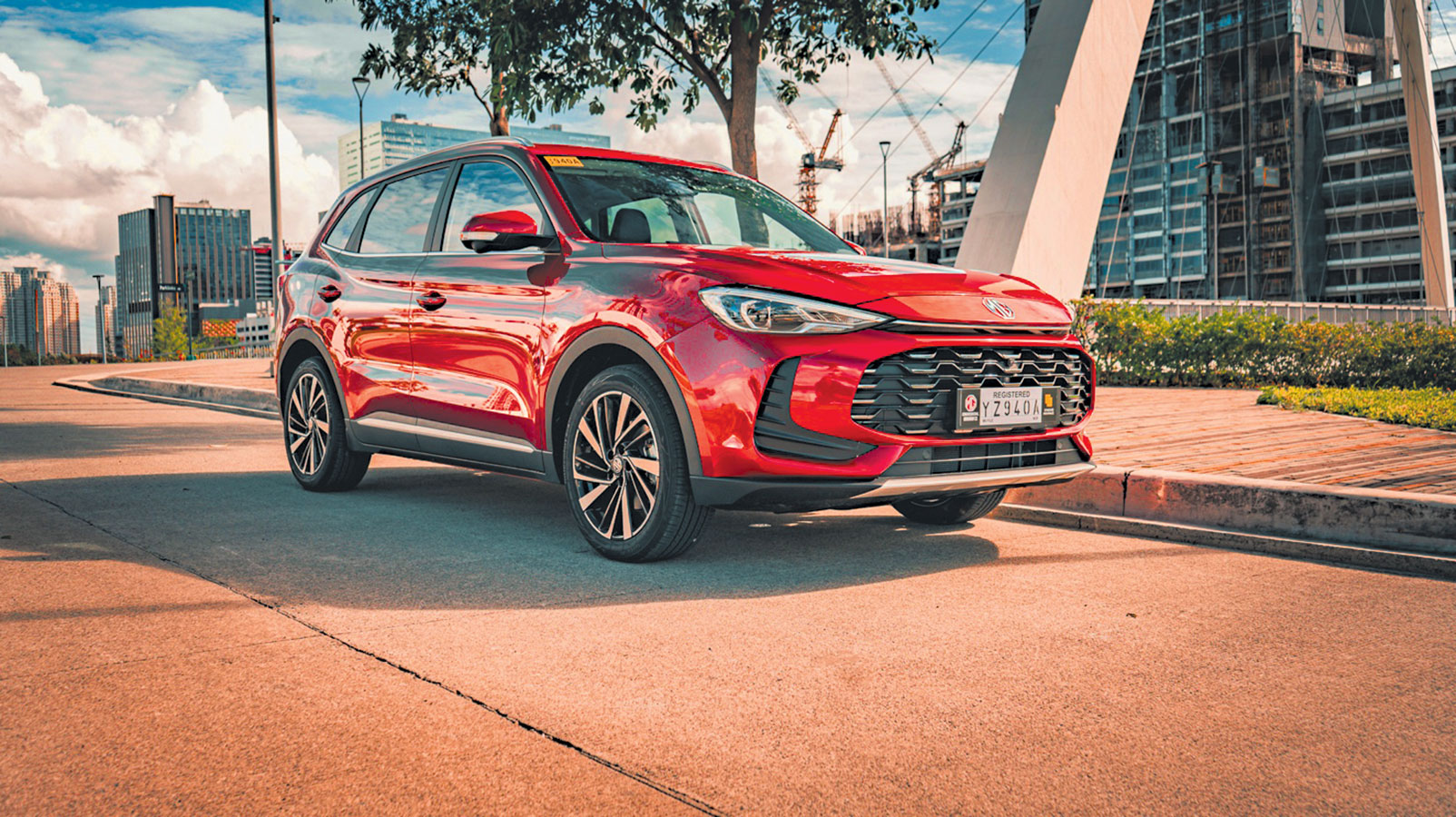
The all-new MG ZS Hybrid+ at Parklinks — PHOTO BY KAP MACEDA AGUILA

SAIC Motor PHL hopes lightning strikes twice in the MG ZS

IT MAY BE a little hard to remember now, but try to recall before the days of the Chinese brand boom here. Though spoiled for choice, we had 25 or so less brands then than we do today.

The Chinese marque “glow-up” was still in its infancy, and its automotive aspirations were arguably best represented by Morris Garages (or more famously, MG). To be honest, The Covenant Car Company, Inc. (TCCCI), then the local steward of the brand, was consciously pushing MG’s British origins — leveraging on its history that stretched back to the 1920s. China’s biggest auto conglomerate, SAIC Motor, based in Shanghai, has owned the brand since 2007 — the year it acquired Nanjing Automobile Corp., the firm that had originally bought MG from the MG Rover Group.

Whatever the Philippine distributor did when it took the reins the brand beginning in 2018 obviously worked — particularly in the case of the crossover ZS, which became a posterchild for China-made vehicles. The once-derogatory “made in China” tag started to become a positive for many buyers — evidenced in the improved interest in vehicles coming from our neighbor to the north.

A package of good and focused styling, right pricing, and upmarket features saw the ZS not only do well but actually prop up the numbers for MG here. In 2021 alone, the MG Philippine dealership network sold 5,209 units — 4,000 of which were ZS units. Today, the cumulative total stands at more than 22,000.

“It disrupted the small SUV segment. Technology, space, fuel efficiency, utility, design, reliability, and British engineering were put into one single model. Partnered with almost unbelievable pricing, it was truly a game-changer and really paved the way for others to follow suit,” said SAIC Motor Philippines (SMP) President Felix Jiang in a speech during the model’s launch. In 2023, SMP assumed control of the MG brand.

Earlier in the year, Mr. Jiang revealed steady MG sales growth even through the TCCCI years. From 65 units sold in 2018 (the brand was relaunched in October that year), MG in the Philippines posted sales of 4,745 (2019), 3,518 (2020), 5,209 (2021), 8,768 (2022), 5,679 (2023), and 9,016 (2024).

Mr. Jiang isn’t shy about his aspirations for MG here, currently hovering in ninth position by sales among Chamber of Automotive Manufacturers of the Philippines, Inc. (CAMPI) member brands. He had declared that the company intends to crack the top five in three years, and get to third place by the end of the decade.

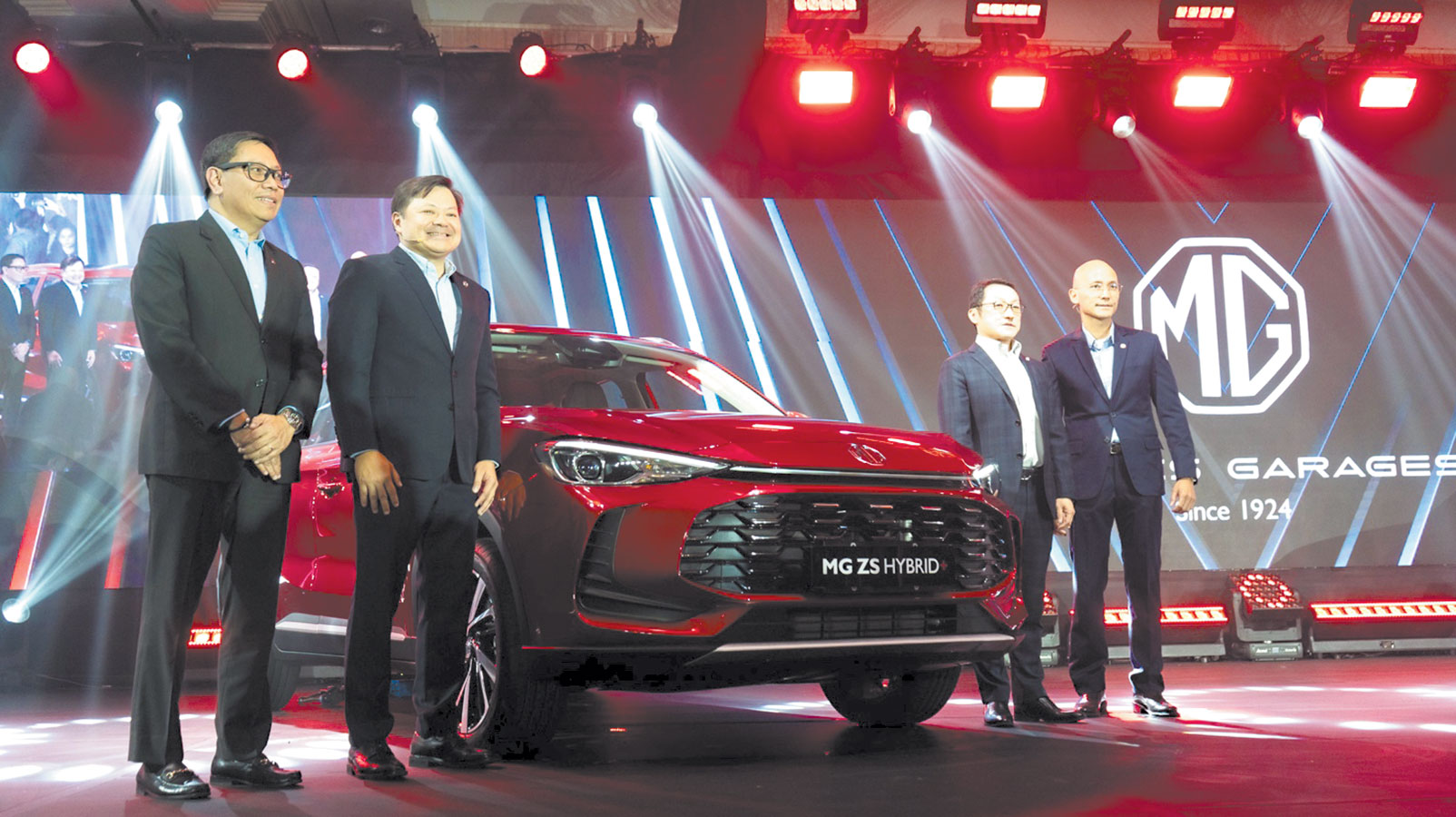
You can bet that one of the models SMP is banking on is, yes, the aforementioned MG ZS. The second-generation, all-new iteration of the model was recently launched in a big way in Makati City, and it’s pretty clear that MG is banking on similar value propositions that propelled ZS in the past.

It’s a vastly changed scene, of course. It’s an industry the ZS has, to a degree, caused to evolve, and now has to wage battle in.

SMP said that the all-new ZS “brings a stronger, sleeker, and more refined presence, infused with the latest in global design and engineering. With world-class details, intelligent hybrid technology, and future-ready features, this next-generation ZS is now more advanced than ever before.”

In terms of dimensions, the ZS longer at 4,430mm (+107mm), wider at 1,818mm (+9mm), and lower at 1,635mm (-18mm). It boasts a 2,610-mm wheelbase (+30mm), translating to a bigger cabin space — expressed in “enhanced legroom and improved cargo flexibility.” SMP added that “visibility has also been improved, with reduced blind spots for a more confident drive. In the second row, cabin space has noticeably increased — with +18mm in headroom, +23mm in elbow room, and +3mm in legroom — ensuring a more comfortable ride for rear passengers.”

Coming in four variants, the range-topping MG ZS Hybrid+ is the center of attention as it banners electrification for the first time in the model.

Described as the “most advanced ZS yet,” the Hybrid+ deploys a 1.5-liter, four-cylinder engine complemented by a 100-kW electric motor with a 1.83-kWh battery. Power output is 197ps.

Thoroughly revised in looks and features, the ZS receives a more contemporary skillset as well — particularly through MG Pilot, the brand’s suite of ADAS features. There’s adaptive cruise control, active emergency braking with pedestrian and bicycle detection, lane keep assist, and more. There are also eight intelligent drive modes.

Inside is an all-digital affair via a seven-inch instrument cluster and 12.3-inch infotainment touchscreen. Seat and lumbar adjustments can be made electronically, and the ZS gets automatic single-zone climate control. For an enhanced sense of space, there’s a panoramic sunroof as well.

Here is the pricing of the MG ZS, with introductory pricing in parentheses, applicable until Aug. 31 this year: Hybrid+: P1,328,888 (P1,248,888), Sport: P1,198,888 (P1,148,888), Luxury: P1,088,888 (P1,048,888), and Comfort: P948,888 (P908,888).

Can the ZS once again figure heavily in the future of MG in the Philippines and allow the brand to realize its lofty goals? SMP certainly hopes so.

DigiPlus pushes for regulation over blanket online gambling ban

DIGIPLUS.COM.PH

TANCO-LED digital entertainment provider DigiPlus Interactive Corp. said lawmakers should consider the potential effects of a total ban on online gambling, noting that regulation could help prevent a shift of users to unregulated platforms.

“Crucially, DigiPlus urges policymakers to weigh the consequences of a total ban. The experience of other countries has shown that banning licensed platforms does not eliminate demand for online gaming, but merely shifts users to unregulated black markets where there are no protections, no taxes, and no accountability,” DigiPlus said in a statement last week.

“In contrast, a well-regulated environment can protect players, generate billions in government revenue, and sustain over 40,000 jobs across tech, marketing, entertainment, customer service, and compliance,” it added.

DigiPlus operates online gaming platforms BingoPlus, ArenaPlus, and GameZone.

The company said it is supportive of “smart and balanced” regulation that protects players, ensures industry accountability, and sustains the economic value generated by the legal online gaming sector.

“We believe regulation is the path to player protection. It’s the only way to safeguard players, preserve jobs, and close the door on illegal, underground platforms that operate without any oversight,” DigiPlus Chairman Eusebio H. Tanco said.

“With the right rules in place, the Philippines can be a model for safe, transparent online gaming in Asia. We are ready to work hand-in-hand with regulators, legislators, and community groups to make that vision real,” he added.

DigiPlus said it has already implemented safeguards across its platforms, including strict know-your-customer verification with government ID checks and age gating. The platforms have also had responsible gaming features since November 2024, such as deposit limits, self-exclusion options, and cooling-off periods.

The company plans to introduce new initiatives such as enhanced affordability checks, behavioral nudges to curb excessive gaming, and referral pathways to licensed mental health experts.

It plans to roll out in-app community spaces this month to foster responsible gaming discussions and peer support, alongside featuring related content across all its platforms.

“DigiPlus emphasizes that these measures are not reactions to regulatory pressure, but part of a multi-year strategy to build a responsible gaming ecosystem. The company invests in data science, player support systems, and compliance technologies precisely because it believes the future of gaming depends on trust and transparency,” the company said.

“That is why it fully supports updated legislation, particularly around stronger penalties for illegal operators, and clearer advertising standards,” it added.

DigiPlus shares were last traded on July 18, up by 15.66% or P3.06 to P22.60 per share. — Revin Mikhael D. Ochave

BSP securities fetch lower yields on oversubscription

Bangko Sentral ng Pilipinas main office in Manila. — BW FILE PHOTO

YIELDS on the Bangko Sentral ng Pilipinas’ (BSP) short-term securities dropped on Friday as the offer was met with strong demand.

The central bank’s short-term securities fetched bids amounting to P153.359 billion last week, higher than the P100-billion offer and the P119.385 billion in tenders for the P110 billion auctioned off the prior week. The BSP made a full award of the bills.

Broken down, tenders for the 28-day BSP bills reached P66.805 billion, well above the P40-billion offer and the P42.285 billion in bids for the P50 billion placed on the auction block a week earlier. The central bank made a full P40-billion award of the one-month bills.

Banks asked for yields ranging from 5.414% to 5.4585%, narrowing from the 5.299% to 5.525% band seen in the previous week. This caused the average rate of the one-month securities to decline by 2.46 basis points (bps) to 5.4408% from 5.4654% the week prior.

Meanwhile, bids for the 56-day bills amounted to P86.554 billion, higher than the P60-billion offering and the P77.1 billion in tenders for the same volume auctioned off the previous week. The BSP fully awarded P60 billion in two-month papers.

Accepted rates for the two-month tenor were from 5.3975% to 5.485%, also narrower than the 5.32% to 5.515% margin seen in the prior auction. With this, the average rate of the securities fell by 4.25 bp to 5.454% from 5.4965%.

The central bank reduced Friday’s total offering of BSP bills (BSPB) compared to the previous week, it said in a statement.

“As a result, the 28-day and 56-day BSPB auctions were oversubscribed by 1.67 times and 1.44 times, respectively,” it said.

The central bank uses the BSP securities and its term deposit facility to mop up excess liquidity in the financial system and to better guide short-term market rates towards its policy rate.

The BSP bills were calibrated to not overlap with the Treasury bill and term deposit tenors also being offered weekly.

Data from the central bank showed that around 50% of its market operations are done through its short-term securities.

The BSP bills are considered high-quality liquid assets. They can also be traded on the secondary market. — Luisa Maria Jacinta C. Jocson

Something old, something new

LOOKS from Jor-el Espina’s Heirloom Collection.

Jor-el Espina’s new Filipiniana collection is a fun collaboration with Patis Tesoro

JOR-EL ESPINA is paying tribute to Patis Tesoro, but also lucky enough to collaborate with a designer who is sometimes called the Grand Dame of Philippine Fashion.

At a fashion show on July 15 at the Makati Shangri-La, it was hard to draw the line between where the senior designer ends and the junior begins in this collection called “Heirloom.”

There was a pink embroidered top with lace trimming on a little cap-sleeved baro (a traditional blouse), with an inner garment of fuchsia, and a floral skirt. Next came a striped blouse made of piña (pineapple fiber fabric), with a Mindanao-inspired malong (tube skirt), and a refreshing green-striped baro with lace trimming on the sleeves, paired with a gathered aquamarine skirt.

A long-sleeved baro had a splash of lilac chiffon on the train, while a fully embroidered kimono jacket with a pattern of green leaves and hot pink flowers was paired with gold-embroidered pants. Next came a polite coatdress with terno sleeves (butterfly sleeves), fully embroidered with masses of wildflowers.

There was a darling kimona (a traditional blouse) over pistachio-green pants with a piña overlay, and a boxy floral balintawak (a traditional short butterfly-sleeved dress).

There was something a bit more modern in a nice long shift dress with a ruffled hem in a chintzy print, and then came a pleated flower-painted dress in the style of a 1920s robe de style, drop-waisted and paired with a full sheer coat in red, appliquéd all over.

The finale dress was an ensemble with a terno (formal butterfly-sleeved dress) with calado (openwork embroidery) details, and a full skirt, with several scraps of different colors forming the tapis (overskirt).

That is only a sneak peek, for the collaboration resulted in a 30-piece collection.

As to why they collaborated — it’s a celebration of Mr. Espina’s 20th year in fashion, as well as the result of a meeting over lunch with Ms. Tesoro in Laguna with the ArteFino ladies. But more importantly, “I love her,” he said in an interview. “It was while we were enjoying her space and company that we began to explore the idea of a special collection for ArteFino. It was really because of the ladies and their generous endorsement that this dream project was brought to life,” he said in a statement.

Speaking about which parts are hers and his, he said, “I use her techniques. I’ve been visiting her several times to do a collection. We’ve been trying to inject her techniques, a few of her silhouettes… her beading, her embroidery, her stitchwork.

“Her clothes are really kind of mysterious, and yet very fun. My collection is more formal. I just injected her techniques, her colors, to my silhouette at the same time,” he said.

According to him, 95% of the collection was made of piña (a textile she championed in the 1990s, following the decline in its production). He used a rare piña, in fact, that he had to commission in Aklan.

“Miss Patis is full of wisdom,” the young designer said of Ms. Tesoro, and what he learned from working with her. “Her blessing, guidance, feedback, and advice were integral to this collection. I was eager to learn, and Patis was generous with her knowledge. I wanted to make sure that every single garment reflected her essence.”

“I have to borrow her line: that a designer should make clothes that can be passed through generations.”

“Heirloom” will be seen and sold at the ArteFino bazaar, which will be held from July 31 to Aug. 3 at The Fifth at Rockwell, Makati. — Joseph L. Garcia

Nissan Alabang cops Nissan Global Award at Dealer of the Year Awards

Nissan Alabang is recognized with the 2025 Nissan Global Award. — PHOTO FROM NISSAN PHILIPPINES, INC.

AT THE RECENT 2025 Dealer of the Year Awards, Nissan Philippines, Inc. (NPI) recognized the “exceptional performance” of its nationwide dealer network. Held at the Okada Manila, the honorees were led by Nissan Alabang, which received the 2025 Nissan Global Award, the highest recognition given to a dealership “that reflects Nissan’s global standards of operational excellence and customer service.”

In addition to the global recognition, Nissan Alabang was also awarded as the 2025 Dealer of the Year in NCR, while Nissan Dasmariñas earned the same distinction in the Provincial Category. “Both dealerships have shown outstanding achievements across key areas such as Sales, After-Sales, Marketing, and Customer Experience, and Financial Management,” said NPI in a release.

The annual Dealer of the Year Awards honor the dealer partners and individuals who have demonstrated exemplary standards in business operations, service, and customer engagement across the country. NPI also awarded additional honorees:

Best in Quick Voice of Customer (QVOC) Sales -— Nissan Dumaguete

Best in Quick Voice of Customer (QVOC) Aftersales — Nissan Dasmariñas

Fleet Dealer of the Year (Provincial) — Nissan Baliwag

Fleet Dealer of the Year (NCR) — Nissan Commonwealth

Parts Team of the Year — Nissan Tarlac

Service Team of the Year – Nissan Alabang

Nissan Customer Connect Dealer Team of the Year — Nissan General Santos

Dealer Customer Experience Team of the Year — Nissan Bohol

Finance Team of the Year — Nissan Cabanatuan

Brand Excellence Award — Nissan North EDSA

Excellence in Sales — Nissan Alabang

Excellence in Aftersales — Nissan Dasmariñas

Excellence in Business Sustainability — Nissan Bacolod

“Our annual Dealer of the Year Awards give us the opportunity to recognize the passion and commitment of our partners,” said NPI President Masao Tsutsumi. “As we honor the performance of these outstanding dealers, we also renew our focus on working together with our dealer partners to elevate the Nissan experience across the country.”

ADVERTISEMENT
ADVERTISEMENT