Home Blog Page 126

Nomura: Investors wary about Philippines amid inflation, Iran conflict

PHILIPPINE STAR/ MICHAEL VARCAS

INVESTORS remain cautious about the Philippines due to rising inflation and growth risks stemming from the Middle East war and last year’s flood control corruption scandal, Nomura Global Markets Research said.

In a client note, Nomura said economic shocks linked to the Middle East conflict add to uncertainties from the unresolved graft controversy.

“The conflict in Iran poses significant risks to the inflation outlook and external balances,” analysts Euben Paracuelles, Nabila Amani and Yiru Chen said on Monday.

The Monetary Board has followed an easing path since August 2024, cutting the key policy rate by 225 basis points to an over three-year low of 4.25%.

However, Bangko Sentral ng Pilipinas (BSP) Governor Eli M. Remolona, Jr. earlier said the board could be forced to raise rates for the first time since October 2023 if inflation breaches 4% due to surging oil prices.

The central bank aims to keep inflation at 2% to 4%, with the “sweet spot” at 3%, Mr. Remolona said.

Inflation has remained within the BSP’s target for two consecutive months, accelerating to a 13-month high of 2.4% in February as back-to-back oil price increases weighed on prices.

Nomura noted that clients expect the BSP to hike rates this year, considering its commitment to price stability.

“Many clients agree that BSP could be among the first to hike, likely earlier than BI (Bank of Indonesia), given the impact of rising energy prices on inflation and BSP’s orthodox inflation-targeting mandate,” the analysts said.

Several observers have warned that inflation could surpass 4% in the coming months as fuel prices continue to rise amid disruptions to oil trade caused by the escalating Iran-Israel-US war.

Nomura forecasts inflation to average 4.4% by yearend before cooling to 2.7% next year.

Iran has said it would continue to block the Strait of Hormuz for vessels from the US, Israel and their allies. The strait is a critical oil transit point, carrying almost a fifth of global oil shipments, and its closure threatens major net oil-importing countries like the Philippines.

This week, fuel retailers are expected to implement staggered price hikes of P12.90 to P16.60 per liter for gasoline, P20.40 to P23.90 for diesel and P6.90 to P8.90 for kerosene, pushing diesel past P100 per liter and gasoline to around P90 per liter.

“Investors are cautious about the Philippines, not just from the negative terms-of-trade shock but also from the prospect of overseas remittances declining from the Middle East, which is host to 2.2 million Filipinos (both land- and sea-based),” Nomura added.

The analysts also noted that growth concerns persist amid governance issues, with investigations into the flood control corruption scandal involving lawmakers, Public Works officials and private contractors.

“The near-term growth outlook remains weak due to the ongoing corruption scandal,” Nomura said. “The resolution remains uncertain and domestic political risks are rising.”

Last year, Philippine growth fell to a post-pandemic low of 4.4% as the flood scandal dampened investment, household consumption and government spending.

Nomura projects the economy will expand 5.3% this year before recovering to 6.1% in 2027. — Katherine K. Chan

IHG plans InterContinental Manila return in 2032

EXTERIOR RENDERING of InterContinental Manila. — IHG HOTELS & RESORTS

IHG Hotels & Resorts said it will relaunch its luxury InterContinental brand in the Philippines with a new 212-room hotel in Manila, scheduled to open in 2032.

InterContinental Manila will rise in Bonifacio Global City (BGC), a 240-hectare former military base that has developed into a major Metro Manila business district. The area hosts the Philippine Stock Exchange, multinational companies, and several high-rise landmarks.

“InterContinental Manila will join the world’s first and largest luxury hotel brand, showcasing a luxury travel experience tailored for the modern traveler,” the company said in a statement on Monday.

The hotel will offer a range of amenities, including an all-day dining restaurant, a signature specialty restaurant and bar, meeting and event spaces with a ballroom, function and meeting rooms, a fully equipped health club and spa, and an outdoor swimming pool with a poolside bar.

“The InterContinental brand has a storied history in Manila, having first opened in the city in 1969 and for 46 years it was a symbol of luxury and a hotel icon. Reintroducing InterContinental to Manila is a wonderful milestone, and a perfect fit for the city with strong long-term fundamentals and increasing demand for luxury travel,” IHG Hotels & Resorts South East Asia & Korea Managing Director Vivek Bhalla said.

IHG is partnering with Keyland Corp., Philippine Realty and Holdings Corp., and Greenhills Properties, Inc. to develop the InterContinental property in BGC after the brand’s 15-year absence from the capital.

“This signing reinforces our commitment to expanding our Luxury & Lifestyle presence across the Philippines and the wider region,” he added.

Keyland has developed residential and commercial properties in urban centers including Makati, Alabang, Las Piñas, and Ortigas. The company is expanding into hospitality as demand for premium travel experiences grows.

Philippine Realty and Holdings Corp. focuses on property development, sales, leasing, and management. Its portfolio includes upscale condominiums in Ortigas Center, Quezon City, and BGC, as well as office and commercial spaces in Ortigas. Greenhills Properties, Inc. also engages in property development, sales, and leasing, and holds premium properties in BGC.

InterContinental Manila will join a global portfolio of more than 240 InterContinental hotels and resorts. The brand also has a development pipeline that includes two properties in the Philippines and 104 more worldwide.

IHG Hotels & Resorts operates 21 hotel brands and the IHG One Rewards loyalty program, which has more than 160 million members.

The company manages more than one million rooms across 6,963 hotels in over 100 countries and has a development pipeline of 2,300 properties. — Alexandria Grace C. Magno

AbaCore breaks ground for indoor Ice World attraction in Batangas

Artist’s rendering of the Ice World building in Montemaria Estate. — ABACORE CAPITAL HOLDINGS, INC.

LISTED holding firm AbaCore Capital Holdings, Inc. (ABA) has broken ground for Ice World, a new indoor attraction at the Montemaria International Pilgrimage and Conference Center in Batangas.

The 2,000-square-meter facility will accommodate up to 300 guests at a time and will feature ice slides, ice villages, and ice sports activities.

“Ice World is designed to complement Montemaria’s one-of-a-kind environment, offering fun and interactive experiences for all visitors,” Montemaria Resort President Guoan Wu said in a statement on Monday.

“Our goal is to provide a unique attraction that appeals to families, tourists, and pilgrims, creating lasting memories while appreciating the natural and cultural beauty of the estate,” he added.

The Ice World project forms part of ABA’s continuing development of the Montemaria estate.

“These developments reflect our commitment to growing Montemaria into a destination where faith and family bonding come together,” ABA Chairman and President Antonio Victoriano F. Gregorio III said.

“We see Montemaria as a destination where visitors come together not only for spiritual reflection but also for creating beautiful memories with their loved ones.”

Montemaria houses the Mother of All Asia — Tower of Peace, a 98-meter statue of the Blessed Virgin Mary.

The groundbreaking event also marked the opening of the Montemaria souvenir shop, which sells memorabilia and local products. It also launched a 9D Marine Adventure ride tied to the site’s location near the Verde Island Passage. — Alexandria Grace C. Magno

ICTSI advances Pier 14 upgrades at Manila North Harbor

As the Philippines’ primary domestic gateway, NorthPort handles most of the domestic trade at the Port of Manila. — ICTSI

INTERNATIONAL Container Terminal Services, Inc. (ICTSI) is strengthening its domestic cargo gateway through structural upgrades at Manila North Harbor Port, Inc. (NorthPort).

In a media release on Monday, the listed port operator said it is advancing the structural reinforcement of NorthPort’s Pier 14 as part of a three-year terminal upgrade program.

ICTSI said it has completed structural work on the second and third 42.5-meter segments of the pier. Wharf strengthening efforts have also reached the final 52.5-meter segment.

NorthPort is currently undertaking additional structural works, ICTSI said, adding that the remaining phases of the terminal upgrade program are scheduled for completion by next year.

“The program is designed to ensure NorthPort remains capable of supporting long-term domestic trade growth while maintaining safe and reliable operations,” ICTSI said.

Current upgrades at the port include resurfacing the remaining deck areas and repairing above-deck damage to help prevent structural deterioration.

For 2025, the global port operator reported a 23% increase in attributable net income to $1.05 billion, driven by higher cargo volumes across its port operations.

ICTSI’s gross revenue rose 17.88% to $3.23 billion last year from $2.74 billion in the comparable period a year earlier.

Total expenses reached $1.55 billion, up 8.39% from $1.43 billion in 2024.

For 2026, ICTSI has allocated about $740 million for capital expenditures, mainly for the phase 3B expansion at Contecon Manzanillo S.A. in Mexico; expansions at Manila International Container Terminal, Mindanao Container Terminal, and South Luzon Container Terminal in the Philippines; upgrades at ICTSI Rio in Brazil; as well as equipment acquisitions, upgrades, and maintenance.

ICTSI is a global port operator with facilities in 20 countries across Asia, the Americas, Europe, the Middle East, and Africa.

NorthPort serves as the country’s domestic gateway linking Metro Manila to key hubs with passenger, inter-island, and container handling facilities. It handles the majority of domestic cargo trade in Metro Manila, according to information on its website.

At the local bourse, ICTSI shares closed P10, or 1.46% higher, at P695 apiece. — Ashley Erika O. Jose

Lawful Interception: a strategic tool for a safer, smarter Philippines

FREEPIK

In today’s hyper-connected world, the same networks that empower our lives are also being weaponized by criminals. Fraudsters, smugglers, and syndicates exploit encrypted platforms and digital anonymity to commit crimes with alarming sophistication. The Philippines — now among the most digitally engaged nations in Asia — is equally exposed to this global threat.

To keep pace, law enforcement must evolve. One powerful yet misunderstood mechanism that can help is Lawful Interception — the legally sanctioned access to communications data under judicial authority for crime prevention and national security. When governed well, it can save lives, strengthen trust, and deter crime — while upholding privacy and civil rights.

WHAT LAWFUL INTERCEPTION IS AND ISN’T
Lawful Interception allows authorized agencies, through a valid court order, to monitor or collect communications of specific targets involved in criminal or terrorist activities. It operates within strict technical and legal safeguards, ensuring transparency, accountability, and proportionality.

It is not mass surveillance, nor does it give blanket power to monitor citizens. Rather, it is a targeted, time-bound, and legally authorized process, subject to judicial review and oversight.

Globally, Lawful Interception follows standards set by the European Telecommunications Standards Institute (ETSI) and similar bodies, ensuring that service providers can respond to lawful requests securely and consistently.

WHY PHL NEEDS IT NOW
Our nation faces a surge in cyber-enabled crimes — online scams, financial fraud, human trafficking, and cyber-exploitation of children — many of which rely on encrypted communications. Traditional investigative tools are often too slow or limited to respond in real time.

Without a lawful mechanism to access communications under warrant, agencies end up reacting after the fact — collecting digital traces instead of preventing harm. A well-implemented Lawful Interception framework can empower our justice and security institutions to act proactively and lawfully, ensuring that technology serves both freedom and safety.

HOW IT WORKS
At its core, Lawful Interception operates through three secure layers:

1. Access Point – where a telecom or internet provider enables lawful, warrant-based access.

2. Mediation Device – a system that extracts only the authorized data, ensuring accuracy and compliance.

3. Delivery Function – securely transmits the intercepted data to the requesting agency under encryption and full audit trail.

This architecture prevents abuse, protects privacy, and allows operators to maintain transparency while complying with lawful warrants.

GLOBAL BEST PRACTICES
Countries like Australia, Singapore, the United Kingdom, and the European Union have long-standing Lawful Interception frameworks that demonstrate the balance between enforcement and privacy.

• In Australia, the Telecommunications (Interception and Access) Act mandates Lawful Interception capabilities for carriers under strict judicial supervision.

• Singapore employs Lawful Interception to counter financial and cyber-crimes, integrated with strong data-protection laws.

• The EU’s ETSI framework ensures technical uniformity and compliance with the General Data Protection Regulation (GDPR).

These cases show that effective interception and privacy protection can co-exist, provided the system is guided by law, oversight, and ethics.

THE PHILIPPINE SITUATION
Existing laws — such as the Anti-Wiretapping Act (RA 4200) and Cybercrime Prevention Act (RA 10175) — offer partial mechanisms for interception but are outdated and fragmented. Enacted long before the cloud and 5G era, they lack operational guidance for modern telecommunications.

Law enforcement currently relies on cooperation from telecom operators and post-incident data requests, which delay investigations. To become future-ready, the Philippines needs a unified, modern, and transparent Lawful Interception framework, aligned with global standards and anchored on due process.

SAFEGUARDS AND PUBLIC TRUST
For Lawful Interception to gain public confidence, it must be built on strict safeguards:

• Judicial Authorization: Warrants issued only by competent courts, with defined scope and duration.

• Independent Oversight: A regulatory body, perhaps under the Department of Information and Communications Technology or the National Privacy Commission, to audit compliance and prevent misuse.

• Transparency Reports: Regular anonymized disclosures to assure citizens that Lawful Interception activities are legitimate.

• Data Security: All intercepted data is encrypted, logged, and destroyed after use.

These guardrails ensure that Lawful Interception remains a lawful tool of protection, not a weapon of intrusion.

PUBLIC-PRIVATE PARTNERSHIP IS KEY
Effective Lawful Interception implementation requires collaboration between the government and the telecommunications industry. Network operators and service providers must provision secure systems capable of responding to lawful requests without compromising customer privacy.

Here, companies like SSI Pacific — a Melbourne-based subsidiary working with PT&T and Secure Link Networks — bring international expertise in carrier-grade lawful interception and secure mediation systems. Through partnerships like these, the Philippines can build a national Lawful Interception platform that strengthens security while preserving civil liberties.

BALANCING RIGHTS, SECURITY, AND GROWTH
Lawful Interception is fundamentally about balance — safeguarding privacy while enabling justice. A transparent framework assures citizens that oversight exists, while signaling to investors that the Philippines values cybersecurity and rule of law.

In an era where the digital economy is projected to exceed $30 billion by 2030, security is no longer optional. A safe and trusted digital environment attracts investment, fuels innovation, and protects the most vulnerable.

If adopted with transparency and restraint, Lawful Interception can be transformative. It can dismantle criminal networks, intercept cyberthreats, and restore public trust in digital governance.

The question is not whether the Philippines should implement Lawful Interception — but how to do so right. With strong leadership, legal integrity, and collaboration between the public and the private sectors, we can make our networks not only faster and smarter — but also safer.

This article reflects the personal opinion of the author and does not reflect the official stand of the Management Association of the Philippines or MAP.


James G. Velasquez is a member of the MAP Trade, Investments and Tourism Committee. He is chair of PT&T Corp. and CEO of Secure Link Networks, Inc., a joint venture with Australia’s Netlinkz. He is on the Board of MRC Allied, DRI Philippines, Philippine Red Cross Rizal, and NetlinkZ Australia. He is the former president of IBM Philippines.

map@map.org.ph

jgvelasquez@ptt.com.ph

One Battle After Another takes best picture at the Oscars

DIRECTOR Paul Thomas Anderson (center with trophy) and cast members celebrate as they accept the Oscar for Best Picture for One Battle After Another during the Oscars show at the 98th Academy Awards in Hollywood, Los Angeles, March 15, 2026. — REUTERS/MIKE BLAKE

LOS ANGELES — The darkly comic thriller One Battle After Another won best picture at the Academy Awards, leading a haul of six trophies on a Sunday night when Hollywood handed its top movie honors to unconventional stories.

The offbeat tale of political resistance traded wins with the vampire story Sinners, setting up a fight to the end at the Dolby Theater.

“Let’s have a martini! This is pretty amazing,” director Paul Thomas Anderson said on stage after his One Battle was announced the recipient of the top award.

The Warner Bros. movie stars Leonardo DiCaprio as a one-time revolutionary who becomes a weed-smoking single father of a teenager.

Before this year, Mr. Anderson had 11 career Oscar nominations and no wins. In addition to best picture, he won best director and best adapted screenplay on Sunday.

“I wrote this movie for my kids to say sorry for the housekeeping mess that we left in this world,” Mr. Anderson said while accepting the screenplay honor. “But also with the encouragement that they will be the generation that hopefully brings us some common sense and decency.”

SEAN PENN A WINNER BUT A NO-SHOW
One Battle star Sean Penn, who plays an obsessed military officer in One Battle, was named best supporting actor. It was the third Oscar for Mr. Penn, who frequently skips movie industry awards shows and was not in the Dolby Theater audience.

“Sean Penn couldn’t be here, or didn’t want to, so I’ll accept the award on his behalf,” said presenter Kieran Culkin, last year’s supporting actor winner.

Sinners had entered the ceremony with 16 nominations, more than any other film in the nearly 100-year-old history of the Oscars. The movie finished with four awards including a best actor trophy for Michael B. Jordan, who played the dual roles of twin brothers Smoke and Stack. Set in the Segregation-era US South, the movie was a celebration of blues and Black culture told with a supernatural twist.

“I stand here because of the people that came before me,” Mr. Jordan said as he named previous Black Oscar winners including Sidney Poitier, Denzel Washington, and Halle Berry. “I’m going to keep stepping up and I’m going to keep being the best version of myself.”

Autumn Durald Arkapaw became the first woman and first Black cinematographer to win the cinematography honor for Sinners.

Irish actor Jessie Buckley landed the best actress accolade for playing William Shakespeare’s wife, Agnes Hathaway, in Hamnet. The movie explores how the couple navigates the death of their 11-year-old son Hamnet.

“I would like to dedicate this to the beautiful chaos of a mother’s heart,” Ms. Buckley said.

The 75-year-old Amy Madigan was named best supporting actress for her role as the wacky Aunt Gladys in horror film Weapons. She earned her first Oscar 40 years after her first nomination.

KPOP DEMON HUNTERS DOES GOOD
KPop Demon Hunters, a Netflix movie that became a global phenomenon, was named best animated feature. Its catchy song, “Golden,” won the award for best original song.

Amid the celebration, the Oscars took on a serious tone to honor two major losses in the film world — the deaths of directors Robert Redford and Rob Reiner.

Billy Crystal, star of When Harry Met Sally, said Mr. Reiner’s films including A Few Good Men and This Is Spinal Tap would “last for lifetimes.” He was joined on stage by Demi Moore, Meg Ryan and other cast members from Reiner classics.

Barbra Streisand, who played opposite Mr. Redford in The Way We Were, called Mr. Redford a “brilliant, subtle actor” and an “intellectual cowboy.” She finished her remarks by singing a few lines from the movie’s well-known title song.

Sentimental Value, directed by Joachim Trier, won for best international feature film on Sunday, the first Norwegian film to win in this category after six previous nominations.

Host Conan O’Brien opened the festivities by joking that he was honored to be “the last human host” of the awards at a time when Hollywood is worried about artificial intelligence taking over jobs.

The glitzy celebration, Hollywood’s most over-the-top gala of the year, took place as the US wages war on Iran. Security was tight in and around the ceremony after a federal warning of a possible Iranian threat against California.

The festivities masked the unease in the film business over where movies are being made as studios chase tax incentives and lower costs elsewhere in the US and overseas, weakening Hollywood’s grip on production.

Warner Bros., the biggest winner of the night with 11 Oscars, is in the process of being sold to Paramount Skydance in a deal that will narrow the ranks of major film distributors. A media watchdog group, Free Press, circulated a roving billboard around Hollywood over the weekend airing its opposition to the merger.

Winners of the gold Oscar statuettes are chosen by the roughly 10,000 actors, producers, directors, and film craftspeople who make up the Academy of Motion Picture Arts and Sciences. — Reuters


And the Oscars 2026 winners are…

NEW YORK — The full list of Oscar winners at Sunday’s 98th Academy Awards. One Battle After Another led with six awards, Sinners followed with four, and Frankenstein won three.

Best Picture One Battle After Another

Best Director – Paul Thomas Anderson, One Battle After Another

Best Actor – Michael B. Jordan, Sinners

Best Actress – Jessie Buckley, Hamnet

Best Supporting Actor – Sean Penn, One Battle After Another

Best Supporting Actress – Amy Madigan, Weapons

Best Original Screenplay – Ryan Coogler, Sinners

Best Adapted Screenplay – Paul Thomas Anderson, One Battle After Another

Best Animated Feature Film KPop Demon Hunters

Best Animated Short Film The Girl Who Cried Pearls

Best International Feature Sentimental Value

Best Documentary Feature Mr. Nobody Against Putin

Best Documentary Short – Joshua Seftel and Conall Jones, All the Empty Rooms

Best Original Score – Ludwig Göransson, Sinners

Best Original Song – “Golden” from KPop Demon Hunters

Best Sound F1

Best Production Design – Tamara Deverell and Shane Vieau, Frankenstein

Best Live Action Short Film (Tie)The Singers and Two People Exchanging Saliva

Best Cinematography – Autumn Durald Arkapaw, Sinners

Best Makeup and Hairstyling Frankenstein

Best Costume Design Frankenstein

Best Visual Effects Avatar: Fire and Ash

Best Film Editing – Andy Jurgensen, One Battle After Another

Best Casting – Cassandra Kulukundis, One Battle after Another

Reuters


Moments from the Oscars

Here are takeaways from Sunday night’s Oscars ceremony, Hollywood’s annual celebration of the best performances in the movie business.

LATE-NIGHT QUIPS
Conan O’Brien does not usually get as overtly political as other hosts. But in his opening monologue this year, he warned otherwise. To those unhappy with that, he said they could attend an alternative show hosted by Kid Rock, an American singer who during the Super Bowl in February staged a competing halftime show to Bad Bunny’s performance.

“Netflix CEO Ted Sarandos is here and this is exciting: This is his first time in a theater. ‘This is what they’re talking about? Why are they together enjoying themselves?! They should be home alone!’” Mr. O’Brien joked about the home streaming platform in his opening monologue.

Late-night TV host Jimmy Kimmel, a previous Academy Awards host, lauded the courage of documentary filmmakers, noting that in some countries, they don’t believe in free speech. He said he wasn’t at liberty to say which ones, then joked, “Let’s leave it at North Korea and CBS.”

He then poked fun at US President Donald J. Trump, saying, “Oh, is he going to be mad his wife wasn’t nominated for this.” First lady Melania Trump’s documentary wasn’t released until 2026 so it did not qualify for the awards.

SUPREMELY SHUTOUT
Marty Supreme did not win any awards, including Timothée Chalamet losing best actor to Michael B. Jordan. Mr. Chalamet’s loss follows his negative comments about the ballet and opera that sparked controversy online and led to a joke by Mr. O’Brien: “Security is extremely tight tonight. I’m told there are concerns about attacks from both the opera and ballet community.”

While many were offended by Mr. Chalamet’s comment during an interview in February, opera singer Ana Maria Martinez said on Sunday she was grateful to the actor for highlighting her craft.

“Saying what he said, he has put opera and ballet more in the pop culture lingo in the everyday conversation. And I will emphasize that opera and ballet are very strong,” Ms. Martinez told Reuters. “It might not have been intentional, but he gave us a lot with that.”

RESISTANCE TAKES CENTER STAGE
Mr. Nobody Against Putin, about a young Russian schoolteacher waging quiet resistance against Russia’s war on Ukraine, won the Oscar for best documentary feature. Director David Borenstein said in his acceptance speech that the film was about how to lose one’s country through small acts of complicity.

“When we act complicit, when a government murders people on the streets of our major cities, when we don’t say anything, when oligarchs take over media and control how we produce it,” he said. The comments followed the killing of two Americans in Minneapolis by immigration agents.

IN MEMORIAM
The loss of so many iconic names in Hollywood this year led to one of the longest segments for the long show. Director Rob Reiner was honored by actor Billy Crystal. Mr. Reiner and his wife Michele were found dead at their home in the upscale Brentwood neighborhood of Los Angeles on Dec. 14, 2025. Mr. Reiner’s younger son, Nick Reiner, stands charged with their murders; he has pleaded not guilty.

Barbra Streisand, who played opposite Robert Redford in The Way We Were, called him a “brilliant, subtle actor” and an “intellectual cowboy.” She finished her remarks by singing a few lines from the movie’s title song.

FIRST NEW CATEGORY IN DECADES
The award for achievement in casting is the first new award category established since best animated feature film in 2001.

It formally recognizes the role casting directors contribute to a film’s vision and its overall success. Cassandra Kulukundis received the award for One Battle After Another.

MORE FIRSTS
Autumn Durald Arkapaw became the first woman and first Black cinematographer to win the cinematography honor, “Golden” gave the K-pop genre its first win in the best original song category and Sentimental Value became the first Norwegian film to win for best international feature.

TWO FILMS, ONE OSCAR
The Singers and Two People Exchanging Saliva tied to win best live action short film. There have been only six ties previously in Oscars history — the last time was in 2013 for best sound.

A DEVIL WEARS PRADA REUNION
Anne Hathaway joined Anna Wintour on stage to present two awards in a Devil Wears Prada reunion ahead of the sequel due out in May. Ms. Wintour leaned into her Miranda Priestly persona, ignoring Ms. Hathaway’s question about her dress and later calling her “Emily,” the name Ms. Priestly wrongly ascribes to Ms. Hathaway in the film.

PINS OF ACTIVISM
Some guests wore pins with political messaging, including “ICE OUT,” calling out the US Immigration and Customs Enforcement agency, and others demanding an end to the wars in Iran and Gaza.

Spanish actor Javier Bardem wore one that said “NO A LA GUERRA,” which translates to “No to War” and another reading “Free Palestine.” While presenting best international film, he said, “No to war and free Palestine,” to applause from the crowd.

ONE LAST JOKE
In a rare pre-recorded clip that aired once the telecast ended, Mr. O’Brien appeared in a parody scene adapted from the Oscar-winning film for best picture, One Battle After Another, in which Mr. O’Brien is named by an academy official as the Oscar “host for life” and given a special corner office only to end up gassed to death — an homage to the movie demise of Colonel Lockjaw, the character played by Sean Penn. Reuters

Higher capital for online lenders pushed

PEOPLE are seen using their mobile phones along Claro M. Recto Avenue in Divisoria, Manila, Dec. 27, 2022. — PHILIPPINE STAR/EDD GUMBAN

THE FINTECH ALLIANCE.PH is advocating higher capitalization standards for online lending companies to strengthen the industry’s stability.

“We are pushing that because we need serious players,” FinTech Alliance.PH Chairman Angelito M. Villanueva told a news briefing last week. “How would you even expand your lending when your capital is too low?”

The Securities and Exchange Commission (SEC) on Thursday issued a circular aiming to lift the moratorium on online lending platform registrations.

The move introduces a tiered capitalization framework, where the required capital depends on the number of platforms a company manages.

Under the proposed framework, financing companies must maintain P30 million for a single platform, P60 million for two to five platforms and P100 million for a maximum of 10 platforms. Lending companies face lower thresholds, topping out at P50 million for 10 platforms.

Mr. Villanueva noted that the previous minimum of P1 million was insufficient, particularly when digital banks are required to hold at least P1 billion in capital.

“If they’re dead serious about it, we need players who can sustain operations,” he said. “We don’t want these online lenders to fold.”

A higher capital base would also allow companies to grow responsibly, Mr. Villanueva said. “If your capital base is just P1 million, how are you underwriting beyond that? There is something wrong,” he said. He suggested tying lending coverage to capitalization, so smaller lenders focus on specific segments rather than offering nationwide loans.

Mr. Villanueva said FinTech Alliance.PH members are expected to complement the SEC’s regulations, ensuring alignment between industry standards and formal oversight.

The move comes as online lending continues to expand in the Philippines, with regulators seeking to balance growth with consumer protection and risk management. By setting higher capitalization standards, industry leaders aim to encourage more robust, sustainable operations and reduce the likelihood of company failures. — Aaron Michael C. Sy

Ayala Land opens Arillo Estate in Batangas for events, photoshoots

ARILLO ESTATE in Nasugbu, Batangas. — AYALA LAND, INC.

LISTED developer Ayala Land, Inc. (ALI) is opening Arillo Estate in Batangas for events and photoshoots, highlighting its rolling green landscapes and forested hills.

“Developed by Ayala Land, Arillo is envisioned as a sanctuary for rest, renewal, and reconnection with nature,” ALI said in a statement on Friday last week.

“With its expansive open spaces, scenic vistas, and well-planned facilities, the estate is now opening its doors to events and photoshoots for those seeking a setting deeply grounded in nature,” it added.

The Arillo Visitor’s Center anchors the estate with two covered pavilions, each seating up to 100 guests for weddings, retreats, celebrations, and brand events. Large windows, open layouts, and a view deck provide natural light and panoramic landscape views.

ALI said Arillo’s expansive natural landscape, which features rolling meadows, forest paths, and scenic viewpoints, positions it as a potential venue for photoshoots and film productions.

The estate also provides changing rooms, preparation areas, Wi-Fi, parking for up to 35 vehicles, golf cart transport, and restrooms with showers. Horses from partner El Kabayo are also available, while surrounding gardens and open fields may serve as additional outdoor event spaces, subject to approval.

Arillo, located in Brgy. Kaylaway in Nasugbu, serves as a venue for wellness retreats, creative workshops, corporate offsites, and private celebrations. The estate features a highland climate, expansive views, and an atmosphere that encourages visitors to slow down and reconnect with nature.

It is also located near landmarks such as Caleruega Church and Don Bosco Chapel on the Hill, positioning it as a potential venue for wedding receptions and post-ceremony events set against scenic landscapes. — Alexandria Grace C. Magno

PHINMA acquires 84.91% stake in Southeastern Colleges

PHINMA.COM.PH

PHINMA Education Holdings, Inc. has acquired an 84.91% stake in Southeastern Colleges, Inc., expanding its presence in southern Metro Manila as well as in Laguna and Cavite.

The transaction, completed on March 13, involved the acquisition of 64,834 shares of Southeastern Colleges, Inc.

The deal also includes an investment in additional shares to subsequently acquire the school’s land and buildings, bringing the total transaction value to P690 million.

Founded in 1946, Southeastern Colleges becomes PHINMA Education’s 12th school in the Philippines and the 14th across its regional network.

Its Pasay campus will be integrated into the PHINMA Saint Jude College network in the National Capital Region, alongside campuses in Manila and Quezon City, expanding services to about 80,000 students.

“With every school we bring into our network, our focus is helping more Filipino students complete their education and move forward with better opportunities,” PHINMA Education Philippines Country Head Christopher “Happy” A. Tan said in a statement on Monday.

“Many of our students are the first in their families to go to college. We want them to know that college is possible — and once they begin their journey, we are committed to walking with them every step of the way,” he added.

Southeastern Colleges, which is joining the PHINMA Education network, will adopt the group’s approach to student success.

“We are in the business of reducing poverty through education. So we build schools where students are empowered to persist, those who’ve dropped out are welcomed back, and every student has the opportunity to complete their education at their own pace and on their own terms. No one is left behind — and to every student who chooses to pursue college, we say: “sasamahan kita,” Mr. Tan said.

PHINMA Education is the education unit of the Del Rosario-led conglomerate PHINMA Corp. It entered the education services sector in 2004 after acquiring PHINMA Araullo University in Nueva Ecija and now serves about 178,000 students across the Philippines and Indonesia.

Other PHINMA Education schools include PHINMA St. Jude College Manila, PHINMA St. Jude College Quezon City, PHINMA St. Jude College Dasmariñas (Cavite), PHINMA Araullo University, PHINMA Cagayan de Oro College, PHINMA University of Pangasinan, PHINMA UPang College Urdaneta, PHINMA University of Iloilo, PHINMA Rizal College of Laguna, PHINMA Union College of Laguna, and Southwestern University PHINMA.

The company also operates Horizon University and Kalbis University in Indonesia. — Alexandria Grace C. Magno

The Constitution’s guardrails for the public purse

FREEPIK

Public finance rarely captures public attention unless something goes wrong. A controversial insertion in the national budget. A large infrastructure project with questionable costs. A sudden surge in public debt. Or a dispute between the Executive and Congress over spending priorities.

Yet the national budget is the most important policy instrument of government. It determines how public resources are mobilized and how they are spent to advance national development.

This column will examine the national budget and broader public finance issues through one guiding question: Are the guardrails of the public purse working?

The Constitution of 1987 did not treat the national budget as a mere accounting exercise. It established a structured process designed to balance political negotiation with fiscal discipline.

At the heart of that design is a simple but powerful idea: the national budget is not just a spending bill. It is the financial translation of the government’s development program for a given year.

Article VII, Section 22 of the Constitution requires the President to submit to Congress “a budget of expenditures and sources of financing.” This means the budget must be a financed fiscal program — a coherent plan that links spending priorities with identifiable sources of revenue and financing.

In practice, this fiscal program is expressed through the Budget of Expenditures and Sources of Financing (BESF) and the National Expenditure Program (NEP). These documents translate the administration’s development strategy into allocations for agencies, programs, activities, and projects.

Congress then exercises the power of the purse. Legislators may reduce appropriations, reallocate funds, and introduce new programs funded by reductions elsewhere.

Budget deliberations therefore become a site of political negotiation.

When Congress is aligned with the administration, the budget often reflects the President’s priorities. When Congress is controlled by the opposition, the budget becomes a contest over competing visions of national priorities.

That contest is not a flaw in the system. It is part of democratic governance.

But the Constitution places limits on how far it can go.

Article VI, Section 25 provides that Congress may not increase the appropriations recommended by the President and that appropriations must remain as specified in the budget submitted to Congress. These provisions ensure that legislative changes do not erase the fiscal program the President is constitutionally required to prepare.

In other words, Congress has the power of the purse — but the purse must still reflect the fiscal program the President is mandated to propose.

This constitutional balance is essential.

The national budget should remain the financial translation of a coherent national plan. When legislative changes become so extensive that the enacted budget no longer reflects that plan, the constitutional architecture of budgeting begins to strain.

Similarly, when spending authority arises outside the financed fiscal program — through mechanisms that activate appropriations only during budget execution — the integrity of the budget process is also put at risk.

These issues are not merely technical matters for economists and accountants. They go to the heart of fiscal governance and democratic accountability.

In the weeks ahead, this column will examine how the country manages the public purse — from budget preparation and congressional deliberations to debt management, fiscal transparency, and the design of major spending programs.

Public money is, after all, the people’s money.

Following how it is raised, allocated, and spent is one of the most important tasks of democratic governance.


Florencio B. Abad was formerly chairman of the Committee on Appropriations of the House of Representatives and secretary of the Department of Budget and Management. Currently, he is professor of Praxis at the Ateneo School of Government and senior professional lecturer at the De La Salle Tañada-Diokno School of Law.

Pinoy celebrities bring Filipino cuisine to South Korea

FIVE Filipinos — four actresses and a chef-restaurateur — united to represent the vibrant food culture of the Philippines in South Korea. The reality series brings them to Gangnam, Seoul, where they are tasked to run a restaurant that will introduce Philippine cuisine to the city’s bustling dining scene. The culinary travel show, titled Kumusta, is set to premiere on TV5 and Viu on May 24.

Filmed last year, the show is headlined by South Korean star Ji Chang-wook, who assisted the Filipino cast as a server. The celebrities running the restaurant were Jodi Sta. Maria, Janella Salvador, Francine Diaz, Arci Muñoz, and chef-restaurateur JP Anglo.

The show blends food and cultural exchange as the stars break away from their typical on-screen roles to run a fully operational Filipino pop-up restaurant. For most of them, it marked their first time working in the kitchen or service industry.

Speaking in a press conference on March 14 in Pasay City, Mr. Anglo said that he first thought the concept would be “impossible to pull off.”

“That’s what I told them when I was first offered this project. Imagine non-chefs opening a restaurant serving Filipino food in Korea,” he said. “But they were troopers. They embraced their roles the way they embrace their characters when they act. It was impressive.”

Known as the man behind the Filipino restaurant Sarsa and a former MasterChef Philippines judge, he felt joy being able to offer dishes like palabok, sinigang, kare-kare, sisig, gising-gising, lechon, inasal, and halo-halo to Koreans through the show. He added that, though the other cast members did not have his experience, “their heart was really there.”

For Ji Chang-wook — the only non-Filipino in the cast — the role of helping at the restaurant was important.

“When I was asked to join Kumusta, I found it very interesting,” he said in Korean, translated to English at the media conference. “Introducing Filipino cuisine to Koreans was the main point for me, and I thought I could help with this. I really appreciate being a part of it and I did my best.”

Ms. Sta. Maria, who was the hall manager of Kumusta, said that putting a group of strangers together to run a restaurant resulted in them becoming a family.

“Team Kumusta is mapuso (full of heart),” she said. “The most exciting part about sharing our culture is the sense of pakikisama (camaraderie). The international audiences will see how we take care of each other and slowly become a cohesive restaurant.”

Another realization for the cast was how difficult it is to work in the kitchen and service industry, said Ms. Salvador, who was Mr. Anglo’s sous chef.

“I was behind-the-scenes, in the kitchen with Chef JP the whole time. It’s messy. Hindi siya pang-maganda (It’s not for looking beautiful). I have a renewed respect for people who do this as a job,” she said.

Kumusta challenged the celebrities to spend up to 12 hours a day for seven straight days preparing, cooking, and serving dishes for diners. The youngest member of the cast, Ms. Diaz, expressed her gratitude to the others for taking care of her.

Kapag patapos na ang araw, parang hinahabol ka ng pagod (When the day nears its end, it’s like the exhaustion catches up with you),” she said. “Mahirap maging bunso (It’s difficult being the youngest).”

As for Ms. Muñoz, who actually comes in later in the show as an “all-rounder” reinforcement for the overwhelmed celebrity staff, the project was a dream come true for her.

“I’m a big fan of Korean culture and food, which is the best way to discover a different culture. I was really thankful and happy to be asked to be a part of it,” she said, adding that she was the only one of them to know basic Korean.

The series also boosted its cross-cultural lineup with guest appearances by South Korean celebrities Kim Min-seok, Kim Myung-soo, and Seo In-guk. It is produced by E&S Partners, a subsidiary of Echolive Korea, which is the company that organized Waterbomb Manila in 2025.

For Mr. Anglo, Pinoy audiences can watch out for a unique take on Filipino food being translated into Korean side dishes, which are a staple in every Korean restaurant.

“Overall, I think Koreans were surprisingly impressed,” he said, on how the Kumusta restaurant’s food was received.

Kumusta is set to premiere on TV5’s Weekend Trip block and on the Viu streaming app on May 24. — Brontë H. Lacsamana

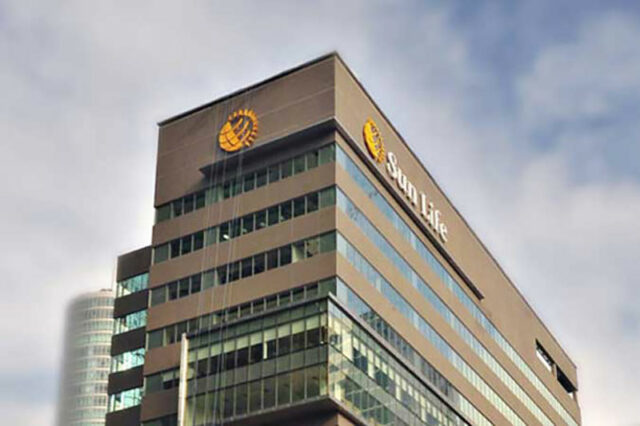
Sun Life Philippines to boost fintech adoption

BW FILE PHOTO

SUN LIFE of Canada (Philippines), Inc. plans to expand its use of financial technology (fintech) and forge more partnerships as it seeks to deepen its understanding of customers and improve its products, its incoming chief executive officer (CEO) said.

Sun Life Philippines President, incoming CEO and Country Head Jonathan Juan D. Moreno said the insurer is focusing on using data to guide product development.

“We are going to come up with client-centric products,” he told reporters last week, adding that their product development cycle is very much data-driven.

Mr. Moreno, who formally assumes the role of CEO and country head on April 1, said the company would prioritize fintech adoption, strategic partnerships and stronger operational foundations to support its expansion.

He said they need to improve their understanding of their customers, adding that his experience in the retail sector shaped his approach to the role.

“In retail, one very important skill that you need is to get the pulse of your consumers.”

As part of its push to expand in the high-net-worth segment, Sun Life Philippines plans to launch a product focused on legacy planning before the end of the first quarter, Mr. Moreno said.

The insurer is also studying the launch of more global technology funds for affluent clients after seeing strong interest in such investments last year.

“Last year, we saw a bunch of tech funds being launched. The high-net-worth clients are kind of more sophisticated. They know where to place their money,” he said.

Mr. Moreno said demand for offshore investments remains despite market volatility stemming from war in the Middle East.

However, he said the country’s insurance penetration rate might not necessarily improve even if the Philippines achieves upper middle-income status because financial literacy remains a key challenge.

“Affordability is one of the reasons why people do not get insurance,” he said. “If affluence increases, the propensity to buy insurance also rises.”

But many still see insurance as a nonessential product, he pointed out.

The Philippines has remained in the lower middle-income bracket since 1987 despite posting a gross national income per capita of $4,470 in 2024.

This was just $26 below the World Bank’s threshold of $4,496 to $13,935 for upper middle-income country status.

The Washington-based lender is expected to release updated income classification thresholds in July.

Mr. Moreno also said income growth in the country might not be evenly distributed across income groups.

“Assuming growth is inclusive, it’s going to be a function of inflation and wages,” he said.

Sun Life Philippines remained the country’s top life insurer last year in terms of premium income and net income, posting P61.183 billion and P10.225 billion, respectively, based on the latest data from the Insurance Commission. — Aaron Michael C. Sy