PRESIDENT FERDINAND R. MARCOS, JR. — PHILIPPINE STAR/RYAN BALDEMOR
MANILA – Philippine President Ferdinand Marcos Jr. said on Monday that Beijing has “misinterpreted” his comments saying Manila will be inevitably drawn in to a conflict between China and Taiwan should one erupt.
China accused Mr. Marcos of “playing with fire” after the Philippine leader said during a visit to India that “there is no way that the Philippines can stay out of it” due to its proximity to the democratically governed island.
“We are, I think for propaganda purposes, misinterpreted,” Mr. Marcos told a press briefing.
“I’m a little bit perplexed why it would be characterized as such, as playing with fire,” he added.
Mr. Marcos said Filipinos working and living in Taiwan will have to be evacuated if a conflict does arise but maintained that he wishes to avoid confrontation and war.
Over a hundred thousand Filipinos live and work in Taiwan, according to Philippine government data.
“War over Taiwan will drag the Philippines kicking and screaming into the conflict. That is what I was trying to say,” Mr. Marcos said.
Mr. Marcos’ comments come at a time of heightened tensions between Manila and Beijing over territorial disputes in the South China Sea, a strategic waterway where the two countries have had a series of maritime run-ins over the past years.
On Monday, a Philippine vessel transporting provisions to Filipino fishermen in the Scarborough Shoal was sprayed at with a water cannon by a Chinese coast guard ship, the Philippine Coast Guard said. The vessel managed to evade being hit.
China’s embassy in Manila did not immediately respond to a request for comment on the president’s remarks.
Responding to the Monday incident, China’s coast guard said it had taken necessary measures to expel Philippine vessels from Scarborough Shoal, which China claims as its own territory.
It described the operation as “professional, standardized, legitimate and legal”.
A 2016 ruling of an international arbitral tribunal voided Beijing’s sweeping claims in the region, saying they had no basis under international law, a decision China rejects. – Reuters
WASHINGTON – President Donald Trump pledged on Sunday to evict homeless people from the nation’s capital and jail criminals, despite Washington’s mayor arguing there is no current spike in crime.
While details of the plan were unclear, the administration is preparing to deploy hundreds of National Guard troops to Washington, a U.S. official told Reuters, a controversial tactic Mr. Trump used recently in Los Angeles to tackle immigration protests over the objections of local officials.
Mr. Trump has not made a final decision, the official said, adding that the number of troops and their role are still being determined.
Unlike in California and every other state, where the governor typically decides when to activate Guard troops, the president directly controls the National Guard in Washington, D.C.
Past instances of the Guard’s deployment in the city include in response to the January 6, 2021, attack on the U.S. Capitol by a mob of Trump supporters.
“The Homeless have to move out, IMMEDIATELY,” Mr. Trump posted on his Truth Social platform. “We will give you places to stay, but FAR from the Capital. The Criminals, you don’t have to move out. We’re going to put you in jail where you belong.”
The White House declined to explain what legal authority Trump would use to evict people from Washington. The Republican president controls only federal land and buildings in the city.
Mr. Trump plans to hold a press conference on Monday to “stop violent crime in Washington, D.C.” It was not clear whether he would announce more details of his eviction plan then.
There are 3,782 single persons experiencing homelessness on any given night in the city of about 700,000, says the Community Partnership, an organization working to reduce homelessness in D.C.
Most such individuals are in emergency shelters or transitional housing, rather than on the street, it says.
A White House official said on Friday more federal law enforcement officers were being deployed in the city following a violent attack on a young administration staffer that angered the president.
Alleged crimes investigated by federal agents on Friday night included “multiple persons carrying a pistol without license,” motorists driving on suspended licenses and dirt bike riding, a White House official said on Sunday.
The official said 450 federal law enforcement officers were deployed across the city on Saturday.
The city’s police department says violent crime was down 26% in D.C. in the first seven months of 2025, compared with last year, while overall crime was down about 7%.
The Democratic mayor of Washington, D.C., Muriel Bowser, said on Sunday the capital was “not experiencing a crime spike.”
“It is true that we had a terrible spike in crime in 2023, but this is not 2023,” Bowser said on MSNBC’s the Weekend. “We have spent over the last two years driving down violent crime in this city, driving it down to a 30-year low.”
Mr. Bowser said Mr. Trump was “very aware” of the city’s work with federal law enforcement after meeting him several weeks ago in the Oval Office.
The U.S. Congress has control of D.C.’s budget after the district was established in 1790 with land from neighboring Virginia and Maryland, but resident voters elect a mayor and city council.
For Mr. Trump to take over the city, it is likely that Congress would have to pass a law revoking the law that established local elected leadership. – Reuters
Nvidia and AMD have agreed to give the U.S. government 15% of revenue from sales to China of advanced computer chips like Nvidia’s H20 that are used for artificial intelligence applications, a U.S. official told Reuters on Sunday.
U.S. President Donald Trump‘s administration halted sales of H20 chips to China in April, but Nvidia last month announced the U.S. said that it would allow the company to resume sales and it hoped to start deliveries soon.
Another U.S. official said on Friday that the Commerce Department had begun issuing licenses for the sale of H20 chips to China.
When asked if Nvidia had agreed to pay 15% of revenues to the U.S., a Nvidia spokesperson said in a statement, “We follow rules the U.S. government sets for our participation in worldwide markets.”
The spokesperson added: “While we haven’t shipped H20 to China for months, we hope export control rules will let America compete in China and worldwide.”
AMD did not respond to a request for comment on the news, which was first reported by the Financial Times earlier on Sunday. The U.S. Department of Commerce did not immediately respond to a request for comment.
China’s foreign ministry did not immediately respond to a request for comment.
China represents a significant market for both companies. Nvidia generated $17 billion in revenue from China in the fiscal year ending January 26, representing 13% of total sales. AMD reported $6.2 billion in China revenue for 2024, accounting for 24% of total revenue.
The Financial Times said the chipmakers agreed to the arrangement as a condition for obtaining the export licenses for their semiconductors, including AMD’s MI308 chips. The report said the Trump administration had yet to determine how to use the money.
“It’s wild,” said Geoff Gertz, a senior fellow at Center for New American Security, an independent think tank in Washington, D.C.
“Either selling H20 chips to China is a national security risk, in which case we shouldn’t be doing it to begin with, or it’s not a national security risk, in which case, why are we putting this extra penalty on the sale?”
U.S. Commerce Secretary Howard Lutnick said last month the planned resumption of sales of the AI chips was part of U.S. negotiations with China to get rare earths and described the H20 as Nvidia’s “fourth-best chip” in an interview with CNBC.
Mr. Lutnick said it was in U.S. interests to have Chinese companies using American technology, even if the most advanced was prohibited from export, so they continued to use an American “tech stack.”
The U.S. official said the Trump administration did not feel the sale of H20 and equivalent chips was compromising U.S. national security. The official did not know when the agreement would be implemented or exactly how, but said the administration would be in compliance with the law.
Alasdair Phillips-Robins, who served as an adviser at the Commerce Department during former President Joe Biden’s administration, criticized the move.
“If this reporting is accurate, it suggests the administration is trading away national security protections for revenue for the Treasury,” Mr. Phillips-Robins said. – Reuters
A North Korea flag flutters next to concertina wire at the North Korean embassy in Kuala Lumpur, Malaysia March 9, 2017. — REUTERS/EDGAR SU/FILE PHOTO
SEOUL – North Korea has denounced a major joint exercise planned by the South Korean and U.S. militaries as “direct military provocation” and warned of counteraction, despite signs of easing tension across the border under a new leader in Seoul.
North Korea’s Defense Minister No Kwang Chol said its military has an “absolute mission” to defend national security against the large-scale 11-day drills by South Korea and the United States, which he said posed a real and dangerous threat.
“The armed forces of the DPRK will cope with the war drills of the U.S. and the (South) with thoroughgoing and resolute counteraction posture and strictly exercise the sovereign right,” No said in a statement issued via the KCNA state news agency on Monday.
DPRK is short for the Democratic People’s Republic of Korea, North Korea’s official name.
No said the drills staged under the pretext of defense against threats were additional proof of the confrontational intent by the two countries that raises hostility and further destabilizes regional security.
North Korea routinely denounces military drills by the South and the United States, having called some previous exercises “a rehearsal” for nuclear war on the Korean peninsula, even as Pyongyang conducted a range of missile tests and live fire artillery exercises.
South Korea and the United States said last week the annual exercise would begin on August 18 to test command control and troop mobilization under an upgraded security strategy against a heightened threat of nuclear warfare by North Korea.
However, the allies said a major part of the field exercise would be postponed and conducted separately next month, citing weather conditions. The postponement was widely seen as prompted by South Korea’s liberal President Lee Jae Myung, who won a snap election in June, to ease tension with Pyongyang.
Ties between the rival Koreas had plunged to some of the most hostile points in recent years, as the North pressed on with developing nuclear attack capabilities and dramatically boosted military ties with Russia.
While Pyongyang has publicly rebuffed renewed outreach by Lee and Washington for dialogue, it was making moves seen as reciprocating some South Korean actions to ease tensions.
South Korea said on Saturday it had detected the North’s military removing some loudspeakers at the border, days after the South began dismantling similar equipment that had blared propaganda across the border.
North Korea also seemed to have used a more restrained tone in criticisms about the U.S.-South Korea joint exercises, said an official at Seoul’s Unification Ministry, which oversees ties between the Koreas.
Pyongyang “appears to focus on expressing its position on the drills, rather than making military threats,” ministry spokesperson Koo Byoungsam said at a briefing on Monday. – Reuters
Intel CEO Lip-Bu Tan is set to visit the White House on Monday after U.S. President Donald Trump called for his removal last week, the Wall Street Journal reported on Sunday, citing people familiar with the matter.
Reuters could not immediately confirm the report. Intel and the White House did not immediately respond to requests for comment.
Mr. Tan is expected to have an extensive conversation with Mr. Trump while looking to explain his personal and professional background, the report said, adding that he could propose ways Intel and the U.S. government could work together, the report added.
Mr. Tan hopes to win Mr. Trump’s approval by showing his commitment to the U.S. and guaranteeing the importance of keeping Intel’s manufacturing capabilities as a national security issue, the report added.
Last week, Mr. Trump demanded the immediate resignation of Mr. Tan, calling him “highly conflicted” due to his ties to Chinese firms and raising doubts about plans to turn around the struggling American chip icon.
Mr. Tan said he shared the president’s commitment to advancing U.S. national and economic security.
Mr. Trump’s intervention marked a rare instance of a U.S. president publicly calling for a CEO’s ouster and sparked debate among investors.
Reuters reported exclusively in April that Mr. Tan invested at least $200 million in hundreds of Chinese advanced manufacturing and chip firms, some of which were linked to the Chinese military.
Mr. Tan, a Malaysian-born Chinese American business executive, was also the CEO of Cadence Design from 2008 through December 2021, during which the chip design software maker sold products to a Chinese military university believed to be involved in simulating nuclear explosions.
Last month, Cadence agreed to plead guilty and pay more than $140 million to resolve the U.S. charges over the sales, which Reuters first reported. – Reuters
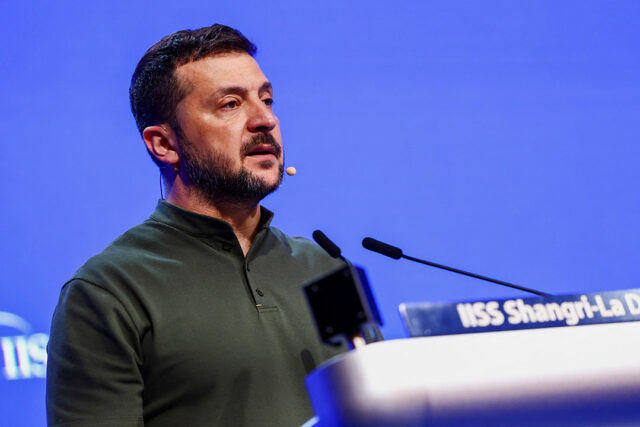
Ukrainian President Volodymyr Zelensky, June 2, 2024. — REUTERS
Ukrainian President Volodymyr Zelenskiy won diplomatic backing from Europe and the NATO alliance on Sunday ahead of a Russia-U.S. summit this week where Kyiv fears President Vladimir Putin and President Donald Trump may try to dictate terms for ending the 3-1/2-year war.
Trump, who for weeks had been threatening new sanctions against Russia for failing to halt the war, announced instead on Friday that he would meet Putin on August 15 in Alaska.
A White House official has said Mr. Trump is open to Mr. Zelenskiy attending but preparations are underway for only a bilateral meeting.
Russian strikes injured at least 12 in Ukraine’s Zaporizhzhia region, the country’s foreign affairs ministry said on Sunday.
Mr. Zelenskiy, responding to the strike, said, “That is why sanctions are needed, pressure is needed.”
The Kremlin leader last week ruled out meeting Mr. Zelenskiy, saying conditions for such an encounter were “unfortunately still far” from being met.
Mr. Trump said a potential deal would involve “some swapping of territories to the betterment of both (sides)”, compounding Ukrainian fears that it may face pressure to surrender land.
Mr. Zelenskiy says any decisions taken without Ukraine will be “stillborn” and unworkable. On Saturday the leaders of Britain, France, Germany, Italy, Poland, Finland and the European Commission said any diplomatic solution must protect the security interests of Ukraine and Europe.
“The U.S. has the power to force Russia to negotiate seriously,” EU foreign policy chief Kaja Kallas said on Sunday. “Any deal between the U.S. and Russia must have Ukraine and the EU included, for it is a matter of Ukraine’s and the whole of Europe’s security.”
EU foreign ministers will meet on Monday to discuss next steps, she said.
NATO Secretary General Mark Rutte told U.S. network ABC News that Friday’s summit “will be about testing Putin, how serious he is on bringing this terrible war to an end”.
He added: “It will be, of course, about security guarantees, but also about the absolute need to acknowledge that Ukraine decides on its own future, that Ukraine has to be a sovereign nation, deciding on its own geopolitical future.”
Russia holds nearly a fifth of the country.
Rutte said a deal could not include legal recognition of Russian control over Ukrainian land, although it might include de facto recognition. He compared it to the situation after World War Two when Washington accepted that the Baltic states of Latvia, Lithuania and Estonia were de facto controlled by the Soviet Union but did not legally recognize their annexation.
Mr. Zelenskiy said on Sunday: “The end of the war must be fair, and I am grateful to everyone who stands with Ukraine and our people today.”
A European official said Europe had come up with a counter-proposal to Mr. Trump’s, but declined to provide details. Russian officials accused Europe of trying to thwart Mr. Trump’s efforts to end the war.
“The Euro-imbeciles are trying to prevent American efforts to help resolve the Ukrainian conflict,” former Russian president Dmitry Medvedev posted on social media on Sunday.
Russian Foreign Ministry spokeswoman Maria Zakharova said in a vituperative statement that the relationship between Ukraine and the European Union resembled “necrophilia”.
Roman Alekhin, a Russian war blogger, said Europe had been reduced to the role of a spectator.
“If Putin and Trump reach an agreement directly, Europe will be faced with a fait accompli. Kyiv – even more so,” he said.
CAPTURED TERRITORY
In addition to Crimea, which it seized in 2014, Russia has formally claimed the Ukrainian regions of Luhansk, Donetsk, Kherson and Zaporizhzhia as its own, although it controls only about 70% of the last three. It holds smaller pieces of territory in three other regions, while Ukraine says it holds a sliver of Russia’s Kursk region.
Sergei Markov, a pro-Kremlin analyst, said a swap could entail Russia handing over 1,500 sq km to Ukraine and obtaining 7,000 sq km, which he said Russia would capture anyway within about six months.
He provided no evidence to back any of those figures. Russia took about 500 sq km of territory in July, according to Western military analysts who say its grinding advances have come at the cost of very high casualties.
Ukraine and its European allies have been haunted for months by the fear that Trump, keen to claim credit for making peace and hoping to seal lucrative joint business deals between the U.S. and Russia, could align with Putin to cut a deal that would be deeply disadvantageous to Kyiv.
They had drawn some encouragement lately as Trump, having piled heavy pressure on Mr. Zelenskiy and berated him publicly in the Oval Office in February, began criticizing Putin as Russia pounded Kyiv and other cities with its heaviest air attacks of the war.
But the impending Putin-Trump summit has revived fears that Kyiv and Europe could be sidelined.
“What we will see emerge from Alaska will almost certainly be a catastrophe for Ukraine and Europe,” wrote Phillips P. O’Brien, professor of strategic studies at the University of St Andrews in Scotland.
“And Ukraine will face the most terrible dilemma. Do they accept this humiliating and destructive deal? Or do they go it alone, unsure of the backing of European states?”
Ukrainian political analyst Volodymyr Fesenko said on Sunday that Kyiv’s partnership with its European allies was critical to countering any attempts to keep it away from the table.
“For us right now, a joint position with the Europeans is our main resource,” he said on Ukrainian radio.
U.S. Vice President JD Vance said a negotiated settlement was unlikely to satisfy either side. “Both the Russians and the Ukrainians, probably, at the end of the day, are going to be unhappy with it,” he said on Fox News’ Sunday Morning Futures with Maria Bartiromo. – Reuters
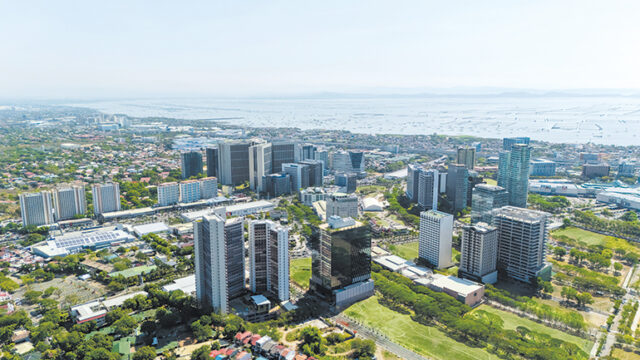
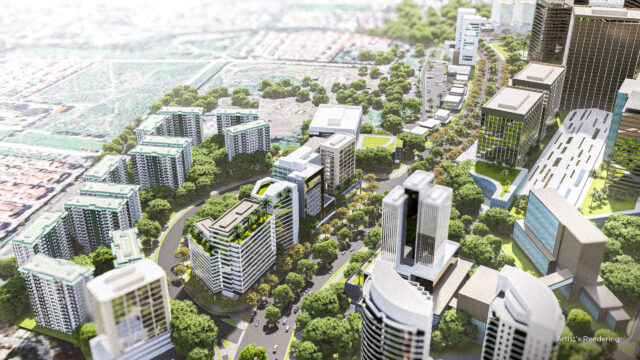
A city that works and lives — Filinvest City blends thriving businesses with modern residences.
FilinvestCitypreparesforthenexturbanboom
Some property markets across Metro Manila are seeing slower activity due to a high condominium build-up, but the southern district is moving in the opposite direction.
Data from Colliers, a globally recognized leader in commercial real estate services, and Leechiu Property Consultants, one of the Philippines’ most prominent real estate advisory firms, show that the southern district remains one of the more active real estate markets in the capital. Alabang, in particular, continues to be stable and attractive — driven by renewed business activity, ongoing infrastructure expansion, and strong demand from both investors and end users.
Filinvest City is not just part of Alabang’s growth — it is the main catalyst driving it forward. This 244-hectare township has transformed the southern district into a thriving hub for business, living, and leisure. With its walkable masterplan, abundant green spaces, and strategic location, Filinvest City leads the shift toward integrated, future-ready urban living in the Metro South. Its growing residential and commercial footprint continues to attract individuals and businesses seeking a well-connected, opportunity-rich environment.
“Filinvest City was designed with intention — to foster an environment where businesses thrive, innovation grows, and people live well. We believe a great city is not simply a backdrop to success, but a catalyst for it,” says Josephine T. Gotianun-Yap, vice-chairperson of Filinvest Development Corp.
A Major Business Move that Signals Growth
L-R: Menardo “Butch” Jimenez (COO, PLDT Inc.), Anastacio “Boy” Martirez (COO, Smart), David Leechiu (CEO, Leechiu Properties), Manuel V. Pangilinan (Chairman & CEO, PLDT Inc.), Josephine Gotianun Yap (Vice Chairperson, Filinvest Development Corporation), Catherine A. Ilagan (President & CEO, Filinvest Alabang Inc.), and Francis Gotianun (Director, Filinvest Development Corporation)
One of the biggest drivers of investor confidence today is the announcement that PLDT Inc. plans to relocate its headquarters to Filinvest City. The five-hectare tech campus in Southgate District is expected to bring in thousands of employees, daily visitors, and support services — giving the area new vitality and economic pull.
This decision underscores a growing shift: major companies are moving away from traditional city centers to well-planned, less congested locations. Filinvest City offers what many others can’t — breathing space, reliable infrastructure, and integrated urban living.
Beyond PLDT, the area is seeing increased interest from other firms looking to relocate operations closer to growth centers without the congestion often seen elsewhere. Offices in Filinvest City already house a strong mix of local and multinational companies, including global professional services firm Accenture, U.S.-based BPO company Pinnacle Technologies, and Insular Life, one of the country’s largest life insurance providers. The presence of these companies reflects the district’s growing reputation as a strategic location for business — offering reliable infrastructure, proximity to key southern markets, and a high-quality urban environment.
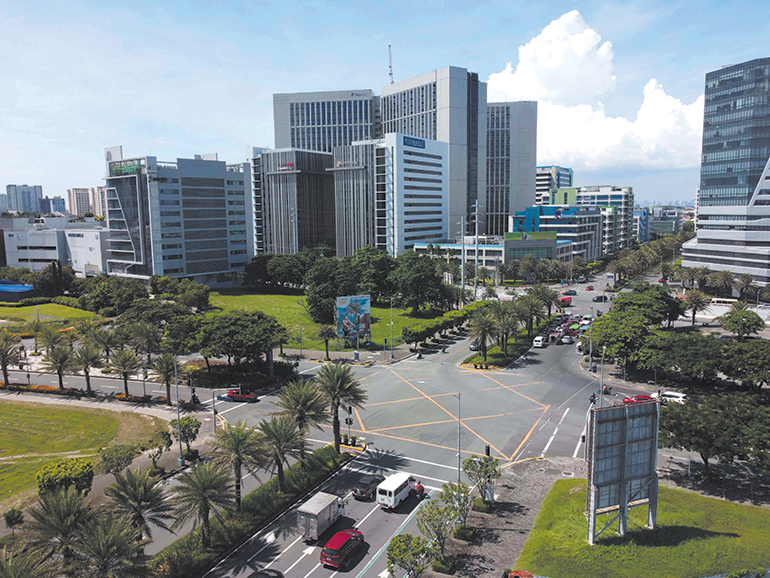
At the corner of Corporate and Parkway Avenues stands the 32-story Parkway Corporate Center, a premium office tower developed by Filinvest Alabang, Inc. Designed with smart and sustainable features, it offers fiber-optic connectivity, energy-efficient systems, and modern interiors. The building is ideal for small to medium-sized enterprises, as well as established firms seeking a strategic location in the Metro South.
Parkway Corporate Center is one of several key developments within the Spectrum District — the economic core of Filinvest City. Bounded by Corporate, Commerce, and Filinvest Avenues, the district is home to high-rise office towers, upscale hotels, and mixed-use developments. It hosts the headquarters of multinational corporations, financial institutions, and major Philippine firms — cementing its role as a central business hub in the Metro South.
Northgate Cyberzone: The workplace of choice for global and local enterprises in the heart of the Metro South
Meanwhile, Northgate Cyberzone stands out as a premier BPO and IT park in the southern Metro Manila area. Spanning 18.7 hectares, this PEZA-registered IT campus offers a modern, campus-style environment tailored for a diverse range of tech-enabled services and business process outsourcing operations.
With further developments planned and demand coming from multiple sectors, Filinvest City is expected to expand its commercial footprint — drawn by connectivity, sustainability, and access to a diverse talent pool. And where businesses go, new residential demand follows.
“Alabang is entering a strong period for residential investment,” says Daphne Sanchez, senior vice-president for residential and estates at Filinvest. “With the tech campus, sports hub, and new transportation infrastructure, we are seeing a convergence of factors that will push land values and drive strong turnover. This is the kind of momentum that investors look for.”
A Lifestyle That Works for You
While the PLDT planned relocation drives commercial and institutional investor interest, individual homebuyers also have a stake in Alabang’s growth. Families, young professionals, and relocating workers are looking at Filinvest City as both a place to invest in residential properties and a place to live.
Filinvest City features a diverse portfolio of properties designed to meet various income levels and lifestyles. The Crib caters to young professionals looking for affordable co-living units within walking distance of gyms, cafés, and offices. Studio N and Studio City attract mid-income buyers who prioritize accessibility and value, while Filigree’s upscale residences appeal to long-term owners and leasing investors.
Beyond the homes, daily life is seamless. Nearby are top institutions like Far Eastern University Alabang and Asian Hospital, along with supermarkets, parks, and wellness centers.
For active lifestyles, Filinvest City already offers a variety of fitness and wellness options. In the near future, even more experiences await with the upcoming Filinvest City sports hub, which will house The Bhive bouldering gym and an Olympic-grade gymnastics facility — set to bring world-class training and recreation closer to home.
On weekends, residents can unwind at The Palms Country Club, or enjoy the diverse dining, shopping, and entertainment offerings at Westgate and Festival Mall — all within easy reach.
Everyday living made better with accessible green spaces in Filinvest City.
A Community That Grows With You
Filinvest City’s edge lies not just in its location but in how it’s managed. Unlike most business districts managed by multiple agencies, Filinvest City operates under a single, dedicated estate management team. This allows for consistent urban planning, efficient operations, and a thoughtful approach to community design — factors that directly support property value and quality of life for residents.
The township follows ecological urban design principles that respond to real-time needs. From well-maintained open spaces and efficient traffic systems to upgraded waste management, every detail is designed to support a safer, cleaner, and more sustainable environment.
This commitment to sustainability is reflected in its rare distinction as the only township in the country to earn both LEED Gold and BERDE certifications. For homeowners and investors, this means living in a district built with energy-efficient systems, reliable drainage infrastructure, and generous green spaces — features that don’t just enhance comfort, but also long-term property resilience.
Utilities are also future-proofed. A centralized water system ensures uninterrupted service across the estate, while wastewater recycling keeps green areas lush even during dry seasons — minimizing water waste and lowering maintenance costs.
Getting around is equally seamless. The 360 Eco-Loop, the country’s first fully electric public transport system, connects key destinations across the city through 28 convenient stops. Residents also enjoy quick access to Skyway and SLEX, cutting travel time to central Metro Manila or the industrial hubs of Cavite, Laguna, and Batangas.
And with the North-South Commuter Railway’s Alabang Station set to open in phases starting 2025, Filinvest City’s regional connectivity will only grow stronger — adding even more upside for future homeowners and investors alike.
With land values rising and business growth accelerating, Filinvest City presents a rare residential opportunity. Whether you’re a young professional investing in your first condo, a family seeking long-term convenience, or a buyer looking to lease to incoming workers — now is the time to take advantage of Alabang’s transformation.
In Filinvest City, smart investment meets real quality of life. It’s not just a place to live — you’re investing in a city designed for long-term value and everyday living.
Spotlight is BusinessWorld’s sponsored section that allows advertisers to amplify their brand and connect with BusinessWorld’s audience by publishing their stories on the BusinessWorld Web site. For more information, send an email to online@bworldonline.com.
Join us on Viber at https://bit.ly/3hv6bLA to get more updates and subscribe to BusinessWorld’s titles and get exclusive content through www.bworld-x.com.
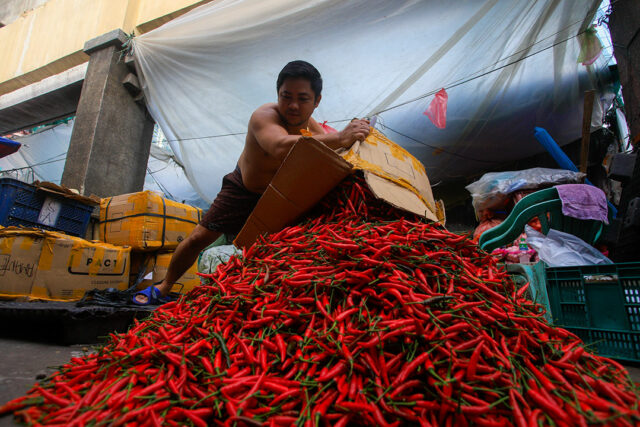
A worker unpacks a sack of chili in Divisoria market, Manila, Aug. 9, 2025. — PHILIPPINE STAR/NOEL B. PABALATE
By Aubrey Rose A. Inosante, Reporter
PHILIPPINE economic growth is unlikely to reach the upper end of the government’s 5.5-6.5% target this year amid higher US tariffs and slowing remittances, analysts said.
Foundation for Economic Freedom President Calixto V. Chikiamco said hitting the 6.5% mark is “possible, but improbable.”
“More so with [US President Donald J.] Trump tariffs on our key exports and a global economic slowdown,” Mr. Chikiamco told BusinessWorld.
The economy grew by an annual 5.5% in the April-to-June period, supported by a rebound in agriculture production and faster household consumption.
For the first half, gross domestic product (GDP) growth averaged 5.4%, slower than the 6.2% a year ago.
Economic Secretary Arsenio M. Balisacan said the economy must grow by 5.6% in the second half to achieve the low end of the full-year target, and by 7.5% to hit the upper end of the goal.
“However, if the administration keeps its same steady as you go approach, the likelihood is that not only will the government fail to reach its minimum 6% growth target, but actually achieve less than 5.5% growth,” Mr. Chikiamco said.
John Paolo R. Rivera, a senior research fellow at the Philippine Institute for Development Studies, said the required 7.5% average growth in the July-to-December period is a “stretch goal but not impossible.”
“It will require strong export performance despite global headwinds, faster infrastructure rollout after the election spending ban, and sustained household and investment spending,” he said in a Viber message over the weekend.
Mr. Trump imposed a 19% export levy on goods from the Philippines, as well as Cambodia, Malaysia, Thailand, and Indonesia. This took effect on Aug. 7.
“With the tariff rate on the Philippines’ goods being in line with other ASEAN (Association of Southeast Asian Nations) emerging markets, the Philippines risks losing the opportunity of increasing its market share in the US,” HSBC economist for ASEAN Aris D. Dacanay said.
Mr. Dacanay said the strong growth in exports is unlikely to be sustained in the next semester.
“But unlike private consumption, we do not think this strong performance will be sustained. The robust performance was a result of frontloading of import demand across the globe in anticipation of higher US tariffs,” he said.
However, BMI said Philippines is well-insulated from the US tariffs “exports-wise,” but there is a possibility of Mr. Trump raising the tariffs if the Philippines fails to spend at least 5% of its GDP on military spending.
“If Trump threatens a higher tariff because of the nonfulfillment, we anticipate a further slowdown in export growth for the Philippines,” BMI said.
Mr. Rivera said he expects softer export growth, especially for sectors like electronics, garments, and agriculture.
“However, the full effect will likely be gradual, as existing orders and contracts still work through the pipeline,” he said.
“The extent of the slowdown will depend on how fast exporters can adjust either by negotiating better terms, shifting to other markets, or moving up the value chain.”
REMITTANCE SLOWDOWN Analysts said slowing remittances from overseas Filipino workers (OFWs) may hurt consumer spending in the second half.
“A slowdown in remittances will weigh on private consumption while heightened global uncertainty will continue to chill,” Fitch Solutions’ unit BMI said.
Household final consumption, which accounts for over 70% of the economy, jumped by 5.5% in the second quarter. It was the fastest since the 8.1% growth in the first quarter of 2023.
BMI sees private consumption to grow by 5% in 2025.
“About 40% of remittances come from the US and President Donald Trump has clamped down on immigration and imposed a 1% tax on remittances. Remittances, therefore, are likely to continue dragging on consumption growth in the coming months, diminishing the positive effects of easier monetary policy,” BMI said.
The Bangko Sentral ng Pilipinas (BSP) expects cash remittances from OFWs to grow by 2.8% this year and by 3% in 2026.
The US will start imposing a 1% excise tax on cash-based remittances from the US to recipients abroad on Jan. 1, 2026.
BMI said it kept its GDP forecast at 5.4% for this year, but lowered its 2026 projection to 5.2% from 6.2% for 2026 due to slower remittances and tariff uncertainty.
“The upshot is that we maintain our relatively downbeat forecast for fixed investment to expand by 4.5% in 2025, well below the 12.4% over 2015-2019,” it said.
Nomura Global Markets Research said GDP growth will likely slow to 5.2% in the second half but kept its full-year forecast at 5.3%.
“We believe private investment spending will be more subdued, as businesses turn more cautious owing to surging global trade policy uncertainty and an increasingly challenging operating environment,” Nomura said.
“In the same vein, we expect goods export growth to slow due to the impact of US tariffs but acknowledge rising downside risks particularly from sectoral tariffs on semiconductors in the coming quarters.”
Last week, Mr. Trump announced plans to impose tariffs on semiconductors shipped to the US but offered to exempt companies manufacturing in the US or those that commit to do so, Reuters reported.
Meanwhile, Chinabank Research said it expects growth “to remain modest” as external prospects may remain subdued, given persisting uncertainties and rapidly changing global policies.
“Moving forward, downside risk to growth will be centered on external trade as elevated policy uncertainty and higher tariffs weigh on global economic activity,” it said in a policy note on Thursday.
On the demand side, Chinabank anticipates that government spending will likely continue to quicken for the rest of the year.
“We could see a rebound in the coming quarters as the government ramps up delayed projects and as the effects of interest rate cuts further materialize.”
Nomura said it expects the BSP to cut its policy rate by 25 bps at its Aug. 28 meeting and by another 25 bps in October.
“This would take the policy rate to 4.75% this year, which we think puts BSP’s monetary stance below its estimate of neutral, though we see some risk that BSP might deliver more in 2026 if inflation remains well within its 2-4% target,” Nomura said.
“We continue to believe BSP remains on a path of a steady shift to a more accommodative stance, given the benign inflation outlook.”
Meanwhile, Mr. Dacanay said with government infrastructure spending and services exports underperforming, further monetary easing could be needed to help sustain growth.
“Quickening and deepening the ongoing easing cycle will help support both sectors. Lower interest rates can help incentivize further investments, while it can also help improve or at least maintain the competitiveness of the services exports sector via the FX (foreign exchange) channel,” he said.
SINGAPORE-BASED DBS Bank slashed its inflation forecast for the Philippines for 2025, with expectations of further policy easing for the remainder of the year.
“Moderation in food price has helped to soften inflation, with the contribution of services also off the boil. Broad-based deceleration provided the backdrop for the BSP to unwind tightening moves from 2022-23,” DBS Senior Economist Radhika Rao said in a commentary.
DBS now expects Philippine headline inflation to settle at 1.7% this year, much lower than its previous forecast of 2.6%.
Headline inflation sharply eased to a near six-year low of 0.9% in July from 1.4% in June and 4.4% a year ago. This also marked the fifth straight month that inflation settled below the central bank’s 2-4% target range.
For the first seven months of the year, inflation averaged 1.7%.
The Bangko Sentral ng Pilipinas (BSP) expects inflation to average 1.6% this year.
“Inflation for the bottom 30% of income households has been receding, led by food costs, signaling relief on household expenses,” Ms. Rao said.
Inflation for the bottom 30% of income households slipped to 0.8% from the 0.4% dip in June. Year-to-date, inflation for the bottom 30% income households averaged 0.5%.
Meanwhile, DBS said it sees the central bank further reducing interest rates this year.
“BSP has unwound about a third of the 450 basis points (bps) of rate hikes undertaken in 2022-2023. The real rate cushion of (around) 350 bps to 400 bps backs the central bank’s dovish talk.”
“We expect the BSP to cut by further 50 bps this year, with the next in August,” she added.
The Monetary Board has lowered borrowing costs by a total of 125 bps since it began easing in August last year.
The central bank has been delivering rate cuts in increments of 25 bps. At its last meeting in June, it cut by 25 bps to bring the policy rate to 5.25%.
BSP Governor Eli M. Remolona, Jr. earlier said they can deliver two more 25-bp reductions this year and even potentially continue its easing cycle until next year.
The Monetary Board is set to have its next policy review on Aug. 28.
Meanwhile, DBS trimmed its gross domestic product (GDP) forecast for the Philippines to 5.6% this year from 5.8% previously.
The Philippine economy grew by 5.5% in the second quarter, a tad faster than the 5.4% in the first quarter. However, this was slower than the 6.5% growth in the second quarter of 2024.
For the first half, GDP growth averaged 5.4%, slower than the 6.2% a year ago.
“The segments broadly rose, led by household consumption in the midst of midterm elections, while net exports recovered due to frontloading of exports to the US,” Ms. Rao said.
“Businesses have also adopted a cautious tone into mid-2025, as the outlook is clouded by a post-election trough, trade uncertainty-led impact on US and regional growth. Construction fared better but services were sluggish.”
DBS also noted that the Development Budget Coordination Committee’s (DBCC) latest growth assumptions are “more realistic.”
The DBCC lowered its GDP growth target band to 5.5-6.5% this year from 6-8% previously.
The economy must grow by 5.6% for the rest of the year to achieve the low end of the full-year target.
“The Philippines has grown more slowly than its ASEAN (Association of Southeast Asian Nations) peers in the past three decades. Boosting domestic demand via a wider manufacturing footprint and reforms to attract foreign direct investment will be important to return to a durable recovery path,” Ms. Rao said.
“Demographic tailwinds are significant for Philippines, with the median age amongst the lowest in the region. It will be crucial to tap this strength by improving employment prospects, investing in human capital and lifting incomes.” — Luisa Maria Jacinta C. Jocson
CENTRAL BANKS must remain a “stabilizing force” amid uncertainties in the global economy, the Bank for International Settlements (BIS) said.
“The most important task, particularly in these highly uncertain times, is for central banks to be a stabilizing force and maintain or, in some cases, rebuild trust in monetary policymaking,” BIS Deputy Head of the Monetary and Economic Department Frank Smets told BusinessWorld in a virtual interview.
This kind of trust creates positive dynamics, he added, which helps stabilize inflation expectations and maintain price stability.
“What this means for actual actions of central banks will be different across countries,” Mr. Smets said.
“For countries like the Philippines or countries in East Asia that are on the receiving end of the US tariffs, the rise in tariffs is more likely to be a negative demand shock.”
Markets have been rattled these past few months amid the United States’ flip-flopping tariff policies.
US President Donald J. Trump has set a 19% tariff on Philippine goods, which will take effect starting Aug. 7.
Countries like the Philippines could see falling demand for exports, which could lead to disinflationary pressures, particularly from lower commodity prices, Mr. Smets said.
“In those countries, the room for easing monetary policy is probably greater. It’s really a differentiated picture depending on the country.”
The Bangko Sentral ng Pilipinas (BSP) has said the impact of the US tariffs on the Philippines will be “modest” as the country is not a trading economy.
The central bank is currently in the midst of an easing cycle, so far lowering interest rates by a total of 125 basis points (bps) since August last year.
BSP Governor Eli M. Remolona, Jr. has also signaled the possibility of further easing this year despite these tariff policies.
“Whether the country retaliates or not will have an important impact on the likely inflation effects. But the most important thing for central banks is to stay steady and be a force of stability rather than uncertainty,” Mr. Smets said.
“Heightened policy uncertainty and unpredictability, particularly in the US, is putting the soft landing that we had expected until the beginning of this year into jeopardy.”
In its latest Annual Economic Report, BIS said consensus forecasts show global growth at just 2.7% in 2025. This was slightly lower than the above 3% forecast at the beginning of the year, Mr. Smets pointed out.
“A big part of the discussion is what are the effects of this trade policy uncertainty on the global economy,” he said.
“It’s clear that this heightened uncertainty, not only on trade policy, but also on fiscal policy, migration policy, and central bank independence, has affected the growth outlook.”
Central banks must “deal with the immediate fallout while keeping top of mind the deeper, structural weaknesses that threaten the resilience of the global economy,” according to the report.
“Success will depend on maintaining public trust — trust in central banks’ capacity to act and do so in the public interest. Trust in their commitment to low inflation was decisive in quelling pandemic-era inflation.”
“Now, trust in public institutions — including the trust in money — needs to serve as a fixed point for others to rally around.”
SYSTEM FOR THE FUTURE Meanwhile, the BIS in its report also highlighted the need to build a monetary and financial system for the future.
“We should maintain the benefits of the current system, the two-tiered monetary system that we have, while enabling the new technologies to improve it,” Mr. Smets said.
The BIS proposed a “trilogy” of tokenization, namely, tokenized central bank reserves, tokenized bank deposits and tokenized government bonds, which will all reside on a unified or interoperable ledger.
“Tokenized central bank reserves would ensure what we call the singleness of money, because the settlement at par really happens on the central bank’s balance sheet,” he said.
Bringing commercial bank deposits into tokenization would also help maintain the elasticity of money. “Firms that expected to be hit by the tariffs and therefore anticipated a future need of working capital have increased their credit lines with the banks quite dramatically.”
“A well-working banking system can do that and thereby avoid gridlocks in liquidity. By bringing the commercial bank deposits into this tokenized world, this elasticity would be maintained.”
“Finally, we also suggest that other assets, and particularly government bonds, could be tokenized on the same platform. This would, for example, allow collateral management, including for central bank operations, to be automated on one ledger.”
Mr. Smets also noted Project Nexus, where the BSP is one of the five central bank partners in the region that established the Nexus Scheme Organisation, which will manage the project in its live implementation stage.
“The project aims at enhancing cross-border payments by linking domestic instant payment systems. That’s one example of where central banks get together and try to solve a real issue, which is international payments.”
This would also mark the BIS’ first Innovation Hub project that will be put into live implementation, Mr. Smets added.
The BSP earlier said it is seeking to strengthen collaboration on regional payment connectivity to foster a more inclusive financial ecosystem by enabling fast, seamless, and cheaper cross-border payments across the region.
“On the issue of the future monetary system, central banks must play a catalytic role. They can articulate their vision of the future monetary system to provide a guidepost for all stakeholders,” Mr. Smets added.
Meanwhile, he also noted the importance of developing and deepening local financial markets.
“That remains a priority. Authorities, including in the Philippines, continue to implement reforms to ease market access for borrowers and investors and lower transaction costs. This has resulted in the inclusion of bonds from several Asian economies in global bond indices.”
The Philippine government has been seeking ways to deepen its capital markets. The BSP has been working to enhance the interest rate swap market and the government securities repo market to improve benchmarks for a smoother yield curve.
“Developing the domestic financial system is a step in the right direction, but it’s not a panacea as you also increase the integration with the global investor community and the interconnectedness with global financial conditions,” Mr. Smets said.
“But for the real economy, this is definitely a good development. More generally, the region’s resilience, which has been shown in the response to the pandemic crisis, has been enhanced by reforms made during recent decades.”
These reforms include an increase in banks’ capital and liquidity buffers, implementing adequate loan loss provisions for banks and growing levels of foreign exchange (FX) reserves.
“The high level of FX reserves in Asia has helped resilience in response to some of the stresses. The strengthening of monetary policy frameworks has also helped the effectiveness of the monetary policy response,” he said.
“And then, finally, also the active use of macroprudential measures and capital market liberalization efforts. The theme here is that many of the good reforms that many countries in the region have implemented over the past years continue to be important.”
THE Securities and Exchange Commission (SEC) said it is reviewing the P1-trillion net income and valuation gains reported by listed property developer Villar Land Holdings Corp. for 2024, along with the company’s share price.
“We’re examining it; we’re paying attention to the details before we come up with a decision one way or the other,” SEC Chairperson Francisco Ed. Lim told reporters on the sidelines of the Shareholders’ Association of the Philippines, Inc. Annual General Membership Meeting in Makati City on Friday last week.
“There are many details. We cannot make judgments before investigating the facts. Was there insider trading? Was there manipulation? These are technical and legal issues. What I don’t want is for the SEC to act hastily. We’re doing fact-finding first,” he added.
The Philippine Stock Exchange (PSE) suspended trading of Villar Land shares, formerly Golden MV Holdings, Inc., on May 16 after the property developer was unable to file its 2024 annual report.
Villar Land’s shares were unchanged at P2,296 per share as of May 15. The trading suspension has yet to be lifted as of writing.
As of Aug. 8, the company had a market capitalization of P1.48 trillion, while public ownership stood at 11.33%.
On March 31, Villar Land reported a net income of P999.72 billion for 2024, up from P1.46 billion the previous year, attributing the spike to fair value gains on investment properties that ballooned to P1.33 trillion from P59 million in 2023.
Revenue fell by 25% to P3.58 billion as real estate sales declined by 26% to P3.31 billion due to lower residential unit sales.
The company is engaged in the development and sale of memorial lots and columbarium facilities, as well as residential projects.
Villar Land also attributed the fair value gains to its acquisition of Althorp Land Holdings, Inc., Chalgrove Properties, Inc., and Los Valores Corp., which collectively own 366 hectares of prime land within the 3,500-hectare Villar City development.
“These properties were recorded in the books as investment properties and accounted for using the fair value method,” the company said.
In a separate statement, Villar Land said it welcomes the SEC’s fact-finding investigation, adding that its financial statement is now undergoing a “rigorous audit process” by external auditors, which involves a comprehensive review of appraisal reports for high-value properties.
“This extensive audit is necessary to ensure the accuracy and integrity of the financial statements. Once the audit is concluded, the audited financial statements will be publicly released in full compliance with regulatory requirements,” Villar Land said.
“The company reiterates its commitment to transparency and compliance with existing rules and regulations being enforced by both the SEC and the PSE,” it added.
Villar Land said it has consistently disclosed material developments and continues to coordinate with regulatory bodies regarding the status of its financials.
“The company continues to engage and will continue to cooperate with its regulators and comply with all instructions and requests for information during the course of its fact-finding exercise,” it added.
The SEC approved the corporate name change of Villar Land from Golden MV in April.
Shell LiveWire, Shell Pilipinas Corp.’s flagship enterprise development program that champions Filipino entrepreneurship, has named its top three tech startup finalists following the pitch event in June. These startups were selected for their forward-thinking solutions in agricultural, energy efficiency, and sustainability.
Among these startups is Agridom, a startup from SF Group of Companies, Inc., which introduces drone-powered precision framing tools designed to improve agricultural efficiency and sustainability for smallholder farmers in the Philippines.
Also recognized is the Greentech Ecobooster, a fuel optimization device aimed at enhancing combustion engine performance while lowering fuel consumption and greenhouse gas emissions. The product aims to improve engine performance, reduce fuel consumption, lower operational costs, and support broader climate goals.
Rounding out the top three is Pili AdheSeal, Inc., a green tech company transforming agricultural waste into sustainable adhesive and sealant products. The startup promotes a circular economy that supports both Pili farmers and the environment.
These three startups are now undergoing Shell LiveWire’s acceleration phase, where they receive mentorship, financial support for team and product development, and expert guidance to refine their businesses. They also stand the chance to win up to P1 million in equity-free cash for the first-place winner, and P500,000 each for the second and third placers, providing essential runway to scale their startups.
Community enterprises, another track of the program, are represented this year by 51 participants from diverse regions and industries across the country. These enterprises receive in-kind or grant money support to further strengthen their operations.
Nascent Technologies Corp. was also awarded the A-Lister recognition, Shell LiveWire’s special citation given to promising startups still in their development phase.
Shell has appointed multinational consultancy firm PwC as the official auditor of the 2025 Shell LiveWire Philippines to ensure transparency and integrity.
Shell LiveWire continues to play a vital role in cultivating the startup ecosystem by helping Filipino entrepreneurs thrive and create inclusive employment opportunities. The 2025 finale will be held in September at the Echelon Event, where this year’s top startup will be awarded and the next wave of innovation will take center stage.
SparkUp is BusinessWorld’s multimedia brand created to inform, inspire, and empower the Philippine startups; micro, small and medium enterprises (MSMEs); and future business leaders. This section will be published every other Monday. For pitches and releases about startups, e-mail to bmbeltran@bworldonline.com (cc: abconoza@bworldonline.com). Materials sent become BW property.