Home Blog Page 1164

Aboitiz, Yuchengco partner to expand TARI Estate in Tarlac

TARI Estate, Tarlac. — ABOITIZ EQUITY VENTURES, INC.

THE ABOITIZ Group’s Lima Land, Inc. is entering into a joint venture (JV) agreement with the Yuchengco group’s listed holding company House of Investments, Inc. (HI) to expand the TARI Estate in Tarlac.

Under the JV, the two groups will develop and manage a 184-hectare mixed-use property owned by HI subsidiary Tarlac Terra Ventures, Inc. that will expand Lima Land’s TARI Estate to 384 hectares, the Aboitiz group’s listed holding company Aboitiz Equity Ventures, Inc. (AEV) said in a statement on Monday.

HI will hold a 51% stake in the expansion project, while LIMA Land will hold 49%. LIMA Land will also serve as the exclusive provider of project management, estate operations, and general support services for the site.

LIMA Land is a subsidiary of the Aboitiz group’s infrastructure arm Aboitiz InfraCapital, Inc. (AIC), while HI is the non-bank holding company of the Yuchengco Group of Companies.

The agreement, approved by the boards of AIC and HI on Aug. 8, is still subject to regulatory approvals, including clearance from the Philippine Competition Commission and the Securities and Exchange Commission.

“This will be our first major venture into Economic Estates. We look forward to the partnership with AIC, one of the leading industrial estate developers in the country,” HI President and Chief Executive Officer (CEO) Lorenzo V. Tan said.

“This joint venture will be an expansion of HI’s business interests in horizontal property development, diversifying our property portfolio. We aim to provide long-term value through flexible, sustainable, and forward-thinking real estate solutions,” he added.

Once fully developed, the expanded TARI Estate is expected to generate more than 60,000 jobs for Northern and Central Luzon.

TARI Estate officially broke ground in May 2024. It recently closed a 16-hectare deal with a new locator, adding to a series of transactions over the past year, including the turnover of a 42-hectare parcel earlier this year. Multiple investors are now actively preparing for construction.

“This partnership allows us to scale that momentum, integrating mixed-use components that will further enhance the estate’s ecosystem. Together, we are creating a dynamic platform for inclusive growth — where industries thrive, investments translate into real progress, and communities benefit from long-term economic opportunity,” LIMA Land President Rafael Fernandez de Mesa said.

“What began as a bold vision is now a tangible reality — we’ve sold over 70% of our Phase 1 inventory, secured major locators, and are nearing full completion of initial development,” he added.

On Monday, AEV shares fell by 3.23% or 95 centavos to P28.50 per share, while HI stocks rose by 2.34% or eight centavos to P3.50 apiece. — Revin Mikhael D. Ochave

Potential entry of Apple Pay, Google Pay to help propel digital payments growth

STOCK PHOTO | Image by Jonas Leupe from Unsplash

THE POTENTIAL ENTRY of Apple Pay and Google Pay into the Philippine market could further drive digital payments in the country, according to industry stakeholders.

“These global platforms complement local innovations and will help drive the Philippines closer to its goal of a cash-lite, inclusive, and future-ready digital economy,” Rizal Commercial Banking Corp. (RCBC) Executive Vice-President and Chief Innovation and Inclusion Officer and FinTech Alliance.PH Chairman Angelito M. Villanueva said.

Ronald B. Gustilo, national campaigner for Digital Pinoys group, said their entry will also “open the door for more secure and convenient payment options for Filipino consumers.”

Bangko Sentral ng Pilipinas (BSP) Deputy Governor Mamerto E. Tangonan earlier said that they have determined that Apple Pay and Google Pay are technology service providers and not operators of payment systems (OPS) and will not need to register with the regulator.

“We deemed them not to be an OPS because their activity is not an OPS activity,” he said.

Apple Pay and Google Pay do not hold funds but instead process payment credentials, Mr. Tangonan said, adding that there is also no contract between them and merchants. “It’s considered an OPS if, in other countries, Apple Pay has an account that holds the funds. But that is not the case for the execution here.”

Since they are not OPS, it will be up to financial institutions to assess them, he said.

“If anything happens, the one accountable to us is the payment service provider (PSP). That’s why they’re being careful, maybe,” he said in mixed English and Filipino. “Because (it’s the PSPs’) responsibility, maybe they are really evaluating them carefully.”

Mr. Villanueva said the entry of Apple Pay and Google Pay would also be timely amid the rollout of cashless fare payments in the Metro Rail Transit Line 3 (MRT-3) and soon at Light Rail Transit lines.

These payment platforms would help “accelerate the adoption of tap-and-go payments in everyday commutes,” he said, and “further scale digital payments and promote consumer trust, security, and convenience.”

Apple Pay and Google Pay use near-field communication (NFC) technology to enable contactless payments. Apple Pay is only compatible with Apple devices while Google Pay is used for Android phones.

“With NFC technology, users can now pay directly using their mobile devices without having to bring out their physical cards — making transactions not only faster but also more secure,” Mr. Villanueva said. “This reduces the risk of card skimming and physical theft, while improving overall user convenience.”

Mr. Gustilo said these services would also serve as an alternative to e-wallets as consumers may use their existing bank accounts or credit cards directly through Apple Pay or Google Pay.

“This empowers consumer choice and pushes the payment ecosystem toward more globally integrated and secure solutions,” he added.

In December, the BSP confirmed that Apple Pay and Google Pay were exploring setting up their operations in the country.

In Southeast Asia, Apple Pay and Google Pay are currently available in Malaysia, Singapore and Vietnam. Google Pay is also present in Cambodia.

“We hope this development encourages further modernization in the Philippine payments landscape, and more importantly, ensures that financial institutions maintain strong oversight of these platforms to protect users,” Mr. Gustilo added.

The share of online payments in monthly retail transactions in the Philippines stood at 57.4% in terms of volume and 59% in value terms in 2024, the latest BSP data showed. These are up from 52.8% and 55.3%, respectively, in 2023.

The BSP is targeting to achieve a 60-70% share of digital payments over total retail payments volume by 2028, in line with the Philippine Development Plan. — Luisa Maria Jacinta C. Jocson

Alternergy Holdings Corp. to hold Special Stockholders’ Meeting on Sept. 3 via Zoom


Spotlight is BusinessWorld’s sponsored section that allows advertisers to amplify their brand and connect with BusinessWorld’s audience by publishing their stories on the BusinessWorld Web site. For more information, send an email to online@bworldonline.com.

Join us on Viber at https://bit.ly/3hv6bLA to get more updates and subscribe to BusinessWorld’s titles and get exclusive content through www.bworld-x.com.

3 films enter 73rd FAMAS awards with 10 noms each

THE Filipino Academy of Movie Arts and Sciences (FAMAS) announced the nominees for the 73rd FAMAS Awards on Aug. 10 through its official Facebook page. Three of the Best Picture-nominated films will enter the awards with 10 nominations each.

The three films are Green Bones by Zig Dulay, Topakk by Richard Somes, and Mamay by Neal Buboy Tan. Their respective directors also have been nominated as Best Director.

Other films in the running for Best Picture are Uninvited (which got eight nominations), And the Breadwinner Is… (also with eight nominations), and When Magic Hurts (seven nominations).

FAMAS is known as the oldest existing award-giving body in the Philippines and one of the oldest in Asia. The organization, which is composed of writers and movie columnists, started in 1953.

This year, the winners of the 13 categories will be declared at the Manila Hotel on Aug. 22. — Brontë H. Lacsamana


Below is the complete list of nominees:

Best Picture: Alipato at Muog, Under a Piaya Moon, Topakk, Green Bones, When Magic Hurts, And the Breadwinner Is…, Balota, Mamay, The Hearing, and Uninvited

Best Director: JL Burgos for Alipato at Muog; Richard Somes for Topakk; Law Fajardo for The Hearing; Gabby Ramos for When Magic Hurts; Chito Roño for Espantaho; Neal Buboy Tan for Mamay; Kurt Soberano for Under a Piaya Moon; Zig Dulay for Green Bones; Jun Lana for And the Breadwinner Is…; and Dan Villegas for Uninvited

Best Actor: Dennis Trillo for Green Bones; Vice Ganda for And the Breadwinner Is…; Arjo Atayde for Topakk; Alden Richards for Hello, Love, Again; Kelvin Miranda for Chances Are, You and I; and Aga Muhlach for Uninvited

Best Actress: Marian Rivera for Balota; Julia Montes for Topakk; Rebecca Chuaunsu for Her Locket; Judy Ann Santos for Espantaho; Kathryn Bernardo for Hello, Love, Again; and Ara Mina for Mamay

Best Supporting Actor: Ruru Madrid for Green Bones; Joel Torre for Under a Piaya Moon; Sid Lucero for Topakk; Jhong Hilario for And the Breadwinner Is…; Jeric Raval for Mamay; and Will Ashley for Balota

Best Supporting Actress: Nadine Lustre for Uninvited; Isabelle Sophie Ng for Her Locket; Eugene Domingo for And the Breadwinner Is…; Alessandra de Rossi for Green Bones; Claudine Barretto for When Magic Hurts; and Mylene Dizon for The Hearing

Best Screenplay: Alipato at Muog, Under a Piaya Moon, Balota, Green Bones, The Hearing, and Mamay

Best Production Design: When Magic Hurts, Topakk, Mamay, Under a Piaya Moon, Espantaho, and Hello, Love, Again

Best Cinematography: When Magic Hurts, Topakk, Uninvited, Kalakal, Mamay, and And the Breadwinner Is…

Best Editing: The Hearing, Topakk, Alipato at Muog, Under a Piaya Moon, Hello, Love, Again, and Green Bones

Best Musical Score: When Magic Hurts, Mamay, Green Bones, Hello, Love, Again, And the Breadwinner Is…, and Uninvited

Best Sound: Topakk, Alipato at Muog, Mamay, And the Breadwinner Is…, Green Bones, and Uninvited

Best Theme Song: “Sa Likod ng Tagumpay” for Idol, “Paruparo” for When Magic Hurts, “Hamon” for Mamay, and “Hahamakin Ang Lahat” for Uninvited

Manila Water expects to complete Wawa project takeover by Sept.

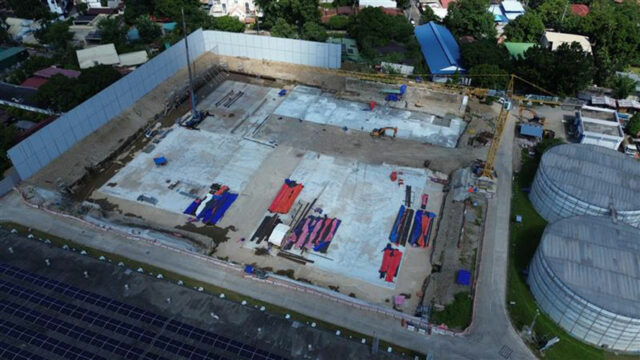
AN AERIAL VIEW of the ongoing demolition of the old San Juan Reservoir and the construction of the new 56-ML earthquake-resilient facility along N. Domingo Street in Quezon City.

EAST ZONE concessionaire Manila Water Co., Inc. expects to complete the takeover of the Wawa Bulk Water Supply from its parent company, Prime Infrastructure Capital, Inc. (Prime Infra), by September.

In a disclosure on Monday, Manila Water said it has signed a share purchase agreement with Prime Infra to buy Prime Infra’s stake in WawaJVCo, Inc.

This agreement follows a previously signed term sheet between the two companies for full ownership of WawaJVCo, involving the acquisition of common and non-voting preferred shares valued at P37.8 billion.

Manila Water said it will make an initial payment of P6.11 billion on Dec. 15.

Trident Water Company Holdings, Inc., a subsidiary of Prime Infra, controls Manila Water.

WawaJVCo, a joint venture between Prime Infra and San Lorenzo Ruiz Builders & Developers Group, was established to develop, operate, and maintain the Wawa Bulk Water Supply Project in Rizal, which is intended to augment Metro Manila’s raw water supply.

The company’s portfolio includes the Tayabasan Weir in Antipolo, which has been operational since October 2022 with a capacity of 80 million liters per day (MLD), and the Upper Wawa Dam in Rodriguez, Rizal, with a capacity of up to 710 MLD.

In 2019, WawaJVCo signed a 30-year bulk water supply agreement with the Metropolitan Waterworks and Sewerage System and Manila Water for the supply of 518 MLD of water until 2050.

WawaJVCo earlier said the Upper Wawa Dam is slated to commence commercial operations in December and is expected to benefit over 700,000 households.

Meanwhile, Manila Water is on track to complete its P932-million San Juan Reservoir project in Quezon City by the third quarter of 2026 to bolster water supply reliability.

As of July, the project has reached 26.9% completion.

Situated along N. Domingo Street in Quezon City, the facility is designed to store up to 56 million liters (ML) of water and withstand earthquakes measuring up to magnitude 7.2.

To stay on schedule, the company is conducting excavation and lean concreting, rebar fabrication for Phase 1 Mat Foundation, and installation of Mat Foundation rebar.

It has also installed acoustic barriers to reduce noise and other construction-related disturbances.

The new facility replaces the original reservoir built in 1968 and incorporates modern engineering standards, including upgraded electrical, instrumentation, mechanical, and site development systems.

“The San Juan Reservoir is more than just a new facility. It’s a forward-looking investment in resilience and reliability. As our cities continue to grow, we must ensure that our infrastructure keeps pace,” said Manila Water Communication Affairs Group Director Jeric T. Sevilla.

“This project reflects Manila Water’s commitment to safeguarding water supply for our communities, even in the face of natural disasters like major earthquakes,” he added.

Manila Water serves the east zone of Metro Manila, covering parts of Marikina, Pasig, Makati, Taguig, Pateros, Mandaluyong, San Juan, portions of Quezon City and Manila, and several towns in Rizal province.

The company recently said it had surpassed 7.8 million customers, driven by expansion projects implemented during the first four months of the year. — Sheldeen Joy Talavera

Hyun Bin on travel and acting

SOUTH KOREAN actor Hyun Bin — FACEBOOK.COM/SOLAIRERESORT

KOREAN actor Hyun Bin (real name: Kim Tae-pyung) made it a point to honor his Filipino fans at a press conference and fan meet in Manila on Aug. 8.

On his first trip to the Philippines, he was in Manila for the meet-and-greet fan event, “Hyun Bin Landing in Solaire,” hosted by Solaire Resort in Entertainment City, Parañaque. The event title was a quip on one of his most popular Korean dramas, Crash Landing on You.

“The unconditional and unchanging love and support there that I’ve seen from the Filipino fans — I’m really grateful and honored to have this kind of support,” Hyun Bin, who was stylishly dressed in an unbuttoned cream-colored suit over a plain white shirt and white sneakers, said in Korean, speaking through an interpreter.

“With that love, I’d like to return it to you Filipino fans with more projects and, of course, [by being] a better actor as well.”

The love and support he mentioned can be seen in the consistent popularity in the Philippines of his shows through the years.

Hyun Bin first rose to fame in 2005 when he starred in the Korean romantic-comedy My Name is Kim Sam-soon, just at the time that the Philippines was starting to notice Korean TV. This was followed in 2010 by romantic-fantasy drama Secret Garden, which garnered him even more fans in the Philippines.

His popularity skyrocketed when he played Captain Ri Jeong Hyeok, a North Korean soldier who falls in love with a South Korean woman in Crash Landing On You. The show was consistently in the Netflix Top 10 list of trending shows in the Philippines the entire time it aired from 2019 to 2020.

ACTING AND TRAVEL
At the press conference prior to the fan meet, the actor talked about his approach to acting and to traveling.

The K-drama star explained that the Philippines has always been on his travel bucket list, though his current visit is limited to Manila, where he has already tried adobo.

“What makes the experience even more special is the warm hospitality, especially from the staff who go above and beyond to make me feel at ease. Their kindness and attentiveness truly make me feel at home here,” he said, of his stay in Solaire Resort.

As for his approach to travel, he said that his three essentials for his Philippines trip are his watch, his sunglasses, and his cap.

He added that health comes first, though. “I always take supplements and vitamins. And if I don’t have a hectic schedule, I always make sure that I perspire, I sweat, I go and work out.”

He took time to think when it came to questions about his acting career.

“Each project teaches me something new about life and emotion. I’m preparing for my next project now. I can’t share much yet, but I’m excited for fans to see a new side of me soon,” he said.

The K-drama project he is likely referring to is Made In Korea, a political period thriller set to premiere on Disney+ later this year. — Brontë H. Lacsamana

IC places health maintenance organization CareHealth Plus under liquidation

INSURANCE.GOV.PH

THE INSURANCE COMMISSION (IC) has placed health maintenance organization (HMO) CareHealth Plus Systems International, Inc. (CareHealth Plus) under liquidation effective Aug. 5.

This comes over a year after the company was told to cease and desist from doing new business due to its inability to address policyholder complaints amid liquidity issues.

“Please be advised that the notice of stay order dated June 21, 2024 shall remain effective until the termination of the liquidation proceedings of CareHealth, or until further notice,” the IC said in a notice dated Aug. 6.

It added that parties who have claims against the company must file their claims until Feb. 19, 2026.

The IC first issued a cease-and-desist order to CareHealth Plus on Oct. 10, 2023, preventing the HMO from selling new policies. However, it was allowed to continue servicing the claims of existing policyholders.

The regulator in a resolution dated April 3, 2024 denied CareHealth Plus’ motion to lift the cease-and-desist order.

The regulator also denied the HMO’s application for a license renewal, which was previously put on hold due to the complaints filed against CareHealth Plus.

On April 5, 2024, the company was placed under conservatorship due to numerous complaints that the HMO was unable to provide the benefits stipulated in its products.

It was then put under receivership on June 27, 2024 due to its inability to pay its obligations.

CareHealth Plus is based in Manila with several branches in the country.

The IC said it found a total of 66 pending complaints against CareHealth Plus, with some involving corporate accounts and government agencies.

CareHealth Plus booked a net profit of P1.23 million as of September 2023, latest available data from the IC showed. Its assets stood at P1.47 billion in the period, while liabilities totaled P1.4 billion.

The HMO industry saw its net income surge to P579.39 million in the first quarter from P6.78 million in the same period last year, according to IC data.

The increase was attributed to the 26.15% increase in membership fee collections in the period, which accounted for 97.52% of the total revenues of the industry, according to data based on the unaudited financial statements submitted by 28 HMOs, up from the 24 submissions in the same period in 2024. — A.M.C. Sy

ACEN International secures $100-M loan for projects

ACENRENEWABLES.COM

ACEN INTERNATIONAL, Inc., the global arm of ACEN Corp., secured a $100-million loan from MUFG Bank’s Singapore branch, a major Japanese financial institution, to fund its renewable energy projects.

The amount will be used to support existing and future renewable energy projects overseas, ACEN said in a regulatory filing on Monday.

Currently, the company has a total of 7 gigawatts (GW) of attributable renewable energy capacity across operational, under-construction, and committed projects.

Its portfolio covers the Philippines, Australia, Vietnam, India, Indonesia, Laos, and the United States. The company aims to expand its capacity to 20 GW by 2030.

As part of this growing portfolio, ACEN is focusing on its existing and developing power projects with a total capacity of 2,100 megawatts (MW) in India.

“India has become a cornerstone of our regional renewables strategy,” ACEN International Chief Executive Officer (CEO) Patrice Clausse said in a statement.

“Its ambitious target of 500 GW of renewable capacity by 2030, along with a supportive policy environment, provides a strong platform for long-term investment and collaboration.”

Since expanding its presence in India in 2019, ACEN has entered into major partnerships with Singapore-based UPC Renewables and Yanara, formerly BrightNight India.

These projects include 630 megawatts of direct current (MWdc) already operating and a robust pipeline under development across Rajasthan, Karnataka, Gujarat, Maharashtra, and Madhya Pradesh.

“Our collaboration with ACEN in India and the Philippines, and the forward-looking approach of both governments, showcases the power of a truly enabling ecosystem,” said Yanara CEO Jerome Ortiz.

Mr. Ortiz added that the company is preparing for a multi-gigawatt portfolio to accelerate energy transition and electrification.

“India is fast emerging as a global leader in clean energy with its visionary leadership and decisive action. This remarkable progress is built on an enabling policy framework, international cooperation, and a dynamic investment environment,” said UPC Renewables India CEO Alok Nigam.

In a separate disclosure, ACEN announced the postponement of the P30-billion stock rights offering (SRO) “due to the revised scheduling of the group’s capital expenditures in several of its markets in Southeast Asia.”

When asked for further details, the company said no new timeline has been set and the board will make a recommendation in due course.

In April, ACEN announced plans to issue up to P30 billion worth of common shares at P2.30 per share in September.

“It is to support the continued expansion of our renewable projects. And then, for flexibility, we also put down some use of proceeds, which is potentially also to pay down debt,” said ACEN President and Chief Executive Officer Eric T. Francia.

The primary common shares for the SRO will come from ACEN’s current unissued common shares and an increase in authorized capital stock. ACEN increased its authorized capital stock by P10 billion to P58.4 billion.

In the same disclosure, the company said it has secured new credit facilities with ING Bank and Deutsche Bank for working capital and general corporate requirements. — Sheldeen Joy Talavera

The Iloilo City way of good governance for shared prosperity

SKYLINE OF ILOILO CITY PROPER — PAULO ALCAZAREN /WIKIPEDIA

“Management Excellence for a Progressive Philippines” is the 2025 theme of the Management Association of the Philippines (MAP). In the public sector, Iloilo City shows how MAP’s theme works in practice.

With a 10.5% GDP growth rate, Iloilo City became the 2nd fastest-growing economy in 2023 among all Highly Urbanized Cities in the Philippines. The Philippine Statistics Authority described it as the fastest-growing economy in Western Visayas in 2024. The city is now benchmarked by other local government units (LGUs). How did change leaders move Iloilo City from a state of disrepair to urban excellence?

Good governance is the answer. For Iloilo City, good governance appears in three stages: 1.) commitment to the city’s renewal; 2.) focus on transformative projects; and, 3.) pursuit of continuous improvement. A pre-condition for the rise of good governance in Iloilo City — it must be stressed — is the confluence of change leaders with the moral fiber to put cause and community above personal interests.

STAGE 1. COMMITMENT TO THE CITY’S RENEWAL
Iloilo City was once known as the Queen City of the South. Sugar sweetened its economy. When much of the sugar industry moved elsewhere, decay set in. Many Ilonggos dreamt of what could have been had the city’s prosperous period endured. The dream stayed alive, incubated in the hearts of Ilonggos who treasure their roots.

A primary practice at this stage is the collaboration of change leaders. Franklin Drilon, a senator during the dream’s incubation period, vowed to change the face of the city. His personal mission was to restore the city’s pride of place, to turn it into a future-proof and top-of-mind destination. Jerry Treñas, already the mayor during the city’s take off phase, imagined the city as a beloved place of fiscal, social, and cultural prosperity.

Another primary practice at this initial stage is taking an inventory of assets that can be leveraged to enhance the city’s change effort. For Iloilo City, the inventory includes history, culture, special spaces, creativity, entrepreneurial energy, and talented people.

The city improves its inventory by recruiting competent employees who execute and institutionalize its transformation.

STAGE 2. FOCUS ON TRANSFORMATIVE PROJECTS
A primary practice of this second stage is creating infrastructure that elevates mobility and visual order to enviable levels. Iloilo City now boasts of an airport and seaport that are compliant with international standards, expanded old roads, new roads and bridges, flyovers, and attractive esplanades by the river. Drilon sees new infrastructure giving birth to investments, job creation, and livelihoods.

The reliable supply of water and electricity, and the construction of modern facilities augmented the city’s mobility and order. The city stabilized the flow of electricity; raised dams; and attracted developers of mixed-use buildings, subdivisions, and business parks. A new convention center became a standing invitation for the world to see the city’s transformation.

The collaborative nature of the city’s change efforts proved indispensable. Public-Private Partnerships played a large part in the city’s makeover, as did funding coming from the National Government. Also, the pride of people in their city led to heartfelt and widespread cooperation.

Another primary practice involves bringing the city’s dynamic culture to the public consciousness. Culture breathes life into inanimate structures. The city spruced up heritage buildings, landmarks, churches, plazas, and museums; galvanized the Dinagyang Festival, a spectacle of merry making and indigenous culture; and encouraged visitors to sample its local cuisine, food that put Iloilo City in UNESCO’s list of creative cities for gastronomy.

A sense of palangga, a Hilagaynon term that means love and endearment, fuels the third primary practice of caring for people through social services. Relocated informal settlers live in 1,000 units of low-cost housing at the Riverplains Subdivision in Jaro. People find comfort in a P500-million Level 2 Iloilo City Hospital with 200 beds and a Medical Arts Building. Additional dialysis centers are a boon to the ailing. An emergency response center continues to earned recognition for its quick response to calls for help.

The city also organized the tuition-free Iloilo City Community College and the Technical Institute of Iloilo City for those who could least afford to pay for education. In partnership with the private sector, schools received 82 new classrooms built at half the cost of usual government estimates. An USWAG Negosyo Academy, supported by the SM Foundation, was organized to help small entrepreneurs.

STAGE 3. PURSUIT OF CONTINUOUS IMPROVEMENT
In 2019, the city came up with a comprehensive plan called WHEELS (Welfare, Health and Sanitation, Education, Environmental Management, Livelihood, Sustainability) to institutionalize improvements and good governance. In 2023, WHEELS became the city’s roadmap to 2029 when Iloilo City is firmly ensconced as a livable, sustainable, and resilient city.

During his tenure as mayor, Treñas accelerated the city’s momentum by emphasizing good governance, efficiency, transparency, accountability to stakeholders, leading by example, allocation of taxpayer’s money to basic services, infrastructure maintenance, enhancement of public spaces, and preservation of culture and heritage.

Today, Treñas envisions a “city of well-governed and empowered Ilonggos that are conscientious custodians of culture while sustaining a robust, inclusive, and innovative economy.” The city hopes to be among the top three most competitive and highly urbanized cities in the country by 2028.


Gerardo “Jun” Villacorta Cabochan, Jr. is a co-vice chair of the MAP Shared Prosperity Committee. He is the managing director of the Pandayan Bookshop.

map@map.org.ph

jvc@pandayan.net

Netflix is now using generative AI — but it risks leaving viewers and creatives behind

A SCENE from Netflix’s show El Eternauta.

NETFLIX’S recent use of generative artificial intelligence (AI) to create a building collapse scene in the sci-fi show El Eternauta (The Eternaut) marks more than a technological milestone. It reveals a fundamental psychological tension about what makes entertainment authentic.

The sequence represents the streaming giant’s first official deployment of text-to-video AI in final footage. According to Netflix, it was completed 10 times faster than traditional methods would have allowed.

Yet this efficiency gain illuminates a deeper question rooted in human psychology. When viewers discover their entertainment contains AI, does this revelation of algorithmic authorship trigger the same cognitive dissonance we experience when discovering we’ve been seduced by misinformation?

The shift from traditional CGI (computer-generated imagery) to generative AI is the most significant change in visual effects (VFX) since computer graphics displaced physical effects.

Traditional physical VFX requires legions of artists meticulously crafting mesh-based models, spending weeks perfecting each element’s geometry, lighting, and animation. Even the use of CGI with green screens demands human artists to construct every digital element from 3D models and program the simulations. They have to manually key-frame each moment, setting points to show how things move or change.

Netflix’s generative AI approach marks a fundamental shift. Instead of building digital scenes piece by piece, artists simply describe what they want and algorithms generate full sequences instantly. This turns a slow, laborious craft into something more like a creative conversation. But it also raises tough questions. Are we seeing a new stage of technology — or the replacement of human creativity with algorithmic guesswork?

El Eternauta’s building collapse scene demonstrates this transformation starkly. What would once have demanded months of modelling, rigging, and simulation work has been accomplished through text-to-video generation in a fraction of the time.

The economics driving this transformation extend far beyond Netflix’s creative ambitions.

The text-to-video AI market is projected to be worth £1.33 billion by 2029. This reflects an industry looking to cut corners after the streaming budget cuts of 2022. In that year, Netflix’s content spending declined 4.6%, while Disney and other major studios implemented widespread cost-cutting measures.

AI’s cost disruption is bewildering. Traditional VFX sequences can cost thousands per minute. As a result, the average CGI and VFX budget for US films reached $33.7 million (£25 million) per movie in 2018. Generative AI could lead to cost reductions of 10% across the media industry, and as much as 30% in TV and film. This will enable previously impossible creative visions to be realized by independent filmmakers — but this increased accessibility comes with losses too.

The OECD reports that 27% of jobs worldwide are at “high risk of automation” due to AI. Meanwhile, surveys by the International Alliance of Theatrical Stage Employees have revealed that 70% of VFX workers do unpaid overtime, and only 12% have health insurance. Clearly, the industry is already under pressure.

POWER VERSUS PRECISION
While AI grants filmmakers unprecedented access to complex imagery, it simultaneously strips away the granular control that defines directorial vision.

As an experiment, film director Ascanio Malgarini spent a year creating an AI-generated short film called Kraken (2025). He used AI tools like MidJourney, Kling, Runway and Sora, but found that “full control over every detail” was “simply out of the question.”

Malgarini described working more like a documentary editor. He assembled “vast amounts of footage from different sources” rather than directing precise shots.

And it’s not just filmmakers who prefer the human touch. In the art world, studies have shown that viewers strongly prefer original artworks to pixel-perfect AI copies. Participants cited sensitivity to the creative process as fundamental to appreciation.

When applied to AI-generated content, this bias creates fascinating contradictions. Recent research in Frontiers in Psychology found that when participants didn’t know the origin, they significantly preferred AI-generated artwork to human-made ones. However, once AI authorship was revealed, the same content suffered reduced perceptions of authenticity and creativity.

HOLLYWOOD’S AI RECKONING
Developments in AI are happening amid a regulatory vacuum. While the US Congress held multiple AI hearings in 2023, no comprehensive federal AI legislation exists to govern Hollywood’s use. The stalled US Generative AI Copyright Disclosure Act leaves creators without legal protections, as companies deploy AI systems trained on potentially copyrighted materials.

The UK faces similar challenges, with the government launching a consultation in December 2024 on copyright and AI reform. This included a proposal for an “opt-out” system, meaning creators could actively prevent their work from being used in AI training.

The 2023 Hollywood strikes crystallized industry fears about AI displacement. Screenwriters secured protections ensuring AI cannot write or rewrite material, while actors negotiated consent requirements for digital replicas. Yet these agreements primarily cover the directors, producers, and lead actors who have the most negotiating power, while VFX workers remain vulnerable.

Copyright litigation is now beginning to dominate the AI landscape — over 30 infringement lawsuits have been filed against AI companies since 2020. Disney and Universal’s landmark June 2025 lawsuit against Midjourney represents the first major studio copyright challenge, alleging the AI firm created a “bottomless pit of plagiarism” by training on copyrighted characters without permission.

Meanwhile, federal courts in the US have delivered mixed rulings. A Delaware judge found against AI company Ross Intelligence for training on copyrighted legal content, while others have partially sided with fair use defenses.

The industry faces an acceleration problem — AI advancement outpaces contract negotiations and psychological adaptation. AI is reshaping industry demands, yet 96% of VFX artists report receiving no AI training, with 31% citing this as a barrier to incorporating AI in their work.

Netflix’s AI integration shows that Hollywood is grappling with fundamental questions about creativity, authenticity, and human value in entertainment. Without comprehensive AI regulation and retraining programs, the industry risks a future where technological capability advances faster than legal frameworks, worker adaptation, and public acceptance can accommodate.

As audiences begin recognizing AI’s invisible hand in their entertainment, the industry must navigate not just economic disruption, but the cognitive biases that shape how we perceive and value creative work.


Edward White is a PhD candidate in psychology at Kingston University.

Cebu Pacific adding international flights to meet holiday demand

CEBUPACIFICAIR

BUDGET CARRIER Cebu Pacific said it will add more flights to Bangkok, Da Nang, Melbourne, and Sapporo from October to December to serve more travelers during the holiday season.

“As travel demand continues to rise, these expanded services allow us to better connect Filipinos to the rest of the world and welcome more visitors to the Philippines,” Cebu Pacific President and Chief Commercial Officer Alexander G. Lao said in a media release on Monday.

The budget airline will increase flights between Cebu and Bangkok (Don Mueang) to four times a week from thrice weekly, starting Oct. 26.

It will also operate its Manila-Da Nang-Manila flights 10 times a week, offering daily flights as well as twice every Tuesday, Thursday, and Saturday.

“Beyond convenience, this increased connectivity also plays a key role in stimulating tourism, enabling business opportunities, and strengthening economic ties with our neighbors in the Asia-Pacific region,” Mr. Lao said.

Beginning Dec. 10, Cebu Pacific will also increase flight frequencies between Manila and Sapporo, operating the route daily until Feb. 27, 2026, up from three times a week.

Cebu Pacific will operate its Manila-Melbourne flights five times a week beginning Dec. 12.

To date, Cebu Pacific operates in 37 domestic and 26 international destinations across Asia, Australia, and the United Arab Emirates.

For the second quarter, Cebu Air, Inc., operator of Cebu Pacific, reported an attributable net income of P8.51 billion, rising nearly sevenfold, driven by higher passenger revenue during the period.

Cebu Air recorded second-quarter revenue of P32.91 billion, up 25.9% from P26.14 billion in the same period last year.

In the second quarter alone, Cebu Pacific said it carried seven million passengers.

For the first semester, the company logged gross revenue of P63.33 billion, increasing 23.11% from P51.44 billion a year ago.

During the January-to-June period, the airline flew 14 million passengers, marking a 21% year-on-year increase.

At the local bourse on Monday, shares of Cebu Air closed 95 centavos, or 2.5%, lower to end at P37.10 apiece. — Ashley Erika O. Jose

Peso climbs on BSP, Fed rate cut hopes

STOCK PHOTO | Image by iiijaoyingiii from Pixabay

THE PESO gained against the dollar on Monday on expectations of rate cuts from both the Bangko Sentral ng Pilipinas (BSP) and the US Federal Reserve.

The local unit closed at P57.04 per dollar, rising by seven centavos from its P57.11 finish on Friday, Bankers Association of the Philippines data showed.

The peso opened Monday’s session stronger at P56.87 against the dollar, which was also its intraday best. Its worst showing was at P57.10 against the greenback.

Dollars traded went down to $2.19 billion on Monday from $2.46 billion on Friday.

“The dollar-peso initially opened lower, tracking dollar weakness over the weekend due to the Fed staff developments, but rallied after BSP Chief Remolona said that two more rate cuts are more likely for 2025,” the first trader said in a phone interview.

The Philippine central bank signaled on Monday it may deliver the first of two remaining interest rate cuts this year at its Aug. 28 policy meeting as inflation remained subdued, Reuters reported.

BSP Governor Eli M. Remolona, Jr. said it was “quite likely” the bank would lower its key policy rate later this month, reiterating its easing bias to support growth amid global uncertainties and as inflation continues to slow.

“Things look good,” Mr. Remolona told a forum organized by the Economic Journalists Association of the Philippines, adding that inflation could fall to 2% this year, the bottom of the BSP’s target range.

Mr. Remolona told Reuters on July 28 the BSP was on track to cut rates two more times in 2025. After this month’s meeting, the BSP will have two more policy meetings before yearend.

“The peso appreciated amid growing expectations of a September Fed rate cut after the Trump economic team hinted at potentially considering current Fed Governor Chris Waller as the successor of Jerome Powell as Chairman of the US Federal Reserve,” the second trader said in an e-mail.

US Treasury Secretary Scott Bessent is leading a search for a successor to Fed Chair Jerome H. Powell, with an expanded list that includes a longtime economic consultant and a past regional Fed president, a source familiar with the process told Reuters on Friday.

The list includes St. Louis Fed President James Bullard and Marc Sumerlin, a former economic adviser to President George W. Bush, the source said, confirming an earlier report by the Wall Street Journal that said there were now about 10 contenders for the spot. President Donald J. Trump said he had narrowed the list to four.

National Economic Council Director Kevin Hassett and former Fed Governor Kevin Warsh remain under consideration, along with current Fed Governor Christopher Waller, the source told Reuters.

Mr. Trump has pressured Mr. Powell all year to cut interest rates, building on his past comments critical of the Fed chief that emerged during his first term as president shortly after he elevated Mr. Powell to the Fed chair role. Mr. Powell’s term ends in May. Critics have said the president should let Fed chair Mr. Powell complete his term without interference.

Mr. Hassett, Mr. Warsh and Mr. Waller have all signaled support for lower rates, which Mr. Trump had indicated would be a requirement for the job.

For Tuesday, the second trader said the peso could weaken anew before the release of July US consumer inflation data.

The first trader sees the peso moving between P56.90 and P57.30 per dollar on Tuesday, while the second trader expects it to range from P56.95 to P57.20. — A.M.C. Sy with Reuters

ADVERTISEMENT
ADVERTISEMENT