Home Blog Page 1106

Will President Marcos light his own ‘Blazing Furnace?’

PRESIDENT FERDINAND R. MARCOS, JR. — PHILIPPINE STAR/KJ ROSALES

In April 2024, a Vietnamese court handed down a death sentence to businesswoman Truong My Lan in what became the country’s — and possibly Southeast Asia’s — largest-ever financial fraud case. As head of the Vạn Thịnh Phát conglomerate, Lan secretly concealed her stake in the Saigon Commercial Bank (SCB), which was then Vietnam’s fifth-largest bank. Beginning in the early 2010s, she embezzled an estimated $12 billion in loans using fake documents, shell companies, and her control over key executives.

When the scheme unraveled in 2022, it triggered a bank run that forced the State Bank of Vietnam (SBV) to mount a $24-billion bailout to prevent wider financial collapse. The fallout led to the conviction of 85 defendants, from Lan’s niece to SBV officials tasked with supervision and inspection of the banking system. Her death sentence was later commuted to life imprisonment, in line with Vietnam’s treaty commitments on sentencing standards.

Though Lan’s crimes were rooted in the private sector, the scale of the bailout and the near collapse of a major bank rattled Vietnam’s political and financial establishment. For Communist Party leaders, it brought back memories of the late 2000s, when state-owned enterprises squandered billions in stimulus funds and loans — undermining both economic stability and threatening systemic collapse.

The Vạn Thịnh Phát scandal has become the defining episode of Vietnam’s decade-long “Blazing Furnace” anti-corruption drive, launched in 2014 by then General Secretary Nguyen Phu Trong. By one estimate, nearly 10% of all Party cadres have faced disciplinary action, while 60,000 public employees resigned between 2021 and 2023. Among those forced out were two presidents (Nguyen Xuan Phuc and Vo Van Thuong), two deputy prime ministers (Pham Binh Minh and Vu Duc Dam), and a health minister (Nguyen Thanh Long).

One of the campaign’s architects, Minister of Public Security To Lam, succeeded Trong as Communist Party chief last year and — barring missteps — appears set to be reelected early next year as Vietnam’s top leader for another five years. Yet speculation lingers that both Trong and Lam used the Blazing Furnace not only to fight corruption but also to sideline rivals. That suspicion is hardly surprising: around the world, anti-corruption crusades often double as political weapons.

The campaign has also had negative side effects. It made bureaucrats risk-averse, slowed project approvals, and left billions in public funds undisbursed. It had a palpable effect on the economy. Still, the prevailing view is that Blazing Furnace has been a net positive. For a country chasing long-term growth of 8% or more, leaving corruption unchecked would have carried far greater risks — financial, political, and institutional.

The broader lesson is simple: corruption doesn’t just waste money; it corrodes governance and erodes the rule of law. Those who benefit from it burrow deep into the political system to undermine oversight, avoid scrutiny, co-opt anti-corruption agencies and the courts, and silence critics. This weakening affects foreign investor perceptions, who rely on the rule of law, impartial courts and competent bureaucracies.

Over time, corruption seeps deep into political and social life, leaving citizens disillusioned. People grow less willing to pay taxes or obey laws when they see officials flaunting stolen wealth without consequence. The result is a society where the rule of law feels abstract, and survival reduces to a dog-eat-dog mentality. For many, the question becomes: are you the first dog, or the second?

In the Philippines, voters still care about clean government, but decades of broken promises have left them cynical. Lofty pledges of reform are dismissed as being worth no more than “the spit on their lips.” Reformers who succumb to corruption are quickly branded with the familiar phrase “Nilamon na” — swallowed whole by the system.

This erosion of trust ultimately threatens the credibility of the political order. Ironically, Vietnam’s communist leaders appear to grasp this more clearly than many of their democratic counterparts in Manila.

That is why figures like Pasig City Mayor Vico Sotto stand out. For now, he remains an outlier — a well-known political name, successful in Metro Manila, yet still untainted by scandal. His currency is credibility, and that makes him valuable in a landscape where voters are tired of politics as usual. Still, his path to the presidency may be a decade away and he will inevitably be targeted.

For President Ferdinand Marcos, Jr., the issue is far more fraught. His family’s association with corruption is, to put it gently, complicated. As BBC journalist Gareth Evans wrote during the 2022 campaign: “Mr. Marcos Sr., his wife Imelda and their cronies plundered an estimated $10 billion while millions of Filipinos lived in poverty. Only $4 billion has ever been recovered.” Yet Marcos Jr. still won 60% of the vote.

He will never acknowledge his family’s checkered past — that much is certain, as he is, after all, his father’s son, and it is only human nature. But he has begun to take aim at today’s corruption, particularly in flood-control projects where the money lost translates directly into suffering. In his recent State of the Nation Address, his most striking moment came when he denounced graft in the public sector. He has now staked his name on this fight. Skeptics see it as performance — an attempt to reclaim moral ground from the Duterte family while still depending on politicians who feed off the same corrupt system.

But whatever his motives, results will matter more than rhetoric.

The harder question is where to begin. When corruption permeates every level of governance, the system itself, like some autonomous, self-preserving artificial intelligence such as the Terminator movies’ Skynet — fights back against reform. From manipulating public perceptions in the media to hidden maneuvers inside institutions, the resistance to prosecution and reform by those who profit from corruption is relentless.

The solutions are not a mystery: finish ongoing investigations, strengthen the framework for prosecution, break the nexus between campaign donors and government contracts, and empower civil society to hold officials accountable from local budgets to national programs. The challenge is how to perform the triage against corruption, which is essentially pursuing the corruption investigations, while not losing sight of the systemic reforms that are needed.

Marcos may not wield the iron grip of Vietnam’s Communist Party. But he has something else — an angry public, weary of wholesale corruption and ready to rally behind a leader willing to risk political capital to confront it.

The president has lit the spark of this campaign. The question now is whether he will, as Trong and Lam did, allow it to burn into a fire that destroys the structure of Philippine corruption, or let it die and leave Filipinos to again curse the darkness.


Bob Herrera-Lim is a managing director at Teneo, a New-York based consulting firm that advises companies and investors globally. He covers all of Southeast Asia for the firm’s clients. He is also a fellow of the Foundation for Economic Freedom.


MPTC seeks TRB approval for NLEX expansion

NLEX.COM.PH

METRO PACIFIC TOLLWAYS CORP. (MPTC) has submitted to the Toll Regulatory Board (TRB) its proposal to expand the North Luzon Expressway (NLEX), as part of its plan to implement a barrierless toll collection system across its expressways by 2027.

“We already informed the government that we are intending to expand it (NLEX),” MPTC President and Chief Executive Officer Jose Ma. K. Lim told reporters on Aug. 6.

“We have recently submitted to the government the multi-lane free flow that will allow us to go barrierless,” he added.

He said the company’s earlier proposal to build a skyway along NLEX is also under engineering review.

“We need to have it (barrierless) approved by the government. They will review our proposal to see whether it is acceptable — the cost and the impact on the motorist are acceptable, as well as the amount and the mechanism of the return on investment,” Mr. Lim said.

Once approved, Mr. Lim said, a barrierless toll system can be expected on all the company’s toll roads.

“Once it is approved [maybe we can implement] by two years. If it is approved by the end of the year, then by 2027,” he said.

MPTC said it will allocate up to P10 billion for the implementation of a barrierless toll system.

The first stage of the barrierless system will be the implementation of cashless transactions, followed by interoperability or the introduction of a unified radio frequency identification (RFID) wallet system along expressways.

Earlier this year, the Department of Transportation postponed the full implementation of cashless toll collection indefinitely.

The government, through the TRB, said the implementation of cashless toll collection is needed for the planned electronic toll collection interoperability. The TRB also plans to introduce a unified RFID wallet system that can be used across tollways.

Mr. Lim said the MPTC has also secured the concession for the expansion of the Cebu-Cordova Link Expressway (CCLEX).

The company is planning to expand both ends of CCLEX, linking it to Bacalso and Lapu-Lapu to connect with the Mactan-Cebu International Airport (MCIA).

“In fact, we have already acquired the LLEX (Lapu-Lapu Expressway) concession to build the connection between the bridge and the airport. So, we are addressing the problems in Cebu,” he said, noting that the tollway arm of Metro Pacific Investments Corp. (MPIC) will tap a partner for this project.

In 2024, MPTC said it was negotiating with a European company for the expansion of CCLEX, noting that the foreign investment may range from P5 billion to P10 billion.

The expansion of CCLEX is part of MPTC’s strategy to make the expressway viable, as it currently reaches only 30% of its projected traffic volume and struggles to meet the target of 50,000 motorists per day, the company said earlier.

MPTC is the tollway subsidiary of MPIC, one of three key Philippine units of Hong Kong-based First Pacific Co. Ltd., alongside Philex Mining Corp. and PLDT Inc.

Hastings Holdings, Inc., a unit of PLDT Beneficial Trust Fund subsidiary MediaQuest Holdings, Inc., holds a majority stake in BusinessWorld through the Philippine Star Group, which it controls. — Ashley Erika O. Jose

Maxxis rolls out 4 new tires

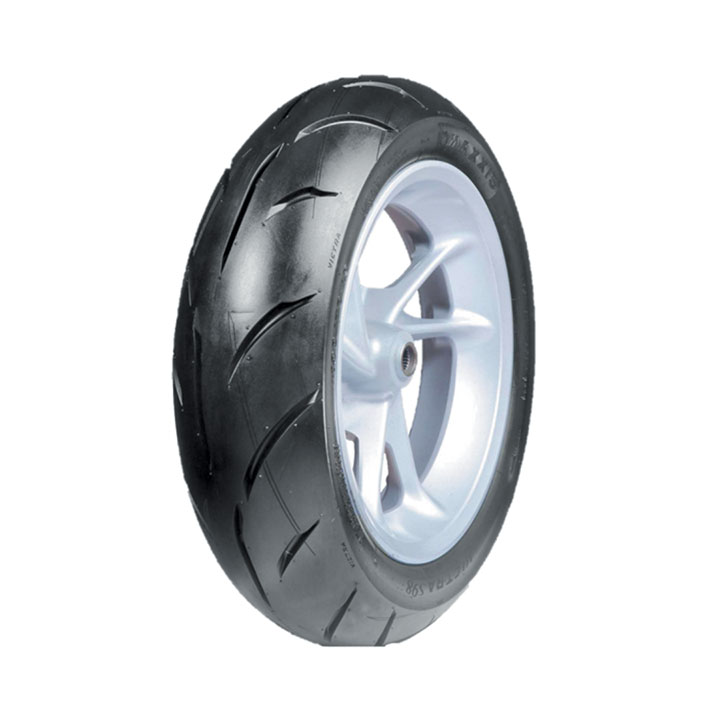
Maxxis Razr HT — PHOTO FROM AP BLUE WHALE CORP.

MAXXIS is a global manufacturer of tires for a wide range of vehicles, including bicycles, motorcycles, cars, trucks, ATVs, trucks and buses offering a “balance of performance and value.” Maxxis International recently released four new tires across its Philippine dealership network exclusively administered to by AP Blue Whale Corp.

Said AP Blue Whale Corp. Chief Operations Officer Ronald L. Ang, “These tires represent a significant advancement in our tire technology and our response to the continuously expanding electric vehicle market, and we are happy to offer drivers an unparalleled experience on both dry and wet roads, whether for conventional or electric vehicles.”

The Maxxis HT 780 is a premium-quality highway terrain tire designed for SUV and utility vehicle drivers looking for optimal comfort, a quiet ride, and prolonged tire life. Meanwhile, the Maxxis Razr AT 781 is positioned as a refined all-terrain tire for crossovers, pickups, and SUVs that provides “excellent off-road traction, improved tread life, dry/wet performance, silence and riding comfort.”

AP Blue Whale Corp. Director of Product Management Jaybee Atanacio, also present during the presentation of the new tires, said that the SEMA Best New Product Award-Winning Maxxis Victra Sport EV uses cutting-edge technology as an ultra-high performance all-season tire for electric vehicles “designed to maximize efficiency and grip, lower rolling resistance and noise, enhance durability, and improve traction.” Developed for electric vehicles, it is notable for its high-dispersion nanotechnology and a special tread design that increase range and improve energy efficiency.

Also presented was the Maxxis Victra S98 CT, an “urban-ready scooter tire, built specifically for city riding.” It is positioned as offering smooth and stable performance ideal for daily scooter commutes. Its high-grip compound and optimized tread pattern ensure excellent handling and control on both wet and dry urban roads. The tread pattern’s deco groove is optimized to ensure confidence during wet weather. A reinforced casing and long-lasting construction guarantee consistency and extended tire life.

The four Maxxis tires are available in a range of sizes. For more information, visit www.maxxis.com.ph.

Of diamonds and gold

EARRINGS from the new collection at the Tessera Podium store.

Tessera unveils Podium store, new collections

NATURAL diamonds meet contemporary gold designs in the new store of jewelry company Tessera at The Podium Mall in Mandaluyong City.

Tessera was founded by husband-and-wife duo Carl and Papat Fider in 2011. The Podium branch is their 5th store, and it will be the only one to house their new collections — Bold in Gold and Bridal Edit.

Ms. Fider told BusinessWorld that these are for clients who already have their signature classics. Sought-after items among the classics include standard engagement rings, diamond studs, and tennis necklaces, which are basically symmetrical strands adorned with uniformly sized diamonds.

In contrast, the new collections incorporate gold with diamonds and sport more contemporary designs for younger women.

“From the ‘Bold in Gold’ collection, the chunky necklace is very modern, something different from the usual. It’s fashion-forward and has a touch of modern luxury,” said Ms. Fider.

“The reason we created ‘Bridal Edit’ is we want the younger brides to wear something their age, like statement earrings, something they won’t feel scared of wearing for their weddings,” she added.

The store in The Podium also reflects these collections, with white, green, and gold interiors as opposed to their other stores that are bronze and green.

Their 6th store in Molito, Alabang — which will be the first in the south of Metro Manila — will follow a similar direction as well, according to the jewelry company. It is set to open within the year.

THE VALUE OF DIAMONDS
Although lab-grown diamonds are more affordable, Ms. Fider told BusinessWorld that naturally mined diamonds can still reflect high quality under a certain budget.

Tessera’s stones, certified by the Gemological Institute of America, are “responsibly obtained” and “conflict-free” diamonds. Choosing which to buy is a matter of preference.

“It all boils down to budget, regardless of how much you research about clarity and specs. Google will always tell you to get the highest-quality one, but it’s pricier. It should always go back to what can fit your budget,” Ms. Fider said.

The Philippine market, for one, tends to prioritize size over specs, she explained. “Flawless diamonds tend to be the most expensive ones. For me, as long as the inclusions are not obvious, or to my naked eye the stone still looks brilliant and clear, I’m okay with it.”

Diamonds with a tinge of color can also distinguish them from lab-grown diamonds.

“Lab-grown ones are too perfect, too white, too brilliant, too flawless,” Ms. Fider said, “And it’s a natural characteristic of diamonds to have inclusions. So I always have a soft spot for natural, imperfect diamonds.”

Most of all, diamonds are a good investment, she concluded.

“The diamond industry has always been there, proving that it will last. It is not disposable. You can pass it on, and people really use it. That’s what makes it a good investment.” — Brontë H. Lacsamana

BSP securities fetch lower rates even as both tenors go undersubscribed

YIELDS on the central bank’s short-term securities dropped on Friday even as both tenors went undersubscribed despite the lower volume offered.

The Bangko Sentral ng Pilipinas (BSP) bills fetched bids amounting to P59.557 billion, well below the P100-billion placed on the auction block and the P115.207 billion in tenders for the P120-billion offer a week prior. However, the central bank awarded only P55.057 billion in securities.

Broken down, tenders for the 28-day securities reached P17.921 billion, lower than the P40-billion offer and the P44.231 billion in bids seen for the P60 billion placed on the auction block a week prior. The BSP only accepted P14.421 billion in bids for the one-month bills.

Banks asked for rates ranging from 5.34% to 5.42%, narrower than the 5.295% to 5.43% margin seen a week earlier. This caused the average rate of the one-month bills to fall by 1.44 basis points (bps) to 5.3784% from 5.3928% previously.

Meanwhile, bids for the 56-day securities amounted to P41.636 billion on Friday, also below the P60-billion offer as well as the P70.976 billion in tenders for the P60 billion auctioned off by the BSP a week prior. However, the central bank awarded just P40.636 billion in two-month papers.

Accepted yields were from 5.358% to 5.4%, a slimmer range compared to the 5.35% to 5.4% band seen a week ago. With this, the average rate of the two-month BSP bills slipped by 0.53 bp to 5.3849% from the 5.3902% recorded in the previous auction.

The central bank uses the BSP securities and its term deposit facility to mop up excess liquidity in the financial system and to better guide short-term market rates towards its policy rate.

The BSP bills also contribute to improved price discovery for debt instruments while supporting monetary policy transmission, the central bank said.

The central bank securities were calibrated to not overlap with the Treasury bill and term deposit tenors also being offered weekly.

Data from the central bank showed that around 50% of its market operations are done through its short-term securities.

The BSP bills are considered high-quality liquid assets for the computation of banks’ liquidity coverage ratio, net stable funding ratio, and minimum liquidity ratio. They can also be traded on the secondary market. — Katherine K. Chan

Brazil’s FRIGON sees PHL demand for beef growing with middle classes

A BRAZILIAN beef processor and exporter said the Philippines’ growing middle class will fuel demand for high-quality protein.

FRIGON (Irmãos Gonçalves Comércio e Indústria Ltda.), currently exports mainly grass-fed Nelore cattle to the Middle East, Asia, Africa, and the Americas.
“The Philippine market represents an exciting opportunity,” the company told BusinessWorld.

“We see the country as a dynamic economy with a growing demand for high-quality protein, where beef consumption continues to expand alongside a rising middle class,” it added.

The company said it is “confident” of servicing Philippine market requirements for “safe, reliable, and premium Brazilian beef,” citing its “strong capacity, international certifications, and flexibility in adapting our products to the clients’ demand.”

“We are looking forward to building long-term partnerships in the Philippines and to supporting the development of stronger trade relations between our countries,” FRIGON said.

FRIGON has the capacity to slaughter 2,000 head of cattle per day, with an expansion underway to double capacity by 2026 in response to growing global demand.

In 2024, the Philippines was the 5th largest destination for Brazilian beef, accounting for 92,200 metric tons or 3.19% of Brazil’s total exports. — Kyle Aristophere T. Atienza

Developing nations must continue to demand climate finance in defiance of the COP29 outcome

STOCK PHOTO | Image by Wirestock from Freepik

In November 2024, the annual climate conference in Baku ended with a railroaded climate finance deal that has been widely condemned as inadequate and unjust. The new deal, $300 billion per year by 2035, fell far short of the multiple trillions of public finances needed to build renewable energy capacity, phase out fossil fuels, adapt to the impacts of the climate crisis, address loss and damage, and ensure a just transition. This insulting amount was not even a commitment, merely a target, and would be an unacceptable mix of private investments, loans, and public funds. The dire inadequacy of international climate finance has left developing countries in crisis as they develop plans to deal with the impacts of the climate crisis and reduce emissions in line with the goals of the Paris Agreement.

On Feb. 10 this year, the deadline for governments’ climate plans, known as Nationally Determined Contributions (NDCs), passed with only 10 countries’ submissions. In anticipation of the missed deadline, the UN Climate Change Executive Director, Simon Stiell announced a last-minute extension until September to give other countries more time to ensure the quality of the NDC submissions, which he described as “among the most important policy documents that governments can produce this century.”

However, the major barrier that most developing countries face in implementing such plans is not a shortage of time or knowledge, but a shortage of financing. Without adequate climate finance from the Global North, debt-ridden developing countries cannot achieve the drastic emissions cuts needed to achieve the 1.5°C goal. Unnamed officials from India, one of the Global South governments that rejected the COP29 climate finance deal, have already said that their submission will reflect the inadequacy of the Baku outcome, implying that their plans will not be sufficiently ambitious. Similarly, Indonesian energy minister Bahlil Lahadalia has cited the lack of financing as a hindrance to the early retirement of coal plants.

By refusing to deliver the trillions they owe in climate finance, rich countries at COP29 have sabotaged developing countries’ climate plans and the goals of the Paris Agreement. Last year, the UN Environment Programme reported that failure to escalate ambition in the new plans would result in 2.6°C to 3.1°C of global temperature rise, an outcome that would spell disaster for vulnerable people across the world, not just in the Global South.

In addition to the abysmal outcome of COP29, the United States’ unprecedented move to rescind a $4-billion pledge to the Green Climate Fund has put further strain on developing countries’ efforts to combat the climate crisis. As the world’s biggest historical polluter predictably exits its climate obligations, it is incumbent on the rest of the Global North to step up and scale up their delivery of public, grants-based, and non-debt-creating finance. Despite the claims of the Organization for Economic Cooperation and Development (OECD) that the previous goal of $100 billion per year was met in 2022, data shows that the total of climate finance delivered by the G7 to the UN climate funds adds up to a mere $31 billion, meaning billions of pledges are yet to be fulfilled.

Developing countries and global civil society cannot let the issue of climate finance die in Baku. In defiance of the outcome of COP29, civil society groups must urge Global South governments to develop plans to intensify pressure on rich nations to cover the costs. If the world fails to meet the goals of the Paris Agreement, it will not be the failure of developing countries, who are the least responsible yet most affected by climate impacts. It will be the failure of the rich, polluting countries who are most responsible for the climate crisis, and are legally, historically, and morally obligated to pay up.


Lidy Nacpil is a climate activist and the coordinator of the Asian Peoples’ Movement on Debt and Development.

Sta. Lucia Q2 profit down 47% on weaker real estate sales

STALUCIALAND.COM.PH

LISTED property developer Sta. Lucia Land, Inc. posted a 47% decline in its second-quarter (Q2) attributable net income to P552.17 million from P1.04 billion in the same period last year as weaker demand led to lower real estate sales.

Gross revenue for April to June fell 25% to P2.11 billion from P2.82 billion a year earlier, Sta. Lucia said in a regulatory filing.

Real estate sales dropped 33.4% to P1.4 billion, while rental income rose 3% to P192.57 million.

For the first half, Sta. Lucia said its attributable net income slid 38% to P1.49 billion as gross revenue decreased 28% to P4.74 billion.

Real estate sales for January to June fell 37% to P3.32 billion, while rental income grew 3% to P372.92 million.

“The decline in residential sales was driven by shifting and slow market demand in key regional areas such as Cebu, Cavite, Iloilo, Davao, and Laguna. These conditions have led to lower sales absorption and reduced transaction volumes across the group’s residential portfolio,” Sta. Lucia Land said.

“Overall, while the group has maintained a level of stability through its ongoing marketing efforts, the decline in core real estate sales and ancillary revenues highlights emerging pressures within regional markets to attract potential buyers despite the headwinds experienced by the real estate industry,” it added.

Sta. Lucia Land’s portfolio consists of residential, commercial, leisure, and retail developments, including Oro Vista Grande in Antipolo, Sta. Monica Lake Residences in Pangasinan, and Almeria Village in Dumaguete.

Sta. Lucia Land shares were unchanged at P2.61 apiece on Friday. — Revin Mikhael D. Ochave

Geotab fleet management solution now here

Geotab helps enterprises track and maximize its fleet of vehicles and more. — PHOTO FROM PIONEER TRUCK PARTS AND EQUIPMENT CORP.

PHILIPPINE BUSINESSES deploying delivery vans, utility trucks, or service vehicles can now take greater control of their operations with the local availability of Geotab, said to be one of the world’s leading providers of telematics and fleet management solutions.

With over 50,000 customers in 160 countries, Geotab connects more than 4.9 million vehicles worldwide — processing billions of data points every hour. Its platform uses advanced data analytics and AI to improve fleet performance, safety, and sustainability while lowering operational costs. It features the GO9, a compact plug-and-play device that installs directly into a vehicle’s OBD II port or via a harness for heavy-duty trucks. Once connected, it collects rich, near real-time data and securely transmits them to Geotab’s cloud-based platform, accessible anytime by fleet managers.

Geotab tackles fleet challenges head-on by giving businesses actionable insights to improve efficiency, safety, and savings. It can monitor vehicle location, routes, and travel history while “identifying speeding, harsh braking, and aggressive driving to improve safety.” It can also catch vehicle issues early, reduce fuel wastage and improve fuel efficiency, and help plan better routes and set operational boundaries. It also can prevent downtime through proactive servicing, align insights with business KPIs — while integrating with dashcams, fuel cards, temperature sensors, and third-party logistics tools, allowing operators to create an all-in-one fleet management solution.

The GO9 device features US Government-grade encryption (FIPS 140-3 validated), near real-time GPS accuracy, and LTE connectivity. Geotab solutions are now available in the Philippines through Pioneer Truck Parts and Equipment Corp. in Cabuyao, Laguna. For more information, visit www.geotab.com/apac or its offices at Pioneer Truck Parts and Equipment Corp., Pulo Road, Barangay Pulo, Cabuyao, Laguna.

Adidas visits Indigenous Mexican town to apologize for sandal design

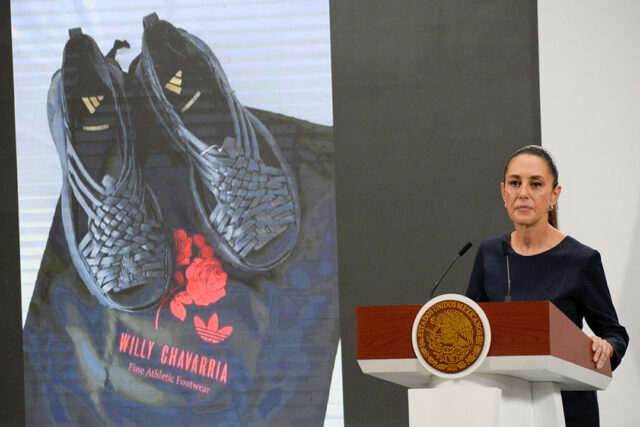
MEXICAN PRESIDENT Claudia Sheinbaum Pardo addresses the case of plagiarism of the traditional Mexican huarache by the Adidas Oaxaca Slip-On, the Adidas tennis brand, and Willy Chavarria at a press conference at the National Palace, Aug. 8, 2025. — LUIS BARRON/ALTO PRESS/REUTERS

VILLA HIDALGO YALALAG, Mexico — Adidas executives visited a small Indigenous town in the mountains of southern Mexico on Thursday to offer an apology over a sandal-inspired shoe design that Mexico’s government had blasted as cultural appropriation.

The German sportswear company sent representatives from its Mexican unit to Villa Hidalgo Yalalag, a town in Oaxaca state, to deliver the comments in person after issuing a written apology last week.

The issue related to the “Oaxaca Slip On,” designed by Mexican-American designer Willy Chavarria, which locals say closely resembles their traditional handmade huarache sandals.

“We understand this situation may have caused discomfort, and for that reason, we offer a public apology,” Karen Gonzalez, head of Legal and Compliance at Adidas Mexico, told a few dozen people gathered at an outdoor sports field.

The event included traditional music and attendees in Indigenous attire.

Ms. Gonzalez said Adidas would in the future seek collaboration with Villa Hidalgo Yalalag to ensure respect for its cultural heritage. The community is home to fewer than 2,000 people.

“Thank you very much for keeping your word,” said Mayor Eric Fabian. “(Our cultural heritage) is something we safeguard very carefully. Yalalag lives from its crafts,” he added.

The controversy drew national attention earlier this month when Mexican President Claudia Sheinbaum criticized Adidas and announced plans to explore legal avenues to protect Indigenous communities from alleged cultural appropriation by big companies.

Mexico has previously accused other big-name global fashion players of exploiting Indigenous designs without consent. — Reuters

Empire Insurance officially ceases operations after liquidation

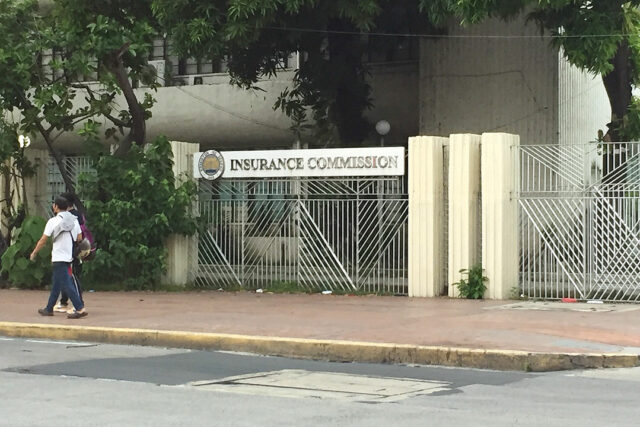
BW FILE PHOTO

EMPIRE INSURANCE Co. has officially ceased doing business as the Insurance Commission (IC) has completed liquidation proceedings for the nonlife company.

The IC on Aug. 20 sent Empire Insurance a letter on the closure and termination of its liquidation proceedings, it said on a notice on its website.

“Accordingly, the company’s insurance business is hereby officially closed and thereafter, allowed to withdraw its mandated security deposit considering that a contingency fund has been set aside for the settlement of the company’s remaining outstanding claims liabilities,” the regulator said.

“The company will continue addressing its corporate liabilities under a new name and purpose. The said new name shall be published in a newspaper of general circulation and posted on the website of the Insurance Commission upon the approval by the Securities and Exchange Commission of the company’s amended Articles of Incorporation,” it added.

The IC placed Empire Insurance under liquidation on Sept. 20, 2022 after being issued a cease-and-desist order on Oct. 16, 2020.

According to IC data, Empire Insurance’s paid-up capital was at P450 million in 2020, below the P900-million minimum requirement that took effect in December 2019.

The nonlife insurance industry’s net premiums written grew by 20.48% year on year to P39.63 billion as of end-June. — Aaron Michael C. Sy

US tariffs behind arabica price surge, Brazilian exporters say

REUTERS

SAO PAULO — The global arabica coffee market has surged in August with prices gaining more than 30% on the ICE exchange, driven mainly by steep tariff hikes from the US, the head of Brazil’s coffee exporters council, Cecafe, said.

The 50% tariff imposed on Brazilian coffee by the Trump administration since Aug. 6 has made exports to the US unviable and disrupted markets, Cecafe President Marcio Ferreira said in an interview.

“In meetings I had with the American side, I made it clear that the tariff hike created an environment of uncertainty and drove coffee prices up globally — and there may be no ceiling,” Mr. Ferreira said.

“The market can’t read where the price peak is,” he added.

Arabica coffee futures on ICE, traded in New York, were quoted around $3.74 per pound on Friday, up from about $2.80 at the end of July.

Crop performance in Brazil, the world’s largest producer and exporter of coffee, will not help anytime soon, Mr. Ferreira said.

The 2025 arabica crop collection, nearing completion, has yielded about 10% less than expected, he said, adding that frosts this month are likely to reduce next year’s output.

As a result of the tariffs, importers are turning to other origins like Central America and Colombia, but are facing higher premiums compared with ICE futures contracts, Mr. Ferreira said.

“This uncertainty and insecurity attracts funds to buy on the exchange, and it’s natural for funds to enter on the buying side — the market becomes favorable from a speculative standpoint,” he said.

However, Brazilian coffee is currently seeing “a substantial increase” in European and Asian demand, which is “well above expectations,” Mr. Ferreira added.

That growth isn’t necessarily due to higher consumption in Europe, he said, citing the role of countries like Germany in re-exporting processed coffee to the US, which applies lower tariffs on European goods. — Reuters

ADVERTISEMENT
ADVERTISEMENT