Home Blog Page 1092

PHL startups Enstack, Netbank, Xpress cited in Forbes Asia’s 100 to Watch list

THREE PHILIPPINE STARTUPS were cited in the 2025 edition of Forbes Asia’s 100 to Watch list, which features rising small companies across the Asia-Pacific region.

The list, now in its fifth annual edition, included Philippine companies namely e-commerce and retail management app Enstack, banking solutions provider Netbank, Inc., and ride-hailing startup Xpress Super App.

“The 100 to Watch list offers a window into the vibrant world of startups and small companies in the Asia-Pacific region,” Forbes Asia said in a statement on Tuesday.

Founded in 2021, Enstack offers an artificial intelligence (AI)-assisted app that helps small and mid-sized businesses design web stores, write product blurbs, manage invoices and payments, ship packages, and track inventory.

The company, which expanded to Thailand this year, has raised $3 million in total funding from a range of backers, including Xendit, Mangrove Capital Partners, BlackPine, and Unifier Ventures.

Netbank provides digital financial services, including loan management, payments, and disbursements, after acquiring a rural bank in 2019. Its clients include Smart Money, TikTok, and Lazada. It is backed by Beenext and Kaya Founders.

For the first half, Netbank posted a P22.2-million net profit ($390,000), a turnaround from the P34.9-million loss a year earlier, driven by loan growth and higher deposits.

Xpress, established in 2022, offers ride-hailing, delivery, and courier services. The company plans to add flight and ferry bookings, reservations for activities, and a digital payment option. It was co-founded by PJ Lhuillier Group President and Chief Executive Officer Jean Henri D. Lhuillier and AppFactorie founder Nathan Taylor.

In May, Xpress launched 40 BYD electric and hybrid vehicles for hire, with plans to further expand its green fleet. The Xpress app has over 100,000 downloads on Google Play, while a separate app for its driver community has over 10,000 installs.

Forbes Asia Editorial Director Rana Wehbe Watson said the 100 startups on the list have raised a total of nearly $3 billion in funding to date.

“Our fifth annual Forbes Asia 100 to Watch list showcases a range of innovative startups in fields including biotech, spacetech and green tech. They are utilizing advanced technologies like AI to enhance their products, which include gene-editing tools and propulsion systems for spacecraft,” Ms. Watson said.

The 100 to Watch list covered 16 countries and territories in Asia-Pacific, led by India with 18 companies, followed by Singapore and Japan with 14 each, China with nine, Indonesia and South Korea with eight each, and Australia with seven.

Biotechnology and healthcare accounted for the largest share among sectors with 18 companies, followed by enterprise technology and robotics with 16 each.

For the selection of companies in the list, Forbes Asia solicited online submissions and invited accelerators, incubators, universities, venture capitalists, and others to nominate companies.

To qualify, companies must be based in the Asia-Pacific region, be privately owned for-profit ventures, and have no more than $50 million in annual revenue and no more than $100 million in total funding as of Aug. 15. — Revin Mikhael D. Ochave


Foreign telcos, including Starlink, eye role in drafting Konektadong Pinoy IRR — DICT

Elon Musk talks about his company’s Starlink project at the Mobile World Congress, Barcelona, Spain, June 30, 2021. — BRISA PALOMAR / PACIFIC PRESS/SIPA USA VIA REUTERS CONNECT

SOME FOREIGN PLAYERS have also signified their interest in helping craft the implementing rules and regulations (IRR) of the Konektadong Pinoy Act, the Department of Information and Communications Technology (DICT) said.

“New players are welcome to submit their white paper. I receive white papers left and right. I think it is appropriate to say that current operating telcos have a stronger say. There are foreign telcos who have expressed their interest in helping out in the IRR, but they are limited in submitting their white paper,” DICT Secretary Henry Rhoel R. Aguda told Money Talks with Cathy Yang on One News on Monday.

Mr. Aguda did not identify the foreign players, but he said that Elon Musk’s Starlink is one of them.

“There is Starlink because they operate in the country now even without Konektadong Pinoy,” he said, noting that Starlink has provided its suggestions on how to accelerate connectivity in the country.

PLDT Inc. and Converge ICT Solutions, Inc. have previously indicated their readiness to take part in drafting the IRR of the Konektadong Pinoy Act, also referred to as the Open Access in Data Transmission Act.

The DICT said it will convene stakeholders for the drafting of the IRR, which it aims to finalize within 60 to 90 days.

“DICT and National Telecommunications Commission (NTC) have already completed our legal work to ensure that when we draft the IRR, all stakeholders are involved. And I personally reach out to the large telcos, their CEOs, and the chamber to ensure they’re welcome to participate in the IRR,” he said.

Meanwhile, Globe Telecom, Inc. has expressed its concerns over the measure lapsing into law.

“By not signing it, Malacañang is taking a neutral stance on the Konektadong Pinoy Act. We shall work with the government on how we can improve the standards in the industry to safeguard the public,” Globe General Counsel Froilan M. Castelo, who is also the president of the Philippine Chamber of Telecommunications Operators (PCTO), said in a statement on Tuesday.

The listed telecommunications company said that while the Konektadong Pinoy Act aims to broaden digital access, its current form presents grave threats to the industry.

“Its current form poses grave risks that include weakening cybersecurity, undermining national safeguards, and unsettling an industry that is vital to the country’s economy and overall national security,” Globe said.

Globe said that the law contains loopholes, particularly in the vetting of new market entrants, which further heightens the risk of “inadequately screened operators” being allowed to gain access to critical infrastructure.

“The law also permits the unregulated use of spectrum by satellite operators. This risks placing the Philippines in breach of its international treaty obligations and, more seriously, invites harmful interference with frequencies used by the country’s defense and disaster-response agencies,” Globe said.

Globe also said that the passage of Konektadong Pinoy into law brings both risks and opportunities.

The Ayala-led telecommunications company also said that because the law removed the Congressional franchise requirement, it discards a long-established safeguard of oversight.

“The absence of such checks undermines regulatory integrity and may unsettle the investment climate. Existing operators that have built networks under strict requirements should not be exposed to unfair competition from newcomers exempt from these same obligations. Investor confidence, built over decades, must not be eroded by uncertainty,” Globe said.

Business groups, including the Joint Foreign Chambers (JFC), EU-ASEAN Business Council (EUABC), IT and Business Process Association of the Philippines (IBPAP), and US-ASEAN Business Council (USABC), have voiced their backing for the Konektadong Pinoy Act, highlighting that its enactment into law would enhance internet access nationwide and strengthen the Philippines’ economic competitiveness.

“We also believe the law’s success will depend on the development of implementing rules and regulations that protect the free and seamless flow of data across borders. This approach will ensure that businesses are able to innovate and scale globally, allowing the Philippines to fully harness the digital economy’s potential,” they said. — Ashley Erika O. Jose

Gov’t fully awards T-bill offer at lower yields before BSP review

BW FILE PHOTO

THE GOVERNMENT made a full award of the Treasury bills (T-bills) it offered on Tuesday as yields dropped across the board, driven by strong demand on expectations that the Bangko Sentral ng Pilipinas (BSP) will cut key rates this week.

The Bureau of the Treasury (BTr) raised P25 billion as planned from the T-bills it auctioned off as the offer was more than four times oversubscribed, with total bids reaching P113.02 billion. However, this was slightly lower than the P113.751 billion in tenders recorded on Aug. 18.

It fully awarded its offering as the tenors’ average rates were all lower than previous auction results and prevailing secondary market rates, the BTr said in a statement.

Broken down, the Treasury borrowed P8 billion as planned via the 91-day T-bills as total tenders for the tenor reached P31.89 billion. The three-month paper was quoted at an average rate of 5.195%, down by 3.9 basis points (bps) from the 5.234% seen in the previous auction. Accepted yields ranged from 5.188% to 5.2%.

The government likewise raised the programmed P8 billion from the 182-day securities as tenders amounted to P39.27 billion. The average rate of the six-month T-bill was at 5.398%, dropping by 3.7 bps from the 5.435% fetched last week, with accepted rates ranging from 5.388% to 5.413%.

Lastly, the Treasury sold the planned P9 billion in 364-day debt as demand for the tenor totaled P41.86 billion. The average rate of the one-year T-bill went down by 4.2 bps to 5.522% from 5.564% previously. Tenders accepted carried yields of 5.518% to 5.53%.

At the secondary market before Monday’s auction, the 91-, 182-, and 364-day T-bills were quoted at 5.2578%, 5.483%, and 5.5985%, respectively, based on PHP Bloomberg Valuation Service Reference Rates data provided by the Treasury.

“Treasury bill average auction yields were again mostly slightly lower for the eighth straight week in view of the widely expected 25-bp BSP rate cut as early as the next rate-setting meeting on Thursday, supported by benign inflation recently,” Rizal Commercial Banking Corp. Chief Economist Michael L. Ricafort said in a Viber message.

Strong demand also drove T-bill yields lower, Mr. Ricafort added.

A trader likewise said in a text message that T-bill yields dropped before the anticipated BSP cut this week as investors sought to lock in still-high rates.

“Some market players may have aimed to get ahead,” the trader said, adding that the long weekend may have led to the slight decrease in demand from the previous week’s auction.

All 20 analysts in a BusinessWorld poll expect the BSP’s policy-setting Monetary Board to cut the target reverse repurchase rate by 25 bps to 5% from the current 5.25% at its meeting on Thursday.

This would be the third straight 25-bp reduction since April.

The central bank has so far slashed borrowing costs by a cumulative 125 bps since it began its easing cycle in August 2024.

BSP Governor Eli M. Remolona, Jr. earlier said that a cut is “quite likely” at this week’s meeting, with one more reduction likely for the rest of the year as they expect inflation to remain within target.

After this week’s review, the Monetary Board’s remaining meetings for this year are scheduled for Oct. 9 and Dec. 11.

Inflation sharply eased to a near six-year low of 0.9% in July from 1.4% in June, bringing the seven-month average to 1.7%, a tad higher than the central bank’s 1.6% forecast but below its 2-4% annual target.

Tuesday’s T-bill auction was the last for the month. The government raised P103.5 billion from the short-term papers in August, above the P100-billion plan as it fully awarded its offerings and even upsized its award at one auction.

On Wednesday, the government is looking to borrow a combined P35 billion via a dual-tranche offering of reissued Treasury bonds (T-bonds), or P10 billion from seven-year papers with a remaining life of two years and seven months and P25 billion through 25-year notes with a remaining life of 24 years and five months.

The BTr is looking to raise P160 billion from the domestic market this month, or P100 billion through T-bills and P60 billion via T-bonds.

The government borrows from local and foreign sources to help fund its budget deficit, which is capped at P1.56 trillion or 5.5% of gross domestic product this year. — A.M.C. Sy

PHirst Park Homes enters Mindanao with P5.3-B GenSan township project

PHIRST PARK HOMES FACEBOOK ACCOUNT

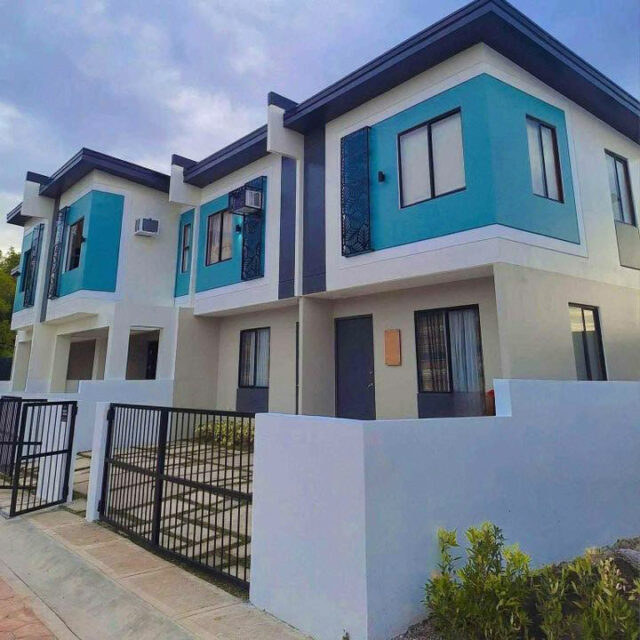
PHIRST PARK HOMES, the affordable housing brand of Century Properties Group, Inc. (CPG), is set to enter Mindanao with a P5.3-billion township project in General Santos (GenSan) City.

Located in Barangay Baluan, PHirst Park Homes GenSan is a 25-hectare master-planned community positioned to support the city’s continuing growth, PHirst Park Homes said in a stock exchange disclosure on Tuesday.

Accessible through the Sarangani-Davao del Sur Coastal Road, PHirst Park Homes GenSan will feature about 2,000 move-in-ready housing units designed to meet the needs of growing families.

The project will offer two signature PHirst models: Amani, a townhouse with a floor area of 40 square meters (sq.m.) on typical lots ranging from 44 sq.m. to 60.5 sq.m.; and Dua, a single-attached unit with a 48-sq.m. floor area on a 77-sq.m. lot, with prices starting at P2.8 million.

Prices for the Amani townhouses will range from P1.8 million to P2.1 million, while Dua houses will cost around P2.8 million.

“PHirst’s expansion in Mindanao, through PHirst Park Homes Gen San, directly reflects our unwavering vision to empower Filipino families with access to quality homes,” PHirst President and Chief Executive Officer Ricky M. Celis said.

The township will include amenities that promote recreation and community interaction, as well as open spaces for accessibility and enjoyment, while ensuring a safe and secure environment, PHirst added.

“Staying true to its promise of ‘a home in a park, and a park in a home’ experience, the community showcases a harmonious balance of comfort, nature, and modern living,” PHirst said.

Mindanao is emerging as a strategic economic hub due to ongoing infrastructure projects, making it an attractive real estate market, the company said. It cited the upcoming Mindanao Railway Project, which is expected to connect major cities, streamline regional transportation, and enhance global connectivity.

“Such developments are opening new economic corridors and driving robust regional activity across provinces and key urban centers — making Mindanao one of the most attractive and promising markets in the real estate industry,” it added.

PHirst also said rapid urbanization and the growing population highlight the urgency of addressing the country’s housing backlog.

“With its upcoming entry into Mindanao, PHirst is well on track to build a strong footprint across all major regions in the Philippines — bringing the dream of homeownership closer to more Filipino families nationwide,” the company said.

On Tuesday, CPG shares rose by 3.12% or two centavos to close at 66 centavos apiece. — Beatriz Marie D. Cruz

AM Best keeps ratings, downgrades outlooks for Malayan Insurance

DEBT WATCHER AM Best has affirmed its ratings for Malayan Insurance Co., Inc. but revised the outlooks to “negative” from “stable” due to losses from catastrophes and other events.

AM Best affirmed Malayan Insurance’s financial strength rating (FSR) of B++ (Good), long-term issuer credit rating of “bbb” (Good) and Philippines national scale rating of aa+.PH (Superior), it said in a statement on Aug. 21. However, it downgraded its outlooks for these ratings to negative.

“The credit ratings reflect Malayan’s balance sheet strength, which AM Best assesses as strong, as well as its adequate operating performance, neutral business profile and appropriate enterprise risk management. In addition, the ratings factor in a neutral impact from the company’s ultimate ownership by Pan Malayan Management and Investment Corp.,” it said.

“The revised outlooks to negative from stable reflect continued pressure on Malayan’s operating performance fundamentals, mainly due to underwriting performance volatility driven by catastrophe and large loss events in recent periods,” AM Best added.

The credit rater noted that Malayan Insurance posted underwriting losses during three of the last five years with a five-year average combined ratio of 105.6%.

“In 2024, while total operating earnings remained profitable, the company reported an underwriting loss, driven by elevated catastrophe losses that negatively impacted the company’s core commercial lines. Investment income continues to be the principal contributor to Malayan’s overall earnings, supporting the company’s track record of positive earnings,” it said.

“For the first half of 2025, the company recorded an underwriting loss largely driven by adverse loss reserve development on prior periods.”

AM Best said they expect the nonlife insurer’s underwriting profitability to improve on the back of its ongoing portfolio remediation measures.

Meanwhile, it said Malayan Insurance’s balance sheet remains robust, backed by its risk-adjusted capitalization that it expects to “remain at the strongest level over the medium term.”

“Nonetheless, the company’s risk-adjusted capitalization is viewed to be sensitive to shock events, particularly arising from the occurrence of multiple severe catastrophe events in short succession. Offsetting factors include the company’s high reliance on reinsurance to support the underwriting of large commercial risks and its exposure to counterparties that are non-rated on an international FSR scale,” it said.

“AM Best views Malayan’s investment portfolio to have moderate risk, comprising mainly fixed-income securities and a moderate exposure to equity investments,” it added.

Meanwhile, AM Best’s neutral business profile assessment for the company reflects Malayan Insurance’s position as one of the largest nonlife insurance companies in the Philippines based on gross premiums written. “The company benefits from its affiliation with the Yuchengco Group of Companies, a large conglomerate in the Philippines, in terms of branding and distribution.”

Malayan Insurance recorded P15.07 billion in gross premiums written in 2024, data from the Insurance Commission showed, ranking second among nonlife insurers.

In a separate statement, Malayan Insurance said AM Best’s affirmation of its credit ratings show its financial resilience despite a challenging operating environment.

“While the outlooks have been revised to negative from stable, this adjustment reflects recent factors that are affecting the industry, resulting in underwriting performance volatility. Despite this, Malayan has maintained a track record of positive overall earnings, with investment income serving as a principal contributor to its profitability, ensuring consistent financial performance despite these external pressures,” the nonlife insurer said.

“The recent pressures on underwriting performance are a reflection of the current industry landscape, especially with the increased natural catastrophes affecting the entire sector. However, Malayan remains fully committed to navigating these conditions with resilience and strategic agility,” Malayan Insurance Chief Executive Officer Paolo Y. Abaya said.

The insurer added that it will continue its digital transformation as part of its long-term growth strategy.

Malayan Insurance booked a net income of P340.56 million and assets worth P40.92 billion in 2024. — A.M.C. Sy

MPower forges RE deal with The Peninsula Manila

THE Peninsula Manila — PENINSULA.COM

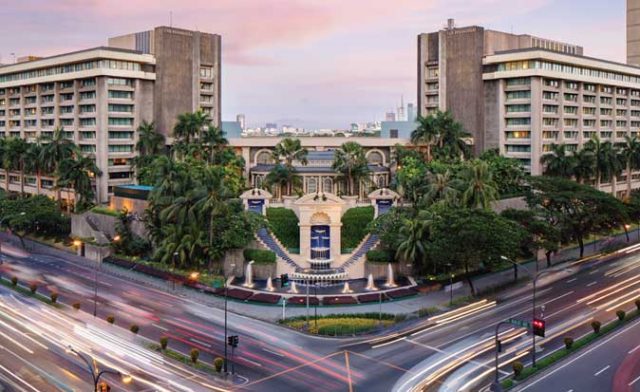
MPOWER, the retail electricity arm of Manila Electric Co. (Meralco), has signed a new supply deal to provide renewable energy (RE) to The Peninsula Manila, a five-star hotel in Makati City.

In a media release on Tuesday, MPower said The Peninsula Manila’s transition to renewable energy marks a significant milestone in their 12-year collaboration.

“Our more than a decade of partnership stands as a testament to shared vision and service excellence. It even grows stronger with a renewable energy supply commitment,” said MPower Head Redel M. Domingo.

“We are shaping the present with purpose, and now we move forward with confidence and unity towards sustainable progress,” he added.

The development makes The Peninsula Manila the hotel group’s second property in Southeast Asia, and fourth globally, to shift to renewable energy.

In 2021, The Peninsula Manila launched its Sustainable Luxury Vision 2030, which seeks to address operational areas that require immediate attention while generating a positive impact on the environment and communities.

“This collaboration reflects our shared commitment to innovation and environmental stewardship,” The Peninsula Manila Hotel Director Kevin Tsang said.

“By uniting, we are enabling cleaner, more efficient energy solutions that reduce carbon footprint and contribute to the global fight against climate change. Our partnership serves as a benchmark for responsible business practices and inspires others to pursue a greener world for our future generations,” he added.

MPower serves contestable customers, including large corporations within Meralco’s franchise area. It currently holds more than a 25% share of the Competitive Retail Electricity Market within Meralco’s coverage.

Meralco’s controlling stakeholder, Beacon Electric Asset Holdings, Inc., is partly owned by PLDT Inc.

Hastings Holdings, Inc., a unit of PLDT Beneficial Trust Fund subsidiary MediaQuest Holdings, Inc., has an interest in BusinessWorld through the Philippine Star Group, which it controls. — Sheldeen Joy Talavera

Trump attacks on Fed threaten central banks’ independence

REUTERS

US PRESIDENT Donald J. Trump’s continued attacks on US Federal Reserve Chair Jerome H. Powell pose a threat to global central banks’ independence, the Bangko Sentral ng Pilipinas (BSP) chief said.

BSP Governor Eli M. Remolona, Jr. said he shared the concerns expressed by top central bankers at the Fed’s annual Jackson Hole symposium last week about how the Mr. Trump’s attacks on the US central bank could spill over and set a dangerous precedent for the rest of the world.

“(It’s a) very significant threat,” Mr. Remolona told reporters on the sidelines of an event on Tuesday.

“The reason he’s (Mr. Powell) staying is not so much about monetary policy. It’s more about protecting the independence of the Fed, which protects the independence of our other central banks,” he added.

Rizal Commercial Banking Corp. Chief Economist Michael L. Ricafort said Mr. Trump’s attempts to undermine the Fed are also affecting market sentiment.

“The independence of the Fed is an important concern for the markets, with Fed Governor [Lisa] Cook looking to challenge Trump’s decision to fire her. Even US Treasury Secretary [Scott] Bessent signaled respect for the Fed’s autonomy especially on rate decisions,” Mr. Ricafort said in a Viber message when sought for comment.

“A few months ago, there was market volatility when Trump said he would like to fire Fed Chair Powell. The markets only stabilized when Trump retracted… But Trump is looking for any wrongdoing as basis for firing Fed officials. Strong institutions of law and rule of law are important for the markets,” he added.

Mr. Trump has repeatedly berated Mr. Powell over not lowering interest rates, though he has halted threats to fire him from a term that ends in a little under nine months anyway, Reuters reported. 

His focus last week turned to Ms. Cook, whose departure would allow Trump to select his fourth pick to the Fed’s seven-member board, including Governor Christopher Waller and Vice Chair for Supervision named in his first term, and the pending nomination of Council of Economic Advisers chief Stephen Miran to a currently open seat.

Mr. Trump on Monday said he was firing Ms. Cook over alleged improprieties in obtaining mortgage loans, an unprecedented step that could test the boundaries of presidential power over the independent monetary policy body should it be challenged in court.

Mr. Trump said in a letter to Ms. Cook, the first African-American woman to serve on the Federal Reserve’s governing body, that he had “sufficient cause to remove you from your position” because in 2021, Ms. Cook indicated on documents for separate mortgage loans on properties in Michigan and Georgia that both were a primary residence where she intended to live.

Ms. Cook responded several hours later in a statement e-mailed to reporters through the law office of lawyer Abbe Lowell, saying of Mr. Trump that “no causes exist under the law, and he has no authority” to remove her from the job she was appointed to by former US President Joseph R. Biden in 2022. “I will continue to carry out my duties to help the American economy.”

Though the terms of Fed governors are structured so they outlast the term of a given president, with Ms. Cook’s term lasting until 2038, the Federal Reserve Act does allow removal of a sitting governor “for cause.”

That has never been tested by presidents who, particularly since the 1970s, largely have taken a hands-off approach to Fed matters as a way to ensure confidence in US monetary policy.

It is unclear how the matter might play out from here, with Mr. Trump saying the firing was “effective immediately,” and the Fed set to hold a policy meeting on Sept. 16-17. — Katherine K. Chan with Reuters

Pros and cons of minimum wage legislation

PHILIPPINE STAR/RYAN BALDEMOR

(Part 1)

The frequent reference of Pope Leo XIV to the first social encyclical written by Pope Leo XIII — Rerum Novarum — has prompted economists, social scientists, philosophers, and theologians to review the teachings contained in the encyclical. This document, issued in 1891 at the height of the First Industrial Revolution, contains very valuable guidelines on a very pressing issue for which President Ferdinand Marcos, Jr. was severely criticized by workers for not mentioning in his last State of the Nation Address (SONA). I am referring to the issue of setting minimum wages for workers, such as the move of some members of the House of Representatives to increase the prevailing minimum wages for Filipino workers by P200 monthly. Just last July, the Trade Union Congress of the Philippines called on Congress to “swiftly” approve the P200 legislated wage hike after a new survey revealed that almost half of Filipino families consider themselves poor.

Indeed, the Philippines is notorious for having the highest poverty incidence among its peers in the ASEAN. Its poverty rate of 16% compares very poorly with those of Malaysia at 0.5%, Vietnam at 3%, and Thailand at 2%. Data show, however, that close to 70% of those falling below the poverty line are in the rural areas and are non-wage workers, like small farmers, sustenance fisherfolk, and marginal workers in the countryside. The most effective means of reducing poverty then is to help these marginalized farmers and fisherfolk improve their incomes by providing them with farm-to-market roads, irrigation systems, post-harvest facilities, agricultural extension services, and access to credit.

One can explain President Marcos Jr.’s silence on the minimum wage issue in his SONA by referring to an announcement made by Palace Press Officer Clarissa A. Castro in a news briefing that reacted to the filing of the P200 minimum wage hike in the House of Representatives (the Senate had approved a P100 increase). The crux of the President’s hesitation to support the wage hike can be found in these words: “As most small business owners cannot afford it, more workers will suffer because they may lose their jobs.”

To complicate matters, the introduction of such technologies of the digital age like artificial intelligence and robotics are increasingly replacing workers. The shift to these technologies may actually be hastened if wages are increased. Our leaders are caught between the devil and the deep blue sea.

To understand how to resolve this dilemma, I suggest we review the doctrinal foundation of the concept of the minimum wage for workers. The Social Doctrine of the Church — inaugurated by Rerum Novarum in 1891 — offers a moral and ethical framework for understanding and addressing economic issues, including minimum wages. While the Church does not set specific wage amounts, it emphasizes principles that should guide wage policies to uphold human dignity, justice (especially what is called distributive justice) and the common good. Work — whether done in the formal wage sector or the informal sector — must respect the dignity of the worker. A just wage is necessary for workers to live dignified lives and support their families. Remuneration is the most important means for achieving justice in work relationships. Workers have a right to a just wage, which must be sufficient to support themselves and their respective families.

And what is a just wage according to Catholic social doctrine? It is a wage sufficient to support the worker and his/her family in a decent way. It goes beyond mere survival — it includes access to more than food but also health, education, housing, and participation in society. Rerum Novarum states: “To misuse men as though they were things in pursuit of gain… is against human dignity.” St. John Paul II in Laborem exercens (1981) wrote: “A just wage is the concrete means of verifying the justice of the whole socioeconomic system.” When push comes to shove, Catholic social doctrine makes it very clear that the person (the worker) must always have priority over profits or capital. Economic systems are meant to serve people, not the other way around. Work is for man, not man for work.

Following the principles of solidarity and the common good, wages must consider the need of the community and promote social cohesion. Low wages that lead to poverty and inequality are harmful to the social fabric. On the other hand, the Church respects the free market but it acknowledges the role of the State in regulating wages to ensure distributive justice. Governments may set minimum wage laws to prevent exploitation.

One hundred years after Rerum Novarum, St. John Paul II wrote in Centessimus Annus that the State has the duty to intervene to ensure a minimum wage and prevent exploitation. The Catholic Church generally supports minimum wage legislation if it protects workers from unjust pay (as happened in the First Industrial Revolution); ensures that the workers can meet their basic needs; and promotes fairness and human dignity.

However, wage laws must be crafted responsibly, balancing economic sustainability and social justice. Especially in labor-intensive industries, unreasonably high wages militate against sustainability, forcing factories to close because of continuing losses. This is especially important to consider in industries that have to compete with their global counterparts. For example, one of the reasons why the Philippines is unable to attract the numerous export-oriented industries like semiconductor components, footwear, garments, and car parts in competition with Vietnam is the significantly lower wages prevailing in Vietnam compared to the Philippines. Vietnam has almost monopolized the transfer of these industries from China to the ASEAN over the last decade or so. In fact, Intel, which already had factory operations in the Philippines, decided to relocate its factory to Vietnam. Although the high costs of electricity explained part of this transfer, our higher labor costs also played a part in this relocation decision.

The following list compares the daily minimum wages in the major ASEAN economies: the Philippines, $11.5; Thailand, $9.7 to $11.5; Vietnam, $8.5; Malaysia, $17.2; and Indonesia, $9.26. The Philippines is competing with Vietnam and Indonesia in attracting labor-intensive industries. Thailand and Malaysia are already suffering from the rapid ageing of their populations.

A quick ChatGPT search reveals the following more detailed comparative figures for minimum wages in the Philippines compared to Vietnam. As of 2025, minimum wages in Metro Manila range from P608 to P645 per day. Monthly this roughly equals $304. National minimum wages vary by region and sector due to regional wage boards. In Vietnam, regional monthly minimum wages (as of July 2024) range from VND 3,500,000 to 4,960,000, which is approximately $137 to $196. Another source estimates the Philippines’ hourly minimum wage at $1.64 to be about double that of Vietnam at $0.76.

Another interesting comparison concerns average salaries in Metro Manila compared to those of Ho Chi Minh City and Hanoi. It is approximately $531 in Manila while it is $502.90 and $441.17 in Ho Chi Minh and Hanoi, respectively. Cost of living platforms show that in the Philippines the overall after-tax monthly salary is $382 compared to $434 in Vietnam. These figures suggest that, despite lower legal minimum wages in Vietnam, their workers are on the average paid higher salaries, which suggest higher labor productivity. This brings up another important factor that has to be taken into account in minimum legislation: labor productivity.

Finally, another important difference between the living costs in the two countries is that in the Philippines, even essential items like food, consume a larger portion of income. This means that more important than constantly increasing wages are efforts of both the Government and the private sector to improve food security by increasing the productivity of the agribusiness sector.

(To be continued.)


Bernardo M. Villegas has a Ph.D. in Economics from Harvard, is professor emeritus at the University of Asia and the Pacific, and a visiting professor at the IESE Business School in Barcelona, Spain. He was a member of the 1986 Constitutional Commission.

bernardo.villegas@uap.asia

Art, craft, and food combine in Kalibo café

THE Haboean Weaving Studio

Story and photos by Zsarlene B. Chua

FOR YEARS, Kalibo was seen as little more than a stopover for travelers headed to Boracay. Flights landed, vans waited, and visitors breezed through on their way to the island’s white sands. But with the expansion of Caticlan Airport, much of that tourism traffic shifted closer to Boracay itself, leaving Kalibo to redefine what it could offer beyond being a gateway.

It is with this background that Haboean Weaving Studio and Cafe found its place. Tucked within Villa Peraz Subdivision, the café embodies the layers and warmth of Aklanon culture while giving both locals and visitors a reason to linger and discover Kalibo.

The name “Haboean” comes from the Aklanon word haboe — to weave or blanket — paired with -an, a suffix that means “a place of.” It reflects both its weaving roots and its role as a space of comfort. Stepping inside, guests are welcomed by the aroma of specialty coffee, the sight of handwoven textiles, a tranquil koi pond, and an atmosphere that encourages unhurried conversation.

Opened in 2023, Haboean Cafe is owned and operated by the Dela Cruz House of Piña, a family enterprise that has championed Aklan’s weaving traditions since 1986. The company supplies major US retailers such as Williams-Sonoma, Dillard’s, and HomeGoods, with some products earning recognition from the UNESCO Asian Handicraft Promotion and Development Association. Beyond exports — including abaca macramé to Japan — the company and the family also pursue ways to keep piña and nito weaving relevant, balancing tradition with small innovations that help the craft endure, according to the café’s website.

A CULTURE WOVEN INTO TEXTILE
Unlike most cafés, Haboean doubles as a cultural hub. Alongside its Vietnamese-inspired food, pastries, and good coffee, it regularly stages art exhibits, talks, and workshops. Past programs have included the exhibit Soft Wilderness by Janine Tolores and Carl Parohinog. During this writer’s visit in early August, the café was hosting Patterns, an exhibition of emerging artists such as Margaux Blas and Moreen Austria. Blas and Austria’s piece, Women’s Hands, Woven Stories, stitched together indigenous Iloilo weaves, Bacolod jute fiber, Philippine prints, and even Korean textiles — a patchwork reflecting women’s roles in the workplace, the home, and society.

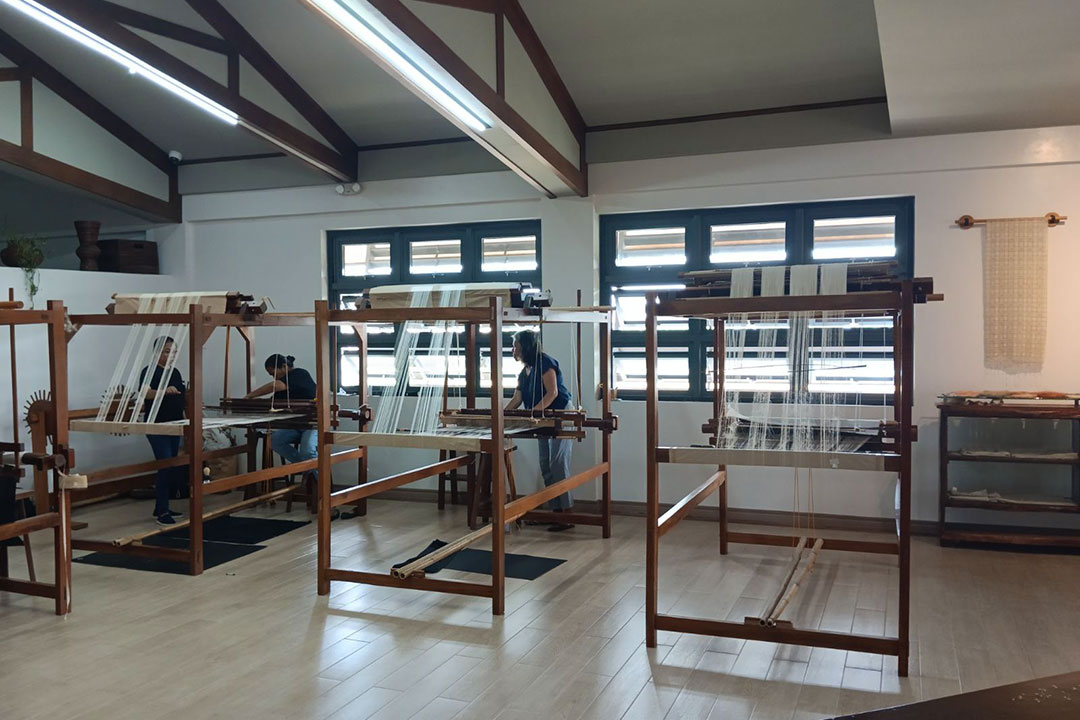
Above the exhibit is the weaving studio, where a small group of artisans sustain the centuries-old craft of piña weaving. Visitors can observe the transformation of pineapple fibers into the gossamer threads that define Aklan’s textile heritage. The studio also produces liniwan, considered the most intricate and delicate form of piña fabric — finer, lighter, and twice as demanding in time and cost compared to blended textiles, according to Let Dela Cruz of Dela Cruz House of Piña in a 2024 interview with HABI, the Philippine Textile Council.

A STORY TOLD THROUGH FOOD
The ground-floor café serves Vietnamese-inspired dishes, a nod to owners Ding and Elmer’s years with the International Organization for Migration in Bataan and Palawan. There, they worked with displaced Vietnamese, Cambodian, and Laotian refugees preparing to resettle abroad — and in the process, developed a lasting appreciation for the recipes that now flavor Haboean’s menu.

This writer tried the pho bò (P165 for a single serving), a light yet satisfying bowl that proved to be the perfect companion after a day in the sun. Despite the heat, the noodle soup’s mild, comforting flavors offered a soothing balance.

In weaving together food, art, and heritage, Haboean shows that Kalibo is more than just a stop on the way to Boracay. It is a place where traditions are kept alive, stories are shared, and visitors are invited to slow down and stay a little longer.

Haboean Cafe is located at Villa Peraz Subdivision New Buswang, Kalibo, Aklan. The café and studio is open from Tuesday to Sunday, 11 a.m.-7 p.m. (It is closed on Mondays). For more information, visit https://haboean.com/ and its social media pages.


Zsarlene B. Chua is a former BusinessWorld reporter who is now a fledgling PR girl. She’s all about skincare, makeup, and video games — and occasionally food. None of the products she reviews or writes about are the writer’s clients. Contact the author at zsarlene.chua@gmail.com.

SMIC signals wider renewable energy push

PHILIPPINE GEOTHERMAL PRODUCTION COMPANY, INC.

SM INVESTMENTS CORP. (SMIC) is expanding its renewable energy portfolio through new geothermal projects and potential ventures in wind energy, its top official said on Tuesday.

In a media release, SMIC President and Chief Executive Officer Frederic C. DyBuncio said the company’s energy arm Philippine Geothermal Production Company, Inc. (PGPC) is focused on expanding initiatives in geothermal energy.

“We are focused on geothermal energy production, which is baseload and runs 24/7. Production has been doing well, and with a new rig in place, we are building capacity to develop more sites,” Mr. DyBuncio said.

At present, PGPC operates the geothermal steam fields in Tiwi, Albay, and MakBan in Laguna and Batangas. It is also advancing five new concession areas, including Mt. Malinao in Albay, where three wells have already been drilled.

In other businesses, Carmen Copper Corp., a unit of Atlas Consolidated Mining and Development Corp., recently commissioned a 4.99-megawatt floating solar facility in Toledo City, Cebu.

SMIC also hinted at its prospect of exploring wind energy opportunities.

“At SM, we see renewable energy as both a responsibility and an opportunity to support the country’s energy transition while building more resilient and sustainable businesses and communities,” Mr. DyBuncio said. — Sheldeen Joy Talavera

Truth under siege: The national security threat we can’t ignore

STOCK PHOTO | Image by Rawpixel.com from Freepik

Technology is neutral. It is neither good nor bad — it simply amplifies intent. It is a double-edged sword: it can make life better and more efficient, but it also creates serious risks that harm individuals, societies, nations — even the global order.

The internet, social media, and artificial intelligence have transformed our lives and brought conveniences unimaginable a generation ago. We benefit daily — personally, socially, and professionally — from technology’s reach. Finding information now takes seconds. A simple search can return millions of results. Experts weigh in on every topic.

But that same access to information can backfire when it opens the floodgates to misinformation and disinformation.

At the personal level, this is already dangerous. Internet users can fall for hoaxes, scams, or deceptive offers. Rumors can mislead. Fraud can spread.

But the deeper threat strikes at democracy and national security. False narratives move faster than facts. They erode trust, deepen divisions, and distort public discourse. What once seemed like isolated rumors now have the power to sway elections, destabilize societies, and weaken democratic foundations.

In the Philippines — and in democracies worldwide — defending the truth is a shared responsibility of governments, institutions, and citizens.

GLOBAL THREATS
The United Nations Global Risk Report 2024 found that 35.4% of respondents ranked misinformation and disinformation among the top global threats. The same report warned that societies remain largely unprepared to face these risks, which can worsen geopolitical tensions, fuel unrest, and disrupt crisis response.

The World Economic Forum’s Global Risks Report 2024-2025 echoed this, identifying disinformation as the most urgent short-term global risk through 2027. More troublingly, it is expected to remain a top long-term threat — alongside cyber warfare and AI-related risks — over the next decade.

Both reports point to a future in which information itself becomes the battlefield. Truth remains the goal — but it grows harder to find amid noise, manipulation, and deceit.

The rapid evolution of technology makes this worse. It allows disinformation to spread faster, look more convincing, and become harder to detect.

This is especially dangerous because the true aim isn’t just to mislead — it’s to shape behavior.

Originally designed to encourage positive habits, persuasive technologies are now being deployed to influence user decisions, often without awareness or consent. According to the Australian Strategic Policy Institute’s 2024 report, “Persuasive Technologies in China: Implications for the Future of National Security,” malicious actors exploit psychological insights and real-time data to manipulate users at scale.

This makes us deeply vulnerable — especially in matters of national security. Disinformation and propaganda enable foreign interference, mass surveillance, and economic coercion by hostile states and authoritarian regimes. For example, even as China continues to harass our military and fishermen within our Exclusive Economic Zone in the West Philippine Sea, it simultaneously spreads state-sponsored narratives abroad. It uses coordinated online networks to undermine our democratic institutions and attack the rule of law.

PROTECTING THE PUBLIC
What can be done to protect the public from digital exploitation?

The question is urgent — particularly in the Philippines, where millions get their news not from legitimate media but from social media. Many Filipinos still struggle to distinguish between real and fake content, even as awareness of the threat grows. According to the Reuters Digital Report 2025, seven in 10 Filipinos are seriously concerned about the spread of misinformation and disinformation — the highest level recorded since 2020. As a result, the use of fact-checking sites in the Philippines has risen to 34%, far above the global average of 25%.

To counter this growing menace, a bill called The Anti-Fake News and Disinformation Act has been filed in the House of Representatives. It aims to stop the deliberate spread of falsehoods on digital platforms while respecting free speech. The bill criminalizes the creation, funding, and dissemination of disinformation — including the use of troll farms and bot networks.

The measure also places obligations on digital platforms, requiring them to designate liaison officers with the Department of Information and Communications Technology, while mandating congressional oversight and embedding legal safeguards against abuse.

Securing our information infrastructure — and integrating cybersecurity and persuasive technologies into national defense — is essential. Technology moves fast, and any delay today makes us more vulnerable tomorrow.

Indeed, whether through international cooperation, stronger governance, or empowered citizens, the fight against disinformation is no longer just about correcting lies — it’s about defending democracy itself. We face adversaries that are organized, well-funded, and relentless. Awareness is no longer enough; what we need is resolve.

The Anti-Fake News and Disinformation Act is a critical first step — but it must be backed by strong institutions, smart investments, and a digitally literate public. We must confront this threat now, or risk becoming cyber-manipulated society. Truth is under siege — and defending it is not a choice. It’s our duty.


Victor Andres “Dindo” C. Manhit is the president of the Stratbase ADR Institute.

Into the rabbit hole of Philippine theater

By Brontë H. Lacsamana, Reporter

Theater Review
Alice in Wonderland
By Janet Yates Vogt and Mark Friedman
Directed by Joy Virata and Cara Barredo
Presented by Repertory Philippines

THE colorful characters of Lewis Carroll’s cherished books, Alice’s Adventures in Wonderland and Through the Looking Glass, have come to life through the latest offering by Repertory Philippines (REP).

On opening day (Aug. 23), the schoolchildren brought to the venue by various sponsors excitedly lined the halls of the REP Eastwood Theater in Quezon City. It was a rare chance for these kids to go on an adventure with the ever-curious Alice, thanks to the magic of theater.

The musical, boasting whimsical costumes, bright lights, and interactive music and dance numbers, closes the 88th season for REP.

As an offering of the Repertory Theater for Young Audiences (RTYA), the imaginative production reintroduces the characters encountered by Alice as she stumbles her way through Wonderland: the eccentric Mad Hatter, the frantic White Rabbit, the bumbling Tweedle Dee and Tweedle Dum, the clever Caterpillar, the melancholic Mock Turtle, the mysterious Cheshire Cat, and, of course, the domineering Queen of Hearts.

Adapted for the stage with music and lyrics by Janet Yates Vogt and Mark Friedman and directed by RTYA creative director Joy Virata and Cara Barredo, the show is zany and over-the-top. It is best enjoyed with kids, like the students in the crowd on opening day, who would enthusiastically respond to questions the characters would pose to the audience.

For adults, it’s a heartwarming chance to see how children can still respond to experiences like this one, even in a digital age where kids transfixed on their phones has become a common sight. RTYA is a solid counter to that, allowing them to enter the worlds of characters like Alice in a way that actively engages with the material.

Justine Narciso played Alice that day (she alternates with Reese De La Vega Iso and Cheska Quimno). Her bright energy matched the amazing production, palpable to the audience whether it was her facial expressions or her boundless movements navigating the stage. Her voice, just as bright, had exactly the right tone needed to pull children into the story.

Pinky Marquez as the Queen of Hearts was another stand-out, her stage presence and charisma demanding attention (she alternates with Cara Barredo and Mayen Bustamante-Cadd). It also helped a lot that anticipation built throughout the show for the Queen’s appearance — when she finally did show up towards the end, the audience was ready for her powerhouse performance.

The rest of the cast was just as colorful and full of life, befitting a children’s show. The musical’s Mad Hatter is played alternately by Hans Eckstein and Gerhard Krysstopher, while The White Rabbit is portrayed by Steven Hotchkiss and Gabo Tiongson.

Joining them are Vino Mabalot and Jay Pangilinan as the Mock Turtle, Stephen Viñas and Sebastian Katigbak as the Cheshire Cat, Yhuan Gatbunton and Lance Soliman as the Caterpillar, and many others.

The music and choreography keep everything tight despite the utter cacophony that Alice encounters in Wonderland. It comes across as an organized chaos, with several moving parts as members of the ensemble dance around onstage and transport the various set pieces with ease, be it giant doors or tables with tea or rose bushes.

Wonderland itself is a feast for the eyes, presenting a plethora of colors, shapes, and sizes. Matching them are the costumes, as loud and gaudy as they should be — the Cheshire Cat’s appearance the most memorable in how it stands in sly contrast to the rest, supported by the slick dance moves and groovy tunes that come with the role.

RTYA’s Alice in Wonderland is a strong finish for REP, showcasing the heart and talent that goes into each show, especially now that it is approaching its 89th season next year (just a breath away from the big 90). After its move to Eastwood from its decades-long residency in Greenbelt, the theater company was unsure whether the audience would come along or if a new one would successfully crop up in its place.

The warm reception of children, families, and educators as Alice in Wonderland opened proved that there’s definitely something there. For many of the kids, it may even be their first experience seeing something so wondrous onstage, and we can only hope they continue going down the rabbit hole of Philippine theater.

Alice in Wonderland runs until Dec. 14 at the REP Eastwood Theater, Eastwood Citywalk, Quezon City. Tickets are available via TicketWorld and Ticket2Me.