Home Blog Page 1060

DPWH halts bidding for all locally funded projects

DPWH

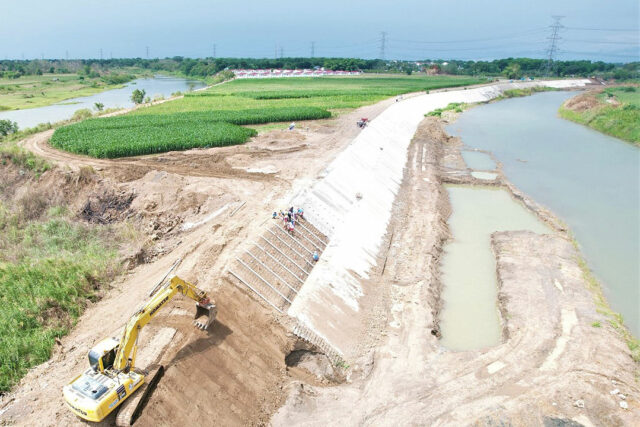
The Department of Public Works and Highways (DPWH) has suspended the bidding process for all locally funded projects, in line with the government’s ongoing investigation into alleged irregularities in flood control projects.

“I will order today a pause to all the ongoing bidding of all locally funded projects nationwide,” Public Works and Highways Secretary Vivencio B. Dizon said during a press briefing on Wednesday.

The suspension will be in effect for two weeks and will not apply to foreign-funded projects.

“All foreign-assisted projects will continue because I am complacent that foreign funders are monitoring it, but all projects currently being auctioned by national and regional are on pause,” he said.

The decision follows the government’s ongoing probe into reported anomalies in flood control projects under the DPWH.

The department has submitted a list of over 9,000 projects completed between July 2022 and May 2025. Of these, 160 projects have undergone validation, with 15 reported as missing or unlocated, according to former DPWH Secretary Manuel M. Bonoan.–Ashley Erika O. Jose

Customs secures 12 luxury vehicles of Discayas

The Bureau of Customs recovered 12 luxury vehicles linked to the Discaya family following a court-ordered search operation in Pasig City, Sept. 2, 2025. — BUREAU OF CUSTOMS

The Philippine Bureau of Customs (BoC) said on Tuesday it had recovered all 12 luxury vehicles linked to the Discaya family, following a search operation in Pasig City.

In a statement issued late Tuesday, the BoC confirmed that the 10 vehicles, initially reported missing, have now been accounted for following a day-long search operation. The search was conducted under a warrant issued by the Regional Trial Court of Manila, Branch 18.

Earlier in the day, the BoC seized only two units: a Toyota LC300 3.3 V6 ZX AT SUV 2024 and a Maserati Levante Modena 2022, from the Discaya compound.

At around 9 p.m., the agency said seven more vehicles were surrendered and secured at the compound of St. Gerrard Construction General Contractor and Development Corp. in Pasig.

These include a Rolls Royce Cullinan 2023, Bentley Bentayga, Mercedes Benz G-Class (Brabus G-Wagon), Mercedes AMG G 63 SUV 2022, Toyota Tundra 2022, Toyota Sequoia, and Cadillac Escalade ESV 2021.

Commissioner Ariel F. Nepomuceno added that the last three vehicles — Mercedes Benz G 500 SUV 2019, GMC Yukon Denali SUV 2022 (Gas), and Lincoln Navigator L 2024 — are currently in authorized service centers for repair and will subsequently be surrendered to the BoC.

All vehicles have been sealed and are under 24-hour surveillance by BoC personnel and the Philippine Coast Guard, the agency said.

Mr. Nepomuceno said the Discaya family complied with the bureau’s directive.

“With all twelve (12) luxury vehicles now accounted for, the BoC continues to verify their importation records to determine compliance with customs laws,” it said.

The BoC said should discrepancies be established, appropriate enforcement and legal actions will be undertaken pursuant to the Customs Modernization and Tariff Act (CMTA).

The Discaya-link firms, such as Omega & Alpha Construction and St. Timothy Construction, were among the top 15 flood control contractors earlier disclosed by President Ferdinand R. Marcos Jr. that cornered P100 billion of flood control projects since 2022.

Finance Secretary Ralph G. Recto earlier estimated that corruption related to flood control projects has cost the economy between P42.3 billion and P118.5 billion in economic losses since 2023. — Aubrey Rose A. Inosante

Coffee roasters hike prices in Brazil as raw bean costs surge

STOCK PHOTO | Image by Kelly Sikkema from Unsplash

LONDON/NEW YORK – Coffee roasters 3 Coracoes and Melitta are raising prices for their products in Brazil, the world’s second-largest coffee consumer behind the US, according to documents sent to clients and seen by Reuters.

A joint venture between Brazilian company Sao Miguel and Israeli group Strauss, 3 Coracoes said it was increasing prices for roast and ground coffee by 10% and for instant coffee by 7% as of September 1.

Melitta South America, also a major player in Brazil, said it was increasing prices by 15% as of September 1.

The two companies, which cited rising raw bean prices, volatility and climate issues as reason for the price hike, did not immediately answer requests for comment.

Global prices for raw arabica beans have risen more than 20% this year after soaring 70% last year, as top grower Brazil experienced another poor crop due to adverse weather.

More recently, the US move to slap 50% tariffs on imports from Brazil boosted prices further, as roasters in the world’s top coffee drinker raided existing stockpiles.

Raw bean prices account for about 40% of the wholesale cost of a bag of roast and ground coffee, on average, meaning roasters all over the world will be facing pressure to raise prices.

Having previously hiked roast and ground prices by 11% in January and 10% in December, 3 Coracoes raised them by 14.3% on March 1. Melitta increased prices by 25% in December.

There was a brief price decrease in Brazil’s coffee retail in August, industry group ABIC had said, as futures prices fell from record highs earlier in the year. ABIC, however, also projected the trend would be reversed as the tariffs kicked in. That reversal is happening now.

Roasters are starting to buckle under pressure from rising costs as cash-strapped consumers are pushing back against price hikes by engaging in bargain-hunting or trading down to supermarket brands. — Reuters

Nestle plunged into crisis as CEO fired for hiding romance with staffer

ZURICH – Nestle has fired CEO Laurent Freixe after just a year in the job for concealing a romantic relationship with a subordinate, throwing the Swiss food giant into a leadership crisis that compounds a share price slump and slowing sales.

Freixe is replaced by Nespresso chief Philipp Navratil, 49, a rising star at the world’s largest food company, as it struggles to deal with the impact of US tariffs, a darkening global economic outlook and dwindling investor confidence after years of underperformance.

Laying bare wider tensions, Tuesday was a whipsaw day for global consumer companies as Japan’s Suntory parted with its CEO and Kraft Heinz announced a split and activist investor Elliott Management called for a turnaround at PepsiCo.

“The loss of two CEOs and a chairman in a year is of historic proportions for Nestle,” said Ingo Speich, head of Corporate Governance and Sustainability at Deka, a top-30 Nestle investor.

“The new CEO needs to fix the business model and bring volumes back. He needs to do better M&A and focus more on emerging markets.”

Freixe, a 63-year-old Frenchman, was sacked just over a year after his predecessor Mark Schneider was ousted for failing to turn Nestle around.

The company also said in June that Paul Bulcke, CEO from 2008 to 2016, will step down as chair in April 2026 and be replaced by Pablo Isla, a former CEO of Spanish fashion retailer Inditex.

Freixe’s dismissal follows an investigation into an undisclosed romantic relationship with a direct subordinate that breached Nestle’s code of business conduct, Nestle said late on Monday.

Shares in the maker of Nescafe instant coffee and KitKat chocolate bars closed 0.7% lower in Zurich, paring earlier losses when the stock fell as much as 3.6%.

SPEAK UP

The company said concerns about a possible relationship were first raised by staff via the company’s internal reporting channel Speak Up, although an initial investigation was unsubstantiated.

Freixe initially denied the relationship to the board, a company spokesperson said.

When staff concerns persisted, Nestle ordered an investigation, overseen by Bulcke and Isla, with the support of Swiss lawyers Baer & Karrer, Nestle said.

The report was completed in recent days, leading to a board meeting and Freixe’s dismissal on Monday.

Freixe, who spent 39 years with Nestle, will receive no exit package following his departure, the company told Reuters.

In a short statement, Bulcke thanked Freixe for his service at Nestle, but said the dismissal was a “necessary decision”.

His removal adds to a list of chief executives forced to resign following investigations into their relationships with colleagues.

Energy giant BP’s former CEO Bernard Looney and McDonald’s CEO Steve Easterbrook were both removed for failing to disclose relationships.

Swiss financial news website Inside Paradeplatz reported that Freixe met the woman in 2022, before he became CEO, when he was head of Nestle’s Latin America business.

Freixe was not immediately available to comment when contacted via email. The female subordinate, whose identity has not been made public, left Nestle over the summer, a company spokesperson said.

Swiss law does not prohibit relationships between senior executives, although most large companies – including Nestle – have internal codes of conduct that require them to be disclosed. If there is a conflict of interest, one of the people has to switch roles.

At Nestle, direct reporting relationship between family members, partners and close associates is not allowed, while indirect reporting lines are assessed on a case-by-case basis.

Corporate governance expert Peter V Kunz, from the University of Bern, said he was not familiar with Nestle’s rules, but that requirements at most public companies were broadly similar.

“In this respect, Mr Freixe’s behaviour – regardless of whether it was legal or not – seems to me to be simply stupid and incomprehensible in this day and age,” Kunz told Reuters, adding that he did not think investors had grounds for legal action against Nestle.

STABILITY SOUGHT

As price-sensitive consumers have turned to cheaper alternatives, Nestle’s shares, a bedrock of the Swiss stock exchange, have lost almost a third of their value over the past five years, underperforming European peers.

Freixe’s appointment failed to halt the slide, with the company’s shares shedding 17% during his leadership, disappointing investors.

One top-20 Nestle investor said Freixe had been a disappointment and that bringing in Navratil was an opportunity for a more ambitious overhaul.

The new CEO needs to slim down the company, cut costs and above all reduce the headcount, said the investor who declined to be named due to the sensitivity of the matter. It was also crucial that the company raise organic growth to boost volumes.

In July, Nestle launched a review of its underperforming vitamins business that could lead to the divestment of some brands after first-half sales volumes missed expectations.

AJ Bell investment director Russ Mould said that the company would likely face a period of uncertainty.

“While Navratil is also an internal appointment, he will want to put his own mark on strategy and that suggests the clock could be reset when it comes to the turnaround plan,” he said. — Reuters

Trump dismisses rumors he is in ill health

U.S. President Donald Trump — REUTERS/LEAH MILLIS/FILE PHOTO

WASHINGTON – President Donald Trump on Tuesday dismissed reports on social media that he is in ill health, saying he was busy over the Labor Day weekend giving media interviews and visiting his Virginia golf course.

“I was very active over the weekend,” Trump told reporters in the Oval Office. Asked if he was aware of the reports, he called them “fake.”

Trump, 79, in January became the oldest person to assume the U.S. presidency.

Speculation about his health swirled on the social media platform X over the weekend, with posts citing Trump’s lack of a public schedule late last week and a USA Today interview with Vice President JD Vance published on Thursday.

When asked during the interview if he was ready to assume the role of commander in chief, Vance said he was confident Trump was “in good shape” but also suggested he was prepared to step in if anything happened to the president.

Before Tuesday, Trump’s last extended exchange with reporters came during a cabinet meeting a week earlier. Trump led the more than three-hour session on August 26, his longest on-camera appearance as president.

Over the Labor Day weekend, reporters saw him leaving the White House each day to visit his golf course.

Trump underwent an extensive physical examination on April 11 at Walter Reed National Military Medical Center in suburban Washington. It found he had a normal heart rhythm and no major health problems, according to official results released by the White House.

On July 17, White House spokeswoman Karoline Leavitt said Trump was experiencing swelling in his lower legs and bruising on his right hand after photos showed him with swollen ankles and makeup covering part of his hand.

His physician, Sean Barbabella, said in a letter released by the White House that tests confirmed the leg issue was due to “chronic venous insufficiency,” a benign and common condition, especially in people over 70.

The doctor said the bruising on Trump’s hand was consistent with minor soft tissue irritation from frequent handshaking and aspirin use, which Trump takes as part of a “standard cardiovascular prevention regimen.”

Since then, the White House has played down concerns about Trump’s health, without detailing how the leg issue is being treated. — Reuters

LPA likely to become tropical depression

PHILIPPINE STAR/MIGUEL DE GUZMAN

One of the low-pressure areas (LPAs) being monitored has a ‘high’ chance of developing into a tropical depression within 24 hours, but its effect on the country is not expected, the state weather bureau said on Wednesday.

At a 5 a.m. briefing, the Philippine Atmospheric, Geophysical, and Astronomical Services Administration (PAGASA) said that the LPA is likely to be the first tropical cyclone in September and will be named “Kiko.”

It was located 1,190 kilometers east-northeast of Northern Luzon and is expected to exit the Philippine Area of Responsibility (PAR).

“It is already quite far from our landmass, and at present, it no longer has any effect or direct effect on any part of the country,” Loriedin Dela Cruz-Galicia said in a press briefing in Tagalog.

Meanwhile, PAGASA said the southwest monsoon (Habagat) is still expected to affect large parts of the country, bringing heavy rains, particularly in the western section. — Edg Adrian A. Eva

Peso to rise as Fed woes drag dollar

BW FILE PHOTO

THE PHILIPPINE PESO is expected to end the year stronger against the US dollar as the greenback remains under pressure due to US President Donald J. Trump’s continued attacks against the US Federal Reserve.

MUFG Global Markets Research said they expect the peso to rise to the P56 level in the coming months as global investors remain bearish on the US dollar.

“We have adjusted our PHP forecast slightly stronger and see USD/PHP moving towards the P56 levels (from P56.50 levels previously). The key reason for the forecast change is mainly global rather than local, with our G10 team now seeing more US dollar weakness with increasing concerns around President Trump’s attack on Fed independence,” it said in its Foreign Exchange Outlook report for September.

On Tuesday, the peso closed at P57.51 versus the dollar, plunging by 35 centavos from Monday’s finish of P57.16. This was its worst showing in nearly a month or since it ended at P57.63 against the greenback on Aug. 5.

Year to date, the local unit is still up by 33.5 centavos or 0.58% from its end-2024 close of P57.845.

According to its latest forecasts, the research firm expects the peso to close this quarter at P57 versus the dollar and strengthen further to end 2025 at P56.50. It sees the local unit then rising to P56 against the greenback in the first half of 2026.

MUFG Global Markets Research said concerns over the Fed will continue to be a key focus for investors.

“The decision of President Trump on Aug. 25 to fire Fed Governor Lisa Cook has dramatically escalated the risks associated with threats to Fed independence… Whatever the outcome, it is clear that Mr. Trump is willing to act aggressively and that to us underlines the need for investors to price this risk into US assets. The financial market indifference so far is unlikely to last and this is likely to be a prominent theme throughout the remainder of Trump’s term in office… We have therefore lowered our US dollar forecasts to reflect these increased risks,” it said.

Mr. Trump has been exerting relentless pressure on the Fed to cut interest rates and publicly discussed firing Fed Chairman Jerome H. Powell, whom he called a “numbskull” and a “moron,” for not giving in to his demands, Reuters reported.

Upping this battle, Mr. Trump last month attempted to fire Ms. Cook, setting off a critical legal test over the Fed’s ability to function without political interference, the cornerstone of modern central banking.

Mr. Trump is demanding lower rates to boost investment and give mortgage borrowers relief over some of the highest interest rates in the developed world.

But politically motivated rate cuts would signal that the Fed is willing to tolerate higher inflation, eroding trust among investors, who hold trillions of dollars of US assets, banking on policy certainty from the Fed.

Such a loss of confidence could then push up longer-term borrowing costs, which are more relevant than short-term central bank rates for mortgages and business loans, potentially undoing any Fed effort to ease the financing burden.

Philippine Institute for Development Studies Senior Research Fellow John Paolo R. Rivera said that while Mr. Trump’s continued efforts to undermine the Fed could weigh on the dollar and benefit the peso and other emerging-market currencies, this may not be felt unless the market sees “concrete Fed policy shifts or political pressure affecting rate cuts.”

“For now, the peso remains anchored near P57 due to cautious investor sentiment and persistent trade and fiscal pressures. A sustained shift to P56 level would require both global US dollar weakness and improved local macro signals, including moderating inflation and consistent FDI (foreign direct investment) or remittance flows,” Mr. Rivera said.

DOMESTIC SUPPORT
MUFG Global Markets Research likewise said that the peso will be supported by a broadly positive economic environment.

“From a domestic perspective, many of the positive factors we mentioned have not changed, and as such, we remain comfortable in our view for PHP to strengthen modestly against the dollar,” it said.

Inflation is expected to remain benign amid modest rice prices and “low upside risks” to transport and electricity costs, it said.

“The recent temporary ban on rice imports is a key risk, but with domestic rice inventories still high, the impact should be manageable.”

Philippine headline inflation averaged 1.7% in the first seven months, well below the Bangko Sentral ng Pilipinas’ (BSP) 2-4% annual target and matching its forecast for the year.

Rice inflation has been decelerating amid the government’s measures to curb rising prices of the staple, including lowering tariffs.

The 60-day suspension of rice imports started on Sept. 1 and will end on Oct. 30. It covers imports of regular milled and well-milled rice but excludes varieties that are not commonly produced locally.

It added that it sees the BSP cutting benchmark interest rates by 25 basis points (bps) again in the fourth quarter to bring the terminal rate to 4.75%.

The BSP last week cut the target reverse repurchase rate by 25 bps for a third straight meeting to 5%. It has now slashed borrowing costs by a total of 150 bps since the start of its easing cycle in August 2024.

BSP Governor Eli M. Remolona, Jr. said the latest move puts the policy rate at a “sweet spot” in terms of both inflation and output, signaling that the central bank is nearing the end of its rate-cut cycle.

Still, he left the door open to one last reduction within this year to support the economy if needed.

“Second, we expect actual FDI to improve, reflecting the surge in FDI approvals already seen especially in the renewable energy space,” MUFG Global Markets Research said. “Third, the pipeline of public and private infrastructure projects remains strong.” 

It added that the effect of the 19% “reciprocal” tariff rate on Philippine exports to the US is to be minimal as the levy was mostly at par with those slapped on competitors, and with the economy being domestic oriented.

“Details of upcoming sectoral tariffs on semiconductors will nonetheless be important for the Philippines’ exports given the country’s focus on lower value-added testing and assembly activity.”

Mr. Trump has threatened to impose a 100% tariff on semiconductors.

In June, the United States was the top destination for Philippine-made goods amounting to $1.22 billion, 35.2% higher from the same month a year ago. Around 53% of the Philippines’ total exports to the US were semiconductors and electronics. — BVR with Reuters and a report from K.K. Chan

Economic losses from anomalous flood control projects likely hit up to P119 billion, Recto says

PHILIPPINE STAR/MIGUEL DE GUZMAN

By Aubrey Rose A. Inosante, Reporter

CORRUPTION related to flood control projects have cost the Philippines up to P118.5 billion in economic losses since 2023, Finance Secretary Ralph G. Recto said on Tuesday.

“Due to ‘ghost’ projects, our economy lost between P42.3 billion and P118.5 billion from 2023 to 2025,” Mr. Recto said in his presentation during a Senate Finance Committee hearing.

These estimated average economic losses are based on information from “anecdotal accounts” that put the extent of corruption in the Department of Public Works and Highways’ (DPWH) flood control projects at around 25% to 70% of the total project cost, the presentation showed.

These could have translated to 95,000 to 266,000 jobs for Filipinos, Mr. Recto said.

These allegedly anomalous projects not only drained public funds but also stunted economic growth in the previous years, the Finance chief said.

Philippine gross domestic product (GDP) grew by 5.5% in 2023 and 5.7% in 2024.

“We just learned that the extent of the problem with flood control is this big. Maybe if that money was spent better, we could have grown by 6%,” Mr. Recto told reporters.

“It’s a waste. The economy would have grown at a faster rate. If the money wasn’t wasted, more jobs would have been created.”

He added that the controversy could also dampen investor confidence in the Philippines.

Still, the economy remains on track to meet the government’s 5.5%-6.5% growth target for 2025 despite higher tariffs and adverse weather conditions, Mr. Recto said.

Philippine GDP grew by 5.5% in the second quarter, bringing the first-semester average to 5.4%, a tad below the state’s goal.

The government has launched a widespread probe into alleged anomalies in multibillion-peso flood control programs, which have long been flagged for irregularities as the Philippines faces more weather disturbances.

The DPWH is among the largest recipients of the national budget, securing more than P900 billion this year, a substantial share of which is earmarked for flood control projects nationwide.

President Ferdinand R. Marcos, Jr. earlier said that some P100 billion of the total P545 billion in government funds that were allocated for flood control projects nationwide since 2022 were cornered by just 15 contractors.

Over the weekend, Mr. Marcos appointed former Transportation Secretary Vivencio “Vince” B. Dizon as the new Public Works chief after the resignation of Manuel M. Bonoan.

The President also set up an independent commission to investigate flood control anomalies to further reinforce accountability.

Mr. Recto said the government’s tax collecting agencies are ramping up their probe into the contractors that benefited from these allegedly anomalous projects.

The Bureau of Customs on Tuesday issued a search warrant for the luxury vehicles of the Discayas in Pasig City, but only two out of 12 cars were found during the search.

Among the top 15 flood-control contractors earlier identified by Mr. Marcos were Omega & Alpha Construction and St. Timothy Construction, both reportedly linked to former Pasig mayoral candidate Cezarah Rowena “Sarah” Discaya.

“The Bureau of Customs takes the issue of the missing luxury cars of Discaya with utmost seriousness. We will ensure that these vehicles are located without delay, and if discrepancies are uncovered, all taxes and duties will be collected in full,” Customs Commissioner Ariel F. Nepomuceno said in a statement.

Mr. Nepomuceno has warned that hiding or abetting the concealment of these cars will be punished to the “fullest extent of the law.”

Meanwhile, the Bureau of Internal Revenue has served letters of authority to the tagged contractors.

Analysts have long flagged corruption as one of the biggest risks to Philippine economic growth.

Philippine Institute for Development Studies Senior Research Fellow John Paolo R. Rivera said corruption is not just a governance issue but also a direct economic cost.

“Losses in flood-control projects represent funds that could have gone to infrastructure, jobs, and social services,” Mr. Rivera said in a Viber message.

He described Mr. Recto’s estimate as “realistic,” citing the multiplier effects of efficient public spending.

“The challenge now is to tighten transparency and accountability so that public funds truly translate into inclusive growth,” he added.

Foundation for Economic Freedom President Calixto V. Chikiamco said all kinds of corruption end up as economic losses.

“Corruption exists everywhere, but it hasn’t stopped Vietnam from growing fast,” Mr. Chikiamco said in a Viber message.

Meanwhile, Filomeno S. Sta. Ana III, coordinator of Action for Economic Reforms, called Mr. Recto’s statement “hypocritical” and “deceiving” as fund transfers from state-run agencies — some of which were stopped by the Supreme Court — were approved under his watch.

“Find the link between the infra projects tainted with corruption and the transfer of PhilHealth (Philippine Health Insurance Corp.) and PDIC (Philippine Deposit Insurance Corp.) funds that enabled the funding of these highly questionable projects,” he said in a Viber message.

In 2024, the government initiated the transfer of P89.9 billion from PhilHealth to the National Treasury, labeling these as “excess funds.” The money was supposed to fund various projects, including infrastructure and social services.

The High Court in October issued a temporary restraining order to stop the last tranche of transfers worth P29.9 billion.

Meanwhile, in January, the PDIC remitted excess funds amounting to P107.23 billion to the Treasury.


PHL attracting more investments from ASEAN neighbors — BoI

PHILIPPINE STAR/ MICHAEL VARCAS

By Justine Irish D. Tabile, Reporter

INVESTMENT PLEDGES from Association of Southeast Asian Nations (ASEAN) countries have reached P251.98 billion since 2020, reflecting the region’s increasing confidence in the Philippines, the Board of Investments (BoI) said.

“As we build stronger trade and investment ties with our ASEAN neighbors, these numbers reflect the growing confidence of foreign investors in the Philippines as a place for business growth,” Trade Secretary and BoI Chairperson Ma. Cristina A. Roque said in a statement on Tuesday.

“We will keep working to create a stable and welcoming business environment, one that brings in more investments and opens up real opportunities for Filipinos,” she added.

According to the BoI, Singapore has been the biggest source of investment pledges since 2020, accounting for P245.97 billion of the total. The other top sources were Thailand with P4.34 billion, Malaysia with P1.65 billion, and Indonesia with P12.27 million.

In terms of industries, around P170 billion of these investments went to the information and communication sector, while P74.2 billion went to the power sector.

“The BoI-approved projects from ASEAN investors, particularly those in the information and communication and the renewable energy sectors, align with the Philippines’ push for smart and sustainable manufacturing and services,” said BoI Executive Director Evariste M. Cagatan.

The other top sectors were manufacturing (P5.58 billion), administrative and support services (P1.41 billion), and agriculture, forestry, and fishing (P930 million).

“Collectively, these projects are projected to generate 15,358 new jobs for Filipinos from 2020 up to July 2025,” the BoI said.

Meanwhile, from January to July this year, total approved investment pledges from the ASEAN region reached P58.07 billion, according to the agency.

Citing a report from the Bangko Sentral ng Pilipinas, the BoI said there is also a sustained growth in foreign direct investment (FDI) inflows from Southeast Asian countries.

In the first seven months, net FDI from ASEAN reached $95.78 million, with investments from Singapore accounting for $63.61 million and Malaysia accounting for $31.56 million.

Moving forward, the BoI said the country’s participation in the ASEAN Investment Forum in Kuala Lumpur next month will help to further boost investments from the region.

The event is expected to showcase investment-ready projects under the ASEAN Regional Investment Promotion Action Plan 2025-2030 spanning biofuels, carbon capture and storage, medical devices, solar photovoltaic equipment, and regional supply linkages.

High production costs and labor shortages in their own countries are causing ASEAN economies to invest in the Philippines, Rizal Commercial Banking Corp. Chief Economist Michael L. Ricafort said in a Viber message.

He said the Philippines’ large and young population of over 114 million and leadership in the business process outsourcing sector also make it a viable market for ASEAN investors.

“The Philippines can also be an alternative, lower-cost destination for heavy industries such as shipbuilding, due to being cheaper and having a greater labor supply, such as engineers at a lower cost,” he said.

“It is also the 10th largest market in terms of sales for some of the world’s largest consumer goods companies, making it viable for production facilities, especially for perishable products.”

Philippine Institute for Development Studies Senior Research Fellow John Paolo R. Rivera said the increasing investments from ASEAN countries reflect deepening regional integration and confidence in the Philippines as part of intra-ASEAN supply chains.

“The relocation of production capacities, regional hedging against global uncertainties, and proximity advantages are likely drivers,” he said in a Viber message.

The US is imposing sweeping tariffs on goods coming from its major trading partners, including the Philippines and other ASEAN member states.

Mr. Rivera said ongoing infrastructure development in the Philippines under the “Build Better More” program has also enhanced the country’s attractiveness to regional investors.

“Additionally, the Regional Comprehensive Economic Partnership and ASEAN-Australia-New Zealand Free Trade Area frameworks make it easier for ASEAN firms to view the Philippines as a strategic node for manufacturing, logistics, and services expansion,” he said.

“However, these may be negated by hounding corruption issues.”

Socialized housing remains unaffordable despite expanded 4PH program — study

PHILIPPINE STAR/ BOY SANTOS

By Beatriz Marie D. Cruz, Reporter

POOR FILIPINOS will likely remain unable to afford housing even under the government’s expanded flagship program due to low wages and the lack of job security, according to a research paper published by the University of the Philippines Center for Integrative and Development Studies. 

“While the Expanded 4PH provides diverse housing options, it may still fall short in improving affordability and accessibility for the poorest and is unlikely to address broader structural barriers without broader structural reforms,” according to the study authored by Rafael Vicente V. Dimalanta, Vincent Eugenio, Abigail Roa, and Jay-R Panagsagan.

“The diversification of modalities has yet to resolve the core accessibility and affordability challenges of social housing for the poorest, shaped by broader structural issues such as low wages, precarious work, and weak land governance,” it said.

The study estimated that it would cost a total of P8,324.06 monthly to avail oneself of a housing unit under the expanded Pambansang Pabahay Para sa Pilipino (4PH) Program.

This comes as a mid-range high-rise unit under the 4PH Program that costs P1.5 million will require a monthly amortization of P6,324.06 for the first 10 years, according to government data. The researchers said a 4PH beneficiary may incur further additional expenses related to high-rise living, such as maintenance and operational fees, which could amount to P2,000.

Citing data from the Philippine Statistics Authority, the study noted that Filipino households belonging to the bottom 30% of income deciles — the “primary beneficiaries” of 4PH — earn monthly incomes of only P11,940. (first decile), P15,217.50 (second decile), and P17,369.17 (third decile), respectively.

“Based on these figures, the housing payment for a mid-priced Expanded 4PH vertical unit would consume 59.35% of total household expenditures for the bottom 10% income earners, 49.06% for the bottom 20%, and 43.99% for the bottom 30%,” according to the study.

Many of these poor households work in the informal economy, receiving low or irregular wages while working under a short-term or contractual tenure.

The bottom 30% segment is also linked to informal settler families who cannot afford to enter the formal housing market, it added.

“Given the income and expenditure profiles of the poorest households in the lowest 30% income deciles, it is evident that the combined costs associated with the Expanded 4PH significantly exceed the financial capacity of the program’s priority beneficiaries,” according to the researchers.

Launched in 2022, the 4PH seeks to end the country’s housing backlog by building six million housing units by 2028. However, only 1,900 units have been completed under the program since its launch, Human Settlements and Urban Development Secretary Jose Ramon P. Aliling told congressmen on Monday.

The government has kept a “manageable” goal of building 300,000 houses by 2028, Mr. Aliling said, but noted that it cannot hit the target if the 4PH program itself is not strengthened.

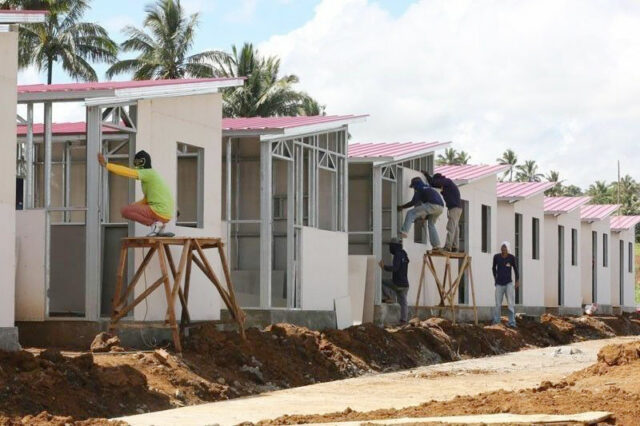
To better support beneficiaries, the expanded 4PH program allowed both vertical and horizontal or subdivision-type housing options.

It also included rental and incremental housing to consider beneficiaries’ financial situation and revived the community mortgage financing program by the Social Housing Finance Corp.

To become a 4PH beneficiary, an individual must be a member of the Home Development Mutual Fund or Pag-IBIG Fund.

However, the study noted that this poses a barrier, especially for informal workers with stagnant and low wages.

“The program’s financing structure and restrictive criteria thus reinforce exclusion undermining its stated goal of prioritizing the poorest who are most in need of housing,” the researchers said.

The study recommended aligning the program’s socialized housing amortization and rent with the financial capacity of the poorest households to ensure that their basic needs are not compromised.

It also cited the need to increase the government’s housing budget and lessen its dependence on the private sector in constructing 4PH units to make them more affordable to poor beneficiaries.

The government must also make its eligibility criteria more flexible for irregular or informal workers, ensure the participation of urban poor groups in planning and implementation processes, and address bureaucratic delays, it said.

“These recommendations should be complemented by strengthened land governance to control speculation and the rapid escalation of land prices, which significantly hinders the government’s ability to make land available for social housing, and eventually undermines the affordability of land for social housing for the poorest.”

Maynilad’s Oct. IPO decision signals investor confidence, analysts say

MAYNILADWATER.COM.PH

By Sheldeen Joy Talavera, Reporter

THE DECISION of Maynilad Water Services, Inc. to proceed with its planned P45.77-billion initial public offering (IPO) in October signals renewed investor confidence in the local capital markets, analysts said.

“Maynilad’s decision to push through with its IPO is a welcome development that signals renewed investor confidence in local capital markets,” Peter Louise D. Garnace, equity research analyst at Unicapital Securities, Inc., told BusinessWorld on Aug. 30.

“We see healthy demand from both institutional and retail investors, viewing it as a defensive play,” he added.

Based on the company’s latest preliminary prospectus, Maynilad has set the offer period from Oct. 16 to Oct. 22. Listing on the Philippine Stock Exchange is targeted for Oct. 30.

Maynilad’s IPO consists of up to 1.66 billion common shares, including up to 24.9 million primary shares and 249.05 million overallotment option shares, priced at up to P20 apiece.

The secondary shares will be sold by the water provider’s principal shareholder Maynilad Water Holding Company, Inc.

Proceeds from the primary offering are allocated for capital expenditures and general corporate purposes. Maynilad will not receive proceeds from the sale of secondary shares.

“As one of the largest IPOs in the local bourse, we see Maynilad’s listing to boost trading activity in a rather anemic market,” Mr. Garnace said.

“The success of Maynilad’s listing could act as a catalyst, potentially unlocking a pipeline of companies waiting for more favorable market conditions.”

Juan Paolo E. Colet, managing director at China Bank Capital Corp., said positive investor interest in Maynilad’s IPO is expected to translate into “healthy demand once the offer has been set.”

“Orders should be particularly strong if the final IPO price implies a dividend yield of around 4.5 to 5%,” Mr. Colet said.

“Maynilad is a defensive stock that should do well across market cycles. It also helps that rival Manila Water’s stock price has been performing well, so many investors have a favorable view of the sector,” he added.

The company moved the listing date of its IPO to no later than end-October from the initial schedule of July 17, citing potential demand from cornerstone investors.

In July, Maynilad Chairman Manuel V. Pangilinan said the company had secured a firm commitment from one of its two intended cornerstone investors to participate in the IPO.

Under the terms of its legislative franchise, Maynilad is required to offer at least 30% of its outstanding capital stock to the public by January 2027.

Maynilad’s IPO will be the second for the year, following Cebu-based fuel retailer Top Line Business Development Corp.’s P732.6-million offering in April.

Pangilinan-led conglomerate Metro Pacific Investments Corp., which holds a majority stake in Maynilad, is one of three Philippine subsidiaries of First Pacific Co. Ltd., alongside Philex Mining Corp. and PLDT Inc.

Hastings Holdings, Inc., a unit of PLDT Beneficial Trust Fund subsidiary MediaQuest Holdings, Inc., has an interest in BusinessWorld through the Philippine Star Group, which it controls.

SMC disburses P471 million from bond proceeds for Bulacan airport

SAN MIGUEL CORP.

SAN MIGUEL CORP. (SMC) has invested P471.12 million from its P20-billion fixed-rate bond issuance in the New Manila International Airport (NMIA) project in Bulacan.

In a disclosure to the stock exchange on Tuesday, the conglomerate said the disbursement represents an additional investment in the airport project.

To date, SMC has released a total of P16.91 billion from the bond proceeds, leaving a balance of P2.82 billion from the net proceeds of the offering.

The bond issue is part of the company’s fundraising program to finance infrastructure projects, including its flagship NMIA, which is targeted to help ease congestion at Ninoy Aquino International Airport.

SMC, through its unit San Miguel Aerocity, Inc., is developing a P740-billion airport project spanning 2,500 hectares in Bulacan. The company said it aims to build a world-class aerotropolis that can accommodate up to 100 million passengers each year.

SMC earlier said that the airport’s commercial opening has been pushed back to 2028 because of construction delays.

In a separate disclosure on Tuesday, SMC said its board had approved the redemption of 223.33 million Subseries “2-F” preferred shares at P75 apiece.

The company said the redemption, approved on Aug. 7, will take effect on Sept. 21, which is an optional redemption date under the terms of the issuance and also marks the 10th anniversary of the securities’ issuance.

“Under the terms and conditions of the offering of the Preferred Shares, the Board of Directors of the Company may redeem the Preferred Shares commencing on the seventh anniversary of the issue date, which is September 21, 2022, and on the last day of any subsequent dividend period thereafter,” SMC said.

Proceeds from the redemption will be paid on Sept. 22, as Sept. 21 falls on a Sunday, to stockholders of record as of Sept. 10.

The company added that the last dividend payment for holders of the Series 2-F preferred shares, with record date Sept. 22, will be paid on Oct. 3.

SMC shares fell by 2.35% at P58.30 apiece on Tuesday. — Alexandria Grace C. Magno

ADVERTISEMENT
ADVERTISEMENT