Home Blog Page 1053

Trump administration takes tariffs fight to the US Supreme Court
REUTERS

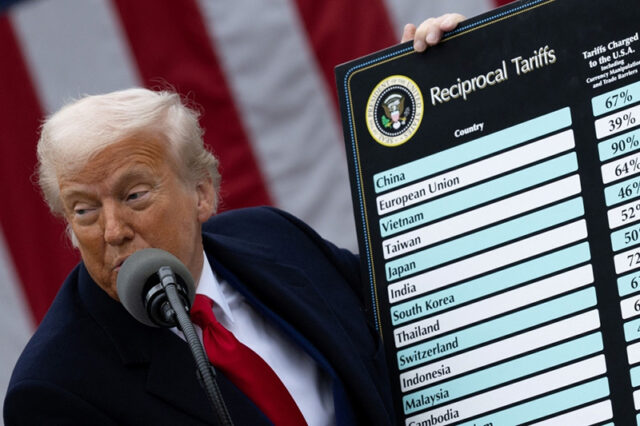
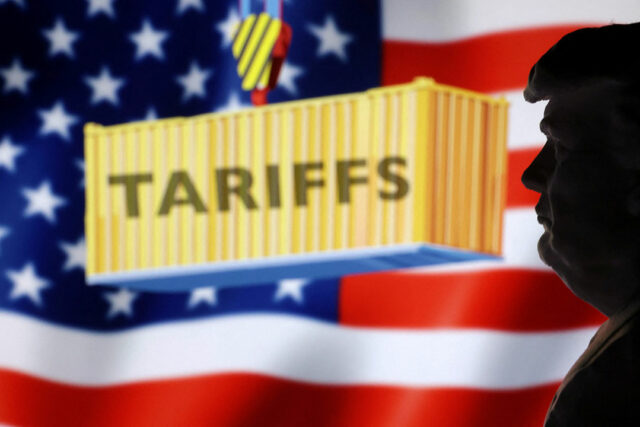
WASHINGTON — US President Donald J. Trump’s administration asked the US Supreme Court on Wednesday to swiftly hear a bid to preserve his sweeping tariffs pursued under a 1977 law meant for emergencies after a lower court invalidated most of the levies that have been central to the Republican president’s economic and trade agenda.

The Justice department appealed an Aug. 29 ruling by a federal appeals court that the President overstepped his authority in invoking the law known as the International Emergency Economic Powers Act (IEEPA), undercutting a major Trump priority in his second term.

The administration asked the court to fast track its review by deciding whether to take up the case by Sept. 10 and holding arguments in November. The court’s new term begins on Oct. 6.

“The stakes in this case could not be higher,” Solicitor General D. John Sauer said in a written filing.

“The President and his cabinet officials have determined that the tariffs are promoting peace and unprecedented economic prosperity, and that the denial of tariff authority would expose our nation to trade retaliation without effective defenses and thrust America back to the brink of economic catastrophe,” Mr. Sauer added.

Lawyers for small businesses challenging the tariffs are not opposing the government’s request for a Supreme Court hearing. One of the attorneys, Jeffrey Schwab of Liberty Justice Center, said in a statement they were confident they would prevail.

“These unlawful tariffs are inflicting serious harm on small businesses and jeopardizing their survival. We hope for a prompt resolution of this case for our clients,” Mr. Schwab said.

The levies are part of a trade war instigated by Mr. Trump since he returned to the presidency in January that has alienated trading partners, increased volatility in financial markets and fueled global economic uncertainty.

Mr. Trump has made tariffs a pillar of US foreign policy, using them to exert political pressure and renegotiate trade deals and extract concessions from countries that export goods to the United States.

The litigation concerns Mr. Trump’s use of IEEPA to impose what he calls “reciprocal” tariffs to address trade deficits in April, as well as separate tariffs announced in February as economic leverage on China, Canada and Mexico to curb the trafficking of fentanyl and illicit drugs into the US.

IEEPA gives the President power to deal with “an unusual and extraordinary threat” amid a national emergency and had historically been used for imposing sanctions on enemies or freezing their assets. Prior to Mr. Trump, the law had never been used to impose tariffs.

Mr. Trump’s Department of Justice has argued that the law allows tariffs under emergency provisions that authorize a president to “regulate” imports or block them completely.

The appeals court ruling stems from two challenges, one brought by five small businesses that import goods, including a New York wine and spirits importer and a Pennsylvania-based sport fishing retailer. The other was filed by 12 US states — Arizona, Colorado, Connecticut, Delaware, Illinois, Maine, Minnesota, Nevada, New Mexico, New York, Oregon and Vermont — most of them governed by Democrats.

The Constitution grants Congress, not the President, the authority to issue taxes and tariffs, and any delegation of that authority must be both explicit and limited, according to the lawsuits.

The US Court of Appeals for the Federal Circuit in Washington, DC, agreed, ruling that the President’s power to regulate imports under the law does not include the power to impose tariffs.

“It seems unlikely that Congress intended, in enacting IEEPA, to depart from its past practice and grant the President unlimited authority to impose tariffs,” the appeals court said in its 7-4 decision.

The appeals court also said that the administration’s expansive view of IEEPA violates the Supreme Court’s “major questions” doctrine, which requires executive branch actions of vast economic and political significance to be clearly authorized by Congress.

Treasury Secretary Scott Bessent, in a declaration filed with the Justice department’s appeal, urged the Supreme Court to move quickly, asserting that the appeals court’s decision undermines Mr. Trump’s ability to “conduct real-world diplomacy and his ability to protect the national security and economy of the United States.”

The New York-based US Court of International Trade, which has jurisdiction over customs and trade disputes, previously ruled against Mr. Trump’s tariff policies on May 28.

Another court in Washington ruled that IEEPA does not authorize Mr. Trump’s tariffs, and the government has appealed that decision as well. At least eight lawsuits have challenged Mr. Trump’s tariff policies, including one filed by the state of California. — Reuters

North Korea wipes traces of Kim Jong Un after Beijing meeting with Putin

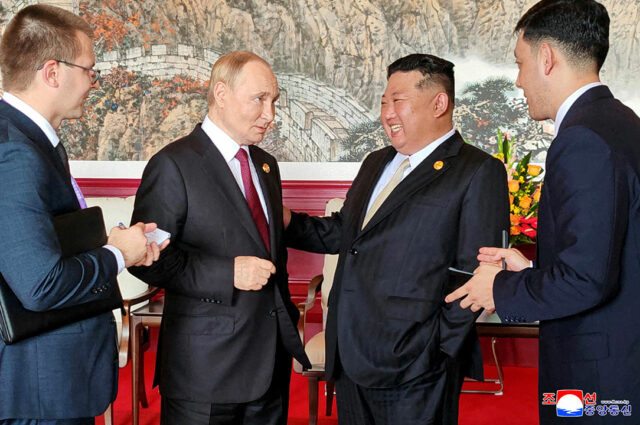
NORTH KOREAN leader Kim Jong Un speaks with Russian President Vladimir Putin during their visit to Beijing, China, Sept. 3, in this picture released by the Korean Central News Agency. — KCNA VIA REUTERS

SEOUL — After Kim Jong Un met with Russian President Vladimir Putin in Beijing, North Korean staffers carefully wiped off items touched by the country’s supreme leader, in what analysts say is part of a suite of security measures to counter foreign spies.

Even with the appearance of budding friendship between Kim and Putin, footage on Wednesday showed the reclusive state’s extraordinary measures to conceal any clues about Mr. Kim’s health.

In a post on Telegram, Kremlin reporter Alexander Yunashev shared video of Mr. Kim’s two staff members meticulously cleaning the room in the Chinese capital where Mr. Kim and Mr. Putin met for more than two hours.

The chair’s backrest and armrests were scrubbed and a coffee table next to Mr. Kim’s chair was also cleaned. Mr. Kim’s drinking glass was also removed.

“After the negotiations were over, the staff accompanying the head of the DPRK carefully destroyed all traces of Kim’s presence,” the reporter said, referring to North Korea.

After talks in the room, Mr. Kim and Mr. Putin left for a tea meeting and bid a warm farewell to each other.

As during previous foreign trips, Mr. Kim packed his own toilet on a signature green train that took him to Beijing to hide health clues, Japan’s Nikkei newspaper reported, citing South Korean and Japanese intelligence agencies.

Such measures are standard protocol since the era of Mr. Kim’s predecessor, his father Kim Jong Il, said Michael Madden, a North Korea leadership expert with the US-based Stimson Center.

“The special toilet and the requisite garbage bags of detritus, waste and cigarette butts are so that a foreign intelligence agency, even a friendly one, does not acquire a sample and test it,” Mr. Madden said.

“It would provide insight into any medical conditions affecting Kim Jong Un. This can include hair and skin tags,” he said.

In 2019, after a Hanoi summit with US President Donald J. Trump, Mr. Kim’s guards were spotted blocking the floor of his hotel room to clean the room for hours, and taking out items including a bed mattress.

Mr. Kim’s team has been spotted meticulously cleaning items before he uses them as well.

During his 2018 meeting with then South Korean President Moon Jae-in, North Korean security guards sprayed a chair and a desk with sanitizer and wiped it down before Mr. Kim came to sit.

Before he sat at another summit with Mr. Putin in 2023, his security team wiped his chair down with disinfectant, and vigorously checked to make sure the chair was safe, with one of the guards using a metal detector to scan the seat, video footage showed. Reuters

Indonesian protests draw regional solidarity with food orders for delivery drivers

REUTERS

KUALA LUMPUR/JAKARTA — When Indonesian driver Rizky Azhar received a food delivery order from Malaysia, he was surprised by both the location and the accompanying note, which said the plate of smoked beef with rice was for him.

The order was part of a surge in food purchases from other Southeast Asian countries for motorcycle taxi and delivery drivers in Indonesia, a show of solidarity for week-long protests around income inequality and generous perks for lawmakers.

The protests spread across the country when delivery driver Affan Kurniawan was run over and killed by a police vehicle in Jakarta, placing the low wages and income precarity of ride-sharing drivers at the heart of the demonstrations.

President Prabowo Subianto has said the police and military would stand firm against the protests, which have occasionally turned violent after Affan’s death and left 10 people dead.

But the images of students and workers on the streets have attracted a wave of solidarity, with people across Southeast Asia ordering food for delivery drivers and sharing the screenshots on social media.

Over 1,100 kilometers (701.5 miles) from the Indonesian capital, Ayman Hareez Muhammad Adib decided to show his support, using the ride-hailing and food delivery app Grab to place the order that ended up with Rizky.

“The calls tell us all to contribute to what’s happening in Indonesia… to show support by sending food,” the 23-year-old Kuala Lumpur resident said.

The orders are usually accompanied by a note that reads the drivers can take the food or give it to their families.

Rizky received a similar message from Ayman on a slow Wednesday, when several schools and offices were shut in Jakarta over the protests.

“We were surprised that in recent days, some foreign nationals have shown concern for us,” he said.

On a major Jakarta street last week, hundreds of motorcycle drivers flanked a vehicle carrying Affan’s body to the cemetery. Most worked for Grab and Gojek, operated by Indonesia’s biggest tech company GoTo.

Grab has seen an uptick in orders from overseas for delivery within Indonesia over the past week, a spokesperson told Reuters, declining to say by how much or from which countries.

Tyas Widyastuti, Grab’s director of mobility and logistics, said the orders came mostly from Southeast and East Asia.

A GoTo spokesperson said the company’s “Treat Your Driver” feature “has been welcomed by customers during this period as a gesture of solidarity with driver-partners” without specifying whether orders had been placed from overseas.

Motorcycle taxis are ubiquitous across Indonesia, including in the capital Jakarta, known for some of the world’s worst traffic congestion.

In recent years, drivers have routinely protested low pay, lack of employment security and unfair practices by ride-sharing companies. GoTo and Grab have defended their business practices. — Reuters

Weather that drove Iberian wildfires is 40 times more likely to recur due to climate change, report says

PEOPLE are silhouetted against the setting sun at “El Mirador de la Alemana (The viewpoint of the German)” in Malaga, southern Spain, July 24, 2019. — REUTERS

MADRID — The hot, dry and windy conditions this summer that fueled the worst wildfires in Spain for at least three decades are 40 times more likely to recur due to human-caused climate change, according to an analysis by World Weather Attribution.

World Weather Attribution is an international collaboration that has conducted over 110 studies on the possible influence of climate change on extreme weather events.

Weather data analyzed by a group of 13 scientists found that the extreme conditions that drove last month’s fires in the northwest of the Iberian peninsula, including Portugal, were likely to recur every 15 years due to today’s climate.

The climate is 1.3 degrees Celsius (34.3 degrees Fahrenheit) warmer compared to pre-industrial levels when such events would be expected to occur every 500 years.

Forest fires ravaged more than 1 million hectares of land in the European Union this summer, with Spain and Portugal accounting for about two-thirds of that total.

The fires killed at least eight people, forced the evacuation of thousands and shut railway and motorway traffic in several areas. They coincided with a 16-day heatwave that was the most intense since records began.

“Extreme weather is becoming more frequent, but deaths and damage are preventable,” said Theodore Keeping, a researcher at the Centre for Environmental Policy Imperial College London.

“For wildfires, there’s an urgent need to control vegetation in rural areas, particularly land that has been abandoned by farmers and shepherds,” he added. “Ultimately, though, the world needs to stop burning oil, gas and coal.”

Heatwaves of similar intensity will occur every 13 years compared to every 2,500 years if there was no man-made climate change, the study found.

The scientists analyzed the “Daily Severity Rating” (DSR), a metric that considers temperature, humidity, wind speed and rain to estimate the potential intensity of a wildfire and how difficult it will be to extinguish.

The study focused on the 10 most intense days of the DSR each year and the 10 hottest days each summer in northwestern Spain and northern Portugal. — Reuters

India slashes consumption tax on hundreds of items to spur domestic demand

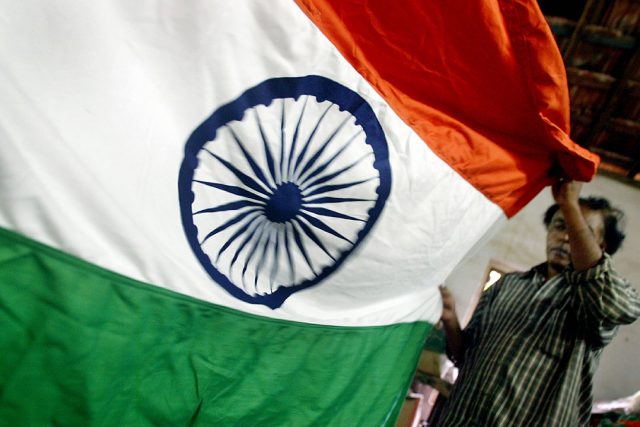
A WORKER folds an Indian flag at a workshop in India, Aug. 11, 2005. — REUTERS

NEW DELHI — Indian Finance Minister Nirmala Sitharaman on Wednesday announced tax cuts on hundreds of consumer items ranging from soaps to small cars to spur domestic demand in the face of economic headwinds from punishing US tariffs.

The goods and services tax (GST) panel approved lowering taxes on everyday items and simplifying their structure, Mr. Sitharaman, who heads the panel that includes ministers from all states, told a late-night press conference.

The GST was criticized for its complicated structure and numerous tax categories. To simplify this, the panel approved the two-rate structure of 5% and 18%, instead of four rates currently.

Mr. Sitharaman said the panel approved cuts in consumer items such as toothpaste and shampoo to 5% from 18%, and on small cars, air conditioners, and televisions to 18% from 28%.

She said the GST will be removed from all individual life insurance policies and health insurance.

Federal and state governments are estimated to lose 480 billion Indian rupees ($5.49 billion) due to the cuts that will be implemented from Sept. 22, the first day of the Hindu festival of Navratri.

Coupled with cuts in personal tax unveiled in February, the GST reductions are expected to boost consumption in the South Asian nation, whose economy grew at an unexpectedly higher pace of 7.8% in the quarter to June.

“The consumption boost in lieu of the GST rate rationalization will more than neutralize any possible revenue impact,” said Soumya Kanti Ghosh, chief economist at SBI.

“The impact on fiscal deficit will be almost insignificant or even positive.”

The panel approved a tax of 40% on “super luxury” and “sin” goods such as cigarettes, cars with engine capacity exceeding 1,500 cubic centimeters, and carbonated beverages, the minister said.

The move is expected to boost sales of fast-moving consumer goods firms such as Hindustan Unilever and Godrej Industries, and consumer electronics companies such as Samsung Electronics, LG Electronics, and Sony. Automakers such as Maruti, Toyota Motor, and Suzuki Motor are expected to be big winners.

The rush to cut the tax was triggered by Prime Minister Narendra Modi’s call for greater self-reliance in India, vowing last month to lower the GST by October to counter the US tariffs of up to 50%.

After the tax cuts announced on Wednesday, Mr. Modi said, “The wide-ranging reforms will improve lives of our citizens and ensure ease of doing business for all, especially small traders and businesses.” Reuters

Samsung launches Galaxy S25 FE, Tab S11 series

SAMSUNG PHILIPPINES

By Beatriz Marie D. Cruz, Reporter

SAMSUNG Electronics Co. has unveiled the Galaxy S25 FE smartphone, a mid-range variant of its flagship Galaxy S25 series as it seeks to widen the reach of its artificial intelligence (AI) mobile devices.  

The Galaxy S25 FE was officially launched at Samsung’s Galaxy Unpacked event held on Sept. 4 alongside its new Galaxy Tab S11 devices.

“It is the entry point into our premium Galaxy lineup, especially since it takes a lot of the flagship innovations of an S25 device,” Mark Jedwyn Que, senior product marketing manager at Samsung, said during an exclusive media preview on Aug. 28.

The Galaxy S25 FE comes in four colors: Navy, IcyBlue, JetBlack, and White. Pricing starts at P39,990 for the 128GB storage (exclusively available online), P44,990 for 256GB, while the 512GB variant costs P53,990.

The new smartphone will be available at all Samsung stores beginning Sept. 19.

Powered by One UI 8, the Galaxy S25 FE has Samsung’s popular AI features like Now Bar, Now Brief, and Circle to Search.

The Galaxy S25 FE also has improved camera features. The Object Aware Engine automatically detects objects and lighting, adjusting it to match the most accurate color or texture. Its Low Noise mode helps users take sharper photos under different conditions.

The device also has AI-enhanced creative tools such as the Instant Slow-mo, Generative Edit and Audio Eraser.

The new smartphone has a 12-megapixel (MP) ultra-wide camera, a 50MP wide-angle camera, and an 8MP telephoto lens with 3x optical zoom. 

The 12MP selfie camera, amplified with the ProVisual Engine, offers a 20% improvement in resolution, Mr. Que added.

User data are protected under the Knox Vault feature, while the Knox Enhanced Encrypted Protection ensures that each application will only have access to its own data. Meanwhile, the device’s post-quantum cryptography capabilities make it “future-proof” against current and emerging threats, Samsung said. 

The Galaxy S25 FE also has the largest battery capacity for an FE device at 4,900mAh. Its charging capacity has been improved to 45 watts, allowing users to reach up to 65% battery life in 30 minutes. 

Performance-wise, the device has a vapor chamber that is 10% larger than its predecessor.

The Galaxy S25 FE has a 6.7-inch Dynamic AMOLED 2x Display with FHD+ resolution, a 120Hz refresh rate, slimmer bezels, and a peak brightness of 1,900 nits.

It weighs 190 grams and is 7.4 millimeters (mm) thick.

Similar to the flagship S25 and S25+ smartphones, the frame of the device is made from enhanced armor aluminum. Its front and back glass are made of Corning Gorilla Glass Victus+ for better scratch and drop resistance. 

The device also has protection against water and dust with its IP68 rating. 

GALAXY TAB S11 SERIES
Samsung also launched the Galaxy Tab S11 series, made up of the Galaxy Tab S11 Ultra and S11 models, which offers enhanced AI features coupled with a thinner and lighter design.

The Galaxy Tab S11 Ultra costs P85,990 with 256GB internal storage and only comes in a 5G variant. Meanwhile, the Tab S11 has Wi-Fi and 5G variants, priced at P56,990 and P61,990, respectively. 

The tablets come in the color gray and will be available at Samsung stores by Sept. 26.

The Galaxy Tab S11 Ultra is Samsung’s largest and thinnest tablet yet at 5.1 mm and 692 grams, while the Tab S11 offers power and versatility in a compact form, the brand said.

Both models come with the redesigned S Pen, while the upgraded Samsung DeX features an Extended Mode, which allows a dual monitor screen across up to four workspaces. 

The devices function on a 3-nanometer processor — the most advanced yet for a Samsung tablet — for faster content rendering and more responsive AI features.

The Galaxy Tab S11 Ultra has a battery life of 11,600mAh, while the Tab S11 comes with a 8,400mAh battery.

The devices also have a Dynamic AMOLED 2x display and a break brightness of 1,600 nits.

Its enhanced AI features include Gemini Live, which summarizes articles, charts, and other study materials. Likewise, Drawing Assist converts rough sketches to clean visuals, while the Writing Assist helps fix or adjust a user’s writing tone. 

The company has also launched Galaxy S10 Tab Lite, which has features like Handwriting Help and Solve Math for multitasking or everyday use. It is priced at P19,990 for the Wi-Fi variant.

Also available now are Samsung’s latest wireless earbuds, the Galaxy Buds3 FE and the Galaxy Buds Core, which cost P6,990 and P2,690, respectively.

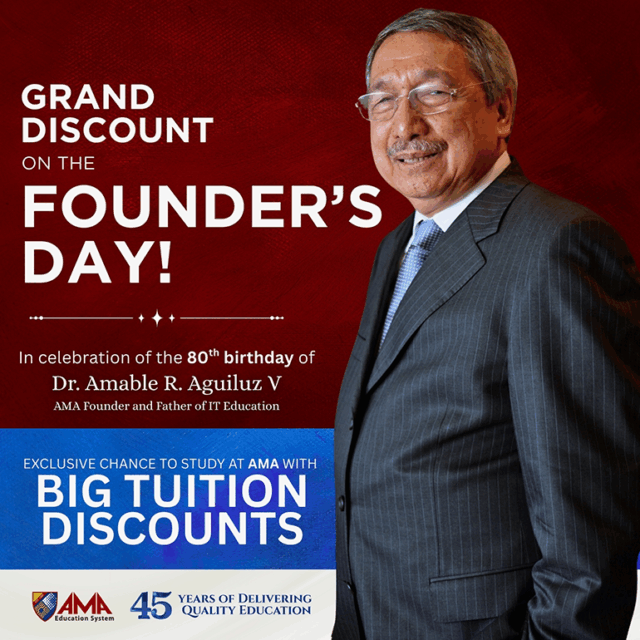
AMA Education System announces 80% tuition fee discount in celebration of chairman’s 80th birthday

In celebration of Chairman Dr. Amable R. Aguiluz V’s milestone 80th birthday, the AMA Education System (AMAES) is giving back to the community through the Founder’s Day Grand Discount, a once-in-a-lifetime offer of 80% off tuition fees only for new enrollees and transferees across all AMAES branches nationwide.

Recognized as the Father of IT Education in the Philippines, Dr. Aguiluz’s vision has always been anchored on making quality education more accessible to Filipinos. This initiative serves as a token of gratitude to the public for its continuous support through the years. His legacy isn’t just about pioneering IT-focused education it’s about opening doors for generations of Filipino learners. And this year, that door swings open even wider.

A Once-in-a-Lifetime Offer

The Founder’s Day Grand Discount is a one-day, first-of-its-kind initiative happening on Sept. 5, 2025. The promotion gives eligible students an 80% reduction in tuition fees for one semester or trimester, covering the academic period from Sept. 5, 2025 until July 31, 2026. While laboratory, miscellaneous  and other fees are excluded, the significant tuition discount opens doors for more Filipinos to pursue higher education under the AMAES system.

Enrollment slots are limited to 1,000 students on a first-come, first-served basis. However, to ensure fairness, all applicants who complete their enlistment within the internal deadline will still be accommodated.

Key Details Every Student Should Know

  • Eligibility:
    Open to new enrollees and transferees up to 3rd year standing. Current AMA students and EDUCA scholars are not eligible.
  • Programs Covered:
    Graduate programs, undergraduate (semester and trimester) programs, Distance Education (DE) programs, and the Doctor of Medicine program (local students only).
  • Excluded Programs:
    IPS short-term courses, bootcamps, certification exams (PrometricKryterion), Senior High School and Basic Education, modular SASN courses, Delta Air Academy, and AMA OED.
  • Minimum Unit Requirements:
  • Graduate School: 9 units
  • Undergraduate: 18 units
  • Distance Education: 18 units (freshmen), 12 units (transferees)
  • Doctor of Medicine (local students): 17 units
  • Payment Terms:
  • Cash basis only
  • Full payment must be completed on Sept. 5, 2025, before 11:59 p.m.
  • Installments and existing cash discounts under the Discipulus system will not apply

Enrollment Timeline

  • Aug. 25, 2025 (12:00 p.m.): Official announcement via AMAES social media platforms.
  • Sept. 1-5, 2025: Enlistment period, with a countdown leading to Founder’s Day.
  • Sept. 5, 2025 (11:59 p.m.): Deadline for full payment and completion of enrollment.

This timeline ensures students have ample time to prepare, verify eligibility, and complete requirements before securing their slot.

A Tribute to a Legacy in Education

This unprecedented discount is not only a celebration but also a reaffirmation of Dr. Amable R. Aguiluz V’s enduring vision: making IT-driven and innovative education accessible to every Filipino learner. By granting this once-in-a-lifetime offer, AMAES underscores its mission of empowering more students to succeed in today’s digital economy.

“This extraordinary initiative reflects our gratitude to the Filipino people who have stood with AMA through decades of innovation in education. It is our way of paying forward as we celebrate the 80th year of our Chairman,” said an AMAES spokesperson.

Take Advantage of the Founder’s Day Grand Discount

Aspiring students are encouraged to mark their calendars and prepare their requirements early to maximize this rare chance. With only 1,000 slots available and strict deadlines, timely action is crucial. With this bold move, AMA isn’t just honoring its founder, it is gifting the nation’s youth with an opportunity to build their future. Now that’s a birthday party worth attending.

Mark your calendars: Sept. 5, 2025
Don’t miss this rare opportunity to secure your future at AMA with an 80% tuition fee discount a true milestone in Philippine education history.


Spotlight is BusinessWorld’s sponsored section that allows advertisers to amplify their brand and connect with BusinessWorld’s audience by publishing their stories on the BusinessWorld Web site. For more information, send an email to online@bworldonline.com.

Join us on Viber at https://bit.ly/3hv6bLA to get more updates and subscribe to BusinessWorld’s titles and get exclusive content through www.bworld-x.com.

Philippine business groups demand independent investigation of ‘excessive corruption’ in government projects

PHILIPPINE STAR/MIGUEL DE GUZMAN

MANILA — An alliance of 30 influential Philippine business and civic organisations is demanding an independent investigation into what it describes as “excessive corruption” linked to government infrastructure projects.

The call for action comes after President Ferdinand Marcos Jr. disclosed last month the results of an internal audit into flood control projects, revealing troubling patterns of irregularity.

Key findings showed that out of P545 billion ($9.63 billion) in flood control spending since 2022, thousands of projects were either substandard, poorly documented, or non-existent.

Some carried identical costs despite being in different locations, and only 15 out of more than 2,000 accredited contractors cornered 20% of the total budget.

The allegations have spurred legislative inquiries in both chambers of Congress, and Mr. Marcos has said he will create an independent commission to investigate “these nefarious activities.”

The alliance expressed “outrage, disgust and disappointment” over the “shameful, unabated, continuing and excessive acts of graft and corruption” by many officials in Congress, the executive department and local government units.

“While we take note of the President admonishing the corrupt in government, we are concerned that the guilty among these officials will continue their merry way of robbing the people and filling their pockets,” the groups said in a statement.

They described the acts as a betrayal of public trust and a “treasonous” offence against Filipinos.

There was no immediate comment from the offices of the president, the house speaker and senate president.

The controversy has already led to the resignation of the public works secretary. His successor, Vince Dizon, has suspended all bidding for locally funded flood control projects, ordered courtesy resignations of all public works officials, and vowed to permanently blacklist contractors involved in fraudulent projects.

The Philippine scandal unfolds as neighbouring Indonesia grapples with its own wave of public outrage. In recent weeks, mass protests have erupted across 32 provinces in Indonesia, many turning violent, with regional parliaments set ablaze.

While Indonesia’s streets have filled with demonstrators, the Philippine response has so far remained largely online, with citizens resorting to naming and shaming on social media. Some activist groups have begun mobilising on the ground, and others are calling on the public to take to the streets. — Reuters

Nasdaq proposes tighter listing rules for thinly traded stocks, China-based firms

Exchange operator Nasdaq proposed on Wednesday stricter listing standards, including a higher minimum public float for certain new listings and a faster process to suspend and delist thinly traded companies.

Nasdaq said in a statement that it would require companies primarily operating in China to raise a minimum of $25 million in public offering proceeds to qualify for listing, reviving a threshold it previously applied to issuers from “restrictive markets”.

The New York-headquartered exchange operator said it submitted the proposed rules to the US Securities and Exchange Commission for review, and if approved, plans to implement the changes promptly.

Wall Street’s top regulator in June singled out China as it sought to raise disclosure requirements for listing hopefuls.

The proposed changes come as a record number of Chinese companies are seeking to list in the US this year, driven by onerous domestic rules and the prospect of better valuations despite volatile Sino-US relations and regulatory scrutiny.

Under the proposal, new listings under Nasdaq’s net income standard would require a minimum $15 million market value of public float. The exchange also proposed a faster suspension and delisting process for companies with listing deficiencies and a market value of listed securities below $5 million.

“These enhancements reflect our ongoing commitment to evolve our standards in step with market realities,” John Zecca, Nasdaq’s executive vice president and global chief legal, risk and regulatory officer, said in the statement, adding that higher minimums are intended to improve liquidity for public investors.

Nasdaq said the changes follow a review of trading activity, including patterns associated with “potential pump-and-dump schemes in US cross-market trading environments,” and are intended to recalibrate minimum liquidity standards as company valuations and market dynamics shift.

The exchange added that it would continue to refer potentially manipulative trading to the SEC and the Financial Industry Regulatory Authority, and deepen cooperation with domestic and international regulators.

More than 100 Chinese firms, including technology leaders Alibaba, JD.com and Baidu, are listed in the United States, boasting a combined market value of about $1 trillion as of March, according to data from the US-China Economic and Security Review Commission.

The fall IPO window in the US is shaping up to be one of the busiest in years, as companies race to capitalize on resurgent investor demand ahead of the close of 2025.

In April, tearoom chain Chagee debuted on the Nasdaq, raising $411 million in one of the biggest US IPOs by a Chinese firm so far this year. — Reuters

Market leaders unite: Pioneer, Toyota join forces to deliver accessible insurance service

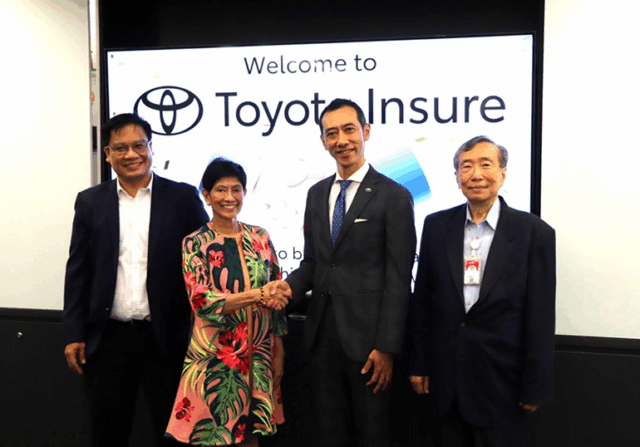
In photo (from left): Pioneer Insurance Motor Head Iluminado Garcia III, Pioneer Insurance and Surety Corp. President and CEO Atty. Ma. Bertola Medialdea, Toyota Motor Philippines Corp. (TMP) President Masando Hashimoto, and TMP Vice-Chairman Dr. David Go

Pioneer Insurance and Toyota Motor Philippines Corp. (TMP) have joined forces to reaffirm their shared commitment to providing reliable and accessible insurance solutions for Filipino motorists.

“Pioneer believes that collaborating with Toyota, the respected and recognized leader in mobility and service, will meaningfully support our common goal of supporting the economic growth of the Philippines. For our part, we aim to provide Toyota owners with the protection they need and the service they deserve,” said Atty. Betty Medialdea, president and CEO of Pioneer Insurance & Surety Corp.

“We’re truly honored to partner with a global brand! We aim to do our best to support Toyota’s growth and assist our mutual clients and the transport industry,” Ms. Medialdea added.

Through this strategic partnership, TMP has expanded its Toyota Insure Program, where customers can now choose Pioneer to secure their vehicles.

“This move delivers customer satisfaction and creates a unique experience that sets Toyota apart,” said Masando Hashimoto, TMP president.

With over 70 years of serving Filipinos, Pioneer Insurance remains at the forefront of the non-life insurance industry, continuously leading with purpose and a passion to serve.

Its partnership with Toyota underscores a shared commitment to excellence, innovation, and customer-centricity. By combining Toyota’s nationwide reach with Pioneer’s accessible and comprehensive insurance solutions, more vehicle owners can enjoy the protection and peace of mind they deserve.

Go ahead, get your car from any Toyota dealership and insure it with Pioneer Insurance.


Spotlight is BusinessWorld’s sponsored section that allows advertisers to amplify their brand and connect with BusinessWorld’s audience by publishing their stories on the BusinessWorld Web site. For more information, send an email to online@bworldonline.com.

Join us on Viber at https://bit.ly/3hv6bLA to get more updates and subscribe to BusinessWorld’s titles and get exclusive content through www.bworld-x.com.

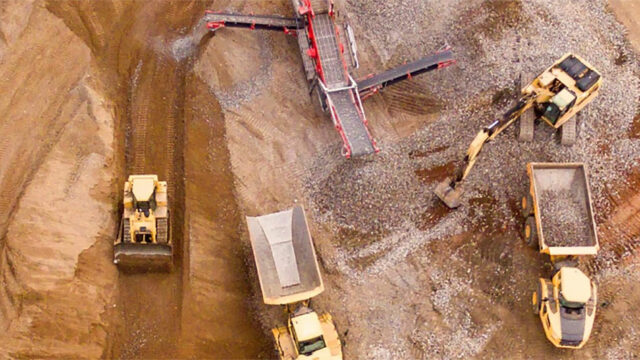
Philippines targets fairer share from mining with new tax law

NICKELASIA.COM

MANILA – Philippine President Ferdinand Marcos Jr signed into law on Thursday a measure overhauling the country’s mining tax system to ensure a more equitable share of revenues for the government and greater transparency in the extractive sector.

The new law introduces a simplified and progressive tax structure for large-scale metallic mining operations, replacing a fragmented regime that varied depending on the type of mining agreement.

“We are putting into place a system that is fairer, that is clearer and more responsive to the needs of both our people and the environment,” Mr. Marcos said during the signing ceremony.

Under the previous system, only mines inside mineral reservations were required to pay royalties, while fiscal obligations varied depending on the type of mining agreement.

The new law, which is expected to generate an average of P6.26 billion ($110.56 million) in additional revenues annually, simplifies and expands taxation across all large-scale metallic mining operations.

Mines outside mineral reservations will now be subject to a margin-based royalty ranging from 1% to 5%, depending on profitability.

A tiered tax of 1% to 10% will apply when income margins exceed 30%, capturing excess profits during commodity booms.

The law also introduces a ring-fencing rule so each mining project will be taxed as a separate entity, preventing companies from offsetting losses from one project against profits from another.

“Gone are the days when a mining contractor can bury its profits beneath the weight of losses. No longer can we use one project’s failure to conceal another project’s success,” Mr. Marcos said. “Transparency is now the rule.”

The Philippines is among the world’s most mineralised countries, with an estimated $1 trillion in untapped reserves of copper, gold, nickel, zinc and silver.

Less than 3% of the country’s 9 million hectares (22.2 million acres) identified as having high mineral potential are covered by mining tenements, government data showed.

In 2023, exports of minerals, mineral products, and non-metallic mineral manufactures totalled $7.32 billion, slightly down from $7.53 billion in 2022, according to the Mines and Geosciences Bureau. — Reuters

Trump says US may have to ‘unwind’ trade deals if it loses tariff case

REUTERS

WASHINGTON – President Donald Trump said on Wednesday the US might have to “unwind” trade deals it reached with the European Union, Japan and South Korea, among others, if it loses a Supreme Court tariffs case, and warned that a loss would cause the US “to suffer so greatly.”

Trump, speaking to reporters at the White House, said his administration will ask the Supreme Court to reverse a US appeals court ruling last week that found many of his tariffs were illegal. Trump, however, said he thought his administration would prevail in the case.

“We made a deal with the European Union where they’re paying us almost a trillion dollars. And you know what? They’re happy. It’s done. These deals are all done,” he said. “I guess we’d have to unwind them.”

The comments were Trump’s first specifically suggesting the trade deals reached with major trading partners – which were negotiated separately, outside of the tariffs – could be invalidated if the Supreme Court lets Friday’s ruling stand.

Trump said rescinding the tariffs would be costly, although trade experts note that the duties are paid by importers in the United States, not companies in the countries of origin. Economists have warned that tariffs are likely to fuel inflation in the United States.

“Our country has a chance to be unbelievably rich again. It could also be unbelievably poor again. If we don’t win that case, our country is going to suffer so greatly, so greatly,” Trump said.

The appeals court ruling addressed the legality of what Trump calls “reciprocal” tariffs first imposed as part of a trade war in April, as well as a separate set of tariffs imposed in February against China, Canada and Mexico. The decision does not impact tariffs issued under other legal authority, such as those on steel and aluminum imports.

Trade experts said his comments on the cost of rescinding the tariffs were intended to convince the Supreme Court that removing the tariffs would unleash major economic chaos.

Ryan Majerus, a former senior US trade official who is now a partner with law firm King & Spalding, said it had been clear from the start that the trade deals with the EU and other trading partners were framework agreements that were subject to change, not fully fledged trade agreements.

“The president’s announcement today that the deals could be unwound reflects an effort to maximize leverage on the US side,” he said.

Legal and trade experts say the Supreme Court’s 6-3 majority of Republican-appointed justices may slightly improve Trump’s odds of keeping in place at least some of the tariffs after the appeals court ruled 7-4 last week that they are illegal.

But they say it is difficult to predict exactly what the court will do, given rulings in past cases and the unprecedented nature of the challenge.

Senator Ron Wyden, the top Democrat on the Senate Finance Committee, said Trump’s comments sowed more confusion.

“The Trump administration can’t get its story straight about whether its trade deals will hold any water if the tariffs are struck down,” he said. — Reuters

ADVERTISEMENT
ADVERTISEMENT