Home Blog Page 103

Resilience gap threatens Philippine growth as typhoons intensify
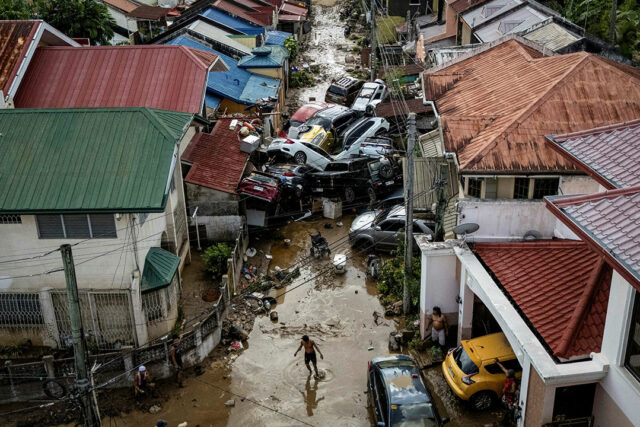
A DRONE view shows a man crossing a muddy street where cars piled up after being swept away in floods brought on by Typhoon Kalmaegi which piled up at a subdivision in Bacayan, Cebu City, Philippines, Nov. 5, 2025. — REUTERS/ELOISA LOPEZ

By Chloe Mari A. Hufana, Reporter

THE Philippines can sharply reduce the economic toll of typhoons and floods by overhauling how it designs, procures and verifies public works — turning disaster resilience from a planning assumption into a measurable obligation, analysts said.

As climate risks intensify, the focus of infrastructure policy must shift from project costs to whether projects perform under stress, Krista Danielle S. Yu, a professor at De La Salle University Carlos L. Tiu School of Economics, said. Ms. Yu, a leading expert in the economics of disasters in the Philippines, said that future reforms must focus on filling this gap.

“Substandard public works change the way we estimate economic losses from typhoons and floods such that they are quietly worsening the model inputs that resilience projects are supposed to improve,” Ms. Yu said via e-mail.

“When flood control or drainage projects have substandard construction and inadequate maintenance, they fail to reduce vulnerability as assumed in the project appraisal. This can also create a false sense of security.”

The country was hit by a series of typhoons in October and November last year, including Typhoon Kalmaegi (locally named Tino), which claimed more than 200 individuals, and Fung-Wong (Uwan), which reached super typhoon category.

As the Philippines braces for stronger ones and more intense flooding, Ms. Yu said the next phase of climate resilience may hinge less on how much the government spends and more on whether public works deliver real protection when storms arrive.

For decades, billions of pesos have been poured into flood control systems, drainage networks and related public works, all intended to shield households, firms and supply chains from climate shocks. Yet weak construction, poor maintenance, and political interference have quietly turned some of those investments into sources of economic fragility rather than resilience.

As climate change accelerates and urban development pushes deeper into flood-prone zones, the gap between planned infrastructure projects and their actual performance on the ground is becoming harder to ignore. This is even more compounded by a graft scandal that has implicated lawmakers, contractors, high-ranking government officials, including President Ferdinand R. Marcos, Jr. himself, of allegedly conspired to divert billions in public funds.

Mr. Marcos’ exposé of the rampant corruption within the bureaucracy, particularly in flood control projects, sent the economy and markets into a frenzy. Economic growth slowed to 4% in the third quarter, marking the weakest expansion in more than four years, or since the height of the coronavirus disease pandemic. For the first nine months of the year, gross domestic product grew at an average of 5%, undershooting the government’s 5.5%-6.5% target.

Growth was weighed down by a sweeping controversy linking public works officials, lawmakers and private contractors to alleged multibillion-peso corruption involving anomalous flood control projects, which dampened government spending and household consumption.

The botched infrastructure projects also dented the labor market as successive typhoons disrupted local economies, forcing temporary closures of businesses and displacing workers. Construction delays and the failure of flood control systems meant that jobs in affected areas were stalled, while disruptions to transport and logistics further constrained employment in services and manufacturing.

The Philippines’ unemployment rate rose year on year in November 2025, defying the usual boost from holiday-season hiring, as disruptions from bad weather and job cuts in key sectors offset fourth-quarter gains, according to the Philippine Statistics Authority. Preliminary Labor Force Survey data showed around 2.25 million unemployed Filipinos were unemployed during the month compared with 1.66 million in November 2024 and 2.54 million a month earlier.

The President in November vowed to ramp up state spending to ensure the government reaches its target growth by yearend. Despite differing views and cautious signals from his economic team, the Presidential Palace maintained confidence that the country can still meet its growth target.

SMARTER INFRASTRUCTURE, SAFER ECONOMY
The presence of flood defenses signals safety, encouraging households and firms to invest in hazard-prone areas, according to Ms. Yu. If those defenses are unreliable, exposure expands while vulnerability remains high. And when severe weather strikes, losses are larger not only because protection fails, but also because more economic activity has been drawn into harm’s way — a dynamic Ms. Yu described as risk-induced exposure.

The economic upside is substantial. Global estimates from the United Nations Office for Disaster Risk Reduction suggest that every dollar invested in disaster prevention yields multiple dollars in avoided losses, with a 2025 assessment placing returns as high as $15. Capturing those gains, Ms. Yu said, depends less on spending more than on spending smarter.

Looking ahead, Ms. Yu said reforms can reverse that cycle by aligning infrastructure spending with verified performance. Disaster-risk frameworks already show the path forward: losses stem from the interaction of hazard, exposure, and vulnerability. Well-built, well-maintained infrastructure lowers vulnerability, while credible performance standards prevent excessive exposure from accumulating.

Over time, Ms. Yu said, risk-based procurement analytics could help shift public investment toward quality and durability. Data tools can flag patterns associated with failure, including repeat contract winners, clustered unit prices and abnormal bidding behavior, automatically triggering audits before losses materialize. Stronger blacklisting mechanisms would further protect public capital.

Institutionalizing quality assurance is another forward step with long-term economic payoffs. Independent quality-control checks, random field audits, third-party materials testing and geotagged as-built documentation — particularly for long, linear assets such as dikes and drainage canals — could reduce lifecycle costs and limit future disruptions to production and services.

Beyond construction, Ms. Yu said the next frontier is risk-informed planning. Environmental impact assessments can evolve from compliance tools into economic safeguards by explicitly testing residual disaster risk and downstream impacts.

Over time, climate and hazard scenario testing — covering rainfall intensity, sea-level rise, and compound shocks — can become mandatory inputs in project appraisal, improving the reliability of fiscal forecasts and insurance markets.

“The Philippines has a climate change expenditure tagging mechanism for tracking climate-related spending,” she said.

“This can be strengthened further through requiring every resilience-tagged project to report risk indicators such as expected annual damage reduced, number of households protected, and hours of downtime avoided. This could include accountability and tie it with the performance-based metrics tied to retention payments.”

GOVERNANCE REFORMS
Governance reforms will determine whether those technical upgrades take hold, said Jean S. Encinas-Franco, a political science professor at the University of the Philippines. Without credible enforcement, she warned, the economy will continue to absorb the cost of failed projects through repeated losses and reconstruction.

Ms. Encinas-Franco said future reforms must include accountability for past failures.

“People who are found to be perpetrators of the flood control scandal must be jailed, including the so-called big fish,” she said via Viber.

Looking ahead, she called for removing political discretion from project identification and replacing it with a science-based menu developed through scientific studies and community consultation. Projects should be periodically monitored and evaluated so that public spending is actually reducing economic risk.

Building state capacity will also matter. Strengthening monitoring and evaluation units across agencies would allow the government to track outcomes rather than just outputs. Congress, she said, must also be equipped to conduct rigorous oversight, while insertions and unprogrammed funds — often linked to waste and distortion — should be curtailed.

Ms. Encinas-Franco tied these reforms to deeper economic stakes. High election costs and entrenched political dynasties, she said, raise the risk of corruption and weaken the efficiency of public investment. Lowering barriers to political participation could help reduce the incentive to extract rents from infrastructure projects.

For an economy increasingly exposed to climate shocks, the payoff from reform is not just fewer disasters — it is steadier growth, stronger investor confidence and lower long-term fiscal risk. As storms intensify, experts say the real question is whether the Philippines can turn resilience into an economic asset rather than a recurring liability.
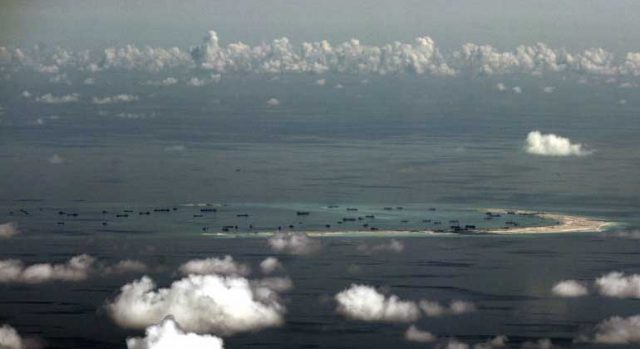
US Indo-Pacific chief vows to advance ties in the region to boost stability

PHILSTAR FILE PHOTO

By Kenneth Christiane L. Basilio, Reporter

THE head of US forces in the Indo-Pacific said Washington aims to deepen military ties among nations in the region to bolster the ability of American forces to ward off threats and maintain peace.

Speaking at the Honolulu Defense Forum, US Indo-Pacific Commander Admiral Samuel John Paparo, Jr. said his command aims to bolster defense ties with allies to deter aggression and improve its capability to respond to threats.

“We’re continuing to strengthen our alliances and our partnerships, expanding our posture and accelerating advanced capabilities, integration and interoperability because deterrence constantly demands visible capability and credible will,” he said in a recorded speech published on YouTube on Tuesday.

“When we operate with allies and partners, we multiply capability and we raise the threshold for aggression.”

Tensions over the self-ruled Taiwan threatened by Beijing’s plan to takeover, as well as the overlapping claims in South China Sea are among the major flashpoints in the Indo-Pacific, which is home to some of the world’s largest economies and military from the Pacific to the Indian Ocean. Any conflict in this area risks US involvement through its network of alliances there.

Mr. Paparo said the US is assessing China’s growing military power, noting Beijing’s ability to rapidly expand its forces.

“We recognize the pace, scale, and scope of China’s historic military buildup,” he said. “We take it seriously because realism is responsible, and deterrence requires an honest appraisal of capability.”

China lays expansive claims to the South China Sea, asserting control over almost the entire waterway based on a “nine-dash line” map that overlaps with claims by the Philippines, Vietnam, Malaysia, Indonesia and Brunei. A United Nations-backed arbitral tribunal ruled in 2016 that China’s claim is illegal, a decision Beijing has rejected.

Henrietta Levin, a senior fellow and freeman chair in China studies at the Center for Strategic and International Studies (CSIS) said Beijing has the capability and intent to reshape the regional order and extend its influence beyond.

“China’s very well positioned to set the terms of the debate for the security picture going forward in the coming year,” she told a CSIS forum on Thursday. “China really is the one power with the will, the intent, the capability to reshape the entirety of the international order.”

But China’s bid to assert influence in the region may push other nations closer to the US rather than into Beijing’s orbit despite Washington’s actions that may weaken alliance-building, Thomas J. Christensen, pritzker chair of CSIS’ geopolitics and foreign policy department, said.

“China has been so assertive toward its neighborhood and has driven countries to say ‘we really don’t have any choice but to strengthen our relationships with the United States’ despite these headwinds,” he told the same forum.

Mr. Paparo said the US is strengthening its alliances “in ways that reinforce ASEAN member states’ capability to reduce coercion and preserve sovereignty.”

Manila and Washington are long-time allies, with their security ties anchored on a 1950s Mutual Defense Treaty that obligates both nations to come to each other’s aid in case of an armed attack in the Pacific area, including the South China Sea.

US President Donald J. Trump in December signed a sweeping $900-billion military budget and defense policy bill that includes up to $2.5 billion in multi-year military funding in the next five years to help the Philippines modernize its military to safeguard “maritime domain awareness” and counter “coercive military activities.”

The Philippines has also moved to deepen its alliance with the US, staging more multinational naval drills in contested waters and granting American troops access to select bases.

“The Philippines continues to strengthen its defense and deepen cooperation,” Mr. Paparo said. “The Enhanced Defense Cooperation Agreement cites increased responsiveness and strengthened deterrence because when a crisis occurs, posture is absolutely indispensable.”

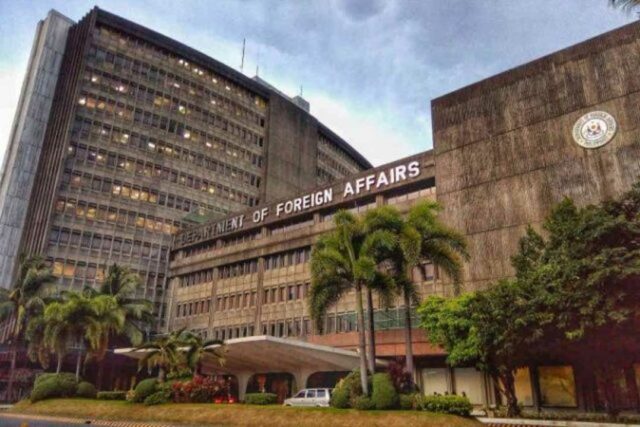
Chinese allowed visa-free entry

DEPARTMENT OF FOREIGN AFFAIRS FACEBOOK PAGE

THE Department of Foreign Affairs (DFA) on Thursday said that the Chinese national can now enter the Philippines visa free starting Jan. 16, for those visiting the country for tourism or business purposes.

“The said privilege allows for a non-extendable 14-day stay, which is non-convertible to any other type of Philippine visa category,” the agency said in a statement.

The visa-free program can only be availed if the Chinese national enters through the Ninoy Aquino International Airport in Metro Manila and the Mactan-Cebu International Airport in Cebu.

Chinese citizens are required to present a passport valid for at least six months, confirmed hotel accommodation, and a return or onward ticket to the next country of destination.

“To ensure that security and public order are maintained while facilitating the entry of legitimate travelers, checks on derogatory records of travelers will continue to apply,” the DFA added.

The program will be in effect for one year and will be reviewed before its expiry on January 2027.

The agency added that the program is in line with President Ferdinand R. Marcos, Jr. directive to facilitate trade, investments, and tourism, as well as strengthen people-to-people exchanges between Manila and Beijing. — Adrian H. Halili

DoJ names 4 state witnesses

BW FILE PHOTO

THE Justice Department has officially named individuals expected to provide crucial information to support ongoing investigations into the multibillion-peso flood control project scandal, as part of its efforts to strengthen the cases.

Acting Justice Secretary Fredderick A. Vida on Wednesday announced that four individuals have been admitted as state witnesses under the department’s Witness Protection Program (WPP) after returning a combined P316.38 million to the national treasury.

“Currently, we have four state witnesses. They are cooperating to strengthen our cases against those we intend to prosecute,” Mr. Vida told reporters in Filipino.

Former Department of Public Works and Highways (DPWH) Undersecretary Roberto R. Bernardo, former DPWH engineers Henry C. Alcantara and Gerard P. Opulencia, and private contractor Sally N. Santos are expected to cooperate with the ongoing
Department of Justice (DoJ) investigation into flood control projects.

Their admission to the program means that as state witnesses, they can be discharged from criminal liability for the specific transactions in which they provide evidence to the state. This also means that they remain accountable for any involvement in other undisclosed crimes, Mr. Vida explained.

Broken down, the recovered funds include P181 million from Mr. Alcantara, P80 million from Mr. Opulencia, P35 million from Mr. Bernardo, and P20 million from Ms. Santos, amounting to a total of P316 million. 

Undersecretary Nicholas Felix L. Ty estimated that total restitutions by the four could eventually exceed P1.5 billion.

Mr. Vida also said that the return of the funds is only a component of the witnesses’ cooperation.

“The concept of a state witness isn’t just about returning the money. Their restitution is part of their broader cooperation with the government,” he said. “They have admitted that these funds were not acquired through legal means, which is why they are being returned.”

Currently, the department has 6 flood control-related cases involving two contractors, five cases involving another contractor, 13 tax cases filed by the Bureau of Internal Revenue, and a separate three high-value plunder cases, all pending at different stages, mostly involving public officials.

Meanwhile, the DoJ maintained a strict vetting process for the WPP, rejecting the applications of Brice Ericson D. Hernandez and Jaypee D. Mendoza. The department said that the items and information offered for return by the two individuals were insufficient and had no material bearing on the prosecution’s case. — Erika Mae P. Sinaking

Cebu landfill victims to get aid

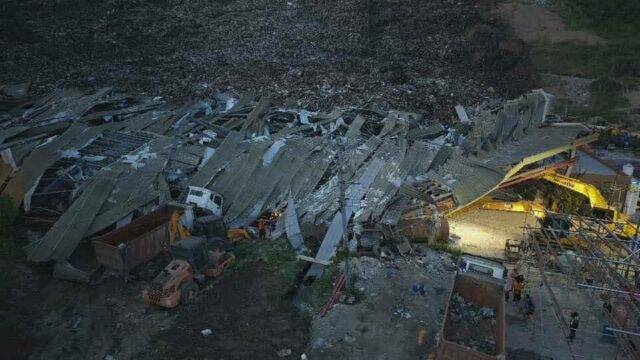
Site of the landslide incident in Binaliw, Cebu City.— PHOTO: MAYOR NESTOR D. ARCHIVAL'S FB PAGE

THE Philippine government said it is taking steps to provide aid for the victims of a deadly trash slide at a landfill in Cebu City, as President Ferdinand R. Marcos, Jr. pledged to support and seek accountability for victims’ families.

Speaking on Thursday at a ship-naming ceremony in Cebu province, Mr. Marcos led a moment of silence for those killed in the Jan. 8 incident at the Binaliw sanitary landfill, where a mound of waste collapsed in a residential area. 

He said search-and-rescue operations are ongoing and that the government is extending burial assistance and other aid to affected families.

“As search and rescue operations continue, we offer our prayers for the souls of the departed and strength to their grieving families,” he said. “Please be assured that the government is taking all necessary measures to ensure safety, transparency, accountability, and compassionate assistance.”

At least 13 people died, while 23 others are still missing, according to official figures as of Jan. 13.

The Department of Environment and Natural Resources has issued an immediate cease-and-desist order against the landfill operator and said it will conduct an evidence-based investigation to determine their responsibility for the incident. 

The agency also pledged to recommend policy and operational changes to prevent similar accidents. — Chloe Mari A. Hufana

BIR, TikTok expand tax education

THE Bureau of Internal Revenue is working with TikTok to expand its campign on digital tax education. — BUREAU OF INTERNAL REVENUE PHILIPPINE FACEOOK PAGE

THE Bureau of Internal Revenue (BIR) is in talks with social media platform TikTok to expand digital tax education and voluntary compliance, as part of the government’s 2026 National Tax Campaign.

Under this, the BIR said the platform would support the bureau in disseminating tax messages through short-form and platform-appropriate content by creators during Tax Awareness Month, it said in a statement on Thursday.

The agency will also hold on-site and online workshops with TikTok, covering taxpayer registration, taxable income streams, filing and payment procedures, and common compliance issues.

“Information dissemination in digital platforms is no longer optional — it is necessary. We must go where the new generation of taxpayers are,” BIR Commissioner Charlie R. Mendoza said.
Mr. Mendoza met with bureau officials and Yves Gonzalez, TikTok’s head of public policy in the Philippines, along with the platform’s team, at the BIR National Office on Jan. 13.

“This initiative complements our ongoing digitalization efforts and is in line with the President’s directive to make government transactions easier, as well as the guidance of the secretary of Finance to create all possible means to strengthen tax collection while providing better assistance to taxpayers,” he added.

BIR said both parties agreed to identify focal persons and set an initial timeline for the rollout of collaborative content, workshops and the launch of the official BIR TikTok account in the coming weeks.
“We look forward to supporting the BIR in transforming the way they connect with the public through accessible, relatable, and engaging content through their official TikTok channel,” said Ms. Gonzalez said. — Aubrey Rose A. Inosante

Bill seeks tripartite jobs body to boost employment

Commuters wait for public transportation along Ortigas Extension in Cainta, Rizal, Sept. 14, 2022. — PHILIPPINE STAR/ WALTER BOLLOZOS

A MEASURE establishing a tripartite body to tackle unemployment and underemployment was filed in the House of Representatives last month, as recent government jobs data showed sluggishness despite an expected holiday season lift.

House Bill No. 6844 proposed to set up a council of government, academic and industry representatives, which will be mandated to study labor market trends to inform policies and allow them to devise strategies to boost employment.

“The problems of unemployment, underemployment, and the continuing mismatch between the skills of workers and the demands of available jobs remain urgent concerns that hinder inclusive growth and national development,” Taguig-Pateros Rep. Ricardo S. Cruz, Jr. said in the measure’s explanatory note.

Unemployment rose unexpectedly in November despite the holiday hiring season, with 2.25 million jobless putting the rate at 4.4%, up from 3.2% a year earlier.

The proposed jobs council would be required to meet quarterly, conducting regular assessments of student and graduate skills against labor market needs. It would also have authority to recommend policies to the President and lawmakers to address unemployment, underemployment and jobs mismatches. — Kenneth Christiane L. Basilio

No contingency plans yet as US halts immigrant visas, ambassador to the US says

THE Philippine government has not drawn up contingency measures should the United States suspend visa processing for Filipinos, Ambassador to Washington Jose Manuel G. Romualdez said, following the Trump administration’s freeze on immigrant visas for several countries.

“There are no plans as of now unless Filipinos are placed on the watch list,” Mr. Romualdez told BusinessWorld in a WhatsApp message.

The envoy also confirmed that the Philippines will not be affected by the pause on visa processing.

The US State Department announced that starting Jan. 21, immigrant visa applications from citizens of 75 countries will be halted as part of US President Donald J. Trump’s stricter immigration policy.

The US government has tightened its grip on immigration since Mr. Trump returned in January last year.

The measure does not cover nonimmigrant visas, such as temporary tourist or business travel permits.

The United States remains one of the Philippines’ oldest treaty allies, with the two countries conducting annual joint military drills under the Balikatan (shoulder-to-shoulder) exercises.

An estimated 4.6 million Filipinos reside in the US, according to the Department of Foreign Affairs as of 2024. — Adrian H. Halili

BCDA extends John Hay Golf’s interim management

THE Bases Conversion and Development Authority (BCDA) has extended the interim operations and maintenance contract of John Hay Golf in Camp John Hay.

“Extending the interim management ensures the uninterrupted operation of the John Hay Golf Course all while safeguarding public access and maintaining the quality of services expected by golfers and visitors,” said BCDA President and Chief Executive Officer Joshua M. Bingcang in a statement on Thursday.

His statement follows BCDA’s approval of a one-year extension of its contract with Golfplus Management, Inc. and Duck Sports and Music Productions, Inc.

“The extension secures uninterrupted operations through 2026, following the successful transition of John Hay Golf into a public golf facility,” the agency said.

“This ensures continued access for golfers, residents, and visitors while BCDA undertakes longer-term arrangements for its sustainable management,” it added.

Under the extended arrangement, Golfplus and Duck Sports will organize the BCDA Chairman’s Cup in 2026 and implement facility and amenity improvements.

“The management is likewise set to sustain the hosting of major events, tournaments, and related activities, further strengthening the golf course’s role as a premier sports and recreation destination in Baguio City,” it said.

Amid this arrangement, the agency ensured that the golf course will remain open to the public, subject to the payment of applicable green fees.

Beyond this, John Hay Golf has also partnered with the Philippine Sports Commission and the National Golf Association of the Philippines in granting free access to boys and girls aged 18 and below to support early talent discovery and long-term athlete development.

In a separate release, the BCDA said that it has granted the Supreme Court usufructuary rights for the construction and development of a Hall of Justice at Camp John Hay.

“Through this grant, BCDA and the Supreme Court affirmed their shared vision of a justice system that is accessible, responsive, and efficient — serving not only Baguio City but also the municipalities within the court’s jurisdiction,” it added. — Justine Irish D. Tabile

Philippine shares rebound on World Bank forecast

PHILIPPINE STAR/KRIZ JOHN ROSALES

PHILIPPINE STOCKS climbed back above the 6,400 level on Thursday, boosted by the World Bank’s growth forecast for 2026 and speculation that the Bangko Sentral ng Pilipinas (BSP) could trim interest rates.

The benchmark Philippine Stock Exchange index (PSEi) rose 1.52% or 97.72 points to 6,487.53, its strongest finish in six months. The broader all-share index gained 0.68% or 24.76 points to 3,660.7.

Foreign investors were net buyers, pumping P1.31 billion into the market, up from P291.46 million a day earlier.

“The local bourse surged on the back of a massive foreign buying spree after the World Bank forecast of a 5.3% GDP (gross domestic product) growth for fiscal year 2026 renewed investors’ confidence in buying the Philippine consumer growth story,” AP Securities, Inc. said in a market note.”

The World Bank expects the economy to expand 5.3% in 2026 — within the government’s 5-6% target — and 5.4% in 2027, below the 5.5-6.5% goal, citing governance challenges.

Investors also speculated that the BSP might cut rates at its Feb. 19 policy meeting, although Governor Eli M. Remolona, Jr. has said the benchmark is already “very close” to its desired level.

“Buying was supported by hopes that the BSP will go for another rate cut in their upcoming policy meeting, and that the local economy would eventually be able get back to its fast growth pace,” Philstocks Financial Research Manager Japhet Louis O. Tantiangco said in a Viber message.

Sector gains were broad-based. Services led the rally with a 2.01% gain, followed by property at 1.53%, financials at 1.44%, holding firms at 1.13% and industrials at 0.18%.

On the other hand, mining and oil fell 1.01%.

DigiPlus Interactive Corp. led index members, climbing 4.59% to P16.40, while JG Summit Holdings, Inc. fell 1.34% to P25.85 amid profit-taking.

Trading was active, with value turnover rising to P7.3 billion from P6.92 billion and 2.02 billion shares changing hands, compared with 1.86 billion on Wednesday.

Advancers outnumbered decliners 115 to 96, with 58 stocks unchanged.

Market analysts said foreign inflows and optimism over consumer spending were key drivers of the rebound.

“Broad-based buying prevailed in today’s session, which was mainly led by services and property, while mining and oil headed the opposite direction,” AP Securities said. — Alexandria Grace C. Magno

Marcos touts promise of PHL yards building ‘green’ vessels

PHILSTAR FILE PHOTO

PRESIDENT Ferdinand R. Marcos, Jr. said the shipbuilding industry is positioning itself to take part in the shift to low-carbon maritime transport after helping launch a methanol dual-fuel bulk carrier in Cebu.

Speaking on Thursday at the Tsuneishi Heavy Industries, Inc. yard in Balamban, Cebu, Mr. Marcos said the delivery of the 81,200-deadweight-ton vessel underscores the Philippines’ readiness to compete in greener shipbuilding as global emissions rules tighten. 

The vessel conforms to the Kamsarmax standard, making it suitable to call at many shallow ports such as the Port of Kansas in Guinea.

“This Administration also remains fully committed to strengthening the shipbuilding and ship repair industry by enhancing its competitiveness, sustainability, and strategic capacity,” he said, citing incentives under the Corporate Recovery and Tax Incentives for Enterprises law to spur modernization, low-carbon technologies and higher-value manufacturing.

The ship, built through a partnership between Japan’s Tsuneishi Group and the Philippines’ Aboitiz Group, is designed to significantly cut carbon dioxide, nitrogen oxides and sulfur oxides, in compliance with International Maritime Organization decarbonization targets.

Mr. Marcos said demand for low-emission and alternative-fuel vessels is expected to grow as global regulations become more stringent, opening access for Philippine shipyards to higher-value export markets and sustainability-linked financing, including green bonds and climate funds.

He added that the shift toward green shipping would also spur growth in related industries such as advanced marine components, coatings, and energy-efficient systems.

The Philippines had more than 130 registered shipyards as of November, employing over 11,000 workers, including about 70% in skilled trades such as welders and fitters.

The Philippines built 484 vessels in 2024, including fishing boats and cargo and passenger ships. — Chloe Mari A. Hufana

Biz chamber urges PHL to aspire for 8% annual growth rate

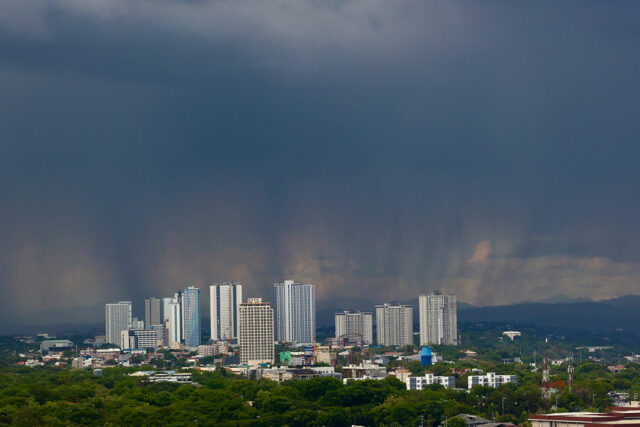
Clouds hover over buildings in Quezon City, April 28, 2025. — PHILIPPINE STAR/MIGUEL DE GUZMAN

THE Philippines needs to aim for at least 8% annual growth rate to ensure that any economic expansion is sufficiently inclusive, the Federation of Filipino Chinese Chambers of Commerce and Industry, Inc. (FFCCCII) said.

FFCCCII President Victor R. Lim said that while the recent revision of growth projections shows the administration’s “acknowledgement of real headwinds,” the government should choose ambition over accommodation.

“We noted the cited causes — the corrosive aftermath of the flood control corruption scandal and its dampening effect on confidence as well as global trade uncertainties,” he said in a statement on Thursday.

“We must categorically reject the notion that these new targets — 5% to 6% in 2026, scaling to 6% to 7% by 2028 — should represent the limit of our national economic ambition,” he added.

He said the Philippines should seek to achieve a sustained annual growth of 8% and beyond, after neighbor Vietnam posted 8% growth in 2025.

“This is the minimum viable ambition for a nation of our potential. The goal of 8% remains the ideal benchmark of transformative progress, because a steadfast and collective drive toward 8% is the critical, immediate step that will change our momentum and define this decade,” he added.

He said that as the Philippines recalibrates growth targets downward, Vietnam aims for 10% growth this year.

“Their success in attracting investment, boosting tourism, and raising per capita income underscores a critical truth: global capital and opportunity flow decisively to destinations perceived as dynamic, disciplined, efficient, reformist, and relentlessly forward moving,” he said.

“The lingering shadow of a massive corruption scandal must be dispelled not by lowered expectations, but by demonstrably higher standards of governance and performance,” he added.

The revised forecast, he said, signals the need to implement urgent reforms that will focus on six areas: human investment, anti-corruption, industrial and agricultural renaissance, foreign policy, infrastructure, and tourism and creative sectors.

In particular, Mr. Lim said that the Philippines should double down on education and public health.

“We support the budget focus but urge a shift from input-based to outcome-based spending, ensuring every peso spent truly builds a healthier, smarter, and more competitive workforce,” he said.

He also cited the need for an institutional anti-corruption overhaul following the public works scandal.

“We vigorously renew our call for creating an independent, powerful, and well-resourced anti-corruption agency to restore domestic and international confidence,” he said.

He also proposed support for domestic manufacturing and agro-industrial development, including strategic incentives as well as serious and sustained action against smuggling, high costs, and unfair import competition.

“We must create jobs here, add value here, and feed our nation with our own produce,” he added.

Meanwhile, he said the Philippines should pursue an independent, balanced foreign policy that ensures its national interests are protected while fostering stable relations and opening markets for Philippine goods and services.

He said that the Philippines should launch a national strategy for digital transformation, research and development, and green technology, while continuing critical infrastructure with renewed transparency and efficiency.

He called for a national tourism strategy that leverages cultural and natural assets while creating millions of jobs.

“Aiming for and achieving 8% growth is a realistic and necessary goal. It is a target within our grasp if we summon the collective will to reform, invest, and execute with unity and precision,” he said.

“It represents the threshold where growth begins to meaningfully transform lives and reshape our national destiny,” he added. — Justine Irish D. Tabile