Home Blog Page 1021

June FDI net inflows sink to six-month low

US dollar notes are seen in this picture illustration. — REUTERS

By Katherine K. Chan

NET INFLOWS of foreign direct investments (FDI) sank to a six-month low in June, with the first-half tally also posting a double-digit drop, as global trade risks continued to weigh on market sentiment, resulting in a net outflow of equity capital.

FDI net inflows decreased by 17.8% to $376 million in June from $457 million in the same month last year, preliminary data from the Bangko Sentral ng Pilipinas (BSP) released on Wednesday showed.

This was the lowest net inflow in six months or since the $356 million recorded in December.

Net Foreign Direct Investment

Month on month, FDIs plunged by 37.1% from the $598-million inflow in May.

“Net foreign direct investments into the Philippines remained positive in June, with inflows from Japan and into manufacturing taking the lead,” the BSP said.

“The slowdown in FDI net inflows during the month reflected the shift in nonresidents’ net investments in equity capital (other than reinvestment of earnings), from $85 million inflows to $57-million outflows,” it said.

June marked the first time that the country saw a net outflow in equity capital excluding reinvestments in one-and-a-half years or since the $11-million outflow in January 2024.

This came as equity placements rose by 31.3% year on year to $130 million in the month from $99 million, while withdrawals ballooned to $187 million from $15 million.

Equity capital placements in June mostly came from Japan (62%), the United States (16%), and South Korea (9%). Most of these flowed into the manufacturing sector (64%), followed by real estate activities (14%), and wholesale and retail trade and repair of motor vehicles and motorcycles (10%).

Meanwhile, reinvestment of earnings jumped by 36.7% to $128 million from $94 million.

Nonresidents’ net investments in debt instruments also went up by 9.3% to $305 million in June from $279 million in the same month a year ago.

“June’s FDI slowdown reflects a mix of global and domestic headwinds,” Union Bank of the Philippines, Inc. Chief Economist Ruben Carlo O. Asuncion said in a Viber message. “Heightened global uncertainty, trade tensions, and cautious investor sentiment weighed on cross-border investments, while structural challenges at home — such as infrastructure gaps and policy unpredictability — added to the drag.”

“The US tariffs hurt — especially our manufacturing sector — but it’s also about weak global trade and our own policy gaps,” Jonathan L. Ravelas, senior adviser at Reyes Tacandong & Co., said in a Viber message.

In June, global markets were hit by volatility as the sudden escalation of the conflict between Iran and Israel due to an exchange of attacks drove up oil prices. The two countries eventually reached a ceasefire.

Investors were also awaiting the finalization of trade deals between the United States and its trading partners ahead of an initial July deadline, which was eventually extended.

The US is now imposing a 19% import tariff on Philippine goods under the deal secured by the government.

However, US President Donald J. Trump has also threatened to impose additional duties on semiconductors as well as countries with digital taxes, which could affect the country.

FIRST SIX MONTHS
For the first half of the year, net FDI inflows into the Philippines dropped by 23.8% to $3.418 billion from $4.486 billion.

Investments in equity capital, other than the reinvestment of earnings, plummeted by 74.6% to $307 million in the period from $1.207 billion a year ago.

Broken down, gross equity placements plunged by 49.3% year on year to $746 million, while withdrawals jumped 67.2% to $439 million.

Japan accounted for the bulk of the equity investments in the period at 43%, followed by the US (20%), Singapore (12%), and South Korea (8%). Half (50%) went to manufacturing, while 19% went to real estate activities and 10% went to financial and insurance activities.

Meanwhile, foreigners’ reinvestment of earnings climbed by 11.6% to $573 million from $514 million.

Net investment in debt instruments decreased by 8.2% to $2.538 billion in the six-month period from $2.765 billion a year ago.

The BSP expects net FDI inflows to reach $7.5 billion this year.

Mr. Asuncion said reaching this could be “challenging” as the six-month tally remains low.

“A significant rebound in the second half is needed, supported by stronger project implementation and improved investor confidence. Without these, inflows could fall short of the forecast,” he said.

“We expect FDI inflows to remain subdued in the near term as global risks persist and competition for capital intensifies across the region. Any upside will hinge on accelerated infrastructure rollout and policy clarity to boost investor confidence. While opportunities remain in manufacturing and real estate, downside risks dominate the outlook.”

Mr. Ravelas said the sharp drop in FDIs is a “wake-up call.”

“Investors are watching how we respond. If we don’t fix logistics, clarify rules, and build confidence, this could turn into a trend. But there’s still time to turn things around.”

Meralco rates decline in September on lower generation charge

PHILIPPINE STAR/ MICHAEL VARCAS

By Sheldeen Joy Talavera, Reporter

RESIDENTIAL HOUSEHOLDS in areas served by Manila Electric Co. (Meralco) will get some relief as the distributor cut its September electricity rates after two straight months of increases amid the lower cost of power purchased from suppliers.

The overall electricity rate will go down by P0.1852 per kilowatt-hour (kWh) to P13.0851 per kWh this month from P13.2703 per kWh in August, Meralco said in a statement on Wednesday.

Households consuming 200 kWh will see their monthly electricity bills drop by P37. Those consuming 300 kWh, 400 kWh, and 500 kWh will see reductions of P56, P74, and P93, respectively.

Meralco Vice-President and Head of Corporate Communications Joe R. Zaldarriaga attributed the decline in the power rates to lower generation charge of independent power producers (IPPs) and power supply agreements (PSAs) amid a stronger peso, as their costs are mostly in US dollars.

“Charges from IPPs and PSAs went down by P1.3459 and P0.3660 per kWh, respectively, due to the appreciation of the local currency against the US dollar and decrease in international fuel prices. The stronger peso affected around 99% of IPP costs and 57% of PSA costs that were dollar-denominated,” the power distributor said.

The peso closed at P57.13 per dollar on Aug. 29, strengthening by P1.19 from its July 31 finish of P58.32.

These decreases offset the higher charges from the Wholesale Electricity Spot Market (WESM), which rose by P0.3785 per kWh as average demand in Luzon and plant outages increased, as well as the increase seen from the start of the collection of the cost recovery of Sual Power, Inc. (SPI) and South Premiere Power Corp. (SPPC) under San Miguel Global Power Holdings Corp.

The Energy Regulatory Commission (ERC) earlier allowed the two companies to collect P5.1 billion to be implemented over a six-month period beginning this month. The case stemmed from the 2022 joint petitions by SPPC and SPI with Meralco, seeking temporary price adjustments under their 2019 power supply agreements to recover higher fuel costs due to Russia’s invasion of Ukraine.

PSAs, IPPs, and WESM accounted for 65%, 29%, and 6%, respectively, of Meralco’s total energy requirement for the period.

Meanwhile, the transmission charge went up by P0.1130 per kWh mainly due to higher ancillary service charges from the reserve market.

Other charges, including taxes, posted a net decrease of P0.0379 per kWh.

“Pass-through charges for generation and transmission are paid by Meralco to the power suppliers and the grid operator, respectively, while taxes, universal charges, and Feed-in Tariff Allowance are all remitted to the government,” it said.

Meralco’s distribution charge has remained unchanged since the P0.0360 per kWh in August 2022, it added.

POTENTIAL INCREASE IN OCTOBER
Meanwhile, following the ERC’s approval to extend the power purchase agreement of Meralco with First Gen Corp.’s First Gas Power Corp. (FGPC), the power distributor expects an additional increase of P0.32 per kWh in rates next month.

Lawrence S. Fernandez, Meralco vice-president and head of utility economics, said the contract extension resulted to an increase as it is more than what the company currently needs.

“Actually, this contract extension exceeds the current power requirements of Meralco. As of now, Meralco’s contracts — those that went through proper bidding — are already complete. And because this extension is on top of the existing contracts, it will result in an add-on to the generation charge,” he said.

The contract between Meralco and FGPC was supposed to expire on Aug. 28, but the ERC allowed Meralco to continue procuring power supply from FGPC’s 1,000-megawatt gas-fired power plant in Batangas until Jan. 31, 2026.

While there is a potential decline of P0.17 per kWh due to the conclusion of the deferred fuel cost being collected by FGPC, Mr. Fernandez said this would not be enough to offset the expected rate increase.

“While this is welcome news, unfortunately, it cannot offset the 32-centavo add-on from the First Gas Sta. Rita contract extension. So now, there will be a net add-on that we will feel in the October generation charge,” Mr. Fernandez said.

Meralco’s controlling stakeholder, Beacon Electric Asset Holdings, Inc., is partly owned by PLDT Inc. Hastings Holdings, Inc., a unit of PLDT Beneficial Trust Fund subsidiary MediaQuest Holdings, Inc., has an interest in BusinessWorld through the Philippine Star Group, which it controls.

France now being eyed to fund P28-B bridge project following failed talks with South Korea

DOF.GOV.PH

By Aubrey Rose A. Inosante, Reporter

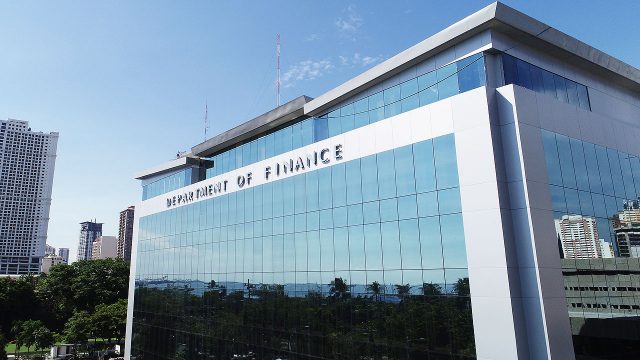
THE FINANCE DEPARTMENT is now seeking France’s help to fund a P28-billion project to build hundreds of rural bridges in the Philippines that was initially proposed to South Korea.

“The Department of Finance (DoF) has clarified that the P28-billion Rural Modular Bridge Project is currently being proposed for financing by the Government of France, not South Korea,” it said in a statement on Wednesday.

“In this case, the project was initially considered for funding through South Korea, but the Department of Agrarian Reform (DAR) decided to halt previous discussions last year due to non-alignment on scope and other key technical specifications.”

The clarification came after South Korea’s President Lee Jae Myung on Tuesday said in a Facebook post that he ordered the suspension of the proposed 700-billion Korean won loan to the Philippines due to concerns over corruption.

“Most fortunately, because the project had not yet commenced, no funds, including support from the Economic Development Cooperation Fund (EDCF), were spent. This is significant in that it prevented the unnecessary waste of a staggering 700 billion won in taxpayer money and preemptively prevented the risk of corruption and mismanagement,” Mr. Lee said.

He made the statement after the South Korean news publication Hankyoreh reported that the proposed Philippine loan was being revived despite earlier concerns of corruption.

Hankyoreh said that the DoF in November 2023 requested a loan from the EDCF to build modular bridges around the country. Its report said that South Korea’s Ministry of Finance officially notified the Philippine government in April 2024 that it will not support the project due to possible corruption and mismanagement, but the project was revived recently after lobbying by certain officials.

“The government, as early as the last quarter of 2024, decided to look for other bilateral partners who can implement the full scope of the project. Hence, there is no existing loan for the said project with South Korea,” the DoF said.

“As part of standard practice, the Philippine government explores financing options with multiple development partners for key projects… The government is now in advanced negotiations with the French government to finalize the project’s technical and financial terms.”

The Rural Modular Bridge Project aims to build 350 bridges around the country for farmers and their agricultural products.

The DAR, the implementing agency of the project, said the negotiations with South Korea fell through as it only offered to fund 100 bridges.

“The Korean EximBank cannot be our funder simply because they will only fund one big project as against our bridge program which will be spread in agrarian reform communities. Probably, the risk of corruption they are talking about is on their side of the fence,” Agrarian Reform Secretary Conrado M. Estrella III said in a Viber message.

Many government projects are financed through official development assistance (ODA). The Philippines’ ODA portfolio rose 6% to $39.6 billion in 2024.

The Japanese government was the country’s top development partner last year with $13.23 billion in active commitments across 82 loans and grants. It was followed by the Asian Development Bank ($11.05 billion), the World Bank ($8.64 billion), other sources ($2.96 billion), the Asian Infrastructure Investment Bank ($2.38 billion), and South Korea ($1.34 billion).

Corruption in government projects has been a key issue in the Philippines, with public officials and legislators now in the middle of investigations into alleged anomalous flood control projects.

Ateneo Center for Economic Research and Development Director Ser Percival K. Peña-Reyes said the news of the scrapped South Korea loan proposal “goes to show how seriously the government should take these [corruption] allegations, as they do have an impact on broader investor confidence.”

“Internal issues like this, which are pretty much self-inflicted, ought to be addressed more meaningfully and forcefully.”

Mr. Peña-Reyes said the three main deterrents to foreign investment are bureaucratic red tape and corruption, inadequate and poor infrastructure, and policy uncertainty.

“Corruption, by itself, adds to transaction costs, and because of corruption, we see the sorry state of our infrastructure projects,” he said.

Diwa C. Guinigundo, country analyst at GlobalSource Partners and a former central bank deputy governor, said this particular instance shows “the corrosive and confidence-eroding impact of corruption in government.”

“That is traceable to bad governance and therefore from the perspective of creditors and donors, any assistance could be subject of misappropriation and plunder.”

SM Prime raises $350M from dollar bond offer

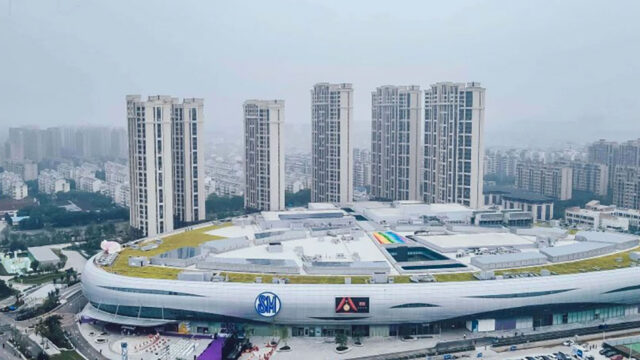
SM CITY YANGZHOU opened on Sept. 28, 2023. — SMSUPERMALLS.COM

By Beatriz Marie D. Cruz, Reporter

LISTED property developer SM Prime Holdings, Inc. (SMPH) has raised $350 million from its inaugural dollar-denominated bond issuance to fund expansion plans.

In a disclosure on Wednesday, SMPH said the offer was nearly three times oversubscribed, with demand reaching over $990 million.

The issuance is the second drawdown by wholly owned subsidiary SMPHI SG Holdings Pte. Ltd. under SM Prime’s existing $3-billion multi-issuer European Medium-Term Note (EMTN) program. The notes will be listed on the Singapore Exchange.

The notes carry a coupon rate of 4.75% and will mature in five years.

SMPH said 91% of the bonds were distributed to Asia-based investors, while 9% went to Europe, the Middle East, and Africa. By investor type, 80% was allocated to fund managers, 12% to banks, 4% to private banks, 3% to financial institutions, and 1% to insurers.

The notes were issued by SMPHI SG Holdings and guaranteed by SM Prime.

HSBC, J.P. Morgan, Standard Chartered Bank, and UBS served as joint lead managers and joint bookrunners, while BDO Capital and Chinabank Capital acted as joint domestic managers.

“Through this latest drawdown, we are able to tap the market at an opportune time to support our future projects and strategic initiatives,” SM Prime President Jeffrey C. Lim said.

“The continued interest from global investors underscores their sustained confidence in our long-term growth prospects,” he added.

In a separate note, Fitch Solutions unit CreditSights recommended SMPH’s planned issuance to investors “who are fine with just marginal spread performance but are happy to hold on to a solid quality Philippine senior dated paper from a company belonging to well-reputed conglomerate.”

“We see fair value for the new SMPH five-year bond at T+130 basis points (bp) or 4.87% yield. We expect the bond to price around 25-30 bp tighter from the IPT to land at T+120-125 bp,” it added.

SMPH plans to use proceeds to finance expansion, including 16 major redevelopments and 12 new lifestyle malls scheduled between 2026 and 2030. It is also preparing to open malls in Xiamen and Fujian, China.

This comes as the company deferred its planned $1-billion real estate investment trust listing to beyond 2026 due to unfavorable market conditions.

For the first half, SMPH posted an 11% rise in net income to P24.5 billion.

SM Prime shares on Wednesday rose by 1.27% or 30 centavos to close at P24 apiece.

SEC allows one-day registration for foreign companies

Buildings are seen in Bonifacio Global City, Taguig City on Feb. 7, 2025. — PHILIPPINE STAR/NOEL B. PABALATE

COMPANIES with foreign equity seeking to incorporate in the Philippines may now register their businesses with the Securities and Exchange Commission (SEC) in just one day.

In a statement on Wednesday, the SEC said it has expanded the coverage of the One Day Submission and Electronic Registration of Companies (OneSEC) Zuper Easy Registration Online facility to include corporations with foreign equity as part of efforts to further streamline the registration process.

“Streamlining the company registration process for foreign entities is a crucial component of our thrust to improve the ease of doing business in the country,” SEC Chairperson Francisco Ed. Lim said.

“By expanding the coverage of OneSEC to foreign entities, we want to send a strong signal to the international business community that the Philippines is open for business, and hopefully encourage them to set up shop here,” he added.

The corporate regulator said it registered a total of 145 foreign corporations in the first half of 2025, a figure expected to rise with the implementation of the faster registration process.

Launched in 2021, OneSEC is a subsystem of the Electronic Simplified Processing of Application for Registration of Company (eSPARC) that uses pre-filled application forms to accelerate processing.

The SEC said the system allows applicants to complete registration in as fast as one minute and 14 seconds, from the start of the application to the issuance of a digital certificate of incorporation.

One-person corporations and regular corporations with two to 15 incorporators, directors, and stockholders are eligible to register via the “pass-through” system.

In August, the SEC expanded the industries eligible to use its one-day registration system, raising the number to 81 from 33 previously. The wider coverage led to a 190% jump in registrations through the OneSEC platform, which reached 2,938 in July from 1,014 in May.

The additional industries included sectors such as computer programming, customs brokerage, deep sea commercial fishing, property management, drugstores, and radio broadcasting. — Alexandria Grace C. Magno

SMC sets Oct. 1 redemption for P20-B preferred shares

BW FILE PHOTO

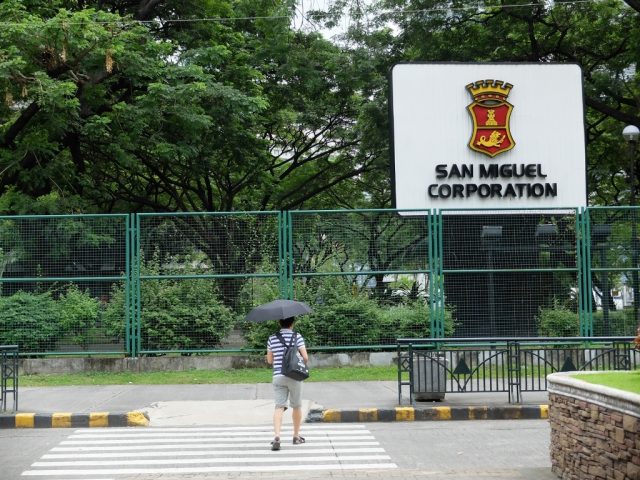
ANG-LED conglomerate San Miguel Corp. (SMC) will redeem its Series 2-J preferred shares on Oct. 1 at P75 each, plus unpaid dividends, covering more than 266 million shares.

In a disclosure to the stock exchange on Wednesday, SMC said its board of directors approved the redemption of 266.67 million Series “2” Preferred Shares-Subseries J during its Aug. 7 meeting.

The company said the move forms part of its strategy to manage its preferred shares portfolio and meet upcoming redemption obligations.

“Upon redemption, the SMC2J Preferred Shares shall not be considered retired and may be re-issued by the corporation,” it said.

SMC said the redeemed shares will be removed from trading and may be reissued subject to regulatory approval.

“This redemption gives a glimpse of its financial health, showing its ability to fund the redemption of roughly P20 billion worth of preferred shares,” Regina Capital Development Corp. Head of Sales Luis A. Limlingan said in a Viber message.

“It also opens the idea of possibly tapping into cheaper funding or reallocating resources toward other projects and ventures, while at the same time streamlining its capital structure and easing dividend obligations,” he added.

Mr. Limlingan noted that SMC has no history of defaulting on its obligations.

Separately, SMC is seeking to raise up to P30 billion through an offering of Series 2 preferred shares priced at P75 each, with an oversubscription option of up to P10 billion. The issue will consist of around 266.67 million shares across three subseries (2-S, 2-T, and 2-U).

Proceeds will be used to refinance and redeem existing debts and preferred shares, including Series 2-F, and to repurchase other preferred shares such as Series 2-J and 2-K. Funds will also be allocated to major infrastructure projects, including the Bulacan airport and tollway developments.

SMC shares rose 0.09% to P58.05 each on Wednesday. — Alexandria Grace C. Magno

Megaworld adding 30,000 sq.m. of retail space with new malls

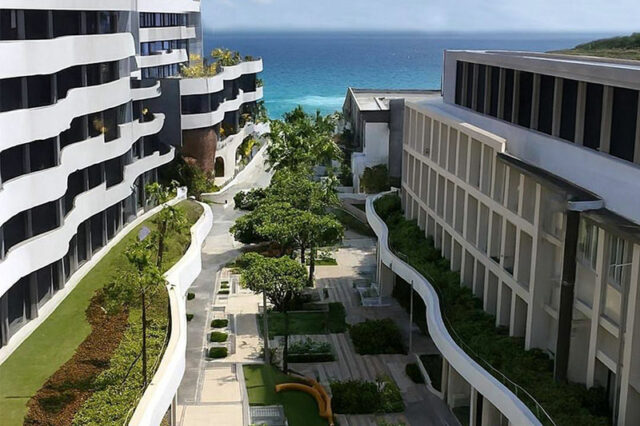
THE NEWCOAST BEACHWALK in Boracay Newcoast. — MEGAWORLD CORP.

LISTED property developer Megaworld Corp. is set to add 30,000 square meters (sq.m.) of retail space this year with the opening of malls in Taguig, Makati, Las Piñas, and Aklan.

Megaworld, through its retail and commercial arm Megaworld Lifestyle Malls, said in a disclosure on Wednesday that it remains on track to reach one million sq.m. in gross leasable area (GLA) by 2030.

Scheduled to open this year is The Shoppes at Park McKinley West, a two-storey mall within the Park McKinley West condominium complex in Fort Bonifacio. It will feature international retailers, first-in-the-Philippines concepts, and local dining and lifestyle brands such as Ogawa Traditional Japanese Restaurant, Tartufo, Royal Indian Curry House, One World Deli, George & Onnie’s, Café 17, Nightshade Cocktails & Bar, Hanamaruken, and Yakinuku Sudaku.

The company is also set to open a lifestyle mall at the Vion Tower in Makati and another in Las Piñas City’s Alabang West.

In the Visayas, Megaworld will launch Newcoast Beachwalk, a retail and dining hub catering to tourists.

Earlier, the company added 36,000 sq.m. of GLA at Lucky Chinatown in Binondo, Manila, with the opening of its Imperial Wing.

In June, Megaworld started the P2.5-billion redevelopment of its 18.5-hectare Eastwood City township.

Megaworld reported a 10% increase in first-half leasing revenues to P3.33 billion, supported by higher consumer foot traffic and strong demand from premium tenants.

“We are growing our leasing business by bringing our signature lifestyle mall concept to more locations while introducing new experiences that resonate with today’s consumers,” Megaworld Lifestyle Malls Head Graham M. Coates said.

“This approach allows us to drive sustained growth for Megaworld and, at the same time, enhance the value of our townships nationwide,” he added.

Shares in Megaworld rose 0.49% or one centavo to close at P2.05 apiece on Wednesday. — Beatriz Marie D. Cruz

Drinking an artwork

CALM SEA SPRAY

FUNDACION SANSÓ and The Spirits Library have something up their sleeve: translating paintings into cocktails.

Throughout September up to Oct. 4, the Poblacion bar is releasing five cocktails inspired by five works of master artist Juvenal Sansó, who passed away earlier this year at the age of 95*.

Of the Modernist school and educated at the University of the Philippines — where he was a student of National Artists Fernando Amorsolo and Guillermo Tolentino — he earned the Presidential Medal of Merit from the Republic of the Philippines in 2006, the Distinguished King’s Cross of Isabela by King Juan Carlos I of Spain in 2007, and the Chevalier de l’Ordre des Arts et des Lettres by France in 2008, according to his obituary in BusinessWorld.

The paintings chosen to be translated into drinks include the en vase floral With Grandiosity and Splendor (the cocktail is made with Martinique Rhum, chamomile and cherry cordial, and egg white), the turquoise-toned A Universe of Things (made with Beefeater Gin, Génépi Liquer, and blue curacao). Stars of the Earth is represented by Codico Blanco, Martel VS Cognac, mezcal, Braulio, Bénédictine, and osmanthus tea. Exalted in Surf and Rocks is embodied through elderflower cordial, Kombu-infused Beefeater, peach and prosecco and chocolate rocks. Finally, Calm Sea Spray is translated into a glass with Havana Club, pineapple-aloe cordial, olive brine, and jasmine tea.

Lee Watson, co-founder of The Spirits Library which executed the drinks through its bartenders, said during the Sept. 4 launch at the bar, “I think the challenge here is to take one art form very different from ours; very visual, and translate it to something here.”

The paintings that inspired the drinks are also hung up in the bar as an exhibition, on loan from the Fundacion Sansó until the end of the month — so you can look at the painting while sipping the drink it inspired.

BusinessWorld tried three of the five. The “Stars of the Earth” cocktail, inspired by a painting flush with greens so rich they appeared to be ready for plucking, had a very evident green note punctuated heavily by the smoky mezcal. “Exalted in Surf and Rocks,” showing suggestive imagery of seafoam fizzing in a cool, bright blue, had a prominent lychee note, and tasted nuanced and complex, but still decidedly fizzy and light. “A Universe of Things,” showing moody foliage with a bright blue background, tasted like it should be enjoyed on the beach.

“What better way to encounter [the paintings] than through a drink raised among friends? A gesture of connection, of celebration, of remembrance,” said Fundacion Sansó Director Ricky Francisco in a speech.

Ten percent of each drink sale goes to the Fundacion Sansó scholarship fund, which has helped 37 scholars at the University of the Philippines Diliman, Far Eastern University, and Bulacan State University.

This is not the foundation’s first foray through food and drink: there is the museum’s Scholarsip Café. They’ve also had several partnerships and merchandise displaying the artist’s work on scarves, bottles; even record players.

“A lot of people think that art is just something you put on the wall. It’s not. It’s a human experience. We want people to open their definition of what art is,” said Mr. Francisco in an interview with BusinessWorld. “Drinks are the fastest way for you to be able to get somewhere else.

“It is a reminder that Art does not end in a gallery. It lives in ways that touch us, surprise us, and show different ways it can be savored,” he said.

The Spirits Library is in 4963 Guerrero St., Poblacion, Makati City. It is open from 6 p.m. to 3 a.m. Fundacion Sansó and its museum are located at 32 V. Cruz St., Brgy. Sta. Lucia, San Juan. This promotion was co-sponsored by Martell, Código 1530, Havana Club, and Beefeater. — Joseph L. Garcia

*https://www.bworldonline.com/arts-and-leisure/2025/03/31/662587/philippine-modernist-painter-juvenal-sanso-95/

Liberty Flour Mills eyes debt-free status by end-2025

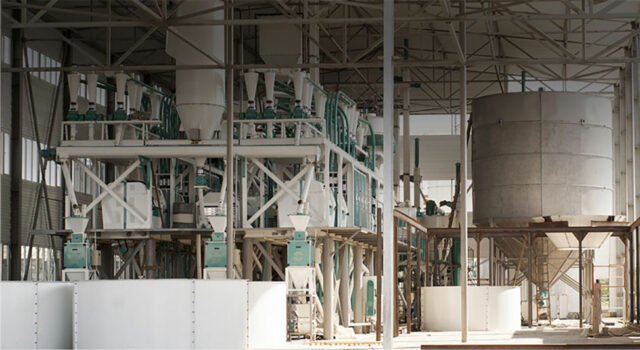
LIBERTYGROUP.COM

LISTED Liberty Flour Mills, Inc. (LFM) expects to be debt-free by end-2025, with proceeds from its property sale projected to be realized in the coming months.

“Proceeds from the sale of the Angono property to Haus Talk are expected in the coming month, and LFM anticipates being debt-free by December 2025,” the company said in the minutes of its stockholders’ meeting filed with the stock exchange on Tuesday.

LFM said the proceeds will allow the company to settle some letters of credit within 30 days.

Last year, the company signed a memorandum of agreement for the sale of its properties to Haus Talk, Inc. for P1 billion.

LFM also said it holds about P300 million in preferred shares that are available for sale if needed.

For the second quarter, LFM posted a net income after tax of P9.6 million, down 63.8% from P26.53 million a year earlier on lower revenues.

Revenues fell by 13.37% to P263.98 million from P304.72 million previously.

Incorporated in 1958, LFM is engaged in flour manufacturing, utilization of its by-products, and the distribution and sale of its produce. It has two subsidiaries: Liberty Property Corp., a real estate company, and Liberty Engineering Corp., which sells equipment and machinery.

At the local bourse on Wednesday, shares in LFM closed 15 centavos lower, or 0.59%, at P25.30 apiece. — Ashley Erika O. Jose

Two Filipino pizzerias hailed at Top 50 Pizza

THE CREW of Crosta (L-R): Ingga S. Cabangon Chua, Thomas Woudwyk, and Yuichi Ito — 50TOPPIZZA.IT

TOP 50 PIZZA, which ranks pizzerias around the world and in each region, places Filipino dining outlets Crosta and A Mano in its list again.

The two pizzerias have been consistently included in the list throughout the 2020s. For example, Makati’s Crosta was in the list last year at No. 12, moving down the list to No. 28 this year. A Mano, meanwhile, moved up to No. 49 from No. 70 last year, and its No. 96 debut in 2023.

In the Asia-Pacific regional list, Crosta enjoys the No. 5 spot (tied with Australia’s Shop225), while A Mano occupies No. 7 (tied with New Zealand’s Dante’s Pizzeria).

The website says about Crosta, “With few seats, pizza and high-quality products, and a selection of wines available by the glass, Crosta is a meeting of three very different sensibilities that creates a one-of-a-kind place.”

The pizza place is operated by Ingga S. Cabangon Chua and Thomas Woudwyk; the kitchen is helmed by Japanese chef Yuichi Ito.

“The doughs are of different styles and all of excellent quality. The toppings range from simple and traditional to more complex ones. A must-try is the round pizza with salami, truly balanced and well-made.”

About A Mano, the guide says, “In the menu you will find pasta, risotto, pizza and whatever your choice may be, you will find a selection of products that would make any Italian restaurant envious, in terms of quality. The style of the pizza is a mix between traditional Neapolitan and contemporary.”

A Mano is a venture by Amado Forés (son of late storied chef Margarita Forés*) through AF Hospitality.

Those two pizzerias are not the only ones that made an appearance on the site’s lists. Wildflour Italian made it to No. 42 and Cebu’s Minante Pizzeria got the No. 48 slot on the Asia-Pacific list.

Worldwide, I Masanielli — Francesco Martucci in Caserta, Italy, got the top spot. “A temple of the best of Italian gastronomic culture just a stone’s throw from the Royal Palace,” is how the 50 Top Pizza list described it.

View the complete list here: https://www.50toppizza.it/. Joseph L. Garcia

*https://www.bworldonline.com/arts-and-leisure/2025/07/17/685628/margaritas-son-takes-over/

Yuchengco-led MGI eyes more capacity from Batangas site

PETROENERGY.COM.PH

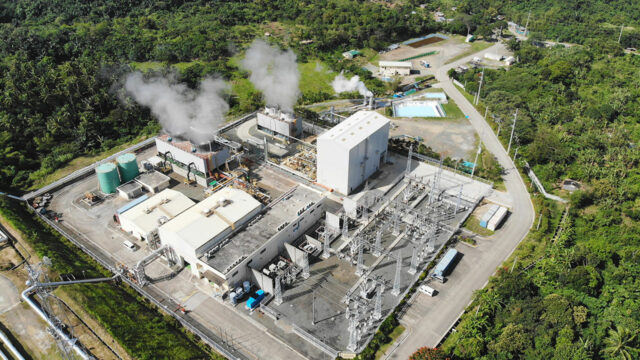
YUCHENGCO-LED Maibarara Geothermal, Inc. (MGI) is planning an expansion of its Batangas facility to boost geothermal capacity.

In a statement on Wednesday, MGI said it is preparing a deep exploration drilling program in 2026 to test an undrilled sector of the Maibarara field that could yield additional capacity.

MGI President Francisco G. Delfin, Jr. said the company has tapped New Zealand firms for technical support to address challenges in geothermal development and operations.

“MGI is grateful for the services rendered by New Zealand firms that were instrumental in MGI’s early success, from reserve estimation through laboratory services and cooling tower treatment; from downhole surveys through well work-overs, and digital mapping,” Mr. Delfin said.

MGI is a joint venture of PetroGreen Energy Corp. (65%), ACEN Corp. (25%), and PNOC Renewable Corp. (10%). It operates the 20-megawatt (MW) Maibarara-1 and 12-MW Maibarara-2 geothermal projects in Sto. Tomas, Batangas.

In February, the company acquired three lots from state-run Power Sector Assets and Liabilities Management Corp. for P473.17 million. The properties, with a combined area of 58,911 square meters, are located in San Rafael, Sto. Tomas, Batangas, and Calamba, Laguna. — Sheldeen Joy Talavera

Peso slides past P57 on higher jobless rate and weak FDI data

BW FILE PHOTO

THE PESO SLIPPED past the P57-a-dollar mark on Wednesday as traders reacted to weaker domestic economic data, including a higher unemployment rate and slower foreign direct investments (FDI).

It closed at P57.125 against the greenback, down 14.5 centavos from P56.98 on Tuesday, according to data from the Bankers Association of the Philippines website.

The peso opened weaker at P57.10, touched an intraday high of P57.05, and dropped to as low as P57.195 before settling at the close. Trading volume declined to $1.44 billion from $1.72 billion the previous day.

“The dollar-peso closed higher due to weaker unemployment data earlier this morning,” a trader said by telephone.

Latest figures from the Philippine Statistics Authority (PSA) showed the jobless rate climbed to 5.3% in July, the highest in three years. The number of unemployed Filipinos rose to 2.59 million from 2.38 million a year earlier and 1.95 million in June.

The increase matched the jobless rate recorded in August 2022 and was significantly higher than the 4.7% posted in July 2024 and the 3.7% in June 2025. Economists said the rise reflected the impact of successive typhoons and monsoon rains, which disrupted hiring during the period.

Weaker foreign investment inflows also dampened sentiment. Preliminary Bangko Sentral ng Pilipinas (BSP) data showed net FDI fell 17.8% to $376 million in June from a year earlier, the lowest since December 2024.

Michael L. Ricafort, chief economist at Rizal Commercial Banking Corp., said the weaker FDI data added pressure on the peso, noting that subdued investor appetite could affect near-term currency movements.

For Thursday, the trader expects the peso to trade at P56.90 to P57.30 a dollar, while Mr. Ricafort sees it moving within P57.05 to P57.25.

The dollar held steady on Wednesday ahead of US inflation data this week that could help shape the outlook for Federal Reserve policy, while a fraught geopolitical backdrop underpinned the likes of the Swiss franc.

Employment data in the last week has shown the US economy created far fewer jobs in the last year than expected, which has made a rate cut from the Fed next week look like a certainty.

Yet it has not dented confidence in the equity market, where stocks trade at record highs, nor has it had much immediate impact on the dollar itself, even as investors weigh the chances of a jumbo half-point cut from the Fed next week.

Israel’s attempted killing of Hamas leaders with an airstrike on Qatar on Tuesday, along with Poland shooting down drones that entered its airspace during a Russian attack in western Ukraine on Wednesday, are keeping investors nervous.

“The market has made up its mind, and probably quite rightly, that the Fed is going to be cutting interest rates,” said Jane Foley, head FX strategist at Rabobank. “But for one, there’s been quite a lot in the price in terms of between now and the end of next year.”

“On the other hand, playing in the same direction is the geopolitical uncertainty. There is the Poland news, there is the Qatar news. None of that is reassuring,” she added.

The euro was subdued against the dollar, but jumped as much as 0.5% against the Polish zloty to 4.268 zloty, its biggest one-day rise in three months.

In terms of Fed expectations, traders are fully pricing in a quarter-point cut next week, with a minor chance of a half-point cut. This week’s reports on wholesale inflation due on Wednesday, and consumer inflation on Thursday, could affect that outside prospect of a larger cut, analysts said.

“The bar for a 50-bp move is high, there would likely need to be a clear downside surprise in core inflation to give doves cover,” said Kieran Williams, head of Asia FX at InTouch Capital Markets.

“Given sticky service prices and the Fed’s preference for signaling gradualism, a jumbo cut next week looks unlikely, but the data will shape how aggressively the market prices the easing path into year-end.” — Aaron Michael C. Sy with Reuters

ADVERTISEMENT
ADVERTISEMENT