BCDA rejects US jurisdiction claims on AI hub
THE Bases Conversion and Development Authority (BCDA) rejected reports that a planned artificial intelligence (AI) hub in the northern Philippines would operate under United States laws or grant diplomatic immunity to investors.
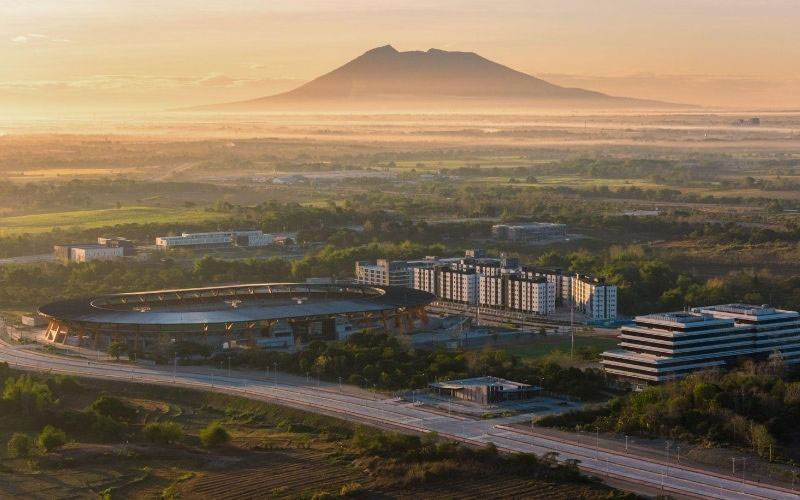
BCDA President and Chief Executive Officer Joshua “Jake” M. Bingcang said that the Washington-led Pax Silica project, a high-value manufacturing zone within New Clark City in Tarlac, will be treated as a regular business development contract.
“No special arrangement to be accorded to the US government,” Mr. Bingcang told reporters on Monday during a site visit.
This follows a Wall Street Journal report claiming the hub would operate under US jurisdiction.
“There are two laws that will govern the transaction here. The Investors List Act and then the BCDA law which was confirmed by the Department of Justice. So, it will be treated as a regular business development contract,” he said.
He said that the BCDA, as the landowner and master developer, will maintain oversight over the 4,000-acre site.
“BCDA will be the one approving their concept plan, master plan. And they will have to abide by our design standards and guidelines,” he said.
US Undersecretary of State for Economic Affairs Jacob Helberg told reporters in a separate interview that the US and the Philippines are currently in a two-year window to negotiate terms.
“So as the agreement that we signed makes clear, we now have a two-year window where we’re going to negotiate terms. At the end of the day, we both share the goal of ensuring investor protections and so now we’re going to begin negotiations and having a discussion about the best way to advance investor protections,” he said.
“I’m not going to get ahead of those conversations we just got here, and we just did our first visit to the site.” He said they will next carry out a technical assessment before moving on to more detailed talks on the “best technical way” to provide long-term investor protections.
When asked if a recent meeting between US President Donald J. Trump and Chinese President Xi Jinping would shift the US economic approach toward the project, Mr. Helberg maintained that the administration’s goals remain steadfast.
“And ultimately, our policies before and after this summit have not changed. We want supply chain security. We want to make sure we continue to stand for fair competition and for our companies, reciprocal trade. And so, our economic policies haven’t changed,” he said.
He said technical assessments will begin next month, and construction is expected to commence by next year. — Erika Mae P. Sinaking