Home Blog Page 997

Colombia’s Senate approves labor reform amid tension with Petro

COLOMBIA’s flag flutters in front of an embassy after US President Donald Trump said he would impose retaliatory measures after the South American country turned away two US military aircraft with migrants being deported in Washington, US on Jan. 26, 2025. — REUTERS

 – Colombia’s Senate on Tuesday approved a modified and much-debated labor reform bill, after President Gustavo Petro decreed a referendum to seek direct approval from voters for the initiative.

The bill, which includes measures to enshrine an eight-hour daytime work day, increase weekend and holiday pay and require social security payments from delivery app drivers, was approved by 57 lawmakers, while 31 opposed it.

Mr. Petro decreed the 12-question referendum last week, in a bid to force the Senate to vote on the reform before the end of its session on June 20 and in defiance of his political opposition, who say the vote would disregard institutional norms and threaten Colombia’s separation of powers.

Lawmakers in May rejected the referendum in a tight 49 to 47 vote and repeated that rejection on Tuesday, voting 52 against and 2 in favor.

The government has said it may call off the referendum if the approved reform is in line with its goals.

“The government is satisfied, we have managed, vote by vote, article by article, a new democratic, progressive labor legislation,” Labor Minister Antonio Sanguino said.

The approved reform will immediately increase wages for work conducted from 7 p.m. onward and gradually increase the surcharge for Sunday and holiday work through July 2027.

Under the law, workers for popular delivery apps like Rappi, who are independent contractors, will be required to make social security contributions.

Meanwhile, the apps will be barred from demanding exclusivity from contractors and must provide human supervision of their algorithms.

Analysts’ estimates for increased labor costs as a result of the bill range from 6.8% to 35%.

A majority of the social and economic reforms promised by Petro – who was elected in 2022 – has been rejected by lawmakers.

Colombia will hold legislative and presidential elections in the first half of 2026. The next legislature session begins in July. – Reuters

Trump to extend TikTok sale deadline for third time, White House says

A TikTok logo is displayed on a smartphone in this illustration taken Jan. 6, 2020. — REUTERS

 – U.S. President Donald Trump will extend a June 19 deadline for China-based ByteDance to divest the U.S. assets of short video app TikTok for 90 days despite a law that mandated a sale or shutdown absent significant progress, the White House said on Tuesday.

Mr. Trump had already twice granted a reprieve from enforcement of a congressionally mandated ban on TikTok that was supposed to take effect in January. “President Trump will sign an additional executive order this week to keep TikTok up and running,” White House press secretary Karoline Leavitt said Tuesday.

That would extend the deadline to mid-September.

“President Trump does not want TikTok to go dark,” she added, saying the administration will spend the next three months making sure the sale closes so that Americans can keep using TikTok with the assurance that their data is safe and secure.

Mr. Trump said in May he would extend the June 19 deadline after the app helped him with young voters in the 2024 election.

Earlier on Tuesday, he had told reporters on Air Force One he expected to again extend the deadline.

“Probably, yeah,” Mr. Trump said when asked about extending the deadline. “Probably have to get China approval but I think we’ll get it. I think President Xi will ultimately approve it.”

The law required TikTok to stop operating by January 19 unless ByteDance had completed divesting the app’s U.S. assets or demonstrated significant progress toward a sale.

Mr. Trump began his second term as president on January 20 and opted not to enforce it. He first extended the deadline to early April, and then again last month to June 19.

In March, Mr. Trump said he would be willing to reduce tariffs on China to get a deal done with TikTok’s Chinese parent ByteDance to sell the short video app used by 170 million Americans.

A deal had been in the works this spring that would spin off TikTok’s U.S. operations into a new U.S.-based firm and majority-owned and operated by U.S. investors, but it was put on hold after China indicated it would not approve it following Trump’s announcements of steep tariffs on Chinese goods.

Democratic senators argue that Mr. Trump has no legal authority to extend the deadline, and suggest that the deal under consideration would not meet legal requirements. – Reuters

Trump administration moves to expand oil and gas leasing in Alaska reserve

STOCK PHOTO | Image from Rawpixel

The Trump administration proposed opening 82% of Alaska’s 23-million-acre (9.3-million-hectare) National Petroleum Reserve for oil and gas leasing, a move that would reverse Biden-era efforts to limit drilling in the area, the Interior Department said on Tuesday.


WHY IT’S IMPORTANT

The move aligns with President Donald Trump‘s energy dominance agenda that aims to boost domestic oil and gas production to stimulate the economy and create jobs.

Former President Joe Biden’s administration had blocked development in some parts of the reserve, known as the NPR-A, to protect wildlife habitat and indigenous communities’ ways of life.


KEY QUOTE

“This plan is about creating more jobs for Americans, reducing our dependence on foreign oil and tapping into the immense energy resources the National Petroleum Reserve was created to deliver,” Adam Suess, the Interior Department’s acting assistant secretary for land and minerals management, said in a statement.


CONTEXT

The NPR-A was designated for oil and gas exploration in the 1970s to address energy shortages. The Biden administration in 2022 imposed restrictions on fossil fuel leasing and development in Alaska as part of its climate change agenda, but left about half of the reserve open to leasing.


BY THE NUMBERS

The draft plan would allow oil and gas leasing across 82% of the reserve’s 23 million acres. It would allow leasing at Teshekpuk Lake, an area prized for wildlife that has been protected under rules dating back to the Reagan administration.


WHAT’S NEXT

The public has 14 days to submit comments on the draft to the Interior Department’s U.S. Bureau of Land Management. – Reuters

Immigration raids in Los Angeles hit small business owners: ‘It’s worse than COVID’

 – Juan Ibarra stands outside his fruit and vegetable outlet in Los Angeles’ vast fresh produce market, the place in the city center where Hispanic restaurateurs, street vendors and taco truck operators buy supplies every day.

On Monday morning, the usually bustling market was largely empty. Since Immigration and Customs Enforcement officials began conducting immigration raids more than a week ago, including at a textile factory two blocks away, Ibarra said business has virtually dried up.

His street vendor customers are at home in hiding, while restaurant workers are too scared to travel to the market to pick up supplies. Most of the market’s 300 workers who are in the U.S. illegally have stopped showing up.

Mr. Ibarra, who pays $8,500 a month in rent for his outlet, which sells grapes, pineapples, melons, peaches, tomatoes and corn, usually takes in about $2,000 on a normal day. Now it’s $300, if he’s lucky. Shortly before he spoke to Reuters he had, for the first time since the ICE raids began, been forced to throw out rotten fruit. He has to pay a garbage company $70 a pallet to do that.

“It’s pretty much a ghost town,” Mr. Ibarra said. “It’s almost COVID-like. People are scared. We can only last so long like this – a couple of months maybe.”

Ibarra, 32, who was born in the U.S. to Mexican parents and is a U.S. citizen, is not alone in seeing President Donald Trump’s crackdown on immigrants in the country illegally devastate his small business.

It’s happening across Los Angeles and California, other business owners and experts say, and threatens to significantly damage the local economy.

A third of California’s workers are immigrants and 40% of its entrepreneurs are foreign-born, according to the American Immigration Council.

The Trump administration, concerned about the economic impacts of his mass deportation policy, shifted its focus in recent days, telling ICE to pause raids on farms, restaurants and hotels.

The ICE raids triggered protests in Los Angeles. Those prompted Mr. Trump to send National Guard troops and U.S. Marines into the city, against the wishes of California’s Democratic Governor Gavin Newsom.

Abigail Jackson, a White House spokeswoman, said violent protesters in Los Angeles had created an unsafe environment for local businesses. “It’s the Democrat riots – not enforcement of federal immigration law – that is hurting small businesses,” Jackson told Reuters.

On Tuesday, the Los Angeles County Board of Supervisors unanimously approved a motion to assess the economic impacts of ICE’s raids and to mobilize resources to help immigrant workers and their families.

“The ongoing immigration raids have created a chilling effect, with many families afraid to leave their homes to go to work or to support our beloved businesses,” said Hilda Solis, the board’s chair pro tem who co-sponsored the motion.


RESTAURANT SLUMP

The recent shift in focus by Mr. Trump and ICE has been no help for Pedro Jimenez, 62, who has run and owned a Mexican restaurant in a largely working class, Hispanic neighborhood in Los Angeles for 24 years.

Many in his community are so scared of ICE they are staying home and have stopped frequenting his restaurant. Mr. Jimenez, who crossed into the U.S. illegally but received citizenship in 1987 after former Republican President Ronald Reagan signed legislation granting amnesty to many immigrants without legal status, said he’s taking in $7,000 a week less than he was two weeks ago.

Last Friday and Saturday he closed at 5 p.m., rather than 9 p.m., because his restaurant was empty.

“This is really hurting everybody’s business,” he said. “It’s terrible. It’s worse than COVID.”

Andrew Selee, president of the non-partisan Migration Policy Institute, said the Trump administration began its immigration crackdown by focusing on people with criminal convictions. But that has shifted to workplace raids in the past two weeks, he said.

“They are targeting the hard working immigrants who are most integrated in American society,” Mr. Selee said.

“The more immigration enforcement is indiscriminate and broad, rather than targeted, the more it disrupts the American economy in very real ways.”

Across Los Angeles, immigrants described hunkering down, some even skipping work, to avoid immigration enforcement.

Luis, 45, a Guatemalan hot dog vendor who asked to be identified only by his first name for fear of being targeted by ICE, said he showed up this weekend at the Santa Fe Springs swap meet – a flea market and music event. He was told by others that ICE officers had just been there.

He and other vendors without legal immigration status quickly left, he said.

“This has all been psychologically exhausting,” he said. “I have to work to survive, but the rest of the time I stay inside.” – Reuters

Marcos orders oil contingencies

Motorists queue at a gasoline station in Quezon City. — PHILIPPINE STAR/MIGUEL DE GUZMAN

By Chloe Mari A. Hufana, Reporter

PHILIPPINE President Ferdinand R. Marcos, Jr. has ordered agencies to prepare for potential spikes in global oil prices amid worsening tensions in the Middle East, a major oil-producing region, the presidential palace said on Tuesday.

Beyond fuel subsidies, the government is considering additional aid packages should prices surge, Palace Press Officer Clarissa A. Castro told a news briefing.

She said Mr. Marcos has directed the Department of Energy (DoE) to talk to oil companies to ensure adequate stockpiles and stagger fuel price adjustments to soften the impact on consumers. 

While the war with Israel has yet to hit Iran’s crude oil production and export facilities, Brent futures have risen almost 6% due to heightened risks since the close on June 12 to trade around $73.58 a barrel in Asia on Tuesday, Reuters reported.

Oil firms in the Philippines are mandated to maintain a minimum 30-day fuel inventory to help stabilize local supply. Should global crude prices breach the $80 per barrel threshold, fuel subsidies for public transport drivers and fisherfolk will be automatically triggered, Ms. Castro added.

Motorists faced another round of fuel price hikes this week, as oil companies announced increases on Monday, marking the fifth consecutive week of gains for gasoline, the third for diesel, and the second for kerosene.

The DoE’s Oil Industry Management Bureau earlier attributed the upward trend to several global factors, including stronger market sentiment from improving US-China trade relations, stalled nuclear talks between the US and Iran, and a projected surge in global oil demand over the next 25 years.

According to the Palace, the Department of Agriculture (DA) and the Department of Transportation would also be alerted to roll out the necessary support programs should tensions in the Middle East drive up fuel prices.

Jetti Petroleum, Inc. President Leo P. Bellas said they are willing to implement whatever directive the government gives.

“We are monitoring the events due to possible supply concerns,” he said in a Viber chat. “For price increases, we are willing to implement whatever will be required by the government to downstream oil industry players.”

He noted the company maintains “healthy product inventories” at its terminals, but any significant spike in local demand would affect supply and other oil companies.

Rizal Commercial Banking Corp., Chief Economist Michael L. Ricafort said the possible spike in oil prices may have an impact on inflation.

“[There could be a] slight pickup in inflation, with global crude oil prices higher by about +$8 since June 13, 2025, [when] Israel-Iran attacks started,” he said in a Facebook Messenger chat.

“[It] could also lead to some increase in the country’s trade deficit, prices of imports, and overall trade balance,” he added.

Inflation cooled to an over five-year low of 1.3% in May, as utility costs rose at a slower pace. This brought the five-month average to 1.9%, slightly below the central bank’s 2-4% target band.

An uptick in oil prices could also reduce consumers’ disposable income, Mr. Ricafort said.

Meanwhile, Management Association of the Philippines (MAP) President Alfredo S. Panlilio said the business community is concerned about the Iran-Israel conflict.

“Of course, it’s always a concern. Any war is a concern,” he told reporters on the sidelines of the MAP x KPMG Technology Summit on Tuesday.

“We’re hoping that there’s a resolution [to] that issue before it really impacts everybody globally,” he added.

Meanwhile, the Philippine government is closely monitoring possible fertilizer supply disruptions, as about 66% of the Philippines’ fertilizer imports are nitrogen-based, mostly sourced from Qatar.

Ms. Castro said Agriculture Secretary Francisco P. Tiu Laurel, Jr. assured that alternative suppliers, including those in nearby countries such as Brunei, are being considered to ensure enough fertilizer supply for farmers.

The DA currently sees no long-term threat to fertilizer availability, provided that sea lanes in the region remain open, especially the Strait of Hormuz, a key global chokepoint located between the Persian Gulf and the Gulf of Oman.

Incoming lawmakers urged to focus on economic measures

PHILIPPINE STAR /KJ ROSALES

By Kenneth Christiane L. Basilio, Reporter

THE INCOMING 20th Congress should prioritize legislation that would boost economic growth and enforce fiscal discipline to curb rising debt, while laying the foundation for long-term economic stability, economists and business groups said.

John Paolo R. Rivera, a senior research fellow at the Philippine Institute for Development Studies, said lawmakers should focus on measures that would drive productivity-led growth, improve tax revenue, and reduce wasteful spending.

“[The] focus should be on easing business through digital infrastructure laws, revenue reforms for fiscal sustainability, middle-skills and workforce development, climate-resilient infrastructure, trade facilitation and industrial upgrading,” he said in a Viber message.

“All of these are aimed towards enhancing competitiveness and economic resilience,” he added. 

Malacañang releases a list of priority bills to help fast-track legislative action on measures viewed as critical to national development, as mandated under Republic Act No. 7640.

Out of the 64 priority bills for the 19th Congress, only 33 have been enacted into law, based on the accomplishment list on the Legislative-Executive Development Advisory Council’s website.

Priority bills that failed to hurdle the 19th Congress include a measure that sought to reform the military pension system, which economic managers earlier warned is currently unsustainable and could trigger a “fiscal collapse.” It passed the House of Representatives on third reading but was left pending on second reading in the Senate.

A proposed shift to a cash budgeting system, which would restrict appropriations to a single fiscal year, also failed to secure congressional approval. The measure aimed to streamline government spending by ensuring funds were allocated and utilized within a defined timeframe, but it languished in the House’s appropriations and Senate’s finance committees since it was filed more than two years ago.

The 20th Congress, the last under the Marcos administration, is set to convene on July 28.

Measures to be prioritized in the next Congress should include economic reforms aimed at bringing the country’s debt levels back within internationally accepted thresholds, Rizal Commercial Banking Corp. Chief Economist Michael L. Ricafort said in a Viber message.

The Philippines’ debt as a share of the gross domestic product (GDP) rose to 62% at the end of the first quarter, the highest in two decades. It is slightly higher than the 60% threshold considered manageable by multilateral lenders for developing economies.

The government seeks to bring the ratio down to 60.4% by end-2025, and to 56.9% by 2028.

The National Government’s (NG) ballooning budget deficit is also a concern. In the first four months of the year, the budget deficit widened by 79% to P411.5 billion from the P229.9-billion gap a year ago amid faster government spending.

“The government’s deficit is quite worrisome,” Philippine Chamber of Commerce and Industry Chairman George T. Barcelon said in a phone call. “There should be a program to cut down on unnecessary expenses.”

He said Congress should eliminate bloated appropriations in the annual budget, including the purchase of overpriced goods and “pork barrel” projects disguised as financial aid programs.

The NG’s deficit ceiling for 2025 is capped at P1.54 trillion or 5.3% of GDP.

Jose Enrique “Sonny” A. Africa, executive director at think tank IBON Foundation, said there should also be a shift towards “progressive” taxes, such as higher income duties on large corporations and a wealth tax.

“The 20th Congress should make decisive shifts towards progressive taxation with wealth taxes, higher income taxes on large corporations and rich families, and windfall land value taxes while reducing consumption taxes that disproportionately burden the poor,” he said in a Viber message.

A House bill seeking to impose a 1-3% tax on people with a net value of taxable assets exceeding P1 billion failed to gain traction in the chamber. There was no counterpart proposal in the Senate.

Finance Secretary Ralph G. Recto said last year he is not in favor of taxing the wealthy, citing that such a measure could be “counterproductive.”

However, Mr. Barcelon said Congress should not make changes to the corporate income tax rates. “If you touch those, you will hear foreign investors saying you’re changing the rules every so often.”

In 2021, the Philippines lowered the corporate income tax rate to 25% from 30% under a law aimed at improving investment competitiveness.

“I would not be in favor of an increase in income tax on companies,” British Chamber of Commerce of the Philippines (BCCP) Executive Director Chris Nelson said in a phone call, citing that the government should instead focus on attracting foreign investments.

High electricity and logistics costs also dampen the Philippines’ appeal to foreign investors, Mr. Barcelon said, urging policymakers to tackle long-standing structural issues in the energy and transportation sectors.

Mr. Africa said the government should pursue “real” reforms in the energy sector, including increased state control, to lower high electricity costs.

The next Congress should review the implementation of existing laws designed to enhance the country’s appeal to foreign investors, Mr. Barcelon said.

The BCCP supported the call for the monitoring of the implementation of investment-related laws.

“[It’s] critically important that the implementing rules and regulations are clear and obviously support the bill itself,” Mr. Nelson said.

Philippine business groups and foreign chambers are finalizing a joint list of priority reforms, which they plan to unveil ahead of President Ferdinand R. Marcos, Jr.’s State of the Nation Address in late-July, American Chamber of Commerce of the Philippines Executive Director Ebb Hinchliffe said in a Viber message.

The legislative agenda should also include measures facilitating technology transfers and upgrading the country’s cybersecurity capabilities.

The next Congress must prioritize legislation requiring foreign companies operating in the country to transfer technology and collaborate with local companies to spur domestic industry growth, Mr. Africa said.

“Too many liberalization laws sought to reinforce foreign investor privilege rather than strengthen Filipino industry or public enterprises,” said Mr. Africa.

A bill pushing for a review of foreign investments into the country should also be prioritized, he added.

“They can study current global foreign investment trends and, for instance, legislate strategic reviews of foreign investment where these are screened for their contribution to Filipino industrialization and even any national security risks,” he said.

Mr. Nelson said lawmakers must prioritize a cybersecurity bill in the next Congress. “This is a key issue across economies in the world.”

The Philippines’ weak cybersecurity systems have led to national security vulnerabilities and economic losses, with incidents ranging from foreign actors allegedly breaching the President’s office and stealing sensitive documents to more than 80% of businesses facing cyberattacks last year.

Congress should also look at prioritizing a measure mandating digital payment platforms for government and business transactions and amending the bank secrecy law, said Mr. Hinchliffe.


Infrastructure shortfalls hurt PHL competitiveness

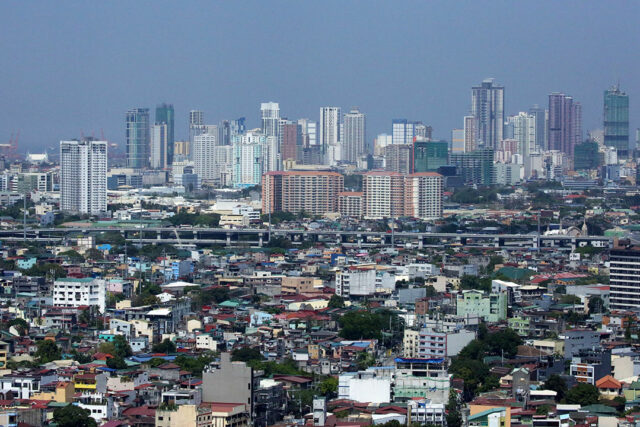
High-rise buildings dominate the Metro Manila skyline. — PHILIPPINE STAR/EDD GUMBAN

By Justine Irish D. Tabile, Reporter

DELAYS in the implementation of infrastructure projects are dragging down the Philippines’ competitiveness in Southeast Asia, experts said.

Jamil Paolo S. Francisco, executive director of the Asian Institute of Management (AIM) Rizalino S. Navarro Policy Center for Competitiveness, said that the country continues to lag behind its regional peers due to inefficient infrastructure.

“The good thing is we are seeing a lot of new developments and new projects. The challenge is that a lot of these new developments or projects either have been delayed in their implementation or in their completion,” he told BusinessWorld on the sidelines of an AIM forum on Tuesday.

“We have already started (projects), we are spending good resources on it, but until they are finally completed, it is not reflected in the data, nor is it reflected in the perceptions of people,” he added.

The Philippines inched up a spot to 51st in the recently released 2025 World Competitiveness Yearbook (WCY) of the International Institute for Management Development (IMD).

Despite the improvement, the country still remained a laggard in the region, ranking 13th out of 14 Asia-Pacific economies in the index and last among the five Association of Southeast Asian Nations (ASEAN) members covered in the report.

“(The Philippines’) absolute position remains comparatively low. It trails far behind regional leaders such as Singapore (second) and Malaysia (23rd), as well as closer competitors like Thailand (30th) and Indonesia (40th),” said José Caballero, senior economist at the IMD World Competitiveness Center.

“These countries not only score higher across most competitiveness factors but also demonstrate more consistent improvements in institutional quality and human capital development,” he added.

The WCY ranks economies across four competitiveness factors: economic performance, government efficiency, business efficiency, and infrastructure.

Mr. Francisco pointed out that infrastructure in the WCY report does not only include basic infrastructure such as roads, bridges and ports, but also technological, scientific, and human infrastructure.

“These include education, healthcare, very basic indicators like pupil-teacher ratios, spending on education, and test scores of our students. So it goes back to the basics, that we have to improve human capital,” he said.

“Human capital is a strength of ours; at least in terms of the labor force, we have a huge population, and we have a skilled labor force with the right competencies. But how long will those competencies last, especially in a world where the requirements are quickly changing?” he added.

The Philippines’ competitiveness may also be weighed down by issues over implementation of regulations and policies, which are affecting the entry of foreign direct investments.

“We might have the right regulations, policies, and laws, and many of these are at par with not just our ASEAN neighbors but also globally, but it is a matter of consistent, sustained, and complete implementation,” he said.

“It is clear where we have to work. We have to work on not just implementation but full and sustained implementation, as well as better communication of what the government is doing in all of these areas,” he added.

Meanwhile, Philippine Institute for Development Studies Senior Research Fellow John Paolo R. Rivera said political noise may have also affected the Philippines’ competitiveness.

“Here in the Philippines, one of the drags would be political noise… which generates economic risk. So perhaps we can look at how we can manage the political noise going on in the country so we can focus on the economic component,” he said.

Mr. Rivera also said legislation that addresses the weak points of the Philippine economy could help in improving its overall competitiveness.

“We have weak points in terms of investments. But the Philippines has already made significant strides in attracting more investments through the Ease of Doing Business Act, the Public Service Act, and all other amendments relaxing constitutional constraints,” he said.

“The idea is good. The laws are there, but the implementation on the ground, what the frontliners are actually experiencing, would have to be addressed,” he added.

Management Association of the Philippines Chair for Ease of Doing Business Ira Paulo A. Pozon said that the 2025 WCY report showed the Philippines has made some improvements, but its peers are doing it faster, better, and with a bigger impact.

“That is why I am not necessarily saying that the Philippines is doing poorly. Actually, the government is doing a decent job,” he said.”

“But we should all use the WCY to see where we are excelling and lagging, focus on fixing what we need to fix for a longer-term plan, and also maintain the things that we are doing well in,” he added.

Mr. Pozon said that it is important for the Philippines to continue in strengthening the factors that make it attractive, such as its workforce, to future-proof them.

“We are ranked high in terms of the strength our workforce, but technological developments like artificial intelligence  may render the that strength of our workforce redundant, especially with the looming threats of job displacement and task automation” he said.

“It should be a balance. We look at where we are lagging and where we are succeeding, and with the current challenges and threats, we try to improve, maintain, and protect the different sectors or indicators with whatever resources we currently have,” he added.

PHL to implement crypto-asset framework

Bitcoin cryptocurrency representation is pictured on a keyboard in front of binary code in this illustration taken Sept. 24, 2021. — REUTERS

THE PHILIPPINES will implement a crypto-asset framework as part of its efforts to combat cross-border tax evasion and illicit financial flows, the Department of Finance (DoF) said.

In a statement on Tuesday, the DoF said it is committed to adopting the Crypto-Asset Reporting Framework (CARF) by 2028.

The framework sets the guidelines for the reporting and automatic exchange of information associated with crypto-assets.

“We need faster and stronger systems for collaboration if we are to beat tax evasion and illicit transactions. This is a timely commitment as digital currency becomes one of the preferred means for transactions,” Finance Secretary Ralph G. Recto said in a statement.

“The government must ensure that crypto-asset users are paying their fair share of taxes and that no illicit financial activity goes unpunished.”

The Philippines made the commitment during the 8th Asia Initiative Meeting in Male, Maldives. It joined 67 other jurisdictions that have already vowed to implement the CARF by 2027 or 2028. Other Asian countries that have made the commitment include Japan, South Korea and Singapore.

The CARF institutionalizes the framework for the reporting and automatic exchange of information in relation to crypto-assets between tax authorities for the purpose of tax compliance.

The Securities and Exchange Commission (SEC) has released guidelines on crypto-asset service providers, which require them to apply for a license.

The SEC said an estimated $40 billion worth of cryptocurrency value was received by the Philippines from July 2023 to June 2024, citing data from the 2024 Geography of Crypto Report of Chainalysis.

In February, the Financial Action Task Force removed the Philippines from its list of jurisdictions under increased monitoring for “dirty money” after over three years or since June 2021.

The European Commission  also recently removed the Philippines from its list of high-risk jurisdictions.

Despite the delisting, Xiao Chen, associate director at Moody’s, has said the Philippines should continue to monitor risks in sectors such as cryptocurrency.

“Continued vigilance will be essential, particularly in sectors such as online gaming and cryptocurrency, to ensure that residual risks are effectively managed,” he said. — A.R.A.Inosante

Supporting local weavers: New exhibit showcases ceramics and puni

BRONTË H. LACSAMANA

PALM WEAVING, or puni, was once a dying art. For Jonnah Garcia, founder of the social enterprise Punique Handicrafts, the purpose of weaving or braiding leaves easily goes beyond palaspas, the palm fronds used by worshippers in Catholic churches during Palm Sunday.

“Our mission is to revive it through accessories, flower arrangements, and home decor,” she said.

Since palaspas are only used once a year, Ms. Garcia got the idea to transform the art into a business that provides sustainable livelihood to local women weavers in Malolos, Bulacan. They now supply puni decorations to hotels in Boracay, Canada, and Hong Kong.

At the Ascott Makati, this art form is now on display through an exhibit, Likha: Ceramics and Puni, which places the woven works in vases crafted by Philippine ceramics pioneers Jon and Tessy Pettyjohn.

“We potters like to make these ceramics and vases, but we don’t often get to see people use them. Through this, it’s nice to finally see how they’re being used,” Mr. Pettyjohn told BusinessWorld at the sidelines of the exhibit opening.

The exhibit features many of the couple’s ceramic works over the past 10 years, made at the Pettyjohn Pottery in Laguna, paired with puni flower arrangements created by Puni de Malolos artisans.

Because the Pettyjohns’ works have a sculptural quality while also maintaining functionality, visitors can clearly visualize through the puni how the vases would appear in their own homes.

Our goal is to bridge art and function, to blur the line between. Flower arranging vessels are perfect for this kind of experimentation,” said Mr. Pettyjohn.

The difference between his and his wife’s works is also evident, he said — his being simpler and more austere, with natural colors, whereas Mrs. Pettyjohn’s are more dynamic and colorful.

Meanwhile, because puni is only formally taught in Malolos, Bulacan, social enterprise Punique Handicrafts and artisan collective Puni de Malolos are well-equipped to showcase the best of the art form.

“It was once limited to palaspas, food containers, and toys. Now, puni can be found in fashion accessories and even bridal bouquets,” Ms. Garcia said.

The Likha exhibit offers a glimpse into how puni can be made into handmade flowers and leaf and bead accents, put together by Punique’s senior designer Henry De Guzman.

Puni de Malolos is also collaborating with the Ascott Makati hotel staff to make puni art more visible within the property even after the exhibit ends. A puni training session, led by Puni de Malolos tourism officer Marichelle Bernardo, was held for the hotel’s housekeeping department.

Likha: Ceramics and Puni is on display until June 29 at Ascott Makati’s lobby. Select pieces by Jon and Tessy Pettyjohn, as well as floral bouquets by Punique Handicrafts, are available for purchase. — Brontë H. Lacsamana

SMC, SMIC, Meralco lead 40 PHL firms in Fortune’s SE Asia 500 list

AYALALAND.COM.PH

FORTY PHILIPPINE companies have been included in Fortune’s 2025 Southeast Asia 500 list, led by San Miguel Corp. (9th), SM Investments Corp. (25th), Manila Electric Co. (35th), Ayala Corp. (47th), and JG Summit Holdings, Inc. (50th).

The list ranks the region’s largest companies by revenue as of end-2024. This marks the second edition of the annual list published by the American business magazine.

Companies on the 2025 list collectively generated $1.82 trillion in revenue, up from $1.79 trillion a year earlier. The minimum revenue for inclusion was $349.4 million.

Other large Philippine firms on the list include BDO Unibank, Inc. (52nd), GT Capital Holdings, Inc. (61st), Aboitiz Equity Ventures, Inc. (68th), Jollibee Foods Corp. (79th), Cosco Capital, Inc. (88th), Bank of the Philippine Islands (90th), Alliance Global Group, Inc. (92nd), PLDT, Inc. (95th), and Metropolitan Bank & Trust Co. (96th).

The list also featured Robinsons Retail Holdings, Inc. (100th), Globe Telecom, Inc. (114th), PAL Holdings, Inc. (116th), Lopez Holdings Corp. (120th), International Container Terminal Services, Inc. (125th), LT Group, Inc. (153rd), China Banking Corp. (178th), Union Bank of the Philippines (182nd), DMCI Holdings, Inc. (185th), and Filinvest Development Corp. (186th).

Rounding out the Philippine contingent were Rizal Commercial Banking Corp. (203rd), Monde Nissin Corp. (210th), Security Bank Corp. (220th), Century Pacific Food, Inc. (221st), DigiPlus Interactive Corp. (223rd), Metro Pacific Investments Corp. (227th), Synergy Grid & Development, Inc. (286th), Bloomberry Resorts Corp. (289th), Basic Energy Corp. (311th), D&L Industries, Inc. (355th), Converge ICT Solutions, Inc. (356th), Metro Retail Stores Group, Inc. (361st), Manila Water Co., Inc. (384th), Wilcon Depot, Inc. (402nd), SSI Group, Inc. (435th), and Nickel Asia Corp. (492nd).

DigiPlus saw one of the biggest jumps, climbing over 259 spots, driven by growth in its gaming platforms BingoPlus, ArenaPlus, and GameZone.

“Being part of Fortune’s list is a reflection of the trust we’ve earned and the impact we deliver,” said DigiPlus Chairman Eusebio H. Tanco.

Ayala Corp., which improved by 23 spots, said the ranking affirms its strategy in key growth sectors.

Bloomberry, which advanced 18 places, attributed its performance to the opening of Solaire Resort North in Quezon City in May last year.

Among Southeast Asian countries, Indonesia led with 109 companies, followed by Thailand (100), Malaysia (92), Singapore (81), Vietnam (76), the Philippines (40), and Cambodia (2).

Fortune said the energy sector contributed nearly one-third of total revenue across the list, followed by financial companies.

The top five companies overall were Singapore’s Trafigura Group, Thailand’s PTT Public Co. Ltd., Indonesia’s PT Pertamina, and Singapore-based Wilmar International Ltd. and Olam Group, which collectively made up 28% of the list’s total revenue.

Fortune’s interest in the region reflects Southeast Asia’s growing importance as an engine of global growth,” said Clay Chandler, Fortune executive editor for Asia.

“The region has become a crucial manufacturing and export hub, attracting capital flows and gaining momentum amid global trade shifts.” — Revin Mikhael D. Ochave

Art for children at the National Museum

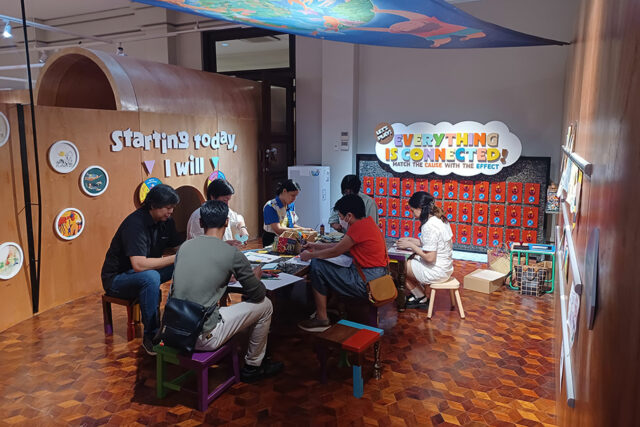
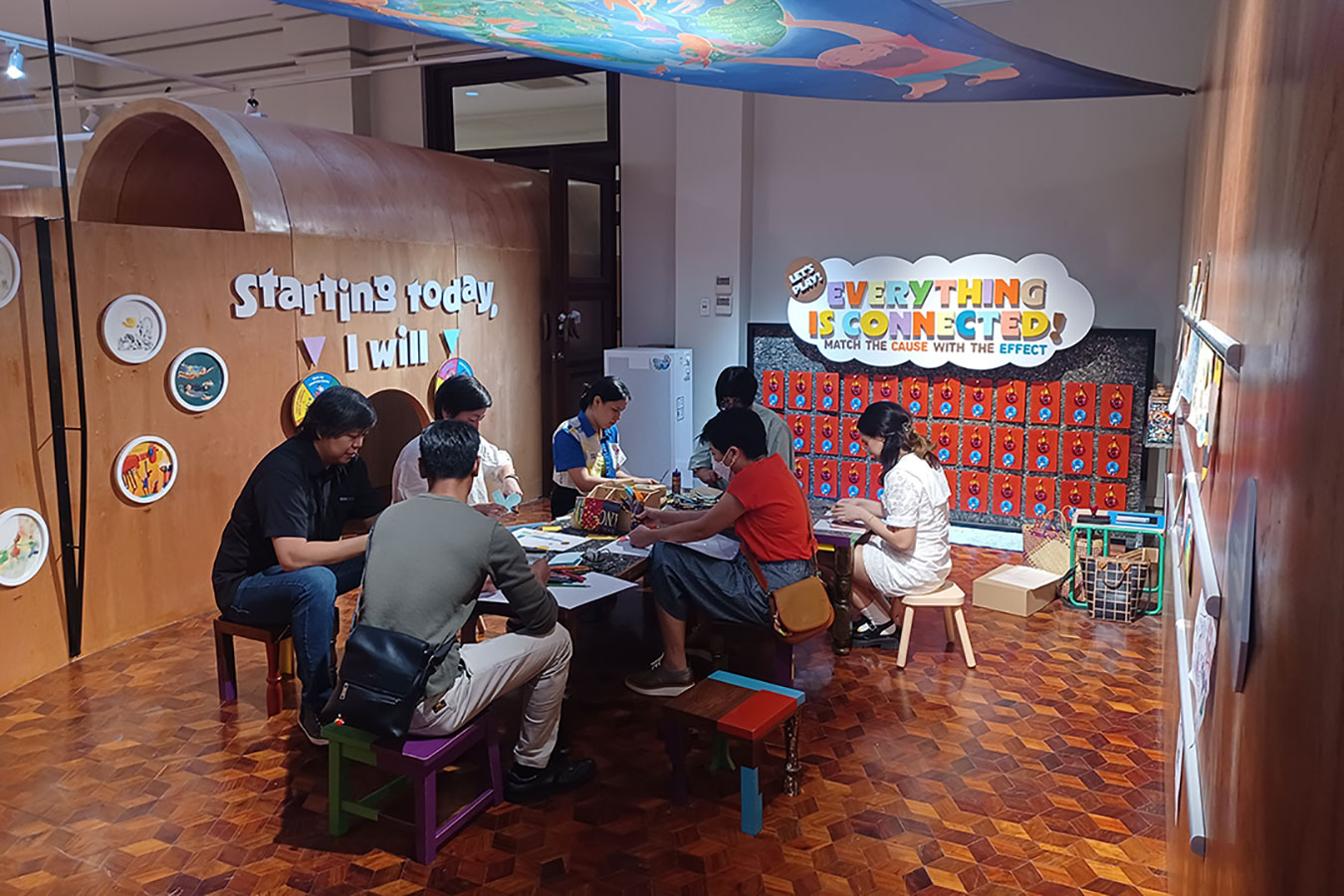
ONE OF the interactive sections of the exhibit. — BRONTË H. LACSAMANA

FOR THE PAST 20 years, the Center for Art, New Ventures and Sustainable Development (CANVAS) has been promoting literacy and exploring national identity among children through art exhibits and children’s books, commissioning various acclaimed Filipino artists and writers.

Elias and His Trees, CANVAS’ first book, written by Augie Rivera and illustrated by Romeo Forbes, was published in 2005. To date, the organization has published over 50 books covering a variety of themes — children’s rights, the environment, democracy, friendship, family, and grief.

Starting June 14, CANVAS is holding the benefit art exhibit CANVAS: 20 Years of Art and Stories for its 20th anniversary. It is currently open to the public on the fourth floor of the National Museum for Fine Arts in Manila. The exhibit will run for a year.

“We cling to the hope and possibility that somewhere down the line, one of the books that we publish, one of the artworks that we show, or one of ideas that we share, will trigger the imagination of one child who will then be moved to change the world for the better,” said CANVAS Founder and Executive Director Gigo Alampay at the exhibit preview in May.

Some notable titles include the award-winning Hanapin Ang Sagot: Ano Ang Batas Militar?, Karapat Dapat, and I Like Wearing Rainbows. Other books, such as Nadia and the Blue Stars and Silim, Prinsesa ng Dilim, have been adapted into stage plays and musicals.

CANVAS has worked with prominent figures in Philippine literature to author and translate books, including Vim Nadera, Cyan Abad-Jugo, and Butch Dalisay. Talents in the visual arts who have shared their gifts with CANVAS include National Artist Benedicto “BenCab” Cabrera, Daniel dela Cruz, Renato Barja, Jonathan Madeja, Mark Justiniani, Joy Mallari, Leeroy New, Elmer Borlongan, Lito Mondejar, Renz Baluyot, Liza Flores, and Ang Ilustrador ng Kabataan (Ang INK), to name a few.

THE EXHIBIT
CANVAS: 20 Years of Art and Stories is a colorful yet compact summary of the art and literature representing the various advocacies it has promoted in the past. The climate change section in the exhibit has interactive elements, including a drawing table and a matching game to foster appreciation for nature. The “safe space” area teaches about internet safety, while the “karapat dapat” section talks about children’s rights in a corner filled with pillows and mats.

At the heart of the exhibition hall is “Read. Imagine. Create.” where visitors can read, play, and rest. There will be workshops and activities on storytelling, poetry writing, story writing, illustration and art appreciation, and upcycling scheduled throughout the year.

For parents and educators, there will be talks on topics such as explaining Martial Law to children and ensuring internet safety for the family. The complete schedule and registration details will be posted on CANVAS’ social media accounts.

“The show includes several interactive elements designed to engage young visitors. Some sections feature archways that children can go through, inviting them to explore at their own pace,” said CANVAS curator and visual artist Jaime Pacena II.

As for the selection of artworks and books on display, Mr. Alampay explained that the exhibit aims to show “a collective portrait of the values, stories, and creative energies that have shaped CANVAS over the past 20 years.”

Aside from the paintings-turned-storybooks that have been commissioned by the non-profit in the past, long-time collaborators like Daniel dela Cruz and Renato Borja, Jr. created large-scale sculptures just for the exhibit.

“To complete this experience, we partnered with Arkisens, a collective of artist-architects, whose contribution helped translate the curatorial vision into a tangible, spatial encounter,” said Mr. Alampay.

MUSEUM, BOOK PROGRAMS
Mr. Pacena added that the exhibit, with its rounded wooden corners and exploratory maze-like structure, hopes to serve as a blueprint for the soon-to-open Tumba-Tumba Children’s Museum of Philippine Art in Ibaan, Batangas, where everything on display at the National Museum, plus those still to come, will find a permanent home.

Situated on a 15,000-square-meter piece of land, Tumba-Tumba is currently open only for special events or by appointment.

At the moment, there are five installations at the Tumba-Tumba museum: Elmer Borlongan and Lito Mondejar’s Tree Huggers; Leeroy New’s first permanent structure, I Am the Explorer that takes the form of a spaceship; Don Bryan Bunag’s Lilim; Cian Dayrit’s The Anti-Monument (The Weight of Words); and John Santos and Pam Yan Santos’ Not A Mirage.

The dream project of having a permanent structure to house art for children and families to visit and see is in the process of being funded through collaborations and sponsorships, according to Mr. Alampay.

In the meantime, CANVAS has its “One Million Books for One Million Filipino Children” campaign, wherein the non-profit donates its books to children in public schools and underserved communities across the Philippines. The books are also available for free download from the CANVAS website.

CANVAS: 20 Years of Art and Stories is on view at Galleries 25 and 26 on the fourth floor of the National Museum of Fine Arts until June 2026. — Brontë H. Lacsamana

ACEN exits diesel to reach full RE by yearend

ACENRENEWABLES.COM

ACEN Corp., the listed energy platform of the Ayala group, is divesting its remaining diesel power assets as it aims to achieve full renewable energy (RE) generation by the end of 2025.

In a regulatory filing on Tuesday, ACEN said its executive committee had approved the sale of the company’s ownership interests in three special purpose vehicles to AC Energy and Infrastructure Corp. (ACEIC).

The sale covers Bulacan Power Generation Corp., which owns a 52-megawatt (MW) diesel plant in Norzagaray, Bulacan; One Subic Power Generation Corp., which owns a 116-MW diesel facility in the Subic Freeport; and CIP II Power Corp., which owns a 21-MW diesel plant in Bacnotan, La Union.

ACEIC, which holds Ayala’s energy and infrastructure assets, is ACEN’s parent company and major shareholder.

ACEN said the transaction would proceed upon completion of all required conditions and execution of definitive agreements.

The total consideration for the sale represents less than 10% of ACEN’s total assets as of Dec. 31, 2024.

“The divestment will help the Company achieve its goal of reaching 100% renewable energy generation by end-2025,” the company said.

In 2022, ACEN completed the full divestment of its coal-fired power plant under South Luzon Thermal Energy Corp. through what it described as the world’s first energy transition mechanism.

ACEN currently has 7 gigawatts (GW) of attributable RE capacity across operational, under-construction, and committed projects.

The company has expanded its footprint outside the Philippines to Australia, India, Indonesia, Vietnam, Lao PDR, and the United States.

It aims to grow its renewables portfolio to 20 GW by 2030.

“ACEN remains committed to lead the energy transition in the Philippines and around the region. We will remain steadfast with our purpose and aspirations, notwithstanding the global headwinds and noise besetting sustainable initiatives,” ACEN President and Chief Executive Officer Eric T. Francia said during the company’s annual stockholders’ meeting held in April.

“At the core of this sustained transformation is the organization’s focus on execution while delivering impact for all our key stakeholders.” — Sheldeen Joy Talavera