Home Blog Page 996

Sugar production estimate revised upward to 2 MMT

PHILSTAR FILE PHOTO

SUGAR OUTPUT may hit 2 million metric tons (MMT) this crop year, according to the Sugar Regulatory Administration (SRA).

The new projection far exceeds the initial forecast of 1.782 MMT and the interim estimate of 1.840 MMT, the SRA said in a statement.

If the latest forecast is borne out, sugar production would exceed the preceding crop year’s output of 1.92 MMT.

“We were very prudent in our projection because we just came out of a very long drought due to the El Niño and yet, our cane recovered nicely. We’ve had stable sugar prices through most of this season,” SRA Administrator Pablo Luisa S. Azcona said.

The SRA attributed the new projection to increased planting and the distribution of high-yielding varieties.

It also cited the decision to move the start of harvest from August to October, which left the cane more mature when processed.

The industry is currently dealing with an infestation of red-striped soft scale insects, which could reduce sugar content by nearly 50%.

The infestation affected 841 hectares or 465 farmers as of June 6, up from 546 hectares on June 2. — Kyle Aristophere T. Atienza

Sari-sari store segment targeted for growth to P2.4 trillion by 2030

A vendor sits in a stall selling products in sachet packaging at a public market in Manila, Philippines, Aug. 1, 2019. — REUTERS

THE Department of Trade and Industry (DTI) has set a target of P2.4 trillion for the size of the mom-and-pop retail segment, known in the Philippines as sari-sari stores.

The target, which projects the size of the sari-sari market by 2030, was contained in a wholesale and retail sector jobs blueprint, which the DTI launched with private-sector partners on Monday.

Known as Section G: Job Blueprint for the Wholesale & Retail Trade, the roadmap aims to create sustainable employment opportunities, enhance the competitiveness of Philippine businesses, and position the country as a significant global player in wholesale and retail.

Trade Secretary Ma. Cristina A. Roque said the blueprint will initially focus on sari-sari stores.

“We will prioritize them first because they are over a million, so once they level up, even if it is just a 10% increase in sales, that is already a huge jump, and that will really provide jobs of one or two more per store,” she added.

The blueprint estimates the number of such stores at over 1.3 million, most operating with limited capital, informal business structures, and limited access to wholesale supply and digital tools.

“Their highly fragmented nature makes sector-wide modernization a challenge — but also a significant opportunity,” according to the blueprint.

“Strengthening their role through improved training, digital integration, and supply chain access can transform sari-sari stores into more resilient microenterprises, creating jobs and enhancing community-level commerce,” it added.

According to the blueprint, sari-sari stores are estimated to currently account for 8.3% of the informal workforce.

With average annual sales per store of P861,000 to P1.123 million, sari-sari stores account for 15%-20% of the retail market.

“The envisioned future for the sari-sari store sector is robust, with strategic goals set to double its economic contribution by 2030,” according to the blueprint.

“This vision includes transforming these stores into modern, digitally integrated units that continue to serve their communities while accessing broader markets,” it added.

Ms. Roque said that the DTI’s micro-financing arm, Small Business Corp., has a P10-billion fund available for micro, small, and medium enterprises, which can be tapped to address the sari-sari segment’s limited access to capital.

“And soon I will be launching a P1-billion women’s fund. So anytime next week, we will have the Women’s Enterprise Fund,” she added.

Sari-sari store operators are hindered by a lack of business skills, thin margins, and a fragmented market.

“They also face stiff competition from larger retail chains and online marketplaces, which offer broader product ranges at competitive prices,” according to the blueprint.

“Additionally, complex regulatory requirements make it challenging to comply with business registration,” it added. — Justine Irish D. Tabile

US tariffs on Vietnam expected to worsen cement oversupply

PHILSTAR FILE PHOTO

By Justine Irish D. Tabile, Reporter

THE US tariffs imposed on Vietnam could divert Vietnamese cement to Asian markets, adding to the oversupply and pressuring Philippine cement manufacturers, an industry group said.

Citing a report, Cement Manufacturers Association of the Philippines, Inc. (CeMAP) President John Reinier Dizon said Vietnam is the second most important supplier of cement and clinker to the US.

“The 46% tariff imposed by the US on Vietnamese imports — one of the highest announced by the US — could significantly curtail Vietnamese (shipments to the US),” he said at a Tariff Commission hearing on Monday.

The hearing was considering the imposition of definitive safeguard measures against imports of ordinary Portland cement and blended cement from various countries.

He said that the US tariff could increase the supply of cement in the region, adding to the problems faced by the Philippine cement industry, which is experiencing low-capacity utilization in the face of competition from imports.

“There is increasing oversupply in the region as cement demand in China continues to be subdued. China is a major export market of Vietnam,” he added.

He estimated Vietnamese capacity at 123 million tons and domestic demand at only 65 million tons.

Similar imbalances apply to Indonesia and Thailand, he said.

Philippine cement manufacturing capacity was 51 million tons last year, against estimated demand of 35 million tons.

“The domestic cement manufacturing is geared up to serve both public and private cement demand. The key challenge, however, is capacity utilization,” said Mr. Dizon.

“Our estimate last year is that cement manufacturers were only able to produce 27 million tons. That is approximately 53% capacity utilization. That is quite concerning because the industry is very capital intensive,” he added.

He said cement imports by the Philippines amounted to 7.6 million tons last year.

“That is significant because if we compare 2019 to 2024, that is more or less a compound annual growth rate of 8%, which is quite worrying,” he said.

“Most of these imports are actually originating from Vietnam, although there are also some from Japan and Indonesia, and even China in prior years,” he added.

He said the Philippines is now the third-largest importer of cement after Bangladesh and the US.

The increase of imported cement in the last five years has resulted in a 42% operating loss among manufacturers here and a 24% decline in production volume, CeMAP said.

The Tariff Commission’s formal investigation into safeguard measures against cement imports follows provisional safeguard duties imposed by the Department of Trade and Industry (DTI) in February.

In an order, the DTI imposed provisional safeguard duties of P400 per metric ton or P16 per 40-kilogram bag on imports of ordinary Portland cement and blended cement.

Congress urged to digitalize birth, death registry

PHILSTAR FILE PHOTO

CONGRESS needs to pass legislation to digitalize the civil registration and vital statistics (CRVS) system, which records births and deaths, among others, the United Nations Economic and Social Commission for Asia and the Pacific (ESCAP) said.

In its 2025 CRVS Report released on Monday, ESCAP said “the (CRVS bill) will allow systems to be digitalized, processes to be streamlined, fees to be removed, and access to be improved.

The proposed Civil Registration and Vital Statistics (CRVS) Act or House Bill No. 9572, drafted in collaboration with the Global Health Advocacy Incubator, has been before Congress since 2022.

“In the Philippines, the legal review highlighted the need for a series of improvements to the law as well as the lack of a clear legal framework for medico-legal death investigations,” it added.

ESCAP noted that the lack of proper regulation contributed to fragmentation across agencies and overlapping jurisdictions.

Nevertheless, ESCAP noted that the Philippines was among several countries taking significant steps to improve the quality of their cause-of-death data over the past decade.

“Notably, Thailand and the Philippines have implemented reforms which have included investing significantly in training of medical doctors in certifying causes of death in line with ICD requirements,” it said.

As of end-2024, three fourths of members and associate members had met their national targets for timely death certificate issuance, up from two thirds in 2015, ESCAP said.

“This progress is partly driven by national laws requiring a death certificate to proceed with burial or cremation, such as in Maldives, Northern Mariana Islands, Philippines and Türkiye,” it said.

In the Philippines, a death certificate is required to make funeral arrangements, access insurance and pension benefits, and settle estates.

ESCAP said an estimated 6.9 million deaths go unregistered annually across Asia and the Pacific.

Meanwhile, a quarter of countries and territories do not medically certify deaths, leaving major gaps in mortality data and evidence for public health planning.

It also found that the number of unregistered children under five has dropped by 62% in Asia and the Pacific, from 135 million in 2012 to 51 million last year.

“This means 84 million more children today have a recognized name, a legal identity and a stronger foundation for the future, according to the newly released Progress Made on Civil Registration and Vital Statistics in Asia and the Pacific After a Decade of Getting Every One in the Picture,” it said.

ESCAP warned that a child without a birth registration may be denied the right to education and healthcare services due to lack of official documentation. — Aubrey Rose A. Inosante

RR No. 15-2025: Tax implications of private retirement benefit plans

On April 29, Revenue Regulations (RR) No. 15-2025 was issued, revising and clarifying the tax treatment of private retirement benefit plans. This RR updates both employers and employees, highlighting the tax incentives granted to qualified retirement benefit plans and underscoring the need for strict compliance to fully avail of such privileges.

GOVERNING LAWS AND REGULATIONS
Retirement planning has long been regarded as a cornerstone of an employee’s financial security. In acknowledgement of this, the Tax Code, as amended, provides specific tax incentives for private retirement benefit plans. These incentives not only promote employee welfare but also encourage employers to establish and maintain retirement benefit schemes for their workforce.

As the Supreme Court has aptly stated, “Retirement benefits are a form of reward for an employee’s loyalty and service to an employer and are earned under existing laws, collective bargaining agreements (CBA), employment contracts, and company policies.”

RR No. 15-2025 builds upon this legal framework by consolidating, clarifying, and emphasizing the rules governing these plans. Its primary objective is to restate the requirements for tax qualification and to provide certainty on the tax-exempt status of both the retirement benefits received by employees and the income earned by the retirement fund’s investments.

Republic Act (RA) No. 4917 governs the retirement benefits of employers with reasonable private benefit plans. To encourage employers to establish private retirement plans, tax incentives and privileges were granted under this law, implemented by RR No. 1-1968, issued after RA No. 4917 became law on June 17, 1967.

Now, decades later, the Secretary of Finance has issued the Revised Private Retirement Benefit Plan Regulations through RR No. 15-2025, providing an updated regulatory framework aligned with current practices.

SCOPE AND COVERAGE
The regulations apply specifically to private retirement benefit plans that meet the qualifications prescribed by the BIR. To enjoy the tax incentives under RR No. 15-2025, the retirement plan must:

i. be approved by the BIR; and

ii. possess a valid certificate of tax qualification issued by the BIR.

Only those plans satisfying these requirements are deemed Tax-Qualified Plans (TQPs) and therefore eligible for the tax benefits provided under the regulations. The employer must apply with the BIR, through the Legal and Legislative Division at the National Office, for the issuance of the certificate of qualification for tax exemption of the employee retirement benefit plan (Certificate of Qualification) within 30 days from the date of effectivity of the retirement benefit plan. Otherwise, a penalty will be imposed upon the employer under the existing rules and regulations. The issued Certificate of Qualification is valid until revoked by the BIR.

This issuance forms part of the government’s ongoing efforts to promote transparency and regulatory clarity, particularly in matters involving tax exemptions.

KEY FEATURES OF RR NO. 15-2025
1. Tax exemption on retirement benefits

Any amount received by an official or employee as a consequence of retirement under a BIR-approved and tax-qualified plan is exempt from income tax. Similarly, such amounts are not subject to withholding tax, allowing retirees full access to their benefits without the burden of taxation.

This exemption is anchored in Section 32(B)(6)(a) of the NIRC, which has long exempted properly constituted retirement benefits from taxation, provided they comply with BIR regulations. RR No. 15-2025 merely reiterates and strengthens this established principle.

2. Tax exemption on trust investment income

In addition to the exemption of retirement benefits, RR No. 15-2025 clarifies that the income earned by the trust fund investments of a tax-qualified retirement plan is also exempt from income tax, pursuant to Section 60(B) of the NIRC. This exemption applies provided that:

• The income is earned by a trust forming part of a pension, stock bonus, or profit-sharing plan;

• The trust fund is for the exclusive benefit of employees; and

• The trust complies with the investment limitations set forth by existing BIR issuances.

This provision ensures that the growth of retirement funds remains intact and undiminished by tax obligations, thereby safeguarding the financial future of employees participating in the plan.

3. Deductibility of employer contributions

The regulation also reaffirms that an employer with a TQP may deduct contributions to such a plan from its gross income pursuant to Section 34(J) of the Tax Code. These contributions may consist of:

• Contributions to cover the Normal Cost, or the pension liability accrued during the taxable year; and

• Contributions in excess of the Normal Cost, provided that such excess contributions (1) have not previously been allowed as a deduction and (2) are amortized in equal parts over 10 consecutive years beginning with the year of contribution.

4. Reinforcement of compliance requirements

A significant feature of RR No. 15-2025 is its clear emphasis on compliance. The regulation categorically states that tax exemptions cannot be availed of without both BIR approval and a valid certificate of tax qualification. This requirement protects against potential abuse of the tax-exempt privilege by ensuring that only legitimate, properly structured, and compliant retirement plans benefit from these incentives.

For employers, this means that internal compliance units and human resource departments must proactively ensure that their retirement plans meet all the documentation and qualification requirements set by the BIR.

BENEFITS FOR STAKEHOLDERS
• For Employees: The regulation guarantees that retirement benefits received from tax-qualified plans remain protected from tax liabilities, allowing retirees to fully enjoy the fruits of their years of service.

• For Employers: RR No. 15-2025 encourages the establishment and maintenance of private retirement plans by ensuring that employer contributions enjoy favorable tax treatment. Such plans also serve as valuable employee benefits, enhancing morale and retention.

• For the government and the BIR: The regulation supports national goals of enhancing employee welfare while simultaneously ensuring proper tax compliance and closing gaps for potential misuse of tax exemptions.

CONCLUSION
RR No. 15-2025 reflects the government’s continuing commitment to protecting retirement savings and promoting regulatory compliance within the private sector. By clearly defining the conditions for tax exemption, it removes ambiguities that could lead to inconsistent application or misunderstanding of the law.

Employers are reminded of their duty to secure both BIR approval and a valid certificate of tax qualification for their retirement plans. Employees, on the other hand, are assured that upon compliance with these conditions, their retirement benefits will remain free from tax obligations.

This regulation represents a significant step by the Department of Finance and the BIR in modernizing and clarifying decades-old provisions. As retirement planning becomes increasingly relevant in light of evolving economic conditions, RR No. 15-2025 stands as a timely and welcome development, reinforcing the importance of sound financial planning supported by fair and consistent tax policy.

Let’s Talk Tax is a weekly newspaper column of P&A Grant Thornton that aims to keep the public informed of various developments in taxation. This article is not intended to be a substitute for competent professional advice.


Kim M. Aranas is a director of the Tax Advisory & Compliance Practice Area at the Cebu Office of P&A Grant Thornton, the Philippine member firm of Grant Thornton International Ltd.

business.development@ph.gt.com

18 Pinoys caught in Israel and Iran crossfire back home safely — DMW

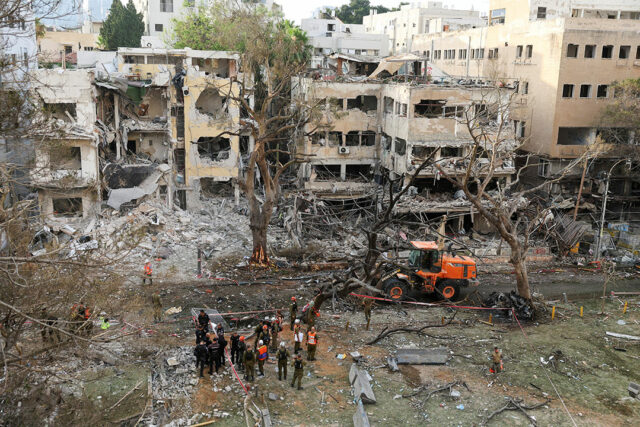
EMERGENCY personnel worked at an impact site after missiles were launched from Iran to Tel Aviv, Israel on June 16, 2025. — REUTERS/RONEN ZVULUN

THE PHILIPPINE government has facilitated the return of 18 Filipinos on their way to work in Israel and Iran after they were stranded at the Dubai International Airport amid missile strikes between the two warring nations on Sunday.

The government is ready to help overseas Filipino workers (OFW) who wish to come home for safety amid rising tensions in the Middle East, the Department of Migrant Workers (DMW) said in a statement on Monday.

“We stand continually ready to assist and support our OFWs who wish to go home for safety and security,” Migrant Workers Secretary Hans Leo J. Cacdac said in the statement.

The DMW’s Migrant Workers Office in Dubai had also helped the stranded OFWs until they were boarded their flights back to the Philippines. They were also given immediate financial assistance.

“The DMW, through its National Reintegration Center for OFWs, will also assist the OFWs for their upskilling and sustainable reintegration, including livelihood assistance or skill training enhancement for redeployment options,” the agency said.

The DMW and Overseas Workers Welfare Administration (OWWA) have set up a 24/7 help desk for OFWs and their families in the Middle East affected by the conflict between Israel and Iran.

“The Department urges all OFWs in Israel and Iran to remain indoors and stay alert and stay connected with the Philippine Embassy or Migrant Workers Office in their respective host countries,” it said.

The agency also advised OFWs to refrain from spreading or sharing unverified information that could cause unnecessary panic and confusion.

Jerusalem last week launched a surprise attack on Tehran as it targeted Iran’s nuclear and ballistic missile facilities and top commanders.

At least four Filipinos living in Israel were hurt after Iran’s retaliatory strike, the Department of Foreign Affairs (DFA) earlier said in a statement.

Palace Press Officer Clarissa A. Castro told a news briefing that the government has a contingency plan in case Filipinos in Iran or Israel have to be evacuated.

“The DFA has assured [us] that there is a contingency plan in place if it is necessary to evacuate Filipinos from Iran,” she said. In Israel, a team had been dispatched to assess the condition of Filipino there, she added.

She also said two of the injured Filipinos in Israel have been discharged.

“The President’s directive to the DFA, DMW and OWWA is to provide immediate assistance to our countrymen,” Ms. Castro said. “No one is left behind.”

Meanwhile, Senate President Francis G. Escudero urged agencies to fast-track the repatriation of Filipinos in Israel and Iran.

“The DFA and DMW should go the extra mile in locating and reaching out to Filipinos in Israel and Iran to determine who wants to get out of the two countries now,” he said in a statement.

“It doesn’t matter if they are legally staying or undocumented,” he said. “What is important is that Filipinos who fear for their safety and want to go home are assisted without delay.”

There are more than 1,000 Filipinos living in Iran and more than 30,000 in Israel.

Meanwhile, Speaker Ferdinand Martin G. Romualdez urged the DMW to ensure the safety of Filipinos in Israel and Iran, as fears that the escalating war could trigger a wider Middle Eastern conflict.

The DMW should consider repatriating Filipinos if tensions in the region escalate further and threaten their safety, he said in a statement.

“We expect our frontline agencies to remain vigilant and proactive in ensuring the safety and security of our [compatriots], including possible repatriation plans should the situation worsen,” he said. “We are watching these developments with grave concern.”

“No Filipino should be left behind in a time of crisis,” the Speaker said. “The House of Representatives stands in full solidarity with our OFWs and will work closely with our executive agencies to ensure their welfare.” — Adrian H. Halili and Kenneth Christiane L. Basilio

MMDA launches website for NCAP traffic violators

DRIVERS can check online if they have a traffic ticket under the Metro Manila Development Authority's no-contact apprehension policy. — PHILIPPINE STAR/RUSSELL PALMA

THE METROPOLITAN Manila Development Authority (MMDA) on Monday launched a website that allows drivers to check for traffic violations under the agency’s no-contact apprehension policy (NCAP).

They can input their plate numbers and motor vehicle file numbers to check if they have committed any offenses.

“The inclusion of the motor vehicle file number is an added security and protection so that only the vehicle owners can securely check their violations under NCAP,” MMDA Chairman Romando S. Artes told a news briefing.

Drivers with a ticket may pay their fine at the MMDA office or at its Robinson’s Galleria satellite office, or online. They may also contest their violations.

Mr. Artes said the online platform would include detailed violation information, including photo and video evidence, date and time, type of violation and fines.

The website would soon include real-time SMS (short-message service) and e-mail notifications, he added.

The MMDA also plans to allow drivers with several vehicles or fleets to enroll all their units under a single account, contest violations online and integrate a payment system.

These features would also be available on a future mobile app, he added.

Mr. Artes said the enhancements to the platform would be implemented in the next month or two.

Last month, the MMDA re-enforced the no contact apprehension policy on Metro Manila’s major highways after the Supreme Court partially lifted a temporary restraining order issued in 2022.

The NCAP covers EDSA, C5, Buendia, Roxas Boulevard, Marcos Highway, Katipunan, Commonwealth Avenue, Quezon Avenue and West Avenue.

It monitors and penalizes traffic violations with surveillance cameras and other digital monitoring systems to encourage driver discipline, reduce traffic congestion and minimize corruption.

The MMDA logged more than 5,000 NCAP violations in the first week of its implementation last month, Mr. Artes said. — Adrian H. Halili

Peso weakens to near two-month low as Iran, Israel exchange attacks

BW FILE PHOTO

THE PESO sank to a near two-month low against the dollar on Monday as the conflict between Israel and Iran continued to escalate.

The local unit closed at P56.415 per dollar on Monday, weakening by 20.5 centavos from its P56.21 finish on Friday, Bankers Association of the Philippines data showed. This was the peso’s weakest close in almost two months or since its P56.42 per dollar close on April 28.

The peso opened Monday’s session weaker at P56.25 against the dollar, which was already its intraday best. Its worst showing was at P56.61 versus the greenback.

Dollars exchanged decreased to $1.3 billion from $1.71 billion on Friday.

“The dollar-peso traded higher on continued flight to safety amid worsening Israel-Iran tensions,” a trader said by phone.

The peso depreciated against the dollar on Monday amid higher global crude oil prices due to the worsening Middle East conflict, Rizal Commercial Banking Corp. Chief Economist Michael L. Ricafort said in a Viber message.

For Tuesday, the trader expects the peso to move between P56.20 and P56.65 per dollar, while Mr. Ricafort sees it ranging from P56.30 to P56.50.

The dollar held its ground in choppy trading on Monday, as investors keenly monitored Israel-Iran fighting for any signs that it could escalate into a broader regional conflict and braced for a week packed with central bank meetings, Reuters reported.

As both Iran and Israel showed no signs of backing off from their attacks, market participants mulled the prospect that Tehran might seek to choke off the Strait of Hormuz — the world’s most important gateway for oil shipping — which could raise broader economic risks from disruptions in the energy-rich Middle East.

Crude prices were up about 1% after closing 7% higher on Friday following Israel’s preemptive strike on Iran.

On Monday, the dollar was flat at 144.08 Japanese yen after rising nearly 0.4% earlier in the session, while the euro was muted at $1.1555. The greenback was also steady against the Swiss franc at 0.811, while an index that measures the dollar against six other currencies dipped 0.1% and was last at 98.11.

Geopolitical tensions were the latest twist for investors and central bank policymakers who have been trying to navigate economic uncertainty triggered by US President Donald J. Trump’s move to reshape the global trade order this year.

Despite the dollar’s broader rise in the past few sessions, analysts were less convinced that the trend could continue until there was more clarity on the tariff front.

The US currency has lost more than 9% in value this year as investors remain nervous over Mr. Trump’s deadline on trade deals due in about three weeks, while agreements with major trade partners including the European Union and Japan are yet to be signed.

Investors now will look for progress in any bilateral meetings with the US on the sidelines of a Group of Seven leaders meeting in Canada.

Among major currencies, the euro has emerged as a favorite this year with gains of about 11%, sparking speculation that it could challenge the US dollar’s dominant status. — Aaron Michael C. Sy with Reuters

PSE index drops on escalating Iran-Israel conflict

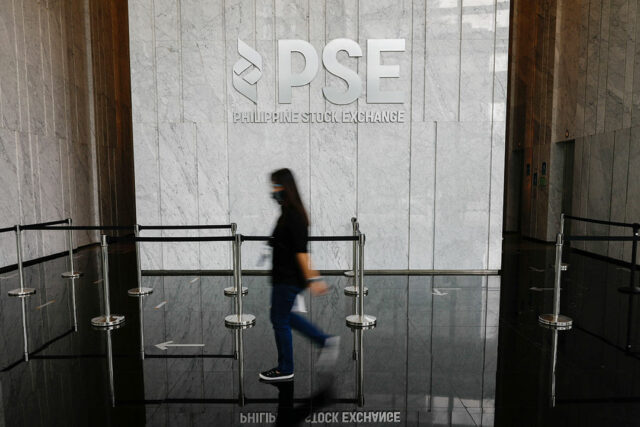
The lobby of the Philippine Stock Exchange in Taguig City, Sept. 30, 2020. — REUTERS

PHILIPPINE SHARES declined on Monday as investor sentiment was soured by the escalating conflict between Israel and Iran.

The benchmark Philippine Stock Exchange index (PSEi) dropped by 0.57% or 37.01 points to close at 6,358.58, while the broader all shares index fell by 0.44% or 16.86 points to 3,768.45.

“The local market declined by the week’s start as investors dealt with the ongoing conflict between Israel and Iran and its possible economic repercussions. So far, the conflict has caused oil prices to surge, in turn posing inflationary risks to the local economy,” Philstocks Financial Inc. Research Manager Japhet Louis O. Tantiangco said in a Viber message.

“The peso’s depreciation also weighed on the local bourse,” Mr. Tantiangco said.

Iranian missiles struck Israel’s Tel Aviv and the port city of Haifa before dawn on Monday, killing at least eight people and destroying homes, prompting Israel’s defense minister to warn that Tehran residents would “pay the price and soon,” Reuters reported.

The dangers of further escalation loomed over a meeting of the Group of Seven leaders in Canada, with US President Donald J. Trump expressing hope on Sunday that a deal could be done but no sign of the fighting abating on a fourth day of war.

Israel began the assault with a surprise attack on Friday that wiped out the top echelon of Iran’s military command and damaged its nuclear sites, and says the campaign will escalate in the coming days.

Iran has vowed to “open the gates of hell” in retaliation.

Brent crude futures were up 0.5% in Asian trade on Monday, having surged late last week.

“Gains were capped by renewed trade uncertainty after President Donald J. Trump signaled that his July 8 tariff deadline could be extended, but warned that it might not be needed if talks wrap up early… Also during trading, Israel launched another missile attack across the city of Tehran, as tensions escalated once again between the two nations,” Regina Capital Development Corp. Head of Sales Luis A. Limlingan said in a Viber message.

Sectoral indices were mixed on Monday. Holding firms declined by 1.19% or 65.50 points to 5,423.66; property went down by 1.18% or 26.92 points to 2,240.33; and financials retreated by 0.5% or 11.98 points to 2,349.82.

Meanwhile, mining and oil went up by 1.57% or 155.89 points to 10,040.84; industrials increased by 0.22% or 20.30 points to 9,003.29; and services rose by 0.08% or 1.93 points to 2,220.04.

“Universal Robina Corp. was the top index gainer, climbing 2.3% to P84.55. Alliance Global Group, Inc. was at the bottom, falling 4.27% to P9.20,” Mr. Tantiangco said.

Value turnover dropped to P8.82 billion on Monday with 1.07 billion shares traded from the P9.87 billion with 1.16 billion issues exchanged on Friday.

Decliners outnumbered advancers, 110 versus 88, while 50 names were unchanged.

Net foreign selling stood at P2.74 billion on Monday, a reversal of the P648.82 million in net buying recorded on Friday. — Revin Mikhael D. Ochave with Reuters

Senate president of 20th Congress will schedule next impeachment hearing

VICE-PRESIDENT Sara Duterte-Carpio — OFFICE OF THE VICE PRESIDENT

THE SENATE could only proceed with the impeachment trial of Vice-President Sara Duterte-Carpio once she and House of Representatives prosecutors submit their written responses to the impeachment court’s summonses, according to its chief.

At a news briefing on Monday, Senate President Francis G. Escudero noted that before the Senate adjourned last week, it ruled that the Senate president of the incoming 20th Congress would be the one to schedule the next hearing.

“Officially, we have not received anything regarding the orders we gave,” he told reporters. “All responses that I have read were on social media but (we have) not officially received anything from the House or from the [Vice-President].”

Last week, the Senate convened as an impeachment court and ordered the Vice-President to respond to its summons within 15-days. House prosecutors were given five days to reply to her comment within five days.

Meanwhile, Ms. Duterte said her legal team was reviewing the summons issued by the impeachment body last week.

“I have not yet read the summons,” she told a livestreamed news briefing from Davao City. “It is with my lawyers, and they will decide on what to do with it.”

Mr. Escudero said the House does not have a deadline to attest to the validity of the articles of impeachment against Ms. Duterte.

“They can only file it until June 30 because they won’t have the authority to file it after June 30,” he said. “But there is no deadline, so if they don’t file it, they can file that attestation in the 20th Congress.”

Mr. Escudero has been under fire from critics who accuse him of delaying Ms. Duterte’s trial. She was impeached as early as Feb. 5.

Last week, the Senate sitting as an impeachment court sent back the charges to the House to certify that it did not violate the 1987 Constitution when it impeached the Vice-President.

Ms. Duterte said senator-judges should not be urged to recuse themselves from the impeachment proceedings based on their political bias, amid calls for her allies in the Senate including Senators Ronald M. Dela Rosa, Maria Imelda “Imee” R. Marcos and Robinhood Ferdinand “Robin” C. Padilla to inhibit themselves from the trial.

Otherwise, senators against her should also be barred from sitting as judges, she pointed out.

“We can’t have senator-judges inhibited based on bias because their positions are only whether they are for or against [me],” she added.

Ms. Duterte singled out Senator Ana Theresia N. Hontiveros-Baraquel, who had repeatedly pushed for the Senate to convene as an impeachment court. Her media officer did not immediately reply to a Viber message seeking comment.

The House impeached Ms. Duterte in February, alleging secret fund misuse, unexplained wealth, acts of destabilization and plotting the assassination of President Ferdinand R. Marcos, Jr., his family and the Speaker. She has denied any wrongdoing.

The impeachment complaint was filed and signed by more than 200 congressmen, more than one-third vote required by law before it could be sent to the Senate. — Adrian H. Halili

Marcos wants to boost internet access, electricity in public schools

PRESIDENT Ferdinand R. Marcos, Jr. visited grade schoolers at the Epifanio Delos Santos Elementary School in Manila on Monday, the first day of school. — PHILIPPINE STAR/NOEL B. PABALATE

AS 27 million students returned to classrooms on Monday, President Ferdinand R. Marcos, Jr. ordered key agencies to boost internet connectivity, electricity, and basic services in public schools, citing poor digital infrastructure nationwide.

During a visit to the Epifanio de los Santos Elementary School in Manila, Mr. Marcos said several government agencies were tapped to ensure a smooth start to the school year 2025-2026.

“I told the Department of Information and Communications Technology (DICT) to widen internet coverage among schools,” he told reporters in Filipino, according to a transcript from his office.

As of this date, only 60% of schools in the country have internet access, a figure the President described as very low, but he noted the DICT is already prioritizing providing connectivity to schools in geographically isolated and disadvantaged areas.

“The real problem is energy [supply],” he added. “That is why we’re fixing the problem slowly; we’ll see that it will soon become 100%.”

He also ordered the departments of Trade and Transportation to ease the burden of expenses on parents and students, emphasizing the existing student fare rates in public utility vehicles.

The chief executive also instructed the Public Works and Highways department to fast-track repairs of classrooms, toilets, and handwashing stations, as well as to prioritize building new classrooms in former conflict zones and remote areas still lacking basic facilities.

Campus security is also a priority, Mr. Marcos said as he directed the Interior and Local Government department and the Philippine National Police to intensify patrols around school zones.

The government is also installing closed-circuit television cameras in school perimeters and building kitchens in lower-income municipalities to support feeding programs.

Amid a persistent learning crisis, the government fell short of its target to hire 20,000 new teachers for the school year, managing to recruit only 16,000.

It is also seeking 10,000 additional administrative assistants to support public schools as they handle accounting, paperwork, documentation, and other matters.

Monday’s school opening also saw the pilot rollout of a revised K to 12 curriculum, which updated senior high school (SHS) program.

The Education department is implementing the pilot in 889 schools across the country, 12 years after the K to 12 system was institutionalized through Republic Act No. 10533, the Enhanced Basic Education Act of 2013.

The program, which extended the country’s basic education by two years, has faced sustained criticism over the past decade due to inadequate funding, added financial burdens on families, subpar educational outcomes, and questions about whether SHS graduates are job ready.

A January 2025 report, published by the Second Congressional Commission on Education (EDCOM 2) has warned about the dire state of basic literacy in Philippine public schools, with students falling four to five years behind the expected reading proficiency for their grade levels.

EDCOM 2 recommended a “teach-at-the-right-level” approach, tailoring instruction to students’ actual learning needs rather than their age or grade. The commission also called for stronger support from the Department of Education in enforcing remedial and foundational programs. — Chloe Mari A. Hufana

PHL open to hosting another missile

US ARMY PACIFIC

THE PHILIPPINE military on Monday welcomed the potential deployment of a second US-made Typhon missile launcher system in the country, saying it would enhance its deterrence posture amid rising tensions in the South China Sea.

Hosting another unit of the advanced missile battery would boost the country’s capability to defend its territory and help keep peace in Southeast Asia, military spokeswoman Colonel Francel Margareth Padilla-Taborlupa said.

“This Typhon missile system is not just a weapon,” she said in Filipino in a news program, aired by state broadcaster People’s Television Network. “It is a symbol of deterrence, not aggression.”

“The deployment of this system contributes to the peace and stability of the region,” she added.

The US Army last year flew the advanced, mid-range capability missile system in the northern Philippines last year for annual Balikatan (shoulder-to-shoulder) drills between Washington and Manila’s forces.

It has since stayed in the Philippines, kept in an undisclosed location. It was last seen in Laoag City, Ilocos Norte in the north, according to a Reuters report in January.

A US official said Washington is willing to deploy another Typhon missile launcher in the country if Manila agrees to it, according to a report by The Philippine Star last week.

The land-based Typhon system can launch a variety of rockets, including short-range SM-6 missiles and Tomahawks that could reach the Chinese mainland. China and Russia have condemned the positioning of the US missile system in the Philippines, accusing Washington of fueling an arms race in the region.

The Philippines and China have repeatedly clashed over the South China Sea, with tensions rooted in Beijing’s sweeping maritime claims based on a U-shaped, 1940s nine-dash line map that overlaps with the exclusive waters of Manila and other Southeast Asian countries.

China has militarized some islands found within the Philippines’ waters, such as Subi and Mischief reefs, despite a 2016 arbitral ruling that favored Manila’s claim in the contested waterbody.

Ms. Taborlupa said the possible deployment of the missile system is not meant to stoke regional tensions, responding to a question about potential backlash from China.

The Chinese Embassy in Manila did not immediately reply to a Viber message seeking comment.

“We may not be able to control the reactions of others, but we can control our own intentions,” she said. “And our intention is clear — to protect our people and our sovereignty.” — Kenneth Christiane L. Basilio