Home Blog Page 993

Nepal’s deadly protests hammer tourism sector as arrivals fall 30%
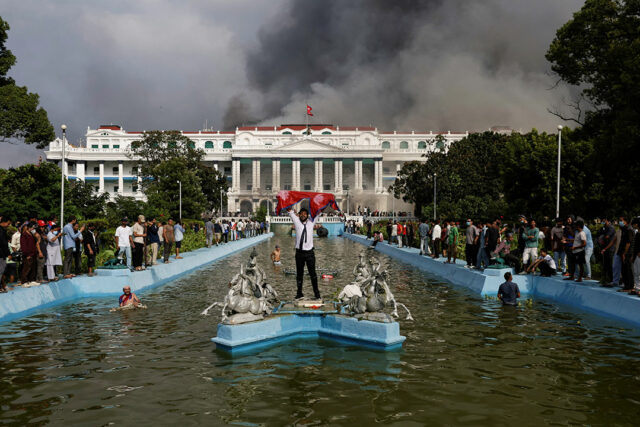
A demonstrator holding Nepal’s flag celebrates at the Singha Durbar office complex that houses the Prime Minister’s office and other ministries after storming it during a protest against Monday’s killing of 19 people after anti-corruption protests that were triggered by a social media ban, which was later lifted, during a curfew in Kathmandu, Nepal, Sept. 9, 2025. — REUTERS/NAVESH CHITRAKAR

KATHMANDU — Nepal’s deadliest protests in decades erupted just as the country entered its peak tourist season, dealing a blow to businesses that had been preparing to welcome trekkers from around the globe to experience its world-famous trails.

Shops, pubs and restaurants lining the neatly organized alleys of places like Thamel — Kathmandu’s bustling tourist hub — remained largely deserted, even after reopening in the aftermath of a violent anti-corruption protest that left 72 dead over 2,000 injured and forced former Prime Minister KP Sharma Oli to resign.

Nepal’s tourism authority, hotel owners and trek organizers said arrivals had fallen by 30% from this time last year, leading to bookings being cancelled.

“I am sitting outside idle because there are no tourists… Many groups have cancelled in September,” said 49-year-old Ram Chandra Giri, who arranges trekking expeditions and owns a Japanese restaurant.

He said 35% of his guests had cancelled their bookings.

Renu Baniya, a hotel owner, said all bookings had been completely cancelled for the next month.

COUNTRIES ADVISED AGAINST NON-ESSENTIAL TRAVEL
Foreign tourists usually start treks from the capital, but Tuesday’s dramatic images of a burning parliament and Hilton Hotel led many countries to issue advisories to avoid non-essential travel to Nepal.

The country receives 1.2 million annual tourist visits, and the sector contributes almost 8% of gross domestic product. September to December is considered the peak tourist season.

Nepal’s trekking trails include the base camp of the world’s highest mountain Mount Everest, drawing adventurers to the heart of the Himalayas.

Damage to government buildings and a few hotels “might give a negative message not only to visitors but to investors as well,” Deepak Raj Joshi, the chief executive officer of Nepal’s Tourism Board told Reuters.

He said tourist arrivals are down 30% from usual and in the last few days, the cancellation rate stood at 8%-10%.

HOPES FOR RETURN OF TOURISTS
As calm returned in Nepal under the newly appointed interim government led by Sushila Karki, parts of Kathmandu still carry the lingering smell of smoke, with authorities continuing to clear debris from charred buildings and torched vehicles.

Nepalese authorities and business owners remain hopeful of tourists returning, even as the stability of the government remains in question with elections set for March 5, 2026.

“We have to be very honest while communicating… if the situation is not good, the industry will never say visit us,” Tourism Board’s Joshi said.

Some foreign tourists, who continued to stay in Nepal, said they felt safe.

“Our family and friends asked us to come back. But we never had any insecurity,” 55-year-old Franz from Germany, who was in Nepal during the protest, told Reuters. — Reuters

US reinterprets arms control pact to ease military drone exports

MARCO RUBIO — REUTERS FILE PHOTO

THE United States can export “Reaper”-style and other advanced military drones more easily following a reinterpretation of its export control policies approved by Secretary of State Marco Rubio, the State department announced on Monday.

Drones will now be treated like fighter jets, such as the F-16, rather than missile systems, allowing the US to sidestep the 35-nation Missile Technology Control Regime (MTCR) agreement it signed in 1987 and enabling drone sales to countries like the United Arab Emirates and Eastern European nations that have struggled to acquire America’s best unmanned aerial vehicles.

More immediately, the change unlocks the sale of more than 100 MQ-9 drones to Saudi Arabia, which the kingdom requested in the spring of this year and could be part of a $142-billion arms deal announced in May. US allies in the Pacific and Europe have also expressed interest.

The new policy lets large drone manufacturers General Atomics, Kratos, and Anduril have their products treated as “foreign military sales” by the State department, allowing them to be easily sold internationally.

The MTCR agreement was signed to curb long-range missile sales, and military drones that proliferated years later were considered to be covered by the agreement because they can fly far and carry weapons.

US drone manufacturers are facing stiff competition overseas, especially from Israeli, Chinese and Turkish rivals who often sell under lighter or no restrictions. — Reuters

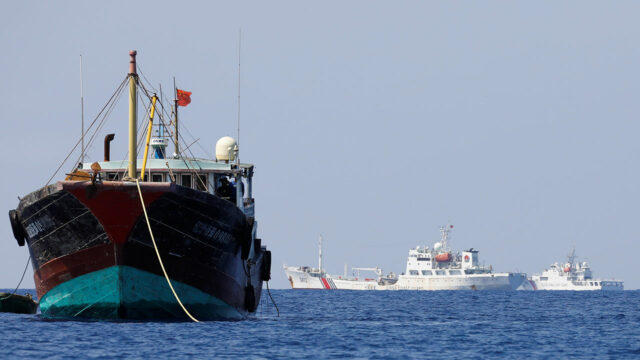
EXPLAINER: What is the Scarborough Shoal and what is China planning there?

China Coast Guard vessels patrol past a Chinese fishing vessel at the disputed Scarborough Shoal, April 5, 2017. — REUTERS

China’s coast guard said it had taken “control measures” in intercepting Philippine vessels at the disputed Scarborough Shoal in the South China Sea, site of years of standoffs between the two countries.

WHAT’S THE SHOAL’S SIGNIFICANCE?
Named after a British ship grounded on the atoll nearly three centuries ago, the Scarborough Shoal is one of Asia’s most contested maritime features and a flashpoint for diplomatic flare-ups over sovereignty and fishing rights.

Located 200 kilometers (124 miles) off the Philippines and inside its exclusive economic zone, the shoal is coveted for its bountiful fish stocks and a stunning turquoise lagoon that provides safe haven for vessels during storms. It is named Huangyan Island by Beijing, while Manila calls it the Panatag Shoal, or Bajo de Masinloc.

Its position is strategic for Beijing, sitting in the middle of the South China Sea and near shipping lanes carrying more than $3 trillion of annual commerce. Activities there are closely watched by the United States and other major powers.

WHAT IS CHINA PLANNING?
China has approved creation of a nature reserve at Scarborough Shoal that it says is to preserve a 3,524-hectare (8,708-acre) coral reef ecosystem. It would cover the entire northeastern side of the triangle-shaped atoll, with close proximity to the sole entrance for larger vessels.

The announcement drew a strong reaction from the Philippines, which for years has accused China of activities that damage coral and marine life, including clam harvesting. The Philippines is exploring the possibility of further international arbitration over environmental issues. Beijing has made similar accusations against Manila.

China may face scepticism and international concern about its underlying motives. There have long been expectations China might one day build a manmade island on Scarborough Shoal, as it has on seven submerged reefs in the Spratly Islands, some equipped with radar, runways and missile systems.

US Secretary of State Marco Rubio called the plan “destabilising” and “coercive” and said the United States stood with the Philippines.

WHO DOES IT BELONG TO?
The Philippines and China lay claim to the Scarborough Shoal but sovereignty has never been established and it is effectively under Beijing’s control. Filipino boats operate there but, are dwarfed by China’s presence.

China seized the shoal in 2012 after a standoff with the Philippines and has since maintained a deployment there of coast guard and fishing trawlers. Manila has said some of the trawlers at the shoal and other disputed areas of the South China Sea are operated by Chinese maritime militia, which Beijing has never acknowledged.

A landmark ruling on various South China Sea issues by the Permanent Court of Arbitration in 2016 favoured Manila but establishing sovereignty over Scarborough Shoal was not within its scope. The ruling said Beijing’s blockade there violated international law as it was a traditional fishing ground for several countries, including China, the Philippines and Vietnam.

WHAT’S THE RISK OF CONFLICT?
Tensions have simmered for a while at the shoal and multiple incidents in recent years have caused diplomatic rows, but none escalated into armed conflict.

The incidents have included the use of water cannon, boat-ramming and what the Philippines considers dangerously-close manoeuvres by China’s coast guard, and jets shadowing Philippine aircraft over the shoal. Both sides accuse each other of provocations and trespassing.

Standing up to Beijing might score points for Philippine President Ferdinand Marcos Jr. at home and abroad, but his coast guard is under-equipped and no match for China’s armada. Deployment of combat vessels could be a red line neither side wants to cross.

A deterrent might be the United States, which has taken its defence alliance with the Philippines to a new level under Marcos. Any kind of military response by China would increase the stakes considerably.

The Philippines and United States have a 1951 Mutual Defence Treaty under which Washington would defend its ally in the event of attack, a commitment U.S. defence chiefs reinforce often. Marcos successfully lobbied for more specificity in the treaty, which now covers attacks “anywhere in the South China Sea”.

WHAT HAVE EXPERTS SAID OF THE NATURE RESERVE?
Yang Xiao, a maritime expert at the China Institutes of Contemporary International Relations, said in a video on a social media account linked to China’s state broadcaster that the nature reserve plan and demarcation was sound and the shoal worthy of ecological protection.

There are clear regulations that would enable protection and allow the coast guard to enforce those, Yang said, which “reflects the gradual improvement of our jurisdiction and governance over this sea area”. He also accused Filipino fishermen of catching endangered species and polluting waters.

Maritime analyst Jay Batongbacal of the University of the Philippines said China’s move was a ploy to justify what he called aggressive and coercive actions, which could result in fishermen arrested and used as bargaining chips. — Reuters

China’s $19 trillion stock market, once called uninvestable, lures foreigners again

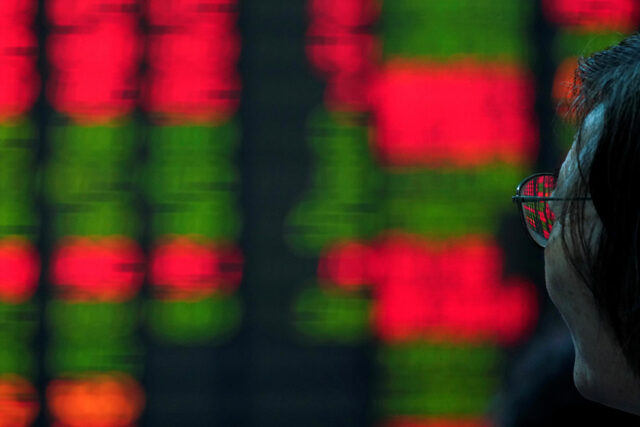
An investor looks at an electronic board showing stock information at a brokerage house. — REUTERS

HONG KONG — Foreign investors are plotting a return to China’s stock markets in a big way three years after pulling back and terming them uninvestable, encouraged by the tech opportunities on offer, and a growing demand for diversification beyond U.S. assets.

Progress in China’s adoption of artificial intelligence and its development of semiconductors and innovative drugs this year has given comfort to global investors that the Sino-U.S. trade war and Washington’s tech export bans have not deterred innovation in the world’s second-biggest economy.

The U.S.-China tariff truce and a domestic monetary easing environment have further boosted sentiment. As a consequence, the Shanghai Composite index touched a decade high last week while Hong Kong stocks hit a four-year high.

The changing sentiment of foreign investors could potentially add fuel to the market rally, which has so far been mainly driven by domestic players.

Foreign early birds are already back in China, lured by this year’s bull run and as they seek diversification from crowded U.S. assets, said Brett Barna, a former hedge fund manager who now manages two New York-based single-family offices.

“China is interesting because it’s very uncorrelated to the rest of the world, at least the onshore A-share market,” Barna said, adding he plans to set up an investment platform that would allow U.S. and European capital to access China’s capital markets.

Data on fund launches and flows illustrates the growing enthusiasm for a $19 trillion Chinese stock market, including Hong Kong.

August marked the biggest monthly buying of China stocks by global hedge funds in six months, according to a report by Morgan Stanley, which did not detail numbers.

Morningstar data showed the number of emerging market ex-China equity fund new launches slid to eight in 2025 versus 21 in 2024 and 16 in 2023. That meant demand for emerging market investments that did not include China had cooled substantially this year.

“A year ago, people wanted to exclude China from indices. Now, China is seen as a standalone asset class (they cannot ignore),” said Zheng Yucheng, chief investment officer of the China fund unit of Allianz Global Investors.

MORE EVIDENCE
The anecdotal evidence is also piling up.

Polar Capital, a London-based $20 billion asset manager, pivoted to a positive stance on China in late 2024 from underweight and has further increased the China allocation to over 30% from the low 20% range within its emerging market portfolio this year, said its fund manager Jerry Wu.

The firm’s annual conference in February this year attracted a full house of 55 clients to the China session, more than double the attendance in 2023, he said.

There is “a revaluation of Chinese innovative assets” triggered by DeepSeek’s breakthrough, said Wu, referring to the creator of the highly cost-efficient AI model that rivals ChatGPT. He said momentum has picked up across the board, from AI to biotech and robotics.

Benjamin Low, senior investment director at investment firm Cambridge Associates, said his team has received some 30 client inquiries about searching for China funds this year, in a sharp contrast to the trough in 2023 when there were very limited queries about China-focused mandates.

Many non-Asia-based allocators are planning trips to China and Hong Kong later this year to explore investment opportunities, with some for the first time since COVID, he said.

To be sure, some of China’s long-standing problems are persisting. Its broad economy remains mired in weakness, as indicated by August factory output, retail sales data and some other indicators.

Foreign direct investment in the first five months of 2025 slumped 13.2% from the year-earlier period, forcing China to unveil new measures in July to reverse the decline.

The fragile economy is one of the main reasons that, while early movers are coming in, it has not yet translated into meaningful long-term capital inflows.

CLSA chief equity strategist Alexander Redman said the deflationary pressure in the economy is preventing him from overweighting the entire market.

And Wu of Polar Capital said the AI boom has to benefit the broader economy to sustain the rally beyond 2025.

Foreign investors are now in a “rerating” phase, focusing on China’s long-term competitiveness, said Cheng Yu, a portfolio manager at the Allianz China fund unit.

“Foreign capital is standing at the door and watching. They haven’t stepped in yet — but are at least thinking about coming back.” — Reuters

Indonesia unveils economic stimulus package worth almost $1 billion

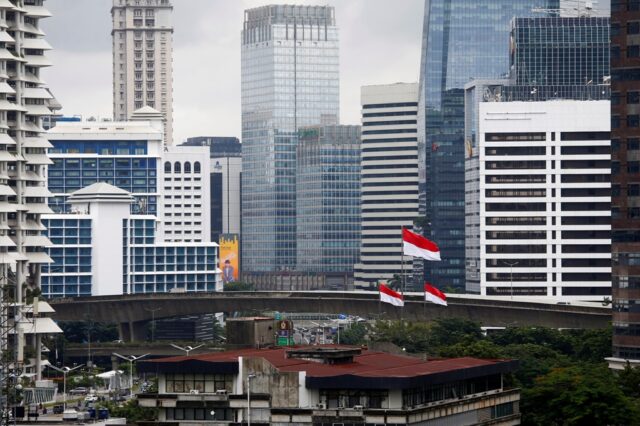
INDONESIAN national flags fly at a business district in Jakarta, Indonesia, Feb. 5, 2021. — REUTERS

JAKARTA — Indonesia on Monday announced a new economic stimulus package worth 16.23 trillion rupiah ($989 million), including food assistance and an infrastructure building programme that could provide temporary work for more than 600,000 people.

The stimulus measures will be implemented in the fourth quarter of 2025, the country’s chief economic minister Airlangga Hartarto told reporters, adding that some measures would be extended to 2026.

Southeast Asia’s largest economy grew 5.12% annually in the second quarter, its best growth rate in two years, but some policymakers said there were signs it was slowing in the subsequent quarter.

“With this stimulus package, we hope we could still reach the 5.2% economic growth target this year,” Airlangga told reporters after holding a meeting with the president.

The government will give 18.3 million households 10 kilograms of rice in the fourth quarter, remove personal income tax for workers in the tourism sector and allocate 5.3 trillion rupiah for a “cash for work” scheme for more than 600,000 people in the September to December period, Airlangga said.

“Cash for work” schemes usually involve providing daily wages to employ people, mostly from rural communities, to work on infrastructure projects like roads and bridges.

The stimulus package also included a paid internship programme for 20,000 university graduates and a 50% discount to policy payments for state-provided work injury insurance for ride-hailing motorcycle taxi drivers and truck drivers, Airlangga said.

The removal of personal income tax for certain sectors and the insurance scheme will be extended to 2026, Airlangga said.

Income tax on small businesses was supposed to rise to 1% of turnover next year, from 0.5% now, but Airlangga said the government has decided to maintain the current rate until 2029.

The government will also launch a replanting programme on 870,000 hectares (2.15 million acres) of plantations for commodities such as sugar cane, cocoa, coffee, cashew, nutmeg and coconut in 2026, a programme that could create 1.6 million new jobs, Airlangga said.

Jakarta will also introduce discounts on airfares for year-end holiday trips, Airlangga added, without providing more details.

Finance Minister Purbaya Yudhi Sadewa expected no impact on the forecast for the 2025 budget deficit from the new measures. The latest deficit forecast was 2.78% of GDP.

Housing Minister Maruarar Sirait also said the government through state banks will disburse 130 trillion rupiah worth of construction loans for certain property developers and small businesses to scale up their stores.

Maruarar added the government will cover 5% of the annual interest cost of the loans, which are part of efforts by the Prabowo administration to provide 3 million affordable homes annually and create more jobs. — Reuters

Icons unite: Porsche Design celebrates heritage and a new era of ‘engineered luxury’

The sound of engines and the excitement from the sight of an iconic design filled the Auto Complex Quezon City as Porsche Design hosted an exclusive car meet, “Treffen Der Ikonen” (Gathering of Icons), on Sept. 11, 2025. The event celebrated the brand’s enduring connection to the original Porsche 911 and its founder’s visionary design philosophy, marking a grand reintroduction to the Philippine market. “Just like Ferdinand Alexander Porsche who stood the test of time, giving us a brand that is beloved through generations, Porsche Design carries the same principles of innovation, precision, and timeless excellence; And representing the brand who started the first-ever Treffen Der Ikonen, this gathering is indeed a testament to his vision,” said Porsche Design Manila President Hans Yao.

Hosted by Migs Bustos, the fun event brought together the country’s most dedicated Porsche VIPs, owners, enthusiasts, and collectors. The star of the show was the heritage of the Porsche 911, with around 100 rare and cherished models making a grand, staggered entrance as a live emcee narrated their stories. Guests and media were able to get up close and personal with the stunning collection, capturing photo-worthy moments and immersing themselves in the principles of precision, innovation, and timeless elegance that define both the cars and the brand.

Hans Yao, president and CEO of Porsche Design Philippines, together with Nina Razali, talked about the Treffen Der Ikonen event initiated by Porsche Design and how the brand continues to integrate precision and excellence in their products.

Mr. Yao and Porsche Design Manila Marketing Head Heinrich Quintong welcomed guests, officially kicking off the evening. They spoke about the brand’s “Engineered Luxury” philosophy, which merges function with form. “From the precise lines of the iconic Porsche 911 sports car, to the sleek and exceptional design of his lifestyle accessories Ferdinand Alexander Porsche’s vision, lives through each and every one of us here today. His works are not just iconic automotives and fashion pieces; They are symbols of unparalleled imagination and timeless excellence. As we gather here today, and even beyond the 4 corners of this autocomplex, let us all be inspired by the vision of Ferdinand Porsche, pushing the boundaries of innovation, and raising the bar of excellence in everything that we do,” shared by Mr. Quintong.

A dynamic video presentation showcased Porsche Design’s lifestyle products, from sleek timepieces to modern luggage, all embodying the spirit of Ferdinand Alexander Porche’s original vision.

In photo are Heinrich Quintong, Porsche Design Philippines marketing head; Vianca Tan, Porsche Design Philippines Retail director; Nina Razali, Porsche lifestyle group’s Asia Pacific sales director; Hans Yao, president and CEO of Porsche Design Philippines; Rommel Villaflor, senior vice-president of Porsche Design Philippines; and Ryan Maghanoy, chief-of-staff.

The Porsche Design Lifestyle Experience

Various immersive zones were available at the event so that guests will get to experience the different facets of Porsche Design:

National artist Ramon Orlina displayed his Porsche 911 in the first-ever Treffen Der
Ikonen initiated by Porsche Design.

Heritage Gallery — guests were able to learn more about F.A. Porsche’s design journey, starting from the birth of the Porsche 911 to his vision of expanding into lifestyle products.

Timepieces & Innovation Lounge — an in-depth look of Porsche Design’s iconic chronogrpahs that were inspired by motosport engineering as seen in the unique details of every piece.

Travel & Mobility Showcase — the display showcased the brand’s premium luggage, backpacks, and other leather goods that were created for optimum performance, durability, and style perfect for both urban lifestyles and global travels.

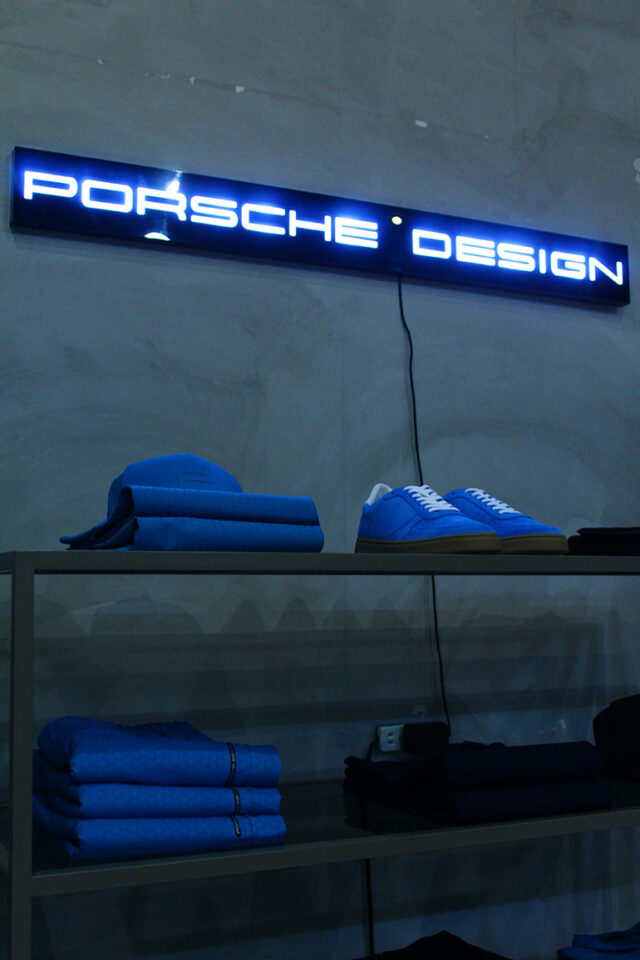
Porsche Design showroom in full display during the first-ever Treffen Der Ikonen

Lifestyle & Fashion Zone — from apparel, eyewear, footwear, and accessories, these pieces embody Porsche Design’s style philosophy of timeless modernity.

These immersive zones were a great way for guests to discover how the iconic automotive DNA of Porsche cars seamlessly blend into the lifestyle DNA of Porsche Design products.

The highlight of the night was a special recognition ceremony honoring the top Porsche owners and collectors who have helped keep the brand’s legacy alive in the Philippines. Stories of “Legacy Porsche Moments” were shared, creating an intimate and heartfelt atmosphere among the passionate community.

Ultra lightweight and inspired by the colors of the Porsche 911: the Roadster Hardcase collection

Presented alongside these prized vehicles were stunning Porsche Design creations, which carry the same unique engineering and impressive precision and visionary aesthetic. The Roadster Hardcase luggage collection reflects aerodynamic form while the Chronotimer Series 1 timepieces mirrors the exhilarating spirit of motorsport. Several ready-to-wear pieces like apparel and accessories were also on display, further showcasing the brand’s premium quality and enduring elegance.

The event’s grand finale was a stunning visual spectacle as the iconic cars were arranged in special formation, bathed in LED lights for a final photo. The night was a true celebration of heritage and a toast to the future of design. Key sponsors such as Autocomplex, Second Skin Industries, Diageo, Nustar Resort and Casino, Washington.

Porsche 911 cars in full display for the night!

Watches, Singlife, Mt. Fuji, and Summit Golf and Country Club helped make the event truly memorable for everyone through the valuable support as Porsche Design leaves a powerful statement that the company’s legacy is well and truly back on the road.

Experience “Engineered Luxury” at Rockwell Powerplant Mall, Shangri-La, Okada Manila, Newport Resorts Mall, and Nustar Resort and Casino. Stay updated by following them on Facebook (Porsche Design Manila) and Instagram (@porschedesign.manila).


Spotlight is BusinessWorld’s sponsored section that allows advertisers to amplify their brand and connect with BusinessWorld’s audience by publishing their stories on the BusinessWorld Web site. For more information, send an email to online@bworldonline.com.

Join us on Viber at https://bit.ly/3hv6bLA to get more updates and subscribe to BusinessWorld’s titles and get exclusive content through www.bworld-x.com.

New Globe cell sites bring stronger connectivity to Tuguegarao City and Cagayan towns

As Tuguegarao City cements its role as the vibrant heart of Cagayan Valley, connectivity has become essential to sustaining its momentum. Known for its rich mix of education, governance, commerce, and culture and as the gateway to the region’s heritage sites and natural wonders, the city has rapidly expanded its business districts, academic institutions, and tourism offerings.

To keep pace, Globe has built new cell sites in Barangays San Gabriel and Ugac Sur and upgraded existing installations, delivering wider coverage, faster speeds, and more reliable service for Cagayanos.

Real Benefits for Communities

Entrepreneurs and MSMEs now have the tools to reach bigger markets through e-commerce, streamline operations with digital platforms, and provide faster, more efficient customer service.

Students and teachers enjoy stable connections for online classes, research, and collaboration, helping bridge the gap between rural and urban education resources.

For families, the upgrades make it easier to stay connected with loved ones wherever they are, while also ensuring smoother access to digital services such as banking, healthcare, and government transactions. Residents can also enjoy uninterrupted entertainment, whether streaming, gaming, or engaging on social media without lag or dropouts.

Expanding the Signal Beyond the City

Globe’s network expansion is also transforming life across Cagayan Province. Stronger signals and improved capacity now reach Amulung, Aparri, Baggao, Pamplona, Sanchez Mira, Solana, Claveria, Gattaran, Allacapan, Camalaniugan, Iguig, Peñablanca, and Santa Ana.

With the most consistent network in the Philippines, Globe delivers seamless, reliable connectivity whenever and wherever it’s needed.

Offers to Maximize the Upgraded Network

To help customers fully enjoy the benefits of these improvements, Globe provides value-packed data promos and broadband solutions such as Globe Prepaid Go+99 with free 5G data, TM EZ50 5G, Globe At Home WiFi in select areas, and GPlan postpaid options that combine generous data allocations with exclusive perks.

A Commitment to Digital Inclusion

“Connectivity has become the backbone of modern life, and our commitment is to strengthen our network infrastructure nationwide to empower Filipinos wherever they are,” said Joel Agustin, SVP for Network Planning and Engineering at Globe. “From urban centers to remote barangays, we are ensuring that our network experience is consistent and reliable.”

Through continuous investment in advanced technology and cell site builds nationwide, Globe is aligning its efforts with a vision of digital inclusion and sustainable progress. In Tuguegarao City and Cagayan Province, this means more than just better signal, it means powering livelihoods, enhancing education, keeping families close, and opening new opportunities for growth in every corner of the region.

For more information about Globe’s network, visit www.globe.com.ph.


Spotlight is BusinessWorld’s sponsored section that allows advertisers to amplify their brand and connect with BusinessWorld’s audience by publishing their stories on the BusinessWorld Web site. For more information, send an email to online@bworldonline.com.

Join us on Viber at https://bit.ly/3hv6bLA to get more updates and subscribe to BusinessWorld’s titles and get exclusive content through www.bworld-x.com.

Uniqlo founder Yanai says US may suffer most from tariffs

People shop at a UNIQLO store in New York City, New York, U.S., March 15, 2019. — REUTERS/BRENDAN MCDERMID/FILE PHOTO

NEW YORK/TOKYO — The Japanese founder of fashion brand Uniqlo said on Monday the US may bear the highest price from the impact of tariffs on global trade.

Tadashi Yanai, Japan’s richest man and the chief executive of Uniqlo operator Fast Retailing 9983.T, has been outspoken on the potential economic damage from wide-ranging tariffs imposed by the administration of US President Donald Trump.

Yanai reiterated that sentiment on the sidelines of a Uniqlo event in New York City, where the company was promoting its LifeWear clothing and art collaboration with Japan’s Toray Industries 3402.T and The Museum of Modern Art.

“I’m afraid the world could (go) bankrupt,” Yanai said through a translator. “America is the one that could suffer the most,” he said, without elaborating.

Fast Retailing is an apparel powerhouse throughout Asia, and is charting an aggressive growth campaign in Europe and North America.

In July, the company said higher US tariffs would start impacting its American operations significantly from later this year and it planned to raise prices to mitigate the blow.

The majority of Uniqlo products sold in the US are produced in Southeast Asia and South Asia. — Reuters

Brewing resilience: Pioneer Insurance, Nestlé empower coffee farmers in Sultan Kudarat

In photo (from left): Atty. Denya Garcia Uy-Anastacio, head of Government and Industry Affairs; Jose T. Uy III, senior vice-president and head of Corporate Affairs; Lorenzo O. Chan, Jr., Pioneer Group head; and Geric Laude, Agriculture and Partnerships head, Cebu Branch head

Pioneer Insurance, in partnership with Nestlé Philippines, has provided crop insurance to coffee farmers from the Tinalon Farmers Association, United Highlander Farmers Producers Cooperative, and the Rural Improvement Club-Kuden in Sultan Kudarat. The insurance coverage equips them with a lifeline as they face production risks and climate-related uncertainties.

The insurance initiative is the latest under Project Coffee+, the current banner component of Nestlé’s Nescafé Plan, a long-term program involving the public and private sectors to help smallholder coffee farmers enhance yields, incomes, and quality of life sustainably.

“This isn’t just about policies on paper,” said Geric Laude, Pioneer Insurance’s head of Agriculture and Partnerships Department. “We met with the farmers, listened to their needs, and made protection more accessible where it matters most: on the ground.”

Project Coffee+ is an intensive, multi-year effort enabling participating farmers to become agripreneurs, empowered with effective farming knowledge and practices along with basic business skills.

The results, substantial increases in harvests and earnings, led to the launch of Project Coffee++, with a focus on helping to raise a younger generation of coffee farmers in Mindanao, where 80% of the country’s coffee is grown in Sultan Kudarat and Bukidnon.

The local coffee subsector faces major challenges, with declining output supplying just 15% of domestic demand filled by imports. Thus, crop insurance for coffee farmers is a significant step in strengthening their capabilities and the subsector.

Sharing a commitment to sustainable agriculture and inclusive growth, Pioneer’s Agriculture Team first engaged with Nestlé in mid-2024 to connect with farmer communities and introduce the concept of crop insurance.

Field visits and direct dialogue played a vital role in identifying how insurance could support the farmers’ long-term goals under the regenerative agriculture or RA approach, which protects agricultural resources for future productivity, factoring in climate change.

How Pioneer plants hope through agriculture insurance

Pioneer has for years pioneered inclusive insurance solutions for the underserved. Through CARD Pioneer Microinsurance, Inc., it launched BINHI Crop Insurance in 2017, the country’s first and only micro-agricultural insurance product.

With support from the Asian Development Bank, Pioneer and CARD Pioneer made history in 2022 by launching the Philippines’ first public–private crop insurance partnership with the Philippine Crop Insurance Corp.

In January 2024, Pioneer formed its Agriculture Team to further close the protection gap in the agriculture industry. It has since launched insurance products for grain (rice and corn); high-value crops, including coffee, cacao, mango, sugarcane, among others; and livestock, protecting farmers from risks posed by climate change due to global warming.

This latest effort with Nestlé builds on Pioneer’s momentum, showing that insurance, made relevant and community-driven, can be a tool for real transformation.

Pioneer’s Agriculture Team is proud to share more information about its efforts in uplifting Filipino farmers via Mayne Ramzelle Tamano at mayne.tamano@pioneer.com.ph or Christopher John Tingzon at christopher.tingzon@pioneer.com.ph.


Spotlight is BusinessWorld’s sponsored section that allows advertisers to amplify their brand and connect with BusinessWorld’s audience by publishing their stories on the BusinessWorld Web site. For more information, send an email to online@bworldonline.com.

Join us on Viber at https://bit.ly/3hv6bLA to get more updates and subscribe to BusinessWorld’s titles and get exclusive content through www.bworld-x.com.

Shareholders of $1 billion PhilTower are said to explore sale

A general view of PELCO III (Pampanga III Electric Cooperative) Pau Substation, in Santo Tomas, Pampanga province, the Philippines, on March 5. -- Photo by Lisa Marie David/Bloomberg

Shareholders of PhilTower are considering selling the company, one of the biggest telecommunications tower firms in the Philippines, and seeking a valuation of at least $1 billion, people familiar with the matter said.

Macquarie Capital, Manila Electric Company (Meralco), and Stonepeak Partners are working with financial advisers and have reached out to potential buyers including other funds and industry players to gauge interest, the people said, asking not to be identified because the talks are private.

While a sale process could start as soon as this month, discussions are ongoing and there’s no guarantee of a transaction at this stage, the people said.

The development marks a shift from last year, when Bloomberg News reported that Macquarie was considering selling its stake of about 45%. Now all of the company could be up for sale.

A Stonepeak representative declined to comment. Representatives for Macquarie and Meralco subsidiary Miescor didn’t respond to requests for comment.

PhilTower Consortium Inc. combined with Miescor Infrastructure Development Corp. in September 2024 to create one of the largest independent telecom tower companies in the Philippines, with over 3,300 operational towers and more than 2,100 committed orders, according to a press release at the time.

In addition to the Philippines, PhilTower has a presence in Indonesia, Malaysia and Myanmar, its website shows. — Bloomberg

EU set to miss UN deadline for new climate targets, draft shows

REUTERS

BRUSSELS, Sept 15 (Reuters) – The European Union does not expect to reach an agreement on its new UN-mandated climate target in time for a key deadline this month, and has instead drafted plans to submit a temporary goal, which could change later, an EU negotiating document seen by Reuters showed.

EU countries are struggling to reach a deal on their new climate target for 2040, which has derailed plans for the bloc to submit a 2035 target to the United Nations by a deadline this month for all countries to do so. The EU had planned to derive its 2035 climate target from the 2040 goal.

The draft EU document, seen by Reuters, showed the bloc is now instead considering submitting a “statement of intent” to the UN about what its 2035 goal will be – indicating it will be between a 66.3% and a 72.5% emissions reduction by 2035, from 1990 levels.

The EU will decide its final 2035 target later, after it reaches a deal on its 2040 climate goal, the document said. EU countries’ ambassadors will on Tuesday discuss the draft, which could still change during the negotiations.

The move aims to avoid the EU being empty-handed at the UN general assembly next week, where UN Secretary-General Antonio Guterres has asked countries to announce their climate targets, to drum up momentum for the global COP30 climate negotiations in November.

But it leaves open the question of how ambitious the EU’s final target will be – and increases the likelihood that the EU will lag behind other major emitters, including China, in setting its new climate goal.

Manon Dufour, an executive director at think tank E3G, said the plan could allow the EU to agree on a more ambitious target later, ahead of COP30 – but that it raised questions about EU leadership on climate change.

“It does very little to dispel doubts about the EU’s domestic transition, or galvanise global partners ahead of the UN General Assembly, in such a critical year for global climate action,” she said.

The higher end of the target range reflects a pathway towards a 90% emissions reduction by 2040 – which is what EU countries are negotiating as their 2040 climate goal, the document said.

The lower end is calculated by drawing a straight line between the EU’s existing 2030 and 2050 climate goals.

Countries including Poland have backed a range starting at the lower end. — Reuters

Deal to curb billions in overfishing subsidies comes into force at WTO

PHILIPPINE STAR/ MICHAEL VARCAS

GENEVA – A landmark agreement to curb billions of dollars in subsidies contributing to overfishing came into force on Monday, the World Trade Organization said – a move activists hailed as a step towards helping global fish stocks recover.

It was the first agreement to take effect at the WTO since 2017 after years of stalled debates and infighting on top of, more recently, a surge in US tariffs that left some critics asking whether the Geneva-based body had a future.

The formal ratification by Brazil, Kenya, Tonga and Vietnam on Monday meant the deal, first agreed in 2022, now had the required support of two thirds of members, a WTO spokesperson said.

Governments are now prohibited from providing subsidies for overfished stocks and for fishing in international waters beyond their jurisdictions. Poorer states will be able to access a fund to help ease them into the deal.

“Fish stocks around the world will have a chance to recover, benefitting local fishers who depend on a healthy ocean,” Megan Jungwiwattanaporn from the Pew Charitable Trusts said.

Governments around the world pay out roughly $35.4 billion annually to their fishing fleets, including fuel handouts that allow them to fish in distant oceans, a 2019 study in Marine Policy showed. It listed the top five subsidisers as China, the EU, the United States, South Korea and Japan – though not all of them are within the scope of the WTO deal.

Negotiations on further fishing rules covering divisive issues excluded from the first deal have floundered, as India and other developing economies seek carve-outs that many other states see as unworkable.

The first part of the agreement that came into force on Monday took more than 20 years of negotiations and will expire in four years if more comprehensive rules are not agreed.

Director-General Ngozi Okonjo-Iweala said in an interview earlier this month that she saw grounds for optimism that the body could either conclude the talks or find a way to stop the first deal from expiring. — Reuters

ADVERTISEMENT
ADVERTISEMENT