Home Blog Page 9743

BSP to boost oversight of payment systems

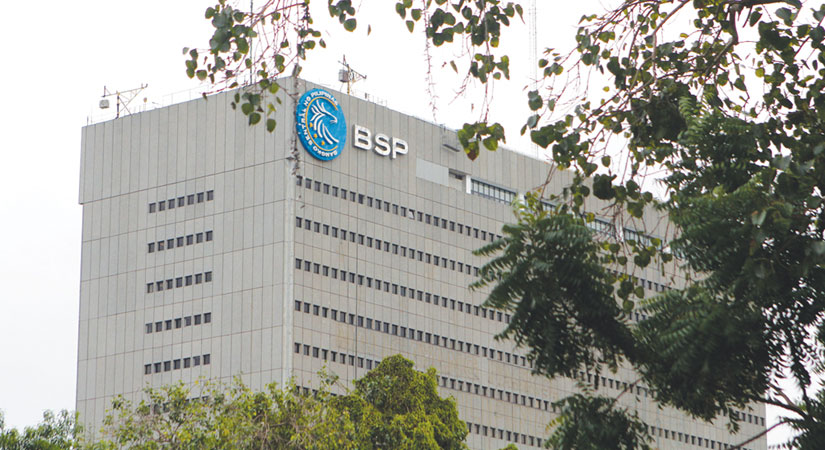
THE CENTRAL BANK released an exposure draft of the circular on payment systems. — BW FILE PHOTO

THE BANGKO SENTRAL ng Pilipinas (BSP) is looking to boost its oversight of payment systems under a draft circular which will establish a framework for the sector.

“The proposed framework provides the BSP’s approach to discharging its mandate as overseer of payment systems pursuant to Republic Act (RA) No. 11127 or the National Payment Systems Act (NPSA),” the central bank said in a statement late Monday.

The draft framework now open for industry comments provides that the BSP may issue policies to boost “innovative” payment solutions while mitigating risks associated with the use of these systems.

“These policies shall include principles and requirement on various areas, such as, but not limited to governance, risk management, consumer protection, data confidentiality, information security, AML/CFT (anti-money laundering/ counter-terrorism financing), and pricing mechanism,” the draft circular said.

The draft rules also seek to establish a Payment System Management Body (PSMB) to organize, manage, and governing the participants in the payment system “to ensure that transactions are “safely and efficiently cleared and settled with finality.” These PSMBs will be accredited by the central bank.

According to the draft circular, among the central bank’s main functions as overseer is to monitor existing and incoming payment systems.

With this, operators of payment systems will be required to register with the BSP and to submit key reports, in accordance with the reporting governance framework of the central bank.

“The Bangko Sentral may accredit several PSMBs or revoke the accreditation of a PSMB as it deems necessary,” it said.

For its part, the BSP can conduct on-site inspections to verify arrangements done by payment systems and their compliance with existing policies.

Likewise, the framework, if implemented, will allow BSP to impose internationally accepted standards and practices and to categorize payment systems into large value payment systems or retail payment systems, which will include those involved in purchases of goods and services, domestic remittances, or fund transfers.

“The Bangko Sentral shall designate a payment system which poses or has the potential to pose systemic risk, or if designation is deemed necessary to preserve public interest. Designation shall conform to the criteria and the process provided in this framework,” it said. — LWTN

Pangilinan says group’s staff told to work from home

BUSINESSMAN Manuel V. Pangilinan assured President Rodrigo R. Duterte that the companies he leads under the so-called MVP Group of Companies are helping their employees cope with the coronavirus disease 2019 (COVID-19) pandemic that has forced his government to declare a Luzon-wide lockdown.

“Heeding the President’s call tonight for business — large or small — to rise to the challenge posed by Covid-19, the MVP Group is one with the President in coping with this virus. We are helping our employees by maintaining their salaries and benefits during the crisis,” Mr. Pangilinan said in a social media post late Monday night.

He added: “We have asked them to work from home. We continue to serve our customers with the service they need at this time, including the provision of relevant financing, when required.”

Mr. Duterte, in his message to the public on Monday evening, appealed to businessmen to help their workers.

“You might be able really to alleviate the situation by just understanding also the plight of the workers who are not working now and lawfully not really in a position to demand,” he said.

The President ordered that Luzon be placed under “enhanced community quarantine” to stop the outbreak that has killed at least 12 people and sickened 128 more in the Philippines.

The virus that the World Health Organization has called a pandemic has killed more than 6,500 people and sickened about 170,000 more worldwide, mostly in China.

The Trade department said supermarkets, drugstores and banks would remain open, while cargo transporting basic goods would be allowed to cross the checkpoints unhampered.

Police earlier deployed 1,600 cops and set up 56 checkpoints in Metro Manila to monitor the movement of people under the month-long metro lockdown that started on March 15. — Arjay L. Balinbin

Spotify launches playlist dedicated to emerging Filipino talent

MUSIC streaming service Spotify has launched a dedicated Philippine playlist for emerging artists representing the service’s “commitment to emerging artists across all stages of their development, in order to help them deepen their connection to new and existing audiences around the world.”

“The launch of Spotify’s RADAR program puts a mix of Spotify’s best-in-class editorial and marketing abilities behind some truly exciting up-and-coming global and Asian talent. The RADAR Philippines playlist features some of the most interesting talent currently coming out of the Philippines — a treasure trove of emerging sounds where home-grown talent is in abundance,” Boon Ken Wong, Asia team lead for Music Culture & Editorial at Spotify, said in a press statement.

The Philippines’ playlist span several genres including pop, hip-hop, and indie rock with eight artists including the Korean-trained Filipino boy group, SB19.

“We are so honored to be a part of Spotify’s newest program, RADAR, and together with the newly discovered prodigies of music, we will do our best to make more melodies and strive harder for the growth of Philippine Music. Without Spotify, this wouldn’t be possible. Thank you so much!” said the group in the release.

SB19 is known for songs such as “Tilaluha” and “Go Up.”

Other artists included in the playlist are: August Wahh (behind the song “Know What I Want”); syd hartha (“Ayaw”), Route 83 (“Pagmahay”); Soulstice (“IVANA”); VVS Collective (“Walwal”); LTNM, which stands for Love Thy Neighbor Movement, (“Kapit Lang”); and Ace Banzuelo (“Like Like You”).

SB19 and August Wahh are also part of Spotify’s RADAR program which will also promote the new artists through marketing campaigns to “provide fans with the opportunity to get to know their new favorite artists,” according to a separate Spotify blog post on March 9.

“Spotify is thrilled to announce the launch of RADAR this year with an incredible group of emerging artists from across the globe,” said Ned Monahan, Spotify’s head of global hits in the post.

“RADAR will become an influential program for up-and-coming artists across all genres worldwide and a great way for our global marketing and editorial teams to support the next generation of international superstars,” he added.

The program features 36 artists from around the world including US singer Alaina Castillo, the voice behind the hit “i don’t think i love you anymore.”

Part of the promotions the Spotify US will be giving Ms. Castillo is a documentary, music video support, and a set of Spotify Singles. — ZBC

South Korea eyes measures to ease dollar funding squeeze

SEOUL — South Korea will announce measures on Wednesday to ease dollar funding shortages in its local market, two government officials familiar with the matter told Reuters.

The measures will aim to address heightened funding stress involved with the increased cost of raising US dollar funds in Korean financial markets, officials said on Tuesday, without elaborating.

The government is also preparing to announce follow-up measures to address market volatility and the wider fallout from the fast-spreading coronavirus pandemic.

“Measures to ease the funding stress will be released tomorrow,” the official said on Tuesday, adding that it will involve an operation that will be coordinated with the Bank of Korea.

The deepening economic impact of the pandemic has plunged major stock markets into bear territory and forced investors to liquidate their holdings of commodities, stocks and riskier bonds. That, and a rush by brokerages to secure dollar funding out of concern about future cash flow, has led to a scramble for dollar financing.

The premium Korean investors were paying to swap their won into dollars hit 269 points on Tuesday, a record high according to Refinitiv data, suggesting increased demand for the US currency in local financial markets.

The won-dollar currency basis spread indicates the premium Korean financial institutions need to pay on top of dollar LIBOR or the London Interbank Offered Rate.

A finance ministry official in charge of the policy declined to comment on the planned release.

The Federal Reserve has not only cut rates to near zero and pledged to pump hundreds of billions of dollars into markets, it has also cut the pricing on its dollar swap lines with foreign central banks to make it easier for them to provide dollars to financial institutions around the world.

South Korea does not have a currency swap line with the Fed, but it does with the central banks of Switzerland, China, Australia and Canada.

Japan’s central bank also announced a special dollar funding operation on Tuesday.

South Korean vice finance minister Kim Yong-beom said earlier on Tuesday the coronavirus may lead to unprecedented economic and financial crisis for Asia’s fourth-largest economy, which is battling the region’s biggest outbreak outside China.

The government has drawn up a $9.8-billion supplementary budget and declared the hardest hit provinces “special disaster zones,” which will get subsidies and tax exemptions. — Reuters

The Philippines did it. Now smaller markets may follow shutdown

In their war against the coronavirus and foreigners’ exodus, smaller markets might follow the Philippines in shutting down their bourses, market participants say.

The nation’s move to close its $188 billion equity market until Thursday has already been followed by Sri Lanka. In both cases, the reason given for the closure is to help contain the spread of the coronavirus, which has already infected more than 174,000 globally and killed 7,000.

“Smaller emerging markets including Jakarta would be the most likely to suffer the same fate,” said Jeffrey Halley, a senior market analyst at Oanda Asia Pacific Pte. in Singapore. “Their virus containment approach has been slow and piecemeal.”

For developed nations with virus-containment measures and business continuity plans in place, market shutdowns are not necessary, he added.

Indonesia Stock Exchange said they have no plan yet to shut equities trading and would monitor today’s development. The country banned short selling in stocks earlier this month.

Shutting markets during times of crisis is extremely rare but not without precedents. America’s stock market closed for almost a week after the 9/11 terrorist attacks in 2001, while Hong Kong halted trading in the wake of the Black Monday crash in 1987. Greece shut its stock market for about five weeks in 2015.

“There have to be plans similar in nature by regional markets” where new infections are gathering pace, said Sameer Kalra, founder of Target Investing in Mumbai. “The move is good to contain the virus spread since exchange buildings are hugely populated areas, but it may put a lot of jobs at risk.”

While a shutdown to avoid financial crashes can severely erode confidence in a nation’s capital markets, investors might be more forgiving this time around, according to Thomas Hayes, chairman at Great Hill Capital in New York.

“If it is part of a quarantine strategy to avoid the spreading of the virus, that may be viewed with greater understanding,” Hayes said. — Bloomberg

Four ways to tell if a COVID-19 article is fake news

COVID-19 has permeated every facet of the news cycle, and sometimes it seems like there’s a new update on the novel virus every hour. News spreads more quickly than ever now, thanks to social media and messaging apps. However, misleading or sensationalized information has also started circulating, spreading dangerous claims and causing unnecessary panic.

Health Secretary Francisco Duque III asked Filipinos to stop sharing false information on COVID-19 at a briefing in Malacañang on March 9. “Kung saang anggulo po natin tingnan, wala pong kabutihang ginagawa ang inyong mga fake news na ikinakalat. Sayang lang po ang panahon natin. (No matter what angle we look at it, there is nothing good done by the fake news you spread. It is a waste of our time.”

One of the ways that fake news is spread these days is through the Viber messaging app, with well-meaning Viber group members sharing items that they saw in another Viber group. Since Viber uses end-to-end encryption, it is impossible for the app to read messages and say whether a message received is fake news or not. That’s why Viber is giving you some helpful reminders for identifying fake news.

Know the official authorities. There are government agencies and organizations battling the virus, and they have firsthand information on developments, confirmed cases, and important advisories. It’s best to remember who these agencies are so you can tell whether a cited source is credible. Locally, the Department of Health (DoH) is the lead government agency handling COVID-19 efforts, working with the Philippine Society for Microbiology and Infectious Diseases. They also work alongside international institutions like the World Health Organization (WHO) and the Centers for Disease Control and Prevention (CDC). It would be helpful to follow these agencies’ official accounts, as there is fake information circulating out there that uses their names and logos to spread misinformation. Always check their verified channels before sharing posts.

To help spread legitimate updates on the virus, the DoH created a Viber Community to disseminate the latest news and information. To follow the group, search DOH PH COVID-19 on Viber. Aside from sharing helpful infographics and important statements on COVID-19, the DoH is also using the Viber community to debunk fake information being circulated online.

Make sure the source is credible and real time. Always verify where an article or piece of information comes from. On Viber, check out verified news communities for constant updates on COVID-19. Top news organizations like Inquirer, GMA News, and CNN Philippines are all on Viber Communities, and one can follow them to get guaranteed credible stories and announcements as they happen. Even lifestyle and entertainment sites are sharing tips and reminders on their Viber Communities. Cosmo.ph and PEP.ph, for instance, have published articles on how to stay safe amidst the outbreak.

Keep an eye out for these red flags. Pay attention to the quality of writing. Fake information almost always has bad grammar, spelling errors, and excessive punctuation since they’re usually written by independent parties with no journalism training, institutional backing, or fact-checking resources. Also look at what the story is actually reporting: Is it a stated claim from a medical organization, or is it a personal anecdote based on hearsay? Don’t trust a message about COVID-19 just because it was sent by a friend whose uncle works at a hospital. They might mean well, but if it’s not verified, it’s still gossip.

• Don’t let emotions take over. Ask yourself what the goal of an article is. Is it to induce panic and uncertainty, or to inform? Was it written by a credible reporter? Was it published on a site with a strong track record of reporting? When determining whether an article is fake, it’s usually best to take a step back and look at things more objectively. Don’t get caught up in the flurry of stories on your feed or chat.

Be critical and cautious — the information you share on COVID-19 can have a serious impact on your family, friends, and communities.

Coronavirus: first test of a US financial system years in repair

WASHINGTON — A health emergency dismissed at first as a fleeting risk to the US economy has turned into a full-on test of whether a decade of planning, regulation, research and soul-searching has left the financial system resilient to a major shock and its central bank able to mount a rescue.

Though equity markets continued sinking on Monday, the success of the Federal Reserve’s emergency response will play out in coming weeks across financial markets the central bank has pledged to keep functioning, across corporations that may be hard pressed to make payments on a record load of debt, and in corner shops and households that turn to local banks for help as earnings and wages dry up.

Fed Chair Jerome Powell rolled out programs on Sunday he said will help on all fronts, but the best hope now is for a short sharp dip in economic growth as the virus is contained, followed by a fast rebound as the country reopens, said analysts and economists who follow the Fed closely.

The longer it lasts, the more likely it leads to mass layoffs and problems beyond those the Fed has anticipated, for example, in the regular “stress tests” major banks must pass.

“This is a sharp, deep real-side shock that started abroad and propagated in the supply side, followed by a significant demand shock and a marked tightening of financial conditions,” a triple calamity that the Fed and others now feel will cause the economy to contract in the April to June period, said Nathan Sheets, chief economist at PGIM Fixed Income and a former Fed and US Treasury official.

The ultimate impact, he said, will depend on “whether the thing will be cured before firms get around to or are required to lay workers off en masse,” Mr. Sheets said, an outcome that could ripple through the banking sector, for example, if corporate debt, home mortgage and other types of loans start to go bad.

Even before it has shown up in core economic data like the unemployment rate, the fast-moving crisis has torn such a hole in the economic outlook that the Fed and other central banks on Sunday pulled out their crisis-era playbook of zero interest rates, massive bond buying and moves to keep dollars flowing around the world.

MORPHING INTO SOMETHING ELSE
Economic policy makers at first felt they would avoid the need for that sort of response, with impacts seen limited to supply chain disruptions rippling from the disease’s epicenter in China and the shutdown of its vast manufacturing complex.

That hope is now gone in what Mr. Powell on Sunday called a “profound” risk to the economy — an unprecedented set of circumstances that has shut down many public activities in the name of public health.

Event and travel cancellations have taken the hospitality, sports and entertainment industries offline. Cities are ordering bars and restaurants to close, and the Centers for Disease Control has discouraged gatherings of more than 50 people. Nonfood retail store traffic is down. Port and rail cargo traffic has dropped.

“We have gone from a temporary growth shock to ‘how bad is this’ to ‘is it morphing into something else?” Priya Misra, global head of rates strategy at TD Securities said in a conference call last Thursday.

“Our view is that it is morphing … from a temporary supply side shock to a longer-term demand shock to a funding shock.”

The virus has now infected more than 170,000 worldwide. While slowing in China, the event may still be in its early stages in the US, where cases have climbed into the thousands and President Donald Trump on Friday declared a national emergency.

PREPARING SINCE THE LAST CRISIS
Preparations for an economic downturn have been underway since the last one. The 2007-09 financial crisis prompted a regulatory overhaul requiring banks to hold more capital and more cash and to show they could survive a large hit.

With an estimated $4.2 trillion in equity and liquid assets held by the largest financial firms, Mr. Powell on Sunday said he and other regulators are “encouraging banks to use their capital and liquidity buffers as they lend to households and businesses.”

The Fed got experience of its own in the last crisis in what to do when interest rates hit zero and won’t, in the US at least, be lowered any further. Economists have spent the last decade analyzing how those efforts — from massive bond buying, negative interest rates, targeted lending, and forceful policy maker statements — have worked globally.

The Fed began putting those conclusions into effect on Sunday, slashing interest rates to near zero in a large cut of 1 percentage point, pledging to buy $700 billion in bonds in coming months, and telling the world rates won’t rise until the crisis has past — a bit of “forward guidance” that could hold down long-term borrowing costs well into the future.

The likely impact of the virus and the public health response “is not something that is knowable,” and remains so uncertain Fed officials have canceled the release of economic forecasts that had been set for this week, Mr. Powell said Sunday.

Goldman Sachs on Sunday downgraded its first-quarter US growth estimate to zero. It forecast a deep recession in the second quarter, followed by a bounce in the third. Other private economists also see a sharp contraction.

Nearly two decades ago, after the attacks of Sept. 11, 2001, Fed economists acknowledged the difficulties of economic forecasting after a major shock.

Those gauging the impact had “to take strong stands on questions of psychology and politics,” Fed economist David Stockton told policy makers in an Oct. 2, 2001 Fed meeting.

He penciled in large hits to economic growth continuing into 2002, but noted “because there simply has been no other episode that closely matches the present one, it is very difficult for us to gauge.” — Reuters


Ayalas allot P2.4B for employees as virus disrupts work

Ayala Corp. Chairman and Chief Executive Officer Jaime Augusto Zobel de Ayala — PHILSTAR/GEREMY PINTOLO

THE Ayala brothers are rolling out a P2.4-billion emergency response package for employees and partners affected by the coronavirus disease 2019 (COVID-19) business disruptions.

In a Facebook post, Ayala Corp. (AC) Chairman and Chief Executive Officer Jaime Augusto Zobel de Ayala said the Ayala group will be providing wages, bonuses, leave conversions and loan deferments to its employees and partners during the quarantine period.

The billion-peso package is composed of a P600-million salary continuance for displaced workers from construction sites, shuttered malls and retail spaces of Makati Development Corp. and the Ayala Malls group; P270 million from Globe Telecom, Inc. for retail store support staff and vendor partners; and P130 million from other Ayala companies for personnel-related financial support.

The remaining P1.4 billion is rent condonation that the company will give to merchants of Ayala Malls. This package is meant to “provide the merchants of these malls financial relief so they can in turn provide the much-needed financial support for their employees.” This is aside from a rent-free period from Mar. 16 to Apr. 14.

Employees of companies under the Ayala group will also receive their salaries and additional financial support where possible. Their mid-year bonuses that are originally scheduled to be given in April will also be distributed earlier, starting yesterday until the end of the month.

The company is likewise delaying employee loan payments that are provided through the Ayala Multi-Purpose Cooperative. It is also offering special financial assistance programs at subsidized rates.

“Ayala continues to ensure that those who are most directly affected by this emergency are taken care of through these financial assistance measures,” Mr. Ayala said.

Under the Ayala group of companies are Ayala Land, Inc.; Globe; Bank of the Philippine Islands; AC Energy, Inc.; Manila Water Co., Inc.; and AC Industrials, among others.

It earned P35.28 billion in 2019, up 11% from a year ago, due to divestments in its education and energy businesses and higher consumer demand from its property, telecommunications and banking segments. — Denise A. Valdez

Discovery premieres COVID-19 special tonight

DISCOVERY CHANNEL premieres tonight a special tackling the COVID-19 pandemic, featuring interviews with Wuhan residents and medical professionals.

The COVID-19 pandemic, which originated in China last December, has claimed over 6,500 lives according to the World Health Organization and infected more than 169,000 people over 135 countries and territories. The Philippines has more than 140 cases with a dozen left dead and the largest island (including the capital) under lockdown.

“I kept crying because I was very worried. The epidemic has become very severe,” Lin Wuyan, a Wuhan native working in Beijing said in the show’s trailer.

John Isaac, digital business head of Discovery Channel in South Asia said the idea behind these specials was to look at “events that define the world and humanity,” according to a story by firstpost.com.

“We believe there is a lot more to it than what meets the eye. This special is just our first attempt at showing the world in terms of what its origins were and what led to its spiralling out of control,” he added.

Mr. John also noted that the network has commissioned “at least two more” original shows on the novel coronavirus as there’s a need to have “information that comes from trusted sources,” he said in an interview with the Press Trust of India.

Coronavirus: The Silent Killer airs on March 18 at 9 p.m. on Discovery Channel. Discovery Channel is available on Sky Cable channel 39 (SD) and channel 180 (HD); Cignal channel 140; Cablelink channel 25; and various cable TV providers.

Some European lenders temporarily shut branches to limit spread of the virus

FRANKFURT/LONDON — Two of Germany’s largest banks have temporarily shut hundreds of branches, while Italian lenders have shortened opening hours as they grapple with staff shortages and the spread of coronavirus.

Commerzbank said it will close several hundred of its roughly 1,000 branches in Germany, with the exact number yet to be determined, while HVB said it plans to close 101 of its 337 branches during Monday.

The banks are hoping that increased use of digital banking will limit the disruption caused by restricted branch services, while in Britain, Spain and France, where most banks remain open, there have been calls on customers to go online.

Customers of HVB and Commerzbank will still be able to use ATMs, online services and those branches that remain open. Several German savings banks have already closed or are planning to close branches.

Around 900 larger branches at Italy’s biggest retail bank, Intesa San Paolo, out of a total of 3,500, are only opening in the morning while most of its smaller sites are operating three mornings a week.

Intesa, which has closed some 122 of its small branches located nearer large ones, said that starting from on Tuesday customers would need to book an appointment to be able to access one of its branches.

UniCredit, which has around 4,000 branches in Italy, said last week it would keep only a limited number open in each region.

Other Italian banks are following suit, with Banca Monte dei Paschi also opening only in the morning.

BANKS PREPARED
British banking trade body UK Finance, which represents more than 250 firms, said continued access to banking services was “critical” and it would work closely with government and regulators to ensure its members could keep serving customers.

“Operational resilience is therefore crucial and the industry is working hard to ensure its systems, human and digital, remain robust and secure,” a spokesman told Reuters.

And in France, the country’s banking federation said that “despite complex operational conditions, all employees in the networks are and will remain fully mobilized to help their clients to get through this exceptional crisis.”

“Banking networks will be open and branches are prepared,” the French federation said in a statement on Sunday.

Britain’s biggest domestic lender, Lloyds, said it was waiving fees on missed payments on credit cards, loans and mortgages, giving repayment holidays, allowing emergency access to fixed-term savings accounts and raising online banking deposit limits to help people unable to access local branches.

“We are making some temporary changes over the coming weeks, and will be providing individual support to customers who need extra help,” Vim Maru, group director, Retail, said.

Barclays also said it was encouraging customers to speak to specialist teams set up to help those facing financial difficulty, and that it would also accept applications for temporary increases in credit card limits during the disruption.

Executives at TSB, owned by Spain’s Banco de Sabadell, are having regular calls to discuss and plan for possible changes in the UK’s approach to delaying the spread of coronavirus, a spokesman said.

There was no suggestion of sudden demand for cash from concerned customers or any service issues related to keeping ATMs well-stocked, the spokesman added.

While two branches had been closed due to staff illness, TSB said there were no immediate plans to close others preemptively and the bank’s main call center in Bristol was operating as normal, with no surge in calls from customers.

British building society Nationwide said it would open more than 100 of its 650 branches an hour early so that elderly and vulnerable customers, concerned about their exposure to coronavirus, could manage their money in a safe environment. — Reuters

Asian business chiefs see over 20% sales drop amid pandemic

OVER EIGHT in 10 business leaders in Asia (84%) saw revenues slumping amid the impact of the new coronavirus disease 2019 (COVID-19) pandemic, with some chief executives expecting a drop in sales of at least 20% in the next year, a latest global survey with business heads reported Tuesday.

The new Chief Executive Global Survey by YPO, an international group of more than 29,000 business leaders, highlighted that 82% of almost 3,000 chief executives from across the globe expected declining revenues in the next six months.

The survey, which was conducted from March 10 to 13, noted that 41% of the respondents said they expect a huge blow on revenues by the third quarter of the year, while 19% expect a more than 20% decrease in sales by end-2020.

Besides Asian leaders, chief executives from other regions with the highest number of reported cases of COVID-19 infections, such as South Asia (78%), Middle East and North Africa or MENA (74%) and Europe (70%), have been bearing the brunt of the coronavirus disease pandemic on their revenues.

Inversely, business leaders from Australia and New Zealand (52%), the United States (50%) and Canada (45%) reported a minimal business impact of the spread of the disease caused by severe acute respiratory syndrome coronavirus 2 (sars-cov-2).

By industry, chiefs from the hospitality and travel (89%), education (87%) and media and entertainment (80%) industries were seen to be heavily burdened with the virus’s weight on their revenues.

Meanwhile, construction industry heads (36%) also saw an impact on revenues, while one in 10 of sector-specific retail and wholesale sector leaders, along with agriculture, factories, mine, and utilities firm chiefs, noticed a favorable business environment amid the disease pandemic.

As of March 16, the total number of COVID-19 infections across the world is approximately 167,511 with 6,606 fatalities. China still contributed to this number with 81,077 confirmed cases of infection and 3,218 deaths.

Besides the concerns on revenues (58%), business travel (87%) and new business development (62%) were also the areas where respondents felt the impact of the pandemic.

The report also showed that almost all of the respondents (95%) have carried out actions to stem the effect of COVID-19 in their businesses, including regular communication with employees and adopting new health and safety procedures.

Among the leaders polled, over six in 10 said they have canceled major events since the spread of the dreaded virus.

Moreover, the pandemic has driven business chiefs to shift short-term goals (32%), research new business innovations (28%) and make changes to their supply chains (18%).

In terms of workforce, 70% expected to have the same total number of employees over the next year, while businesses in MENA (33%), Europe (29%), and South Asia (27%), were most likely to consider lay off schemes.

On March 11, the World Health Organization described the global outbreak of COVID-19 as “the first pandemic caused by a coronavirus.” — Adam J. Ang


COVID-19 impact and outlook from chief executives around the world

Universal Pictures will make movies available at home and in theaters on the same day

UNIVERSAL PICTURES, a division of Comcast Corp.-owned NBCUniversal, will make its movies available at home on the same day they are released in theaters worldwide, beginning with the DreamWorks Animation film Trolls World Tour — which opens in the United States on April 10.

The decision, announced by NBCUniversal on Monday, is a response to changing consumer behavior as the coronavirus spreads. It upends the traditional practice of keeping a movie exclusively in theaters for what is typically a 90-day window before releasing it on other platforms.

NBCUniversal will “continue to evaluate the environment as conditions evolve,” the company said in a statement, adding it will revisit the strategy when the current situation changes.

On Sunday night, the mayors of New York and Los Angeles ordered movie theaters in their respective cities to close in response to concerns over the coronavirus outbreak.

NBCUniversal said that by Friday, recently released films including The Hunt, The Invisible Man, and Emma will be available from sister companies Sky and Comcast and on a variety of on-demand services. The suggested price will be $19.99 in the United States for a 48-hour rental, and the equivalent price elsewhere.

“Rather than delaying these films or releasing them into a challenged distribution landscape, we wanted to provide an option for people to view these titles in the home that is both accessible and affordable,” said NBCUniversal Chief Executive Officer Jeff Shell in a statement.

Between this past Friday and Sunday, North American movie box office sales hit their lowest levels in over two decades, according to Comscore, as viewers stayed home and theaters capped their seating capacity to create more space between moviegoers. — Reuters

ADVERTISEMENT
ADVERTISEMENT