Home Blog Page 953

Indonesia, EU seal trade deal, hope to offset Trump tariffs
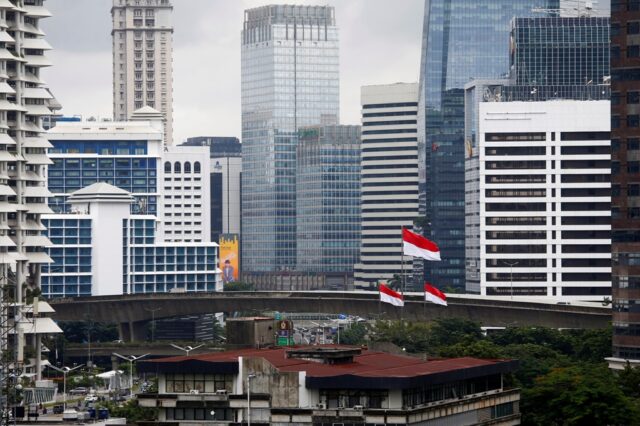
INDONESIAN national flags fly at a business district in Jakarta, Indonesia, Feb. 5, 2021. — REUTERS

NUSA DUA, Indonesia – Indonesia and the European Union concluded a free trade agreement on Tuesday after nine years of talks, with both aiming to boost exports and investment and to offset the impact of US President Donald Trump’s tariffs.

Both sides will remove import duties on more than 90% of products, most of them as soon as the deal enters force, with the rest, including Indonesia’s 50% duty on EU cars, phased out over five years.

Indonesia says it expects bilateral trade, worth $30.1 billion for goods in 2024, to double in the first five years.

TRUMP PROVIDES SPUR TO TRADE DEAL
Since Trump’s re-election last November, the EU has gone into overdrive to forge new trade alliances, including with the South American bloc Mercosur and Mexico and also accelerating negotiations with India.

The 27-nation EU hopes these alliances will offset the impact of Trump’s tariffs, as well as reducing dependency on China, particularly for minerals required for its green transition.

Indonesian exports are also subject to a broad 19% U.S. tariff.

The EU says its exporters will be spared 600 million euros ($707.4 million) of Indonesian duties and envisages selling more chemicals, machinery, automobiles and food products, notably milk powder and cheeses.

Indonesia expects a boost to its exports of palm oil, coffee, textile and clothing and other products, and aims for the pact to enter force by January 1, 2027.

At that juncture Indonesia, a vast archipelago with more than 284 million people, is set to become an upper-middle-income country and so lose access to the preferential duties the EU grants to developing countries.

The agreement in the coming months will need to undergo legal checks and be translated into the EU’s official languages. EU governments and the European Parliament will then need to give their formal consent to the deal.

Indonesia’s Coordinating Minister for Economic Affairs Airlangga Hartarto said he looked forward to closer supply chains, including for critical minerals, renewable energies, innovation and investment.

Indonesia is in talks with EU automakers on partnerships in battery and electric vehicle production in the Southeast Asian country, he told reporters.

EU EYES IMPROVED ACCESS TO KEY MINERALS
EU Trade Commissioner Maros Sefcovic, speaking in Bali, said the agreement would bolster investment into Indonesia by European companies and improve the bloc’s access to minerals critical for the bloc’s clean tech and steel industries. These include nickel, copper, bauxite and tin.

The Chairman of the Indonesian Palm Oil Association (GAPKI), Eddy Martono, said the deal would remove tariffs on his sector’s exports to the EU, a major buyer of palm oil.

However, non-tariff barriers, including the EU Deforestation Regulation (EUDR), remain a hurdle for the industry, he said in a text message to Reuters.

Indonesia is the world’s biggest palm oil producer and the EUDR, which the EU is set to delay by another year, requires its growers to provide documentation proving shipments did not come from areas deforested after 2020.

“There is still homework to be done, namely the EUDR, which must also be resolved immediately because it will be implemented later this year,” he said, adding this risked reducing the effectiveness of the trade agreement. — Reuters


IT-BPM industry still bullish on growth

BW FILE PHOTO

THE PHILIPPINE information technology and business process management (IT-BPM) industry is still bullish on growth, as it expects to generate $42 billion in export revenues and increase headcount to 1.97 million in 2026, an industry group said.

The Philippines is also aiming to become the next hub for global capability centers (GCC), as it has seen an uptick in interest from multinational companies, the group added.

IT & Business Process Outsourcing Association of the Philippines (IBPAP) President and Chief Executive Officer Jonathan R. Madrid said the industry has so far created 450,000 new jobs and $10.5 billion in revenue since the creation of the industry roadmap in 2022.

“Now, for 2025, that includes 80,000 new jobs and $2 billion in incremental revenue. That is a growth of 4% and 5.3%, respectively,” he said at the International IT-BPM Summit on Tuesday. “By 2026, we project to reach $42 billion in revenue and close to a total of two million jobs for Filipinos.”

The expected jobs and revenues for 2026 are aligned with the baseline projections indicated in the IT-BPM Roadmap 2028.

Mr. Madrid said the industry’s growth will still be driven by core segments — banking, financial services, and healthcare.

While the Philippines remains strong in contact centers, he noted faster growth coming from GCCs. “(There’s) a slightly higher growth rate from GCCs. Coming from a lower base, you tend to see more growth from that sector,” he said.

GCCs are offshore units established by multinational corporations to provide specialized services such as finance, IT and customer support to their global operations.

Mr. Madrid said he sees increased interest in setting up GCCs in the Philippines from prospective clients in the US, Australia and Europe.

Globally, GCCs are reshaping the IT-BPM industry, with its market expected to grow to $155 billion by 2027.

To date, there are 170 GCCs in the Philippines, growing by around 10 each year, but India continues to dominate with its 2,000 GCCs.

“We know that India dominates as the world’s GCC hub, showing how GCCs have evolved. They are no longer cost centers but strategic engines of innovation and transformation,” Mr. Madrid said.

“I think the Philippines should aspire to do the same. We have the talent, we have the scale, the cost efficiency, and the ecosystem maturity to become the next global GCC hub,” he added.

LEGISLATION NEEDED
IBPAP Chief Operating Officer Celeste B. Ilagan said more needs to be done on the policy front to support the growth of GCCs in the Philippines.

“GCCs have different needs compared with the traditional BPM providers,” she said, adding that the group wants Congress to pass legislation to help attract more GCCs into the country.

In particular, she said that the industry needs a law that is similar to the Regional Operating Headquarters (ROHQ) law. However, this move was “abandoned” in favor of the Corporate Recovery and Tax Incentives for Enterprises (CREATE) Act, she added.

“We know that other countries have this international business services law that they are already implementing so that they can get more GCCs to their country. So, we are trying to work along those lines as well,” she added.

The ROHQ Law, or Republic Act No. 8756, provides incentives to multinational companies establishing ROHQs and area headquarters in the country.

Under the law, companies that do not derive income from the country are not subject to income tax, while ROHQs and area headquarters are exempt from value-added tax, local taxes, and import tax on training materials, equipment, and motor vehicles.

“We are not looking at reforming the CREATE Act. It is possibly a new piece of legislation that will be similar to the previous ROHQ law. It really was targeted to attract GCCs to the country,” she said.

“GCCs are more ‘cost-plus.’ They are cost centers, and therefore, a different set of incentives will be more important to them. That is what we are looking to do in the next few months,” she added.

TOO BIG TO FAIL
Meanwhile, Mr. Madrid said the IT-BPM industry, which makes up at least 8% of the economy, faces the challenge of remaining “indispensable.”

“The Philippine IT-BPM industry is too big to fail. But just as important, it is too important not to evolve. We cannot afford complacency. We cannot allow the sunset industry narrative to take root. Because we’re growing faster than the global market,” he said.

“And the world continues to see the Philippines as a trusted, indispensable partner. So, our challenge is not survival. Our challenge is to remain indispensable by strengthening our value,” he added.

Mr. Madrid said only 12% of Philippine companies report a high level of maturity, while 70% are expected to reach a high level of maturity by 2028.

“So, the winners will not be those companies chasing AI (artificial intelligence) demos. The winners will be those who rewire workflow, integrate with AI, but with a human at the core, and close the skills gaps in cloud, cybersecurity, and automation,” he said.

“Now, this is the reason why IBPAP is calling for a national AI strategy, a strategy that ensures that AI adoption is not fragmented and is not left to chance. But it is guided by a coherent national agenda,” he added.

The AI strategy, he said, should build digital and AI skills at scale, establish governance and trust frameworks, and enable industry-wide transformation. — Justine Irish D. Tabile

House opens plenary debates on P6.79-trillion budget bill

PCOO

CONGRESSMEN on Tuesday kicked off plenary debates on the proposed P6.793-trillion national budget for 2026, against the backdrop of ongoing investigations into anomalous flood control projects and anti-corruption protests.

The House Committee on Appropriations approved House Bill No. 4058 or the General Appropriations bill, with 54 voting in favor and six against. Four lawmakers abstained.

“When citizens witness budgets that do not match their realities, when funds fail to reach those who need them most, confidence in government collapses,” Appropriations Committee chairperson and Nueva Ecija Rep. Mikaela Angela B. Suansing said during her sponsorship speech.

The budget bill reached the House floor after 37 days of committee hearings, with deliberations marked by reforms aimed at enhancing transparency and restoring public trust in the budget process.

Ms. Suansing has abolished the opaque “small committee” consisting of select congressmen that previously consolidated budget amendments, replacing it with a sub-committee.

The House sub-committee on Budget Amendments Review (BARC) had reallocated about P255-billion flood control funds meant for the Department of Public Works and Highways (DPWH) to the Education, Health and Social Welfare departments.

“That P255 billion has been redirected to urgent needs — education, healthcare, agriculture and food security,” said Ms. Suansing. 

The budget panel added P26.5 billion to the Education department’s budget, with P22.5 billion earmarked for classroom construction and P1.88 billion for school feeding programs, among others.

Ms. Suansing said the higher budget could fund the construction of 20,000 classrooms nationwide.   

“Education stands as the single-largest priority in the fiscal year 2026 budget, with over P1.17 trillion, or 17.22% of the national budget,” she said, noting the proposed spending level is “the clearest sign that we are investing in the future of our children.”

Lawmakers also hiked the Health department’s budget by P29.28 billion, with P26.73 billion going towards the agency’s medical assistance program for poor patients and P2.4 billion to fund the construction of key government hospitals nationwide.

Around 1.27 million Filipinos could benefit from the increased budget for the Health department’s medical assistance for indigent patients, Ms. Suansing said.

About P60 billion was also channeled to the Philippine Health Insurance Corp. (PhilHealth), serving as the government’s subsidy for the state health insurer.

Ms. Suansing said the additional funds could expand the government’s zero-balance billing policy in public hospitals but warned the health insurer to not use these funds for “income-generating initiatives.”

Congressmen added P35.91 billion to the budget of the Social Welfare department. Broken down, P32.06 billion will go to the emergency cash aid program for indigent Filipinos and P3 billion for its sustainable livelihood program.

Lawmakers also rechanneled P39.36 billion to the Agriculture department’s proposed budget, including P8.89 billion for farm-to-market roads, P8.69 billion for post-harvest facilities and P7 billion for P7,000 cash aid to farmers and fisherfolk.

The decision to reallocate the entire P255 billion originally earmarked for flood control projects is a “knee-jerk reaction” that could delay the implementation of critical flood infrastructure in Metro Manila, Senior Deputy Minority Leader and Caloocan Rep. Edgar R. Erice told lawmakers, explaining his vote against the budget bill at the committee level.

“The removal of the P255 billion from the Public Works department is a knee-jerk reaction that will forego well-studied projects that have been awaited by our people,” he said.

Meanwhile, civil society groups on Tuesday accused the House sub-committee of budget maneuvering, alleging it convened without prior notice to reallocate billions of pesos in public funds in the budget.

“What happened yesterday (on Monday) is not an oversight. It is betrayal,” a joint statement by civil organizations, including IBON Foundation GoodGovPH and FOI Youth Initiative stated.

The reallocation of DPWH funds follows allegations of irregularities in flood control projects, including substandard, incomplete or nonexistent infrastructure.

“The BARC, meant to scrutinize realignments, has become a rubber stamp,” the civic groups said. “Amendments are texted to Congress members at the last minute, realignments are rushed and the committee proceeds to plenary deliberations without giving anyone adequate time to study the full picture.”

Ms. Suansing said lawmakers have been “very, very transparent in every step of the way.”

Lawmakers are expected to approve the budget bill on second reading in October, and by final reading after sessions resume in November.

The House plans to deliberate on the proposed national budget until Oct. 1, with the remaining session days until Oct. 10 reserved for finalizing amendments, according to a copy of the chamber’s schedule shared with reporters. — Kenneth Christiane L. Basilio

Converge aims to play key role in PHL’s digital transformation

Converge Chief Operations Officer Benjamin B. Azada

CONVERGE ICT Solutions, Inc. is positioning itself at the forefront of the Philippines’ digital transformation, as it seeks to drive nationwide connectivity to address the surging demand for reliable internet.

“It is about building the digital infrastructure and bringing connectivity. We see Converge playing a role in that endeavor… We’ve been investing heavily in our nationwide backbone in bringing connectivity to the different islands across the Philippines,” Converge Chief Operations Officer Benjamin B. Azada told BusinessWorld Editor-in-Chief Cathy Rose A. Garcia during an episode of BusinessWorld One-on-One online interview series.

Converge, a leading fiber internet provider, saw a surge in demand during the pandemic driven by the shift to remote work, online learning, and digital services.

“Everyone realized that they had to get the business done… that really drove a boom in broadband connectivity. I think since then, there’s been a fundamental shift in how people perceive broadband. It’s no longer a luxury, it’s a utility,” he said.

The Philippines is accelerating efforts to expand internet access by strengthening digital infrastructure, as part of efforts to promote digital inclusion.

Without connectivity, there would be no digital transformation, Mr. Azada said.

He said Converge is heavily investing in a fiber backbone to bring connectivity to other islands in the country.

“We started off, not in Metro Manila, but in Pampanga and progressively we expanded our network to the whole of Luzon and then a few years ago to Visayas and Mindanao and we’re continuing to invest in that,” he said.

“I think that’s going to be a fundamental enabler not just for homes… but also for businesses as they seek to [digitalize] their operations.”

GEOGRAPHICAL CHALLENGES
The Philippines has 97.5 million individuals using the internet at the start of 2025, representing online penetration at 83.8% of the total population, according to a report by DataReportal.

In the August report by Ookla, a global network intelligence and connectivity insights firm, the Philippines ranked 66th globally from 70th last year for mobile speeds and 54th for fixed broadband speeds.

Although there is an improvement in the overall connectivity in the Philippines, the country’s geographical layout hinders the rollout of digital infrastructure, Mr. Azada said.

“We are an archipelago. [It is] not as easy to roll out broadband, to roll out fiber across the country than it would be in a country in the mainland Southeast Asia like Thailand, Malaysia, or Vietnam because we need to lay undersea cables,” he said.

The company has accelerated the rollout of both its terrestrial backbone and submarine cable networks, allowing it to connect different towns and cities.

“Once we were able to light up those segments, we were able to start selling internet to all those communities,” Mr. Azada said, referring to Converge’s Bifrost Cable system.

In August, the company announced that its Bifrost Cable System officially landed in the Philippines via Davao. This Trans-Pacific cable system connects Singapore, Indonesia, the Philippines, and the United States. It enables ultra-low latency and high-capacity bandwidth amid the growing digital economy.

Once the 20,000-kilometer (km) Bifrost Cable System is fully operational, Converge will be the exclusive Philippine partner operating the international cable landing station in Davao and will help position the country as a digital hub in Asia.

“We have, I think, a plan to roll out another 500,000 ports very soon, mostly in Visayas and Mindanao because this is the area where I think it’s still under-penetrated,” Mr. Azada said.

He said Converge hopes to achieve this sooner, while also expanding its network in the northern and southern part of the Philippines.

‘TECHCO’
Converge is also making a bold move to transition from a telco to a “techco” or technology company amid an ever-changing digital landscape. In line with this, the company unveiled a new corporate identity and redesigned logo to reflect its transformation and forward trajectory.

“It is also signaling to the world, to the market that we’re here, not just to provide connectivity, but to help even more going up the value chain in helping companies to digitize and to bring human-centric solutions to families and to homes,” Mr. Azada said.

“We want to be the foremost technology leader that empowers, that powers digital journeys of tomorrow, uplifting the human spirit and moving the country forward.”

Competition is expected to heat up in the telecommunications industry with the Konektadong Pinoy Act, or the Open Access in Data Transmission Act, which lapsed into law last month.

“I think Konektadong Pinoy is very noble in its aims because it’s about the customer. It’s about the Filipinos. And hopefully, if it’s implemented right, it will expand the reach of our infrastructure and the infrastructure of all the players,” Mr. Azada said.

The Converge executive said the law may encourage more investments in the sector, enabling the company to expand its network and reach geographically isolated and disadvantaged areas.

“The one thing I like about Konektadong Pinoy is that it encourages sharing of infrastructure. That will help us avoid duplicate investments… We see it more as an opportunity. We are hoping that the rules of the game are clear and fair,” he said. — Ashley Erika O. Jose

Catch BusinessWorld One-on-One online interview series Reconfiguring Business Amid Megatrends on BusinessWorld’s Facebook page and YouTube channel. The interview with Converge Chief Operations Officer Benjamin B. Azada will be streamed at 11 a.m., Sept. 24 (Wednesday).

PHL financial system resources settle at P34.6T at end-July

BW FILE PHOTO

By Katherine K. Chan

THE TOTAL RESOURCES of the Philippines’ financial system grew by 6.4% year on year as of July, preliminary data from the Bangko Sentral ng Pilipinas (BSP) showed.

Resources held by banks and nonbank financial institutions climbed by 6.4% to P34.592 trillion in the first seven months of the year from P32.504 trillion a year ago.

Total resources slipped by 1.3% from the P35.17 trillion logged at end-June.

These resources include funds and assets such as deposits, capital, and bonds or debt securities.

Preliminary BSP data showed the banking sector’s resources went up by 6.7% to P28.601 trillion at end-July from P26.799 trillion a year ago.

Resources of universal and commercial banks rose by 6.2% year on year to P26.664 trillion at end-July, while thrift banks’ resources went up by 23.1% to P1.371 trillion and digital banks’ resources jumped by 33.1% to P141.7 billion.

However, resources held by rural and cooperative banks declined by 11.3% to P424.9 billion at end-July.

Meanwhile, nonbank financial institutions’ (NBFI) resources increased by 5.02% to P5.99 trillion as of March from the P5.704 trillion posted at end-July 2024. There was no data for NBFI’s as of end-July.

Nonbanks include BSP-supervised investment houses, finance companies, security dealers, pawnshops and lending companies. Nonstock savings and loan associations, credit card companies, private insurance firms, the Social Security System and the Government Service Insurance System are also nonbank financial institutions.

“The Philippine financial system’s resources rose to P34.592 trillion in July, up 6.4% year on year, driven by strong credit growth and asset expansion amid resilient domestic demand,” Ruben Carlo O. Asuncion, chief economist at Union Bank of the Philippines, Inc., said in a Viber message.

On the other hand, Mr. Asuncion noted that seasonal adjustments and portfolio rebalancing likely led to the month-on-month decline.

“Moving forward, liquidity conditions, BSP policy actions, and macroeconomic trends will be key drivers of resource growth,” Mr. Asuncion said. “We remain confident in the financial system’s ability to support the economy’s evolving needs and sustain its growth momentum.”

Meanwhile, John Paolo R. Rivera, a senior research fellow at the Philippine Institute for Development Studies, said in a Viber message that the increase in the financial system’s resources reflected stable monetary conditions.

“It reflects continued asset expansion in banks and nonbank institutions, supported by steady credit activity, capital market investments, and deposit inflows amid stable monetary conditions,” he said.

“However, the (month-on-month) dip in July may signal temporary liquidity adjustments, debt servicing, or portfolio reallocations by financial institutions.”

Mr. Rivera added that interest rate adjustments, inflation outlook and fiscal conditions would determine how the financial system’s resources will develop in the coming months.

First Gen Corp. eyes up to $80-M initial fund for Indonesia geothermal venture

FIRSTGEN.COM.PH

By Sheldeen Joy Talavera, Reporter

LOPEZ-LED First Gen Corp. will allocate up to $80 million (P4.5 billion) as its initial investment in a geothermal development project in Indonesia with PT DSSR Daya Mas Sakti (DSSR), a local geothermal energy company.

“The first phase is probably around $30 million,” First Gen President and Chief Operating Officer Francis Giles B. Puno told reporters last week, noting the venture will move to a drilling campaign in later phases.

The drilling, expected to begin next year, would cost about $30 million to $50 million, he said.

First Gen Vice-President Erwin O. Avante said the companies are targeting a portfolio of six geothermal projects from the planned drilling campaigns.

In August, Energy Development Corp. (EDC) announced that its subsidiary PT First Gen Geothermal Indonesia had entered into an agreement with DSSR to develop geothermal resources with a total capacity of 440 megawatts (MW) across Indonesia.

The partnership will cover six strategic fields in West Java, Flores, Jambi, West Sumatra, and Central Sulawesi.

DSSR is an indirect subsidiary of PT Dian Swastatika Sentosa Tbk (DSSA), which is engaged in geothermal energy development.

Founded in 1996, DSSA is part of Sinar Mas, one of Indonesia’s largest conglomerates with businesses spanning energy, infrastructure, financial services, and real estate.

Mr. Puno described Sinar Mas as a “very established” conglomerate, calling the venture a strong platform for geothermal development in the region.

“Globally, Indonesia has the largest potential for geothermal… the decarbonization journey of Indonesia is really just starting because basically, they are very reliant on coal,” he said.

“If a company like First Gen can help champion Sinar Mas and the Indonesian government to develop more renewable energy sources that’s cost-competitive, then that’s a good start as far as enlarging renewable energy footprint in a country like Indonesia.”

The Philippines’ installed geothermal energy capacity stands at 1,952 MW, making it the third-biggest producer in the world after Indonesia and the United States.

EDC, the renewable energy arm of First Gen, has an installed capacity of 1,480.19 MW, representing around 20% of the country’s total renewable energy capacity. Since 1976, it has led the exploration, development, and operation of geothermal power facilities in Bicol, Leyte, Negros Island, and Mindanao.

Outside the Philippines, EDC has secured rights to explore and drill two greenfield geothermal projects from Indonesia’s Ministry of Energy and Mineral Resources.

Although the company is not currently pursuing other foreign markets, Mr. Puno said it remains open to opportunities abroad.

“Essentially, as long as there’s opportunity to look at geothermal in any country, we will look at it, because we want to have a very strong footprint in geothermal, not only in the Philippines, but in other countries as well,” he said.

Longer shelf registration to ease capital-raising pressures for companies

SEC.GOV.PH

THE SECURITIES and Exchange Commission’s (SEC) extension of shelf registration validity to five years from three years is expected to give companies greater flexibility in timing securities offerings, allowing them to better align with market conditions, improve pricing, and reduce compliance hurdles, analysts said.

“Capital raising will be easier for Philippine companies, as regulators are now giving them a wider window to issue securities,” Unicapital Securities Equity Research Analyst Jeri R. Alfonso said in a Viber message on Tuesday.

“For firms with staggered funding needs, this means no longer having to rush into the market just to keep up with the deadline.”

Philstocks Financial, Inc. Research Manager Japhet Louis O. Tantiangco said the extended validity enables companies to issue securities when market demand is strongest, potentially increasing the proceeds per share or bond.

“Easing the constraint gives companies more opportunity to assess market conditions in order to better time their capital raising, possibly selling their securities at more advantageous rates,” he said in a Viber message.

Under the amended Rule 8.1.2 of the Securities Regulation Code (SRC), companies may now issue securities under a shelf registration for up to five years instead of the previous three.

The SEC said the new validity applies to all active shelf registrations when the amendments take effect, with the remaining period counted from the original registration’s effective date.

The commission also simplified filing requirements for subsequent tranches under a shelf registration. Analysts said the streamlined Permit to Sell (PTS) process reduces compliance costs and makes follow-on offerings easier to execute, which could encourage wider adoption of the shelf mechanism.

“Timing is a crucial component that could determine how a public offering will perform. Beyond improving access to the capital market, we want to make it easier for companies to maximize the advantages of tapping the capital market,” SEC Chairperson Francis Ed. Lim said in a press release.

Market watchers said the rule change may boost the use of shelf registration in the Philippines, which has historically lagged regional peers due to narrower issuance windows and higher compliance requirements.

The reform is expected to benefit companies in sectors with predictable capital needs, such as utilities, real estate, and infrastructure, while giving investors a more steady, transparent, and strategically timed supply of securities, according to analysts. — Alexandria Grace C. Magno

Afternoon tea amidst the tapestries of Aguilar Alcuaz

SPRING XII (Abstract #123) by Federico Aguilar Alcuaz

IN 1968, National Artist Federico Aguilar Alcuaz explored the technique of Art Protis — making unwoven works of art out of fleece wool and fabric on canvas — while on a visit to the Czech Republic (which was then still Czechoslovakia). Invented by a team from the Wool Research Institute in the city of Brno, this form of art caught his eye and resulted in the creation of a series of colorful, large-scale works.

The artist himself described Art Protis as “painting with fabrics,” as opposed to painting on fabrics, according to his son Christian Aguilar.

At the lobby of The Peninsula Manila in Makati City, guests can see three of Mr. Aguilar Alcuaz’s tapestries made in this technique, and experience their splendor in the form of afternoon tea.

The special menu, “Federico Aguilar Alcuaz Art in Resonance Afternoon Tea,” inspired by the artist’s works, is available at The Lobby until Sept. 30. The exhibition and the special tea menu are part of the hotel’s Art in Resonance program, which promotes local artists through immersive experiences.

A VENUE BIG ENOUGH
Ricky Francisco of Fundacíon Sansó, the curator of the three pieces on display, said that this is the first time in decades that they are being displayed in public.

“Not many people have seen tapestries by Federico Aguilar Alcuaz. We’re so happy that The Pen opened its lobby to us because it’s the only time we get to give them justice. A lot of our spaces are too small. To appreciate something of this size and magnitude, you really need a grand lobby,” he told BusinessWorld during a tour of the tapestries at The Pen on Sept. 18.

With measurements ranging from 116 x 84 inches to 142 x 88 inches, the three Art Protis works provide a vibrant touch to the hotel lobby, especially during cloudy, overcast days or in the darkness of night.

Spring VIII (Abstract #84) and Spring XII (Abstract #123) showcase the colors and textures of spring, while Filipiny (Abstract #124) evokes the bold reds, deep blues, and stark whites of the Philippine flag.

“Using just fiber, he was able to create gradients of colors and lines. All of those fibers together would sometimes reach several layers,” explained Mr. Francisco.

AFTERNOON TEA
The tea menu pays homage to the vivid tapestries with its three tiers of savory snacks and sweets, which can be paired with calming black or green teas.

The plain and raisin scones come with three different jams — strawberry, calamansi, and cream. The savories range from curry chicken and smoked salmon to cucumber cream cheese sandwiches and lobster brioche. The sweets include mango coconut, coffee Barako, ube truffle, and raspberry calamansi confections.

Each tier is supported by edible sugar paper printed with Mr. Aguilar Alcuaz’s art.

The icing on the cake is a chocolate easel on which a QR code rests. Once scanned, it takes the guest to a video that shows how The Pen’s staff put together the high tea inspired by the art.

ARTIST CONNECTIONS
For Christian Aguilar, it is quite apt that his father’s tapestries can be enjoyed in this way in a grand hotel lobby.

“He would work until six or seven. Afterwards, he would have dinner somewhere and then go off to a hotel for some drinks, maybe Shangri-La, the Manila Hotel, or The Pen,” he said.

The Pen’s public relations director Mariano Garchitorena recalled that Mr. Aguilar Alcuaz would order vodka tonic and tinker around on a portable keyboard, playing little tunes while enjoying his cocktail.

Another reason the tapestries fit very well in The Pen is that they hang beneath fellow National Artist Napoleon Abueva’s iconic Sunburst sculpture on the ceiling of the lobby.

“They were good friends,” Mr. Aguilar said of the renowned sculptor and his father. “Here, it’s like they’re having a conversation. They’re talking to each other.”

Mr. Francisco told BusinessWorld that, as part of Fundacion Sansó’s initiative for the continuation of artist estates, they have been working on a book about Federico Aguilar Alcuaz titled Salaysay.

“It’s a big coffeetable book with 250 up to 300 artworks, many of which have never been seen before because they’re in private collections,” he said.

Mr. Aguilar explained that he is working on the book on behalf of his mother, who is based in Germany and now too frail to spearhead the project.

“It’s the culmination of my mom remembering details and their connections over the years, from family friends like the Abuevas and Morenos to the likes of Magsaysay-Ho and Borlongan,” he said.

While peering up at the Abueva sculpture on the ceiling of The Pen — a giant, warm sun overlooking the three, colorful tapestries of his father as they all light up the lobby — he added, “I realized in the making of all of this that we have a lot of connections. These are good relationships that we shouldn’t forget.”

The tapestries are at The Lobby of The Peninsula Manila until Sept. 30. The “Art in Resonance Afternoon Tea” is available at P3,290 per set and P5,290 with a flute of Champagne (exclusive of taxes). — Brontë H. Lacsamana

Mixed Fed messages lead to partial bond award

BW FILE PHOTO

THE GOVERNMENT made a partial award of its dual-tranche offer of Treasury bonds (T-bonds) on Tuesday amid weak demand for the longer tenor as several US Federal Reserve officials said they remain cautious about further policy easing.

The Bureau of the Treasury (BTr) raised just P26.848 billion via its dual-tenor T-bond offer, below the P35-billion plan, with total bids reaching P63.666 billion. This came as it made a partial award of the longer tenor it placed on the auction due to weak market appetite.

Broken down, the Treasury borrowed the programmed P10 billion via the reissued seven-year bonds if auctioned off, with total bids reaching P37.924 billion or almost four times the amount on offer.

This brought the total outstanding volume for the bond series to P361.4 billion.

The bonds, which have a remaining life of two years and seven months, were awarded at an average rate of 5.605%. Accepted yields ranged from 5.6% to 5.61%.

The average rate of the reissued papers went down by 2.9 basis points (bps) from the 5.634% fetched for the series’ last award on Aug. 27 but was 198 bps above the 3.625% coupon for the issue.

This was also 0.5 bp above the 5.6% fetched for the same bond series but 5.6 bps lower than the 5.661% quoted for the three-year bond — the benchmark tenor closest to the remaining life of the issue — at the secondary market before Tuesday’s auction, based on PHP Bloomberg Valuation Service (BVAL) Reference Rates data provided by the BTr.

Meanwhile, the government raised just P16.848 billion from its offering of reissued 20-year T-bonds out of the P25-billion plan, even as tenders reached P25.742 billion.

This brought the total outstanding volume for the bond series to P229.6 billion.

The notes, which have a remaining life of 18 years and eight months, were awarded at an average rate of 6.421%. Accepted yields were from 6.35% to 6.45%.

The average rate declined by 16.3 bps from the 6.584% fetched for the series’ last award on July 29 and was also 45.4 bps lower than the 6.875% coupon for the issue.

However, this was 8.2 bps above the 6.339% seen for the same bond series and 7.5 bps higher than the 6.346% quoted for the 20-year bond at the secondary market before Tuesday’s auction, PHP BVAL Reference Rates data showed.

The first trader said the mixed results of the auction were within the market’s expectations.

“There was healthy demand for the three-year tenor as investors favored the yield pickup in this space relative to T-bills (Treasury bills). This reflects a cautious willingness to extend holdings toward the three- to five-year space moving forward,” the trader said in a text message.

“For the 20-year, the tepid reception was understandable. Market participants remain guarded given the recent uptrend in US Treasury yields alongside lingering domestic concerns, such as governance and fiscal risks, that could weigh on long-term confidence.”

The government is currently investigating alleged corruption in state flood-control and infrastructure projects, with some lawmakers and Public Works department officials being accused of receiving payoffs and using the national budget to make insertions to fund these kickbacks.

Finance Secretary Ralph G. Recto earlier said corruption related to these projects may have cost the Philippines up to P118.5 billion in economic losses since 2023.

The second trader said that the shorter tenor was met with good demand on expectations of further rate cuts by both the Fed and the Bangko Sentral ng Pilipinas (BSP) for the rest of the year.

“The 20-year T-bonds were not well received due to the less dovish Fed approach for 2026, which weighed on longer-dated tenors,” the second trader said in a phone interview.

Last month, the BSP lowered borrowing costs by 25 bps for a third straight meeting to bring the policy rate to 5%. It has now slashed benchmark rates by a cumulative 150 bps since it began its easing cycle in August 2024.

BSP Governor Eli M. Remolona, Jr. has left the door open to one last cut this year to support growth if needed, which would likely mark the end of its current easing cycle. The Monetary Board’s last two meetings this year are scheduled for October and December.

Meanwhile, the Fed last week lowered its target rate by 25 bps to the 4%-4.25% range, which was its first cut since December. This brought its total reductions since September 2024 to 125 bps.

Its “dot plot” showed projections of two more rate cuts this year.

St. Louis Fed President Alberto Musalem, who votes on Fed policy this year, said the central bank “should tread cautiously,” as its policy rate accounting for inflation might already be close to neutral, Reuters reported.

Atlanta Fed President Raphael Bostic, in a Wall Street Journal interview, said the focus needed to remain on ensuring inflation returns to the Fed’s 2% target from a current level about a percentage point higher and that further rates cuts this year were not needed.

Cleveland Fed President Beth Hammack also said the Fed “should be very cautious in removing monetary policy restriction.” Neither Mr. Bostic nor Ms. Hammack votes on Fed policy this year.

Meanwhile, new Federal Reserve Governor Stephen Miran said on Monday the Fed was misreading how tight it has set monetary policy and would put the job market at risk without aggressive rate cuts.

Fed Chair Jerome H. Powell was set to speak on the economic outlook later on Tuesday.

Traders have reined in bets of interest rate cuts at the Federal Open Market Committee’s October meeting, with Fed funds futures implying a 10.2% chance of a hold, compared to a probability of 8.1% on Friday, according to the CME Group’s FedWatch tool.

The BTr raised P211.848 billion out of the P220-billion borrowing program for September, with Tuesday’s auction seeing the sole partial award made this month.

Next week’s Treasury bill and T-bond auctions will be part of the October program as their issuance dates will fall within that month. The BTr has not yet released its fourth-quarter borrowing plan.

The government borrows from local and foreign sources to help fund its budget deficit, which is capped at P1.56 trillion or 5.5% of gross domestic product this year. — Aaron Michael C. Sy with Reuters

P7.75-B REIT share sale seen to give RLC flexibility for capex, asset growth

BW FILE PHOTO

By Beatriz Marie D. Cruz, Reporter

GOKONGWEI-LED developer Robinsons Land Corp. (RLC) raised P7.75 billion from an overnight block sale of one billion shares in its real estate investment trust (REIT) unit RL Commercial REIT, Inc. (RCR), which, according to analysts, will provide capital for long-term expansion and could enable RLC to inject additional assets into the REIT.

“The P7.75 billion raised from the overnight block placement in RCR gives RLC more room to drive growth, reduce debt, and fuel long-term expansions,” Regina Capital Development Corp. Head of Sales Luis A. Limlingan said in a Viber message.

“It also opens up market opportunities in residential, commercial, and mixed-use developments, as consumer behavior shifts and new trends emerge,” he added.

RLC told the stock exchange on Tuesday that the shares were sold at P7.75 each, at the top end of the marketed range, and that the offering was oversubscribed by 3.7 times.

“The transaction saw strong participation from both local institutional investors and fresh foreign accounts,” the company said.

COL Financial Group, Inc. Chief Equity Strategist April Lynn Lee-Tan said the proceeds will fund RLC’s capital expenditures (capex) and enable further asset injections into RCR, which could be dividend accretive.

“It’s also good for RCR, since it will open the door for more asset injections for RLC, which is dividend accretive,” she said.

Following the sale, RCR’s public float rose to 39.34%, equivalent to 7.69 billion shares.

Its current portfolio includes 828,000 sq.m. of gross leasable area (GLA), comprising 12 malls with 289,000 sq.m. GLA and 17 offices with 539,000 sq.m. GLA.

RLC’s sale follows a P30.67-billion property-for-share swap that infused nine commercial projects with a combined 324,107.75 sq.m. GLA into RCR.

Analysts, however, cautioned that RLC must carefully manage capital allocation and market timing to sustain earnings growth.

The transaction was exempt from registration under the Philippine Securities Regulation Code and offered offshore under Regulation S of the US Securities Act of 1933.

BPI Capital Corp. acted as sole global coordinator, joint bookrunner, and domestic placement agent, while J.P. Morgan Securities Plc and Maybank Securities Pte. Ltd. were joint bookrunners and international placement agents.

Proceeds are scheduled for settlement on Sept. 25.

RLC said it will submit a reinvestment plan detailing the use of proceeds, in line with regulatory requirements.

On Tuesday, RLC shares closed flat at P15.26, while RCR shares fell 4.53% or 37 centavos to P7.80 each.

Connecting the dots with Nena Saguil

Untitled, 1990, oil on canvas work by Nena Saguil

AN EXHIBIT featuring rare and representative works from every decade of artist Nena Saguil’s career will be shown from Sept. 26 to 28 at the Discovery Primea hotel.

The exhibit, titled saliNlahi: Connecting The Dots with Nena Saguil, is presented by the Art House in collaboration with the Nena Saguil estate.

“It’s really to showcase Nena Saguil as a very iconic Filipino female artist in the current day,” said Art House founder Carlo Pineda in a speech during a press conference at the Discovery Primea hotel on Sept. 16. Earlier this year, Art House also mounted a Nena Saguil exhibit. “We believe that there’s a lot more to understand about her practice, the different eras of her pieces, and the discipline that she put in her practice.”

Artist Marika Constantino, collaborating with Art House as the curator of the exhibit, said, “Salinlahi is an exhibition that bridges the different decades of Nena Saguil’s life. From the ’50s to the ’90s, we have representative artworks that will be featured in the show.”

CHANGES THROUGH THE YEARS
Nena Saguil (1914-1994) studied Art at the University of the Philippines under Fernando Amorsolo, thus influencing her own more figurative work during her early period. In time, she would come to be one of the pioneers of the Filipino Modernist school, counting among her contemporaries National Artists Vicente Manansala and Arturo Luz. Ms. Saguil was posthumously granted the Presidential Medal of Merit in 2006.

“We also find out how all these different decades are actually representations of her different styles and techniques, or manner, thinking, or even her health,” Ms. Constantino said, pointing at some pieces produced in the ’90s, during a period of failing eyesight before the artist died in Paris in 1994.

Her brother Ben Saguil, present at the press conference, said in a statement, “There were several phases in her artistic journey starting from the early years. In the mid ’40s and ’50s, she created figurative works influenced by her professors in the University of the Philippines. Nena made a few off-tangent works that were shaped by Picasso and Matisse. The latter part of the ’50s was an experimental and exploratory phase, which produced many of her abstract works. She then began to develop her style using spheres, circles, space and pointillism until the ’70s.”

“You could see how her work evolved,” he said in a speech. From the ’50s, ’60s, and the very different strokes which are not available in the market are those that were done from 1991 to 1994.

“What defines her more are the circles; that pointillist art that she focused on for about 20 years” he said, specifically the late 1960s to the 1980s.

DIGITAL DATABASE
Mr. Saguil said that they have been working on a digital database to prevent any forged artworks from appearing in the market, a problem they faced five to 10 years ago. “We totally blocked them from the market, because of the way we authenticate,” he said. From now on, all the Certificates of Authenticity from the Saguil estate will come with a unique QR Code that should match with what the estate has in their database.

The press conference also served to launch a line of tableware and linens printed with Nena Saguil’s work. “We are also looking to connect with the next generation, which is why we are also developing a merchandise collection that features works by Nena Saguil,” said Mr. Pineda in a statement.

“We want her work to transcend generations. For us, we see her as a Philippine master,” said Mr. Pineda.

Connected to what Mr. Saguil said, Art House will be the exclusive dealer of the late Ms. Saguil’s work, with the support of her estate. “We will be able to manage the flow and distribution of the works,” he told BusinessWorld. “Access point will be us, but authentication and provenance would come from them.”

The exhibit saliNlahi: Connecting the Dots opens on Sept. 26 and will run until Sept. 28 at the Discovery Primea Hotel, Ayala Ave., Makati. — Joseph L. Garcia

Planters Products, Inc. to hold Annual Stockholders’ Meeting on Oct. 21 via Zoom or in person


Spotlight is BusinessWorld’s sponsored section that allows advertisers to amplify their brand and connect with BusinessWorld’s audience by publishing their stories on the BusinessWorld Web site. For more information, send an email to online@bworldonline.com.

Join us on Viber at https://bit.ly/3hv6bLA to get more updates and subscribe to BusinessWorld’s titles and get exclusive content through www.bworld-x.com.

ADVERTISEMENT
ADVERTISEMENT