Home Blog Page 932

Farmers call for safeguard duties on imported rice

PHILIPPINE STAR/KRIZ JOHN ROSALES

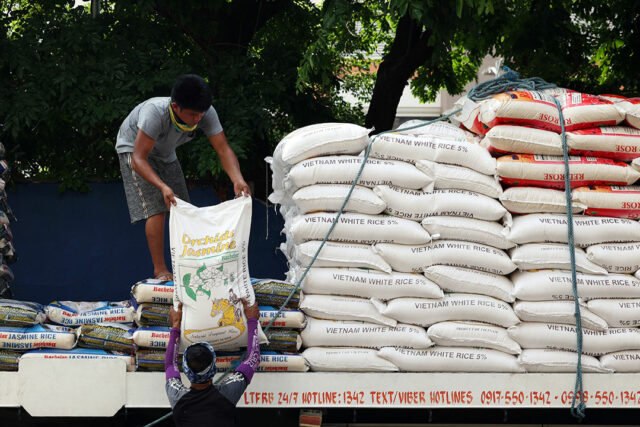
FARMERS said the government needs to initiate a safeguard duties investigation into foreign rice producers, claiming that domestic cultivators have suffered losses amounting to P43 billion due to unfair competition from imported rice.

Raul Montemayor, national manager of the Federation of Free Farmers (FFF), said freezes on rice imports and hikes on rice import tariffs need to be supplemented by a formal safeguard duties investigation.

“By itself, the import ban will not prop up palay prices significantly, because traders anticipate that cheap imports will flood the market again when the ban is lifted in November,” Mr. Montemayor said in a petition to the Department of Agriculture (DA).

In his petition, he urged the government to use its authority under Republic Act (RA) 8800, or the Safeguard Measures Act. RA 8800 allows industries that claim to be unfairly disadvantaged by foreign competition to propose the imposition of safeguard duties against their foreign competitors.

The law gives the government the power to impose safeguard duties on such imports, on top of regular taxes charged on the commodity.

On top of paying the current 15% tariff, importers will be required to post a bond equivalent to the safeguard duty, according to the law.

The Magsasaka Party-list provided the estimate of lost income sustained by 2.5 million rice farmers.

The government froze rice imports for 60 days starting Sept. 1 to provide relief to farmers, who have been receiving low prices for their palay (unmilled rice). However, farmgate prices have not risen significantly in response.

Traders use stocks of imported rice as leverage against farmers, giving them the ability to walk away if farmers insist on selling for more. In some provinces, the farmgate price for palay reportedly fell to as low as P8 per kilo before the import freeze.

After the freeze was announced, farmgate prices rose to about P14 per kilo before falling back to P10.

The National Food Authority buys clean and dry palay for P23-30 per kilo depending on location and grain quality, serving as a buyer of last resort for farmers. However, it can buy only a small portion of the harvest due to storage and budget constraints.

The DA is reportedly weighing an extension of the ban until the end of the year to see if the intended price relief materializes.

Magsasaka Chairman Argel Joseph T. Cabatbat said current prices are unsustainable due to the pressure on farmers from cheap imports.

Mr. Cabatbat said: “The very survival of rice farmers and the long-term security of our entire agricultural sector” is at stake.

The FFF and Magsasaka support raising import tariffs to reduce the differential traders pay between foreign and domestic rice, encouraging them to pay fair prices for the Philippine harvest. — Andre Christopher H. Alampay

Maharlika says long-term nature of its investments leaves it relatively unaffected by infrastructure scandal

A MAHARLIKA Investment Corp. (MIC) director said it takes a long-term view of investing in strategic Philippine projects and does not expect to be affected by the corruption scandal engulng public works projects.

Stephen Anthony T. CuUnjieng, MIC independent director, said the sovereign wealth fund does not behave like the typical stock market investor, who can pull out when sentiment turns negative.

Speaking on the program Money Talks with Cathy Yang on One News on Monday, Mr. CuUnjieng said:

“Basically, we’re not in-and-out investors like the stock market… In fact, people could even say, if you’re taking a long-term view, this is a positive opportunity for a long-term player like Maharlika.”

MIC holds a 20% stake in Synergy Grid & Development Phils., Inc., giving it a “foothold” in the National Grid Corp. of the Philippines.

The sovereign wealth fund also signed an agreement with Saudi Arabian energy company ACWA Power to develop renewable energy projects for off-grid locations.

The corruption scandal in public works projects has had far-reaching consequences, affecting not only flood-control contractors, government engineers overseeing the projects, and even legislators who allegedly directed the projects to be funded.

The review of projects suspected of being tainted by corrupt dealings is threatening to stall public spending, a key driver of the economy’s opportunities.

Mr. CuUnjieng noted that a more pressing concern is in the services of the business process outsourcing industry, whose investors can easily exit the country.

He said the economy’s dependence on services and remittances apart from consumption make it possible to “ignore the market” though he described the structure of the economy as “a three- or four-legged stool that lacks a leg, which is manufacturing.”

He acknowledged the potential for a slowdown in government infrastructure disbursements as the investigations into flood-control projects gather momentum.

Mr. CuUnjieng said state-run banks such as Land Bank of the Philippines and the Development Bank of the Philippines are unlikely to face bank runs — a rush to pull out deposits by panicked account holders concerned that the banks could fail.

“Most of their deposits and clients are…related to the National Government, LGUs (local government units) and government agencies. They’re not going to be prone to a bank run. I would think I’m relatively sanguine on the liability side of deposits,” he said.

Bangko Sentral ng Pilipinas Governor Eli M. Remolona has said there have been no signs of bank runs despite the freeze ordered on more than 700 accounts and assets linked to public works fraud.

“The real problem, I think, which we’ve seen in previous investigations, is the breadth of the anti-disclosure, the secrecy law and banking systems. You really don’t have anything that restrictive in other countries,” Mr. CuUnjieng said. — Aubrey Rose A. Inosante

DoTr will continue push for lower domestic airfares

PHILIPPINE STAR/WALTER BOLLOZOS

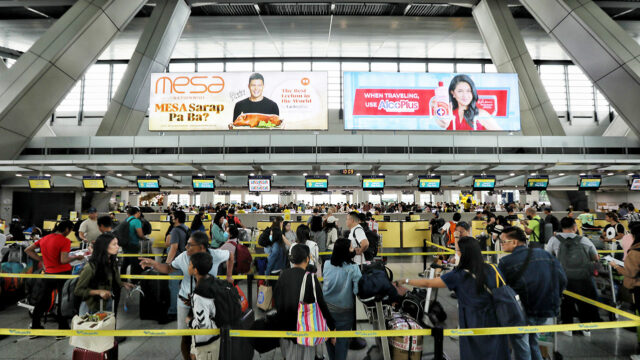
THE Department of Transportation (DoTr) said it will continue to push airlines to reduce fares on domestic destinations after agreeing with Philippine Airlines (PAL)  to cap its one-way Siargao fare at P11,500, effective immediately.

Acting Secretary Giovanni Z. Lopez made the remarks while speaking to the Senate Committee on Finance. He added that the DoTr will work with the Department of Tourism (DoT) on its regional airport modernization program to make them ready to accommodate growing demand.

“In the first week of September, the maximum one-way fare to Siargao was P17,500. PAL has agreed to lower it to P11,500 one way,” he said.

BusinessWorld sought comment from PAL but it had not replied at the deadline.

Mr. Lopez said the DoTr is also in the process of expanding runways in destinations like Siargao to allow them to handle regional single-aisle jets.

Flights to Siargao are costly due to runway limitations that accommodate only turboprop aircraft, resulting in higher costs per passenger, Mr. Lopez said.

The Civil Aviation Authority of the Philippines (CAAP) has said that Siargao and Busuanga airports will be first in line for runway extensions.

CAAP said right-of-way challenges are among the obstacles being encountered in the runway extension projects, but environmental considerations are also at play.

Mr. Lopez said the new Antique Airport will also be opened this year, featuring a new passenger terminal building that can serve up to 300 passengers from the current capacity of 64.

The terminal also features a larger departure and arrival area, including more check-in counters and facilities for persons with disabilities. — Ashley Erika O. Jose

ASEAN ministers in PHL to prepare regional agro-forestry strategy

JOHN FELIX M. UNSON

THE Department of Agriculture (DA) said the Philippines will host the ASEAN Ministers on Agriculture and Forestry (AMAF) meeting in Pasay City until Oct. 3 to map out competitiveness and sustainability plans for the agro-forestry industry.

The DA said the ministers will discuss technology generation, rural community development, encouraging private sector investment, and promoting sustainable environmental management and conservation.

The DA will also host discussions on the impact of climate change on agriculture and improving the industry’s resilience.

Agriculture Secretary Francisco P. Tiu Laurel, Jr., who will chair the discussions, said “This effort aligns with ASEAN’s broader vision of becoming a single market and production base.”

Representatives from China, Japan, and South Korea will be in attendance for the AMAF Plus Three Meetings and the ASEAN-Japan Ministers on Agriculture and Forestry Meeting. — Andre Christopher H. Alampay

TP ICAP plans P443-M Taguig expansion

TP ICAP Management Services Ltd. is investing P443 million in a Taguig City expansion which is expected to create 400 jobs, the Philippine Economic Zone Authority (PEZA) said.

In a Facebook post, PEZA said that it signed the supplemental agreement with TP ICAP for its expansion project in ECOPRIME, BGC, Taguig City.

TP ICAP Group PLC is a provider of financial markets infrastructure specializing in liquidity, trade execution, market data, and electronic trading.

“The supplemental agreement further strengthens this partnership, aligning with PEZA’s mission to attract high-value technology and services firms that drive inclusive and sustainable growth,” it said on Monday.

“Through its PEZA registration, TP ICAP in the Philippines will provide technology support and ancillary services for its global operations,” it added.

It has over 5,300 employees across 28 countries and is a leading inter-dealer broker.

The additional investment brings the company’s total investment in the Philippines to P500 million, PEZA said. — Justine Irish D. Tabile

PHL urged to sign double taxation agreement with Ireland

BW FILE PHOTO

THE PHILIPPINES needs to pursue a double taxation agreement (DTA) with Ireland as a follow-up to its ongoing negotiations with Hong Kong and Singapore, a tax expert said.

Eleanor L. Roque, tax principal at P&A Grant Thornton, said Ireland presents a strategic opportunity for a DTA, due to its status as a global hub for information technology (IT) and digital enterprises.

“Ireland has become a hub for a lot of IT and digital companies, but we don’t have a DTA,” she told BusinessWorld via Viber on Monday.

Last week, the Department of Finance said the Philippines and Singapore started negotiations to update their 1997 agreement to reflect the evolution of the global economy.

Ms. Roque said such agreements encourage the flow of income from both countries by removing the risk of double taxation.

The Philippines has around 44 double taxation agreements, including those with the US, the UK, Spain, South Korea, Japan, Germany, China, Canada, and Australia.

Internal Revenue Commissioner Romeo Lumagui, Jr. said a DTA with Hong Kong is also in the works with negotiations seen concluding by Sept. 29.

The DoF also signed an agreement with Cambodia in February.

Ms. Roque also said the DTA with Hong Kong is crucial due to the large volume of transactions to and from the city. — Aubrey Rose A. Inosante

MAP calls for more EDSA Busway funding 

Commuters line up at the Main Avenue station of the EDSA bus carousel in Quezon City, July 18, 2022. — PHILIPPINE STAR/MIGUEL DE GUZMAN

THE Management Association of the Philippines (MAP) said the Department of Transportation (DoTr) needs to allocate more funding to complete the EDSA Busway project.

“The MAP… urges the inclusion in the 2026 budget of the Department of Transportation of funds to complete the badly needed infrastructure component of this long-delayed project… There has been no meaningful budget allocation for the infrastructure, except for a few hundred million pesos, while the Busway project has been waiting for the long-delayed privatization to happen,” MAP said in a statement on Monday.

In a letter dated Sept. 24, the business group urged Acting Secretary Giovanni Z. Lopez to include busway funding in its 2026 budget proposal.

“The Congress now has the opportunity to provide the budget for the vital Busway dedicated stations which can be easily completed in 2026 when bidded out in batches to large reputable contractors,” MAP said.

The DoTr said the EDSA Busway served more than 63 million passengers in 2024, or about 177,000 commuters daily.

The EDSA Busway, a dedicated bus lane along Metro Manila’s busiest thoroughfare, consists of 23 stations operating round-the-clock.

“The government’s commitment to ease the plight of bus commuters must be met. Since the government is not inclined to appropriate funds for flood control projects, funds there can be more ideally reallocated to the Busway System,” MAP said.

The DoTr sought P936.09 million for the EDSA Busway project but it has only been allocated a fraction of this amount in the 2026 National Budget Expenditure Program. — Ashley Erika O. Jose

Strategic convergence of ESG, APA, and transfer pricing

As global tax regimes increasingly prioritize transparent reporting, responsible governance, and sustainable development, the convergence of Environmental, Social, and Governance (ESG) principles, sustainability goals, and Advance Pricing Agreements (APA) within transfer pricing (TP) frameworks is emerging as a strategic imperative. What may initially appear as three distinct areas, ESG, APA, and TP, are in fact deeply interconnected.

ESG focuses on how companies manage environmental impact, social responsibility, and governance standards, influencing operational decisions, cost structures, and reputational risk. TP, on the other hand, governs how profits are allocated among related entities across jurisdictions, requiring that intercompany transactions reflect economic substance and arm’s length pricing. APAs serve as a proactive mechanism to secure tax certainty by agreeing in advance with tax authorities on acceptable transfer pricing methodologies.

For corporate taxpayers, proactively integrating ESG considerations into APA strategies and transfer pricing policies enables businesses to reinforce their commitment to sustainability-driven practices while securing long-term reliability in cross-border tax arrangements.

UNDERSTANDING APA AND ESG
In last month’s article, “BIR to hold public consultation on Advance Pricing Agreements: What it means for businesses,” we defined an APA as a formal agreement between a corporate taxpayer and the BIR that establishes in advance a mutually agreed set of criteria, such as the transfer pricing method, selection of comparables, and necessary adjustments, to determine the pricing of related-party transactions over a specified period, with the primary objective to minimize the likelihood of transfer pricing audits and avoid instances of double taxation. Globally, APAs are widely regarded as a key instrument for ensuring consistent and reliable tax treatment, particularly in complex cross-border transactions.

Recently, the BIR issued a draft revenue regulation on APA and conducted a public consultation. The draft outlines the types of APA, the expected benefits for corporate taxpayers, the procedural steps for application and monitoring, a phased implementation approach, and the applicable APA fees.

The APA initiative was positively received by the business community and tax professionals, who presented recommendations to enhance the draft regulations. Key suggestions included clarifying the criteria for acceptance and rejection of APA applications, specifying minimum documentation requirements, establishing standard timelines for each stage of the APA process, detailing the methodology for monitoring compliance, providing guidance on renewal and revision procedures, outlining criteria for evaluating ESG-linked or intangible-heavy transactions, and benchmarking against APA programs in other ASEAN jurisdictions.

On the other hand, ESG refers to a set of non-financial performance indicators that assess a company’s impact on environmental sustainability, ethical practices, and corporate governance, which has become a central framework for evaluating long-term value creation, risk management, and stakeholder trust. Sustainability is a broader concept that encompasses long-term environmental, social, and economic viability. While ESG provides the metrics and reporting structure, sustainability represents the overarching goal that guides strategic decision-making.

In the Philippines, a growing number of businesses are embedding ESG principles into their core operations. On the environmental front, many invest in renewable energy, reduce water and energy consumption, and implement waste management programs to minimise their ecological footprint. Social initiatives often include inclusive hiring practices, employee wellness programs, and community engagement efforts such as education, healthcare, and disaster relief. From a governance standpoint, companies are adopting transparent reporting standards, strengthening board oversight, and aligning executive compensation with sustainability goals.

According to the Securities and Exchange Commission (SEC), 95% of publicly listed companies in the Philippines submitted sustainability reports in 2024, which marks a significant increase from 22% in 2019, when the SEC first introduced its Sustainability Reporting Guidelines.

IMPACT OF ESG IN APA AND TP
In the context of transfer pricing, ESG factors increasingly shape how value is created, allocated, and justified across related entities. Integrating ESG into the transfer pricing documentation and APAs helps ensure that sustainability-related activities are properly valued and defended in cross-border tax arrangements.

Consider a Philippine manufacturing company that sources from environmentally certified suppliers, invests in inclusive workforce programs, and supports community development. These initiatives not only elevate the operating costs but also create long-term value. To proactively manage the pricing implications of these ESG commitments, the company enters into an APA with the BIR. Through the APA, it agrees on a transfer pricing method that accounts for sustainability premiums and ESG-related expenditures. Complementing this, the company maintains detailed transfer pricing documentation and integrates ESG metrics in its annual reports. As a result, the company enjoys tax incentives, avoids tax audits, and attracts ESG-focused investors.

Beyond the manufacturing example, other Philippine businesses are also navigating ESG integration in their transfer pricing strategies. For instance, a renewable energy firm licensing green technologies to its affiliates may need to demonstrate how its research and development investments and environmental commitments enhance the arm’s length value of its intangibles, such as royalties. Similarly, a business process outsourcing provider that implements inclusive hiring and workforce development initiatives may need to justify cost-plus margins that reflect ESG-linked operational risks and social impact expenditures.

These are not merely theoretical constructs but are emerging realities where ESG is not merely a reporting concern, as it directly influences how profits are allocated and defended across borders, ensuring that intercompany pricing reflects economic substance rather than just formal legal arrangements. By aligning ESG with APA and TP, Philippine businesses are not just managing risk; they are actively shaping a future where tax strategy drives sustainable growth.

CHALLENGES AND CONSIDERATIONS
While APAs are not yet formally implemented in the Philippines, the integration of ESG factors into TP and APA presents a forward-looking opportunity for businesses seeking both tax certainty and alignment with global sustainability standards. However, realizing this potential requires navigating several key challenges.

Among the most pressing issues are the absence of ESG-specific tax guidance from the BIR, limited availability of comparable data for benchmarking ESG-linked transactions, evolving global standards, and the valuation complexity of ESG-related intangibles, such as green technologies, ethical brand reputation and social impact programs.

Furthermore, ESG-driven costs, from carbon reduction programs to green technology investments, often span multiple jurisdictions with differing tax treatments. While generally guided by the Organisation for Economic Co-operation and Development (OECD) principles, interpretations may vary depending on local regulations, the nature of the ESG initiative and how value is created and shared across the group. For example, a regional sustainability program may support compliance in multiple jurisdictions, but the cost allocation must reflect actual benefit and economic substance.

Despite these challenges, Philippine companies can take proactive steps to prepare for ESG-aligned transfer pricing strategies. To strengthen their position for future APA applications and defend ESG-related pricing structures, companies should consider conducting a gap analysis of current transfer pricing policies against ESG goals, engaging in pre-filing consultations with the BIR, preparing robust economic justifications for ESG-linked pricing structures, and reviewing the Information Return on Related Party Transactions (BIR Form No. 1709) and transfer pricing documentation to reflect ESG-linked functions, assets, and risks.

FINAL THOUGHTS
The convergence of ESG, APA, and TP marks a transformative shift in how Philippine businesses approach tax governance, sustainability, and cross-border compliance. In a world where transparency is currency and sustainability is strategy, companies that embrace ESG-aligned transfer pricing are future-proofing their businesses not only for regulatory certainty but also for long-term resilience and stakeholder trust.

While this strategic opportunity comes with unresolved complexities, it is critical for stakeholders to engage in meaningful dialogue in order to advance and shape future policy. For instance, how should ESG-related costs and value creation be reflected in transfer pricing models to ensure fairness and defensibility? What mechanisms can the BIR adopt to recognize ESG-linked intangibles and sustainability premiums in future APA negotiations? Can ESG-aligned transfer pricing become a basis for tax incentives or preferential treatment under Philippine tax law? How can businesses balance the financial impact of ESG initiatives with the need for competitive margins in intercompany transactions? 

Addressing these questions will require collaboration among businesses, regulators, and industry experts to build a future where ESG completes the strategic triangle with APA and transfer pricing as not just a reporting obligation but a strategic pillar of responsible growth.

Let’s Talk TP is an offshoot of Let’s Talk Tax, a weekly newspaper column of P&A Grant Thornton that aims to keep the public informed of various developments in taxation. This article is not intended to be a substitute for competent professional advice.


Sheena Marie D. Daño is a director from the Tax Advisory & Compliance division of P&A Grant Thornton, the Philippine member firm of Grant Thornton International Ltd.

pagrantthornton@ph.gt.com

Philippine watchdog flags lawmaker, officials in P289.5-M flood scandal

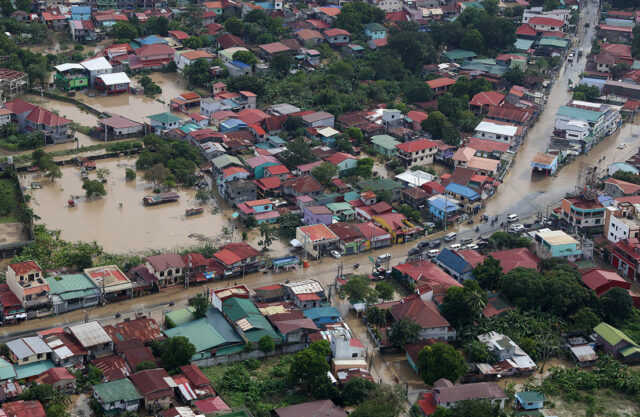
AN AERIAL view of a flooded town in Batangas province after Tropical Storm Kristine hit Luzon in November 2024. — BW FILE PHOTO/PPA POOL/MARIANNE BERMUDEZ

By Adrian H. Halili, Chloe Mari A. Hufana, Reporters and Erika Mae P. Sinaking

THE Independent Commission for Infrastructure (ICI) has tagged 18 people as being “potentially responsible” for irregularities in a P289.5-million flood control project in Naujan, Oriental Mindoro.

In an initial report submitted to the Office of the Ombudsman on Monday, the agency said the project, carried out by the Department of Public Works and Highways (DPWH) Region IV-B through contractor Sunwest, Inc., used steel sheet piles 2.5 to 3 meters long instead of the required 12 meters, which could have led to losses worth more than P63 million.

The commission also cited incomplete documentation and the reuse of photographs in billing submissions.

Party-list Rep. Elizaldy S. Co, former chairman of the House committee on appropriations, was among those identified. Sunwest had been linked to Mr. Co, though he has said he had divested from the company.

Other names included DPWH regional officials, division engineers, bids and awards committee members and Sunwest executives.

ICI Executive Director Brian Keith Hosaka told reporters the panel had recommended possible graft, procurement and falsification charges, while noting that the findings were preliminary.

Mr. Co, who is overseas, said he was resigning from his congressional post as allegations mounted over his alleged role in questionable flood control projects and budget insertions.

“With a heavy heart, I submit my resignation as a representative,” he said in a Facebook post in Filipino. He added that his decision was “not easy” but was “for the good of my family and the people I continue to serve.”

In a separate letter to Speaker Faustino “Bojie” Dy III, he denied accusations by Navotas Rep. Tobias Reynald M. Tiangco that he had orchestrated insertions of billions of pesos in unprogrammed funds and steered allocations toward lucrative infrastructure projects.

“I categorically deny these baseless accusations,” Mr. Co said, rejecting claims that he masterminded or tolerated last-minute budget realignments in the 2025 General Appropriations Act.

Mr. Tiangco earlier filed an ethics complaint against Mr. Co, citing conflicts of interest, his prolonged absence since the 20th Congress began, and ties to contractors accused of paying kickbacks.

The controversy follows criticism of the 2025 budget after bicameral conferees raised unprogrammed appropriations to more than P500 billion and added vague line items after Congress ratified the bill.

Mr. Co has also been accused of collecting as much as 25% commissions from congressional insertions — charges he dismissed as unfounded.

The scandal underscores growing scrutiny of billions of pesos in flood control projects, with multiple congressional committees and the palace-backed Independent Commission for Infrastructure probing allegations of corruption.

Critics warn the controversy threatens to weaken disaster-preparedness spending in a country hit by an average of 20 storms a year and widely seen as the world’s most disaster-prone nation.

INTERPOL NOTICE
Meanwhile, the Department of Justice  has asked the International Criminal Police Organization (Interpol) to issue a blue notice for Mr. Co, Malacañang said.

Palace Press Officer Clarissa A. Castro told reporters the request is meant to track Mr. Co’s movements abroad. “The blue notice is not an authorization to arrest; it is merely for monitoring where the person is going,” she said in Filipino.

“Our country will be informed and updated about the whereabouts and location of the individual subject to the blue notice,” she added.

Mr. Co is in the US for what he described as a medical procedure. The Speaker has revoked his travel clearance and ordered him to return to the Philippines by Sept. 29.

The corruption scandal came to light after President Ferdinand R. Marcos, Jr. used his July State of the Nation Address to accuse lawmakers of profiting from government projects. Since then, the President has ordered lifestyle checks on officials, conducted surprise inspections of projects and created the ICI to pursue cases.

Subsequent inquiries by several agencies have flagged irregularities, citing recycled documentation and substandard construction materials.

Mr. Co has been repeatedly identified in hearings as one of the recipients of alleged kickbacks. His construction firms were also named by the President among companies that secured billions of pesos in public contracts.

Political analysts at the weekend said the President’s anti-corruption drive on flood control project risks being dismissed as political theater unless it delivers prosecutions and convictions, as business groups pressed him to match rhetoric with accountability and reforms.

On Sept. 21, thousands of Filipinos marched in the capital in the biggest protest in years against the multibillion-peso flood control scandal, turning weeks of online outrage over corruption into mass street demonstrations that rattled the political establishment.

Palace vows clean 2026 budget after insertions

PRESIDENT FERDINAND “BONGBONG” R. MARCOS, JR. — PRESIDENTIAL COMMUNICATIONS OFFICE

THE presidential palace on Monday sought to assure the public that the Marcos administration would strictly manage the 2026 national budget, after mounting concerns over congressional insertions and alleged irregularities in infrastructure spending.

“The public can be assured that the 2026 budget will be managed properly, and the President will not allow anomalous projects,” Palace Press Officer Clarissa A. Castro told a news briefing in Filipino.

She added that President Ferdinand R. Marcos, Jr. wants to ensure funds are allocated to priority programs that directly benefit Filipinos.

The assurance comes after Senator Panfilo M. Lacson disclosed that senators of the 19th Congress had introduced insertions worth P5 billion to P9 billion each in the 2025 General Appropriations Act totaling at least P100 billion.

The items were allegedly tagged “for later release.” Mr. Lacson, who heads the Senate blue ribbon committee, called the amounts unprecedented and warned they could threaten fiscal discipline.

Ms. Castro said the President was not initially aware of the scale of the insertions but ordered investigations after irregularities in Department of Public Works and Highways (DPWH) flood control projects surfaced.

These issues prompted him to veto more than P194 billion in questionable items in the 2025 spending plan and redirect funds to social services.

A House of Representatives subcommittee on Sept. 22 moved to channel billions worth of flood control funds to education and health as they began revising the proposed P6.793-trillion national budget for 2026.

The body redirected P255 billion in flood control funding originally allocated for the Public Works department toward the Health and Education departments, in line with President Ferdinand R. Marcos, Jr.’s call to strengthen human capital development.

Ms. Castro said essential flood mitigation projects would continue, but contractors remain accountable for incomplete works already funded and paid for by the government. She added that probes would determine how much of the insertions were released and implemented.

Budget transparency has become a flashpoint after Mr. Marcos used his July State of the Nation Address to call out lawmakers allegedly profiting from flood control projects. Successive storms and monsoon rains that month exposed weak flood management systems, which aggravated public frustration.

In response, the President ordered reforms at DPWH, installed new leadership and created the Independent Commission for Infrastructure (ICI) to review big-ticket projects.

The commission has submitted an interim report flagging procurement irregularities and recommending possible graft and falsification charges against officials and contractors.

Congress is now deliberating on the 2026 national budget, with expectations of tighter scrutiny.

“This is exactly what the President wants to oppose, which is why we are conducting investigations into anomalous flood control projects,” Ms. Castro said. — Chloe Mari A. Hufana

PCAB halts contractor license approvals amid probe of flood mitigation projects

PHILIPPINE STAR/MIGUEL DE GUZMAN

THE PHILIPPINE Contractors Accreditation Board (PCAB) has suspended approvals and revocations of contractor licenses after its board members resigned, as the government intensifies its probe of irregularities in multibillion-peso flood control projects.

“The board is still functioning but those that require board approval, they cannot do,” Quezon City Rep. Keith Micah D.L. Tan told the House of Representatives plenary on Monday. “Approval of license, accreditation and revocation are not being done.”

The lawmaker said PCAB is investigating 16 contractors linked to the flood control scheme.

The review focuses on potential violations of Republic Act 4566 or the Contractors’ License Law, which requires contractors to secure licenses before operating. He said the agency’s limited manpower has slowed the probe.

The controversy stems from the Marcos administration’s scrutiny of some P500 billion in flood control projects since 2022. The President earlier identified contractors that allegedly cornered about P100 billion worth of projects, raising concerns over kickbacks and anomalous bidding.

Documents related to PCAB’s probe have been submitted to the Office of the Ombudsman, Mr. Tan said.

He added that the Department of Trade and Industry (DTI), which oversees PCAB, has a shortlist of potential replacements for its board, though no appointments have been made.

“As of now, there is no one designated to man the board. It remains vacant,” he said.

The flood control controversy has triggered separate investigations by Congress, the Ombudsman and the administration’s newly formed Independent Commission for Infrastructure.

The probes have also revived concerns over “insertions” in the national budget, after senators were accused of pushing billions in allocations for public works.

President Ferdinand R. Marcos, Jr. has vowed to block questionable projects and reallocate funds toward social services.

THE Department of Trade and Industry (DTI) earlier said it is studying a more stringent licensing regime for contractors to deter corruption in public works.

Trade Secretary Ma. Cristina A. Roque said a fact-finding body created by the DTI would let the agency look at what reforms should be put in place to improve the licensing process for contractors, which is overseen by the PCAB. — Adrian H. Halili

OVP budget hurdles Senate panel

VICE-PRESIDENT Sara Duterte-Carpio, in this Aug. 27, 2024 photo, attended the deliberations on the proposed 2025 budget for the Office of the Vice-President at the House of Representatives in Quezon City. — PHILIPPINE STAR FILE PHOTO/MIGUEL DE GUZMAN

SENATE finance committee on Monday swiftly approved the Office of the Vice-President’s (OVP) proposed P902.9-million budget for 2026, without any opposition from legislators.

The Senate’s Finance Committee swiftly approved the OVP’s budget after 40 minutes of deliberations, with senators extending parliamentary courtesy to the country’s second highest official.

For 2026, the OVP is seeking a 20% increase in its budget from the P744 million allocated this year.

During the hearing, Senator Juan Miguel F. Zubiri moved for the committee to approve the budget, citing courtesy to the OVP.

“The budget of the Vice-President is already a lean and mean budget. Maybe we can afford them courtesy, and we can approve the budget,” Mr. Zubiri said.

The budget deliberations have been a far cry from last year’s where the Vice-President faced questions regarding her secret fund use.

“Despite challenges, nothing has so far been insurmountable enough to take OVP off its track, derail its course, or completely incapacitate the institution and stop it from serving the interests of the people,” Vice-President Sara Duterte-Carpio told senators.

She was earlier impeached by the House of Representatives on charges of budget misuse, unexplained wealth, and allegedly conspiring to assassinate President Ferdinand R. Marcos, Jr., his wife, and former Speaker Ferdinand Martin G. Romualdez. She has denied all accusations.

The impeachment complaint against the Vice-President has since been archived by the Senate, which was constitutionally mandated to try the case. — Adrian H. Halili

ADVERTISEMENT
ADVERTISEMENT