Home Blog Page 917

Death toll rises after powerful quake hits Cebu province

Rescue personnel stand in front of a crack in a road caused by a magnitude 6.9 quake, in Daanbantayan, Cebu Province, Philippines, Oct. 1, 2025. Municipality of Daanbantayan/Handout via REUTERS

MANILA – The death toll from a powerful 6.9-magnitude earthquake in the central Philippines has risen to 27 with more than 140 people injured, and officials on Wednesday warned the numbers could climb further as rescuers access collapsed buildings.

The earthquake struck off the coast of Bogo City in Cebu province in the central Visayas region just before 10 p.m. (1400 GMT) on Tuesday, causing power outages and bringing down buildings, including a church that was more than 100 years old.

Cebu province, one of the Philippines’ most popular tourist destinations, is home to 3.4 million people. Mactan-Cebu International Airport, the country’s second busiest gateway, remained operational.

The quake struck hardest in northern Cebu, including San Remigio, which was placed under a state of calamity to facilitate response and relief efforts.

Alfie Reynes, vice mayor of San Remigio, appealed for food and water for evacuees, as well as heavy equipment to aid search and rescue workers.

“It is raining heavily and there is no electricity so we really need help, especially in the northern part because there’s a scarcity of water after supply lines were damaged by the earthquake,” Reynes told DZMM radio.

In the neighbouring city of Bogo, near the epicenter of the quake, hospital patients were evacuated and strong aftershocks forced many residents to stay in evacuation centres and out on the streets.

Earthquake monitoring agencies put the quake’s depth at around 10 km (6.2 miles) and recorded multiple aftershocks, the strongest having a magnitude of 6. There was no tsunami threat following the quake.

The Philippines lies in the Pacific “Ring of Fire,” where volcanic activity and earthquakes are common. The country had two major earthquakes in January, with no casualties reported. In 2023, a 6.7 magnitude offshore earthquake killed eight people. — Reuters

Trade deficit hits 6-month low in Aug.

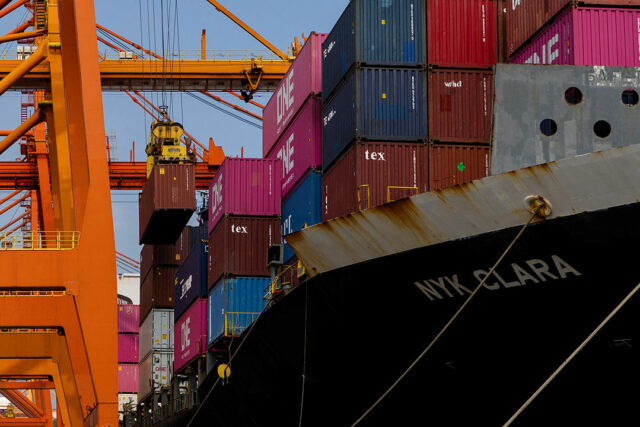
A container is loaded at the Manila International Container Terminal at the Port of Manila, Aug. 11, 2025. — REUTERS/ELOISA LOPEZ

By Lourdes O. Pilar, Researcher

THE Philippines’ trade deficit in goods shrank to a six-month low in August, as exports increased while imports fell, the Philippine Statistics Authority (PSA) reported on Tuesday.

Preliminary data from the PSA showed the country’s trade-in-goods deficit — the difference between exports and imports — narrowed to $3.54 billion in August. This is 19.4% down from the $4.4-billion deficit in the same month in 2024.

Month on month, the trade gap shrank from the revised $4.42 billion in July.

Philippine Merchandise Trade Performance (August 2025)

August saw the narrowest trade deficit since the $2.97-billion gap in February 2025.

Exports went up by 4.6% to $7.06 billion in August, slowing from the 17.6% increase in July but faster than the 0.4% growth in August 2024.

This was the slowest pace of export growth in eight months or since the 1.9% drop in December 2024.

In terms of value, outbound trade in goods in August is the smallest in four months or since the $6.78 billion recorded in April.

On the other hand, imports in August fell by an annual 4.9% to $10.6 billion, ending two straight months of growth. This was also a reversal of the 2.9% growth in August 2024, and the sharpest decline in 14 months or since the 7.2% slump in June 2024.

Import value was the lowest in six months or since the $9.76 billion in February 2025

8-MONTH TRADE GAP
For the first eight months, the trade deficit narrowed to $32.38 billion, 5.7% lower than the $34.33-billion deficit during the same period a year ago.

The country’s trade balance has been in deficit for over a decade or since the $64.95-million surplus recorded in May 2015.

For the January-to-August period, total outbound sales of Philippine-made goods increased by 12.6% to $55.7 billion, while imports rose by 5.1% to $88.08 billion.

The Development Budget Coordination Committee (DBCC) projects a 2% contraction in exports and 3.5% growth in imports this year.

“The narrowing of the country’s trade deficit in August, compared with a year ago, can be attributed to weak import growth. Although exports grew by 4.6% year on year, the 4.9% decline in imports resulted in a smaller deficit in August,” Cid L. Terosa, senior economist at the University of Asia and the Pacific, said in an e-mail.

He said that export growth slowed in August due to the implementation of US tariffs, which led to economic uncertainty, business caution, and market hesitation.

“Slow export growth in August can also be attributed to trade tensions that continue to strain the global economy. The weak growth trajectory of the global economy has hindered export growth in many developing countries, including the Philippines,” added Mr. Terosa.

The US began imposing a 19% tariff on Philippine goods starting Aug. 7.

Pantheon Macroeconomics Chief Emerging Asia Economist Miguel Chanco said in an e-mail that the trade deficit was mainly caused by a “substantial pullback in imports month to month,” reflecting “quite a severe deterioration in domestic demand” in the third quarter.

“While the narrower deficit is welcome from the standpoint of the peso, its real economic implications are quite concerning,” he said.

Ruben Carlo O. Asuncion, chief economist at Union Bank of the Philippines said that the trade deficit narrowed because of stronger exports and a notable drop in imports.

“Export growth was led by electronics, gold, and mineral products, while imports declined due to lower fuel and raw material purchases,” said Mr. Asuncion.

He noted the decline in imports reflected weaker domestic demand and lower global commodity prices. On the other hand, export growth moderated due to softer demand and base effects, he added.

In August, manufactured goods, which accounted for the bulk of the country’s total export receipts, rose by 2.3% year on year to $5.61 billion.

Electronic products, which made up almost three-fourths of manufactured goods and more than half of total exports in August, grew by 8.5% to $3.87 billion.

Almost half of total exports came from semiconductors, which jumped by 12% to $3.02 billion.

Exports of mineral products also expanded by 25% to $728.16 million in August, while petroleum products declined by 18.8% to $22.78 million.

Hong Kong was the main destination of Philippine-made goods in August, accounting for 16.9% or $1.19 billion in export sales. Other top export destinations were the United States, which accounted for 15.4% or $1.09 billion and Japan, which accounted for 13.9% or $979 million.

DECLINE IN IMPORTS
Meanwhile, imports of raw materials and intermediate goods in August fell by 6.2% to $3.82 billion. These accounted for 36% of the total August import bill.

In August, imports of capital goods grew by 8% to $3.24 billion, while the imports of consumer goods also increased by 3.1% to $2.31 billion.

Imports of mineral fuels, lubricants and related materials fell by 34.2% year on year to $1.18 billion.

China was the top source of imports, accounting for 30.1% of the total or $3.19 billion of the total import bill in August. It was followed by South Korea with an 8% share or $848.93 million and Indonesia with 7.9% or $838.78 million.

Mr. Terosa said the decline in imports can be attributed to the weaker peso, which made imports more expensive.

“The ‘wait-and-see’ attitude of businesses, due to economic uncertainties caused by US tariffs, has led to lower purchases of capital goods, mineral fuels, transport equipment, and other manufactured goods and raw materials,” he said, adding that slowing global growth also dampened trade prospects.

Philippine Exporters Confederation, Inc. President Sergio R. Ortiz-Luis, Jr. said imports may have declined due to restrictions on agricultural imports, such as rice. He also noted imports of raw materials have also declined amid a slowdown in manufacturing, construction and infrastructure projects.

“It is a question of confidence. For investors and tourists there is a loss of confidence. We are the last choice now,” Mr. Ortiz-Luis said.

The outlook for trade remains cloudy amid global uncertainties, analysts said.

“Downside risks prevail, particularly if the US imposes a sector-wide targeted tariff on its semiconductor imports, which could greatly affect the Philippines’ own chip shipments,” Mr. Chanco said.

He noted the DBCC’s projected 2% contraction in exports this year is “overly harsh,” while the 3.5% growth forecast for imports is reasonable.

Mr. Asuncion said the DBCC’s full-year projections can still be achieved, but risks persist.

“Looking ahead, trade performance will hinge on global demand for electronics, commodity price movements, and domestic consumption trends. Exchange rate dynamics and geopolitical developments may also influence trade flows in the coming months,” Mr. Asuncion said.

“If global demand softens further, and commodity prices remain subdued, both exports and imports could decelerate in the fourth quarter.”


NG outstanding debt slips to P17.47 trillion at end-August

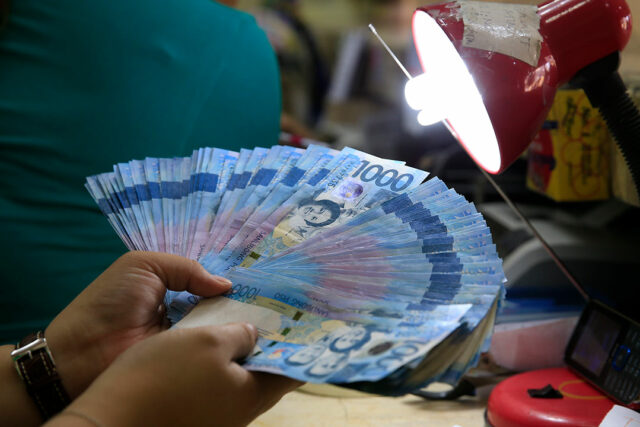
THE National Government’s outstanding debt fell by P95 billion or 0.5% to P17.47 trillion as of end-August. — REUTERS/ROMEO RANOCO

THE NATIONAL GOVERNMENT’S (NG) outstanding debt slipped to P17.47 trillion at the end of August, but still remained above the full-year projection, data from the Bureau of the Treasury (BTr) showed.

The latest data from the Treasury showed outstanding debt dipped by 0.5% in August from the record-high P17.56 trillion at end-July. 

Despite the decline, the debt level is still 0.63% higher than the projected year-end level of P17.36 trillion.

National Government Outstanding Debt

Year on year, NG debt jumped by 12.3% from P15.55 trillion at the end of August 2024, the BTr said.

“This (debt reduction) was mainly due to the government’s full repayment of its biggest local bond for the year, worth P516.34 billion, and a stronger peso, which reduced the value of the country’s external debt,” the BTr said. 

NG debt is the total amount owed by the Philippine government to creditors such as international financial institutions, development partner-countries, banks, global bondholders and other investors.

In August, the bulk or 69.2% of the debt stock came from domestic sources, while external obligations made up the rest.

“The debt reduction was accompanied by an improvement in the country’s debt profile as the share of domestic debt to total borrowings increased to 69.2% from 68.9% in the previous month,” the BTr said.

A larger share of domestic borrowings in the country’s debt profile reflects “a generally more favorable debt position” as local debt is less vulnerable to shifts in foreign exchange movements, it added.

Domestic debt, which was composed of government securities, slid by 0.2% to P12.09 trillion as of end-August from P12.11 trillion as of end-July. It also rose by 12% annually from P10.79 trillion in August last year.

This was already 0.35% higher than the P12.04-trillion year-end domestic debt projection.

“Year to date, the NG raised P1.84 trillion in gross domestic financing, including the highly successful issuance of Retail Treasury Bond Tranche 31 (RTB-31),” the BTr said.

On the other hand, external debt fell by 1.4% to P5.38 trillion in August from P5.46 trillion in the previous month. This also exceeded the P5.32-trillion external debt projection this year by 1.24%.

“The reduction was attributed primarily to the effect of a stronger peso on external guarantees. Guaranteed obligations remained well-managed at only 2% of total NG debt,” the Treasury said.

Year on year, foreign debt climbed by 13.1% from P4.76 trillion.

Foreign debt was composed mainly of P2.74 trillion in global bonds and P2.64 trillion in loans.

External debt securities were made up of P2.32 trillion in US dollar bonds, P253.39 billion in euro bonds, P58.5 billion in Japanese yen bonds, P57.04 billion in Islamic certificates and P54.77 billion in peso global bonds.

For August, NG-guaranteed obligations slipped by 1.8% to P346.46 billion from the end-July level of P352.97 billion.

Year on year, it fell by 5.5% from P366.57 billion.

Rizal Commercial Banking Corp. Chief Economist Michael L. Ricafort attributed the minimal monthly decline in outstanding debt to the net payments of large debt maturities.

“This is somewhat expected for large debt maturities paid to reduce outstanding debt but offset by new NG borrowings to finance the NG budget deficit,” he said in a Viber message.

In August, the BTr raised P507.16 billion through its RTB offering.

Mr. Ricafort warned that total outstanding debt may breach the government’s P17.36-trillion projection by yearend, citing upcoming payments for maturing securities in September.

“(It) could still go up after payment of large NG debt maturities until September 2025,” Mr. Ricafort said.

John Paolo R. Rivera, a senior research fellow at the Philippine Institute for Development Studies, said the modest decline in debt may be temporary, citing scheduled repayments and favorable foreign exchange movements.

Mr. Rivera noted that NG debt remains 12.3% higher year on year and is likely to climb further, “likely staying above” P17.4 trillion by yearend.

At the end of the second quarter, NG debt as a share of gross domestic product surged to 63.1%, the highest since 2005.

The Department of Finance  expects the NG debt-to-GDP ratio to ease to 61.3% by end-2025 and eventually fall to 58% by 2030. — Aubrey Rose A. Inosante

ADB cuts PHL growth forecast for 2026, warns corruption is a ‘heightened risk’

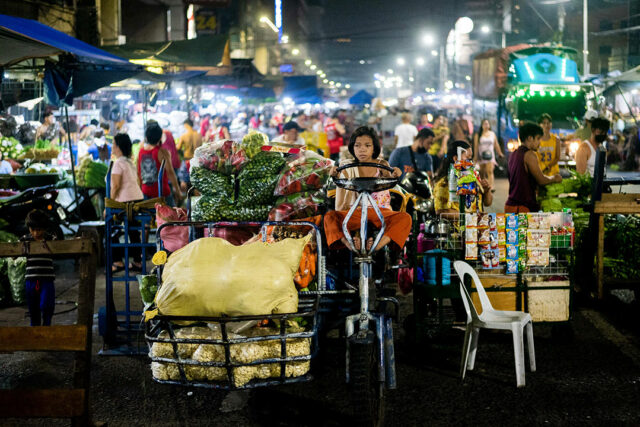
A CHILD sits on a motorized vehicle loaded with vegetables at a public market in Manila, Oct. 21, 2022. — REUTERS/LISA MARIE DAVID

By Aubrey Rose A. Inosante, Reporter

THE ASIAN Development Bank (ADB) has trimmed its gross domestic product (GDP) growth forecast for the Philippines for 2026, while keeping its projection this year, citing persistent external headwinds that weigh on investments.

At the same time, the ADB warned widespread corruption can impact economic growth and investor sentiment, saying it is a “heightened risk.”

In its latest Asian Development Outlook, the multilateral lender trimmed its Philippine growth forecast to 5.7% in 2026 from 5.8% in its July projection. This is below the Philippine government’s 6-7% growth goal for 2026.

For this year, the ADB kept its growth forecast unchanged at 5.6%, which is within the government’s 5.5 to 6.5% target.

“The Philippines’ growth outlook remains resilient amid a global environment of shifting trade and investment policies and heightened geopolitical uncertainties,” ADB Country Director for the Philippines Andrew Jeffries said in a statement on Tuesday.

“Though these uncertainties pose increased risk, we see strong domestic demand anchoring growth, with sustained investments and an accommodative monetary policy supporting the economy’s expansion.”

ADB Senior Country Economist for the Philippines Jacqueline Connell said the Philippine growth forecast for 2026 was downgraded mainly due to heightened uncertainty, shifting trade and investment policies, and lower growth outlook in major advanced economies.

“We see that this will weigh on trade and investment prospects, so that’s the main reason,” she said at a briefing on Tuesday.

Despite external challenges, domestic demand is expected to drive the Philippine economy’s growth this year, the ADB said. This is supported by easing monetary conditions which will help offset the impact of external uncertainties, it added.

In Southeast Asia, the Philippines is projected to be the second-fastest-growing economy until 2026, just behind Vietnam (6%).

It is ahead of Cambodia (5%), Indonesia (5%), Malaysia (4.2%), Lao PDR (3.8%), Timor Leste (3.4%), Myanmar (2%),  Thailand (1.6%),  Brunei Darussalam (1.5%), and Singapore (1.4%).

The Philippines’ growth forecast is also above the ADB’s projection for developing Asia, which is expected to grow 4.5% in 2026 and 4.8% this year. The region includes 46 Asia-Pacific countries, but excludes Japan, Australia and New Zealand.

“Heightened geopolitical tensions, adverse weather conditions, and climate shocks also pose risks which could drive commodity prices higher,” ADB Senior Economics Officer Teresa B. Mendoza said.

At the same time, the ADB sees headline inflation averaging 1.8% this year and 3.2% in 2026. This is slightly higher than the Bangko Sentral ng Pilipinas’ (BSP) 1.7% average forecast for 2025 but lower than 3.3% for next year.

Ms. Mendoza said monetary policy will likely remain accommodative as inflation remains moderate.

For the first eight months, headline inflation averaged 1.7%.

Since August 2024, the BSP has lowered borrowing costs by a total of 150 basis points, bringing the benchmark rate to 5%.

“Continued investment and leveraging on wide-reaching structural reforms that we have seen over the past few years up to this year are essential to lifting growth, generating quality jobs, and reducing productivity and demand,” Ms. Mendoza said.

She cited new laws such as the Accelerated and Reformed Right-of-Way (ARROW) Act that will help speed up infrastructure projects.

CORRUPTION
Meanwhile, corruption remains a “heightened risk” in the Philippines, according to the ADB.

“More broadly, corruption has broad impacts on economic growth in general and investment sentiment. We’re monitoring that and how that may be affected going forward,” Mr. Jeffries said, when asked why there was no mention of governance issues despite a widening corruption scandal involving government projects.

There is growing scrutiny of billions of pesos in flood control projects, with multiple congressional committees and the Palace-backed Independent Commission for Infrastructure probing allegations of corruption.

Finance Secretary Ralph G. Recto earlier said corruption related to flood control projects had cost the Philippines P42.3 billion to P118.5 billion in economic losses annually since 2023.

Mr. Jeffries said there was no reason to cut the Philippine GDP projections due to the corruption scandal. “Between now and our December update, there may be more quantifiable data available that may alter our projections,” he added.

He also assured that the ADB’s partnership with the Philippines remains unaffected.

“We have very strong due diligence on the financial management capabilities of our borrowers and any gaps found are built into the project to mitigate financial management risks,” he added.

Mr. Jeffries said the bank has a joint agreement with the World Bank Group to cross-debar contractors found to have violated project guidelines or engaged in questionable conduct.

“If we find such contractors through our project processes, we debar them from future participation for a certain amount of time. The World Bank follows suit and vice versa,” he said.

While the ADB does not maintain a formal blacklist, Mr. Jeffries said all contractors are vetted against debarment lists and flagged for potential links to money laundering or other financial risks.

“Now that said, if there is an officially sanctioned government blacklist, we would honor such a list and take that into account. But it would need to be officially sanctioned and not just a list of firms in the press, so to speak,” he added.

There are 25 Infrastructure Flagship Projects funded by the ADB in support of the Marcos administration’s “Build Better More” Program.

Inflation may have picked up in September

Headline inflation averaged 1.7% in the first eight months. — PHILIPPINE STAR/MIGUEL DE GUZMAN

BAD WEATHER continued to push up food and electricity prices in September, potentially bringing headline inflation back within he central bank’s target band, Metropolitan Bank Trust & Co. (Metrobank) said.

In a commentary on Monday, Metrobank said it expects inflation to pick up to 2.5% in September from 1.5% in August and 1.9% in September 2024.

If realized, September’s print would mark the first time in six months that inflation would have settled within the Bangko Sentral ng Pilipinas’ (BSP) 2-4% target range or since the 2.1% in February.

“Though rice inflation will remain in negative territory, food and energy will likely be the primary drivers of faster price growth for the month,” Metrobank said.

Metrobank said heavy rains and typhoons may have pushed up food prices, particularly vegetables and fish.

“Prices of vegetables and fish shot up significantly, with vegetable prices seeing a particularly dramatic rise compared with last year’s weaker price base. Meanwhile, the price of meat continued its upward trend, albeit at a slower pace,” it said.

However, the prices of fruits were “relatively stable” on a year-on-year basis, it added.

Metrobank said rice inflation will continue to soften, contrary to earlier projections, as record-high supply levels stabilized global prices.

“In the local space, rice prices also continue to drop amid the harvest season,” it added.

In August, rice inflation declined at a faster pace of -17% from -15.9% in July.

Agriculture Secretary Francisco P. Tiu Laurel, Jr. said on Monday that they have extended the rice import ban by 30 days and are looking to extend it until yearend amid falling farmgate prices of unmilled rice.

The 60-day suspension on regular milled and well-milled rice imports, which took effect on Sept. 1, was supposed to end on Nov. 2.

“Despite the ongoing import ban, sustained deflation in rice prices this month will continue to temper headline inflation,” Metrobank said.

Meanwhile, energy prices also likely drove inflation faster in September.

“While Meralco (Manila Electric Co.) electricity prices were lower month on month in September, rates remained elevated compared with last year. Visayas Electric and Davao Light also saw higher prices for the month, attributed to power plant outages across the country,” Metrobank said.

Meralco lowered electricity rates by P0.1852 per kilowatt-hour (kWh) in September, bringing the overall rate for a typical household to P13.0851 per kWh from P13.2703 per kWh a month ago.

Metrobank said the National Capital Region also saw an increase in pump prices of unleaded gasoline and diesel amid geopolitical tensions and dwindling supply.

The Philippine Statistics Authority is set to release September inflation data on Tuesday, Oct. 7. — Katherine K. Chan

ePLDT says 12th data center set to be largest; study to finish this year

STOCK PHOTO | Image by Wirestock from Freepik

By Ashley Erika O. Jose, Reporter

ePLDT Inc., the information and communications technology (ICT) arm of PLDT Inc., is aiming to finish the study for its 12th data center site in Cavite this year, which is targeted to double the capacity of its largest data center to date.

“We are checking the potential site. What we are doing now is what you call a vulnerability and risk assessment. It is a formal study that we are conducting,” ePLDT President and Chief Executive Officer Victor S. Genuino told reporters on the sidelines of the Pilipinas AI launch on Monday.

The 12th data center, expected to rise in General Trias, Cavite, will be ePLDT’s largest once completed, with a planned capacity of about 100 megawatts (MW), double the current 50-MW capacity of VITRO Sta. Rosa. VITRO Sta. Rosa, located on a five-hectare lot in Sta. Rosa, Laguna, is considered the country’s largest data center campus.

The company is optimistic construction for the planned site will start next year, once the study is completed, Mr. Genuino said.

“We are hopeful that with data sovereignty and everything we can accelerate and fill up our VITRO Sta. Rosa. Once it reaches a certain capacity of occupants and customers, then we can trigger the discussion on our data center 12,” he added.

Mr. Genuino also said the company is carefully evaluating trends for the new data center to ensure it uses the latest technology.

“We have to look at the site, obviously, the site location, and then we have to monitor the trends in technology. So that when we build something, we want to ensure that it is not old technology, it will be new technology,” he said.

In April, the company said construction for its next data center is scheduled to begin in 2026, with completion expected by 2028. The project will be scaled up in phases, starting at 20 MW.

VITRO, Inc., ePLDT’s data center arm and a PLDT group subsidiary, currently operates 11 data centers across the Philippines — including in Makati, Taguig, Pasig, Parañaque, Subic, Clark, Cebu, and Davao — with a combined capacity of nearly 100 MW, supporting enterprise and hyperscale demand.

Mr. Genuino said discussions to sell a stake in ePLDT’s data center assets are ongoing.

“We have an ongoing discussion. We are just trying to find the right partner for our data center assets. It is a very critical asset. We just want to find the right partner for it,” he said.

In August, PLDT Chairman Manuel V. Pangilinan said the company had resumed talks to sell a stake in its data center business.

ePLDT is currently negotiating with several companies to sell 49% of its data center business, valued at $1 billion.

Hastings Holdings, Inc., a unit of the PLDT Beneficial Trust Fund subsidiary MediaQuest Holdings, Inc., holds a majority stake in BusinessWorld through the Philippine Star Group, which it controls.

Converge tops download speeds, reliability in Philippine broadband — Opensignal

ONVERGE ICT SOLUTIONS, INC.

CONVERGE ICT Solutions, Inc. recorded the fastest download speeds and led in reliability experience among fixed broadband providers in the Philippines, according to the September 2025 Opensignal report.

The company posted average download speeds of 56 megabits per second (Mbps) and also topped the video experience category with a score of 70.8 out of 100, reflecting strong performance for streaming, gaming, and remote work.

It also led in reliability experience, scoring 510 out of 1,000 points, ahead of Globe Telecom, Inc.’s GFiber with 492 and PLDT Inc. with 489.

The report, authored by Robert Wyrzykowski, principal data analyst at Opensignal, noted that Converge has surpassed Globe in fixed broadband subscriber market share, becoming the country’s second-largest provider.

Converge expanded its fiber footprint from six million homes passed in 2020 to over 16 million in 2025.

Fiber-to-the-home (FTTH) now serves more than 80% of Filipino households, a major shift from LTE-based fixed wireless access, which dominated home internet in 2020, Opensignal said.

PLDT remains the market leader with a 42% share and the largest fiber network at 18.5 million homes passed.

Globe holds nearly 20% of the market and is upgrading its copper network to fiber, serving about 400,000 GFiber Prepaid subscribers, according to Opensignal.

Meanwhile, DITO Telecommunity Corp. is focusing on 5G fixed wireless access, targeting two million subscribers by the end of 2026, the report noted.

Opensignal assessed broadband performance using five metrics: consistent quality, download speed, upload speed, video experience, and reliability experience.

Converge led in download speed, video experience, and reliability; Globe GFiber scored highest in consistent quality with 68.1% of tests meeting performance thresholds; and PLDT led upload speeds at 42.3 Mbps.

Regionally, Converge won eight outright and four joint awards, performing strongest in Mindanao and Visayas.

Globe followed with five sole and nine joint wins, particularly in North and Central Luzon. PLDT earned two outright and five joint awards, mainly in Metro Manila.

Converge has also partnered with satellite provider Starlink to expand connectivity in remote areas and is migrating Sky Cable subscribers to its fiber network.

Hastings Holdings Inc., a unit of PLDT Beneficial Trust Fund subsidiary MediaQuest Holdings Inc., holds a majority stake in BusinessWorld through the Philippine Star Group. — Ashley Erika O. Jose

Maynilad IPO delay seen as measured move to secure cornerstone support

MAYNILADWATER.COM.PH

MAYNILAD WATER SERVICES, Inc.’s decision to move its initial public offering (IPO) to a date no later than Nov. 7 gives cornerstone investors more time to participate and allows investors additional time to assess valuation and allocations, analysts said.

“Investors will naturally need more time to assess valuation attractiveness and determine their desired allocations,” Jarrod Leighton M. Tin, equity research analyst at DragonFi Securities, Inc., said in a Viber message on Monday.

Luis A. Limlingan, head of sales at Regina Capital Development Corp., said, “Cornerstone investors play a crucial role in establishing a solid foundation for an IPO by offering early backing and confirming the offering’s value.”

He added, “For Maynilad, delaying the listing provides additional time to lock in these key commitments, ensuring support for the IPO. At the same time, broader market conditions, such as economic trends, interest rates, and investor sentiment, can affect the timing and pricing.”

In a disclosure to the Philippine Dealing and Exchange Corp. last Thursday, Maynilad said the target listing date was moved from Oct. 30 to no later than Nov. 7 to accommodate cornerstone investors and allow potential investors to better understand its business model.

The IPO had initially been scheduled for Oct. 30, which itself was already a delay from the company’s July target.

In July, Maynilad Chairman Manuel V. Pangilinan said the company had secured a firm commitment from one of its two planned cornerstone investors.

Mr. Tin noted that cornerstone participation can help set a fair offer price and reassure the market, adding, “A key factor yet to be clarified is the implied dividend yield at the offer price — a critical metric that will likely anchor investor demand, particularly among income-focused buyers.”

He also said, “The participation of cornerstone investors can help establish pricing discipline, as their involvement often signals institutional confidence but also pressure to secure a fair entry point. In the current bearish market environment, pricing the offer toward the lower end of the indicative range would likely improve take-up and support aftermarket performance. That said, prolonged delays could weigh on sentiment.”

“An IPO delay can often pose concerns for investors, signaling uncertainty or last-minute adjustments. Although cornerstone investors can reassure the market about the offering, the postponement might still prompt questions about the company’s preparedness or external market factors. However, if handled efficiently, the delay could ultimately strengthen investor confidence, especially if it leads to more favorable terms or better long-term results for those involved,” Mr. Limlingan said.

Analysts also stressed the importance of clear communication. Mr. Tin said, “Timely communication and transparent pricing rationale will therefore be essential to sustaining investor confidence ahead of the final offering.”

Maynilad’s IPO will be the second this year, following Cebu-based fuel retailer Top Line Business Development Corp.’s P732.6-million offering in April.

Under its legislative franchise, Maynilad is required to offer at least 30% of its total capital stock to the public by January 2027.

The IPO will include up to 1.66 billion common shares, with up to 24.9 million primary shares and 249.05 million shares under an overallotment option, each priced up to P20.

Secondary shares will be offered by Maynilad Water Holding Company, Inc., the company’s principal shareholder, while funds from the primary shares will be used for capital expenditures and general corporate purposes.

Pangilinan-led conglomerate Metro Pacific Investments Corp., which holds a majority stake in Maynilad, is one of three Philippine subsidiaries of First Pacific Co. Ltd., alongside Philex Mining Corp. and PLDT Inc.

Hastings Holdings, Inc., a unit of PLDT Beneficial Trust Fund subsidiary MediaQuest Holdings, Inc., holds an interest in BusinessWorld through the Philippine Star Group, which it controls. — Alexandria Grace C. Magno

SEC clears Damosa Land’s rental pool program

DAMOSALAND.COM

THE Securities and Exchange Commission (SEC) approved Damosa Land, Inc.’s rental pool program, the first registration under the recently implemented Securing and Expanding Capital in Real Estate Non-Traditional Securities (SEC RENT) guidelines, allowing the developer to offer units in its TRYP by Wyndham Samal condotel project as investment contracts while retaining ownership.

In a statement on Tuesday, the commission said the SEC en banc approved Damosa Land’s registration statement for 100 certificates of participation in the project during its meeting last Friday, subject to fulfilling the remaining requirements.

The certificates cover 94 standard units priced at P50,000 each, four deluxe units at P75,000 each, and two suite units at P100,000 each, and are valid for 20 years from the start of operations.

The commission noted that units under the TRYP by Wyndham Samal condotel project will be included in a mandatory rental pool program, where they can be rented out and managed like hotel rooms without transferring ownership.

Issued in July, the SEC RENT guidelines aim to streamline capital raising for developers offering investment returns through rental properties.

Rental pool agreements are investment contracts in which a developer sells or offers units in projects such as condominiums, hotels, resorts, or dormitories, with the condition that these units are placed in a rental pool managed by the developer or a third-party operator.

Damosa Land’s program aims to raise up to P5.2 million to cover pre-operating expenses and provide a financial buffer for the first three months of operations.

According to the company’s timeline submitted to the SEC, the project is scheduled to launch in the fourth quarter of 2025, with construction starting early the following year. Completion is expected by the third quarter of 2028, with operations set to begin in the fourth quarter of the same year.

The TRYP by Wyndham Samal condotel project is located in Barangay Limao, Samal, Davao del Norte. — Alexandria Grace C. Magno

Petron accredited as first LPG training hub in oil sector

PETRON.COM

LISTED oil company Petron Corp. has been certified by the Department of Energy (DoE) as a training institution in the liquefied petroleum gas (LPG) sector, the first oil company to receive the accreditation.

The DoE accreditation allows Petron to certify service personnel from its refinery, terminals, haulers, dealers, and retail outlets, the company said in a statement on Tuesday.

The accreditation aligns with the LPG Industry Regulation Act, which seeks to raise industry standards and enforce stricter penalties for violations in the LPG sector, according to the company.

Under the law, all individuals engaged in activities or facilities regulated by the DoE within the LPG industry must complete an approved training program conducted by DoE-accredited organizations.

“As more LPG personnel undergo proper training from qualified institutions, consumers can be more confident in the quality and reliability of the LPG products they receive,” DoE-Oil Industry Management Bureau Director Rino E. Abad said.

All LPG personnel trained by Petron will receive a DoE certificate, which will be submitted to the DoE as part of their licensing requirements.

Petron will begin its LPG training sessions with dealers and retailers in Ormoc, Leyte.

Petron remains the leading oil industry player, with a 24.9% market share as of June 2024, according to DoE data.

The company has a combined refining capacity of nearly 270,000 barrels a day, operates about 50 terminals in the region, and runs roughly 2,700 service stations selling gasoline and diesel. — Sheldeen Joy Talavera

Transactions done via InstaPay, PESONet grow to P15.4 trillion

STOCK PHOTO | Image Jannoon028 from Freepik

By Katherine K. Chan

THE COMBINED VALUE of transactions made via InstaPay and PESONet increased by nearly 47% year on year to over P15 trillion in the first eight months, data from the Bangko Sentral ng Pilipinas (BSP) showed, reflecting continued growth in online payments in the country.

Transactions coursed through the two automated clearing houses soared to P15.348 trillion in the eight months ended August from P10.441 trillion in the comparable year-ago period.

In terms of volume, InstaPay and PESONet transactions more than doubled (161.6%) to 2.398 billion in the period from 916.582 million a year ago.

Broken down, the total value of InstaPay transactions rose by 9.5% year on year to P6.988 trillion in the period from P6.379 trillion.

The volume of transactions made via the payment gateway ballooned by 172.9% to 2.322 billion from 851.025 million last year.

Meanwhile, the value of transactions done through PESONet doubled (105.8%) year on year to P8.36 trillion at end-August from P4.062 trillion.

The volume of transactions that went through the channel reached 75.833 million, a 15.7% increase from the 65.556 million seen a year earlier.

InstaPay and PESONet are automated clearing houses under the central bank’s National Retail Payment System framework.

InstaPay is a real-time, low-value electronic fund transfer facility for transactions up to P50,000 and is mostly used for remittances and e-commerce.

Meanwhile, PESONet is mainly used for high-value transactions and may be considered as an electronic alternative to paper-based checks.

The steady growth of InstaPay and PESONet transactions indicates the wider adoption of digital payments in the country, said John Paolo R. Rivera, a senior research fellow at the Philippine Institute for Development Studies.

“It reflects stronger adoption of digital payments driven by fintech (financial technology) growth, wider e-commerce usage, and the push for financial inclusion,” he said in a Viber message.

Rizal Commercial Banking Corp. Chief Economist Michael L. Ricafort said in a Viber message that more consumers and businesses are using electronic payment channels for convenience and efficiency.

“More people (are) also finding it more convenient, cheaper, faster, and safer to move funds from one bank to another using InstaPay and PESONet any time and from anywhere, instead of over-the-counter transactions,” he said.

Reinielle Matt M. Erece, economist at Oikonomia Advisory & Research, Inc., said the increase in InstaPay and PESONet transactions also reflects strong consumer sentiment.

“Improving consumer confidence for the second half of the year is a signal that households are now willing to spend more towards the latter part of 2025,” he said in a Viber message. “The improving consumer confidence is evident with the growth of transactions done through these channels.”

He said transactions will continue to grow in the coming months due to expectations of increased spending during the holiday season and amid lower borrowing costs.

“Transactions are likely to keep growing as more government, corporate, and MSME (micro, small, and medium enterprises) payments go digital, supported by the BSP’s continued efforts toward a cash-lite economy,” Mr. Rivera added.

The central bank wants digital payments to make up 60-70% of the total volume of retail payments by 2028 in line with the Philippine Development Plan.

The share of online payments in monthly retail transactions stood at 57.4% in terms of volume and 59% in value terms in 2024, according to the BSP’s 2024 Status of Digital Payments in the Philippines report. These are up from 52.8% and 55.3%, respectively, in 2023.

NLEX Corp. launches P200-million SCTEX upgrade program

NLEX.COM.PH

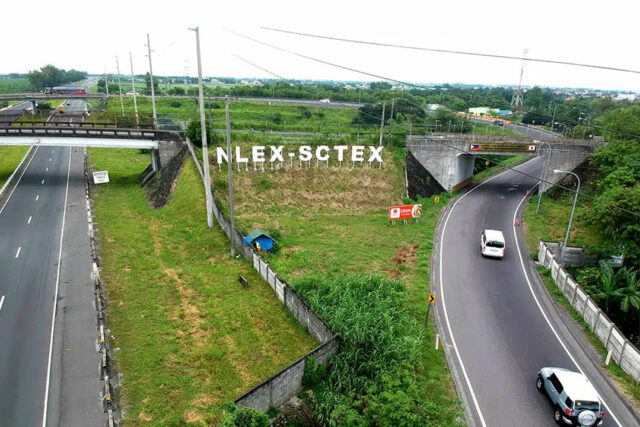
NLEX CORP. said it is investing P200 million in technology and infrastructure upgrades for the Subic-Clark-Tarlac Expressway (SCTEX).

“The system enhancement program in SCTEX is essential not only for ensuring faster and smoother travel, but also for enforcing stricter road discipline. These upgrades will significantly improve the safety and reliability of the road network, boosting motorists’ confidence,” NLEX President and General Manager Luis S. Reñon said in a media release on Tuesday.

The technology upgrade includes the installation of additional closed-circuit televisions (CCTVs) and speed cameras to strengthen expressway monitoring, as well as the modernization of computer systems and equipment for data processing.

NLEX, a unit of Metro Pacific Tollways Corp. (MPTC), is the builder-concessionaire and operator of major expressways including North Luzon Expressway, SCTEX, and NLEX Connector.

SCTEX is a 94-kilometer toll road linking Central Luzon’s Subic Bay Freeport Zone in Zambales, Clark Freeport Zone in Pampanga, and the Central Technopark in Tarlac.

Aside from technology upgrades, NLEX said it is also implementing infrastructure improvements and maintenance for the expressway.

The company said its annual pavement repair program for SCTEX began this month, adding that it has also partnered with SCTEX owner Bases Conversion and Development Authority (BCDA) for the repair and strengthening of the Pasig-Potrero Bridge.

MPTC is the tollway unit of Metro Pacific Investments Corp. (MPIC), one of the three key Philippine subsidiaries of Hong Kong-based First Pacific Co. Ltd., along with Philex Mining Corp. and PLDT Inc.

Hastings Holdings, Inc., a unit of PLDT Beneficial Trust Fund subsidiary MediaQuest Holdings, Inc., holds a majority stake in BusinessWorld through the Philippine Star Group, which it controls. — Ashley Erika O. Jose

ADVERTISEMENT
ADVERTISEMENT