Home Blog Page 91

Nestlé Philippines says it will try to avoid price hikes

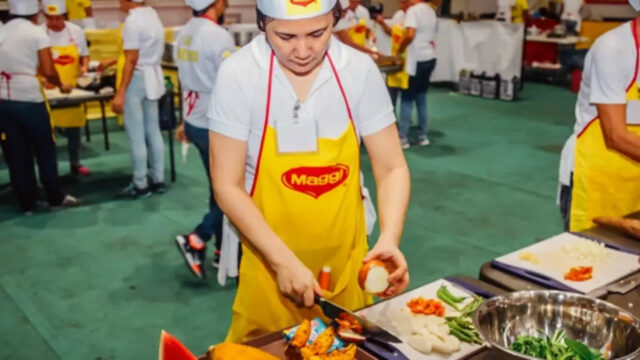
Maggi is a brand owned by Nestlé. — NESTLE.COM.PH

NESTLÉ Philippines, Inc. said it will try to avoid raising prices this year despite geopolitical risks that could disrupt supply.

“Price is the last thing that we want to touch,” Nestlé Philippines Head of Corporate Affairs José T. Uy III said at a briefing on Tuesday. “As long as we can absorb it, we will try to absorb it.”

The company said it remains cautiously optimistic about its revenue outlook, as it works to manage cost pressures through efficiency measures and sustainability initiatives.

“We always try to find efficiencies in our operations in order to compensate for the fluctuations,” Mr. Uy said.

Nestlé Philippines generated $3.2 billion in revenues in 2025, making it the Swiss company’s sixth-largest market globally.

In terms of revenue size, the Philippines is only behind the United States, China, Brazil, the United Kingdom, and Mexico.

The company said it is managing price pressures as the war in the Middle East affects global supply chains.

Kasia Gryzbowska, zone head of sustainability for Nestlé’s Asia, Oceania, and Africa region, said investing in sustainability “makes sense in the longer term” amid external uncertainties.

“Sustainability is not just doing good for the bigger good. It is very much the essence of survival for the company,” she told the briefing.

Nestlé Philippines has reduced its net greenhouse gas (GHG) emissions by 20%, mainly due to a shift to renewable energy (RE), according to Meg Anne Santos, the company’s sustainability head.

Ms. Santos said all Nestlé manufacturing sites, as well as its head office in Makati City, now operate on 100% renewable energy, mainly sourced from hydroelectric and geothermal sources.

Five of the company’s six distribution centers are powered by renewable energy, and it aims to transition all centers by yearend.

Ms. Santos said investments in renewable energy have become more practical due to increased availability and more competitive pricing in the market.

The company’s top brands in the Philippines include Nescafé, Milo, Bear Brand, and Maggi.

Nestlé Philippines is also exploring regenerative agriculture practices through new technologies, Ms. Santos said.

At its factory in Cabuyao, Laguna, the company is converting locally sourced wooden pallets into biomass fuel to reduce fossil fuel use.

Last year, Nestlé partnered with Mober Technology Pte., Inc. to transport products across the Greater Manila area using electric vehicles.

The company has also shifted to paper straws for its ready-to-drink products, reducing about three million kilograms of plastic.

Looking ahead, Nestlé plans to further integrate circular economy practices into its production processes.

“The dream really for us is to change the design for recycling to be recyclable, but we cannot do that without the infrastructure development,” Ms. Santos said. “We’re a long way to go, but that doesn’t mean we stop trying.”

Nestlé Philippines operates manufacturing facilities in Cabuyao and Canlubang, Laguna; Cagayan de Oro; and Lipa and Tanauan, Batangas. — Beatriz Marie D. Cruz

Building economic resilience in the face of geopolitical shocks

AI GENERRATED IMAGES/FREEPIK

The ongoing war in the Middle East has thrown a monkey wrench into the global economy in general, and the Philippines’ economic ambitions in particular. Suddenly, there is great uncertainty over the fate of a region that hosts millions of overseas Filipino workers. They made the sacrifice of leaving the comforts of home for a better-paying job in a foreign land. In the short term, they fear for their safety; in the longer term, they wonder how they will still be able to provide for their loved ones.

But we know only too well that even if we do not have any OFWs in our family, or rely on their remittances to fuel consumption, the conflict in the Middle East has a tangible effect on our daily living. Already, we are feeling the effects of higher prices of oil. We are told to brace ourselves for succeeding waves of price hikes. The costs of goods and services will inevitably follow.

These are developments in which neither we nor our leaders had an active hand. And yet, Filipinos are feeling the fallout of this global geopolitical crisis. Indeed, the reality of today’s interconnected global economy is that vulnerabilities rarely remain confined within borders.

Is there a way to shield ourselves from the corrosive effects of these external events? How do we make sure that our economy and our people continue to prosper whatever happens in the outside world?

One important lesson from the recent geopolitical disruptions is that economic resilience can no longer be pursued purely through domestic policy. In an interconnected world, resilience is strengthened through strategic partnerships with countries that share common interests in stability, secure supply chains, and responsible technological development.

It is within this context that the Stratbase Institute, together with the Asia Pacific Foundation of Canada, and in collaboration with the Embassy of Canada in the Philippines, recently convened policymakers, industry leaders, and experts to explore Philippines-Canada cooperation deeper.

The two countries are becoming increasingly aligned in recognizing that resilience in the face of uncertainty demands practical collaboration across strategic sectors. Thus, the growing synergy between Manila and Ottawa, specifically in areas crucial to establishing economic growth and resilience, was emphasized.

These areas are digital resilience, critical minerals and clean technology, and defense industrial development.

In the age of information and disinformation, digital resilience has emerged as a central pillar of the Philippines’ national development strategy. As connectivity expands and more citizens and businesses rely on online platforms for communication, commerce, and government services, the need for trusted digital systems becomes more urgent.

Strengthening digital data governance, investing in connectivity infrastructure, and ensuring secure data management are no longer optional. They are essential to economic competitiveness and national preparedness.

Canada’s leadership in artificial intelligence governance, cybersecurity standards, and data infrastructure development offers valuable insights for strengthening network resilience and ensuring that digital innovation proceeds responsibly.

The development of critical minerals and clean technology value chains is another area of focus. The Philippines has abundant mineral resources essential to the global energy transition, including copper, nickel, cobalt, and other inputs for battery production. However, maximizing these resources requires more than extraction. It demands investment in domestic processing, technological capability, and energy systems that support industrial activity.

Recent policy reforms aimed at streamlining permitting processes and improving the investment climate signal a strong commitment to unlocking the country’s mineral potential. Public-private partnerships and targeted incentives are expected to play an important role in mobilizing capital for large-scale projects. At the same time, partnerships with countries that have deep experience in responsible mining and resource governance can help ensure that development proceeds in a sustainable and inclusive manner.

Canada’s long-standing expertise in mining technology, environmental safeguards, and community engagement presents a natural complement to the Philippines’ resource endowment. Collaboration in processing facilities, clean energy deployment, and supply chain diversification can help both countries capture greater value from critical minerals while supporting global decarbonization goals.

Finally, and equally significant, is the growing importance of defense industrial collaboration in shaping economic security. As the Philippines recalibrates its strategic posture in response to evolving regional dynamics, it is increasingly shifting from a primarily internal security focus toward strengthening its external defense capabilities under the Comprehensive Archipelagic Defense Concept.

Efforts to strengthen domestic industrial capacity through the Self-Reliant Defense Program highlight the role of defense investments in supporting broader economic development. Building local capabilities in manufacturing and technology development can generate spillover benefits across civilian sectors, contributing to job creation, research advancement, and industrial competitiveness. Partnerships with trusted allies can facilitate technology transfer, joint capability development, and more secure defense supply chains.

The pursuit of economic resilience cannot — and should not — be undertaken by any country acting alone. Instead, it requires deliberate cooperation with like-minded partners like Canada that share its commitment to openness, innovation, and a rules-based international order.

The Philippines is well-positioned to leverage its core strengths. Its geostrategic location at the heart of key maritime routes, abundant natural resources, and dynamic young workforce provide strong foundations for deeper engagement with global partners. Legislative reforms and targeted policy measures aimed at improving the investment climate further enhance the country’s attractiveness as a hub for strategic cooperation.

All these contribute to our economic resilience, making us less vulnerable to global shocks and other events beyond our control.


Victor Andres “Dindo” C. Manhit is the president of the Stratbase ADR Institute.

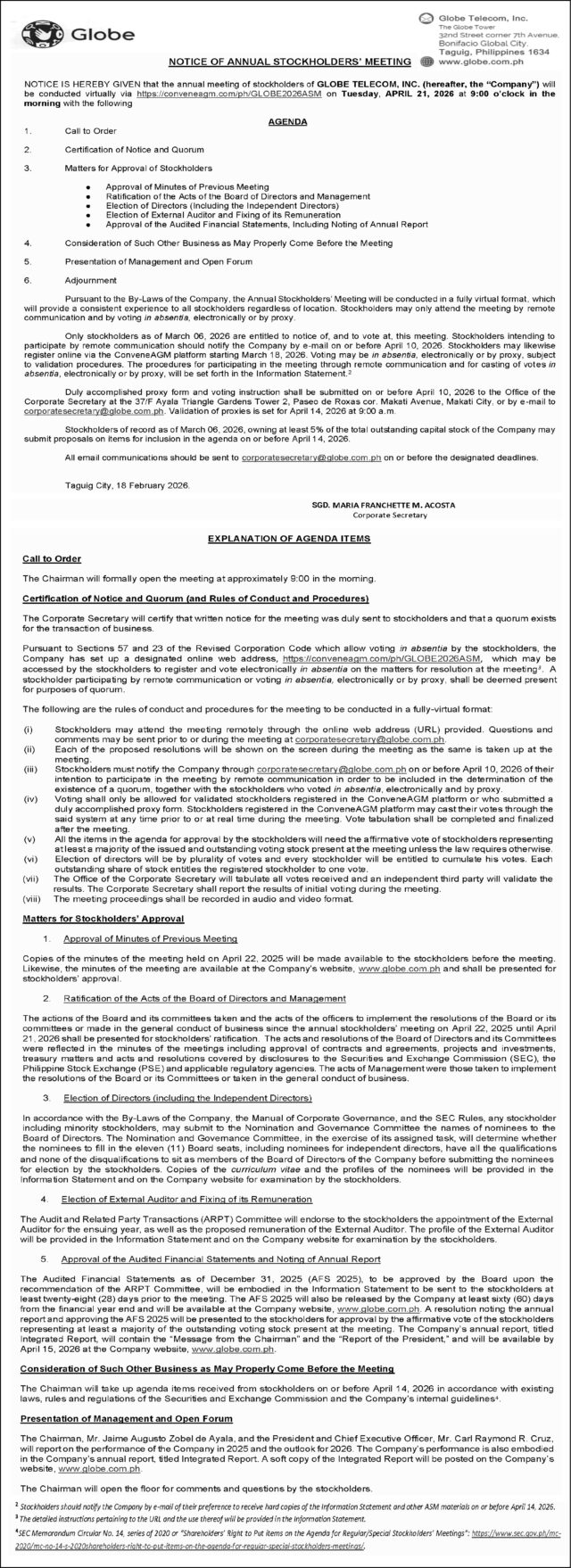
Globe Telecom, Inc. to hold 2025 Annual Meeting of Stockholders virtually on April 21


Spotlight is BusinessWorld’s sponsored section that allows advertisers to amplify their brand and connect with BusinessWorld’s audience by publishing their stories on the BusinessWorld Web site. For more information, send an email to online@bworldonline.com.

Join us on Viber at https://bit.ly/3hv6bLA to get more updates and subscribe to BusinessWorld’s titles and get exclusive content through www.bworld-x.com.

Confronting a tumultuous part of history

Musical on Apolinario Mabini challenges viewers

By Brontë H. Lacsamana, Reporter

Theater Review
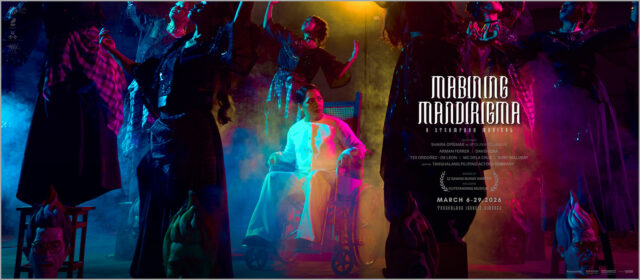
Mabining Mandirigma: A Steampunk Musical
Presented by Tanghalang Pilipino

IT’S BEEN 11 years since Mabining Mandirigma — a retelling the life of Apolinario Mabini with a firm grasp of 19th century Philippines through a compelling steampunk lens — took local theater scene by storm. Tanghalang Pilipino has brought back this landmark production, which swept the Gawad Buhay awards in 2015 and has been restaged a few times since.

The musical, with a book by Dr. Nicanor Tiongson and music by Joed Balsamo, follows Mabini through the key points of his life, from his youth in Lipa, Batangas, to his days as adviser and confidante to President Emilio Aguinaldo, to his death at age 38 just a little past the turn of the 20th century.

For those like me, who only saw the success of the musical from a distance and never got to see it in its original run, it’s a great way to see how ambitious our theater talents are and how dense our historical materials can be for engaging stories like these. The extensive research can be felt in the sheer barrage of information that is packed into the lyrics, made entertaining through the magic of theater.

Since it tackles the volatile politics of the time, which overwhelms Mabini in his attempt to lend his gifts to the Philippine revolution, the creative choices highlight the narrative tensions even more. The gender-swapped lead, with Shaira Opsimar playing Mabini with a nuanced sense of his solid yet limited physicality in a wheelchair, adds to the anachronisms — the steampunk visuals dialing up the chaos of the time being the most obvious example.

Performed at the Tanghalang Ignacio Gimenez (the Cultural Center of the Philippines’ Black Box Theater), the small stage in full view of the audience allows every detail of Toym Imao’s set and props and James Reyes’ costumes to shine. The steampunk aesthetic is both tasteful yet stylized, from the barong-like touches refined into military shapes to the contrast between garish accessories with rattan textures.

It may be a challenge for newer, younger audiences to dive into the extremely dense historical text, but Emilio Aguinaldo’s questionable political decisions are dramatized so compellingly. Directed by Chris Millado and choreographed by Denisa Reyes and Richardson Yadao, the show is dynamic and full of energy, each musical number transforming along with the tides of history. The musical arrangement by TJ Ramos brings out the strength of the original score, though depending on the sound conditions of a given night, some lyrics can be lost in the music.

Mabining Mandirigma is meant to center on the titular historical figure, but his relationship with Emilio Aguinaldo is an undeniable highlight. Opsimar bounces off of David Ezra’s powerful, dignified Aguinaldo very well, as they both come across as participants in a larger picture, sometimes together and sometimes apart.

Ms. Opsimar and Mr. Ezra’s voices blend perfectly, and they really command the stage in scenes where their personal friendship either blooms or strains. When they have heated confrontations, the hush in the crowd is palpable, their human connection fraught in the context of a tumultuous history. It plays somewhat like a doomed relationship, if you will.

Supporting cast members occasionally steal the scene. There’s Tex Ordoñez-De Leon lending a headstrong quality to Mabini’s worried mother, Dionisia. There’s Gelo Molina as Mabini’s hopeful caretaker, Pepe, who injects humor and dimension to the story. Even the actress who plays young Mabini, Ynna Rafa, brings a youthful vulnerability to the role that stays with you.

Of course, the ilustrados are a riot. Played by MC de la Cruz, Jonathan Tadioan, Roby Malubay, and Marco Viaña, their fun delivery kicks up a storm each time they’re on stage. The entire ensemble similarly provides a vibrant energy that keeps you engaged, especially in the meaty parts, sustaining momentum in a musical that’s so animated yet dense in commentary.

The uneasy wartime transition from Spanish to American rule sheds light on the harmful habits that are embedded in Philippine politics today, and Mabining Mandirigma wants you to know that. It pays full respect to its titular hero, but goes beyond that by connecting his struggles to ours.

Ultimately, it’s an intelligent and entertaining production that Filipinos have to watch, to learn from the difficult parts of history and to be reminded of what it means to try to make things better, despite everything.

Mabining Mandirigma runs until March 29 at the Tanghalang Ignacio Gimenez or CCP Black Box Theater at the CCP Complex in Pasay City. Tickets range in price from P1,800 to P2,000.

RCBC ends bond offer early on strong demand

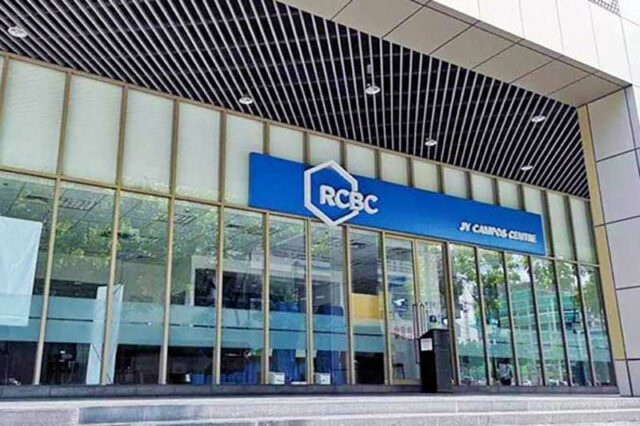
RCBC/BW FILE PHOTO

RIZAL COMMERCIAL Banking Corp. (RCBC) said it ended the public offer period for its three-year ASEAN sustainability bonds ahead of schedule after drawing strong demand from both retail and institutional investors.

“RCBC decided to shorten the public offer period following positive and strong demand for the bonds coming from both retail and institutional investors,” the listed lender said in a disclosure on Tuesday.

The offer, which began on March 12, was originally set to run until March 27. Settlement and listing on the Philippine Dealing & Exchange Corp. remain scheduled for April 8.

The bonds carry a coupon rate of 6.08% and were offered at a minimum investment of P100,000, with additional increments of P10,000.

Proceeds will be used to finance or refinance eligible green and social projects under the bank’s Sustainable Finance Framework, RCBC said.

The issuance marks the ninth drawdown from the bank’s P200-billion bond and commercial paper program, which was expanded in 2022 from the P100 billion initially approved in 2019.

The Securities and Exchange Commission approved the ASEAN label for the issuance on Feb. 23.

RCBC tapped Standard Chartered Bank and RCBC Capital Corp. as joint lead arrangers and bookrunners, with both also serving as selling agents.

The lender last accessed the domestic bond market in July last year, raising P12.21 billion from a sustainability bond offering, exceeding the P3-billion minimum issue size amid strong demand.

Those notes had a tenor of two years and six months and carried a 6% coupon, bringing total issuances under its peso fundraising program to P99.01 billion.

RCBC also raised $350 million from a five-year sustainability bond issuance in January 2025, priced at 5.375%, under its $4-billion medium-term note program.

The bank reported an 11% increase in net income to P10.6 billion in 2025. Its shares closed unchanged at P24 apiece on Tuesday. — Aaron Michael C. Sy

Meralco upgrades Caloocan substation

MANILA ELECTRIC CO.

POWER DISTRIBUTOR Manila Electric Co. (Meralco) has energized a substation in Caloocan City following a P208.45-million upgrade aimed at improving electricity service reliability in the city and nearby areas.

In a statement on Tuesday, Meralco said it installed a new 83-megavolt-ampere (MVA) power transformer bank, 34.5-kilovolt (kV) gas-insulated switchgear, four 115-kV power circuit breakers, and eight 115-kV disconnect switches.

The upgrade is intended to support rising power demand in key areas of North Caloocan and parts of San Jose del Monte, including Maynilad Water Services – La Mesa Water, SM Deparo, SM San Jose Del Monte, Regan Industrial Sales, Inc., and Converge J3 Caloocan data center.

The project is part of Meralco’s broader investments to support load growth and improve service reliability, with total spending amounting to P1.48 billion.

Meralco is the country’s largest private electric distribution utility, serving more than 8.2 million customers in Metro Manila and nearby provinces, including Bulacan, Cavite, Rizal, and parts of Laguna, Batangas, Pampanga, and Quezon.

Meralco’s controlling shareholder, Beacon Electric Asset Holdings, Inc., is partly owned by PLDT Inc. Hastings Holdings, Inc., a unit of PLDT Beneficial Trust Fund subsidiary MediaQuest Holdings, Inc., has an interest in BusinessWorld through the Philippine Star Group, which it controls. — Sheldeen Joy Talavera

When the world fractures, ASEAN must think strategically

STOCK PHOTO | Image by Pressfoto from Freepik

Recent tensions between the United States and Iran are a reminder that geopolitics never truly disappears. It simply fades into the background during periods of stability. When conflicts erupt again, they quickly reshape markets, trade routes, and investment decisions. What happens thousands of miles away can suddenly affect energy prices, shipping lanes, and investor confidence across Asia.

For many business leaders, geopolitical risk has long been treated as something distant, something for diplomats and policymakers to worry about. But that assumption is increasingly outdated. From the war in Ukraine to ongoing tensions between the United States and China, global business is now operating in an environment where politics and economics are tightly intertwined. The latest crisis in the Middle East reinforces this reality.

For ASEAN economies, the immediate concern is energy. A large portion of the world’s oil shipments pass through the Strait of Hormuz. Any disruption in that corridor has the potential to drive oil prices sharply higher, pushing up transportation costs, inflation, and the cost of doing business across the region. Countries that rely heavily on imported fuel, including the Philippines, are particularly sensitive to such shocks.

Higher oil prices ripple quickly across the economy. Manufacturing becomes more expensive as production costs rise. Logistics companies face higher fuel expenses. Airlines, shipping firms, and public transport operators must adjust fares or absorb losses. Food prices eventually follow because agriculture and distribution are energy intensive. For businesses operating on thin margins, these pressures accumulate quickly.

In the short term, therefore, the Middle East tensions present clear economic risks.

But global crises rarely stop at creating risk. They also rearrange the economic landscape.

History shows that major geopolitical disruptions often trigger shifts in investment flows and supply chains. The trade tensions between the United States and China several years ago pushed manufacturers to diversify production locations. Vietnam, Thailand, and Indonesia benefited as companies looked for alternative bases in Southeast Asia. The war in Ukraine accelerated Europe’s search for new energy partners and new supply routes.

In each case, instability in one region created opportunity in another.

This is where the ASEAN’s strategic position becomes important. Despite differences in political systems and economic structures, the region has largely maintained a posture of neutrality in global conflicts. ASEAN countries continue to engage with major powers across the spectrum while avoiding alignment with any single geopolitical bloc.

For global companies navigating uncertainty, that neutrality is valuable. Investors tend to look for locations that offer stability, predictable regulation, and access to growing markets. The ASEAN offers all three.

The region is home to more than 680 million people and one of the fastest growing digital economies in the world. Intra-regional trade continues to expand, supported by economic integration initiatives and growing connectivity among member states. Demographically, the ASEAN remains one of the youngest and most dynamic regions globally.

This combination makes Southeast Asia an attractive destination for capital seeking stability amid global turbulence.

However, opportunity does not automatically translate into advantage. It requires strategic thinking from both governments and businesses. In moments like this, leadership means looking beyond the immediate headlines and asking what structural shifts may follow.

For Filipino CEOs and business leaders, the more useful question is not whether geopolitical tensions will affect the global economy. They will. The more important question is how companies can position themselves before those changes fully unfold.

One area where businesses can act immediately is supply chain diversification and regional partnerships. Many companies still rely heavily on a single country for key components or manufacturing inputs. That approach worked in an era when globalization was predictable and trade flows were stable. But geopolitical tensions, trade restrictions, and logistical disruptions have shown how fragile concentrated supply chains can be.

Filipino companies can begin strengthening partnerships across the ASEAN, building supplier networks that span Vietnam, Indonesia, Thailand, and other regional markets. Even partial diversification can significantly reduce vulnerability. Companies can also explore joint ventures or regional production hubs that allow them to serve multiple markets within Southeast Asia. In the long run, firms that build regional supply ecosystems will be better positioned not only to withstand shocks but also to participate in the region’s expanding intra-ASEAN trade.

Energy resilience is another strategic priority that deserves more attention in boardrooms. The volatility created by global conflicts often shows up first in energy prices, and these shocks can persist longer than expected. Businesses that reduce their exposure to energy fluctuations gain a powerful competitive advantage during periods of instability.

Some companies are already exploring long-term power purchase agreements with renewable energy providers. Others are investing in energy-efficient technologies, modernizing equipment, or integrating solar generation into their operations. These steps may appear operational at first glance, but they increasingly shape long-term cost competitiveness. In an environment where oil prices can swing sharply due to geopolitical developments, companies with more stable energy costs are better able to plan, invest, and expand.

A third area where businesses should focus is productivity and digital capability. As labor markets tighten and competition intensifies, companies that harness emerging technologies to improve decision-making and efficiency will gain an edge. Artificial intelligence (AI) is beginning to play a role here, not as a futuristic concept but as a practical tool for forecasting demand, optimizing logistics routes, analyzing customer behavior, and improving operational planning.

Filipino companies do not need massive investments to begin exploring these capabilities. Even modest applications of data analytics and AI tools can improve forecasting accuracy, reduce waste, and strengthen operational agility. Organizations that start building these capabilities today will be far more resilient when economic conditions become unpredictable.

None of these moves are dramatic on their own. But together they reflect an important shift in mindset.

For many years, business leadership focused primarily on operational efficiency. Companies optimized supply chains for cost, expanded into new markets, and embraced globalization as a relatively predictable system. That world is changing.

Today’s business leaders must think more broadly about geopolitical developments, energy security, supply chain resilience, and technological capability. Strategic awareness is becoming as important as operational expertise.

This shift does not mean retreating from globalization. Rather, it means adapting to a more complex global landscape where resilience and flexibility matter as much as scale.

Periods of instability often reveal which economies and institutions are capable of responding with foresight. The ASEAN has the potential to demonstrate that capability. If the region strengthens cooperation, invests in resilient infrastructure, and deepens economic integration, it can emerge stronger from global disruptions rather than weakened by them.

Leadership, after all, is not defined only by how we perform in times of stability. It is defined by how we respond when the environment becomes uncertain.

For the ASEAN and for the Philippines, the current geopolitical tensions are a reminder that the global economy is constantly evolving. Risks will always exist. But within those risks also lie opportunities.

The challenge for leaders is to recognize them early and act with clarity. When the world becomes more uncertain, regions that offer stability, openness, and strategic vision become even more valuable.

In that environment, the ASEAN has every reason to step forward and think not just defensively, but strategically.


Dr. Donald Patrick Lim is the founding president of the Global AI Council Philippines and the Blockchain Council of the Philippines, and the founding chair of the Cybersecurity Council, whose mission is to advocate the right use of emerging technologies to propel business organizations forward. He is currently the president and COO of DITO CME Holdings Corp.


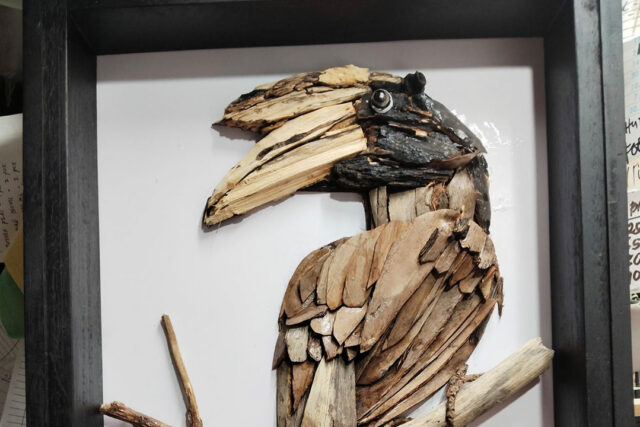
Philippine startup turns coastal litter into artwork

KALAW COASTAL LITTER DRIFTWOOD ART — MELVIN UPCYCLED COASTAL LITTER HANDICRAFTS FB PAGE

By Almira Louise S. Martinez, Reporter

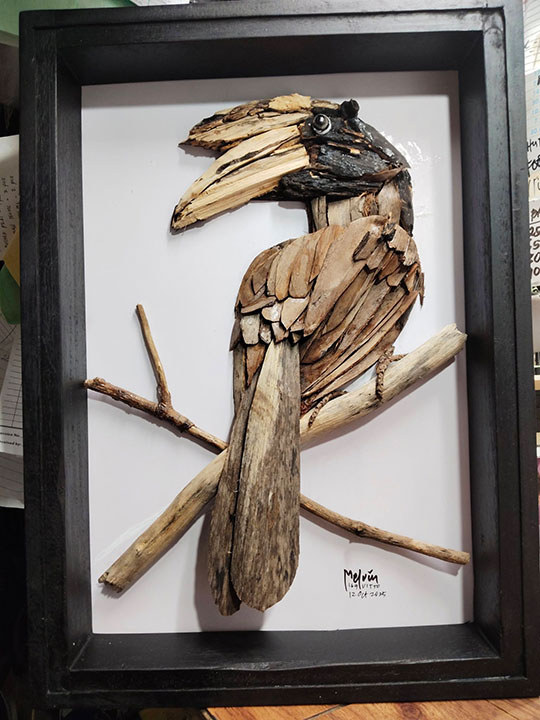
KALAW COASTAL LITTER DRIFTWOOD ART — MELVIN UPCYCLED COASTAL LITTER HANDICRAFTS FB PAGE

A SMALL ENTERPRISE in Marinduque province south of the Philippine capital is converting driftwood and coastal litter into saleable artwork, offering an alternative use for marine waste while providing income to seaside communities.

Melvin Upcycled Coastal Litter Handicrafts, founded by Melvin M. Vitto, collects discarded materials such as driftwood and dried leaves — much of it washed ashore during typhoons — and turns them into portraits and decorative pieces.

“I’m the only person who likes a typhoon because I get to collect my materials,” Mr. Vitto told BusinessWorld in Filipino.

The initiative reflects a shift in how coastal cleanups are approached. Instead of discarding collected debris, the business treats biodegradable waste as raw material for craft production.

“We’ve changed the way we used to do coastal cleanups,” he said. “We’ve turned biodegradable trash into something more valuable.”

Mr. Vitto, who works at the Municipal Environment and Natural Resources Office in Marinduque, said the idea came from the volume of driftwood that accumulates along the province’s coastline after storms.

He began experimenting with driftwood in 2022 but initially struggled to secure support. Government programs could not help while the activity remained outside a formal business structure, he said.

The venture was launched in 2025 with an initial capital of P5,000. Since then, Mr. Vitto has produced customized portraits of politicians and pets using assembled pieces of wood shaped and arranged to form detailed images.

Support followed once the activity became a registered enterprise. “When it became a business, that’s when they helped us,” he said, referring to assistance from the Department of Trade and Industry.

Still, Mr. Vitto said products tied to environmental advocacy could be difficult to market.

“Businesses with good advocacy sometimes remain just ideas,” he said. “If it’s not widely promoted, it’s hard to sell.”

The enterprise also creates a secondary income stream for coastal residents. Locals collect driftwood and other usable debris, which the business buys at about P500 per sack.

This model links waste recovery with livelihood, particularly in areas where income opportunities are limited.

Marine litter remains a persistent issue in the Philippines. Data from the International Coastal Cleanup showed more than 306,600 kilos of waste were collected across 298 coastal sites nationwide in 2025. Metro Manila accounted for more than 135,000 kilos, while Central Visayas collected about 42,000 kilos. The Mimaropa region, which includes Marinduque, collected more than 12,000 kilos.

Mr. Vitto said changing perceptions of waste remains a challenge, noting that reusable materials are often still discarded.

“What’s hard with trash is even if it’s reusable, people still see it as waste,” he said.

For him, driftwood carries symbolic value beyond its commercial use.

“After everything it went through, it gets a new life,” he said.

Arts & Culture (03/18/26)


Fujifilm Philippines mounts photo and video exhibition

THIS YEAR, Fujifilm Philippines is celebrating visual stories from across the Philippines, all brought together in one space. In an exhibition, top entries from its Nationwide Photo & Video Walk 2025 will be compiled to highlight contrast, depth, diversity, and creative vision. Photographs from Walk Leaders across 32 locations nationwide will also be showcased for their unique perspectives. The exhibition will be open to the public from March 20 to 22 at Ayala Museum, Makati City.


FEU presents Haydn’s The Seven Last Words of Jesus Christ

FAR EASTERN UNIVERSITY (FEU), through the FEU Center for the Arts, is presenting the Pundaquit Virtuosi from Zambales in Haydn’s The Seven Last Words of Jesus Christ on March 31 at the FEU Chapel. A Holy Week presentation, it will include reflections between musical passages while surrounded by the chapel’s Stations of the Cross, a National Cultural Treasure created by National Artist Carlos “Botong” Francisco. This special Lenten event is presented in partnership with the FEU Campus Ministry. It is free to all visitors on March 31, 5 p.m., at the FEU Chapel. Limited seats are available so pre-registration is needed via https://forms.office.com/r/Tb3m5a9W49.


Purita Kalaw-Ledesma collection of posters on exhibit

THE exhibit Collecting the Moment: Art Exhibitions in Print is displaying gallery posters personally collected by art patroness, writer, and cultural worker Purita Kalaw-Ledesma. It tours viewers through the evolution of modern and contemporary art in the Philippines through 130 print materials. These are made in different ways, such as typography, imagery, and graphic design, each a reflection of shifting popular aesthetics, curatorial approaches, and cultural conversations across time. Spanning the 1970s and 1980s, the pieces are on view to the public until March 31 at A1201 Benilde Design + Arts Campus, 950 Pablo Ocampo St., Malate, Manila.


Manila International Performing Arts Market open for entries

THE Manila International Performing Arts Market (MIPAM), organized by the Cultural Center of the Philippines and CREATE Philippines, is inviting performing arts companies and artists to submit proposals until March 31 for showcase consideration. Performance groups and individual applicants for MIPAM 2026 must submit a proposal, including attached action photos and a one-minute rehearsal video, to mipam@culturalcenter.gov.ph. Bold and original works in folk reinterpretation, contemporary, and street-pulse styles are highly encouraged, as well as cross-border collaborations and tech-driven performances. MIPAM 2026 will take place from Sept. 11 to 13 at the Tanghalang Ignacio Gimenez (CCP Blackbox Theater) at the CCP Complex in Pasay City.

LANDBANK ties up with LMP to expand LGU financing

LAND BANK OF THE PHILIPPINES

LAND BANK of the Philippines (LANDBANK) has signed a memorandum of agreement with the League of Municipalities of the Philippines (LMP) to expand access to financing for local government units (LGU), supporting infrastructure and public service projects nationwide.

Under the partnership, 1,486 municipalities will gain broader access to development financing, technical assistance, and information on the bank’s lending programs.

“By providing municipalities with accessible financing, we empower local leaders to transform their communities and strengthen local economies,” Lynette V. Ortiz, president and chief executive officer at LANDBANK, said in a statement. “This partnership helps turn plans into action, enabling better services for their constituents.”

LGUs may tap funding for projects such as roads, healthcare facilities, sanitation systems and disaster resilience initiatives.

As of January, LANDBANK said its enhanced LGU lending program has disbursed P190 billion for infrastructure and socioeconomic projects. Its multi-developmental financing support program has approved P3.6 billion in loans, prioritizing third- to fifth-class municipalities with limited fiscal capacity.

Beyond lending, the bank said it would continue to support municipalities through guidance on borrowing, fiscal management and project development to ensure sustainable outcomes.

As of end-2025, LANDBANK had 10,412 touchpoints nationwide across all 82 provinces, including 615 branches and branch-lite units, 60 lending centers, and thousands of ATMs and agent banking partners. — Aaron Michael C. Sy

Maharlika completes stake acquisition in ATI

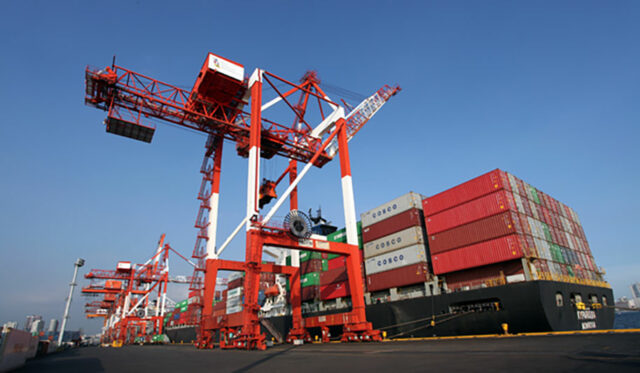
ASIANTERMINALS.COM.PH

THE MAHARLIKA Investment Corp. (MIC) said it has completed its acquisition of shares in Asian Terminals, Inc. (ATI), securing a stake in the port and logistics operator.

“The accepted shares tendered in the transaction were crossed through the facilities of the Philippine Stock Exchange (PSE) on March 13, with settlement completed on March 17,” MIC said in a statement on Tuesday.

“Following this process, MIC has formally become a shareholder of ATI, securing an equity stake in one of the country’s most critical port and logistics infrastructure operators,” it added.

The shares were acquired from Seawood Resources, Inc., Kayak Holdings, Inc., and Asiasec Equities, Inc., among others.

The tender offer resulted in the acquisition of 177.61 million ATI common shares, of which 101.19 million were allocated to MIC and 76.42 million to ATI as part of its share buyback program.

Following the transaction, ATI’s public float fell to 0.74%, while combined tendered shares, excluded shares, and other non-public shares reached 99.29%, exceeding the 95% threshold for voluntary delisting.

ATI is scheduled to delist from the Philippine Stock Exchange on April 3, as previously announced.

MIC said the investment positions the company in a key segment of the country’s trade and logistics sector.

“When we first announced this intent in December, I described the port sector as the ‘circulatory system of the Philippine economy.’ Today, we have successfully secured our place within that system,” said MIC President and Chief Executive Officer Rafael D. Consing, Jr.

“This investment fulfills our mandate to capture value from assets with high barriers to entry and a direct correlation to our nation’s gross domestic product growth,” he added.

MIC said the investment could support job creation, improve logistics and supply chain efficiency, and facilitate the adoption of digital solutions in port operations.

Established under Republic Act No. 11954, MIC manages the Maharlika Investment Fund.

It is mandated to support economic development through strategic investments in sectors such as infrastructure, energy, agriculture, and digitalization. — Justine Irish D. Tabile

Understanding well-known marks in the Philippines

STOCK PHOTO | Image from Freepik

In a country where branding plays a powerful cultural role, trademarks now often become part of everyday life. Consumers quickly learn to associate a term, a logo, a color, or even product packaging with a particular level of quality or customer experience. Over time, certain marks grow beyond their original purpose of identifying goods or services and become associated with a certain level of trust, familiarity, and reputation. When this level of recognition is achieved, the law acknowledges that these brands require stronger protection to preserve both their value and to protect the public from unfair commercial practices. These are known as well-known marks — trademarks that have achieved a level of prominence and public recognition that they are formally declared as such by the proper authorities.

The protection of a well-known mark is governed by the Intellectual Property Code, relevant Supreme Court issuances, and rules issued by the Intellectual Property Office of the Philippines (IPOPHL). In 2025, the IPOPHL, through the Regulations on Well-Known Marks, formalized a system for the declaration of a well-known mark and its inclusion in a “Register of Well-Known Marks.”

This distinction carries significant advantages. For both registered and non-registered trademarks, a mark declared as well-known enjoys safeguards against the use of identical or confusingly similar marks covering related goods and services. If the mark is registered with the IPOPHL, the protection further extends to unrelated goods and services.

Yet achieving this status requires far more than simple popularity. It requires evidence. Applicants must present substantial evidence demonstrating that the mark has achieved a well-known status internationally and in the Philippines. Among the factors considered are the duration and geographical extent of the mark’s use, the scale of advertising and promotion, the degree of distinctiveness the mark has acquired, its market share, and the commercial value attributed to the brand. These criteria ensure that only marks with genuine and demonstrable reputation are granted the well-known mark designation.

Previously, a mark could only be declared well-known through an inter partes case, e.g., opposition cases, or through an IP violation case, e.g., infringement case. Now, with Regulations on Well-Known Marks, the process of declaration can be done ex parte or without any adverse party.

The process itself is straightforward. An applicant must file a notarized application with IPOPHL, accompanied by documentation supporting the mark’s claim of well-known status. Examiners review the evidence and may issue office actions requesting additional information, if necessary. This evaluation ensures that the claim of well-known status is supported by verifiable facts rather than mere assertions.

Once the application satisfies the examination requirements, it is published in the IPOPHL E-Gazette, allowing the public an opportunity to submit third-party observations within a prescribed period if they believe the mark does not meet the standards for well-known status. After reviewing the evidence, the observations, and the applicant’s responses, the Director of Trademarks issues the final decision on whether the mark should be declared well-known. This is one of the key differences that the Regulations bring. Now, it is not only the courts, the IPOPHL’s Director General, and the IPOPHL’s Bureau of Legal Affairs who can declare a mark well-known. Under the Regulations, this may also be done by the IPOPHL’s Director of Trademarks.

If approved, the declaration is published and the mark is officially entered into the Register of Well-Known Marks. The recognition is valid for 10 years from the date of declaration and may be renewed for successive 10-year periods, provided that the owner demonstrates continued use of the mark through the submission of Declarations of Actual Use, and maintains its well-known reputation.

However, a declaration may be revoked if the owner fails to renew the status, does not submit proof of continued use, or if substantial evidence shows that the mark no longer enjoys the level of recognition required under the rules. Third parties may also file petitions to challenge the continued well-known status of a mark if circumstances have changed.

In today’s global and digital marketplace, the importance of trademark protection has only grown. Counterfeit goods, imitation branding, and online marketplaces have made it easier for infringers to capitalize on the reputation of established brands. Even subtle similarities in packaging, logos, or brand names can spark the interest but mislead consumers and erode the distinctiveness that companies have worked hard to build. The well-known mark designation helps address these challenges by recognizing that certain trademarks carry powerful public associations.

Ultimately, our legal system reflects a broader goal: maintaining fairness and integrity in the marketplace. By identifying and protecting well-known trademarks, the law ensures that businesses are rewarded for building strong brands while consumers remain confident that the names and symbols they trust remain authentic.

In the end, the declaration of a well-known mark represents more than a legal status. It signals that a brand has crossed an important threshold, from simply identifying a product to becoming a symbol widely recognized by the public. When that happens, the law steps in to make sure that reputation, carefully built over time, remains protected.

This article is for general informational and educational purposes only and not offered as, and does not constitute legal advice or legal opinion.


Joan Janneth M. Estremadura is a Senior Associate of the Intellectual Property Department of Angara Abello Concepcion Regala & Cruz Law Offices (ACCRALAW).

jmestremadura@accralaw.com

+632-8830-8000