Home Blog Page 8859

COVID-19 widened the gap between Internet haves and have-nots, Filipinos among negatively affected
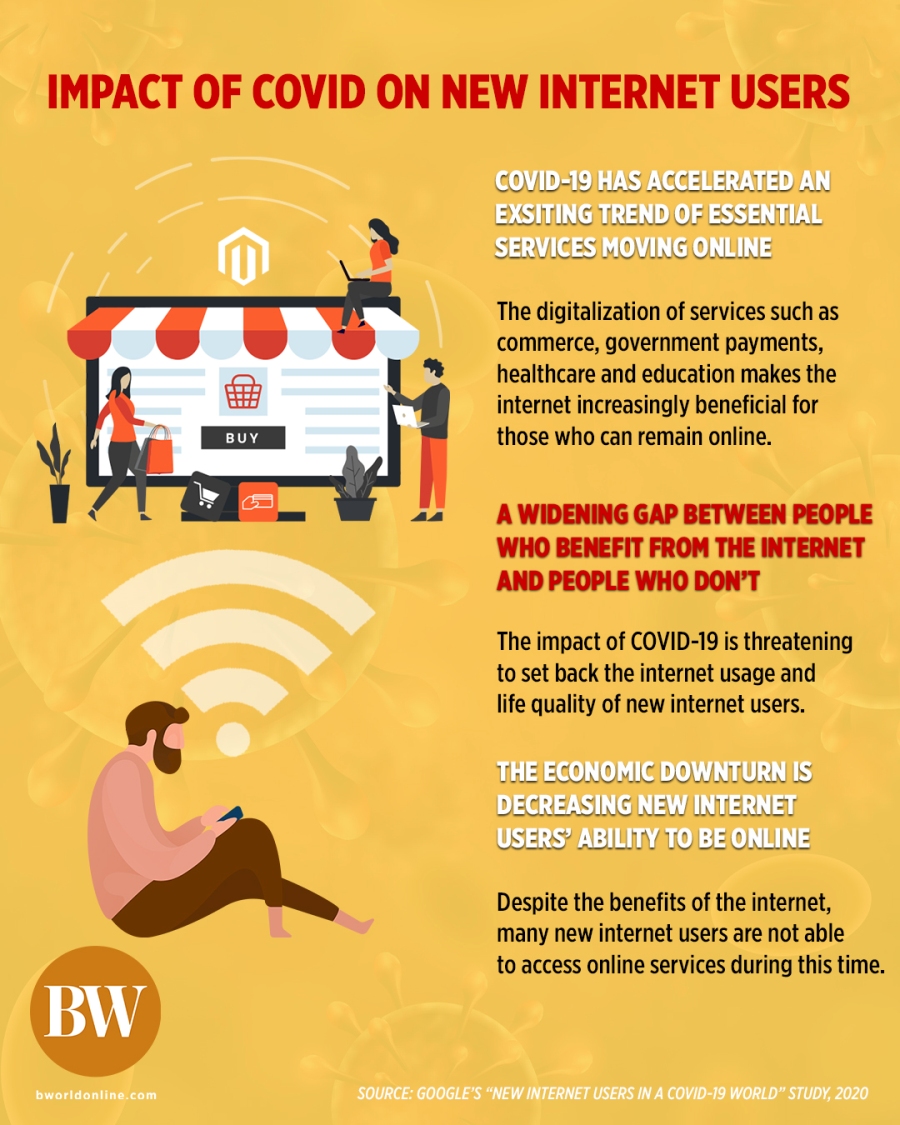
The COVID-19 pandemic has widened the gap between those who benefit from the Internet and those who don’t, according to “New Internet Users in a COVID-19 World,” a study released by Google’s Next Billion Users initiative team on November 5.

The pandemic has accelerated digital transformation, with many essential sectors such as healthcare, education, commerce, and government moving their services online. While helpful to those with Internet access, the online migration negatively affects New Internet Users (NIU), a demographic of roughly one billion people who only started using the Internet from 2013 to 2017. Almost half of these people come from developing countries in Africa, Latin America, and Asia, including the Philippines.

Many NIUs suffered from job loss or reduced income during the pandemic. With inflating prices of essential goods and less money to work with, they have had to sacrifice secondary basic needs, one of which is data. In Mexico, for instance, only two out of nine participants had consistent Internet access. In Brazil, a majority of the users could only afford data with the help of government aid.

This is problematic for NIUs considering the digital migration of essential sectors. Students need Internet access for remote learning. Poor access to telemedicine is further compounded by low awareness and discovery of online tools and platforms. Government employees may be operating purely online, which is a hurdle for NIUs who are used to calling telephone hotlines or visiting local government offices. Those who do not have Internet access may be intimidated by services such as financial aid applications due to low digital literacy.

This digital gap also affects emotional well-being. Smaller quantities of data lead to minimizing or removing of online entertainment. This could also mean less communication with traditionally in-person support systems, such as churches and neighbors, who can now only be contacted through digital means.

The rampant spread of fake news, scams, and misinformation online often leads to distrust of vital institutions such as governments and hospitals. There is also the stress of coping with the economic and digital changes brought by COVID-19, giving NIUs less room to think about and plan for the future.

In order to address these challenges, governments, businesses, and civil society organizations must work together. “As technology plays a bigger role in our lives and digital economies grow, we can and should make the internet better and more inclusive in the post-COVID world, for the billions online today, the next billion to come, and beyond,” said Caesar Sengupta, Google’s vice president for payments and the Next Billion Users Initiative, in a press statement.

The study was conducted among 200 new Internet users from Brazil, India, Indonesia, Mexico, and Nigeria. Of this number, 70 were frequently contacted as they learned to use their first smartphones. — Mariel Alison L. Aguinaldo

Globe myBusiness launches #GiftLocal campaign to support local SMEs this Holiday season

For Filipinos, Christmas is all about giving. Buying gifts for family members and loved ones is a tradition and no matter how different this year’s celebrations may be from what we are used to,  the spirit of giving will always be alive in all of us. 

Yearly, Globe myBusiness supports SMEs (Small and Medium Enterprises) with the #GiftLocal campaign that aims to encourage Filipino consumers to purchase their gifts to family and friends  from local small businesses. 

“We have always rallied the Filipino consumers to patronize local establishments and help Filipino SMEs, especially during the holiday season,” said Globe myBusiness Strategy and Marketing Head Maridol Ylanan. “This year’s Gift Local campaign will serve an even greater purpose, as we feature the products of our SME partners that will delight Filipino customers for their gift giving celebration, while supporting our local SMEs bounce back in these challenging times.”

As a part of the annual Gift Local campaign that promotes buying and gifting local during the holiday season, Globe myBusiness is holding a 3-day E-Bazaar with Lazada, happening from November 27 to 29. This will feature Globe myBusiness clients and partner SMEs such as Bayongciaga, Punta Riviera Resort, Old World Food Enterprise, and Robi & Peach RTW clothing with live selling to be streamed through Laz Live and Globe myBusiness’ Facebook page.

Globe encourages consumers to make their holidays more meaningful by giftinglocal and supporting SMEs this holiday season with its Gift Local video: https://www.facebook.com/98531356317/posts/10159429576716318/

An even grander part of the campaign will happen as more activities and promos featuring SMEs will be rolled out by Globe myBusiness in collaboration with partner malls such as Ayala Malls and SM Premier Malls in the coming weeks. These collaborations with these partner malls are made more exciting through a social media promo that will encourage the public to upload their picture showing how they are keeping themselves safe while shopping and dining.

Globe’s #GiftLocal likewise joins the government’s advocacy,“Ingat Angat Tayong Lahat,” that aims to restart the Philippine economy by building consumer confidence and guiding private corporations and SMEs regarding the best safety practices they can adopt in their operations.

Globe myBusiness’ supports the “Ingat Angat Tayong Lahat” advocacy by encouraging SMEs to adopt digital solutions in their operations to help ensure the safety of their customers and its employees. Services such as GCash for cashless transactions and KonsultaMD for employees’ telehealth service are easily made available to Globe myBusiness’ partner SMEs. 

Globe myBusiness is also partnering with Ayala Foundation for its Brigada ng Ayala project, which provides education packs, health and hygiene kits, and connectivity support for teachers and learners in the new normal of education. The partnership with Ayala Foundation also extends to disaster relief  initiatives.

Globe is also supportive of the 10 of the United Nations Sustainable Development Goals, such as UNSDG No. 8 on decent work and economic growth.

Follow Globe myBusiness Facebook and Twitter pages to get the latest updates on the upcoming events.

To know more about this story, visit Globe myBusiness website

Delivery timetable of Oxford/AstraZeneca vaccine has slipped, UK official says

UK’s target of 30 million doses of the vaccine by September had not been achieved, and she estimated that Britain would get 4 million doses by the end of the year instead. Photo via AstraZeneca.

LONDON — The timetable for delivery of the Oxford University/AstraZeneca COVID-19 vaccine candidate has slipped and Britain will receive just 4 million doses of the shot this year, the head of the UK’s vaccine procurement program said on Wednesday.

In May, Britain agreed to a deal for 100 million doses of the vaccine, developed by Oxford University and licensed to AstraZeneca, with 30 million doses estimated for delivery by September 2020.

Oxford’s trial chief said earlier he was optimistic that late-stage trial results of its efficacy could be presented before the end of the year, and that doses of the shot are already being made.

UK Vaccine Taskforce Chair Kate Bingham said that the target of 30 million doses of the vaccine by September had not been achieved, and she estimated that Britain would get 4 million doses by the end of the year instead.

“The predictions that were made in good faith at the time were assuming that absolutely everything would work and that there were no hiccups at all,” she told lawmakers.

She said the scale-up in manufacturing usually took years to do but instead was moving at unprecedented speed, adding that the full 100 million doses would be delivered next year.

“We’re starting with low numbers of doses—by which I do mean millions of doses, but not tens of millions of doses initially—and then that will then ramp up so that we will end up with the hundred million doses … in the first half of next year,” she said.

AstraZeneca said in a written statement that it was making rapid progress to begin supplying hundreds of millions of doses on a rolling basis once it receives regulatory approval.

“While we are ready to produce finished products, we must be thoughtful of how much is progressed to the final stages of the process to ensure maximum shelf life. We hold inventory in the drug substance form in order to have the longest possible shelf-life upon regulatory approvals,” it added. — Alistair Smout/Reuters

NYC first responders have high COVID-19 rates; public surfaces may hold clues to virus spread

The following is a roundup of some of the latest scientific studies on the novel coronavirus and efforts to find treatments and vaccines for COVID-19, the illness caused by the virus.

NYC first responders have high COVID-19 rates

Photo via New York City Fire Department / Flickr


Compared to the general public, New York City firefighters and emergency medical workers were 15 times more likely to be infected with the new coronavirus during the first wave of the pandemic, researchers reported on Thursday in ERJ Open Research. They studied nearly 10,800 firefighters and 3,500 emergency medical technicians (EMTs) and paramedics. From the beginning of March to the end of May, 36.2% of these front-line workers were either confirmed as having the virus with a positive PCR viral test or suspected as having COVID-19 due to their symptoms. During the same period, the rate was 2.4% in the city’s general population. Compared to the firefighters, the EMTs and paramedics were more likely to contract the virus and to develop severe COVID-19. Everyone in the study had previously undergone tests to assess their lung health, and those with declining lung function before the pandemic had higher risks of severe COVID-19. These first responders “cannot avoid entering homes or having close contact with members of the public and co-workers,” Dr. Anita Simonds, president of the European Respiratory Society, said in a statement. “No matter where we live in the world, we… need to do all we can to protect them.” 

Public surfaces might give clues to virus spread

Local public health officials interested in how and where the new coronavirus is spreading might want to monitor the amounts of virus on “high-touch” surfaces in their communities, a new study suggests. From April to June, during a COVID-19 outbreak in one Massachusetts town, researchers swabbed 348 nonporous surfaces that frequently get touched by the public. Twenty-nine swabs, or 8.3%, were positive for the virus, including crosswalk buttons, trash can handles, and door handles at entrances to essential businesses like grocery stores, liquor stores, banks, and gas stations. In a report posted on Sunday on medRxiv ahead of peer review, the researchers note that the amount of virus on the surfaces was minimal and the risk of infection from touching one is extremely low. But the prevalence of the virus on high-touch surfaces in public spaces and essential businesses “reflected, and may even lead, local COVID-19 case numbers by one week,” they said. “Our findings demonstrate the potential for environmental surveillance of high-touch surfaces to inform disease dynamics during the COVID-19 pandemic.”

New app aids cancer decision-making during pandemic

A new app may help cancer patients decide how risky it is for them to delay treatment due to fear of contracting COVID-19. Using data from over five million US patients, researchers developed an online tool that quantifies that risk for individuals with 25 different types of cancer. In JAMA Oncology, they give two examples. The first is a 70-year-old New York City woman during the peak of the pandemic’s first wave. She had stage 2 triple-negative breast cancer and also suffered from hypertension and diabetes. Treatment involves surgery, chemotherapy, and radiation. For her, the consequences of catching the coronavirus by going for treatment outweigh a three-month treatment delay due to her risk factors for severe COVID-19. Immediate treatment would reduce her odds of being alive five years later by 8%. By contrast, for an otherwise healthy 40-year-old with the same cancer living in an area less affected by the virus, survival odds with immediate versus delayed treatment would differ by less than 0.1%. Coauthor Dr. Matthew Schipper of the University of Michigan said his team is updating the app to include more recent data on cancer patients’ COVID-19 mortality risk and also working on methods to provide uncertainty estimates, “as the uncertainty can be large, particularly when looking several months in the future.” — Nancy Lapid/Reuters

Trump or Biden, new US president faces troubled economy

Beyond jobs lost and economic output curtailed, whoever wins the US presidential election will face a list of long-term headwinds including deepening inequality, rising federal debt, and tattered international trade relations. Photo via Alex Proimos / CC BY 2.0 

It’s still not clear yet if the next US president will be incumbent Donald J. Trump or Democratic challenger Joseph R. Biden, but whoever triumphs will face monumental challenges on the economic front.

The recession has been ugly. It has wiped away more than a year of economic output and more than five years of jobs growth.

The workforce is now smaller than it was a year before Mr. Trump first took office.

One bright spot—consumer spending—is stronger than it was right after the pandemic exploded in March, but still only back to where it was last June.

Housing prices are on the rise, which is a great thing for US homeowners but at the same time is worsening the affordability crisis for aspiring home buyers.

Manufacturing activity—a key concern in the Midwestern battleground states—has rebounded, but manufacturing employment is in worse shape than employment overall.

And the coronavirus is still surging across most of the United States. Nearly 6,000 people died last week, and there’s growing concern that the U.S. might need to reinstate lockdowns that happened across Europe in order to get it under control.

But despite signs the economy has begun to slow again amid another viral onslaught, “it is almost certain that the economy will get better over the course of 2021,” says Jason Furman, a key economic advisor to Barack Obama, the last US president elected during a time of economic turmoil.

Late 2021 is still a long ways away, not just in political terms but for those living paycheck to paycheck, or out of work.

Federal Reserve policymaker projections put unemployment at 5.5% by the end of next year— worse than the 4.7% when Mr. Trump was first elected, but an improvement over the current 7.9%.

Beyond jobs lost and economic output curtailed, either Mr. Trump or Mr. Biden will face a list of long-term headwinds including deepening inequality, rising federal debt, and tattered international trade relations.

In the run-up to the election, Mr. Trump consistently polled better than Mr. Biden on his ability to create jobs and manage the economy, if not the virus.

But even with the election outcome uncertain, and likely to remain so for some time amid legal challenges, stock market investors like what they see.

That’s partly because Republicans look likely to keep their hold on the Senate, leaving policy priorities relatively unchanged if it’s Mr. Trump emerging the winner, or as preventive force to a president Mr. Biden from trying to push through any big policy changes should he come out on top in the ballot box.

It’s also because Senate Majority Leader Republican Mitch McConnell signaled Wednesday he was open to a new coronavirus aid bill in the “lame duck” session before the elected members of Senate and US House of Representatives are sworn in.

For the still-weak economy, a lot will depend on the timing, size, and shape of a pandemic relief package, which eluded lawmakers and the White House before the election.

A more modest fiscal package could mean “the growth outlook and corporate profits may not be as vigorous as hoped,” said James Knightley, chief international economist for ING.

A Biden presidency with a majority Republican Senate could offer the worst case for the economy in 2021 because Republicans are likely to oppose a substantial stimulus package, said Matthew Luzzetti, chief US economist at Deutsche Bank.

That would be bad news for the millions of low- and middle-income Americans out of work and struggling to find jobs in sectors such as travel and entertainment that are likely to remain moribund until the pandemic is under better control.

A scenario where Mr. Trump is re-elected and the Senate stays in Republican control could potentially result in more stimulus because Mr. Trump has advocated for more stimulus and could have more sway if he is re-elected, Mr. Luzzetti said.

Whatever the election outcome, any aid package should provide additional assistance for the unemployed, help for small businesses, and assistance for state and local governments, to keep economic momentum going, Mr. Luzzetti said. — Ann Saphir and Jonnelle Marte/Reuters

Investors welcome US election gridlock, retreat from ‘blue wave’ bets

NEW YORK — Investors who met news of likely gridlock in Washington with a large-scale unwind of bets on a Democratic sweep weighed prospects for big stimulus measures while cheering fading expectations of higher taxes and new regulations.

Regardless of whether Democrat Joseph R. Biden or Republican Donald J. Trump wins the presidency, some investors on Wednesday welcomed the prospect that either candidate would likely face some opposition in Congress that would be a barrier to sweeping legislative changes.

“The market likes the fact that we have a gridlock,” said Gary Bradshaw, senior vice-president at Hodges Capital Management in Dallas. “We are not likely to see big tax increases, and not a lot of regulation.”

Despite predictions ahead of the election that not having an early clear result could derail stocks, equities soared as the prospect of gridlock provided some solace and calm.

Markets saw tempering of so-called “reflation” trades that had predicted a strong Democratic score in presidential and US Senate races would lead to a bigger stimulus and higher inflation, as well as some safe-haven buying on caution the election is so close.

“There is no blue wave,” said Robert Sears, chief investment officer at Capital Generation Partners. “The chance of a lot of fiscal spending … that scenario is out of the window now because it looks like Republicans are going to keep the Senate.”

US Treasuries gained and the dollar shuffled between gains and losses as investors discounted chances for a massive stimulus package to help the US economy recover from the coronavirus pandemic, which has killed more than 230,000 Americans.

A major bet on a Democratic “blue wave” sweep was being unwound, as traders pulled out of bearish bets that long-dated Treasury yields would rise.

Major US stock indexes ended higher, led by the tech-heavy Nasdaq Composite up nearly 4%, reflecting bets on receding chances of a Democratic takeover of Washington that could usher in higher capital gains taxes or tougher antitrust measures, as well the prospect of lower interest rates.

The election results were more “down the middle,” said Matt Peron, director of research at Janus Henderson Investors in Denver, “meaning no clear mandate on either side, so there will have to be a lot of compromise.”

“I think the market sees that as a removal of uncertainty and the market likes that,” Mr. Peron said. Healthcare stocks also surged amid relief that regulatory pressure that could have swept through the sector in a Democratic sweep would not materialize. Sectors seen benefiting from a major stimulus package, such as financials, weakened.

Asian stocks firmed on Thursday, while trading in US stock futures was more subdued as it resumed on Wednesday night, with S&P 500 futures moving modestly higher, and Nasdaq 100 futures outperforming.

BIDEN IN FRONT, TRUMP EYES COURTS

Mr. Biden said he was headed toward a victory after claiming the pivotal Midwestern states of Wisconsin and Michigan. Mr. Trump opened a multi-pronged attack on vote counts by pursuing lawsuits and a recount.

Reflecting the uncertainty, betting markets swung violently on the presidential vote. As of Wednesday evening, Mr. Biden was holding on to his position as a clear favorite to win the US presidential election in online betting markets, a shift from the previous night.

But Republicans appeared poised to retain control of the US Senate, after Senator Susan Collins won re-election in Maine and other Republican incumbents led Democrats in a handful of undecided races.

Since the 2016 election of Mr. Trump, who ushered in corporate tax cuts that supported equities but also imposed trade tariffs that led to volatility, the benchmark S&P 500 stock index has gained over 60% and hit new highs.

Investors remain most worried about the presidential race being too close to call or contested for a prolonged period.

“Markets can live with either candidate,” said Francois Savary, chief investment officer at Swiss wealth manager Prime Partners. “The scenario they don’t want are legal problems over the outcome and significant political unrest.” — David Randall and Lewis Krauskopf/Reuters

Oct. inflation fastest in three months

The overall year-on-year increase in prices of widely used goods picked up to its fastest pace in three months in October, the government reported this morning.

Preliminary data from the Philippine Statistics Authority (PSA) showed headline inflation at 2.5% last month, picking up from the 2.3% pace in September.

The October inflation result marked the fastest pace in three months or since the 2.7% reading in July 2020.

The latest headline figure is higher than the 2.4% median in a BusinessWorld poll conducted late last week and falls within the 1.9-2.7% estimate given by the Bangko Sentral ng Pilipinas (BSP) for October.

Year to date, inflation settled at 2.5%, still within the BSP’s 2-4% target this year, but above the 2.3% forecast for the entire year.

Core inflation, which discounted volatile prices of food and fuel, stood at three percent in October – slower than the 3.2% in the previous month, but faster than the 2.6% a year earlier. It averaged 3.1% so far this year.

“Higher overall inflation was primarily brought about by the increase in the inflation of the heavily-weighted food and non-alcoholic beverages at 2.1% during the month, from 1.5% in September 2020,” the PSA said in the report.

“Likewise, annual mark-ups were higher in the indices of education at 1.2% [from one percent in September], and restaurant and miscellaneous goods and services, 2.4% [from 2.3%],” it added.

Food inflation registered at 2.1% in October, compared with the 1.5% rate in September.

Likewise, the PSA reported preliminary figures for inflation as experienced by low-income families for October. That month, inflation for the bottom 30% of income households grew 2.9% – faster than the 2.8% growth in September and the 0.1% decline in October 2019.

The consumer price index (CPI) for the bottom 30% reconfigures the model basket of goods in order to reflect the spending patterns of the poor. This compared to the headline CPI which measures inflation as experienced by the average household. — Jobo E. Hernandez

Factory output extends slump to seventh straight month in September

The country’s factory output contracted for the seventh straight month in September, the Philippine Statistics Authority (PSA) reported earlier this morning.

Preliminary results of the PSA’s latest Monthly Integrated Survey of Selected Industries showed factory output, as measured by the Volume of Production Index (VoPI), contracted by 8.4% year on year in September.

This was slower than the revised nine-percent decline in August, but was faster than the 6.5% contraction in September 2019.

Year to date, the drop in factory output averaged 12.1% compared with the 8.9% slide in 2019’s comparable nine months.

“The major contributory to the slower decline in VoPI for manufacturing sector in September 2020 were the two-digit expansions observed in basic metals and food manufacturing with annual increases of 14.4% and 10.2%, respectively. The slower drop in the indices of 10 industry groups also tapered off the rate of decline in the index for the sector,” the PSA said in the report.

Average capacity utilization — the extent to which industry resources are used in the production of goods — averaged 67.6% in September from 67.2% the previous month.

Only eight of the 20 sectors registered capacity utilization rates of at least 80%. — Lourdes O. Pilar

Exports snap 6-month losing streak

Exports grew for the first time in seven months in September. — PHILIPPINE STAR/ EDD GUMBAN

By Marissa Mae M. Ramos, Researcher

LATEST TRADE growth data showed exports snapped a six-month losing streak in September, while imports declined albeit at a slower pace that same month.

Merchandise exports grew by 2.2% to $6.22 billion in September following a 12.8% annual decline in August, preliminary data by the Philippine Statistics Authority showed.

September marked the first expansion in exports in seven months or since February when it posted an annual growth of 2.8%.

Philippine trade year-on-year performance (Sept. 2020)

Meanwhile, merchandise imports declined by 16.5% to $7.92 billion, lower than the 21.3% contraction recorded in August, as well as the slowest since February’s -11.6%.

The trade deficit in September stood at $1.71 billion, smaller than the $3.41-billion gap in the same month last year.

Year to date, exports of goods amounted to $45.87 billion, down by 13.8% compared with the $53.21 billion in 2019’s comparable months. Still, this was below the 16% contraction expected this year by the Development Budget Coordination Committee (DBCC).

Meanwhile, imports were down 26% to $61.95 billion on a cumulative basis against the DBCC’s expectation of an 18% contraction for the year.

That brought the year-to-date trade balance to a $16.07-billion deficit, smaller than the $30.48-billion shortfall in the same nine months last year.

The country’s total external trade in goods — the sum of export and import goods — was $14.14 billion in September, 9.2% down year on year. This brought the total trade in the nine-month period to $107.82 billion, 21.2% lower than the $136.90 billion a year ago.

Export of manufactured goods, which account for around 83.4% of the total exports that month, grew 1.6% year on year to $5.19 billion from $5.11 billion last year.

Total agro-based products were down 17.1% to $367.67 million in September from $443.38 million previously.

Electronic products, which made up more than half of the total September export sales, edged up by 0.8% to $3.63 billion. Semiconductors, which account for more than three-fourths of electronic products, also grew by 0.8% to $2.78 billion.

Exports of mineral products jumped by 41.3% to $518.61 million. Meanwhile, petroleum products exports amounted to $257,323, 4.6 times higher than $55,993 in September 2019.

On the other hand, exports of forest products slipped by 6.5% to $29.85 million from $31.94 million.

On the import side, raw materials and intermediate goods, which contributed 40.5% to the goods import bill in September, declined by six percent to $3.21 billion from $3.42 billion in the same month last year.

Imports of capital and consumer goods also went down 17% ($2.58 billion) and 13.8% ($1.49 billion) in September, respectively. Imports of mineral fuels, lubricant, and related materials likewise dropped 51.4% to $558.79 million.

“Philippine trade likely benefited from improved global trade around September with China’s economic recovery lifting trade prospects. China remained our largest trade partner in September,” Security Bank Corp. Chief Economist Robert Dan J. Roces said in a note.

“Month-on-month import growth may signal some demand recovery as we slowly get out of stricter quarantine measures, while export growth was driven by global demand for electronic products,” he added.

In a separate note, ING Bank N.V. Manila Branch Senior Economist Nicholas Antonio T. Mapa pointed to the narrowing trade deficit brought by a “broad-based decline in economic activity.”

For the month, China was the top market for Philippine goods, accounting for 19.6% of the total or $1.22 billion. It was followed by Japan with a 15.7% share ($974.78 million) and the United States’ 14.5% share ($903.46 million).

China was also the country’s biggest source of foreign goods purchased in September, accounting for 25.3% of the total at $2.01 billion. Other major import trading partners were Japan and Korea, which accounted for 9.1% ($723.74 million) and 8.1% ($642.85 million) of total imports, respectively.

External trade is likely to pick up in the remaining months of 2020, economists said.

Citing the country’s latest manufacturing purchasing managers index (PMI), Security Bank’s Mr. Roces noted the increase in new orders from abroad for the second straight month despite the PMI contracting in October.

“For imports, the Bureau of Customs reported exceeding its collections target in October due to higher import volumes and better valuation, thus we expect imports to go up as well. If realized, the improved trade momentum may likely be sustained until the end of the year,” Mr. Roces added.

For ING Bank’s Mr. Mapa: “The sharp contraction in the trade deficit has helped the current account swing back into surplus which remains a positive for [the Philippine peso] in the near term. However, the sustained downturn in imports of raw materials and capital goods points to a continued deterioration in productive capacity and potential output, which does not bode well for prospects for the economic recovery.”

In an e-mail, UnionBank of the Philippines, Inc. Chief Economist Ruben Carlo O. Asuncion expects the decline in exports and imports to average 9.4% and 23.8% for 2020, respectively.

“These are actually better than what we initially expected for exports and imports at -12.2% and -26.1%, respectively. With the economy reopening and a general improvement of the external environment due to lesser people movement restrictions, we see trade improving further,” he said.

Philippine trade year-on-year performance (Sept. 2020)

LATEST TRADE growth data showed exports snapped a six-month losing streak in September, while imports declined albeit at a slower pace that same month. Read the full story.

Philippine trade year-on-year performance (Sept. 2020)

Infrastructure spending continues to fall in Sept.

Infrastructure spending declined in September, as construction activities were hampered by rains and ongoing quarantine restrictions. — PHILIPPINE STAR/EDD GUMBAN

STATE SPENDING on infrastructure plunged by 40% in September — the third straight month of decline — amid budget cuts and delays in construction activities due to ongoing quarantine restrictions.

Despite the decline, the Department of Budget and Management (DBM) said in a statement that government agencies reached the third-quarter spending target which was already reduced as the government tightened its belt due to the pandemic.

Infrastructure and other capital outlays slid 40% to P56.9 billion in September from P94.7 billion logged a year ago. This was the fastest decline in 17 months or since the 56.9% decline seen in April of 2019.

Month on month, infrastructure spending in September was up 28.6% from the P44.3 billion spent in August.

Infrastructure spending has been on a decline since July.

“It is noted that infrastructure spending is expected to be lower with the discontinuance of some capital outlay projects which are unlikely to be completed nor implemented this year due to the pandemic,” the DBM said.

This year’s budget for infrastructure projects was cut by 20% to P785.5 billion from the initial program of P989 billion as the government redirected funds for the pandemic response.

The DBM cited delays in construction work due to the community quarantine restrictions, as well as safety and health protocols. It also noted the high base in 2019, when the catch-up spending plan was implemented by the Department of Public Works and Highways (DPWH) due to a delay in the budget’s approval.

The September tally brought total spending to P153.5 billion for the third quarter, down 33% year on year but 8% up from P141.9 billion spent in the second quarter.

The third-quarter print was also 12% higher than the P137-billion target set for the period.

“The lower infrastructure expenditures for the period are mainly attributed to the temporary suspension of construction activities in early August with the two-week (lockdown) in place, as well as the limitations in construction works or activities with the implementation of existing health and safety protocols,” the DBM said.

Metro Manila and its surrounding areas reverted to the second strictest form of lockdown for two weeks in August, to curb the sharp rise in coronavirus disease 2019 (COVID-19) infections.

Filomeno S. Sta. Ana III, coordinator for the think tank Action for Economic Reforms, said the year-on-year drop in infrastructure spending has been widely anticipated given the pandemic but the quarter-on-quarter improvement  signaled a gradual recovery.

The DBM said the third-quarter spending goal was met after the government settled several accounts payables for the period and the DPWH continued with the implementation of infrastructure projects, although it was bogged down by rains and safety protocols.

Year to date, infrastructure expenditures were still down by 16.5% to P451.5 billion. The nine-month tally exceeded the P430.9-billion downward-revised target for the period.

“Infrastructure outlays are also expected to be relatively higher in the latter months when compared to the earlier part of the year, with bulk of the submission of progress billings from contractors and suppliers are made. More so that the DPWH continues to accelerate disbursements, especially for those completed and ongoing projects for completion within the year,” DBM said.

Lower infrastructure spending can limit economic recovery because of its promising stimulus on output, employment, household income, and value-added multiplier effects, said University of Asia and the Pacific (UA&P) School of Economics Senior Economist Cid L. Terosa in an e-mail.

Mr. Terosa said the economy may not fully realize the potential short- and long-term impacts of infrastructure spending if it remains sluggish in the coming months. Such a scenario may cause gross domestic product (GDP) to slump deeper than -5% this year, he said.

“The stronger performance of infrastructure spending relative to the goal for the first nine months of the year, however, is a positive sign that the government is exerting its best effort to stimulate economic growth and relieve some of the downward pressures caused by lethargic production activities,” Mr. Terosa said Wednesday.

“I expect the government to continue to spend more in the fourth quarter to prime the economy up for a stronger recovery next year,” he added.

However, too much fixation on growth should not be the case while the country is still battling the pandemic according to Mr. Sta Ana.

“Obsession with growth to the point that health measures are sacrificed or put on the back burner will eventually undermine growth,” he said in an e-mail interview on Wednesday.

“Thus even in terms of spending, priority should be given to health, social protection, and other non-medical interventions that will mitigate if not suppress COVID-19. Infra spending is relevant in relation to creating or preserving jobs,” he added. — Beatrice M. Laforga

Foreign firms told to disclose beneficial ownership

The Securities and Exchange Commission is requiring foreign corporations to disclose beneficial ownership information. — BLOOMBERG

THE Securities and Exchange Commission (SEC) is requiring foreign corporations to disclose beneficial ownership information, as part of the government’s efforts to stop money laundering and terrorist financing.

In SEC Memorandum Circular No. 30 uploaded on its website on Tuesday, the regulator said all SEC registered foreign corporations, both stock and nonstock, will be required to update their general information sheets (GIS) with information on beneficial owners.

A beneficial owner refers to any person that “ultimately owns or controls or exercises ultimate effective control” over a corporation. This would include people that “actually own or control the corporation as distinguished from the legal owners.”

The SEC said beneficial owners may be persons that own, directly or indirectly, at least 25% of the voting rights or capital of a corporation.

It also includes those that exercise control over a corporation, whether alone or with others, and have dominant influence over the management or its policies.

Persons that have the ability to elect a majority of the board of directors, or own the corporation through nominee shareholders or directors, are likewise classified as beneficial owners.

Also covered are persons that have ultimate effective control through other means, such as acting as stewards of corporate properties and having their instructions or wishes carried out by the majority of the board of directors.

The SEC said foreign corporations need to submit information on beneficial owners such as  identification documents, specifically their complete name, specific residential address, birthdate, nationality, tax identification number, and if applicable, percentage of ownership.

Foreign corporations must submit this through a Beneficial Ownership Declaration Page that will now be included in the GIS and a notification update form.

“The SEC shall be timely apprised of all relevant changes in the submitted beneficial ownership information as they arise. Such change shall be indicated in the Notification Update Form and shall be submitted to the SEC within 30 days after such change occurred or became effective,” it said.

The circular takes effect immediately after publication in two national newspapers and posting on the SEC website. The rules will apply for the GIS to be submitted by foreign corporations in 2021.

The SEC said the memorandum circular was issued as part of its mandate to assist in the implementation of the Republic Act No. 9160 or the Anti-Money Laundering Act of 2001 and Republic Act No. 101168 or Terrorist Financing Prevention and Suppression Act of 2012. — Denise A. Valdez

ADVERTISEMENT
ADVERTISEMENT