Home Blog Page 8205

Caltex accelerates network growth in Q1 to help fuel a recovering economy
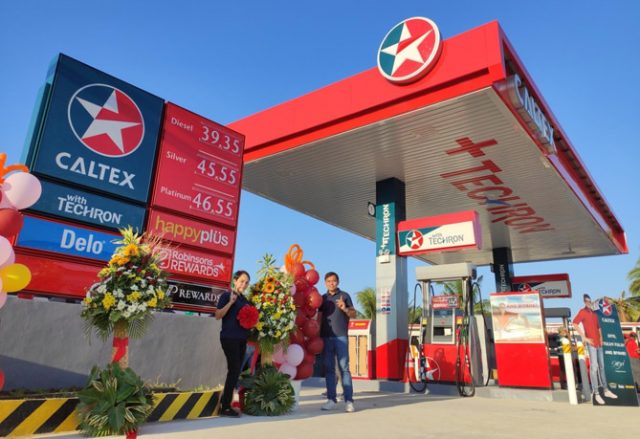
Motorists traveling around Ilocos Sur can save their vehicles from thirst this season as the newly-opened Caltex station in Candon City is now geared up to provide quality fuels.

Posting strong network growth in the first quarter of 2021, Caltex, marketed by Chevron Philippines Inc. (CPI), warmly embraces the dry season by boosting its retail network with eight newly-opened service stations and two Caltex Havoline autoPro workshop openings in key provinces.

Bolstering its network of nearly 650 service stations and 75 Caltex HavolineautoProand bikePro workshops at present, Caltex seeks to cater to the fuel and car maintenance needs of both local and transient motorists nationwide this season.

Travel better by tanking up at more Caltex stations

Motorists heading up north can stop for refueling at the recently inaugurated service station in Brgy. Paras,Candon City, Ilocos Sur. Situated along the southbound lane of the MacArthur highway, the service station is now ready to power motorists coming to and from Metro Manila and other provinces. Candon City is regarded as the “Tobacco Capital of the Philippines” and is also notable for its C-shape landmass.
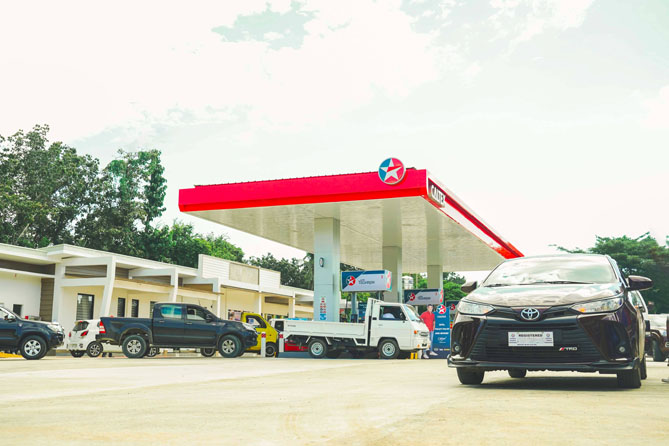
More motorists flock at the Caltex station in Brgy. San Manuel, Puerto Princesa to get their tanks filled as they embark on a journey this season.

Another Caltex station opened in San Mateo, Isabela, ready to perk up the daily drives of motorists in the area. This service station is strategically located along the country’s principal transport backbone, Maharlika Highway, which connects Luzon, Visayas, and Mindanao. San Mateo is also an agroecological area known as the largest producer of mung beans or munggo in the country.

The second Caltex service station in Naguilian, La Union also rose in Brgy. Ortiz, the focal hub of the town’s commercial activities. This station caters to motorists going to and from Baguio City. Naguilian is an agricultural town that is home to the original Basi, a native fermented beverage made from sugarcane.

In South Luzon, Caltex recently opened two stations inPuloDiezmo Road, Cabuyao, and Brgy. Tinga, Batangas City to serve quality fuels to private vehicles and commercial fleets travelling around the provinces of Laguna and Batangas. Cabuyao is often called the “Golden Bell City” while the cove-shaped Batangas City is dubbed as the “Industrial Port City of CALABARZON.” The two areas are home to historical landmarks, beaches, and gastronomic cuisines.

Locals and tourists basking in the splendor of the tropical paradise of Palawan can also fill up their vehicle tanks at the newly-opened Caltex stations to power a blissful escapade around the island. The three Caltex stations are situated in South Road, Brgy. Bataraza, Puerto Princesa; South Road, Poblacion, Rio Tuba, and North Road, Brgy. San Manuel, Puerto Princesa. Motorists can also opt to visit the commercial stalls around the roadside stations for refreshments. Palawan takes pride in its pristine beaches and coastlines, picturesque cave formations, and prized delicacies.

The five Caltex stations deliver the premium Euro 4 compliant fuel Caltex with Techron to guarantee motorists higher vehicle performance, cleaner engines, and lower emissions. Caltex also maintains strict health protocols and offers cashless payment options to ensure safer drives for motorists and to further the country’s recovery.

Conquer longer roads with more maintenance hubs

Aside from its service station openings, two new Caltex HavolineautoProworkshops were also opened in Luzon and Mindanao. Motorists in Ilocos Norte needing a vehicle tune-up can make a pit stop at the newly-opened Northbound Auto Care site located at Brgy. 2, F. Julian St., Pila Road, Laoag City. Open on Mondays to Saturdays from 8 a.m. to 5 p.m., this autoPro workshop is ready to provide quality Caltex lubricant products and services, such as maintenance checks and car repairs.

The second recently-opened Caltex Havoline autoPro workshop stands along Diosdado Macapagal Highway, Diversion Road, Ma-a, Davao City. On top of its quality automotive products, this one-stop vehicle maintenance workshop has quick service bays for oil and fluid change, ancillary bays for minor repairs, and wash bays for car cleaning. It operates from 8 a.m. to 6 p.m. and is open from Mondays to Saturdays.
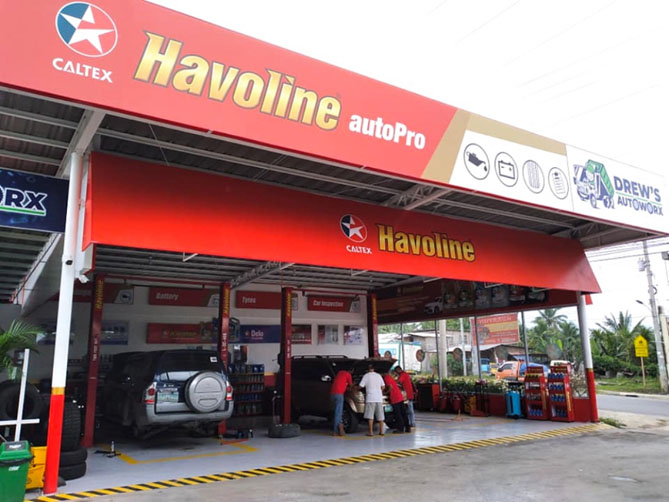
The Caltex Havoline autoPro workshop in Ma-a, Davao City is ready to optimize the performance of vehicles for smoother travel around the Davao region.

Motorists and gearheads alike are guaranteed the best possible experience the moment they drive in at the Caltex Havoline autoPro and bikePro workshops as these sites have quality Caltex lubricant products, accommodating frontline staff, well-trained mechanics, and modern facilities that can make them feel secure. The two workshops cater to cars and motorcycles, respectively.

“Not only can motorists enjoy a wonderful, uninterrupted ride with our top-tier fuels and lubricants, but also experience a high level of customer service, less waiting time for gassing up with more efficient digital payment options, and exciting rewards. Caltex continues to offer these services to bring a safer and next-level travel experience for motorists nationwide. We also remain committed to expanding our network in the country’s remote regions and in urban areas where commerce thrives to help buoy up the Philippine economy. Sa Caltex, tuloy-tuloy ang biyahe,” CPI Country Chairman Billy Liu said.

This year, Caltex continues to ramp up its retail portfolio by adding more Caltex stations and Caltex Havoline autoPro and bike Proworkshops to serve many Filipinos nationwide. Motorists can find the nearest Caltex station in their area at www.caltex.com/ph/find-a-caltex-station and the list of Caltex Havoline autoPro workshops at www.caltex.com/ph/motorists/products-and-services/havoline-autopro-workshop/.

Gov’t debt repayments rise to P253 billion

BW FILE PHOTO

THE National Government’s debt service bill jumped by 42.67% to P253.1 billion in the first two months of the year, the Bureau of the Treasury (BTr) reported.

Latest BTr data showed debt service payments in those two months climbed from P177.4 billion a year ago, after the state repaid P33.3 billion in February and P219.8 billion in January.

The bulk or 69% of the total was principal payments, while the rest were used to pay off interest.

Amortization payments totaled P174.9 billion in the two-month period, up 64.7% from a year ago’s P106.2 billion. In January alone, the government made P172.8 billion in amortization payments, but only P2.1 billion in February.

Broken down, P125 billion of principal payments were made to foreign creditors, while P49.9 billion were used to settle some of its maturing local debt.

Interest payments, meanwhile, climbed 9.8% to P78.2 billion during the two-month period from the P71.2 billion recorded a year ago. The government made P47 billion in interest payments in January, and P31.2 billion in February.

For the first two months of 2020, interest paid to external lenders reached P26.8 billion, and P51.4 billion to local lenders.

Interest payments on local debt consisted of P34.9 billion in Treasury bonds, P12.3 billion in retail Treasury bonds and P4.2 billion in Treasury bills.

The two-month debt service bill accounted for 14% of the government’s P1.79-trillion debt repayment plan this year.

The government runs on a budget deficit as it spends more than the revenue it generates to fund programs, such as infrastructure projects, that will drive growth.

It borrows from foreign and local sources to help fund its budget deficit. It aims to raise P3 trillion this year to plug the fiscal gap seen to hit 8.9% of gross domestic product. — B.M. Laforga

Palace expects $4B in mining investments after ban lifted

REUTERS
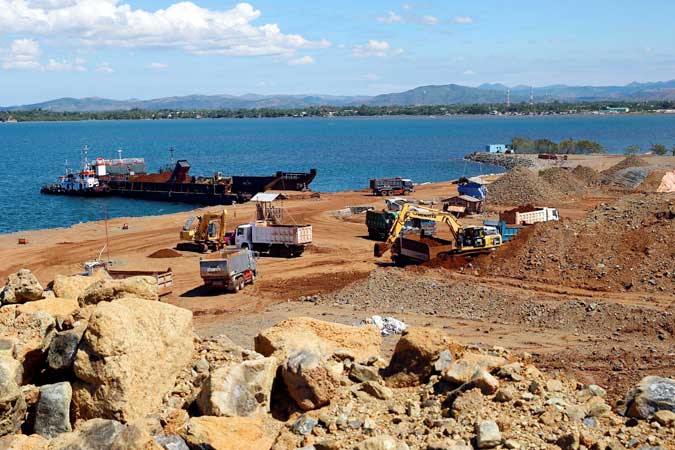
TRUCKS load rocks and soil containing nickel-ore minerals onto a barge in Sta. Cruz, Zambales, Feb. 8, 2017. — REUTERS

By Kyle Aristophere T. Atienza, Reporter

THE Philippines is expecting about $4 billion in capital investments from three major mining projects, after President Rodrigo R. Duterte lifted last week the nine-year moratorium on new mineral agreements.

If the projects of Sagittarius Mines, Inc., KingKing Mining Corp., and Silangan Mindanao Mining Co., Inc. “are any indication, we are looking at over $4 billion in capital expenditure,” Presidential Spokesperson Herminio “Harry” L. Roque, Jr. told BusinessWorld in a Viber message.

Mr. Duterte on April 14 signed Executive Order (EO) No. 130, which allows the government to enter into new mineral agreements and review existing mining deals for possible renegotiation.

Mr. Roque said new mining projects are also expected to generate P40 billion in local taxes and P20 billion worth of social development projects. Indigenous groups are also expected to benefit with around P15 billion in royalties expected to be collected from the major mining projects.

“These, however, will not come immediately, since this will be spread over the life of the mining project,” he said.

Mr. Roque said these mining projects would generate revenues to support the government’s key infrastructure programs as well as create more livelihood opportunities in the countryside.

Then-President Benigno S. Aquino III in 2012 prohibited the grant of new mining deals in several protected areas, while awaiting the passage of a law that would increase the government’s share in mining revenues.

Mr. Roque said the President lifted the moratorium as Republic Act No. 10963, or the Tax Reform for Acceleration and Inclusion Act, has already doubled the excise tax on minerals from 2% to 4%.

The Palace official said the new order was also made after the Department of Environment and Natural Resources (DENR) “put in place the necessary rules, regulations, and policies to ensure that mining in the country is safe for the people and the environment.”

Mr. Roque said the DENR, which has been criticized by the civil society for supposedly colluding with mining interests, already conducted a thorough review of the regulatory framework for mining.

In February 2017, Regina L. Lopez, who was Environment secretary at that time, ordered the closure of more than 20 metallic mines in the country over alleged violations of local environmental laws. Three months after, her appointment as DENR chief was rejected by the Commission on Appointments.

Mr. Roque last year said illegal mining and logging activities contributed to the massive flooding in Cagayan Valley in the Northern Philippines.

“As per the DENR, there are currently no legal large-scale mining operations happening in Isabela and Cagayan at present and the flooding that happened in those areas, the DENR added, may be attributed to other man-made causes like illegal logging,” Mr. Roque said.

Environmental groups earlier said the new order would only result in more environmental violations and enable mining firms to evade accountability.

PHL has fiscal space to aid recovery — IMF

PHILIPPINE STAR/ MICHAEL VARCAS
The Philippines’ GDP slumped by a record 9.6% in 2020, as economic activity was restricted by lockdown measures aimed at containing the coronavirus disease 2019 (COVID-19) outbreak. — PHILIPPINE STAR/ MICHAEL VARCAS

THE Philippines still has fiscal space which it could utilize to support its recovery from the coronavirus-induced crisis, the International Monetary Fund (IMF) said.

“The IMF staff advises that fiscal policy should ‘continue doing its part this year.’ The Philippines still has some fiscal space and can and should maintain its fiscal support to recovery,” IMF Representative to the Philippines Yongzheng Yang said in a statement.

Based on the IMF’s COVID-19 policy tracker as of April 1, the Philippines’ two fiscal stimulus packages under Republic Act 11469 and 11494 (Bayanihan I and II)  represented around 2.9% of 2020 gross domestic product (GDP), while the government allocated funds for credit guarantees and standby financing amounting to around 0.8% of GDP.

The Philippines’ GDP slumped by a record 9.6% in 2020, as economic activity was restricted by lockdown measures aimed at containing the coronavirus disease 2019 (COVID-19) outbreak.

The IMF tracker showed other economies in Southeast Asia such as Thailand (14.9%) and Malaysia (more than 6.3%) had bigger budgets for fiscal stimulus.

This year, the Philippines’ P4.5-trillion national budget is about 21.8% of the country’s GDP.

House leaders are pushing for a third stimulus package worth P420 billion, but lacks support from the government’s economic managers.

IMF’s Mr. Yang said the resurgence of COVID-19 infections and its impact on recovery amplify the need to maintain fiscal support.

“Priority for this support should be given to the healthcare sector, including beefing up hospital capacity, accelerating vaccinations, and strengthening containment measures such as virus tracing and testing,” he said.

The Health department reported 10,098 new infections on Sunday, bringing the number of active cases to 141,089.

The Washington-based multilateral lender upgraded its Philippines GDP growth forecast  to 6.9% from 6.6% previously, mainly due to base effects as the country was the hardest hit in the region last year. Mr. Yang said their forecast is clouded with “substantial uncertainty” due to the rising infections in the country.

Economic managers are currently reviewing the 6.5-7.5% growth target for the year, after renewed lockdown measures in Metro Manila and nearby provinces are expected to shave off 0.8 percentage point from the full-year print.

“It is important to continue providing targeted support to vulnerable households and struggling businesses, especially MSMEs (micro, small and medium enterprises), which have been hit hard and will be key to recovery in employment and growth,” Mr. Yang said.

The IMF has warned Asia-Pacific economies will continue to bear the brunt of the pandemic, specifically in “contact-intensive” industries that will continue to be hampered by the infection surge. It said it is also unlikely that many jobs lost during the pandemic will return, as companies accelerated digitalization and automation initiatives.

“Continued push for infrastructure investment would also be important, with priority given to projects that are shovel-ready and job-intensive and to those that will improve digital infrastructure to meet the need for work- and learn-from-home and growing digital services more generally,” Mr. Yang said. — L.W.T.Noble

Government agencies’ cash usage slows in Q1

PHILIPPINE STAR/ MICHAEL VARCAS
The government agencies’ usage of cash allocations slowed in the first quarter of 2021. — PHILIPPINE STAR/ MICHAEL VARCAS

THE rate at which government agencies use their cash allocations slipped in the first quarter, which an expert said may reflect the slow rollout of coronavirus vaccines and pandemic relief measures.

Latest data from the Department of Budget and Management (DBM) showed state offices, local government units and government-run firms used P788.8 billion out of the P810.7 billion in notice of cash allocations (NCAs) released to them between January and March. This left P21.8 billion worth of unused NCAs.

This resulted in a lower cash utilization rate of 97% in the first quarter, compared with the 99% in the first three months of 2020.

NCA refers to the disbursement authority issued by the DBM to state agencies that allows the latter to withdraw funds from the Treasury to cover expenditures for their programs and projects.

Line departments used 97% or P522.7 billion of the P536.2-billion NCAs issued to them in the first quarter.

“We need to understand that lower or declining NCA utilization rate indicates a slow pace of line agencies to disburse in a timely manner their allocated funds to implement their initiatives, programs, and projects. These disbursements are noted up to the last working day of the period covered,” Asian Institute of Management economist John Paolo R. Rivera said on Saturday.

“In the context of our pandemic situation, potential but may not be ultimate, reason for this, in my opinion, is the relatively slower disbursement of funds towards pandemic response such as vaccine acquisition and release of succeeding rounds of social amelioration,” he added.

Mr. Rivera said the government should work to ramp up spending. He noted slower state spending and subsequent delay in rollout of projects could have an impact on the first-quarter gross domestic product (GDP).

“Partial response does not maximize the accelerator effect on the economy. Hence, the economy may not also reap the benefits of programs in a timely manner. Timeliness is very crucial especially as we are racing towards economic recovery,” he said.

Government spending is one of the major growth drivers of the Philippine economy, accounting for around 25% of the overall economic output.

Official data on first-quarter GDP will be released on May 10.

Economic managers are currently reviewing the 6.5-7.5% growth target for the year, after the reimposition of strict lockdown measures in the capital region and adjacent provinces is expected to dent the full-year print by 0.8 percentage point.

The DBM has released 78% or P3.5 trillion of this year’s P4.5-trillion spending plan as of end-March. — Beatrice M. Laforga

Geneva cruise

PHOTO BY JAKOB KURC

Mulling over mobility in Switzerland

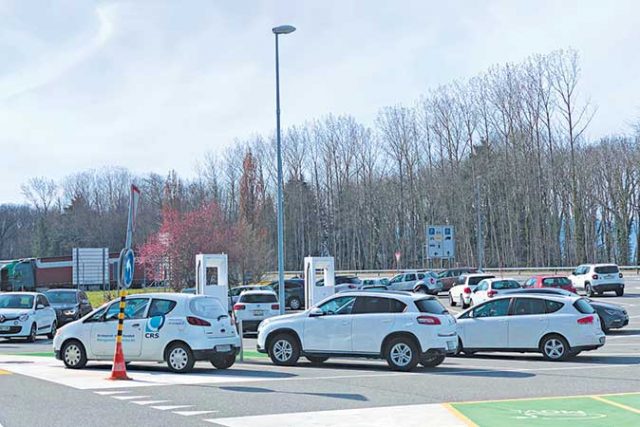
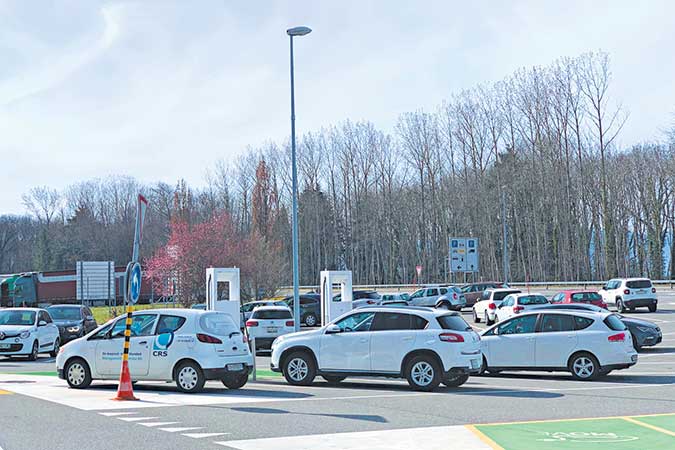
GENEVA, SWITZERLAND — We often hold up North America as the ideal when it comes to highways, motoring, and public transportation.

But how about if we study the transportation model of Switzerland? After all, it’s often highlighted as the gold standard in efficient public transportation and timeliness of services. What could be among their secrets, aside of course, from the glaring fact that the country is extremely wealthy, and the standard of living of its constituents is extremely high? Could it boil down to a culture of discipline and mindfulness, where tardiness is generally frowned upon, and the values of peace and serenity are held up so high that there actually exist laws that prohibit people from making any noise in residential neighborhoods past 10 p.m. — including any toilet flushing or water splashing noises from taking a shower in the middle of the night?

I’m not quite sure. Inherently, culture will certainly always play its part — but was the culture cemented in the first place, because of the high (financial) penalties set by the government for disobedience, combined with the strict enforcement of its laws? Clearly, that plays a part, too.

One of the most striking differences Switzerland has from the Philippines — no, I’m not thinking Alps versus islands here — is its population density. Heck, the entire country’s population is far less than the population of Metro Manila alone. And this is probably why it’s a lot easier and more straightforward to make mass transportation work, because the inhabitants are still within the capacity of the infrastructure. But yes, we of course need the infrastructure in the first place.

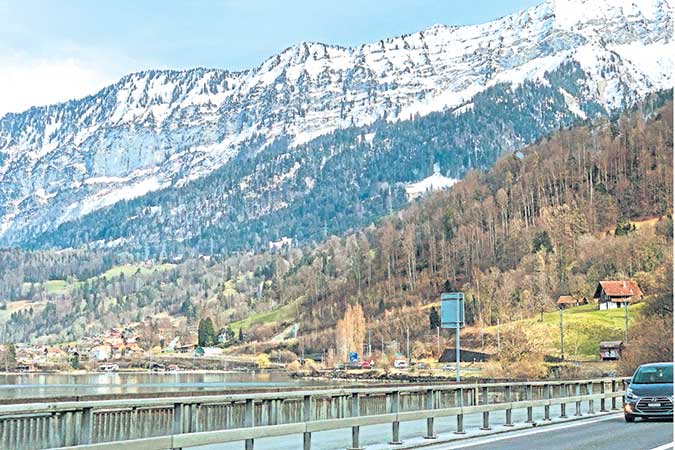
Switzerland is undoubtedly one of the top-ranked states in mobility efficiency in all of Europe. That says a lot, considering that it is still a relatively small country whose economic might does not match those of the likes of Germany and the UK. And yet, its public transport network boasts a total of about 24,500 kilometers of length, supported by over 2,600 stations and stops.

The money used to fund its road networks comes from vehicle taxes and road tolls. But the way their toll system works is by having motorists pay an annual fee (starting at 40 Swiss Francs per annum, depending on your vehicle type), which is acknowledged by a car sticker that has to be displayed while using the highways. It makes the collection system simpler, and removes the potential for traffic buildup at toll booths. Don’t you think the Philippines might benefit from a similar model? What if we had a special lane for vehicles who paid an annual subscription so that they would no longer have to enter any queues along the way?

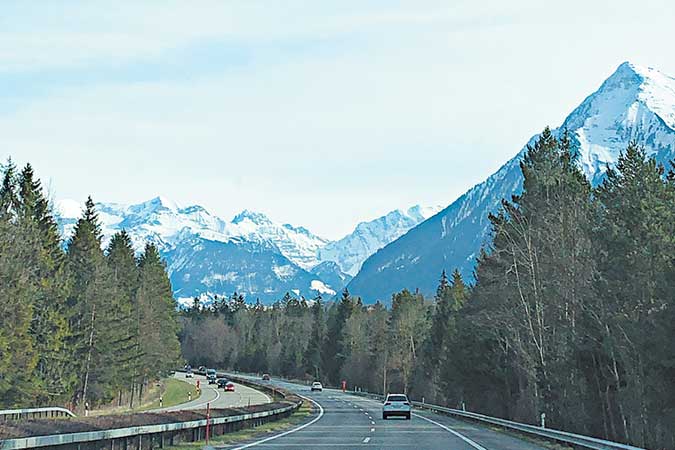
But one of the greatest strengths of the Swiss transportation network is its ever-reliable, albeit extremely expensive, Swiss National Railway. We must not forget that the tenacity of this railway is the kind that traverses the mighty Swiss Alpine mountain ranges that divide Northern Europe from the South. Imagine the economic value of that. The Alpine railway routes began with the Gotthard Railway in 1882, and was later expanded via several more tunnels built, cutting through the mountains.

We, Filipinos, have long acknowledged that Metro Manila has become more than gruesomely overpopulated and congested in the last few decades, and many have chorused that the only true way out of this is via expanding economic centers far outside of the city.

Perhaps people and companies will more easily warm up to the idea if only it were a tad bit easier to travel from NCR to other key economic centers, such as the fast-rising economic center of Clark.

So, yes, it does make a lot of sense to invest and build more transportation infrastructure (Mindanao Railway, do I hear you coming soon?). But that is with the assumption that our tax money will not be compromised, and that the build quality of our country’s investments will be of an undeniably high standard. Is this determination or plain old daydreaming? Who knows? I just wish I get to see and enjoy a more connected Philippine archipelago in my lifetime.

ECQ, safeguard duties lead to 21.1% auto sales dip in Mar.

CAMPI President Atty. Rommel Gutierrez

THE PROVISIONAL safeguard duty and the imposition of a two-week enhanced community quarantine (ECQ) across the contiguous so-called NCR Plus territory eventually led to an unsurprising decline in vehicle sales in the month of March.

The Chamber of Automotive Manufacturers of the Philippines, Inc. (CAMPI) and Truck Manufacturers Association, Inc. (TMA) revealed in a joint report that its member companies registered a free-fall of 21.1% in total sales for the month with 20,702 units — versus 26,230 units moved in February.

In a press statement CAMPI President Atty. Rommel Gutierrez said, “The auto industry felt the slowdown in sales due to the reluctance of buyers with the additional deposit for some imported vehicles because of the provisional safeguard duty. The lockdown also forced dealers to close operations that badly hit the already struggling auto industry.”

Versus March last year, the figure is still 87.8% higher — although it must be mentioned that the lockdown imposed around that time resulted in member companies yielding a consolidated total of only 11,029 units.

With sales shrinking 29.6% from 13,074 to 9,201 units, Toyota Motor Philippines Corp. still led all companies, cornering 44.44% of the market. In second place is Mitsubishi Motors Philippines Corp. (accounting for 15.45% of units sold) even as month-on-month sales also fell by 36.9% — from 5,072 to 3,198). In third is Ford with 1,705 units (down by 3.6% from 1,769). Completing the top five are Suzuki Philippines, Inc. with 1,626 (up by 7.5% from 1,513), and Nissan Philippines, Inc. with 1,558 units in sales (up by 18.1% from 1,319).

CAMPI/TMA Q1 sales reached 70,312 units, growing by 8.9% versus the 64,542 total during the same period in 2020. — Kap Maceda Aguila

BMW PHL opens new flagship facility in Greenhills

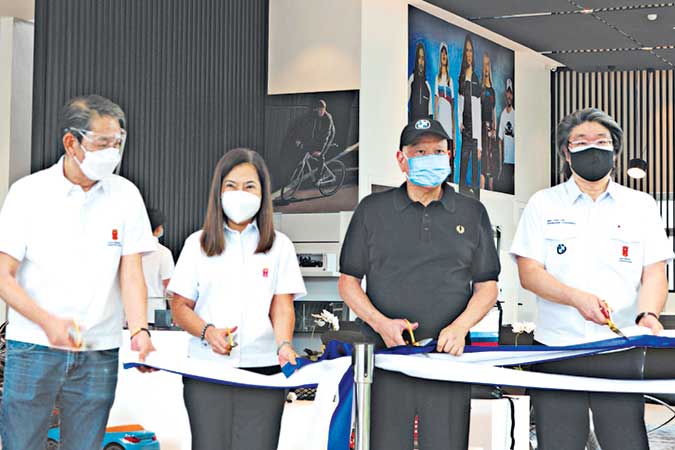
San Miguel Corp. (SMC) President and Chief Operating Officer Ramon S. Ang (second from right) leads the ribbon-cutting ceremony for the opening of the RSA Motors Greenhills. With him are (from left) SMC Senior Vice-President and Head of Infrastructure Business Atty. Lorenzo G. Formoso, SMC Director and Senior Vice-President and Senior Executive Assistant to the President and Chief Operating Officer Aurora T. Calderon, and SMC Asia Car Distributors Corp. President Spencer Yu. — PHOTO FROM BMW PHILIPPINES

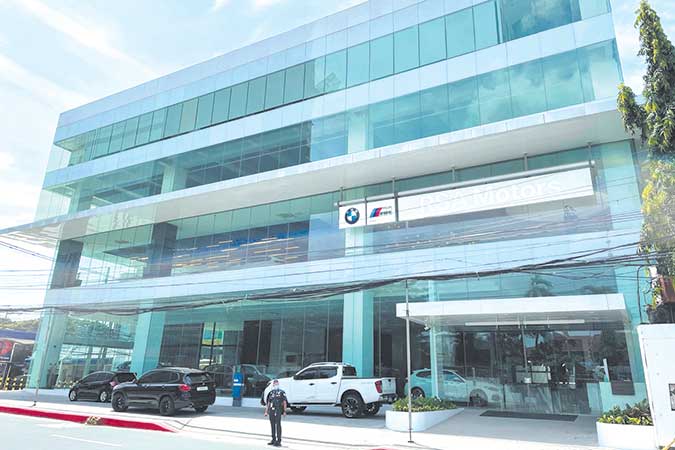
SMC ASIA Car Distributors Corp. (BMW Philippines) has a new flagship dealership in the country, RSA Motors Greenhills.

The largest local BMW facility is comprised of four floors and is located on Connecticut St. corner Florida St., Barangay Wack-Wack in Mandaluyong City — just a short distance from EDSA. The building stands on a 1,800-sq.m. parcel of land and each floor measures around 1,500 sq.m.

RSA Motors Greenhills is “one of only two in the world that follow the unique ‘Fit to BMW’ standards, offering a more personalized customer experience together with signature furniture pieces and design elements.” BMW Philippines in a release continued that, “This creates an atmosphere that’s unmistakably BMW while still ensuring every guest feels right at home. These features ensure that RSA Motors Greenhills proudly stands as the flagship dealership in the country, offering the most comprehensive lineup of BMW vehicles combined with key services, for a complete brand experience.”

On the ground floor is the main showroom floor which, according to BMW Philippines President Spencer Yu, can accommodate up to nine vehicles. There’s also a lounge and the Isetta Café. The Car Delivery Room, on the other hand, is where new BMWs are turned over to their owners — which puts a special touch to the event.

BMW Lifestyle merchandise is also available for purchase — BMW toys, bicycles, luggage, and other branded items.

The second floor is also a showroom, which displays “BMW’s growing fleet with M vehicles as well as the BMW 7 Series and X7.” Another lounge and café area are on this level.

Under the current modified enhanced community quarantine, RSA Motors Greenhills will be open from Monday to Saturday from 8:30 a.m. to 5:30 p.m. until April 30. “Once local government guidelines lift the necessary restrictions, operating hours will then be subject to change,” the company said. For more information, call the RSA Motors Greenhills Customer Relations Hotline at 0917-127-1311 or follow the official Facebook page at https://www.facebook.com/RSAMotorsGH for announcements.

AG&P takes on $550-M construction projects in PHL

AGPGLOBAL.COM

Construction contracts include LNG terminal, edible oil depot, petrochemical complex

By Angelica Y. Yang, Reporter

ATLANTIC Gulf and Pacific Co. (AG&P) has entered the second quarter with five construction contracts in the Philippines worth $550 million, including a project to build a liquefied natural gas (LNG) terminal in Batangas province, a company official said.

Alex P. Gamboa, AG&P senior vice-president for business development, said the amount is part of a record backlog of contracted projects worth more than $700 million, including those in India and the US.

“The 770 million [dollars] will be realized in terms of revenue in the next two to three years,” he told BusinessWorld in a phone call on Wednesday. “A big chunk of the amount will go to five projects in the Philippines and four projects abroad.”

Aside from the LNG terminal in Batangas, AG&P’s construction projects in the Philippines are an edible oil depot, a petrochemical complex, a modularized oil refinery, and an LNG bunkering vessel.

AG&P develops and runs LNG and gas logistics and distribution solutions globally. It owns and operates a 100-hectare heavy fabrication and assembly yard on Batangas Bay.

Mr. Gamboa said the remaining $200-million worth of contracted projects are three floating storage and regasification units (FSRU), which will be used for the Asian market, and a project in the US that will involve sending workers from the Philippines to the US.

AG&P Chairman Augusto Gan was quoted as saying in a press release on Wednesday that the firm’s construction business is projected to have its “best year” in its 121-year history, owing to its total contracted backlog.

“It is a groundbreaking year for AG&P as it participates in critical infrastructure projects particularly in Asia-Pacific, that will accelerate commercial development, create jobs, clean air, and trigger overall economic and social progress,” he said.

AG&P said that it expects to secure additional projects in the LNG and power sectors this year. It holds a “notice to proceed” from the Philippines’ Department of Energy for a floating storage unit and onshore gasification terminal.

“AG&P is awaiting approval of its ECC (environmental compliance certificate) and permit to construct, but preparations for the LNG terminal including engineering and procurement activities have commenced,” Mr. Gamboa said.

As low as P2,500 monthly with Malayan Bank Moto Loan

Malayan Bank makes it easier for people who plan to acquire a motorcycle through a loan. The motorcycle loan product, one of the bank’s “many products and services available,” is highlighted by an online selection of brand-new and used units. Malayan Bank’s quick and simple “search, select, and submit” process online features brands like Kawasaki, Honda, Suzuki, and Yamaha — available at competitive rates and flexible 12-, 18-, 24-, or 36-month payment schemes. For the full list of available motorcycle units and information on the loan requirements, visit http://properties.malayanbank.com/motorcycle-requirements/. For more information, call the customer care team at (02) 8841 -7800, send an e-mail to customercare@malayanbank.com.ph, or visit any of Malayan Bank’s 21 branches across the country (check out https://www.malayanbank.com/branches for a list).

SEC readies investor education unit as scam cases rise

DYLAN GILLIS-UNSPLASH

By Keren Concepcion G. Valmonte

THE Securities and Exchange Commission (SEC) will be setting up an office dedicated to helping the public gain financial literacy following the rise in unauthorized investment schemes during the pandemic.

“Chairperson Emilio B. Aquino plans to establish an Office on Investor Education to address the growing problem of investment scams in the country,” the commission told BusinessWorld in an e-mail interview.

The SEC described 2020 as a “record-breaking year” after the corporate watchdog issued 127 advisories against easy money schemes, 95% higher than the total 65 advisories issued in the previous year.

“The Commission has seen more unauthorized investment schemes amid the pandemic, at a time when many of our fellow Filipinos have lost their jobs and would be willing to take any chance at earning a living,” the SEC said.

In the first quarter of 2021, the commission released 15 advisories on entities offering unauthorized investment schemes.

Last week, the SEC also issued warnings against the following: WONKACASH or WONKA Cash App Financial Consultancy Services, Investrade Marketing or Investrade Digital Marketing Services, Learn and Earn Online, CryptoTrading FX, 247 Cryptotrade Online, ExchangeStock, Binary Options Trading, Wolves Options, and IX Trade.

Some investors find stock, bond, and other organized markets intimidating and fraudsters are taking advantage of the investment landscape via new concepts such as digital assets and cryptocurrencies, the commission said.

Schemes are often disguised as donations, educational packages, online gaming, online marketing or advertising, multi-level marketing, reseller business, cryptocurrency mining, and foreign exchange trading.

Ponzi schemes, pyramid schemes, and boiler room operations were identified as the three most widely used investment scams in the country.

In Ponzi schemes, groups “lure” new investors by offering programs that generate high returns with little to no risk.

“In reality, such schemes have little or no legitimate earnings, thus requiring a consistent flow of money from new investors in order to continue,” the SEC explained.

Earnings from pyramid schemes, just like Ponzi schemes, rely on recruitment fees gathered from new investors. However, organizers may ask investors to sell products as a cover.

“Usually, they offer products as a front to make their operations look legitimate. But the products are usually overpriced, worthless, or nonexistent,” the commission said.

However, this is not the same as multi-level marketing, which offers actual products.

Meanwhile, boiler room operations “use high-pressure sales tactics to sell illegitimate investment products such as unreasonable rates of returns and promises of profit.”

Boiler room operators also use “encouraging lines” to attract investors, such as: “This investment opportunity is ‘once-in-a-lifetime’ and you would be stupid to miss out on it!”

“The commission attributes the prevalence of investment scams to people’s lack of awareness of the legitimate investment options available to them, and of the laws, rules and regulations governing investment solicitations,” the SEC said.

It added that the problem highlights the need for financial literacy, inclusion, and sustained enforcement.

The SEC has a financial literacy webinar series, various resource courses, and held its first “Investor Protection Week” last year, which will now be observed every second week of November.

The investing public is reminded to look for a license from groups offering investment opportunities before giving into their offer.

“A certificate of incorporation from the SEC does not automatically authorize a company to take investments from the public,” the commission added.

Registered stock corporation Bill Ford VIP Trading, Inc. had its SEC registration revoked last week for offering unauthorized investment programs.

The commission tells investors: “Ask for a prospectus, offering circular, financial [statements], or other similar [documents] before you even consider investing. Then read the small print carefully, particularly on refund, and make sure you understand the terms thoroughly before signing any kind of commitment.”

Foton Tornado Ref Van positioned for vaccine transport

PHOTO FROM FOTON PHILIPPINES

FOTON MOTOR Philippines, Inc. (FMPI), cognizant of the pressing need for refrigerated transport of the COVID-19 vaccines, is proffering truck trims predicated on its Foton Tornado for the job.

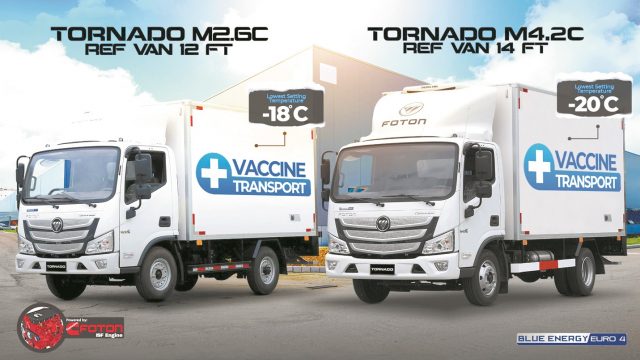
The Foton Tornado Ref Van variants are equipped with “the best technologies to bring the vaccine fast, safe, and in its optimal condition to its intended recipients.” These are powered by the reliable US-designed Cummins turbo-diesel engine, and are fitted with Thermo King, which pioneered transport refrigeration 80 years ago.

Two models are available. The Foton Tornado M4.2C Ref Van comes with a refrigerated storage area that can go as low as -20 degrees Celsius — said to be a critical temperature for the special purpose of transporting temperature-sensitive vaccines. It can accommodate a payload of 4.2 tons within its 14-foot long body. Its Cummins 3.8L ISF diesel engine generates 154hp at 2,600rpm and 500Nm at 1,200 to 1,900rpm.

Meanwhile, the 12-foot-long Foton Tornado M2.6C Ref Van can maintain temperatures as low as -18 degrees Celsius. The truck is powered by a Cummins 2.8L ISF diesel engine producing maximum power of 129hp at 3,200rpm and maximum torque of 310Nm from 1,300 to 3,200 rpm. Its payload capacity is 2.6 tons; enabling it to “carry thousands of vaccines in a single drive without much hassle and swiftly deliver them to different destinations.” Foton added that cargo “will also be properly spaced and placed within its spacious refrigerated body storage secured by a durable mechanical lock.”

For more information, call a Foton dealer or the sales hotline at 0999-999-9998 or visit https://linktr.ee/FOTONPhilippines.