Home Blog Page 815

ASEAN Sparks begins second phase to back Southeast Asia’s top climate innovators

The ASEAN Sparks accelerator program has entered its second phase, Catalyse, with selected clean energy and climate tech startups from across Southeast Asia now undergoing capacity-building and mentorship activities through October 2025.

Organized by the ASEAN Centre for Energy (ACE) in partnership with the United Nations Industrial Development Organization (UNIDO), and supported by the Japan-ASEAN Integration Fund (JAIF) and Japan’s Ministry of Economy, Trade and Industry (METI), the Catalyse phase offers intensive workshops and expert-led sessions aimed at helping early-stage startups scale their impact and prepare for cross-border growth.

The program supports innovators in energy efficiency, renewables, clean mobility, and climate resilience. Startups in the Catalyse phase will also have the opportunity to pitch their solutions at the ASEAN Energy Business Forum 2025, providing international visibility and potential investment linkages.

Following the successful completion of the first phase, Ignite, which engaged 40 early-stage startups in foundational workshops and mentoring, ASEAN Sparks: Catalyse serves as the next critical step in the program journey.

“Many startups in ASEAN face limited access to the support they deserve, making it difficult for them to transition from early-stage development to commercial success,” said Dr. Zulfikar Yurnaidi, acting manager of Energy Efficiency and Conservation (CEE) Department of the ASEAN Centre for Energy.

He added, “Catalyse is designed to address these gaps between the startups and the support from the whole energy ecosystem stakeholders. Another important goal of the program is to strengthen the capacity of local stakeholders to foster a sustainable climate technology innovation ecosystem.”

While Ignite focused on helping startups refine their business fundamentals and validate their energy solutions, Catalyse offers a deeper, more targeted accelerator experience for more mature startups.

Over the course of three months, selected startups will benefit from: extensive workshop sessions covering key topics from business strategy and market expansion to IP strategy and social impact; in-depth development with dedicated mentors, tailored to each startup’s needs; and the opportunity to pitch at the ASEAN Energy Business Forum 2025, where the 20 selected startups will present their solutions to a high-level audience of energy policy makers, investors, and industry leaders.

This second phase ensures that startups not only build on the insights gained during Ignite but also gain the strategic tools and exposure needed to scale regionally and beyond.


SparkUp is BusinessWorld’s multimedia brand created to inform, inspire, and empower the Philippine startups; micro, small and medium enterprises (MSMEs); and future business leaders. This section will be published every other Monday. For pitches and releases about startups, e-mail to bmbeltran@bworldonline.com (cc: abconoza@bworldonline.com). Materials sent become BW property.

Globe, CCP partner to empower student creatives and future Filipino artists

Center of the Philippines (CCP) President Kaye Tinga and Globe’s Chief Marketing Officer Rochelle Vandenberghe (center), along with CCP Vice-President for Administration Jose Gaite (left), were present at the signing of a partnership seeking to foster creativity and support the next generation of Filipino artists.

Globe Telecom has entered into a year-long partnership with the Cultural Center of the Philippines (CCP) to support arts programming and expand access to creative education, particularly among students and young aspiring artists.

Under the agreement, Globe will serve as co-presenter of several CCP initiatives, including Cinemalaya 2025, Virgin Labfest XX: Hinog, and the CCP Arts Education Program, which launched in schools nationwide this June.

The partnership includes support for CCP’s outreach and training efforts, as well as the integration of Globe’s Community Builders Program. Participating students will have access to connectivity, mentorship, and internship opportunities, along with limited grants and volunteer placements. The collaboration aims to foster creative and digital skills development in line with CCP’s goal of cultivating the next generation of Filipino artists.

“Together with CCP, Globe continues to champion creativity and innovation among the Filipino youth. We’re proud to enable future filmmakers, playwrights, and digital creatives through grassroots programs that give them both the inspiration and the infrastructure to succeed,” said Rochelle Vandenberghe, Globe’s chief marketing officer.

The CCP Arts Education Program consists of workshops on multidisciplinary art forms and techniques for educators and students in select schools.

Meanwhile, the Virgin Labfest (VLF) celebrates its 20th year with a fresh batch of untried, untested, and unstaged plays from young Filipino playwrights. It features educational components like the VLF LabTuro consisting of Theater Talks and a Playwrights’ Fair. Some of its much anticipated components are the VLF Writing Fellowship Program, with eight fellows under the age of 30, and a Dramaturgy Fellowship, where young artists undergo training in playwrighting and theater production.

Furthermore, Cinemalaya 2025, the country’s premier independent film festival, will spotlight full-length and short films of established names in the industry and emerging student filmmakers this October.

“We are grateful to partner with Globe as we continue to deliver our mandate of promoting and safeguarding our country’s arts and culture. This partnership empowers CCP to bring the arts closer to young people — our future artists and creators — in ways that are both accessible and impactful. Together, we aim to create more platforms for artistic expression that speak to the heart of our identity,” said CCP President Kaye C. Tinga.

The partnership underscores Globe’s long-term strategy to enrich learning experiences through technology and foster a thriving creative community among the Filipino youth.


SparkUp is BusinessWorld’s multimedia brand created to inform, inspire, and empower the Philippine startups; micro, small and medium enterprises (MSMEs); and future business leaders. This section will be published every other Monday. For pitches and releases about startups, e-mail to bmbeltran@bworldonline.com (cc: abconoza@bworldonline.com). Materials sent become BW property.

DLSU, Manila Observatory launch initiative to build platform work resilience

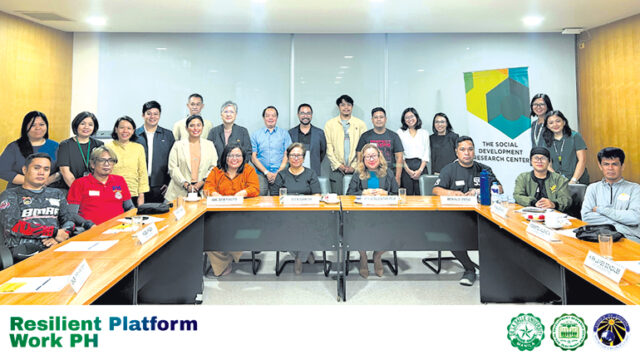
The De La Salle University-Social Development Research Center (DLSU-SDRC), in partnership with the Manila Observatory (MO), launched the project Resilient Platform Work PH through a Stakeholders Forum held on June 4.

The Forum convened experts from the government, academia, policy think tanks, NGOs, grassroots actors, and labor organizations to assess the current state of platform work and chart actionable pathways for research and policy development.

Resilient Platform Work PH examines the vulnerabilities of platform workers in the context of severe weather events. The project aims to identify gaps in social protection, develop a skills framework to enhance mobility pathways, and support the creation of governance and policy frameworks that foster a more resilient platform workforce.

Ground truthing platform work across sectors

Principal Investigator and DLSU Professor Dr. Cheryll Soriano provided context on the purpose of the project and the Stakeholders Forum. She said, “globally, the Philippines ranks fourth among countries most affected by extreme weather events from 2000-2019, and continually experiences vulnerability to these events that affect many workers and their livelihoods. Along the platform labor economy continues to grow — both for app-based ride-hailing and delivery, or for remote freelance workers — helping address employment gaps and providing opportunities to displaced workers.”

“Yet among the most directly at risk with climate change are these app-based couriers and motorcycle ride-hailing drivers, whose outdoor work makes them particularly susceptible to extreme weather events. Poor public infrastructure and unsafe road conditions compound the impacts of climate change on these workers.”

DLSU Vice-President for Research and Innovation Dr. Raymond Tan opened the Forum by underscoring the importance of research institutions in the country to become knowledge hubs for sustainability issues. He noted that “amid a growing population heavily reliant on such platforms as a primary source of livelihood, this dependence increases their vulnerability, particularly as many lack access to essential protections and adequate healthcare that is worsened by climate change.”

Fr. Jose Ramon Villarin, executive director of the Manila Observatory, highlighted the critical role of “ground truthing,” or ensuring that the lived experiences of those on the frontlines inform research and shape practical interventions. “It is through the voices of key stakeholders who directly encounter these challenges that research can gain depth and relevance, ultimately leading to more effective solutions.”

The Forum serves as the initial ground for the formation of an Advisory Group that will sustain meaningful dialogues and co-develop policy and governance frameworks across relevant agencies and organizations. Participants included representatives from the Department of Economy, Planning, and Development (DEPDev), Department of Labor and Employment-Occupational Safety and Health Center (DoLE-OSHC), Filipina Homebased Moms (FHMoms), Foundation for Media Alternatives (FMA), KAGULONG, RIDERS-SENTRO, Philippine Institute for Development Studies (PIDS), Fairwork Philippines, ITU-BDT, and International Labor Organization (ILO).

Resilient Platform Work PH is part of the FutureWORKS Asia Project, a multidisciplinary research network spearheaded by LIRNEasia and supported by the International Development Research Centre (IDRC) of Canada.


SparkUp is BusinessWorld’s multimedia brand created to inform, inspire, and empower the Philippine startups; micro, small and medium enterprises (MSMEs); and future business leaders. This section will be published every other Monday. For pitches and releases about startups, e-mail to bmbeltran@bworldonline.com (cc: abconoza@bworldonline.com). Materials sent become BW property.

Tracking Marcos administration’s progress in the first half

PRESIDENT FERDINAND “BONGBONG” R. MARCOS, JR. — PRESIDENTIAL COMMUNICATIONS OFFICE

Later today at the Batasang Pambansa, President Ferdinand “Bongbong” R. Marcos, Jr. is set to deliver his fourth State of the Nation Address (SONA), which comes at the midpoint of his six-year term.

With only three years left, expectations are mounting for the Marcos administration to show results of its earlier commitments and present concrete plans on how it intends to address ongoing national issues.

Although the Palace has kept specific points under wraps, the public is expecting the President to lay out how his administration plans to manage inflation, encourage employment, and push through infrastructure projects that remain unfinished or delayed.

Meanwhile, a report from Vera Files shows that only 42 out of 165 promises made across his first three SONAs have been completed. 91 are listed as in progress; another 28 are stalled; while four are found to have failed entirely.

Advancing economic growth

Mr. Marcos has achieved more in the economic sector, fulfilling 11 or roughly 35% of 31 promises in the past three SONAs. 11 others are under way, five have stalled in Congress, and five remain unfulfilled.

The administration set a goal of growing the economy by 6.5%-8% annually until the term ends. While gross domestic product (GDP) grew by 7.6% in 2022, it slowed to 5.6% in both 2023 and 2024. The 2024 Philippine Development Report (PDR) cited weak global demand and sector-specific challenges as factors behind sluggish performance.

Inflation, on the other hand, eased to 3.9% in May 2024, within the government’s target of 2%-4%. However, food inflation remained high at 6.1% due to weather-related supply disruptions and external pressures. In response, the administration reduced tariffs on imported rice and removed some trade barriers to stabilize prices.

Despite underwhelming economic performance, the administration kept the national deficit and debt levels within targets. The fiscal deficit narrowed to 5.1% of GDP in 2024, while debt-to-GDP ratio stayed close to 60%.

On infrastructure, only three of the 16 major promises made in SONAs are found to have been completed as of last June. Ten are still being worked on, and three are stalled. Meanwhile, the Department of Public Works and Highways reports that eight out of 207 flagship projects have been completed under the Marcos administration, part of a broader pipeline worth $178 billion. At least 70 are ongoing, and 23 have been approved for rollout. The rest are still awaiting final clearances or are under preparation.

Promoting quality labor and education

Unemployment in the Philippines dropped since Mr. Marcos took office in 2022, but the quality of jobs and wage levels remain uneven, especially outside city areas.

Based on the data shared by the Philippine Statistics Authority (PSA), there were 2.93 million unemployed Filipinos just before Marcos assumed office. Underemployment showed signs of improvement from 6.67 million in May 2022 to 4.82 million in May 2024. However, the number climbed to 6.6 million this year.

According to the PDR 2024, salaried jobs in private establishments made up 50.7% of total employment — slightly below the government’s 50.9-51.5% target. Wage quality remains inconsistent across sectors, particularly outside urban centers.

In the education sector, the national education budget exceeded P1 trillion under the 2025 General Appropriations Act. Economy, Planning, and Development Secretary Arsenio M. Balisacan said the record-breaking budget was allocated to “boost growth and inclusion,” with a focus on curriculum improvements and educational quality.

Investing in social development

Data from the PSA show a slight drop in poverty from 23.7% in 2021 to 22.4% in 2023. Subsistence poverty also declined from 9.9% to 8.7% during the same period.

The flagship Pantawid Pamilyang Pilipino Program (4Ps) program received a P106.3 billion budget this year to assist 4.4 million families. As of the first quarter of 2024, it reached 98% of its annual target.

To alleviate hunger and malnutrition, the administration launched the “Walang Gutom 2027” Food Stamp Program. The pilot phase began in December 2023 and served 2,366 households.

The government also expanded the Enhanced Partnership Against Hunger and Poverty, signing new orders to boost coordination among agencies. As of May 2024, 122 community-based organizations secured P207 million worth of supply contracts under the program.

Mr. Marcos has repeatedly expressed his goal of bringing rice prices down to P20 per kilo since his 2022 campaign. While this price point is available in Kadiwa stores, the market price of commercial rice in Metro Manila remains far above the target, ranging between P38 to P57 per kilo. The government continues to expand the Kadiwa program, but broader measures to reduce farm input costs and improve local production have yet to fully materialize.

Mr. Marcos, who also served as Agriculture secretary from July 2022 to November 2023, said boosting local production is key to lowering food costs. But the slow pace of reforms and high dependence on imports continue to challenge food affordability.

In healthcare, the Department of Health (DoH) increased its budget by 15% from 2022 to 2024, while new health facilities opened nationwide. More than 6,000 Health Facilities Enhancement Program projects were completed, including 218 new Super Health Centers and 23 Bagong Urgent Care and Ambulatory Service (BUCAS) Centers.

PhilHealth also introduced benefit expansions to cover more treatments and lower costs for patients. This included improved dialysis coverage, increased outpatient drug access under the “GAMOT” program.

However, the country still faces a shortage of doctors, nurses, and midwives. As of mid-2024, the healthcare system was short of nearly 200,000 workers needed to meet sustainable development goals, according to the DoH.

Meanwhile, the government spent heavily on housing construction and financing. Since July 2022, P11.59 billion has been allocated to build over 66,000 homes. Another P241 billion went to the Pag-IBIG Fund to help more than 189,000 families either buy or improve homes.

The administration’s Pambansang Pabahay Para sa Pilipino program received a P250 billion credit line from Pag-IBIG, with P7.24 billion already approved for nine developments.

Informal settlers also received support through housing agencies like the National Housing Authority and the Social Housing Finance Corp. Nearly 32,000 housing units were completed under their resettlement programs, with P6.34 billion in total assistance.

Other Accomplishments

The Marcos administration has checked off some major promises midway through his term, including shutting down offshore gaming hubs and enacting a law to regulate online business.

The Philippine Amusement and Gaming Corp. confirmed the closure of all 304 licensed Philippine off-shore gaming sites by the end of 2024. However, the agency admitted that illegal offshore gaming still exists in the country during a Senate hearing earlier this year. 

The government also marked progress in digital regulation with the approval of the Internet Transaction Act. This law is meant to protect consumers and businesses by setting clear rules for online transactions.

In the past year, the administration also made several defense and maritime improvements, including two new laws and a public campaign to clarify the Philippines’ position in the West Philippine Sea. But other national security reforms remain stalled.

Mr. Marcos also signed the Republic Act No. 12024 or Philippine Self-Reliant Defense Posture Program Act to reduce the country’s dependence on foreign defense imports by strengthening local weapons and equipment production. The President earlier said the Armed Forces of the Philippines needs to be restructured to respond better to modern security threats. — Mhicole A. Moral


Treasury bill, bond offers may fetch mixed rates

BW FILE PHOTO

RATES of the Treasury bills (T-bills) and Treasury bonds (T-bonds) to be auctioned off this week could end mixed, with yields on longer tenors expected to rise due to lingering uncertainties overseas.

The Bureau of the Treasury (BTr) will auction off P25 billion in T-bills on Monday, or P7 billion in 91-day securities, P8.5 billion in 182-day debt, and P9.5 billion in 364-day papers.

On Tuesday, the government will offer P20 billion in reissued 20-year T-bonds with a remaining life of 18 years and 10 months.

T-bill and T-bond yields may track the week-on-week movements in the rates of their comparable secondary market benchmarks, Rizal Commercial Banking Corp. Chief Economist Michael L. Ricafort said in a Viber message.

“The upcoming Treasury bill auction yields could be mixed after most short-term PHP BVAL (Bloomberg Valuation Service) yields were mostly slightly higher,” Mr. Ricafort said.

“The upcoming 20-year Treasury bond could be similar to the 20-year PHP BVAL yield, slightly higher week on week, … amid relatively higher comparable US Treasury yields recently after US President Donald J. Trump signed into law his $3.4-trillion fiscal package. The comparable 20-year US Treasury yield hovered among one-month highs recently at 4.95%,” he added.

A trader said in an e-mail that Tuesday’s offering of reissued 20-year bonds could be “well received” and fetch rates ranging from 6.575% to 6.625%.

At the secondary market on Friday, the 91-day T-bill went down by 4.02 basis points (bps) week on week to end at 5.4104%, based on PHP BVAL Reference Rates data as of July 25 published on the Philippine Dealing System’s website. Meanwhile, the 182- and 364-day T-bills increased by 1.06 bps and 2.22 bps to fetch 5.5817% and 5.68%, respectively.

For its part, the 20-year bond saw its yield rise by 3.48 bps week on week to end at 6.569%.

On Friday, US Treasury yields drifted higher in a subdued trading as investors braced for a data-heavy week, updates on US trade talks, and a Federal Reserve policy meeting, Reuters reported.

The yield on benchmark US 10-year notes fell 2.4 bps to 4.384% from 4.408% late on Thursday.

The 30-year bond yield fell 2.3 bps to 4.9265% from 4.949% late on Thursday.

The 2-year note’s yield, which typically moves in step with interest rate expectations for the Federal Reserve, fell 1 bps to 3.915% from 3.925% late on Thursday.

The Fed is expected to convene this week for a two-day monetary policy meeting, which is expected to culminate in a decision to let its federal funds target rate stand in the 4.25% to 4.50% range. The meeting comes at a moment in which Fed Chair Jerome H. Powell is facing criticism from US President Donald J. Trump for not cutting rates.

Meanwhile, the nonpartisan Congressional Budget Office has estimated that the One Big Beautiful Bill’s tax cuts and spending provisions would add $3.4 trillion to the US’ $36.2-trillion debt and only increase inflation-adjusted gross domestic product by an average of 0.5% over 10 years.

Last week, the government raised P28.4 billion from the T-bills it auctioned off, higher than the P25-billion plan, as the offer was almost four times oversubscribed, with total bids reaching P92.163 billion.

Broken down, the Treasury borrowed P7 billion as planned via the 91-day T-bills as total tenders for the tenor reached P35.648 billion. The three-month paper was quoted at an average rate of 5.422%, down by 5.3 bps from the previous auction, with bids accepted having rates of 5.39% to 5.422%.

Meanwhile, the government raised P11.9 billion from the 182-day securities, higher than the P8.5-billion program, as bids amounted to P27.14 billion. The six-month T-bill’s average rate inched down by 0.9 bp at 5.566%, slipping by 0.9 bp from the previous week, with accepted yields ranging from 5.55% to 5.574%.

Lastly, the Treasury sold P9.5 billion via the 364-day debt papers as programmed as demand for the tenor totaled P29.375 billion. The average rate of the one-year T-bill inched down by 1.9 bps to 5.631%. Accepted bids carried rates ranging from 5.6% to 5.649%.

Meanwhile, the reissued 20-year bonds to be offered on Tuesday were last auctioned off on May 15, where the government raised P25 billion as planned at an average rate of 6.486%, below the 6.875% coupon.

The BTr wants to raise P250 billion from the domestic market this month, or P125 billion through T-bills and P125 billion via T-bonds.

The government borrows from local and foreign sources to help fund its budget deficit, which is capped at P1.56 trillion or 5.5% of gross domestic product this year. — A.M.C. Sy with Reuters

Progressive care for dementia

Dr. Zhao Yi Jing

The human brain is fundamentally the main control center of the body, controlling every process related to body movement. But as people age, the brain naturally undergoes changes that can affect their abilities as they get older.

The dilemma comes when these changes begin to interfere with daily life. A prime example is memory loss, which can get severe and can even lead to dementia.

Dementia is defined as loss of brain cognitive function that affects an individual’s visual spatial skills, language abilities, and executive functions. This often arises when one experiences severe memory loss seen from everyday life — including forgetting medications, the current date and time, or certain situations.

“Sometimes, individuals with dementia may not realize the extent of their cognitive changes. That’s why caregivers often play a vital role in detecting early signs and symptoms, to aid in the early diagnosis and detection,” Dr. Zhao Yi Jing said in an interview with BusinessWorld.

Treatments for dementia have progressed throughout the years. One common treatment Dr. Zhao mentioned is pharmacological, which includes medications like cholinesterase inhibitors that slow down the progression of the condition. A more recent treatment that emerged is the new anti-amyloid monoclonal antibodies. These antibodies help to directly target and decrease levels of beta-amyloid in the brain — a protein known to cause damage to the memory, neurons, and other cognitive functions.

“In the new paradigm of dementia treatment, the monoclonal antibodies have been pretty effective, very targeted in helping patients with early dementia, specifically Alzheimer’s dementia,” Dr. Zhao explained. “We have hopes that this new medication can help the patient better than the older generation of treatment.”

Alongside treatments, it is essential for dementia patients to make necessary lifestyle modifications. To slow down the progression of the condition, Dr. Zhao highlighted the importance of exercise and maintaining an active lifestyle, especially for those at an early age.

Shifting to a healthier eating lifestyle is highly recommended. A diet to consider is the Mediterranean diet, where patients focus on eating whole foods, plant-based foods, and healthy fats. Neurotoxins, more specifically alcohol or alcoholic drinks, should be avoided as these are harmful to the brain.

Keeping the mind active is also important. Engaging in conversations and activities, and learning new skills are effective ways to exercise the brain and improve its cognitive functions.

According to a report by the World Health Organization, the number of people aged 60 and above is projected to rise dramatically, reaching 22.9% in 2050, compared to 12.2% in 2024. Among this rising population are people prone to get dementia if left undiagnosed early on. Yet, with increasing dementia awareness, patients, families, and communities are now equipped with the knowledge to understand and manage the health condition — enabling those affected to still live a better life.

“Dementia is a problem we see in Asia, as well as globally as the population ages. And being aware about it, understanding it, learning when to identify signs and symptoms that suggest dementia early on is quite important, so that adequate prevention, early diagnosis, and good treatment can be started.” Dr. Zhao said.

Many hospitals are advancing in the development of treatments and patient care in terms of neurological conditions. Mount Elizabeth Hospital in Singapore is pioneering a new frontier in dementia care. By harnessing cutting-edge diagnostic technology and innovative, targeted treatments, they provide new standards of optimal outcomes for dementia patients.

For inquiries, please contact Mount Elizabeth Hospital’s patient assistance center, IHH Healthcare Singapore — Philippine Office, located at G/F-B, Marco Polo Hotel, Meralco Avenue and Sapphire Street, Ortigas Center, Pasig City 1600; e-mail manila.ph@ihhhealthcare.com; or call 0917-526-7576.



Spotlight is BusinessWorld’s sponsored section that allows advertisers to amplify their brand and connect with BusinessWorld’s audience by publishing their stories on the BusinessWorld Web site. For more information, send an email to online@bworldonline.com.

Join us on Viber at https://bit.ly/3hv6bLA to get more updates and subscribe to BusinessWorld’s titles and get exclusive content through www.bworld-x.com.

DigiPlus says legalizing unregulated online gambling may yield up to P300B

BW FILE PHOTO

By Revin Mikhael D. Ochave, Reporter

LISTED DigiPlus Interactive Corp. said the government could generate an additional P200 billion to P300 billion in revenue if the unregulated segment of the country’s online gambling sector is legalized.

“If we legalize the illegal sector of the (online) gaming industry, we could easily raise another P200 billion to P300 billion. That should be easy. That will help us since our (government’s) income comes from tax collection,” DigiPlus Chairman Eusebio H. Tanco said during a media briefing last week.

Mr. Tanco noted that with just 30% of the country’s online gaming sector regulated and the remaining 70% operating illegally, there is a significant revenue opportunity for the government.

DigiPlus operates the online gaming platforms BingoPlus, ArenaPlus, and GameZone.

“You have 70% out there that is unregulated, that is unmonitored. No consumer protection. They don’t play by the rules. Those are the illegal ones,” Mr. Tanco said.

“The revenue of online gambling from Philippine Amusement and Gaming Corp. (PAGCOR) is about P150 billion,” he added.

PAGCOR said last week that gross gaming revenue in the first half grew by 26% to P215 billion from P171 billion in the same period last year.

Mr. Tanco said that instead of tightening regulations on online gambling, greater efforts should be directed toward bringing illegal platforms into the legal market.

“It will not go away. It will just shift from legal to illegal, or from illegal to legal. I think what we all want is for the illegal to shift to legal. I think that’s the best,” he said.

“We can add a little bit more regulation on the regulated one, because if you overregulate, it migrates to the illegal. There’s a balance where you can regulate so that you can attract the illegal (operators) to apply for licenses to be legalized,” he added.

Mr. Tanco said the company’s operations remain business as usual despite the regulatory tensions.

“Operationally, we were not affected. It’s the stock price that has been affected… We’re still on target,” he said.

“We’re positive. We’re very confident. We hope that everybody sees the light,” he added.

DigiPlus President Andy Tsui said the proposed increase in the minimum cash-in for online gambling platforms to P10,000 would drive players to unregulated platforms.

He added that the company is still analyzing its potential impact on revenue.

“If the minimum top-up amount is set too high, we’ll end up pushing some players to the black market,” he said.

On Friday, DigiPlus said it is expanding into South Africa, following the planned launch of its Brazil operations in September.

The company is preparing to file applications for a national manufacturer license, a bookmaker license, and a bookmaker premises license with the Western Cape Gambling and Racing Board. Processing of the licenses takes a minimum of six months after filing.

Valued at over $1.6 billion in 2023 and 2024, the South African online betting industry is projected to grow by up to 5% annually, driven by rising mobile use, a digitally engaged population, and strong demand for live sports betting.

“South Africa is not just the largest online gaming market in Africa, it’s a gateway to the continent’s digital future. As we expand from Southeast Asia to Latin America and now Africa, we remain committed to responsible innovation, local compliance, and developing products that connect deeply with culture and community,” Mr. Tanco said.

DigiPlus shares were last traded on Friday, down by 0.92% or 25 centavos to P27 per share.

Penshoppe sister brand leans into minimalism

ONE MIGHT have already passed by a BOCU store several times and not realized the minimalist brand is wholly Filipino.

On July 18, BOCU opened its latest store in SM Aura, showing off the brand’s sleek and clean lines. The brand is owned by Golden ABC, Inc., behind labels like Penshoppe, OXGN, Forme, Memo, and Regatta.

At BOCU, we saw clothes that were less prep, and more normcore (a trend that began in 2015; but the millennial and now Gen Z slant towards neutral clothing in terms of color and shape still stands). Think several pieces in beige, black, and white but in different textures; only slightly spiced up with pieces in safe pastels or conservative navy and wine. It’s as safe as you can get, and priced slightly higher than P500.

BOCU Brand Manager Amanda Liu, a member of the Liu family that founded Penshoppe in the ’80s said that the brand originated during the pandemic lockdowns in 2021. The brand, an acronym, initially meant Born Online, Curated for You; since evolved to Beauty in the Ordinary, Comfort in the Understated. “This really reflects the identity of the brand. When you hear that and see our pieces, it all kind of connects and makes sense,” said Ms. Liu. They first sold the pieces online through shopping apps, but an opportunity came for them to open a physical store at SM Mall of Asia. They have since jumped up to 12 branches, with another coming before the end of the year.

She talked about the brand’s inspiration coming from pieces she discarded from her closet during the endless rounds of spring cleaning during the COVID-19 lockdowns of 2020. “It was all these really trendy pieces that maybe at some point were loved, and were super in,” she said. “But after a certain point, it’s really not very wearable anymore.”

“You’re looking for something we wanted to wear every day, that was still comfortable, but also elevated,” she added. “Maybe it’s also — I’m getting older, and you still want to look very elevated when you go out. You don’t want to look very sloppy. At the same time, you want something low effort.”

We’ve mentioned that the prices range above the P500 line, a slight jump from their more mass-based brands. “If you look at the quality of the things that we’re putting out, it’s also a little bit different. But if you compare us, for example, to other international brands which is what we peg ourselves on, we are still very value for money.”

We also noticed their line of perfumes, which could serve as dupes for international brands. These have since included scented candles, opening the door for more opportunities in other categories. “There’s so many opportunities for different categories. Accessories are definitely something that we’re also growing.”

“Who knows? The possibilities can really be endless.”

As we’ve mentioned, the brand plans to open one more store before the year ends, in alignment with their expansion plans in response to the warm reception of this cooler sibling brand. “That’s why we’re continuing our expansion. There’s definitely still a lot more room to grow, but we’re trying to be a bit more intentional with the spaces that we open.”

This includes expansion abroad: some Golden ABC brands are already available regionally, and BOCU itself is currently sold on Zalora’s Southeast Asian channels. “There are definitely plans in the works. The look that we cater to, we really can also compete with the global brands as well. We’re aligned to the vision of Golden ABC as a company: we’re bringing proud Filipino brands to the rest of the world.”

For store locations and sneak peeks, visit www.boculifestyle.com or @boculifestyle on Instagram. — JLG

Galvanizing the push for a digital Philippines

Video13 | WIKIMEDIA COMMONS

By Jomarc Angelo M. Corpuz, Special Features and Content Writer

Since its creation 46 years ago, the National Telecommunications Commission (NTC) has been instrumental in connecting Filipinos across the archipelago by regulating the Philippines’ telecommunications and broadcast sectors. As the quasi-judicial and regulatory agency primarily responsible for these sectors, the NTC has operated to ensure the delivery of reliable, accessible, and affordable communication services to the Filipino public.

Established in 1979 pursuant to Executive Order No. 546, the commission was originally tasked to focus on the supervision of radio and television broadcast stations, cable television (CATV), and pay television. However, due to technological advancements and the ever-expanding nature of communications, the NTC was given regulatory responsibilities, including the overseeing of public telecommunications services, the management of the Philippine radio spectrum, and the authority to regulate the installation, operation, and maintenance of radio stations for both private and public use.

By the end of the year, the NTC envisions becoming a world-class regulatory agency that meets the challenges of the digital world. In line with this goal, the agency continues to maintain a responsive regulatory environment for an effective telecommunications and ICT sector, adapting policies and frameworks to support innovation, foster healthy industry competition, and promote digital inclusion across the country.

Perhaps the best example of this mission is the agency’s role in shaping a more competitive and inclusive telecommunications market. For years, the Philippine telco industry was dominated by two corporations, as there was a lack of competition from local players and the hesitance of foreign giants to compete due to restrictions on foreign ownership.

However, in 2021, DITO Telecommunity entered the market, initially launching in only 17 cities. Backed by a strong commitment to innovation, infrastructure investment, and customer-centric service, DITO’s entry signaled the end of the duopoly and ushered in a new era of improved internet connectivity and telco services in the Philippines.

DITO’s entry was made possible partly through the regulatory support of the NTC, which created the enabling environment for a third major player to thrive. Through transparent bidding processes, fair spectrum allocation, and strict performance benchmarks, the NTC ensured that DITO’s rollout would be both competitive and accountable.

“The NTC has supported competition and inclusivity by allowing DITO to compete in the market as a bona fide challenger and providing the regulatory support and guidance to the entire industry. The healthy industry landscape has allowed DITO to hit quite recently, the 15M subscriber mark quite recently,” DITO Chief Revenue Officer  Atty. Adel A. Tamano said in an email interview with BusinessWorld.

www.ntc.gov.ph/

In just a few years since its launch, DITO has rapidly made lives easier for millions of Filipinos through its services, expanding from its initial 17-city rollout to now covering over 80% of the population. This aggressive expansion is in support of the NTC’s advocacy of enhancing the country’s connectivity. According to DITO, the company now has over 7,000 cellular towers and a robust fiber optic backbone that allows the telco to deliver fast, reliable, and affordable services to a growing subscriber base.

“The government, most especially the NTC, recognized the importance of DITO’s mission and our desire to be true partners in nation-building,” Atty. Tamano continued. “They worked with us to ensure that we had the support we needed. Fast-forward to the present, DITO Telecommunity has solidified its position as the country’s fastest-growing telecommunications provider.”

Recently, DITO was hailed by the global analytics company Opensignal as the fastest network in the country, demonstrating its efforts in improving its services and highlighting its strategic investments in an all-IP network and 5G Standalone (SA) infrastructure. To date, DITO is serving 15 million subscribers ahead of the company’s target and in compliance with the NTC’s technical requirements.

“The pandemic gave rise to unprecedented challenges: the enforced lockdowns, the delays in the acquisition of materials and equipment, the restrictive work environment in the field, the health of our people, site acquisition, one of the cornerstones of building any telco network, became particularly difficult under these conditions, all these under a strict audit schedule,” Atty. Tamano added.

Aside from its rapid growth and network rollouts, DITO has also joined the NTC in its advocacy of making sure no Filipino gets left behind in the digital age. Telecommunications corporations in the country have played a great role in reaching communities in far-flung places that have long been overlooked.

“One specific initiative, the Sacol project, which was with the support of the NTC and DICT, DITO provided 4G service to the inhabitants of a remote island using microwave technology. This nation-building activity provided the island located in Zamboanga, composed of 14,000 Filipinos, covering four barangays, much-needed connectivity,” Atty. Tamano shared.

As a relatively new player, DITO sees itself becoming a major player in the broader national push for digital inclusion. According to Atty. Tamano, DITO’s mission is closely tied to pushing the boundaries of connectivity through emerging technologies, with regulatory support from the NTC making this possible.

“It is on the push for 5G and new technology. With the help of the NTC, we push new technology and new solutions for the country, such as redcap. With consistent innovations and relentless investment in network infrastructure, DITO continues to set new standards in the Philippine telecommunications industry,” he stated.

With consistent innovations and relentless investment in network infrastructure, DITO seeks to set standards in the Philippine telecommunications industry. The results from Opensignal’s independent analysis affirm DITO’s commitment to bringing faster, better, and more reliable mobile experiences to the Filipino people.

DITO also aims to democratize access to digital services by lowering the cost barrier. “We work to lower the cost of access to digital services and allow the quick, ‘cut the cord’ provision of internet services,” Atty. Tamano added, underscoring DITO’s focus on agility and affordability in reaching more Filipinos, especially those in remote or underserved communities.

With a shared vision and continued collaboration between the NTC and DITO, the transformation of Philippine connectivity will be faster, better, and with a much-needed emphasis on inclusion, innovation, and the promise of a more connected future for Filipinos.

BSP bills’ rates drop on strong demand

BW FILE PHOTO

YIELDS on the Bangko Sentral ng Pilipinas’ (BSP) short-term securities dropped further on Friday as the offer was met with strong demand.

The BSP bills fetched bids amounting to P162.008 billion on Friday, higher than the P90-billion offer and the P153.359 billion in tenders for the P100 billion auctioned off a week prior. This led the central bank to fully award both tenors.

Broken down, tenders for the 28-day BSP bills reached P76.398 billion, well above the P40-billion placed on the auction block as well as the P66.805 billion in bids seen for the same volume offered the prior week.

Banks asked for rates ranging from 5.2625% to 5.408%, wider and lower than the 5.414% to 5.4585% band seen a week earlier. This caused the average rate of the one-month securities to decline by 4.32 basis points (bps) to 5.3976% from 5.4408% previously.

Meanwhile, bids for the 56-day bills amounted to P85.61 billion on Friday, higher than the P50-billion offering but slightly lower than the P86.554 billion in tenders for the P60 billion auctioned off by the BSP the previous week.

Accepted rates were from 5.395% to 5.42%, a lower range compared to the 5.3975% to 5.485% margin seen the week prior. With this, the average rate of the 56-day securities fell by 4.87 bps to 5.4053% from the 5.454% logged in the previous auction.

The central bank fully awarded its offer amid strong market demand, which led to lower rates, it said.

“Both tenors were … oversubscribed, with bid-to-cover ratios of 1.91 times for the 28-day tenor and 1.71 times for the 56-day tenor,” the BSP said in a statement.

The central bank uses the BSP securities and its term deposit facility to mop up excess liquidity in the financial system and to better guide short-term market rates towards its policy rate.

The BSP bills also contribute to improved price discovery for debt instruments while supporting monetary policy transmission, the central bank said.

The central bank securities were calibrated to not overlap with the Treasury bill and term deposit tenors also being offered weekly.

Data from the central bank showed that around 50% of its market operations are done through its short-term securities.

The BSP bills are considered high-quality liquid assets for the computation of banks’ liquidity coverage ratio, net stable funding ratio, and minimum liquidity ratio.

They can also be traded on the secondary market. — Luisa Maria Jacinta C. Jocson

Bitget rolls out Web3 Young Learners’ Encyclopedia to promote blockchain literacy

Cryptocurrency exchange and Web3 company Bitget has announced the release of Web3 Young Learners’ Encyclopedia, marking a key milestone in its #Blockchain4Youth global education initiative.

The print edition will be distributed across schools, libraries, and community centers to promote blockchain literacy among young learners, while the digital version will be available through CoinGecko, an independent crypto data aggregator.

Structured as an A-to-Z guide, the encyclopedia introduces young readers to the world of blockchain through easy-to-understand terms. Each letter features clear definitions and playful illustrations that break down complex ideas into bite-sized, beginner-friendly explanations.

“To me, education remains the most effective entry point to the future of blockchain,” said Gracy Chen, CEO of Bitget. “The encyclopedia is designed to bridge the knowledge gap by meeting young learners where they are with clear language and relevant examples, in a format that makes blockchain approachable.”

The development of the encyclopedia was undertaken in collaboration with Cryptita Plays, a nonprofit initiative dedicated to empowering youth through blockchain education and outreach programs. Drawing from its experience working directly with students and educators in underserved communities, Cryptita Plays provided valuable on-the-ground insights that helped shape the content and approach of the encyclopedia. This partnership reinforces the shared goal of both organizations — to make blockchain education more approachable, inclusive, and impactful for young learners worldwide.

“Our aim has always been to make blockchain meaningful to the next generation — not as a distant concept, but as something they can see, touch, and understand,” said Arshelene Lingao, founder of Cryptita Plays. “This encyclopedia is a tool to help bring those ideas to life and beyond the classroom.”

The print rollout will commence in areas where internet access is limited or inconsistent, allowing for offline education in underserved regions. The printed edition complements the online version of the encyclopedia, which remains accessible to learners worldwide, encouraging learning and multilingual adaptation.

To extend its reach, the digital edition will also be hosted on CoinGecko, making the encyclopedia more accessible to young learners, educators, and blockchain newcomers globally. CoinGecko users can redeem the encyclopedia through the Candy Rewards program using Candies earned from daily check-ins.

The encyclopedia is part of Bitget’s broader Blockchain4Youth initiative, a global education effort aimed at equipping the next generation with foundational knowledge of blockchain and digital assets.

Designed to be both accessible and engaging, the initiative delivers learning resources through physical publications like the encyclopedia, as well as digital content and in-person programming. By introducing key Web3 concepts in formats that are age-appropriate and widely accessible, Blockchain4Youth aims to make blockchain literacy a practical reality for students worldwide, particularly in regions where access to emerging technology education is limited.


SparkUp is BusinessWorld’s multimedia brand created to inform, inspire, and empower the Philippine startups; micro, small and medium enterprises (MSMEs); and future business leaders. This section will be published every other Monday. For pitches and releases about startups, e-mail to bmbeltran@bworldonline.com (cc: abconoza@bworldonline.com). Materials sent become BW property.

New world (luxury) order

PHOTO BY PABLO SALAPANTAN

How AITO is positioning itself as a premium, high-tech auto brand

By Pablo Salapantan

THE NUMBER of Chinese manufacturers continues to expand exponentially, and in a world that can only accommodate so many, brands are looking for the edge that will set them apart.

AITO is one such brand. A recent entrant to the overflowing Philippine automotive scene, it was formally launched at this year’s edition of the Manila International Auto Show (MIAS). Keen to show what it’s all about, members of the media and content creators were recently invited to the company’s home base in Chongqing, China.

CYBER TOUR AT CYBER CITY
Chongqing is a city located in the upper middle part of China and is built on the side of the mighty Yangtze River. Over the past few years, the city has gained a lot of popularity due to its rapid modernization, and seemingly infinite number of developments despite its undulating terrain. Locals like to refer to it as an 8D (eight-dimensional) city.

This newfound popularity amid continuous modernization and expansion has also made Chongqing known for burgeoning luxury and the high life, as evidenced by the many top-notch hotels, shops, and even cars on the road. Even its skyline impresses. It’s no wonder AITO calls this place home.

ADDING INTELLIGENCE TO AUTO
Our trip, called the “Cyber Tour,” started in earnest a day after our arrival, and we were given a 360-degree lowdown on the brand. First, we were brought to an AITO dealership to get a feel of how the brand deals with its customers.

One thing immediately apparent is the more premium feel AITO wants to present to people. The dealership was swathed in clean colors of gray, white, and other muted tones coupled with modern design touches all around the dealership. Another thing I noted was how clean the dealership was; without a single smudge or errant dust bunny in the area.

The next stop was around 45 minutes away and, joy of joys, our whole day would be spent aboard the flagship AITO M9 premium SUV. My carmates and I took in the apparent plushness of the vehicle, with no compromise in terms of features and creature comforts. The whole journey was immediately better because we weren’t in a bus like usual brand trips abroad.

We arrived at the next stop to attend a brand and product explainer conference. Here is where I learned that AITO is a sub-brand of the Seres Auto group that also has ties to mega tech giant Huawei. I listened intently as the product expert explained the many advancements and features that go into an AITO product. This is a brand that seems to recognize the global market as well as the local, instead of “force-feeding” it with products made best for China. AITO has allocated considerable resources to make a truly global product.

AITO invests heavily in being able to cater to whatever a market calls for, not only diving deep into EVs, but having other powertrain options like range extender models to ease the pain point of range anxiety. I think the most impressive though is how AITO uses technology to present what it thinks the modern definition of luxury is. AITO products are probably the most technologically advanced in the market, with high-level semi-autonomous driving capabilities, passive and active safety features, and the immersive cabin experience.

INTELLIGENT BUILD AND DRIVE
After our crash course on the brand, we were given the opportunity to drive its vehicles in a closed loop area. I got dibs, and our guide put on the semi-autonomous features that nearly made me feel insignificant.

The AITO M9 that I was “driving” did almost everything for me, I merely sat in the driver’s seat and would lightly hold the steering wheel, but the M9 did the rest. It was able to take sharp corners by itself without my inputs; it sensed the road ahead to such a degree that it properly slowed down, turned on the signal lights, and merged properly through intersections with precision and smoothness.

I sat there bewildered and amazed. We even got to preview the AITO self-parking feature that allows the driver to get out of the car before it parks; then it literally parks itself. One other cool feature is passenger privacy, wherein a built-in headrest speaker for the driver seat plays the opposite sound and frequency to hide what the passengers are talking about, a small but very thoughtful feature.

Our last stop for the day was the AITO Super Factory, a one-million-square-meter facility where these future-ready vehicles are built with precision, quality, and speed. While factory tours are not foreign to us members of the media, the sheer size and scale of the Super Factory gave us the idea that AITO means business.

NOT JUST ANOTHER BRAND
I’ve been to countless trips abroad with multiple China brands, but this is probably the first time where I felt a marque has something unique to offer; something that others don’t have.

As a brand, AITO has found its identity and is uncompromisingly sticking to the idea that technology is the new luxury. Bolstered by this, it seems AITO is headed somewhere as opposed to aimlessly just selling cars.

The best part? AITO vehicles are now in the country for Filipinos to check out and buy.