Home Blog Page 8149

BSP wants too-big-to-fail banks to submit separate recovery plan

REUTERS
REUTERS

By Luz Wendy T. Noble, Reporter

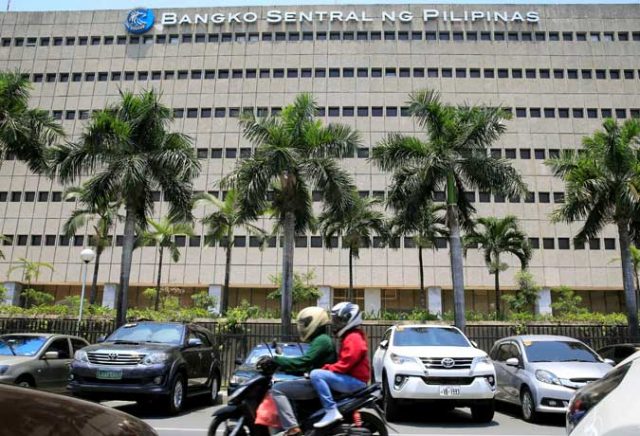
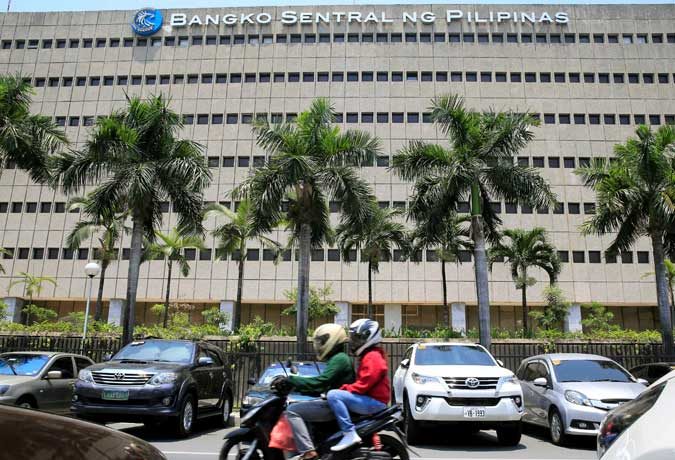
THE Bangko Sentral ng Pilipinas (BSP) is requiring too-big-too-fail banks to submit a separate recovery plan annually starting 2022, a move seen giving the regulator a more focused assessment of a lender’s plans to bounce back from a crisis.

“The Bangko Sentral shall review the recovery plan as part of the overall supervisory process for domestic systemically important banks (D-SIBs), focusing on assessing the recovery plan’s robustness, credibility, and ability to be effectively implemented,” BSP Governor Benjamin E. Diokno said in Circular No. 1113.

Previously, central bank regulations only required D-SIBs to submit an Internal Capital Adequacy Assessment Process (ICAAP) document, which includes the recovery plan, annually every March 31.

“This [circular] merely segregates the recovery plan and to be submitted separately from the ICAAP document,” BSP Deputy Governor Chuchi G. Fonacier said in a text message, saying the move will provide for “more focus” on each requirement.

The central bank does not disclose which particular banks are considered “too big to fail.” However, it noted a lender will fall under a D-SIB category, if in event of its collapse or distress, the impact could spill over to the financial system and the economy.

The separate submission of the ICAAP and the recovery plan will align BSP supervision with international standards, according to BSP Managing Director for Policy and Specialized Supervision Lyn I. Javier.

“These are two different documents that serve distinct purposes. The separation of said documents would also facilitate the BSP’s assessment of the recovery plan especially in times of crisis on an institutional level and across D-SIBs,” Ms. Javier said in a Viber message.

Moving forward, she said the separate recovery plan submission will hold even in normal times.

Starting next year, the central bank will require the submission of the separate ICAAP documents and recovery plans of financial institutions every June 30.

Ms. Javier explained that under the new scheme, the ICAAP will focus on maintaining the continuity of a bank’s operations.

“It should contain the bank’s assessment of the adequacy of its capital considering all material risks to which it is exposed both in business-as-usual and stressed scenarios,” she said.

Meanwhile, the recovery plan is expected to “contain measures that should be taken if the bank’s financial condition deteriorates to bring it to a safe and sound condition again,” Ms Javier said.

Based on the circular, this should include specific initiatives appropriate to the bank’s risk profile such as capital raising activities, streamlining of businesses and restructuring, as well as disposal of assets to improve capital position.

“D-SIBs should also relate their recovery plan not only with ICAAP but also with the liquidity assessment and various contingency plans,” she added.

Bankers Association of the Philippines President Jose Arnulfo “Wick” A. Veloso welcomed the amendments to the existing rules on too-big-too-fail banks.

“The new BSP regulation further recognizes the critical role D-SIBs play in ensuring long-term favorable condition post-COVID-19 pandemic by strengthening its efforts in monitoring and ensuring financial stability of the banking system,” Mr. Veloso said in a statement sent to BusinessWorld.

“The BAP will continue to collaborate with the BSP on efforts that will help our country move towards economic recovery,” he added.

Despite the impact of the pandemic, Ms. Fonacier has said the banking system remains guarded with adequate capital, liquidity buffers and ample loan reserves. She said the industry’s capital adequacy ratios both on solo and consolidated bases are well above the minimum threshold of 10% set by the BSP.

SEC greenlights Monde Nissin’s initial public offering

THE Securities and Exchange Commission (SEC) has “considered favorably” the initial public offering (IPO) of food manufacturer Monde Nissin Corp, the corporate regulator said in a statement on Tuesday.

“The commission en banc resolved to render effective the registration statement of Monde Nissin covering 17,968,611,496 common shares to be listed and traded on the Main Board of the Philippine Stock Exchange (PSE), subject to the company’s compliance with certain remaining requirements,” the SEC said.

The company’s public offering is set to run from May 17 to 21, while its listing on the local bourse is slated for the end of May.

Monde Nissin’s registration statement covers 3.6 billion common shares with a maximum price of P17.50 per share. The company may raise as much as P63 billion in total gross proceeds.

The offer comes with an overallotment option of up to 540 million existing common shares, which can bump total gross proceeds up to P72.45 billion if exercised.

The commission said Monde Nissin is expecting the primary offer to net about P60.61 billion.

Monde Nissin will be using around P26.52 billion of the proceeds to fund its capital expenditure. Meanwhile, some P17.31 billion will be allotted for the redemption of a convertible note and P16.78 billion will be used to fund the repayment of loans.

UBS AG Singapore Branch, Citigroup Global Markets Ltd., and JPMorgan Securities PLC have been tapped to serve as global coordinators. Credit Suisse (Singapore) Ltd. is assigned as joint international bookrunner, with co-bookrunners Jefferies Singapore Ltd. and Macquarie Capital Securities (Singapore) Pte. Ltd.

Selected local lead underwriters are BDO Capital & Investment Corp., BPI Capital Corp., and First Metro Investment Corp., while China Bank Capital Corp., PNB Capital and Investment Corp., and SB Capital Investment Corp. are assigned as domestic co-lead underwriters.

Monde Nissin is known for manufacturing Lucky Me! instant noodles, SkyFlakes, Fita, Mama Sita’s, Dutch Mill yogurt milk, and other Nissin biscuits. It also owns Quorn Foods, which makes alternative meat products. — Keren Concepcion G. Valmonte

Globe reports 152% increase in cell sites built

GLOBE.COM.PH

GLOBE Telecom, Inc. said on Tuesday the number of new cell sites it built from January to March this year increased by 152% to 318 from 126 in the same period last year.

The Ayala-led telco issued the update during its annual stockholders’ meeting yesterday.

Fourth-generation (4G) LTE and fifth-generation (5G) builds reached 7,065 sites in the first three months of 2021, up 245% year on year, Globe said in an e-mailed statement.

Globe also announced that its customers raised P3.4 million in donations as of the first quarter, via Rewards points, as part of the company’s ongoing pandemic response.

The telco is investing P70 billion in network enhancement initiatives this year.

“Substantial capex will be used for the aggressive rollout of fiber-to-the-home network and widen its 5G footprint,” Globe noted.

The company announced in February that its core net income fell 13.04% in 2020, owing to the pandemic’s impact on its businesses except home broadband.

Its core net income for 2020, which excludes the impact of nonrecurring charges, foreign exchange and mark-to-market charges, declined to P19.52 billion from P22.45 billion in 2019.

Full-year service revenues from mobile, home broadband, corporate data, and fixed line voice decreased 1.76% to P146.39 billion in 2020 from P149.01 billion in the previous year.

Globe Telecom shares closed 0.76% higher at P1,864 apiece on Tuesday. — Arjay L. Balinbin

The modern Filipina’s priorities: financial independence and starting a business

GONE ARE THE DAYS WHEN A WOMAN WAS LIMITED BY SOCIAL NORMS TO BEing responsible for the household, making it difficult to earn a position of leadership in the workplace, and being expected to eventually settle down and put her career on hold or stop entirely. Today, she takes charge of achieving her goals and priorities.

A study by marketing communications agency Wunderman Thompson Philippines titled, “The 2021 Filipina Forward” report found that being financially independent and starting a business are the modern Filipina’s main priorities today.

The report consists of quantitative and qualitative data from an online survey among 500 females, aged 15 to 69 years old, from rural and urban areas across the country. Insights were also gathered from a series of focus group discussions with women from different income status levels.

“This study is an intimate look at how Filipinas are faring in their personal and professional lives and their changing priorities in an evolving world. The pandemic weighs heavily on their feedback this year, but we are proud to see the strides that Filipino women are making based on the roles they play at home and at work, and how they see their personal self,” says Wunderman Thompson Philippines CEO Golda Roldan in a statement.

In 2017, Wunderman Thompson — then J. Walter Thompson (JWT) — initiated the same study which was titled “Filipina Next,” a qualitative study among women of different socioeconomic classes and backgrounds. The study followed J. Walter Thompson’s global research called “Women Next” on women’s consumer behavior.

“Locally, we wanted to have a deeper understanding of women as more than just another market segment confined to traditional roles and responsibilities and see them as important figures in Philippine society with their own achievements and aspirations,” Pamela Pacete Garcia, Executive Strategic Planning Director of Wunderman Thompson Philippines, told BusinessWorld in an e-mail.

2021 report highlights

The study showed that 33% of Filipinas aim to be financially independent while 24% are keen on starting a business.

Forty-two percent pointed to financial independence as the top indicator of success, followed by physical health and fitness at 37% — the results of the 2017 survey ranked “reaching a higher level of spiritual awareness” as women’s top priority at 47%.

According to the 2021 report, the priority given to finance and health reflects the pandemic’s impact —  fear of the virus, increased digitization in work and school, and mass unemployment.

The 2021 report also found that 39% of respondents feel more confident to talk about money (an increase from 21% in 2017), while 43% agree that they are able to budget well and plan for the future (an increase from 24% in 2017).

The study’s results are consistent with Frost & Sullivan’s “Global Mega Trends to 2030” research, published in 2020, which indicated that the global labor force will consist of 100 million more women and the majority will be from the Asia Pacific region. The same study reported that global female income will reach over $24 trillion.

The increased involvement in the workforce meant a shift in focus of Filipinas towards building their career. Twenty-seven percent of respondents in the “2021 Filipina Forward” report said that they are willing to delay marriage or having children, compared to 23% in 2017. Likewise, 32% are now defining success based on whether their job or career is aligned with their passion.

REPRESENTING THE EMPOWERED FILIPINA
In accordance with Wunderman Thompson’s mission “to inspire growth for ambitious brands,” the findings in the report are aimed at inspiring brands to cater to the Filipina’s evolving needs and advising their clients to broaden the roles Filpinas are represented with.

“We want to push and challenge advertising norms about how the Filipina is portrayed. At the same time, it also means knowing when to advise our clients if ideas at the table will no longer resonate nor represent the Filipina of today,” Ms. Garcia said.

Ms. Garcia gives a projection that in the future Filipinas will continue to look to brands and mentors to help them achieve their priorities of being and staying financially independent, starting a business, making money and growing it, and keeping themselves healthy and fit.

“The pandemic’s disruption forced Filipinas to re-evaluate their life path. While the traditional milestones such as marriage and having children will continue to be aspired for, we think more Filipinas will start to view these milestones with a more practical lens [which means] balancing the emotional (i.e. “romantic” side) and the financial and health aspects that come with these major life decisions,” Ms. Garcia said.

For more information on Wunderman Thompson and the “2021 Filipina Forward” report, visit www.wundermanthompson.com/philippines and filipinaforward.org. — Michelle Anne P. Soliman

Belle income declines 70% on pandemic restrictions, Taal eruption

BELLECORP.COM

LESSOR and City of Dreams Manila co-licensee Belle Corp. reported a net income of P891.7 million last year, declining nearly 70% from P2.92 billion previously due to pandemic restrictions and the Taal volcano eruption.

“Belle’s positive operating result for 2020 was achieved in spite of economic headwinds caused by the COVID-19 (coronavirus disease 2019) pandemic, as well as by the Taal Volcano eruption in January 2020 that affected its real estate operations in Tagaytay City and Batangas,” the company said in a regulatory filing on Tuesday.

Total revenues also went down by 44% to P4.17 billion from P7.47 billion due to the pandemic.

“All of the business units of the company experienced decline in revenues as a result of the COVID-19 pandemic,” Belle said.

Gaming operations at the City of Dreams Manila were temporarily suspended beginning March 16 to comply with government restrictions and was “substantially limited” for the rest of the year.

Share in gaming revenues of Belle subsidiary Premium Leisure Corp. (PLC) from the resort and casino fell by 79% to P635.2 million from P2.98 billion.

PLC also owns 50.1% of Pacific Online Systems Corp., which is the lessor of online betting equipment to the Philippine Charity Sweepstakes Office. Pacific Online recorded a 67% drop in revenues to P328.4 million from P989.9 million.

Meanwhile, revenues from the real estate operations of Belle fell by 8% to P3.21 billion from P3.50 billion in the previous year. Some P2.66 billion were from the lease of the land and buildings of City of Dreams Manila to Melco Resorts and Entertainment (Philippines) Corp.

Sales and property management activities from Belle’s Tagaytay Highlands complex were affected by the pandemic and the Taal volcano eruption, leading to revenues of P546.5 million in 2020 from P832.3 million in the previous year.

Belle Corp. shares at the stock exchange went down by 0.63% or P0.01 on Tuesday to close at P1.58 apiece. — Keren Concepcion G. Valmonte

Art Fair PHL highlights digital art as it goes online

10 Days of Art

JUST because there is a pandemic does not mean that there can’t be an art fair. Art Fair Philippines normally includes exhibition areas that stretch out through four floors of a Makati carpark, with space for workshops and talks, and outdoor spaces for installations —  and all of that will be found in the online version of the 9th Art Fair Philippines which is set on May 6 to 15. Not surprisingly, the fair will   highlight digital arts.

“When we were debating whether or not we should push through with an online fair this year, we knew that we had to do more than setting up a site where visitors could click on images of art for sale. We had to conceptualize an event that will keep to our mission of widening the audience for the visual arts and expanding the exposure of the fair visitors to various forms of contemporary arts,” Trickie Colayco-Lopa, Art Fair Philippines co-founder, said in a press conference held via Zoom on April 14.

So this year, guests are welcome to visit Art Fair Philippines 2021 at  www.artfairphilippines.com daily for free. It will feature 43 exhibitors — 32 from the Philippines and 11 from abroad —  who will showcase artworks in their online viewing rooms and videos.

This year’s exhibitors are: 1335Mabini, A3 Arndt Art Agency, Altro Mondo Gallery, Archivo 1984, Art Agenda S.E.A. (Singapore), Art Cube, Art Elaan, Art Porters Gallery (Singapore), Art Underground, Art Verite Gallery, art/n23, Artery Art Space, Avellana Art Gallery, bio|trans|forms, CANVAS, District Gallery, Gajah Gallery (Singapore), Galeria Mayoral (Spain), Galerie Roberto, Galerie Stephanie, Gallery Kogure (Japan), J Studio, J StudioHQ, Kaida Contemporary, Kobayashi Gallery (Japan), La Lanta Gallery (Thailand), León Gallery, Lotus Asian Art, Metro Gallery, Mono8 Gallery, Orange Project, Pinaglabanan Gallery, Primo Marella Gallery (Italy), Qube Gallery, Salcedo Private View, Secret Fresh, Shutterspace Studios, Silverlens, Tarzeer Pictures, The Crucible Gallery, Thomas Epperson Photographs, Yavuz Gallery (Singapore and Australia), and Ysobel Art Gallery.

The website’s home page will feature banner videos showcasing works from the participating galleries. It’s other features include artwork images with details, information of galleries, and links to messaging services including Messenger, Viber, and WhatsApp.

THE FOCUS ON DIGITAL ARTS
Non-Fungible Tokens (NFTs) have been making headlines internationally of late. NFTs are one of a kind digital properties which are bought through crypto-currency. One of its headline-makers is a collage art of images by Beeple (graphic designer Mike Winkelmann) which was sold at a Christie’s auction in March for $69.3 million worth of the crypto-currency Ether.

The art fair will tackle this new digital landscape through a special project section and a number of talks.

The ArtFairPH/Projects section presents “Welcome to the Metaverse,” The NFT 101 Showcase, which will be co-curated with Tropical Futures Institute, a multi-disciplinary think tank and studio based in Cebu, Philippines, and Narra Art Gallery, a Filipino digital art gallery. Both galleries will have their showcases for sale.

Meanwhile, the ArtFairPH/Talks will feature daily discussions presented in partnership with the Ateneo Art Gallery, Museum Foundation of the Philippines, and international publication, Art Review. The talks include: ArtFairPH x Art Review on May 9 which is a panel discussion on NFTs; “Getting to Know the Digital Artists Commissioned by Art Fair Ph x data” on May 12; “How to Become a Crypto Artist” on May 14; and, “What’s Next for NFTs with the Narra Art Gallery” on May 15. There will be no limit on the number of attendees. Pre-registration is accessible through the website’s Events page. The talks will be available on the website after the duration of the 10-day online art fair.

The talks will give audience members the opportunity to understand the crypto basics, what buying an NFT entails, and a chance to meet artists and gallerists that are embedded within the crypto art community.

Rounding up this year’s digital art focus is a special presentation of the six winners of the Julius Baer Next Generation Art Prize — an inaugural competition for Southeast Asian artists, with a focus on the digital image, recognizing it as a medium of the future.

“Art will naturally come out online. That’s the reason why NFTs exist, they’re bound to get better; they’re bound to get more interesting but they are not the only future [in] contemporary arts. All the other art forms will still be there and [NFTs] will not replace that,” Ms. Lopa said.

“It’s just very interesting to know about it (NFTs), because they have become really a disruptor in the art world… It’s interesting to see if that disruption will have a long lasting effect,” Art Fair co-founder Lisa Ongpin-Periquet added.

INTRODUCING THE ART RESIDENCY PROGRAM
Art Fair Philippines is also launching a new section, ArtFairPH/Residencies, an artist residency program project in partnership with Bleeding Heart Rum Corp., the makers of Don Papa Rum.

The program is open to all Filipino artists across all disciplines. Five artists will be selected based on their submitted portfolios. The qualifying artists will be paired with art spaces and galleries from different parts of the Philippines —  Manila Observatory in Quezon City; Linangan Art Residency in Alfonzo, Cavite; Emerging Islands in San Juan, La Union; The Orange Project in Bacolod, Negros Occidental; and Barrio Butanding in Puerto Princesa, Palawan.

“This will enable artists to leave their environment and move elsewhere to continue their art practice outside their studios or homes,” Art Fair co-founder Geraldine “Dindin” B. Araneta said.

The application period for the residencies runs from May 6 until June 15. The participating artists will be announced on July 15. The artists’ resulting projects will be presented at Art Fair Philippines 2022. More details and updates will be posted on the art fair’s website and social media pages.

FILM, PHOTOGRAPHY, OPEN STUDIOS, VIRTUAL TOURS, AND 10 DAYS OF ART
Art Fair Philippines will also debut digital artworks specially commissioned for  the second ArtFairPH/Film. Developed in partnership with Daata, a digital platform that commissions original digital artworks by established and emerging artists, the showcase will feature new media and contemporary artists Jeremy Couillard and Petra Cortright, and Keiken, a collaborative practice co-founded by artists Tanya Cruz, Hana Omori, and Isabel Ramos.

Meanwhile, the fourth edition of ArtFairPH/Photo will highlight six exhibitors including Paris-based Filipino photographer Ding Panganiban. He will bring to the fair his ambrotype collodion process of developing photographs taken with a vintage camera and printed on glass.

Launched last year, the series of workshops called Open Studios goes online with a selection of live demonstrations and recorded instructionals aimed to give fair visitors hands-on experiences in art-making. There will also be two virtual tours: a look at the singular collection of filmmaker and current Baguio resident Moira Lang, and a studio visit with acclaimed artist Alfredo Equillo.

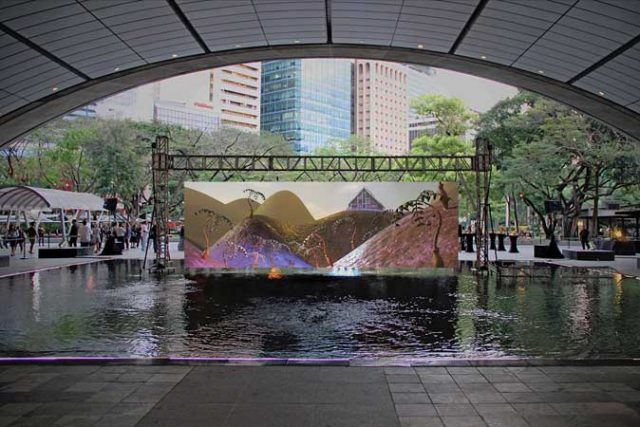
Even with the art fair going online, the 10 Days of Art initiative continues with an installation planned for Ayala Tower One’s fountain area which includes live screenings of the selections of ArtFairPH/Film digital artwork.

“Despite our digital shift, we’re happy to report that plans are set to carry on with some public art projects,” Ms. Lopa said. “There are also plans for a few more public installations but we’re just hoping that circumstances will allow us to mount them.”

After having conducted two online installments of Art in the Park, Ms. Periquet said that the art market continues to thrive even online.

“Artists still want to show their work. They’re dying to show their work because it’s difficult these days. And people also want to buy works of art. They’re still very interested in art and viewing it online doesn’t seem to be so much of a problem, actually,” Ms. Periquet said.

“And then, if you ask me what makes it worth it? For you guys, I’m not sure… We just love it,” she said.

For more information on this year’s program and schedule of activities, visit the Art Fair Philippines website www.artfairphilippines.com and follow Art Fair Philippines on Instagram (@artfairph) and Facebook (www.facebook.com/artfairph). — Michelle Anne P. Soliman


Petron completes $550-million securities issue

BW FILE PHOTO

PETRON Corp. has completed the issuance of $550-million undated unsubordinated capital securities, the Ramon S. Ang-led oil company said on Tuesday, adding that these will be listed in Singapore.

In a disclosure to the local bourse, Petron said that it expects to list the securities on the Singapore Exchange Securities Trading Ltd. by April 20.

The net proceeds from the issuance, placed at around $547.8 million after the deduction of commissions, will be used by the company to repay debts and for general corporate purposes, it said.

The development comes a week after the company released its final offering circular, which said the perpetual capital securities are in denominations of $200,000 and in integral multiples of $1,000 in excess.

The initial rate of distribution is at 5.95% per annum. Should the company not redeem the securities on the fifth anniversary, the rate of distribution will be reset using then US Treasury rates, the initial credit spread, and a step-up rate of 2.5% per annum.

Petron, the country’s biggest oil firm, said that the securities do not have a fixed redemption rate because they are perpetual. It clarified that these will not be registered under the Securities Act, and may not be offered or sold within the US.

“The Securities may be sold in other jurisdictions (including the United Kingdom, Singapore, Hong Kong, Japan, and the Philippines) only in compliance with applicable laws and regulations,” the company added.

Hongkong and Shanghai Banking Corp. Ltd. acted as the trustee, registrar, principal paying agent, calculation agent and transfer agent for the issuance.

PROJECTED CAPEX
Based on its final offer circular, the oil refining and marketing company also gave details about its 2021 projected consolidated capital expenditure (capex) projects, which stands at P11.05 billion or $230 million.

The amount, which will be raised through a combination of internal cash generation and external financing sources, will mainly fund ongoing capex projects, the firm said. The planned capex is based on its management’s estimates and have not been appraised by an independent organization.

It said the budget might change “as projects are reviewed or contracts entered into and are subject to various factors.”

These factors include market conditions, the general state of the Philippine and Malaysian economies, the company’s operating performance and cash flow, and its ability to obtain financing on terms satisfactory to management, it said.

Petron described itself as a leading player in Malaysia, having entered the foreign market in 2012 by buying US-based ExxonMobil’s downstream oil business in the Asian country.

Petron operates the Philippines’ sole oil refinery, which was temporarily placed on an economic shutdown earlier this year to reduce losses due to weak margins.

Earlier, the company reported a net loss of P11.4 billion in 2020, swinging from a net income of P2.3 billion a year earlier as sales dropped due to the global health emergency.

Petron shares at the local bourse inched down by 0.63% or two centavos to close at P3.16 apiece on Tuesday. — Angelica Y. Yang

Liberty Flour’s profit surges on higher sales volume

LIBERTY FLOUR Mills, Inc. posted a net income last year of P192.43 million, surging by 126% from the previous year, on the back of higher sales volume during pandemic lockdown period.

The listed company said in a stock exchange disclosure on Tuesday that its total revenues in 2020 reached P1.35 billion, higher by 42.4% than the P949.05 million it recorded the previous year.

Its sales volume hit P1.09 billion, a 46.6% year-on-year increase from P742.47 million in 2019. Rental income accounted for P262.84 million.

“Demand for flour increased steadily until the fourth quarter of 2020 as this is an essential item for food needed during the continuous community quarantine implemented by the government to prevent spread of coronavirus disease 2019 (COVID-19),” the company said.

As a result of higher sales, Liberty Flour said its total cost of sales and services in 2020 also climbed 46.2% year on year to P1.02 billion from P699.98 million.

Meanwhile, the company said it anticipates to spend around P200 million in about two years for the maintenance and improvement of its manufacturing plant facilities in Mandaluyong City.

“Spending has actually started in 2020 and full spending might be completed by 2021,” the company said.

Based on its website, Liberty Flour manufactures different types of bakery flour and flour-related products. Some of its brands are Maya-All Purpose Flour, El Superior Flour, and Pine Tree Flour.

On Tuesday, shares of Liberty Flour at the stock exchange dropped 1.73% or 55 centavos to close at P31.25 apiece. — Revin Mikhael D. Ochave

When opera reigned over the Philippines

By John Silva

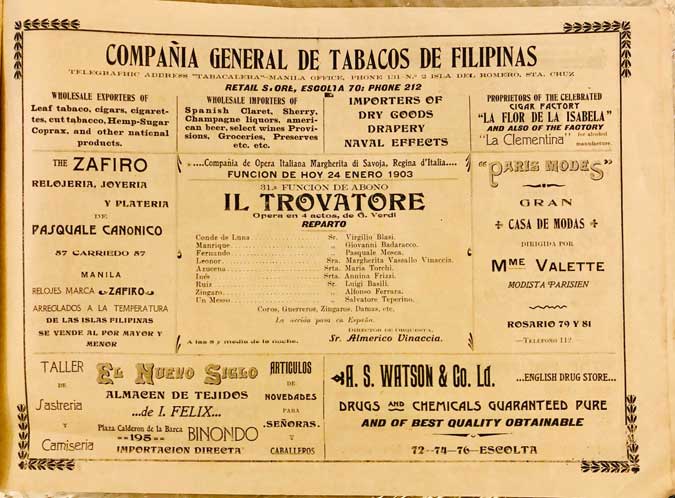
I’VE owned this very rare Zorrilla Theater program for many years now and will eventually be donated to the Ortigas Foundation Library.

This program (in Spanish and English) has an anarchy of Art Nouveau fonts used for the advertisers, overshadowing the opera notes of Il Trovatore, performed by the Compania De Opera Italiana in Manila and Iloilo for the 1902-1903 season.

It never ceases to amaze me looking at the variety of fonts used. Fonts can exude a particular mood but for the Filipino typographer of that period, he threw in all the fonts he relishes, like the way we promiscuously heap our plates with every one of the dishes available plus sauces too.

There’s the Gismonda font, the Teutonic, the Columbus, the Della Respira, the Legrand, the Soria and that’s just the first two pages!!! The result is a comical cacophony of visual delights and Il Trovatore, with its diminutive Didot font becoming almost an afterthought.

There’s also delightful illustrations, like a grand Smith Premier Type Writer sold by Erlanger & Galinger in Carriedo. Or a sedate looking eye to let you know of various glasses, including opera glasses, being offered at an Escolta store. All throughout are delicate ornamental strokes, sinuous and graceful adorning and framing the advertisements throughout. 

Unfortunately, the dazzling array of Art Nouveau fonts distracts us from the more interesting fact that Filipinos, rich and poor, patronized Italian opera companies traveling and performing in Singapore and Manila. Italian operas, highly emotional, full of jealousies, slights, and adultery, struck a chord with the native populace.

Today’s soaps and anguished pop songs may have replaced the operas we once loved.


John Silva is the executive director of the Ortigas Foundation Library.

Gov’t makes full award of fresh 7-year bonds on robust demand

BW FILE PHOTO
THE BUREAU of the Treasury raised P35 billion as planned from its offering of fresh seven-year papers. — BW FILE PHOTO

THE GOVERNMENT made a full award of the Treasury bonds (T-bonds) it offered on Tuesday and opened its tap facility to borrow more as the auction attracted strong demand.

The Bureau of the Treasury (BTr) borrowed the programmed P35 billion via the fresh seven-year T-bonds auctioned off on Tuesday. It also opened its tap facility to raise P25 billion more from the papers to take advantage of the low rates offered by investors.

Total tenders reached P90.386 billion yesterday, making the T-bond offer 2.6 times oversubscribed.

The seven-year notes fetched a coupon rate of 3.625%, 4.3 basis points lower compared with the 3.668% seen for the tenor at the secondary market before the auction, based on the PHL Bloomberg Valuation Reference Rates published on the Philippine Dealing System’s website.

The last time the Treasury offered the seven-year tenor was on Jan. 21, 2020, when it awarded P27.203 billion in reissued papers out of the P30-billion program. That issuance was quoted at an average rate of 4.322%.

National Treasurer Rosalia V. de Leon said the government opened the tap facility after the auction saw strong demand.

“[We are] taking advantage of liquidity and this is stretching maturity,” Ms. De Leon told reporters via Viber.

A bond trader said the seven-year bonds received robust demand from the market at an “attractive” yield amid a dimmer economic outlook and easing concerns over rising inflation.

Economic managers are currently reviewing their 6.5-7.5% growth target for the year, with the reimposition of strict lockdown measures in the capital and adjacent provinces expected to dent the full-year print by 0.8 percentage point.

Meanwhile, headline inflation slowed to 4.5% in March from the 4.7% in February, driven by a slower increase in food prices.

Inflation averaged at 4.5% for the first quarter, beyond the BSP’s 2-4% target for 2021.

The Bangko Sentral ng Pilipinas (BSP) expects inflation to average 4.2% this year before easing to 2.8% in 2022. Central bank officials have said the inflation path is likely to ease below the midpoint of the 2-4% target towards the fourth quarter.

BSP Governor Benjamin E. Diokno has said the central bank will remain accommodative to support economic recovery but will continue to watch out for  potential second-round inflation effects, such as wage and transport fee hikes.

The Philippine Statistics Authority will report inflation data for April on May 5, while the first-quarter gross domestic product (GDP) report will be out on May 10.

The BTr wants to raise P170 billion from the local debt market this month: P100 billion via weekly offers of Treasury bills and P70 billion from fortnightly auctions of T-bonds.

The government is looking to borrow P3 trillion this year from domestic and external sources to help fund a budget deficit seen to hit 8.9% of gross domestic product.

The Treasury is currently preparing to tap the global debt market for the second time this year with a euro-denominated bond issuance. The offering could have potential tenors of four years, 12 years and/or 20 years, according to a report by Bloomberg.

Fitch Ratings gave a BBB rating to the proposed issuance, S&P Global Ratings  rated it with BBB+, while Moody’s Investors Service had a Baa2 rating.

The last time the government issued euro-denominated bonds was in January 2020, raising €1.2 billion via a dual-tranche offering. — Beatrice M. Laforga

PhilWeb secures regulatory nod to reclassify unissued common shares

PHILWEB Corp. said it had received approval from the Securities and Exchange Commission to reclassify 750 million unissued and unsubscribed common shares to preferred shares.

“The reclassification was approved in order for the company to have flexibility in raising capital,” PhilWeb said in a disclosure to the exchange on Tuesday.

Article 7 of the company’s articles of incorporation was amended to reflect the changes.

PhilWeb has a capital stock of P2.6 billion, which now consists of 1.85 billion common shares with a P1 par value per share and 750 million preferred shares worth P1 apiece.

The dividend rate of the preferred shares will be determined by the board of directors. It may also be converted into common shares.

PhilWeb said there are no subscribers of the preferred shares as of Tuesday.

Stocks of PhilWeb at the local bourse closed unchanged on Tuesday at P2.68 apiece. — Keren Concepcion G. Valmonte

Arts & Culture (04/21/21)

CCP opens memorial site

THE CULTURAL Center of the Philippines (CCP), through the Office of the Artistic Director and the Intertextual Division, pays tribute to the artists, cultural workers, and media practitioners who died during the COVID-19 pandemic through an online memorial site. Launched on April 9 via the CCP Intertextual Division Facebook page, the Hanggang sa Muli: Pagpupugay at Pasasalamat sa mga Pumanaw (Until We Meet Again: Honoring and Thanking Those who Passed) memorial website features obituaries with short biographies and photos of the Filipino artists, cultural workers, CCP employees, patrons of arts and culture, and media personalities who passed away from March 2020 to the present. The site will also serve as a bulletin board to inform the general public about the passing of an artist and/or cultural worker. While it primarily aims to preserve the legacy of the departed artists and cultural workers, it also aims a spotlight on their contributions in the development and preservation of the Philippine arts and culture. Visit the online memorial site at https://hanggangsamuli.culturalcenter.gov.ph/, or the official Facebook page, https://www.facebook.com/hanggangsamuli.ccp.

Instituto Cervantes showcases contemporary filmmakers

INSTITUTO Cervantes de Manila is screening the work of four contemporary Spanish filmmakers this April online. The films are being shown through the Instituto Cervantes channel on the Vimeo platform (vimeo.com/institutocervantes) and are freely accessible for 48 hours from their start date and time. The third filmmaker on focus will be Juanjo Giménez. On April 21 and 22, Instituto Cervantes will offer the free online screening of Rodilla (2009), a short film about the world of soccer, the passions it arouses, and the emotional universe that it means for many people. Meanwhile, Giménez’s feature film Nos hacemos falta (2001), a road-movie that tells the encounter between different antiheroes, will be shown on April 24 and 25.

Ortigas Library releases video on the mythical kapre

THE ORTIGAS Foundation Library has released a new video on its YouTube channel which tells all about the quintessential Filipino mythical beast, the kapre. The Origins of Kapres can be found here The Origin of Kapres-YouTube.

Ayala Museum holds online summer art workshops

THE AYALA Museum will be holding virtual art workshops for children and adults this summer. The virtual art workshops go back to basic art techniques while finding inspiration from the museum’s art and history collection. Each workshop includes consultation sessions with the teachers and is limited to 10 slots for a better learning experience. The children’s workshops (open to eight to 10 year olds) are Basic Drawing: Mythical Creatures with Karla Sajona on April 24 and May 1 (10 a.m.), and Digital iPad Drawing and Composition: Lozano’s Still Life with Mandee Sarinas on May 22 and 29 (10 a.m.). Both workshops are priced at P2,500 (regular), P2,250 (early bird), and P1,785 (PWD). Meanwhile, the adults’ workshops (open to participants 18 years old and above) are Basic Drawing: Lozano’s Still Life with Abe Orobia  on April 24, May 1 and 8 (2 to 4:30 p.m.), and Acrylic Painting: Landscapes of Luna with Benedict Reyna on May 15, 22 and 29 (2 to 4:30 p.m.). Both workshops are priced at P3,500 (regular), P3,150 (early bird), and P2,500 (PWD). To take part in Ayala Museum’s virtual art workshops, register through www.ayalamuseum.org/events or e-mail virtualevents@ayalamuseum.org.

PETA Theater’s online summer workshops

PETA Theater will offer its annual summer workshop programs this year through sessions via Zoom. Opening on May 24, parents may enroll their children (ages seven to 17 years old) in any of the following programs: Children’s Theater (for children ages seven to 12), which will focus on nourishing the creative spirit in children through rhythmic movements, dance, singing, games, painting, and puppetry; Acting for Teens (ages 13 to 17,) which will teach the fundamentals of acting through an intimate online workshop crafted for beginners; Musical Theater for Teens (ages 13 to 17), which will enable teens to develop their musical performance skills; and Writing for Performance — Teens, which is offered to young aspiring writers. This introductory course is aimed at helping teens navigate the challenges of writing performative pieces. To enroll, visit www.bit.ly/PETAOnlineWorkshop or contact Betita at 0929-891-9538 or e-mail betitasarmiento@petatheater.com.

Filipinas Heritage Library’s Summer Playlist

THE FILIPINAS Heritage Library has released “Awit sa Tag-Init: A Summer Playlist” featuring OPM (Original Pilipino Music) music from its Himig Collection, #FilipinianaOnline, on Spotify. The library has several other playlists available, all based on music from its Himig Collection. These include “Sayaw Tayo!,” “Muni Muni Muna,” “Salamat, ‘Cher!,” “Pasasalamat sa Real Life Heroes,” “Maging Magiting,” and “Muni Muni Muli.”

Museum, library open in Tagum City

RESIDENTS of Tagum City in Davao del Norte can now visit the Kagikan Museum and the Tagum City Library and Learning Commons, two of the star facilities inside the Tagum City Historical and Cultural Center as they are now both open to the public. Library services and the guided museum tours started on April 5 and 6, respectively. Interested parties can use the museum’s booking app to schedule a visit as there is a limit of only 20 persons per time slot. A free guided tour can be booked via bit.ly/kagikanmuseumtours. The Kagikan Museum is the first LGU-operated (local government unit) museum that chronicles the development of Tagum from the lens of its tri-people: the Tipanud, the Moro, and the Dayo. Meanwhile, the Tagum City Library and Learning Commons is limited to a maximum of 50 persons, in adherence to protocols set by the local COVID-19 Task Force. A first come, first serve policy will be applied for all library patrons. The entrance fee to the Kagikan Museum and the fee for the annual library card which will be used to avail the amenities and services of the Library are waived for the first two months of operation. Visitors to these facilities can also visit the Sentro Rizal gallery located at the ground floor of the Center. These facilities are open all days of the week, from 8 a.m. to 5 p.m., except for the Kagikan Museum which is closed on Mondays.

UST Architecture student wins silver award

COLLEGE of Architecture student Napoleon Marion Clarke F. Mui won the Silver Award under the Architecture category of the Asia Young Designer Awards (AYDA) 2020 for the Philippines. AYDA is an annual design competition organized for Architecture and Interior Design students by Nippon Paint in 15 Asian countries. With the theme “Forward: Human-centered Design,” the design competition called for a socially driven space to serve the community’s needs. Project proposals were required to have a clear positive impact, especially for the booming population in Asian cities. For his entry, Mr. Mui, who is in his fourth year, proposed a humanistic design solution for the community of Estero de la Reina in Manila, whose problems include waste disposal and water pollution. The community-scale recycling center encourages a sustainable recycling system from the local garbage, which would then be a source of livelihood for the locals. Titled “Estero Recycling Hub,” the project utilizes community participation, innovation, and architecture design to positively impact the locals. Participants of the national competition were from the University of Baguio, Polytechnic University of the Philippines, De La Salle-College of Saint Benilde, and Batangas State University. In the AYDA 2020, the Gold Award in Architecture was won by Paul John Jandoc of the University of Baguio, while the Gold Award in Interior Design went to Maita S. Hagad of the De La Salle-College of Saint Benilde. Lauren Ghenrich L. Khoo of De La Salle-College of Saint Benilde won Silver for the Interior Design category.