Home Blog Page 8148

Tech being enlisted to minimize migrant worker vulnerability

THE emerging field of migration technology is being enlisted to reduce the risks faced by migrant workers, the Asian Development Bank (ADB) said.

Aiko Kikkawa, an ADB economist, said in a webinar Tuesday that the so-called “migtech” sector could serve to improve access to information and educate migrant workers on the risks and opportunities associated with their overseas workplaces.

Ms. Kikkawa said migtech could also help them better understand their rights in the event of abuse, enhance their ability to manage their transnational lives, and give them access to welfare and support services. She said such tools could also promote their social and economic empowerment.

Her remarks were based on a report, “Labor Migration in Asia: Impacts of the COVID-19 Crisis and the Post-Pandemic Future,” jointly launched by Asian Development Bank Institute, the Organisation for Economic Co-operation and Development, and the International Labour Organization earlier this month.

The report noted that labor migration in 2020 was disrupted by border closures and saw many workers laid off at the height of the pandemic.

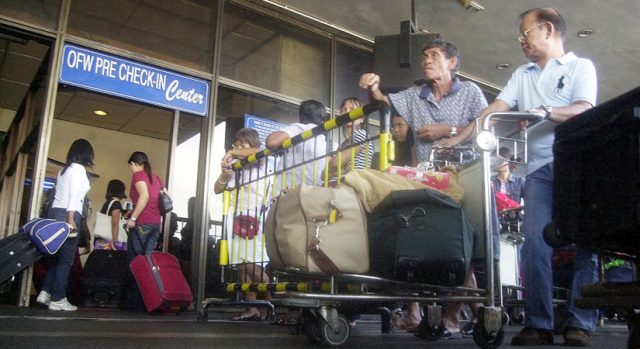
In the Philippines, it noted the government’s restrictions on healthcare workers from going overseas, and the 504,862 overseas Filipino workers (OFWs) who were repatriated during the crisis.

Ms. Kikkawa, who was also among the authors of the report, said the OFW Watch mobile application was found to be a crucial tool for migrant workers by helping orient them on their host communities, and the agencies they can seek help from if they encounter abuse.

Aside from broadening access to information, Ms. Kikkawa said technology could also empower migrant workers financially via mobile banking and electronic wallets.

However, she noted that the advances in technology could also pose risks to data privacy and security.

“The digital divide remains severe for some subset of migrant workers, which is compounded by language barriers. And we also need to acknowledge that the wider spread and use of technology is also inviting greater risk of supporting irregular migration,” she added. — Beatrice M. Laforga

PHL, Chile form panel to explore areas of possible trade cooperation

REUTERS

THE PHILIPPINES has agreed to explore areas of possible economic cooperation with Chile, raising the possibility of a first formal South American trade and investment arrangement.

Trade Undersecretary Ceferino S. Rodolfo signed a memorandum of understanding to create a joint economic commission (JEC) on March 30 with Chile’s Vice Minister for Trade at the Ministry of Foreign Affairs Rodrigo Yáñez Benitez. They plan to set an initial meeting within the year.

“The JEC will serve as a confidence-building measure to further intensify the bilateral economic linkages while addressing the challenges posed by geographic distance and generally low levels of awareness by businesses in each other’s markets,” Mr. Rodolfo said in a statement on Tuesday.

The two trade officials also spoke about their potential accession to regional trade deals.

The Department of Trade and Industry (DTI) said that Mr. Yáñez supported the Philippines’ interest in joining the Comprehensive and Progressive Agreement for Trans-Pacific Partnership, adding that Chile is in the process of ratifying the agreement in its legislature.

The department has started informal talks with members of the transpacific trade deal as part of the process of indicating interest in joining the agreement.

In turn, Mr. Rodolfo conveyed on behalf of Trade Secretary Ramon M. Lopez Philippine support for Chile’s interest in acceding to the ASEAN-Australia-New Zealand Free Trade Agreement.

Mr. Lopez had proposed the creation of a JEC in 2018, the DTI said, “as a framework for engagement, emphasizing that this will serve as a building block towards enhanced relations.”

Philippine Ambassador to Chile Teresita C. Daza said through the JEC, the economies will be able to identify sectors for potential cooperation.

“This initiative comes at a time when our countries are facing serious challenges across different fronts and with varying intensities because of, and exacerbated by, the COVID pandemic that is far from over,” she said.

Chile was the Philippines’ 52nd biggest export destination and 52nd largest source of imports last year, the DTI said, adding that the Philippines approved no investments from Chile in the decade leading up to 2020. — Jenina P. Ibañez

Amid cloud over FiT, quota for river hydro remains unfilled

THE DEPARTMENT of Energy (DoE) said Tuesday that run-of-river (RoR) hydropower plants remains undersubscribed for the feed-in tariff (FiT) scheme, noting that as of December, some 103 megawatts (MW) worth of capacity remained available as of December.

“With regard to the FiT system, the only remaining undersubscribed RE technology is run-of-river hydro. So, as of December 2020, there are still about 103 MW of capacity for run-of-river hydro open for FiT eligibility,” Renewable Energy Management Bureau Director Mylene C. Capongcol said during a virtual Joint Congressional Energy Commission hearing Tuesday.

The target installation capacity for RoR hydro is 250 MW.

“The 250 (MW) installation target may be reached by 2022 if the (projects) progress as reported,” Ms. Capongcol said.

Four months ago, the DoE granted another deadline extension to developers of RoR projects who intended to apply for the FiT scheme. The department added that it will continue to receive applications until the 250 MW quota is filled.

FiT is a fixed subsidy paid by the government to RE developers to partially offset the risks in taking on new technology.

At the hearing, Energy Secretary Alfonso G. Cusi called FiT unaffordable for a developing country.

“With regard to the FiT, tinigil na po natin iyan dahil talaga pong mali iyan (we stopped it because it is wrong). That is robbing the consumers. As a developing country, we cannot afford to be giving FiT or subsidies para po dun sa mga bagong (for the new) technologies that are being introduced,” he said. Developers under the FiT system are entitled to a FiT Allowance, a uniform charge billed to on-grid customers.

He took the same position during the PH-US at 75: Strengthening Ties through Sustainable Recovery economic briefing on April 15.

Asked to comment on Mr. Cusi’s earlier statements, Ms. Capongcol told BusinessWorld in an April 21 e-mail that he may have meant that there will be no new round of FiT applications.

On Tuesday, Mr. Cusi said: “If I have my way, I would like to revisit the FiT (certifications) that we granted because the rates of renewables have really gone down (and become) competitive.” — Angelica Y. Yang

Schools face hard choices in COVID-proofing the classroom of the future

PHILSTAR FILE PHOTO

By Gillian M. Cortez, Reporter

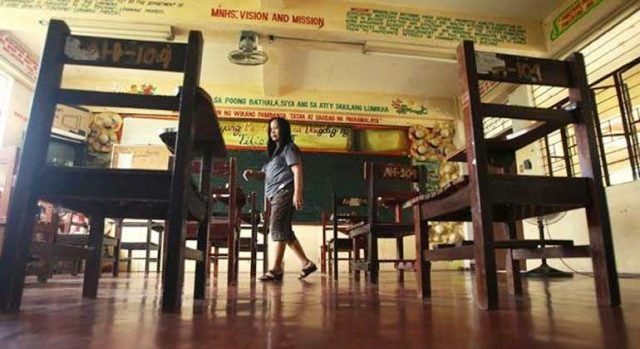
THE big question when schools reopen for in-person classes is whether the traditional configuration of a classroom — blackboard in front, space for student seating, and not much else — can continue after the pandemic. Will the classroom need to be redesigned, and who needs to be protected more — students, or teachers, some of whom may be elderly?

We have all seen pictures of some of the improvised solutions, like transparent screens in front of lecterns and spaced-out school desks, occupied on rotation by students who will sometimes need to attend online. But going forward, is a more permanent solution possible?

Structural engineer Jomari F. Tan said the immediate workarounds that come to mind involve, unavoidably, allocating space and regulating behavior.
Given the constraint of the current buildings that are available, “You want to control the people and adjust around the spaces… The focus is on the design being adjusted so the space for people is controlled, but it’s the people (who need to adjust) to the available space you have,” Mr. Tan told BusinessWorld.

He added that some schools may struggle with ensuring physical distancing within the confines of individual classrooms.

“In areas where density of students is not a problem, you can rearrange the seats (and) tables, but in places here in Manila like a big national high school, you cannot really do that,” he said.

Architect Carlo Martin L. Llanto told BusinessWorld, “I don’t think our infrastructure is ready… What’s the basis for school compliance? I don’t think there is a dependable audit to ascertain that.”

The Inter-Agency Task Force for the Management of Emerging Infectious Diseases, the National Task Force Against the COVID-19, along with the Department of Education (DepEd) and Commission on Higher Education (CHED), share responsibility for guiding schools on how to resume face-to-face classes safely. It is not inconceivable that they may issue a one-size-fits-all policy regardless of school location, student population, and ability to manage infection risk.

“You can’t just have a sweeping policy. They can generalize targets for these spaces to be controlled and safe in this time of COVID, but you can’t guarantee that will address the concerns of the key stakeholders,” he said.

Smaller class sizes, in particular, are going to be a difficult business decision for schools because the final number an administrator arrives at determines many aspects of a school’s performance — how much revenue it ultimately earns, how many teachers it needs to hire, and the perception of quality that comes with a high teacher-student ratio.

Many of the measures tend to be cost items, like acrylic barriers, sanitizer dispensers, or floor markings to facilitate physical distancing, while others are operational, like scheduling rotations for students to attend class in person or online, or organizing walking traffic in corridors to maximize personal space.

A major item that cannot be ignored is ventilation, Mr. Llanto and Mr. Tan said.

“You want your air flow to be continuous and (not allow) the virus to be contained,” Mr. Tan said.

Some window designs known to promote better ventilation are awning and casement windows, both styles that open fully outward. Mr. Tan said leaving doors open also could promote better ventilation, adding, “Some classrooms I have seen do not use doors at all.”

Updating doors and windows will need careful study of the specific conditions in the site, according to Mr. Llanto.

“There’s a big difference between a school that’s in a big city that does not have a lot of wind versus places that have a lot of wind. There are schools that have large windows versus those that have small windows because right outside is a busy street and it’s noisy,” he said.

Recirculated air could pose risks, he added. If a school uses air conditioning, these may need to be retrofitted with effective filters.

While sanitization and cleaning remain necessary, school officials should also pay particular attention to hygiene in restrooms, while waiting areas and cafeterias should be compliant with health protocols.

Mr. Tan also said a school should also be a “relaxing” environment for students.

“Decluttering rooms could be useful. You just want to make sure that the environment is relaxing for students in classrooms, in corridors, except for posters that remind them to follow health protocols,” he added.

Coordinating Council of Private Educational Associations (COCOPEA) Managing Director Joseph Noel M. Estrada said private institutions have expressed concerns about additional costs involved in reconfiguring their facilities, particularly in the face of the economic downturn that has depressed enrollment.

“If the government is very strict on that, it will entail costs,” Mr. Estrada told BusinessWorld

“We all know that private school operations are dependent on the tuition paid by the parents (which helps determine) a school’s ability to invest,” he said.

He said schools are not at the moment expecting to undertake any major renovation of their facilities, with private institutions focused on enforcing health protocols. “Most” private schools will be able to manage at the level of behavior modification to minimize infection risk.

Mr. Estrada said COCOPEA has been engaging with the government since June 2020 on how to reopen schools. At the time, the Philippines was under a strict form of lockdown, a setting known as enhanced community quarantine.

He said the dialogue centered on studying international best practices. “As early as June last year, ASEAN countries were already reopening schools or at least had plans. However, conditions here were not favorable,” for such a reopening, he said.

Education Undersecretary Diosdado M. San Antonio said that even with face-to-face classes still prohibited for Basic Education, schools are preparing for when that happens.

“I know that many are almost ready, but I know there will be additional steps to take,” he told BusinessWorld, adding that the DepEd’s preparations and monitoring are not national but on an “area to area basis.”

The DepEd plans to pilot face-to-face classes to determine “how fast and expansive the implementation will be.”

“I’m sure the guidelines we will release… will comply with the IATF-EID and the Department of Health (DoH),” he said.

Mr. Estrada and Mr. San Antonio said the strategy will very likely involve student attendance in “shifts” to keep overall numbers low.

For colleges, the CHED released in February a joint memorandum circular with the DoH regarding the conduct of limited face-to-face classes. Among the first classes authorized for face-to-face mode in higher education were those involving health-related degree programs.

Mr. Estrada said COCOPEA will lobby the government to allow more degree programs to open next school year, particularly those with practical requirements and programs preparing students to be licensed by the Professional Regulation Commission.

How long the shift will take varies, though some of the timelines stretch far into the future.

“Colleges and universities can do a full scale (revamp) in three to five years, but when it comes to high schools and elementary schools, probably it is a generational effort… 10, 20, 25 years to change things up. It will take a long time before we can see how schools will look, and how they need to be built,” Mr. Estrada said.

Mr. Llanto said although standards for healthy buildings exist, like the WELL Building Standard of the International WELL Building Institute, and best practices with proven track records will quickly come to the surface as people adapt, “There’s only so much bricks and mortar and built spaces can do. We may need to look beyond that.” He noted that methods proven to be workable are likely to come to the fore eventually as policy makers, school administrators, students, and teachers adapt to their new reality.


How to ensure a green recovery from the pandemic

JCOMP-FREEPIK

The world, as we know it, is changing. The coronavirus disease has upended our lives in more ways than we can imagine.

On the one hand, the resolute and urgent response to the pandemic has shown humanity’s remarkable capacity to unite as one and drastically implement policy and systemic changes for the greater good.

On the other, the unprecedented impacts of the pandemic have reaffirmed what environmental and climate advocates have been saying: Sustainability is the new reality for governments, businesses, and all sectors of society.

Science, common sense, and futures thinking tell us that now is the opportunity to build back better and forge a more sustainable path by ensuring a green economic recovery from the pandemic.

But what exactly is green recovery, and how has the Philippines responded to calls to green economic stimulus packages?

Green recovery refers to designing economic recovery programs that will channel massive investments on the short-term goal of reviving industries and creating jobs and on projects and initiatives that will help achieve long-term resilience and sustainability objectives.

In the Philippines, talks about a green recovery have been primarily brought forward by the development sector and civil society organizations working on climate and environmental issues.

The government, albeit fragmentary, has responded to these calls.

Three months into the pandemic, the Interagency Task Force Technical Workgroup on Anticipatory and Forward Planning prepared the “We Recover As One” report. Its recommendations, however, did not include critical green recovery measures and the greening of manufacturing and packaging systems.

Fortunately, in September 2020, lawmakers enacted the Bayanihan to Heal as One Act, which allotted ₱1.1 billion to build bike lanes in metropolitan areas. In the last quarter of 2020, the Department of Energy announced a moratorium on all new coal projects and announced critical programs such as the Green Energy Option Program (GEOP), which will provide consumers at least 100 kilowatts of power and the opportunity to source their supply from renewable energy resources. Another initiative, the Green Energy Auction Program (GEAP), will provide renewable energy developers the capacity to supply electricity to distribution utilities and retail suppliers.

If implemented properly and aggressively, these programs will promote competitiveness in the power market, resulting in lower electricity prices and an increased share of renewables in the energy mix.

Also groundbreaking is the Bangko Sentral ng Pilipinas’ sustainability finance framework, which directs all banks and financial institutions to fully incorporate environmental, social, and governance (ESG), and sustainability principles into their corporate strategy, risk management, and bank operations.

Moreover, the Department of Finance and the Climate Change Commission have announced their support to ban single-use plastics nationwide as a way to advance sustainable solid waste practices, curb plastic pollution, and promote sustainable production.

These policy wins must be supported through the full implementation of environmental and climate change laws in one cohesive plan that will chart our country’s pathway towards climate resilience and low-carbon economic development.

The impending development of an implementation plan for the Nationally Determined Contribution (NDC) under the Paris Agreement offers a golden opportunity to do this. It aims to reduce greenhouse gas emissions by 75% by 2030, 2.71% of which is unconditional (or will be funded by domestic resources) while the rest will be conditional (or dependent on support from developed countries).

The NDC Implementation Plan is envisioned to substantiate the 75% target with specific sectoral policies and measures and clear finance and investment components. It will be a roadmap that will modernize and green our energy, agriculture, waste, industry, and transport sectors.

In developing this plan, the government must engage both the private business sector and civil society to facilitate the convergence from all stakeholders. Individually, these sectors have initiatives, expertise, and resources to make a positive societal impact. By bringing them together, this will enable us to achieve our emissions avoidance and reduction goal and increase our conditional target.

We need more open dialogue and knowledge exchange sessions among key stakeholders from the public, private, and civil society sectors, to ensure that the momentum for sustainability will keep going in the coming months and years. The Stratbase Albert Del Rosario Institute for Strategic and International Studies, for instance, launched a series of virtual town hall discussions on sustainability and climate action, starting with Moving Towards A Sustainable Future Through ESG. It enjoined business, government, and civil society leaders to discuss the challenge at hand — build synergies, identify gaps, and attain integration, balance, and inclusion of a broad mix of perspectives and actions.

Given all these, can we truly ensure a green recovery from the pandemic?

The answer is yes. If all stakeholders will work in unison; if public and private sector leaders will align their short-term pandemic recovery plans with the country’s long-term sustainable development goals; and if the government will enact more well-defined and predictable policies that will further enhance the capacity of businesses to thrive sooner in this new era of sustainability.

The sooner we are able to act together, the sooner we will deliver green and decent jobs, cleaner air, a healthier and safer environment, and a better reality for the Filipino people.


Nazrin Camille D. Castro is currently the Manager of the Philippines branch of The Climate Reality Project (TCRP), a non-profit organization dedicated to training and mobilizing people to communicate and act on the urgency and solvability of the climate crisis. TCRP is a partner of the Stratbase ADR Institute.

Saving capitalism from profit obsession

RAWPIXEL.COM-FREEPIK

(Part 1)

Nowadays, free market capitalism is in great disrepute, attacked by both those from the left and the right. Considered almost as gospel truth during the second half of the last century, belief in the free market as the key to long-term economic progress and social justice suffered a serious blow by the beginning of the third millennium when there was more than enough evidence that free market forces kept hundreds of millions of people in both developed and developing countries in dehumanizing poverty. There was no automatic trickle down of incomes from the upper-income groups to the teeming masses. Inequality was the rule rather than the exception both within each nation and among nations. As measured by the so-called GINI coefficient, even the most developed countries manifested extreme inequality in incomes, not to mention in wealth.

This disillusionment with liberal or neoliberal economics was quite predictable even during the heyday of free market capitalism. When I was doing my doctoral studies at Harvard in the late 1950s, I had some economics professors who were quite uncomfortable with the extreme optimism of the leading prophet of liberal economics, Nobel laureate Milton Friedman of the University of Chicago who became famous for his aphorism that the only goal of a business is to seek maximum profit. This was very much in line with the assumption that if everyone is allowed to seek maximum profit in business (and maximum satisfaction in consumption), everyone will live happily ever after. The natural forces of competition as allowed and fostered in a free market economy would automatically lead to a progressive and inclusive economy. There was, of course, some room allowed for state intervention, in taxation, public works, public services and the regulation of competition. Otherwise, maximum freedom should be given to the “animal spirit” of seeking maximum profit. There was no room for the capitalist to consider his moral and social obligations to society.

Such a caricature of the human being who happened to be a businessman gave the license to a good number of capitalists to literally act like the fabled Gordon Gekko of the film Wall Street whose motto was “Greed is good.” In many business circles all over the world, it took time for the majority to realize that economics and business have to do with human beings who by nature have social obligations to others and who cannot morally act with the exclusive goal of maximizing personal gain, no matter what the cost to other human beings. The motto “Greed is good” led to the exploitation of workers, first in one’s home market and then with globalization in the labor-rich countries of the developing world. It also led to the wanton destruction of the physical environment and the pollution of water and air. Brought to the financial market sphere, this obsession with profit led to the Great Recession of 2008 to 2012 with the financial derivatives scandal and massive failure of banks like Lehman Brothers.

The harshest critic of the obsession with profit maximization in business is Pope Francis who in his encyclical, The Joy of the Gospel, wrote: “Today we also have to say ‘thou shalt not’ to an economy of exclusion and inequality. Such an economy kills. How can it be that it is not a news item when an elderly homeless person dies of exposure, but it is news when the stock market loses two points?… Some people continue to defend trickle-down theories which assume that economic growth, encouraged by a free market, will inevitably succeed bringing about greater justice and inclusiveness in the world. This opinion, which has never been confirmed by the facts, expresses a crude and naive trust in the goodness of those wielding economic power and in the sacralized workings of the prevailing economic system. Meanwhile, the excluded are still waiting.” The reference to the stock market by the Pope reminds us of the reality that capital markets, though useful for mobilizing the needed funds to support investments in generating employment and putting up projects useful to consumers, can also intensify the focus on profit maximization if those who are investing their savings think of nothing else but maximum profit in deciding where to invest their money.

Thanks to the Corporate Governance Initiative launched by the ASEAN Capital Markets Forum and the Asian Development Bank in 2011, capitalism as practiced in the 10 members of the ASEAN Economic Community may be cured of the obsession with profit maximization that exists in some advanced and developing countries in which businesses were allowed or even encouraged to focus on profit as the only objective of business, following the advice of Milton Friedman. The Corporate Governance Initiative had the objective of “raising corporate governance standards of publicly listed companies in ASEAN countries and increase their visibility to investors.” Central to the initiative is the periodic publication of a list including the top 50 public firms based on corporate governance practices (the “Top 50 List”). The assessment of these practices is based on a scoring system called the ASEAN Corporate Governance Scorecard (ACGS). The evaluation process is not managed by regulators but rather by private organizations referred to as “domestic ranking bodies” (in the Philippine case, the Institute for Corporate Directors). In contrast with other evaluators (e.g., proxy advisors, credit rating agencies, auditors), the ACGS experts are not paid by the issuers nor by investors.

Good corporate governance is based on criteria that go much beyond the maximization of profit. The ACGS covers the five areas of the Organisation for Economic Co-operation and Development (OECD) principles of corporate governance: 1.) rights of shareholders; 2.) equitable treatment of shareholders; 3.) role of stakeholders; 4.) disclosure and transparency; and, 5.) responsibilities of the board. From the points assigned to each of these five areas, one can already deduce that the interest of the shareholders, who are the ones most concerned with maximum profitability, is actually subordinated to the other stakeholders of the corporation. Rights of shareholders and equitable treatment of shareholders are assigned only a total of 25 points. The role of stakeholders gets 10 points; disclosure and transparency (for the good of the general public) 25 points, and the highest points of 40 are assigned to the responsibilities of the board, a good number of whom do not represent the shareholders and can espouse common-good oriented causes such as humane treatment of workers, protection of the physical environment, gender equality and other societal goals. The governance assessments are based on publicly available information (i.e., disclosures published on the websites of firms, regulators and stock exchanges).

In a paper written by two professors of the IESE Business School in Barcelona, Spain, Dr. Pietro Bonetti and Dr. Gaizka Ormazabal, data from the ACGS were used to overcome the usual constraints faced by global investors for independent evaluations of firms’ governance mechanisms. The supply for such information is usually subject to two important limitations: measurement error and lack of coverage of firms in certain regions. Thanks to the ACGS initiative, they were able to acquire adequate and reliable information to probe into “The Role of Expert Assessments of Corporate Governance in Boosting International Investment.” Using a regression discontinuity design, the two authors were able to document that being included in the “Top List” attracts significant foreign investments into the Southeast Asian countries included in the ACGS. Since, as mentioned above, the criteria used by the independent evaluators in the respective countries go much beyond the maximization of profit, it can be inferred that foreign investors consider other corporate behaviors not necessarily related to profit maximization. such as the treatment of other stakeholders of a corporation, respect for the environment, the avoidance of practices that exploit labor, etc.

Their findings also indicated that because of the existence of the Top 50 List, firms exert efforts to make governance changes to be included in the list. They observed substantial increases in governance scores among the firms around the cut-off point, increases that are particularly pronounced among firms more likely to benefit from new funding (i.e., firms with higher growth opportunities and financial constraints). To the extent that it attracts foreign investments, the Top 50 List can play an important role in corporate governance reform among firms in the covered Southeast Asian countries. While there is no explicit financial reward for those included in the list, the recognition could attract foreign investors, thereby increasing their investible funds.

To be continued.


Bernardo M. Villegas has a Ph.D. in Economics from Harvard, is Professor Emeritus at the University of Asia and the Pacific, and a Visiting Professor at the IESE Business School in Barcelona, Spain. He was a member of the 1986 Constitutional Commission.

bernardo.villegas@uap.asia

World Immunization Week 2021: Children have the right to health

LEK SUWARIN-FREEPIK
LEK SUWARIN-FREEPIK

MORE THAN A YEAR into the COVID-19 pandemic, it’s easy to feel paralyzed by the challenges we are facing in the Philippines. Many are suffering from the effects of the pandemic, especially children. Not being able to go to school, lacking access to essential health and nutrition services, and being at increased risk of abuse and mental health issues, the effect of this pandemic will be felt by children until they grow up to become adults.

Younger children in the Philippines are beset with yet another challenge: being unprotected from diseases that are preventable through vaccines that are safe, effective and, most of all, free. In the country today, only 62% of children are fully immunized (January-November 2020), far from the target 95%. In 2019, the Philippines was among the top nine countries with babies that had not received a single vaccine against preventable disease, together with Nigeria, India, the Democratic Republic of the Congo, Pakistan, Ethiopia, Brazil, Indonesia, and Angola. This puts children under increased risk of infections that can cause paralysis or even death, such as polio and measles.

As we commemorate World Immunization Week on April 24-30, we at UNICEF look to these children and their families who need support. Vaccines are amongst the greatest advances of modern medicine. They have protected children against vaccine preventable diseases and lifelong disabilities, saving millions of lives every year. Although fewer children are dying now than 30 years ago, one quarter of all deaths among children under five are from pneumonia, diarrhea, and measles — a majority could have been prevented through vaccination.

UNICEF, as it celebrates its 75th anniversary, has been in the Philippines working hand in hand with government and partners. UNICEF is fighting for a world where no child dies from a preventable cause and all children realize their right to good health. As we fight COVID-19, our aim is not just to return to normal, because for millions of children around the world, normal was never good enough. We need to redouble our efforts by investing in essential services that reach all children and reimagine an efficient health system that works for everyone.

We call on the government to secure sustained investments in routine immunization, invest in cold chain facilities, data, training and management, fair and efficient COVID-19 vaccinations, and strengthening vaccine trust and confidence. We call on civil society, local government officials, parents, teachers, social workers, influencers, children, and youth to become vaccine champions.

Immunization is everyone’s responsibility: We have a historic opportunity to both end this pandemic and set out a pathway for the eradication of preventable disease among children and adolescents. But this requires a collective effort to reach every child and community with vaccines and health services, continue taking key preventative measures, and have confidence in the life-saving power of vaccines.


Dr. Malalay Ahmadzai is the Chief of Health and Nutrition at UNICEF Philippines.

Pandemic impact highlights need for resilient occupational safety and health systems

FREEPIK

THE COVID-19 pandemic, and its profound impacts on the world of work, underscore just how important Occupational Safety and Health (OSH) is to all of us.

Workplaces can easily become contaminated with the novel coronavirus, exposing workers, their families and communities to the risk of infection. In addition to the risk of infection, workers in all sectors face additional hazards that have emerged due to new work practices and procedures adopted to mitigate the spread of the virus. Teleworking, for example, has led to ergonomic and psychosocial risks, with some 65% of surveyed enterprises reporting that worker morale has been difficult to sustain while working from home.

Certain workplaces have been particularly affected, such as the 136 million health and social workers at serious risk of acquiring COVID-19 during the course of their work. Moreover, those workers as well as essential staff in many other sectors have faced increased workloads, longer working hours, and reduced rest periods. The risk of violence and harassment at work has also risen, with consequences for both physical and mental well-being.

The protection of workers against sickness, disease, and injury related to their work environment has been a central issue for the International Labour Organization (ILO) since 1919. From the onset of the COVID-19 crisis, the principles contained in ILO Occupational Safety and Health standards have been shown to be more relevant than ever, especially the principle of prevention.

Faced with an unprecedented public health emergency, governments have taken rapid measures to curb the spread of the virus through public health systems. Actors in the world of work, and particularly in the field of OSH, have been crucial in the emergency response for protecting workers including those who support public health systems.

At the same time, special attention has been needed to ensure that policies and strategies do not discriminate against any workers, and consider those in vulnerable situations including the young, women, disabled, and migrant workers, the self-employed and the informal economy.

Amongst the many lessons learned from this crisis, is the need for countries to have a sound and resilient OSH system in place. A system which can build capacity to face future emergencies and protect workers’ safety and health, while supporting the survival and business continuity of enterprises.

The key elements of a national OSH system are set out in ILO’s Promotional Framework for Occupational Safety and Health Convention, 2006 (No. 187). They comprise national OSH policy, regulatory and institutional frameworks; occupational health services; information, advisory services and training; data collection and research; and mechanisms for strengthening OSH management systems at the enterprise level to prevent and respond to OSH risks. Investing in these systems enables countries to better face and recover from crises by safeguarding lives and livelihoods, and advancing the protection of workers.

In the Asia and the Pacific region, the COVID pandemic has led to many countries taking steps to strengthen priority elements of their national OSH system.

For example, Singapore has adopted new regulations on teleworking or leave with a view of protecting vulnerable populations. In India, the Ministry of Health and Family Welfare has produced and disseminated materials on how to effectively communicate with workers and people who are suspected or confirmed to have COVID-19. In New Zealand, occupational health professionals have helped workers set up ergonomically sound home office environments to support healthy teleworking. In Bangladesh, research has looked at instances of suicides by workers due to COVID-related unemployment or business closures. Meanwhile, a study in Malaysia examined the specific risks that migrants face in connection with COVID-19.

The COVID-19 pandemic has furthermore demonstrated the importance of social dialogue between governments, employers’ and workers’ organizations not only in responding to crises but also in promoting good OSH conditions. A climate of trust, built through social dialogue, is essential for the effective implementation of measures to address emergencies such as COVID-19, which require quick but effective action. Strengthened respect for, and reliance upon, mechanisms for social dialogue create a strong foundation for building resilience and encouraging commitment from employers and workers to the necessary policy and practical measures.

COVID-19 has undoubtedly been one of the gravest Occupational Safety and Health challenges the world has ever faced. Through the concerted action and commitment of all stakeholders, let us together forge the strong and effective national OSH systems we need to safeguard the life and health of every worker for years to come.


Chihoko Asada-Miyakawa, ILO’s Assistant Director-General and Regional Director forAsia and the Pacific, wrote this essay to mark Safe Day 2021.

India nears 200,000 COVID-19 deaths

A MAN runs past the burning funeral pyres of those who died from the coronavirus disease, during a mass cremation in New Delhi, India April 26. — REUTERS

NEW DELHI — India’s coronavirus death toll neared the bleak milestone of 200,000 with another 2,771 fatalities reported on Tuesday, while its armed forces pledged urgent medical aid to help battle the staggering spike in infections.

Over the past 24 hours, India recorded 323,144 new cases, slightly below a worldwide peak of 352,991 reached on Monday, with overrun hospitals turning away patients due to a shortage of beds and oxygen supplies.

“Please note that a huge fall in daily cases … is largely due to a heavy fall in testing,” Rijo M. John, a professor and health economist at the Indian Institute of Management in the southern state of Kerala, said on Twitter.

“This should not be taken as an indication of falling cases, rather a matter of missing out on too many positive cases!”

India has called on its armed forces to help tackle the devastating crisis. Chief of Defense Staff General Bipin Rawat said late on Monday that oxygen would be released from armed forces reserves and retired medical personnel would join health facilities that are struggling under the strain of cases.

Nations including Britain, Germany, and the United States have pledged aid, while Indian Americans in the US Congress and the technology sector have joined forces to help.

A shipment of vital medical supplies from the United Kingdom, including 100 ventilators and 95 oxygen concentrators, arrived in Delhi early on Tuesday, Reuters partner ANI reported. France is also sending oxygen generators that can provide year-long oxygen for 250 beds, the embassy said.

The first “Oxygen Express” train for Delhi carrying around 70 tons of the life-saving gas also reached the national capital early Tuesday.

But the crisis in the metropolis of 20 million people is unabated.

Dr. K.Preetham, chief of medical administration at the city’s Indian Spinal Injuries Centre which is treating scores of COVID-19 patients, said the scarcity of oxygen was such that the hospital was splitting oxygen cylinders on patients.

“For seven days, most of us haven’t slept. Because of the scarcity, we are forced to put two patients on one cylinder and this is a time consuming process because we don’t have long tubes,” he said.

‘WORSE BEFORE IT GETS BETTER’
Prime Minister Narendra Modi has urged all citizens to get vaccinated and exercise caution amid the “storm” of infections.

In some of India’s worst-hit cities, bodies were being cremated in makeshift facilities in parks and parking lots. Critically ill patients lay on beds outside overwhelmed hospitals waiting for admission.

The US Chamber of Commerce warned the Indian economy, the world’s sixth largest, could falter as a result of the spike in cases, creating a drag for the global economy.

“We expect that this could get worse before it gets better,” Myron Brilliant, executive vice president of the Chamber, the biggest US business lobby, told Reuters.

Australia paused direct passenger flights from India until May 15, the latest on a growing list of countries to curb travel from India to prevent more virulent virus variants from entering their borders.

Three Australian cricketers cut short their Indian Premier League season to head home amid the uncertainty.

India, home to around 1.3 billion people, has so far reported 17.64 million COVID-19 infections and 197,894 deaths, but experts believe the tally runs significantly higher.

The country is negotiating with the United States, which has said it will share 60 million doses of AstraZeneca’s COVID-19 vaccine with other countries.

“Major lobbying is on at this point of time to secure as much as possible for India,” a senior Indian official part of ongoing negotiations told Reuters, adding that Mr. Modi had been assured that India would be given priority.

“At this juncture even harshest critics of India are pushing the US regime” to aid India, the official added. — Reuters

US to share up to 60M AstraZeneca vaccine doses globally

WASHINGTON — The United States will start to share up to 60 million doses of AstraZeneca Plc’s coronavirus vaccine with other countries as soon as the next few weeks, the White House said on Monday.

White House Press Secretary Jen Psaki said the United States would release the doses to other countries as they become available.

She said there could be 10 million doses cleared for export “in coming weeks.” About 50 million more doses are currently being produced and could ship in May and June.

“Right now we have zero doses available of AstraZeneca,” Ms. Psaki said, noting that US regulators still need to review the quality of those already produced.

Ms. Psaki said the Biden administration is still deciding what the process will be to determine where and how it will share the vaccine.

“We will consider a range of options from our partner countries and, of course, much of that will be through direct relationships,” she said.

The AstraZeneca vaccine has not yet been authorized for US use by the Food and Drug Administration (FDA). The Biden administration in March said it would send roughly 4 million doses of the British drug maker’s vaccine to Canada and Mexico, and is under growing pressure now to expand sharing of its stockpile with India and other countries.

India has become the latest epicenter of the pandemic, threatening to overwhelm its healthcare system.

An AstraZeneca spokeswoman could not comment on specifics of the arrangement, but said the doses were part of its supply commitments to the US government. “Decisions to send US supply to other countries are made by the US government,” she said.

The Associated Press (AP) earlier on Monday reported the doses would be shared in coming months following their clearance by the FDA.

The AP reported that the doses were made at the Emergent BioSolutions facility in Baltimore, which came under harsh criticism for a long list of cleanliness and manufacturing problems found during an FDA inspection.

AstraZeneca is no longer making vaccines at that plant after a batch of Johnson & Johnson’s vaccine was ruined by contamination with ingredients from the AstraZeneca shot.

J&J is now overseeing production of its vaccine at the Emergent plant. — Reuters

Drums of war are beating, warns Australian official

STOCK PHOTO - PIXABAY.COM

CANBERRA — One of Australia’s most senior security officials has said liberal democracies must brace for war while searching for peace amid elevated global tensions.

Home Affairs Department Secretary Mike Pezzullo said the possibility of war was increasing.

“Today, as free nations again hear the beating drums and watch worryingly the militarization of issues that we had, until recent years, thought unlikely to be catalysts for war, let us continue to search unceasingly for the chance for peace while bracing again … for the curse of war,” Mr. Pezzullo said in a letter to staff on Anazac Day, which honours the country’s war dead.

Mr. Pezzullo did not specify the catalyst for his warning but it follows a sharp deterioration in Australia’s relationship with China and a rise in regional tensions over Taiwan.

Australian Defense Minister Peter Dutton said on Sunday that a conflict involving China over Taiwan “should not be discounted.”

Australia’s opposition Labor party criticized Mr. Pezzullo’s comments.

“I think that is pretty hyper-excited language and I am not sure our senior public servants should be using that language,” Labor party lawmaker Bill Shorten told Australia’s Channel 9.

China claims Taiwan as its own territory and has never renounced the use of force to bring the island under Beijing’s control.

Chinese Foreign Ministry spokesman Wang Wenbin said he hoped Australia was aware of the sensitive nature of the issue and could “avoid sending any wrong signal to Taiwan independence forces.” — Reuters

PBA to meet Palace officials to discuss start of Season 46

PBA IMAGES
PBA Commissioner Willie Marcial said that they will be meeting with Malacañang on Wednesday to present the league’s “recalibrated” plans for its new season and they are hoping they can get a clearer picture on when they can start after. — PBA IMAGES

THE Philippine Basketball Association (PBA) is set to meet government officials in Malacañang on Wednesday to discuss how to go about the league’s delayed Season 46.

Speaking at the online Philippine Sportswriters Association Forum on Tuesday, PBA Commissioner Willie Marcial said he and Barangay Ginebra team governor Alfrancis Chua are to meet with Executive Secretary Salvador Medialdea and Senator Bong Go to present the league’s “recalibrated” plans for its new season and hopefully, get a clearer picture on when they can start.

“We will have a meeting in Malacañang tomorrow afternoon (Wednesday) and we will discuss with them different aspects of our plans for Season 46,” said Mr. Marcial in Filipino.

“Hopefully after that, maybe after a day or two, we can have a clearer picture on the direction we will take,” he added.

The PBA was supposed to kick off its Season 46 on April 18, but was forced to defer it because of the spike in coronavirus cases in the country and the consequent elevated quarantine restrictions placed over the National Capital Region and the nearby provinces of Bulacan, Rizal, Laguna, and Cavite.

The league was eyeing the Ynares Center in Antipolo City in Rizal as a tournament venue, forcing it to abandon the planned start for the meantime because of the restrictions.

It is hoping that it gets to start by late May or in June so as it can still squeeze in its planned two-conference season, which it said is designed to give fans more basketball action amid the pandemic.

Mr. Marcial admitted that given the fluidity of the situation with the pandemic, there are a lot of challenges they have to hurdle, but they are determined to get it done.

In their meeting with Malacañang, the PBA chief said they will be banking on their performance in their successful tournament “bubble” in Clark City in Angeles, Pampanga, last year in making their case for Season 46.

“Hopefully, they get to view our successful bubble last year in a good light and allow us to move forward,” he said.

While awaiting for the return of activities, the PBA is continuously working towards operating as effectively as possible during these trying times.

Among the things it is focusing on is availing vaccines for the entire league family which it describes as the “first order of the day,” seeing it as providing stability and flexibility in their return push.

It is also weighing its options on whether to go on another full bubble or if it can do a tournament under a closed-circuit setup where the participants’ movements are confined to home-gym-home.

The league is also employing a temporary salary cut of 20% to cushion the impact of the pandemic on the financials of the league.

Affected are the PBA employees, players, coaches, managers, assistant managers, and other personnel. Utility workers, however, are not included. — Michael Angelo S. Murillo