Home Blog Page 8027

Philippines keeps ban on worker deployment to Israel despite truce

BW FILE PHOTO

A PHILIPPINE ban on worker deployment to Israel stands despite a ceasefire between the Middle Eastern country and Hamas, according to the Labor department.

Local authorities would keep watching the geopolitical situation in Israel and Gaza before sending more workers, Labor Secretary Silvestre H. Bello III told an online news briefing on Wednesday.

“If the situation gets better, let us start processing,” he said.

The agency may start deploying Filipino workers to Israel starting next month, Mr. Bello said. About 400 workers were supposed to be deployed to Israel this month.

“Give it another two to three weeks,” he said, adding that the government would like to see if Israel’s ceasefire deal with Palestinians would be followed.

Israel and Hamas both claimed victory last week after they ended 11 days of fighting where more than 200 people died and caused widespread destruction in the Gaza Strip, Reuters reported.

Humanitarian officials said the damage to Gaza would take years to rebuild, according to the news wire.

Palestinian officials put the rebuilding costs at tens of millions of dollars, while economists said the fighting could curb Israel’s economic recovery from the coronavirus pandemic, Reuters said.

Hamas, the Islamic militant group that seeks to destroy Israel, needs to rebuild a territory that is already suffering from poverty, widespread job loss and a raging coronavirus pandemic.

Mr. Bello said the situation seems to have improved after the ceasefire.

The Labor department imposed the deployment ban last week, which the presidential palace backed. No Filipino death had been reported, he added. — Gillian M. Cortez
Russia eyes investments in Philippines

RUSSIAN companies are looking at investing in Philippine oil exploration and the construction of traditional and nuclear power plants, its ambassador said on Tuesday.

Companies in the former Soviet Union are looking at the use of nuclear energy for “peaceful purposes” such as in fighting cancer and extending the shelf life of fresh fruits and vegetables, Russian Ambassador to the Philippines Marat Pavlov told an online news briefing.

Russia would not  interfere in Philippine internal affairs, while pursuing a “mutually beneficial partnership,” he told the briefing in celebration of the 45th anniversary of Philippine-Russian diplomatic ties.

“We appreciate the atmosphere of trust,” Russian Deputy Foreign Minister Igor Morgulov told the briefing, adding that he expects Russian tourist traffic to the Philippines to reach a record once the coronavirus pandemic ends.

He said fast-tracking Philippine bureaucratic procedures in agriculture would increase bilateral trade.

The two countries were also discussing military procurement Mr. Morgulov said, adding that “Russia does not impose political conditionalities.”

Meanwhile, he said Russia’s shipment of its Sputnik V vaccines to the Philippines “will be gradually increased monthly to 20 million doses by the end of the year.” 

Philippine Trade Assistant Secretary Allan B. Gepty said there are opportunities for cooperation in pharmaceuticals, shipbuilding, information and communications technology and infrastructure.

He added that stronger Russian presence in the Philippines could pave the way for a stronger partnership between the Association of Southeast Asian Nations (ASEAN) and the Eurasian Economic Union. 

Philippine Ambassador to Russia Carlos D. Sorreta said the Philippines and Russia are discussing opening more opportunities for migrant Filipino workers in Russia, which needs more skilled workers.

The two governments are also in talks to set up safeguards to protect Filipinos there, he said. — Bianca Angelica D. Añago

Lawmaker calls for probe on condition of gig economy workers

SENATE.GOV.PH

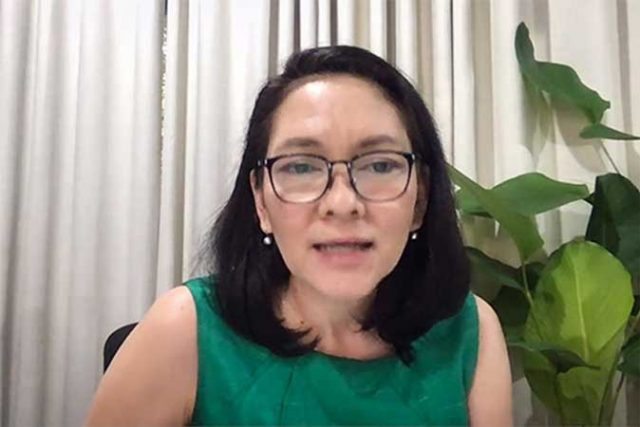
A SENATOR on Wednesday filed a resolution calling for an investigation on the working conditions in the “gig-economy,” which covers delivery riders and other freelancers.

Senator Risa N. Hontiveros-Baraquel filed Senate Resolution No. 732 to address “reports of unfair working conditions,” especially during the coronavirus pandemic, and look into their employment benefits and other forms of social protection.

Gig economy under the resolution is defined as “new technology-enabled forms of work, often temporary and flexible, utilized by companies that rely primarily on independent contractors and freelancers.”

Among the issues the investigation aims to address is the practice of classifying gig economy workers as “independent contractors, and not employees,” which does not automatically qualify them to healthcare benefits, days off, and 13th month and retirement pay, among others, under the labor law.

“Without laws that regulate and define the rights of our gig economy workers, they will certainly be exposed to abuse and exploitation,” Ms. Baraquel said in a statement.

The senator cited a report by Payoneer in 2019 where the country ranked 6th in the world as the fastest-growing market for the gig-economy.

Ms. Baraquel also urged policy makers to create a permanent social safety net for all workers and “break out of the contractor-employee binary.” — Vann Marlo M. Villegas

Police ready to give Justice dep’t more case records for EJK review

PNP.GOV.PH

THE JUSTICE department will review more cases that might have involved extra-judicial killings (EJK), including police anti-drug operations, according to an official.

“We will be reconciling the numbers. There could be a few more,” Justice Undersecretary Adrian F. Sugay told reporters on Wednesday.

Police chief Guillermo Lorenzo T. Eleazar said they are ready to turn over to the Justice department all such records upon request.

“We will provide them with this information,” Mr. Eleazar said in an interview on ABS-CBN news channel.

Justice Secretary Menardo I. Guevarra, who earlier this week said they will be looking into 61 out of the 7,000 police case records, said they are ready to expand their investigation.

“If the PNP (Philippine National Police) chief has said that the review panel may also review these other cases, we will be very happy to do so, as this is what we had wanted in the first place,” Mr. Guevarra told reporters Wednesday.   

The 61 cases were those where “clear liability was established” based on a review and evaluation by the police Internal Affairs Service.

National Union of Peoples Lawyers President Edre U. Olalia, in a statement on Wednesday, said it would be best to “completely and totally open any and all files, documents, records, and uncontaminated evidence to an impartial scrutiny by an independent body, with no other purpose but to arrive at the truth in all its g(l)ory, to render justice to the victims, and to stop the barbaric impunity that has not solved the drug menace to this day.” — Bianca Angelica D. Añago

Judges face higher fines for misconduct, inefficiency

PHILSTAR

JUDGES found guilty of misconduct or inefficiency now face higher fines of up to P200,000 after the Supreme Court amended Rule 140 of the Revised Rules of Court.

Court Administrator Jose Midas P. Marquez said the recommendation to adjust the penalties was made “in order to be consistent and commensurate with the prevailing Salary Schedule of judges and personnel of the Judiciary.”

Under the court’s resolution dated May 16 and made public Wednesday, judges found guilty of a serious charge may either be dismissed, forfeited from receiving benefits, and disqualified from public service; suspended for three to six months; or pay a fine “of more than P100,000 but not exceeding P200,000.”

The previous fines were set at P20,000 to P40,000.

For a less serious charge, the penalty is three months suspension or a fine of “not less than P35,000 but not exceeding P100,000.”   

Judges found guilty of a light charge may be sanctioned with censure, reprimand, or admonition with warning and/or may be fined “not less than P1,000 but not exceeding P35,000.”

The changes take effect on May 31. — Bianca Angelica D. Añago

Bill creating local anti-drug abuse councils up for Senate plenary

BW FILE PHOTO

SEVERAL Senate committees approved a bill that will establish Anti-Drug Abuse Councils in every local government unit.

Senator Ronald M. dela Rosa, chair of the committee on public order and dangerous drugs, raised to the plenary Senate Bill No. 2215 or the Anti-Drug Abuse Councils Law.

“To address the country’s problem on drugs entails tapping into the wisdom and experience of those on the ground, those who can competently provide political judgment: our Local Government Units,” he said in his sponsorship speech.

“At the same time, it demands a systematic and institutional response,” he added.

The committee report was signed by the committees on public order and dangerous drugs, local government, and finance.

If signed into law, local governments will be mandated to establish the councils and formulate and implement the Local Anti-Drug Abuse Plan of Action.

The Department of the Interior and Local Government will monitor the implementation. — Vann Marlo M. Villegas

PCG commander rallies troops in Kalayaan Island: ‘West Philippine Sea is ours!’

PCG

THE PHILIPPINE Coast Guard (PCG) commandant visited Kalayaan Island on Tuesday where he rallied troops to protect the West Philippine Sea and proudly fly the flag.

“These are the two main objectives that we need to accomplish — stepping up our presence and flying the Philippine flag with a sense of pride — because the West Philippine Sea is ours!,” Admiral George V. Ursabia, Jr. was quoted as saying in a statement released by the PCG on Wednesday.

Mr. Ursabia, however, acknowledged that Kalayaan Island, which is part of the Spratly Islands, is a disputed area.

“We should not forget that it is also a contested area. There are others claiming that it is also theirs. But of course, we will not surrender the territory. It is ours! Hence, we have to do our part in a peaceful and rules-based manner,” he said.

The PCG along with the Bureau of Fisheries and Aquatic Resources have a combined five vessels deployed in West Philippine Sea for maritime and security operations.

Japanese syndicate ‘Big Boss’ nabbed in Parañaque City

STOCK PHOTO | Image by Klaus Hausmann from Pixabay

A JAPANESE fugitive wanted for crimes in several countries was arrested in a five-star hotel in Parañaque City last May 17, the National Bureau of Investigation (NBI) announced Wednesday.

In a statement on Wednesday, NBI Officer-In-Charge Eric B. Distor said Watanabe Yuki, also known as Kenji Shimada or Shi Shimada, is in the list of the International Criminal Police Organization or Interpol.

Mr. Distor said the suspect “is said to be the ‘Big Boss’ of the largest telecommunication fraud syndicate, whose international operations cover several countries including Japan and the Philippines.”

Mr. Yuki was arrested along with two other Japanese who failed to present any travel documents such as valid passports and alien certificates of registration.

The three were to be turned over to the Bureau of Immigration (BI) last May 20, but Mr. Yuki tested positive for the coronavirus and they were also placed in under quarantine.

The BI said Mr. Yuki and one of the two others have summary deportation orders.

The third Japanese was released for “lack of evidence to establish probable cause” and was found to have a valid visa until this month. — Bianca Angelica D. Añago

Foreign chambers back lower capital norm for retail entrants

PHILIPPINE STAR/MICHAEL VARCAS

FOREIGN BUSINESS groups declared their support for even lower minimum capitalization requirements for foreign retailers after the Senate approved a measure to ease barriers to their market entry.

The Senate last week approved a measure that would set foreign retailers’ minimum paid-up capital at P50 million or around $1 million should they seek to enter the market, lower than the current requirement of $2.5 million. Under the bill, those with more than one physical store are required to invest at least $5 million or P25 million per store.

Foreign business groups said they support a further lowering to $200,000, and called Senate Bill (SB) No. 1840 an impediment to new foreign direct investment.

“This still-protectionist level is far higher than in Cambodia, Indonesia, Singapore, Vietnam, and others, who also have large numbers of MSMEs (micro-, small-, and medium-sized enterprises) like the Philippines,” the groups said in a statement Wednesday.

The House version of the bill approved in 2019 set a minimum paid-up capital of $200,000. The two chambers will convene a bicameral conference committee to reconcile their versions.

The business groups said that the entry of retail companies would create more jobs, including work in advertising, agriculture, construction, and logistics.

“More foreign retail players create more competition, which is good for the Filipino consumer, especially the fast-growing middle class, who can purchase higher-quality and more variety of goods at lower cost,” the groups added.

The Philippine Retailers Association (PRA) supports the Senate version, expressing concern that smaller businesses would lose out if the minimum capital requirements for foreign investors are lowered further.

“With the approval of SB 1840, PRA welcomes foreign investment without sacrificing our micro, small and medium enterprises,” the PRA said in a statement.

“PRA now hopes that the House version is aligned to the Senate version in the bicameral meeting. The House should now appreciate that their version is too low that it will encroach into our MSME’s all over the country.”

Foreign chambers that signed the statement include the American Chamber of Commerce of the Philippines, Australian-New Zealand Chamber of Commerce of the Philippines, Canadian Chamber of Commerce of the Philippines, European Chamber of Commerce of the Philippines, Japanese Chamber of Commerce & Industry of the Philippines, Korean Chamber of Commerce of the Philippines, and the Philippine Association of Multinational Companies Regional Headquarters, Inc. — Jenina P. Ibañez

DTI estimates 8% of firms remain closed during current quarantine phase

AN ESTIMATED 8% of businesses remain closed due to the current easier quarantine settings, which represents an improvement over the level of operations seen during the strict phase of the lockdown in the capital and nearby regions, Trade Secretary Ramon M. Lopez said.

The percentage of closed businesses rose to 16% when the enhanced community quarantine (ECQ) was declared, he said at a virtual event on Wednesday.

After being placed under ECQ after a fresh surge in coronavirus disease 2019 (COVID-19) infections in March, lockdown restrictions on Metro Manila and nearby regions were gradually eased. The regions were placed under the more relaxed general community quarantine in mid-May.

Businesses were hardest hit after initial pandemic-related restrictions were rolled out last year. Several sectors were not allowed to operate on-site, while others saw their revenue decline as commercial foot traffic fell.

During the initial and strictest version of the lockdown in April and May last year, 38% of companies had shut.

The number of shuttered businesses had dropped to 4% by February 2021 as more businesses were allowed to reopen and economic activity rebounded.

Dito sa inaasahan nating patuloy na pagbubukas ay marami pa uling makakapagbukas na negosyo (Our anticipated business reopening should gain momentum) moving forward into June,” Mr. Lopez said.

He added that he is hoping that the GCQ (general community quarantine) will be extended in June, but the final decision will be announced by the Inter-Agency Task Force on Emerging Infectious Diseases. — Jenina P. Ibañez

Thailand’s Charoen Pokphand tapped for DBP hog initiative

REUTERS

THAI-OWNED CHAROEN Pokphand Foods Philippines Corp. (CPFPC) has tied up with the Development Bank of the Philippines (DBP) in a credit program that will support farmers seeking to rebuild their depleted hog herds.  

Agriculture Secretary William D. Dar said in a statement Wednesday that the DBP signed a memorandum of agreement with CPFPC to participate in the Swine R3 credit program, which will finance bio-secured farm projects in support of the government’s hog repopulation initiative.

CPFPC is a subsidiary of Thai conglomerate Charoen Pokphand Foods Public Co., Ltd.

“This is a welcome development for us as we pursue joint efforts to control African Swine Fever (ASF) and repopulate ASF-free areas. With CPFPC’s technological expertise in modern bio-secured farms and DBP’s support in providing credit assistance to eligible public and private institutions, we will be able to level up our efforts in reviving the industry,” Mr. Dar said.  

According to the DBP, the credit program can be availed of by registered private enterprises and local government units which must use the loans to establish bio-secured swine farms and acquire related machinery and equipment.

Eligible projects under the program include swine breeder farms, swine wean-to-finish farms, and consolidated swine facility projects.  

“Through this partnership, the National Government will be able to elevate and expedite its swine repopulation and rehabilitation initiatives that will eventually allow the country to recover to its pre-ASF status,” DBP President and Chief Executive Officer Emmanuel G. Herbosa said.

Sakol Cheewakoset, CPFPC vice-chairman, said the partnership allows the company to share its knowledge in helping the country recover from ASF.

“Our state-of-the-art bio-secured farms enable us to be resilient from ASF, thus making our business a success. Moving forward, this will also open export opportunities for the Philippines. We assure and commit to you our continuous support in investing in the Philippines,” he said. — Revin Mikhael D. Ochave

IP applications rise 21% in four months to April

INTELLECTUAL PROPERTY (IP) filings rose 21% in the first four months of the year to 15,028 as businesses started to recover from the effects of the pandemic, the Intellectual Property Office of the Philippines (IPOPHL) said in a report Wednesday.

The rise was interpreted to mean a hint of recovery after filings declined by 12% in 2020, with inventors and creatives delaying applications due to subdued business activity during the lockdown declared to contain coronavirus disease 2019 (COVID-19).

The recent uptick in filings indicates “a more positive outlook among businesses and innovation players on the country’s pace of recovery from the pandemic,” IPOPHL Director General Rowel S. Barba said.

“It could also signify that businesses are rebuilding stronger by integrating IP protection in their innovation and branding strategies.”

Utility model filings surged 33% to 420, the bulk of which came from food chemistry filings. 

Trademark applications increased 26% to 13,041. Almost 4,000 of the applications came from the health and cosmetics industry, while agricultural products and scientific research also accounted for a significant portion of the filings.

Patent filings however declined 6% to 1,235, with many of the applications coming from pharmaceuticals. Industrial design filings also dropped 21% to 332.

Copyright deposits almost doubled to 444 from 233 last year.

Mr. Barba said that he is hoping that filings this year return to pre-pandemic levels.

“The office continues to double awareness and education efforts on the benefits of intellectual property to businesses and streamline our digital registration services to provide ease to registrants,” he said. — Jenina P. Ibañez

ADVERTISEMENT
ADVERTISEMENT