Home Blog Page 80

More Filipinos traveling for Holy Week amid oil, energy crisis
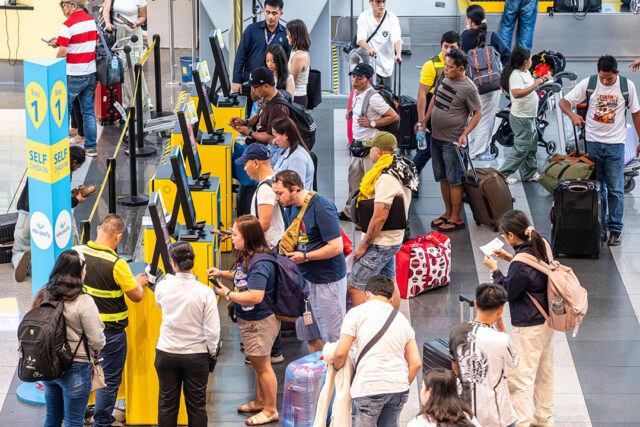
Travelers line up to check in at the Ninoy Aquino International Airport (NAIA) Terminal 3, Pasay City in this file photo. — PHILIPPINE STAR/RYAN BALDEMOR

Travel service provider Trip.com said on Tuesday that more Filipinos are traveling to international and local destinations for the Holy Week, despite the country’s current oil and energy crisis.

“Holy Week is rapidly emerging as one of the Philippines’ biggest travel moments, with Filipinos increasingly using the extended holiday to take longer leisure trips both domestically and abroad,” the company said in a statement on Tuesday.

According to the travel platform, outbound travel among Filipinos increased by 50% year-on-year (YoY) for Holy Week, underscoring the Christian holiday as one of the country’s emerging travel periods.

It added that Filipinos are taking advantage of the holidays to take longer leisure trips, with the average length lasting up to 9.57 days. “Longer stays allow travelers to explore multiple attractions or combine city visits with leisure experiences.”

Popular outbound destinations include Hong Kong, Tokyo, Singapore, Bangkok, Taipei, Osaka, Seoul, Macau, Kuala Lumpur, and Hanoi.

“Major cities across the region remain particularly popular for quick getaways, offering a mix of leisure, entertainment, and culinary experiences suited to the extended holiday break,” the company said.

Domestic travels also sustained a central role during the Holy Week, as bookings grew by 25% YoY.

Top local spots include Manila City, Cebu, Palawan, Boracay, Davao del Sur, Bohol, Iloilo, Negros Occidental, Leyte, and Misamis Oriental.

AirAsia Move, the online travel agency (OTA) of the AirAsia group, reflects the same positive figures on domestic travel.

The platform underscored that 86% of its flights during this period are domestic, with 55% of the trips departing from Manila.

Other key departures are from Cebu (12%), Iloilo and Tacloban (5%), Caticlan and Puerto Princesa (2%), and other regional airports nationwide (19%).

For Manila-based travelers, 56% will be traveling alone, while 18% are couples, followed by 15% children, and 11% group of friends.

According to the Philippine Ports Authority (PPA), passenger traffic from Mar. 29 to Apr. 5 could reach up to 2.46 million, up from the 2.41 million recorded during the same period last year.

Similarly, the New NAIA Infra Corp. (NNIC) projects daily passenger traffic for both local and international flights to reach 1,353,265, slightly higher than the 1,326,730 in 2025.

The daily passenger volume for the period is also expected to remain above 143,000.

While Trip.com expects Good Friday to be the busiest travel date, NNIC forecasts Easter Sunday as the busiest day of the period with projected traffic of 158,884 travelers.

“Passenger demand remains strong, although the increase is lower than earlier expected due to flight suspensions and operating restrictions affecting some Middle East services,” NNIC said in a statement on Saturday. — Almira Louise S. Martinez
Alex Eala braces for three clay tourneys ahead of French Open

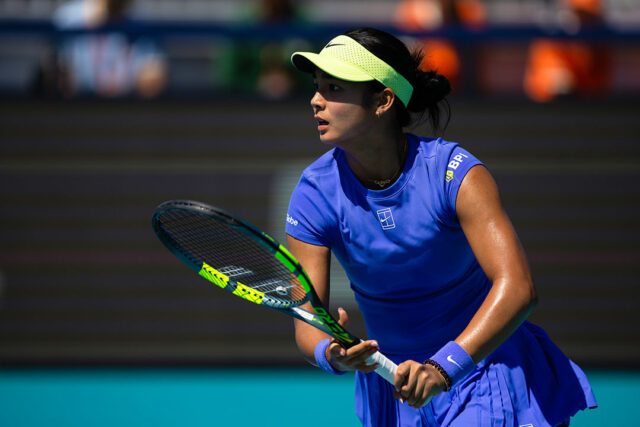
ALEX EALA — REUTERS/MAURICIO PAIZ/NURPHOTO

ALEXANDRA “ALEX” EALA is taking an extended break with her family in observance of the Holy Week, then it’s go-time for her much-awaited campaign in the clay season starting on Monday in Austria.

Ms. Eala is slated for three big tournaments beginning with the Upper Austria Ladies Linz Open on April 6 to 12 after the Lenten season for a huge swing from her productive runs in hardcourt tournaments in Asia and the United States.

The 20-year-old Filipina, who celebrated the birthday of her mother Rizza on Monday, then shifts to the Porsche Tennis Grand Prix in Stuttgart, Germany on April 13 to 19 before returning to the Mutua Madrid Open in Spain on April 21 to May 3.

Ms. Eala will be playing for the first time in Linz Open and the Porsche Tennis Grand Prix, both 500-level tours, while she’s out for vengeance in the 1000-level Madrid after a 6-4, 4-6, 2-6 defeat to world No. 4 Iga Swiatek of Poland last year in the first round.

All of these tournaments will serve as part of Ms. Eala’s long and rigid preparations for the French Open, the crème of the crop of the clay season, on May 24 to June 7.

As a Top 100 player, Ms. Eala will have a direct entry in Roland Garros alongside the other three Grand Slams including the first major last January at the Australian Open in Melbourne. Up next for her after Paris is the Wimbledon in London and the US Open in New York.

Ms. Eala, this week, slid to No. 45 from a new career-best of No. 29 in the official Women’s Tennis Association rankings after failing to defend the 390 ranking points she gained from a magical Final Four finish last year.

The lefty ace reached as far as the Round of 16 this time around after a 6-0, 6-2 defeat to world No. 11 Karolina Muchova of Czechia, good for only 270 points as she fell to 1255 points from 1525 before the Miami Open.

Good thing for Ms. Eala, there will be no ranking points to defend for the rest of her campaign this season for a pretty chance to recollect more points and rise back in the world rankings anew.

And that will start in Austria, where a stacked field is waiting for her.

Reigning champion and world No. 13 Ekaterina Alexandrova of Russia headlines the players list in the main draw so far alongside other top-ranked players in Jelena Ostapenko of Latvia (No. 23), Emma Navarro of the United States (No. 25), Emma Raducanu of Great Britain (No. 28) and Sorana Cirstea of Romania (No. 29).

Seasoned players and Grand Slam mainstays Barbora Krejcikova of Czechia (No. 52), Katie Boulter of Great Britain (No. 64) and two-time Grand Slam finalist Karolina Pliskova of Czechia (No. 257) are also in the fray. — John Bryan Ulanday

Karakoa wins Bank of the Philippine Islands Boracay 200

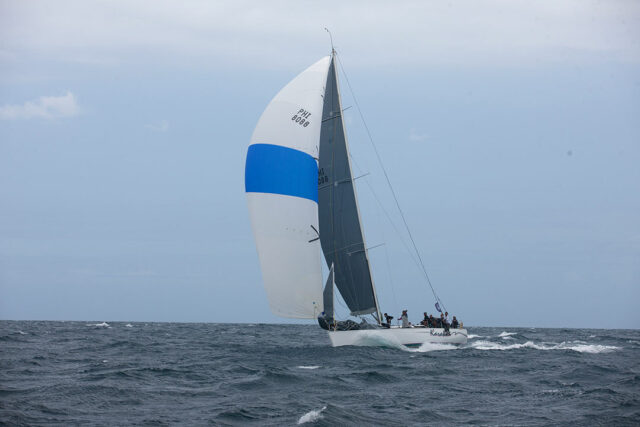
KARAKOA — BPI

THE 2026 Bank of the Philippine Islands (BPI) Boracay 200 stood as tests of endurance and seamanship in the BPI Private Wealth Signature Yacht Race Series, as 12 yachts braved the 200-nautical-mile offshore passage from Subic to Boracay, followed by two days of intense inshore racing around Boracay’s famed waters.

The crews contended with highly variable winds — from light patches to bursts exceeding 25 knots — alongside rolling swells and choppy cross-seas, demanding constant adjustments and sustained tactical precision over an extended stretch of open water.

Organized by the Ocean Racing Club of the Philippines, the BPI Boracay 200 stands as offshore races on the Philippine sailing calendar. Held from March 10 to 15. Two new boats from Hong Kong joined the fleet and signaling the expanding regional reach of the competition.

“What we’re seeing is a regatta that continues to grow in both scale and impact,” said Andy Aguila, Regatta chairman for the 2026 BPI Boracay 200. “Each edition brings stronger competition and broader participation, which is vital for the continued development of the sport. The momentum behind this series is helping strengthen the sailing community while positioning the Philippines as an emerging destination for offshore racing in the region.”

Now in its third season, the BPI Private Wealth Signature Yacht Race Series continues to bring together world-class sailors, iconic Philippine destinations.

“The BPI Boracay 200 represents sailing at its highest level, where endurance, preparation, and disciplined execution ultimately determine success,” said Maria Theresa Marcial, president and chief executive officer of BPI Wealth.

Leading the fleet was Karakoa, an Excel 53, which swept all major honors for the leg: the Line Honors, the IRC Class Overall title, and the coveted Overall Winner of the 2026 BPI Boracay 200. Skippered by father-and-son tandem Ray Ordoveza and Francis Ordoveza.

Shai Gilgeous-Alexander nets 47 to lead Thunder past Pistons in overtime

SHAI GILGEOUS-ALEXANDER scored 47 points to lift the Oklahoma City Thunder to a 114-110 overtime win over the short-handed Detroit Pistons at home on Monday.

The win was a critical one for the Thunder, who stayed 2 1/2 games ahead of San Antonio for the top spot in the Western Conference and reached the 60-win mark for the second consecutive season.

The Pistons’ two-game win streak was snapped, though they remained four games ahead of Boston after the Celtics also lost on Monday. Detroit (54-21) was short-handed, playing without its top five scorers and one regular starter.

But the Pistons fought back from an early deficit to hang in there with Oklahoma City, thanks in large part to a 16-4 advantage in second-chance points.

The Thunder, on a second night of a back-to-back, were without starters Jalen Williams and Isaiah Hartenstein.

Gilgeous-Alexander opened overtime with a step-back jumper, found Alex Caruso for a corner 3-pointer with just more than a minute remaining and then hit six free throws in the final minute.

Gilgeous-Alexander was 21 of 25 from the free-throw line, his second-most free-throw attempts of his career.

Detroit had struggled from the free-throw line, missing 11 free throws by the time Paul Reed stepped to the line with 31.2 seconds to play.

Gilgeous-Alexander appeared to put the Thunder ahead in the closing seconds after his steal gave Oklahoma City the ball back with time winding down.

He elevated for a step-back 3-pointer, draining the shot with four seconds left but was called for an offensive foul for pushing off to create space for the shot.

Daniss Jenkins’ 3-point try at the buzzer was online but bounced off the back of the rim to send the game into overtime.

The Pistons didn’t take their first lead until Kevin Huerter’s transition 3-pointer just less than five minutes into the fourth after Ronald Holland III’s steal on the other end to create the chance.

Back-to-back Gilgeous-Alexander buckets put Oklahoma City back in front following Huerter’s 3-pointer, but the Pistons responded with a 10-1 run to take a 97-90 lead.

The Thunder responded quickly, with six consecutive points by Gilgeous-Alexander.

Reed led Detroit with 21 points and 10 rebounds.

NBA APPROVES SALE OF TRAIL BLAZERS TO TOM DUNDON-LED GROUP
The NBA Board of Governors approved the sale of the Portland Trail Blazers from the estate of Paul Allen to a group led by Carolina Hurricanes owner Tom Dundon, the league announced on Monday.

Valued at approximately $4.25 billion, the transaction will be a two-part deal, with 80.1% being bought this week, closing by March 31, and the remaining 19.9% to close no later than Sept. 1, 2028, according to multiple reports.

Under the agreement, the team will remain in Portland, and Dundon will serve as the Trail Blazers’ governor.

At least two members of the ownership group have connections to Oregon. Sheel Tyle is the founder of Collective Global, based in Portland. And Peggy Cherng, part of the family that owns Panda Express restaurants, attended Oregon State. — Reuters

Mullins’ Madness

It began, as things often do in March, with numbers that made no sense. Down 19. Missing 17 of their first 18 from beyond the arc. Outplayed, outshot, and, for long stretches, outclassed by the top Blue Devils. And yet, when it mattered most, the Huskies found themselves with the ball, a sliver of time, and a chance that defied logic.

What followed will settle into the NCAA’s collective memory with the ease of inevitability. Freshman Braylon Mullins, scoreless from deep until the final minute, gathered a loose ball near midcourt, took one rhythm dribble, and launched from roughly 35 feet. The shot, however hurried, dropped with 0.4 second left, sealing a 73-72 victory and sending the Huskies to yet another Final Four.

For longtime hoops fans, the development brings with it a temptation to frame the moment as a lightning strike that fits neatly within the randomness of March Madness. But the lure and allure of chance figures to undersell what has, over time, become the defining trait of the Huskies’ program under head coach Dan Hurley. They do not merely survive chaos; they seem to anticipate it, bend toward it, and trust that if they remain within reach, their discipline, instinct, and sheer belief will tilt the balance in their favor. This is, after all, their third Final Four in four years, a run that brings with it thoughts of a dynasty.

And yet, for all the Huskies’ programmatic excellence, the contest should not have belonged to them. The Blue Devils dictated terms for nearly 39 minutes. With the Boozer brothers taking charge, they were composed on offense and suffocating on defense. Even late, when the margin was trimmed, they still held the advantage: up two with single-digit seconds remaining, one clean set of passes away from closing the door. Instead, another turnover, forced under pressure, snatched defeat from the throes of victory.

This is the cruelty, and the beauty, of the tournament. It rewards timing as much as it crowns consistency. For the Blue Devils, the loss will linger not because they were outplayed, but because they failed to outlast. For the Huskies, the triumph reinforces a subtler truth: greatness at this level is not always about dominance. Sometimes, it is about remaining confident long enough for the improbable to happen.

In time, Mullins’ shot will take its place alongside the tournament’s canonical moments; it will be replayed and reinterpreted until revisionist history makes it all but preordained. In the fleeting moment before it left his hands, however, it was a last resort: born of desperation, suspended between defeat and deliverance. That it found the net says as much about the Huskies’ enduring poise as about the tournament itself: unforgiving, unscripted, and, on occasion, impossibly kind.


Anthony L. Cuaycong has been writing Courtside since BusinessWorld introduced a Sports section in 1994. He is a consultant on strategic planning, operations and human resources management, corporate communications, and business development.

Philippines to impose price cap on imported rice

BW FILE PHOTO

MANILA — Philippine President Ferdinand R. Marcos Jr. said on Tuesday that the government will cap the price of imported well-milled rice at 50 pesos per kilo ($0.8238) to keep food prices in check as rising fuel costs caused by the Middle East crisis threaten to stoke inflation.

“We will issue the executive order at the soonest possible time to implement it,” Mr. Marcos said in an address. — Reuters

Malaysia says its tankers will be exempt from Iran’s Hormuz toll

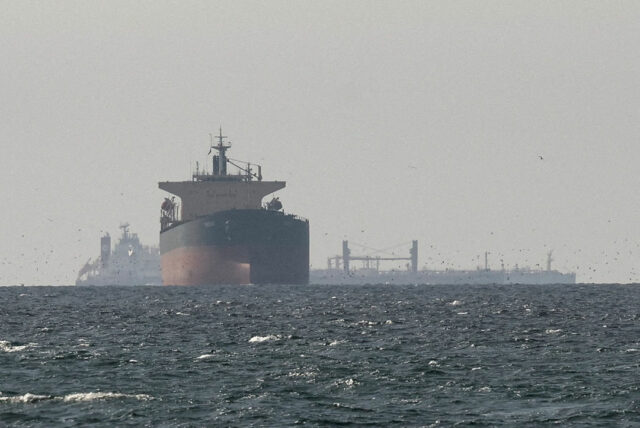
Tankers sail in the Gulf, near the Strait of Hormuz, as seen from northern Ras al-Khaimah, near the border with Oman’s Musandam governance, amid the US-Israeli conflict with Iran, in United Arab Emirates, March 11, 2026. — REUTERS

Malaysian tankers allowed to sail through the Strait of Hormuz won’t be subject to a toll imposed by Iran, according to Transport Minister Anthony Loke.

“The Iranian ambassador has mentioned that no toll is being imposed on Malaysian vessels,” Loke said at an event on Tuesday. “We are a friendly party, we have good diplomatic relationship with the Iranian government.”

On Saturday, Malaysia’s foreign affairs minister said Iran has cleared seven Malaysian tankers to traverse the Strait of Hormuz, which has become a flashpoint of the war in the Middle East. The vessels, which are currently stranded in the vital waterway, include those owned by Malaysian energy giant Petroliam Nasional Bhd., shipping firm MISC Bhd. and Sapura Energy Bhd.

Iran has now passed a law introducing a toll and banning US and Israeli vessels from transiting the strait. The bill formalizes a system which multiple shipowners have already been reporting, as tankers are asked — through intermediaries — for detailed cargo and crew lists, and, in some cases, for payment.

Malaysia has long had a pragmatic policy toward Iran. Prime Minister Anwar Ibrahim has recognized Tehran’s right to protect its sovereignty while also urging a rapid resolution to the conflict. Anwar, in a televised address on Thursday, thanked Iran’s president for facilitating early passage for the vessels. — Bloomberg

Giant oil tanker off Dubai hit by Iranian strike after Trump’s latest threats

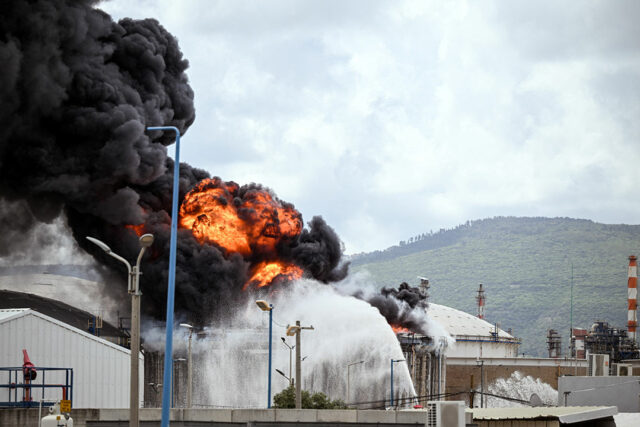
A blaze after Israel's Fire and Rescue Service said that an industrial building and a fuel tanker at Israel's Oil Refineries were hit by debris from an intercepted Iranian missile, amid the U.S.-Israel conflict with Iran, in Haifa, Israel March 30, 2026. — REUTERS/RAMI SHLUSH ISRAEL OUT NO COMMERCIAL OR EDITORIAL SALES IN ISRAEL TPX IMAGES OF THE DAY

TEL AVIV/WASHINGTON — Iran attacked and set ablaze a fully loaded crude oil tanker off Dubai on Monday, as President Donald J. Trump warned the US would obliterate Iran’s energy plants and oil wells if it does not open the Strait of Hormuz.

The strike on the Kuwait-flagged Al-Salmi is the latest in a string of assaults on merchant vessels by missiles or explosive air and sea drones in the Gulf and Strait of Hormuz since the US and Israel attacked Iran on Feb. 28.

The month-long conflict has spread across the Middle East, killing thousands, disrupting energy supplies and threatening to send the global economy into a tailspin.

Crude oil prices briefly spiked anew after the attack on the tanker, which can carry around 2 million barrels of oil worth more than $200 million at current prices.

Kuwait Petroleum Corp., the ship’s owner, said the attack happened early on Tuesday, causing a fire and hull damage, but there were no reported injuries.

Authorities in Dubai later said they had been able to bring the fire under control following a drone attack on the tanker. No injuries have been reported, they said.

The jump in oil and fuel prices has started to weigh on US household finances and become a political headache for Mr. Trump and his Republican Party ahead of the November midterm elections, having vowed to lower energy prices and ramp up US oil and gas production.

The US national average retail price of gasoline crossed $4 a gallon for the first time in more than three years on Monday, data from price-tracking service GasBuddy showed, as tightening global supplies push US crude prices above $101 a barrel.

TROOPS DEPLOY AS TALKS CONTINUE
Attacks by both sides are showing no signs of easing, with fears of a wider conflict growing.

Iran-aligned Houthis entered the war by firing missiles and drones at Israel in recent days and Turkey reported a ballistic missile launched from Iran had entered Turkish airspace before being shot down by North Atlantic Treaty Organization air and missile defenses.

Israel carried out missile strikes on what it called military infrastructure in Tehran and infrastructure used by Iran-backed Hezbollah in Beirut, leaving black smoke hanging over the Lebanese capital.

Sounds of explosions were heard in parts of eastern and western Tehran minutes after Israel issued a warning of imminent strikes in the city, Iran’s Tasnim news agency reported on Tuesday. Residents in the eastern Pirouzi district reported power outages after the blasts, while officials from Iran’s energy ministry began efforts to restore power, Tasnim added.

The Israeli military said early on Tuesday that four soldiers had been killed in southern Lebanon, the same area as three United Nations peacekeepers from Indonesia were killed in two separate incidents in recent days.

Iran’s military spokesman said on state television that targets in the latest wave of Tehran’s missile and drone attacks included “hideouts” of US military personnel in five bases in the region and in Israel.

Thousands of soldiers from the US Army’s elite 82nd Airborne Division have started arriving in the Middle East, two US officials told Reuters on Monday, part of reinforcements that would expand Mr. Trump’s options to include a ground assault in Iran, even as he pursues talks with Tehran.

White House Press Secretary Karoline Leavitt said Mr. Trump wanted to reach a deal with Iranian leaders before a second deadline, now April 6, for Iran to open the Strait of Hormuz, a narrow waterway that normally carries about a fifth of global oil and liquefied natural gas supplies.

Ms. Leavitt said talks with Iran were progressing, adding that what Tehran says publicly differs from what it tells US officials in private.

Iran said earlier on Monday it had received US peace proposals via intermediaries, following weekend talks between the foreign ministers of Pakistan, Egypt, Saudi Arabia and Turkey.

Iranian Foreign Ministry spokesperson Esmaeil Baghaei said the proposals were “unrealistic, illogical and excessive.”

“Our position is clear. We are under military aggression. Therefore, all our efforts and strength are focused on defending ourselves,” he told a press conference.

NEW TRUMP THREAT TO OBLITERATE IRAN ENERGY, OIL PLANTS
Soon after Mr. Baghaei’s remarks, Mr. Trump said the US was in talks with a “more reasonable regime” to end the war in Iran but also issued a new warning over the Strait of Hormuz.

“Great progress has been made but, if for any reason a deal is not shortly reached, which it probably will be, and if the Hormuz Strait is not immediately ‘Open for Business,’ we will conclude our lovely ‘stay’ in Iran by blowing up and completely obliterating all of their Electric Generating Plants, Oil Wells and Kharg Island,” Mr. Trump wrote in a social media post, also threatening to attack Iranian desalination plants.

However, the Wall Street Journal reported Mr. Trump had told aides he is willing to end the military campaign even if the Strait remains largely closed and leave a complex operation to reopen it for a later date. That helped oil prices retreat and lifted stock markets off their lows as investors hoped for some way for hostilities to end swiftly.

Asked about the report, the White House referred to comments made by Secretary of State Marco Rubio, who told Al Jazeera the strait would be open “one way or another” after the US military operation.

The White House said Mr. Trump was considering asking Arab nations to pay for the cost of the war. “It’s an idea that I know that he has and something that I think you’ll hear more from him on,” Ms. Leavitt said in response to a reporter’s question about the idea.

His administration requested an additional $200 billion in funding for the war. The request faces stiff opposition in the US Congress which must approve new spending. Reuters

US vows to seek WTO alternatives after Cameroon meeting fails to renew e-commerce moratorium

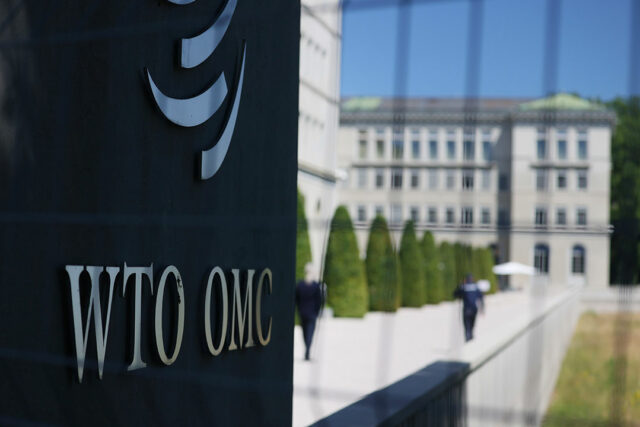
A sign is pictured in front of the World Trade Organization (WTO) headquarters ahead of the Ministerial Conference (MC12) in Geneva, Switzerland, June 12, 2022. — REUTERS/DENIS BALIBOUSE

YAOUNDE — World Trade Organization (WTO) countries failed to agree on a reform path or even a routine extension of an e-commerce duty moratorium, prompting a fresh vow from the US to seek alternative deals with like-minded countries and relegate the body to only a limited role in global trade policy.

Four days of talks among trade ministers in Cameroon’s capital Yaounde broke up in the early hours of Monday with Brazil and Turkey blocking a bid to extend the WTO’s e-commerce moratorium, including on digital downloads and streaming.

The moratorium, agreed at the dawn of the Internet, lapsed for the first time in 28 years.

US Trade Representative Jamieson Greer said in a statement that he has secured agreements from dozens of countries, including nearly all major trading partners, not to impose tariffs on US digital transmissions. He vowed that if the WTO fails to restore the moratorium, “the United States will work outside of the WTO with all interested partners to get it done.”

Mr. Greer, who is the architect of US President Donald J. Trump’s multi-front tariff assault on global trading partners, said he was disappointed that the meeting ended in an impasse. He said some countries demonstrated a “lack of seriousness” in WTO reform by not sending their trade ministers to Cameroon.

“I have always been skeptical of the value of the WTO, and this week’s conference confirmed that this organization will play only a limited role in future global trade policy efforts,” Mr. Greer said.

The WTO has been increasingly sidelined by economic nationalism in the past decade, and its 14th ministerial conference in Cameroon will further that trend, analysts said.

RISK OF A ‘SPAGHETTI BOWL’ OF DEALS
“It marks another crack in the foundations of the WTO system,” said Andrew Wilson, deputy secretary general of the International Chamber of Commerce.

Meanwhile, Jonathan McHale, vice-president of digital trade at the Computer and Communications Industry Association, said that WTO members have allowed the digital trade issue to become “a negotiating football.”

“WTO members must return to this issue urgently in Geneva, build on the draft texts developed at MC14, and deliver a durable solution that restores certainty and credibility to the system,” he said.

The talks tested the WTO’s relevance after a year of huge trade turmoil and more recent disruptions in the Middle East.

Still, a subset of 66 members did agree to sidestep previous hurdles to usher in the world’s first baseline deal on digital trade rules among participants.

The parties of the Comprehensive and Progressive Agreement for Trans-Pacific Partnership — 12 countries including Australia, Britain, Canada, Japan and Mexico but not the US — met with the European Union (EU) on the sidelines of the WTO talks.

As diplomats pursue a mix of agreements between two or larger subsets of countries, they risk creating a complex “spaghetti bowl” of agreements, said Dmitry Grozoubinski, executive director of the Geneva Trade Platform.

E-COMMERCE TEST
Extending the e-commerce moratorium was seen as key to securing WTO support from the US, which under Mr. Trump has retreated from global multilateral bodies.

WTO Director-General Ngozi Okonjo-Iweala said the trade body hoped the moratorium could still be restored, adding that Brazil and the US were trying to reach agreement on it.

She said progress was made on a reform roadmap and talks on issues like making subsidy use more transparent and facilitating decision-making are expected to continue in Geneva.

The US and the EU argue that China in particular has taken advantage of current rules to their detriment. China has long dismissed accusations that it flouts trade rules and said it supports the multilateral system, including the WTO.

Diplomats worked through Sunday to close the gap between Brazil’s initial two-year proposal on the moratorium and the permanent extension sought by the US by drafting a plan for a four-year extension with a one-year sunset buffer.

Brazil then offered a four-year extension with a mid-term review clause, but it lacked sufficient support.

Developing countries opposing a lengthy extension argue the moratorium denies them potential tax revenue.

A US official said Brazil had opposed a “near-consensus document.” A Brazilian diplomat said, “the US wanted the sky,” and that a longer extension was not prudent given rapid developments in digital trade.

Another diplomat said US Trade Representative Mr. Greer made delegates “uncomfortable” by warning of “natural consequences” if a long-term extension was not agreed.

Keith Rockwell, a trade analyst at the Hinrich Foundation and a former WTO director, said Brazil’s efforts to leverage e-commerce for concessions on agriculture failed because the US was no longer so invested in the WTO.

“In the old days, because they felt responsibility for the system, the Americans would have swallowed hard and taken a hit,” he said. “But now they won’t do that anymore.” Reuters

Australia readies social media court action citing teen ban breaches

Claire Ni, 14, poses holding a mobile phone as a law banning social media for users under 16 in Australia takes effect, in Sydney, Australia, December 10, 2025. — REUTERS/HOLLIE ADAMS

SYDNEY — Australia threatened on Tuesday to sue social media giants for allegedly flouting a ban on under-16s, as its internet regulator disclosed it is investigating some of the biggest platforms for suspected noncompliance with the world-first measure.

Three months after the ban came into effect, the eSafety Commissioner said it was probing Meta’s Instagram and Facebook, Google’s YouTube, Snapchat and TikTok for possible breaches of the law.

Communications Minister Anika Wells said the government was gathering evidence “so that the eSafety Commissioner can go to the Federal Court and win.”

“We have spent the summer building that evidence base of all the stories that no doubt you have all heard… about how kids are getting around that,” Ms. Wells told reporters in Canberra.

Governments around the world are watching Australia’s moves to rein in the tech giants, with many considering similar regulation to protect children from harms including bullying and body-shaming associated with social media.

The legal threat is a striking change of tone from a government which had hailed tech giants’ shows of cooperation when the ban went live in December.

After an early claim the companies had deactivated 4.7 million suspected underage accounts, the government has faced daily headlines of teenagers evading restrictions or simply keeping their accounts without being asked their age.

Meta and Snap said they were committed to complying with the ban, and a Meta spokesperson added the government’s own trial of age-assurance technology found “natural error margins” around the 16 age cutoff.

TikTok declined to comment while a Google spokesperson was not immediately available for comment.

Under the Australian law, platforms must show they are taking reasonable steps to keep out underage users or face fines of up to A$49.5 million ($34 million) per breach, something eSafety would need to pursue in a civil court.

ENFORCEMENT STANCE
The regulator previously said it would only take enforcement action in cases of systemic noncompliance.

But in its first comprehensive compliance report since the ban took effect, eSafety said measures taken by the platforms were substandard and it would make a decision about next steps by mid-year.

“We are now moving into an enforcement stance,” said Commissioner Julie Inman Grant in a statement.

The regulator reported major compliance gaps, including platforms prompting children who had previously declared ages under 16 to do fresh age checks, allowing repeated attempts at age-assurance tests until a child got a result over 16 and poor pathways for people to report underage accounts.

Some platforms did not use age-inference, which estimates age based on someone’s online activity, and some only used age-assurance measures like photo-based checks after a user tried to change their age, rather than sign up.

That made it “likely many Australian children aged under 16 have been able to create accounts on age‑restricted social media platforms by simply declaring they are 16 or older,” the regulator said.

Nearly one-third of parents reported their under-16 child had at least one social media account after the ban took effect, of which two-thirds said the platform had not asked the child’s age, it added. Reuters

Israel passes death penalty law for Palestinians convicted of lethal attacks

Umm Yousef Dahdouh, a displaced Palestinian mother of three prisoners held by Israel, displays a picture of one of her jailed sons while sitting inside her displacement tent in Gaza City, March 30, 2026. — REUTERS/DAWOUD ABU ALKAS

JERUSALEM — Israel’s parliament passed a law on Monday making death by hanging a default sentence for Palestinians convicted in military courts of deadly attacks, fulfilling a pledge by Prime Minister Benjamin Netanyahu’s far-right allies.

The law would only apply to Israelis convicted of murder whose attacks aimed at “ending Israel’s existence,” meaning it would mete out the death penalty for Palestinians but not for Jewish Israelis who committed similar crimes, critics say.

The legislation has drawn international criticism of Israel, which is already under scrutiny for increasing violence by Jewish settlers against Palestinians in the occupied West Bank and its war in Gaza.

NO RIGHT TO CLEMENCY
The measure includes provisions requiring an execution by hanging within 90 days of sentencing, with some allowance for a delay but no right to clemency. It provides the option of imposing a life imprisonment sentence instead of capital punishment, but only in unspecified “special circumstances.”

Israel abolished the death penalty for murder in 1954. The only person executed in Israel after a civilian trial was Adolf Eichmann, an architect of the Nazi Holocaust, in 1962.

Military courts in the West Bank can already sentence Palestinian convicts to death but have not done so.

The measure was promoted by Itamar Ben-Gvir, the far-right national security minister who wore noose-shaped lapel pins in the run-up to the vote.

“This is a day of justice for the murdered, a day of deterrence for enemies,” Mr. Ben-Gvir said in parliament. “Whoever chooses terror chooses death.”

PALESTINIANS REJECT LAW, SOME CALL FOR ATTACKS
Palestinian President Mahmoud Abbas condemned the legislation as a breach of international law and a doomed bid meant to intimidate Palestinians.

“Such laws and measures will not break the will of the Palestinian people or undermine their steadfastness,” Mr. Abbas’ office said in a statement.

“Nor will they deter them from continuing their legitimate struggle for freedom, independence, and the establishment of an independent Palestinian state with East Jerusalem as its capital.” 

Palestinian militant groups Hamas and Islamic Jihad called on Palestinians to launch attacks in revenge for the law.

CRITICS SAY BILL IS DISCRIMINATORY
Israel’s leading rights groups decried the law as “an act of institutionalized discrimination and racist violence against Palestinians.” The Association for Civil Rights in Israel said it filed an appeal against the law with Israel’s Supreme Court.

The law is the latest action by Mr. Netanyahu’s nationalist-religious coalition to raise concern among Israel’s Western allies, who have also been critical of settler violence against Palestinians in the West Bank.

In an effort to head off international backlash, Mr. Netanyahu asked for some elements of the legislation to be softened, Israeli media reported. He voted in favor of the bill, which won the backing of 62 of the Knesset’s 120 members.

The original bill had mandated the death sentence for non-Israeli citizens convicted in West Bank military courts of deadly terrorist acts. The revised legislation includes the option of life imprisonment.

In Israel’s civilian courts, the new legislation mandates either life imprisonment or the death penalty for anyone convicted of “deliberately causing the death of a person with the intent of ending Israel’s existence.”

Critics of the bill say that language effectively confines those Israelis who can be sentenced to death to members of the country’s 20% Arab minority, many of whom identify as Palestinian, and not to Jewish citizens.

Even before the vote, the bill drew criticism from the foreign ministers of Germany, France, Italy and Britain, who said it had a “de facto discriminatory” character toward Palestinians and undermines Israel’s democratic principles.

A group of United Nations experts said the bill includes vague definitions of “terrorist,” meaning the death penalty could be meted out over “conduct that is not genuinely terrorist.”

Mr. Ben-Gvir’s Jewish Power party argues that the death penalty will deter Palestinians from carrying out deadly attacks against Israelis or attempting kidnappings with the aim of affecting swap deals for Palestinians jailed in Israeli prisons.

Amnesty International, which tracks countries imposing death penalty laws, says there “is no evidence that the death penalty is any more effective in reducing crime than life imprisonment.”

Professionals in Israel’s legal establishment argued the bill was unconstitutional, increasing the likelihood of the Supreme Court striking down the law.

GLOBAL TREND ON DEATH PENALTY IS TOWARD ABOLITION
Some 54 countries around the world permit the death penalty, including a handful of democracies such as the United States and Japan, according to Amnesty International. The group says the global trend is toward abolition, with 113 countries having outlawed it.

Israeli rights group B’Tselem says military courts in the West Bank, where Palestinians are tried for alleged crimes, have a 96% conviction rate and a history of extracting confessions through torture.

Mr. Ben-Gvir, who was convicted in 2007 of racist incitement against Arabs and support for the Kach group on the Israeli and US terrorism blacklists, has overseen an overhaul of prisons that has led to allegations of abuse of Palestinian prisoners.

He made capital punishment for Palestinian militants a main pledge in his 2022 election campaign and since taking office has publicly backed some Israeli soldiers being probed for suspected excessive force against Palestinians.

The next national election is due in October 2026. — Reuters

Asia barters for scarce energy as Iran crisis throttles supplies

A model of an oil pump is seen in front of a Russian flag in this illustration taken January 9, 2026. — REUTERS/DADO RUVIC/ILLUSTRATION/FILE PHOTO

TOKYO/COLOMBO/WELLINGTON – Indonesia’s leader visited Tokyo this week in Asia’s latest flurry of fuel bartering efforts to offset crippling shortages caused by conflict in the Middle East, a key source of regional energy supplies.

The race for alternatives has hotted up as China, the world’s second largest economy, imposed fuel export bans, while nations such as South Korea and Thailand try to exploit the lifting of US sanctions on Russian energy as a stopgap move.

Matters are getting desperate for poorer nations as the Philippines became the first to declare a national energy emergency, Sri Lanka cut its work week to four days and rationed fuel, and Myanmar limited car drivers to alternate days.

Southeast Asia’s biggest economy and the world’s fourth most populous country, Indonesia is also expected to announce curbs in coming days.

“To maintain rational economic relationships is of vital importance,” President Prabowo Subianto told Japanese business leaders in Tokyo after pacts signed on Monday covering long-term oil and gas and geothermal power projects.

“The geopolitical situation in the Middle East gives strategic uncertainty for the security of our energy.”

More immediately, Jakarta could strike a deal to beef up supplies of liquefied natural gas to Tokyo in exchange for liquefied petroleum gas, an essential cooking fuel, Djoko Siswanto, the head of oil and gas regulator SKK Migas, told Reuters on Monday.

While Prabowo and Japan’s Sanae Takaichi agreed to boost ties on energy security at a meeting on Tuesday, neither leader confirmed such a swap agreement.

Japan’s government-backed oil and gas producer Inpex is discussing a similar barter deal with India to swap LPG for naphtha and crude oil, according to an internal Japanese government document seen by Reuters.

Vietnam has also sought Japan’s help for energy supplies, it showed, while the Philippines said on Monday it had received diesel from Tokyo.

Japan’s trade minister stressed the importance of keeping up fuel supplies to Southeast Asian nations where it has supply chains, but declined to comment on specific deals.

Resource-poor Japan relies on the Middle East for about 95% of its oil and 11% of its imports of liquefied natural gas, though its energy stockpiles are among the world’s largest.

CHINA EXPORT BAN BITES
Australia’s position as a major energy producer and exporter should give it clout in talks with Asian partners for supplies of jet fuels that could soon run short, energy analysts said.

The government was engaging with major suppliers such as China, Singapore and South Korea, Foreign Minister Penny Wong said this month.

However, China has banned exports of refined fuel, including jet fuel, to safeguard its economy from energy disruption.

That ban, and another by Thailand, have hit Vietnam especially hard, as the neighbours fill more than 60% of its jet fuel needs.

Vietnam’s aviation regulator urged authorities this month to seek additional jet fuel supplies from Brunei, India, Japan and South Korea.

Two-way deals with alternative suppliers should help ease shortages, but a longer war would require concerted efforts, said Hiroshi Hashimoto, senior fellow at Japan’s Institute of Energy Economics.

“If the crisis continues for a prolonged period, Asian countries may need to develop multilateral frameworks to help each other and talk to alternative supply sources.”

RUSSIAN COULD BE UNLIKELY ALTERNATIVE SUPPLIER
Russia could prove to be an unlikely supplier for some Asian countries, after the United States issued a temporary waiver of sanctions for its attack on Ukraine.

For the first time in years, South Korea imported Russian naphtha this week, a feedstock critical for making plastics used in everything from automobiles to electronics, and also seeks to secure crude oil, its energy ministry said.

India has stepped up purchases of oil from Russia, with which Bangladesh, Thailand and Sri Lanka are also in talks.

It could be challenging to finalise arrangements with Russian oil companies before the April 11 expiry of the US sanctions waiver, however, said Janaka Rajakaruna, chairman of Sri Lanka’s state-run Ceylon Petroleum Corp.

Small countries such as New Zealand are keenly aware they could be vulnerable amid a scramble for fuel set to get more frenetic in the next few months.

Prime Minister Christopher Luxon has spoken by telephone in recent weeks with the leaders of Singapore, Malaysia and South Korea, New Zealand’s three largest suppliers of refined products, as well as with the head of the European Commission.

Associate Energy Minister Shane Jones told Reuters he had also contacted big commodity traders, among others, in the effort to shore up fuel supplies.

“Unless you build options, we’re too small to get noticed in a maddening, frenzied search for fuel in another two or three months,” Jones added. — Reuters

ADVERTISEMENT
ADVERTISEMENT