Home Blog Page 80

Meta testing a new premium subscription on Instagram with stealth view on stories

MARIIA SHALABAIEVA-UNSPLASH

Instagram is testing a new premium subscription that gives paying users access to exclusive features, part of an effort to build a reliable revenue stream outside of the company’s core advertising business.

The list of subscribers-only perks include several related to Instagram’s Stories product, such as the ability to view another person’s Story without them knowing. Paying users can also create unlimited audience lists and extend a Story’s shelf-life by an additional 24 hours. Stories, one of the app’s most popular features, currently expire after 24 hours.

“Our hope from these tests is to understand what’s most valuable to people in a premium feature set,” an Instagram spokesperson said on Monday, confirming that the company is testing the premium subscriber tier in a few countries. TechCrunch, which first reported on the test, said the company is offering the subscriptions in Mexico, Japan and the Philippines, and charging just a few dollars per month.

Instagram parent Meta Platforms Inc. has tried various subscription products over the years and offers one so people can support content creators they follow. Other advertising-dependent companies, including Snap Inc. and Elon Musk’s X, have also pushed into subscriptions, which are considered complementary to ads and provide a more predictable source of revenue.

Meta is also considering premium subscriptions for Facebook and WhatsApp, the company confirmed in February. — Bloomberg

BSP sees faster inflation in March at 3.1%-3.9% 

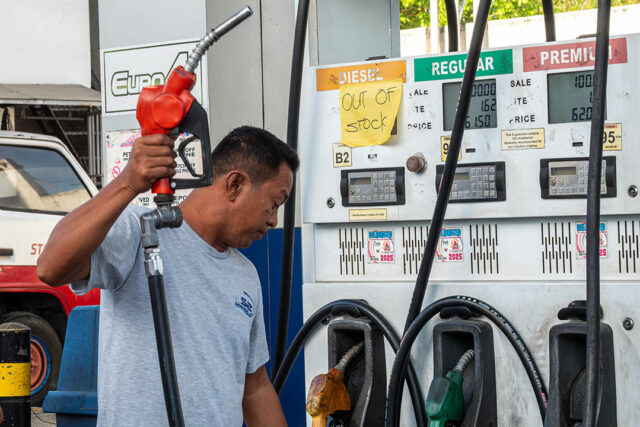
MOTORISTS queue at a gasoline station along Norzagaray Road in San Jose del Monte on March 8, 2026. — PHILIPPINE STAR/RYAN BALDEMOR

By Katherine K. Chan, Reporter

Costlier fuel, electricity, rice and the peso’s weakness drove inflation past the central bank’s point target in March, the Bangko Sentral ng Pilipinas (BSP) said on Tuesday.

In its latest month-ahead inflation forecast, the BSP said inflation likely settled between 3.1% and 3.9% in March, faster than the 1.8% clip a year ago and 2.4% in February.

At the upper end of the forecast, inflation may have accelerated to its fastest pace in over two years or since the 4.1% in November 2023. It would also match the headline inflation logged in May 2024.

Meanwhile, at the bottom end, inflation would be the fastest print in 19 months or since the 3.3% clip in August 2024.

“Inflation risks have intensified with upward price pressures arising from the significant increase in domestic petroleum prices, higher rice prices, increased electricity charges in Meralco-serviced areas, and depreciation of the peso,” the central bank said in a statement.

Still, cheaper prices of vegetables, fish and meat likely tempered price pressures during the month, it added.

Dining In/Out for Lent and Easter


Paint sugar cookies, smash chocolate eggs

THIS EASTER, dessert chef Lovely Jiao of Sugarplum Pastries invites kids and adults to elevate the celebrations with interactive season-inspired confections. Veering away from the iconic Easter bunnies, her latest collection, titled “Chicks & Cheers,” introduces a blend of pastel colors and dainty elements such as bows, laces, and cheeky hatchlings to symbolize rebirth and encapsulate the essence of sweetness. Headlining the selection is Hatch Me, a big chocolate-shaped egg adorned with white fondant details to decorate. It comes in a “nest” bag with an edible sugar cookie palette, a paintbrush, and a wooden mallet. Her tip: Once painted, let the egg sit for a bit to dry. And then smash for more surprises. Inspired by pinball maze puzzles which come in party goodie bags, the bestselling sugar cookie makes a return this season. The edible and playable Speggtacular Maze takes an egg form adorned with flowers and bows. Also included in the set are Binge Oatmeal Cookie. Also available is the all-time favorite season-inspired cookie-do set, which this year is called the Eggciting Kit. It contains three Easter-themed sugar cookies with line guides and three piping bags of icing in yellow, pink, and blue, and three chocolate-coated eggs, which, when smashed, will reveal sprinkles and trinkets to adorn the cookies with. Ms. Jiao has a culinary degree from the De La Salle-College of Saint Benilde School of Hotel, Restaurant, and Institution Management and is equipped with experiences from Makati Shangri-La and F1 Hotel Taguig. For more information, visit facebook.com/sugarplumpastriesph.


The Pen marks Easter with a giant egg and more

THIS EASTER, The Peninsula Manila marks a season of renewal during a year of celebration, as the hotel commemorates 50 years at the heart of the city. Throughout Holy Week and on Easter Sunday, thoughtful experiences unfold across the hotel. Young guests can hop into Egglandia’s “Bunny’s Playground” an Easter Egg Hunt at the Rigodon Ballroom on Easter Sunday, April 5, from 2-5 p.m. (P5,500 for one child and one adult; P3,000 for each additional guest). Children ages one to 10 can enjoy the Easter Egg Hunt alongside face painting, trace-and-color stations, balloon domes, magic shows, claw machine games, and a lively bunny play area. The Easter Bunny will also make a special appearance to help children fill their baskets with hidden eggs. A festive merienda buffet will be served in the Garcia Villa Room, with prizes awarded for the best bunny and egg costumes. Meanwhile, at The Peninsula Boutique, Head Pastry Chef Annalyn Solano presents a spectacular limited-edition Golden Anniversary Chocolate Easter Egg, weighing four kilograms and hiding prizes inside. Only five eggs are available at P8,888 each, with lucky winners discovering rewards such as an overnight stay in a Premier Suite, a Champagne dinner at Old Manila, and Peninsula Afternoon Tea vouchers. At The Lobby, the beloved Afternoon Tea receives a festive Easter twist with seasonal pastries and sweets. Each set includes a limited-edition Peninsula plush toy. The special afternoon tea is served daily until April 5, 2:30 to 5 p.m., for P3,800 with tea, or go extra special with Champagne for P5,800. For a truly memorable holiday escape, the Golden Easter Stay room package invites families to celebrate with festive surprises, breakfast at Escolta, and joyful Easter activities including access to the Egglandia Easter Egg Hunt and Merienda Buffet. Rates begin at P17,050 for a Deluxe Room and P22,450 for a Premier Suite. Gather the family for a lavish Easter Sunday Brunch at Escolta, from noon to 3 p.m., featuring seasonal specialties, classic favorites, and indulgent desserts (P5,500 for adults, and P2,750 for children).


Sheraton Manila Bay unveils Easter feast

SHERATON MANILA BAY presents “The Tale of Peter & Friends,” a magical Easter island adventure. Taking place on April 5 (Easter Sunday) from 10 a.m. to 2 p.m., the hotel’s 7th floor will transform into a vibrant island world where pirates, fairies, and Lost Boys come together for an unforgettable Easter celebration. Inspired by the spirit of childhood adventure, the event invites children to dress as pirates, fairies, or lost girls and boys as they set off on a treasure-filled journey through a series of themed activity zones. Young guests can explore a variety of interactive experiences including pirate shipwreck games, fairy obstacle courses, and egg decorating, coloring activities, and face painting. The afternoon also includes a festive lunch buffet prepared by the culinary team of Manila Bay Kitchen, along with themed beverages such as Fairy Dust Punch and Treasure Chest Cooler, specially crafted for the celebration. Families can join the adventure through a Family Bundle at P5,888 net (two adults and two kids, 11 years old and below). Additional tickets from the bundle cost P1,000 net for kids and P1,500 for adults. Individual tickets cost P1,500 net for kids and P2,000 net for adults. Special prizes will be awarded for Best Costume and Pirate-Inspired Egg Treasure Hunt Champion. Reservations are required and full pre-payment is needed to secure slots. For bookings and inquiries, guests may contact Sheraton Manila Bay at 5318-0788.


Seafood at Newport World Resorts for Lent

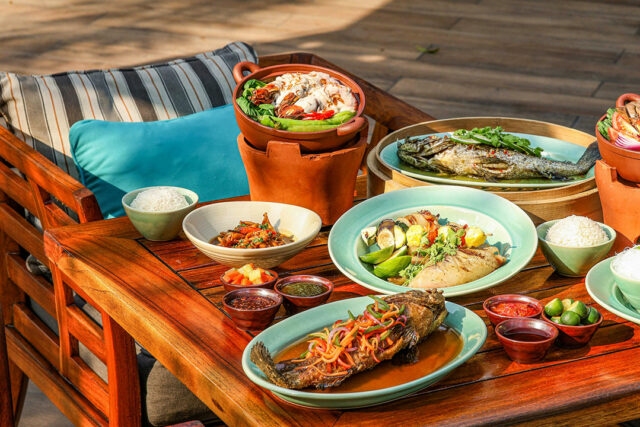
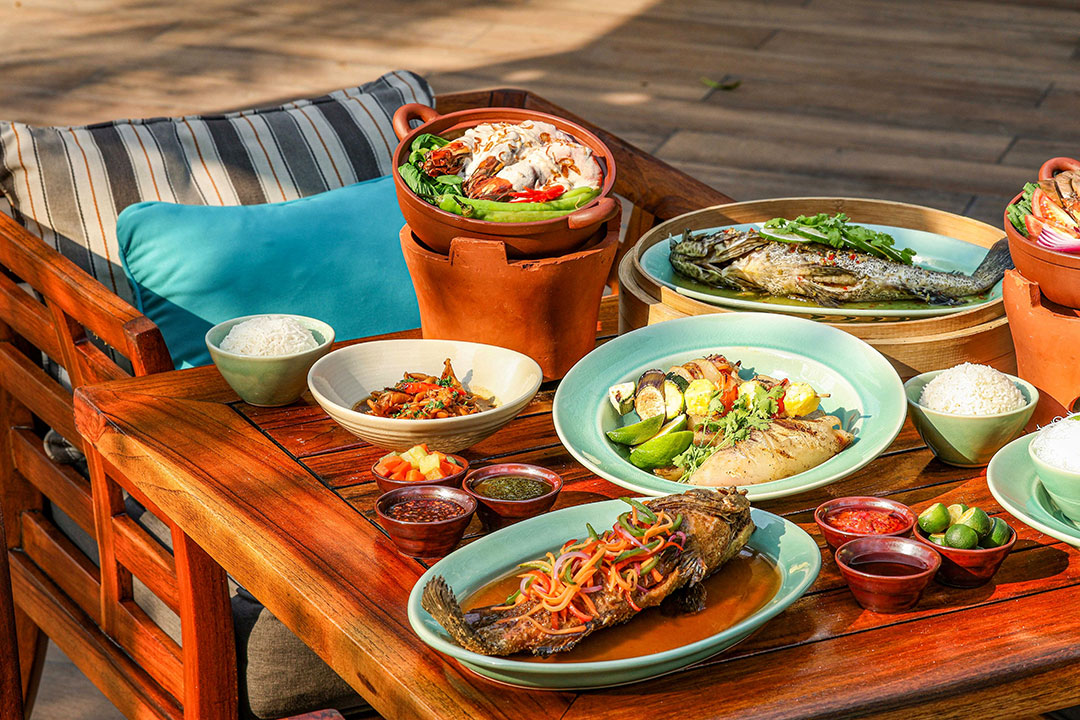
NEWPORT WORLD RESORTS invites guests to mark the Lenten occasions with them. Six restaurants across the property — Happy 8, Ginzadon, Victoria Harbour Café, Silk Road, the Greatroom at Holiday Inn Express Manila Newport World Resorts, and Gordon Ramsay Bar & Grill Philippines — present seafood offerings. Across the first five, Lenten selections are available until April 30, while Gordon Ramsay Bar & Grill Philippines extends the experience through seafood dishes featured in its 48-Minute Lunch Express Menu. Located on the third floor of the Garden Wing at Newport World Resorts, Happy 8, known for its Cantonese cuisine, serves Black Truffle & Seafood Noodles, where glass noodles and assorted seafood are wok-fried in a rich black truffle sauce. The dish is available for P913 net. Nearby, Ginzadon presents Tendon, a bowl of shrimp and squid tempura, served over warm rice and finished with a glossy tare, all for P1,400 net. Victoria Harbour Café, located on the ground floor, introduces the XO Clam Udon, where thick udon noodles and fresh clams are tossed in an XO sauce. The bowl is priced at P480 net. Silk Road, the property’s Southeast Asian restaurant, presents Thai-Style Fried Pompano for P1,350 net. Rounding out the selection, Holiday Inn Express Manila Newport World Resorts presents Pan-Fried Barramundi in Creamy Garlic Sauce, a seared fillet paired with garlic cream and fresh vegetables for P800 net. For guests looking to mark the season with something distinctly refined, Gordon Ramsay Bar & Grill Philippines presents its 48-Minute Lunch Express Menu, a selection of modern British cuisine available Mondays to Fridays from noon to 5 p.m. Among the highlights are the Seared Tasmanian Salmon, served with braised lentils, kale, ikura, and herb oil, and Mushroom Risotto, finished with truffles, mushroom, and crispy parsley. The broader menu also features light starters such as Crispy Crab Cake & Caviar and Watermelon Salad, alongside a selection of hearty mains and desserts. Guests may choose any two dishes for P1,488, or any three dishes with a complimentary drink for P2,488.


Newport hotels celebrate Easter

AS HOLY WEEK gives way to Easter Sunday on April 5, Newport World Resorts’ international hotel brands offer a range of festive celebrations. The Garden Wing Café’s Easter treats include signature cakes, festive pastries, and artisanal chocolates. Available until April 5, celebrate the season with Large Chocolate Easter Egg (P4,400), Easter Carrot Cake (P2,200), Portuguese Easter Bread (P700), and more. Hotel Okura Manila invites guests to an Easter celebration featuring an exclusive spread at Yawaragi Kisetsu Buffet, complete with hands-on activities such as cupcake-making, roving cake pops, magicians, and surprises to entertain the whole family. Celebrate a fun Easter for P4,000++ for adults (ages 13 and above) and P2,000++ for kids (ages six to 12). Sheraton Manila Hotel presents the Bunny’s Spring Garden Easter as S Kitchen transforms into a Spring Garden for the occasion. From noon to 3 p.m., guests can enjoy an Easter Lunch, an Easter Egg Hunt, family activities, a costume contest, and special treats, priced at P3,600 net per person. The BunnyVerse Wonder Race at the Manila Marriott Hotel brings a high-octane twist to Easter Sunday. A Special Easter Sunday Buffet Lunch celebration at Marriott Café from noon to 3 p.m. features premium seafood alongside The Big Chef Meat Overload station, a kids’ corner, an Easter egg hunt, a magic show, cocktails and family-friendly drinks. Young racers are encouraged to come dressed in their best racing costume for a chance to win a prize. The buffet is priced at P3,888 net. Hilton Manila invites families to a lively Easter celebration with Dinoland Easter Sunday: Hop, Hunt, Roar — a day of themed activities, entertainment, and dining where dinosaurs and Easter traditions meet. Young guests step will into a prehistoric setting with a dino-themed inflatable play area, booth games, face painting, balloon twisting, a magic show, line dancing, and an Easter egg hunt, alongside meet-and-greet moments with a baby triceratops and baby raptor from Dino Crew. Packages are designed to suit families of all sizes: the Family Package (two adults and two children aged two to 12) is priced at P6,500 net, inclusive of a buffet lunch or dinner at Kusina Sea Kitchens and full access to activities. Individual Adult Packages are available at P3,500 net, and Kid Packages at P1,800 net. An Easter Activity Package for one adult and one child is also offered at P2,200 net. Holiday Inn Express Manila rounds out the resort’s Easter lineup with the Eggspress Adventure, a family event on April 5, from 3 to 5 p.m. at The Greatroom on the ground floor of the hotel. There will be an egg hunt and other festive activities. The event is available via an Overnight Stay with free breakfast and access pass for P6,899 (one adult and one child), or an access pass for one adult and one child for P1,899. For more information on Newport World Resorts, visit www.newportworldresorts.com and follow @newportworldresorts on Facebook, Instagram, and TikTok.


The Grand Hyatt Manila

THE Grand Hyatt Manila invites guests to celebrate the joy of Easter with a line-up of dining experiences, festive treats, and family-friendly activities. Up until April 5, Florentine is where one can get handcrafted chocolate eggs filled with prizes at P1,800 called the Grand Easter Egg Hunt Surprise. Guests can also enjoy Easter-themed cakes — whole at P2,500, mini at P550, and pralines in boxes of nine or 25 at P1,450 and P2,850, respectively. Special highlights include whimsical chocolate figures such as the Rabbit Astronaut, Rocket Chocolate, Teddy Bear, and Peacock Easter Egg, alongside seasonal pastries like Pistachio Crescent Croissants and Hot Cross Buns. On April 5, The Grand Kitchen hosts its Easter Sunday Lunch Buffet at P3,588 per person. Guests can savor live stations featuring Beef Salpicao, Ravioli ala Tartufa, Crepes, and Hot Cross Buns, alongside trolley service of Seafood Paella and Whole Poached Tasmanian Salmon. The buffet includes free-flowing wine, house lager, and cocktails, plus there will be a Kids Corner Activity for younger guests. From April 1 to 30, The Cellar presents Easter specials such as Grilled Red Snapper at P2,500 and Basque Seafood Stew with prawns, squid, barramundi, clams, and mussels. Guests may also indulge in Lobster Paella for P7,000 and the signature Braised Black Cod. Celebrate spring with the Sakura Afternoon Tea Set at P3,300 for two, inclusive of rosé wine or mocktails, available Monday to Thursday, March 23 to April 26. From March 30 to April 5, No. 8 China House highlights its signature Claypot Grouper Cooked on Trolley for P7,888 and good for six to eight persons, alongside its regular menu. Between April 1 to 5, Pool House offers family-style Easter Seafood Specials, including grouper, prawns, and squid prepared Filipino-style such as inihaw, prito, sinigang, adobo, and ginataan (barbecue, fried, in sour soup, braised with vinegar, and cooked in coconut milk) Guests can also enjoy Soft Shell Crab Salad with Mango Dressing and Soft Shell Crab Tacos Lime Cilantro for P990+ each, plus new pizzas starting at P695+. From April 1 to 31, The Peak Grill presents its Easter specials: Seafood Platter for P8,500 featuring oysters, hamachi, scallop ceviche, tuna tartare, prawn cocktail, and Nomad caviar; Roasted Dover Sole at P4,900; and Tasmanian Salmon Coulibiac priced at P5,850+ and good for two to three persons. Guests may also pair their meals with premium wines and champagnes, including Moët & Chandon Brut Rosé. Guests can order Easter items via Dine at Home. They can also call 8838-1234 or 7918-1234. Follow Grand Hyatt Manila on Instagram www.instagram.com/grandhyattmanilaph/ and on Facebook www.facebook.com/GrandHyattManilaPh.


Solaire Resort North

SOLAIRE RESORT North has an exclusive Easter family getaway with special offers this season. For family fun, book a room or suite at Solaire Resort North until April 5, and get a breakfast at Fresh for two adults and two children, starting at P9,500+++ per night. At Fresh, for P3,588++ per person, enjoy an Easter-themed buffet showcasing a carving station featuring roasted lamb and glazed ham, and special servings of mini burgers, fries, pasta, and Easter treats at an exclusive Children’s Corner Buffet section. This buffet transforms into an experience for the whole family with interactive activities such as an egg hunt and egg and face painting opportunities. At Red Lantern, indulge in an eat-all-you-can dimsum menu starting at P1,888++ per head. Lucky Noodles serves premium grilled seafood from tiger prawns to scallops, meant for sharing, for P2,099++ each. For more intimate gatherings, find authentic family-style Italian flavors with Finestra’s multi-course set menu for Easter lunch. From P4,000++ per person, feast on dishes from welcome platters all the way to a dessert station. A Japanese family-style buffet also awaits at Yakumi for a perfect Easter Sunday brunch, from P3,588++ each. There will also be a Pinoy Easter Family Fest at the Grand Ballroom done in partnership with JPI Entertainment. Spend the day with interactive shows and performances, and treat children to an Easter egg hunt alongside Filipino food and drinks with tickets for kids at P3,500 and for adults at P2,000 per head. For inquiries, visit sn.solaireresort.com/offers/rooms-suites/easter-sunny-escape, call 8888-8888, or e-mail sn.reservations@solaireresort.com.


Richmonde Hotel Ortigas

AT Richmonde Hotel Ortigas, try the Easter Break Escape room package, available from March 29 to April 6. It may be booked at rates starting at P3,500 net for room-only stays (except on April 4) and P5,100 net if with breakfast buffet for two. Guests staying on April 4 get a special treat with an extended Easter Sunday Breakfast Buffet served from 6 to 11 a.m. at Richmonde Cafe. The Easter Sunday Breakfast Buffet is also open for walk-in guests at P1,180 net for adults and P590 net for children ages six to 12 years old. Children five and below eat for free. Families can spend afternoons at the hotel’s Kitchen Lab, a series of hands-on activities where kids and kids-at-heart can create their own pizzas, decorate donuts, and design cookies for P350 net per person per activity, complete with themed snacks and drinks. For inquiries, call 8638-7777, 0917-859-7914 (Room Reservations) or e-mail stay@richmondeortigas.com, or log on to www.richmondehotelortigas.com.ph.


Eastwood Richmonde Hotel

AT the Eastwood Richmonde Hotel, the Eastwood Café+Bar’s Favorite Filipino Eats has a Lenten Merienda Buffet on April 2 and 3 at P600 net per person, and an Easter Sunday Lunch Buffet on April 5 at P1,200 net per adult and P600 net for children, with little ones five and below dining for free. They offer popular Pinoy dishes like pancit, puto bumbong, bibingka, and halo-halo for snacks and freshly grilled meats and seafood plus more local items. Meanwhile, Easter Room packages from March 29 to April 5 start at P4,000 net (room only) and P5,600 net (with breakfast for two). For those planning a full Easter weekend, packages on April 4 and 5 are available from P6,500 net (room only) and P8,100 net (with breakfast), inclusive of two tickets to the Enchanted Garden Easter Party. Happening on April 5, 1 to 6 p.m., at the ballroom which transforms into a whimsical garden. Kids can embark on an Easter egg hunt, get creative with bracelet making, and enjoy colorful face painting and sticker tattoos, while the whole family can look forward to performances, a snack buffet, and special giveaways. Tickets to the Enchanted Garden Easter Party are priced at P1,888 net per person. For inquiries, call 8570-7777, 0917-531-6867 (Room Reservations), or 0917-821-0333 (Food & Beverage), or e-mail stay@eastwoodrichmonde.com, or log on to www.eastoodrichmondehotel.com.ph.


Richmonde Hotel Iloilo

FROM March 29 to April 5, the Richmonde Hotel Iloilo holds the Eggsclusive Easter Getaway package for both locals of Western Visayas and domestic and international travelers. Rates start at P4,200 net (room only) and P4,800 net (with breakfast for two), accommodating up to two adults and two children. On Easter Sunday, families can gather at The Granary from 11:30 a.m. to 4 p.m. for the Eggstraordinary Easter Lunch Buffet, priced at P1,500 net per adult and P750 net for children, with kids five and below dining for free. A festive spread and special raffle draw add to the celebration. For inquiries and reservations, call +633-328-7888, 0917-580-9642 (Room Reservations), 0917-563-3558 (Food & Beverage), or stay@richmondeiloilo.com, or log on to www.richmondehoteliloilo.com.ph.


Easterlies, High Pressure Area to prevail during Holy Week, says PAGASA

Easterlies and the High Pressure Area (HPA) are expected to prevail during the observance of Holy Week, bringing cloudy skies across the country, according to the Philippine Atmospheric, Geophysical and Astronomical Services Administration (PAGASA) on Monday.

In a special weather outlook, PAGASA said that from Monday until Wednesday, partly cloudy skies due to the ridge of HPA are expected over Cagayan Valley and Ilocos Norte.

It is likewise expected over Ilocos Sur, Apayao, Abra, Kalinga, Mt. Province, and Ifugao.

During the same period, easterlies are expected to affect the rest of the country, bringing partly cloudy to cloudy skies with a chance of brief rainshowers or thunderstorms, most likely in the afternoon or evening.

From Thursday until Saturday, easterlies are also likely to affect the entire country, bringing generally partly cloudy to cloudy skies, with chances of isolated rainshowers or thunderstorms, most likely over Mindanao and the eastern section of Visayas.

Meanwhile, throughout the forecast period, “light to moderate easterly to southeasterly winds are expected over Northern and Central Luzon with slight to moderate sea conditions,” PAGASA said.

“Elsewhere, winds will be light to moderate, coming from the east to northeast, with slight to moderate seas,” it added.

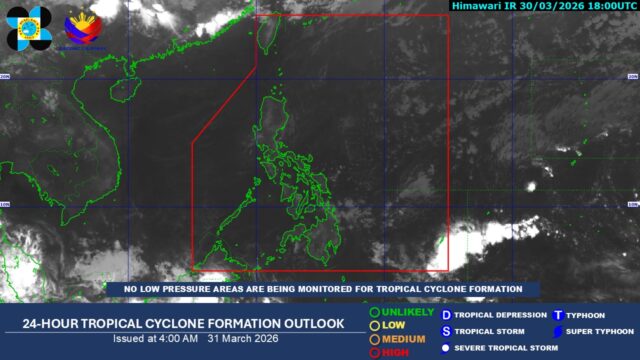
No low-pressure area (LPA) was observed as of 2:00 pm, PAGASA said.

The public is cautioned to avoid outdoor activities during peak sunlight hours between 10:00 am and 4:00 pm to prevent fatigue, heat cramps, and heat exhaustion, the state weather bureau said.
It also advised the public to drink water regularly, take breaks in shaded areas, and wear light-colored clothing. PAGASA likewise recommended using hats or umbrellas and avoiding alcohol and caffeine as much as possible. — Edg Adrian A. Eva

Thousands of US Army paratroopers arrive in Middle East as buildup intensifies

PHILIPPINE STAR/ WALTER BOLLOZOS

WASHINGTON — Thousands of soldiers from the US Army’s elite 82nd Airborne Division have started arriving in the Middle East, two US officials told Reuters on Monday, as President Donald Trump weighs his next steps in the war against Iran.

Reuters first reported on March 18 that Mr. Trump’s administration was considering deploying thousands of additional US troops to the Middle East, a move that would expand options to include the deployment of forces ​inside Iranian territory.

The paratroopers, based out of Fort Bragg, North Carolina, add to the thousands of additional sailors, Marines, and Special Operations forces sent to the region. Over the weekend, about 2,500 Marines arrived in the Middle East.

The officials, speaking on the condition of anonymity, did not say specifically where the soldiers were deploying to, but the move was expected.

The additional Army soldiers include elements of the 82nd Airborne Division headquarters, some logistics and other support, and one brigade combat team.

No decision has been made to send troops into Iran, but they will build up capacity for potential future operations in the region, one of the sources said.

OPTIONS FOR TRUMP
The soldiers could be used for several purposes in the Iran war, including an attempt to seize Kharg Island, the hub for 90% of Iran’s oil exports.

Earlier this month, Reuters reported there had been discussions within the Trump administration about an operation to take the island. Such a move would be highly risky, since Iran can reach the island with missiles and drones.

Reuters has previously reported the administration has discussed using ground forces inside Iran to extract highly enriched uranium, though that option could mean US troops deeper inside Iran for potentially longer periods of time, trying to dig out material that is deep underground.

The internal Trump administration discussions have also included potentially putting US troops inside Iran to secure safe passage for oil tankers through the Strait of Hormuz. While that mission would be accomplished primarily through air and naval forces, it could also mean deploying US troops to Iran’s shoreline.

Mr. Trump said on Monday the United States was in ​talks with a “more reasonable regime” to end ‌the war in Iran, but repeated his warning to Tehran to open the Strait of Hormuz or risk US attacks on its oil wells ​and power plants.

Any use of US ground troops – even for a limited mission – could pose significant political risks for Mr. Trump, given low ⁠American public ​support for the Iran campaign and Mr. Trump’s own pre-election promises to avoid entangling the ​US in new Middle East conflicts.

Since operations started on February 28, the US has carried out strikes against more than 11,000 targets. More than 300 US troops have been injured and 13 service members have been killed as part of Operation Epic Fury. — Reuters

Unilever imposes global hiring freeze, citing Middle East war effects, memo says

REUTERS

LONDON — Dove soap maker Unilever has implemented a global hiring freeze “at all levels” that will last at least three months, citing the effects of the widening conflict in the Middle East, according to a memo seen by Reuters.

In the memo, sent to staff late last week and previously unreported, Unilever said the freeze would take effect immediately and was made with an eye on the “significant challenges” from the month-old Iran war.

Firms globally from airlines to retail are scrambling to buttress themselves from the effects of the Iran war, which has snarled global trade flows and resulted in the worst-ever disruption of oil-and-gas supplies in history. The rapid surge in energy costs is already surfacing in other markets, slowing production in industries like chemicals and plastics.

“Macro economic and geopolitical realities, especially in the Middle East conflict… bring some significant challenges for the coming few months,” Fabian Garcia, head of Unilever’s personal care business, wrote in the memo sent to staff.

“With this in mind, the Unilever Leadership Executive team has agreed a global recruitment freeze at all levels. This will be effective immediately and last for a minimum of three months.”

The London-based consumer products giant owns some of the world’s most prominent brands. While it produces most of its goods where it sells them, it buys chemicals, food, packaging, and other raw materials that are energy-intensive to create.

Unilever, in a statement, said that due to the “uncertain external environment, we have decided to put in place a temporary pause on our recruitment,” adding that it will “always adjust our plans as necessary.”

UNILEVER WAS ALREADY COST-CUTTING
The freeze comes on top of an existing cost-cutting program Unilever has had in place since 2024, meant to save around 800 million euros ($916.72 million) in costs over the next three years. The changes Unilever proposed then were expected to affect around 7,500 jobs globally, mostly office-based.

The firm’s current headcount of 96,000 is down from the roughly 149,000 people it employed in 2020.

The company has struggled to grow sales volumes across its businesses in the wake of the Covid-19 pandemic. It is now in talks to sell its foods business to smaller rival McCormick & Company, it said on March 20.

Under the proposed combination, which would mark a major shake-up under CEO Fernando Fernandez, the British group’s shareholders would likely keep a majority stake in the new entity, Reuters reported late last week.

Shares of Unilever rose 1.1% in London trading Monday. ($1 = 0.8727 euros) — Reuters

GCash Run 2026: A wellness festival for the green hero community

The GCash Run 2026 officially kicks off with the ceremonial gun start, signaling GForest Heroes to move with purpose.

Last year’s inaugural GCash Run proved to be more than a social fitness gathering by planting trees for every sign-up to pave the way toward a more sustainable future. This year, the event returned not only as a purpose-driven run but also as a full-fledged wellness festival.

GCash has been playing its part in protecting the environment for years with GForest, wherein every transaction earns green energy points. These can be redeemed to plant trees and contribute to a greener future, making users “GForest Heroes.” Last year, GForest Heroes participated in the first GCash Run that led to the planting of 76,000 mangroves trees across 11 hectares in the Negros Region. Last March 22, the event returned for its second edition along Ayala Avenue, gathering runners of all levels — including pets — and planting even more trees.

Runners fill the streets as the energy steadily builds with each stride — showing how the GCash Run champions shared experiences and a sustainable future.

“In partnership with Silliman University, we’ve reached a milestone of 40,500 trees planted and united eco-conscious brands and partners to share advocacies and inspire collective action,” Winsley Bangit, Group Head for New Businesses of Mynt, the parent company of GCash, said during the event. “Regardless of the distance, the first step today was a giant leap for a greener and sustainable tomorrow.”

This year’s GCash Run featured a range of activities and attractions highlighting diverse passions and advocacies, including music, wellness, sustainable shopping, and farm-to-table products.

After the run, participants explored the Green Hero Village and Eco Marketplace, sharing meaningful moments with fellow runners. Overall, the event combined fitness, community, and advocacy, leaving participants with a deeper appreciation for sustainability and shared experiences beyond the run.

It’s the ultimate lifestyle upgrade, with lots of exciting reasons to make a difference. Here are a few others that made GForest Heroes say “ready, set, grow!” at GCash Run 2026.

1. Record-breaking impact — GCash Run 2026 was a huge opportunity for everyone to join a bigger cause. Since 2019, GForest Heroes have contributed to the planting of 4.2 million trees, reforesting almost 19,000 hectares of land (larger than Quezon City), and supporting 15,000 farming families. GCash proves that heroes are made, not born.

2. Sustainably stylish with paw-sitive energy  At GCash Run 2026, GForest Heroes got to wear capes and flex their sustainable singlets made from recycled materials. Moreover, pets joined the movement in a 1km run. Alongside their humans, they sported their bandanas as well, reminding everyone that sustainability is a family affair, including furbabies.

3. Cashing-in on the vibe — GCash welcomed everyone to its “Green Hero Village,” where runners won GCash Credits and recycled with the PET Bottle Collector. From using their 100% recycled GCash Cards to visiting eco-friendly MSME booths that were rewarding in nature, it’s all about saving the planet all around.

At the Green Hero Village, runners take time to explore booths such as the GForest Booth, PET Bottle Collector, Medal Engraving, and GInsure Pet Insurance — each activity provides a learning experience about eco-friendly practices and ways to give back even after the run.

4. Mark of a hero — From in-app eco-actions to on-ground momentum, GForest Heroes demonstrated how digital transactions drive real-world environmental outcomes with their Digital Tree certificates. Apart from ringing the PR Bell, runners immortalized their “Hero Era” via medal engraving stations, while 10k finishers took home a special towel as a badge of honor, which also reflect their commitment to the environment.

A few stars and notable GForest Heroes explored the Green Hero Village. The crowd comes together not only to run, but to connect, celebrate, and take part in something bigger than the event itself. Left to right: Edrence Rutagines, Nicole Cordovez, Zeti Cuenca, and Issabelle Coronel

5. Gamified growth – This year, the race once again served as the ultimate “Level Up” through GForest where cashing in, sending money, paying bills, buying load, and cashing in earn green energy points that can be redeemed to plant virtual trees– proving that fitness and forest-building are the new power duo.

Moreover, sustainability took center stage at the village with 22 eco-marketplace partners, including araro.gelato, Kangkong King, Odd Cafe, Commune Cafe & Bar, new Hatchin Trading Corp, Planted Bodega, Cafe Leopoldo, Abel Philippines, Cut the Craft, Eco Shift Essentials, Kaunlaran Fabric, Wonder Home, Maginhawa Eco-Store, Pili Ani, Malingkat Weaves, For Keeps Clean Beauty, Plato Wraps, Vitargo, Rural Rising, and Colors and Petals. Also part of the fold were Maginhawa Eco-Store, araro.gelato, Planted Bodega, and Odd Cafe. Meanwhile, the cashless eco merchant zone showcased the convenience of GCash for Business solutions for runners, such as SoundPay, PocketPay, and EasyPOS, as they purchased sustainable products, healthy food, and eco-friendly goods.

Beyond the race itself, runners are seen showing off their 10K finisher towel, cooling down with friends, exploring the village, and ringing the PR bell that highlight how the event becomes a full wellness festival experience.

GCash Run 2026 was made possible by the strong support from advocacy organizations and corporate partners such as ABS-CBN Foundation, Angat Buhay, Berdeng Kalabaw, Caritas Manila, CRIBS Foundation, One Million Lights, Team Manila, UNICEF, WWF, and Zolo.

The event also had a robust network of sponsors and partners, including eTap Solutions, Globe, IKEA Philippines, Pay&Go, and Smart as Platinum Sponsors; BPI MS Insurance and Standard Insurance as Silver Sponsors; and ECPay, Park Access, REV, and Singlife as Bronze Sponsors. Lastly, Corporate Run Club Partners include ATRAM, ECPay, eTap Solutions, Globe, STTelemedia Global Data Centres, Pay&Go, PDAX, Seapeak, and Tech Mahindra.

At GCash Run 2026, the finish line was just the start of a more purposeful, sustainable journey.

Learn more about GCash by visiting www.gcash.com.


Spotlight is BusinessWorld’s sponsored section that allows advertisers to amplify their brand and connect with BusinessWorld’s audience by publishing their stories on the BusinessWorld Web site. For more information, send an email to online@bworldonline.com.

Join us on Viber at https://bit.ly/3hv6bLA to get more updates and subscribe to BusinessWorld’s titles and get exclusive content through www.bworld-x.com.

Trump issues new warning to Tehran, Iran calls US peace proposals ‘unrealistic’

SMOKE AND DUST rise after an Israeli strike on Beirut’s southern suburbs, March 2, 2026. — REUTERS/MOHAMED AZAKIR

TEL AVIV/WASHINGTON/ISLAMABAD — President Donald Trump warned on Monday that the US would obliterate Iran’s energy plants and oil wells if Tehran does not open the Strait of Hormuz, after Tehran described US peace proposals as “unrealistic” and fired waves of missiles at Israel.

Israel’s military said two drones from Yemen had also been intercepted on Monday, two days after the Iran-aligned Houthis entered the war by firing missiles at Israel, and that Lebanon’s Hezbollah had fired rockets at Israel.

Israeli forces carried out missile strikes on what they called military infrastructure in Tehran and infrastructure used by Iran-backed Hezbollah in Beirut, leaving black smoke hanging over the Lebanese capital.

Turkey’s defense ministry said a ballistic missile launched from Iran entered Turkish airspace before being shot down by NATO air and missile defenses deployed in the eastern Mediterranean, the fourth such incident since the start of the war.

Tehran remains defiant in the month-old war, which began with US-Israeli attacks on Iran on February 28 and has spread across the region, killing thousands, disrupting energy supplies, and hitting the global economy.

The majority of those reported killed were in Iran and Lebanon, and many were civilians. Iran has effectively blocked the Strait of Hormuz, a narrow waterway that normally carries about a fifth of global oil and liquefied natural gas supplies.

TROOPS DEPLOY AS TALKS CONTINUE
Thousands of soldiers from the US Army’s elite 82nd Airborne Division have started arriving in the Middle East, two US officials told Reuters on Monday, part of a reinforcement that would expand Mr. Trump’s options to include the deployment of forces ​inside Iranian territory, even as he pursues talks with Tehran.

White House press secretary Karoline Leavitt later said Mr. Trump wanted to reach a deal with Tehran before an April 6 deadline he set last week after extending an earlier deadline he had set for Iran to open the Strait of Hormuz. Ms. Leavitt said talks with Iran were progressing, adding that what Tehran says publicly differs from what it tells US officials in private.

Iran said earlier on Monday it had received US peace proposals via intermediaries, following talks on Sunday between the foreign ministers of Pakistan, Egypt, Saudi Arabia, and Turkey.

Iranian Foreign Ministry spokesperson Esmaeil Baghaei said the proposals were “unrealistic, illogical and excessive”.

“Our position is clear. We are under military aggression. Therefore, all our efforts and strength are focused on defending ourselves,” he told a press conference.

Soon after Mr. Baghaei’s remarks, Mr. Trump said in a social media post that the United States was in talks with a “more reasonable regime” to end the war in Iran, but he also issued a new warning over the Strait of Hormuz.

“Great progress has been made but, if for any reason a deal is not shortly reached, which it probably will be, and if the Hormuz Strait is not immediately ‘Open for Business,’ we will conclude our lovely ‘stay’ in Iran by blowing up and completely obliterating all of their Electric Generating Plants, Oil Wells and Kharg Island,” Mr. Trump wrote.

Mr. Trump also threatened to attack the desalination plants that supply clean water in Iran.

The national security committee in the Iranian parliament, meanwhile, approved a bill that bans ships from the US, Israel and countries that unilaterally sanction Iran, from moving through the Hormuz Strait, according to state media. The bill must still be approved by the full parliament and it was not clear when or if such a vote would take place.

A Pakistani security official, whose country is trying to mediate in the war, said it appeared unlikely there would be direct US-Iran talks this week.

Mr. Baghaei also said Iran’s parliament was reviewing a possible exit from the Nuclear Non-Proliferation Treaty, which recognizes the right to develop, research, produce and use nuclear energy as long as nuclear weapons are not pursued.

Mr. Trump has cited the prevention of Iran from obtaining nuclear weapons as a reason for attacking the country on February 28. Tehran denies it is seeking a nuclear arsenal.

Israeli Prime Minister Benjamin Netanyahu, in an interview with US media outlet Newsmax, declined to give a timeline for achieving his country’s objectives in the war. While he said that “it’s definitely beyond the halfway point,” he later clarified that he meant in terms of missions, not time.

OIL MARKETS BRACE FOR TURMOIL
The White House said Mr. Trump was considering asking Arab nations to pay for the cost of the war. “It’s an idea that I know that he has and something that I think you’ll hear more from him on,” Ms. Leavitt said in response to a reporter’s question about the idea.

His administration requested an additional $200 billion in funding for the war, which faces stiff opposition in the US Congress, which must approve new spending.

Iran has fired on Arab Gulf states during the conflict and war has been reignited between Israel and Hezbollah in Lebanon. Three members of the UN peacekeeping mission in Lebanon (UNIFIL) were killed in two separate incidents in southern Lebanon after a bloody weekend ​in which Lebanese journalists and medics were killed in Israeli strikes.

Benchmark oil prices extended gains on Monday, with Brent crude futures on course for a record monthly rise.

The Houthis’ attacks on Israel raised the prospect that they could target and block a second important shipping route, the Bab el-Mandeb Strait.

The oil market has all but discounted the prospect of a negotiated end to the war and “is bracing for a sharp escalation in military hostilities,” said Vandana Hari of oil-market provider Vanda Insights.

The International Monetary Fund warned that war in the Middle East has caused serious disruption to the economies of frontline countries, and is dimming the outlook for many economies that had just started to recover from previous crises.

G7 finance leaders also said they were ready to take “all necessary measures” to safeguard energy market stability and limit broader economic spillovers from recent volatility. — Reuters

Peso hits new low P60.69 vs dollar

Photo shows US dollar bills and Philippine peso coins. — PHILIPPINE STAR/RYAN BALDEMOR

THE PESO slid to an all-time low against the US dollar on Monday as soaring oil prices raise concerns over inflation and an economic slowdown.

The local unit declined by 14 centavos to close at P60.69 against the greenback from its previous record-low P60.55 finish on Friday, data from the Bankers Association of the Philippines showed.

Year to date, the peso has depreciated by P1.90 or 57.9832% from its P58.79 finish on Dec. 29, 2025.

The peso opened Monday’s trading session flat at P60.55, which was also its intraday best.

Its weakest level of the day was at P60.84, which surpassed the local currency’s previous all-time intraday low of P60.57 logged on Friday.

Dollars traded jumped to $2.007 billion from $1.336 billion on Friday.

“The peso reached new lows today following reports of potential land-based military deployment of US troops near Iran,” the first trader said in a Viber message.

Reuters quoted US President Donald J. Trump as saying that Iran’s new leaders have been “very reasonable,” as more US troops arrived in the region and Tehran warned it will not accept humiliation.

Markets have been rattled this month after the Iran conflict effectively shut the Strait of Hormuz, a chokepoint for about a fifth of global oil and gas flows, driving Brent crude toward a record monthly rise.

The US dollar index was roughly unchanged at 100.19. It hit 100.54 in mid-March, its highest level since May 2025, and was on track for its biggest monthly rise since July 2025.

The peso was also dragged by growing expectations of a prolonged war, Reyes Tacandong & Co. Senior Adviser Jonathan L. Ravelas said in a Viber message.

A prolonged war in the Middle East is expected to put pressure on the Philippines, which imports nearly all of its oil requirements from Middle Eastern countries. The Philippines is now looking to find alternative sources to alleviate a looming energy shortage.

The Bangko Sentral ng Pilipinas had raised its inflation forecast for 2026 to 5.1% from 3.6% previously and trimmed its 2026 gross domestic product growth estimate to 4.4% from 4.6% previously.

A second trader said via Viber that the local currency’s weakness continued to be a function of a strong dollar and strong demand for oil, adding that high liquidity exaggerated the peso’s drop.

Demand for the greenback was also driven by the government’s recent purchases of oil, which are settled in dollars and other foreign currencies, Rizal Commercial Banking Corp. Chief Economist Michael L. Ricafort said in a Viber message.

The second trader said the local unit could reach the P61-per-dollar level, though “not in a straight line as the market is stretched.”

For Tuesday, Mr. Ricafort and the first trader see the peso moving between P60.55 and P60.80 against the greenback. — AMCS with Reuters

Slow growth to keep BSP on hold despite oil price shocks

A vendor waits for customers inside the Commonwealth Market in Quezon City. — PHILIPPINE STAR/MIGUEL DE GUZMAN

By Katherine K. Chan, Reporter

TEPID ECONOMIC GROWTH will likely force the Bangko Sentral ng Pilipinas (BSP) to stand pat until yearend even as oil price shocks amid the Middle East war are expected to stoke inflation, Fitch Solutions unit BMI said. 

In a commentary on Monday, BMI said oil price pressures may push inflation beyond the central bank’s 2-4% target in the coming months, bringing it to a full-year average of 3.2%. This was slightly higher than its previous estimate of 3.1%.

“While we had previously expected the BSP to cut rates at its April meeting, the US-Iran conflict upended this view,” BMI said. “Inflation is likely to breach the BSP’s 2-4% inflation target range in the coming months, but sluggish growth will keep the BSP on hold rather than tighten.”

This came after the BSP maintained its policy rate in an off-cycle meeting last week as it looked past first-round inflation effects of the ongoing oil crisis, adding that tightening now may delay the economy’s recovery.

The BSP is scheduled to hold a regular policy review on April 23.

The Middle East war continues to escalate a month after the US and Israel’s initial attacks on Iran, with Iran still denying US President Donald J. Trump’s claims of resolution.

Locally, pump prices remain elevated as ongoing disruptions jeopardize the country’s oil supply. The Philippines imports over 90% of its oil from the Middle East, making it vulnerable to current oil shocks.

Last week, the central bank likewise revised its macroeconomic forecasts, with inflation now seen to reach 5.1% this year from 3.6% previously. 

It also trimmed its growth forecast to 4.4% from 4.6% for 2026 but maintained its 5.9% projection for 2027.

For BMI, tightening this early would be a “premature” move by the central bank as price pressures prove supply-driven and with growth still sluggish.

“All that said, we think it is premature to forecast rate hikes from the BSP,” it said. “While inflation will probably rise significantly, the BSP notes that it will be supply-driven and monetary policy is not well placed to tackle that. Moreover, softer growth will weaken the case for rate hikes.”

The BSP last raised its rates in October 2023 in an off-cycle move. It has followed an easing path since August 2024, reducing key borrowing costs by a total of 225 basis points (bps) to an over three-year low of 4.25%.

Its last few cuts came amid the flood control corruption fallout which dragged growth to a post-pandemic low of 4.4% last year.

Marco Antonio C. Agonia, an economist at the University of Asia and the Pacific, also sees the BSP pausing at its April meeting as he noted that second-round price effects will likely manifest within the second quarter.

“For now, we see another rate hold at the BSP’s April meeting as the fundamental supply issue remains unresolved and the economy keeps posting tepid performance,” Mr. Agonia told BusinessWorld in an e-mail.

“The upcoming March inflation reading will largely see first-round effects in the headline print. So far, we’re seeing early signs of second-round effects in transportation, food, and to some extent, food service activities,” he added.

Jonathan L. Ravelas, a senior adviser at Reyes Tacandong & Co., also noted that second-round inflation may be felt after two to three months, with major risk looming from wages.   

“Second‑round inflation effects usually show up after two to three months, with early pressure now visible in transport, logistics, food distribution, and power‑intensive industries — the key risk to watch is wages,” he said via Viber. 

On the other hand, Deutsche Bank Research still expects the BSP to raise its benchmark rate by 25 bps to 4.5% next month to prioritize its price stability mandate as escalating inflation pressures weigh on the policy outlook.   

“First-round effects on inflation may show in the data as soon as March and begin to breach the upper limit from April as second-round spillover effects emerge,” it said.

“A gradual tightening in policy settings from April would provide a strong signal of BSP’s commitment to proactively manage inflationary pressures and maintain macroeconomic stability,” it added.

BMI also warned about a possible rate hike later this year, particularly if the second-round price pressures worsen amid a prolonged Middle East war.

“Given that fuel prices largely dictate the cost of logistics that underpin the modern economy, a prolonged conflict even beyond our ‘Extend to End’ scenario would leave strong, broad-based second-round inflationary pressures in its wake, prompting the BSP to hike,” it said.

However, Pantheon Macroeconomics Chief Emerging Asia Economist Miguel Chanco and Asia Economist Meekita Gupta said the BSP’s move last week has raised the bar higher for any rate hike.   

“Our main takeaway from this anticlimactic off-cycle meet is that the scheduled sit-down in three weeks is no longer ‘live’ — assuming global oil prices don’t reach a new high — as the Board has set a very high bar for any action,” they said in a separate note on Monday.   

While they see the BSP standing pat until end-2027, Mr. Chanco and Ms. Gupta noted that risks remain of potential tightening later this year or early next year.

Back to WFH? Oil crisis reignites debate over hybrid work schemes

Employees work at a government agency in Pasig City in this file photo. President Ferdinand R. Marcos, Jr. earlier this month ordered the implementation of a four-day workweek in some government offices. — PHILIPPINE STAR/MIGUEL DE GUZMAN

By Justine Irish D. Tabile, Senior Reporter and Beatriz Marie D. Cruz, Reporter

PHILIPPINE COMPANIES are weighing a return to flexible work arrangements to cushion employees from the impact of soaring fuel costs.

But some experts caution that while work-from-home (WFH) schemes can ease energy demand, they must be applied selectively to avoid hurting productivity.

“Organizations should begin revisiting their COVID (coronavirus disease 2019) playbooks and be ready to activate flexible arrangements if conditions worsen, even if not immediately,” Management Association of the Philippines President Donald Patrick L. Lim told BusinessWorld in a Viber message.

The International Energy Agency on March 20 recommended the adoption of WFH protocols to reduce energy demand amid a looming global oil crisis.

While the pandemic has prepared Filipinos for flexible work arrangements, readiness is not uniform across all sectors, Financial Executives Institute of the Philippines (FINEX) President Carlo Enrico B. Lazatin said in an e-mailed reply to questions.

As an example, financial services and other knowledge-driven firms can work remotely, but industries like manufacturing, energy, logistics, and agriculture remain on-site dependent, he said.

“Work-from-home should be deployed where it delivers measurable gains in productivity and cost, without disrupting core operations,” Mr. Lazatin said.

He noted that FINEX members’ business continuity plans included investments in digital infrastructure, cloud-based systems, cybersecurity, and secure remote access.

“For roles where output can be delivered remotely without compromising quality, hybrid arrangements become a practical response,” Mr. Lazatin said, adding this would help protect employees’ purchasing power, sustain engagement, and reduce commute-related fatigue.

However, Mr. Lazatin noted that some micro, small, and medium enterprises may find it difficult to adopt WFH protocols due to limited digital infrastructure.

While some firms are considering WFH arrangements, they are pressured to balance costs, productivity, and client service requirements, American Chamber of Commerce of the Philippines (AmCham) Executive Director Ebb Hinchliffe said via Viber.

“No industry indicated any desire to return to a 100% WFH setting,” he said, citing talks with AmCham members.

He said that companies’ level of readiness for WFH depends on factors like digital infrastructure, workforce composition, and prior experience with hybrid work.

Angelito “Lito” M. Villanueva, founding chairman of FinTech Alliance.PH, said the Philippine financial sector is “far more prepared” to adopt WFH policies amid the fuel crisis.

He noted that adopting hybrid work arrangements is now a strategic lever amid energy and economic volatility.

“The real barriers are no longer technology but cybersecurity assurance, and management mindset,” he said in a Viber message.

ENERGY CONSERVATION
The Philippine government has adopted energy conservation measures to soften the impact of soaring oil prices. President Ferdinand R. Marcos, Jr. last week declared a national state of energy emergency and ordered the implementation of a four-day workweek in some government offices.

However, the Palace on Friday said it is up to private sector firms to decide whether to implement WFH arrangements for their employees.

“Working from home can meaningfully cut energy use during a crisis because transport is the biggest lever — nearly half of oil demand comes from moving people and goods,” said Reyes Tacandong & Co. Senior Adviser Jonathan L. Ravelas told BusinessWorld via Viber.

“Fewer commutes mean immediate fuel savings and some relief on transport-driven inflation,” it added.

Mr. Ravelas said that the policy could be a “temporary shock absorber” to ease price pressures without stalling growth.

Peter Lee U, an associate professor and dean of the School of Economics of the University of Asia and the Pacific, said that some offices have never returned to the 100% on-site arrangement since the pandemic.

“It can certainly help reduce fuel demand,” he said in a Viber message. “And consider that it won’t only be the Philippines that will resort to more work from home.”

“The whole world has learned from COVID-19 that it can be done and has learned how to make adjustments to minimize loss of efficiency or productivity from remote work. Thus, the whole world will reduce demand for oil, and this will alleviate the reduced oil supply,” he added.

PwC Philippines Chair Roderick M. Danao said that implementation of hybrid work schemes is being done to address demand from customers.

“Until now, we use hybrids because our clients need it, our customers need it, and our people also need it,” he told BusinessWorld on the sidelines of the Philippine Infrastructure Summit 2026.

Meanwhile, analysts said that the policy should be enforced on a case-to-case basis so as not to affect productivity.

“Productivity doesn’t necessarily suffer if this is done selectively: knowledge-based sectors like finance, information technology, business process outsourcing, and government back offices can maintain output with little disruption, while location-dependent sectors obviously can’t,” said Mr. Ravelas.

“The key is targeting, not blanket rules. If applied where it makes sense, the inflation relief from lower fuel and logistics costs can outweigh the limited production losses,” he added.

Mr. U said that the WFH arrangements are better left on a voluntary basis for private sector firms.

“They can judge better which workers need to be on-site to minimize efficiency or productivity losses. This would also guard against production losses,” he said.

Mr. U said some firms may extend transport allowances, but this may raise expenses and lower profits.

Mr. Danao said that for professional services firms like PwC Philippines, he does not recommend a full virtual setup.

“In our industry, we need to interact meaningfully with our clients and team members, especially as quality is our number one priority across all engagements,” he said.

“History will show that during the initial weeks of the pandemic when we, as well as some of our clients, implemented a 100% virtual work setup, timelines were affected, as the nature of professional services requires full compliance with applicable standards and client requirements,” he added.

For this reason, he said that the WFH scheme should be voluntary and tailored from entity to entity.

“Every entity, every industry, has a different operating model. For business process outsourcing firms, partly yes; in our case, partly yes; but for manufacturing, how can you do that, right? Also in healthcare and retail,” he added

Debt service bill jumps in January

A government worker hands out cash aid to a driver in Quezon City, Philippines, March 24, 2026. — REUTERS/ELOISA LOPEZ

By Justine Irish D. Tabile, Senior Reporter

THE NATIONAL Government’s (NG) debt service bill jumped by nearly 30% to P137.67 billion in January amid higher interest payments, the Bureau of the Treasury (BTr) said.

The latest data from the Treasury showed that the debt service bill increased by 29.3% in January from P106.51 billion in the same month last year.

Month on month, the debt service bill surged by 75% from P78.64 billion in December.

Debt service refers to the payments made by the government on domestic and foreign borrowings.

Ateneo Center for Economic Research and Development Director Ser Percival K. Peña-Reyes told BusinessWorld that the higher debt service bill in January is due to “more expensive debt amid higher interest rates, larger total debt stock, and frontloading of repayments early in the year.”

“These factors combined pushed total debt servicing higher even if some components (like principal) did not increase dramatically,” he said in a Viber message.

The bulk, or 92.8% of debt payments, was made up of interest payments, the BTr data showed.

In January, interest payments went up by 22.4% to P127.82 billion from P104.44 billion in the same month a year ago.

Domestic interest payments also increased by 30.9% to P94.6 billion in January from P72.29 billion in the same month last year.

Broken down, P85.4 billion went to fixed-rate Treasury bonds, P3.68 billion to Treasury bills, P3.58 billion to retail Treasury bonds, and P1.95 billion to others.

Interest payments for foreign borrowings inched up by 3.3% to P33.2 billion in January from P32.15 billion in the same month in 2025.

As interest rates remain elevated, Mr. Peña-Reyes said interest payments will continue to make up the bulk of the debt service bill in the near term.

“What we are seeing is most likely a mix of structural pressures, which are persistent, and timing or base effects, which are not,” he added.

Jose Enrique “Sonny” A. Africa, executive director of the think tank IBON Foundation, said the higher debt servicing is the “inevitable outcome of inexorably rising debt stock compounded by higher rates and foreign exchange effects.”

“External interest payments will definitely keep rising, especially as the peso weakens further,” he added.

The local currency hit a new record low, weakening by 14 centavos to close at P60.69 from its P60.55 finish on Monday, data from the Bankers Association of the Philippines showed.

Meanwhile, amortization payments soared by 374.8% to P9.85 billion in January from P2.08 billion in the same month a year ago.

This was mainly composed of principal payments on domestic debt, which surged by 2,453.9% to P8.1 billion in January from P317 million in the same month last year.

Amortization paid on foreign debt was flat at P1.76 billion in January.

“Higher domestic amortization in January 2026 mainly implies scheduled repayments and active debt rollover, not necessarily fiscal stress,” said Mr. Peña-Reyes.

“Combined, however, with rising interest payments, it also highlights a heavier overall debt service burden, even if the month-to-month composition looks volatile,” he added.

IBON Foundation’s Mr. Africa said that the higher domestic amortization signals growing rollover dependence and liquidity pressure.

“The Philippines is in the right strategic direction with its long-standing bias for domestic borrowing, made even more sensible amid volatility like now when external markets should be used selectively,” he added.

However, he said that the country needs to fix structural fiscal gaps to avoid compounding debt service.

“The emphasis shouldn’t just be on debt management mechanics but more on who bears the burden of the current shock and how to prevent amplification of inequality and slowdown,” he added.

The NG debt stock increased to P18.13 trillion at the end of January due to frontloaded financing programs, up by 2.41% from the P17.71 trillion seen as of end-December.

“Frontloading looks immediately sound but may lock in high interest rates, and in a way just shifts today’s oil shock into tomorrow’s fiscal crisis,” said Mr. Africa.

“There’s an unstated policy bias toward protecting creditors over people in need, where relying on borrowing instead of progressive taxes such as on billionaire wealth or windfall profits is a form of socializing the costs of supply-side shocks while privatizing gains,” he added.