Home Blog Page 79

Giant oil tanker off Dubai hit by Iranian strike after Trump’s latest threats
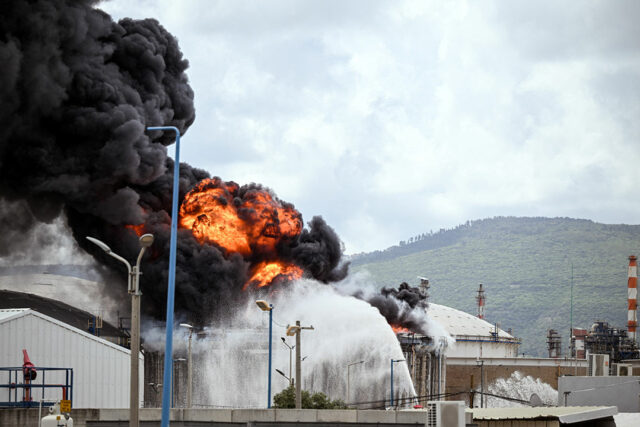
A blaze after Israel's Fire and Rescue Service said that an industrial building and a fuel tanker at Israel's Oil Refineries were hit by debris from an intercepted Iranian missile, amid the U.S.-Israel conflict with Iran, in Haifa, Israel March 30, 2026. — REUTERS/RAMI SHLUSH ISRAEL OUT NO COMMERCIAL OR EDITORIAL SALES IN ISRAEL TPX IMAGES OF THE DAY

TEL AVIV/WASHINGTON — Iran attacked and set ablaze a fully loaded crude oil tanker off Dubai on Monday, as President Donald J. Trump warned the US would obliterate Iran’s energy plants and oil wells if it does not open the Strait of Hormuz.

The strike on the Kuwait-flagged Al-Salmi is the latest in a string of assaults on merchant vessels by missiles or explosive air and sea drones in the Gulf and Strait of Hormuz since the US and Israel attacked Iran on Feb. 28.

The month-long conflict has spread across the Middle East, killing thousands, disrupting energy supplies and threatening to send the global economy into a tailspin.

Crude oil prices briefly spiked anew after the attack on the tanker, which can carry around 2 million barrels of oil worth more than $200 million at current prices.

Kuwait Petroleum Corp., the ship’s owner, said the attack happened early on Tuesday, causing a fire and hull damage, but there were no reported injuries.

Authorities in Dubai later said they had been able to bring the fire under control following a drone attack on the tanker. No injuries have been reported, they said.

The jump in oil and fuel prices has started to weigh on US household finances and become a political headache for Mr. Trump and his Republican Party ahead of the November midterm elections, having vowed to lower energy prices and ramp up US oil and gas production.

The US national average retail price of gasoline crossed $4 a gallon for the first time in more than three years on Monday, data from price-tracking service GasBuddy showed, as tightening global supplies push US crude prices above $101 a barrel.

TROOPS DEPLOY AS TALKS CONTINUE
Attacks by both sides are showing no signs of easing, with fears of a wider conflict growing.

Iran-aligned Houthis entered the war by firing missiles and drones at Israel in recent days and Turkey reported a ballistic missile launched from Iran had entered Turkish airspace before being shot down by North Atlantic Treaty Organization air and missile defenses.

Israel carried out missile strikes on what it called military infrastructure in Tehran and infrastructure used by Iran-backed Hezbollah in Beirut, leaving black smoke hanging over the Lebanese capital.

Sounds of explosions were heard in parts of eastern and western Tehran minutes after Israel issued a warning of imminent strikes in the city, Iran’s Tasnim news agency reported on Tuesday. Residents in the eastern Pirouzi district reported power outages after the blasts, while officials from Iran’s energy ministry began efforts to restore power, Tasnim added.

The Israeli military said early on Tuesday that four soldiers had been killed in southern Lebanon, the same area as three United Nations peacekeepers from Indonesia were killed in two separate incidents in recent days.

Iran’s military spokesman said on state television that targets in the latest wave of Tehran’s missile and drone attacks included “hideouts” of US military personnel in five bases in the region and in Israel.

Thousands of soldiers from the US Army’s elite 82nd Airborne Division have started arriving in the Middle East, two US officials told Reuters on Monday, part of reinforcements that would expand Mr. Trump’s options to include a ground assault in Iran, even as he pursues talks with Tehran.

White House Press Secretary Karoline Leavitt said Mr. Trump wanted to reach a deal with Iranian leaders before a second deadline, now April 6, for Iran to open the Strait of Hormuz, a narrow waterway that normally carries about a fifth of global oil and liquefied natural gas supplies.

Ms. Leavitt said talks with Iran were progressing, adding that what Tehran says publicly differs from what it tells US officials in private.

Iran said earlier on Monday it had received US peace proposals via intermediaries, following weekend talks between the foreign ministers of Pakistan, Egypt, Saudi Arabia and Turkey.

Iranian Foreign Ministry spokesperson Esmaeil Baghaei said the proposals were “unrealistic, illogical and excessive.”

“Our position is clear. We are under military aggression. Therefore, all our efforts and strength are focused on defending ourselves,” he told a press conference.

NEW TRUMP THREAT TO OBLITERATE IRAN ENERGY, OIL PLANTS
Soon after Mr. Baghaei’s remarks, Mr. Trump said the US was in talks with a “more reasonable regime” to end the war in Iran but also issued a new warning over the Strait of Hormuz.

“Great progress has been made but, if for any reason a deal is not shortly reached, which it probably will be, and if the Hormuz Strait is not immediately ‘Open for Business,’ we will conclude our lovely ‘stay’ in Iran by blowing up and completely obliterating all of their Electric Generating Plants, Oil Wells and Kharg Island,” Mr. Trump wrote in a social media post, also threatening to attack Iranian desalination plants.

However, the Wall Street Journal reported Mr. Trump had told aides he is willing to end the military campaign even if the Strait remains largely closed and leave a complex operation to reopen it for a later date. That helped oil prices retreat and lifted stock markets off their lows as investors hoped for some way for hostilities to end swiftly.

Asked about the report, the White House referred to comments made by Secretary of State Marco Rubio, who told Al Jazeera the strait would be open “one way or another” after the US military operation.

The White House said Mr. Trump was considering asking Arab nations to pay for the cost of the war. “It’s an idea that I know that he has and something that I think you’ll hear more from him on,” Ms. Leavitt said in response to a reporter’s question about the idea.

His administration requested an additional $200 billion in funding for the war. The request faces stiff opposition in the US Congress which must approve new spending. Reuters

US vows to seek WTO alternatives after Cameroon meeting fails to renew e-commerce moratorium

A sign is pictured in front of the World Trade Organization (WTO) headquarters ahead of the Ministerial Conference (MC12) in Geneva, Switzerland, June 12, 2022. — REUTERS/DENIS BALIBOUSE

YAOUNDE — World Trade Organization (WTO) countries failed to agree on a reform path or even a routine extension of an e-commerce duty moratorium, prompting a fresh vow from the US to seek alternative deals with like-minded countries and relegate the body to only a limited role in global trade policy.

Four days of talks among trade ministers in Cameroon’s capital Yaounde broke up in the early hours of Monday with Brazil and Turkey blocking a bid to extend the WTO’s e-commerce moratorium, including on digital downloads and streaming.

The moratorium, agreed at the dawn of the Internet, lapsed for the first time in 28 years.

US Trade Representative Jamieson Greer said in a statement that he has secured agreements from dozens of countries, including nearly all major trading partners, not to impose tariffs on US digital transmissions. He vowed that if the WTO fails to restore the moratorium, “the United States will work outside of the WTO with all interested partners to get it done.”

Mr. Greer, who is the architect of US President Donald J. Trump’s multi-front tariff assault on global trading partners, said he was disappointed that the meeting ended in an impasse. He said some countries demonstrated a “lack of seriousness” in WTO reform by not sending their trade ministers to Cameroon.

“I have always been skeptical of the value of the WTO, and this week’s conference confirmed that this organization will play only a limited role in future global trade policy efforts,” Mr. Greer said.

The WTO has been increasingly sidelined by economic nationalism in the past decade, and its 14th ministerial conference in Cameroon will further that trend, analysts said.

RISK OF A ‘SPAGHETTI BOWL’ OF DEALS
“It marks another crack in the foundations of the WTO system,” said Andrew Wilson, deputy secretary general of the International Chamber of Commerce.

Meanwhile, Jonathan McHale, vice-president of digital trade at the Computer and Communications Industry Association, said that WTO members have allowed the digital trade issue to become “a negotiating football.”

“WTO members must return to this issue urgently in Geneva, build on the draft texts developed at MC14, and deliver a durable solution that restores certainty and credibility to the system,” he said.

The talks tested the WTO’s relevance after a year of huge trade turmoil and more recent disruptions in the Middle East.

Still, a subset of 66 members did agree to sidestep previous hurdles to usher in the world’s first baseline deal on digital trade rules among participants.

The parties of the Comprehensive and Progressive Agreement for Trans-Pacific Partnership — 12 countries including Australia, Britain, Canada, Japan and Mexico but not the US — met with the European Union (EU) on the sidelines of the WTO talks.

As diplomats pursue a mix of agreements between two or larger subsets of countries, they risk creating a complex “spaghetti bowl” of agreements, said Dmitry Grozoubinski, executive director of the Geneva Trade Platform.

E-COMMERCE TEST
Extending the e-commerce moratorium was seen as key to securing WTO support from the US, which under Mr. Trump has retreated from global multilateral bodies.

WTO Director-General Ngozi Okonjo-Iweala said the trade body hoped the moratorium could still be restored, adding that Brazil and the US were trying to reach agreement on it.

She said progress was made on a reform roadmap and talks on issues like making subsidy use more transparent and facilitating decision-making are expected to continue in Geneva.

The US and the EU argue that China in particular has taken advantage of current rules to their detriment. China has long dismissed accusations that it flouts trade rules and said it supports the multilateral system, including the WTO.

Diplomats worked through Sunday to close the gap between Brazil’s initial two-year proposal on the moratorium and the permanent extension sought by the US by drafting a plan for a four-year extension with a one-year sunset buffer.

Brazil then offered a four-year extension with a mid-term review clause, but it lacked sufficient support.

Developing countries opposing a lengthy extension argue the moratorium denies them potential tax revenue.

A US official said Brazil had opposed a “near-consensus document.” A Brazilian diplomat said, “the US wanted the sky,” and that a longer extension was not prudent given rapid developments in digital trade.

Another diplomat said US Trade Representative Mr. Greer made delegates “uncomfortable” by warning of “natural consequences” if a long-term extension was not agreed.

Keith Rockwell, a trade analyst at the Hinrich Foundation and a former WTO director, said Brazil’s efforts to leverage e-commerce for concessions on agriculture failed because the US was no longer so invested in the WTO.

“In the old days, because they felt responsibility for the system, the Americans would have swallowed hard and taken a hit,” he said. “But now they won’t do that anymore.” Reuters

Australia readies social media court action citing teen ban breaches

Claire Ni, 14, poses holding a mobile phone as a law banning social media for users under 16 in Australia takes effect, in Sydney, Australia, December 10, 2025. — REUTERS/HOLLIE ADAMS

SYDNEY — Australia threatened on Tuesday to sue social media giants for allegedly flouting a ban on under-16s, as its internet regulator disclosed it is investigating some of the biggest platforms for suspected noncompliance with the world-first measure.

Three months after the ban came into effect, the eSafety Commissioner said it was probing Meta’s Instagram and Facebook, Google’s YouTube, Snapchat and TikTok for possible breaches of the law.

Communications Minister Anika Wells said the government was gathering evidence “so that the eSafety Commissioner can go to the Federal Court and win.”

“We have spent the summer building that evidence base of all the stories that no doubt you have all heard… about how kids are getting around that,” Ms. Wells told reporters in Canberra.

Governments around the world are watching Australia’s moves to rein in the tech giants, with many considering similar regulation to protect children from harms including bullying and body-shaming associated with social media.

The legal threat is a striking change of tone from a government which had hailed tech giants’ shows of cooperation when the ban went live in December.

After an early claim the companies had deactivated 4.7 million suspected underage accounts, the government has faced daily headlines of teenagers evading restrictions or simply keeping their accounts without being asked their age.

Meta and Snap said they were committed to complying with the ban, and a Meta spokesperson added the government’s own trial of age-assurance technology found “natural error margins” around the 16 age cutoff.

TikTok declined to comment while a Google spokesperson was not immediately available for comment.

Under the Australian law, platforms must show they are taking reasonable steps to keep out underage users or face fines of up to A$49.5 million ($34 million) per breach, something eSafety would need to pursue in a civil court.

ENFORCEMENT STANCE
The regulator previously said it would only take enforcement action in cases of systemic noncompliance.

But in its first comprehensive compliance report since the ban took effect, eSafety said measures taken by the platforms were substandard and it would make a decision about next steps by mid-year.

“We are now moving into an enforcement stance,” said Commissioner Julie Inman Grant in a statement.

The regulator reported major compliance gaps, including platforms prompting children who had previously declared ages under 16 to do fresh age checks, allowing repeated attempts at age-assurance tests until a child got a result over 16 and poor pathways for people to report underage accounts.

Some platforms did not use age-inference, which estimates age based on someone’s online activity, and some only used age-assurance measures like photo-based checks after a user tried to change their age, rather than sign up.

That made it “likely many Australian children aged under 16 have been able to create accounts on age‑restricted social media platforms by simply declaring they are 16 or older,” the regulator said.

Nearly one-third of parents reported their under-16 child had at least one social media account after the ban took effect, of which two-thirds said the platform had not asked the child’s age, it added. Reuters

Israel passes death penalty law for Palestinians convicted of lethal attacks

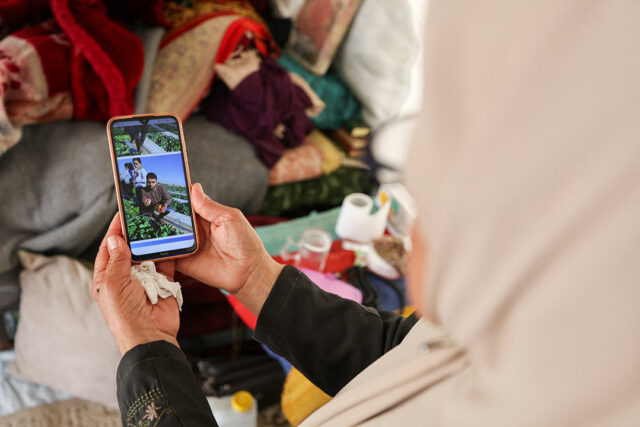
Umm Yousef Dahdouh, a displaced Palestinian mother of three prisoners held by Israel, displays a picture of one of her jailed sons while sitting inside her displacement tent in Gaza City, March 30, 2026. — REUTERS/DAWOUD ABU ALKAS

JERUSALEM — Israel’s parliament passed a law on Monday making death by hanging a default sentence for Palestinians convicted in military courts of deadly attacks, fulfilling a pledge by Prime Minister Benjamin Netanyahu’s far-right allies.

The law would only apply to Israelis convicted of murder whose attacks aimed at “ending Israel’s existence,” meaning it would mete out the death penalty for Palestinians but not for Jewish Israelis who committed similar crimes, critics say.

The legislation has drawn international criticism of Israel, which is already under scrutiny for increasing violence by Jewish settlers against Palestinians in the occupied West Bank and its war in Gaza.

NO RIGHT TO CLEMENCY
The measure includes provisions requiring an execution by hanging within 90 days of sentencing, with some allowance for a delay but no right to clemency. It provides the option of imposing a life imprisonment sentence instead of capital punishment, but only in unspecified “special circumstances.”

Israel abolished the death penalty for murder in 1954. The only person executed in Israel after a civilian trial was Adolf Eichmann, an architect of the Nazi Holocaust, in 1962.

Military courts in the West Bank can already sentence Palestinian convicts to death but have not done so.

The measure was promoted by Itamar Ben-Gvir, the far-right national security minister who wore noose-shaped lapel pins in the run-up to the vote.

“This is a day of justice for the murdered, a day of deterrence for enemies,” Mr. Ben-Gvir said in parliament. “Whoever chooses terror chooses death.”

PALESTINIANS REJECT LAW, SOME CALL FOR ATTACKS
Palestinian President Mahmoud Abbas condemned the legislation as a breach of international law and a doomed bid meant to intimidate Palestinians.

“Such laws and measures will not break the will of the Palestinian people or undermine their steadfastness,” Mr. Abbas’ office said in a statement.

“Nor will they deter them from continuing their legitimate struggle for freedom, independence, and the establishment of an independent Palestinian state with East Jerusalem as its capital.” 

Palestinian militant groups Hamas and Islamic Jihad called on Palestinians to launch attacks in revenge for the law.

CRITICS SAY BILL IS DISCRIMINATORY
Israel’s leading rights groups decried the law as “an act of institutionalized discrimination and racist violence against Palestinians.” The Association for Civil Rights in Israel said it filed an appeal against the law with Israel’s Supreme Court.

The law is the latest action by Mr. Netanyahu’s nationalist-religious coalition to raise concern among Israel’s Western allies, who have also been critical of settler violence against Palestinians in the West Bank.

In an effort to head off international backlash, Mr. Netanyahu asked for some elements of the legislation to be softened, Israeli media reported. He voted in favor of the bill, which won the backing of 62 of the Knesset’s 120 members.

The original bill had mandated the death sentence for non-Israeli citizens convicted in West Bank military courts of deadly terrorist acts. The revised legislation includes the option of life imprisonment.

In Israel’s civilian courts, the new legislation mandates either life imprisonment or the death penalty for anyone convicted of “deliberately causing the death of a person with the intent of ending Israel’s existence.”

Critics of the bill say that language effectively confines those Israelis who can be sentenced to death to members of the country’s 20% Arab minority, many of whom identify as Palestinian, and not to Jewish citizens.

Even before the vote, the bill drew criticism from the foreign ministers of Germany, France, Italy and Britain, who said it had a “de facto discriminatory” character toward Palestinians and undermines Israel’s democratic principles.

A group of United Nations experts said the bill includes vague definitions of “terrorist,” meaning the death penalty could be meted out over “conduct that is not genuinely terrorist.”

Mr. Ben-Gvir’s Jewish Power party argues that the death penalty will deter Palestinians from carrying out deadly attacks against Israelis or attempting kidnappings with the aim of affecting swap deals for Palestinians jailed in Israeli prisons.

Amnesty International, which tracks countries imposing death penalty laws, says there “is no evidence that the death penalty is any more effective in reducing crime than life imprisonment.”

Professionals in Israel’s legal establishment argued the bill was unconstitutional, increasing the likelihood of the Supreme Court striking down the law.

GLOBAL TREND ON DEATH PENALTY IS TOWARD ABOLITION
Some 54 countries around the world permit the death penalty, including a handful of democracies such as the United States and Japan, according to Amnesty International. The group says the global trend is toward abolition, with 113 countries having outlawed it.

Israeli rights group B’Tselem says military courts in the West Bank, where Palestinians are tried for alleged crimes, have a 96% conviction rate and a history of extracting confessions through torture.

Mr. Ben-Gvir, who was convicted in 2007 of racist incitement against Arabs and support for the Kach group on the Israeli and US terrorism blacklists, has overseen an overhaul of prisons that has led to allegations of abuse of Palestinian prisoners.

He made capital punishment for Palestinian militants a main pledge in his 2022 election campaign and since taking office has publicly backed some Israeli soldiers being probed for suspected excessive force against Palestinians.

The next national election is due in October 2026. — Reuters

Asia barters for scarce energy as Iran crisis throttles supplies

A model of an oil pump is seen in front of a Russian flag in this illustration taken January 9, 2026. — REUTERS/DADO RUVIC/ILLUSTRATION/FILE PHOTO

TOKYO/COLOMBO/WELLINGTON – Indonesia’s leader visited Tokyo this week in Asia’s latest flurry of fuel bartering efforts to offset crippling shortages caused by conflict in the Middle East, a key source of regional energy supplies.

The race for alternatives has hotted up as China, the world’s second largest economy, imposed fuel export bans, while nations such as South Korea and Thailand try to exploit the lifting of US sanctions on Russian energy as a stopgap move.

Matters are getting desperate for poorer nations as the Philippines became the first to declare a national energy emergency, Sri Lanka cut its work week to four days and rationed fuel, and Myanmar limited car drivers to alternate days.

Southeast Asia’s biggest economy and the world’s fourth most populous country, Indonesia is also expected to announce curbs in coming days.

“To maintain rational economic relationships is of vital importance,” President Prabowo Subianto told Japanese business leaders in Tokyo after pacts signed on Monday covering long-term oil and gas and geothermal power projects.

“The geopolitical situation in the Middle East gives strategic uncertainty for the security of our energy.”

More immediately, Jakarta could strike a deal to beef up supplies of liquefied natural gas to Tokyo in exchange for liquefied petroleum gas, an essential cooking fuel, Djoko Siswanto, the head of oil and gas regulator SKK Migas, told Reuters on Monday.

While Prabowo and Japan’s Sanae Takaichi agreed to boost ties on energy security at a meeting on Tuesday, neither leader confirmed such a swap agreement.

Japan’s government-backed oil and gas producer Inpex is discussing a similar barter deal with India to swap LPG for naphtha and crude oil, according to an internal Japanese government document seen by Reuters.

Vietnam has also sought Japan’s help for energy supplies, it showed, while the Philippines said on Monday it had received diesel from Tokyo.

Japan’s trade minister stressed the importance of keeping up fuel supplies to Southeast Asian nations where it has supply chains, but declined to comment on specific deals.

Resource-poor Japan relies on the Middle East for about 95% of its oil and 11% of its imports of liquefied natural gas, though its energy stockpiles are among the world’s largest.

CHINA EXPORT BAN BITES
Australia’s position as a major energy producer and exporter should give it clout in talks with Asian partners for supplies of jet fuels that could soon run short, energy analysts said.

The government was engaging with major suppliers such as China, Singapore and South Korea, Foreign Minister Penny Wong said this month.

However, China has banned exports of refined fuel, including jet fuel, to safeguard its economy from energy disruption.

That ban, and another by Thailand, have hit Vietnam especially hard, as the neighbours fill more than 60% of its jet fuel needs.

Vietnam’s aviation regulator urged authorities this month to seek additional jet fuel supplies from Brunei, India, Japan and South Korea.

Two-way deals with alternative suppliers should help ease shortages, but a longer war would require concerted efforts, said Hiroshi Hashimoto, senior fellow at Japan’s Institute of Energy Economics.

“If the crisis continues for a prolonged period, Asian countries may need to develop multilateral frameworks to help each other and talk to alternative supply sources.”

RUSSIAN COULD BE UNLIKELY ALTERNATIVE SUPPLIER
Russia could prove to be an unlikely supplier for some Asian countries, after the United States issued a temporary waiver of sanctions for its attack on Ukraine.

For the first time in years, South Korea imported Russian naphtha this week, a feedstock critical for making plastics used in everything from automobiles to electronics, and also seeks to secure crude oil, its energy ministry said.

India has stepped up purchases of oil from Russia, with which Bangladesh, Thailand and Sri Lanka are also in talks.

It could be challenging to finalise arrangements with Russian oil companies before the April 11 expiry of the US sanctions waiver, however, said Janaka Rajakaruna, chairman of Sri Lanka’s state-run Ceylon Petroleum Corp.

Small countries such as New Zealand are keenly aware they could be vulnerable amid a scramble for fuel set to get more frenetic in the next few months.

Prime Minister Christopher Luxon has spoken by telephone in recent weeks with the leaders of Singapore, Malaysia and South Korea, New Zealand’s three largest suppliers of refined products, as well as with the head of the European Commission.

Associate Energy Minister Shane Jones told Reuters he had also contacted big commodity traders, among others, in the effort to shore up fuel supplies.

“Unless you build options, we’re too small to get noticed in a maddening, frenzied search for fuel in another two or three months,” Jones added. — Reuters

Fire hotspots, scant rain raise haze alarm in Southeast Asia

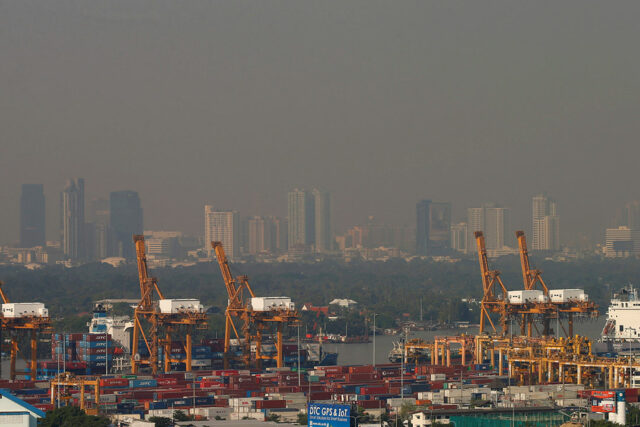
Buildings are seen shrouded in haze in Bangkok, Thailand. — REUTERS

The number of fire hotspots across Indonesia and Malaysia is at the highest in seven years, raising the risk of severe haze conditions across the region in the coming months.

There were 825 smoldering hotspots in March across key palm-oil growing regions of the two countries, according to the ASEAN Specialised Meteorological Centre. The agency looked at satellite imagery which can detect heightened levels of infrared radiation. A fire detection algorithm then parses the dataset to identify the points associated with a blaze.

Forest and land fires, and the choking haze they cause, are a near-annual problem across Southeast Asia, disrupting tourism, causing respiratory illnesses, and costing local economies billions of dollars.

But the spike in fire hotspots so early in the year points to an evolving calendar of risks as climate change reconfigures seasonal patterns.

“This points to a structural shift, where fire and haze risks are no longer confined to the main dry period but increasingly extend into off-season windows due to prolonged dryness,” said Khor Yu Leng, an economist at Segi Enam Advisors, who tracks transboundary haze for the Singapore Institute of International Affairs.

The most severe crisis in recent memory came in 2015, when widespread fires triggered a regional haze emergency, leading to $16 billion in damages, school closures, flight disruptions and sparking diplomatic tensions between neighboring countries. Dryness this year could lead to a similar scenario, forecasters warn.

The fires can occur naturally or result from land clearance for various crops. In Indonesia and Malaysia, the world’s biggest producers of palm oil, large swathes of wild vegetation are set ablaze to make room for new plantations. While both countries have banned using fire to clear and manage acreage, enforcement has been challenging.

The issue is often most acute during the dry season, typically from April through September, when peatlands become highly flammable and fires can smolder underground for weeks, making them difficult to detect and extinguish.

Haze from nearby fires has already affected Singapore in recent days. That’s unusually early compared to the August to November period when the city-state typically experiences the peak of transboundary haze conditions, said Steve Hung-Lam Yim, director for the Centre for Climate Change and Environmental Health at Nanyang Technological University in Singapore.

In Malaysia, the northern part of the Johor state as well as Sarawak and parts of Sabah have seen below-normal rainfall throughout March, according to the US Climate Prediction Center. Sarawak in particular has seen unseasonal dryness, with some areas seeing precipitation levels as much as 210 millimeters below normal, data from the center show.

Indonesia is also experiencing drought, with vast stretches of Sumatra, as well as west and central Kalimantan, recording below-normal rainfall, data show.

Arid conditions may persist for some of those areas in the coming weeks and months, according to seasonal outlooks from a major European forecasting center. Below-normal rainfall is expected across much of Malaysia and parts of Indonesia’s Kalimantan in April, and while May is set to bring more seasonal rainfall, June through August are very likely to be drier than normal across maritime Southeast Asia. — Bloomberg

Homicides in Sweden hit lowest level in over a decade in 2025

MAX KLEINEN-UNSPLASH

STOCKHOLM — Sweden’s homicide and manslaughter rate fell to its lowest in over a decade in 2025, official statistics showed on Tuesday, as new tools and methods helped police to drive down the gang violence that has plagued the country for 20 years.

The Swedish National Council for Crime Prevention (BRA) said 84 people were killed last year, down from 92 in 2024 and well below the peak in 2020 when 124 people were killed.

“The development of the number of cases of deadly violence in 2025 represented the second straight year of decline and was at the lowest level since 2012,” BRA said in a statement.

The statistics are a welcome boost for a right-wing government, which won the 2022 election partly due to a promise to tackle gang violence that had pushed gun-related deaths to the highest level in the European Union.

The BRA added that Sweden’s deadliest mass shooting in February last year, which was not gang-related and in which 10 people were killed, had a significant impact on the statistics for 2025, alone accounting for nearly a quarter of all gun violence deaths.

Sweden is heading to the polls in September this year and crime is among the top issues for voters, even as the number of shootings in Sweden has more than halved since 2022.

Police and politicians cite new methods, additional resources, and increased powers, such as far-reaching eavesdropping legislation, as reasons behind the drop in crime.

Changes include anonymity for some court witnesses, increased electronic surveillance, tougher sentences and what are known as safety zones, where police can search people even if they are not suspected of any crime.

Police said the measures have allowed them to seize gangs’ assets and become more efficient in preventing shootings.

Gun violence remained the most common cause of violent death and claimed 42 lives in 2025, three fewer than in the preceding year. — Reuters

Pricier fuel hits Tokyo cherry blossom river cruises 

A woman smiles between the early flowering cherry blossoms in Kyoto, Japan March 13, 2020. — REUTERS

TOKYO — A few dozen tourists hopped onto a small cruise boat in Tokyo to admire the cherry blossoms lining the Meguro River — a seasonal attraction that could soon become costlier for passengers and operators alike.

The pink and white flowers that blossom in spring on cherry trees across Japan are a major draw for locals and tourists — and big business for companies such as cruise operator Tokyo Waterways. The “flower viewing” or “hanami” is the peak season of the year.

This year, though, Tokyo Waterways CEO Kazuyoshi Harada is not so upbeat because the Middle East conflict has pushed up fuel prices just as his demand is rising.

“Since fuel consumption for us peaks during the busy cherry blossom season, the price hikes have been particularly hard on us,” he said.

Most customers booked their hanami-season cruises before the crisis, so raising ticket prices from 5,000 yen ($31) was not an option, he said.

Since the US-Israeli attacks on Iran, the price of premium gasoline has surged by 20 yen per liter, or about 9%, likely adding more than 100,000 yen in expenses for the season, Mr. Harada said.

Fuel and labour costs had been on the rise even before the conflict began on February 28, and Mr. Harada’s company had in January raised the ticket price on chartered cruises by 10%.

Still, more price hikes may be unavoidable if the conflict persists, he said, noting that cruise ships had not benefited from the government’s subsidies to ease gasoline costs for cars.

The weak yen has also compounded rising prices from global inflation.

“We spent about 30% more on the hanami season (this year) as various costs have risen,” said 46-year-old Rintaro Tada, who took the 70-minute river cruise with his mother after lunching at a riverside restaurant. ($1=159.70 yen) — Reuters

Vingroup proposes scrapping LNG-powered plant plan for renewables amid Iran war, document shows 

REUTERS

HANOI — Vingroup has told Vietnam’s government it wants to ditch a plan to build the country’s largest LNG-fired power plant and embark on a renewable energy project instead, as the Iran war has boosted the risk of the fuel becoming too expensive, a document showed.

The March 25 document, which is being reported by Reuters for the first time, was sent about two weeks after US energy equipment giant GE Vernova announced it had been selected to supply gas turbines and generators for the 4.8 gigawatt liquefied natural gas (LNG) power plant.

Vingroup, the country’s largest conglomerate by market capitalization but a newcomer to the energy sector, declined to comment. Vietnam’s industry ministry and GE Vernova did not respond to requests for comment.

The document is one of the first tangible signs that LNG projects might be scrapped or postponed due to the war.

New Zealand Prime Minister Christopher Luxon also said this week that a planned LNG terminal would go ahead only if the business case stacked up.

Vingroup unit VinEnergo broke ground on the planned plant in the northern port city of Haiphong in September. Completion of the first 1.6 GW phase was slated for 2030.

SOARING PRICES, QATAR DAMAGE
LNG prices have, as of last week, soared 85% since the US and Israel launched strikes on Iran on February 28, closing the Strait of Hormuz – a narrow waterway that normally carries about a fifth of global LNG supplies – to most ships.

Exacerbating the outlook for LNG has been damage to liquefaction trains in Qatar, a major producer, sidelining 12.8 million tons per year of the fuel for three to five years.

Vingroup said in the document that the developments highlight “the significant risk of high fuel prices for LNG power projects”.

It added that the plant, when fully operational, would need about 5 million metric tons of LNG a year with an annual import value of around $3.5-3.8 billion, which would “create significant pressure on the economy’s foreign exchange needs.”

RENEWABLE PROJECT PROPOSED
Communist-run Vietnam is a fast-developing country with a large power-hungry industrial base, mostly composed of foreign multinationals and their suppliers manufacturing goods for export.

Its first two LNG‑powered plants came online last year. Including the first phase of the Haiphong plant, the country plans to have 16 plants by 2030 with a combined installed capacity of 24.1 GWs, which would make LNG one of its top sources of power.

Instead of the LNG-powered plant, Vingroup asked the industry ministry to consider an investment plan for a hybrid renewable energy project combined with a battery energy storage system (BESS). A BESS system stores electricity from renewable sources to maximize their use by discharging power during peak demand.

The document did not specify the type of renewable energy that would be used but estimated the costs of the BESS project at around $25 billion, saying it would be a valid alternative to the LNG-powered plant if equipped with appropriate transmission infrastructure.

It noted, however, that the cost would be nearly five times higher than the LNG-powered plant. It also urged the ministry to consider a “suitable electricity pricing mechanism”.

VinEnergo was established only in March 2025 but has launched a string of energy projects. — Reuters

Powell says Fed can ‘wait and see’ how war affects inflation

Fed Chairman Jerome Powell — FEDERAL RESERVE

CAMBRIDGE, Massachusetts — Federal Reserve Chair Jerome Powell on Monday said the US central bank can wait to see how the Iran war affects the economy and inflation, noting that policymakers typically look through shocks such as those from higher oil prices.

“We feel like our policy’s in a good place for us to wait and see how that turns out,” Powell said during a question-and-answer session held as part of a macroeconomics class at Harvard University.

His remarks appeared to calm financial markets that last week had reflected rising expectations the Fed may try to head off higher inflation by raising rates. Those rate hike bets have all but disappeared.

As the Iran war enters its fifth week and US gasoline prices rise to around an average of $4 a gallon, Powell acknowledged the potential squeeze between the Fed’s two mandates of full employment and price stability.

“There’s sort of downside risk to the labor market, which suggests keep rates low, but there’s upside risk to inflation, which suggests maybe don’t keep rates low,” Powell said. “You’ve got tension between the two objectives.”

But for now, he said, the Fed does not have to act even as policymakers watch carefully for signs of deteriorating inflation expectations that could signal a need to respond.

“Inflation expectations do appear to be well anchored beyond the short term,” Powell said.

The Fed left its overnight benchmark interest rate steady in the 3.50%-3.75% range earlier this month after the end of a two-day policy meeting.

In a press conference after that meeting, Powell said he would want to see tariff-driven inflation in goods prices subside before even getting to the question of whether the central bank ought to ignore any rise in inflation stemming from the war, or to respond to it with tighter monetary policy to keep inflation from accelerating.

Powell noted on Monday that inflation has been running above the central bank’s 2% target for about five years, boosted by a series of shocks: the collision of strong demand and constrained supply as the world reopened from the COVID-19 pandemic shutdowns, and more recently by what the Fed chief called the “much smaller” shock from tariffs.

“We’re getting now an energy shock: no one knows how big it will be. It’s way too early to know,” Powell said. Oil prices were mixed on Monday, with Brent futures trading around 0.7% lower at $111.81 a barrel and US West Texas Intermediate futures gaining 2.7% to $102.36. Both benchmarks have surged since the conflict began on February 28.

‘STICK TO WHAT WE’RE DOING’
A survey released by the University of Michigan last week showed a jump in household price expectations in the coming year.

Other measures, including a widely watched market-based gauge, have been more sanguine.

Powell’s remarks were “quite textbook and quite in line with what he said before,” said Oliver Allen, senior US economist at Pantheon Macroeconomics. “The Fed is kind of in a holding pattern until we find a little more about the shape and scope and size of this energy shock that’s ahead of us.”

Powell gamely fielded a range of questions from the course’s two professors — David Laibson and Jason Furman — as well as from students in the audience, touching on concerns about private credit, the Fed’s balance sheet, the impact of artificial intelligence and his optimistic medium-term view of the US economy despite a low-hire labor market that has made it especially difficult for new college graduates to find jobs.

Asked to give advice to former Fed Governor Kevin Warsh, President Donald Trump’s nominee to succeed him as head of the central bank when Powell’s leadership term ends May 15, the current Fed chief demurred in the specifics.

Powell, however, did offer the observation that the Fed should resist any temptation to use its tools for anything beyond meeting its congressionally mandated goals of keeping prices steady and maximizing employment.

“We’re not trying to work against any politician or any administration, but we have to be careful to stick to what we’re doing,” said Powell, whom Trump has repeatedly attacked for keeping borrowing costs too high.

Warsh has indicated he would support cutting interest rates.

One student asked how a rate cut would affect the Fed’s ability to keep doing both of its jobs, given that inflation remains elevated amid the tariffs imposed by the Trump administration and the recent oil shock.

Powell observed that the student who lobbed the question was wearing a Boston Red Sox baseball jersey.

“That’s not something I’m going to swing at, that pitch,” Powell said. — Reuters

Oil could spike to $200 if Hormuz remains shut, Fesharaki warns

A 3D-printed oil pump jack and a map showing the Strait of Hormuz and Iran appear in this illustration taken March 2, 2026. — REUTERS

Oil may surge to $150 or $200 a barrel if the near-closure of the Strait of Hormuz persists over the next six to eight weeks because of the Iran war, according to energy-market consultancy FGE NexantECA.

“Every week, 100 million barrels of oil is not going through, and every month, 400 million barrels are not going through,” Chairman Emeritus Fereidun Fesharaki said in a Bloomberg Television interview with Haslinda Amin. “So, within a period of time, these losses to the market will be astronomical.”

Oil has roared higher this month as the war between the US, Israel and Iran rocks the Middle East, with the Strait of Hormuz closed to all but a handful of vessels and Persian Gulf producers shutting-in millions of barrels of daily supply. Futures were volatile Tuesday, with a fresh attack on a tanker lifting prices, but a report of President Donald Trump telling aides he’s willing to end the campaign with the waterway still closed boosting appetite for risk.

Mr. Fesharaki dismissed the effectiveness of verbal interventions — including those from President Trump about possibly ending the conflict — saying the physical reality of supply disruptions that would ultimately drive prices. “The market will choke, and the prices will go up,” he said. “It doesn’t matter what the president says on the political front.”

The outlook from Mr. Fesharaki for potentially much higher prices echoes other recent calls, with the crisis dragging on into a second month.

Macquarie Group Ltd. has said that oil may hit $200 a barrel if the Strait of Hormuz stayed shut, while Societe Generale SA flagged scope for “credible spikes” toward $150.

Oil futures swung on Tuesday at the end of a volatile month, buffeted by a Wall Street Journal report that Trump is willing to end US military operations in Iran even if the Strait of Hormuz remains closed. Additional volatility was driven by another Iranian strike against a tanker in the Persian Gulf. — Bloomberg

Note: This story was produced with the assistance of Bloomberg Automation.

Philippines looks to Americas for more oil supply

MODELS of oil barrels and a pump jack are displayed in this illustration photo taken on Feb. 24, 2022. — REUTERS

The Philippines said it increased its stockpile of petroleum products to 51 days, as the import-dependent nation searches the world for alternative suppliers while the war in Iran continues.

The Southeast Asian nation’s inventory of gasoline, diesel, jet fuel and other products stood at 50.94 days as of March 27, up from 45 days previously, Energy Secretary Sharon Garin said in a briefing on Monday.

The inventory boost comes as state-owned Philippine National Oil Company (PNOC) helped procure additional supplies to meet the country’s energy requirements. There were 142,000 barrels of diesel that arrived recently from Japan, and the government expects about 900,000 barrels more from sources including Malaysia, Singapore, India and Oman, Ms. Garin said.

“Hopefully we can have more country suppliers because this is the intention of the PNOC that we search for other alternative suppliers, not the supplier countries from the Middle East,” she said. “We want to explore more on the America side like Colombia, Argentina, Canada and the US.”

The Philippines, which imports almost all of its oil from the Middle East, is trying to find other sources to ease the supply crunch that has triggered the government to declare a national energy emergency.

That includes Russia from where refiner Petron Corp. has procured 2.48 million barrels of crude oil and plans to buy more from that country if the war in Iran persists. China has exported cargoes of diesel and other fuels to Southeast Asian nations including the Philippines over the weekend in what could be a signal of support despite export curbs imposed earlier this month.

Petron was able to secure Russian oil after the US issued a waiver allowing the purchase of the crude.

Ms. Garin said the Philippines, a longtime US ally, has been given a window to buy more Russian oil until April 12 under that waiver.

She said the move had clearance from all parties involved. “The primary concern of our country right now is to make sure that we have enough supply,” the energy chief added. — Bloomberg