


Home Blog Page 794

Luxe and key

PHOTO BY KAP MACEDA AGUILA

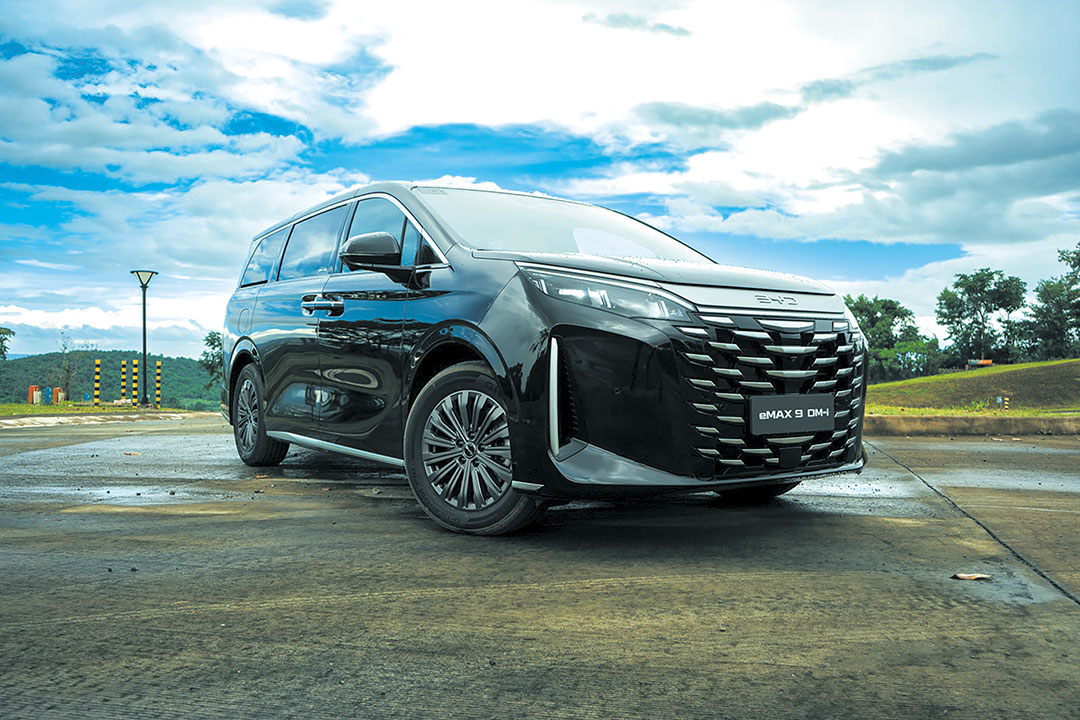
BYD taps the premium people mover segment with the eMax 9 DM-i

FILIPINOS have a genuine affinity with people movers. As I’ve always maintained, we basically like to move in groups. The extended family units that we belong to – not to mention our network of friends – are support systems that provide us security, joy, and love.

That’s probably why it’s an important category for an automaker to be in. And BYD did just that – again. The brand is growing its multipurpose vehicle (or MPV) portfolio by adding a larger hybrid-powertrain model following the all-electric eMax 7 (which pioneered the BEV powertrain in the segment).

Called the BYD eMax 9 DM-i, the three-row seven seater, in BYD’s teaser, is said to boast three primary general attributes that should help it get traction in an already competitive domain: power, luxury, and space.

Relative to the eMax 7, the eMax 9 is longer at 5.145m versus 4.71m, wider at 1.97m versus 1.81m, and taller at 1.805m versus 1.69m.

POWER
Its motivational combo comprised of a  permanent magnet synchronous motor and 1.5-liter engine (the latter also serving to charge the motor’s battery) can yield a range of up to 1,000km. In a recent real-world, localized test done by BYD Cars with the Automobile Association Philippines, the eMax 9 went 1,261km sans hypermiling moves. That’s impressive.

You can also top up the lithium ion phosphate BYD Blade Battery using alternating current or direct current via any standard CCS Type 2 charge point. The front-wheel driven hybrid has 271ps and 315Nm on tap. Two battery capacities are available, depending on which variant you choose: Advanced gets you 20.4kWh; Premium receives 36.6kWh. This brings us back to range. You should get a maximum of 945km in the former, up to 1,000km (or, yes, try to beat 1,261km) in the latter. Both should get to 100kph in a little above eight seconds.

Each purchase of either variant comes with a portable charging cable, wall-mounted 7kW charger, and Vehicle-to-Load (or V2L) technology through a V2L adapter. V2L will allow you to power external appliances and such wherever you are. That means you can rely on the eMax 9 to be your partner in adventures even off the usual grid.

LUXURY
If you ask me, luxury is something you should be able to behold and experience even before boarding a vehicle. The eMax 9’s front fascia doesn’t disappoint in this regard. It communicates presence and authority with a sizeable grille utilizing a so-called Dragon Face design language, flanked by signature LED lighting (with DRLs) and air vents toward the sides of the bumper. The vehicle rolls on 18-inch alloy wheels, and gets rain-sensing front windshield wipers. On the side mirrors are turn signal repeaters.

To the side, it has body-color wheel arches and a silver strip that runs from the side of the front bumper through the panels and to the rear side bumper. This feature is mirrored on the upper portion of the vehicle, too, running from the A pillar to the D-pillar where it widens.

Meanwhile, the powered tailgate gets LED illumination as well, plus a high-mount brake lamp on the extended roof spoiler. A rear wiper is tucked away from view for better aesthetics.

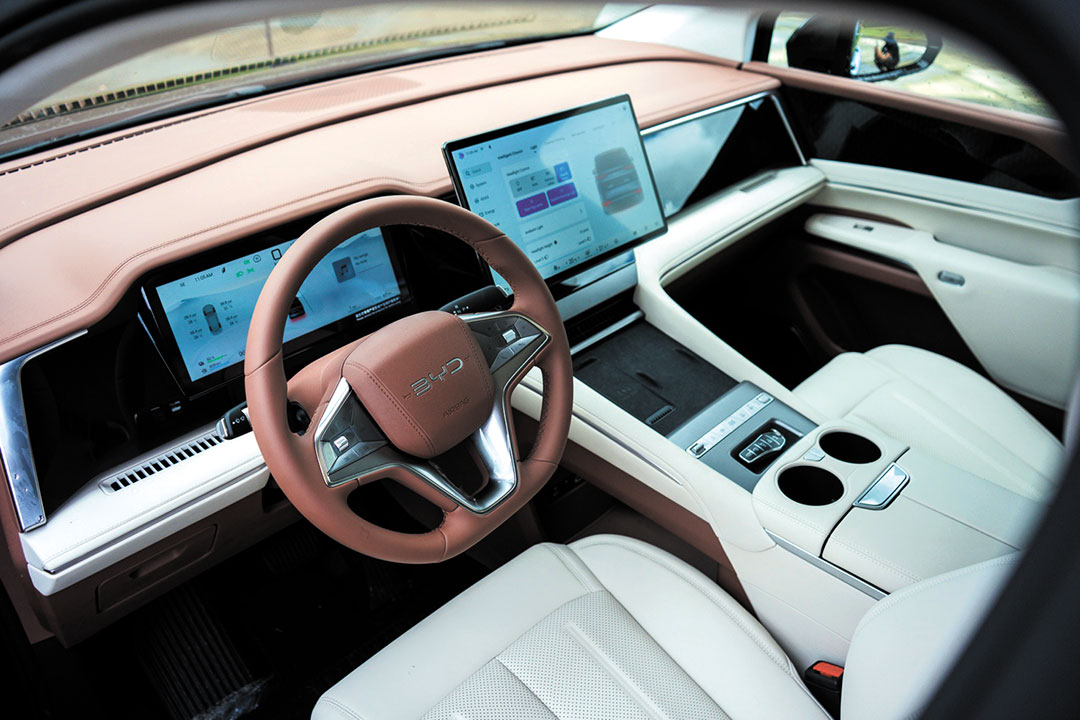
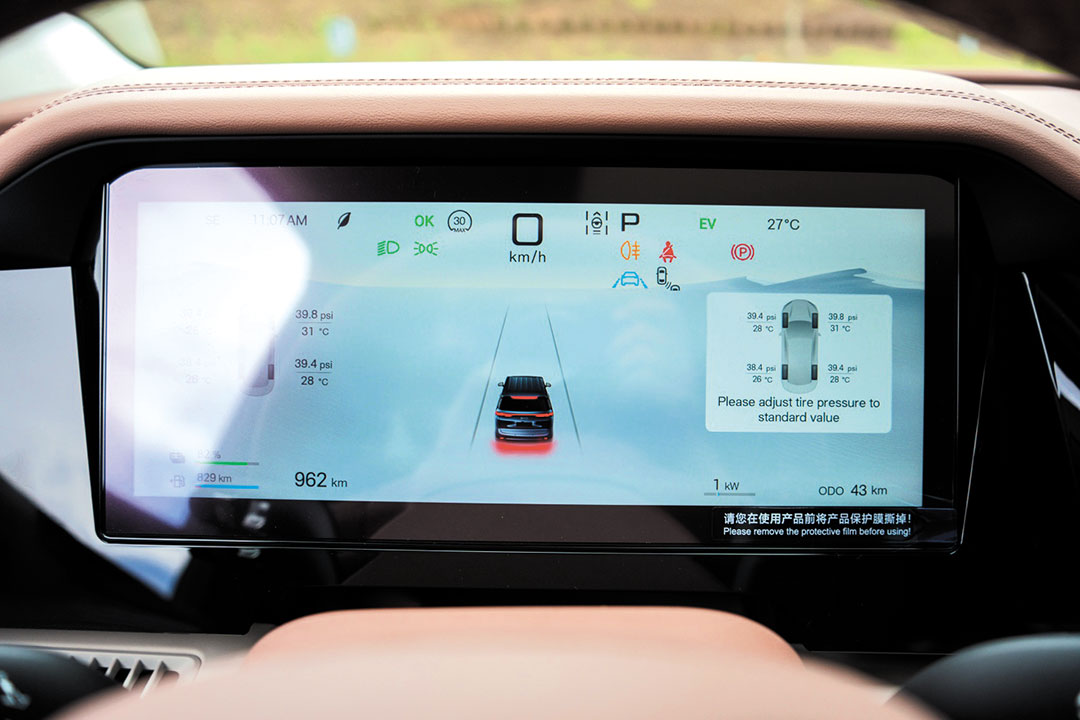
Of course, luxury is best experienced in the cabin. The eMax 9 serves up accoutrements in spades. Leather-wrapped front seats are power-adjustable with lumbar support. Plenty of leather touches are deployed elsewhere, along with soft-touch materials for a more upmarket feel. A 12.3-inch digital instrument cluster and a large 15.6-inch infotainment display complete a decidedly digital experience. And, yes, you can use Wireless Apple CarPlay, Android Auto, USB, or even Bluetooth for hands-free calling or audio streaming.

I do wish though that air-conditioning controls had been kept outside the screen, with their own analog buttons. Having said that, the eMax 9 boasts a tri-zone auto-climate system plus a PM2.5 particulate filter for an even better, healthier in-cabin experience.

As for entertainment, your content will find expression through eight speakers in the case of the Advanced, and 12 speakers in the Premium. There’s also voice assistance, over-the-air updating capability, and other niceties. Look up and see the sunroof that sadly doesn’t extend beyond the front-row ceiling.

The second row, which houses the best two seats in the house, is arguably the place to be. In the Advanced, you get manual, six-way adjustable ones. The Premium, which I tested, receives power-adjust in four ways, plus lumbar support, a head rest with side wings, and power-adjustable leg rest. Second-row passengers can also deploy a couple of tables from the seatbacks of the first row. Premium also gets them (and the driver, actually) ventilation and massage function. Business Class, anyone?

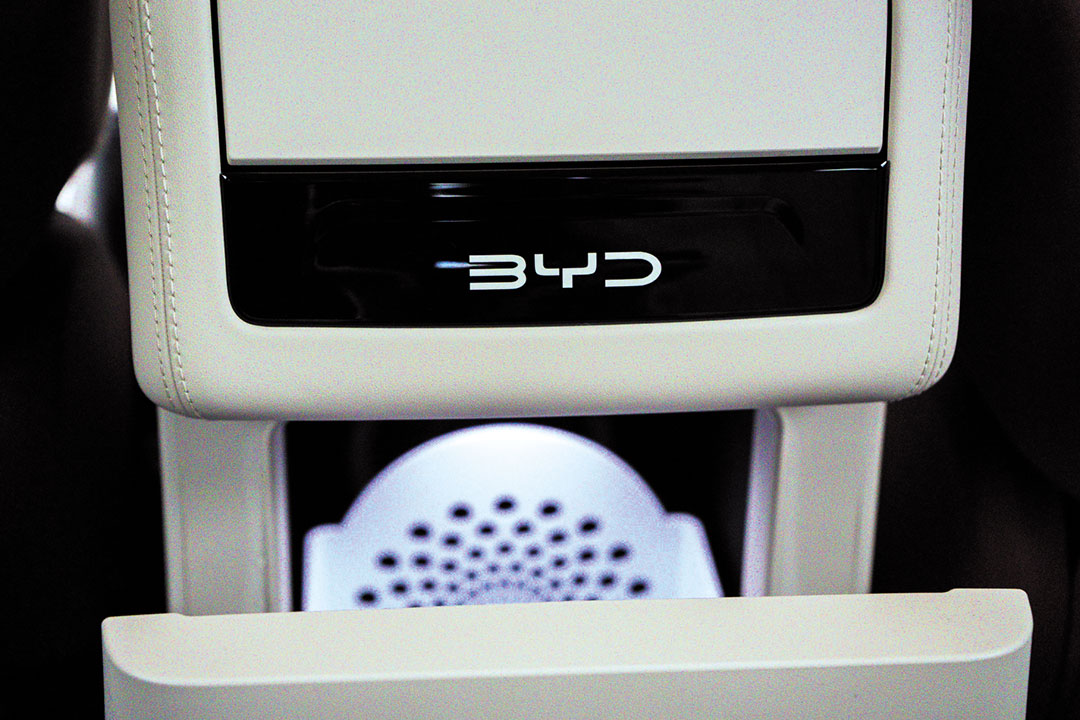
There are also a total of 10 bottle/cup holders, three USB-A charge points, and three USB-C charge points scattered around to keep passengers hydrated, and their devices charged. Then there’s a 12V power socket and a wireless charger. A bonus for the Premium variant is a refrigerator that can accommodate up to six bottles.

The third row, which can power-stow/deploy with a push of a button in the case of the Premium, has decent space for two adults of average size or maybe three small kids. There’s an armrest on either side, along with a cupholder and charge point (USB-C on the left, USB-A on the right). Deploying the third row also opens up more under-floor space.

“The BYD eMax 9 DM-i represents the pinnacle of our electrified vehicle innovation, where technology and luxury move together in perfect harmony,” said BYD Cars Philippines Managing Director Bob Palanca. “It is an elegant statement of progress for Filipino families and professionals who seek sustainable mobility and value smart ownership.”

Added BYD Philippines Country Head Adam Hu, “The BYD eMax 9 DM-i redefines what luxurious electric mobility means for Filipino families. It embodies our mission to make world-class electric mobility accessible to Filipinos who aspire to drive beyond the ordinary.”

SAFE SPACE
I digress from BYD’s “power, luxury, and space,” main value set. Rather, I’d like to change the last attribute to “safe space.” With its cache of safety features, the eMax 9 really is that: a safe space. Complementing comfort through its DiSus-C suspension that electronically adjusts the vehicle’s dampers to enhance ride stability and put a stop to a jarring experience across terrains, is BYD’s DiPilot Advanced Driver Assistance System that “elevates driver confidence and peace of mind.”

Based from our limited drive time and through some short exercises at the Ayala Greenfield Estates in the foothills of Mt. Makiling, I found the vehicle stable even through rather abrupt turning maneuvers at speed, and surprisingly peppy when the accelerator is depressed. NVH is, of course, curtailed most nicely through its electrified nature.

It contains a slew of features including adaptive cruise control, automatic emergency braking, blind spot detection, and lane keeping assist. A crisp feed from the eMax 9’s 360-degree panoramic camera and rear cross-traffic alert work together to give the driver all the help he or she needs. Just in case, the vehicle can deploy eight airbags.

The BYD eMax 9 DM-i is priced at P2.678 million for the Advanced variant and P2.998 million for the Premium, with both available in Cosmos Black, Deep Sea Blue, and Aurora White exterior colors.

BYD boasts a comprehensive warranty for the model: eight years/160,000km for the Blade Battery, eight years/160,000km for the drive unit, and six years/150,000 km for the vehicle. The BYD eMax 9 DM-i will be at the EV Summit Tech Tour Display at Alabang Town Center from November 7 to 9.For more information  visit www.bydcarsphilippines.com.

The peso is overvalued

BW FILE PHOTO

That is, the peso is too strong relative to other currencies. This means that our exports are less price-competitive in the global market, and imports are cheaper and easier to come in. Yes, even at P58 to $1.

I rest my case on the following grounds:

1. US President Trump has imposed a tariff of 19% on Philippine exports to the US, similar to that imposed on other countries like Vietnam (20%), which is the fourth biggest exporter to the US, and whose trade surplus with the US reaches $123 billion. The peso has hardly weakened since then to compensate for the tariff barriers.

2. Tradables continue to suffer. Manufacturing as a share of GDP has continued to shrink due to the strong peso. Manufacturing share of GDP decreased from 16.2% in 2023 to 15.7%. More telling is that the Philippines’ manufacturing share of GDP is just slightly ahead of Brunei, Laos, and Mongolia, and far behind Cambodia (27.8%), Thailand (24.3%), and Indonesia (19.0%).

What’s worse, 55% of our exports are in manufactured electronics, which is highly import-intensive. Consequently, our biggest import is also electronics. The strong peso has continued to disincentivize backward integration.

The Philippines is deindustrializing, a phenomenon described by National Scientist Dr. Raul Fabella as “development progeria” or “premature ageing” where services dominate the economy, mainly due to a strong currency. The problem is that these services are low-end services, from retail to fast food, and not high-end services, like financial services, as in Singapore.

Moreover, high-paying entry-level jobs are in manufacturing. A shrinking manufacturing sector means fewer high-paying blue-collar jobs.

As the United States discovered during COVID, manufacturing matters for national security. Even such simple items as masks had to be imported from China. This is why US President Trump is imposing high tariffs on imported goods to force companies to locate their manufacturing within US shores.

3. As a further reflection of our loss of export competitiveness, the number of Philippine exporters has declined significantly, from about 6,000 firms to about 4,000 firms, according to a newspaper report. Trump tariffs and increasing labor costs will further decimate those numbers.

4. We have the worst tourism numbers in all of ASEAN. The January to August tourist arrivals for the Philippines numbered a paltry 3.96 million, compared to Vietnam at 13.9 million and Malaysia’s at 28.4 million. No, the paltry tourism number is not because of our West Philippine Sea dispute with China. The fact is, traveling to the Philippines is expensive. In dollar terms, the overall travel experience — food, hotel, transport, shopping, and services — is about 20% to 30% more expensive in the Philippines than in Vietnam and Thailand.

Does the exchange rate matter in the tourism industry? Just look at Japan. Since the Japanese yen weakened after the pandemic, Japan has seen surging tourism numbers, so much so that their citizens are complaining of “overtourism.” And no, it’s not just due to the safety, cleanliness, and culture in Japan that are attracting tourists. Those were present in previous decades, but the tourism boom happened only when the yen sharply depreciated.

5. Vietnam’s share of the banana market in Japan is surging at the expense of the Philippines. The volume of exports from Vietnam to Japan has increased fourteenfold from 2019 to 2024, mainly due to better price competitiveness. I spoke to a banana exporter, and he admitted that rising costs (mainly labor) and a strong peso make it harder to retain market share in Japan.

6. In 2010, the Philippine peso and Indian rupee were at par at 45 to $1. Today, the Philippine peso is at P57 to $1 while the Indian rupee is at 88 to $1. This has implications for the price competitiveness of our BPO sector. The Philippines can’t continue to rely on its workforce’s familiarity with American culture and lack of thick accent to carry its BPOs forward.

Furthermore, Philippine BPOs are facing geopolitical and technological headwinds. AI is threatening to displace a sizeable number of BPO jobs. The US Congress is threatening to punish US companies that outsource call center jobs. Philippine BPOs lack the margins to cope with these headwinds.

7. Philippine FDI remains low at $8.9 billion, despite the CREATE MORE* law and liberalization measures, such as the Public Service Act and the foreign ownership liberalization in Renewable Energy. Why? Because the dollar cost of doing business in the Philippines remains high. Lack of infrastructure, high power cost, high labor costs, and bureaucratic red tape and corruption are cited by investors in staying away. But there’s a more fundamental reason — these problems aren’t compensated by the dollar cost of doing business in the Philippines. Wages and logistics costs are high in dollar terms, given the strong peso. Therefore, why would investors come to the Philippines to produce for the foreign market when dollar costs are high and export prices aren’t competitive?

It has been argued that the Philippine exchange rate reflects the market rate and that inflation remains low enough so that the real exchange rate (exchange rate adjusted for inflation) is competitive. However, the flaw in that argument is that the exchange rate doesn’t reflect the high cost of doing business in the country. There’s a difference between the inflation rate and the high cost of doing business in the country.

Because of the country’s history of overvaluing its currency, it’s vulnerable to external shocks. According to the Bank of America, the Philippines’ external position is the weakest in Southeast Asia, with continuing deterioration of its current account deficit. Our trade deficit is huge at $57 billion. Service income from BPOs and OFW remittances finances the deficit. However, a sharp drop in BPO revenues or exports due to the Trump tariffs could prove destabilizing to the economy.

Because of its high forex reserves, the Philippines doesn’t face an imminent foreign exchange crisis. However, it’s still vulnerable to a shock, or painful adjustment, which could come in the form of sharply lower growth in the succeeding years (it’s already much lower at 5.5% p.a. than the government’s projected 6% p.a.) and higher foreign debt.

Another painful adjustment will come in the form of higher unemployment, especially among the college-educated. CHED Chairperson Shirley Agrupis said that the latest Labor Force survey already shows a growing number of unemployed among the college-educated. The problem could get worse if manufacturing continues to shrink and BPOs curtail hiring. Growing youth unemployment could prove to be a potent addition to the growing political restlessness due to public works corruption scandals.

In other countries, an appreciating currency is a cause of panic. Thailand’s monetary authorities are scrambling to halt an appreciating baht. In the US, the Trump administration is trying to weaken the dollar to reverse its trade deficit. This is why the Trump administration wants to control the US Fed. (The writings of Stephen Mirant, Trump’s chief economic adviser, manifest that a US goal is to depreciate its currency.) Here, hard money and a strong peso are celebrated.

In 1997, I and a few others — the late NEDA Secretary Cayetano Paderanga, Jr., National Scientist for Economics Raul Fabella, and Monetary Board Member Dr. Benjamin Diokno — were called “jukebox economists” for calling attention to the peso overvaluation before the Asian Financial Crisis. Am I experiencing déjà vu?

* Corporate Recovery and Tax Incentives for Enterprises to Maximize Opportunities for Reinvigorating the Economy


Calixto V. Chikiamco is a member of the board of IDEA (Institute for Development and Econometric Analysis).

totivchiki@yahoo.com

T-bills to fetch lower rates with Fed seen to extend easing cycle

BW FILE PHOTO

RATES of the Treasury bills (T-bills) to be offered this week could go down as softer-than-expected US consumer inflation data supported expectations of further monetary easing by the US Federal Reserve.

The Bureau of the Treasury (BTr) will auction off P22 billion in T-bills on Monday, or P7 billion in 91-day securities, and P7.5 billion each in 182- and 364-day papers.

The T-bills could fetch lower rates to track the week-on-week decline seen at the secondary market amid bets that the Fed would deliver a second straight rate cut this week following the release of soft September US consumer price index (CPI) data, Rizal Commercial Banking Corp. Chief Economist Michael L. Ricafort said in a Viber message.

With the US central bank also expected to continue its easing cycle, this would also support further rate cuts from the Bangko Sentral ng Pilipinas (BSP), he said.

At the secondary market on Friday, yields on the 91-, 182-, and 364-day T-bills went down by 4.45 basis points (bps), 4.03 bps, and 4.05 bps week on week to end at 4.9263%, 5.0977%, and 5.1626%, respectively based on PHP Bloomberg Valuation Service Reference Rates data as of Oct. 24 published on the Philippine Dealing System’s website.

US consumer prices increased slightly less than expected in September as a surge in the cost of gasoline was partially offset by a sharp moderation in rents, keeping the Federal Reserve on track to cut interest rates again this week, Reuters reported.

The report was published despite an economic data blackout caused by the US government shutdown in order to help the Social Security Administration calculate its 2026 cost-of-living adjustment for millions of retirees and other benefits recipients, who will get a 2.8% increase.

It was initially due on Oct. 15 and the White House warned October’s inflation report might not be published for the first time ever because the shutdown had halted data collection.

The consumer price index rose 0.3% last month after climbing 0.4% in August, the Labor Department’s Bureau of Labor Statistics (BLS) said. The BLS said CPI data collection was completed before the shutdown. Still, the statistical agency used imputations to fill in missing information, with the share rising to 40% from 36% in August. A 4.1% jump in the price of gasoline was the main driver of the rise in the CPI.

In the 12 months through September, the CPI increased 3% after advancing 2.9% in August. Economists polled by Reuters had forecast a monthly increase in the CPI of 0.4% and a 3.1% rise on a year-over-year basis.

Excluding the volatile food and energy components, the CPI gained 0.2% after rising 0.3% in August. Slowing rent inflation accounted for the moderation in the so-called core CPI.

Economists estimated consumers so far have absorbed about 20% of the import duties.

They said businesses have refrained from passing on the full costs of tariffs to consumers at the expense of hiring, now a focus of the US central bank, which is expected to lower its benchmark overnight interest rate by another 25 bps to the 3.75%-4% range this Wednesday.

The Fed tracks the personal consumption expenditures (PCE) price indexes for its 2% inflation target. Based on the CPI data, economists estimated core PCE inflation rose 0.2% in September, translating to a 2.9% year-on-year gain.

The ongoing shutdown will, however, delay the release of that data. The second-longest shutdown in history is raising worries over the quality of future inflation reports, given the suspension of collection efforts.

Consumer price data is collected throughout the month, the bulk of it physically, and the shutdown means more than two-thirds of the October data are already missing.

During the 2013 government shutdown, about 75% of the CPI data for the month of October was collected. The BLS is already dealing with resource constraints because of budget and staffing cuts that have led to the suspension of data collection for portions of the CPI basket in some areas across the country.

Meanwhile, the BSP this month lowered benchmark interest rates by 25 bps for a fourth straight time, bringing the policy rate to 4.75%. It has now slashed borrowing costs by a cumulative 175 bps since it began its rate cut cycle in August 2024.

BSP Governor Eli M. Remolona, Jr. said that more reductions are possible in the coming months to help stimulate the economy. The Monetary Board’s next policy meeting is scheduled for Dec. 11.

Last week, the BTr raised P22 billion as planned from the T-bills it auctioned off as the offering was more than four times oversubscribed, with total bids reaching P95.17 billion.

The Treasury awarded P7 billion in 91-day securities as bids reached P26.68 billion. The average yield for the tenor inched up by 0.4 bp to 4.884% from the previous auction, with accepted rates ranging from 4.82% to 4.93%.

It also raised P7.5 billion as programmed from the 182-day T-bills, which attracted P40.63 billion in bids. The six-month paper fetched an average rate of 5.058%, down by 1.4 bps from the previous week. Accepted yields were 5.01% to 5.088%.

Lastly, the government raised P7.5 billion as planned from the 364-day tenor, which drew P27.86 billion in tenders. The one-year bill’s average yield declined by 2.2 bps to 5.097%, with accepted rates at 5.05% to 5.145%.

The BTr is looking to raise P180 billion from the domestic market this month, or P110 billion via T-bills and P70 billion through Treasury bonds.

The government borrows from local and foreign sources to help fund its budget deficit, which is capped at P1.56 trillion or 5.5% of gross domestic product this year. — Aaron Michael C. Sy with Reuters

Louvre transfers jewels to Bank of France after heist, RTL reports

LOUVRE Museum — WIKIPEDIA

PARIS — The Louvre has transferred some of its most precious jewels to the Bank of France, according to French radio RTL, after an audacious daylight heist last week exposed the famed museum’s security vulnerability.

The transfer of some precious items from the museum’s Apollo gallery, home to the French crown jewels, was carried out on Friday under secret police escort, RTL said, citing unnamed sources.

The Bank of France, which stores the country’s gold reserves in a massive vault 27 meters (88 feet) below ground, is just 500 meters away from the Louvre, on the Right Bank of the River Seine.

The Louvre and the Bank of France did not immediately respond to a Reuters request for comment.

The thieves stole eight precious pieces worth an estimated $102 million from the Louvre’s collection on Oct. 19, exposing security lapses as they broke into the world’s most-visited museum using a crane to smash an upstairs window during opening hours. They escaped on motorbikes.

News of the robbery reverberated around the world, prompting soul-searching in France over what some viewed as a national humiliation. — Reuters

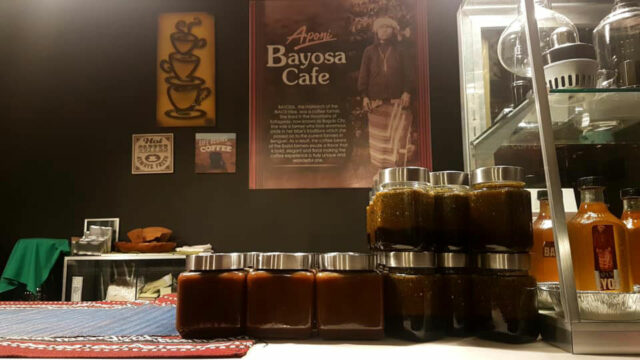
The diplomat’s wife who ran a fair-trade Benguet coffee brand

FACEBOOK.COM/APONIBAYOSA

By Andre Christopher H. Alampay

FIDES HERRERA-LIM felt a butterfly perching on her shoulder, an omen her coffee growers assured her was auspicious.

“Those are your ancestors,” a member of her all-women indigenous growing crew said.

The incident sealed her commitment to developing the market for Benguet coffee, via her Apo ni Bayosa brand.

She got her start running a coffee shop in Baguio, then had to pivot to running an informal bean-gifting network while living in Denmark, where her diplomat husband Leo was posted as ambassador.

Business partner Stella Longa Sutton recounts the time she learned the cafe was closing from Ms. Herrera-Lim.

She said, “There’s no one to run it but I feel so bad for the farmers.” Determined to keep at least the bean side of the business going, Ms. Herrera-Lim told her: “I need somebody to pack and to sell the beans.”

The marketing aspect of the business started out as Ms. Herrera-Lim promoting Philippine coffee to other diplomats in her husband’s circles.

“Every time (Fides) called she would say ‘Ambassador so-and-so has ordered 10 kilos of this, can you pack it?’ That’s how it started. (She) kept introducing it to various ambassadors,” Ms. Longa Sutton said.

Its roots as a popular gift making the diplomatic rounds eventually led to a product line known as Ambassador’s Choice.

Apo ni Bayosa is fair trade in the sense that Ms. Herrera-Lim buys beans directly from farmers, who set their own prices.

“They tell me how much; I don’t haggle with them. I accept their price … We want them to get a fair price because it’s a very good product,” Ms. Herrera-Lim said.

With Mr. Herrera-Lim now working in Manila as undersecretary for Migration Affairs, Ms. Herrera-Lim found the opportunity to launch Apo ni Bayosa in Rockwell, Makati on Oct. 25, with ambassadors from Nordic countries in attendance.

Ms. Longa Sutton said sales of the beans will be online, with an initial foothold in Metro Manila and other urban areas.

The pitch is not much different from the days when the beans were a hot item on the diplomatic gifting circuit — to build an appreciation for Benguet coffee while supporting farmers.

Ayala Land opens Evo City offices in Cavite for lease

AYALA LAND, INC.

AYALA LAND, INC. (ALI) has opened office spaces in its 207-hectare Evo City estate in Kawit, Cavite for lease as part of its plan to develop the area into a business and lifestyle hub.

“Office spaces within Evo City are now available for lease, opening opportunities for businesses to thrive in this strategically located estate,” the company said in a statement on Thursday.

Evo City is master-planned to become a central business district with residential, lifestyle, commercial, and civic components.

ALI said it recently opened the first phase of Ayala Malls Evo City, the first regional mall in Kawit, which will feature shopping, dining, and leisure establishments.

The mall is expected to be fully completed by 2026.

The company also opened the 1,000-seater Our Lady of Mount Carmel Church, where services will begin on Oct. 26.

The estate includes a 1.5-hectare park with green spaces and play areas.

“Evo City represents Ayala Land’s evolving approach to urban development — one that balances modern living with community-building and sustainability,” said Chris Maglanoc, Ayala Land Estates Group head.

ALI’s first-half net income rose by 8% to P14.2 billion on the back of higher contributions from its property development, leasing, and hospitality businesses.

The company manages over 50 estates nationwide, including developments in Makati, Taguig, Cebu, Laguna, and Pampanga.

ALI shares on Thursday slipped by 1.16% or 25 centavos to close at P21.25 each. — Beatriz Marie D. Cruz

The One with a plug-in hybrid heart

The Jetour T1 Lightning i-DM shows off its moves in China. — PHOTO BY KAP MACEDA AGUILA

Jetour T1 Lightning i-DM enters PHL market

By Joyce Reyes-Aguila

JETOUR AUTO PHILIPPINES’ “next-generation hybrid” sports utility vehicle (SUV) now debuts in the Philippine market. The Jetour T1 Lightning i-DM (or  intelligent dual motor) combines a 1.5-liter gasoline engine generating 140hp and 215Nm of torque with an electric motor that adds 150kW of power and 310Nm of torque. Its 26.7kWh battery can charge from 30% to 80% capacity in as little as 30 minutes.

“The T1 Lightning i-DM is an important addition to Jetour’s hybrid products,” Jetour Auto International President Ke Chuandeng told the audience at the local launch of the vehicle last week. “It strengthens the (brand’s) popular ‘T’ segment and continues to upgrade the value of the off-road segment of Jetour.” The T Series is differentiated as off-road-capable versus the X-predicated offerings, which are typically more “road-focused” crossovers.

Responding to a question from “Velocity” on how the brand’s latest offering will set itself apart in its competitive segment, Mr. Chuandeng said the T1 Lighting i-DM is equally adept as an urban SUV and off-road vehicle as it shares a “quite” similar chassis with the larger T2. “I believe our PHEV technology is the best in terms of the powertrain because of our group, the Chery Group.” Jetour is among the subsidiaries of the Wuhu, Anhui, China-headquartered auto marque. Incidentally, both brands are distributed by United Asia Automotive Group, Inc. (UAAGI) in the Philippines.

He also highlighted the design of the SUV that was recognized with a Red Dot Design Concept Award (an international competition for product design and design concepts) in 2024. “The exterior professional design, while similar to the T2, is not so hardcore off-road. This (treatment) and the fresh colors we offer it in have attracted more people, especially (women) in China.”

The T1 Lighting i-DM has a nine-layer sun protection glass and five-layer soundproof glass. Passengers can navigate the vehicle’s features and technology via a 10.25-inch digital instrument panel and 15.6-inch center control LCD green. Safety features include Lane Departure Warning, Lane Keeping Assist, Front Collision Warning with Active Braking, Adaptive Cruise Control, and Rear Cross Traffic Alert, among others.

Owners of the hybrid SUV will be supported by the aftersales network of UAAGI, according to its chairman Rommel Sytin. “We have established a centralized parts depot fully stocked to provide quick, reliable and affordable support to our customers across the country,” he assured attendees of the launch that included dealers from 21 locations, customers, and other stakeholders. “We have made sure that maintenance and parts availability are dependable and accessible. Our goal is simple: make vehicle ownership worry-free, convenient, and truly rewarding for every Jetour owner.” The executive reported that there are more than 5,000 Jetour vehicles now on the country’s roads – “a clear reflection of the growing trust and confidence of (its) customers.”

Meanwhile, Jetour Auto Philippines, Inc. (JAPI) Managing Director Miguelito Jose underscored the strength that the UAAGI network brings to the brand. “(We) are more aggressive in aftersales with almost 100 million inventory parts in our warehouse. The fill rate is more or less 96% to 97%. All the requirements of our dealers nationwide are being supplied on time. We have reliable partners nationwide.”

Jetour Executive Director Timothy Sytin added that the brand has “seen incredible growth with more show rooms across the country, more models introduced” since it arrived in the Philippines two and a half years ago. “More Filipinos experiencing what Jetour has to offer – smart, stylish, and sustainable mobility. (The T1 Lighting i-DM) perfectly embodies Jetour’s promise of bringing the future of sustainable driving into the present. The car delivers exceptional performance without comprising safety. It stands out with its bold and modern design, premium comfort features and advanced safety technology.”

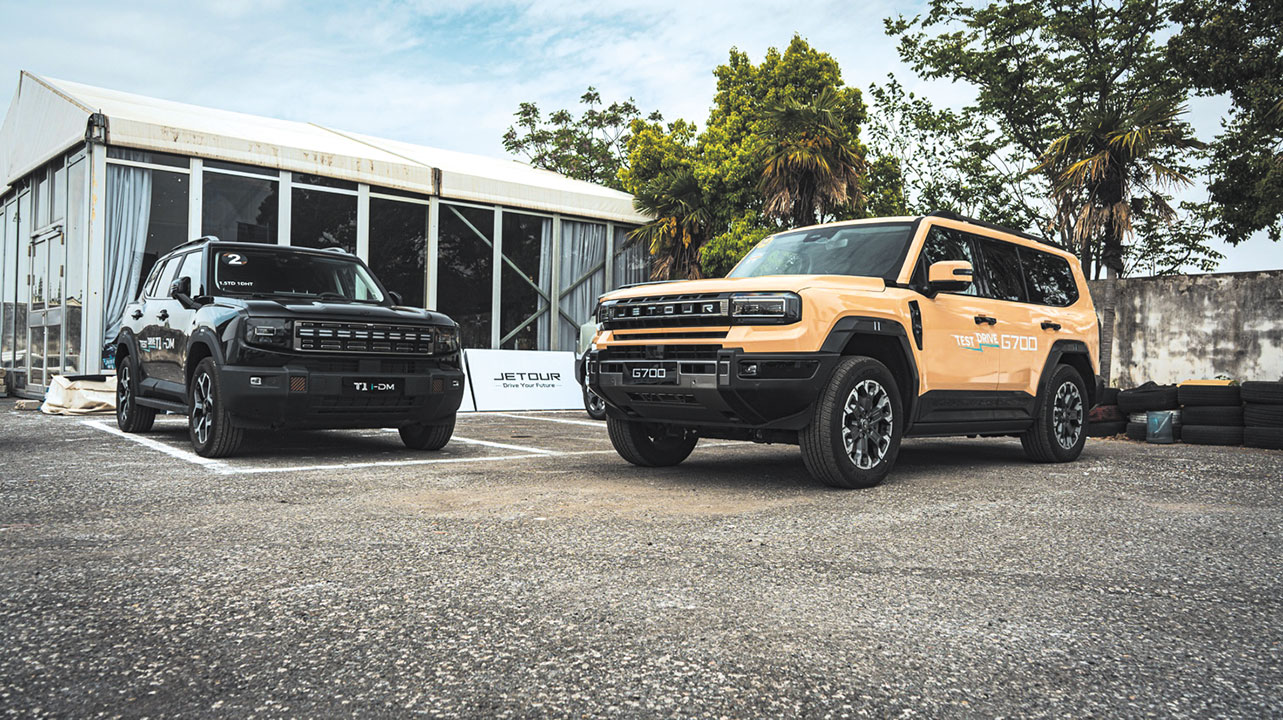
Mr. Chuandeng shared that Jetour will be launching vehicles from its more premium G Series, including the G700 plug-in hybrid SUV globally revealed last April. The company is also developing the T0 (zero), a “smaller SUV than the T1 that is about 4.4 meters (long), and the T5 PHEV” that will enable the brand to “have a very complete product lineup in the SUV segment.” All offerings are pillared on Jetour’s Travel+ concept. In a previous interview with “Velocity,” he explained that the strategy is aimed at promoting the idea of “safe, intelligent, and comfortable” mobile homes and providing Jetour vehicle owners with unique perks and experiences aligned with the brand’s culture.

“Jetour is quite a new brand, and we just established it seven years ago,” the executive told guests. “But we are really growing really fast. Our global sales is at more than two million cars. We are present in 91 countries besides China, with expansion that is very fast. We are launching next month in Europe, and we are making our layout for Australia.”

The T1 Lighting i-DM can be remotely operated through Jetour’s ACTIVLife Smartwatch that enables drivers to turn on the vehicle, keyless entrance, and trunk opening, among others, aside from lifestyle features to monitor health and outdoor activities. The first 200 buyers of the hybrid SUV in the country will receive the smart watch.

The T1 Lighting i-DM has a special introductory price of P1.798 million, with a suggested retail price of P1.898 million. It is available in five colors: Night Black, Sand Gold, Electroplated Green, Silver Snow, and Khaki White. For more information, visit https://jetourautophilippines.com.

Coffee industry seen requiring import curbs to support domestic growers

STARBUCKS

COFFEE entrepreneur Stella Longa Sutton called for curbs on coffee imports to allow coffee farmers to grow their foothold in the market.

Ms. Longa Sutton, co-founder of the Apo ni Bayosa coffee brand, told BusinessWorld in an interview that coffee is just one of the farm commodities currently beset by foreign competition, hindering the development of domestic industries.

“A lot want to go to a Starbucks, to be seen with a Starbucks mug,” she said, calling for such multinational chains to sell a certain percentage of local coffee.

She said she supports import curbs, including tariffs on foreign coffee, to push roasters to make domestically grown beans their priority.

She dismissed the current approaches to developing coffee, which is to provide seedlings to farmers, adding that coffee develops individualized unique characteristics based on altitude and soil health. — Andre Christopher H. Alampay

Nililimos na Karapatan: MAIFIP, the new face of pork barrel

Left with no other means to pay for her father’s mounting hospital bills, Ozan, a BPO (business process outsourcing) worker, found herself in a line at a local government office with medical records and proof of poverty in hand. She left her father at the hospital, desperate and scared, knowing every minute she spent away could be his last. Yet instead of being by his side, she was in a politician’s office, forced to endure long lines to beg for medical assistance that would extend his father’s life.

After all the humiliation, she received only a few hundred pesos. She was even told to post a Facebook photo thanking the politician. Her father died soon after.

Ozan shared this disheartening and horrendous experience during a press conference,* calling for an end to patronage-driven and for a rights-based health budget. Her story is not an isolated case; it reflects the reality faced by millions of Filipinos afflicted with diseases and stricken with catastrophic health spending.

It appears that, for the poor, attaining healthcare in the Philippines is now a complete circus. Indigent patients seem to have to go through an obstacle course, with one challenge being to beg a politician for a guarantee letter, also called a “GL.” For others who have no one to process their papers, medical treatment is forgone. They resort to self-treatment. Or they tragically die without ever seeing a doctor.

Some patients have had their applications for medical assistance denied after being compelled to move to private facilities due to the overcrowded public hospitals that could not provide them with care.

This is an undignified, humiliating, and, in some cases, deadly health financing system. It favors patronage-driven medical assistance programs over an institutionalized one that channels aid straight to patients. It is slowly and alarmingly becoming the norm. It serves as the new face of pork barrel funds. It keeps people dependent on politicians, as aid must pass through political gates before reaching patients.

Standing between a patient and the aid they desperately need for survival, politicians play the role of a “savior” as if the funds being distributed came straight out of their pocket and not from the national coffer built on every Filipino’s sweat and blood.

What’s even more atrocious is that this kind of health-related ayuda (assistance) is deliberately weakening PhilHealth and universal healthcare. The Universal Health Care (UHC) Act is the institution in place to ensure a rights-based provision of medical assistance.

Under the UHC Act, the Philippine Health Insurance Corp. (PhilHealth) is mandated to provide coverage for all Filipinos through the National Health Insurance Program, ensuring equitable access to quality and affordable healthcare. The law is designed to pool funds from various sources, making PhilHealth the sole purchaser of individual health services.

The membership of every Filipino in PhilHealth entitles him or her to protection from financial hardship. This means that the patient and his or her family members no longer need to leave their hospital beds to visit various government offices or politicians and gather financial assistance.

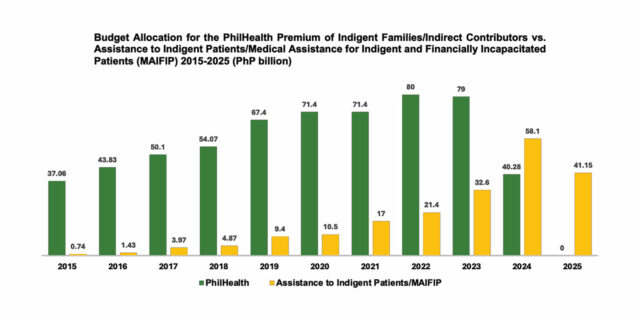
PhilHealth is being destroyed. While the PhilHealth budget was blatantly zeroed in 2025, the patronage-driven Medical Assistance for Indigents and Financially Incapacitated Patients (MAIFIP) received a staggering P41.15 billion in funding.

PhilHealth’s defunding together with the increase in funding for the Patients MAIFIP shows the government’s lack of appreciation for the essential role of social health insurance in achieving UHC.

For power-hungry, credit-grabbing traditional politicians or trapos, the MAIFIP is preferable to PhilHealth and the UHC. PhilHealth benefits do not have the names of politicians promoted or advertised. The benefits cannot be attributed to the patronage of the politicians.

Over the past decade, there has been a consistent trend of increasing budget allocations for assistance to indigent patients, which later became known as MAIFIP. Historical budget data indicate a concerning increase in medical assistance funds alongside a decrease in PhilHealth funding, particularly evident during the recent midterm election campaign season, under the Marcos administration.

For the 2026 budget, the same situation is set to happen. The House of Representatives is allocating MAIFIP in the General Appropriations Bill (GAB) a total of P49 billion, doubling the Executive’s proposed budget of P24 billion. For an aid that is expected by Congress to reach only 1.27 million Filipinos, as compared to PhilHealth’s 26.15 million indigent patients, such misaligned allocation shocks.

Trapos parade MAIFIP as benevolence, but in reality it reduces people to begging. It relies on political discretion, and it is outright inequitable. The distribution of medical aid under this program depends entirely on the whims of the politician. Whoever receives assistance and how much is granted is left to the politician’s personal favor, inevitably rewarding select beneficiaries while leaving many others with little to none.

According to Dr. Antonio L. Dans, the 2022 National Demographic and Health Survey data reveal a concerning situation: Discretionary health funds disproportionately benefit the better-off. Only 12% of these funds reach the poorest Filipinos, while 43% go to the richest two quintiles. This distribution contradicts what MAIFIP is supposed to be — provide financial assistance to those who are “indigent and financially incapable.” Rather than serving as a safety net for the poor during times of vulnerability, medical assistance through MAIFIP inequitably favors only those that the political patron favors.

The Filipino people are entitled to their right to health. No Filipino should be made to beg or be burdened by utang na loob that turns her suffering into a debt that must be repaid through political loyalty.

Prioritizing MAIFIP over PhilHealth is a betrayal of public service. It is despicable and inhumane.

*The live stream of the press conference on Oct. 3 can be replayed here: https://www.facebook.com/BawasBisyo/videos/756564470671500/?rdid=uPD34DaLYYxbHyhL#


Dhelyn Dela Cruz and Rosheic Sims are researchers and communicators for the fiscal and health policy team at Action for Economic Reforms (AER).

Peso may rebound as soft US inflation report bolsters Fed cut hopes

BW FILE PHOTO

THE PESO may rebound against the dollar this week following the release of softer US consumer inflation data, which would allow US Federal Reserve to continue its easing cycle.

On Friday, the local unit closed at P58.625 per dollar, slipping by 1.5 centavos from its P58.61 finish on Thursday, data from the Bankers Association of the Philippines showed. This was a fresh near nine-month low for the peso.

Week on week, the peso plunged by 46.5 centavos from its P58.16 close on Oct. 17.

A trader said the local unit mostly moved sideways against the dollar on Friday on cautious trading before the release of the much-awaited US consumer price index (CPI) report.

The dollar was also generally stronger as gold prices continued to rise, Rizal Commercial Banking Corp. Chief Economist Michael L. Ricafort said in a Viber message.

In the Asian session on Friday, the US dollar was steady as investors braced for delayed inflation data that showed US consumer prices increased less than expected in September, keeping the Federal Reserve on track to cut interest rates again this week, Reuters reported.

Trade war worries were also back on the agenda after US President Donald J. Trump said all trade talks with Canada were terminated following what he called a fraudulent advertisement by the province of Ontario in which former President Ronald Reagan spoke negatively about tariffs.

The US CPI rose 0.3% last month and 3% in the 12 months through September. Economists polled by Reuters had forecast the CPI increasing by 0.4% for the month and rising 3.1% year on year.

The CPI report was published despite an economic data blackout because of the government shutdown. The figure, used by the Social Security Administration to calculate its cost-of-living adjustment for millions of retirees and other benefits recipients, was initially due on Oct. 15.

Following the data release, the US dollar index was last down 0.021% at 98.934 after earlier falling as much as 0.2%.

The Fed is expected to reduce rates two more times this year, with a quarter-percentage-point cut baked in for the Oct. 28-29 meeting, according to LSEG calculations using rate futures.

With that rate move already factored into asset prices, markets are likely to be more sensitive to any forward-looking language from Fed Chair Jerome H. Powell, with the central bank expected to cut rates further at its next meeting in December.

Possibly clouding the Fed’s decision-making ability is the lack of data provided by the government since its shutdown began on Oct. 1, including delays in employment releases at a time of simmering worries about the health of the labor market.

For this week, the trader said the peso could rebound as the softer-than-expected US consumer inflation report strengthens the dovish Fed outlook.

The trader sees the peso moving between P58.20 and P58.60 per dollar this week, while Mr. Ricafort sees it ranging from P58.35 to P58.85. — A.M.C. Sy with Reuters

Missing Picasso painting found in Madrid weeks after vanishing

MADRID — Spanish police said on Friday they had recovered a 1919 Pablo Picasso painting that went missing earlier this month ahead of its planned display at a temporary exhibition in southern Spain.

The small framed Still Life with Guitar was part of a larger shipment of artworks moved from Madrid to Granada. The exhibit’s organizers filed a police complaint on Oct. 10 once they noticed it missing after the crates were unpacked.

In a post on X, police said the painting may not have been loaded onto the transport truck before the shipment left Madrid. The historical heritage brigade was continuing its investigation, the statement said, without indicating whether police believed any crime had been committed.

Police released pictures of forensic experts examining the painting while wearing full sterile bodysuits and masks.

The police had registered the painting, which is owned by a private collector, in Interpol’s global database of Stolen Works of Art containing nearly 57,000 items.

The CajaGranada Foundation holding the exhibition said its security camera footage showed only 57 works being unloaded from the vehicle when it arrived, instead of the 58 expected. — Reuters

Meralco shares rise as investors price in upgrade plans

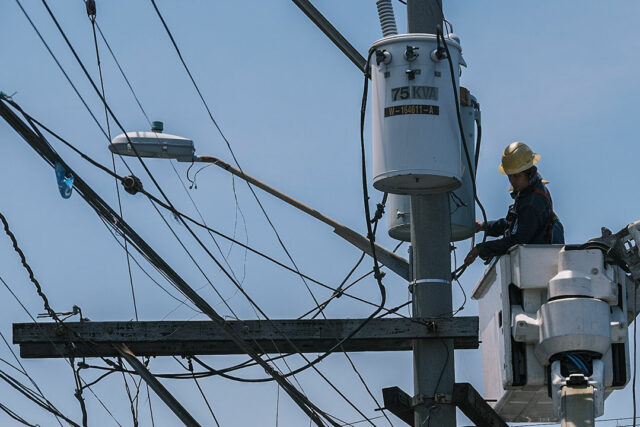
A Meralco worker examines a transformer in Navotas City. — PHILIPPINE STAR/RYAN BALDEMOR

SHARES in Manila Electric Co. (Meralco) climbed last week as investors responded to announcements on the company’s modernization initiatives, including a partnership with US-based Itron, Inc., aimed at strengthening its distribution network, analysts said.

Data from the Philippine Stock Exchange (PSE) showed Meralco was the seventh most actively traded stock for the week, with 1.98 million shares worth P1.15 billion changing hands. Its share price rose by 3.9% week on week to P579 on Friday from P557 the previous week, outperforming both the industrial index and the benchmark PSE index, which slipped by 0.4% and 1.7%, respectively.

Year to date, the stock has gained 18.6% from its closing price of P488 at end-2024.

The power distributor announced last week plans to install 1,500 kilometers of underground distribution cables in key areas and to deploy smart meters across Metro Manila through a partnership with Itron.

“These are certainly positive developments, which [showed] in Meralco’s stock performance as investors welcomed its push for smarter and more reliable power systems,” Regina Capital Development Corp. Head of Sales Luis A. Limlingan said in a Viber message.

Froilan J. Savet, Meralco’s first vice-president and head of networks, said the underground cable project will be implemented in the first regulatory period of the company’s multi-year capital expenditure plan. Meralco plans to file its application for the first period with the Energy Regulatory Commission by January 2026.

The utility giant said the undergrounding initiative will prioritize heavily trafficked areas such as business districts, heritage sites, tourist destinations, and typhoon-prone zones.

Diversified Securities, Inc. trader Aniceto K. Pangan said moving lines underground would reduce power losses and improve network resilience during storms.

Meanwhile, the Itron partnership will roll out advanced metering infrastructure allowing real-time monitoring of power use and faster outage response. The system is compatible with multiple meter brands, making it scalable across Meralco’s franchise area. About 73,000 meters in Metro Manila are set for installation in the first phase.

Mr. Limlingan noted that while sentiment was upbeat, investors also priced in the project’s “hefty capex and regulatory hurdles.”

He added that some investors were positioning for Meralco’s upcoming earnings report, which is expected to reflect “solid” third-quarter results.

In the first half, Meralco’s attributable net income grew by 5.3% year on year to P23.64 billion, while consolidated revenues rose by 3.3% to P245.22 billion.

Mr. Pangan said higher power rates in October may have also supported the stock’s performance. Meralco’s overall rate increased by P0.2331 per kilowatt-hour (kWh) to P13.3182 per kWh following a P0.831 per kWh reduction in September, mainly due to higher generation costs and peso depreciation.

For this week, Mr. Limlingan placed the stock’s support levels at P595-P600 and resistance at P570-P560, while Mr. Pangan pegged immediate support at P545 and resistance at P595.

Meralco’s controlling stakeholder, Beacon Electric Asset Holdings, Inc., is partly owned by PLDT Inc. Hastings Holdings, Inc., a unit of the PLDT Beneficial Trust Fund subsidiary MediaQuest Holdings, Inc., has an interest in BusinessWorld through the Philippine Star Group, which it controls. — Matthew Miguel L. Castillo

ADVERTISEMENT
ADVERTISEMENT