Home Blog Page 7724

Entertainment News (07/30/21)

Spotify launches Daily Drive playlist

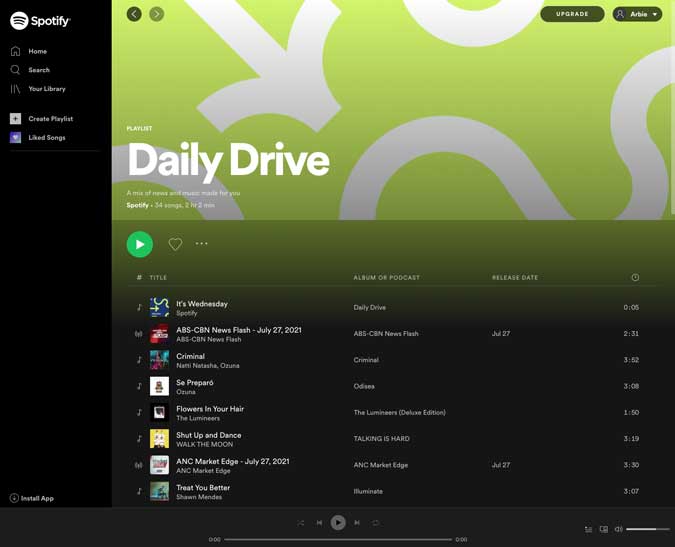
SPOTIFY has a new playlist, Daily Drive, that it says “revolutionizes the way on-demand audio content is consumed.” It is a new mixed-media playlist that combines music with relevant news from reputable local and global sources. Leveraging Spotify’s algorithmic and editorial expertise, Spotify’s Daily Drive playlist gives listeners access to news, talk, and personalized music content all in one place to start their day. Key features of Daily Drive include: short, timely local news updates from ABS-CBN News Flash and ANC Market Edge, international headline news from BBC Minute and CNN 5 Things, and a local perspective on current events from Teka Teka, and Think About It by Ted Failon; personalized music featuring songs the listener already likes with a few discovery tracks; and short-form (three to 10 minutes) podcast content by Vox Quick Hits, Ted Talks Daily, and Think Fast, Talk Smart: Communication. Users can search for “Daily Drive” on Spotify or access via the Home and Browse. “Daily Drive” can also be found within the “Made for You” and “Daily Drive” hubs. Daily Drive is now available from Spotify both for Free and Premium Users. The link is: https://open.spotify.com/playlist-format/daily-drive.

GMA Network premieres new drama series

THE NEWEST show on GMA Network’s Afternoon Prime block is the TV adaptation of the 1988 film Nagbabagang Luha, about the rivalry between two sisters. The network brings back the classic movie of renowned filmmaker Ishmael Bernal with the remake starring Glaiza de Castro and  Claire Castro as the feuding sisters,  Rayver Cruz, Mike Tan, Gina Alajar, Allan Paule,  and Archie Adamos. Directed by Ricky Davao, Nagbabagang Luha premieres Aug. 2, and will air from Monday to Saturday after Eat Bulaga on GMA Afternoon Prime. Viewers abroad can also catch the program via GMA Pinoy TV. It will also be available for streaming via iQiyi International or IQ.com for subscribers in the Philippines.

HBO Asia’s On The Job series goes to Venice Film Festival

On The Job, a new six-part HBO Asia Original series continuing the saga of Erik Matti’s 2013 film of the same name, will premiere in September on HBO GO. Select episodes from the crime thriller series will play in Competition at the 78th Venice Film Festival in September as On The Job: The Missing 8. It is the only film from Asia out of the 21 international films in Competition at this year’s Venezia 78. The series centers around crime syndicates that temporarily release contracted prison inmates to carry out political assassinations for those in power, except that the crime syndicates are run by politicians. The series also puts a spotlight on the real-world predicament concerning fake news and how easily truth can be manufactured and disseminated to the public in today’s digital age. Conceived and directed by Erik Matti, the series in English and Filipino is filmed in the Philippines and stars Joel Torre, John Arcilla, Piolo Pascual, Dennis Trillo, Gerald Anderson, Joey Marquez, Dante Rivero, Christopher De Leon, and Lotlot De Leon. While the first two episodes of the series were shown as a film as part of the Director’s Fortnight at the 2013 Cannes Film Festival where it received a standing ovation, the episodes on HBO GO are remastered and include never-before-seen and exclusive content.

Jose Mari Chan medley for Ayala’s Festival of Lights

SINGER-SONGWRITER Jose Mari Chan is producing a Christmas medley for Ayala Land and Make It Makati’s Festival of Lights: Virtual Edition, Ayala Land announced. The music icon best known for his Christmas songs, Mr. Chan will be coming out with a new Christmas track. He will also make a Christmas medley for the digital version of the Festival of Lights. Mr. Chan and representatives from Ayala Land held an intimate signing ceremony at Ayala Triangle Gardens, Makati to formalize their newest Christmas collaboration. In 2020, the Festival of Lights held its first ever virtual event via Facebook and YouTube. Typically held at Ayala Triangle Gardens in Makati, the venue was recreated and designed within the digital space to present a 360-degree animation, with an orchestration of laser lights, string lights, meteor lights, holograms, and helix lights dancing to modernized renditions of traditional songs. This November, Ayala Land is hosting the annual event virtually once again in partnership with Globe Studios led by filmmaker and director, Quark Henares.

iQiyi on has Dolby Vision and Dolby Atmos

iQiyi, is bringing Dolby Vision and Dolby Atmos to iQiyi’s international app, which is available in 191 countries including the Philippines. Dolby Vision boasts ultra-vivid imaging — brightness, contrast, color and details that bring movies to life — while Dolby Atmos is a sound system that moves around the viewer for extra realism. iQiyi International’s VIP paid subscribers in both Standard and Premium tiers with compatible devices can now enjoy its content with unparalleled audio and video. One of the first titles available in Dolby will be The Ferryman: Legends of Nanyang, which will be released in Dolby Atmos. More shows with Dolby Atmos and Dolby Vision will be added to iQiyi’s growing library of content over the next few months.

Tomorrow X Together is Smart’s new ambassadors

Following the successful launch of its partnership with BTS, Smart Communications Inc. announces Tomorrow X Together (TXT) as its new international ambassadors. The five-member K-pop group’s latest release, The Chaos Chapter: FREEZE, reached no. 5 on the Billboard 200. The band has been globally recognized by names such as Radio Disney and the MTV Video Music Awards. Smart is teaming up with the band to introduce “Build Your Own Giga,” Smart Prepaid’s latest offer for prepaid subscribers. Smart is set to unveil the new campaign in August.
PT&T board approves capital increase to P11.8 billion

PHILIPPINE Telegraph & Telephone Corp. (PT&T) announced on Thursday that its board of directors had approved a proposed increase in the company’s authorized capital stock not exceeding P11.8 billion from the current P3.8 billion.

“The increase in PT&T’s authorized capital stock was approved in anticipation of the expansion and development of its business and its compliance with the debt-to-equity conversion mandated under the Rehabilitation Plan,” the company said in a disclosure to the stock exchange.

“The increase in the number of common shares shall allow PT&T to raise additional funding for its business operations while the additional preferred shares will be issued to creditors under the debt-to-equity conversion scheme which will be implemented after PT&T has secured the required Deeds of Assignment from its creditors,” it added.

PT&T said the decision was made at its regular meeting held on July 28.

In the company’s amended articles of incorporation, its authorized capital stock will be increased to an amount to be determined by the board of directors but not exceeding P11.8 billion.

The authorized capital stock is divided into: not exceeding 3 billion common shares at P1 per share, and not exceeding 8.8 billion serial redeemable preferred shares at P1 per share and subject to specific features to be determined by the board of directors, consisting of 6.75 billion series “A” serial redeemable preferred shares, 1.8 billion series “B” serial redeemable preferred shares, and 250 million series “C” serial redeemable preferred shares.

“The capital structure of PT&T will be affected once the shares resulting from the increase in authorized capital stock have been subscribed,” the company said. — Arjay L. Balinbin

ARTA prepares automation manual for regulatory agencies

BW FILE PHOTO

THE ANTI-RED Tape Authority (ARTA) on Thursday launched an automation manual to ease regulatory agencies’ dealings with various industries, prepared in partnership with the UK government.

In preparing the manual, ARTA consulted with the food and pharmaceuticals, housing, logistics, energy, and telecommunications sectors, along with government agencies including the Department of the Interior and Local Government and the Department of Budget and Management.

“This manual can help agencies in developing automated systems. It also provides tools for identifying pain points of customers, which can be addressed in the design of systems,” Trade Secretary Ramon M. Lopez said in a message recorded for the virtual launch.

“Additionally, it contains recommendations for actual reform implementation. More importantly, this manual impresses on agencies the importance of continuous improvement, knowing full well that reform is never a one-off thing but a continuous and dynamic process.”

The UK provides local consultancy services as part of a regulatory reform program for Southeast Asia.

The manual identifies four phases. The discovery phase uses evidence-based understanding of customer issues and suggestions, while the design phase is for identifying targets, priority initiatives, and needed technologies.

In the delivery phase, the manual recommends that agencies set communications plans and working groups, while the continuous improvement phase monitors performance.

Training of priority government agencies will be conducted in August and September.

The manual is part of an efforts to develop a whole-of-government approach to process reform, ARTA Director General Jeremiah B. Belgica said. — Jenina P. Ibañez

Sun Life Philippines establishes trust company

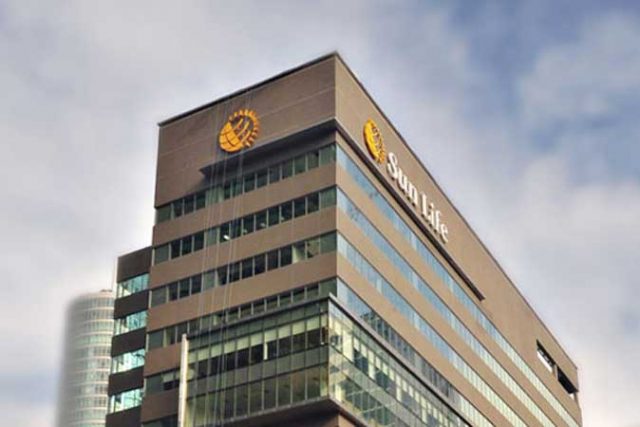
SUN LIFE of Canada (Philippines), Inc. has established its trust unit called Sun Life Investment Management and Trust Corp. (SLIMTC), which will focus on targeting institutional investors, including state pension funds.

“We’ll be able to offer opportunities both for retail and institutional investors, recognizing different liquidity, risk appetites and investment constraints,” SLIMTC Chairman Sancho Constantino Y. Chan said at an online briefing.

“Moreover, we’re able to bring to bear our risk management and compliance frameworks to ensure that we not only meet our client’s investment goals, but also safeguard their money and provide comfort and assurance that we can manage through economic cycles,” Mr. Chan added.

SLIMTC President Michael Gerard D. Enriquez said prior to the newly established trust unit, Sun Life was already “dominant” in the retail market through their insurance and mutual fund businesses, with only limited institutional investors.

Mr. Enriquez said although “several institutions” have tapped them for fund management, they did not have the right platform prior to SLIMTC, which started operating on Monday. He said they will target the gap in the institutional space, including the likes of retirement and pension funds.

He said pension fund management is currently dominated by the country’s three largest banks, namely BDO Unibank, Inc., Metropolitan Bank & Trust Co., and Bank of the Philippine Islands. He noted that opportunities in the market have been growing, not just in the private sector but also the state-owned Social Security System (SSS) and the Government Service Insurance System (GSIS). 

“These two institutions (SSS and GSIS) have been starting to diversify their asset base not only in the domestic market but also looking at offshore, and at the same time, opening up themselves as well to more sophisticated investments… So I think this is where SLIMTC can hopefully help them, in being able to partner and contribute to the needs of these pension funds,” Mr. Enriquez said.

SLIMTC is also looking to serve high net worth individuals once they have established their presence among institutional investors, he added.

“Clearly, there has been a lot of demand already for more sophisticated portfolios and strategies, especially from the high net worth. So there is a growing opportunity as well in that private bank and high net worth space, which we will be exploring to enter once we first establish our institutional clientele,” Mr. Enriquez said.

He said he is bullish that the Philippine market is already starting to recover from the volatility caused by the crisis last year.

“We are more confident and the sentiment has been turning more positive towards the recovery of the economy. I think there’s more positive optimism now in spite of this overhang of the Delta variant, which again, creates some short-term uncertainty,” he said.

SLIMTC will also complement Sun Life Asset Management Co., which is focused on mutual funds for retail investors.

“How SLIMTC can complement that is we will again move to target third-party institutional clients by offering investment solutions rather than marketing funds to these clients,” Mr. Enriquez added.

Sun Life Philippines Chief Executive Officer and Country Head Benedicto C. Sison said the establishment of SLIMTC is in line with Sun Life’s strategy to expand its asset management business in Asia.

“In the Philippines, where there’s still room for growth and evolution in the investment products category, there’s certainly an opportunity to expand the Filipinos’ choices when it comes to investment solutions,” Mr. Sison said.

SLIMTC is the country’s fifth stand-alone trust corporation registered with the Bangko Sentral ng Pilipinas, joining ATRAM Trust Corp., BPI Asset Management and Trust Corp., Manulife Asset Management and Trust Corp., and Pru Life UK Asset Management and Trust Corp.

It is also the latest in Sun Life’s local business, which include life insurance under Sun Life of Canada (Philippines), Inc., bancassurance under Sun Life Grepa Financial, Inc., and asset management under SLAMC.

Sun Life posted the highest premium income worth P39.27 billion among life insurers in 2020, based on data released by the Insurance Commission in April. It also topped the sector in terms of net income with P8.47 billion last year, while its unit Sun Life Grepa (P674.22 million) ranked eighth. — Luz Wendy T. Noble

Stuff to do (07/30/21)

Art workshops at the Met Museum

THE METROPOLITAN Museum of Manila will hold illustration workshop for children on July 31 (4:30 to 5 p.m.) via Zoom and Facebook Live featuring the illustrated children’s book Kapit Kapit Bahay Bahay as well as artworks from the museum collection. The children can learn to draw with the book’s illustrator Gelai Manabat of Ang Ilustrador ng Kabataan (Ang INK). She will also share tips and tricks on drawing like a visual storyteller, and show how drawings can bring communities to life. For more information and registration guidelines, visit bit.ly/METOnlineStudio1.

Linggo ng Musikang Pilipino online

LINGGO Ng Musikang Pilipino (Philippine Music Week) goes online for its 7th year. Organized and produced by the Organisasyon ng Pilipinong Mang-aawit and the National Commission for Culture and the Arts, the festival runs until Aug. 1 with online concerts, webinars, and masterclasses. For more information and the full schedule of performances, webinars, and masterclasses, visit www.lmp.com.ph/ and www.facebook.com/PinoySingers/.

Rak of Aegis goes online    

THE PHILIPPINE Educational Theater Association (PETA) presents the pay-per-view streaming of the jukebox musical Rak of Aegis on July 31, Aug. 1, 7, and 8 via www.ticket2me.net. The story follows Eileen and her efforts to help her community which has been submerged in floodwaters, told using the songs of the rock band Aegis. Written by Liza Magtoto and directed by Maribel Legarda, the streaming cast includes Aicelle Santos, Pepe Herrera, Poppert Bernadas, Isay Alvarez-Seña, Robert Seña, Joann Co, Jimi Marquez, and Gie Onida. The Rak of Aegis online streaming is part of the Linggo ng Musikang Pilipino (LMP) 2021 celebration and is the banner project of the #TakePETAbeyondCOVID campaign, a fundraising drive that aims to help PETA. Tickets to Rak of Aegis are now on sale via www.bit.ly/rakofaegisstreaming. The viewing options are: Livestream at P350 (8 to 11 p.m., Philippine Standard Time or PST); Video On Demand at P500 for 24-hours streaming from 10 a.m. to 10 a.m. the next day (PST); Video on Demand Premium at P1,000 for 24-hours streaming from 10 a.m. to 10 a.m. the next day with exclusive access to the Rak with Aegis live virtual concert on Aug. 8 (8 p.m.), featuring the Aegis Band and select cast members. For more information, follow PETA’s social media pages: Facebook (www.facebook.com/petatheater), Instagram (@petatheater), Twitter (@petatheater), YouTube (www.youtube.com/petatheateronline) or visit www.petatheater.com/rakofaegis.

Week-long event celebrates role of art

“PANDELIKHA: Arts, Community, and Creativity in the Pandemic and Beyond” delves into conceptual and performative digital media, has workshops on puppetry and printmaking, and discussions on art and society, featuring award-winning visual artists, art educators and student-artists throughout next week. Among the events are an online demo-workshop on puppetry to be facilitated by visual artist, puppeteer, dancer, chanter, musician, ceramist, researcher and art educator Carlito Amalla. Multimedia artist Noell El Farol, whose practice borders the disciplines of archaeology and fine arts will likewise conduct a class on printmaking without a press. Both workshops are scheduled on Aug. 5, 11:20 a.m. for puppetry and 2:40 p.m. for printmaking. The week will conclude with conversations on art in relation to community-based projects, social engagement, social justice, creative pedagogies and traditional and folk crafts as categories in diverse creative industries. The talk will be headlined by theater and visual artist Dr. Brenda Fajardo; painter Emmanuel Garibay; painter, writer and organizer Alee Garibay; and visual artist, curator and art educator Karen Flores. The discussion will be held on Aug. 6, at 12:30 p.m. PANDELIKHA is a free public event to be held via Zoom. For more information, visit the official Facebook page of Benilde Arts and Culture Cluster at https://www.facebook.com/benildearts.

Strategic planning during COVID-19

The season of strategic planning has started. The CEO along with his/her executives will again put on their planning hats to chart the future of their organizations. The difference nowadays, just like last year, is that this critical activity will be done with limited physical interactions, if not, virtually.

While companies last year planned for business continuity, business recovery, and tweaking of business models, this year’s strategic planning themes will be about repositioning today’s business to maximize its resilience during the pandemic, while at the same time creating tomorrow’s new growth engine when economies bounce back. This is a strategic planning approach which we term as dual transformation.

A concept propounded by Clark Gilbert, Mark W. Johnson, and Scott D. Anthony in their book Dual Transformation, it has two streams — Transformation A, which is finding new possibilities for addressing existing markets, and Transformation B, which is about creating a powerful new growth engine for the future.

As I have written in my previous article, “many successful businesses face a growth challenge during this pandemic in the core markets they currently dominate.” Moreover, “consumers and business buyers have quickly shifted to digital platforms.”

Hence, many companies have adopted Transformation A, by identifying the shift in behaviors of your current customers, innovating your business model against this shift, determining, and monitoring new metrics, and aggressively implementing the transformation. This is exactly what Jollibee and other organizations did at the onset of the pandemic by quickly pivoting their business models to serve current customers that shifted to digital.

For those organizations which have haphazardly implemented Transformation A last year, this year is the time to plan for fine-tuning the business model and integrating digital systems with the other systems in the organization.

As an example, one large grocery chain set up an online ordering system last year to serve online buyers. The system is not integrated into their inventory system, such that if you order and stocks are not available, a staff will inform you of the unavailable stocks.

Organizations like this should tweak their business models, learn from their mistakes, and seamlessly integrate systems across the organization to enhance customer experience.

Apart from this, employee experience, indeed, should be a top priority of organizations, as part of Transformation A in this time of WFH arrangements. According to recent survey held by isolved and published in Forbes, 92% of human resource leaders in the US set employee experience as top priority in 2021. Employee experience is the employee’s perceptions about his or her journey through all the touchpoints at a particular company, from hiring, onboarding, engaging, performing, rewarding, developing, to departing. It is the employees who will execute Transformation A and B; and taking care of their experience during the pandemic makes perfect business sense.

But pursuing Transformation A is not enough. When the global economy bounces back, organizations need to expand their businesses to other untapped and constrained markets to create the growth engine of the future. For successful companies, future growth often must be found outside their core markets. But looking to new markets, new customers, and new business models is a big strategy. Hence, pursuing Transformation B is a sound strategic approach.

This involves identifying new and emerging customer personas, may it consumers or business customers, that have new sets of needs; and creating new offerings that address these needs.

For example, “increased use of digital tools is blurring the lines between work, lifestyle and social interaction and between domains like mobility, health and finance,” according to Mahesh Puttaiah, senior economist, Swiss Re Institute. “We expect this to continue in the post-COVID-19 world,” he averred. New customer behaviors like this will need new products and services that may be a company’s future growth engine.

Organizations need to plan for Transformation A and B in a seamless and efficient fashion. Dual transformation is a journey that CEOs and the board need to understand and prepare for. It also entails transforming the organization’s mindset and culture.

Senior business executives should view and approach strategic planning from a different lens. It’s a different ball game altogether. The traditional approach will not work.


Reynaldo C. Lugtu, Jr. is the founder and CEO of Hungry Workhorse Consulting, a digital and culture transformation consulting firm. He is the chairman of the Information and Communications Technology Committee of the Financial Executives Institute of the Philippines (FINEX). He is a fellow at the US-based Institute for Digital Transformation He teaches strategic management in the MBA Program of De La Salle University. The author may be emailed at rey.lugtu@hungryworkhorse.com

First Gen to provide clean power to Manila Polo Club

THE Lopez group’s power generation arm First Gen Corp. will be supplying clean energy to the 25-hectare Manila Polo Club for the next two years.

In an e-mailed statement on Thursday, First Gen said its unit Green Core Geothermal Inc. (GCGI) will be providing to the leisure and sports facility some 550 kilowatts of electricity sourced from its 112-megawatt (MW) Tongonan geothermal plant in Leyte.

“Our partnership with Manila Polo Club shows that using clean and renewable energy does not require our customers to spend more for their power bills. Renewable energy is not only clean; it is competitively priced,” First Gen Vice-President Carlos Lorenzo L. Vega said.

GCGI, an indirect subsidiary of First Gen, is a licensed retail electricity supplier that owns a geothermal plant in Leyte and a 192-MW geothermal facility in Negros Island.

Manila Polo Club General Manager Noel Barrameda said that the partnership with the Lopez-led power firm reassures club members that their activities will leave behind a light carbon footprint, without spending extra for power.

“We were pleasantly surprised to find out that using clean and renewable energy likewise allows us to save on our power bills, because First Gen offered us cheaper rates for electricity from its geothermal plant,” he was quoted as saying in the statement.

Mr. Barrameda said the Makati-based club is committed to adopt environment-friendly practices to mitigate the effects of climate change.

He added that procuring clean power from First Gen supports the government’s Energy Efficiency and Conservation Act of 2019.

First Gen holds a portfolio of plants that generate power from geothermal, hydro, wind, and solar sources, and natural gas. Last year, the installed capacity of these plants reached 3,495 MW.

On Thursday, First Gen shares improved by 5% or P1.4 to close at P29.35 apiece at the local bourse. — Angelica Y. Yang

Six reasons why the exit interview is wrong

I understand that you’re against the exit interview of resigned employees. There are thousands of organizations and hundreds of human resource (HR) managers that are still using the exit interview. How could they be wrong? Please convince me. — White Space.

There could be hundreds of thousands, if not millions of people and organizations who believe in the validity of exit interviews. However, it doesn’t mean they’re correct and I’m wrong. Recently, a past president of the People Management Association of the Philippines challenged my position on this topic.

He said in so many words that an exit interview is still valuable if management knows how to ask the right questions. As one diehard believer in exit interviews puts it, any issues the exiting employee may have encountered can be surfaced and possibly resolved by formulating “objective” questions designed to ferret out the truth.

Fine! But that’s missing the point. The fact remains that every manager who does the exit interview is reacting to a resignation that might no longer be reversed. The employee may have already accepted a lucrative job offer somewhere. Why spend so much time on what a disgruntled worker thinks?

In psychology, such a phenomenon is called “cognitive dissonance,” first described in 1957 by cognitive psychologist Leon Festinger (1919-1989). People will remain defiant and stubbornly refuse to change their minds because they don’t want to accept they’re wrong.

In her research, American journalist and Pulitzer Prize winner Elizabeth Kolbert (b. 1961) claims that we are focused on “winning arguments than with thinking straight.” In her 2017 article in The New Yorker, “Why Facts Don’t Change our Minds,” she points to new findings about the human mind suggesting the limitations of reason.

Kolbert cited the role of “confirmation bias,” which is “the tendency (of) people… to embrace information that supports their beliefs and reject information that contradicts them.”

SIX REASONS
Like you and me, I’m guilty of cognitive dissonance and confirmation bias. I used to believe in exit interviews in my past corporate life because my bosses in traditional HR forced me to do it. I was a good soldier following an old system despite the fact that we often scoffed, if not belittled employee feedback. Now, let me explain why I dislike exit interviews, and decide for yourself:

One, an exit interview is a reactive communication tool. No matter what you do, even when you use using the most objective questions and framing it in the best way possible, management can’t paper over the fact that such an approach is too little, too late. The million-dollar question is, why wait for an exit interview when management would be better talking to the workers long before they think of resigning.

Two, it’s the opinion of a few disgruntled workers. When people rant against their bosses or the organization, their feedback is contaminated by emotion. No matter how valid the complaints are, their outlook is not shared by the majority of employees, whose views can be determined objectively through an anonymous morale survey.

Three, resigned employees are focused on their honorable dismissal. Some people are willing to vent their anger, but reasonable people would rather not rock the boat. That’s because they’re focused on the immediate release of their terminal pay, clearance, and employment certificate.

Four, reasonable resigned workers don’t burn bridges. That’s in the hope of getting favorable feedback from their bosses when a new employer conducts its background investigation. There’s no point of burning bridges. Whatever the circumstances, it’s best to maintain positive ties with former employers.

Five, some resigned workers are anxious about their future. In relation to number four, it’s best to maintain good relations with former bosses. What’s the point of badmouthing them in an exit interview? There is always the possibility they will return as “boomerang” employees should their expectations not be met by their new employer.

Last, an exit interview creates the temptation to make a counter-offer. Even then, it’s not a good idea to offer resigned employees extra pay and perks to stay. It’s a bad precedent. Besides, such an offer, if accepted, would not look good in the eyes of other workers eyeing the post due to be vacated. A counter-offer would create more problems for management.

THE ‘STAY’ INTERVIEW
The best alternative to exit interviews is the “stay” interview, which we can call the kumustahan approach. Sometimes, it’s known as the motivational interview, part of an organization’s proactive two-way communication process performed primarily by line executives and other people managers with their direct reports.

It’s better than an exit interview because managers can do it any time, without formality. The HR department need not be involved in the process. The “stay” interview can take place whenever the boss sees fit during unguarded moments to explore questions like: Is there anything I can do remove obstacles that hinder you in your job?

Also: What are the things you need from me or the company? What kind of resources do you need? Am I giving you the right amount of coaching? What are your career goals? How can I help you achieve them? How can I help you succeed in this organization? What kind of job assignments would you like to try?

This list of discussion starters with the workers is incomplete. You can devise your own depending on how you see the work relationship. The bottom line is — don’t be reactive with people. Be several steps ahead with the workers. And treat them well along the way.

If you still want to cling to the exit interview, then do it six months after the resignation date and when they have already settled into the other organization. Send the exit interview form by e-mail or through the employee’s social media account. That way, they can give you better, more sober feedback. Whatever you do, be diplomatic. It’s a small world.


Have a consulting chat with Rey Elbo on Facebook, LinkedIn, or Twitter or you can send anonymous questions to elbonomics@gmail.com or via https://reyelbo.consulting

Mega Global projects tempered sales growth

CONSUMER goods maker Mega Global Corp. projects a slower growth for this year after posting “phenomenal sales” last year, company officials said on Thursday.

Marvin Tiu Lim, Mega Global chief growth and development officer, said that the company might not be able to replicate its performance last year. He did not disclose specific figures.

“Last year, it was phenomenal sales for our company, as you know with all the local government units ordering for ayuda (aid). Our sales more than doubled in some months last year. This year, I do not think we will be able to reach that,” Mr. Lim during the virtual launch of the company’s Mega Bigay Sustansya nutrition program.

“Reports showed that the total fast-moving consumer goods market is down. However, we are trying to harness other products such as our new corn sardines and our canned tuna line that can hopefully fill in the gaps of what we are going to lose in sardine sales versus last year,” he added.

Mr. Lim also disclosed that Mega Global is seeking a five percent price increase for its products due to higher costs of raw materials used in production.

He said tin cans currently cost a peso more, translating to a big increase in production expense.

“We are seeking a five percent adjustment towards our prices, which will hopefully get approved, because we have 4,000 employees to feed as well. As much as we do not want to increase prices for the Filipinos, we have to maintain job security in our company and maintain the innovation, the growth that we have internally,” Mr. Lim said.

Michelle Tiu Lim Chan, Mega Global chief operating officer, said the company will be launching a fresh frozen fish line featuring galunggong (round scad) and matang-baka (big-eyed scad), which she hopes will be one of the company’s growth drivers for the year.

She added that the company is building its first plant in Luzon, located in Sto. Tomas, Batangas, which will soon offer a variety of new products to consumers.

Mega Global’s Mega Bigay Sustansya program, which is on its third straight year, is in partnership with the Reach Out Feed Philippines.

“The program aims to support 870 children from various barangays across six provinces through a 60-day nutrition program. These include Batangas, Navotas, Valenzuela, Samar, Surigao del Sur, and Zamboanga,” Mega Global said.

“Beneficiaries are children aged 4-12 years old, who will receive two nutritious meals daily for 60 days. The daily meals will include at least one sardines meal, made using Mega Global’s vitamin and nutrient packed high-quality sardines,” the company added. — Revin Mikhael D. Ochave

National government outstanding debt

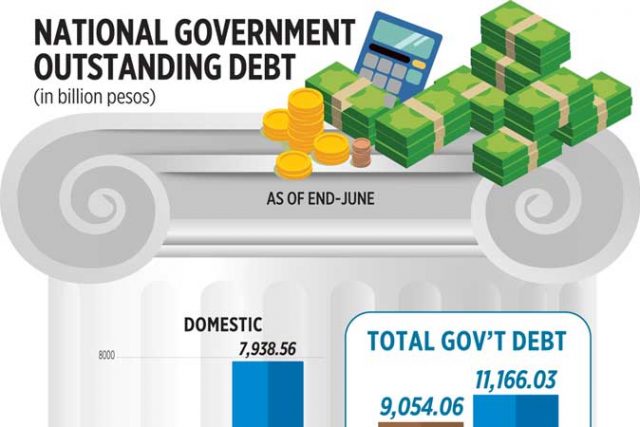
THE NATIONAL Government’s outstanding debt inched up to a new high of P11.166 trillion at the end of June, amid an increase in foreign borrowings to finance the pandemic response. Read the full story.

National government outstanding debt

How PSEi member stocks performed — July 29, 2021

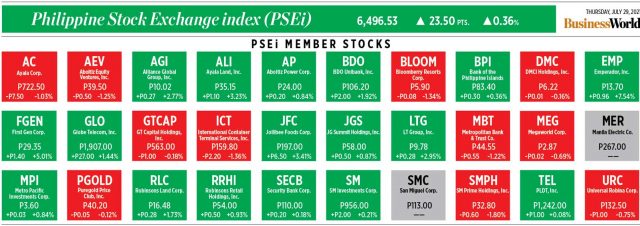
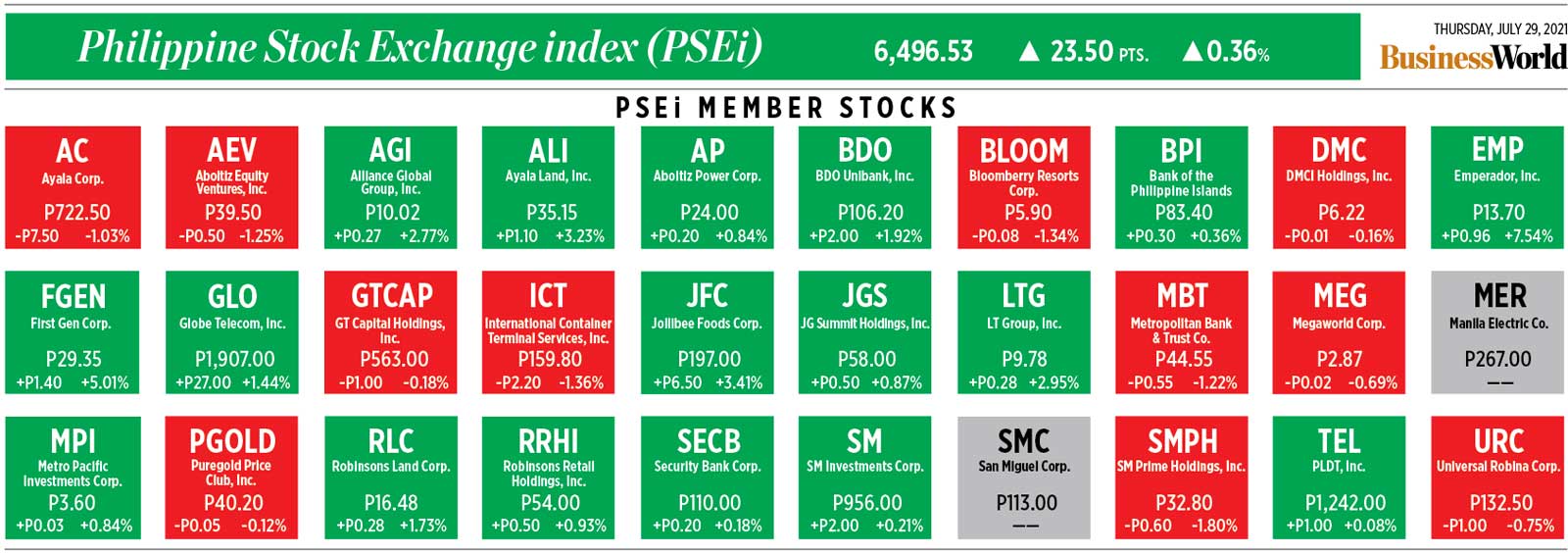
Here’s a quick glance at how PSEi stocks fared on Thursday, July 29, 2021.


Peso climbs on quarantine measures, dovish Fed

BW FILE PHOTO

THE PESO appreciated versus the greenback on Thursday as the government kept Metro Manila under general community quarantine (GCQ) and after the US Federal Reserve said it will continue to support the world’s largest economy.

The local unit closed at P50.305 per dollar on Thursday, gaining 6.5 centavos from its P50.37 finish on Wednesday, based on data from the Bankers Association of the Philippines.

The peso opened Thursday’s session stronger at P50.31 per dollar. Its weakest showing was at P50.39, while its intraday best was at P50.27 against the greenback.

Dollars exchanged increased to $993.8 million on Thursday from $686.5 million on Wednesday.

A trader said the peso strengthened after the government maintained its quarantine classification for Metro Manila and nearby provinces.

Presidential Spokesperson Herminio L. Roque, Jr. on Wednesday said Metro Manila will remain under GCQ with “heightened restriction” measures in the first half of August despite rising coronavirus cases due to the spread of the Delta variant.

Meanwhile, Rizal Commercial Banking Corp. Chief Economist Michael L. Ricafort said the peso rose versus the dollar following dovish signals from the Fed.

The Fed on Wednesday retained the interest rates near zero, as widely expected. It has also kept its bond-buying program unchanged, Reuters reported.

Fed Chairman Jerome Powell said data showing stronger job gains will be needed before they start cutting bond purchases.

Bangko Sentral ng Pilipinas Governor Benjamin E. Diokno on Thursday said the recent weakness of the peso is in line with the broad depreciation of most Asian currencies versus the greenback.

The peso’s close on Thursday is lower by P2.382 or 4.7% from its P48.023-a-dollar finish on Dec. 29, the last trading day of 2020.

“The only exceptions are the Chinese yuan and New Taiwan dollar. On the whole, regional currencies have been weighed down by prospects of earlier US monetary policy normalization, as well as uncertainties in their growth outlook due to the ongoing health crisis,” Mr. Diokno said in an online briefing on Thursday.

“We therefore see the recent movements of the peso as reflective of shifts in demand and supply conditions in the foreign exchange market, as well, as emerging external and domestic developments,” he added.

Factors that affected the peso last month include worries over the Delta variant, the Fed’s hawkish shift, and higher corporate demand for the dollar amid the economy’s gradual recovery.

For Friday, Mr. Ricafort gave a forecast range of P50.25 to P50.35 per dollar, while the trader expects the local unit to move within a wider band of P50.20 to P50.45. — L.W.T. Noble with Reuters

ADVERTISEMENT
ADVERTISEMENT