Home Blog Page 7652

Lawmakers push for national vaccine database  

BOQ.GOV.PH

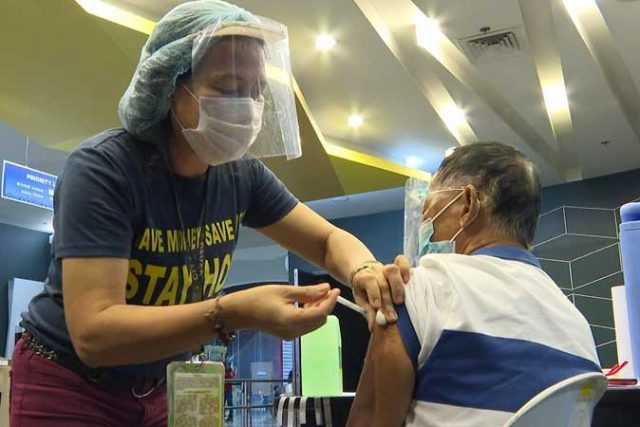
OPPOSITION SENATOR Leila M. de Lima has added her voice to growing calls for the executive department to get its act together on setting up a national vaccination database following authentication problems encountered by overseas Filipino workers (OFWs), particularly those bound for Hong Kong.   

Ms. De Lima said the lack of a central database for the vaccination represents an “unforgivable oversight” on the part of President Rodrigo R. Duterte’s administration, especially the Department of Information and Communications Technology (DICT).  

“The DICT must act on this national vaccine database at once. Our compatriots no longer have livelihood because we were forced to have ECQ (enhanced community quarantine, the strictest lockdown category) once again, even our OFWs will have their chance to work taken from them,” she said in English and Filipino in a press release.  

The Hong Kong government declined to recognize the vaccination cards of inbound OFWs, citing a problem with authentication as it does not come from a single source.  

Vaccination cards are currently distributed by local government units (LGUs) as the national government has yet to establish a centralized system.   

Ms.  De Lima said the Department of Foreign Affairs and the Department of Labor and Employment need to “exert all diplomatic efforts to come up with even temporary solutions that would allow our OFWs to return to work.”  

At the House of Representatives, Quezon City Rep. Precious Hipolito Castelo filed House Bill 9957, which seeks to mandate the Health department to issue electronic vaccine cards to fully inoculated Filipinos.   

It will contain details such as basic personal information, COVID-19 vaccination record, and date of the holder’s last reverse transcription–polymerase chain reaction test result.   

The bill will serve as an amendment to Republic Act 11525, or the COVID-19 Vaccination Program Act.  

“Unfortunately, the delegation of the printing of vaccine cards to local government units and private entities made it logistically difficult to implement the issuance of uniform vaccine cards throughout the country. For every LGU, there appears to be different format and design for the vaccine cards,” Ms. Castelo said in a statement on Saturday.   

Under the proposal, the card can be accessed online and will be distributed free of charge. 

YELLOW CARD
On Saturday, Bureau of Quarantine (BoQ) Deputy Director Roberto M. Salvador, Jr. said in a public briefing that the issuance of digital vaccination certificates would be launched in September. In the meantime, those who are scheduled to leave and urgently need certification may secure a yellow card. 

The International Certificate of Vaccination or Prophylaxis, also known as the Carte Jaune or the yellow card, is a longstanding official document under the World Health Organization.   

The BoQ, an agency under the Philippine Department of Health, is the country’s authorized distributor of the yellow card. These are usually issued to Filipino sea-based workers.  

Mr. Salvador assured that the Foreign Affairs department plans to coordinate with other countries to ensure international recognition of the “official vaccination certificates.” — Alyssa Nicole O. Tan and Russell Louis C. Ku  

Police chief backs policy vs booster shot despite high risk for frontline cops  

DAVAO CIO

THE NATIONAL police head said they fully support the current government policy against giving coronavirus vaccine booster shots even as cops are among the frontliners in implementing measures to address the medical emergency.  

“Let’s not be greedy for vaccines. Many of us are still not vaccinated, even the first dose, due to the limited supply reaching the country,” national police chief Guillermo T. Eleazar said in Filipino in a news release on Sunday.   

As of Aug. 15, there were 32,364 members of the police organization who have contracted coronavirus disease 2019 (COVID-19), of which 1,959 were active. Of the total, 30,314 have recovered while 91 died.   

There are 221,782 police personnel, of whom 77,735 or 35% have been fully vaccinated against COVID-19 while 90,230 or 40.68% have received their first dose.  

Metro Manila mayors are looking to create their respective ordinances that would penalize individuals who will get additional shots of COVID-19 vaccines following reports of persons getting a booster jab by registering in another locality.   

On Friday, the Metro Manila Council also unanimously approved Resolution 21-18, which penalizes individuals who will administer unauthorized inoculations with a fine of P5,000 and/or imprisonment of one to six months.   

“This is also for everyone’s safety because we are not sure if the booster shots have a bad effect on the body especially if different brands have been injected into us,” Mr. Eleazar said.   

Local health authorities are still undertaking studies, parallel to those of their foreign counterparts, on the effects of getting inoculated with different brands of the COVID-19 vaccines.   

SENIOR CITIZENS
Meanwhile, a congressman who advocates for the rights of senior citizens called on the national government to take additional measures to have more senior citizens inoculated with COVID-19 vaccines.  

The World Health Organization reported on July 30 that only 25% or 2.1 million elderly Filipino citizens have been fully vaccinated based on registrations by local government units.  

Senior Citizens Party-list Rep. Rodolfo M. Ordanes said in a statement on Sunday that there is a need to support local governments with tools and incentives to convince the elderly to get inoculated as most registration methods are not easily accessible to them.  

“The much better ways are mobile street level vaccination, text-only methods of pre-registration, and giving incentives like rice, medicines, and cash,” he said.  

Mr. Ordanes highlighted the need for persuasion from caregivers and the entire household to get their senior members vaccinated as it “creates… real tiny bubbles of protection.”  

He also said persuading the elderly to get vaccinated should be done in their mother tongue, must clearly communicate the benefits of getting the jab, and allay concerns over side effects. — Russell Louis C. Ku and Bianca Angelica D. Añago  

Human trafficking convictions in 1st half 2021 down from last year  

PHILSTAR

THE JUSTICE department recorded 25 convictions on human trafficking cases  in the first half of 2021, a 73% decrease from 92 convictions in the same period last year.  

Justice Undersecretary Emmeline Aglipay-Villar, however, said the data in the department’s mid-year report is still expected to increase as “some courts don’t submit data mid-year.”   

Most courts, she said, send reports on convictions towards the end of the year.   

“Some even submit very late,” Ms. Villar said, citing that the Department of Justice actually received some 2020 data just in March this year.   

Of the 25 convictions from Jan. 1 to June 30 this year, a total of 28 traffickers were involved.    

The number of victims in these cases total 73, of whom 57 were minors while 16 were adults.   

In last year’s 92 convictions, a total of 85 human traffickers were imprisoned for victimizing 207 females and 24 males, of whom 149 were minors and 82 adults. — Bianca Angelica D. Añago  

Davao City seeks guidance from DENR for the construction of WTE project 

DAVAOCITY.GOV.PH

DAVAO CITY’S waste-to-energy (WTE) project, planned in partnership with its sister city Kitakyushi in Japan, has been reverted to the Department of Environment and Natural Resources (DENR) upon the recommendation of the Davao Regional Council. 

“As of the moment, the WTE project is with the DENR because… there is a new discussion at the Regional Development Council (RDC) 11,” Davao City Mayor Sarah Duterte-Carpio said in mixed English and Visayan over the local government-run radio last week.   

The regional council, which covers the five Davao provinces and the city, is currently reassessing the urban masterplan for the proposed Metro Davao area.  

Davao City started exploring WTE as a waste management option about three years ago as the existing sanitary landfill nears full capacity.   

The city government has already purchased a 10-hectare lot for the project site.   

“Here in the city, we already crossed that bridge (use of WTE) long time ago when we purchased the property… the discussion now is still with the RDC… we are requesting DENR’s support on this matter,” the mayor said. 

Meanwhile, the city is also looking at purchasing the property in the immediate vicinity of the existing landfill for expansion.   

Non-profit environmental protection group Interfacing Development Interventions for Sustainability (IDIS) has expressed anew on social media its opposition to WTE.  

IDIS Executive Director Mark Peñalver said a more sustainable way of addressing the solid waste problem is ensuring strict implementation of existing policies, including the creation of materials recovery facilities and segregation at source.  

IDIS and other environmental groups recently launched a signature campaign against the WTE project, which has been approved by the city council on second reading and will be included in the city’s 10-Year Solid Waste Management Plan. — Maya M. Padillo 

COVID beds full

PHILIPPINE STAR/ MICHAEL VARCAS

THE FAR Eastern University-Nicanor Reyes Medical Foundation in Quezon City is among the latest hospitals in Metro Manila to declare full capacity for beds dedicated to COVID-19 patients. A tarpaulin hanging outside the facility on Aug. 15 advises possible coronavirus patients to contact the national central hotline for other facilities while non-COVID services remain open.

‘Sin’ tax collections up over 40% on H1 quarantine easing, rates

TAX COLLECTIONS from alcohol and tobacco products rose 40.8% in the first half due to the easier quarantine regime, as well as increased rates that took effect at the start of the year, according to preliminary data from the Department of Finance.

A document obtained by BusinessWorld indicates that duties and taxes collected by the Bureaus of Internal Revenue (BIR) and Customs (BoC) from these two so-called “sin” products grew to P127 billion in the first half from P90.2 billion a year earlier.

Taxes generated by tobacco products rose 40.2% year on year to P86.2 billion in the six months to June.

Collections from alcohol products rose 42.1% to P40.8 billion.

Easier lockdown rules helped buoy sales of such products and increased the tax take of the government, Assistant Secretary Maria Teresa S. Habitan said in a Viber message Friday.

“[We are on track to hit our sin tax collection target this year], barring any more prolonged ECQs (enhanced community quarantines) in the coming months,” she said.

While Metro Manila and other parts of the country continued to be placed in and out of lockdown in the first half, the restrictions imposed were less strict than those in force in 2020.

The capital region and other provinces reverted to ECQ for two weeks in August because of the rising coronavirus infections.

Liquor bans, however, were still implemented by various local government units for the period.

The scheduled tax rate hikes for cigarettes and alcohol in January also contributed to higher tax collections, Ms. Habitan said.

The tax imposed on cigarettes rose to P50 per pack this year from P45 last year as authorized by Republic Act (RA) No. 11346, which was signed in July 2019.

RA 11467, signed last year, increased the excise tax on heated tobacco products to P27.50 per pack from P25 in 2020.

For alcoholic beverages, the law hiked the specific tax on distilled spirits to P47 per proof liter this year from P66 previously, with an ad valorem tax at 22% of the net retail price.

The tax imposed on fermented liquors was also raised to P37 per liter from P35 last year.

The government has set a P297.8-billion collection target for “sin” taxes this year: P177 billion from excise taxes on tobacco products, P81.6 billion from alcoholic beverages, P39 billion from sweetened drinks and P200 million from electronic cigarettes.

Last year, the BIR and BoC generated P229.6 billion in sin taxes, up from P227.4 billion in 2019.

Including all kinds of taxes, the BIR generated P1.034 trillion in the first half, up 1.61% year on year. Customs, which has made its data available to July, collected P359.93 billion, 4.15% ahead of the year-earlier pace.

The two agencies are tasked to collect P2.081 trillion and P620 billion this year, respectively. — Beatrice M. Laforga

AMLC: New government must continue reforms

THE NEXT administration needs to be willing to tweak the National Anti-Money Laundering and Countering the Financing of Terrorism Strategy (NACS) to strengthen the Philippine case for exiting the gray list of the Financial Action Task Force (FATF) by 2023, a regulator said.

“A change in administration means the new administration must be briefed and convinced to approve the updated NACS to continue the momentum and to commit in the accomplishment of the action plan items until January 2023,” Anti-Money Laundering Council (AMLC) Executive Director Mel Georgie B. Racela said in a Viber message.

The current NACS was adopted in 2018 and is in effect until 2022. Mr. Racela said the AMLC is in the process of updating the NACS to take into account the action-plan items which the FATF said need to be addressed in order to leave the gray list.

AMLC Chairman and Bangko Sentral ng Pilipinas Governor Benjamin E. Diokno has said that the target to exit the FATF’s gray list was January 2023. The timeline takes into account the looming change of government.

In July, the AMLC opened a satellite office in order to extend its capabilities in compliance with FATF recommendations. Mr. Racela said the new office in Quezon City will be home to AMLC’s compliance and supervision group which focuses on conducting examinations for covered entities, and the litigation and evaluation group, which is in charge of filing freeze orders and bank inquiries, among others. 

Mr. Racela said the council is currently hiring more financial intelligence analysts, investigators, lawyers, and other personnel.

“There will be an election ban on hiring. This is why we are preparing for it as early as now. We intend to fully fill vacancies in our Financial Intelligence Analysis Group even before the election ban,” Mr. Racela said.

Meanwhile, the AMLC will implement its revised registration and reporting guidelines in two stages, with most items in place by Aug. 8. Some of the rules will be mandatory for covered persons by Jan. 9, 2022.

In an advisory posted on its website, the AMLC said general provisions of the revised guidelines implemented this month include a new list of covered persons, particularly real estate developers and brokers, whose transactions are potential risks for money-laundering.

The guidelines delegate authority to Mr. Racela to require submission of all covered transactions of persons subject to AMLC oversight. New provisions on compliance-checking and administrative sanctions are also now in force.

This month, amendments to the reporting guidelines include an enumeration of red flags for suspicious real estate and virtual asset transactions, as well as industry guidelines for insurance companies on covered and suspicious transaction reporting.

By Jan. 9, amendments related to the easing of reporting requirements on loan payments categorized as a low-risk will be in force. Going into effect are a list of events that trigger suspicious-transaction report filing, the new format for reporting loans availed, the reporting procedures for the sale of real and other properties acquired held by financial institutions, and the updating of country and currency codes.

Mr. Racela said some amendments have been pushed back for enforcement to allow covered persons to modify their systems to comply.

“The AMLC also takes into consideration that some covered persons outsource or have external providers for their anti-money laundering and counter-terrorism financing systems. Thus, more time is necessary to carry out these enhancements,” Mr. Racela said.

The Philippines needs to show tangible progress in implementing anti-money laundering and counter-terrorism financing (AML/CTF) laws by addressing 18 action plans before exiting the gray list, which it re-entered in June. 

Republic Act No. 11521 which amended the Anti-Money Laundering Law was signed into law on Jan. 29, days ahead of the Feb. 1 deadline set by the FATF to demonstrate effective AML/CTF measures. Republic Act No. 11479 or the Anti-Terror Act of 2020 was passed in July 2020 to address gaps in CTF regulation.

The first progress report to the FATF since joining the gray list is due in September. — Luz Wendy T. Noble

Power market automating process for flagging ‘unusual’ trading activity

THE PHILIPPINE Electricity Market Corp. (PEMC), which oversees the wholesale electricity spot market (WESM), said it is automating the process for detecting “unusual” outcomes in the behavior of market participants.

“The Market Monitoring Trigger and Offer Pattern (monitors) real-time and post-market results that will aid in the analysis of generator behaviors, portfolios, and the entire market. It will identify unusual market outcomes from monitoring market participants’ behavior through analysis of the offers submitted in the WESM by the generators,” PEMC President Leonido J. Pulido III told BusinessWorld via the company’s communications department on Aug. 12.

He said the market surveillance committee, one of the WESM’s governance committees, is developing the tool.

The PEMC will promptly respond to any signs of anti-competitive behavior if so ordered by the Energy Regulatory Commission (ERC), Mr. Pulido said.

He said the non-profit entity regularly submits market trigger reports (MTRs) detailing unusual market outcomes to the authorities.

“For the period covering May 13, 2021 to June 18, 2021 during the yellow and red alert events, PEMC submitted a total of four (4) MTRs affecting 15 trading intervals to both DoE (Department of Energy) and ERC for their respective reference and perusal,” he said.

The grid operator placed the Luzon grid under a series of red alerts between May 31 and June 2 following forced plant outages, thinning reserves and high temperatures.

The Independent Electricity Market Operator of the Philippines (IEMOP) also started imposing the secondary price cap (SPC) in May after noting high prices during the start of the month’s billing period.

The SPC is a price mitigating mechanism which limits high spot prices when there are “sustained high prices” in the market.

In June, the market operator implemented the SPC during 103 trading intervals between June 1 to June 20. The month before, the IEMOP imposed the cap during 55 trading intervals.

Aside from the automated monitoring tool, Mr. Pulido said other projects include upgrades to an automated monitoring system which evaluates the market operator’s performance, and the creation of a database of market rules and manuals for easy reference.

MINDANAO SPOT MARKET SCHEDULE
He said there is no set schedule as yet for spot market trading in Mindanao as some requirements have yet to be fulfilled.

“The declaration of the commercial operations of the WESM (in) Mindanao is contingent on the completion of the participant registration and the resolution of collection efficiency issues of some participants,” Mr. Pulido said.

Last month, the Energy department ordered the power industry in Mindanao to carry on with the WESM central scheduling scheme until the department announces the commercial operations date of the spot market.

In a July 24 advisory signed by DoE Secretary Alfonso G. Cusi, trading participants in the region were ordered to adhere to the five-minute scheduling and dispatch of power scheme dictated by the market management system, and follow the “re-dispatch” instructions of the National Grid Corp. of the Philippines.

Mr. Cusi added that participants must complete their WESM registration within the central scheduling period, with those failing to do so subject to sanctions. — Angelica Y. Yang

PEZA to become PAF reserve unit for training ecozone workers

PHILIPPINE STAR/KRIZ JOHN ROSALES

THE PHILIPPINE Economic Zone Authority (PEZA) said it has been tapped by the Philippine Air Force (PAF) to as a reserve unit, with economic zones becoming venues for training exercises involving the employees of locators.

PEZA Director-General Charito B. Plaza said the agency expects President Rodrigo R. Duterte to approve the arrangement.

“We will be training our PEZA employees and ecozone locators who are Filipinos and our ecozone workers (in) military skills and police skills,” she said in a virtual event.

“Everybody can respond actively in times of disaster, calamities, emergencies in nation building and even in war.”

The agency has been pushing to institutionalize initiatives to train workers in ecozones as military reservists for rescue operations in case of calamities and terror attacks.

PEZA earlier this year also renewed its bid to have military reservations declared as defense industrial economic zones before the end of the Duterte administration. The agency plans to transform the reservations into industrial complexes for the manufacture of weapons and military equipment.

On Friday, PEZA also signed a partnership with the Philippine Red Cross to develop a disaster preparedness program in ecozones.

“This is also in line with our major program to keep the ecozones safe and secure, (in order) to attract and continue to enjoy the trust and confidence of our locators,” Ms. Plaza said.

The investment promotion agency approved P32.057 billion in investment pledges in the first half of 2021, up 8.5% year on year. In 2020, lockdown restrictions declared to curb the spread of coronavirus disease 2019 (COVID-19) dented investor confidence.

The investment promotion agency set a 7% investment growth target this year, expecting more interest from foreign firms after the passage of the law cutting corporate income tax and reforming the tax incentives system. — Jenina P. Ibañez

Repositioning for growth beyond COVID-19

More than a year into the COVID-19 pandemic, it is apparent that the impact of this global health crisis has far-reaching implications. Countries are still battling to contain the virus and businesses continue to adapt and find ways to address the resulting disruption. According to the EY Global Capital Confidence Barometer, 92% of global respondents reported a negative impact on their profitability due to COVID-19. For companies to thrive in this disruptive and rapidly changing landscape, looking beyond the immediate challenges is key — companies need to also seize the opportunity to transform and make long-term, strategic decisions on how to reframe their future.

To accomplish this, it is important to be able to distinguish between temporary shifts in behavior and enduring changes. Companies have to focus on key trends that had been shaping up even before 2020 but were accelerated by the pandemic, and which will significantly impact how business is conducted. These trends were identified in the EY article, How companies can win in a dislocated economy. Companies need to consider these key trends in their strategy in order to reposition themselves for growth beyond the pandemic and achieve long-term success.

DIGITALIZATION
Emerging technologies such as data analytics, artificial intelligence and robotics continue to have a transformative effect on companies regardless of their size, and across all aspects of business. As technological disruptions continue to arise today even under the shadow of the pandemic, companies will need to fully embrace digital instead of adopting it in silos. They need to incorporate it into their culture and corporate strategy, as well as allocate resources to accomplish their digital transformation goals.

The 2020 study EY-Parthenon Digital Investment Index found that companies that achieved higher returns on their digital investments have better technical execution and clearer strategies. These digital leaders reported stronger revenue growth in the past two years and expect to sustain this growth in the future.

ESG AGENDA
The pandemic has also heightened awareness of environmental, social, and governance (ESG)-related risks. As a result, there is increased pressure from stakeholders for companies to review their efforts to address global challenges such as sustainable growth and climate change. Businesses are driven to take action on these issues by rebuilding a stronger post-crisis business landscape underpinned by sound ESG principles.

Companies that prioritize the ESG agenda benefit by driving improved financial returns and simultaneously making a better overall impact on the world as they do business. Research has proved that ESG initiatives positively correlate with the performance, financial value and reputational value of a company to investors. A University of Oxford study reveals that 88% of companies with robust ESG practices also demonstrate better operational performance.

Given how wide the scope ESG can be, it may be a challenge for some companies to identify specific priorities and focus areas that can best deliver material sustainability, yet the data show that this is a necessary step for continuing growth.

SECTOR CONVERGENCE
Some sectors did better than others in recovering from the uncertainty of COVID-19, resulting in uneven K-shaped recovery that is pushing sectors to converge as they push to survive. Lines between sectors such as media, telecommunications and healthcare were blurring even before the pandemic, driven by changing consumer behaviors and technological advancements. Digital ecosystems now connect very different stakeholders, indistinguishably linking insurers, governments, healthcare providers and consumers.

We are already seeing this trend in our own market where, for example, we see a telecoms provider bundling healthcare and COVID-19 insurance into its packages, in addition to traditional voice and data plans. Similarly, some insurance companies are found on online retail platforms to market their products.

Moving forward, companies will have to determine the impact of sector convergence upon their operating environment and find ways to rise past the challenges that emerge while also creatively coming up with adjustments to existing business models so that they can better capitalize on resulting new opportunities.

CHANGING GEOPOLITICS
The pandemic exacerbated an inward-looking approach for several countries, impacting how governments made policies in their efforts to protect their citizens, create more jobs and address falling economies. However, Southeast Asia saw an opposite trend where countries like Vietnam and Indonesia liberalized their laws to attract foreign investment. In the Philippines, there is also a move to liberalize foreign investment in certain industries through the proposed amendment of the Public Service Act, Retail Trade Liberalization Act, and Foreign Investment Act.

Global leadership is also simultaneously becoming more multipolar as the US, EU and China emerge as competing powers. Smaller countries will have to align their activities to address changing global dynamics, while companies need to focus on applying and building resilience into their supply chains to anticipate the disruption from geopolitical shifts.

REPOSITIONING FOR GROWTH BEYOND THE CRISIS
Companies need to consider these key trends in developing their blueprints for recovery and growth. However, they will find that there is not one formula that can fit all, and that the right strategy will vary across industries.

Businesses from any sector can nonetheless reposition for growth amid the current economic landscape. To do this, companies need to adopt proactive strategies based on a strong understanding of the key trends as well as the resulting sector dynamics and rapidly changing market landscape. These proactive strategies include taking bold decisions to transform existing businesses or transact through acquisition or divestment. Acquisition can help the company expand its capabilities or reach new markets and accelerate growth, while divestment can help build resilience. Past experience shows that companies who made the early bold choices — particularly acquisition or divestment — during crises had significantly higher total shareholder return over time, even if this meant taking an initial hit on their cash flows. These bold strategic decisions can create competitive advantage and long-term value to the business beyond the crisis.

By integrating the key trends into their growth strategies and identifying the right path to follow, companies can reframe their future and emerge stronger in the period of post-pandemic recovery.

This article is for general information only and is not a substitute for professional advice where the facts and circumstances warrant. The views and opinions expressed above are those of the author and do not necessarily represent the views of SGV & Co.


Noel P. Rabaja is the Strategy and Transactions Leader of SGV & Co.

Casimero retains WBO title after split-decision victory

FILIPINO world champion John Riel Casimero retained his WBO bantamweight title with a split-decision victory over Cuban Guillermo Rigondeaux on Sunday (Manila time). — REALFIGHTPH

By Michael Angelo S. Murillo, Senior Reporter

FILIPINO world champion John Riel “Quadro Alas” Casimero retained his World Boxing Organization (WBO) bantamweight title with a split-decision victory in a fight that saw his opponent not willing to engage.

Mr. Casimero, 31, defeated Cuban Guillermo Rigondeaux in their scheduled 12-round title fight at the Dignity Health Sports Park in Carson, California, on Sunday (Manila time).

Two judges scored the fight for the Ormoc City native, 116-112 and 117-111, and one went for 40-year-old Mr. Rigondeaux, 115-113.

The outcome, however, left many wanting for more since the fight featured very little action as hoped, with Mr. Rigondeaux deciding to circle around the ring for most of the time.

Mr. Casimero tried to bring the fight to his opponent but with not much success as he kept chasing Mr. Rigondeaux.

The fight statistics showed how little action the headlining fight had, with both fighters not even landing 50 punches throughout the contest.

Mr. Rigondeaux connected on 44 punches out of 221 throws (19.9%) while Mr. Casimero had 47-of-297 (15.8%).

The Philippine bet, while happy to have retained his title, expressed frustration over the boxing they showed, pinning the blame on Mr. Rigondeaux.

“I was excited to face him because he is a good fighter. I was looking to engage and go for a knockout win but Rigondeaux just kept on running,” said the WBO champion after the fight.

The win, the second successful title defense of Mr. Casimero, took his record to 31 wins as opposed to four losses while Mr. Rigondeaux dropped to 20-2.

Next for Mr. Casimero is a possible showdown with World Boxing Association and International Boxing Federation champion Naoya Inoue of Japan or against fellow Filipino Nonito Donaire, Jr., who incidentally was his supposed opponent for Sunday’s fight until the two had a falling out on certain issues.

ALSO VICTORIOUS
Meanwhile, also victorious in the undercard was Filipino Jonas Sultan, who knocked out Sharone Carter of the United States in the seventh round of their bantamweight collision.

Cebu-based fighter Mr. Sultan unleashed a barrage of punches and then a solid right to finish off Mr. Carter at the 2:29 mark of the seventh.

With the win, Mr. Sultan improved to 17-5 and has now won back-to-back fights.

PVL Open Conference successfully ends with Chery Tiggo as champ

THE inaugural tournament of the Premier Volleyball League as a professional successfully came to a conclusion last Friday with the Chery Tiggo Crossovers crowned as Open Conference champion. — PVL MEDIA BUREAU

THE inaugural tournament of the Premier Volleyball League (PVL) as a professional successfully came to a conclusion last Friday with the Chery Tiggo Crossovers crowned as Open Conference champion.

Done in a “bubble” setting in Bacarra, Ilocos Norte, the tournament saw the league conduct the proceedings under strict health and safety protocols in accordance with the guidelines set by the Inter-Agency Task Force for the Management of Emerging Infectious Diseases (IATF-EID) and the local government.

Save for an isolated case of the coronavirus involving one team which was eventually addressed and resolved, the rest of the participants were kept safe throughout the duration of the competition and the proceedings pushed through with minor hiccups.

“It was a lot of work [for all involved]. We’re thankful that it is finally over,” said Ricky Palou, president of PVL organizer Sports Vision Management Group, in a short text message to BusinessWorld following the conclusion of the tournament.

In the lead-up to their first pro season, Mr. Palou and his group made sure that they covered all bases in the preparation to ensure a successful staging of the tournament, with focus above all else on the safety of the players, organizers and the other people involved.

The league also chose to hold its bubble in Ilocos Norte in anticipation of possible disruption if it was held in the National Capital Region (NCR).

It was a move that proved to be the right one to make as the NCR was recently placed under Enhanced Community Quarantine and all sports-related activities were halted.

The PVL was forced to cram its schedule, playing everyday games, on its final week as cases of the coronavirus increased in Bacarra, but it was able to manage things and end the competition accordingly.

PVL CHAMP
Chery Tiggo bested nine other teams in the Open Conference to win the title.

Led by sisters Jaja Santiago and Dindin Santiago-Manabat, the Crossovers upended perennial PVL power team Creamline Cool Smashers in their best-of-three finals series that went the full route, 2-1.

Chery Tiggo completed the job in Game Three on Friday, coming from behind two sets down to win, 23-25, 20-25, 25-21, 25-23, 15-8.

The towering Santiago sisters stood tall literally, powering their team with clutch plays and eye-popping numbers.

Ms. Santiago-Manabat finished with a game-high 32 points — 30 coming off attacks.

Sister Jaja followed with 26 points, part of which came in their breakaway in the fifth and final set.

“Thanks to God. We really offer this to Him as He guided us and we showed what we are made of,” said Chery Tiggo coach Aaron Velez after their win.

Ms. Santiago won triple individual awards, bagging the tournament and the finals most valuable player award as well as being named one of the best middle blockers in the Open Conference.

Creamline’s Jia Morado was the best setter while Ms. Valdez and Petro Gazz’s Myla Pablo were the best outside hitters.

Ria Meneses of Petro Gazz was the other best middle blocker, with Kat Tolentino (Choco Mucho) and Kath Arado (Petro Gazz) named best opposite spiker and best libero, respectively.

The final rankings of the PVL Open Conference had Chery Tiggo on top, followed by Creamline, Petro Gazz Angels, Choco Mucho Flying Titans, Sta. Lucia Lady Realtors, Black Mamba-Army Lady Troopers, PLDT Home Fibr Power Hitters, BaliPure Water Defenders, Perlas Spikers, and Cignal HD Spikers.

Now that the Open Conference is over, Mr. Palou said they will soon return to planning for their next tournament, targeted to happen either in October or November in a semi-bubble setup in Metro Manila.

They are also expecting to add a new team in the F2 Logistics Cargo Movers, who asked to skip the recently concluded tournament but are looking to participate in the next.

The PVL turned professional late last year after years of operating as a semi-pro league. — Michael Angelo S. Murillo

ADVERTISEMENT
ADVERTISEMENT