Home Blog Page 763

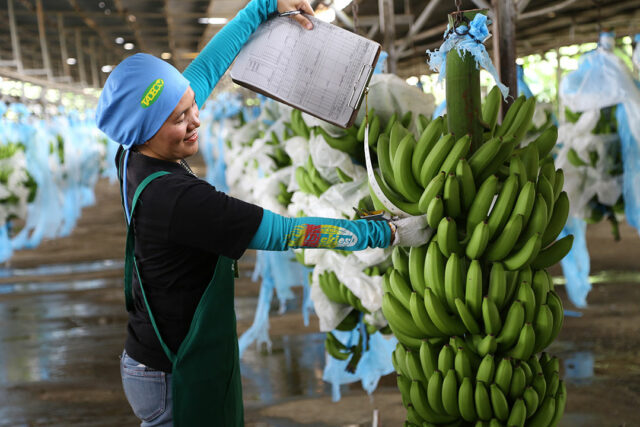
Banana export push to focus on containing Panama disease, boosting market access

ANFLOCOR.COM/TADECO

AGRICULTURE SECRETARY Francisco P. Tiu Laurel, Jr. said he hopes to arrest the decline in banana exports by focusing on the containment of Panama disease and improving overseas market access.

In a statement, the Department of Agriculture (DA) quoted Mr. Laurel as saying at the 32nd Joint General Assembly of the Philippine Banana Growers and Exporters Association and the Banana Export Industry Foundation that Fusarium wilt tropical race 4 (Panama disease) was the industry’s most urgent threat, affecting around 15,500 hectares in the Davao Region, endangering the main export variety, the Cavendish banana.

Under the High Value Crops Development Program for 2025, the DA plans to distribute banana planting materials and organic planting materials to expand and rejuvenate farms.

The DA will also deploy biological control agents such as Trichoderma to protect plant health and reduce postharvest losses, the DA said.

He noted that Vietnam has overtaken the Philippines as China’s top banana supplier, while Philippine exports to Japan continue to face higher tariffs than those from Vietnam, Mexico, and Peru.

“Unless these inequities are addressed, our market share will remain at risk,” Mr. Laurel warned, urging continued advocacy for fairer trade terms in the upcoming review of the Japan-Philippines Economic Partnership Agreement.

He also cited the need for research on disease tolerance, breeding strategies, and new technologies such as gene editing to secure the industry’s long-term viability.

PHL rice samples added to seed vault in Norwegian Arctic

PHILIPPINE STAR/WALTER BOLLOZOS

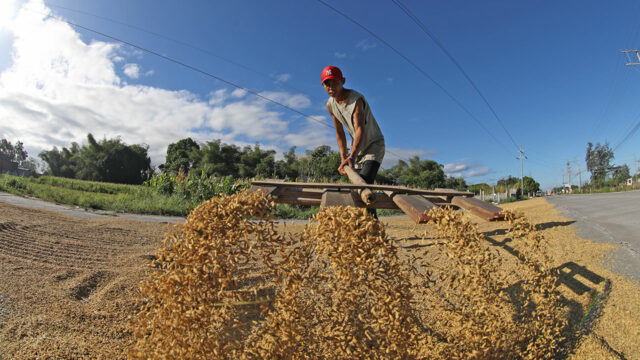
ABOUT 4,417 samples of Philippine rice seed were added to the Svalbard Global Seed Vault in Norway, a secure Arctic facility that will be tapped should the world need to start agriculture from scratch in the event of a global calamity, the Department of Agriculture (DA) said in a statement.

Many Philippine samples added in October were collected by the Philippine Rice Research Institute since the 1980s, with a further batch expected to be added next year to preserve global rice biodiversity, the DA said.

The so-called “Doomsday Vault” on Spitsbergen Island near Longyearbyen is intended to protect the genetic blueprints of the world’s crops from climate change, war, natural disasters, or the next pandemic.

The Svalbard samples mark the first case of Philippine rice samples being stored overseas, ensuring that the country’s genetic heritage can be recreated should calamities threaten Philippine rice diversity.

The samples include heirloom grains tended by Cordillera farmers to varieties like Dinorado and Milagrosa, as well as modern hybrids bred for drought resistance.

Bond markets urged to stand ready as funding sources during crises

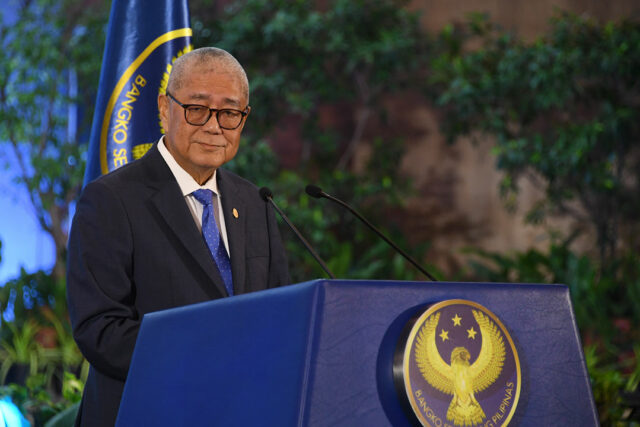
BANGKO SENTRAL ng Pilipinas Governor Eli M. Remolona, Jr. — COURTESY OF BANGKO SENTRAL NG PILIPINAS

CORPORATE BOND markets need to serve as the Philippines’ “spare tire” during crises that strike the banking system, the Bangko Sentral ng Pilipinas (BSP) said.

Speaking at a joint general assembly of financial market organizations on Oct. 23, BSP Governor Eli M. Remolona, Jr. said the market must be an alternative source of funding if banks fail to meet their financial obligations, as happened during the 1998 financial crisis.

“In 1998, in the wake of the Asian crisis, Alan Greenspan said the crisis turned out so badly because the financial systems in Asia had no spare tire,” Mr. Remolona said. “What he meant was we had banks, but we had no corporate bond market. When banks run flat, we need other sources of financing, like the corporate bond market.

He cited the need to emulate Thailand, whose corporate bond market is much larger than that of the Philippines.

Mr. Remolona noted that 96% of the country’s corporate bond issuers have an “AAA” rating.

“We are told that this is a sign of a strong market. But actually as we all know, it is a sign of a thin market,” he added.

On the other hand, Mr. Remolona said although 58% of Thailand’s corporate bond issuers hold an “A” rating, with only 6% rated “AAA,” its corporate bond market relative to gross domestic product is five times bigger than that of the Philippines.

“I think that is the kind of market Greenspan had in mind,” he added

“We need a real spare tire,” he said. “Indeed, deeper money and bond markets will help us steer the economy and keep it going when things get tough.”

Among the organizations present during the assembly were ACI Philippines, the Fund Managers Association of the Philippines, Inc., the Investment House Association of the Philippines, the Money Market Association of the Philippines, the National Association of Securities Broker Salesmen, Inc. and the Trust Officers Association of the Philippines. — Katherine K. Chan

DPWH sees savings of P60 billion from cutting cost of materials

Portions of the revetment wall along the Tullahan River collapsed in North Fairview, Quezon City, Aug. 29, 2025. — PHILIPPINE STAR/MIGUEL DE GUZMAN

THE Department of Public Works and Highways (DPWH) said it expects to generate savings of about P60 billion from construction materials, which it found to be overpriced in the course of conducting the flood control corruption investigation.

“This is probably the single biggest reform in DPWH… For decades, there have been significant price differences, but we really need to address this. Once we lower the prices, we will be able to minimize corruption,” Public Works and Highways Secretary Vivencio B. Dizon said at a briefing on Monday.

The DPWH will focus on bringing down the cost of cement, asphalt, steel, gravel, sand, and other aggregates, Mr. Dizon said.

“We will adjust the prices to market level. If the private sector can build roads at those prices, why can’t the government?,” he said.

The DPWH said it found overpricing of construction materials in Mimaropa, Central Luzon, and the National Capital Region.

Separately, the DPWH said it signed a memorandum of agreement with Philippine Space Agency (PhilSA) to tap satellite technology in monitoring infrastructure projects.

Under this collaboration, PhilSa satellite imagery, sensors and artificial intelligence will help monitor the progress of infrastructure projects.

“This initiative aligns with PhilSA’s goal of using space tech to promote accountability, efficiency and innovation across the government,” Gay Jane P. Perez, officer-in-charge at PhilSA, said during the  briefing.

The DPWH has removed around P255 billion worth of flood control projects from its proposed 2026 budget, including duplicated or completed works. — Ashley Erika O. Jose

PAGCOR 9-month net rises 49% to P14 billion

PHILIPPINE STAR/KRIZ JOHN ROSALES

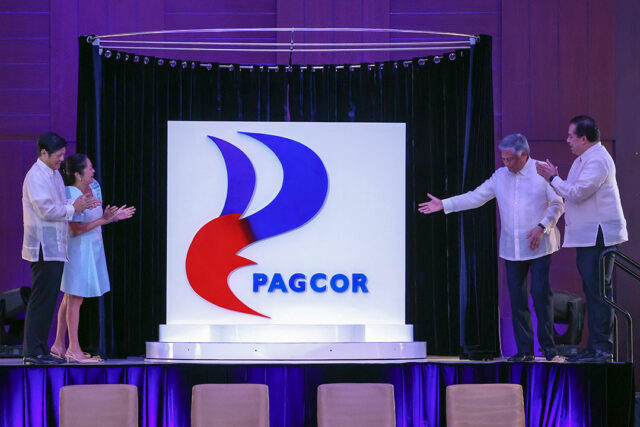
THE Philippine Amusement and Gaming Corp. (PAGCOR) said on Monday that net profit rose 49% to P14 billion in the first nine months, even in the face of calls to crack down on online gambling.

In a statement on Monday, the gaming regulator said:

“Our financial performance is a clear reflection of PAGCOR’s renewed focus on governance, digital transformation, as well as sustainable and responsible gaming,” Chairman and Chief Executive Officer Alejandro H. Tengco said.

PAGCOR revenue rose 5.87% to P84.09 billion at the end of September, with gaming operations accounting for P75.93 billion and the remainder generated by other related services and other income.

Legislators are seeking stiffer regulation or an outright ban on online gaming, the top driver of PAGCOR’s revenue, but no measures have been agreed as yet.

PAGCOR said it remitted P54.26 billion over the same period to support government development projects.

It said that P36.06 billion went to the National Government, as required under Presidential Decree 1869, equivalent to 50% of PAGCOR gaming revenues less 5% franchise tax.

This helped provide funding for the Dangerous Drugs Board and the Philippine Health Insurance Corp.

PAGCOR paid P3.79 billion in franchise taxes and P609.87 million in corporate income tax to the Bureau of Internal Revenue.

The regulator allocated P11 billion to socio-civic projects, including remittances to the President’s Social Fund.

Meanwhile, the Philippine Sports Commission received P1.80 billion, up 8.66% from a year earlier.

Winning international athletes and coaches received P26.54 million.

Some P142.42 million went to the Board of Claims and P201.47 million to the Renewable Energy Trust Fund.

PAGCOR also said cities where Casino Filipino branches are located earned a share of revenue of P508.20 million. — Aubrey Rose A. Inosante

DoE concludes consultations on modernizing small-scale coal miners

UNSPLASH

THE Department of Energy (DoE) said it concluded consultations regarding its plan to modernize small-scale coal mining.

In a statement on Monday, the DoE said its Energy Resource Development Bureau is in the process of issuing a department circular that will update the small-scale coal mining program.

The consultations highlighted the need to streamline the small-scale coal mining regulations and align them with industry and environmental standards.”

The consultations touched on the need to protect Indigenous Peoples’ rights, strengthen environmental safeguards, simplify the application and permit process and clarify responsibilities for permit holders, and grounds for permit cancellation or termination.

“This first draft marks a new beginning for SSCM,” said Energy Undersecretary Alessandro O. Sales. “After nearly four decades since 1987, it is time to modernize the program.”

In 1987, the Bureau of Energy Development issued guidelines to implement a program that will allow small scale coal mining, anchoring on the Coal Development Act of 1976.

The consultation was conducted alongside a campaign drive on the DoE’s circular, which provides rules and regulations on handling, transport, storage, and distribution of coal.

The circular will set enhanced standards on health and safety, labor protection, environmental safeguards, and operational accountability across all coal-related activities.

“By integrating these new regulatory mechanisms, the DoE aims to ensure that coal-related operations are conducted safely, responsibly, and with minimal environmental impact,” the department said. — Sheldeen Joy Talavera

Samsung group suppliers in PHL hoping to expand in step with ceramic capacitor maker SEMPHIL

SAMSUNGSEM.COM

MANUFACTURERS in the Samsung Group supplier ecosystem are hoping to expand  in step with Samsung Electro-Mechanics Philippines Corp. (SEMPHIL), the Philippine Economic Zone Authority (PEZA) said.

“The participating firms — many of which serve as tier-one and tier-two suppliers of Samsung Electro-Mechanics — expressed strong interest in expanding within PEZA’s network of ecozones across the country,” PEZA said in a statement on Monday.

The statement was issued following a roundtable discussion attended by PEZA, the Office of the Special Assistant to the President for Investment and Economic Affairs (OSAPIEA), and 16 South Korean manufacturing and technology firms.

“The supportive business environment and talented Filipino workforce make the country an excellent place for long-term growth,” SEMPHIL President Kyeongwoo Ryu was quoted as saying.

SEMPHIL’s PEZA-registered facility in Laguna, accounts for nearly half of SEMCO’s worldwide multilayer ceramic capacitor (MLCC) output.

PEZA Director-General Tereso O. Panga said the Philippines and South Korea both hope to “build globally competitive, sustainable, and technology-driven industrial ecosystems where Korean innovation and Filipino talent can thrive together.”

Secretary Frederick D. Go, who heads the OSAPIEA, said the government is looking to facilitate further investment partnerships with South Korea.

“The Philippines welcomes our Korean partners in building an ecosystem of advanced manufacturing alongside industry leaders like Samsung — fostering greater operational efficiencies, reducing costs, and strengthening regional competitiveness,” Mr. Go was quoted as saying.

“Like Samsung, you too can benefit from CREATE MORE’s (Corporate Recovery and Tax Incentives for Enterprises to Maximize Opportunities for Reinvigorating the Economy) enhanced incentives that will empower your businesses to expand, innovate, and achieve sustained growth in the Philippines,” he added.

SEMPHIL recently announced that it is investing P50.7 billion to establish a manufacturing facility for MLCCs which is due to begin commercial operations by 2027.

As of the end of October, PEZA approved P175.37 billion worth of investments from new and expansion projects. — Beatriz Marie D. Cruz

Game developers generate $4.87M in sales leads at fair in Germany

GAMESCOM

GAME DEVELOPERS generated $4.87 million in sales leads from a German trade show, Gamescom 2025, the Department of Trade and Industry (DTI) said.

In a statement, the DTI said these sales leads include prospective publishing deals, outsourcing contracts, and co-production projects.

The leads were booked during the five-day event in Cologne earlier this year, the DTI said.

The Philippine delegates met with publishers, investors, and outsourcing firms from Europe, Japan, the Middle East and North Africa, South Korea, and the US, the DTI said.

Organizations that represented the Philippines at the fair include Neun Farben, Ranida Games, Animation Vertigo, GameOps, Yangyang Mobile, and the Game Developers Association of the Philippines.

In 2024, the value of the Philippine creative economy expanded 8.7% year on year to P1.94 trillion.

This covers industries like film, digital services, research and development, media publishing, music, arts, entertainment, advertising, art galleries and museums, and trade shows. — Beatriz Marie D. Cruz

Bridging gaps in related-party transactions: The role of transfer pricing adjustments

As businesses engage in cross-border transactions with related parties, transfer pricing adjustments become essential to ensure compliance with the arm’s length principle. These adjustments help align intercompany pricing with market standards, reducing the risk of tax disputes, penalties, and double taxation.

Transfer pricing adjustments are revisions or corrections made to the pricing of transactions between related parties to ensure that such prices reflect the arm’s length principle, reflecting what unrelated entities would have agreed upon under similar conditions.

Adjustments can be initiated voluntarily by the taxpayer or imposed by the tax authority during an audit.

TRANSFER PRICING ADJUSTMENT KEY POINTS
1. Arms-length principle: Taxpayers must price their related-party transactions as if they are between independent entities under similar conditions. Philippine regulations, particularly Section 5 of Revenue Regulations No. 2-2013, reinforce this standard by mandating that transfer prices reflect economic reality.

2. Adjustments

• Comparability adjustments: To proactively align actual intercompany results with arm’s length benchmarks and to eliminate material differences between controlled and comparable transactions that could affect the reliability of the transfer pricing analysis.

Although comparability adjustments themselves are not accounting entries, they play a critical role in establishing an arm’s length range. Once this range is determined, a taxpayer may perform internal true-ups or year-end corrections to ensure that its actual intercompany results fall within the adjusted range. These true-ups are acceptable when they reflect genuine economic conditions and are applied consistently with the taxpayer’s documented transfer pricing policy. However, adjustments that are excessive, immaterial, or highly subjective should be avoided, as they may undermine the reliability of the analysis.

For example, a multinational company may notice that due to fluctuating market conditions, its intercompany prices differ from benchmark prices. Before tax filing, it makes year-end true-up adjustments to align the transfer prices with arm’s length benchmarks.

• Compensating adjustments: To reflect changes made by one party to a controlled transaction and ensure a corresponding adjustment is made by the counterparty, preserving symmetry in the tax treatment. This is usually done through reciprocal entries in both parties’ accounting records. Some jurisdictions allow compensation adjustments to be applied simultaneously with comparability adjustments or, alternatively, when comparability adjustments alone are insufficient to achieve arm’s length results. However, in the Philippines, compensating adjustments are not explicitly allowed under current regulations, which discourage retroactive changes.

• Tax authority adjustments: To correct transfer prices that deviate from arm’s length, typically discovered during audit, these may lead to primary and secondary adjustments. Secondary adjustments address the resulting impact of a primary adjustment.

An example is when, during an audit, a tax authority increases a subsidiary’s taxable income after finding that transfer prices were set below market rates (primary adjustment). To address the financial impact, the authority applies a secondary adjustment, treating the difference as a deemed dividend, which may be subject to withholding tax.

3. Supporting documentation: To justify the basis and calculation of any adjustment made, demonstrating compliance with the arm’s length principle. It should provide a clear and transparent explanation of why the adjustment is necessary, how it was determined, and its impact on the transfer pricing analysis.

ADVANCE PRICING ARRANGEMENT (APA) PERSPECTIVE
The draft Revenue Regulations on Advance Pricing Arrangements (APA) issued by the BIR provide a proactive mechanism for managing transfer pricing risks. Under Section 50 of the Tax Code, the Commissioner is empowered to allocate income and deductions among related parties to ensure arm’s length results. The APA framework allows taxpayers to agree in advance with the BIR on acceptable transfer pricing methodologies, thereby reducing the likelihood of future adjustments or disputes. This is particularly relevant for taxpayers engaged in complex or high-value cross-border transactions, where certainty and consistency are critical.

The draft RR also introduces a revision mechanism for APAs, which may result in transfer pricing adjustments when critical assumptions change — such as business restructuring, economic shifts, or updates in domestic or treaty laws. These revisions ensure that the agreed methodology remains aligned with arm’s length principles. In bilateral or multilateral APA cases, coordination with foreign tax authorities is emphasized to prevent double taxation and maintain symmetry in tax treatment. This structured approach enhances transparency and provides a safeguard against audit-related surprises.

We appreciate the BIR’s initiative in issuing the draft Revenue Regulations on Advance Pricing Arrangements, which provide a clear framework for achieving tax certainty. As stated in the draft, “As long as the terms and conditions of the APA are satisfied, the covered transactions will not be subjected to audit, and no transfer pricing adjustments shall be made by the tax authorities that concluded the APA.” This not only prevents resource-intensive transfer pricing examinations and litigation but also mitigates the risk of economic double taxation or taxation not in accordance with relevant tax treaties. By allowing taxpayers to file a request for APA, the BIR fosters a non-adversarial environment that builds trust and confidence between taxpayers and the tax administration.

Transfer pricing adjustments play a critical role in aligning related party transactions with the arm’s length principle. These adjustments are essential because they address differences in functions, risks, and financial outcomes that, if left uncorrected, could distort the accuracy of transfer pricing analyses.

Such adjustments are crucial not only for achieving accurate tax reporting but also to reduce the risk of tax disputes, penalties, and double taxation. To be effective, all adjustments must be well-documented and clearly disclosed.

An APA, on the other hand, is a tool giving taxpayers the opportunity to prevent transfer pricing disputes with the BIR, as the BIR and taxpayer agree in advance on a mutually beneficial and pragmatic solution that applies the arm’s length principle to the covered transactions.

Let’s Talk Tax is a weekly newspaper column of P&A Grant Thornton that aims to keep the public informed of various developments in taxation. This article is not intended to be a substitute for competent professionals.


Donna Kasandra A. Dela Torre is a senior in charge from the Tax Advisory & Compliance practice area of P&A Grant Thornton, the Philippine member firm of Grant Thornton International Ltd.

pagrantthornton@ph.gt.com

Unknown Jonas Magpantay rules Qatar 10-Ball World Cup in Doha

JONAS MAGPANTAY — QATAR WORLD CUP BALL 2025

WORLD, meet Jonas Magpantay. Champion.

From obscurity, the 31-year-old Pinoy burst into global stardom as he produced an unparalleled underdog triumph at the Qatar 10-Ball World Cup in Doha on Sunday night.

Nicknamed “The Silent Killer,” Mr. Magpantay gunned down giants and other famous rivals that stood between him and the diadem, which he ultimately claimed with a masterful 13-9 victory over Polish Szymon Kural in the finale.

As he pocketed the final ball, Mr. Magpantay lifted his cue stick, shook the hands of Mr. Kural and the referee, went up the table for the traditional celebration, pumped his arms in the air, clapped and bowed on all four corners to acknowledge the cheering crowd.

It was a culmination of long years of hard work and a bit of a break in Qatar.

After dropping four matches in the qualifiers, Mr. Magpantay still got his spot in the main draw via points, reportedly after one qualifier backed out.

And he made the most of this opportunity.

Opening his bid with victories over Abdullatif Alfawal and Naoyuki Oi, the pride of Bansud, Oriental Mindoro went on a killing spree in the KO rounds.

First to fall was 2025 World Games 10-ball titlist Oliver Szolnoki of Hungary, 11-8, then compatriot Carlo Biado, the reigning World 9-ball kingpin and former World 10-ball ruler, by a score of 11-8, then Wojciech Szewczyk of Poland, 11-7, multi-titled Niels Fiejen of the Netherlands, 11-7, and Moritz Neuhausen of Germany, 11-6, before the clincher against Mr. Kural.

Mr. Magpantay earned $100,000 for this feat – one he patiently waited for after two decades.

“It means a lot to me because it’s the first time I joined here in Qatar and nobody knew me so I feel great and I want to just play my game,” he said in an interview by the Qatar Billiards Sports Federation prior to the finals.

Pool fans recalled how Mr. Magpantay’s words after losing in the Last-16 of the World 10-Ball Championship in Vietnam to Mr. Biado two months ago turned prophetic.

Well, that time has come. And now everybody in the pool world will remember the name of Mr. Magpantay. — Olmin Leyba

Alex Eala jumps to career-best No. 50 in WTA world rankings

ALEX EALA — USOPEN.ORG

NO FILIPINA has ever come close to stepping foot into the world’s Top 50 — until Alexandra “Alex” Eala.

Ms. Eala on Monday blazed another trail for Philippine tennis, placing No. 50 in the Women’s Tennis Association (WTA) for a fitting finish to the WTA Season.

The 20-year-old Filipina collected 1143 points to enter the sport’s crème of the crop after a productive campaign capped by a multi-city Asian swing leading to her national team returning for the 33rd Southeast Asian (SEA) Games next month in Thailand.

Ms. Eala’s last tournament of the WTA Tour was in the Hong Kong Open last week, reaching the Round of 16 to add 12 more points to her tally and propel herself to a new career-best.

Her historic season included winning her first WTA title in the Guadalajara Open in Mexico in September.

“I enjoyed every minute I spent on court. Everything from the fight to the fans was something to remember, and will hold a special place in my memories,” said Ms. Eala, also No. 165 in doubles, on Instagram.

Ms. Eala started the year at No. 158 but entered the Top 100 midway through the season to also qualify in the main draws of all but one Grand Slams — a first for Philippine tennis as well — highlighted by a historic win in the US Open.

Then No. 75, Ms. Eala pulled off a 6-3, 2-6, 7-6(11) comeback win over world No. 15 Clara Tauson of Denmark to become the first Filipina winner in any Slam main draw.

Setting the stage for that was her breakthrough semifinal finish in the Miami Open last summer to enter the Top 100 marked by gigantic victories over three former Grand Slam champions and Top-25 players.

Ms. Eala, then No. 140, slain five-time major winner Iga Swiatek (world No.2) of Poland, 2017 French Open champion Jelena Ostapenko (No. 25) of Latvia and 2025 Australian Open champion Madison Keys (No. 5) of the United States.

She fell short against world No. 4 Jessica Pegula of the US in what was one of history’s greatest Cinderella runs for a foiled shot at world No. 1 Aryna Sabalenka of Belarus.

The proud scholar of the Rafael Nadal Academy in Spain also stamped her brilliance all year long in China, Japan, Brazil, England, Canada, Portugal, Spain, Slovakia, Singapore, India and Australia.

Up next for Ms. Eala is a homecoming to prepare for her comeback to the Philippine tennis team after winning three bronze medals in the 2023 SEA Games in Hanoi, Vietnam.

After that, Ms. Eala is slated to play in her first-ever WTA home game as the Philippine Sports Commission (PSC) and the Philippine Tennis Association (PHILTA) finalize the hosting of a WTA Tour leg to be branded as the Philippine or Manila Open early next year. — John Bryan Ulanday

Filipino medalists in Asian Youth Games will receive cash incentives as mandated by law

THE 26 Filipino medalists in the recently concluded 3rd Asian Youth Games got an early Christmas gift from both the government and the Philippine Olympic Committee (POC) for their feats in Manama, Bahrain.

As mandated by law, Philippine Sports Commission (PSC) Chair Patrick “Pato” Gregorio on Monday announced that gold winners in the quadrennial meet will receive P500,000 while those who copped silver and bronze will get P300,000 and P100,000, respectively.

“Win or lose, sports is good,” said Mr. Gregorio during the lunch hosted by the POC at the East Ocean Palace Restaurant in Parañaque.

POC President Abraham Tolentino, for his part, said they would give half of what the PSC will give the athletes plus an (Apple) iPhone 17 each.

“We will know the exact amount when the POC board meets this week,” said Mr. Tolentino.

The country, which fielded 140 athletes, raked in a total of seven golds, seven silvers and 10 bronzes, which was good for 12th place overall.

Muay’s Jan Brix Ramiscal will take home the biggest bounty after snaring a gold in the mixed team Mai Muay with Tyron Jamborillo and the silver in the boys’ Wai Kru 16-17.

Other gold winners were Pi Durden Wangkay (boys’ 200m), Isabella Butler (jiujitsu), Charlie Ratcliff (mixed martial arts), Zeth Garbiel Bueno (muay), Lyre Anie Ngina (muay) and Kram Airam Carpio (pencak silat).

Silver winners were Naomi Cesar (athletics), Travis Rartcliff (mma), Jamesray Ajido (swimming), Kristel Ambriel Aguila (taekwondo) and Jhodie Peralta (weightlifting) while those who grabbed bronze were boxer Leo Mhar Lobrido, Mara-Alexandria Sarinas (jiu-jitsu), Alexander Tagure, Jr. (mma), Iyeshia Blair Bituin (muay), Aeden Roffer Cereño (taekwondo), Crystal Cariño and Nicole Tabucol (teqball), Jhodie Peralta (weightlifting), Jay-R Colonia (weightlifting), Alexandra Ann Diaz (weightlifting) and Princess Jay Ann Diaz (weightlifting). — Joey Villar

ADVERTISEMENT
ADVERTISEMENT