Home Blog Page 736

A united front against counterfeit medicines

STOCK PHOTO | Image from Freepik

Counterfeit medicines continue to pose serious threats to people around the world, including Filipinos. Recent reports have confirmed the presence of fake medicines and vaccines in the country across various disease categories, putting patients’ lives and public trust at risk.

These counterfeit products have been detected in multiple channels, from government bidding processes and private retailers to e-commerce platforms, social media advertisements, and unauthorized clinics or agents. Some are even illegally compounded using unapproved Active Pharmaceutical Ingredients (APIs) or the components in a drug that produce the intended therapeutic effect.

According to the World Health Organization (WHO), substandard medical products fail to meet required quality standards due to poor manufacturing or weak quality control. Falsified medical products, on the other hand, are intentionally misrepresented in terms of their identity, composition, or source, usually produced and sold to deceive consumers for profit. Both forms of counterfeit medicines pose grave global health risks. They may be ineffective in treating diseases if they contain the wrong ingredients or incorrect dosages. Some can be directly harmful due to toxic substances or contamination, while others contribute indirectly to antimicrobial resistance.

Patients have reported treatment failures, serious side effects, and even life-threatening complications caused by counterfeit medicines. Beyond the physical harm, these fake products also erode public confidence in hospitals, healthcare professionals, and legitimate manufacturers undermining the credibility of the entire health system.

A related concern is the unauthorized distribution of genuine medical products that were illegally imported or mishandled, bypassing proper distribution, storage, or tax regulations. Such practices endanger patients, undercut legitimate businesses, and weaken both the public health system and the national economy.

The Pharmaceutical and Healthcare Association of the Philippines (PHAP) and its member companies remain steadfast in ensuring that all medicines made available to Filipino patients are safe, effective, and compliant with local, regional, and global standards. As a long-standing partner of government, PHAP has consistently supported policies and programs that protect the integrity of the supply chain and uphold patient welfare.

PHAP member companies actively implement anti-counterfeit measures such as conducting test buys and local intelligence gathering upon reports of suspected counterfeit medicines, performing laboratory verification, and submitting detailed reports to the Food and Drug Administration (FDA).

However, the fight against counterfeit medicines cannot be won by one sector alone. It requires a comprehensive, multi-sectoral strategy that brings together government agencies, the private sector, the medical community, civil society, and the public.

To this end, PHAP is exploring further collaboration to strengthen collective action against counterfeit medicines in the Philippines. Among the proposed measures include imposing administrative sanctions on legally registered establishments found to knowingly engage in unauthorized distribution of genuine or counterfeit products, including suspension or revocation of licenses. Also crucial is shortening the turnaround time for investigations and the issuance of public advisories that identify perpetrators. Moreover, it will be important to establish collaborative mechanisms for information exchange between government and industry to fast-track enforcement. Finally, creating a counterfeit medicines reporting hotline to encourage the public to report suspicious products or activities will be necessary.

This collaboration also extends to patients, healthcare professionals, and hospitals, encouraging vigilance and proactive reporting of suspected fake medicines. Pharmaceutical companies, in turn, are called upon to provide verified information to regulators, strengthen supply-chain monitoring and workforce integrity, and advocate for stronger enforcement and transparency.

These actions reflect our joint commitment to integrity, accountability, and transparency. Ahead of the National Consciousness Week Against Counterfeit Medicines, PHAP is also planning a nationwide public information campaign to raise awareness about the dangers of fake medicines and the legal consequences of counterfeiting.

Counterfeit medicines remain a serious and evolving threat to patient safety, industry integrity, and public confidence in the healthcare system. Now more than ever, collective and sustained action through stronger regulation, public education, and shared accountability is needed to ensure that only genuine, quality-assured medicines reach Filipino patients.

PHAP reaffirms its commitment to work closely with the FDA and all stakeholders to protect the integrity of the country’s medicine supply chain and safeguard public health.


Teodoro B. Padilla is the executive director of Pharmaceutical and Healthcare Association of the Philippines, which represents the biopharmaceutical medicines and vaccines industry in the country. Its members are at the forefront of developing, investing and delivering innovative medicines, vaccines, and diagnostics for Filipinos to live healthier and more productive lives.

Manila Water up due to positive sector sentiment

BW FILE PHOTO

By Lourdes O. Pilar, Senior Researcher

MANILA Water Co., Inc. was among the most actively traded stocks last week amid optimism in the water utility sector and the company’s continued network expansion.

The Razon-led water concessionaire was the 10th most traded stock from Oct. 27 to 30, with 12.83 million shares worth P439.12 million changing hands, according to data from the Philippine Stock Exchange (PSE). The trading week ended early in observance of All Saints’ Day.

Manila Water closed the week at P34.75 per share, up 5% from a week earlier. The company’s stock outperformed both the industrial sector, which inched up 0.01%, and the benchmark PSE index (PSEi), which slipped 1%. Year to date, the stock has climbed 28.7%, beating the industrial index’s 4.7% decline and the PSEi’s 9.2% decline.

“We view Manila Water’s week-on-week gain as a technical bounce from oversold levels, likely induced by selling pressure as investors rotated capital into the initial public offering (IPO) of its industry peer, Maynilad Water Services, Inc.,” Unicapital Securities, Inc. Equity Research Analyst Peter Louise D. Garnace said in an e-mailed reply to questions.

He said the Maynilad IPO could serve as a “key valuation catalyst” for the sector, crystallizing Manila Water’s value. “We also anticipate robust earnings from Manila Water, underpinned by higher implemented tariffs across its East Zone and non-East Zone units, which could also influence its stock price,” he added.

Chinabank Securities Research Associate Andrei Jorge G. Soriano said the stock’s recent strength reflected “overall positive sentiment” in the water utility sector. “Key points for consideration among investors are stable earnings prospects given the scheduled tariff adjustments and an attractive dividend payout to hedge against market volatility,” he said.

Maynilad, the country’s biggest private water concessionaire, opened its IPO last month at P15 per share, matching the upper end of its revised price range, according to a PSE notice. The company aims to raise P34.3 billion in gross proceeds for capital expenditures and general corporate purposes.

“Manila Water’s continued network expansion is a positive catalyst as it is poised to grow its customer base, improve operational efficiency and support development in the East Zone’s high-growth areas,” Mr. Garnace said.

As of August, Manila Water’s network spanned 5,622.22 kilometers across the East Zone and Rizal, up by 58.58 kilometers from January. The company now serves 1.2 million water connections — 1.1 million domestic and 59,414 commercial and industrial — reflecting sustained expansion in its customer base.

Manila Water’s consolidated revenues grew 9.6% to P10.45 billion in the second quarter, bringing its first-half total to P20 billion, up 8.9% year on year. Net income attributable to the parent rose 15.6% to P8.28 billion from a year earlier.

Mr. Soriano expects full-year 2025 revenues to reach P40.2 billion. The stock carries a 5.3% dividend yield, with its most recent P0.17-per-share payout made on March 28.

Mr. Garnace set resistance at P36.70 per share and support at P34.50, while Mr. Soriano pegged immediate support and resistance at P33 and P37, respectively.

Federal courts bar Trump from suspending food aid benefits

STOCK PHOTO | Image from Freepik

BOSTON — President Donald Trump’s administration cannot suspend food aid for millions of Americans during the ongoing government shutdown, two federal judges ruled on Friday, saying the government must use contingency funds to pay for the benefits.

The dual rulings by judges in Massachusetts and Rhode Island came in a pair of lawsuits seeking to block the US Department of Agriculture’s (USDA) suspension on Saturday of Supplemental Nutrition Assistance Program benefits, known as SNAP or food stamps.

Democrats and Republicans in Congress have been trading blame for the prolonged shutdown, which has put SNAP benefits in jeopardy.

It was not immediately clear whether the rulings mean that benefits will be paid on Nov. 1.

Both judges ordered the administration to report back on Monday on how it will comply with their decisions.

Mr. Trump said on social media that the federal government likely does not have legal authority to pay SNAP benefits during the government shutdown, and that his lawyers are asking courts “to clarify how we can legally fund SNAP as soon as possible.”

“If we are given the appropriate legal direction by the Court, it will BE MY HONOR to provide the funding,” Mr. Trump wrote.

SNAP benefits are available to Americans whose income is less than 130% of the federal poverty line, or $1,632 a month for a one-person household and $2,215 for a two-person household in many areas. States are responsible for the day-to-day administration of the benefits, which are paid out monthly.

The USDA has said insufficient funds exist to pay full benefits to 42 million low-income Americans, as they cost $8.5 billion to $9 billion per month. The administration said the agency lacked authority to pay them until Congress passes a spending bill ending a government shutdown that began Oct. 1.

But US District Judge John McConnell in Providence, at the end of a hearing in a lawsuit brought by cities, nonprofit organizations and a union, said the administration’s decision not to tap $5.25 billion in contingency funds to fund November benefits was arbitrary.

“There is no doubt, and it is beyond argument, that irreparable harm will begin to occur if it hasn’t already occurred in the terror it has caused some people about the availability of funding for food, for their family,” Mr. McConnell said.

He said the agency must distribute the emergency money “as soon as possible,” and if the money is insufficient, the agency should determine if money from a separate fund with around $23 billion could be used.

Minutes earlier, US District Judge Indira Talwani in Boston ruled that the administration was wrong in saying it was legally barred from using the contingency funds to pay for SNAP benefits during the shutdown. The Boston ruling came in a lawsuit brought by 25 Democratic-led states and the District of Columbia.

The judge, who like Mr. McConnell was appointed by Democratic President Barack Obama, said the “suspension of SNAP payments was based on the erroneous conclusion that the contingency funds could not be used to ensure continuation of SNAP payments.”

The USDA’s shutdown plan, released last month, had said contingency funds were available to keep funding SNAP benefits if Congress did not enact spending legislation to avert the lapse in funding that began Oct. 1.

But the department last week updated its website to say that no benefits would be issued on Nov. 1 and that “the well has run dry,” prompting the filing of the lawsuits.

Agriculture Secretary Brooke Rollins said on Friday that the argument by Democrats in Congress and Democratic-led states — that the USDA has money to spend on November SNAP benefits — was a “lie.”

“It is a contingency fund that can only flow if the underlying appropriation is approved,” Ms. Rollins told reporters, speaking on Capitol Hill alongside House of Representatives Speaker Mike Johnson.

During a Thursday hearing, Justice department attorney Jason Altabet warned that partial payments, unprecedented in the program’s history, could be difficult, saying that officials were “legitimately scared” about whether the antiquated systems some states use could handle their distribution.

“The agency thinks it would be catastrophic,” he said.

Both Mr. McConnell and Ms. Talwani indicated, however, that the administration had the ability to fund SNAP benefits in full if it used its discretion to tap other funding to cover the shortfall. — Reuters

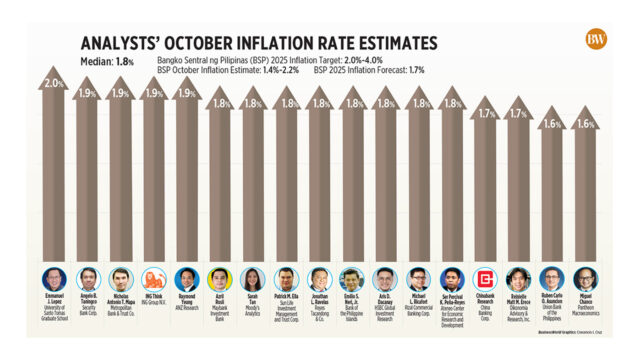
Analysts’ October inflation rate estimates

PHILIPPINE inflation may have slightly accelerated in October amid elevated prices of food, fuel and electricity as well as a weak peso, analysts said. Read the full story.

Analysts’ October inflation rate estimates

Key economic data in focus as market seeks leads

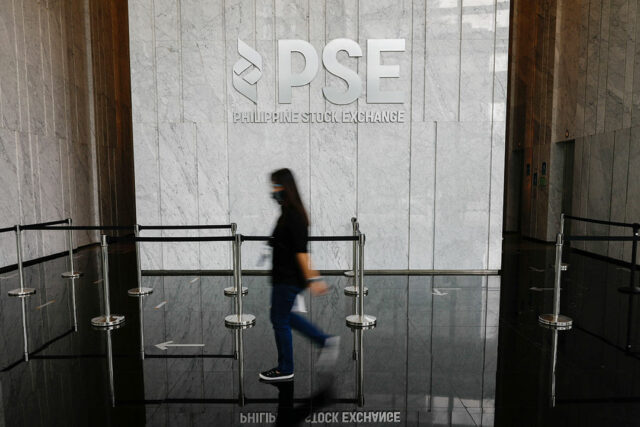
The lobby of the Philippine Stock Exchange in Taguig City, Sept. 30, 2020. — REUTERS

BARGAIN HUNTERS could help lift Philippine stocks this week, with the release of key economic data, including reports on October inflation and third-quarter gross domestic product (GDP), to drive trading.

On Oct. 30, the benchmark Philippine Stock Exchange index (PSEi) went down by 0.57% or 34.09 points to close at 5,929.68, while the broader all shares index fell by 0.33% or 11.93 points to end at 3,593.28. Philippine financial markets were closed on Oct. 31 for a holiday.

Week on week, the PSEi dropped by 58.34 points from its close of 5,988.02 on Oct. 24.

The bellwether index was also down for the month, dropping by 23.78 points from its 5,953.46 finish on Sept. 30.

“The numbers show that the local market has been bearish for October,” Philstocks Financial, Inc. Research Manager Japhet Louis O. Tantiangco said in a Viber message. “Trading has been tepid, with net value turnover averaging P4.90 billion per day for the month, lower than the year-to-date average of P5.85 billion. Foreigners have been net sellers for the month, with net outflows amounting to P5.85 billion.”

“This can be attributed primarily to the negative investor sentiment brought by the infrastructure related corruption issues in the Philippines and their impact on the country’s economic outlook. The peso’s decline against the US dollar also added to the market’s poor October performance,” he said.

Regina Capital Development Corp. Head of Sales Luis A. Limlingan said the market showed “some resilience” despite volatile trading last month, mainly backed by strong corporate results.

“Power and mining sectors stood out, with some notable stocks gaining traction due to recent earnings reports and project developments amidst tariff hikes and trade disruptions. Property sectors have seen some progress on the residential, retail and leasing front, as well as gradual recovery in international tourism rates,” he said in a Viber message.

For this week, Mr. Tantiangco said bargain hunting following the market’s two-week decline could lift the PSEi.

“For the market’s general direction, however, we expect investors to take cues from our upcoming macroeconomic data. Investors are expected to look towards our Q3 GDP data to know how the local economy has been. A growth slower than the government’s 5.5%-6.5% target for the year may weigh on the market,” he said.

He added that data on inflation and manufacturing activity, along with the peso’s movements against the dollar, could also provide some leads.

“Bearish sentiment continues to dominate the local market as downside risks continue to press on while positive catalysts are yet to be seen. Investor confidence remains weak.”

Mr. Tantiangco put the PSEi’s major support at 5,800 and major resistance at 6,000.

Meanwhile, Mr. Limlingan said the release of more listed companies’ financial results could also provide catalysts. — Alexandria Grace C. Magno

PHL, Canada seal visiting forces agreement amid sea tensions

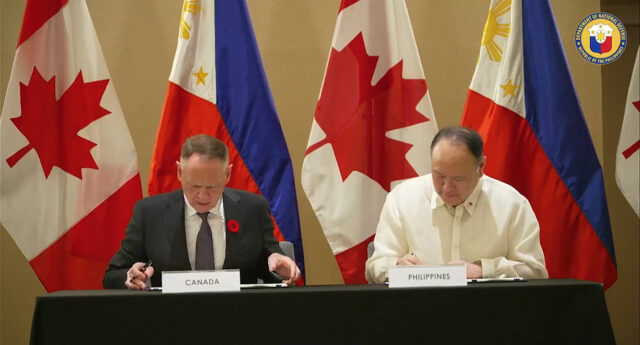
SCREENGRAB of Philippine Defense Secretary Gilberto C. Teodoro, Jr. (right) and Canadian Defense Minister David Joseph McGuinty from Philippines’ Department of National Defense’s livestream. — FACEBOOK.COM/WATCH/DNDPHL

By Kenneth Christiane L. Basilio, Reporter

THE PHILIPPINES and Canada on Sunday signed a military pact that will allow their troops to set foot in each other’s territories, deepening Manila’s defense ties with Ottawa amid lingering South China Sea tensions and just days after the US pledged support to boost the Southeast Asian nation’s deterrence in the waterway.

Philippine Defense Secretary Gilberto C. Teodoro, Jr. and Canadian Defense Minister David Joseph McGuinty signed the Status of Visiting Forces Agreement (SOVFA) in Manila, making Canada the fifth country to enter into a troop access pact with the Philippines.

Both sides agreed on the legal provisions allowing Filipino and Canadian troops to enter each other’s territories in March this year, with the Canadian government describing the deal as a reinforcement to their 2024 defense cooperation pact.

Senate ratification is required for the agreement to take effect in the Philippines, while treaties in Canada become binding without formal parliamentary approval.

“This is the first such agreement for Canada in the Indo-Pacific region,” Mr. McGuinty said in a delegation meeting before the agreement’s signing. “This was a deliberate choice.”

Ottawa has consistently backed Manila’s stake in the South China Sea, one of the world’s most contested waterways, where tensions between the Philippines and China continue to simmer due to overlapping claims.

Beijing continues to lay its sovereignty over the energy-rich waters despite a 2016 ruling by a United Nations-backed court that voided its claims.

“Peace is built on rules, not recklessness; and stability grows from cooperation, not contradiction,” Mr. McGuinty said in a joint media briefing after the SOVFA’s signing. “The Philippines has shown true leadership in upholding international law and seeking a peaceful resolution of disputes.”

The Southeast Asian nation has stepped up efforts to push back against China’s sweeping sea claims by expanding its web of alliances beyond the US, its long-standing treaty ally. It has forged visiting forces agreements with Australia, and most recently, New Zealand, alongside a similar deal with Japan.

The SOVFA’s signing also comes on the heels of US Defense Secretary Peter Brian Hegseth’s remarks at a regional defense ministers’ meeting last week, where he said Washington would establish a task force aimed at helping the Philippines bolster its deterrence capabilities in the strategic waterway.

A Pentagon spokesman said the joint task force would improve joint military planning, operational cooperation and force interoperability with Philippine forces, Reuters reported.

Mr. Teodoro said in the same briefing that the task force is an “operational arrangement” between the US Indo-Pacific Command and the Armed Forces of the Philippines.

“The task force has a specific mission… and that is to converge our resilience, both internal and externally,” he said, describing the body as a mechanism aimed at consolidating all military functions of the Philippines and US forces for seamless interoperability.

The Philippines and US are close allies, with their partnership anchored on a 1950s treaty binding both to defend one another in case of an armed attack. Their alliance has flourished in recent years, with joint military drills becoming more complex and involving advanced weapon systems.

The troop visitation pact between Philippines and Canada would improve their armed forces’ interoperability, which might help reshape the strategic landscape of the South China Sea, analysts said.

“The SOVFA creates a partnership between the two countries that hints at alignment on how to respond to a China that is becoming more confident in flexing its muscles,” Julio S. Amador III, chief executive officer at Manila-based geopolitical risk firm Amador Research Services, said in a Viber message.

He added that the agreement’s framework would provide an opening for Canadian forces to participate in various military exercises organized by the Philippines.

Chester B. Cabalza, founding president of Manila-based think tank International Development and Security Cooperation, said that Canada’s forging of a military pact with the Philippines signals its “true intention” to boost an international rules-based order in the South China Sea.

The visiting forces pact is a “significant development” for both nations, and would provide an additional ally that Manila could lean on amid Chinese aggression in the strategic waterway, said Sherwin E. Ona, a security analyst and associate professor at De La Salle University.

“It significantly enhances the country’s deterrence posture and opens opportunities for Canada to participate in joint exercises,” he said in a Viber message.

Manila has increasingly leaned on multinational cooperation to shore up its military capabilities, and it has held multiple joint drills with allies throughout the country as part of its efforts to bolster its defenses amid increasing Chinese assertiveness in the South China Sea.

Talks for a visiting forces pact with France and the UK are also under way.

Business confidence in PHL restored — Marcos

PRESIDENT Ferdinand R. Marcos Jr. and First Lady Liza Araneta-Marcos met the Filipino community during his visit to South Korea, Oct. 30. — PPA POOL

By Chloe Mari A. Hufana, Reporter

PRESIDENT Ferdinand R. Marcos, Jr. said confidence in the Philippine economy has been “restored” as his administration’s efforts to expose and address irregularities in the government strengthened trust in its economic management.

In a press conference in Gyeongju, South Korea, on Saturday night, the President said his administration’s decision to address and correct irregularities publicly demonstrates commitment to good governance and economic stability.

Mr. Marcos, who was in South Korea for the 32nd Asia-Pacific Economic Cooperation (APEC) Economic Leaders’ Meeting, said transparency in government actions sends a strong signal to investors that the Philippines is serious about reform and accountability.

“If we had not exposed it, then they would be saying that there’s a problem. Now that we have exposed it, their confidence is stronger in the Philippines,” he noted, according to a live-streamed video on state media.

“That’s why things have changed. The level of confidence in the Philippine economy and in the Philippine government as the leader and the guider of the economy is restored.”

Upon arrival in Manila on Sunday, Mr. Marcos vowed to sustain the momentum of the Philippines’ APEC participation, saying his administration will translate the commitments made in South Korea into “tangible results” for Filipinos and the broader region.   

He said this year’s summit reaffirmed the shared resolve among member economies to pursue growth anchored on connectivity, innovation and inclusivity. He also noted Manila’s push for stronger digital inclusion for small businesses, seamless cross-border trade through better infrastructure and broader upskilling initiatives for women and marginalized sectors.

Mr. Marcos also repeatedly emphasized transparency and accountability as key to sustaining investor trust and achieving the administration’s medium-term growth targets, which aim to position the Philippines among Southeast Asia’s top investment destinations.

The government in August launched a massive corruption crackdown, probing a public works scam that exposed lawmakers, contractors, and Public Works officials who allegedly received billions in kickbacks.

“All countries have their own problems, but the only problem, especially for investors, is whether or not the government is doing anything about it,” Mr. Marcos added.

NOT YET RESTORED
Foreign Buyers Association of the Philippines (FOBAP) President Robert M. Young, however, said the business confidence has not yet been restored.

“To state that business confidence has been ‘restored’ is not quite accurate, but fortunately, the people can see that there is an effort by the government to address the problem, which hopefully will have good and acceptable results,” he said via Viber, noting the country is still “in the process” of restoring lost confidence.

Mr. Young added the Philippines should not “exaggerate” and “overindulge” in the corruption issue, instead focusing on how to remedy its “dismal filing business capabilities” compared to neighboring countries.

Research firm IBON Foundation Executive Director Jose Enrique A. Africa also dismissed Mr. Marcos’ claim that confidence in the Philippine economy has been restored, describing it as “empty bluster.”

He said that genuine confidence must come from the people, who remain doubtful of the government’s anti-corruption campaign and unconvinced that the economy can provide secure jobs, fair wages, and affordable basic services.

Citing a Pulse Asia survey, he said nearly all Filipinos believe corruption is widespread and rising, and that fewer than a third of respondents trust the president to address the issue.

Mr. Africa added that even major investors are likely reassessing the risks posed by ongoing corruption scandals, warning that the Marcos administration may be underestimating public outrage and its potential political consequences.

“Even financial markets and big investors used to making profits amid corruption must be taking pause today while they take stock of the eventual impact on public investment and, especially, on the political situation,” he said via Viber.

“The Marcos, Jr. administration may be wrong in thinking that it can manage the upsurge of outrage against corruption and keep the presidency itself from being held accountable.”

The business community earlier released an open letter condemning the large-scale corruption in the country and demanding accountability.

They urged Mr. Marcos to take “bold and concrete actions” to counter rampant corruption and rebuild public trust.

The letter — penned by organizations including the Employers Confederation of the Philippines, the Federation of Free Workers, the Philippine Chamber of Commerce and Industry and the Trade Union Congress of the Philippines — lamented the lack of effective follow-through despite investigations.

Manila told to leverage ASEAN chairship vs scam hubs

PRESIDENT Ferdinand R. Marcos, Jr. spoke at the closing ceremony of the 47th ASEAN Summit and Related Summits in Malaysia, as the ASEAN Chairmanship for 2026 was officially turned over to the Philippines, Oct. 28. — PPA POOL

By Adrian H. Halili, Reporter

THE PHILIPPINES should use its position as chair of the Association of Southeast Asian Nations (ASEAN) next year to advance anti-human trafficking policies amid the influx of scam hubs in the region, analysts said.

The Philippines can leverage its chairship to address concerns on human trafficking, particularly in Myanmar, Francis M. Esteban, associate dean at the Far Eastern University’s Institute of Arts and Sciences, said in a Facebook Messenger chat.

He added that the Department of Foreign Affairs (DFA) and Migrant Workers (DMW) should bolster its anti-human trafficking efforts.

“The Philippine government, through the mentioned agencies should double its efforts in making sure that OFWs (overseas Filipino workers) have the right access to information, and assistance to avoid such instances of human trafficking,” he said.

Last week, the DFA reported that more than 200 Filipinos applied for repatriation after they were recruited into scam hubs, most of which were in Myanmar.

“The smuggling and human trafficking operations require regional and global cooperation,” Hansley A. Juliano, a political science lecturer at the Ateneo de Manila University said in a Messenger chat.

“ASEAN can and should platform more cooperation and empowerment of maritime Southeast Asian countries who have experience, resources and stakes in the situation,” he added.

The Philippines will host the ASEAN summit next year, following the official handing over by Malaysia last week.  The country assumed the position a year ahead than expected amid unrest in Myanmar.

Josue Raphael J. Cortez, who teaches diplomacy at De La Salle-College of St. Benilde, said that the next ASEAN summit can also be used to draft a pan-ASEAN framework in combating trafficking occurring in scam hubs.

“It may be about time for the bloc to have a consensus for a binding resolution that would center not just on eradicating the prevalence of these hubs, but also in protecting the rights and promoting the welfare of Southeast Asian citizens who get involved in the matter,” he said in a Messenger chat.

He added that the regional bloc must also synchronize deportation and reintegration policies to ensure the ease of movement for ASEAN citizens who are caught engaging in these hubs.

“ASEAN may ensure that its member-states’ constitutions enshrine provisions geared towards issues pertaining to human trafficking — a prerequisite for possible extradition based on the complementarity principle and the comity of nations,” he added.

Mr. Cortez said that the Philippines should enforce stricter verification for potential scam hub recruitment areas in the country.

“The country may add yet another layer of security checks in order to verify that the companies Filipinos moving to these trafficking hotspots are credible,” he added.

In addition, the Philippines can leverage its ties with Australia, New Zealand, and the European Union in combating human trafficking operations, Mr. Juliano said.

“We should further improve our participation and involvement with relevant global institutions such as United Nations Office on Drugs and Crime (UNODC), the International Organization for Migration (IOM), and the Inter-Agency Coordination Group against Trafficking in Persons (ICAT),” he added.

He said that civil society organizations are equipped to potentially advise the government for policy recommendations.

‘Ghost’ hospitals reveal deeper corruption, governance woes in health sector, analysts say

THIS drone shot, taken during a DoH inspection, shows an empty lot in Marikina, which was supposed to be the site of a P21.49-million Super Health Center, Oct. 15, 2025. — PHILIPPINE STAR/WALTER BOLLOZOS

By Erika Mae P. Sinaking

THE existence of “ghost” hospitals or idle Super Health Centers (SHCs) in the country reflects deeper problems of corruption, poor governance, and misplaced priorities in the public health system, health reform advocates and medical experts said.

In early October, the Independent Commission for Infrastructure (ICI) said it received reports about alleged unused and non-operational SHCs already been tagged as “completed.”

A total of 878 SHCs have been funded through the Health Facility Enhancement Program (HFEP) since 2021, based on preliminary Department of Health (DoH) data. Of these, only 196 are operational, 17 are partially operational, while 365 are still under construction.

The remaining 300 facilities — more than a third of the total — remain non-operational.

Health Secretary Teodoro J. Herbosa earlier told the ICI that many of these facilities remain idle due to the lack of basic utilities such as electricity and water.

“The health sector has been able to escape accountability in many forms of corruption — including phantom health centers — because they are not as visible or glaring as other infrastructure projects,” Paul Gideon D. Lasco, medical anthropologist, told BusinessWorld in an e-mail response to questions.

Mr. Lasco noted that many public healthcare facilities operate outside the public eye, often unnoticed by citizens who either distrust or rarely use government health services.

“We can also view these forms of corruption as further evidence of how systemic corruption is in our government,” he added.

Super Health Centers are larger versions of regular health centers, intended to provide outpatient consultations, basic diagnostics such as X-rays and ultrasounds, minor surgeries, and pharmacy services. They were initiated in 2021 to supplement local health infrastructure and reduce congestion in public hospitals.

The Health chief said that all health facilities in 2024 are being implemented by the Department of Public Works and Highways (DPWH), following a provision in the 2025 General Appropriations Act mandating the DPWH to handle the construction of facilities costing more than P5 million and not directly under DoH control.

For Anthony “Tony” C. Leachon, health reform advocate, the problem lies in how these projects were planned and implemented from the start.

In a separate e-mail, Mr. Leachon said that the continued existence of idle or incomplete SHCs points to “three interlocking failures” — fragmented planning, weak accountability mechanisms, and political interference.

“Infrastructure was prioritized over functionality,” he said.

Mr. Leachon added that oversight in programs such as the HFEP has historically been weak, allowing contractors and implementing agencies to operate with little consequence for inefficiency or neglect.

“Some centers were reportedly built in areas chosen for political convenience rather than epidemiologic need,” he said, describing the practice as a form of “pork barrel dynamics where visibility trumps viability.”

Despite the billions spent, the issue rarely provokes public outrage due to its complexity and the quiet, slow nature of its consequences.

“Unlike scandals involving personalities or national security, ghost health centers are technical, dispersed, and slow burning,” he said. “They rarely provoke outrage because their impact is felt quietly — in missed diagnoses, untreated illnesses, and preventable deaths.”

The DoH said it will continue building up cases on the 300 problematic SHCs, conduct on-site inspections through its regional directors, and activate a “Citizens Participatory Audit” to gather public reports on idle facilities.

“We are still waiting for the DoH to conclude its investigation and provide us with a report,” ICI Executive Director Brian Keith F. Hosaka told BusinessWorld via Viber.

“Ghost health centers are not just abandoned buildings. They are symbols of broken promises,” Mr. Leachon said. “To restore trust, we must restore function. And to restore function, we must restore integrity.”

Meanwhile, Mr. Lasco emphasized that beyond public outrage, accountability must be pursued to deter future wrongdoing. He added that structural reforms in the healthcare system are needed, including stronger support and fair compensation for health workers.

Tropical Storm Tino enters PAR

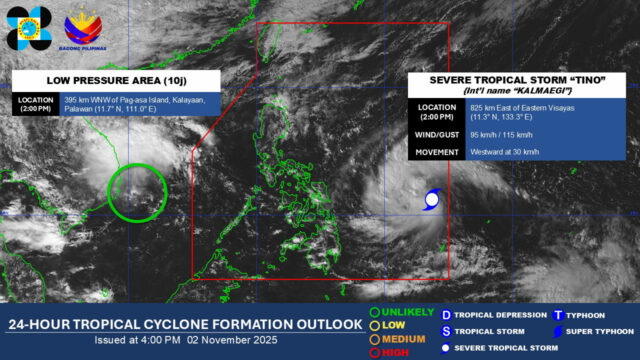
TROPICAL STORM “TINO” (Int’l name “KALMAEGI”) — DOST-PAGASA

SEVERE tropical storm “Kalmaegi” entered the Philippine area of responsibility (PAR) early on Sunday and was assigned the local name “Tino,” marking the 20th tropical cyclone to enter the country in 2025, the state weather bureau reported.

According to the Philippine Atmospheric, Geophysical and Astronomical Services Administration’s (PAGASA) Facebook page, Tino was located east of eastern Visayas.

It said Tino may make landfall over the Caraga or Eastern Visayas regions on Monday.

In its 5 p.m. advisory, it warned that Tino — combined with a prevailing shear line — will bring widespread heavy to torrential rains over large parts of the Visayas and Mindanao through midweek.

Rainfall ranging from 50 to 200 millimeters is expected from Sunday through Wednesday afternoon, with the heaviest downpours over Eastern and Central Visayas.

The agency urged disaster risk reduction and management offices to take precautionary measures to protect lives and property.

PAGASA regional divisions may issue localized Heavy Rainfall Warnings and Thunderstorm Advisories as appropriate.

Tino’s arrival comes as the Philippines enters the final quarter of its typhoon season, a period typically characterized by frequent storms that can disrupt agriculture, transport, and energy operations across the archipelago. — Chloe Mari A. Hufana

Probe of ‘ghost’ farm roads pushed

DPWH.GOV.PH

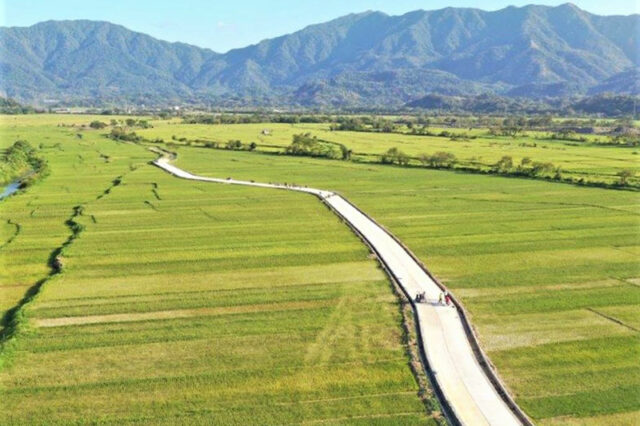
MINORITY lawmakers last week filed a resolution seeking a congressional inquiry into alleged “ghost” farm-to-market roads, as scrutiny intensifies over a widening government scandal involving flood infrastructure projects.

The Agriculture department’s farm-to-market road projects were overpriced by roughly P6.4 million compared to agency estimates, according to House Resolution (HR) No. 421, which flagged potential misuse of public funds alike to the multibillion-peso flood control controversy.

The House public accounts and agriculture panels should “conduct a thorough investigation into all farm-to-market roads for possible overpricing and corruption,” the resolution, authored by Party-list Reps. Antonio L. Tinio, Sarah Jane I. Elago and Renee Louise M. Co., read.

“There is a need to thoroughly scrutinize the national farm-to-market road network plan 2023-2028 formulated and finalized during the stint of President Marcos, Jr. as the Agriculture secretary,” it added.

The Marcos administration is facing mounting scrutiny over a widening flood control scandal, with key politicians, government officials and private contractors accused of colluding to swindle the state of billions of pesos through substandard or nonexistent flood mitigation projects.

Allegations have also emerged that farm-to-market roads — part of a government initiative to improve connectivity between agricultural lots and markets — were themselves a conduit of corruption.

Senator Sherwin T. Gatchalian said last month the government may have lost more than P10 billion to inflated rural road project costs, citing roughly 689 kilometers (km) of farm roads from 1,653 contracts flagged for overpricing.

HR No. 421 said an average kilometer of a typical rural road should be P9.486 million per km, citing Agriculture department documents. But project costs shot up by 67.72% to P15.91 million per km to ensure structural integrity and climate proofing. — Kenneth Christiane L. Basilio

More funds sought for zero billing

President Ferdinand R. Marcos, Jr. visited patients at the Bataan General Hospital and Medical Center in Balanga, Bataan on Sept. 22. — PPA POOL/REVOLI CORTEZ

A SENATOR on Sunday proposed transferring the budget of the Health department’s medical financial aid program to fund the “zero-balance billing” program in public hospitals, which guarantees patients no out-of-pocket expenses for covered services.

Senator Sherwin T. Gatchalian, who heads the Senate Finance committee, proposed to place funding for the Medical Assistance to Indigent and Financially Incapacitated Patients (MAIFIP) Program into the zero-balance billing program.

“Let’s just put MAIFIP in the zero-balance billing program. We should reform our Universal Health Care to ensure access to quality health services for all Filipinos without financial hardship,” he said in a statement.

The Philippine Health Insurance Corp. (PhilHealth) currently shoulders the full cost of covered services under the program. The services include room and board, medicines, laboratory tests and professional fees, ensuring that patients do not pay anything on top of their coverage. It only applies to patients admitted to ward-type hospital accommodations.

The MAIFIP program has an allocation of P49.2 billion under the proposed 2026 national spending plan.

“It pains me to see some people queuing up at politicians’ offices,” Mr. Gatchalian added. “We are putting the decision-making power on life and death in the hands of the politicians, which is not the right thing to do because the system should help our constituents.”

He said that the zero-balance billing program and PhilHealth programs would be able to support patients in public hospitals.

He also noted that there is a need to increase the capacity of public hospitals due to the zero-balance program. — Adrian H. Halili