Home Blog Page 732

Meralco expects higher power rates in Nov.

Manila Electric Co. (Meralco) linemen conduct maintenance work along Magallanes Drive in Manila, June 28. — PHILIPPINE STAR/NOEL B. PABALATE

POWER DISTRIBUTOR Manila Electric Co. (Meralco) is expecting an increase in electricity rates this month due to higher costs that are passed directly to its customers.

“Indications point to possible higher rates in the November due to increase in pass-through charges,” Meralco Vice-President and Head of Corporate Communications Joe R. Zaldarriaga said in a statement on Sunday.

Mr. Zaldarriaga attributed the potential increase to the recently approved new feed-in tariff allowance (FIT-All) by the Energy Regulatory Commission, which will result in an additional P0.0884 per kilowatt-hour (kWh) in the rates this month.

The FIT-All is a uniform charge billed to all on-grid electricity consumers to support the development and promotion of renewable energy.

Contributing to the possible rate hike are the higher prices in the Wholesale Electricity Spot Market (WESM) and reserve market prices in the previous supply month, adding upward pressure on generation and transmission charges.

The WESM is where energy companies can buy power if their long-term contracted power deals prove inadequate for their needs

The Independent Electricity Market Operator of the Philippines earlier reported that the average WESM price jumped by 49.4% month on month to P4.54 per kWh in October, due to thinning supply margins.

The available supply dropped by 4% to 19,889 megawatts (MW), while demand increased by 1.8% to 13,881 MW.

“In addition, the continued depreciation of the peso to historic lows is expected to affect dollar-denominated costs from independent power producers and power supply agreements,” Mr. Zaldarriaga said.

The Philippine peso hit a record low of P59.13 on Oct. 28, amid concerns over economic growth.

The peso closed at P58.85 per dollar on Oct. 30, weakening by P0.654 from its P58.196 finish on Sept. 30, according to the Bankers Association of the Philippines’ reference exchange rate.

“We’re finalizing the rate and will announce the actual movement this coming week,” Mr. Zaldarriaga said.

For October, Meralco rates increased by P0.2331 per kWh to P13.3182 per kWh, due to higher generation charges.

Meralco is the main power distributor for Metro Manila and nearby areas, covering 39 cities and 72 municipalities, and delivering power to over eight million customers.

Meralco’s controlling stakeholder, Beacon Electric Asset Holdings, Inc., is partly owned by PLDT Inc. Hastings Holdings, Inc., a unit of PLDT Beneficial Trust Fund subsidiary MediaQuest Holdings, Inc., has an interest in BusinessWorld through the Philippine Star Group, which it controls. — Sheldeen Joy Talavera

Empowering MSMEs through financing, digital tools, and upskilling

The Department of Trade and Industry (DTI) and GCash strengthen their partnership to boost the MSME sector in the country. From left: DTI Bureau of Small and Medium Enterprise Development Director Emma Asusano, DTI Undersecretary for Regional Operations Group Blesila Lantayona, GCash for Business General Manager Jong Layug, and G-Xchange, Inc. Vice-President and Public Sector Head Cleo Celeste Santos

By Jomarc Angelo M. Corpuz, Special Features and Content Writer

It is often stated that micro, small, and medium enterprises (MSMEs) are the backbone of an economy, recognizing their contributions to employment, income generation, and economic growth. However, various challenges and roadblocks, such as access to capital, digital transformation, and a lack of capacity-building, have given rise to questions about the futures of these enterprises.

MSMEs made up 99.63% of the country’s 1.246 million registered businesses and provided nearly 67% of employment, amounting to about 6.35 million jobs, according to the latest numbers of the Philippines Statistics Authority. This demonstrates how a thriving MSME sector brings economic value and visible societal change.

“MSMEs are pivotal in poverty alleviation, boosting regional economies, and enhancing domestic resilience,” GCash for Business General Manager Jong Layug said in an email interview with BusinessWorld.

To maintain growth and help MSMEs thrive even more, Mr. Layug noted collaborations between the government and the private sector that could ensure that they are more included in national growth strategies. He noted, as an example, the Department of Trade and Industry’s partnership with GCash for Business. The partnership aims to establish GCash for Business hubs within Negosyo Centers as a means to educate merchants and provide onboarding assistance for prospective users to effectively use their platforms.

“The collaboration aims to empower MSMEs through digitalization, making business operations more efficient and seamless,” Mr. Layug said.

For example, merchants can now use the new GCash SoundPay device, which allows them to hear it when a customer pays in their store, providing them with verification that the payment has been accepted in real time.

GCash for Business is also offering PocketPay, a solution that turns the merchants’ phones into a POS machine capable of accepting debit or credit card payments backed by Mastercard and Visa.

Access to capital

GCash for Business General Manager Jong Layug stresses the need for MSMEs to use digital platforms, enabling their operations to become more efficient and seamless.

The World Bank bares that access to finance is one of the key constraints to growth for MSMEs. The international financial institution finds that the issue is the second most cited obstacle facing SMEs in growing their businesses in emerging markets and developing countries.

With MSMEs less likely to obtain bank loans than large firms, these enterprises often rely on internal funds, cash from friends and family, or even digital lending apps and wallets.

Mr. Layug emphasizes that there are basic financial products and services that can help MSMEs scale their businesses.

“Critical financial tools include affordable credit, savings, micro-insurance, digitized payments, and business analytics. These empower MSMEs to manage cash flow, protect against risk, and scale operations confidently,” he said.

However, while these tools are available, Mr. Layug mentions that they are often fragmented, costly, or too complex. These characteristics make these products seem out of reach for small businesses. He advocated for these solutions to be more accessible and affordable to help even the smallest enterprises grow and succeed.

“In the Philippines, bank lending remains far below the target set by the BSP (Bangko Sentral ng Pilipinas). As of end‑March 2025, loans to MSMEs were only 4.63% of banks’ total loan book versus the 10% mandate (8% for micro/small, 2% for medium). Fintech is stepping in to bridge it by using alternative data, digital KYC (know your customer), and embedded disbursement to reach merchants that banks can’t serve at scale,” Mr. Layug said.

This persistent financing gap highlights the need for more creative and digital lending strategies that bypass traditional roadblocks. This is how fintech solutions and digital financing are making a tangible difference.

“GCash for Business and Fuse Financing are widening the doorway to credit for MSMEs that banks still underserve. Instead of relying on traditional collateral and heavy paperwork, we use verified activity inside the GCash ecosystem to deliver instant, data‑driven micro‑loans straight to their wallets. That means faster decisions with right‑sized limits — removing the usual barriers that keep micro and small enterprises out,” Mr. Layug said, explaining how fintech like theirs can help MSMEs.

Digital transformation

Digital transformation has shown undeniable benefits that can lead to better business outcomes. A study from Forbes magazine shows that digitally mature companies are 23% more profitable than their less mature peers. Despite this, many Filipino MSMEs remain hesitant to embrace technology due to perceived complexity, high costs, and other varying reasons.

“While more business owners are curious about digital tools, a lot of them still feel these solutions are too complex, expensive, or simply not made for them. As such, many still resort to manual ways of doing things, which are more prone to human error and even tedious,” Mr. Layug said when asked about the barriers these enterprises face when going digital.

For prospective MSMEs who are seeking to overcome these barriers, he advises to start with solutions that are both practical and scalable for small enterprises. Mr. Layug stressed that the goal is to equip MSMEs with tools that both simplify day-to-day operations and open doors to wider markets and more efficient workflows.

“Priority tools include secure e-wallets and digital payment acceptance, as well as inventory management and e-commerce platforms. These boost reach, streamline operations, and improve responsiveness to market demands,” he said.

Capacity-building

Upskilling and capacity-building are other areas where MSMEs can build resilience to be better prepared for the future. A report by the World Economic Forum in 2023 believes that 44% of workers’ skills will be disrupted in the next five years and that six in 10 staff members will require training before 2027.

To meet these challenges head-on, Mr. Layug suggests the strengthening of competencies that directly support modern business operations and competitiveness.

“MSME owners should develop digital literacy, financial management, online marketing, and data analytics capabilities, in addition to cybersecurity awareness and adaptability,” he said.

Building these capabilities is not solely the responsibility of business owners and the private. Across the country, public agencies, development organizations, and private players are rolling out programs to help MSMEs modernize and compete.

“There’s growing support — government programs, NGOs, and private initiatives (including GCash’s partnerships for digital and financial literacy). However, scaling and stronger coordination are needed for nationwide impact,” Mr. Layug said.

MSMEs, as the backbone of the economy, also need support to carry and continue the growth of the nation through accessible financing, practical digital tools, and targeted skills development. With stronger collaboration across sectors, these enterprises can survive today’s challenges, drive inclusive and sustainable economic growth for the Philippines, and perhaps, scale to bring more opportunities to Filipinos.

Where the future is born

FLOU’s Taormina bed, on display at Abitare Internazionale.

Every famous Italian has this bed

BEDS from the Italian brand Flou cost in the thousands of euros, and that is no surprise when you find out that at least one model is certified as being a work of art.

Massimiliano Messina, president and owner of Flou and Natevo, both Italian furniture brands, was in the Philippines on Oct. 21 to check out the new space designed for their brands by their Philippine distributor, Abitare Internazionale.

Asked why beds are so important, Mr. Messina deferred to his father’s wisdom. “Saying something better than what my father said is difficult,” he told BusinessWorld,

According to him, his father, Flou founder Rosario Messina, once said, “The bed is a special place where the future is born, where couples connect, where families are created, where people think about their tomorrows.”

“I still think that’s the way a bed has to be,” said the younger Mr. Messina.

FROM DUVETS TO A WORK OF ART
Flou was founded in 1978 and has had a presence in the Philippines since 2003. Meanwhile, Natevo, a brand concentrating on lighting and lighting-integrated furniture, was founded in 2013.

There’s a rather roundabout story as to how the business developed: Mr. Messina said that his father was a sales executive for a company that planned to sell duvets in Italy, then a novelty in the country. “My father realized that he needed furniture to sell the duvets.” So, they started building beds to show off the bedclothes.

From beds, they went on to design the rest of the home, starting with nightstands to match the beds, and going on from there, expanding to the living and dining room: “We were listening to our clients, asking to bring the same idea of comfort to the other places of the home,” he said. “We do produce furniture, but the main thing that we care about is everybody enjoying life.”

The expensive beds (a glance at Italian stores online places them at around €3,000 minimum, the prices do go up) are made with layers of natural materials. Its first product, the Nathalie (with an innovation where the bed can be completely “undressed”) was awarded the Compasso d’Oro and is protected by the European Design Law as a work of art.

Asked about their celebrity clients, he pointed to Apple Chief Executive Officer Tim Cook who bought their beds for his home in Tuscany, but then, “Likely, a lot of our clients are famous,” said Mr. Messina. “More or less, everybody famous in Italy.”

HANDMADE IN ITALY
The beds are completely handmade in Italy: “The only way you can produce that is by hand — there is no machine that can make that technique,” he said. He also talked about the certain advantages that come with bearing the Made in Italy branding: “It is very convenient to be Italian,” he said. “The labor, the people working in our company, they already have the mindset to reach the highest quality.

“You can’t have the best quality if the people handling the product don’t care about that, or don’t know the difference between high and low quality,” he continued. “In Italy, we grow up in an environment that is all about quality.”

It’s this same intangibility in the sense of quality that inspires Mr. Messina and his family (the company is still family-owned and operated to this day). It’s also part of his advantage to be part of a family in the furniture industry, so attuned to the intimacy of the home. “I grew up in this industry,” he said. “A lot of things I know, but I don’t know why.” He patted his gut: “It’s just in your stomach.”

Flou and Natevo are available at Abitare Internazionale, Ground floor, Crown Tower Bldg., 107 H.V. Dela Costa St., Salcedo Village, Makati City. — Joseph L. Garcia

Fundamentals, dividend, and growth plans drive Maynilad post-IPO outlook

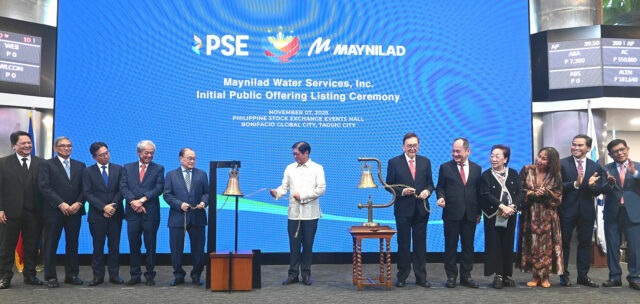
PRESIDENT Ferdinand R. Marcos, Jr. joined Maynilad Water Services, Inc. and Philippine Stock Exchange (PSE) officials in ringing the bell to mark Maynilad’s official listing on the stock exchange, Nov. 7. Also in photo are PSE President Ramon S. Monzon, Maynilad Chairman Manuel V. Pangilinan, Maynilad President and Chief Executive Officer Ramoncito S. Fernandez, and other PSE and Maynilad officials.

A DEFENSIVE business model, undemanding valuations, planned expansions, and an upcoming dividend are expected to shape investor interest in Maynilad Water Services, Inc., analysts said, even as the stock closed slightly below its initial public offering (IPO) price on debut.

“On a more long-term view, Maynilad should weather market downturns well due to the defensive nature of its business and its undemanding valuations,” AP Securities, Inc. Research Head Alfred Benjamin R. Garcia said in a Viber message on Friday last week.

“I’m sure the market is already anticipating its first dividend declaration around March next year” he added.

For her part, COL Financial Group, Inc. Chief Equity Strategist April Lynn Lee-Tan said: “Longer term, catalysts for strong performance include direction of interest rates (down), direction of profits (up).”

Luis A. Limlingan, head of sales at Regina Capital Development Corp., said that since the IPO price was set more than a week before the listing date and the gross domestic product (GDP) came in below consensus, having a flat performance on its first trading day is actually good.

“Probably… infrastructure investment/capex (capital expenditures), new capacity, reduction in non-revenue water (NRW), wastewater and sewerage opportunities, etc.,” he said in a Viber message. These, he noted, will serve as key catalysts driving Maynilad’s share performance in the coming quarters.

“Judging by the market’s tepid response, investors seem inclined to wait for lower entry points before turning constructive on Maynilad,” DragonFi Securities, Inc. Equity Research Analyst Jarrod Leighton M. Tin said in a Viber message.

He said that while the company remains fundamentally solid, weak sentiment may continue to drag the stock below its IPO price in the near term.

“I don’t see any catalysts aside from the earnings report and potential Philippine Stock Exchange index (PSEi) inclusion. I have a downward bias for Maynilad’s share price in the coming months,” Mr. Tin added.

On Friday, Maynilad shares closed slightly lower on its first trading day by 0.13% or 2 centavos, after opening at P15 and reaching a low of P14.98. Around 100.81 million shares were traded, valued at P1.51 billion.

The IPO generated gross proceeds of P34.3 billion, which will be used for capex and general corporate purposes.

During a media briefing, Maynilad Chief Financial Officer Ricardo F. Delos Reyes said the IPO was oversubscribed by 2.7 times, with a diverse geographic investor base comprising 53.6% from Asia, 29.6% local investors, 14.7% from Europe, and 1% from the United States.

Maynilad President and Chief Executive Officer (CEO) Ramoncito S. Fernandez said the company’s expansion priorities focus on improving current customer services, extending wastewater and sanitation to existing clients, supporting ongoing reclamation projects, and offering services to neighboring local government units.

“Talking about expansion, I want to make clear that our priority continues to be improving the services to our customers inside the concession. The low-hanging fruit for us is to offer wastewater and sanitation services to our existing commercial and industrial customers,” he said.

“We still [also] consider a distinct advantage for Maynilad to offer our services to the adjacent local government units (LGUs) in the north and in the south. There are still, specifically, the adjacent cities near our — beside our borders, our boundaries, that are wanting our services. So that’s a possibility for us that we can offer to these LGUs that are wanting improved services.”

PSE President and CEO Ramon S. Monzon said Maynilad’s IPO attracted strong foreign investment, which “clearly, disproving the doomsayer’s claim of foreign investor disinterest in our market.”

Maynilad becomes the second and last company to list on the PSE this year and the largest since Monde Nissin Corp.’s P48.6-billion offering in 2021 with its IPO price.

Metro Pacific Investments Corp., which holds a majority stake in Maynilad, is one of three Philippine subsidiaries of First Pacific Co. Ltd., alongside Philex Mining Corp. and PLDT Inc.

Hastings Holdings, Inc., a unit of PLDT Beneficial Trust Fund subsidiary MediaQuest Holdings, Inc., holds an interest in BusinessWorld through the Philippine Star Group, which it controls. — Alexandria Grace C. Magno

Ready support for budding entrepreneurs

Eiliv Aceron / Unsplash

There has never been a more promising time to start a business in the Philippines. Building a successful enterprise requires four key ingredients: a compelling idea, the drive to pursue it, access to capital, and a strong, welcoming community.

While the first two depend on the individual, the latter are increasingly within reach — thanks to expanding government programs and a growing culture of support for micro, small, and medium enterprises (MSMEs).

Earlier this year, the Department of Trade and Industry’s (DTI) financing arm, Small Business Corp. (SBCorp.), announced that it was allocating over P8 billion in 2025 to support MSMEs through three new loan programs: Business Expansion Financing, Purchase Order Financing, and Franchise Funding.

In addition to these new programs, P2 billion will be allocated for the continuation of the Enterprise Rehabilitation Financing program, and P3 billion for the RISE UP Multi-Purpose Loan program.

According to the DTI, these financing programs will be crucial tools in supporting MSMEs’ growth and job creation. In particular, the three new programs will support existing businesses in expanding or diversifying their business, as well as returning overseas Filipino workers (OFWs) who wish to license a franchise.

Meanwhile, the Enterprise Rehabilitation Financing program and the RISE UP Multi-Purpose Loan program will aim to help MSMEs affected by natural disasters like tropical storms and the Mt. Kanlaon eruption, and finance any gaps in their businesses.

MSMEs account for over 99% of registered businesses and 66% of the country’s labor force.

In March, the DTI also announced that it joined forces with state-run Development Bank of the Philippines and mobile wallet players GCash and Maya to establish a P500-million lending program for micro enterprises, particularly sari-sari stores and market vendors.

The program will be piloted in Cebu, which has a large number of sari-sari stores, before eventually being made available to Metro Manila and the rest of the country.

Furthermore, more recently, the agency is also working with GCash to make payment and business solutions, such as GCash SoundPay, more accessible through their to-be-launched GCash for Business Portal.

This initiative will help MSMEs in rural and underserved areas process transactions seamlessly through the GCash digital platform. The toolset stands to benefit over 1.2 million MSMEs in the Philippines.

Of course, the availability of digital tools for enterprises matters little if the entrepreneurs themselves lack the digital literacy to take full advantage of them.

According to research by the Boston Consulting Group, digital adoption remains low in the country, with only 16% of Filipino MSMEs embracing digital tools. This is despite 77% of MSMEs recognizing the need for such digital solutions to improve efficiency.

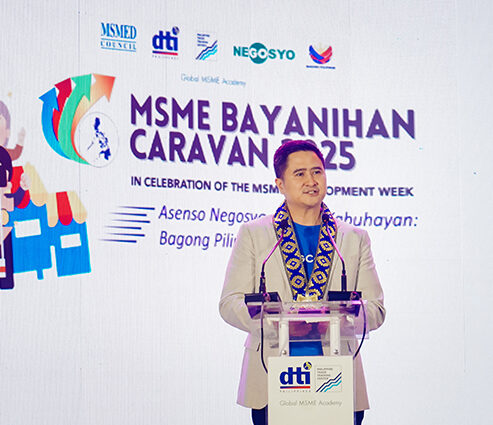
Addressing this was the goal of a collaboration between the DTI and the Micro, Small, and Medium Enterprise Development Council, Global MSME Academy and Go Negosyo. For MSME Development Week last July, the groups gathered to launch the MSME Bayanihan Caravan with the theme “Asenso Negosyo, Angat Kabuhayan: Bagong Pilipinas.”

The caravan brought together speakers from various institutions including Globe, Maya, GCash and PLDT to share innovative approaches that MSMEs can apply to enhance and future-proof their businesses.

The MSME Bayanihan Caravan served as a platform for entrepreneurs to learn, network and adopt forward-thinking strategies in business, supporting the goal of building a more resilient and inclusive economy under the current administration’s vision of “Bagong Pilipinas.”

“We will continue providing capital to even more entrepreneurs so they can start small businesses or microenterprises, with low interest and no collateral. This includes funding and protection for intellectual property as well,” President Ferdinand R. Marcos, Jr. said in his State of the Nation Address last July.

“We will not stop until we’ve helped nearly 2.5 million poor families establish their own small businesses.” — Bjorn Biel M. Beltran

Route 66 turns 100: Brand USA invites travelers to discover the mother road’s iconic attractions, flavors, and stays

With Route 66 turning 100 on Nov. 11, 2026, there are a plethora of museums and roadside attractions to see along the historic Mother Road. Additionally, lots of food options abound — from old-school diners to a cutting-edge food hall for travelers with a variety of tastes.

According to a recent study conducted by Brand USA, road trips rank within the top three types of trips that drive international interest in visiting the USA. In support of this growing demand, Brand USA has partnered with Secretary Sean Duffy and the US Department of Transportation on the Great American Road Trip initiative, which highlights more than 250 sites of interest along iconic routes across the country — including the legendary Route 66.

“Route 66 is part of the American story. For nearly a century, it has connected travelers to the people, places, and experiences that define the United States,” said Fred Dixon, president and CEO of Brand USA. “As we approach its 100th anniversary, we’re reminded of the road’s iconic landmarks and quirky charm and its ongoing legacy as a symbol of possibility and exploration. We invite visitors from around the world to experience the next chapter of Route 66 and discover how the spirit of the open road continues to shape travel across the USA.”

MUST VISIT MUSEUMS & ATTRACTIONS

Among the must-see museums and attractions along the highway include the Route 66 Hall of Fame and Museum in Pontiac, Illinois, where visitors can see memorabilia and snap a photo with the largest Route 66 shield mural.

Missouri may best be known for its many large attractions along the roadside of Route 66. A quintessential part of Route 66 and Americana, the state has no shortage of quirky items to see. From the “World’s Largest Rocking Chair” near Cuba to the “World’s Second-Largest Fork” in Springfield, the state is full of the offbeat.

Although fairly short at just 13 miles, the Kansas stretch of the famed road also includes some interesting landmarks for the history buff, including the Marsh Arch Bridge (Rainbow Bridge), Baxter Springs Heritage Center & Museum and the Galena Mining & Historical Museum.

The Oklahoma Route 66 Museum in Clinton, Oklahoma, meanwhile, tells the history of the road, its founding, and the time period. Be transported back in time during the Dust Bowl and see how people used the road on their quest to find new homes and prosperity. No visit to the historic route would be complete without stopping at the well-known and visited Blue Whale of Catoosa in Catoosa, Oklahoma. The Blue Whale and the surrounding park are currently undergoing renovations ahead of the Centennial. In Luther, history comes alive at the Threatt Filling Station. Built in 1915, the station was a haven for Black travelers along the Mother Road. The station was named to the National Trust for Historic Preservation’s List of Most Endangered Places in 2021 and has experienced a resurgence in visibility and renewal since then.

Cars are on display at Cadillac Ranch in Amarillo, Texas, a well-documented famous art installation. In Santa Rosa, New Mexico, the Route 66 Auto Museum showcases a vintage car collection and memorabilia.

Newly erected, Albuquerque’s West Central Route 66 Visitor Center is a new 21,000-square-foot multipurpose venue with a neon sign collection, museum, amphitheater, conference hall, gift shop, community office space and more. The outdoor market areas will be utilized for a makeshift drive-in theater, car shows, artisan pop-ups and other events. An official opening date is coming soon. Albuquerque’s forthcoming “Route 66 Remixed” public art series is set to become a signature attraction. The initiative transforms Central Avenue into an “art-fueled road trip” featuring large-scale art installations and digital experiences that reflect local stories and traditions in partnership with Meow Wolf, Refract Studio and local artists.

The installations include augmented reality experiences at locations such as the Guild Theater and Albuquerque Museum Sculpture Garden, as well as physical artworks, including sculptures and an Albuquerque Rapid Transit bus wrap. Visitors will be able to experience individual sites or follow a curated route via a web interface. Hakim Bellamy, Albuquerque’s inaugural Poet Laureate, will serve as narrator and storyteller for the road trip experience.

In the western state of Arizona, there is the Petrified Forest National Park. The Park is the only one in the National Park System containing a section of the historic Mother Road. Arizona also has its quirky roadside attractions. At Jack Rabbit Trading Post in Joseph City, visitors can see a large fiberglass rabbit. Other famous sites include the city of Winslow, commemorated in the well-known Eagles song “Take It Easy,” and Kingman, home to the Arizona Route 66 Museum and the Route 66 Electric Vehicle Museum.

The road ends in California, at the famed Santa Monica Pier, featuring an amusement park and ocean views. But before you go there, check out the original McDonald’s site and museum just off Route 66 in San Bernardino and Elmer’s Bottle Tree Ranch in the Mojave Desert. At the end, in Santa Monica, visitors can see the “End of the Trail” sign on the legendary Santa Monica Pier, standing as the symbolic end of the Route. One of the city’s most popular photo destinations, the sign welcomes road trippers with sweeping ocean views and fresh coastal air steps away from Pacific Park’s Route 66-themed “West Coaster.”

THE QUIRKIEST AND MOST LUXURIOUS STAYS IN ROUTE 66 LODGING 

In Arizona, the Wigwam Motel in Holbrook is one of the most iconic landmarks along Main Street USA. For decades, the teepee-inspired motel has been welcoming guests for its vintage charm. The motel is listed on the National Register of Historic Places.

Also in Arizona, the Americana Motor Hotel is located along Route 66 and a 1.5-hour drive from both the Grand Canyon and Petrified Forest National Park. The retro-futuristic property features 89 artful rooms with thoughtful design touches like 1970s skiwear-inspired headboards, plus amenities including a year-round heated pool, expansive Backyard with firepits, telescopes for stargazing, rentable bikes to venture around town, EV chargers, a fenced in “Barkyard” for travelers with pets, and Sinaloa-style Mexican cuisine at Baja Mar.

In Oklahoma, The Colcord Hotel is a historic Hilton property in downtown Oklahoma City. Housed in the city’s first skyscraper — a 1910 landmark listed on the National Register of Historic Places, it was reopened in 2006 by Coury Hospitality. The hotel blends early 20th-century elegance with modern comfort and personalized service. Mrs. Colcord’s iconic neon signature atop the building reflects its refined, independent spirit. Guests enjoy stylish rooms and suites with contemporary décor, complimentary Wi-Fi, and upscale amenities.

Also in Oklahoma City, The National, Autograph Collection is a storied hotel housed in the iconic 1931 First National Bank building — one of the city’s most treasured architectural landmarks. Following an extraordinary restoration, the hotel combines the grandeur of the past with the elegance of modern hospitality across nearly 150 luxurious guest rooms and 2,499 square feet of event space. Original features such as murals, vault doors, stone columns, and teller windows are preserved throughout, bringing Oklahoma’s history of oil, banking, and ambition vividly to life.

Up the road in Tulsa, The Campbell Hotel has distinct themes for each room. Whether staying in the Leon Russell Room, Art Deco Room, Oil Barons Room or another room, guests will enjoy luxurious amenities in this restored Spanish Colonial revival building.

The Barfield, Autograph Collection, meanwhile, is located just steps from historic Route 66 in Amarillo, Texas. Housed in the century-old Oliver–Eakle–Barfield Building, listed on the National Register of Historic Places, the hotel effortlessly marries storied architecture with sophisticated Southern hospitality. Its 112 guest rooms and suites feature custom furnishings, rich leather and cowhide accents, SMART TVs, blackout curtains, designer bathrobes and bath amenities, and complete soundproofing for uninterrupted comfort.

DINING ALONG MAIN STREET USA

Roadside diners are ubiquitous along the Mother Road.

Starting in Chicago, Lou Mitchell’s is at the start of the famed highway. Breakfast is served all day and baked goods come from family recipes. The restaurant opened before Route 66 — in 1923 to be exact. When it opened, it was the first restaurant in Chicago to serve breakfast all day. Donut holes are a trademark of the diner. Every visitor gets some when they come in.

For a taste of world cuisines, check out Mother Road Market along Route 66 in Tulsa, Oklahoma. The only nonprofit food hall in the state, Mother Road Market features a variety of stalls with vendors as varied as African, Japanese, Brazilian and Cajun, among others.

Further along the road sits The Rock Cafe in Stroud, Oklahoma. Owned by Dawn Welch, she is the inspiration for the character Sally in the Pixar film “Cars.” The cafe opened in 1939, but a fire in 2008 caused it to close down so repairs could be made. It reopened the following year.

In Arizona, roadtrippers can enjoy an old-school attraction at Delgadillo’s Snow Cap Drive-In in Seligman. With simple foods like a chicken sandwich, a shake or a snow cone, guests can’t go wrong at this long-standing eatery.

Emma Jean’s Holland Burger Café in Victorville, California, meanwhile, features recipes from Emma Jean now prepared by her son and daughter. The simple menu is beloved by many.

For those looking to visit the official end of the Route, head to Mel’s Drive In at Lincoln and Olympic Boulevards for a view of the official Route 66 end street signs while savoring American diner favorites. A nostalgic dining destination housed in a historic 1950s building, Mel’s Drive In captures the essence of Route 66 diner culture with a colourful California 66 mural in its parking lot, a host of road trip memorabilia and a Route 66 mosaic at the restaurant’s entrance.

To start planning your next road trip across the USA, visit AmericaTheBeautiful.com/road-trips.


Spotlight is BusinessWorld’s sponsored section that allows advertisers to amplify their brand and connect with BusinessWorld’s audience by publishing their stories on the BusinessWorld Web site. For more information, send an email to online@bworldonline.com.

Join us on Viber at https://bit.ly/3hv6bLA to get more updates and subscribe to BusinessWorld’s titles and get exclusive content through www.bworld-x.com.

Agility, resilience essential for next-gen business leaders, experts say

FACEBOOK.COM/MAP.ORG.PH

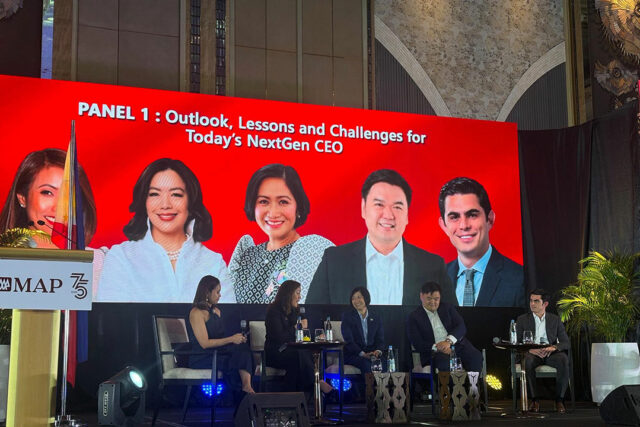
NEXT-GENERATION business leaders in the Philippines must be able to navigate uncertainty and lead with agility to drive organizational and national progress, according to experts.

“I think when you overlay that context with the innovation that we’re seeing in a lot of different spaces that touch the lives of Filipinos, I think you have the ingredients for a very complex rural system that’s hard to make strong decisions upon,” Jaime Alfonso Zobel de Ayala, chief executive officer (CEO) of ACMobility, said at the 6th Management Association of the Philippines (MAP) NextGen Conference last week.

He said today’s leaders face uncertainty because economic changes and innovation are occurring simultaneously.

He noted that new leaders must understand how to deal with uncertainty, such as making a decision with a supplier that has a particular supply route across Southeast Asia, which may change in the next five years.

“These new problem leaders I think are going to have to be very comfortable with that level of uncertainty,” he added.

Lorelie Quiambao-Osial, the first Filipina to be appointed president and CEO of Shell Pilipinas Corp., said leaders need to be “change-ready” and should have a growth mindset amid a fast-changing world.

She said that self-awareness and self-compassion are the “bedrock of resilience and authentic leadership,” regardless of whether one is young, a next-gen, or a seasoned executive.

Ms. Quiambao-Osial also said that an organization needs to establish a healthy mental well-being in order to face the constantly changing environment. “If your organization is not agile enough, then you do end up as well not being able to adapt, not being able to change. So for me, in this regard, it all goes down to that,” she said.

Hans “Chico” T. Sy, Jr., president of SM Engineering Design and Development Corp., said that while the Philippines is a “global talent workforce,” there is not enough to meet the growing demand.

“We are now stuck in a very interesting management dilemma where you have increasing demands but a decreasing productivity,” he said.

Learning from his father and SM Prime Holdings Chairman Hans T. Sy, he said that a leader needs to know every fundamental part of the business.

“When I grew up observing him, there was a moment where every aspect of the business was ingrained into the thoughts…he knew the answer because he knew the business, how it operated,” he said.

Danielle R. del Rosario, chief operating officer of PHINMA Solar Energy Corp. and Union Insulated Panel Corp., said that today’s leaders face the challenge of making fair and sound decisions that impact the greater good.

“I think the challenge for new generation of leaders, there is no more book on how to do it. There’s no manual, that ‘Oh, I’m just gonna do what they did.’ That doesn’t exist anymore,” she said.

Amid the “rapid pace of information uncertainty,” she added, leaders bear the responsibility of making difficult decisions under tight time constraints.

“Our challenge moving forward is to carry the same industrious and innovative spirit, remaining true to our core values of integrity, competence, professionalism, and patriotism, to use business as a force for good, and to always do our part to bring our country and our countrymen to new heights, to become a part of the world’s best,” Ms. Del Rosario said. — S.J. Talavera

Playful shiny holidays

TEARDROP sapphire and white fresh water pearl necklace and pendant with diamonds in yellow gold.

SCULPTED pieces in gold paired with diamonds, pearls, and rainbows of colored stones are the hallmarks of F&C Jewelry’s Holiday collection, called “Brilliance and Yuletide Glow.” Think earrings made of gold spheres, a sapphire pear hanging from a pearl station necklace, or a double-pearl ring with a band studded with diamonds.

Marjorie Florete, F&C EVP for Sales and Operations talked to us at the collection’s launch at a pop-up in SM Makati on Oct. 20. She described their holiday collection as architectural, linear, and sinewy, but still with a sense of fun: “We all love playful jewelry. That’s the inspiration.”

F&C was founded by her parents, Marcelino M. Florete, Jr. and Susan Caperonce-Florete; with the name of the store taken from her parents’ last names. While the store first opened in Iloilo in 1973, they had an even earlier start from Mrs. Florete’s mother, herself a jeweler from Bulacan. The line goes on, with the fourth generation already with positions in the company.

“It’s really a blessing: to work with your lola, your dad, your mom, your brothers and sisters — there are trade secrets passed down from generation to generation.”

After 50 years in the business, they know what their customers want. And their customers run the gamut. There are some showstoppers perfect for a wealthy matron’s game of mahjong, though a large number of the pieces can be worn by a 20-something at lunch — there are lots of trendy jewelry, such as hammered pieces and plain disc earrings. “We really strive to be relevant, to know what our customers want and keep our pulse on what is the need right now,” said Ms. Florete. “Right now, the trend is to have pieces that go from day to night.”

Asked how they’ve lasted over 50 years, she said, “At the end of the day, it’s also your passion for jewelry. It’s that innate love of wanting to share with you and everybody: how jewelry can not just be a piece of adornment; it’s also a wearable investment that carries with you a story.”

While jewelry is thought to be the game for older people, that’s not quite true anymore. A summary of a Euromonitor report (Selling Jewellery to Gen Z: Opportunities and Challenges) says that the jewelry industry has seen continued growth, as of 2023, with “value sales posting a 3% increase in constant terms,” with an expectation to return to pre-pandemic levels by 2025. Increasing Gen Z spending power makes them an attractive market, with the summary saying, “With its purchasing power and influence set to increase, adapting to its demands will be key for jewelry brands to maintain growth.”

On jewelry crossing age brackets, Ms. Florete says, “You can be young, you can be old; you can be beautiful. If you want to wear jewelry to adorn yourself, to make yourself feel fantastic, to celebrate a milestone — it’s for everyone.”

F&C currently has around 70 stores around the country, with one in Laoag and another in La Union just recently opened. Next year, they plan to open in Zamboanga. F&C Jewelry is located at all SM Stores and its flagship store in Ayala Malls Glorietta. — Joseph L. Garcia

Korea-funded seed facilities to boost Philippine rice sector

PHILSTAR FILE PHOTO

THE PHILIPPINES and South Korea have inaugurated new rice seed processing and cold storage facilities at the Philippine Rice Research Institute (PhilRice) in the Science City of Muñoz, Nueva Ecija, a project aimed at strengthening the rice seed supply chain and improving food security.

The facilities are funded by Korea’s Ministry of Agriculture, Food and Rural Affairs (MAFRA) and the Korean Rural Community Corp. and implemented by the Global Agriculture Policy Institute, PhilRice said in a statement.

These will improve the processing, storage, and shelf life of high-quality certified seeds used in rice production.

PhilRice said the project is expected to reduce post-harvest losses, speed up seed processing, and ensure the steady supply of certified seeds to farmers.

“The initiative is expected to contribute to the country’s food-security goals by stabilizing seed supply and improving productivity.”

“The seed processing and storage complex is built to ensure uniform drying and efficient operations… The project represents continued cooperation between Korea and the Philippines in advancing agricultural development and strengthening the resilience of the rice industry,” PhilRice said.

MAFRA Director Shin Jae Kim was quoted in the same statement as saying that the initiative and its training programs would help “take the Philippines’ agricultural technology infrastructure to the next level.”

The project’s inauguration was part of PhilRice’s 40th anniversary and is part of ongoing agricultural cooperation between the Philippines and South Korea. — Vonn Andrei E. Villamiel

Globe’s Q4 seen to improve on seasonal traffic, enterprise demand

BW FILE PHOTO

GLOBE TELECOM, INC. may post a stronger fourth-quarter (Q4) performance, buoyed by seasonal increases in mobile data traffic and continued momentum in its enterprise solutions segment.

The company saw its attributable net income decline 12.8% to P5.25 billion in the third quarter from P6.02 billion a year earlier, as lower revenues and higher expenses weighed on profits.

Gross revenue for the period fell 1.68% to P44.36 billion from P45.12 billion in the same period last year.

“Our third-quarter results underscore Globe’s consistent performance and our ability to create impact beyond connectivity for more Filipino families and businesses,” Globe President and Chief Executive Officer Carl Raymond R. Cruz said in a statement on Friday.

“Looking ahead, our focus remains firmly on our customers, with our key differentiator being the ability to elevate their experience and strengthen loyalty,” he added, noting that business-to-business growth would be the company’s next catalyst for expansion.

“We remain steadfast in our vision of becoming the most valuable, trusted, and admired operator in the country in the medium term, by investing in world-class connectivity and driving innovations that help build a more inclusive and digitally empowered Philippines,” Mr. Cruz said.

For the January-to-September period, Globe posted an attributable net income of P17.69 billion, down 14.04% from P20.58 billion in the same period last year. Gross revenue fell 2.34% to P131.59 billion, while gross expenses rose 1.14% to P120.08 billion.

Mobile services remained the bulk of Globe’s revenue at P95.99 billion, followed by fixed line and home broadband services at P33.81 billion.

Globe’s equity share in Globe Fintech Innovations, Inc. (Mynt), the operator of GCash, grew 52% to P5.3 billion for the nine-month period, accounting for 25% of the company’s net income before tax.

“As GCash continues to dominate the e-wallet space and moves toward IPO readiness, Globe stands to benefit both from equity earnings and potential valuation uplift, providing a meaningful non-core growth driver heading into 2025,” said Toby Allan C. Arce, head of sales trading at Globalinks Securities and Stocks, Inc., in a Viber message to BusinessWorld.

He added, “Growth could also be reinforced by continued monetization of its tower and data center assets, as well as expanding contributions from its digital ventures.”

Mr. Arce noted that Globe’s fourth-quarter performance is likely to improve modestly, supported by seasonally higher mobile data traffic, stronger demand for broadband and enterprise solutions during the holiday period, and easing inflation that could boost consumer spending.

He cautioned, however, that persistent competition among telecommunications players and elevated financing costs will continue to challenge Globe’s earnings.

“Overall, while Globe’s near-term profitability remains under pressure, its diversified portfolio and consistent push into fintech, enterprise tech, and infrastructure partnerships provide a foundation for recovery over the next few quarters — positioning it for gradual earnings rebound and more sustainable growth in 2025,” he said.

Separately, Globe said on Sunday that it is expanding testing of its satellite-powered mobile services.

The Ayala-led company has partnered with global low earth orbit (LEO) satellite providers to test direct-to-cellular technology, allowing ordinary mobile phones to connect to satellites without additional equipment.

These trials aim to extend coverage to remote and hard-to-reach areas beyond traditional cell towers. Globe has already completed a pilot with Lynk Global, Inc.

At the stock exchange, shares in Globe closed P15, or 0.14%, higher at P1,460 apiece on Friday. — A.E.O. Jose

Gen Z shoppers can’t get enough of perfumes. Coty, Estée are benefiting

STOCK PHOTO | Image by KamranAydinov from Freepik

FRAGRANCES have become a staple for Gen Z shoppers, the fastest-growing buyer category globally, and beauty heavyweights are here for the trend.

Once dismissed as a luxury indulgence, scents are now a go-to for young consumers seeking to express their style and boost their mood amid economic uncertainty. It is the new “lipstick effect,” analysts said, referring to an economic theory that suggests consumers tend to buy small luxury items instead of expensive goods when the economy falters.

Cashing in on the hype are Estée Lauder, L’Oréal, and Coty, owners of fragrance brands such as Le Labo, Tom Ford, Valentino, Yves Saint Laurent, Emporio Armani and Ambre Antique. These companies said in their earnings calls in the past few weeks that they would invest more in their perfume businesses that had become their main sales drivers.

Coty on Wednesday offered an upbeat quarterly forecast, banking on surging demand for its Calvin Klein and Hugo Boss fragrances. Chief Financial Officer Laurent Mercier said the company was going to expand the business.

“It’s a fantastic way for Gen Z to enter the category. So it’s really matching really some great consumer needs,” Mr. Mercier told Reuters.

About 38% of total spending on fragrances in the 26 weeks ending July stemmed from households with a Gen Z member, according to data firm Circana.

Jo Malone owner Estée Lauder also saw a bump from its fragrance business, which helped offset muted demand for makeup. Its fragrance business grew 14%, on a reported basis, in the quarter ended September.

In contrast, Elf Beauty — a company that has surged in popularity in the last few years with its cheap makeup and big-brand dupes — reported weaker-than-expected results, blaming tariffs and muted consumer spending. Shares of the company, which does not sell perfumes, fell more than a third on Thursday.

Big cosmetic companies are also boosting their fragrance portfolios through acquisitions, or ditching slowing business units to free up cash flow to invest in perfumes.

In October, L’Oréal made a $4.7-billion deal to buy cosmetic and fragrance brands from Kering, securing rare 50-year licenses including Gucci. Coty, on the other hand, is exploring the sale of brands such as CoverGirl and Rimmel to focus on fragrances, a category that now accounts for three quarters of its total sales.

BIG BEAUTY BETS
“Fragrance is having a cultural moment,” Kendal Ascher, a senior Estée executive, told Reuters. “Rising disposable income and middle-class expansion in China, India and the Middle East are fueling sustained category growth.”

Estée this year opened around 40 new freestanding fragrance boutiques globally, including new flagships in SoHo, New York, while also opening a global Fragrance Atelier in Paris. Mr. Ascher said the company had invested in AI-enabled tools that translated how consumers talk about scent — matching words like “bright” or “happy” to fragrance families — and was creating TikTok videos based on that to draw in Gen Z shoppers.

In the past year, global sales growth for fragrances has outpaced those of makeup and skincare, Circana data showed. Prestige fragrance sales increased by 6% to $3.9 billion in the first half of 2025, while prestige makeup sales rose 1% and prestige skincare declined 1% during the same period.

“It is a product segment that gives consumers a taste of prestige, quality, or status (or personal indulgence) without the price tag of full-blown premium/luxury goods,” said Michael Ashley Schulman, chief investment officer at Running Point. — Reuters

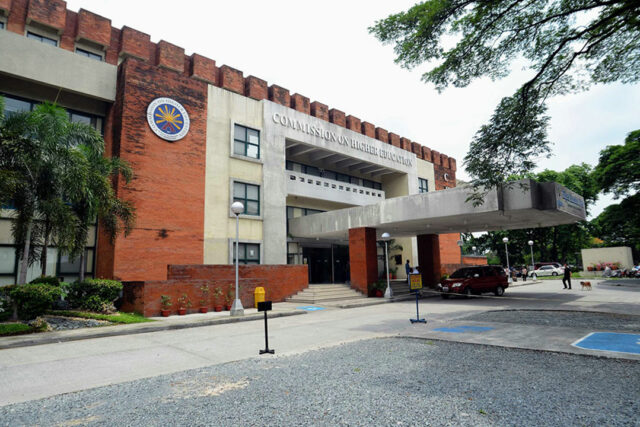
CHED: A policy of benign neglect

COMMISSION ON HIGHER EDUCATION

Dr. Patrick Moynihan, an American politician, diplomat and social scientist was known for coining the phrase, “Benign Neglect.” By that he meant that for certain public policy issues, the best policy is to do nothing and let matters take their course. This policy came to mind when the newly appointed Commission on Higher Education (CHED) Chairperson Shirley C. Agrupis described the state of Philippine higher education as having “sunk to its lowest point.”

To be more accurate, the CHED Chairperson’s description applies only to CHED and not the institutions of higher education under its authority. The institutions of higher education — such as private colleges both secular and religious, as well as the public colleges both the State Universities and Colleges (SUCs) and the Local Universities and Colleges (LUCs) or pamantasans — are doing just fine.

As background, while the Department of Education (DepEd) is responsible for basic education, CHED is responsible for higher education. Both exercise regulatory powers, DepEd over the private grade schools and high schools and CHED over the private colleges as well as the pamantasans. Both exercise supervisory powers, DepEd over the public basic education schools and CHED over the SUCs.

However the nature of their supervisory powers is quite different. DepEd directly operates the public schools while the CHED indirectly operates the SUCs through their membership in the boards of trustees of the SUCs.

This difference is reflected in their organizational structures. DepEd is the largest department in government, headed by a Cabinet Secretary who is the sole top executive similar to the CEO of a private corporation. CHED is a government agency attached to the Office of the President and is run by a Commission of five members of which one is the Chairman, similar to the chairman of the board of a private corporation.

These differences are reflected in the size of their organization. DepEd has around a million employees of which around 200,000 are administrators; CHED has only around 700 employees. The 2025 budget of the DepEd is P737 billion while that of CHED is P31 billion. For context, while there are around 28 million students in basic public education, there are about 3.4 million students in higher public education.

Furthermore, while 88% of students in basic education study in public schools, only 41% of students in higher education study in SUCs.

To conclude, in sharp contrast to DepEd with respect to basic education, CHED with respect to higher education can do little harm. We argue that this inability to intervene comprehensively has resulted in the healthy condition of the private colleges and the pamantasans.

PHINMA AND EDUCATION
In 2004, after divesting its investment in the cement business, Philippine Investment Management (PHINMA), a Filipino conglomerate controlled by the Del Rosario family, pivoted to the business of education by acquiring control of Araullo University.

Prior the 1990s, most of the private schools were run by educators such as the Laurels (Lyceum), the Fabellas (Jose Rizal University) and the Reyeses (Far Eastern University or FEU) rather than businessmen.

After this, business groups such as the Henry Sy Group (National University), the Ayala Group (National Teachers College), the Alfonso Yuchengco Group (Mapúa University), the Lucio Tan Group (University of the East or UE), the George Ty Group (Tytana Colleges) Group, and the Emilio Yap Group (Centro Escolar) began investing in education.

However, unlike these business groups, the PHINMA Group, as articulated by its Chairman Ramon R. del Rosario, was the first to formally declare that there are business opportunities in education. Moreover, in sharp contrast to those who saw business opportunities only by offering high quality education to the rich or by offering low quality education to the poor, Del Rosario saw opportunities in providing quality education to underserved youth who are often the first in their families to go to college.

Through a “bare bones, no frills, brass knuckles” strategy, Phinma was able to keep tuition fees low and affordable and focus on developing and innovating the most important elements for learning: proper classrooms and facilities, learning techniques and materials, and a great faculty. Phinma does not drive their faculty to publish; instead, they demand they teach well.

From the acquisition of Araullo University in 2004 with its 5,000 students, there are now 11 Phinma schools in the Philippines with around 163,000 students in 2025. Under the leadership of Mr. Del Rosario and President Chito B. Salazar, Phinma, by doing good, has done exceedingly well. In 2024, Phinma Education contributed P1.5 billion in profits to the Phinma Group.

CHANGING COLONIZERS
Upon the conclusion of the Spanish-American war, Spain ceded the Philippines to the United States of America. This change in colonial master had two significant consequences for Philippine education. For one, the Americans declared a policy of separation of church and state. This meant that religion could no longer be taught in public schools.

In response, the Catholic Church in the Philippines followed the example of the Catholic Church in America. Parish schools were organized, existing religious schools such as the University of Santo Tomas (UST) were expanded, and external religious orders were invited to set up schools in the Philippines. At the invitation of Manila Archbishop Jeremiah James Harty, the Christian Brothers founded De La Salle University in 1911.

This approach to setting up a religious school system in parallel to the public school system has evolved into a network of 2,300 schools with estimated enrollment of 1.8 million students. The oldest and the largest Catholic school is UST with an enrollment of around 40,000 students.

Founded in 1611 by the Dominicans (Order of Preachers), UST has expanded geographically from its initial campus in the Sampaloc district of Manila to Quezon City (UST Angelicum College), Santa Rosa, Laguna (UST-Santa Rita), Legazpi City (UST-Legazpi), and General Santos (UST-General Santos). UST-General Santos, which opened in 2024, is an 80-hectare campus in southern Philippines that offers programs in agricultural and fishery research, arts and humanities, business and accountancy, engineering and technology, and pharmaceutical sciences.

The second significant consequence of the change from a Catholic Spain to a Protestant American was the arrival of Protestant missionaries following in the footstep of their American warriors.

In 1901, Silliman University was established in Dumaguete City, the first Protestant school in the Philippines and in Asia. From this initial foothold, the number of Christian schools in the Philippines has expanded to six universities, three seminaries, 40 colleges, and 69 basic education schools.

PAMANTASANS
In 1967, the Pamantasan ng Lungsod ng Maynila (University of the City of Manila) started operation. This pamantasan was the first chartered and autonomous university funded by a city government. The pamantasan was established based on the belief there was a need for a school of higher learning specifically run to meet the needs of the citizens of Manila, something that the national government schools of higher education had failed to do. (See our column, “Motherhood and Mission Statements,” BusinessWorld, June 17, 2024).

These sentiments were shared by other local government units such that we now have 121 pamantasans. Moreover the LUCs have been growing faster than the SUCs. EdCom II reports that for AY 2011-2012 to AY 2019-2020, enrollment growth for LUCs was 168% compared to 73% for SUCs.

We once asked fellow AIM professor and University of Makati (UMak) President Tomas Lopez the secret to the success of UMak. His response, “We declared independence from CHED.” Thus, when UMak launched their Dualized University Education System (DUES), an academic partnership between UMak and the Makati businesses, they did not seek the approval of CHED, correctly judging that the value of a degree is not determined by the imprimatur of CHED but rather the employment opportunities that are opened to the graduates.

The declaration of financial independence was relatively easy; UMak merely had to refuse the trifling financial grants offered by CHED under the Unifast Law. This act of successful rebellion has not gone unnoticed by the other pamantasans.

CHOICE AND NO CHOICE
One final point is the difference in choices poor students are faced regarding basic public education and public higher education in the Philippines.

Unlike in most countries where the administration of basic education is lodged in the local government units, in the Philippines, it is lodged in a highly centralized national government agency. For example, in the United States public schools in basic education are run by the local school boards, assuring diversity in curriculum, teaching methods and materials, and teacher training. Thus, many American parents would first choose the public school where they prefer their children to study and then search for a home in that district. In contrast, Filipino parents do not have that choice when it comes to our public elementary and high schools. From any public school under the monolithic Department of Education, they are confronted with the same curriculum, the same textbooks, and the same trained teachers. No student in our DepEd schools will ever experience the Montessori method of learning.

By contrast, in higher education, students can choose among the various types of SUCs ranging from the University of the Philippines to the Technological University of the Philippines. They have the additional choice of going to the pamantasan in their city. Since both SUCs and LUCs are free, the basis of competition is quality of education and not free tuition. Not so in basic education where students have no choice unless given vouchers since only public schools are free.

To conclude, considering that the forces of reform and progress as cited above that have already been unleashed in higher education, there is no need for government to intervene. With no need to intervene, there is no need to revitalize the CHED. With respect to CHED, we merely need to adopt a policy of benign neglect.

How we wish we could adopt the policy of benign neglect with respect to our other national government agencies!


Dr. Victor S. Limlingan is a retired professor of AIM and a fellow of the Foundation for Economic Freedom. He is presently chairman of Cristina Research Foundation, a public policy adviser and Regina Capital Development Corp., a member of the Philippine Stock Exchange.


ADVERTISEMENT
ADVERTISEMENT